

The Effect of Fiber Supplementation on Chronic Constipation in Adults: An Updated Systematic Review and Meta-Analysis of Randomized Controlled Trials
Open accessThe DOI matches its Crossref record; 48 of the 48 references it cites were found in a registry or an index.
Abstract
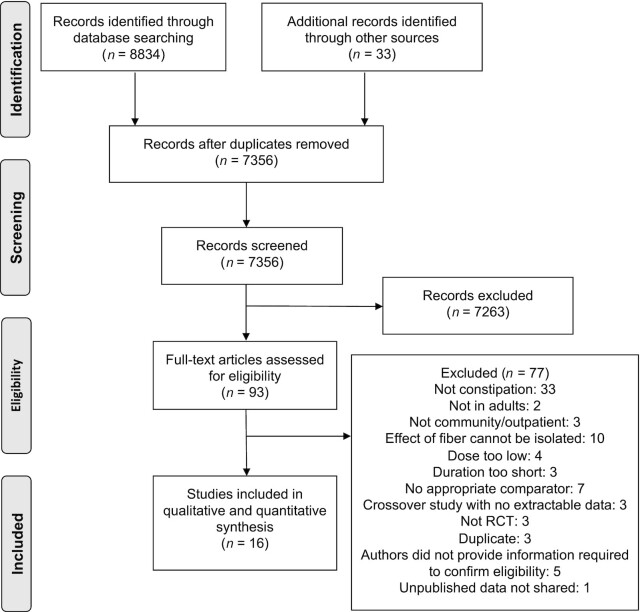
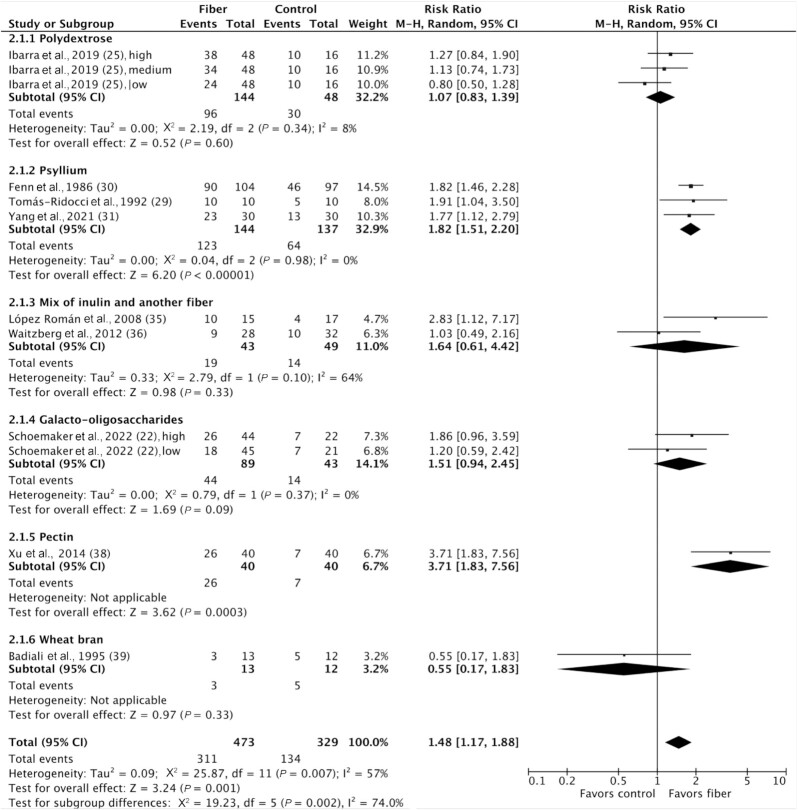
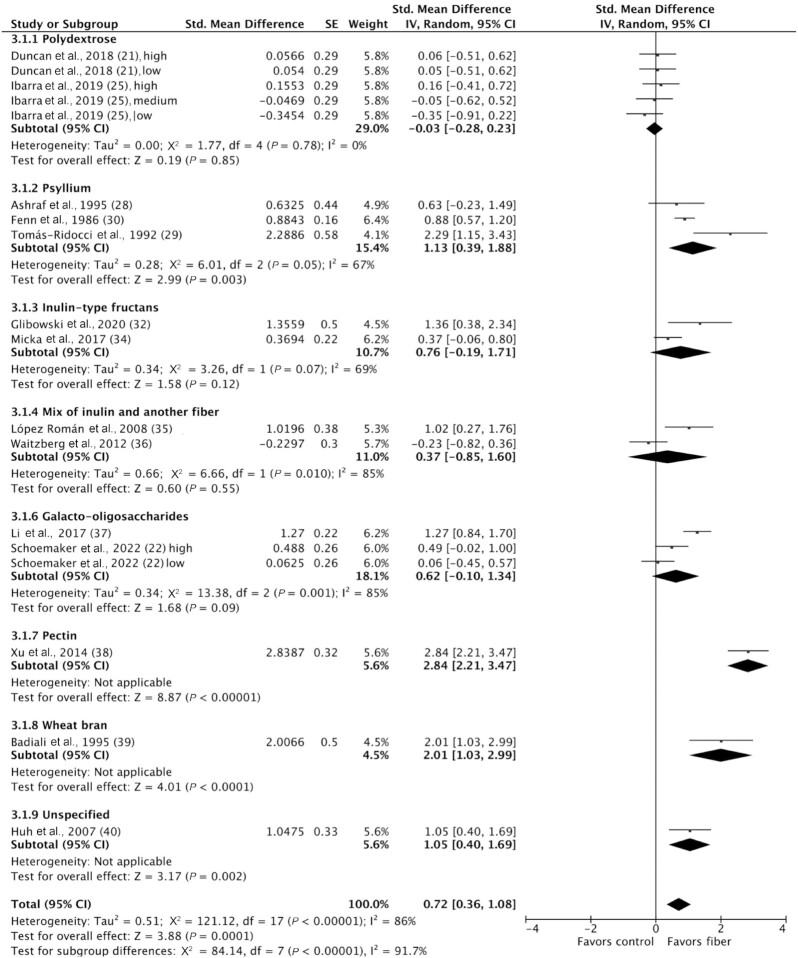
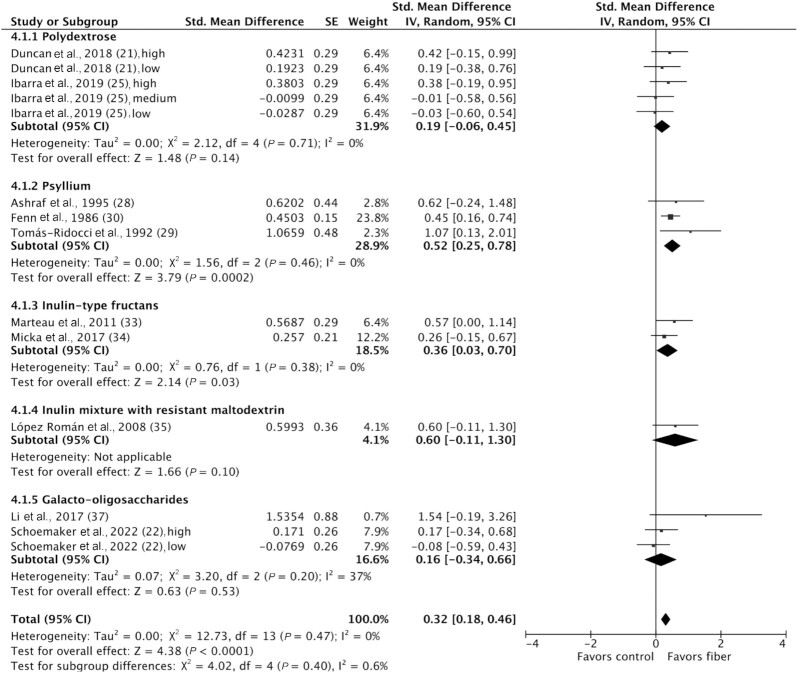
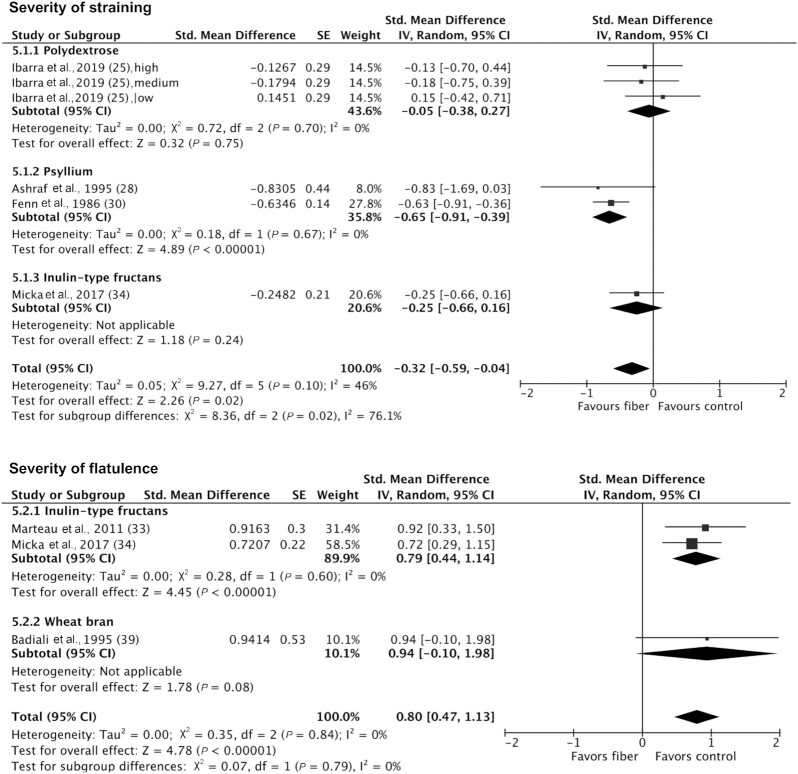
BACKGROUND: Chronic constipation is a prevalent disorder that remains challenging to treat. Studies suggest increasing fiber intake may improve symptoms, although recommendations on the fiber type, dose, and treatment duration are unclear. OBJECTIVES: We investigated the effects of fiber supplementation on stool output, gut transit time, symptoms, and quality of life in adults with chronic constipation via a systematic review and meta-analysis of randomized controlled trials (RCTs). METHODS: Studies were identified using electronic databases, backward citation, and hand searches of abstracts. RCTs reporting administration of fiber supplementation in adults with chronic constipation were included. Risks of bias (RoB) was assessed with the Cochrane RoB 2.0 tool. Results were synthesized using risk ratios (RRs), mean differences, or standardized mean differences (SMDs) and 95% CIs using a random-effects model. RESULTS: Sixteen RCTs with 1251 participants were included. Overall, 311 of 473 (66%) participants responded to fiber treatment and 134 of 329 (41%) responded to control treatment [RR: 1.48 (95% CI: 1.17, 1.88; P = 0.001); I2 = 57% (P = 0.007)], with psyllium and pectin having significant effects. A higher response to treatment was apparent in fiber groups compared to control groups irrespective of the treatment duration, but only with higher fiber doses (>10 g/d). Fiber increased stool frequency [SMD: 0.72 (95% CI: 0.36, 1.08; P = 0.0001); I2 = 86% (P < 0.00001)]; psyllium and pectin had significant effects, and improvement was apparent only with higher fiber doses and greater treatment durations (≥4 weeks). Fiber improved stool consistency (SMD: 0.32; 95% CI: 0.18, 0.46; P < 0.0001), particularly with higher fiber doses. Flatulence was higher in fiber groups compared to control groups(SMD: 0.80; 95% CI: 0.47, 1.13; P < 0.00001). CONCLUSIONS: Fiber supplementation is effective at improving constipation. Particularly, psyllium, doses >10 g/d and treatment durations of at least 4 weeks appear optimal, though caution is needed when interpreting the results due to considerable heterogeneity. These findings provide promising evidence on the optimal type and regime of fiber supplementation, which could be used to standardize recommendations to patients. The protocol for this review is registered at PROSPERO as CRD42020191404.
Overview
The claims and statistics of this paper haven’t been checked yet.
Free: it reads the open-access text and checks the first 5 claims that cite a source we can check. Create a free account to check every claim.
Integrity signals
Registry
Cites
Statistics
Figures
Verification
Claims the paper makes
The claims and statistics of this paper haven’t been checked yet.
Free: it reads the open-access text and checks the first 5 claims that cite a source we can check. Create a free account to check every claim.
Claims other papers make about this one
Each is checked against this paper’s own text: does it say what the citing paper says it does?
The source backs part of the claim, not all of it — or backs it for a different population, condition or comparison.
In the citing paper
“Overall, fiber supplements had no impact on global symptom scores (SMD −0.15, 95% CI −0.39, 0.08); however, when only those that were administered for greater durations (≥ 4 weeks) were meta‐analyzed, this led to significant improvements (SMD −0.42, 95% CI 0.77, −0.06), highlighting fiber supplements should be trialed for a minimum of 4 weeks.”
From British Dietetic Association Guidelines for the Dietary Management of Chronic Constipation in Adults (2025) · cites this paper as [12]
Experimental — accuracy not yet measuredThe source backs part of the claim, not all of it — or backs it for a different population, condition or comparison.
In the citing paper
“Two RCTs investigated the effect of inulin‐type fructans and showed they significantly softened stool consistency, albeit the effect size was small and unlikely to be clinically meaningful (SMD 0.36, 95% CI 0.03, 0.70).”
From British Dietetic Association Guidelines for the Dietary Management of Chronic Constipation in Adults (2025) · cites this paper as [12]
Experimental — accuracy not yet measuredThe source backs part of the claim, not all of it — or backs it for a different population, condition or comparison.
In the citing paper
“When performing subgroup analyses based on the specific type of fiber used, two RCTs investigated the effect of psyllium (10.2 and 19.2 g/day) and showed a significant reduction in the severity of straining (SMD −0.65, 95% CI −0.91, −0.39).”
From British Dietetic Association Guidelines for the Dietary Management of Chronic Constipation in Adults (2025) · cites this paper as [12]
Experimental — accuracy not yet measuredThe source backs part of the claim, not all of it — or backs it for a different population, condition or comparison.
In the citing paper
“Polydextrose supplements had no impact on global QoL (MD −0.04 scale points, 95% CI −0.19, 0.10 scale points; higher score is more severe), nor on the QoL components of satisfaction, physical discomfort, worries and concerns, or psychosocial discomfort.”
From British Dietetic Association Guidelines for the Dietary Management of Chronic Constipation in Adults (2025) · cites this paper as [12]
Experimental — accuracy not yet measuredThe cited source says what the claim attributes to it.
In the citing paper
“Second, to identify and evaluate all previous evidence for any dietary treatment in chronic constipation, four rigorous systematic reviews and meta‐analyses of a total of 75 RCTs were conducted [11, 12, 13, 14].”
From British Dietetic Association Guidelines for the Dietary Management of Chronic Constipation in Adults (2025) · cites this paper as [12]
42 more claims about this paper
Create a free account to see every claim other papers make about this one.
Self-check
Percentages, sums and reported differences re-computed from the paper’s own numbers.
The self-check needs the paper’s full text.
Citations
Cites
The PRISMA 2020 statement: An updated guideline for reporting systematic reviews
Page, M. J., McKenzie, J. E., Bossuyt, P. M., Boutron, I., Hoffmann, T. C., Mulrow, C. D., Shamseer, L., Tetzlaff, J. M., Akl, E. A., Brennan, S. E., et al. (2021) · BMJ · doi:10.1136/bmj.n71 · Cited by 108,283
RoB 2: a revised tool for assessing risk of bias in randomised trials
Sterne, J. A. C., Savović, J., Page, M. J., Elbers, R. G., Blencowe, N. S., Boutron, I., Cates, C. J., Cheng, H.-Y., Corbett, M. S., Eldridge, S. M., et al. (2019) · BMJ · doi:10.1136/bmj.l4898 · Cited by 34,787 · cited 1×
“Risk of bias assessment Risks of bias (RoB) for eligible studies was assessed independently by 2 reviewers (AvdS, CD) (23).”
MethodWan, X., Wang, W., Liu, J., & Tong, T. (2014) · BMC Medical Research Methodology · doi:10.1186/1471-2288-14-135 · Cited by 11,735
Gibson, G. R., Hutkins, R., Sanders, M. E., Prescott, S. L., Reimer, R. A., Salminen, S. J., Scott, K., Stanton, C., Swanson, K. S., Cani, P. D., et al. (2017) · Nature Reviews Gastroenterology & Hepatology · doi:10.1038/nrgastro.2017.75 · Cited by 5,634 · cited 1×
“This includes prebiotic fibers, which are substrates that are selectively utilized by host microorganisms, conferring a health benefit (13).”
BackgroundThe PRISMA 2020 statement: an updated guideline for reporting systematic reviews
Page, M. J., McKenzie, J., Bossuyt, P., Boutron, I., Hoffmann, T., mulrow, C., Shamseer, L., Tetzlaff, J., Akl, E., Brennan, S. E., et al. (2020) · doi:10.31222/osf.io/v7gm2 · Cited by 5,177
Lacy, B. E., Mearin, F., Chang, L., Chey, W. D., Lembo, A. J., Simren, M., & Spiller, R. (2016) · Gastroenterology · doi:10.1053/j.gastro.2016.02.031 · Cited by 2,866
Sperber, A. D., Bangdiwala, S. I., Drossman, D. A., Ghoshal, U. C., Simren, M., Tack, J., Whitehead, W. E., Dumitrascu, D. L., Fang, X., Fukudo, S., et al. (2021) · Gastroenterology · doi:10.1053/j.gastro.2020.04.014 · Cited by 2,263 · cited 1×
“Introduction Chronic constipation is a common gastrointestinal disorder with an estimated prevalence of 12% in adults (1).”
BackgroundPeery, A. F., Crockett, S. D., Murphy, C. C., Lund, J. L., Dellon, E. S., Williams, J. L., Jensen, E. T., Shaheen, N. J., Barritt, A. S., Lieber, S. R., et al. (2019) · Gastroenterology · doi:10.1053/j.gastro.2018.08.063 · Cited by 1,619
Dietary fibre in gastrointestinal health and disease
Gill, S. K., Rossi, M., Bajka, B., & Whelan, K. (2021) · Nature Reviews Gastroenterology & Hepatology · doi:10.1038/s41575-020-00375-4 · Cited by 979 · cited 2×
“Fermentable fibers may increase stool bulk indirectly through fermentation byproducts that influence contractile activity in the gut and increase microbial biomass through changes in the gut microbiome (14, 17).”
BackgroundSelf-citationFord, A. C., Moayyedi, P., Lacy, B. E., Lembo, A. J., Saito, Y. A., Schiller, L. R., Soffer, E. E., Spiegel, B. M. R., & Quigley, E. M. M. (2014) · American Journal of Gastroenterology · doi:10.1038/ajg.2014.187 · Cited by 645
Research works printed but not linked: 1
- Tomlin J, Read NW. The effect of inert plastic particles on colonic function in human volunteers. Gastroenterology. 1998; 94: A463.
Cited by
Corsetti, M., Shin, A., Lacy, B. E., Cash, B. D., Simrén, M., Schmulson, M. J., Hou, X., & Lembo, A. J. (2026) · Gastroenterology · doi:10.1053/j.gastro.2026.02.003 · Cited by 92
van der Schoot, A., Helander, C., Whelan, K., & Dimidi, E. (2022) · Clinical Nutrition · doi:10.1016/j.clnu.2022.10.015 · Cited by 67
Self-citationMarco, M. L., Cunningham, M., Bischoff, S. C., Clarke, G. A., Delzenne, N. M., Lewis, J., Meisel, M., Merenstein, D. J., O’Toole, P. W., Staudacher, H. M., et al. (2026) · Nature Reviews Gastroenterology & Hepatology · doi:10.1038/s41575-026-01176-x · Cited by 58
Dietary fibre confers therapeutic effects in a preclinical model of Huntington’s disease
Gubert, C., Kong, G., Costello, C., Adams, C. D., Masson, B. A., Qin, W., Choo, J. M., Narayana, V. K., Rogers, G. B., Renoir, T., et al. (2023) · Brain Behavior and Immunity · doi:10.1016/j.bbi.2023.12.023 · Cited by 46
Van Der Schoot, A., Katsirma, Z., Whelan, K., & Dimidi, E. (2024) · Alimentary Pharmacology & Therapeutics · doi:10.1111/apt.17782 · Cited by 38
Self-citationPhysical activity and constipation: A systematic review of cohort studies
Cui, J., Xie, F., Yue, H., Xie, C., Ma, J., Han, H., Fang, M., & Yao, F. (2024) · Journal of Global Health · doi:10.7189/jogh.14.04197 · Cited by 45
Microbiota Gut–Brain Axis and Autism Spectrum Disorder: Mechanisms and Therapeutic Perspectives
Petropoulos, A., Stavropoulou, E., Tsigalou, C., & Bezirtzoglou, E. (2025) · Nutrients · doi:10.3390/nu17182984 · Cited by 45
“In such cases, targeted fiber supplementation may serve as an effective alternative [133].”
Constipation is associated with an increased risk of major adverse cardiac events in a UK population
Zheng, T., Tavares, L. C., D’Amato, M., & Marques, F. Z. (2024) · American Journal of Physiology-Heart and Circulatory Physiology · doi:10.1152/ajpheart.00519.2024 · Cited by 36
British Dietetic Association Guidelines for the Dietary Management of Chronic Constipation in Adults
Dimidi, E., van der Schoot, A., Barrett, K., Farmer, A. D., Lomer, M. C., Scott, S. M., & Whelan, K. (2025) · Journal of Human Nutrition and Dietetics · doi:10.1111/jhn.70133 · Cited by 25
Self-citationComponents of the Fiber Diet in the Prevention and Treatment of IBD—An Update
Ferenc, K., Jarmakiewicz-Czaja, S., & Filip, R. (2022) · Nutrients · doi:10.3390/nu15010162 · Cited by 24
Štrkalj, L., Yakubov, G. E., Burton, R. A., & Cowley, J. M. (2025) · Comprehensive Reviews in Food Science and Food Safety · doi:10.1111/1541-4337.70297 · Cited by 23
“Namely, excessive psyllium consumption without adequate water intake can lead to constipation and, in some cases, bowel and gastrointestinal obstructions (Hefny et al. 2018; van der Schoot et al. 2022; Tominaga et al. 2023).”
Nutrition and Disorders of Gut–Brain Interaction
Scarpellini, E., Balsiger, L. M., Broeders, B., den Houte, K. V., Routhiaux, K., Raymenants, K., Carbone, F., & Tack, J. F. (2024) · Nutrients · doi:10.3390/nu16010176 · Cited by 21
Yang, W., Gao, X., Lin, J., Liu, L., Lei, P., Sheng, J., Xu, K., & Tian, Y. (2024) · International Journal of Biological Macromolecules · doi:10.1016/j.ijbiomac.2024.137931 · Cited by 21
Huang, S.-Y., Chiao, C., & Chien, L. (2024) · International Journal of Nursing Studies · doi:10.1016/j.ijnurstu.2024.104936 · Cited by 24
Johnson, B. V. B., Milstead, M., Kreider, R., & Jones, R. (2025) · Obesity Pillars · doi:10.1016/j.obpill.2025.100209 · Cited by 27
Va, I., Pilipenko, V. I., Владимировна, В. А., & Kochetkova, A. A. (2023) · Current Developments in Nutrition · doi:10.1016/j.cdnut.2023.102037 · Cited by 19
Let food be your medicine – dietary fiber
Liu, M., Li, S., Cao, S., Liu, C., Han, Y., Cheng, J., Zhang, S., Zhao, J., & Shi, Y. (2024) · Food & Function · doi:10.1039/d3fo05641d · Cited by 17
Johnson, B. V. B., Milstead, M., Green, L., Kreider, R., & Jones, R. (2025) · Obesity Pillars · doi:10.1016/j.obpill.2025.100195 · Cited by 27
Myths and misconceptions about childhood constipation
Rajindrajith, S., Devanarayana, N. M., Thapar, N., & Benninga, M. A. (2023) · European Journal of Pediatrics · doi:10.1007/s00431-023-04821-8 · Cited by 17
Hesmert, D., Klocke, C., Stolz, R., Huber, R., Samstag, Y., Hübner, K., Simmet, T., Syrovets, T., Joos, S., & Valentini, J. (2024) · Frontiers in Medicine · doi:10.3389/fmed.2024.1408653 · Cited by 15
Wang, J., Ren, M., Fu, L., Liu, L., Zhang, X., Sun, Y., & Liu, L. (2024) · Food Bioscience · doi:10.1016/j.fbio.2024.105218 · Cited by 20
van der Schoot, A., Creedon, A., Whelan, K., & Dimidi, E. (2023) · Neurogastroenterology & Motility · doi:10.1111/nmo.14613 · Cited by 12
“9,10 This review followed a rigorous methodology, adhering to recommendations from the Cochrane handbook and PRISMA guidelines, and incorporating searches of grey literature with no language restrictions, in order to reduce publication bias.”
MethodSelf-citationLai, S., Zhu, C., Zhou, X., Zeng, Q., Huang, L., Cao, X., Zhou, Q., Zhong, Y., Huang, J., Liu, J., et al. (2024) · Journal of Neurogastroenterology and Motility · doi:10.5056/jnm23134 · Cited by 16
“41 Oligosaccharides in beans stimulate Bifido-bacteria growth and act as a natural laxative.”
BackgroundDimidi, E. (2025) · Proceedings of The Nutrition Society · doi:10.1017/s0029665125100694 · Cited by 12
Self-citationHoevenaars, F. P. M., Scheithauer, T. P. M., Maarse, B. C. E., de Oliveira, I. M., Warnke, I., Sybesma, W., Moerland, M., van den Broek, T. J., & Schuren, F. H. J. (2025) · Frontiers in Microbiology · doi:10.3389/fmicb.2025.1708906 · Cited by 10
Lora, A. T., Penadés, B. F., Oliva, S. L., Arponen, S., Okutan, G., Niño, G. M. S., & Martín, I. S. M. (2023) · Gastroenterology report · doi:10.1093/gastro/goae101 · Cited by 14
“Dietary supplementation with prebiotics, particularly Psyllium and inulin, significantly improves stool consistency in patients with chronic constipation [16].”
BackgroundMethodInfluentialFood biopolymer behaviors in the digestive tract: implications for nutrient delivery
Zhang, M., Zuo, Z., Zhang, X., & Wang, L. (2023) · Critical Reviews in Food Science and Nutrition · doi:10.1080/10408398.2023.2202778 · Cited by 12
“Diets high in unfermentable or rapidly fermentable bio-polymers may cause local loss of characteristic microbiota and potentially lead to intestinal disease (Van Der Schoot et al. 2022).”
He, X., Zhang, Y., Fang, H., Ma, N., Yan, X., Yang, H., Cao, L., Xu, L., Hu, H., & Liu, H. (2025) · Journal of Functional Foods · doi:10.1016/j.jff.2025.106841 · Cited by 9
Xi, N., Yang, X. M., Liu, J., Yue, H., & Wang, Z. (2025) · Foods · doi:10.3390/foods14132315 · Cited by 12
“Previous evidence indicated that the efficacy of dietary fiber is modulated by both dosage and duration of intervention [46].”
Kim, S. (2024) · Journal of Neurogastroenterology and Motility · doi:10.5056/jnm24085 · Cited by 10
“Van der Schoot et al, 5 in their meta-analysis of 16 studies, found that high dietary fiber improved stool consistency (relative risk [RR], 0.32; 95% confidence inter - val [CI], 0.18-0.46) and increased stool frequency (standardized mean difference [SMD], 0.77; 95% CI, 0.36-1.08).”
BackgroundInfluentialDobbie, L. J., Tolvanen, L., Alves, D., Baker, J. L., Bez, N. S., Birney, S., Bogl, L. H., Brown, A., Bullo, M., Clare, K., et al. (2026) · The Lancet Diabetes & Endocrinology · doi:10.1016/s2213-8587(26)00122-1 · Cited by 8
Nutritional Approaches to Enhance GLP-1 Analogue Therapy in Obesity: A Narrative Review
Dias, D. D., Vasconcelos, A. R., Souza, A. C. R., Menezes, C. D., Silva, I. S. T. E., & Name, J. J. (2025) · Obesities · doi:10.3390/obesities5040088 · Cited by 8
“A meta-analysis of 16 randomized controlled trials with 1251 adults with chronic constipation showed that fiber, particularly psyllium at doses >10 g/day for ≥ 4 weeks, significantly improved stool frequency and consistency [132].”
The Particle Size of Wheat Bran Dietary Fiber Influences Its Improvement Effects on Constipation
Li, L., Hu, L., Chen, R., Yang, R., Gong, L., & Wang, J. (2025) · Foods · doi:10.3390/foods14061001 · Cited by 8
“Wheat bran, a prominent source of DF, is recommended for relief of constipation due to its outstanding viscosity, fermentability, and affordability [15,16].”
Innovative concepts in diet therapies in disorders of gut–brain interaction
So, D., & Tuck, C. J. (2024) · JGH Open · doi:10.1002/jgh3.70001 · Cited by 10
Dietary Fibers and Their Importance in the Diet
Marc, R. A., MUREȘAN, C. C., Anamaria, P. O. P., Marțiș, G. S., Mureşan, A. E., Pușcaș, A., Postolache, A. N., Stoica, F., Crivei, I. C., Veleşcu, I. D., et al. (2025) · Food science and nutrition · doi:10.5772/intechopen.115461 · Cited by 10
The relationship between food components and constipation: a cross-sectional study
Xu, Y., & Xue, Z. (2024) · BMC Gastroenterology · doi:10.1186/s12876-024-03515-1 · Cited by 9
Optimizing Dietary Fiber Intake: Strategies for Human Nutrition and Food Science
Walsh, S. K., Armet, A. M., Nikolaeva, D. D., Mota, J. F., Lucey, A. J., Oliero, M., & Walter, J. (2026) · Annual Review of Food Science and Technology · doi:10.1146/annurev-food-052824-044842 · Cited by 10
Zambrano-Villacres, R., Campuzano-Donoso, M., Reytor-González, C., Rossetti, G., Cobellis, L., Cobellis, F., Pilone, V., Simancas‐Racines, D., & Schiavo, L. (2026) · Nutrients · doi:10.3390/nu18111751 · Cited by 9
“…of randomized controlled trials found that, while fiber improves stool frequency and consistency, higher doses (e.g., >10 g/day) and longer treatment durations are necessary for optimal effect, and adverse effects such as flatulence and bloating are more common with higher fiber doses [130].”
Ishii, Y., Matsunaga, T., Yasui, T., Rini, D. M., Inoüe, R., Yamamoto, Y., & Suzuki, T. (2024) · Nutraceuticals · doi:10.3390/nutraceuticals4020019 · Cited by 7
“Highly branched arabinoxylan is characterized by high water-holding and gel formation abilities, which are associated with the physiological effects of psyllium fibers, such as the reduction in sugar and lipid absorption and anti-constipation action [5].”
BackgroundThe role of dietary fiber in the gastrointestinal tract: when, how and why?
von Mühlenbrock, C., Aronsohn, F., Quera, R., & Madrid, A. M. (2025) · Best Practice & Research Clinical Gastroenterology · doi:10.1016/j.bpg.2025.102080 · Cited by 10
Wang, Y., Liu, J., Verbeke, K., Gasaly, N., Akkerman, R., & de Vos, P. (2026) · Advances in Nutrition · doi:10.1016/j.advnut.2026.100647 · Cited by 11
“Because fiber is inexpensive, widely available, and associated with minimal adverse effects, patients are often more willing to continue its use [21,117].”
Lu, W., Feng, G., Liu, L., & Ding, Q. (2025) · Frontiers in Nutrition · doi:10.3389/fnut.2025.1562258 · Cited by 6
Kushner, R. F., Johansen, O. E., Araujo Torres, K., Phan, T.-M., & Marczewska, A. (2025) · Obesities · doi:10.3390/obesities5020029 · Cited by 5
British Dietetic Association Guidelines for the Dietary Management of Chronic Constipation in Adults
Dimidi, E., van der Schoot, A., Barrett, K., Farmer, A. D., Lomer, M. C., Scott, S. M., & Whelan, K. (2025) · Neurogastroenterology & Motility · doi:10.1111/nmo.70173 · Cited by 5
“Statements on fiber supplements were derived from the evidence generated in a systematic review and meta-analysis of 16 RCTs that included 1251 people with chronic constipation and investigated the effect of various fiber supplements on chronic constipation [12].”
InfluentialSelf-citationAssociation between the dietary index for gut microbiota and constipation in American adults
Song, C., Zhang, Z., Zhu, S., & Tong, H. (2025) · Nutrition Journal · doi:10.1186/s12937-025-01164-y · Cited by 5
Gui, X., Wu, L., Huang, K., Zeng, R., Zhao, X., Yang, A., Yin, X., Cai, S., Yi, J., & Chu, C. (2025) · Food Research International · doi:10.1016/j.foodres.2025.117714 · Cited by 6
López-Fernández-Roldán, Á., Serrano-Fernandez, V., Laredo‐Aguilera, J. A., Barroso‐Corroto, E., de Paz-Montón, L. P., & Carmona‐Torres, J. M. (2026) · Nutrients · doi:10.3390/nu18020299 · Cited by 6
“Diet plays a fundamental role in digestive health, as the intake of certain nutrients such as fiber helps regulate intestinal motility [32].”
Takahashi, M., Kadota, Y., Shiko, Y., Kawasaki, Y., Sakurai, K., Mori, C., & Shimojo, N. (2023) · Nutrients · doi:10.3390/nu15143276 · Cited by 5
“Intervention studies on the effect of prebiotics on constipation in children are scarce, with very few data showing efficacy [15], but a meta-analysis in adults has shown efficacy [16].”
Wei, S., Yu, S., Lan, Y., & Jia, Y. (2024) · PLoS ONE · doi:10.1371/journal.pone.0311168 · Cited by 5
“Research indicates that dietary fiber can increase stool volume, promote bowel movements, and improve stool frequency and consistency [5].”
BackgroundAdvanced Understanding of Dietary Fiber With Omics
Park, S., Park, J., Lee, Y. S., Shin, N., & Yang, M. (2025) · Food Supplements and Biomaterials for Health · doi:10.52361/fsbh.2025.5.e13 · Cited by 4
Bali Chronic Constipation Roundtable Report: Chronic Constipation Management in Asia
Ren, Y. P., Chan, W. L., Chuah, K. H., Kim, Y. S., Nakajima, A., Mahadeva, S., Lee, Y. Y., Chua, A. S. B., Bai, T., Syam, A. F., et al. (2025) · Journal of Neurogastroenterology and Motility · doi:10.5056/jnm25076 · Cited by 10
“61 Traditional Asian diets are naturally high in fiber, featuring an abundance of fruits, vegetables, legumes, and whole grains.”
InfluentialThe importance of dietary fibers from cereal bran in daily diet
Procino, E., Marinaccio, L., Gentile, G., Cichelli, A., Mollica, A., & Stefanucci, A. (2026) · Applied Food Research · doi:10.1016/j.afres.2026.101795 · Cited by 6
Meal-Based Intervention on Health Promotion in Middle-Aged Women: A Pilot Study
Shon, J., Seong, Y., Choi, Y., Kim, Y., Cho, M. S., Ha, E., Kwon, O., Kim, Y., Park, Y. J., & Kim, Y. (2023) · Nutrients · doi:10.3390/nu15092108 · Cited by 5
Wang, Y., Li, J., Sun, W., Tong, Y., Han, L., Jiang, Z., Xu, W., & Sun, D. (2024) · BMC Public Health · doi:10.1186/s12889-024-19428-3 · Cited by 4
Rojas-Rojales, P. C., Javier-Aliaga, D., Calizaya-Milla, Y. E., & Saintila, J. (2025) · Scientific Reports · doi:10.1038/s41598-025-97671-3 · Cited by 4
Peng, X., Yang, H., Chen, W., Yu, M., & Wang, D. (2025) · BMC Gastroenterology · doi:10.1186/s12876-024-03543-x · Cited by 4
“The etiology of constipation is diverse, with dietary factors playing a crucial role, particularly the intake of dietary fiber, which has been consistently recognized as a primary strategy for the prevention and treatment of constipation [6, 7].”
Honda, M., Minato-Inokawa, S., Matsuura, K., Ito, A., Nitta, Y., Kimura, D., & Yoshikawa, Y. (2025) · Journal of PHYSIOLOGICAL ANTHROPOLOGY · doi:10.1186/s40101-025-00393-8 · Cited by 5
Arslan, N. Ç., Yildirim, Y., Koçak, M., Bişgin, T., Kılıç, İ. E., & Bayraktar, O. (2025) · Techniques in Coloproctology · doi:10.1007/s10151-025-03162-y · Cited by 3
Managing Constipation and Its Risks in Parkinson’s Disease: Is There a Role for Dietary Fiber?
Beke, M., & Dahl, W. J. (2025) · Canadian Journal of Dietetic Practice and Research · doi:10.3148/cjdpr-2025-015 · Cited by 3
Bai, X., Xu, L., Wang, K., Chen, L., Bai, T., Li, P., Chu, W., & Song, C. (2025) · Probiotics and Antimicrobial Proteins · doi:10.1007/s12602-025-10732-x · Cited by 3
Lee, S., Kim, S. M., Suh, H. J., Han, S., & Ahn, Y. (2025) · Journal of Microbiology and Biotechnology · doi:10.4014/jmb.2508.08040 · Cited by 3
Krüger, K., van der Veen, H., Beigy, M., O’Donovan, S. D., van Riel, N. A. W., Remie, L. B., Aarts, E., Steegenga, W. T., Smeets, P. A. M., van Trijp, M. P. H., et al. (2026) · Frontiers in Nutrition · doi:10.3389/fnut.2026.1738622 · Cited by 4
Valiyeva, S., Tiso, D., Cerri, P., Pisciaroli, A., & Pietroletti, R. (2024) · Frontiers in Surgery · doi:10.3389/fsurg.2024.1361049 · Cited by 3
Liu, X., Han, Y., Yan, G., & Sun, M. (2024) · European Journal of Nutrition · doi:10.1007/s00394-024-03491-y · Cited by 4
López, D., Álvarez, C. P., & Lloreda, P. S. (2022) · Medicina · doi:10.56050/01205498.2185 · Cited by 9
“El tratamiento nutricional demanda mantener una ingesta diaria entre 25 y 40 g/d en la alimentación diaria, y suplementación de más de 10 g/d fibra (52).”
BackgroundTargeted and individualized dietary interventions in disorders of gut-brain interaction
Routhiaux, K., Gils, T. V., & Balsiger, L. M. (2025) · Best Practice & Research Clinical Gastroenterology · doi:10.1016/j.bpg.2025.102076 · Cited by 2
From Husks and Seeds to Health: an Inevitable Outcome Rather than a Fluke
Şanlıer, N., & Özler, E. (2026) · Current Nutrition Reports · doi:10.1007/s13668-025-00722-4 · Cited by 2
Mercado, D. O., Fadda, M., Beltrame, B., Tosi, M., Bruno, A., Scala, C. D., Travaglia, G., Vitale, A., di Cola, R. S., Boschetti, S., et al. (2026) · Dietetics · doi:10.3390/dietetics5010017 · Cited by 2
Comerford, K. B. (2026) · Frontiers in Nutrition · doi:10.3389/fnut.2026.1717345 · Cited by 2
“Low fiber consumption is one of the primary factors associated with chronic constipation, and higher fiber intake is consistently recommended by nutrition and health professionals as the first line of management for improving bowel movement regularity (29).”
Dietary Intake of Patients with Parkinson’s Disease in Lithuania
Guk, J., Lokominienė, R. K., Nečiporenko, A., Bartkevičiūtė, R., Barzda, A., & Jatužis, D. (2026) · Nutrients · doi:10.3390/nu18081302 · Cited by 1
“Accordingly, these patients are often advised to increase their intake of fiber-rich foods, such as fruits, vegetables, and whole grains, as dietary fiber can help alleviate constipation and increase Levodopa bioavailability [51,62–64].”
Can, Ö. F., Şavkın, R., & Kutluana, U. (2026) · Neurogastroenterology & Motility · doi:10.1111/nmo.70354 · Cited by 3
“Together with literature emphasizing the relevance of exercise status and dietary/fiber-related strategies in constipation management [30, 31], the present findings suggest that structured exercise may add value when combined with behavioral education and lifestyle advice.”
Dietary Therapies for Gastrointestinal Disorders
Limketkai, B. N., Shin, A., Manitius, N., Rau, S., Smith, J., & Shah, N. D. (2026) · Nutrients · doi:10.3390/nu18111787 · Cited by 2
“Benefits were primarily observed with soluble fibers, including psyllium and pectin [20].”
Esmaeilzadeh, S., Tahmasebi, R., Shirafkan, H., Ghanbarpour, A., & Mozaffarpur, S. A. (2023) · Journal of Herbal Medicine · doi:10.1016/j.hermed.2023.100794 · Cited by 2
Przybyszewska, J., Kuźmiński, A., Przybyszewski, M., & Popławski, C. (2024) · Gastroenterology Review · doi:10.5114/pg.2024.141832 · Cited by 2
“In their conclusion, the researchers highlighted the potential of PO husk as a first-line strategy for treating constipation [26].”
InfluentialStep on the accelerator: modern treatment of constipation
Staursky, D., Shimoga, D., & Sharma, A. (2023) · Current Opinion in Gastroenterology · doi:10.1097/mog.0000000000000982 · Cited by 2
Ishii, Y., Matsunaga, T., Yasui, T., Rini, D. M., Inoüe, R., Yamamoto, Y., & Suzuki, T. (2024) · Preprints.org · doi:10.20944/preprints202404.1657.v1 · Cited by 2
Njoku, E. A., Ukwu, U. N., Anozie, C. C., Baiyeri, K. P., & Echezona, B. C. (2024) · Tropical Journal of Natural Product Research · doi:10.26538/tjnpr/v8i5.38 · Cited by 1
Kim, Y., Jung, S., Cho, S. A., Lee, J. H., Kim, E. J., Ko, H.-J., & Park, Y. K. (2024) · Journal of Functional Foods · doi:10.1016/j.jff.2024.106442 · Cited by 1
Aoki, Y., Kawasoe, S., Kubozono, T., Yoshimoto, J., Kishi, M., Kanouchi, H., Suzuki, S., & Ohishi, M. (2025) · Scientific Reports · doi:10.1038/s41598-025-95618-2 · Cited by 2
“Moreover, dietary fiber contributes to an improvement in defecation 16,34,35 .”
Gu, X., Xu, Y., Liu, N., Li, K., Wang, X., Zhang, J., Zhang, X., Ding, Y., Li, X., Zhou, H., et al. (2025) · Biomedicines · doi:10.3390/biomedicines13112600 · Cited by 1
Quan, V., & Carey, S. (2025) · Clinical Nutrition ESPEN · doi:10.1016/j.clnesp.2025.102849 · Cited by 1
Taniguchi, H., Ueda, M., KOBAYASHI, Y., & Shima, T. (2026) · JGH Open · doi:10.1002/jgh3.70334 · Cited by 1
“A recent meta-analysis of randomized controlled trials reported that fiber supplementation exerts a beneficial effect on chronic constipation [55].”
Optimizing Bowel Preparation in High-risk Patients Undergoing Colonoscopy: A Narrative Review
Ahmad, T., Rawi, L. A., Madhankumar, S., Jain, A., & Tadros, M. (2026) · Journal of Translational Gastroenterology · doi:10.14218/jtg.2025.00051 · Cited by 1
Immunological and periodontal benefits of prebiotic polydextrose in rats with induced periodontitis
Nassar, R. D. S. F., Ribeiro, M. C., Hernandes, A. C. P., Gianduzzo, L. Z., Pereira, V. D. P. S., Salvador, S. L. D. S., Ervolino, E., Sávio, D. D. S. F., Messora, M. R., & Furlaneto, F. A. C. (2026) · Journal of Periodontology · doi:10.1002/jper.70095 · Cited by 1
“25 However, as extensively explored in other studies with PREBs under various health conditions, 52,53 including periodontitis, 10,11,54 variations in PDX dosage and duration of administration may have different local and systemic impacts than those observed in this study.”
Johnson, B. V. B. (2026) · Journal of Nutrition · doi:10.1016/j.tjnut.2026.101436 · Cited by 1
Campins-Machado, F. M., Abarca-Rivas, C., Corrado, M., Pérez, M., & Gutiérrez-Romero, R. M. (2026) · Food & Function · doi:10.1039/d6fo00494f · Cited by 1
Intestinal ultrasound reliably predicts fecal loading in patients with ulcerative colitis
Mathias, R., Bogatic, D., Edwards, L., Bibb, L., Oosterwyck, A. V., Edwards, S., Pathi, R., Prowse, S., Day, A. S., Goodsall, T. M., et al. (2026) · Journal of Crohn s and Colitis · doi:10.1093/ecco-jcc/jjag052 · Cited by 1
Li, X., Lan, H., Guan, Y., Wang, L., Zhao, W., He, J., Zhao, Z., Li, M., Han, Q., Gong, Y., et al. (2026) · Nutrients · doi:10.3390/nu18132114 · Cited by 1
Zheng, F., Yang, Y., Zhan, Y., Zhang, Z. W., Lu, G., Xie, D., Zhang, S.-M., Mageswary, M. U., Lee, Y. W., & Liong, M. (2026) · Frontiers in Nutrition · doi:10.3389/fnut.2026.1876944 · Cited by 1
Gu, X., Li, X., Li, H., Liu, N., Xu, Y., Li, K., Zhang, J., Wang, X., Zhang, X., Ding, Y., et al. (2025) · Biomedicines · doi:10.3390/biomedicines13092180 · Cited by 2
Montenegro, S. D. (2024) · doi:10.18174/648960 · Cited by 2
Targeting the Gut Microbiota for Health
Ishiguro, E. E., Haskey, N., & Campbell, K. (2023) · Elsevier eBooks · doi:10.1016/b978-0-323-91387-4.00005-3 · Cited by 1
Tupper, L., Terol, M., Utter, J., & Morley, S. (2024) · Nutrition Today · doi:10.1097/nt.0000000000000664
Técnicas fisioterapéuticas para mejorar los síntomas del estreñimiento: revisión sistemática
Gamboa, G. A. P., & Moreno, M. C. T. (2023) · Revista Científica de Salud BIOSANA · doi:10.62305/biosana.v3i7.52 · Cited by 1
Exploring the mechanism of interaction between Muc2 and intestinal flora on functional constipation
Mengfei, K. (2023) · International Journal of Frontiers in Medicine · doi:10.25236/ijfm.2023.051202 · Cited by 2
New Insights in Dietary Fibers
Marc, R. A., & MUREȘAN, C. C. (2024) · Food science and nutrition · doi:10.5772/intechopen.107804
Анатольевна, П. И., Gorskaya, T. E., Ilin, R. S., & Goryachev, D. V. (2025) · Ведомости Научного центра экспертизы средств медицинского применения · doi:10.30895/1991-2919-2025-734
Yang, W., Jiang, C., Shao, Y., Gu, S., & Hong, M. (2025) · Frontiers in Nutrition · doi:10.3389/fnut.2025.1594644 · Cited by 1
Chronic constipation: From syndrome to diagnosis and effective therapy
Gaus, O. V., Livzan, M. A., & Александровна, Г. Д. (2025) · Meditsinskiy sovet = Medical Council · doi:10.21518/ms2025-214
Bloem, M. N., Keszthelyi, D., Benninga, M. A., & Koppen, I. J. N. (2025) · Gastroenterology Clinics of North America · doi:10.1016/j.gtc.2025.01.002
Metadata
- Authors
- van der Schoot, A., Drysdale, C., Whelan, K., & Dimidi, E.
- Affiliations
- King's College London (GB)
- Corresponding author
- Dimidi, Eirini
- Venue
- The American Journal of Clinical Nutrition
- Publisher
- Elsevier BV
- Published
- 2022-10
- Volume
- 116
- Issue
- 4
- Pages
- 953-969
- ISSN
- 0002-9165 (ISSN-L)
- PMC
- PMC9535527
- OpenAlex
- W4285027629
- Cited by
- 120
- References
- 47
- Citations by year
- 2026: 43 · 2025: 37 · 2024: 23 · 2023: 14 · 2022: 3
- FWCI
- 3.96
- Type
- journal article
- Language
- en
- Open access
- hybrid
- doi.org
- Licence
- cc-by
- www.elsevier.com/tdm/userlicense/1.0/ (tdm)
- creativecommons.org/licenses/by/4.0/ (vor)
- Locations
- American Journal of Clinical Nutrition (publishedVersion, cc-by)
- PubMed Central (publishedVersion, cc-by)
- PubMed (publishedVersion)
- Funders
- National Institute of Health and Medical Research
- Almond Board of California
- British Dietetic Association (19/14)
- Topics
- Health Sciences › Medicine › Gastroenterology › Gastrointestinal motility and disorders
- Health Sciences › Nursing › Nutrition and Dietetics › Food composition and properties
- Health Sciences › Medicine › Urology › Pelvic floor disorders treatments
- Keywords
- chronic constipation, dietary fiber supplementation, psyllium, pectin, stool frequency, stool consistency, gut transit time, flatulence, quality of life, treatment duration, adults, irritable bowel syndrome with constipation, functional gastrointestinal disorders, gut microbiota, gut-brain axis, intestinal permeability, intestinal barrier, intestinal motility
- MeSH terms
- Adult, Constipation, Dietary Fiber, Humans, Pectins, Psyllium, Randomized Controlled Trials as Topic, Dietary Supplements
About these checks
Registry, retraction, Cites and statistics results are computed, not judged, with one exception: a printed reference that no index lists is read once by a model before it counts as a citation error. Claims are extracted by a model and kept only when their quote appears verbatim in the text; each cited source is then checked, with a model’s help, for whether it says what the claim relies on. Those verdicts can be wrong — read the claim’s quote and the cited source before relying on one.
Statistics and arithmetic are recomputed, not judged.
Confidence bands are shown only for fields calibrated on our annotated test set. None is calibrated yet, so no band is shown.
What counts as a claim ›How we measure confidence ›How we check this ›
Are you an author, or do you see a problem with this page? Request a review
Data sources
Bibliographic data: Semantic Scholar, OpenAlex, Crossref.
Contains information from the Semantic Scholar Academic Graph Datasets, made available under the ODC Attribution License (ODC-BY 1.0).
Semantic Scholar’s data is described in: Kinney, R., et al. (2023). The Semantic Scholar Open Data Platform. arXiv:2301.10140.
