

The Effect of Fiber Supplementation on Chronic Constipation in Adults: An Updated Systematic Review and Meta-Analysis of Randomized Controlled Trials
Open accessThe DOI matches its Crossref record; 48 of the 48 references it cites were found in a registry or an index.
Abstract
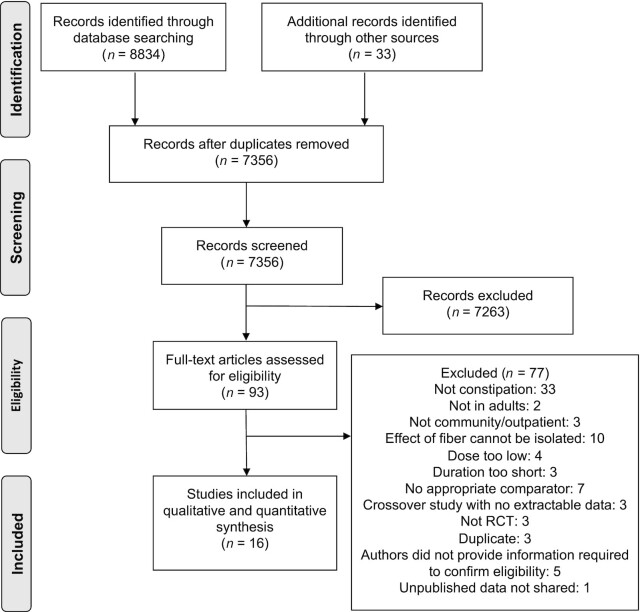
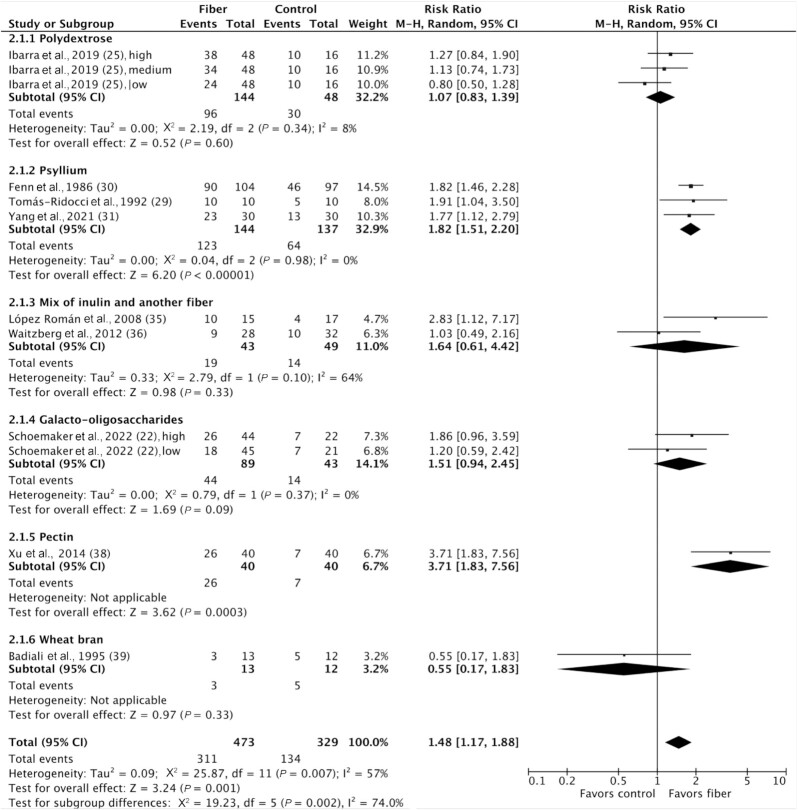
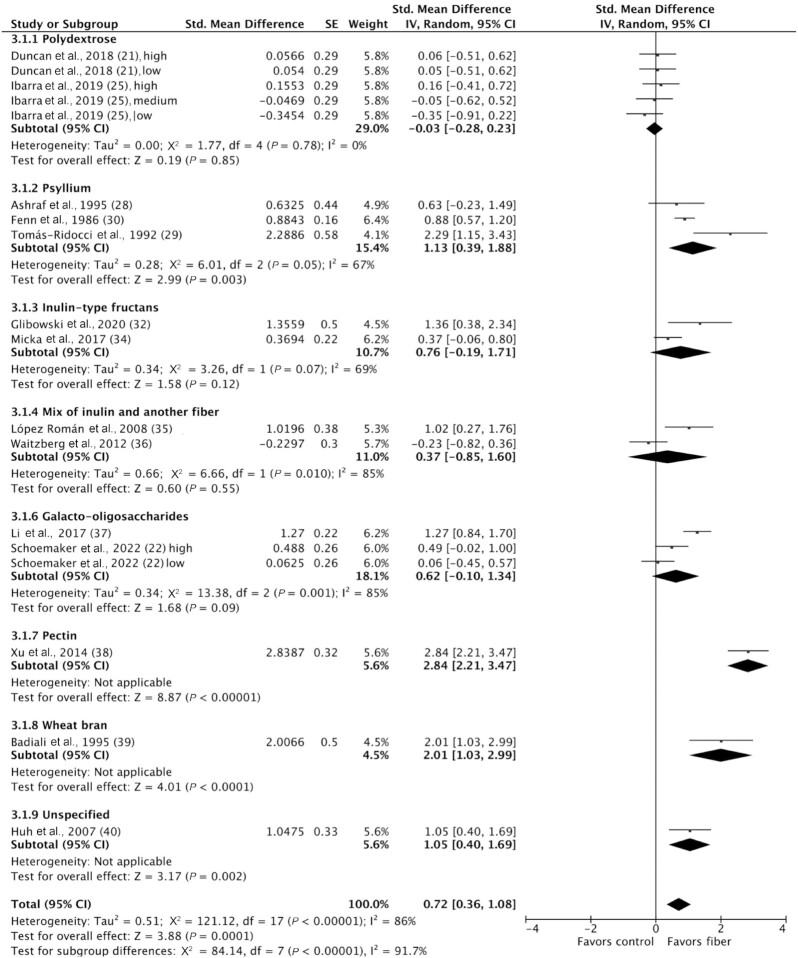
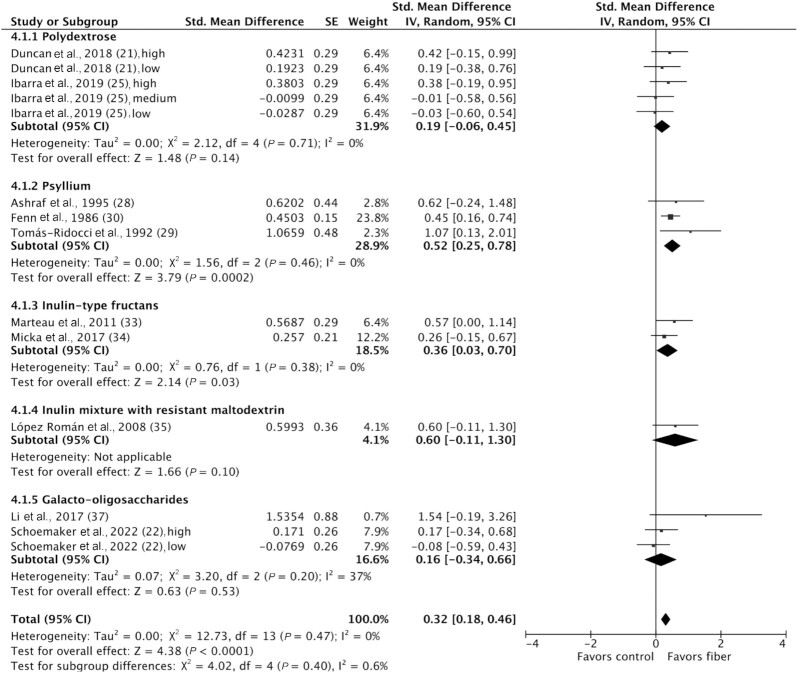
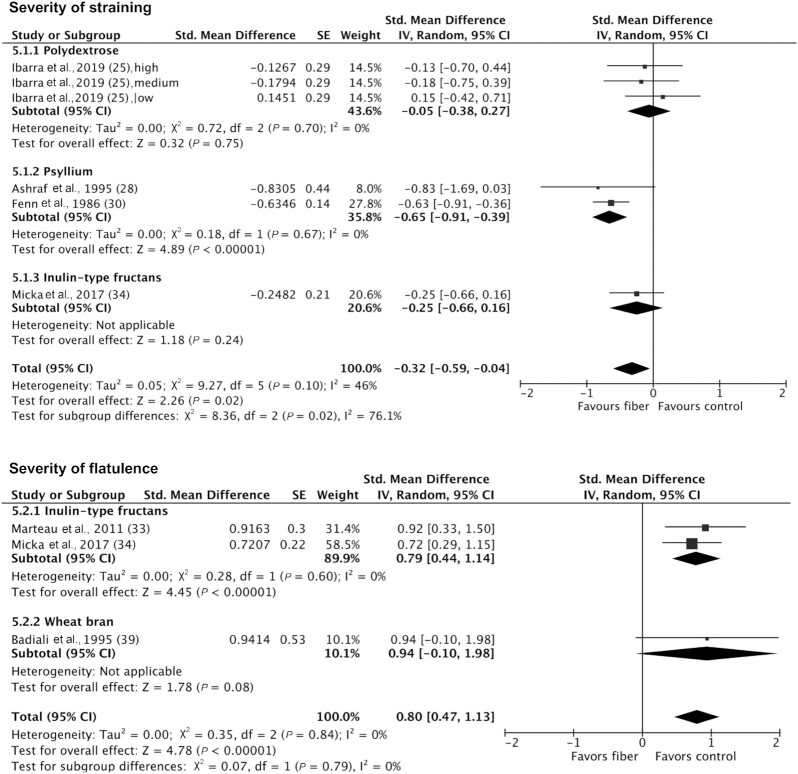
BACKGROUND: Chronic constipation is a prevalent disorder that remains challenging to treat. Studies suggest increasing fiber intake may improve symptoms, although recommendations on the fiber type, dose, and treatment duration are unclear. OBJECTIVES: We investigated the effects of fiber supplementation on stool output, gut transit time, symptoms, and quality of life in adults with chronic constipation via a systematic review and meta-analysis of randomized controlled trials (RCTs). METHODS: Studies were identified using electronic databases, backward citation, and hand searches of abstracts. RCTs reporting administration of fiber supplementation in adults with chronic constipation were included. Risks of bias (RoB) was assessed with the Cochrane RoB 2.0 tool. Results were synthesized using risk ratios (RRs), mean differences, or standardized mean differences (SMDs) and 95% CIs using a random-effects model. RESULTS: Sixteen RCTs with 1251 participants were included. Overall, 311 of 473 (66%) participants responded to fiber treatment and 134 of 329 (41%) responded to control treatment [RR: 1.48 (95% CI: 1.17, 1.88; P = 0.001); I2 = 57% (P = 0.007)], with psyllium and pectin having significant effects. A higher response to treatment was apparent in fiber groups compared to control groups irrespective of the treatment duration, but only with higher fiber doses (>10 g/d). Fiber increased stool frequency [SMD: 0.72 (95% CI: 0.36, 1.08; P = 0.0001); I2 = 86% (P < 0.00001)]; psyllium and pectin had significant effects, and improvement was apparent only with higher fiber doses and greater treatment durations (≥4 weeks). Fiber improved stool consistency (SMD: 0.32; 95% CI: 0.18, 0.46; P < 0.0001), particularly with higher fiber doses. Flatulence was higher in fiber groups compared to control groups(SMD: 0.80; 95% CI: 0.47, 1.13; P < 0.00001). CONCLUSIONS: Fiber supplementation is effective at improving constipation. Particularly, psyllium, doses >10 g/d and treatment durations of at least 4 weeks appear optimal, though caution is needed when interpreting the results due to considerable heterogeneity. These findings provide promising evidence on the optimal type and regime of fiber supplementation, which could be used to standardize recommendations to patients. The protocol for this review is registered at PROSPERO as CRD42020191404.
Overview
The claims and statistics of this paper haven’t been checked yet.
Free: it reads the open-access text and checks the first 5 claims that cite a source we can check. Create a free account to check every claim.
Integrity signals
Registry
Cites
Statistics
Figures
Verification
Claims the paper makes
The claims and statistics of this paper haven’t been checked yet.
Free: it reads the open-access text and checks the first 5 claims that cite a source we can check. Create a free account to check every claim.
Claims other papers make about this one
Each is checked against this paper’s own text: does it say what the citing paper says it does?
The source backs part of the claim, not all of it — or backs it for a different population, condition or comparison.
In the citing paper
“Overall, fiber supplements had no impact on global symptom scores (SMD −0.15, 95% CI −0.39, 0.08); however, when only those that were administered for greater durations (≥ 4 weeks) were meta‐analyzed, this led to significant improvements (SMD −0.42, 95% CI 0.77, −0.06), highlighting fiber supplements should be trialed for a minimum of 4 weeks.”
From British Dietetic Association Guidelines for the Dietary Management of Chronic Constipation in Adults (2025) · cites this paper as [12]
Experimental — accuracy not yet measuredThe source backs part of the claim, not all of it — or backs it for a different population, condition or comparison.
In the citing paper
“Two RCTs investigated the effect of inulin‐type fructans and showed they significantly softened stool consistency, albeit the effect size was small and unlikely to be clinically meaningful (SMD 0.36, 95% CI 0.03, 0.70).”
From British Dietetic Association Guidelines for the Dietary Management of Chronic Constipation in Adults (2025) · cites this paper as [12]
Experimental — accuracy not yet measuredThe source backs part of the claim, not all of it — or backs it for a different population, condition or comparison.
In the citing paper
“When performing subgroup analyses based on the specific type of fiber used, two RCTs investigated the effect of psyllium (10.2 and 19.2 g/day) and showed a significant reduction in the severity of straining (SMD −0.65, 95% CI −0.91, −0.39).”
From British Dietetic Association Guidelines for the Dietary Management of Chronic Constipation in Adults (2025) · cites this paper as [12]
Experimental — accuracy not yet measuredThe source backs part of the claim, not all of it — or backs it for a different population, condition or comparison.
In the citing paper
“Polydextrose supplements had no impact on global QoL (MD −0.04 scale points, 95% CI −0.19, 0.10 scale points; higher score is more severe), nor on the QoL components of satisfaction, physical discomfort, worries and concerns, or psychosocial discomfort.”
From British Dietetic Association Guidelines for the Dietary Management of Chronic Constipation in Adults (2025) · cites this paper as [12]
Experimental — accuracy not yet measuredThe cited source says what the claim attributes to it.
In the citing paper
“Second, to identify and evaluate all previous evidence for any dietary treatment in chronic constipation, four rigorous systematic reviews and meta‐analyses of a total of 75 RCTs were conducted [11, 12, 13, 14].”
From British Dietetic Association Guidelines for the Dietary Management of Chronic Constipation in Adults (2025) · cites this paper as [12]
42 more claims about this paper
Create a free account to see every claim other papers make about this one.
Self-check
Percentages, sums and reported differences re-computed from the paper’s own numbers.
The self-check needs the paper’s full text.
Citations
Cites
The PRISMA 2020 statement: An updated guideline for reporting systematic reviews
Page, M. J., McKenzie, J. E., Bossuyt, P. M., Boutron, I., Hoffmann, T. C., Mulrow, C. D., Shamseer, L., Tetzlaff, J. M., Akl, E. A., Brennan, S. E., et al. (2021) · BMJ · doi:10.1136/bmj.n71 · Cited by 108,283
RoB 2: a revised tool for assessing risk of bias in randomised trials
Sterne, J. A. C., Savović, J., Page, M. J., Elbers, R. G., Blencowe, N. S., Boutron, I., Cates, C. J., Cheng, H.-Y., Corbett, M. S., Eldridge, S. M., et al. (2019) · BMJ · doi:10.1136/bmj.l4898 · Cited by 34,787 · cited 1×
“Risk of bias assessment Risks of bias (RoB) for eligible studies was assessed independently by 2 reviewers (AvdS, CD) (23).”
MethodWan, X., Wang, W., Liu, J., & Tong, T. (2014) · BMC Medical Research Methodology · doi:10.1186/1471-2288-14-135 · Cited by 11,735
Gibson, G. R., Hutkins, R., Sanders, M. E., Prescott, S. L., Reimer, R. A., Salminen, S. J., Scott, K., Stanton, C., Swanson, K. S., Cani, P. D., et al. (2017) · Nature Reviews Gastroenterology & Hepatology · doi:10.1038/nrgastro.2017.75 · Cited by 5,634 · cited 1×
“This includes prebiotic fibers, which are substrates that are selectively utilized by host microorganisms, conferring a health benefit (13).”
BackgroundThe PRISMA 2020 statement: an updated guideline for reporting systematic reviews
Page, M. J., McKenzie, J., Bossuyt, P., Boutron, I., Hoffmann, T., mulrow, C., Shamseer, L., Tetzlaff, J., Akl, E., Brennan, S. E., et al. (2020) · doi:10.31222/osf.io/v7gm2 · Cited by 5,177
Lacy, B. E., Mearin, F., Chang, L., Chey, W. D., Lembo, A. J., Simren, M., & Spiller, R. (2016) · Gastroenterology · doi:10.1053/j.gastro.2016.02.031 · Cited by 2,866
Sperber, A. D., Bangdiwala, S. I., Drossman, D. A., Ghoshal, U. C., Simren, M., Tack, J., Whitehead, W. E., Dumitrascu, D. L., Fang, X., Fukudo, S., et al. (2021) · Gastroenterology · doi:10.1053/j.gastro.2020.04.014 · Cited by 2,263 · cited 1×
“Introduction Chronic constipation is a common gastrointestinal disorder with an estimated prevalence of 12% in adults (1).”
BackgroundPeery, A. F., Crockett, S. D., Murphy, C. C., Lund, J. L., Dellon, E. S., Williams, J. L., Jensen, E. T., Shaheen, N. J., Barritt, A. S., Lieber, S. R., et al. (2019) · Gastroenterology · doi:10.1053/j.gastro.2018.08.063 · Cited by 1,619
Dietary fibre in gastrointestinal health and disease
Gill, S. K., Rossi, M., Bajka, B., & Whelan, K. (2021) · Nature Reviews Gastroenterology & Hepatology · doi:10.1038/s41575-020-00375-4 · Cited by 979 · cited 2×
“Fermentable fibers may increase stool bulk indirectly through fermentation byproducts that influence contractile activity in the gut and increase microbial biomass through changes in the gut microbiome (14, 17).”
BackgroundSelf-citationFord, A. C., Moayyedi, P., Lacy, B. E., Lembo, A. J., Saito, Y. A., Schiller, L. R., Soffer, E. E., Spiegel, B. M. R., & Quigley, E. M. M. (2014) · American Journal of Gastroenterology · doi:10.1038/ajg.2014.187 · Cited by 645
Chronic constipation: a survey of the patient perspective
JOHANSON, J. F., & KRALSTEIN, J. (2007) · Alimentary Pharmacology & Therapeutics · doi:10.1111/j.1365-2036.2006.03238.x · Cited by 617 · cited 1×
“This may result in nonstandardized recommendations in clinical care, with patients left to choose the type and regime of fiber supplements, likely leading to dissatisfaction (8, 51).”
BackgroundDevelopment and validation of the Patient Assessment of Constipation Quality of Life questionnaire
Marquis, P., De La Loge, C., Dubois, D., McDermott, A., & Chassany, O. (2005) · Scandinavian Journal of Gastroenterology · doi:10.1080/00365520510012208 · Cited by 584 · cited 1×
“5- to 1-point change in PAC-QoL; therefore, it is unlikely that this will have a noticeable impact on patients’ QoL scores (49, 50).”
BackgroundInterpretation of subgroup analyses in systematic reviews: A tutorial
Richardson, M., Garner, P., & Donegan, S. (2019) · Clinical Epidemiology and Global Health · doi:10.1016/j.cegh.2018.05.005 · Cited by 559 · cited 2×
“This limits confidence in the interpretations of the findings of the subgroup analyses regarding the types and regimes of fiber supplementation (26).”
BackgroundSystematic review: impact of constipation on quality of life in adults and children
BELSEY, J., GREENFIELD, S., CANDY, D., & GERAINT, M. (2010) · Alimentary Pharmacology & Therapeutics · doi:10.1111/j.1365-2036.2010.04273.x · Cited by 551 · cited 1×
“Chronic constipation impacts quality of life, with impairments in social functioning and mental health (3).”
BackgroundDesign of Treatment Trials for Functional Gastrointestinal Disorders
Irvine, E. J., Tack, J., Crowell, M. D., Gwee, K. A., Ke, M., Schmulson, M. J., Whitehead, W. E., & Spiegel, B. (2016) · Gastroenterology · doi:10.1053/j.gastro.2016.02.010 · Cited by 550
American Gastroenterological Association Medical Position Statement on Constipation
Bharucha, A. E., Dorn, S. D., Lembo, A., & Pressman, A. (2013) · Gastroenterology · doi:10.1053/j.gastro.2012.10.029 · Cited by 521 · cited 1×
“Psyllium supplements should be used in favor of wheat bran, and individuals should gradually increase their fiber intakes to prevent sudden symptom exacerbation (9).”
BackgroundFiber and Functional Gastrointestinal Disorders
Eswaran, S., Muir, J., & Chey, W. D. (2013) · American Journal of Gastroenterology · doi:10.1038/ajg.2013.63 · Cited by 436 · cited 2×
“Fermentable fibers may increase stool bulk indirectly through fermentation byproducts that influence contractile activity in the gut and increase microbial biomass through changes in the gut microbiome (14, 17).”
BackgroundFord, A. C., & Suares, N. C. (2011) · Gut · doi:10.1136/gut.2010.227132 · Cited by 378
Design of Treatment Trials for Functional Gastrointestinal Disorders
Irvine, E. J., Whitehead, W. E., Chey, W. D., Matsueda, K., Shaw, M., Talley, N. J., & Veldhuyzen van Zanten, S. J. O. (2006) · Gastroenterology · doi:10.1053/j.gastro.2005.11.058 · Cited by 286
Serra, J., Pohl, D., Azpiroz, F., Chiarioni, G., Ducrotté, P., Gourcerol, G., Hungin, A. P. S., Layer, P., Mendive, J., Pfeifer, J., et al. (2020) · Neurogastroenterology & Motility · doi:10.1111/nmo.13762 · Cited by 244
Nellesen, D., Yee, K., Chawla, A., Lewis, B. E., & Carson, R. T. (2013) · Journal of Managed Care Pharmacy · doi:10.18553/jmcp.2013.19.9.755 · Cited by 242
ASHRAF, W., PARK, F., LOF, J., & QUIGLEY, E. M. M. (1995) · Alimentary Pharmacology & Therapeutics · doi:10.1111/j.1365-2036.1995.tb00433.x · Cited by 178 · cited 7×
“Stool weight Stool weight was reported in 3 studies including 59 participants (28, 29, 39).”
BackgroundResultInfluentialJefferson, A., & Adolphus, K. (2019) · Frontiers in Nutrition · doi:10.3389/fnut.2019.00033 · Cited by 149 · cited 1×
“It is likely that the decrease in GTT with wheat bran supplementation results from modification of the gut microbiota composition and its metabolites, ultimately regulating the intestinal contractile activity (48).”
BackgroundChristodoulides, S., Dimidi, E., Fragkos, K. C., Farmer, A. D., Whelan, K., & Scott, S. M. (2016) · Alimentary Pharmacology & Therapeutics · doi:10.1111/apt.13662 · Cited by 144 · cited 4×
“It identified more than double the number of trials than the most recent systematic review (18), thus allowing for more robust subgroup analyses of specific fibers, doses, and treatment durations.”
BackgroundResultSelf-citationMicka, A., Siepelmeyer, A., Holz, A., Theis, S., & Schön, C. (2017) · International Journal of Food Sciences and Nutrition · doi:10.1080/09637486.2016.1212819 · Cited by 139 · cited 10×
“Two studies reported that while adverse events did occur, none interfered with the trial process (34, 40).”
BackgroundInfluentialBadiali, D., Corazziari, E., Habib, F. I., Tomei, E., Bausano, G., Magrini, P., Anzini, F., & Torsoli, A. (1995) · Digestive Diseases and Sciences · doi:10.1007/bf02065421 · Cited by 127
Effects of chicory inulin in constipated elderly people: a double-blind controlled trial
Marteau, P., Jacobs, H., Cazaubiel, M., Signoret, C., Prevel, J.-M., & Housez, B. (2011) · International Journal of Food Sciences and Nutrition · doi:10.3109/09637486.2010.527323 · Cited by 107 · cited 4×
“10 52% Flatulence (severity) 3 (33,34,39) 153 SMD: 0.”
BackgroundMethodInfluentialMcRorie, J. W. (2015) · Nutrition Today · doi:10.1097/nt.0000000000000089 · Cited by 101
Bosman, M., Elsenbruch, S., Corsetti, M., Tack, J. F., Simrén, M., Winkens, B., Boumans, T., Masclee, A., & Keszthelyi, D. (2021) · The Lancet. Gastroenterology & hepatology · doi:10.1016/s2468-1253(21)00023-6 · Cited by 96 · cited 1×
“The placebo response rate was high (41%), which is a common feature in functional bowel disorders, although the rate is higher here than in a recent meta-analysis of 73 RCTs in irritable bowel syndrome (34%) (42).”
ResultMajor, G., Murray, K., Singh, G., Nowak, A., Hoad, C. L., Marciani, L., Silos‐Santiago, A., Kurtz, C. B., Johnston, J. M., Gowland, P., et al. (2018) · Neurogastroenterology & Motility · doi:10.1111/nmo.13400 · Cited by 82 · cited 1×
“The effects of psyllium on stool frequency and consistency are expected, as this fiber has a high water-holding capacity that is resistant to fermentation and forms a viscoelastic substance in the gastrointestinal tract, thus softening stools (14, 45, 46).”
BackgroundWaitzberg, D. L., Pereira, C. C. A., Logullo, L., Jacintho, T. M., de Almeida, D. C. G., da Silva, M. D. L. T., & Torrinhas, R. S. (2012) · PubMed · doi:10.1590/s0212-16112012000100014 · Cited by 82 · cited 4×
“Funnel plot asymmetry was detected for stool consistency, and publication bias is likely, as 1 study did not report findings (36).”
BackgroundMethodInfluentialHarris, L. A., Horn, J., Kissous-Hunt, M., Magnus, L., & Quigley, E. M. M. (2017) · Advances in Therapy · doi:10.1007/s12325-017-0633-5 · Cited by 75 · cited 2×
“However, half of people with constipation are dissatisfied with the current treatment options, primarily because of a lack of effectiveness and side effects (8).”
BackgroundA general practice study of the efficacy of Regulan in functional constipation
Fenn, G. C., Wilkinson, P. D., Lee, C. E., & Akbar, F. A. (1986) · International Journal of Clinical Practice · doi:10.1111/j.1742-1241.1986.tb07949.x · Cited by 74 · cited 4×
“Compliance Compliance was measured in 7 studies (21, 25, 30, 34, 36, 39, 40), but reported in only 3 (25, 39, 40).”
BackgroundMethodInfluentialMitsuhashi, S., Ballou, S., Jiang, Z. G., Hirsch, W., Nee, J., Iturrino, J., Cheng, V., & Lembo, A. (2018) · American Journal of Gastroenterology · doi:10.1038/ajg.2017.213 · Cited by 70 · cited 1×
“Since normal stool frequency is 3 to 21 bowel movements/week, an increase of 3 bowel movements/week is clinically significant and could normalize stool frequency in constipation (44).”
BackgroundLi, T., Lu, X., & Yang, X. (2017) · Food & Function · doi:10.1039/c6fo01290f · Cited by 62 · cited 8×
“Another explanation could be that the study with the largest effect size used an nonvalidated measurement tool, potentially inflating the effect size (37).”
BackgroundResultInfluentialYurrita, L. C., Martín, I. S. M., Ciudad-Cabañas, M. J., Calle-Purón, M. E., & Cabría, M. H. (2014) · PubMed · doi:10.3305/nh.2014.30.2.7565 · Cited by 60 · cited 1×
“The beneficial effect of inulin-type fructans on stool consistency in chronic constipation is in line with the findings of a previous meta-analysis (47).”
ResultCai, Q., Buono, J. L., Spalding, W. M., Sarocco, P., Tan, H., Stephenson, J. J., Carson, R. T., & Doshi, J. A. (2014) · Journal of Medical Economics · doi:10.3111/13696998.2013.860375 · Cited by 51
Schoemaker, M. H., Hageman, J. H. J., ten Haaf, D. S. M., Hartog, A., Scholtens, P. A. M. J., Boekhorst, J., Nauta, A., & Bos, R. (2022) · Nutrients · doi:10.3390/nu14020309 · Cited by 49 · cited 15×
“In 3 studies including 428 participants (21, 22, 25), fiber had no impact on PACSYM global scores [MD: −0.”
BackgroundMethodInfluentialTack, J., Camilleri, M., Dubois, D., Vandeplassche, L., Joseph, A., & Kerstens, R. (2015) · Neurogastroenterology & Motility · doi:10.1111/nmo.12505 · Cited by 47 · cited 1×
“5- to 1-point change in PAC-QoL; therefore, it is unlikely that this will have a noticeable impact on patients’ QoL scores (49, 50).”
BackgroundYang, C., Liu, S., Li, H., Bai, X., Shan, S., Gao, P., & Dong, X. (2021) · Aging · doi:10.18632/aging.203095 · Cited by 34
(2008) · PubMed · Cited by 29
Chemical stability of fructans in apple beverages and their influence on chronic constipation
Glibowski, P., Skrzypek, M., Ćwiklińska, M., Drozd, M., & Kowalska, A. (2020) · Food & Function · doi:10.1039/c9fo02596k · Cited by 24 · cited 2×
“Of these, 7 replied (21, 22, 25, 31, 32, 34, 36) and 1 provided data for inclusion in the analyses (21).”
BackgroundResultGunn, D., Murthy, R., Major, G., Wilkinson‐Smith, V., Hoad, C. L., Marciani, L., Remes-Troche, J. M., Gill, S. K., Rossi, M., Harris, H. C., et al. (2020) · American Journal of Clinical Nutrition · doi:10.1093/ajcn/nqaa173 · Cited by 23 · cited 2×
“9% of weight in the meta-analysis, were from inulin-type fructans, which are highly fermentable fibers that lead to microbiotamediated gas production (45).”
BackgroundSelf-citationIbarra, A., Pelipyagina, T., Rueffer, M., Evans, M., & Ouwehand, A. C. (2019) · Nutrients · doi:10.3390/nu11020439 · Cited by 22 · cited 10×
“64 0% Gastrointestinal symptoms Integrative symptom score 53,5 (21,22,25,38,39) 531 SMD: −0.”
BackgroundMethodInfluentialXu, L., Yu, W., Jiang, J., & Li, N. (2014) · PubMed · Cited by 21
Tomás-Ridocci, M., Añón, R., Mínguez, M., Zaragozá, A., Ballester, J., & Benages, A. (1992) · PubMed · Cited by 19
Duncan, P. I., Enters-Weijnen, C. F., Emami, N., McLean, P., Nunes, T., Beaumont, M., Crabbe, R., Whelan, K., Scott, S. M., DeWit, N. J., et al. (2018) · Nutrients · doi:10.3390/nu10070920 · Cited by 15 · cited 12×
“64 0% Gastrointestinal symptoms Integrative symptom score 53,5 (21,22,25,38,39) 531 SMD: −0.”
BackgroundMethodSelf-citationEffect of Yogurt Enriched Water-soluble Fiber on Functional Constipation
Huh, J. W., Park, Y. A., Sohn, S., Lee, S. M., Jung, E. J., Lee, K. Y., Kim, S.-J., & Ha, W.-K. (2007) · Journal of the Korean Society of Coloproctology · doi:10.3393/jksc.2007.23.5.312 · Cited by 15 · cited 5×
“Twelve studies were in English, 2 were in Spanish (29, 35), 1 was in Korean (40), and 1 was in Chinese (38).”
BackgroundMethodInfluential
Research works printed but not linked: 1
- Tomlin J, Read NW. The effect of inert plastic particles on colonic function in human volunteers. Gastroenterology. 1998; 94: A463.
Cited by
Corsetti, M., Shin, A., Lacy, B. E., Cash, B. D., Simrén, M., Schmulson, M. J., Hou, X., & Lembo, A. J. (2026) · Gastroenterology · doi:10.1053/j.gastro.2026.02.003 · Cited by 92
van der Schoot, A., Helander, C., Whelan, K., & Dimidi, E. (2022) · Clinical Nutrition · doi:10.1016/j.clnu.2022.10.015 · Cited by 67
Self-citationMarco, M. L., Cunningham, M., Bischoff, S. C., Clarke, G. A., Delzenne, N. M., Lewis, J., Meisel, M., Merenstein, D. J., O’Toole, P. W., Staudacher, H. M., et al. (2026) · Nature Reviews Gastroenterology & Hepatology · doi:10.1038/s41575-026-01176-x · Cited by 58
Dietary fibre confers therapeutic effects in a preclinical model of Huntington’s disease
Gubert, C., Kong, G., Costello, C., Adams, C. D., Masson, B. A., Qin, W., Choo, J. M., Narayana, V. K., Rogers, G. B., Renoir, T., et al. (2023) · Brain Behavior and Immunity · doi:10.1016/j.bbi.2023.12.023 · Cited by 46
Van Der Schoot, A., Katsirma, Z., Whelan, K., & Dimidi, E. (2024) · Alimentary Pharmacology & Therapeutics · doi:10.1111/apt.17782 · Cited by 38
Self-citation
Metadata
- Authors
- van der Schoot, A., Drysdale, C., Whelan, K., & Dimidi, E.
- Affiliations
- King's College London (GB)
- Corresponding author
- Dimidi, Eirini
- Venue
- The American Journal of Clinical Nutrition
- Publisher
- Elsevier BV
- Published
- 2022-10
- Volume
- 116
- Issue
- 4
- Pages
- 953-969
- ISSN
- 0002-9165 (ISSN-L)
- PMC
- PMC9535527
- OpenAlex
- W4285027629
- Cited by
- 120
- References
- 47
- Citations by year
- 2026: 43 · 2025: 37 · 2024: 23 · 2023: 14 · 2022: 3
- FWCI
- 3.96
- Type
- journal article
- Language
- en
- Open access
- hybrid
- doi.org
- Licence
- cc-by
- www.elsevier.com/tdm/userlicense/1.0/ (tdm)
- creativecommons.org/licenses/by/4.0/ (vor)
- Locations
- American Journal of Clinical Nutrition (publishedVersion, cc-by)
- PubMed Central (publishedVersion, cc-by)
- PubMed (publishedVersion)
- Funders
- National Institute of Health and Medical Research
- Almond Board of California
- British Dietetic Association (19/14)
- Topics
- Health Sciences › Medicine › Gastroenterology › Gastrointestinal motility and disorders
- Health Sciences › Nursing › Nutrition and Dietetics › Food composition and properties
- Health Sciences › Medicine › Urology › Pelvic floor disorders treatments
- Keywords
- chronic constipation, dietary fiber supplementation, psyllium, pectin, stool frequency, stool consistency, gut transit time, flatulence, quality of life, treatment duration, adults, irritable bowel syndrome with constipation, functional gastrointestinal disorders, gut microbiota, gut-brain axis, intestinal permeability, intestinal barrier, intestinal motility
- MeSH terms
- Adult, Constipation, Dietary Fiber, Humans, Pectins, Psyllium, Randomized Controlled Trials as Topic, Dietary Supplements
About these checks
Registry, retraction, Cites and statistics results are computed, not judged, with one exception: a printed reference that no index lists is read once by a model before it counts as a citation error. Claims are extracted by a model and kept only when their quote appears verbatim in the text; each cited source is then checked, with a model’s help, for whether it says what the claim relies on. Those verdicts can be wrong — read the claim’s quote and the cited source before relying on one.
Statistics and arithmetic are recomputed, not judged.
Confidence bands are shown only for fields calibrated on our annotated test set. None is calibrated yet, so no band is shown.
What counts as a claim ›How we measure confidence ›How we check this ›
Are you an author, or do you see a problem with this page? Request a review
Data sources
Bibliographic data: Semantic Scholar, OpenAlex, Crossref.
Contains information from the Semantic Scholar Academic Graph Datasets, made available under the ODC Attribution License (ODC-BY 1.0).
Semantic Scholar’s data is described in: Kinney, R., et al. (2023). The Semantic Scholar Open Data Platform. arXiv:2301.10140.
