

The DOI matches its Crossref record; 64 of the 64 references it cites were found in a registry or an index.
LinearFold: linear-time approximate RNA folding by 5'-to-3' dynamic programming and beam search
Open accessAbstract
Motivation: Predicting the secondary structure of an ribonucleic acid (RNA) sequence is useful in many applications. Existing algorithms [based on dynamic programming] suffer from a major limitation: their runtimes scale cubically with the RNA length, and this slowness limits their use in genome-wide applications. Results: We present a novel alternative O(n3)-time dynamic programming algorithm for RNA folding that is amenable to heuristics that make it run in O(n) time and O(n) space, while producing a high-quality approximation to the optimal solution. Inspired by incremental parsing for context-free grammars in computational linguistics, our alternative dynamic programming algorithm scans the sequence in a left-to-right (5′-to-3′) direction rather than in a bottom-up fashion, which allows us to employ the effective beam pruning heuristic. Our work, though inexact, is the first RNA folding algorithm to achieve linear runtime (and linear space) without imposing constraints on the output structure. Surprisingly, our approximate search results in even higher overall accuracy on a diverse database of sequences with known structures. More interestingly, it leads to significantly more accurate predictions on the longest sequence families in that database (16S and 23S Ribosomal RNAs), as well as improved accuracies for long-range base pairs (500+ nucleotides apart), both of which are well known to be challenging for the current models. Availability and implementation: Our source code is available at https://github.com/LinearFold/LinearFold, and our webserver is at http://linearfold.org (sequence limit: 100 000nt). Supplementary information: Supplementary data are available at Bioinformatics online.
Overview
The claims and statistics of this paper haven’t been checked yet.
Run the check — free, no account needed. It reads the open-access text and checks the sources it cites.
Integrity signals
Registry
Cites
Statistics
Figures
Verification
Claims the paper makes
The claims and statistics of this paper haven’t been checked yet.
Run the check — free, no account needed. It reads the open-access text and checks the sources it cites.
Claims other papers make about this one
Each is checked against this paper’s own text: does it say what the citing paper says it does?
The cited source says what the claim attributes to it.
In the citing paper
“Inspired by our previous work, LinearFold21, we further developed a left-to-right dynamic programming, which is equivalent to the above bottom-up version but explores the search space incrementally from left to right”
From Algorithm for optimized mRNA design improves stability and immunogenicity (2023) · cites this paper as [21]
Self-check
Percentages, sums and reported differences re-computed from the paper’s own numbers.
The self-check needs the paper’s full text.
Citations
Cites
Lorenz, R., Bernhart, S. H., Höner zu Siederdissen, C., Tafer, H., Flamm, C., Stadler, P. F., & Hofacker, I. L. (2011) · Algorithms for Molecular Biology · doi:10.1186/1748-7188-6-26 · Cited by 5,098 · cited 4×
“Widely used systems such as RNAstructure (Mathews and Turner, 2006), Vienna RNAfold (Lorenz etal.”
MethodInfluentialMathews, D. H., Sabina, J., Zuker, M., & Turner, D. H. (1999) · Journal of Molecular Biology · doi:10.1006/jmbi.1999.2700 · Cited by 3,795 · cited 1×
“8% of the optimal structure (Zuker et al., 1991; Mathews et al., 1999).”
Self-citationOptimal computer folding of large RNA sequences using thermodynamics and auxiliary information
Zuker, M., & Stiegler, P. (1981) · Nucleic Acids Research · doi:10.1093/nar/9.1.133 · Cited by 3,604
Gilbert, W. (1986) · Nature · doi:10.1038/319618a0 · Cited by 2,721 · cited 1×
“The dual nature of RNA as both a genetic material and functional molecule led to the RNA World hypothesis, that RNA was the first moleculeoflife(Gilbert,1986), andthisdualnaturehasalsobeenutilized to develop in vitro methods to evolve functional sequences (Joyce, 1994).”
BackgroundFrazier, L., & Rayner, K. (1982) · Cognitive Psychology · doi:10.1016/0010-0285(82)90008-1 · Cited by 1,793 · cited 1×
“This is analogous to psycholinguistic evidence that humans incrementally parse a sentence before it is fully read or heard (Frazier and Rayner, 1982).”
BackgroundMathews, D. H., Disney, M. D., Childs‐Disney, J. L., Schroeder, S. J., Zuker, M., & Turner, D. H. (2004) · Proceedings of the National Academy of Sciences · doi:10.1073/pnas.0401799101 · Cited by 1,648 · cited 1×
“In particular, we demonstrate two versions of LinearFold, LinearFold-V using the thermodynamic free energy model (Mathews et al., 2004) from Vienna RNAfold (Lorenz et al.”
MethodSelf-citationNon–coding RNA genes and the modern RNA world
Eddy, S. R. (2001) · Nature Reviews Genetics · doi:10.1038/35103511 · Cited by 1,456 · cited 1×
“Ribonucleicacid(RNA)isinvolvedinnumerouscellularprocesses(Eddy, 2001).”
Big Data: Astronomical or Genomical?
Stephens, Z. D., Lee, S. Y., Faghri, F., Campbell, R. H., Zhai, C., Efron, M. J., Iyer, R., Schatz, M. C., Sinha, S., & Robinson, G. E. (2015) · PLOS Biology · doi:10.1371/journal.pbio.1002195 · Cited by 1,340 · cited 1×
“Since experimentally determining the structure is expensive and time comsuming, and given the overwhelming increase in genomic data (about 1021 base-pairs per year) (Stephens et al., 2015), computational methods have been widely used as an alternative to automatically predict the structure.”
MethodThe equilibrium partition function and base pair binding probabilities for RNA secondary structure
McCaskill, J. S. (1990) · Biopolymers · doi:10.1002/bip.360290621 · Cited by 1,288 · cited 2×
“…function and base pair probabilities for natural RNA sequences with well-defined structures, since the classical method for that task, the McCaskill (1990) algorithm, is isomorphic in structure to the cubic-time algorithms that are used as baselines in this paper.”
MethodThe promises and pitfalls of RNA-interference-based therapeutics
Castanotto, D., & Rossi, J. J. (2009) · Nature · doi:10.1038/nature07758 · Cited by 1,241
Recognition and parsing of context-free languages in time n3
Younger, D. H. (1967) · Information and Control · doi:10.1016/s0019-9958(67)80007-x · Cited by 935 · cited 1×
“1965; Younger, 1967), has a running time of O ( n 3 ) that scales cubically with the sequence length n , which is too slow for long RNA sequences (Lange et al. , 2012).”
BackgroundArchitecture and secondary structure of an entire HIV-1 RNA genome
Watts, J. M., Dang, K. K., Gorelick, R. J., Leonard, C. W., Bess, J. W., Swanstrom, R. I., Burch, C. L., & Weeks, K. M. (2009) · Nature · doi:10.1038/nature08237 · Cited by 875 · cited 1×
“,≤700nt) and predict structures within each segment only (Watts et al., 2009; Andronescu et al., 2007; Licon et al., 2010).”
BackgroundOn the translation of languages from left to right
Knuth, D. E. (1965) · Information and Control · doi:10.1016/s0019-9958(65)90426-2 · Cited by 784
In vivo genome-wide profiling of RNA secondary structure reveals novel regulatory features
Ding, Y., Tang, Y., Kwok, C. K., Zhang, Y., Bevilacqua, P. C., & Assmann, S. M. (2014) · Nature · doi:10.1038/nature12756 · Cited by 775
NONCODE 2016: an informative and valuable data source of long non-coding RNAs
Zhao, Y., Li, H., Fang, S., Kang, Y., wu, W., Hao, Y., Li, Z., Bu, D., Sun, N., Zhang, M. Q., et al. (2016) · Nucleic Acids Research · doi:10.1093/nar/gkv1252 · Cited by 643 · cited 1×
“1, from the NONCODE database (Zhao et al., 2016)).”
CONTRAfold: RNA secondary structure prediction without physics-based models
Do, C., Woods, D. A., & Batzoglou, S. (2006) · Intelligent Systems in Molecular Biology · doi:10.1093/bioinformatics/btl246 · Cited by 623 · cited 11×
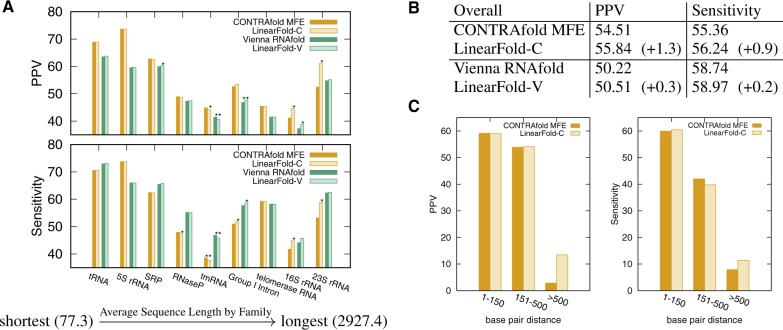
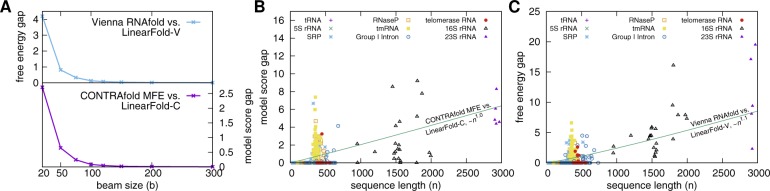
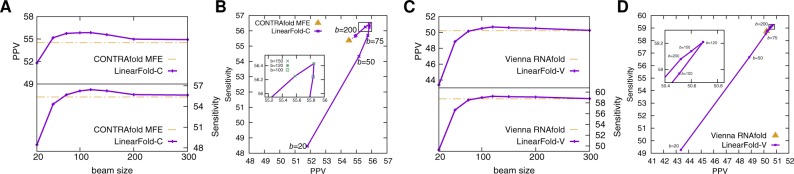
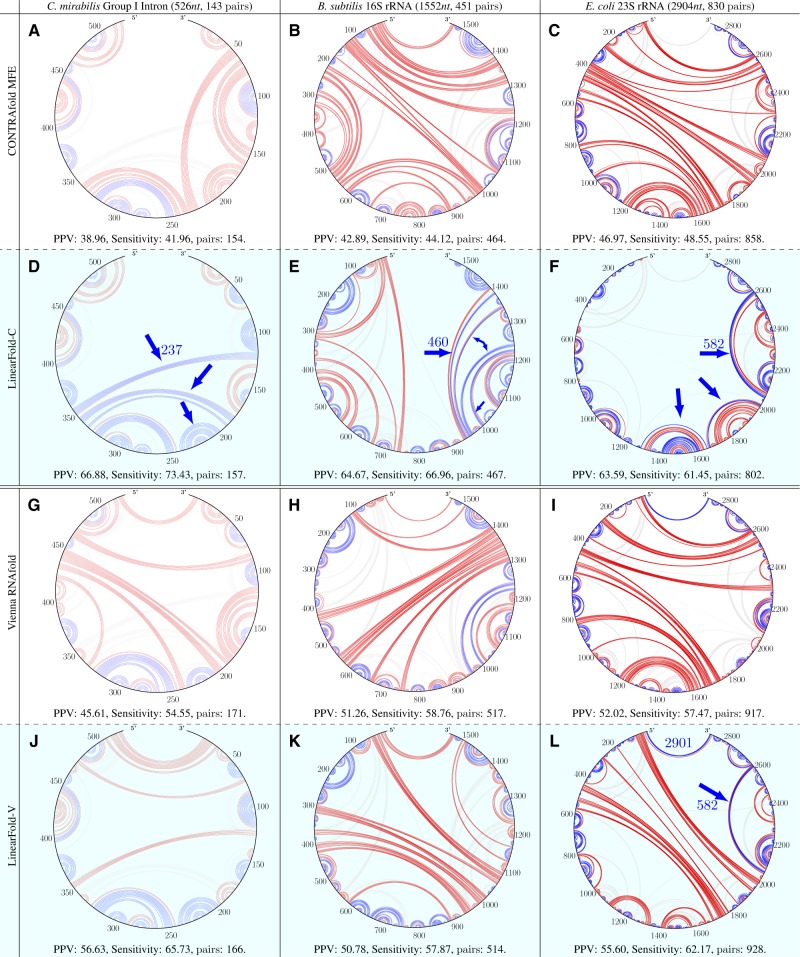
“Individually, LinearFold-C (the LinearFold implementation of the CONTRAfold model) is significantly more accurate in sensitivity than CONTRAfold on one family (Group I Intron), and both PPV/sensitivity on two families (16S and 23S ribosomal RNAs), with the last two being the longest families in this dataset, where they…”
MethodInfluentialNussinov, R., Pieczenik, G., Griggs, J. R., & Kleitman, D. J. (1978) · SIAM Journal on Applied Mathematics · doi:10.1137/0135006 · Cited by 587 · cited 1×
“, 2009), all use virtually the same dynamic programming (DP) algorithm (Nussinov et al. , 1978; Zuker and Stiegler, 1981) to find the best-scoring (lowest free energy, maximum expected accuracy, or best model score) structure (Mathews and Turner, 2006; Washietl et al. , 2012).”
Prediction of RNA secondary structure by free energy minimization
Mathews, D. H., & Turner, D. H. (2006) · Current Opinion in Structural Biology · doi:10.1016/j.sbi.2006.05.010 · Cited by 409 · cited 3×
“Widely used systems such as RNAstructure (Mathews and Turner, 2006), Vienna RNAfold (Lorenz etal.”
BackgroundMethodSelf-citationA partition function algorithm for nucleic acid secondary structure including pseudoknots
Dirks, R. M., & Pierce, N. (2003) · Journal of Computational Chemistry · doi:10.1002/jcc.10296 · Cited by 403
CENTROIDFOLD: a web server for RNA secondary structure prediction
Sato, K., Hamada, M., Asai, K., & Mitsuyama, T. (2009) · Nucleic Acids Research · doi:10.1093/nar/gkp367 · Cited by 334 · cited 2×
“, 2006) and CentroidFold (Sato et al., 2009), all use virtually the same dynamic programming (DP) algorithm (Nussinov et al.”
MethodSato, K., Kato, Y., Hamada, M., Akutsu, T., & Asai, K. (2011) · Bioinform. · doi:10.1093/bioinformatics/btr215 · Cited by 322 · cited 1×
“…replacing the cubic-time McCaskill algorithm with a linear-time one in those heuristic pseudoknot-prediction programs (Bellaousov and Mathews, 2010; Sato et al. , 2011), or linearizing a supercubic-time dynamic program for direct prediction with pseudoknots (Dirks and Pierce, 2003; Reeder and…”
MethodThe Computer Simulation of RNA Folding Pathways Using a Genetic Algorithm
Gultyaev, A. P., van Batenburg, F. H. D., & Pleij, C. W. A. (1995) · Journal of Molecular Biology · doi:10.1006/jmbi.1995.0356 · Cited by 321 · cited 1×
“Finally, our LinearFold algorithm resembles cotranscriptional folding where RNA molecules start to fold immediately before being fully transcribed (Gultyaev et al., 1995; Meyer and Miklos, 2004).”
MethodThe impact of target site accessibility on the design of effective siRNAs
Tafer, H., Ameres, S. L., Obernosterer, G., Gebeshuber, C. A., Schroeder, R., Martı̂nez, J., & Hofacker, I. L. (2008) · Nature Biotechnology · doi:10.1038/nbt1404 · Cited by 311 · cited 1×
“, 2015)tothedesignofoligonucleotidesforknockdownofmessage(Luand Mathews, 2008; Tafer et al. , 2008).”
Reeder, J., & Giegerich, R. (2004) · BMC Bioinformatics · doi:10.1186/1471-2105-5-104 · Cited by 303 · cited 1×
“, 2011), or linearizing a supercubic-time dynamic program for direct prediction with pseudoknots (Dirks and Pierce, 2003; Reeder and Giegerich, 2004).”
BackgroundHuang, L., & Chiang, D. (2005) · International Workshop/Conference on Parsing Technologies · doi:10.3115/1654494.1654500 · Cited by 299 · cited 2×
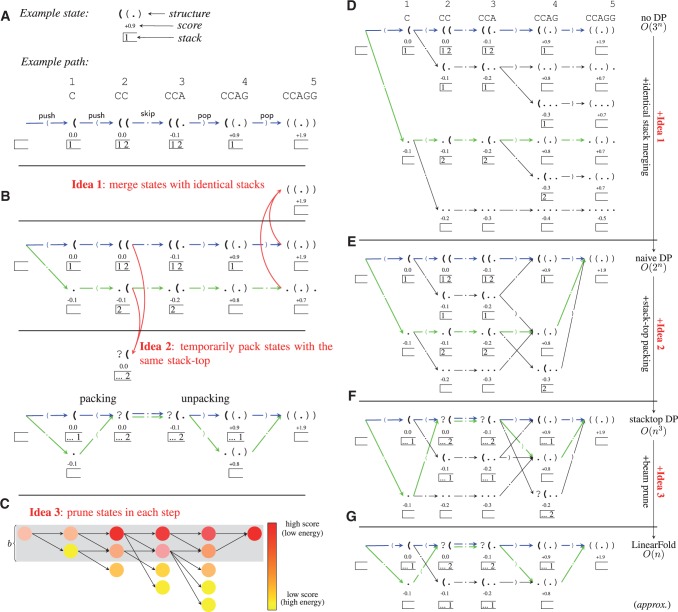
“On top of beam search, we borrow k-best parsing (Huang and Chiang, 2005) to reduce the runtime to O(nb log b).”
MethodSelf-citationSystemically delivered antisense oligomers upregulate gene expression in mouse tissues
Sazani, P., Gemignani, F., Kang, S.-H., Maier, M. A., Manoharan, M., Persmark, M., Bortner, D. M., & Kole, R. (2002) · Nature Biotechnology · doi:10.1038/nbt759 · Cited by 298
RNAcentral: a comprehensive database of non-coding RNA sequences
Petrov, A. I., Kay, S., Kalvari, I., Howe, K., Gray, K. A., Bruford, E. A., Kersey, P. J., Cochrane, G., Finn, R. D., Bateman, A. G., et al. (2016) · Nucleic Acids Research · doi:10.1093/nar/gkw1008 · Cited by 258 · cited 5×
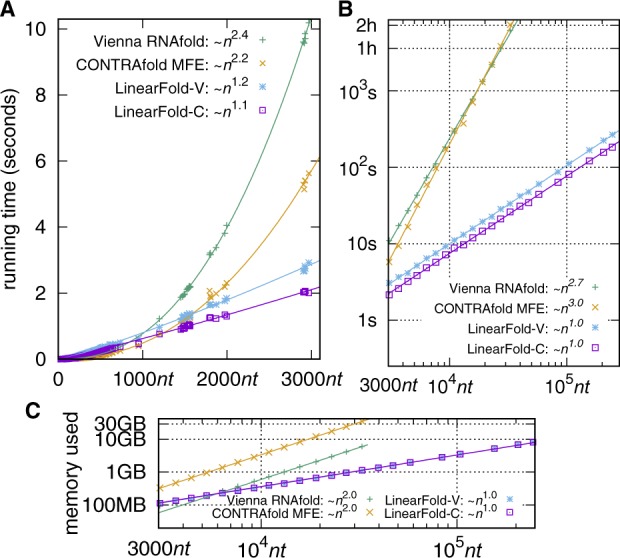
“It is able to fold the longest sequence in RNAcentral (244 296nt) within 3 min, while neither CONTRAfold or RNAfold runs on anything longer than 32 767nt due to datastructure limitations.”
BackgroundInfluentialRNAz 2.0: improved noncoding RNA detection.
Gruber, A. R., Findeiß, S., Stefan Washietl, A., Hofacker, I. L., & Stadler, P. F. (2010) · PubMed · Cited by 237
Local RNA base pairing probabilities in large sequences
Bernhart, S. H., Hofacker, I. L., & Stadler, P. F. (2005) · Bioinformatics · doi:10.1093/bioinformatics/btk014 · Cited by 229 · cited 2×
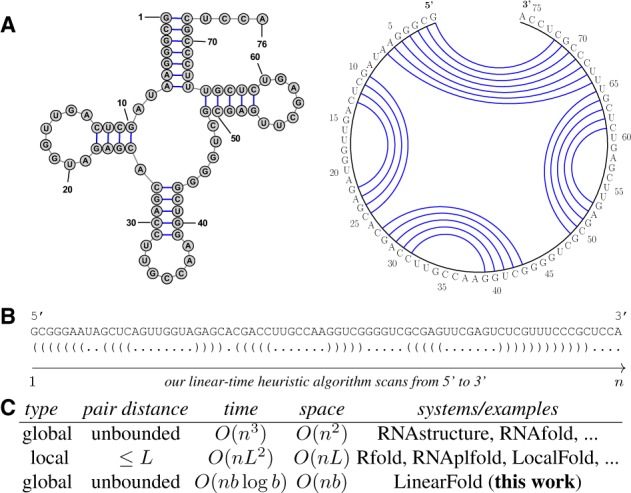
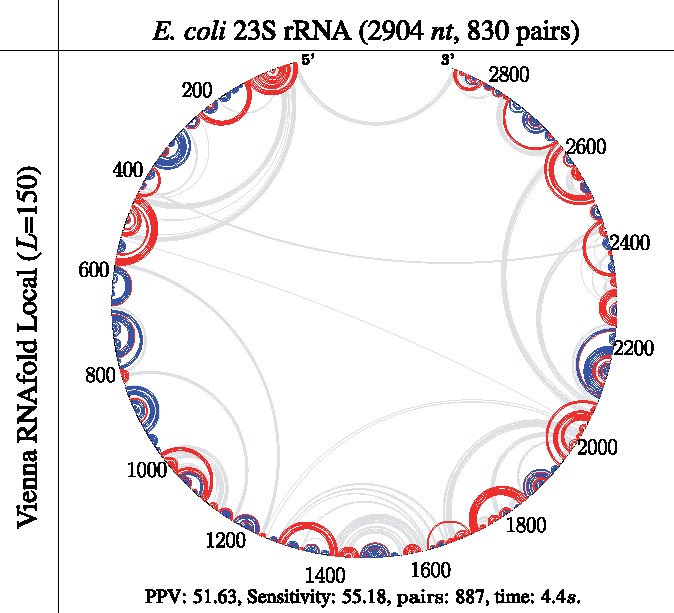
“ThereisacrucialdifferencebetweenourLinearFoldandlocalfolding algorithms (Kiryu et al. , 2008; Bernhart et al. , 2006; Lange et al. , 2012) that can only predict pairs up to a certain distance.”
Efficient parameter estimation for RNA secondary structure prediction
Andronescu, M., Condon, A., Hoos, H. H., Mathews, D. H., & Murphy, K. P. (2007) · Bioinformatics · doi:10.1093/bioinformatics/btm223 · Cited by 221
Self-citationProbKnot: Fast prediction of RNA secondary structure including pseudoknots
Bellaousov, S., & Mathews, D. H. (2010) · RNA · doi:10.1261/rna.2125310 · Cited by 219 · cited 1×
“…of pseudoknots, by either replacing the cubic-time McCaskill algorithm with a linear-time one in those heuristic pseudoknot-prediction programs (Bellaousov and Mathews, 2010; Sato et al. , 2011), or linearizing a supercubic-time dynamic program for direct prediction with pseudoknots (Dirks and…”
MethodSelf-citationDynamic Programming for Linear-Time Incremental Parsing
Huang, L., & Sagae, K. (2010) · Cited by 208
Self-citationZuker, M., Jaeger, J. A., & Turner, D. H. (1991) · Nucleic Acids Research · doi:10.1093/nar/19.10.2707 · Cited by 203 · cited 1×
“For example, it was well studied that while the lowest free energy structure contains only 72.9%oftheactualbasepairs(givenadataset), astructurecontaining 86.1% of them can be found with a free energy within 4.8% of the optimal structure (Zuker et al. , 1991; Mathews et al. , 1999).”
BackgroundInfluentialGareiss, P. C., Sobczak, K., McNaughton, B. R., Palde, P. B., Thornton, C. A., & Miller, B. L. (2008) · Journal of the American Chemical Society · doi:10.1021/ja804398y · Cited by 187 · cited 1×
“,2007; Gareiss et al. , 2008; Castanotto and Rossi, 2009; Palde et al. , 2010).”
Cotranscriptional folding of a riboswitch at nucleotide resolution
Watters, K. E., Strobel, E. J., Yu, A. M., Lis, J. T., & Lucks, J. B. (2016) · Nature Structural & Molecular Biology · doi:10.1038/nsmb.3316 · Cited by 180 · cited 1×
“We will test the hypothesis that our beams potentially capture cotranscriptional folding with empirical data on cotranscriptional folding (Watters et al., 2016).”
BackgroundSpeeding up the Consensus Clustering methodology for microarray data analysis
Giancarlo, R., & Utro, F. (2011) · Algorithms for Molecular Biology · doi:10.1186/1748-7188-6-1 · Cited by 164
RNA Structure Prediction: An Overview of Methods
Seetin, M. G., & Mathews, D. H. (2012) · Methods in molecular biology · doi:10.1007/978-1-61779-949-5_8 · Cited by 162 · cited 2×
“1A), is an important and challenging problem (Seetin and Mathews, 2012; Hofacker and Lorenz, 2014).”
BackgroundSelf-citationEfficient siRNA selection using hybridization thermodynamics
Lu, Z., & Mathews, D. H. (2007) · Nucleic Acids Research · doi:10.1093/nar/gkm920 · Cited by 157
Self-citationGlobal or local? Predicting secondary structure and accessibility in mRNAs
Lange, S. J., Maticzka, D., Möhl, M., Gagnon, J. N., Brown, C. M., & Backofen, R. (2012) · Nucleic Acids Research · doi:10.1093/nar/gks181 · Cited by 155 · cited 3×
“ThereisacrucialdifferencebetweenourLinearFoldandlocalfolding algorithms (Kiryu et al. , 2008; Bernhart et al. , 2006; Lange et al. , 2012) that can only predict pairs up to a certain distance.”
BackgroundMethodStructured Perceptron with Inexact Search
Huang, L., Fayong, S., & Guo, Y. (2012) · Cited by 151
Self-citationIn vitro evolution of nucleic acids
Joyce, G. F. (1994) · Current Opinion in Structural Biology · doi:10.1016/s0959-440x(94)90100-7 · Cited by 147 · cited 2×
“The dual nature of RNA as both a genetic material and functional molecule led to the RNA World hypothesis, that RNA was the first moleculeoflife(Gilbert,1986), andthisdualnaturehasalsobeenutilized to develop in vitro methods to evolve functional sequences (Joyce, 1994).”
BackgroundRivas, E., Lang, R., & Eddy, S. R. (2012) · RNA · doi:10.1261/rna.030049.111 · Cited by 145
Crooke, S. T. (2004) · Current Molecular Medicine · doi:10.2174/1566524043360375 · Cited by 139 · cited 2×
“Furthermore, RNA is an important drug target and agent (Angelbello et al., 2018; Sazani et al., 2002; Crooke, 2004; Childs-Disney et al., 2007; Gareiss et al., 2008; Castanotto and Rossi, 2009; Palde et al., 2010).”
BackgroundSloma, M. F., & Mathews, D. H. (2016) · RNA · doi:10.1261/rna.053694.115 · Cited by 131 · cited 1×
“…sensitivity (the fraction of known pairs predicted) oneachRNAfamilyintheArchiveIIdataset, allowingcorrectlypredicted pairs to be offset by one position for one nucleotide as compared to the known structure (Sloma and Mathews, 2016); we also report exact match accuracies in Supplementary Table SI2.”
ResultSelf-citationA Small Molecule Microarray Platform To Select RNA Internal Loop−Ligand Interactions
Childs‐Disney, J. L., Wu, M., Pushechnikov, A. O., Aminova, O., & Disney, M. D. (2007) · ACS Chemical Biology · doi:10.1021/cb700174r · Cited by 110
mRNAs and lncRNAs intrinsically form secondary structures with short end-to-end distances
Lai, W.-J. C., Kayedkhordeh, M., Cornell, E. V., Farah, E. N., Bellaousov, S., Rietmeijer, R. A., Salsi, E., Mathews, D. H., & Ermolenko, D. N. (2018) · Nature Communications · doi:10.1038/s41467-018-06792-z · Cited by 96 · cited 1×
“All these local methods omit long-range base pairs, which theoretical and experimental studies have demonstrated to be common in naturalRNAs, especiallybetweenthe5’and3’ends(SeetinandMathews, 2012; Lai et al. , 2018; Li and Reidys, 2018).”
BackgroundSelf-citationUsing Genome Sequence to Enable the Design of Medicines and Chemical Probes
Angelbello, A. J., Chen, J. L., Childs‐Disney, J. L., Zhang, P., Wang, Z.-F., & Disney, M. D. (2018) · Chemical Reviews · doi:10.1021/acs.chemrev.7b00504 · Cited by 81
Co-transcriptional folding is encoded within RNA genes
Meyer, I. M., & Miklós, I. (2004) · BMC Molecular Biology · doi:10.1186/1471-2199-5-10 · Cited by 71 · cited 2×
“We hypothesize that some RNA sequences have evolved to fold co-transcriptionally (Meyer and Miklós, 2004), thus making our 50-to-30 incremental approach more accurate than bottom-up baselines.”
BackgroundMethodComputational analysis of noncoding RNAs
Stefan Washietl, A., Will, S., Hendrix, D. A., Goff, L. A., Rinn, J. L., Berger, B., & Kellis, M. (2012) · Wiley Interdisciplinary Reviews - RNA · doi:10.1002/wrna.1134 · Cited by 65 · cited 1×
“, 2009), all use virtually the same dynamic programming (DP) algorithm (Nussinov et al. , 1978; Zuker and Stiegler, 1981) to find the best-scoring (lowest free energy, maximum expected accuracy, or best model score) structure (Mathews and Turner, 2006; Washietl et al. , 2012).”
Self-citationRfold: an exact algorithm for computing local base pairing probabilities
Kiryu, H., Kin, T., & Asai, K. (2007) · Bioinformatics · doi:10.1093/bioinformatics/btm591 · Cited by 58
The ends of a large RNA molecule are necessarily close
Yoffe, A. M., Prinsen, P., Gelbart, W. M., et al. (2010) · Nucleic Acids Research · doi:10.1093/nar/gkq642 · Cited by 57
Graph-structured Stack and natural language parsing
Tomita, M. (1988) · Annual Meeting of the Association for Computational Linguistics (ACL) · doi:10.3115/982023.982054 · Cited by 35 · cited 2×
“While this naive version runsintheexponentialtimeof O (3 n ) ,weborrowanefficientpackingidea from computational linguistic (Tomita, 1988) that reduces the runtime back to O ( n 3 ) .”
BackgroundMethodPalde, P. B., Ofori, L. O., Gareiss, P. C., Lerea, J., & Miller, B. L. (2010) · Journal of Medicinal Chemistry · doi:10.1021/jm100231t · Cited by 34 · cited 1×
“Furthermore, RNA is an important drug target and agent (Angelbello et al., 2018; Sazani et al., 2002; Crooke, 2004; Childs-Disney et al., 2007; Gareiss et al., 2008; Castanotto and Rossi, 2009; Palde et al., 2010).”
BackgroundThe separation between the 5′-3′ ends in long RNA molecules is short and nearly constant
Leija-Martínez, N., Casas‐Flores, S., Cadena-Nava, R. D., Roca, J. A. I., Méndez, J. A. T., Gómez, E., & Ruiz-Garcia, J. (2014) · Nucleic Acids Research · doi:10.1093/nar/gku1249 · Cited by 30 · cited 1×
“Theoretical and empirical studies found several evidences that unboundedly long-distance pairs are actually quite common in natural RNA structures: (a) the length of the longest base pair grows nearly linearly with sequence length n (Li and Reidys, 2018); (b) the physical distance between the 5’–3’ ends in folded stru…”
BackgroundFu, Y., Xu, Z. Z., Lu, Z. J., Zhao, S., & Mathews, D. H. (2015) · PLoS ONE · doi:10.1371/journal.pone.0130200 · Cited by 24
Self-citationEnsemble-based prediction of RNA secondary structures
Aghaeepour, N., & Hoos, H. H. (2013) · BMC Bioinformatics · doi:10.1186/1471-2105-14-139 · Cited by 21 · cited 1×
“We test statistical significance using a paired, one-sided permutation test, following (Aghaeepour and Hoos, 2013).”
MethodPredicting RNA Structure: Advances and Limitations
Hofacker, I. L., & Lorenz, R. (2013) · Methods in molecular biology · doi:10.1007/978-1-62703-667-2_1 · Cited by 21 · cited 2×
“1A), is an important and challenging problem (Seetin and Mathews, 2012; Hofacker and Lorenz, 2014).”
BackgroundFaster algorithms for RNA-folding using the Four-Russians method
Venkatachalam, B., Gusfield, D., & Frid, Y. (2014) · Algorithms for Molecular Biology · doi:10.1186/1748-7188-9-5 · Cited by 21 · cited 2×
“There are other algorithmic efforts to speed up RNA folding, including an O n3= log n algorithm using the Four-Russians method (Venkatachalam et al., 2014), and two other sub-cubic algorithms inspired by fast matrix multiplication and context-free parsing (Bringmann et al., 2016; Zakov et al.,…”
MethodReducing the worst case running times of a family of RNA and CFG problems, using Valiant’s approach
Zakov, S., Tsur, D., & Ziv-Ukelson, M. (2011) · Algorithms for Molecular Biology · doi:10.1186/1748-7188-6-20 · Cited by 19 · cited 1×
“, 2014), and two other sub-cubic algorithms inspired by fast matrix multiplication and context-free parsing (Zakov et al., 2011; Bringmann et al., 2016).”
BackgroundLinear Time Algorithm for Parsing RNA Secondary Structure
Rastegari, B., & Condon, A. (2005) · Lecture notes in computer science · doi:10.1007/11557067_28 · Cited by 18 · cited 1×
“There also exists a linear-time algorithm (Rastegari and Condon, 2005) to analyze a given structure, but not to predict one de novo.”
BackgroundThe Trouble with Long-Range Base Pairs in RNA Folding
Amman, F., Bernhart, S. H., Doose, G., et al. (2013) · Lecture notes in computer science · doi:10.1007/978-3-319-02624-4_1 · Cited by 12
The Rainbow Spectrum of RNA Secondary Structures
Li, T. J. X., & Reidys, C. M. (2018) · Bulletin of Mathematical Biology · doi:10.1007/s11538-018-0411-9 · Cited by 8 · cited 2×
“All these local methods omit long-range base pairs, which theoretical and experimental studies have demonstrated to be common in natural RNAs, especially between the 50 and 30 ends (Lai et al., 2018; Li and Reidys, 2018; Seetin and Mathews, 2012).”
BackgroundLicon, A., Taufer, M., Leung, M.-Y., & Johnson, K. L. (2010) · PubMed · Cited by 4
Graph-structured Stack and Natural Language Parsing
Tomlta, M. (2002) · Cited by 2
Research works printed but not linked: 4
- Amman, 2013, Proceedings of the 8th Brazilian Symposium on Bioinformatics, BSB 2013, Recife, Brazil, 1
- Hofacker, 2014, RNA Folding: Methods and Protocols. Methods in Molecular Biology 1086, 1
- Huang, 2010, Proceedings of ACL. Uppsala, Sweden, 1077
- Tomita, 1988, Proceedings of ACL, 249
Cited by
Sorted by citations
Algorithm for optimized mRNA design improves stability and immunogenicity
Zhang, H., Zhang, L., Lin, A., Xu, C., Li, Z., Liu, K., Liu, B., Ma, X., Zhao, F., Jiang, H., et al. (2023) · Nature · doi:10.1038/s41586-023-06127-z · Cited by 531
Self-citationRNA secondary structure prediction using deep learning with thermodynamic integration
Sato, K., Akiyama, M., & Sakakibara, Y. (2021) · Nature Communications · doi:10.1038/s41467-021-21194-4 · Cited by 490
UFold: fast and accurate RNA secondary structure prediction with deep learning
Fu, L., Cao, Y., Wu, J., Peng, Q., Nie, Q. H., & Xie, X. S. (2021) · Nucleic Acids Research · doi:10.1093/nar/gkab1074 · Cited by 266
Chen, J., Hu, Z., Sun, S., Tan, Q., Wang, Y., Yu, Q., Zong, L., Hong, L., Xiao, J., Shen, T., et al. (2022) · doi:10.1101/2022.08.06.503062 · Cited by 247
“In terms of RNA secondary structure prediction, RNA-FM outperforms LinearFold by up to 30% and SPOT-RNA by up to 20% in terms of F1 score on cross-dataset validation.”
MethodThe architecture of the SARS-CoV-2 RNA genome inside virion
Cao, C., Cai, Z., Xiao, X., Rao, J. Y., Chen, J., Hu, N., Yang, M., Xing, X., Wang, Y., Li, M., et al. (2021) · Nature Communications · doi:10.1038/s41467-021-22785-x · Cited by 204
Metadata
- Authors
- Huang, L., Zhang, H., Deng, D., Zhao, K., Liu, K., Hendrix, D. A., & Mathews, D. H.
- Affiliations
- Oregon State University (US)
- Baidu (China) (CN)
- University of Rochester Medicine (US)
- Corresponding author
- Huang, Liang
- Venue
- Bioinformatics
- Publisher
- Oxford University Press (OUP)
- Published
- 2019-07
- Volume
- 35
- Issue
- 14
- Pages
- i295-i304
- ISSN
- 1367-4803 (ISSN-L)
- 1367-4811
- PMC
- PMC6681470
- OpenAlex
- W2954102902
- Semantic Scholar
- 3aec8d65f4879bb9615fc09c3839036b60425b75
- Cited by
- 207
- References
- 63
- Citations by year
- 2026: 34 · 2025: 41 · 2024: 44 · 2023: 38 · 2022: 25 · 2021: 11 · 2020: 10 · 2019: 4
- FWCI
- 4.71
- Type
- journal article
- Language
- en
- Open access
- hybrid
- doi.org
- Licence
- Locations
- Bioinformatics (publishedVersion, cc-by-nc)
- PubMed Central (publishedVersion, cc-by-nc)
- PubMed (publishedVersion)
- arXiv (Cornell University) (submittedVersion)
- arXiv (Cornell University)
- Funders
- National Science Foundation (IIS-1656051, IIS-1817231)
- National Institutes of Health (R56 AG053460, R21 AG052950, R01 GM076485)
- Topics
- Life Sciences › Biochemistry, Genetics and Molecular Biology › Molecular Biology › RNA and protein synthesis mechanisms
- Life Sciences › Biochemistry, Genetics and Molecular Biology › Molecular Biology › Genomics and Phylogenetic Studies
- Physical Sciences › Mathematics › Theoretical Computer Science › Algorithms and Data Compression
- Keywords
- RNA secondary structure prediction, RNA folding, beam search, incremental parsing, context-free grammars, 16S rRNA, 23S rRNA
- MeSH terms
- Nucleic Acid Conformation, RNA, Software, Sequence Analysis, RNA, RNA Folding
About these checks
Registry, retraction, Cites and statistics results are computed, not judged, with one exception: a printed reference that no index lists is read once by a model before it counts as a citation error. Claims are extracted by a model and kept only when their quote appears verbatim in the text; each cited source is then checked, with a model’s help, for whether it says what the claim relies on. Those verdicts can be wrong — read the claim’s quote and the cited source before relying on one.
Statistics and arithmetic are recomputed, not judged.
Confidence bands are shown only for fields calibrated on our annotated test set. None is calibrated yet, so no band is shown.
What counts as a claim ›How we measure confidence ›How we check this ›
Are you an author, or do you see a problem with this page? Request a review
