

The DOI matches its Crossref record; 103 of the 105 references it cites were found in a registry or an index.
Cardiac troponins: from myocardial infarction to chronic disease
Open accessAbstract
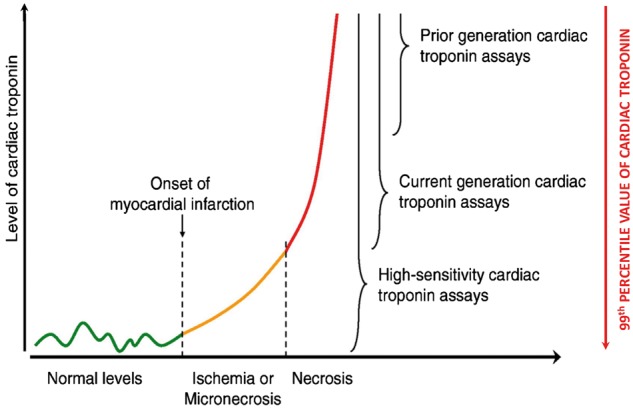
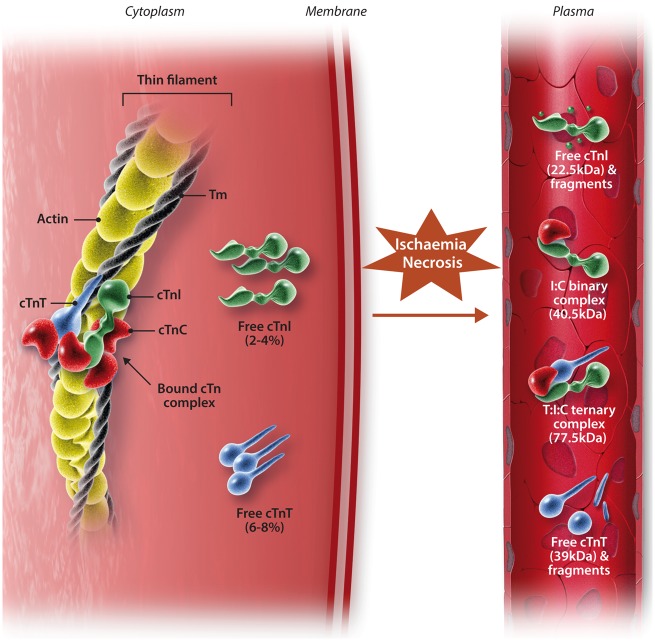
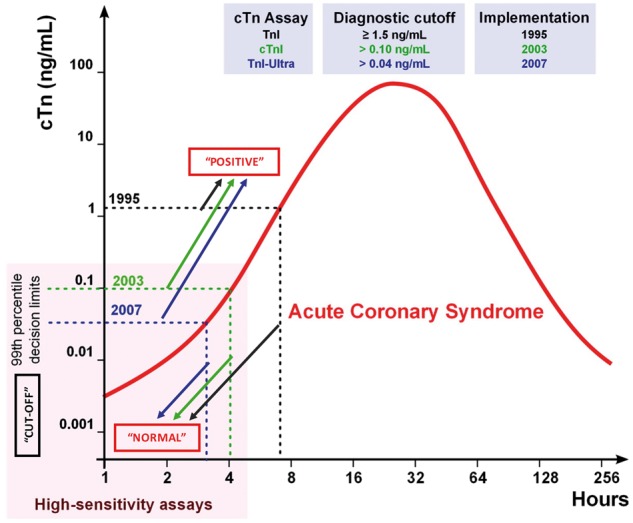
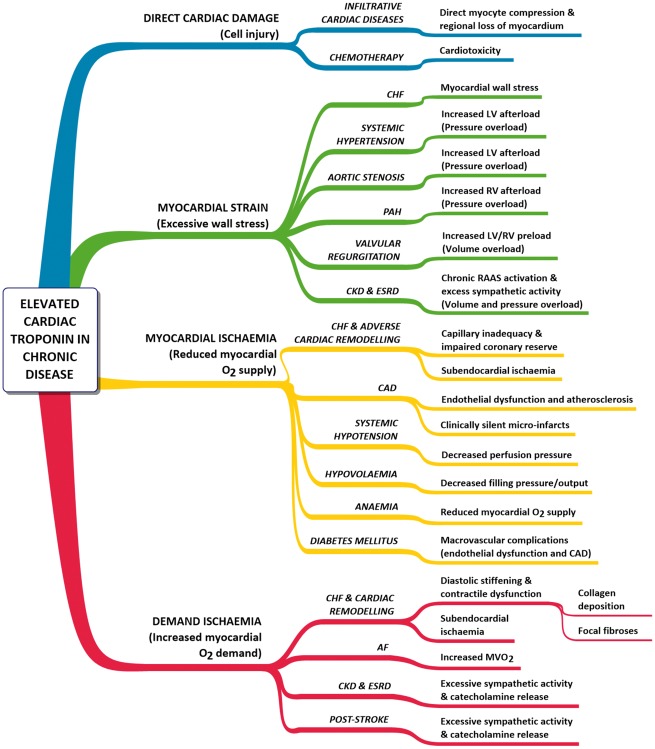
Elucidation of the physiologically distinct subunits of troponin in 1973 greatly facilitated our understanding of cardiac contraction. Although troponins are expressed in both skeletal and cardiac muscle, there are isoforms of troponin I/T expressed selectively in the heart. By exploiting cardiac-restricted epitopes within these proteins, one of the most successful diagnostic tests to date has been developed: cardiac troponin (cTn) assays. For the past decade, cTn has been regarded as the gold-standard marker for acute myocardial necrosis: the pathological hallmark of acute myocardial infarction (AMI). Whilst cTn is the cornerstone for ruling-out AMI in patients presenting with a suspected acute coronary syndrome (ACS), elevated cTn is frequently observed in those without clinical signs indicative of AMI, often reflecting myocardial injury of 'unknown origin'. cTn is commonly elevated in acute non-ACS conditions, as well as in chronic diseases. It is unclear why these elevations occur; yet they cannot be ignored as cTn levels in chronically unwell patients are directly correlated to prognosis. Paradoxically, improvements in assay sensitivity have meant more differential diagnoses have to be considered due to decreased specificity, since cTn is now more easily detected in these non-ACS conditions. It is important to be aware cTn is highly specific for myocardial injury, which could be attributable to a myriad of underlying causes, emphasizing the notion that cTn is an organ-specific, not disease-specific biomarker. Furthermore, the ability to detect increased cTn using high-sensitivity assays following extreme exercise is disconcerting. It has been suggested troponin release can occur without cardiomyocyte necrosis, contradicting conventional dogma, emphasizing a need to understand the mechanisms of such release. This review discusses basic troponin biology, the physiology behind its detection in serum, its use in the diagnosis of AMI, and some key concepts and experimental evidence as to why cTn can be elevated in chronic diseases.
Overview
The claims and statistics of this paper haven’t been checked yet.
Run the check — free, no account needed. It reads the open-access text and checks the sources it cites.
Integrity signals
Registry
Cites
Statistics
Figures
Verification
Claims the paper makes
The claims and statistics of this paper haven’t been checked yet.
Run the check — free, no account needed. It reads the open-access text and checks the sources it cites.
Claims other papers make about this one
Each is checked against this paper’s own text: does it say what the citing paper says it does?
In the citing paper
“Cardiac troponin I (cTnI) is a gold-standard biomarker for cardiovascular diseases (the leading cause of death worldwide)22–25.”
From Nanoproteomics enables proteoform-resolved analysis of low-abundance proteins in human serum (2020) · cites this paper as [25]
In the citing paper
“Note that the estimated levels of cTnI released after cardiac injury events such as AMI are typically in the range of 0.5–50 ng/mL25,27.”
From Nanoproteomics enables proteoform-resolved analysis of low-abundance proteins in human serum (2020) · cites this paper as [25]
Self-check
Percentages, sums and reported differences re-computed from the paper’s own numbers.
The self-check needs the paper’s full text.
Citations
Cites
Roffi, M., Patrono, C., Collet, J.-P., Mueller, C., Valgimigli, M., Andreotti, F., Bax, J. J., Borger, M. A., Brotons, C., Chew, D. P., et al. (2016) · European Heart Journal · doi:10.1093/eurheartj/ehv320 · Cited by 8,261
Third universal definition of myocardial infarction
the Writing Group on behalf of the Joint ESC/ACCF/AHA/WHF Task Force for the Universal Definition of Myocardial Infarction, Thygesen, K., Alpert, J. S., Jaffe, A. S., Simoons, M. L., CHAITMAN, B. R., & White, H. D. (2012) · Nature Reviews Cardiology · doi:10.1038/nrcardio.2012.122 · Cited by 6,585
Yellon, D. M., & Hausenloy, D. J. (2007) · New England Journal of Medicine · doi:10.1056/nejmra071667 · Cited by 3,797
Third universal definition of myocardial infarction
Thygesen, K. A., Alpert, J. S., Jaffe, A. S., Simoons, M. L., Chaitman, B. R., White, H. D., the Writing Group on behalf of the Joint ESC/ACCF/AHA/WHF Task Force for the Universal Definition of Myocardial Infarction, Authors/Task Force Members Chairpersons, Thygesen, K., Alpert, J. S., et al. (2012) · European Heart Journal · doi:10.1093/eurheartj/ehs184 · Cited by 3,095
Task Force Members, Thygesen, K. A., Alpert, J. S., White, H. D., Biomarker Group, Jaffe, A. S., Apple, F. S., Galvani, M., Katus, H. A., Newby, L. K., et al. (2007) · European Heart Journal · doi:10.1093/eurheartj/ehm355 · Cited by 2,536
Chronic Kidney Disease: Effects on the Cardiovascular System
Schiffrin, E. L., Lipman, M. L., & Mann, J. F. E. (2007) · Circulation · doi:10.1161/circulationaha.106.678342 · Cited by 1,448
Evolving Therapies for Myocardial Ischemia/Reperfusion Injury
Ibáñez, B., Heusch, G., Ovize, M., & de Werf, F. V. (2015) · Journal of the American College of Cardiology · doi:10.1016/j.jacc.2015.02.032 · Cited by 1,014
Analytical Characteristics of High-Sensitivity Cardiac Troponin Assays
Apple, F. S., Collinson, P. O., & for the IFCC Task Force on Clinical Applications of Cardiac Biomarkers (2012) · Clinical Chemistry · doi:10.1373/clinchem.2011.165795 · Cited by 861
Self-citationBlebs lead the way: how to migrate without lamellipodia
Charras, G., & Paluch, E. K. (2008) · Nature Reviews Molecular Cell Biology · doi:10.1038/nrm2453 · Cited by 822
Research works printed but not linked: 2
- Bernard, 1979, Nomenclature and criteria for diagnosis of ischaemic heart disease, Circulation, 59, 607
- Vasile, 2009, The biological basis of troponin in heart disease: possible uses for troponin fragmentology, Heart Metab, 43, 5
Cited by
Sorted by citations
Items 201–300 of 509
Integrating Cardiac Biomarkers and Electrocardiogram in Pulmonary Embolism Prognosis
Borkowski, P., Singh, N., Borkowska, N., Mangeshkar, S., & Nazarenko, N. (2024) · Cureus · doi:10.7759/cureus.53505 · Cited by 9
Cardiac troponin I predicts clinical outcome of patients with cancer at emergency department
Park, S. H., Kang, E., Park, J. E., Song, M., 김태림, Cha, W. C., Yoon, H., Hwang, S. Y., Shin, T. G., Sim, M. S., et al. (2020) · Clinical Cardiology · doi:10.1002/clc.23486 · Cited by 9
How often and to what extent do admitted COVID-19 patients have signs of cardiac injury?
Habets, M., Sturkenboom, N., Tio, R. A., Belfroid, E., Hoogervorst-Schilp, J., Siebelink, H. J., Jansen, C. W., & Smits, P. C. (2021) · Netherlands Heart Journal · doi:10.1007/s12471-021-01571-w · Cited by 9
L’Abbate, S., Chianca, M., Fabiani, I., Franco, A. D., Giannoni, A., Vergaro, G., Grigoratos, C., Kusmic, C., Passino, C., D’Alessandra, Y., et al. (2022) · Journal of Cardiovascular Translational Research · doi:10.1007/s12265-022-10231-2 · Cited by 8
Lee, M. M. Y., & Masri, A. (2023) · Current Heart Failure Reports · doi:10.1007/s11897-023-00620-2 · Cited by 8
Garg, P. K., Lima, J. A. C., deFilippi, C. R., Daniels, L. B., Seliger, S. L., de Lemos, J. A., Maisel, A. S., Criqui, M. H., & Bahrami, H. (2021) · International Journal of Cardiology · doi:10.1016/j.ijcard.2021.09.055 · Cited by 8
Mouse Organ-Specific Proteins and Functions
Sun, B., Lorang, C. G., Qin, S., Zhang, Y., Liu, K., Li, G., Sun, Z., Francke, A., Utleg, A. G., Flores, P., et al. (2021) · Cells · doi:10.3390/cells10123449 · Cited by 8
Al‐Mukhtar, O., Vogrin, S., Lampugnani, E. R., Noaman, S., Dinh, D. T., Brennan, A., Reid, C. M., Lefkovits, J., Cox, N., Stub, D., et al. (2022) · Journal of the American Heart Association · doi:10.1161/jaha.121.023036 · Cited by 8
Cardiovascular Regeneration via Stem Cells and Direct Reprogramming: A Review
Lee, C.-S., Kim, J., Cho, H., & Kim, H.-S. (2022) · Korean Circulation Journal · doi:10.4070/kcj.2022.0005 · Cited by 8
O’Lone, E., Apple, F. S., Burton, J. O., Caskey, F. J., Craig, J. C., deFilippi, C. R., Forfang, D. L., Hicks, K. A., Jha, V., Mahaffey, K. W., et al. (2023) · Kidney International · doi:10.1016/j.kint.2023.02.033 · Cited by 8
Lapp, H. S., Freigang, M., Friese, J., Bernsen, S., Tüngler, V., von der Hagen, M., Weydt, P., & Günther, R. (2024) · Scientific Reports · doi:10.1038/s41598-024-57185-w · Cited by 8
Two-peaked increase of serum myosin heavy chain-α after triathlon suggests heart muscle cell death
Danielsson, T., Schreyer, H., Woksepp, H., Johansson, T., Bergman, P., Månsson, A., & CARLSSON, J. (2019) · BMJ Open Sport & Exercise Medicine · doi:10.1136/bmjsem-2018-000486 · Cited by 8
Chaulin, A. M. (2021) · Revista de la Facultad de Ciencias Médicas de Córdoba · doi:10.31053/1853.0605.v78.n4.32988 · Cited by 8
Causes of Death in Patients With Acute and Chronic Myocardial Injury
Kadesjö, E., Roos, A., Siddiqui, A. J., Sartipy, U., & Holzmann, M. J. (2019) · The American Journal of Medicine · doi:10.1016/j.amjmed.2019.09.030 · Cited by 8
Akwe, J. A. (2017) · Journal of Cardiology & Current Research · doi:10.15406/jccr.2017.10.00360 · Cited by 8
Emerging evidence of myocardial injury in COVID-19: A path through the smoke
Tersalvi, G., Veronese, G., & Winterton, D. (2020) · Theranostics · doi:10.7150/thno.50788 · Cited by 8
Ju, Y., Deng, C., Wang, S., Mikereyi·Aimaitijiang, Wu, T., Zheng, Y., Xie, X., & Ma, Y.-T. (2023) · Reviews in Cardiovascular Medicine · doi:10.31083/j.rcm2406161 · Cited by 8
Zhu, H., Li, M., Wu, J., Yan, L., Xiong, W., Hu, X., Lu, Z., Li, C., & Cai, H. (2024) · PeerJ · doi:10.7717/peerj.18591 · Cited by 7
Gao, Y., Wang, D., Mu, D., Ma, Y., Li, Y., Qiu, L., Yu, S., & Cheng, X. (2025) · Clinica Chimica Acta · doi:10.1016/j.cca.2025.120344 · Cited by 8
Morgan, H., Little, K., Dutta, S., Chen, S., Gong, J., Koduri, S., Raja, A., Lin, W., Saini, K., Bhullar, R., et al. (2025) · Cells · doi:10.3390/cells15010033 · Cited by 11
Vorn, R., Devoto, C., Meier, T. B., Lai, C., Yun, S., Broglio, S. P., Mithani, S., McAllister, T. W., Giza, C. C., Kim, H., et al. (2022) · Journal of sport and health science/Journal of Sport and Health Science · doi:10.1016/j.jshs.2022.11.007 · Cited by 7
Understanding long COVID myocarditis: A comprehensive review
Srivastava, A., Sundararaj, S. N., Bhatia, J., & Arya, D. S. (2024) · Cytokine · doi:10.1016/j.cyto.2024.156584 · Cited by 7
Cardiovascular Risk Factors and Markers
Thiriet, M. (2018) · Biomathematical and biomechanical modeling of the circulatory and ventilatory systems · doi:10.1007/978-3-319-89315-0_2 · Cited by 8
Park, J. E., Song, M., Kim, T., Lee, G. T., Hwang, S. Y., Yoon, H. J., Cha, W. C., Shin, T. G., Sim, M. S., Jo, I. J., et al. (2021) · Scientific Reports · doi:10.1038/s41598-021-96951-y · Cited by 7
Zamri, W. N. A. W. M., Shafii, N., Ismail, T. S. T., Zakaria, A. Z., Yaacob, N. M., & Soh, N. A. A. C. (2021) · Malaysian Journal of Medical Sciences · doi:10.21315/mjms2021.28.5.6 · Cited by 7
Tsuruda, T., Sato, Y. Z., Tomita, M., Tanaka, H., Hatakeyama, K., Otsu, M., Kawano, A., Nagatomo, K., Yoshikawa, N., Ikeda, R., et al. (2022) · Frontiers in Cardiovascular Medicine · doi:10.3389/fcvm.2022.833649 · Cited by 7
Clark, S. R., Wilton, L. R., Dawson, J. L., Chiew, K. Y., Jawahar, M. C., Toben, C. G., Pukala, T. L., Ajaero, C., & Saleem, M. (2023) · Schizophrenia Research · doi:10.1016/j.schres.2023.07.003 · Cited by 7
Salama, A., Ibrahim, G. S., Fikry, M., Elsannan, M. H., & Tahlawi, M. E. (2023) · Indian Journal of Thoracic and Cardiovascular Surgery · doi:10.1007/s12055-023-01594-5 · Cited by 7
Can Glypican-6 Level Predict Ejection Fraction Decline After Myocardial Infarction?
Öztürk, F., Atıcı, A., & Barman, H. A. (2020) · Angiology · doi:10.1177/0003319720968376 · Cited by 7
Cardiac Troponin Reporting in Children and Young Adults: Time to Change Clinical Practice
Aakre, K. M., Meex, S. J. R., & Mills, N. L. (2023) · Circulation · doi:10.1161/circulationaha.123.065297 · Cited by 7
Cardiac effects of electroconvulsive therapy – a systematic review
Schnellbächer, G. J., Vogt, F., Hein, M., & Grözinger, M. (2025) · The World Journal of Biological Psychiatry · doi:10.1080/15622975.2025.2525250 · Cited by 6
Artificial Intelligence-Driven Wearable Sensors for Cardiovascular Health Monitoring
Deng, H. T., Ma, B., Chen, G., Chi, J., Tong, J., Yu, F., Lü, B., Chen, Y., Zhao, C., Zhang, C., et al. (2026) · ACS Sensors · doi:10.1021/acssensors.5c04840 · Cited by 6
Spanos, M., Gokulnath, P., Singh, A., Azzam, C., Wakhlu, R., Lin, C., Maravelias, A.-C., Oasan, T., Tower-Rader, A. F., Wasfy, M., et al. (2026) · Biomarker Research · doi:10.1186/s40364-026-00947-7 · Cited by 6
Liu, L., Ding, X., Han, Y., & Lv, J. (2022) · Journal of Healthcare Engineering · doi:10.1155/2022/7840852 · Cited by 6
RetractedDiagnostic and prognostic values of HCG15 and morrbid in acute myocardial infarction
Huang, M., Wu, B., Xu, O., Sun, S., Han, K., Li, L., Liang, H., Qiu, C., & Xu, Q. (2024) · Frontiers in Pharmacology · doi:10.3389/fphar.2024.1492746 · Cited by 6
Ferasin, L., Kilkenny, E., & Ferasin, H. (2020) · Journal of Veterinary Cardiology · doi:10.1016/j.jvc.2020.05.001 · Cited by 6
Investigations of Cardiac Functions and Organ Damages in Neonatal Calves with Suscepted Sepsis
Beydilli, Y., & GÖKÇE, H. İ. (2020) · Mehmet Akif Ersoy Üniversitesi Veteriner Fakültesi Dergisi · doi:10.24880/maeuvfd.815632 · Cited by 6
Garg, P. K., Norby, F. L., Wang, W., Krishnappa, D., Soliman, E. Z., Lutsey, P. L., Selvin, E., Ballantyne, C. M., Alonso, Á., & Chen, L. Y. (2021) · The American Journal of Cardiology · doi:10.1016/j.amjcard.2021.07.043 · Cited by 6
Bioinformatics prediction of potential mechanisms and biomarkers underlying dilated cardiomyopathy
Liu, Z., Song, Y., Chen, K., Gao, W., Chen, H., & Liang, G. (2022) · World Journal of Cardiology · doi:10.4330/wjc.v14.i5.282 · Cited by 6
Yin, Z., Fu, T., He, S., Fu, L., Li, X., Liu, X., Du, L., Yang, T., Zhu, X., Wang, C., et al. (2023) · International Journal of Cardiology · doi:10.1016/j.ijcard.2023.131123 · Cited by 5
Moldovan, R., Ichim, V. A., & Beliș, V. (2023) · Legal Medicine · doi:10.1016/j.legalmed.2023.102293 · Cited by 6
Jong, C.-B., Lu, T. E., Chen, T.-Y., Chen, C., Liao, M., Lin, I.-C., & Chen, J. (2023) · International Journal of Cardiology · doi:10.1016/j.ijcard.2023.131195 · Cited by 6
The current paradigm of cardiac troponin increase among athletes
Celeski, M., Segreti, A., Piscione, M., Monticelli, L. M., Gioia, G. D., FOSSATI, C., Ussia, G. P., Pigozzi, F., & Grigioni, F. (2024) · Monaldi Archives for Chest Disease · doi:10.4081/monaldi.2024.2878 · Cited by 7
Li, L., Tu, B., Xiong, Y., Hu, Z., Zhang, Z., Liu, S., & Yao, Y. (2022) · Cardiovascular Drugs and Therapy · doi:10.1007/s10557-022-07399-9 · Cited by 6
Perioperative myocardial injury in revascularized coronary patients who undergo noncardiac surgery
Lee, S. H., Park, M. S., Song, Y. B., Park, J., Kim, J.-Y., Lee, S. M., & Lee, Y. T. (2019) · PLoS ONE · doi:10.1371/journal.pone.0219043 · Cited by 6
Sanchís, J. M., Alquézar‐Arbé, A., Ordóñez‐Llanos, J., & Bardajı́, A. (2019) · Revista Española de Cardiología (English Edition) · doi:10.1016/j.rec.2019.03.002 · Cited by 6
Salvatici, M., Sommese, C., Romanelli, M. M. C., & Drago, L. (2025) · International Journal of Molecular Sciences · doi:10.3390/ijms26031045 · Cited by 6
Căținaș, R., & Hostiuc, S. (2025) · International Journal of Molecular Sciences · doi:10.3390/ijms26146818 · Cited by 5
Fan, H., Fu, X., Guo, Q., Jia, F., Wei, X.-Y., Liu, J., Zhang, N., Zhu, C., Shi, J., Zhang, L., et al. (2026) · Molecular Biomedicine · doi:10.1186/s43556-025-00387-z · Cited by 5
Toxoplasma gondii Reactivation Aggravating Cardiac Function Impairment in Mice
Xie, L., Xing, Y., Yang, J., Liu, M., & Cai, Y. (2023) · Pathogens · doi:10.3390/pathogens12081025 · Cited by 5
Cyon, L., Kadesjö, E., & Roos, A. (2025) · The American Journal of Cardiology · doi:10.1016/j.amjcard.2025.05.020 · Cited by 5
Great debate: the universal definition of myocardial infarction is flawed and should be put to rest
Mueller, C. E., White, H. D., López‐Ayala, P., de Silva, R., & Kaski, J. C. (2025) · European Heart Journal · doi:10.1093/eurheartj/ehaf641 · Cited by 5
Samuel, N. A., Roddick, A., Glampson, B., Mulla, A., Davies, J., Papadimitriou, D., Panoulas, V., Mayer, E. K., Woods, K., Shah, A. D., et al. (2024) · Cardio-Oncology · doi:10.1186/s40959-024-00238-w · Cited by 5
Sanchís, J. M., Alquézar‐Arbé, A., Ordóñez‐Llanos, J., & Bardajı́, A. (2019) · Revista Española de Cardiología · doi:10.1016/j.recesp.2018.11.014 · Cited by 5
Furer, V., Shenhar‐Tsarfaty, S., Berliner, S. A., Arad, U., Paran, D., Mailis, I., Rogowski, O., Zeltser, D., Shapira, I., Matz, H., et al. (2019) · Rheumatology International · doi:10.1007/s00296-019-04461-y · Cited by 6
Use of historical high-sensitivity cardiac troponin T levels to rule out myocardial infarction
Roos, A., & Holzmann, M. J. (2021) · Open Heart · doi:10.1136/openhrt-2021-001682 · Cited by 5
González-Rayas, J. M., Hernández-Hernández, J. A., López-Sánchez, R. C., Rayas‐Gómez, A. L., & González-Yáñez, J. M. (2022) · Arquivos Brasileiros de Cardiologia · doi:10.36660/abc.20210518 · Cited by 5
Popa, D. M., Macovei, L., Moscalu, M., Sascău, R. A., & Stătescu, C. (2023) · Diagnostics · doi:10.3390/diagnostics13193143 · Cited by 5
Sun, P., Li, Q., Gao, N., Luo, M., Chang, W., Wang, B., Lu, X., & Xue, Z. (2025) · Sensors and Actuators B Chemical · doi:10.1016/j.snb.2025.137635 · Cited by 4
Clinical Analysis of Myocardial Injury in Highlanders with Pulmonary Hypertension
Zhao, M., Wu, Q., Duanmu, W., 申军现, Yuan, W., Sun, Y., Zhang, X., Zhang, J., & He, S. (2024) · High Altitude Medicine & Biology · doi:10.1089/ham.2023.0075 · Cited by 4
Biomarkers in wearables, ingestible, and implantable sensors for health monitoring
Ghosh, G., & Sharma, R. (2025) · Progress in molecular biology and translational science · doi:10.1016/bs.pmbts.2025.05.015 · Cited by 4
Cardiac troponin at the point of care in acute and chronic coronary syndromes
McDermott, M., Tew, Y. Y., Cooper, J. G., Harry, D., & Mills, N. L. (2025) · Diabetes Obesity and Metabolism · doi:10.1111/dom.16503 · Cited by 4
An Overview of Biotin Interference Impact on Immunoassays
Yousif, A. A., Ahmed, N. S., Mohamed, E., Abdemagid, S., Mustafa, O., Mohamed, A., Ali, A. E., Omer, A., Hassan, N. M., Barbary, A. A., et al. (2025) · Cyprus Journal of Medical Sciences · doi:10.4274/cjms.2025.2024-71 · Cited by 4
Unveiling the silent threat: COVID-19 and myocardial injury
Xu, K., He, W., Yu, B., Wang, J. J., Wu, J., & Wang, D. W. (2025) · Pharmacology & Therapeutics · doi:10.1016/j.pharmthera.2025.108904 · Cited by 4
Porras-Perales, Ó., Segovia-Reyes, J., Crespo-Delgado, Á., Ruiz-González, D., Flores-López, M., Vera, D. M., Sánchez‐Marín, L., Martín-Chaves, L., Requena-Ocaña, N., Molina-Ramos, A. I., et al. (2025) · Scientific Reports · doi:10.1038/s41598-025-08041-y · Cited by 4
High impact Cardiovascular Research: beyond the heart and vessels
Small, H. Y., & Guzik, T. J. (2019) · Cardiovascular Research · doi:10.1093/cvr/cvz272 · Cited by 4
Hinton, J., Mariathas, M., Gabara, L., Allan, R., Nicholas, Z., Kwok, C. S., Ramamoorthy, S., Calver, A., Corbett, S. J., Rawlins, J., et al. (2021) · The American Journal of Cardiology · doi:10.1016/j.amjcard.2021.07.050 · Cited by 4
Oh, A. R., Lee, S. H., Park, J., Choi, D.-C., & Yang, K. (2023) · Annals of Translational Medicine · doi:10.21037/atm-22-3681 · Cited by 4
Urine high–sensitive troponin I in children cannot offer an applicable alternative to serum
Bakoš, M., Dilber, D., Jazbec, A., Svaguša, T., Potkonjak, A.-M., Braovac, D., Đurić, Ž., Radeljak, A., Vrančić, A. L., Vraneš, H., et al. (2024) · Frontiers in Cardiovascular Medicine · doi:10.3389/fcvm.2024.1391434 · Cited by 4
Cardiac dysfunction and altered gene expression in acid ceramidase-deficient mice
Kleynerman, A., Rybová, J., McKillop, W. M., Dlugi, T. A., Faber, M. L., Fuller, M., O'Meara, C. C., & Medin, J. A. (2024) · American Journal of Physiology-Heart and Circulatory Physiology · doi:10.1152/ajpheart.00289.2024 · Cited by 4
Myburgh, C. E., Malan, L., Möller, M., Magnusson, M., Melander, O., Rauch, H. G. L., Steyn, F., & Malan, N. T. (2019) · Physiology & Behavior · doi:10.1016/j.physbeh.2019.05.012 · Cited by 4
Matz, O., Schwerz, S., Dafotakis, M., Willmes, K., Brokmann, J. C., Cornelissen, C. G., Schälte, G., Grözinger, M., Dague, K. O., Schulz, J. B., et al. (2019) · Epilepsy & Behavior · doi:10.1016/j.yebeh.2019.106565 · Cited by 4
Association of Serum Troponin Obtained During Stroke Codes with Cardioembolic Strokes
Nisar, T., & Kamin, S. S. (2019) · Journal of Stroke and Cerebrovascular Diseases · doi:10.1016/j.jstrokecerebrovasdis.2019.104527 · Cited by 4
Ede, H., Ahmed, H. S. S. S., Mahfouz, A., Rahhal, A. A. A., Haider, S. A., Madni, N. A., Alkhatib, M. A., Elshrif, H. M., Yafei, S. M. A. A.-S. A., Suwaidi, J. M. A., et al. (2021) · Heart Views · doi:10.4103/heartviews.heartviews_10_21 · Cited by 4
Multimodality Imaging for Cardiotoxicity: State of the Art and Future Perspectives
Artico, J., Abiodun, A., Shiwani, H., Kurdi, H., Chen, D. H., Tyebally, S. M., Moon, J., Westwood, M. A., & Manisty, C. (2022) · Journal of Cardiovascular Pharmacology · doi:10.1097/fjc.0000000000001281 · Cited by 4
Troponin I Cutoff for Non-ST-Segment Elevation Myocardial Infarction in Sepsis
Tsai, M.-K., Lai, C.-H., Hung, C.-L., & Wu, K.-Y. (2022) · Mediators of Inflammation · doi:10.1155/2022/5331474 · Cited by 4
Ulndreaj, A., Brinc, D., Altan, M., Pons-Belda, O. D., Fernandez-Uriarte, A., Mu-Mosley, H., Fattah, F. J., von Itzstein, M. S., Soosaipillai, A. R., Kulasingam, V., et al. (2022) · Clinical Chemistry and Laboratory Medicine (CCLM) · doi:10.1515/cclm-2022-0471 · Cited by 4
Chaulin, A. M. (2023) · Cardiology Research · doi:10.14740/cr1450 · Cited by 4
Wang, X., Cao, M., Liu, Z., Chen, L., Zhou, Y., Gao, P., & Zou, Y. (2023) · Journal of Cardiovascular Development and Disease · doi:10.3390/jcdd10040173 · Cited by 4
Redón, P., Shahzad, A., Iqbal, T., & Wijns, W. C. (2020) · Sensors · doi:10.3390/s20175006 · Cited by 4
Relevance of Troponin I Elevation among Individuals with Hypertensive Emergency
Maheshwarappa, H. M., & Rai, A. V. (2022) · Indian Journal of Critical Care Medicine · doi:10.5005/jp-journals-10071-24267 · Cited by 4
Borkowski, P., Borkowski, M., Borkowska, N., Modak, V., Nazarenko, N., Mangeshkar, S., Osabutey, A., Maliha, M., Chowdhury, I. Z., Batikyan, A., et al. (2024) · Cureus · doi:10.7759/cureus.75173 · Cited by 3
The mortality of myasthenia gravis with myocarditis: A single-center retrospective study
Zhang, N., Chen, H., Wang, R., & Zhou, H. (2025) · Journal of the Neurological Sciences · doi:10.1016/j.jns.2025.123440 · Cited by 3
Aptamer-Based Gold Nanoparticle Lateral Flow Assay for Rapid Detection of Cardiac Troponin I
Zhang, J., Pang, J., & Cui, C. (2025) · Biosensors · doi:10.3390/bios15120776 · Cited by 3
Cai, A., Bayés‐Genís, A., & Parati, G. (2026) · Journal of Human Hypertension · doi:10.1038/s41371-026-01123-y · Cited by 3
Schnellbächer, G. J., & Grözinger, M. (2020) · Brain stimulation · doi:10.1016/j.brs.2020.06.014 · Cited by 3
Arı, F., İnce, B., Ünal, M. A., Sezgintürk, M. K., & Özkan, S. A. (2023) · Microchemical Journal · doi:10.1016/j.microc.2023.109484 · Cited by 3
Wang, M., Zhu, Y., Zhao, H., & Zhao, H. (2023) · PubMed Central · doi:10.19852/j.cnki.jtcm.20230802.005 · Cited by 3
Janssen, S. L. J. E., Lamers, S. K., Vroemen, W. H. M., Denessen, E. J. S., Berge, K., Bekers, O., Hopman, M. T. E., Brink, M., Habets, J., Nijveldt, R., et al. (2024) · BMJ Open Sport & Exercise Medicine · doi:10.1136/bmjsem-2024-002070 · Cited by 3
Dokuzeylül, B., Kirbaş, A., Kayar, A., Kandemır, F. M., Kucukler, S., Or, M. E., & Adaszek, Ł. (2024) · The Journal of Animal and Plant Sciences · doi:10.36899/japs.2024.4.0783 · Cited by 3
Jia, H. M., An, F., Zhang, Y. L., Yan, M. Z., Zhou, Y., & Bian, H. (2024) · Cardiology Research · doi:10.14740/cr1652 · Cited by 3
Bay, B., Pieper, L., Goßling, A., Kaatze, K., Kellner, C., Arnold, N., Blaum, C. M., Rohde, J. S., Köster, L., Lorenz, T., et al. (2024) · European Journal of Preventive Cardiology · doi:10.1093/eurjpc/zwae374 · Cited by 3
Alanis-Sánchez, G., Boutouyrie, P., Abouqateb, M., Bruno, R. M., Andrieu, M., Vedie, B., Géromin, D., Danchin, N., Laurent, S., Jouven, X., et al. (2025) · Journal of the American Heart Association · doi:10.1161/jaha.124.037718 · Cited by 3
High-sensitivity troponin: a barometer for cardiac health
Lee, K. K., & Mills, N. L. (2018) · Cardiovascular Research · doi:10.1093/cvr/cvy080 · Cited by 3
Elseweidy, M. M., Ali, S. I., Shershir, N. I., Ali, A. E. A., & Hammad, S. K. (2020) · Archives of Physiology and Biochemistry · doi:10.1080/13813455.2020.1716015 · Cited by 3
Diagnostic algorithms for non-ST-segment elevation myocardial infarction: open issues
Clerico, A., Aimo, A., Zaninotto, M., & Plebani, M. (2021) · Clinical Chemistry and Laboratory Medicine (CCLM) · doi:10.1515/cclm-2021-0550 · Cited by 3
Biondi, V., Landi, A., Pugliese, M., Merola, G., & Passantino, A. (2022) · Animals · doi:10.3390/ani12060778 · Cited by 3
Kozak, M. F., Pessoa, Y. C., Silva, L. O. C. E., Cabral, M., Leite, B. C. P., Diniz, J. D., Saliba, A., & Kawahara, S. H. (2022) · Arquivos Brasileiros de Cardiologia · doi:10.36660/abc.20210200 · Cited by 3
Cardiovascular Biomarkers in Acute Myocardial Infarction
Vassalle, C., Sabatino, L., & Pepe, A. (2023) · Springer eBooks · doi:10.1007/978-3-031-25879-4_9 · Cited by 3
Zainal, H. A. (2023) · Cardiology · doi:10.1159/000530717 · Cited by 3
Metadata
- Authors
- Park, K. C., Gaze, D. C., Collinson, P. O., & Marber, M. S.
- Affiliations
- King's College London (GB)
- St George's, University of London (GB)
- Corresponding author
- Marber, Michael S
- Venue
- Cardiovascular Research
- Publisher
- Oxford University Press (OUP)
- Published
- 2017-09-14
- Volume
- 113
- Issue
- 14
- Pages
- 1708-1718
- ISSN
- 0008-6363 (ISSN-L)
- 1755-3245
- PMC
- PMC5852618
- OpenAlex
- W2755269296
- Cited by
- 510
- References
- 105
- Citations by year
- 2026: 41 · 2025: 59 · 2024: 80 · 2023: 53 · 2022: 70 · 2021: 74 · 2020: 70 · 2019: 49 · 2018: 12 · 2017: 2
- FWCI
- 5.12
- Type
- journal article
- Language
- en
- Open access
- hybrid
- doi.org
- Licence
- Locations
- Cardiovascular Research (publishedVersion, cc-by)
- PubMed Central (publishedVersion, cc-by)
- PubMed (publishedVersion)
- St George's Online Research Archive (St George's University of London) (acceptedVersion)
- WestminsterResearch (University of Westminster) (acceptedVersion, cc-by)
- Funders
- Medical Research Council (G1000737)
- British Heart Foundation (TG/15/1/31518 and FS/15/13/31320)
- Topics
- Health Sciences › Medicine › Cardiology and Cardiovascular Medicine › Acute Myocardial Infarction Research
- Health Sciences › Medicine › Radiology, Nuclear Medicine and Imaging › Cardiac Imaging and Diagnostics
- Health Sciences › Medicine › Cardiology and Cardiovascular Medicine › Takotsubo Cardiomyopathy and Associated Phenomena
- Keywords
- cardiac troponin, troponin I, troponin T, acute myocardial infarction, acute coronary syndrome, myocardial injury, high-sensitivity troponin assays, chronic disease, cardiac contraction
- MeSH terms
- Animals, Chronic Disease, Humans, Myocardial Infarction, Myocardium, Biomarkers, Troponin T, Acute Coronary Syndrome
About these checks
Registry, retraction, Cites and statistics results are computed, not judged, with one exception: a printed reference that no index lists is read once by a model before it counts as a citation error. Claims are extracted by a model and kept only when their quote appears verbatim in the text; each cited source is then checked, with a model’s help, for whether it says what the claim relies on. Those verdicts can be wrong — read the claim’s quote and the cited source before relying on one.
Statistics and arithmetic are recomputed, not judged.
Confidence bands are shown only for fields calibrated on our annotated test set. None is calibrated yet, so no band is shown.
What counts as a claim ›How we measure confidence ›How we check this ›
Are you an author, or do you see a problem with this page? Request a review
