

Comparison of mineral oil and non-mineral oil placebo on coronary plaque progression by coronary computed tomography angiography
Open accessThe DOI matches its Crossref record; 13 of the 13 references it cites were found in a registry or an index.
Abstract
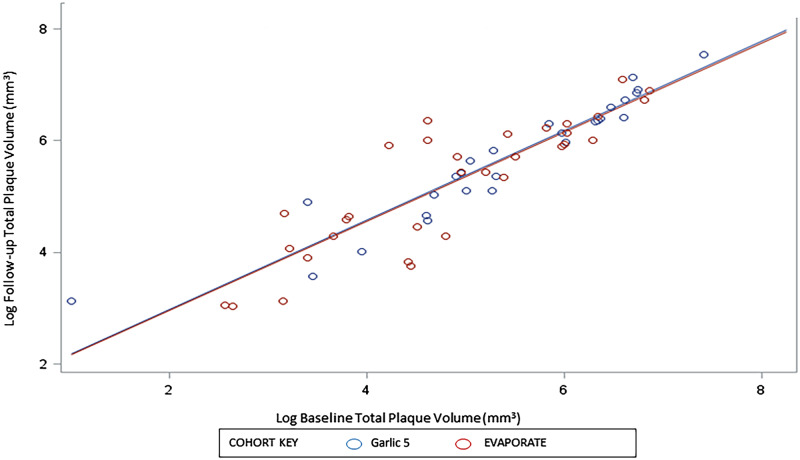
Light liquid paraffin (pharmaceutical grade mineral oil) has been used as a placebo in clinical trials of icosapent ethyl including MARINE, ANCHOR, and REDUCE-IT. Pharmaceutical grade mineral oil (distinct from technical/industrial or food grade mineral oils) was chosen as a suitable placebo to mimic the consistency, colour, and odourless properties of icosapent ethyl capsules. Since the results of REDUCE-IT, a few have raised questions regarding possible biological activity of mineral oil placebo due to small changes in some cardiac biomarkers including lipid levels and inflammatory markers in placebo arm patients, asking whether the mineral oil utilized in placebo capsules was physiologically inert or not.1 Mineral oil has been utilized in humans as a laxative for decades (typically in doses of 15–45 g/day), and the general safety has been inferred from clinical utilization. The ∼2 g twice per day of light liquid mineral oil taken by placebo group patients in clinical trials equates to less than a teaspoon per day. EVAPORATE is an ongoing randomized, placebo-controlled trial that evaluates the effect of icosapent ethyl 4 g daily in statin-treated patients with elevated triglycerides on coronary plaque progression by coronary computed tomography angiography (coronary CTA) compared with mineral oil placebo to provide important imaging-derived mechanistic information that can add insight to clinical outcomes from REDUCE-IT.2 Coronary plaque volumes, including total plaque and total non-calcified plaque derived by coronary CTA, have been measured and are known to be associated with myocardial ischaemia and adverse cardiac outcomes.3–5 In the present observational study, we sought to compare differences in progression of total plaque and total non-calcified plaque volumes on coronary CTA in mineral oil placebo patients from EVAPORATE vs. the non-mineral oil placebo arm from another randomized clinical trial, Garlic 5.6 We hypothesized that progression of total plaque and total non-calcified plaque volumes on coronary CTA is independent of consumption of mineral oil placebo capsules. The study design and rationale for EVAPORATE and Garlic 5 have been published previously.2,6 Eligible patients in EVAPORATE had known coronary atherosclerosis, elevated triglycerides (200–499 mg/dL), and low-density lipoprotein levels (LDL-C) ≤115 mg/dL while on statins. In Garlic 5, to be eligible, participants had coronary artery calcium scores >20 and known history of diabetes mellitus (DM). We acquired coronary CTA scans for evaluation of coronary plaque volume at baseline and at 12 months in Garlic 5 subjects and at baseline and at 9 months in EVAPORATE subjects. We performed quantitative plaque assessment using semi-automated plaque analysis software (QAngioCT Research Edition Version 2.0.5; Medis Medical Imaging Systems).7 Pharmaceutical grade mineral oil placebo used in EVAPORATE consisted of a purified liquid mixture of straight-chain saturated hydrocarbons that met the pharmaceutical compendial requirements of the US National Formulary (NF) for light mineral oil and of the European Pharmacopoeia (Ph. Eur.) for light liquid paraffin oil.8,9 The total daily dose of mineral oil placebo was four 1 g soft gelatine capsules, with two capsules taken twice daily with meals. The material does not contain any functional groups and is virtually free of all aromatic hydrocarbons and unsaturated hydrocarbons, making it chemically inert and allowing for minimal absorption. The composition of physiologically inert placebo powder (P-31) in Garlic 5 includes (per 100 mg) microcrystalline cellulose: 89.83 mg, hydroxypropyl cellulose: 10.07 mg, and caramel: 0.10 mg. The analysis of covariance test was used to examine rates of progression between the groups. The final model was adjusted for baseline plaque volume, age, sex, diabetes status, baseline triglyceride levels, and statin use. Total plaque and total non-calcified plaque volumes were log transformed to achieve a normal distribution. A P-value of <0.05 was considered significant. SAS software (version 9.4) was used for analyses. Mean [standard deviation (SD)] age of participants (n = 60) was 59 (9.9) years and 66% were male. A total of 28 participants from the Garlic 5 placebo arm and 32 participants from the EVAPORATE placebo arm were analysed. Participants had mean follow-up of 10.8 months. Baseline characteristics of the cohorts are listed in Table 1. There were no significant differences in major clinical characteristics including age, body mass index, hypertension, levels of LDL, total cholesterol, high-sensitivity C-reactive protein (hsCRP), or use of medications, including aspirin and statins. Due to eligibility criteria of the trials, the Garlic 5 placebo cohort was more likely to have diabetes and take diabetes medications, while the EVAPORATE placebo cohort was more likely to have high triglycerides. Baseline characteristics BMI, body mass index. Independent t-test. χ2 test.
Overview
The claims and statistics of this paper haven’t been checked yet.
Free: it reads the open-access text and checks the first 5 claims that cite a source we can check. Create a free account to check every claim.
Integrity signals
Registry
Cites
Statistics
Figures
Verification
Claims the paper makes
The claims and statistics of this paper haven’t been checked yet.
Free: it reads the open-access text and checks the first 5 claims that cite a source we can check. Create a free account to check every claim.
Claims other papers make about this one
Each is checked against this paper’s own text: does it say what the citing paper says it does?
The cited source says what the claim attributes to it.
In the citing paper
“comparison of a mineral oil and nonmineral oil placebo on coronary plaque progression was studied by coronary computed tomography angiography, and there were no significant differences in progression of total plaque and total noncalcified plaque volume observed”
From Cardiovascular Impact of Nutritional Supplementation With Omega-3 Fatty Acids (2021) · cites this paper as [85]
Self-check
Percentages, sums and reported differences re-computed from the paper’s own numbers.
The self-check needs the paper’s full text.
Citations
Cites
Colhoun, H. M., Betteridge, D. J., Durrington, P. N., Hitman, G. A., W Neil, H. A., Livingstone, S. J., Thomason, M. J., Mackness, M. I., Charlton-Menys, V., & Fuller, J. H. (2004) · The Lancet · doi:10.1016/s0140-6736(04)16895-5 · Cited by 3,755
Cardiovascular Risk Reduction with Icosapent Ethyl for Hypertriglyceridemia
Bhatt, D. L., Steg, P. G., Miller, M., Brinton, E. A., Jacobson, T. A., Ketchum, S. B., Doyle, R. T., Juliano, R. A., Jiao, L., Granowitz, C., et al. (2019) · New England Journal of Medicine · doi:10.1056/nejmoa1812792 · Cited by 3,317 · cited 2×
“We conclude that progression of total plaque and total non-calcified plaque volumes on coronary CTA is not related to consumption of mineral oil in the quantities used in these placebo capsules.(1,2,15) The results of REDUCE-IT and EVAPORATE, as well as several other trials using mineral oil placebo capsules, should n…”
BackgroundSelf-citationMotoyama, S., Ito, H., Sarai, M., Kondo, T., Kawai, H., Nagahara, Y., Harigaya, H., Kan, S., Anno, H., Takahashi, H., et al. (2015) · Journal of the American College of Cardiology · doi:10.1016/j.jacc.2015.05.069 · Cited by 831
Testosterone Treatment and Coronary Artery Plaque Volume in Older Men With Low Testosterone
Budoff, M. J., Ellenberg, S. S., Lewis, C. E., Mohler, E. R., Wenger, N. K., Bhasin, S., Barrett-Connor, E., Swerdloff, R. S., Stephens-Shields, A., Cauley, J. A., et al. (2017) · JAMA · doi:10.1001/jama.2016.21043 · Cited by 376
Self-citationKabir, M., Skurnik, G., Naour, N., Pechtner, V., Meugnier, E., Rome, S., Quignard-Boulangé, A., Vidal, H., Slama, G., Clément, K., et al. (2007) · The American Journal of Clinical Nutrition · doi:10.1093/ajcn/86.5.1670 · Cited by 316
Gaur, S., Øvrehus, K. A., Dey, D., Leipsic, J., Bøtker, H. E., Jensen, J. M., Narula, J., Ahmadi, A., Achenbach, S., Ko, B. S., et al. (2016) · European Heart Journal · doi:10.1093/eurheartj/ehv690 · Cited by 292
Rana, J. S., Dunning, A., Achenbach, S., Al-Mallah, M., Budoff, M. J., Cademartiri, F., Callister, T. Q., Chang, H.-J., Cheng, V. Y., Chinnaiyan, K., et al. (2012) · Diabetes Care · doi:10.2337/dc11-2403 · Cited by 176
Self-citationAlfaddagh, A., Elajami, T. K., Ashfaque, H., Saleh, M., Bistrian, B. R., & Welty, F. K. (2017) · Journal of the American Heart Association · doi:10.1161/jaha.117.006981 · Cited by 94
De Truchis, P., Kirstetter, M., Perier, A., Meunier, C., Zucman, D., Force, G., Doll, J., Katlama, C., Rozenbaum, W., Masson, H., et al. (2007) · JAIDS Journal of Acquired Immune Deficiency Syndromes · doi:10.1097/qai.0b013e31802c2f3d · Cited by 81
Budoff, M., Brent Muhlestein, J., Le, V. T., May, H. T., Roy, S., & Nelson, J. R. (2018) · Clinical Cardiology · doi:10.1002/clc.22856 · Cited by 73
Self-citation
Research works printed but not linked: 2
- 2016 U.S. Pharmacopoeia-National Formulary [USP 39 NF 34], Vol. 1. Rockville, MD: United States Pharmacopeial Convention, Inc.; 2015. Official Monographs/Mineral Oil; p. 4885–4886.
- Commission Regulation (EU) 2015/1608 of 24 September 2015 amending Annex IV to Regulation (EC) No 396/2005 of the European Parliament Inc. The Official Journal of the European Union. https://www.efta.int/sites/default/files/documents/legal-texts/eea/other-legal-documents/adopted-joint-committee-decisions/2016%20-%20English/074-2016.pdf.
Cited by
Budoff, M. J., Bhatt, D. L., Kinninger, A., Lakshmanan, S., Muhlestein, J. B., Le, V. T., May, H. T., Shaikh, K., Shekar, C., Roy, S. K., et al. (2020) · European Heart Journal · doi:10.1093/eurheartj/ehaa652 · Cited by 446
Self-citationDrenjančević, I., & Pitha, J. V. (2022) · International Journal of Molecular Sciences · doi:10.3390/ijms23042104 · Cited by 236
The dawn of a new era of targeted lipid-lowering therapies
Tokgözoğlu, L., & Libby, P. (2022) · European Heart Journal · doi:10.1093/eurheartj/ehab841 · Cited by 171
Role of Omega-3 Fatty Acids in Cardiovascular Disease: the Debate Continues
Sherratt, S. C. R., Libby, P., Budoff, M. J., Bhatt, D. L., & Mason, R. P. (2023) · Current Atherosclerosis Reports · doi:10.1007/s11883-022-01075-x · Cited by 129
Self-citationAtherosclerotic plaque stabilization and regression: a review of clinical evidence
Sarraju, A., & Nissen, S. E. (2024) · Nature Reviews Cardiology · doi:10.1038/s41569-023-00979-8 · Cited by 122
Quantitative assessment of atherosclerotic plaque, recent progress and current limitations
Williams, M. C., Earls, J. P., & Hecht, H. S. (2021) · Journal of cardiovascular computed tomography · doi:10.1016/j.jcct.2021.07.001 · Cited by 109
Mineral oil: safety and use as placebo in REDUCE-IT and other clinical studies
Olshansky, B., Chung, M. K., Budoff, M. J., Philip, S., Jiao, L., Doyle, Jr., Copland, C., Giaquinto, A., Juliano, R. A., & Bhatt, D. L. (2020) · European Heart Journal Supplements · doi:10.1093/eurheartj/suaa117 · Cited by 103
“non-mineral oil placebo used in another prospective randomized trial (Garlic 5).(80) The two trials were of similar design, with coronary computed tomography angiography performed in EVAPORATE at baseline and 9months, and in Garlic 5 at baseline and 12months.”
MethodSelf-citationBudoff, M. J., Muhlestein, J. B., Bhatt, D. L., Le Pa, V. T., May, H. T., Shaikh, K., Shekar, C., Kinninger, A., Lakshmanan, S., Roy, S. K., et al. (2021) · Cardiovascular Research · doi:10.1093/cvr/cvaa184 · Cited by 76
Self-citationDo patients benefit from omega-3 fatty acids?
Sherratt, S. C. R., Mason, R. P., Libby, P., Steg, P. G., & Bhatt, D. L. (2023) · Cardiovascular Research · doi:10.1093/cvr/cvad188 · Cited by 80
Self-citationLipid Lowering Drugs: Present Status and Future Developments
Ruscica, M., Ferri, N., Santos, R. D., Sirtori, C. R., & Corsini, A. (2021) · Current Atherosclerosis Reports · doi:10.1007/s11883-021-00918-3 · Cited by 73
Cardiovascular Impact of Nutritional Supplementation With Omega-3 Fatty Acids
Weinberg, R. L., Brook, R. D., Rubenfire, M., & Eagle, K. A. (2021) · Journal of the American College of Cardiology · doi:10.1016/j.jacc.2020.11.060 · Cited by 63
Lipid lowering combination therapy: From prevention to atherosclerosis plaque treatment
Masana, L., Plana, N., Andreychuk, N., & Ibarretxe, D. (2023) · Pharmacological Research · doi:10.1016/j.phrs.2023.106738 · Cited by 59
Omega-3 Fatty Acids in Cardiovascular Disease and Diabetes: a Review of Recent Evidence
Bhat, S. Z., Sarkar, S., Zaffar, D., Dandona, P., & Kalyani, R. R. (2023) · Current Cardiology Reports · doi:10.1007/s11886-022-01831-0 · Cited by 57
EPA’s pleiotropic mechanisms of action: a narrative review
Nelson, J. R., Budoff, M. J., Wani, O. R., Le, V. T., Patel, D. K., Nelson, A., & Nemiroff, R. L. (2021) · Postgraduate Medicine · doi:10.1080/00325481.2021.1921491 · Cited by 50
Self-citationOmega-3 fatty acids for cardiovascular event lowering
Kaur, G., Mason, R. P., Steg, P. G., & Bhatt, D. L. (2024) · European Journal of Preventive Cardiology · doi:10.1093/eurjpc/zwae003 · Cited by 47
Self-citationMason, R. P., & Eckel, R. H. (2021) · The American Journal of Medicine · doi:10.1016/j.amjmed.2021.03.014 · Cited by 42
Omega-3-fatty acids: Do they prevent cardiovascular disease?
Mason, R. P., Sherratt, S. C. R., & Eckel, R. H. (2022) · Best Practice & Research Clinical Endocrinology & Metabolism · doi:10.1016/j.beem.2022.101681 · Cited by 44
Sherratt, S. C. R., Libby, P., Bhatt, D. L., & Mason, R. P. (2022) · Prostaglandins, Leukotrienes and Essential Fatty Acids · doi:10.1016/j.plefa.2022.102450 · Cited by 43
Self-citationLi, J., Dou, K., Zhou, Z., Zhao, D. H., Ye, P., Zhao, J., & Guo, L. (2022) · Frontiers in Pharmacology · doi:10.3389/fphar.2022.1069992 · Cited by 41
Omega-3 and cardiovascular prevention – Is this still a choice?
Ruscica, M., Sirtori, C. R., Carugo, S., Calder, P. C., & Corsini, A. (2022) · Pharmacological Research · doi:10.1016/j.phrs.2022.106342 · Cited by 30
Boden, W. E., Baum, S. J., Toth, P. P., Fazio, S., & Bhatt, D. L. (2020) · Future Cardiology · doi:10.2217/fca-2020-0106 · Cited by 25
Self-citationGaba, P., Bhatt, D. L., Mason, R. P., Miller, M. J., Verma, S., Steg, P. G., & Boden, W. E. (2022) · Journal of clinical lipidology · doi:10.1016/j.jacl.2022.05.067 · Cited by 23
Self-citationEicosapentaenoic acid vs. docosahexaenoic acid for the prevention of cardiovascular disease
Sweeney, T. E., Gaine, S. P., & Michos, E. D. (2023) · Current Opinion in Endocrinology, Diabetes & Obesity · doi:10.1097/med.0000000000000796 · Cited by 18
Recent Updates in Hypertriglyceridemia Management for Cardiovascular Disease Prevention
Quispe, R., Sweeney, T. E., Varma, B., Agarwala, A., & Michos, E. D. (2022) · Current Atherosclerosis Reports · doi:10.1007/s11883-022-01052-4 · Cited by 18
Iqbal, T., & Miller, M. J. (2021) · Current Cardiology Reports · doi:10.1007/s11886-021-01527-x · Cited by 15
Kapoor, K., Alfaddagh, A., Stone, N. J., & Blumenthal, R. S. (2021) · Journal of clinical lipidology · doi:10.1016/j.jacl.2021.06.004 · Cited by 14
Comprehensive plaque assessment with serial coronary CT angiography: translation to bedside
Lakshmanan, S., Rezvanizadeh, V., & Budoff, M. J. (2020) · International journal of cardiac imaging · doi:10.1007/s10554-020-01849-x · Cited by 14
Self-citationBazarbashi, N., & Miller, M. J. (2020) · Expert Review of Cardiovascular Therapy · doi:10.1080/14779072.2020.1749596 · Cited by 11
Lakshmanan, S., Shekar, C., Kinninger, A., Dahal, S., Onuegbu, A., Cai, A. N., Hamal, S. A., Birudaraju, D., Cherukuri, L., Flores, F. R., et al. (2020) · Atherosclerosis · doi:10.1016/j.atherosclerosis.2020.05.014 · Cited by 12
Self-citationThe Truth About Fish (Oil) in the Treatment of Dyslipidemia
Pitha, J. V., & Poledne, R. (2021) · Current Atherosclerosis Reports · doi:10.1007/s11883-021-00904-9 · Cited by 8
Tokgözoğlu, L. S., & Catapano, A. L. (2020) · European Heart Journal · doi:10.1093/eurheartj/ehaa750 · Cited by 8
Miller, M. (2024) · Current Opinion in Cardiology · doi:10.1097/hco.0000000000001136 · Cited by 7
Big Fish or No Fish; Eicosapentaenoic Acid and Cardiovascular Disease
Goldberg, I. J., Gjini, J., & Fisher, E. A. A. (2022) · Endocrinology and Metabolism Clinics of North America · doi:10.1016/j.ecl.2022.02.012 · Cited by 7
Gaba, P., Bhatt, D. L., & Boden, W. E. (2023) · European Heart Journal · doi:10.1093/eurheartj/ehad668 · Cited by 6
Self-citationSimental-Mendía, L. E., Simental-Mendía, M. A., Barragán‐Zuñiga, L. J., & Aguillón-Marín, P. (2025) · Journal of clinical lipidology · doi:10.1016/j.jacl.2025.12.013 · Cited by 4
The Evolving Role of Omega 3 Fatty Acids in Cardiovascular Disease: Is Icosapent Ethyl the Answer?
Lakshmanan, S., & Budoff, M. J. (2021) · Heart International · doi:10.17925/hi.2021.15.1.7 · Cited by 4
Self-citationDeo, S. V., Al-Kindi, S. G., Virani, S. S., & Fremes, S. E. (2023) · Journal of Thoracic and Cardiovascular Surgery · doi:10.1016/j.jtcvs.2023.05.028 · Cited by 5
The role of icosapent ethyl in cardiovascular risk reduction
Goldenberg, R., CHENG, A. Y. Y., Gilbert, J. D., Lonn, E., Pedersen, S. D., & Verma, S. (2021) · Current Opinion in Cardiology · doi:10.1097/hco.0000000000000873 · Cited by 3
Eicosapentaenoic Acid: between Cardiovascular Benefits and the Risk of Atrial Fibrillation
Egalini, F., Rossi, M., Massussi, M., Gaggero, G., Beccuti, G., Benso, A. S., Piepoli, M. F., & Broglio, F. (2023) · Endocrine Metabolic & Immune Disorders - Drug Targets · doi:10.2174/0118715303280825231122153024 · Cited by 3
Roman, S., & Budoff, M. J. (2026) · Pharmacology & Therapeutics · doi:10.1016/j.pharmthera.2026.109058 · Cited by 1
Self-citationAbdelfattah, O., Sayed, A., Al-Refaei, A., Abdeldayem, J., Moustafa, K., Elias, N., & Saleh, Y. (2023) · Frontiers in clinical drug research. Diabetes and obesity · doi:10.2174/9789815123586123070008 · Cited by 1
動脈硬化 = The journal of Japan Atherosclerosis Society
日本動脈硬化研究会, & 日本動脈硬化学会 (2002) · Medical Entomology and Zoology
Metadata
- Authors
- Lakshmanan, S., Shekar, C., Kinninger, A., Dahal, S., Onuegbu, A., Cai, A. N., Hamal, S., Birudaraju, D., Roy, S. K., Nelson, J. R., Budoff, M. J., & Bhatt, D. L.
- Affiliations
- The Lundquist Institute (US)
- University of Arizona College of Medicine- Phoenix (US)
- Department of Cardiology, California Cardiovascular Institute, Fresno, CA, USA
- Brigham and Women's Hospital (US)
- Corresponding author
- Budoff, Matthew J
- Bhatt, Deepak L
- ORCID
- Venue
- Cardiovascular Research
- Publisher
- Oxford University Press (OUP)
- Published
- 2019-12-11
- Volume
- 116
- Issue
- 3
- Pages
- 479-482
- ISSN
- 0008-6363 (ISSN-L)
- 1755-3245
- PMC
- PMC7031703
- OpenAlex
- W2995193460
- Cited by
- 42
- References
- 13
- Citations by year
- 2026: 1 · 2025: 1 · 2024: 3 · 2023: 7 · 2022: 10 · 2021: 11 · 2020: 8
- FWCI
- 4.79
- Type
- journal article
- Language
- en
- Open access
- hybrid
- doi.org
- Licence
- Locations
- Cardiovascular Research (publishedVersion, cc-by-nc)
- PubMed Central (publishedVersion, cc-by-nc)
- PubMed (publishedVersion)
- eScholarship (California Digital Library) (submittedVersion)
- Funders
- EVAPORATE
- Topics
- Health Sciences › Medicine › Radiology, Nuclear Medicine and Imaging › Cardiac Imaging and Diagnostics
- Health Sciences › Nursing › Nutrition and Dietetics › Fatty Acid Research and Health
- Health Sciences › Medicine › Cardiology and Cardiovascular Medicine › Lipoproteins and Cardiovascular Health
- Keywords
- icosapent ethyl, coronary plaque progression, coronary CT angiography, non-calcified plaque, triglyceride elevation, statin-treated patients, coronary artery disease, REDUCE-IT trial
- MeSH terms
- Computed Tomography Angiography, Aged, Coronary Artery Disease, Coronary Vessels, Female, Humans, Male, Middle Aged, Mineral Oil, Placebos, Predictive Value of Tests, Time Factors, Randomized Controlled Trials as Topic, Coronary Angiography, Disease Progression, Plaque, Atherosclerotic
About these checks
Registry, retraction, Cites and statistics results are computed, not judged, with one exception: a printed reference that no index lists is read once by a model before it counts as a citation error. Claims are extracted by a model and kept only when their quote appears verbatim in the text; each cited source is then checked, with a model’s help, for whether it says what the claim relies on. Those verdicts can be wrong — read the claim’s quote and the cited source before relying on one.
Statistics and arithmetic are recomputed, not judged.
Confidence bands are shown only for fields calibrated on our annotated test set. None is calibrated yet, so no band is shown.
What counts as a claim ›How we measure confidence ›How we check this ›
Are you an author, or do you see a problem with this page? Request a review
Data sources
Bibliographic data: Semantic Scholar, OpenAlex, Crossref.
Contains information from the Semantic Scholar Academic Graph Datasets, made available under the ODC Attribution License (ODC-BY 1.0).
Semantic Scholar’s data is described in: Kinney, R., et al. (2023). The Semantic Scholar Open Data Platform. arXiv:2301.10140.
