

SCORE2-Diabetes: 10-year cardiovascular risk estimation in type 2 diabetes in Europe
Open accessThe DOI matches its Crossref record; 36 of the 38 references it cites were found in a registry or an index.
Abstract
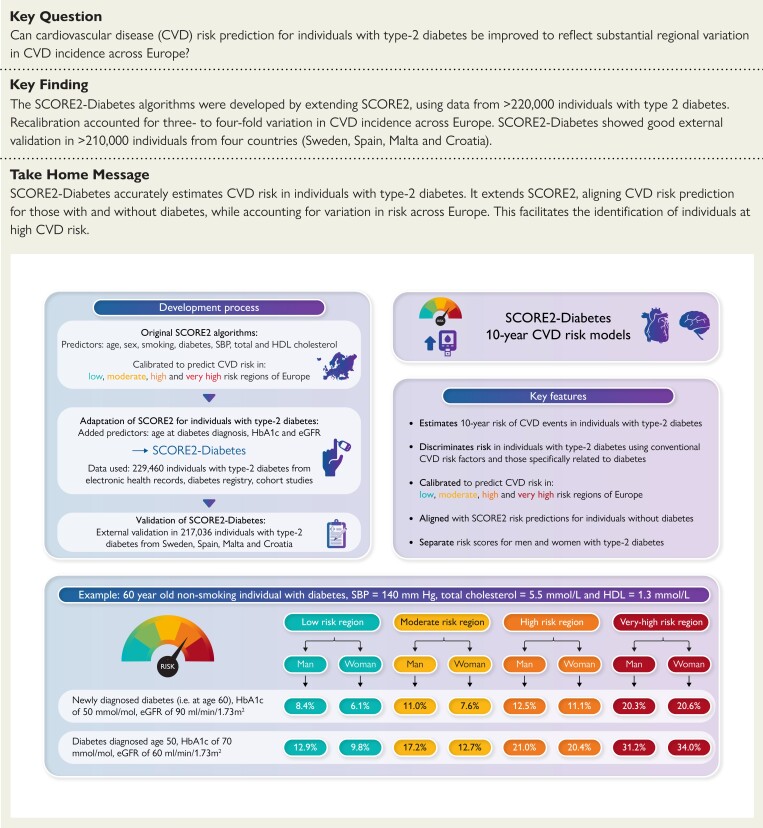
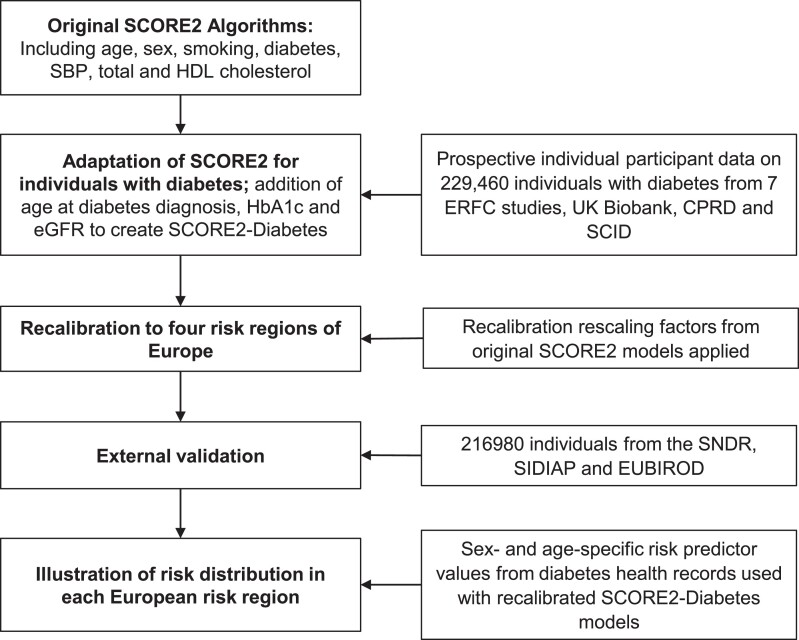
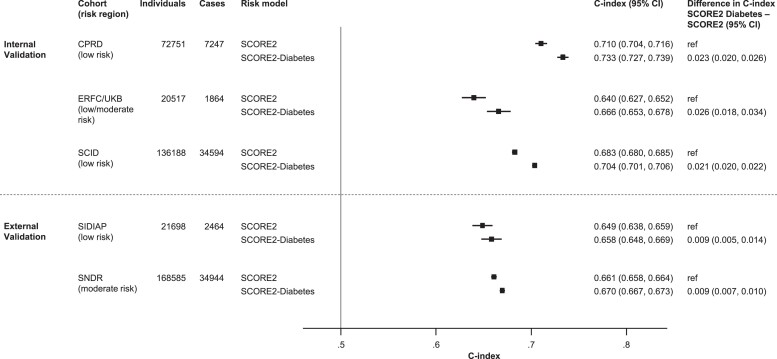
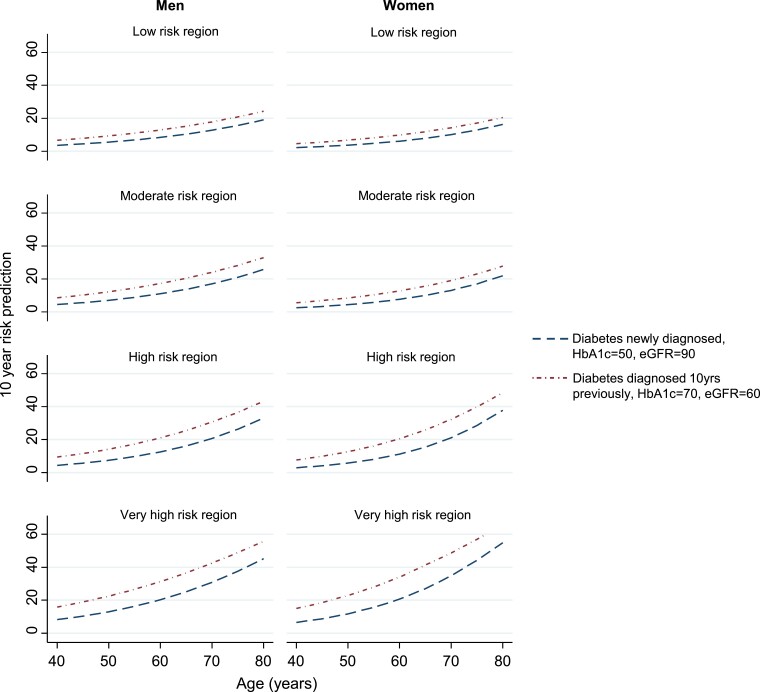
Aims: To develop and validate a recalibrated prediction model (SCORE2-Diabetes) to estimate the 10-year risk of cardiovascular disease (CVD) in individuals with type 2 diabetes in Europe. Methods and results: SCORE2-Diabetes was developed by extending SCORE2 algorithms using individual-participant data from four large-scale datasets comprising 229 460 participants (43 706 CVD events) with type 2 diabetes and without previous CVD. Sex-specific competing risk-adjusted models were used including conventional risk factors (i.e. age, smoking, systolic blood pressure, total, and HDL-cholesterol), as well as diabetes-related variables (i.e. age at diabetes diagnosis, glycated haemoglobin [HbA1c] and creatinine-based estimated glomerular filtration rate [eGFR]). Models were recalibrated to CVD incidence in four European risk regions. External validation included 217 036 further individuals (38 602 CVD events), and showed good discrimination, and improvement over SCORE2 (C-index change from 0.009 to 0.031). Regional calibration was satisfactory. SCORE2-Diabetes risk predictions varied several-fold, depending on individuals’ levels of diabetes-related factors. For example, in the moderate-risk region, the estimated 10-year CVD risk was 11% for a 60-year-old man, non-smoker, with type 2 diabetes, average conventional risk factors, HbA1c of 50 mmol/mol, eGFR of 90 mL/min/1.73 m2, and age at diabetes diagnosis of 60 years. By contrast, the estimated risk was 17% in a similar man, with HbA1c of 70 mmol/mol, eGFR of 60 mL/min/1.73 m2, and age at diabetes diagnosis of 50 years. For a woman with the same characteristics, the risk was 8% and 13%, respectively. Conclusion: SCORE2-Diabetes, a new algorithm developed, calibrated, and validated to predict 10-year risk of CVD in individuals with type 2 diabetes, enhances identification of individuals at higher risk of developing CVD across Europe.
Overview
The claims and statistics of this paper haven’t been checked yet.
Free: it reads the open-access text and checks the first 5 claims that cite a source we can check. Create a free account to check every claim.
Integrity signals
Registry
Cites
Statistics
Figures
Verification
Claims the paper makes
The claims and statistics of this paper haven’t been checked yet.
Free: it reads the open-access text and checks the first 5 claims that cite a source we can check. Create a free account to check every claim.
Claims other papers make about this one
Each is checked against this paper’s own text: does it say what the citing paper says it does?
In the citing paper
“SCORE2-Diabetes integrates information on conventional CVD risk factors (i.e.age, smoking status, systolic blood pressure [SBP], and total and high-density lipoprotein [HDL]-cholesterol) with diabetes-specific information (e.g.age at diabetes diagnosis, HbA1c, and eGFR).50”
From 2023 ESC guidelines for the management of cardiovascular disease in patients with diabetes. (2023) · cites this paper as [50]
Self-check
Percentages, sums and reported differences re-computed from the paper’s own numbers.
The self-check needs the paper’s full text.
Citations
Cites
Sudlow, C., Gallacher, J., Allen, N., Beral, V., Burton, P., Danesh, J., Downey, P., Elliott, P., Green, J., Landray, M., et al. (2015) · PLOS Medicine · doi:10.1371/journal.pmed.1001779 · Cited by 12,728 · cited 1×
“The UKB is a single large prospective cohort study with individual-participant data on approximately 500 000 participants aged over 40 years recruited across 23 UK-based assessment centres during 2006–10, and followed-up for cause-specific morbidity and mortality through linkages to routinely available national datase…”
Self-citation2021 ESC Guidelines on cardiovascular disease prevention in clinical practice
Visseren, F. L. J., Mach, F., Smulders, Y. M., Carballo, D., Koskinas, K. C., Bäck, M., Benetos, A., Biffi, A., Boavida, J.-M., Capodanno, D., et al. (2021) · European Heart Journal · doi:10.1093/eurheartj/ehab484 · Cited by 6,485
Self-citationThe Emerging Risk Factors Collaboration (2010) · The Lancet · doi:10.1016/s0140-6736(10)60484-9 · Cited by 5,125
2013 ACC/AHA Guideline on the Assessment of Cardiovascular Risk
Goff, D. C., Lloyd-Jones, D. M., Bennett, G., Coady, S., D’Agostino, R. B., Gibbons, R., Greenland, P., Lackland, D. T., Levy, D., O’Donnell, C. J., et al. (2014) · Journal of the American College of Cardiology · doi:10.1016/j.jacc.2013.11.005 · Cited by 4,945
New creatinine- and cystatin C-based equations to estimate GFR without race
Inker, L. A., Eneanya, N. D., Coresh, J., Tighiouart, H., Wang, D., Sang, Y., Crews, D. C., Doria, A., Estrella, M. M., Froissart, M., et al. (2021) · New England Journal of Medicine · doi:10.1056/nejmoa2102953 · Cited by 4,695
Self-citationGoff, D. C., Lloyd-Jones, D. M., Bennett, G., Coady, S., D’Agostino, R. B., Gibbons, R., Greenland, P., Lackland, D. T., Levy, D., O’Donnell, C. J., et al. (2014) · Circulation · doi:10.1161/01.cir.0000437741.48606.98 · Cited by 3,697 · cited 1×
“The discrimination ability reported for SCORE2-Diabetes, was somewhat lower than that previously reported for CVD risk scores in the general population.(4,5,37,38) However, higher C-indices are expected to be seen in general population cohorts given the wider age range and heterogeneity in risk factor values.”
ResultCollins, G. S., Reitsma, J. B., Altman, D. G., & Moons, K. G. M. (2015) · Annals of Internal Medicine · doi:10.7326/m14-0697 · Cited by 3,267
Data Resource Profile: Clinical Practice Research Datalink (CPRD)
Herrett, E., Gallagher, A. M., Bhaskaran, K., Forbes, H., Mathur, R., van Staa, T., & Smeeth, L. (2015) · International Journal of Epidemiology · doi:10.1093/ije/dyv098 · Cited by 2,667 · cited 2×
“3 million patients from 674 practices in the UK.(14) With 4.”
BackgroundInfluentialSCORE2 working group and ESC Cardiovascular risk collaboration, Hageman, S., Pennells, L., Ojeda, F., Kaptoge, S., Kuulasmaa, K., de Vries, T., Xu, Z., Kee, F., Chung, R., et al. (2021) · European Heart Journal · doi:10.1093/eurheartj/ehab309 · Cited by 1,810 · cited 1×
“First, SCORE2-Diabetes has been systematically recalibrated to four distinct European regions defined by varying CVD risk levels, using the most contemporary and representative CVD rates available.(12) This improves on previous CVD risk prediction models for individuals with diabetes which either have not incorporated…”
MethodSelf-citationHippisley-Cox, J., Coupland, C., & Brindle, P. (2017) · BMJ · doi:10.1136/bmj.j2099 · Cited by 1,703
Cited by
2024 ESC Guidelines for the management of elevated blood pressure and hypertension
McEvoy, J. W., McCarthy, C. P., Bruno, R. M., Brouwers, S., Canavan, M. D., Ceconi, C., Christodorescu, R. M., Daskalopoulou, S. S., Ferro, C. J., Gerdts, E., et al. (2024) · European Heart Journal · doi:10.1093/eurheartj/ehae178 · Cited by 2,298
“…while in the minority, some patients with type 2 diabetes aged 60 years may have 10-year CVD risk estimates of 10% by the SCORE2-Diabetes risk equation, 435 and in these cases, initiation of BP medication may be deferred to a BP of 140/90 mmHg in the absence of other high risk CVD conditions.”
Self-citation2023 ESC guidelines for the management of cardiovascular disease in patients with diabetes.
Marx, N., Federici, M., Schütt, K., Müller-Wieland, D., Ajjan, R. A., Antunes, M. J., Christodorescu, R. M., Crawford, C., Di Angelantonio, E., Eliasson, B., et al. (2023) · European Heart Journal · doi:10.1093/eurheartj/ehad192 · Cited by 1,642
Self-citationMartin, S. S., Aday, A. W., Allen, N. B., Almarzooq, Z. I., Anderson, C. A. M., Arora, P., Avery, C. L., Baker-Smith, C. M., Bansal, N., Beaton, A. Z., et al. (2025) · Circulation · doi:10.1161/cir.0000000000001303 · Cited by 1,080
MASLD: a systemic metabolic disorder with cardiovascular and malignant complications
Targher, G., Byrne, C. D., & Tilg, H. (2024) · Gut · doi:10.1136/gutjnl-2023-330595 · Cited by 897
Self-citation2025 Focused Update of the 2019 ESC/EAS Guidelines for the management of dyslipidaemias
Mach, F., Koskinas, K. C., Roeters van Lennep, J. E., Tokgözoğlu, L., Badimon, L., Baigent, C., Benn, M., Binder, C. J., Catapano, A. L., De Backer, G. G., et al. (2025) · European Heart Journal · doi:10.1093/eurheartj/ehaf190 · Cited by 688
Self-citationPalaniappan, L. P., Allen, N. B., Almarzooq, Z. I., Anderson, C. A. M., Arora, P., Avery, C. L., Baker-Smith, C. M., Bansal, N., Currie, M. E., Earlie, R. S., et al. (2026) · Circulation · doi:10.1161/cir.0000000000001412 · Cited by 242
2025 Focused Update of the 2019 ESC/EAS Guidelines for the management of dyslipidaemias
Mach, F., Koskinas, K. C., Roeters van Lennep, J. E., Tokgözoğlu, L., Badimon, L., Baigent, C., Benn, M., Binder, C. J., Catapano, A. L., De Backer, G. G., et al. (2025) · Atherosclerosis · doi:10.1016/j.atherosclerosis.2025.120479 · Cited by 159
Self-citationDevelopment and validation of a new algorithm for improved cardiovascular risk prediction
Hippisley‐Cox, J., Coupland, C. A. C., Bafadhel, M., Russell, R. E. K., Sheikh, A., Brindle, P. M., & Channon, K. M. (2024) · Nature Medicine · doi:10.1038/s41591-024-02905-y · Cited by 169
“We used the SCORE2 algorithm for those aged 40–69 years without diabetes 4 , SCORE2-OP for those 70 years and older without diabetes 7 and SCORE2-Diabetes 40 for those with diabetes using the authors’ published Stata code from July 2023 (ref.”
Subclassification of obesity for precision prediction of cardiometabolic diseases
Coral, D., Smit, F., Farzaneh, A., Gieswinkel, A., Tajes, J. F., Sparsø, T., Delfin, C., Bauvin, P., Wang, K., Temprosa, M. G., et al. (2024) · Nature Medicine · doi:10.1038/s41591-024-03299-7 · Cited by 100
“The full list of covariates in these models is shown in Supplementary Table 17.”
InfluentialMutruc, V., Bologa, C., Șorodoc, V., Ceasovschih, A., Morărașu, B. C., Șorodoc, L., Catar, O., & Lionte, C. (2025) · Journal of Clinical Medicine · doi:10.3390/jcm14082833 · Cited by 89
Modification of lipoprotein metabolism and function driving atherogenesis in diabetes
Luciani, L., Pedrelli, M., & Parini, P. (2024) · Atherosclerosis · doi:10.1016/j.atherosclerosis.2024.117545 · Cited by 72
Sattar, N., Presslie, C., Rutter, M. K., & McGuire, D. K. (2024) · Diabetes Care · doi:10.2337/dci23-0041 · Cited by 70
Self-citationCosentino, F., Verma, S., Ambery, P., Treppendahl, M. B., van Eickels, M., Anker, S. D., Cecchini, M., Fioretto, P., Groop, P., Hess, D. A., et al. (2023) · European Heart Journal · doi:10.1093/eurheartj/ehad445 · Cited by 71
Self-citationRoyer, P., Björnson, E., Adiels, M., Josefson, R., Hagberg, E., Gummesson, A., & Bergström, G. M. L. (2024) · European Journal of Preventive Cardiology · doi:10.1093/eurjpc/zwae124 · Cited by 61
Early-onset atherosclerotic cardiovascular disease
Mousavi, I., Suffredini, J. M., Virani, S. S., Ballantyne, C. M., Michos, E. D., Misra, A., Saeed, A., & Jia, X. (2024) · European Journal of Preventive Cardiology · doi:10.1093/eurjpc/zwae240 · Cited by 62
Zhang, X.-R., Zhong, W.-F., Liu, R., Huang, J., Fu, J., Gao, J., Zhang, P., Liu, D., Li, Z., He, Y., et al. (2025) · Cardiovascular Diabetology · doi:10.1186/s12933-025-02711-x · Cited by 65
C-reactive protein and cardiovascular risk in the general population
Kurt, B., Reugels, M., Schneider, K. M., Spießhoefer, J., Milzi, A., Gombert, A., Fordyce, C. B., Wenzl, F. A., Pagidipati, N. J., Rocha, V. Z., et al. (2025) · European Heart Journal · doi:10.1093/eurheartj/ehaf937 · Cited by 82
“11 While traditional risk factors are central to prevention strategies, residual CV risk remains inadequately addressed, with inflammation recognized as a fundamental underlying driver.”
Dedov, I., Shestakova, M., Sukhareva, O., Mokrysheva, N., Andreeva, E., Bezlepkina, O., Peterkova, V., Artemova, E., Bardiugov, P., Bessmertnaya, E., et al. (2025) · Diabetes Mellitus · doi:10.14341/dm20255s · Cited by 61
Surveillance of the liver in type 2 diabetes: important but unfeasible?
Qadri, S. U., & Yki‐Järvinen, H. (2024) · Diabetologia · doi:10.1007/s00125-024-06087-7 · Cited by 47
European guidelines for the treatment of dyslipidaemias: New concepts and future challenges
Pirillo, A., Casula, M., & Catapano, A. L. (2023) · Pharmacological Research · doi:10.1016/j.phrs.2023.106936 · Cited by 42
Improving 10-year cardiovascular risk prediction in patients with type 2 diabetes with metabolomics
Xie, R., Seum, T., Sha, S., Trares, K., Holleczek, B., Brenner, H., & Schöttker, B. (2025) · Cardiovascular Diabetology · doi:10.1186/s12933-025-02581-3 · Cited by 41
“The follow-up period extended until the first recorded non-fatal myocardial infarction, non-fatal stroke, death, or the end of the event registration period, which was capped at ten years [4].”
Self-citationAgarwal, A., Mustafa, R. A., Manja, V., Agoritsas, T., Macdonald, H., Li, S., Foroutan, F., Rayner, D. G., Rodríguez‐Gutiérrez, R., Åsvold, B. O., et al. (2025) · BMJ · doi:10.1136/bmj-2024-082071 · Cited by 32
Cardiovascular risk profile in subjects with diabetes: Is SCORE2-Diabetes reliable?
Scilletta, S., Marco, M. D., Miano, N., Capuccio, S., Musmeci, M., Bosco, G., Barbagallo, F. D. G., Martedì, M., Rocca, F. L., Vitale, A., et al. (2025) · Cardiovascular Diabetology · doi:10.1186/s12933-025-02769-7 · Cited by 31
Brandts, J., Tittel, S. R., Bramlage, P., Danne, T., Brix, J. M., Zimny, S., Heyer, C. H. J., Holl, R. W., & Müller‐Wieland, D. (2023) · Diabetes Obesity and Metabolism · doi:10.1111/dom.15264 · Cited by 31
The Ketogenic Effect of SGLT-2 Inhibitors—Beneficial or Harmful?
Koutentakis, M., Kuciński, J., Świeczkowski, D., Surma, S., Filipiak, K. J., & Gąsecka, A. (2023) · Journal of Cardiovascular Development and Disease · doi:10.3390/jcdd10110465 · Cited by 40
Damman, K., ter Maaten, J. M., Mayne, K. J., Bolignano, D., Brown, E. M., da Costa, B. R., Dagre, A. G., Gansevoort, R. T., Gavina, C., Goette, A., et al. (2026) · European Heart Journal · doi:10.1093/eurheartj/ehag098 · Cited by 34
Self-citationFadini, G. P., Bonora, B. M., Ghiani, M., Anichini, R., Melchionda, E., Fattor, B., Fazion, S., Meregalli, G., Giaccari, A., Avogaro, A., et al. (2024) · Diabetes, Obesity and Metabolism · doi:10.1111/dom.15554 · Cited by 27
Yu, H., Zhang, J., Qian, F., Yao, P., Xu, K., Wu, P., Li, R., Qiu, Z., Li, R., Zhu, K., et al. (2025) · Diabetes Care · doi:10.2337/dc24-1696 · Cited by 28
López-López, J., Peña, Á. A. G., Martínez-Bello, D., Gonzalez, A. M., Pérez-Mayorga, M., Múñoz, Ó., Ruiz‐Uribe, G., Campo, A., Rangarajan, S., Yusuf, S., et al. (2024) · European Journal of Preventive Cardiology · doi:10.1093/eurjpc/zwae242 · Cited by 36
Lui, D. T. W., Li, L., Liu, X., Xiong, X., Tang, E. H. M., Lee, C., Woo, Y. C., Lang, B. H., Wong, C. K. H., & Tan, K. C. B. (2024) · BMC Medicine · doi:10.1186/s12916-024-03810-4 · Cited by 26
“…type 2 diabetes, which may bear implications in the construction of cardiovascular risk calculators as current risk calculators (including the SCORE2-Diabetes [31]) consider HDL-C level as a linear variable and may not account for the higher cardiovascular risks linked to the high HDL-C levels.”
Wu, W., Jia, C., Xu, X., He, Y., Xie, Y., Zhou, Y., Lu, H., Liu, J., Chen, J., & Liu, Y. (2024) · Journal of Inflammation Research · doi:10.2147/jir.s458950 · Cited by 25
“37,38 Our study unveiled a positive association between PHR and the glycemic metabolism index marker (HbA1c) in our CAD cohort.”
BackgroundPaeoniflorin: a review of its pharmacology, pharmacokinetics and toxicity in diabetes
Ou, X., Yu, Z., Pan, C., Zheng, X., Li, D., Qiao, Z., & Zheng, X. (2025) · Frontiers in Pharmacology · doi:10.3389/fphar.2025.1551368 · Cited by 27
Suwała, S., & Junik, R. (2024) · Journal of Clinical Medicine · doi:10.3390/jcm13071931 · Cited by 31
“…(SCORE2 and SCORE2-OP are not validated and calibrated for patients with diabetes, unlike SCORE2-Diabetes, which was not used in this study [12]), chronic renal disease, familial hypercholesterolemia, and any other genetic abnormalities that could potentially affect lipid metabolism or…”
BackgroundModern Challenges in Type 2 Diabetes: Balancing New Medications with Multifactorial Care
Caturano, A., Galiero, R., Rocco, M. P., Tagliaferri, G., Piacevole, A., Nilo, D., Lorenzo, G. D., Sardu, C., Vetrano, E., Monda, M., et al. (2024) · Biomedicines · doi:10.3390/biomedicines12092039 · Cited by 28
Neuen, B. L., Major, R. W., Grams, M. E., Sang, Y., Coresh, J., Ballew, S. H., Surapaneni, A., de Pinho, N. A., Ärnlöv, J., Arnott, C. G., et al. (2026) · Nature Medicine · doi:10.1038/s41591-026-04437-z · Cited by 23
Self-citationCardiovascular risk assessment in daily clinical practice: when and how to use a risk score
Panattoni, G., Desimone, P., Toto, F., Meringolo, F., Jacomelli, I., Rebecchi, M., Cicogna, F., & Calò, L. (2025) · European Heart Journal Supplements · doi:10.1093/eurheartjsupp/suae100 · Cited by 25
Sun, Y., Yu, Y., Cai, L., Yu, B., Xiao, W., Tan, X. W., Wang, Y., Lu, Y., & Wang, N. (2025) · Cardiovascular Diabetology · doi:10.1186/s12933-025-02626-7 · Cited by 24
Validation of the European SCORE2 models in a Canadian primary care cohort
Sud, M. K., Sivaswamy, A., Austin, P. C., Abdel-Qadir, H. M., Anderson, T. J., Khera, R., Naimark, D. M. J., Lee, D. S., Roifman, I., Thanassoulis, G., et al. (2023) · European Journal of Preventive Cardiology · doi:10.1093/eurjpc/zwad352 · Cited by 20
Cardiotoxicity Induced by Anticancer Therapies: A Call for Integrated Cardio-Oncology Practice
Ciappina, G., Colarusso, L., Maiorana, E., Ottaiano, A., Franchina, T., Picone, A., Facchini, G., Barraco, C., Ieni, A., Cusmà-Piccione, M., et al. (2025) · Pharmaceuticals · doi:10.3390/ph18091399 · Cited by 20
“In patients with type 2 diabetes, the SCORE2-Diabetes tool offers a more tailored approach [111].”
Shibata, N., Morita, Y., Ito, T., Kanzaki, Y., Watanabe, N., Yoshioka, N., Arao, Y., Yasuda, S., Koshiyama, Y., Toyoda, H., et al. (2024) · European Journal of Internal Medicine · doi:10.1016/j.ejim.2024.07.005 · Cited by 17
Mostaza, J. M., Pintó, X., Armario, P., Masana, L., Real, J. T., Valdivielso, P., Arrobas-Velilla, T., Baeza‐Trinidad, R., Calmarza, P., Cebollada, J., et al. (2024) · Clínica e Investigación en Arteriosclerosis · doi:10.1016/j.arteri.2024.02.001 · Cited by 26
Self-citationOh, R., Kim, G., Lee, K., Cho, S. H., Kim, J. Y., Kim, S., Lee, Y., Jin, S., Han, K., Han, K., et al. (2024) · Cardiovascular Diabetology · doi:10.1186/s12933-024-02489-4 · Cited by 16
Grune, E., Nattenmüller, J., Kiefer, L. S., Machann, J., Peters, A., Bamberg, F., Schlett, C. L., & Rospleszcz, S. (2024) · Metabolism · doi:10.1016/j.metabol.2024.156130 · Cited by 17
Recognising, quantifying and accounting for classification uncertainty in type 2 diabetes subtypes
Mori, T., Zaharia, O., Straßburger, K., Dennis, J., Mai, K., Kabisch, S., Bornstein, S. R., Szendroedi, J., Blüher, M., Meyhöfer, S., et al. (2025) · Diabetologia · doi:10.1007/s00125-025-06486-4 · Cited by 16
“Besides the variables needed for cluster assignment, we also extracted further clinical information necessary to predict the 10 year CVD risk based on the SCORE2-Diabetes model [29]: smoking status; systolic BP; total cholesterol; HDL-cholesterol; and eGFR.”
Huang, Q., Zou, X., Lian, Z., Zhou, X., Han, X., Luo, Y., Chen, S., Wang, Y., Wu, S., & Ji, L. (2025) · Cardiovascular Diabetology · doi:10.1186/s12933-025-02611-0 · Cited by 15
“For patients with T2DM, the European Society of Cardiology (ESC) guidelines suggest using tools like SCORE-2D [5] (Systematic Coronary Risk Evaluation 2 for diabetes) and ADVANCE [6] to estimate cardiovascular risk.”
Helmink, M. A. G., Hageman, S. H. J., Eliasson, B., Sattar, N. A., Visseren, F. L. J., Dorresteijn, J. A. N., Harris, K., Peters, S. A. E., Woodward, M., Szentkúti, P., et al. (2024) · Diabetes Obesity and Metabolism · doi:10.1111/dom.15531 · Cited by 18
“22 Another important aspect of the LIFE-T1D model is that it accounts for the impact of the competing risk of non-CVD mortality.”
Self-citationBertrand, A., Lewis, A., Camps, J., Grau, V., & Rodríguez, B. (2024) · Cardiovascular Diabetology · doi:10.1186/s12933-024-02465-y · Cited by 17
Alfaraj, S., Kist, J. M., Groenwold, R. H. H., Spruit, M. R., Mook-Kanamori, D. O., & Vos, R. C. (2024) · European Journal of Preventive Cardiology · doi:10.1093/eurjpc/zwae354 · Cited by 16
Cardiovascular Risk Assessment and Lipid-Lowering Therapy Recommendations in Primary Prevention
Komnianou, A., Kyriakoulis, K. G., Menti, A., Dimakakos, E. P., Stergiou, G. S., & Κόλλιας, Α. (2025) · Journal of Clinical Medicine · doi:10.3390/jcm14072220 · Cited by 17
New Perspectives in Management of Cardiovascular Risk Among People With Diabetes
Gami, A., Blumenthal, R. S., McGuire, D. K., Sarkar, S., & Kohli, P. (2024) · Journal of the American Heart Association · doi:10.1161/jaha.123.034053 · Cited by 17
Wang, H., Gao, C., Guignard‐Duff, M., Cole, C., Hall, C., Baruah, R., Das, S., Gao, H., Mamza, J. B., Lang, C. C., et al. (2025) · Heart · doi:10.1136/heartjnl-2024-324160 · Cited by 13
Xiao, E., Yu, R., Cai, X., Jiang, L., Li, J., Ma, C., Liu, Y., Liu, L., Su, G., & Wang, X. (2025) · Lipids in Health and Disease · doi:10.1186/s12944-025-02445-5 · Cited by 13
Management kardiovaskulärer Erkrankungen bei Patienten mit Diabetes
Marx, N., Müller‐Wieland, D., Verket, M., & Schütt, K. S. (2023) · Herz · doi:10.1007/s00059-023-05218-x · Cited by 13
Bone proteins are associated with cardiovascular risk according to the SCORE2-Diabetes algorithm
González-Salvatierra, S., García‐Martin, A., García-Fontana, B., Martínez-Heredia, L., García‐Fontana, C., & Muñoz‐Torres, M. (2024) · Cardiovascular Diabetology · doi:10.1186/s12933-024-02406-9 · Cited by 12
Li, Z., Ren, Y., Jiang, F., Zhang, K., Meng, X., Zheng, Y., & He, M. (2025) · Cardiovascular Diabetology · doi:10.1186/s12933-025-02899-y · Cited by 13
Zou, X., Liu, Y., & Ji, L. (2023) · Digital Health · doi:10.1177/20552076231203879 · Cited by 20
“43 Current conventional cardiovascular risk scoring systems, such as the Action in Diabetes and Vascular Disease: Preterax and Diamicron-MR Controlled Evaluation (ADVANCE) 44 and SCORE2-Diabetes, 45 performed well within their development cohorts; however, their external validity is less satisfactory 46 or not yet tes…”
MethodAspirin in Primary Prevention: Looking for Those Who Enjoy It
Bona, R. D., Giubilato, S., Palmieri, M., Benenati, S., Rossini, R., Fusco, S. A. D., Novarese, F., Mascia, G., Gasparetto, N., Monaco, A. D., et al. (2024) · Journal of Clinical Medicine · doi:10.3390/jcm13144148 · Cited by 16
“…risk stratification tools [83], SCORE2 and SCORE2-OP [88,89], the latter dedicated to people aged over 70 years, to which SCORE2 diabetes was recently added specifically for diabetic patients [90] and a specific add-on tool was developed to improve risk prediction in patients with CKD [91].”
BackgroundDenimal, D., Duvillard, L., Béland‐Bonenfant, S., Terriat, B., de Barros, J.-P. P., Simoneau, I., Rouland, A., Houbachi, L., Bouillet, B., Vergès, B. L., et al. (2024) · Diabetes & Metabolism · doi:10.1016/j.diabet.2024.101542 · Cited by 11
Hansen, A. L., Brøns, C., Engelhard, L. M., Andersen, M. K., Hansen, T. F., Nielsen, J. S., Vestergaard, P., Højlund, K., Jessen, N., Olsen, M. H., et al. (2024) · Diabetologia · doi:10.1007/s00125-024-06170-z · Cited by 11
“…of 10-year CVD risk in people with type 2 diabetes are established CVD risk factors, including age, smoking, systolic blood pressure and total and HDL-cholesterol, as well as diabetes-associated variables, including age at diabetes diagnosis, HbA 1c and estimated glomerular filtration rate [2].”
InfluentialGeschlechterspezifische Aspekte kardiovaskulärer Erkrankungen
Baessler, A., Bauer, P., Becker, M., Berrisch-Rahmel, S., Goldmann, B. U., Grünig, E., Hamm, C., Meder, B., Kindermann, I., Ong, P., et al. (2024) · Die Kardiologie · doi:10.1007/s12181-024-00694-9 · Cited by 11
Diabetes and Lipids: A Review and Update on Lipid Biomarkers and Cardiovascular Risk
Tsushima, Y., & Hatipoğlu, B. (2025) · Endocrine Practice · doi:10.1016/j.eprac.2025.03.011 · Cited by 13
Epigenetic biomarkers predict macrovascular events in individuals with type 2 diabetes
García-Calzón, S., Maguolo, A., Eichelmann, F., Edsfeldt, A., Perfilyev, A., Maziarz, M., Lindström, A., Sun, J., Brīvība, M., Schulze, M. B., et al. (2025) · Cell Reports Medicine · doi:10.1016/j.xcrm.2025.102290 · Cited by 16
A practical guide to the management of dyslipidaemia
Siegel, P. M., Katzmann, J. L., Weinmann‐Menke, J., Landmesser, U., Schunkert, H., Baldus, S. E., Böhm, M., Laufs, U., Lüscher, T. F., & Hilgendorf, I. (2026) · Clinical Research in Cardiology · doi:10.1007/s00392-025-02833-y · Cited by 15
“Meanwhile, SCORE2-diabetes (SCORE2-DM) should be used in individuals with type 2 diabetes mellitus who are aged 40–79 years and do not have a history of ASCVD or severe target-organ damage [40].”
Association of plasma angiogenin with risk of major cardiovascular events in type 2 diabetes
Gurung, R. L., Liu, S., Liu, J., Yiamunaa, M., Zheng, H., Chan, C., Ang, K., Subramaniam, T., Sum, C. F., & Lim, S. C. (2024) · Cardiovascular Diabetology · doi:10.1186/s12933-024-02156-8 · Cited by 12
SEA 2024 Standards for Global Control of Vascular Risk
Mostaza, J. M., Pintó, X., Armario, P., Masana, L., Real, J. T., Valdivielso, P., Arrobas-Velilla, T., Baeza‐Trinidad, R., Calmarza, P., Cebollada, J., et al. (2024) · Clínica e Investigación en Arteriosclerosis (English Edition) · doi:10.1016/j.artere.2024.06.001 · Cited by 22
Self-citationRisk prediction in patients with diabetes: is SCORE 2D the perfect solution?
Rydén, L., Ferrannini, G., & Standl, E. (2023) · European Heart Journal · doi:10.1093/eurheartj/ehad263 · Cited by 13
Wełnicki, M. T., Gorczyca-Głowacka, I., Kapłon‐Cieślicka, A., Janiszewski, M., Kasprzak, J. D., Leszek, P., Tomaszuk−Kazberuk, A., Łukasiewicz, M., Tomaniak, M., Surma, S., et al. (2025) · Cardiology Journal · doi:10.5603/cj.103680 · Cited by 11
“For patients with diabetes, a dedicated calculator has been developed, SCORE2-Diabetes (https://www.mp.pl/kalkulatory/339319,ocena-ryzyka-sercowo-naczyniowego-u-osob-z-cukrzyca ), which takes into account, among other things, the duration of the disease and the degree of glycemic control [22, 23].”
External validation of SCORE2-Diabetes risk prediction model in Chinese patients with diabetes
Fu, Z., Shen, P., Liang, J., Liu, X., Sun, Y., Chen, Q., Lin, H., Tang, X., & Gao, P. (2025) · European Journal of Preventive Cardiology · doi:10.1093/eurjpc/zwaf226 · Cited by 10
Deep learning can predict cardiovascular events from liver imaging
Veldhuizen, G. P., Lenz, T., Çifçi, D., van Treeck, M., Clusmann, J., Chen, Y., Schneider, C. V., Luedde, T., de Leeuw, P. W., El‐Armouche, A., et al. (2025) · JHEP Reports · doi:10.1016/j.jhepr.2025.101427 · Cited by 12
Kaptoge, S. K., Keene, S. J., Reitsma, T. H., Shi, W., Lees, J. S., Loo, L., Gynnild, M. N., Chilala, C. I., Ritchie, S. C., Spackman, S., et al. (2026) · European Heart Journal · doi:10.1093/eurheartj/ehag154 · Cited by 14
Self-citationCassataro, G., Geraci, G., Giusti, M. A., Maida, C. D., Maggio, V., Rizzo, M., & Mattina, A. (2026) · Journal of Clinical Medicine · doi:10.3390/jcm15062358 · Cited by 11
“SCORE2-Diabetes estimates 10-year risk of myocardial infarction and stroke by integrating traditional CV risk factors with diabetes-specific variables [68].”
Harms, P. P., Herings, R. A. R., Remmelzwaal, S., Rutters, F., Beulens, J. W. J., Nijpels, G., Elders, P. J. M., & Blom, M. T. (2025) · European Journal of Preventive Cardiology · doi:10.1093/eurjpc/zwaf033 · Cited by 9
Caries Is the Hub of a Complex Network of Chronic Diseases across the Life Decades
Costa, S. A., Rodrigues, F. A., Ferraro, A. A., Nascimento, G. G., Leite, F. R. M., de Souza, B. F., & Ribeiro, C. C. C. (2025) · Journal of Dental Research · doi:10.1177/00220345251317487 · Cited by 9
“Diabetes often predicts cardiovascular disease (Pennells et al. 2023), with affected individuals facing 2-to 4-fold higher risks (Dunlay et al. 2019).”
Martens, F. M. A. C., Visseren, F. L. J., Westerink, J., Spee, R. F., Saloua, E. M., Mosterd, A., Handoko, M. L., Leening, M. J. G., Römer, T. J., Slootweg, A., et al. (2025) · Netherlands Heart Journal · doi:10.1007/s12471-025-01967-y · Cited by 10
Self-citationFatica, M., Ferrigno, S., Cela, E., D’Antonio, A., Conigliaro, P., Cardellini, M., Longo, S., Federici, M., & Chimenti, M. S. (2025) · Acta Diabetologica · doi:10.1007/s00592-025-02565-5 · Cited by 10
Cardiovascular Risk Prediction in Older Adults
Colantonio, L. D., & Bittner, V. (2025) · Current Atherosclerosis Reports · doi:10.1007/s11883-025-01339-2 · Cited by 11
“Models that account for competing risks include LIFE-CVD2, SCORE2, and SCORE2-Diabe-tes for Europe [ 54 , 63, 64 ], NORRISK2 (Norway) [55 ], and PREVENT (US) [58 , 59 ].”
Caturano, A., Nilo, D., Lorenzo, G. D., Rocco, M. P., Tagliaferri, G., Piacevole, A., Donnarumma, M., Iadicicco, I., Moretto, S. M., Acierno, C., et al. (2025) · Reviews in Cardiovascular Medicine · doi:10.31083/rcm43143 · Cited by 9
“SCORE2-Diabetes: 10-year cardiovascular risk estimation in type 2 diabetes in Europe [107].”
InfluentialLuca, S. A., Bungau, R. M., Lazăr, S., Potre, O., & Timar, B. (2024) · Medicina · doi:10.3390/medicina60020334 · Cited by 10
“The 2023 ESC Guidelines introduce, as an element of novelty, a new prediction model tailored for individuals with T2DM, SCORE2-Diabetes [13].”
BackgroundInfluentialKurevija, T., Šojat, D., Bosnić, Z., Mujaj, B., Canecki-Varžić, S., & Majnarić, L. T. (2024) · Journal of Clinical Medicine · doi:10.3390/jcm13061617 · Cited by 9
Recomendaciones preventivas vasculares. Actualización PAPPS 2024
Orozco‐Beltrán, D., Brotons-Cuixart, C., Banegas, J. R., Gil-Guillén, V. F., Cuenca, A. M. C., Martín-Rioboó, E., Jordá-Baldó, A., Vicuña, J., & Navarro-Pérez, J. (2024) · Atención Primaria · doi:10.1016/j.aprim.2024.103123 · Cited by 13
Bai, L., Li, Y., Yang, B., Cheng, Y.-H., Zhang, Y.-K., Liao, G.-Z., Ye, Y., Chen, X., Chai, H., & Peng, Y. L. (2023) · Reviews in Cardiovascular Medicine · doi:10.31083/j.rcm2412356 · Cited by 8
“…incorporating traditional risk factors (e.g., age, smoking, systolic blood pressure, total cholesterol, and high-density lipoprotein cholesterol) and diabetes-related variables (e.g., age at diabetes diagnosis, glycated hemoglobin, and creatinine-based estimated glomerular filtration rate) [30].”
BackgroundPop, C., Petriş, A. O., Pop, L., & David, L. (2025) · Journal of Clinical Medicine · doi:10.3390/jcm14103269 · Cited by 10
“Most hypertensive patients with T2DM have very high or high CVD risk, and—specifically for individuals with elevated BP and T2DM below 60—the ASCVD risk score and SCORE2-Diabetes should be considered to identify those with moderate CVD risk (7.5% and <10% over 10 years) [31,32].”
InfluentialMarrone, A., Allosso, F., Caturano, A., Selvaggio, L. D., Errico, M., Grande, G., Navarra, R., Ludovico, C. D., Montagna, M. L., Sasso, F. C., et al. (2025) · The Journal of Clinical Endocrinology & Metabolism · doi:10.1210/clinem/dgaf479 · Cited by 9
Nam, D., Jang, Y.-H., Lee, Y.-S., Seo, J., Thakur, S., Nusinovici, S., Kim, M., Shin, Y. U., Park, H.-C., & Hwang, S. (2025) · Canadian Journal of Ophthalmology · doi:10.1016/j.jcjo.2025.11.004 · Cited by 9
Advances in the diagnosis and detection of chronic kidney disease
Lees, J. S., Zhang, L., Anandh, U., Kronbichler, A., Fisher, L.-A., Borg, M., Wang, A. Y.-M., & Levin, A. (2026) · The Lancet · doi:10.1016/s0140-6736(26)00702-6 · Cited by 10
A New Potent Inhibitor against α-Glucosidase Based on an In Vitro Enzymatic Synthesis Approach
Zhang, H., Che, X., Jing, H., Su, Y., Yang, W., Wang, R., Zhang, G., Meng, J., Yuan, W., Wang, J., et al. (2024) · Molecules · doi:10.3390/molecules29040878 · Cited by 8
Dang, H. N. N., Luong, T. V., Pham, A. K., Le, T., Le, N. D., Nguyen, H. M., Hoang, T. A., & Ho, B. A. (2024) · Scientific Reports · doi:10.1038/s41598-024-78182-z · Cited by 8
King, A., Tan, X., Dhopeshwarkar, N., Bohn, R. L., Dea, K., Leonard, C. E., & de Havenon, A. (2025) · American Journal of Preventive Cardiology · doi:10.1016/j.ajpc.2024.100922 · Cited by 10
Incremental Prognostic Value of a Coronary Heart Disease Polygenic Risk Score in Type 2 Diabetes
Mordi, I. R., Li, I., George, G., McCrimmon, R. J., Palmer, C. N., Pearson, E. R., Lang, C. C., & Doney, A. S. F. (2024) · Diabetes Care · doi:10.2337/dc24-1489 · Cited by 7
de-Torres, J. P., Casanova, C., Zagaceta, J., Marín, J. M., Cabrera, C., Ezponda, A., Campo, A., Alcaide, A. B., Seijo, L. M., Bastarrika, G., et al. (2025) · CHEST Journal · doi:10.1016/j.chest.2025.09.133 · Cited by 8
Cardio-renal-metabolic (CRM): Call for action for European Guidelines for Primary Care Physicians
Säemann, M. D., Biesiada, A. M., Smatana, M., & Liebermann, N. (2025) · Journal of Primary Care & Community Health · doi:10.1177/21501319251379732 · Cited by 7
Current treatment for diabetes: a holistic approach
Mourelatou, N. G., Kounatidis, D. C., Vallianou, N. G., Daniele, G., Dardano, A., & Rebelos, E. (2025) · HORMONES · doi:10.1007/s42000-025-00734-3 · Cited by 8
Li, Z., Liu, S., Ho, J. C., Narayan, K. M. V., Ali, M. K., & Varghese, J. S. (2026) · Diabetologia · doi:10.1007/s00125-026-06687-5 · Cited by 8
Multiomics for Risk Stratification in Atherosclerotic Cardiovascular Disease
Nordestgaard, L. T., Magni, P., Sopić, M., Chemaly, M., Matic, L. P., Dalila, N., Trindade, F., Wolford, B. N., Rodriguez-Hernandez, Z., Amigó, N., et al. (2026) · Circulation Genomic and Precision Medicine · doi:10.1161/circgen.125.005451 · Cited by 8
Erlikh, A. D., Zilov, A. V., Shchekochikhin, D., Sb, S., Bublik, E. V., Игоревна, В. О., Grishkovets, A. I., Гамидович, Ф. А., & Ryzhkova, E. G. (2024) · Problems of Endocrinology · doi:10.14341/probl13414 · Cited by 8
Gastouniotis, I., Fragoulis, C., Antonopoulos, A. S., Kouroutzoglou, A., Noutsou, M., Thanopoulou, A. C., Chrysohoou, C. A., & Tsioufis, K. P. (2024) · Biomedicines · doi:10.3390/biomedicines12122718 · Cited by 8
“In future, randomized controlled trials, including a larger number of participants, would clarify the high-risk characteristics of patients with T2DM.”
RiskScorescvd: Cardiovascular Risk Scores Calculator
Perez-Vicencio, D., Doudesis, D., Thurston, A. J. F., & Selva, J. J. (2023) · doi:10.32614/cran.package.riskscorescvd · Cited by 7
Okdahl, T., Wegeberg, A., Jensen, M. M., Quist, J. S., & Brock, C. (2025) · Diabetology & Metabolic Syndrome · doi:10.1186/s13098-025-01834-1 · Cited by 6
“Though a diabetes-specific score has recently been published [24], we used the standard algo-rithm to calculate risk to compare groups with and without diabetes.”
Adam, C. A., Popiołek-Kalisz, J., Akıncı, B., Manzi, G., Ullah, I., Beneki, E., Mitu, F., Baťalík, L., Ostojic, M., & Perone, F. (2025) · Journal of Clinical Medicine · doi:10.3390/jcm14217791 · Cited by 7
Xie, R., Herder, C., Sha, S., Brenner, H., Carlsson, S., & Schöttker, B. (2025) · Cardiovascular Diabetology · doi:10.1186/s12933-025-03036-5 · Cited by 10
“In response to the need for more personalized prediction tools, the European Society of Cardiology recently introduced SCORE2-Diabetes, which is a sex-specific algorithm developed from large European cohort data to estimate the 10-year risk of MACE [7].”
InfluentialSelf-citation
Metadata
- Authors
- SCORE2-Diabetes Working Group and the ESC Cardiovascular Risk Collaboration, Pennells, L., Kaptoge, S., Østergaard, H. B., Read, S. H., Carinci, F., Franch-Nadal, J., Petitjean, C., Taylor, O., Hageman, S. H. J., Xu, Z., Shi, F., Spackman, S., Gualdi, S., Holman, N., Da Providencia E Costa, R. B., Bonnet, F., Brenner, H., Gillum, R. F., Kiechl, S., Lawlor, D. A., Potier, L., Schöttker, B., Sofat, R., Völzke, H., Willeit, J., Baltane, Z., Fava, S., Janos, S., Lavens, A., Pildava, S., Poljicanin, T., Pristas, I., Rossing, P., Sascha, R., Scheidt-Nave, C., Stotl, I., Tibor, G., Urbančič-Rovan, V., Vanherwegen, A.-S., Vistisen, D., Du, Y., Walker, M. R., Willeit, P., Ference, B., De Bacquer, D., Halle, M., Huculeci, R., McEvoy, J. W., Timmis, A., Vardas, P., Dorresteijn, J. A. N., Graham, I., Wood, A., Eliasson, B., Herrington, W., Danesh, J., Mauricio, D., Benedetti, M. M., Sattar, N., Visseren, F. L. J., Wild, S., Di Angelantonio, E., Balkau, B., Bonnet, F., Fumeron, F., Stocker, H., Holleczek, B., Schipf, S., Schmidt, C. O., Dörr, M., Tilg, H., Leitner, C., Notdurfter, M., Taylor, J., Dale, C., Prieto-Merino, D., Gillum, R. F., Lavens, A., Vanherwegen, A.-S., Poljicanin, T., Pristas, I., Buble, T., Ivanko, P., Rossing, P., Carstensen, B., Heidemann, C., Du, Y., Scheidt-Nave, C., Gall, T., Sandor, J., Baltane, Z., Pildava, S., Lepiksone, J., Magri, C. J., Azzopardi, J., Stotl, I., Real, J., Vlacho, B., & Mata-Cases, M.
- ORCID
- Pennells, Lisa
- Kaptoge, Stephen
- Read, Stephanie H
- Carinci, Fabrizio
- Petitjean, Carmen
- Hageman, Steven H J
- Xu, Zhe
- Shi, Fanchao
- Spackman, Sarah
- Holman, Naomi
- Brenner, Hermann
- Kiechl, Stefan
- Potier, Louis
- Schöttker, Ben
- Sofat, Reecha
- Völzke, Henry
- Willeit, Johann
- Fava, Stephen
- Vistisen, Dorte
- Walker, Matthew R
- Willeit, Peter
- De Bacquer, Dirk
- Halle, Martin
- Huculeci, Radu
- McEvoy, John William
- Timmis, Adam
- Dorresteijn, Jannick A N
- Graham, Ian
- Wood, Angela
- Eliasson, Björn
- Herrington, William
- Danesh, John
- Sattar, Naveed
- Visseren, Frank L J
- Wild, Sarah
- Di Angelantonio, Emanuele
- Balkau, Beverley
- Stocker, Hannah
- Schipf, Sabine
- Schmidt, Carsten Oliver
- Dörr, Marcus
- Tilg, Herbert
- Taylor, Julie
- Dale, Caroline
- Buble, Tamara
- Ivanko, Pero
- Carstensen, Bendix
- Heidemann, Christin
- Lepiksone, Jana
- Magri, Caroline J
- Azzopardi, Joseph
- Real, Jordi
- Vlacho, Bogdan
- Venue
- European Heart Journal
- Publisher
- Oxford University Press (OUP)
- Published
- 2023-05-29
- Volume
- 44
- Issue
- 28
- Pages
- 2544-2556
- ISSN
- 0195-668X (ISSN-L)
- 1522-9645
- PMC
- PMC10361012
- OpenAlex
- W4378746292
- Cited by
- 329
- References
- 38
- Citations by year
- 2026: 102 · 2025: 120 · 2024: 89 · 2023: 18
- FWCI
- 67.70
- Type
- journal article
- Language
- en
- Open access
- hybrid
- doi.org
- Licence
- Locations
- European Heart Journal (publishedVersion, cc-by-nc)
- PubMed Central (publishedVersion, cc-by-nc)
- PubMed (publishedVersion)
- Ghent University Academic Bibliography (Ghent University) (submittedVersion, cc-by-nc)
- Dipòsit Digital de Documents de la UAB (Universitat Autònoma de Barcelona) (submittedVersion, cc-by-nc)
- UCL Discovery (University College London) (submittedVersion, cc-by-nc)
- Lirias (KU Leuven) (submittedVersion, other-oa)
- Utrecht University Repository (Utrecht University) (submittedVersion, other-oa)
- Edinburgh Research Explorer (University of Edinburgh) (submittedVersion, cc-by-nc)
- Queen Mary Research Online (Queen Mary University of London) (submittedVersion, cc-by-nc)
- Funders
- British Heart Foundation (RG/13/13/30194, RG/18/13/33946)
- BHF Centre of Research Excellence (RE/18/1/34212)
- UK Medical Research Council (MR/L003120/1)
- National Institute for Health and Care Research (NIHR) Cambridge Biomedical Research Centre (BRC-1215–20014)
- NIHR
- British United Provident Association (BUPA) Foundation
- GlaxoSmithKline
- Topics
- Health Sciences › Medicine › Endocrinology, Diabetes and Metabolism › Diabetes, Cardiovascular Risks, and Lipoproteins
- Health Sciences › Medicine › Public Health, Environmental and Occupational Health › Health Promotion and Cardiovascular Prevention
- Health Sciences › Medicine › Endocrinology, Diabetes and Metabolism › Diabetes Treatment and Management
- Keywords
- cardiovascular risk prediction, type 2 diabetes, 10-year cardiovascular risk, SCORE2, HbA1c, estimated glomerular filtration rate, age at diabetes diagnosis, risk recalibration, external validation
- MeSH terms
- Heart Disease Risk Factors, Cardiovascular Diseases, Diabetes Mellitus, Type 2, Europe, Female, Glycated Hemoglobin, Humans, Male, Middle Aged, Risk Factors
About these checks
Registry, retraction, Cites and statistics results are computed, not judged, with one exception: a printed reference that no index lists is read once by a model before it counts as a citation error. Claims are extracted by a model and kept only when their quote appears verbatim in the text; each cited source is then checked, with a model’s help, for whether it says what the claim relies on. Those verdicts can be wrong — read the claim’s quote and the cited source before relying on one.
Statistics and arithmetic are recomputed, not judged.
Confidence bands are shown only for fields calibrated on our annotated test set. None is calibrated yet, so no band is shown.
What counts as a claim ›How we measure confidence ›How we check this ›
Are you an author, or do you see a problem with this page? Request a review
Data sources
Bibliographic data: Semantic Scholar, OpenAlex, Crossref.
Contains information from the Semantic Scholar Academic Graph Datasets, made available under the ODC Attribution License (ODC-BY 1.0).
Semantic Scholar’s data is described in: Kinney, R., et al. (2023). The Semantic Scholar Open Data Platform. arXiv:2301.10140.
