

The DOI matches its Crossref record; 34 of the 34 references it cites were found in a registry or an index.
Triglyceride-rich lipoprotein remnants, low-density lipoproteins, and risk of coronary heart disease: a UK Biobank study
Open accessAbstract
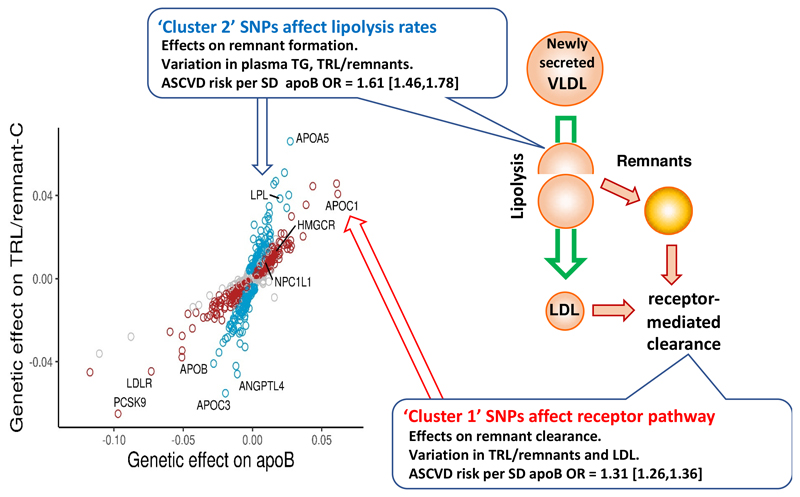
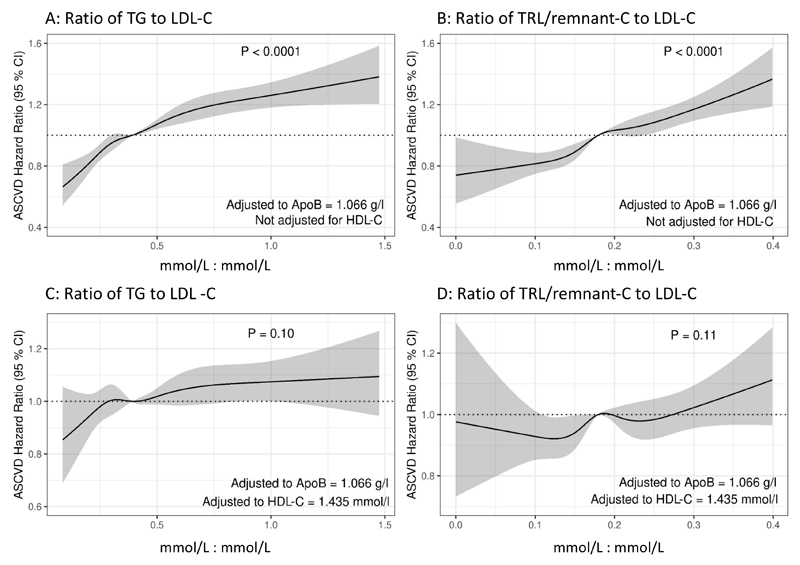
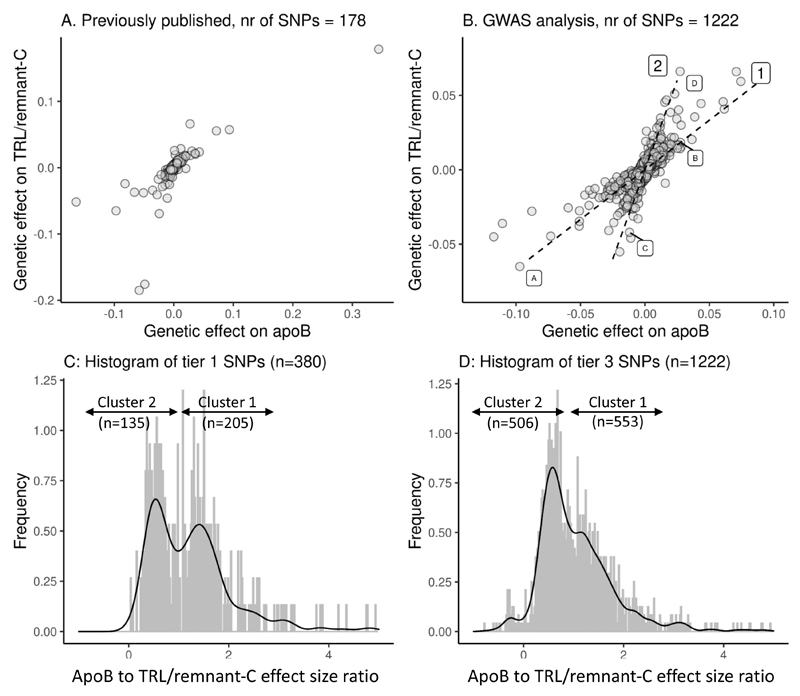
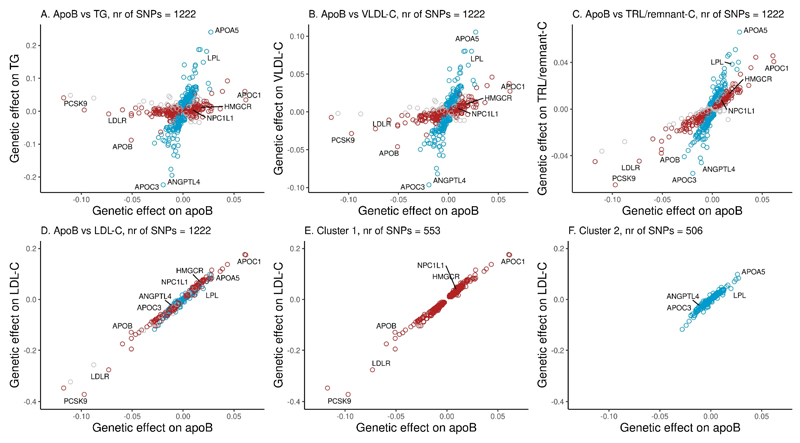
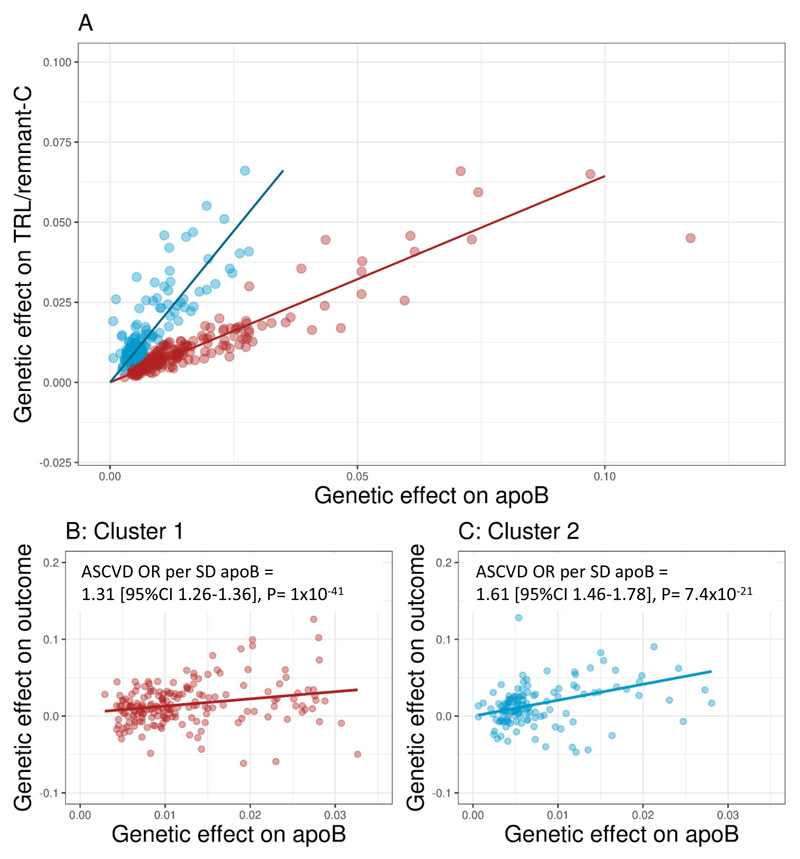
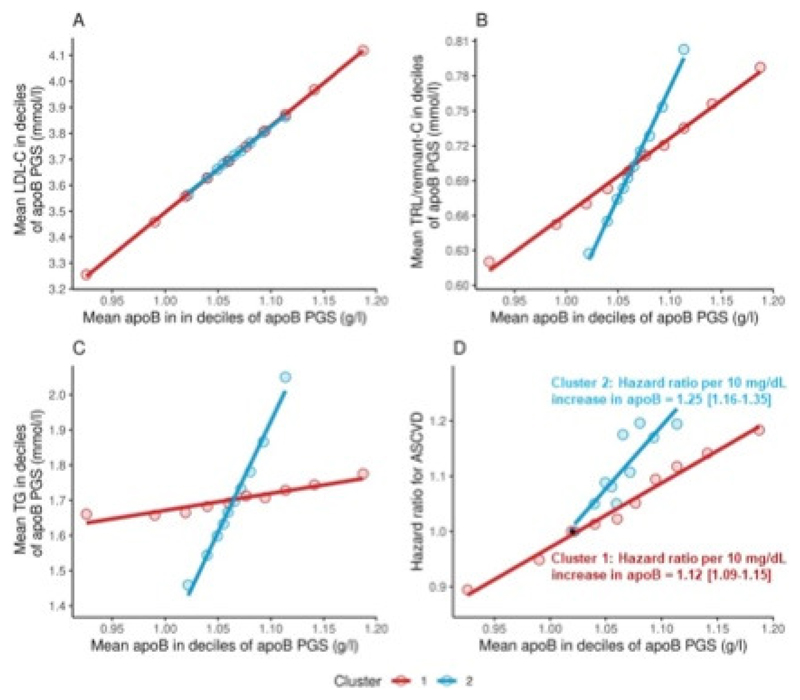
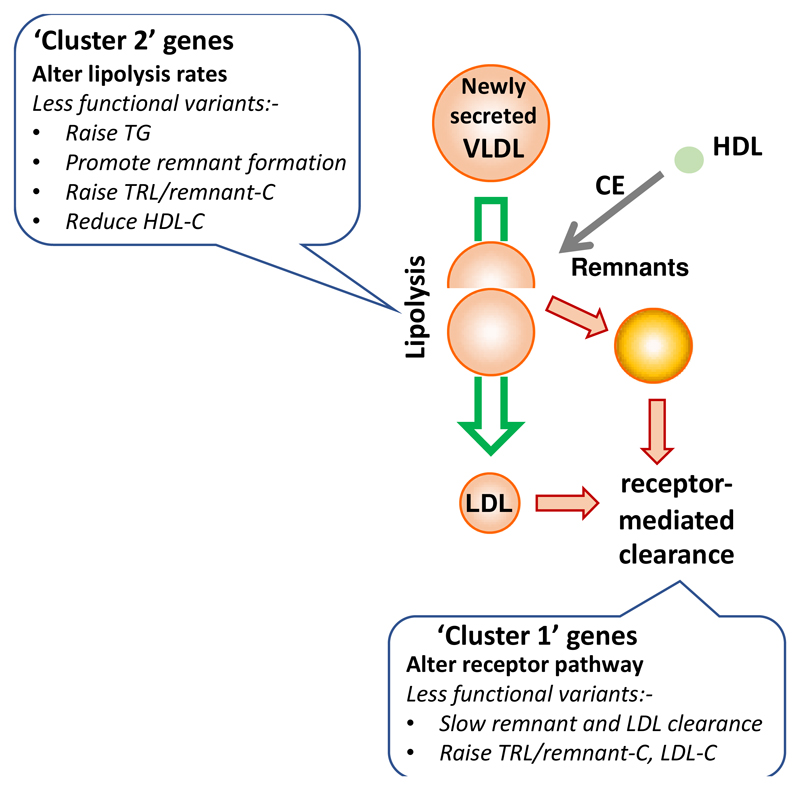
Aims: The strength of the relationship of triglyceride-rich lipoproteins (TRL) with risk of coronary heart disease (CHD) compared with low-density lipoprotein (LDL) is yet to be resolved. Methods and results: Single-nucleotide polymorphisms (SNPs) associated with TRL/remnant cholesterol (TRL/remnant-C) and LDL cholesterol (LDL-C) were identified in the UK Biobank population. In a multivariable Mendelian randomization analysis, TRL/remnant-C was strongly and independently associated with CHD in a model adjusted for apolipoprotein B (apoB). Likewise, in a multivariable model, TRL/remnant-C and LDL-C also exhibited independent associations with CHD with odds ratios per 1 mmol/L higher cholesterol of 2.59 [95% confidence interval (CI): 1.99–3.36] and 1.37 [95% CI: 1.27–1.48], respectively. To examine the per-particle atherogenicity of TRL/remnants and LDL, SNPs were categorized into two clusters with differing effects on TRL/remnant-C and LDL-C. Cluster 1 contained SNPs in genes related to receptor-mediated lipoprotein removal that affected LDL-C more than TRL/remnant-C, whereas cluster 2 contained SNPs in genes related to lipolysis that had a much greater effect on TRL/remnant-C. The CHD odds ratio per standard deviation (Sd) higher apoB for cluster 2 (with the higher TRL/remnant to LDL ratio) was 1.76 (95% CI: 1.58–1.96), which was significantly greater than the CHD odds ratio per Sd higher apoB in cluster 1 [1.33 (95% CI: 1.26–1.40)]. A concordant result was obtained by using polygenic scores for each cluster to relate apoB to CHD risk. Conclusion: Distinct SNP clusters appear to impact differentially on remnant particles and LDL. Our findings are consistent with TRL/remnants having a substantially greater atherogenicity per particle than LDL.
Overview
The claims and statistics of this paper haven’t been checked yet.
Run the check — free, no account needed. It reads the open-access text and checks the sources it cites.
Integrity signals
Registry
Cites
Statistics
Figures
Verification
Claims the paper makes
The claims and statistics of this paper haven’t been checked yet.
Run the check — free, no account needed. It reads the open-access text and checks the sources it cites.
Claims other papers make about this one
Each is checked against this paper’s own text: does it say what the citing paper says it does?
The source backs part of the claim, not all of it — or backs it for a different population, condition or comparison.
In the citing paper
“Moderate elevations in triglyceride levels are associated with an increased risk of atherosclerotic cardiovascular disease, 1,2,19,20”
From Targeting APOC3 with Olezarsen in Moderate Hypertriglyceridemia (2025) · cites this paper as [19]
Experimental — accuracy not yet measuredThe source backs part of the claim, not all of it — or backs it for a different population, condition or comparison.
In the citing paper
“In summary, when lipid metabolism is imbalanced, elevated levels of RC can lead to its infiltration into the arterial wall, causing cholesterol deposition beneath the endothelium and accelerating the formation of foam cells and lipid plaques, while provoking a low-grade inflammatory response. These processes significantly increase the risk of AS.”
From Remnant cholesterol, lipid ratios, and the severity of coronary artery lesions: a retrospective cohort study in patients with coronary heart disease (2025) · cites this paper as [16]
Experimental — accuracy not yet measuredThe source backs part of the claim, not all of it — or backs it for a different population, condition or comparison.
In the citing paper
“Observational cohorts demonstrate that higher TG and remnant cholesterol predict cardiovascular events independently of LDL-C, while Mendelian randomization analyses confirm a causal relationship between lifelong TRL elevation and ASCVD.”
From Targeting triglycerides for cardiovascular risk reduction (2026) · cites this paper as [56]
Experimental — accuracy not yet measuredThe cited source says what the claim attributes to it.
In the citing paper
“Thus, RC may have a stronger atherogenic effect than LDL-C.”
From Remnant cholesterol, lipid ratios, and the severity of coronary artery lesions: a retrospective cohort study in patients with coronary heart disease (2025) · cites this paper as [16]
The cited source says what the claim attributes to it.
In the citing paper
“triglyceride-rich lipoproteins are thought to be at least as atherogenic as LDL cholesterol on a perparticle basis. 19,21”
From Targeting APOC3 with Olezarsen in Moderate Hypertriglyceridemia (2025) · cites this paper as [19]
Self-check
Percentages, sums and reported differences re-computed from the paper’s own numbers.
The self-check needs the paper’s full text.
Citations
Cites
Sudlow, C., Gallacher, J., Allen, N., Beral, V., Burton, P., Danesh, J., Downey, P., Elliott, P., Green, J., Landray, M., et al. (2015) · PLOS Medicine · doi:10.1371/journal.pmed.1001779 · Cited by 12,728
Interpreting findings from Mendelian randomization using the MR-Egger method.
Burgess, S., & Thompson, S. G. (2017) · European Journal of Epidemiology · doi:10.1007/s10654-017-0255-x · Cited by 4,571 · cited 2×
“The possible impact of pleiotropic effects (SNP variants influencing the outcome out with their effect on the exposure) was examined using the MR-Egger 19 and the MR ‘contamination mixture’ methods (see Supplementary Tables 3 and 4 for a fuller discussion).”
Self-citationWiller (2013) · doi:10.1038/ng.2797 · Cited by 2,983
Major lipids, apolipoproteins, and risk of vascular disease
The Emerging Risk Factors Collaboration* (2009) · JAMA · doi:10.1001/jama.2009.1619 · Cited by 2,731
Guidelines for performing Mendelian randomization investigations
Burgess, S., Smith, G. D., Davies, N. M., Dudbridge, F., Gill, D., Glymour, M. M., Hartwig, F. P., Holmes, M. V., Minelli, C., Relton, C. L., et al. (2019) · Wellcome Open Research · doi:10.12688/wellcomeopenres.15555.1 · Cited by 1,828
Self-citationBorén, J., Chapman, M. J., Krauss, R. M., Packard, C. J., Bentzon, J. F., Binder, C. J., Daemen, M. J., Demer, L. L., Hegele, R. A., Nicholls, S. J., et al. (2020) · European Heart Journal · doi:10.1093/eurheartj/ehz962 · Cited by 1,601 · cited 2×
“29, 30 Remnant particles contain more cholesterol per apoB and so if the ‘atherogenicity’ of TRL/remnant-C is higher than LDL-C then this implies that the per-particle (per apoB) impact on atherosclerotic processes must be even greater.”
Self-citationTriglycerides and cardiovascular disease
Nordestgaard, B. G., & Varbo, A. (2014) · The Lancet · doi:10.1016/s0140-6736(14)61177-6 · Cited by 1,419 · cited 4×
“27, 28, 1, 2, 11, 29 The key question that arises from the present and earlier investigations is what is the basis of a remnant particle’s enhanced atherogenicity?”
InfluentialTabas, I., Williams, K. J., & Borén, J. (2007) · Circulation · doi:10.1161/circulationaha.106.676890 · Cited by 1,399
Self-citationGuidelines for performing Mendelian randomization investigations
Burgess, S., Davey Smith, G., Davies, N. M., Dudbridge, F., Gill, D., Glymour, M. M., Hartwig, F. P., Holmes, M. V., Minelli, C., Relton, C. L., et al. (2020) · Wellcome Open Research · doi:10.12688/wellcomeopenres.15555.2 · Cited by 1,273 · cited 4×
“21 It is worthwhile noting that the two SNP clusters were defined empirically based on the observed effect size for apoB relative to TRL/remnant-C rather than any preconception as to which SNPs/genes should be grouped together based on their role in lipid metabolism or their relationship to ASCVD…”
InfluentialSelf-citationChapman, M. J., Ginsberg, H. N., Amarenco, P., Andreotti, F., Borén, J., Catapano, A. L., Descamps, O. S., Fisher, E., Kovanen, P. T., Kuivenhoven, J. A., et al. (2011) · European Heart Journal · doi:10.1093/eurheartj/ehr112 · Cited by 1,227 · cited 2×
“27, 28, 1, 2, 11, 29 The key question that arises from the present and earlier investigations is what is the basis of a remnant particle’s enhanced atherogenicity?”
Self-citation
Cited by
Sorted by citations
Zodasiran, an RNAi Therapeutic Targeting ANGPTL3, for Mixed Hyperlipidemia
Rosenson, R. S., Gaudet, D., Hegele, R. A., Ballantyne, C. M., Nicholls, S. J., Lucas, K. J., San Martin, J., Zhou, R., Muhsin, M., Chang, T., et al. (2024) · New England Journal of Medicine · doi:10.1056/nejmoa2404147 · Cited by 213
Plozasiran, an RNA Interference Agent Targeting APOC3, for Mixed Hyperlipidemia
Ballantyne, C. M., Vasas, S., Azizad, M., Clifton, P., Rosenson, R. S., Chang, T., Melquist, S., Zhou, R., Mushin, M., Leeper, N. J., et al. (2024) · New England Journal of Medicine · doi:10.1056/nejmoa2404143 · Cited by 210
Olezarsen for Hypertriglyceridemia in Patients at High Cardiovascular Risk
Bergmark, B. A., Marston, N. A., Prohaska, T. A., Alexander, V. J., Zimerman, A., Moura, F. A., Murphy, S. A., Goodrich, E. L., Zhang, S., Gaudet, D., et al. (2024) · New England Journal of Medicine · doi:10.1056/nejmoa2402309 · Cited by 214
Plozasiran (ARO-APOC3) for Severe Hypertriglyceridemia
Gaudet, D., Pall, D., Watts, G. F., Nicholls, S. J., Rosenson, R. S., Modesto, K., San Martin, J., Hellawell, J., & Ballantyne, C. M. (2024) · JAMA Cardiology · doi:10.1001/jamacardio.2024.0959 · Cited by 172
Triglyceride-glucose index (TyG) as a novel biomarker in the era of cardiometabolic medicine
Арманович, А. А., Вачиковна, П. Н., Fogacci, F., Aghajanova, E., Jndoyan, Z., Patoulias, D., Sasso, L. L., Bernardi, M., Faggiano, A., Mohammadifard, N., et al. (2024) · International Journal of Cardiology · doi:10.1016/j.ijcard.2024.132663 · Cited by 115
Apolipoprotein B-containing lipoproteins in atherogenesis
Borén, J., Packard, C. J., & Binder, C. J. (2025) · Nature Reviews Cardiology · doi:10.1038/s41569-024-01111-0 · Cited by 110
“For the set of SNPs that more affected TRL/remnants, the ASCVD risk per standardized change in apoB was increased by an odds ratio of 1.76 (95% CI 1.58–1.96), compared with an odds ratio of 1.33 (95% CI 1.26–1.40) for the set of SNPs that more affected LDL 160 .”
InfluentialSelf-citationRay, K. K., Oru, E., Rosenson, R. S., Jones, J., Ma, X., Walgren, J., Haupt, A., Verma, S., Gaudet, D., Nicholls, S. J., et al. (2025) · The Lancet · doi:10.1016/s0140-6736(25)00507-0 · Cited by 81
“The most common adverse events, occurring in more than 2% of patients, were COVID-19 (13 [6”
VLDL Biogenesis and Secretion: It Takes a Village
Zwol, W. H.-V., van de Sluis, B., Ginsberg, H. N., & Kuivenhoven, J. A. (2024) · Circulation Research · doi:10.1161/circresaha.123.323284 · Cited by 90
Romeo, S., Vidal‐Puig, A., Husain, M., Ahima, R. S., Arca, M., Bhatt, D. L., Diehl, A. M., Fontana, L., Foo, R., Frühbeck, G., et al. (2025) · European Heart Journal · doi:10.1093/eurheartj/ehaf314 · Cited by 93
“96 Moreover, a recent study has shown that the per-particle atherogenicity of TRLs and TRL remnants appears to be greater than that of LDL, 97 which may, in part, explain the lipid-related excess risk of ASCVD beyond LDL-cholesterol.”
Targeting APOC3 with Olezarsen in Moderate Hypertriglyceridemia
Bergmark, B. A., Marston, N. A., Prohaska, T. A., Alexander, V. J., Zimerman, A., Moura, F. A., Kang, Y. M., Weinland, J., Murphy, S. A., Goodrich, E. L., et al. (2025) · New England Journal of Medicine · doi:10.1056/nejmoa2507227 · Cited by 78
Modification of lipoprotein metabolism and function driving atherogenesis in diabetes
Luciani, L., Pedrelli, M., & Parini, P. (2024) · Atherosclerosis · doi:10.1016/j.atherosclerosis.2024.117545 · Cited by 72
Björnson, E., Adiels, M., Gummesson, A., Taskinen, M., Burgess, S., Packard, C. J., & Borén, J. (2024) · Journal of the American College of Cardiology · doi:10.1016/j.jacc.2024.07.034 · Cited by 77
“2 Similarly, Helgadottir et al 6 found using a different SNP set that in both UK (a result we confirmed) and Icelandic data sets when non-HDL-C was introduced into a multivariable Mendelian randomisation model relating apoB to CHD risk, apoB became non-significant as a causal factor.”
Self-citationCummings, B. B., Joing, M. P., Bouchard, P. R., Milton, M. N., Moesta, P. F., Ramanan, V., Lane, A., Hirman, J., Trauger, J. W., Maratos-Flier, E., et al. (2025) · The Lancet · doi:10.1016/s0140-6736(25)00825-6 · Cited by 49
Chen, J., Fang, Z., Luo, Q., Wang, X., Warda, M., Das, A., Oldoni, F., & Luo, F. (2024) · Lipids in Health and Disease · doi:10.1186/s12944-023-01993-y · Cited by 47
“Triglyceride-rich lipoproteins (TRLs) are a type of lipoprotein that are rich in triglycerides [2].”
Apolipoprotein C3: form begets function
Bornfeldt, K. (2023) · Journal of Lipid Research · doi:10.1016/j.jlr.2023.100475 · Cited by 53
ApoB-containing lipoproteins: count, type, size, and risk of coronary artery disease
Morze, J., Melloni, G. E. M., Wittenbecher, C., Ala‐Korpela, M., Rynkiewicz, A., Guasch‐Ferré, M., Ruff, C. T., Hu, F. B., Sabatine, M. S., & Marston, N. (2025) · European Heart Journal · doi:10.1093/eurheartj/ehaf207 · Cited by 46
“7,17 The higher per-particle atherogenicity of VLDL was postulated to be driven by their elevated cholesterol content per apoB particle and their strong affinity for arterial proteoglycans due to the presence of apoE and apoC-III, which can enhance arterial wall retention and direct uptake ( A )…”
Bashir, B., Schofield, J., Downie, P., France, M., Ashcroft, D. M., Wright, A. K., Romeo, S., Gouni-Berthold, I., Maan, A., Durrington, P. N., et al. (2024) · Frontiers in Cardiovascular Medicine · doi:10.3389/fcvm.2024.1389106 · Cited by 40
Biosynthesis and Metabolism of ApoB-Containing Lipoproteins
Borén, J., Taskinen, M., & Packard, C. J. (2024) · Annual Review of Nutrition · doi:10.1146/annurev-nutr-062222-020716 · Cited by 46
Self-citationTybjærg‐Hansen, A., Nordestgaard, B. G., & Christoffersen, M. (2023) · European Heart Journal · doi:10.1093/eurheartj/ehad419 · Cited by 37
Han, M., Huang, K., Shen, C., Hu, H., Liu, F., Li, J., Yang, X., Chen, J.-C., Liu, X., Cao, J., et al. (2024) · Stroke · doi:10.1161/strokeaha.124.046811 · Cited by 37
“30 We did not observe a positive association of discordantly high RC or LDL-C with HS.”
Neutrophil extracellular traps: a catalyst for atherosclerosis
Wang, Y., Wang, C., & Li, J. (2024) · Molecular and Cellular Biochemistry · doi:10.1007/s11010-024-04931-3 · Cited by 32
Chapman, M. J., Packard, C. J., Björnson, E., Ginsberg, H. N., & Borén, J. (2025) · Atherosclerosis · doi:10.1016/j.atherosclerosis.2025.120529 · Cited by 36
Self-citationElías-López, D., Doi, T., Nordestgaard, B. G., & Kobylecki, C. J. (2023) · Current Opinion in Clinical Nutrition & Metabolic Care · doi:10.1097/mco.0000000000000999 · Cited by 30
[Incisional hernia after surgery for abdominal aortic aneurysm].
Augestad, K. M., Wilsgaard, T., & Solberg, S. K. (2002) · PubMed · Cited by 29
Sidorkiewicz, M. (2024) · Nutrients · doi:10.3390/nu16223937 · Cited by 30
Zimerman, A., Wiviott, S. D., Park, J., Murphy, S. A., Ran, X., Bramson, C., Curto, M., Ramos, V., Jevne, A., Kuder, J., et al. (2024) · European Journal of Preventive Cardiology · doi:10.1093/eurjpc/zwae090 · Cited by 28
Li, B., Liu, Y., Zhou, X. J., Chen, L., Yan, L., Tang, X., Gao, Z., Wan, Q., Luo, Z., Qin, G., et al. (2024) · Journal of Diabetes · doi:10.1111/1753-0407.13592 · Cited by 27
“Indeed, per-particle RC is more atherogenic than LDL-C, 11 which causes atherosclerosis rather than inflammation, while atherosclerosis's inflammatory element is motivated by RC. 37,53 Relationship between RC and inflammation might explain the residual hyperglycemia risk beyond LDL-C.”
InfluentialHypercholesterolemia and inflammation—Cooperative cardiovascular risk factors
Gallo, A., Goff, W. L., Santos, R. D., Fichtner, I., Carugo, S., Corsini, A., Sirtori, C. R., & Ruscica, M. (2024) · European Journal of Clinical Investigation · doi:10.1111/eci.14326 · Cited by 29
Effect of ANGPTL3 Inhibition With Solbinsiran in Preclinical and Early Human Studies
Ray, K. K., Linnebjerg, H., Michael, L. F., Shen, X. P., Ma, X., Lim, S., Zhen, Y., Dudek, H., Abrams, M., Saxena, U. H., et al. (2025) · Journal of the American College of Cardiology · doi:10.1016/j.jacc.2025.03.005 · Cited by 30
Kraaijenhof, J. M., Kerkvliet, M., Nurmohamed, N. S., Grefhorst, A., Kroon, J., Wareham, N. J., Hovingh, G. K., Stroes, E. S. G., Boekholdt, S. M., & Reeskamp, L. F. (2025) · European Journal of Preventive Cardiology · doi:10.1093/eurjpc/zwaf037 · Cited by 28
Residual lipid risk in atherosclerotic cardiovascular disease
Nordestgaard, B. G., & Hegele, R. A. (2026) · European Heart Journal · doi:10.1093/eurheartj/ehag087 · Cited by 29
Molecular Regulation and Therapeutic Targeting of VLDL Production in Cardiometabolic Disease
Burks, K. H., Stitziel, N. O., & Davidson, N. O. (2024) · Cellular and Molecular Gastroenterology and Hepatology · doi:10.1016/j.jcmgh.2024.101409 · Cited by 24
ApoB, LDL-C, and non-HDL-C as markers of cardiovascular risk
Sehayek, D., Cole, J., Björnson, E., Wilkins, J. T., Mortensen, M. B., Dufresne, L., Pencina, K. M., Pencina, M. J., Thanassoulis, G., & Sniderman, A. D. (2025) · Journal of Clinical Lipidology · doi:10.1016/j.jacl.2025.05.024 · Cited by 20
Self-citationNordestgaard, A. T., & Nordestgaard, B. G. (2025) · European Journal of Preventive Cardiology · doi:10.1093/eurjpc/zwaf337 · Cited by 22
Expanding the triglyceride range in clinical trials: therapeutic opportunities
Nordestgaard, A. T., Pradhan, A. D., Everett, B. M., MacFadyen, J. G., Bhatt, D. L., Visseren, F. L. J., Libby, P., Santos, R. D., Nissen, S. E., Nordestgaard, B. G., et al. (2025) · European Heart Journal · doi:10.1093/eurheartj/ehaf074 · Cited by 20
Doi, T., Langsted, A., & Nordestgaard, B. G. (2024) · Atherosclerosis · doi:10.1016/j.atherosclerosis.2024.117556 · Cited by 23
Impact of Remnant Cholesterol on Cardiovascular Risk in Diabetes
Elías-López, D., Wadström, B. N., Vedel‐Krogh, S., Kobylecki, C. J., & Nordestgaard, B. G. (2024) · Current Diabetes Reports · doi:10.1007/s11892-024-01555-1 · Cited by 18
“In a recent study, genetic variants decreasing lipolysis rate, including variants in LPL, were associated with highly increased risk of coronary artery disease per 1 g/L apolipoprotein B increment compared to genetic variants that influenced LDL receptor activity [47].”
InfluentialJohannesen, C. D. L., Mortensen, M. B., Nordestgaard, B. G., & Langsted, A. (2025) · Atherosclerosis · doi:10.1016/j.atherosclerosis.2025.119139 · Cited by 22
Witt, C. R., Renfroe, L. G., & Lyons, S. (2025) · Diabetes Obesity and Metabolism · doi:10.1111/dom.16335 · Cited by 18
“22 TRLs, which include chylomicrons, VLDLs, IDLs, and their respective remnants, are characterised by their TAG content.”
Jo, S. (2025) · Journal of Lipid and Atherosclerosis · doi:10.12997/jla.2025.14.3.247 · Cited by 20
“6,15,22,25 Although TG itself was initially thought to be a direct causal factor, recent evidence suggests that elevated TGs are mainly an indirect marker for the presence of atherogenic TRLs, such as VLDL and chylomicrons, rather than being directly responsible for vascular injury.”
Elevated Remnant and LDL Cholesterol and the Risk of Peripheral Artery Disease
Wadström, B. N., Borges, M. C., Wulff, A. B., Smith, G. D., Sanderson, E. C. M., & Nordestgaard, B. G. (2025) · Journal of the American College of Cardiology · doi:10.1016/j.jacc.2024.12.033 · Cited by 19
Lee, J., Ahn, S. G., Jeon, H., Lee, J., Youn, Y. J., Lee, Y., Lee, S., Hong, S., Ahn, C., Ko, Y., et al. (2024) · Journal of clinical lipidology · doi:10.1016/j.jacl.2024.07.005 · Cited by 17
Lipoprotein(a) and risk-weighted apolipoprotein B: a novel metric for atherogenic risk
Rehman, M. B., & Tudrej, B. V. (2024) · Lipids in Health and Disease · doi:10.1186/s12944-024-02307-6 · Cited by 15
“However, a more recent Mendelian randomization study suggested that TRL/remnant particles have approximately 2-fold greater atherogenicity than LDL particles on a per apoB particle basis [14].”
Bergmark, B. A., Marston, N., Prohaska, T. A., Alexander, V. J., Zimerman, A., Moura, F. A., Kang, Y. M., Murphy, S. A., Zhang, S. M., Lu, M. T., et al. (2025) · American Heart Journal · doi:10.1016/j.ahj.2025.02.022 · Cited by 15
Marston, N., Bergmark, B. A., Prohaska, T. A., Moura, F. A., Zimerman, A., Alexander, V. J., Kang, Y. M., Weinland, J., Ran, X., Murphy, S. A., et al. (2026) · Circulation · doi:10.1161/circulationaha.126.080012 · Cited by 18
How to Handle Elevated Triglycerides: Life after PROMINENT
Pirillo, A., & Catapano, A. L. (2023) · Current Atherosclerosis Reports · doi:10.1007/s11883-023-01175-2 · Cited by 15
“In a multivariable model, TRL/remnant-C and LDL-C showed independent associations with CHD with odds ratios of 2.59 [95% confidence interval (CI): 1.99–3.36] and 1.37 [95% CI: 1.27–1.48] per 1 mmol/L higher cholesterol, respectively [46].”
InfluentialBilgic, S., Pencina, K. M., Pencina, M. J., Cole, J., Dufresne, L., Thanassoulis, G., & Sniderman, A. D. (2024) · Arteriosclerosis Thrombosis and Vascular Biology · doi:10.1161/atvbaha.124.321165 · Cited by 15
Hvid, K., Balling, M., Afzal, S., & Nordestgaard, B. G. (2025) · European Journal of Preventive Cardiology · doi:10.1093/eurjpc/zwaf203 · Cited by 15
Girona, J., Guardiola, M., Barroso, E., García‐Altares, M., Ibarretxe, D., Plana, N., Ribalta, J., Amigó, N., Correig, X., Vázquez‐Carrera, M., et al. (2025) · International Journal of Molecular Sciences · doi:10.3390/ijms26052039 · Cited by 13
“Although the mechanisms by which VLDL are related to the atherosclerosis physiopathology are still unclear, these lipoproteins have been proposed as a causal risk factor for atherosclerotic CV disease, showing a atherogenic risk per particle than LDL [11,12,37].”
Remnant Cholesterol as an Independent Cardiovascular Risk Factor in Young Adults
Jung, H. N., Heo, J. H., Kim, M., Han, K., Kang, J. G., & Lee, S. J. (2025) · Journal of the American College of Cardiology · doi:10.1016/j.jacc.2025.09.015 · Cited by 14
Rosenson, R. S., Rader, D. J., Ali, S., Banerjee, P., McGinniss, J., & Pordy, R. (2025) · Cardiovascular Drugs and Therapy · doi:10.1007/s10557-024-07567-z · Cited by 13
“Multiple sources of evidence, including Mendelian randomization studies, support a causal relationship between elevated TRL levels and ASCVD, independent of LDL-C levels [4–8].”
InfluentialMartini, T., Gobet, C., Salati, A., Blanc, J., Mookhoek, A., Reinehr, M. D., Knott, G. W., Sordet‐Dessimoz, J., & Naef, F. (2024) · Nature Communications · doi:10.1038/s41467-024-52751-2 · Cited by 14
An ANGPTL4 inhibitory antibody safely improves lipid profiles in non-human primates
Cummings, B. B., Bouchard, P. R., Milton, M., Moesta, P. F., Ramanan, V., Trauger, J. W., Maratos–Flier, E., Voznesensky, A., Splawski, I., Nimonkar, A. V., et al. (2025) · EBioMedicine · doi:10.1016/j.ebiom.2025.105748 · Cited by 14
Integrating genetic data with biological insight: A practical guide to cis-Mendelian randomization
Karhunen, V., Woolf, B. A. R., Bhatnagar, P., Gill, D., & Burgess, S. (2026) · The American Journal of Human Genetics · doi:10.1016/j.ajhg.2026.03.011 · Cited by 13
“…alternative would be to consider the effect of LDL-receptor inhibition using variants in genes related to receptor-mediated lipoprotein removal 17 ; such an analysis could use variants in multiple gene regions that converge on this mechanism but not all genome-wide significant predictors of…”
Self-citationWadström, B. N., Wulff, A. B., Pedersen, K. M., & Nordestgaard, B. G. (2024) · Clinical Chemistry · doi:10.1093/clinchem/hvae222 · Cited by 12
Rehman, M. B., Björnson, E., Adiels, M., Morze, J., Bergström, G. M. L., Gummesson, A., Erlinge, D., Fall, T., Matic, L. P., Söderberg, S., et al. (2026) · European Heart Journal · doi:10.1093/eurheartj/ehaf1124 · Cited by 12
“9,11,25 Thus, TRL-apoB in nmol/L was multiplied by a factor of 4.5, Lp(a)-apoB in nmol/L by a factor of 6.5, and LDL-apoB in nmol/L by a factor of 1 (see Supplementary data online, Section S1 for more detail).”
InfluentialSelf-citationDo Triglyceride-Rich Lipoproteins Equal Low-Density Lipoproteins in Risk of ASCVD?
Wadström, B. N., Wulff, A. B., Pedersen, K. M., & Nordestgaard, B. G. (2023) · Current Atherosclerosis Reports · doi:10.1007/s11883-023-01153-8 · Cited by 12
Borén, J., Packard, C. J., Nordestgaard, B. G., & Catapano, A. L. (2025) · European Heart Journal · doi:10.1093/eurheartj/ehaf214 · Cited by 12
Self-citationHepatic Lipoprotein Metabolism: Current and Future In Vitro Cell-Based Systems
Kiss, I., Neuwert, N., Oberle, R., Hengstschläger, M., Osmanagic-Myers, S., & Stangl, H. (2025) · Biomolecules · doi:10.3390/biom15070956 · Cited by 11
Hansen, M. K., Mortensen, M. B., Olesen, K. K. W., Thrane, P. G., Thomsen, R. W., & Mæng, M. (2024) · European Journal of Preventive Cardiology · doi:10.1093/eurjpc/zwae119 · Cited by 11
Maidman, S. D., Hegele, R. A., & Rosenson, R. S. (2024) · Current Atherosclerosis Reports · doi:10.1007/s11883-024-01258-8 · Cited by 13
“Using a Mendelian analysis of lipid-associated SNPs, they found TRLs/remnant lipoproteins have substantially greater atherogenicity per particle than LDL, even when adjusting for apo B [33].”
Balling, M., Roepstorff, O. G., Gerds, T. A., Varbo, A., Mortensen, M. B., Langsted, A., Nordestgaard, B. G., & Afzal, S. (2025) · Atherosclerosis · doi:10.1016/j.atherosclerosis.2025.120471 · Cited by 13
Zhang, L., & Yan, H. (2024) · Scientific Reports · doi:10.1038/s41598-024-58950-7 · Cited by 9
“Firstly, all GWAS data utilized in our analysis were derived from European populations.”
InfluentialBeyond cholesterol: linking the conformation of apolipoprotein B to atherogenesis
Öörni, K., & Lorey, M. B. (2025) · Current Opinion in Lipidology · doi:10.1097/mol.0000000000000997 · Cited by 11
“As such, both elevated particle numbers and the cholesterol they carry are recognized as substantially both between and within lipoprotein classes, giving rise to the concept of “relative per particle atherogenicity” [4,5].”
Yang, R., Wu, S., Zhao, Z., Deng, X., Deng, Q.-Y., Wang, D., & Liu, Q. (2024) · Clinical Research in Cardiology · doi:10.1007/s00392-024-02420-7 · Cited by 8
Ashraf, T., Devi, N., Aradhna, F., Devi, S., Nancy, F., Kumar, A., Ameer, F., Absar, F., Kumar, L., Kumar, S., et al. (2025) · Annals of Medicine & Surgery · doi:10.1097/ms9.0000000000003505 · Cited by 6
“Additionally, TrLPs exhibit similar atherogenic potential per particle as LDL cholesterol [ 29–31 ] , making them a critical factor in cardiovascular risk.”
Li, Y., Zhai, Y., Hu, S., Liu, J., Zhang, W., Yue, J., & Wang, Z. (2025) · Frontiers in Cardiovascular Medicine · doi:10.3389/fcvm.2025.1516326 · Cited by 7
Balling, M., Afzal, S., Varbo, A., Nordestgaard, B. G., & Langsted, A. (2024) · Clinical Chemistry · doi:10.1093/clinchem/hvae217 · Cited by 10
Hou, X., Tian, F., Guo, L., Yu, Y., Hu, Y., Chen, S., Wang, M., Yang, Z., Wang, J., Fan, X., et al. (2024) · Journal of Endocrinological Investigation · doi:10.1007/s40618-023-02279-x · Cited by 7
Dong, X., Gong, L.-L., Hong, M., & Pan, J. (2024) · BMC Gastroenterology · doi:10.1186/s12876-024-03162-6 · Cited by 7
Increasing the complexity of lipoprotein characterization for cardiovascular risk in type 2 diabetes
Guardiola, M., Rehues, P., Amigó, N., Arrieta, F., Botana, M., Gimeno-Orna, J. A., Girona, J., Martínez‐Montoro, J. I., Ortega, E., Pérez, A., et al. (2024) · European Journal of Clinical Investigation · doi:10.1111/eci.14214 · Cited by 7
“TRLs can be taken up more easily by macrophages than LDL, as they do not require any previous modification, and each TRL remnant particle contains four times more cholesterol than a single LDL particle 24,25 (Figure 1C).”
Beydoun, M. A., Hu, Y., Li, Z., Georgescu, M. F., Beydoun, H. A., Hooten, N. N., Walker, K. A., Bouhrara, M., Launer, L. J., Evans, M. K., et al. (2025) · GeroScience · doi:10.1007/s11357-025-01724-4 · Cited by 9
“It can be merged with other UK Biobank data for integrative analyses and included lipids, specifically 14 subclasses and cholesterol levels, as well as fatty acids like omega-3, saturated, and polyunsaturated fatty acids[18–23].”
InfluentialZhu, X., Xu, W., Hao, B., Chen, Q., Xiong, Z., Wang, Q., Hou, X., Chen, Y., Guo, J., & Chen, T. (2025) · European Journal of Preventive Cardiology · doi:10.1093/eurjpc/zwaf598 · Cited by 7
Björnson, E., Packard, C. J., Adiels, M., Leeper, N. J., Hellawell, J. L., Gummesson, A., Nissen, S. E., & Borén, J. (2025) · European Journal of Preventive Cardiology · doi:10.1093/eurjpc/zwaf657 · Cited by 6
Self-citationLi, D., Liu, Z., & Jiang, H. (2026) · Lipids in Health and Disease · doi:10.1186/s12944-026-02862-0 · Cited by 8
“Notably, the cardiovascular risk per unit increase in TRL/ remnant-C exceeds that conferred by LDL-C [30].”
Kianersi, S., Potts, K. S., Wang, H., Sofer, T., Noordam, R., Rutter, M. K., Rexrode, K., Redline, S. S., & Huang, T. (2026) · Journal of the American Heart Association · doi:10.1161/jaha.125.044189 · Cited by 8
Cardiovascular risk in MASLD: What multiple lines of evidence reveal
Sattar, N. A., Dalakoti, M., Alazawi, W., & Aroda, V. R. (2026) · Journal of Hepatology · doi:10.1016/j.jhep.2026.02.015 · Cited by 7
“20 As noted previously, most epidemiological studies, including many used in the aforementioned meta-analysis, 4 did not account for this risk pathway by at least adjusting for HDL-cholesterol levels in a continuous manner.”
Elevated remnant cholesterol is a risk factor for acute ischemic stroke
Feng, Q., Li, H., Zhang, R., Sun, L., Zhang, S.-Y., Chen, Y., Zhang, Y., Shan, B., Zhao, Z., Zhou, H., et al. (2024) · Journal of Stroke and Cerebrovascular Diseases · doi:10.1016/j.jstrokecerebrovasdis.2024.107773 · Cited by 6
Cole, J., Couture, P., Tremblay, A. J., & Sniderman, A. D. (2024) · Journal of clinical lipidology · doi:10.1016/j.jacl.2024.09.009 · Cited by 6
“11 Unfortunately, clinically validated measures of TRL particles are not available, so measurement or calculation of TRL cholesterol (TRL-C) (non-HDL-C minus directly measured LDL-C) has been proposed as a surrogate.”
Sun, Z., Wang, X., Shi, C., Yu, T., Xu, W., Ji, X., Su, K., Yan, H., Shan, Y., Xie, T., et al. (2025) · International Journal of Biological Macromolecules · doi:10.1016/j.ijbiomac.2025.142306 · Cited by 6
Statistical Analysis of Lipid Profiles Associated with Coronary Heart Disease in Erbil City-Iraq
Kadir, D. H., Abdullah, K., Jafaar, A. M., Salih, R. H., Smail, S. W., Rahman, G. Q., Awla, H. K., & Khudhur, Z. O. (2024) · Polytechnic Journal · doi:10.59341/2707-7799.1831 · Cited by 6
Inflammation mediates residual cardiovascular risk in statin-treated patients with coronary disease
Muroke, V., & Tardif, J. (2025) · European Journal of Preventive Cardiology · doi:10.1093/eurjpc/zwaf258 · Cited by 6
ApoB and Lp(a): core measures to assess cardiovascular risk
Sniderman, A. D., Pencina, M. J., & Thanassoulis, G. (2025) · European Heart Journal · doi:10.1093/eurheartj/ehaf204 · Cited by 7
Maidman, S. D., & Rosenson, R. S. (2025) · BioDrugs · doi:10.1007/s40259-025-00731-3 · Cited by 7
“Using a Mendelian analysis of lipoprotein-associated single nucleotide polymorphisms, they reported TRLs/remnant lipoproteins to have substantially greater atherogenicity per particle than LDL, even when adjusting for ApoB [43].”
Crea, F. (2025) · European Heart Journal · doi:10.1093/eurheartj/ehaf444 · Cited by 5
Das, V., Narayanan, S., Zhang, X., Bergman, O., Djordjevic, D., Kronqvist, M., Chemaly, M., Karadimou, G., Sundman, S., Prasad, I., et al. (2026) · Genome Medicine · doi:10.1186/s13073-026-01601-5 · Cited by 8
“The metabolomics dataset is novel and potentially of high relevance for future studies in the field, considering that atherosclerosis is linked with systemic metabolic dysregulation [37].”
Björnson, E., Packard, C. J., & Borén, J. (2026) · Pharmacology & Therapeutics · doi:10.1016/j.pharmthera.2026.109010 · Cited by 6
Self-citationCui, Y., Wang, H., & Wang, Y. (2024) · Scientific Reports · doi:10.1038/s41598-024-77515-2 · Cited by 5
Gagnon, É., Gill, D., Burgess, S., & Arsenault, B. J. (2025) · European Heart Journal Open · doi:10.1093/ehjopen/oeaf018 · Cited by 5
“39,40 The mean non-fasting remnant cholesterol in 119 180 UK Biobank participants is 27.79 mg/dL with an SD of 7.36 mg/dL. Assuming this standard deviation in our study, each 1 mg/dL decrease in remnant cholesterol through lifelong genetically predicted APOC3 inhibition was associated with a 5%…”
InfluentialSelf-citationMaimaitituersun, G., Jureti, S., Zheng, Y., Zhou, Y., Li, M., Wei, M., Liu, Z., Jin, M., & Fu, Z.-Y. (2025) · PeerJ · doi:10.7717/peerj.19344 · Cited by 5
Liu, J., Teng, T.-Q., Li, Z., Hu, F.-W., Sha, W., Shen, C., Xia, Y., Zhang, Y., & Li, L. (2024) · Frontiers in Cardiovascular Medicine · doi:10.3389/fcvm.2024.1471479 · Cited by 4
Triglyceride-rich lipoprotein cholesterol and cardiovascular risk
Bilgic, S., Remaley, A. T., & Sniderman, A. D. (2023) · Current Opinion in Lipidology · doi:10.1097/mol.0000000000000905 · Cited by 5
Shared genetic basis informs the roles of polyunsaturated fatty acids in brain disordersPreprint
Xu, H., Sun, Y., Francis, M., Cheng, C. F., Modulla, N. T. R., Brenna, J. T., Chiang, C. W. K., & Ye, K. (2023) · medRxiv · doi:10.1101/2023.10.03.23296500 · Cited by 4
Li, G., He, L., Bai, X., Chen, S., Dai, H., He, G., Yang, Y., Zhang, X., Cui, J., Li, X., et al. (2025) · The Lancet Regional Health - Western Pacific · doi:10.1016/j.lanwpc.2025.101689 · Cited by 4
Self-citationNelson, J. R. (2025) · Cardiology Plus · doi:10.1097/cp9.0000000000000130 · Cited by 3
Johansen, M. Ø., Vedel‐Krogh, S., Nielsen, S. F., Afzal, S., Smith, G. D., & Nordestgaard, B. G. (2025) · Atherosclerosis · doi:10.1016/j.atherosclerosis.2025.120605 · Cited by 4
Hvid, K., Balling, M., Nordestgaard, B. G., & Afzal, S. (2025) · European Journal of Preventive Cardiology · doi:10.1093/eurjpc/zwaf735 · Cited by 4
Zheng, H., Chen, G., Huo, Z., Lan, Y., Wang, Y., Fu, P., Wu, W., Zheng, H., Wu, K., Huang, Z., et al. (2026) · Journal of the American Heart Association · doi:10.1161/jaha.125.045376 · Cited by 3
Sattar, N. A., Lee, C. J., Srinath, R., Schauer, P. R., Wang, H., Falcón, B. L., HE, X., Stefański, A., & Plat, A. W. (2026) · American Journal of Preventive Cardiology · doi:10.1016/j.ajpc.2026.101454 · Cited by 5
ApoA-1 versus HDL-C as markers of cardiovascular risk
BİLGİÇ, S., Pencina, K. M., Pencina, M. J., Dufresne, L., Thanassoulis, G., & Sniderman, A. D. (2026) · Journal of clinical lipidology · doi:10.1016/j.jacl.2026.02.017 · Cited by 4
Metadata
- Authors
- Björnson, E., Adiels, M., Taskinen, M.-R., Burgess, S., Rawshani, A., Borén, J., & Packard, C. J.
- Affiliations
- Sahlgrenska University Hospital (SE)
- University of Helsinki (FI)
- University of Cambridge (GB)
- University of Glasgow (GB)
- Corresponding author
- Borén, Jan
- ORCID
- Venue
- European Heart Journal
- Publisher
- Oxford University Press (OUP)
- Published
- 2023-06-26
- Volume
- 44
- Issue
- 39
- Pages
- 4186-4195
- ISSN
- 0195-668X (ISSN-L)
- 1522-9645
- PMC
- PMC10576615
- OpenAlex
- W4382011883
- Cited by
- 183
- References
- 28
- Citations by year
- 2026: 47 · 2025: 76 · 2024: 50 · 2023: 9
- FWCI
- 48.59
- Type
- journal article
- Language
- en
- Open access
- hybrid
- doi.org
- Licence
- Locations
- European Heart Journal (publishedVersion, cc-by-nc)
- PubMed Central (publishedVersion, cc-by-nc)
- PubMed (publishedVersion)
- Apollo (University of Cambridge) (submittedVersion, cc-by-nc)
- Informationszentrum Lebenswissenschaften (ZB MED) (submittedVersion, cc-by-nc)
- Työväentutkimus Vuosikirja (submittedVersion)
- Funders
- Swedish Research Council
- Swedish Heart–Lung Foundation (ALFGBG-965404)
- Sigrid Juselius Foundation
- Finnish Foundation for Cardiovascular Research
- Wellcome Trust and the Royal Society (204623/Z/16/Z)
- United Kingdom Research and Innovation Medical Research Council (MC_UU_00002/7)
- National Institute for Health Research Cambridge Biomedical Research Centre (BRC-1215-20014)
- National Institute for Health Research
- Department of Health and Social Care
- Topics
- Health Sciences › Medicine › Cardiology and Cardiovascular Medicine › Lipoproteins and Cardiovascular Health
- Health Sciences › Medicine › Cardiology and Cardiovascular Medicine › Lipid metabolism and disorders
- Life Sciences › Biochemistry, Genetics and Molecular Biology › Genetics › Genetic Associations and Epidemiology
- Keywords
- remnant cholesterol, LDL cholesterol, coronary heart disease risk, apolipoprotein B, atherogenicity, lipoprotein particle size, lipolysis, single nucleotide polymorphisms, polygenic risk score, Mendelian randomization
- MeSH terms
- Apolipoproteins B, Cholesterol, Coronary Disease, United Kingdom, Humans, Lipoproteins, Cholesterol, LDL, Triglycerides, Biological Specimen Banks
About these checks
Registry, retraction, Cites and statistics results are computed, not judged, with one exception: a printed reference that no index lists is read once by a model before it counts as a citation error. Claims are extracted by a model and kept only when their quote appears verbatim in the text; each cited source is then checked, with a model’s help, for whether it says what the claim relies on. Those verdicts can be wrong — read the claim’s quote and the cited source before relying on one.
Statistics and arithmetic are recomputed, not judged.
Confidence bands are shown only for fields calibrated on our annotated test set. None is calibrated yet, so no band is shown.
What counts as a claim ›How we measure confidence ›How we check this ›
Are you an author, or do you see a problem with this page? Request a review
