

The DOI matches its Crossref record; 34 of the 34 references it cites were found in a registry or an index.
Triglyceride-rich lipoprotein remnants, low-density lipoproteins, and risk of coronary heart disease: a UK Biobank study
Open accessAbstract
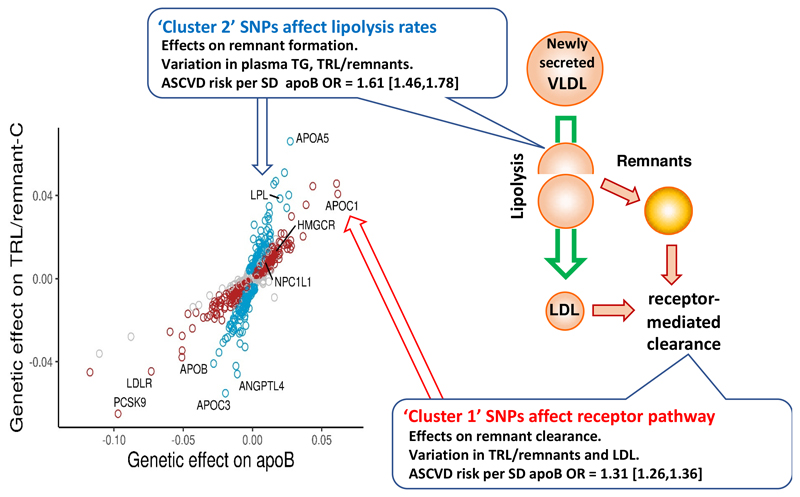
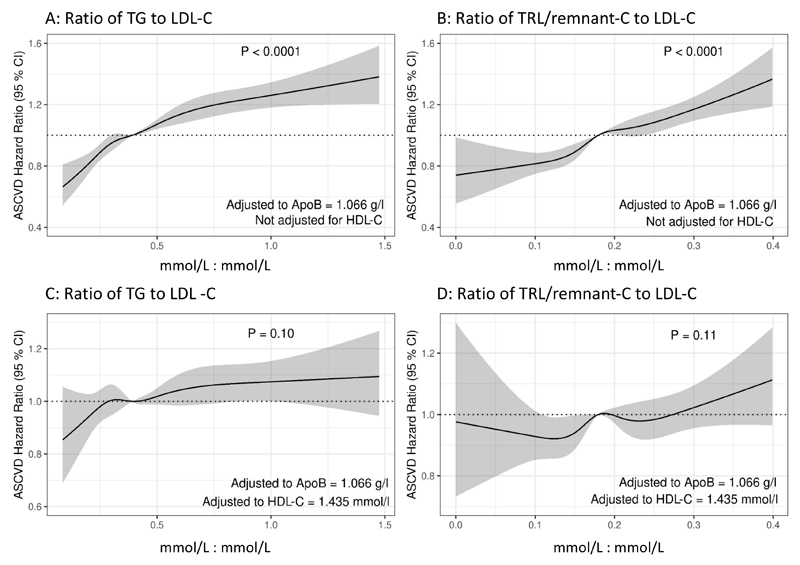
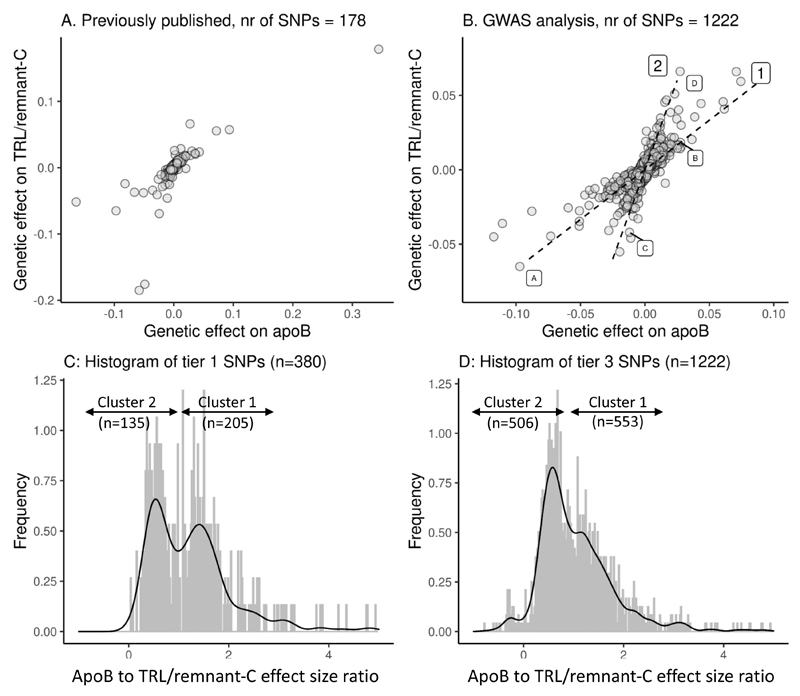
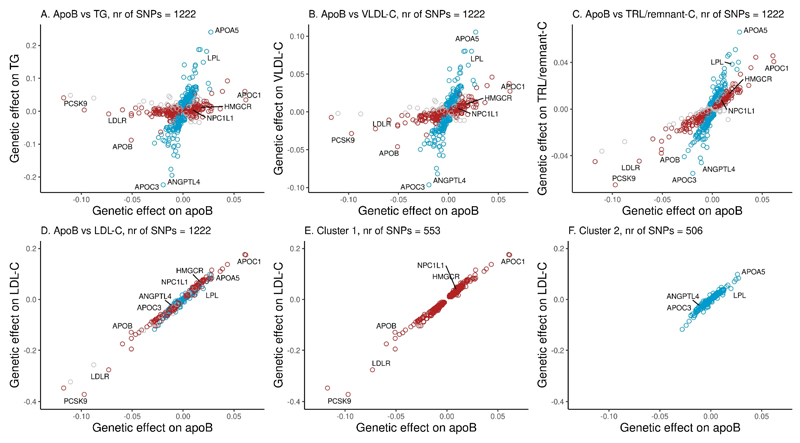
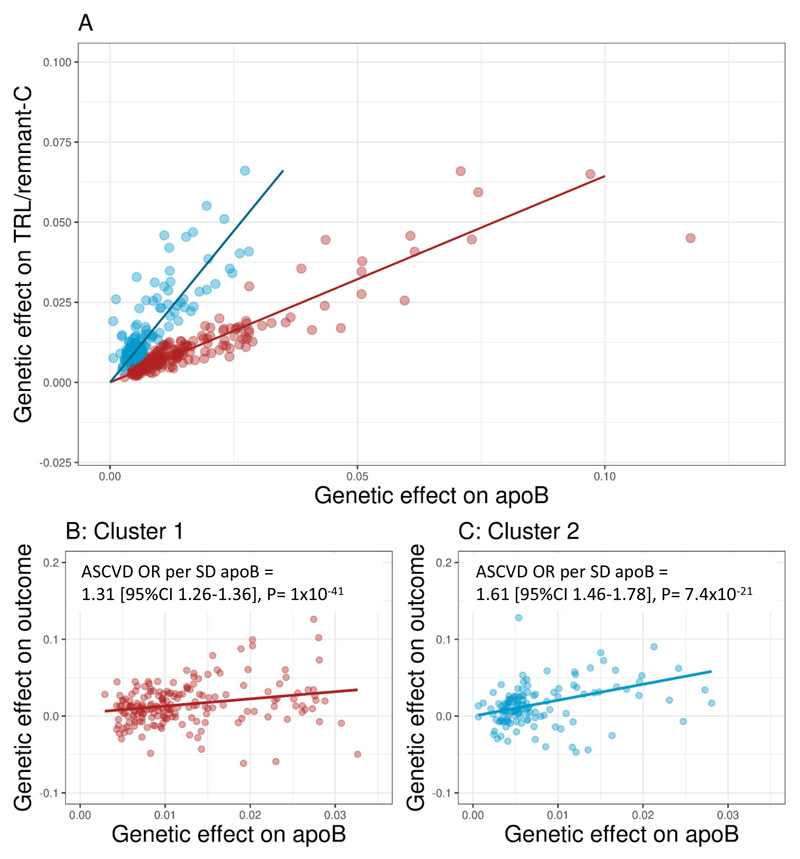
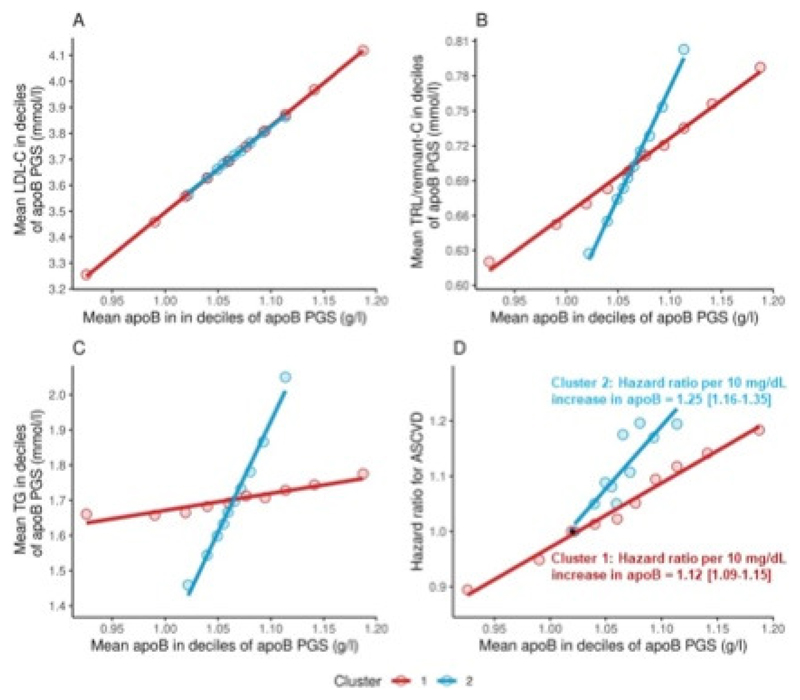
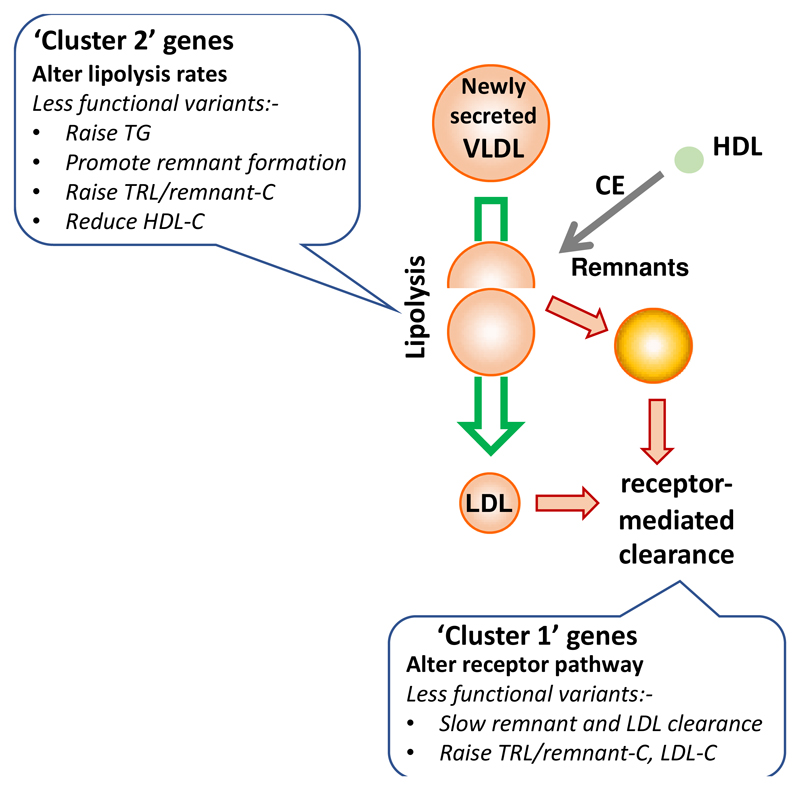
Aims: The strength of the relationship of triglyceride-rich lipoproteins (TRL) with risk of coronary heart disease (CHD) compared with low-density lipoprotein (LDL) is yet to be resolved. Methods and results: Single-nucleotide polymorphisms (SNPs) associated with TRL/remnant cholesterol (TRL/remnant-C) and LDL cholesterol (LDL-C) were identified in the UK Biobank population. In a multivariable Mendelian randomization analysis, TRL/remnant-C was strongly and independently associated with CHD in a model adjusted for apolipoprotein B (apoB). Likewise, in a multivariable model, TRL/remnant-C and LDL-C also exhibited independent associations with CHD with odds ratios per 1 mmol/L higher cholesterol of 2.59 [95% confidence interval (CI): 1.99–3.36] and 1.37 [95% CI: 1.27–1.48], respectively. To examine the per-particle atherogenicity of TRL/remnants and LDL, SNPs were categorized into two clusters with differing effects on TRL/remnant-C and LDL-C. Cluster 1 contained SNPs in genes related to receptor-mediated lipoprotein removal that affected LDL-C more than TRL/remnant-C, whereas cluster 2 contained SNPs in genes related to lipolysis that had a much greater effect on TRL/remnant-C. The CHD odds ratio per standard deviation (Sd) higher apoB for cluster 2 (with the higher TRL/remnant to LDL ratio) was 1.76 (95% CI: 1.58–1.96), which was significantly greater than the CHD odds ratio per Sd higher apoB in cluster 1 [1.33 (95% CI: 1.26–1.40)]. A concordant result was obtained by using polygenic scores for each cluster to relate apoB to CHD risk. Conclusion: Distinct SNP clusters appear to impact differentially on remnant particles and LDL. Our findings are consistent with TRL/remnants having a substantially greater atherogenicity per particle than LDL.
Overview
The claims and statistics of this paper haven’t been checked yet.
Run the check — free, no account needed. It reads the open-access text and checks the sources it cites.
Integrity signals
Registry
Cites
Statistics
Figures
Verification
Claims the paper makes
The claims and statistics of this paper haven’t been checked yet.
Run the check — free, no account needed. It reads the open-access text and checks the sources it cites.
Claims other papers make about this one
Each is checked against this paper’s own text: does it say what the citing paper says it does?
The source backs part of the claim, not all of it — or backs it for a different population, condition or comparison.
In the citing paper
“Moderate elevations in triglyceride levels are associated with an increased risk of atherosclerotic cardiovascular disease, 1,2,19,20”
From Targeting APOC3 with Olezarsen in Moderate Hypertriglyceridemia (2025) · cites this paper as [19]
Experimental — accuracy not yet measuredThe source backs part of the claim, not all of it — or backs it for a different population, condition or comparison.
In the citing paper
“In summary, when lipid metabolism is imbalanced, elevated levels of RC can lead to its infiltration into the arterial wall, causing cholesterol deposition beneath the endothelium and accelerating the formation of foam cells and lipid plaques, while provoking a low-grade inflammatory response. These processes significantly increase the risk of AS.”
From Remnant cholesterol, lipid ratios, and the severity of coronary artery lesions: a retrospective cohort study in patients with coronary heart disease (2025) · cites this paper as [16]
Experimental — accuracy not yet measuredThe source backs part of the claim, not all of it — or backs it for a different population, condition or comparison.
In the citing paper
“Observational cohorts demonstrate that higher TG and remnant cholesterol predict cardiovascular events independently of LDL-C, while Mendelian randomization analyses confirm a causal relationship between lifelong TRL elevation and ASCVD.”
From Targeting triglycerides for cardiovascular risk reduction (2026) · cites this paper as [56]
Experimental — accuracy not yet measuredThe cited source says what the claim attributes to it.
In the citing paper
“Thus, RC may have a stronger atherogenic effect than LDL-C.”
From Remnant cholesterol, lipid ratios, and the severity of coronary artery lesions: a retrospective cohort study in patients with coronary heart disease (2025) · cites this paper as [16]
The cited source says what the claim attributes to it.
In the citing paper
“triglyceride-rich lipoproteins are thought to be at least as atherogenic as LDL cholesterol on a perparticle basis. 19,21”
From Targeting APOC3 with Olezarsen in Moderate Hypertriglyceridemia (2025) · cites this paper as [19]
Self-check
Percentages, sums and reported differences re-computed from the paper’s own numbers.
The self-check needs the paper’s full text.
Citations
Cites
Sudlow, C., Gallacher, J., Allen, N., Beral, V., Burton, P., Danesh, J., Downey, P., Elliott, P., Green, J., Landray, M., et al. (2015) · PLOS Medicine · doi:10.1371/journal.pmed.1001779 · Cited by 12,728
Interpreting findings from Mendelian randomization using the MR-Egger method.
Burgess, S., & Thompson, S. G. (2017) · European Journal of Epidemiology · doi:10.1007/s10654-017-0255-x · Cited by 4,571 · cited 2×
“The possible impact of pleiotropic effects (SNP variants influencing the outcome out with their effect on the exposure) was examined using the MR-Egger 19 and the MR ‘contamination mixture’ methods (see Supplementary Tables 3 and 4 for a fuller discussion).”
Self-citationWiller (2013) · doi:10.1038/ng.2797 · Cited by 2,983
Major lipids, apolipoproteins, and risk of vascular disease
The Emerging Risk Factors Collaboration* (2009) · JAMA · doi:10.1001/jama.2009.1619 · Cited by 2,731
Guidelines for performing Mendelian randomization investigations
Burgess, S., Smith, G. D., Davies, N. M., Dudbridge, F., Gill, D., Glymour, M. M., Hartwig, F. P., Holmes, M. V., Minelli, C., Relton, C. L., et al. (2019) · Wellcome Open Research · doi:10.12688/wellcomeopenres.15555.1 · Cited by 1,828
Self-citationBorén, J., Chapman, M. J., Krauss, R. M., Packard, C. J., Bentzon, J. F., Binder, C. J., Daemen, M. J., Demer, L. L., Hegele, R. A., Nicholls, S. J., et al. (2020) · European Heart Journal · doi:10.1093/eurheartj/ehz962 · Cited by 1,601 · cited 2×
“29, 30 Remnant particles contain more cholesterol per apoB and so if the ‘atherogenicity’ of TRL/remnant-C is higher than LDL-C then this implies that the per-particle (per apoB) impact on atherosclerotic processes must be even greater.”
Self-citationTriglycerides and cardiovascular disease
Nordestgaard, B. G., & Varbo, A. (2014) · The Lancet · doi:10.1016/s0140-6736(14)61177-6 · Cited by 1,419 · cited 4×
“27, 28, 1, 2, 11, 29 The key question that arises from the present and earlier investigations is what is the basis of a remnant particle’s enhanced atherogenicity?”
InfluentialTabas, I., Williams, K. J., & Borén, J. (2007) · Circulation · doi:10.1161/circulationaha.106.676890 · Cited by 1,399
Self-citationGuidelines for performing Mendelian randomization investigations
Burgess, S., Davey Smith, G., Davies, N. M., Dudbridge, F., Gill, D., Glymour, M. M., Hartwig, F. P., Holmes, M. V., Minelli, C., Relton, C. L., et al. (2020) · Wellcome Open Research · doi:10.12688/wellcomeopenres.15555.2 · Cited by 1,273 · cited 4×
“21 It is worthwhile noting that the two SNP clusters were defined empirically based on the observed effect size for apoB relative to TRL/remnant-C rather than any preconception as to which SNPs/genes should be grouped together based on their role in lipid metabolism or their relationship to ASCVD…”
InfluentialSelf-citationChapman, M. J., Ginsberg, H. N., Amarenco, P., Andreotti, F., Borén, J., Catapano, A. L., Descamps, O. S., Fisher, E., Kovanen, P. T., Kuivenhoven, J. A., et al. (2011) · European Heart Journal · doi:10.1093/eurheartj/ehr112 · Cited by 1,227 · cited 2×
“27, 28, 1, 2, 11, 29 The key question that arises from the present and earlier investigations is what is the basis of a remnant particle’s enhanced atherogenicity?”
Self-citation
Cited by
Sorted by citations
Items 101–182 of 182
Yang, J., Zhang, R., Han, B., Li, H. Z., Wang, J., Xiao, Y., Yu, X., Guan, S., Dai, C., Yan, H., et al. (2024) · Lipids in Health and Disease · doi:10.1186/s12944-024-02244-4 · Cited by 3
“Unlike LDL-C particles, which require chemical modification to enter the arterial wall, TRLs can be taken up by peripheral macrophages via the VLDL receptor without modification, leading to a substantially greater atherogenicity than LDL-C [24].”
Mei, X., Wang, Y., Sun, R., Dong, Y., Li, Z., Xu, S., Tang, R., & Liu, H. (2025) · Nutrition Metabolism and Cardiovascular Diseases · doi:10.1016/j.numecd.2025.103852 · Cited by 3
Watts, G. F., & Chan, D. C. (2025) · European Heart Journal · doi:10.1093/eurheartj/ehae931 · Cited by 4
Cordero, A., González‐Juanatey, J. R., Olmo, R. F., Fernández‐Freira, L. A., Manzano, S., Bonanad, C., Álvarez, B. Á., Cortez, G., Manzanas, A. O., Blanco, P. J. F., et al. (2025) · Journal of clinical lipidology · doi:10.1016/j.jacl.2025.04.193 · Cited by 3
Distinct lipoprotein contributions to valvular heart disease: Insights from genetic analysis
Luo, D., Björnson, E., Wang, X., Zhang, B., Xu, C., Guan, Y., Xiang, S., Borén, J., Hao, X., & Chen, J. (2025) · International Journal of Cardiology · doi:10.1016/j.ijcard.2025.133218 · Cited by 3
Self-citationLiu, Y., Sequeira, I. R., Ko, J., Shamaitijiang, X., Skudder‐Hill, L., & Petrov, M. S. (2025) · Diabetes Obesity and Metabolism · doi:10.1111/dom.70077 · Cited by 3
“38 Hence, the clearance of TRL and LDL remains a central focus of cardiovascular research.”
Hipertrigliceridemia (> 150 mg/dl) como marcador de riesgo cardiovascular
López-Miranda, J. (2025) · Clínica e Investigación en Arteriosclerosis · doi:10.1016/j.arteri.2025.500822 · Cited by 2
Pitaro, N. L., Bay, B., Sartori, S., Vogel, B., Gitto, M., Smith, K. F., Feng, Y., Muro, F. M. D., Oliva, A., Nicolas, J., et al. (2025) · European Journal of Preventive Cardiology · doi:10.1093/eurjpc/zwaf683 · Cited by 3
Future of angiopoietin-like protein 3 inhibitors as a therapeutic agent
Marston, N., & Zimerman, A. (2025) · Current Opinion in Lipidology · doi:10.1097/mol.0000000000001013 · Cited by 3
Sattar, N. A. (2025) · Diabetes · doi:10.2337/dbi25-0025 · Cited by 2
“At that time, however, average LDL-C levels were significantly higher, as were smoking rates.”
InfluentialSchmidt, L. E., Burnap, S. A., Singh, B., Takov, K., Losdat, S., Schrutka, L., Galli, L., Theofilatos, K., Otto, G., Hengstenberg, C., et al. (2026) · Circulation Genomic and Precision Medicine · doi:10.1161/circgen.125.005345 · Cited by 3
Are we underestimating the benefits of lipid-lowering therapies?
Pirillo, A., Casula, M., Olmastroni, E., Scotti, S., Corsini, A., & Catapano, A. L. (2026) · Pharmacological Reviews · doi:10.1016/j.pharmr.2026.100140 · Cited by 2
Блохина, А. В., Meshkov, A. N., Ershova, A. I., Zaicenoka, M., Mikhailina, V. I., Smetnev, S. A., Bukaeva, A. A., Limonova, A. S., Kiseleva, A. V., Sotnikova, E. A., et al. (2026) · International Journal of Molecular Sciences · doi:10.3390/ijms27125443 · Cited by 2
Bitencourt, I. C., Zimerman, A., & Marston, N. (2026) · Current Atherosclerosis Reports · doi:10.1007/s11883-026-01441-z · Cited by 2
“Together, these enzymes affect the residence time of atherogenic lipoproteins in plasma [1, 2].”
The year in cardiovascular medicine 2023: the top 10 papers in dyslipidaemias
Tokgözoğlu, L. S., Orringer, C. E., & Catapano, A. L. (2023) · European Heart Journal · doi:10.1093/eurheartj/ehad837 · Cited by 2
A fresh look to residual risk: triglycerides, apolipoprotein B, and sweeteners
Crea, F. (2024) · European Heart Journal · doi:10.1093/eurheartj/ehae444 · Cited by 2
Urbanowicz, T. K., Hańć, A., Frąckowiak, J., Piecek, J., Spasenenko, I., Olasińska‐Wiśniewska, A., Krasińska, B., & Tykarski, A. (2024) · Journal of Clinical Medicine · doi:10.3390/jcm13226933 · Cited by 2
“Certain pathways that are involved in energy and lipoprotein metabolism, inflammatory activation, and antioxidant hemostasis derangements, in addition to impaired DNA damage repair, are among possible factors on the molecular level [4–6].”
Apolipoprotein B at the core: another step forward
Pirillo, A., & Catapano, A. L. (2025) · European Heart Journal · doi:10.1093/eurheartj/ehaf572 · Cited by 2
APOC3 inhibition: The strongest case yet for triglyceride targeting
Shapiro, M. D., & Slipczuk, L. (2025) · Progress in Cardiovascular Diseases · doi:10.1016/j.pcad.2025.09.006 · Cited by 2
Yang, F., Gao, X., Tang, R., & Yang, K. (2025) · Medicine · doi:10.1097/md.0000000000044800 · Cited by 2
“[27,28] The linear association between FSI and advanced CKM syndrome in our cohort highlights the continuous risk imposed by incremental hepatic lipid accumulation.”
Watts, G. F., & Chan, D. C. (2024) · European Journal of Preventive Cardiology · doi:10.1093/eurjpc/zwae095 · Cited by 2
Das, V., Narayanan, S., Zhang, X., Bergman, O., Djordjevic, D., Kronqvist, M., Chemaly, M., Karadimou, G., Vučković, S., Prasad, I., et al. (2025) · medRxiv · doi:10.1101/2025.05.12.25327328 · Cited by 2
Cariou, B., Thys, A., Oliveira, A. R., Letertre, M. P. M., Guyomarch, B., Carpentier, M., Cannet, C., Morcel, P., Ernould, A., Flet, L., et al. (2025) · Diabetes Obesity and Metabolism · doi:10.1111/dom.16305 · Cited by 1
Hypertriglyceridemia (> 150 mg/dL) as a marker of cardiovascular risk
López-Miranda, J. (2025) · Clínica e Investigación en Arteriosclerosis (English Edition) · doi:10.1016/j.artere.2025.500822 · Cited by 1
Xu, H., Sun, Y., Francis, M., Cheng, C. F., Modulla, N. T. R., Brenna, J. T., Chiang, C. W. K., & Ye, K. (2025) · Journal of Lipid Research · doi:10.1016/j.jlr.2025.100890 · Cited by 5
Bubnova, M. G., Ezhov, M. V., Aronov, D. M., Galyаvich, A. S., Gurevich, V. S., Duplyakov, D. V., Zafiraki, V. K., Karamnova, N. S., Kashtalap, V. V., Konovalov, G. A., et al. (2025) · Cardiosomatics · doi:10.17816/cs688224 · Cited by 1
Li, G., Zhou, Z., Wang, N., Yan, N., Sun, D., Huang, C., Zhou, L., Sun, Y., Zhou, W., & Gao, Y. (2025) · Lipids in Health and Disease · doi:10.1186/s12944-025-02826-w · Cited by 1
“Maintaining normal blood lipid levels is critical for cardiovascular and cerebrovascular health [1–3].”
VLDL cholesterol and ASCVD risk: A population-based study
Balling, M., Roepstorff, O. G., Gerds, T. A., Varbo, A., Langsted, A., Mortensen, M. B., Smith, G. D., Nordestgaard, B. G., & Afzal, S. (2026) · Journal of clinical lipidology · doi:10.1016/j.jacl.2025.12.024 · Cited by 1
Hypertriglyceridemia: updates from clinical trials of new agents and real-world registries
Haseef, M., Li, S. C. H., Gaitt, T., Chan, D. C., Pang, J., & Watts, G. F. (2026) · Current Opinion in Endocrinology Diabetes and Obesity · doi:10.1097/med.0000000000000955 · Cited by 1
Nordestgaard, A. G. (2026) · Current Atherosclerosis Reports · doi:10.1007/s11883-026-01393-4 · Cited by 2
“…Reports (2026) 28:30 (refer to Novel insights in the section on Triglyceride-rich lipoproteins and atherosclerotic cardiovascular disease ) [51 ], Björnson et al. elegantly circumvented this problem by categorizing 1,357 lipoprotein SNPs in 10 groups according to their relative effects on…”
Risk-weighted apoB: the evidence on the scales
Rehman, M. B., & Björnson, E. (2026) · European Heart Journal · doi:10.1093/eurheartj/ehag260 · Cited by 1
Self-citationHan, G., Lei, C. L., Shi, Y., Gao, J., Liu, X., Peng, K., Cai, Y., Hoi, P. M., & Yichong, L. (2026) · Journal of Lipid Research · doi:10.1016/j.jlr.2026.101047 · Cited by 1
Remnant cholesterol — The transition from biomarker to risk factor
Rosenson, R. S., Velamuri, D. N., Muntner, P., & Goonewardena, S. N. (2026) · Atherosclerosis · doi:10.1016/j.atherosclerosis.2026.120755 · Cited by 3
Hepatic Lipoprotein Production, Cardiometabolic Phenotypes, and Subtypes of Steatotic Liver Disease
Davidson, N. O. (2026) · Circulation Research · doi:10.1161/circresaha.126.327269 · Cited by 2
Crea, F. (2024) · European Heart Journal · doi:10.1093/eurheartj/ehae689 · Cited by 1
Cordero, A., Olmo, R. F., González‐Juanatey, J. R., Fernández‐Freira, L. A., Manzano, S., Bonanad, C., Cortez, G., Manzanas, A. O., Álvarez, B. Á., Blanco, P. J. F., et al. (2025) · European Journal of Clinical Investigation · doi:10.1111/eci.70072 · Cited by 1
“Triglycerides, 3,11 triglyceride-risk particles 5,21 and remnant cholesterol 14 have been related to higher cardiovascular events bringing back the interest in triglycerides for cardiovascular prevention.”
Liu, Y., Ko, J., Skudder‐Hill, L., Shamaitijiang, X., Sequeira, I. R., & Petrov, M. S. (2025) · Nutrition Metabolism and Cardiovascular Diseases · doi:10.1016/j.numecd.2025.104280 · Cited by 1
The Protective Effect of Omega-3 Fatty Acids in Attenuating Lung Function Decline
Sun, Y., & Ye, K. (2023) · American Journal of Respiratory and Critical Care Medicine · doi:10.1164/rccm.202307-1222ed · Cited by 1
Systemic inflammation is a minor contributor to remnant cholesterol atherogenicityPreprint
Kraaijenhof, J. M., Kerkvliet, M., Nurmohamed, N. S., Grefhorst, A., Kroon, J., Wareham, N. J., Hovingh, G. K., Stroes, E. S. G., Boekholdt, S. M., & Reeskamp, L. F. (2024) · bioRxiv (Cold Spring Harbor Laboratory) · doi:10.1101/2024.07.18.604203 · Cited by 1
“(14) It was suggested that this observation could be attributed to the impact of remnant particles on inflammation.”
Sniderman, A. D. (2024) · Journal of the American College of Cardiology · doi:10.1016/j.jacc.2024.07.033 · Cited by 1
Angiopoietin-Like Protein 3 Inhibition
Stroes, E. S. G., Weijs, B. M., & Annink, M. E. (2025) · Journal of the American College of Cardiology · doi:10.1016/j.jacc.2025.03.514 · Cited by 1
Atherogenic dyslipidemia: A marker of cardiovascular risk in treated hypertension
Malick, W. A., Dhaybi, O. A., & Bhatt, D. L. (2025) · Progress in Cardiovascular Diseases · doi:10.1016/j.pcad.2025.07.008 · Cited by 1
Remnant Cholesterol and Cardiovascular Risk in Young Adults
Rosenson, R. S., & Goonewardena, S. N. (2025) · Journal of the American College of Cardiology · doi:10.1016/j.jacc.2025.08.097 · Cited by 1
Targeting triglycerides for cardiovascular risk reduction
Maiorca, C., Tramontano, D., Di Costanzo, A., & D’Erasmo, L. (2026) · Internal and Emergency Medicine · doi:10.1007/s11739-026-04383-1
Weekly Journal Scan: a novel RNA-based approach to the treatment of hypertriglyceridaemia
Galiuto, L., & Volpe, M. (2024) · European Heart Journal · doi:10.1093/eurheartj/ehae351
The Influence of Anxiety, Self-Efficacy, and Quality of Life in Coronary Heart Disease Patients
Koto, Y., Panduragan, S. L., Poddar, S., Solehudin, S., Purnama, A., & Susaldi, S. (2024) · The Malaysian Journal of Nursing · doi:10.31674/mjn.2024.v15i04.0014
Zhang, W., Liu, L., Yang, X., Wang, K., Yao, H., & Wang, F. (2024) · European Journal of Obstetrics & Gynecology and Reproductive Biology · doi:10.1016/j.ejogrb.2024.06.035
Liu, Y., Wu, H., Lv, H., & Zhou, Y. (2024) · Research Square · doi:10.21203/rs.3.rs-4588496/v1
Exploring emerging pharmacotherapies for type 2 diabetes patients with hypertriglyceridemia
Tomlinson, B., & Chan, P. (2025) · Expert Opinion on Pharmacotherapy · doi:10.1080/14656566.2025.2451752
“In a recent multivariable Mendelian randomization analysis using data from the UK Biobank, it was concluded that TRL/ remnant particles have a substantially greater per particle atherogenicity than LDL [6].”
Leveraging drug-target Mendelian randomization for tailored lipoprotein-lipid lowering
Gagnon, É., & Arsenault, B. J. (2025) · Current Opinion in Lipidology · doi:10.1097/mol.0000000000000977
The next step in cardiovascular risk reduction: targeting remnant cholesterol
Parhofer, K. G. (2025) · European Journal of Preventive Cardiology · doi:10.1093/eurjpc/zwaf315
Kianersi, S., Potts, K. S., Wang, H.-M., Sofer, T., Noordam, R., Rutter, M. K., Rexrode, K. M., Redline, S., & Huang, T.-Y. (2025) · Research Square · doi:10.21203/rs.3.rs-6718332/v1 · Cited by 2
“Similar to previous studies (34), non-HDL cholesterol was calculated by subtracting HDL cholesterol from total cholesterol values.”
Gut microbiome and cardiovascular disease: Evidence, mechanism, challenge, and future strategies
Tian, C.-H., & Tan, X. (2025) · World Chinese Journal of Digestology · doi:10.11569/wcjd.v33.i8.631
Liu, Y., Zhang, F., Zhang, P., & Chen, L. (2025) · Frontiers in Neurology · doi:10.3389/fneur.2025.1648807
Jin, Y., Wang, L., Wang, Y., & Lu, J. (2025) · Research Square · doi:10.21203/rs.3.rs-7452942/v1
Ma, X., Liu, Y., Hua, Z., Jiang, F., Shi, S., Wang, K., Yu, J., & Zhang, L. (2025) · BMC Pharmacology and Toxicology · doi:10.1186/s40360-025-01023-w
“…pathway and lipid metabolism, both of which are critical contributors to CHD. Elevated levels of lipids, such as cholesterol and triglycerides, lead to low-density lipoprotein cholesterol (LDL-C) deposition in blood vessels, forming atherosclerotic plaques, a well-known risk factor for CHD [46].”
Ma, S., Hu, Y., Zhu, Y., Liu, S., & Wu, Y. (2025) · Frontiers in Nutrition · doi:10.3389/fnut.2025.1695088
Magdy, A., Abdelkhalek, S., Mahmoud, B., Wael, R., Ali, H. A. A., Mohamed, N., & Abdelmonem, R. (2025) · International Journal of Clinical Medical Research · doi:10.61466/ijcmr4010004
“Time variability of the TyG index was strongly predictive, with a direct non-linear correlation with cardiovascular risk 46,47,48,49 .”
InfluentialHei, Y., & Xie, Y. (2025) · Nutrition Reviews · doi:10.1093/nutrit/nuaf217
Beydoun, M. A., Huang, T., Hooten, N. N., Beydoun, H. A., Bouhrara, M., Weiss, J., Evans, M. K., & Zonderman, A. B. (2026) · GeroScience · doi:10.1007/s11357-026-02098-x
“It also includes glycoprotein acetyls (GlycA), a composite marker of inflammation, as well as amino acids and metabolites associated with glycolysis [47–52].”
Wulff, A. B., Varbo, A., Nordestgaard, A. G., & Nordestgaard, B. G. (2026) · Expert Opinion on Therapeutic Targets · doi:10.1080/14728222.2026.2639678 · Cited by 2
Effect of type-2 diabetes on surface lipids and biophysical properties in lipoprotein populations
REIS, A. C., Araújo, A. R. D., Dias, I. H. K., Antonny, B., Pérez, A., Sánchez‐Quesada, J. L., & de Freitas, V. A. P. (2026) · Archives of Biochemistry and Biophysics · doi:10.1016/j.abb.2026.110780
Progress and Prospects of APOC3-Targeted siRNA Drugs in Coronary Artery Disease Research
黄, 林. (2026) · Advances in Clinical Medicine · doi:10.12677/acm.2026.1631183
Wang, H., Li, S., Sun, Y., Li, Y., Bilige, W., Qi, F., Xie, L., Wu, G., Yan, H., Yang, Y., et al. (2026) · Hypertension Research · doi:10.1038/s41440-026-02596-7
“Mendelian randomization analysis also showed that RC had a substantially greater atherogenicity per particle than LDL-C [28].”
Deng, H., Shen, P., Li, G., Yin, Z., Zhou, L., Bai, Z., Zhang, P., Zhou, Y., Wang, N., Gao, Y., et al. (2026) · Cell Communication and Signaling · doi:10.1186/s12964-026-02918-9
Wang, J., Jin, Y., Wang, L., Wang, Y., & Lu, J. (2026) · International Journal of General Medicine · doi:10.2147/ijgm.s604377
“36 Compared with LDL-C, RC can carry more cholesterol and is more easily captured by macrophages, so RC has a stronger ability to cause arteriosclerosis.”
Interpreting residual discordance between ApoA-I and HDL-C
Maslyk, M. M., Pruc, M., & Szarpak, Ł. (2026) · Journal of clinical lipidology · doi:10.1016/j.jacl.2026.03.013
Lipid-related cardiovascular risk beyond low-density lipoprotein cholesterol
Balling, M., Hvid, K., Varbo, A., Langsted, A., Nordestgaard, B. G., & Afzal, S. (2026) · Heart · doi:10.1136/heartjnl-2025-326404
“5 Some characteristics of remnants are determined by these apolipoproteins, for example, apoE and ApoCIII enhance interactions with proteoglycans, 5 ApoCIII in addition inhibit both the hydrolysis of triglycerides in remnant particles by inhibition of lipoprotein lipase and the uptake of remnants…”
Meng, X., Duanmu, Y., Yu, X., Liu, L., Yuhui, C., Chen, Z., 纪桂元, Zhang, D., Yang, X. H., Liu, X., et al. (2026) · Frontiers in Cardiovascular Medicine · doi:10.3389/fcvm.2026.1786243
Rethinking triglycerides in the management of atherosclerotic cardiovascular disease
Khanna, S., Bhatt, D. L., Libby, P., & Bhat, A. (2026) · European Journal of Preventive Cardiology · doi:10.1093/eurjpc/zwag341 · Cited by 1
Chen, D., Fang, H., Wu, S.-G., Si, W., Wang, S. C., Liu, L.-Z., Han, Y., & Peng, X.-E. (2026) · Frontiers in Endocrinology · doi:10.3389/fendo.2026.1873940
“…features of atherogenic lipoproteins, including increased triglyceride-rich lipoproteins and small dense LDL-C as well as reduced HDL-C protective effects, these markers can more effectively characterize lipid structural abnormalities and dyslipoproteinemia through ratios or combinations (30, 31).”
Generoso, G., Cesena, F. Y., Benseñor, I. M., Giatti, S., Parise, B. K., Santos, R. B., Santos, R. D., Bittencourt, M. S., Lotufo, P. A., & Drager, L. F. (2026) · Journal of Lipid Research · doi:10.1016/j.jlr.2026.101104
Björnson, E., & Adiels, M. (2026) · Current Atherosclerosis Reports · doi:10.1007/s11883-026-01442-y
Self-citationSniderman, A. D., Pencina, K. M., Thanassoulis, G., Dufresne, L., & Pencina, M. J. (2026) · European Journal of Preventive Cardiology · doi:10.1093/eurjpc/zwag400 · Cited by 1
Agouridis, A. P., Liamis, G., & Tsimihodimos, V. (2026) · Journal of Atherosclerosis Prevention and Treatment · doi:10.4103/aptj.aptj_31_26
Su, Y., Wang, S., Liu, J., Cheng, H., Liao, H., Yang, Z., Ban, Y., Yan, P., Guo, L., & Yang, D. (2026) · Biology · doi:10.3390/biology15181608
Pedro‐Botet, J., Argüeso, R. M., Díaz, Á., Millán, J., Pascual, V., Pérez‐Martínez, P., Pintó, X., Ruiz‐García, A., & Díaz-Díaz, J. L. (2026) · Clínica e Investigación en Arteriosclerosis · doi:10.1016/j.arteri.2026.500961
Huang, L., Huang, Z., Fandi, M., Xu, X., Zhang, Y., Ma, X., Geng, T., Hu, C., Li, S., Cao, G., et al. (2026) · Open Research (University of Surrey) · doi:10.1002/viw2.70205
Hypertriglyceridemia: Causes, Consequences, Diagnosis, and Management
Qi, S., Chen, W., Chen, K., Yang, S., Wang, S., Ni, T., Xu, D., Mao, E., Chen, E., & Chen, Y. (2026) · MedComm · doi:10.1002/mco2.70956
“Persistent increases in TRL remnants and apoB-containing particle burden are more likely to promote chronic vascular injury [ 30, 119 ].”
Chen, M., Fang, N., Wang, R., Wang, Z., Gao, Y., Min, R., 洪勇, Wang, J., Zhang, Y., Li, Y., et al. (2026) · Pharmacological Research · doi:10.1016/j.phrs.2026.109689
Tian, R., Chen, S., Li, J., Xia, X., Zhang, X., Wu, S., & Wang, A. (2026) · Journal of Thrombosis and Thrombolysis · doi:10.1007/s11239-026-03421-1
Metadata
- Authors
- Björnson, E., Adiels, M., Taskinen, M.-R., Burgess, S., Rawshani, A., Borén, J., & Packard, C. J.
- Affiliations
- Sahlgrenska University Hospital (SE)
- University of Helsinki (FI)
- University of Cambridge (GB)
- University of Glasgow (GB)
- Corresponding author
- Borén, Jan
- ORCID
- Venue
- European Heart Journal
- Publisher
- Oxford University Press (OUP)
- Published
- 2023-06-26
- Volume
- 44
- Issue
- 39
- Pages
- 4186-4195
- ISSN
- 0195-668X (ISSN-L)
- 1522-9645
- PMC
- PMC10576615
- OpenAlex
- W4382011883
- Cited by
- 183
- References
- 28
- Citations by year
- 2026: 47 · 2025: 76 · 2024: 50 · 2023: 9
- FWCI
- 48.59
- Type
- journal article
- Language
- en
- Open access
- hybrid
- doi.org
- Licence
- Locations
- European Heart Journal (publishedVersion, cc-by-nc)
- PubMed Central (publishedVersion, cc-by-nc)
- PubMed (publishedVersion)
- Apollo (University of Cambridge) (submittedVersion, cc-by-nc)
- Informationszentrum Lebenswissenschaften (ZB MED) (submittedVersion, cc-by-nc)
- Työväentutkimus Vuosikirja (submittedVersion)
- Funders
- Swedish Research Council
- Swedish Heart–Lung Foundation (ALFGBG-965404)
- Sigrid Juselius Foundation
- Finnish Foundation for Cardiovascular Research
- Wellcome Trust and the Royal Society (204623/Z/16/Z)
- United Kingdom Research and Innovation Medical Research Council (MC_UU_00002/7)
- National Institute for Health Research Cambridge Biomedical Research Centre (BRC-1215-20014)
- National Institute for Health Research
- Department of Health and Social Care
- Topics
- Health Sciences › Medicine › Cardiology and Cardiovascular Medicine › Lipoproteins and Cardiovascular Health
- Health Sciences › Medicine › Cardiology and Cardiovascular Medicine › Lipid metabolism and disorders
- Life Sciences › Biochemistry, Genetics and Molecular Biology › Genetics › Genetic Associations and Epidemiology
- Keywords
- remnant cholesterol, LDL cholesterol, coronary heart disease risk, apolipoprotein B, atherogenicity, lipoprotein particle size, lipolysis, single nucleotide polymorphisms, polygenic risk score, Mendelian randomization
- MeSH terms
- Apolipoproteins B, Cholesterol, Coronary Disease, United Kingdom, Humans, Lipoproteins, Cholesterol, LDL, Triglycerides, Biological Specimen Banks
About these checks
Registry, retraction, Cites and statistics results are computed, not judged, with one exception: a printed reference that no index lists is read once by a model before it counts as a citation error. Claims are extracted by a model and kept only when their quote appears verbatim in the text; each cited source is then checked, with a model’s help, for whether it says what the claim relies on. Those verdicts can be wrong — read the claim’s quote and the cited source before relying on one.
Statistics and arithmetic are recomputed, not judged.
Confidence bands are shown only for fields calibrated on our annotated test set. None is calibrated yet, so no band is shown.
What counts as a claim ›How we measure confidence ›How we check this ›
Are you an author, or do you see a problem with this page? Request a review
