

Discordance among apoB, non-high-density lipoprotein cholesterol, and triglycerides: implications for cardiovascular prevention
Open accessThe DOI matches its Crossref record; 34 of the 34 references it cites were found in a registry or an index; 26 of the 33 sources its claims cite were checked for support.
Abstract
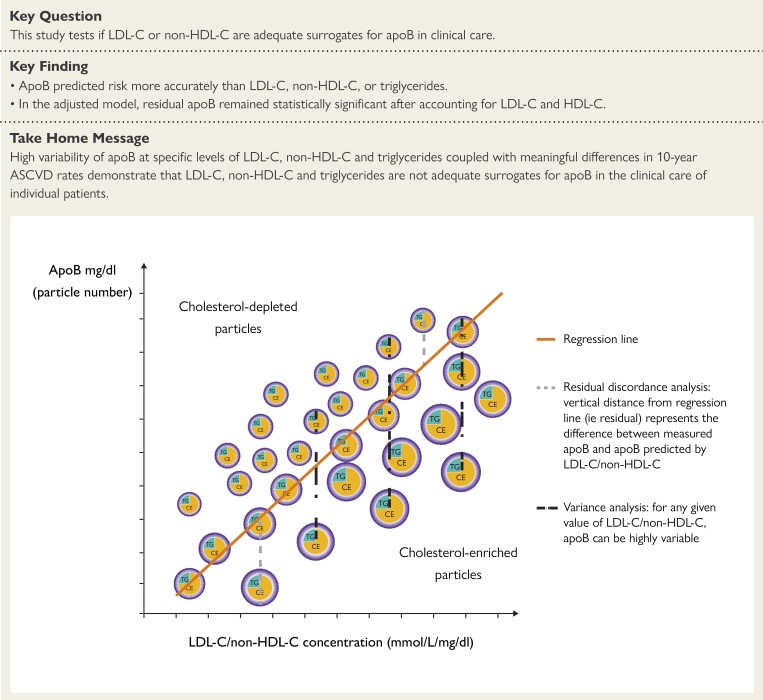
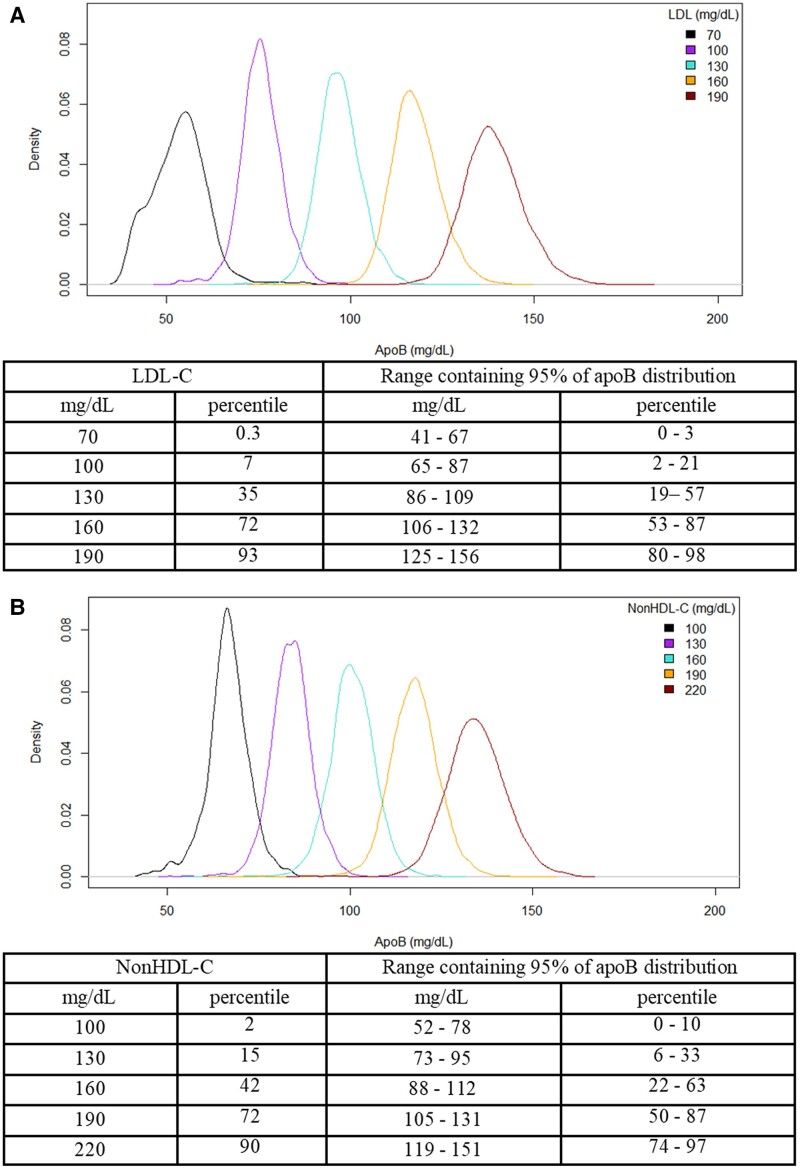
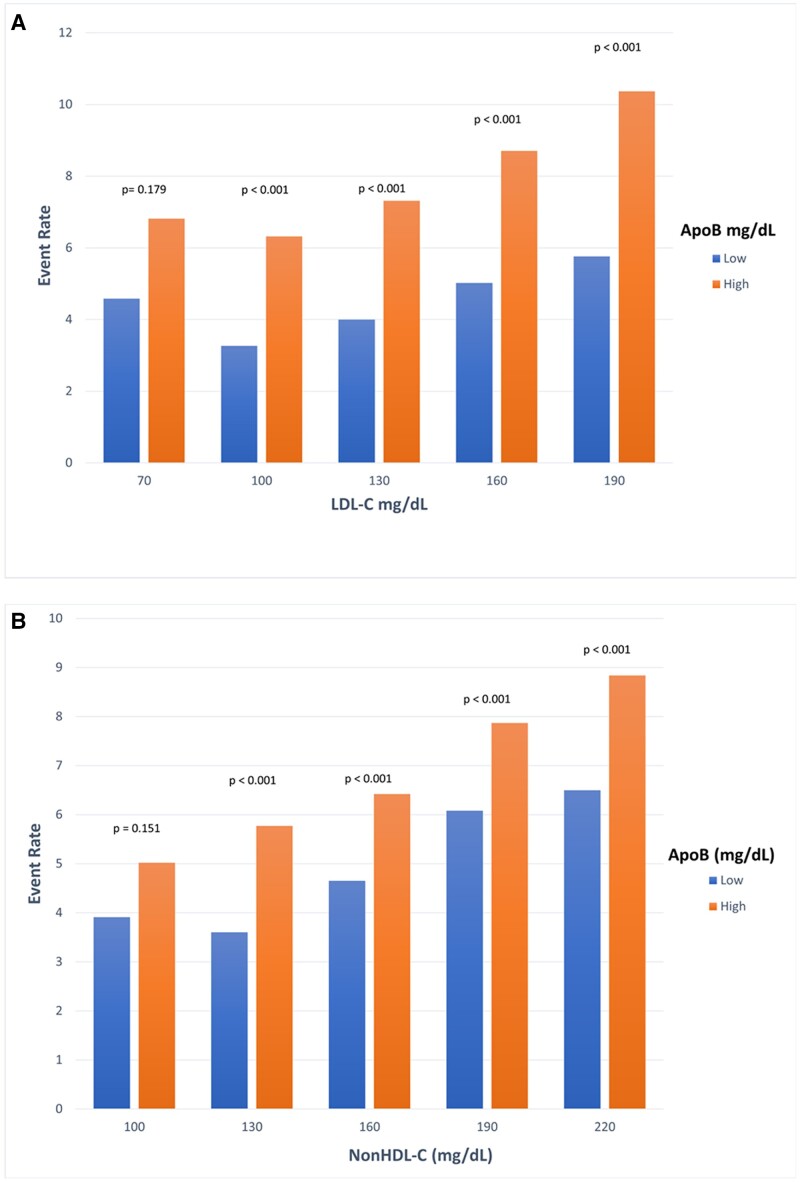
Background and Aims: Despite growing evidence that apolipoprotein B (apoB) is the most accurate marker of atherosclerotic cardiovascular disease (ASCVD) risk, its adoption in clinical practice has been low. This investigation sought to determine whether low-density lipoprotein cholesterol (LDL-C), non–high-density lipoprotein cholesterol (HDL-C), and triglycerides are sufficient for routine cardiovascular care. Methods: A sample of 293 876 UK Biobank adults (age: 40–73 years, 42% men), free of cardiovascular disease, with a median follow-up for new-onset ASCVD of 11 years was included. Distribution of apoB at pre-specified levels of LDL-C, non-HDL-C, and triglycerides was examined graphically, and 10-year ASCVD event rates were compared for high vs. low apoB. Residuals of apoB were constructed after regressing apoB on LDL-C, non-HDL-C, and log-transformed triglycerides and used as predictors in a proportional hazards regression model for new-onset ASCVD adjusted for standard risk factors, including HDL-C. Results: ApoB was highly correlated with LDL-C and non-HDL-C (Pearson’s r = .96, P < .001 for both) but less so with log triglycerides (r = .42, P < .001). However, apoB ranges necessary to capture 95% of all observations at pre-specified levels of LDL-C, non-HDL-C, or triglycerides were wide, spanning 85.8–108.8 md/dL when LDL-C 130 mg/dL, 88.3–112.4 mg/dL when non-HDL-C 160 mg/dL, and 67.8–147.4 md/dL when triglycerides 115 mg/dL. At these levels (±10 mg/dL), 10-year ASCVD rates for apoB above mean + 1 SD vs. below mean − 1 SD were 7.3 vs. 4.0 for LDL-C, 6.4 vs. 4.6 for non-HDL-C, and 7.0 vs. 4.6 for triglycerides (all P < .001). With 19 982 new-onset ASCVD events on follow-up, in the adjusted model, residual apoB remained statistically significant after accounting for LDL-C and HDL-C (hazard ratio 1.06, 95% confidence interval 1.0–1.07), after accounting for non-HDL-C and HDL-C (hazard ratio 1.04, 95% confidence interval 1.03–1.06), and after accounting for triglycerides and HDL-C (hazard ratio 1.13, 95% confidence interval 1.12–1.15). None of the residuals of LDL-C, non-HDL-C, or of log triglycerides remained significant when apoB was included in the model. Conclusions: High variability of apoB at individual levels of LDL-C, non-HDL-C, and triglycerides coupled with meaningful differences in 10-year ASCVD rates and significant residual information contained in apoB for prediction of new-onset ASCVD events demonstrate that LDL-C, non-HDL-C, and triglycerides are not adequate proxies for apoB in clinical care.
Overview
CoChat Summary
TL;DR
In UK Biobank adults free of cardiovascular disease, apoB varied widely at given levels of LDL-C, non-HDL-C, and triglycerides and retained significant ASCVD risk information after adjustment for those markers. The authors conclude that LDL-C, non-HDL-C, and triglycerides are not adequate proxies for apoB in clinical care.
Key findings
- Among 293,876 UK Biobank adults with median follow-up of 10.95 years and 19,982 ASCVD events, apoB was highly correlated with LDL-C and non-HDL-C (Pearson’s r = .96, P < .001 for both) but less so with log triglycerides (r = .42, P < .001).
- Despite high correlation, apoB ranges capturing ~95% of observations at fixed lipid levels were wide: 85.8–108.8 mg/dL when LDL-C was 130 mg/dL, 88.3–112.4 mg/dL when non-HDL-C was 160 mg/dL, and 67.8–147.4 mg/dL when triglycerides were 115 mg/dL.
- At those levels ±10 mg/dL, 10-year ASCVD rates for apoB above mean + 1 SD vs below mean − 1 SD were 7.3 vs 4.0 for LDL-C 130 mg/dL, 6.4 vs 4.6 for non-HDL-C 160 mg/dL, and 7.0 vs 4.6 for triglycerides 115 mg/dL (all P < .001).
- In adjusted Cox models, residual apoB remained significant after accounting for LDL-C and HDL-C (HR 1.06, 95% CI 1.04–1.07), after non-HDL-C and HDL-C (HR 1.04, 95% CI 1.03–1.06), and after triglycerides and HDL-C (HR 1.13, 95% CI 1.12–1.15); residuals of LDL-C, non-HDL-C, or log triglycerides were not significant when apoB was included.
Methods
- Prospective cohort analysis using 293,876 UK Biobank adults aged 40–73 years, 42% men, free of cardiovascular disease and not receiving lipid-lowering therapy at baseline, with median follow-up for new-onset ASCVD of 11 years.
- ApoB distributions were examined graphically at pre-specified LDL-C, non-HDL-C, and triglyceride levels; 10-year ASCVD event rates were compared for high vs low apoB.
- Residuals of apoB were constructed after regressing apoB on LDL-C, non-HDL-C, and log-transformed triglycerides and used as predictors in proportional hazards regression models for new-onset ASCVD adjusted for standard risk factors, including HDL-C.
Limitations
- Stated in the paper: the analysis is limited to one European country with racial and ethnic subgroups representing that country, and the focus is on identifying the most accurate lipid marker rather than constructing the best risk prediction algorithms.
- Stated in the paper: a trial comparing care guided by different lipid parameters is neither likely nor feasible, so the evidence comes from an observational cohort study.
- Evident in the text: the Methods report a final analytic sample of 293,883 adults, whereas the abstract, results, and Table 1 report 293,876 participants.
Model-written summary. Check it against the paper before relying on it.
Integrity signals
Registry
Cites
Statistics
Figures
Verification
Claims the paper makes
6 Valid · 2 Not valid · 3 Not checked · 49 Own results and interpretations
Some cited sources support this claim and some don’t — read each source’s verdict below.
In the paper
“given that apoB is a more accurate measure of the adequacy of lipid-lowering therapy than LDL-C or non-HDL-C,1,3–13,27”
§ Discordance among apoB, non–high-density lipoprotein cholesterol, and triglycerides: implications for cardiovascular prevention > Discussion
What the sources say
- Partly supportedcites [1] 1. Mach F, Baigent C, Catapano AL, Koskinas KC, Casula M, Badimon L, et al 2019 ESC/EAS guidelines for the management of dyslipidaemias: lipid modification to reduce cardiovascular risk. Eur Heart J 2020; 41: 111– 88. 10.1093/eurheartj/ehz455 31504418 sourceExperimental — accuracy not yet measured
Section 5.4.1 says ApoB measurement has superior analytical performance to measurement or calculation of LDL-C and non-HDL-C. But section 11 recommends LDL-C as the minimum measure for monitoring therapy and treats ApoB or non-HDL-C as secondary treatment targets; it does not establish that ApoB is generally a more accurate measure of whether lipid-lowering therapy is adequate. (LLM, conf=0.86)
- Partly supportedcites [3] 3. Lawler PR, Akinkuolie AO, Ridker PM, Sniderman AD, Buring JE, Glynn RJ, et al Discordance between circulating atherogenic cholesterol mass and lipoprotein particle concentration in relation to future coronary events in women. Clin Chem 2017; 63: 870– 9. 10.1373/clinchem.2016.264515 28174174 PMC5374022 sourceExperimental — accuracy not yet measured
The Discussion reports that, in apparently healthy women with discordant measurements, CHD risk tracked better with apoB than with non-HDL-C. The Background also describes evidence that apoB may predict risk better than LDL-C. But the paper examines future coronary risk, not whether apoB measures the adequacy of lipid-lowering therapy more accurately than either cholesterol measure. (LLM, conf=0.86)
- Partly supportedcites [4] 4. Wilkins JT, Li RC, Sniderman A, Chan C, Lloyd-Jones DM. Discordance between apolipoprotein B and LDL-cholesterol in young adults predicts coronary artery calcification: the CARDIA study. J Am Coll Cardiol 2016; 67: 193– 201. 10.1016/j.jacc.2015.10.055 26791067 PMC6613392 sourceExperimental — accuracy not yet measured
The Results (page not provided) show that, when the measures were discordant, high apoB was associated with greater odds of later coronary artery calcification even when LDL-C or non–HDL-C was low. That supports apoB’s value as a risk marker, but the paper does not establish that it measures the adequacy of lipid-lowering therapy more accurately; medication use was included only as an adjustment variable in the Methods. (LLM, conf=0.84)
- Partly supportedcites [5] 5. Cao J, Nomura SO, Steffen BT, Guan W, Remaley AT, Karger AB, et al Apolipoprotein B discordance with low-density lipoprotein cholesterol and non-high-density lipoprotein cholesterol in relation to coronary artery calcification in the Multi-Ethnic Study of Atherosclerosis (MESA). J Clin Lipidol 2020; 14: 109– 121.e5. 10.1016/j.jacl.2019.11.005 31882375 PMC7085429 sourceExperimental — accuracy not yet measured
The Introduction says apoB may be a better or additional marker for ASCVD risk assessment than LDL-C or non-HDL-C. But the Conclusions find its added value for predicting coronary artery calcification unclear in adults not taking lipid-lowering medication. The paper therefore does not establish that apoB more accurately measures the adequacy of lipid-lowering therapy. (LLM, conf=0.88)
- Partly supportedcites [6] 6. Johannesen CDL, Mortensen MB, Langsted A, Nordestgaard BG. Apolipoprotein B and non-HDL cholesterol better reflect residual risk than LDL cholesterol in statin-treated patients. J Am Coll Cardiol 2021; 77: 1439– 50. 10.1016/j.jacc.2021.01.027 33736827 sourceExperimental — accuracy not yet measured
The Conclusions report that, in statin-treated patients, apoB was a more accurate marker of all-cause mortality risk than LDL-C or non-HDL-C. They find apoB more accurate for myocardial infarction risk than LDL-C, but do not establish superiority over non-HDL-C for that outcome. The broader claim that apoB measures the adequacy of lipid-lowering therapy more accurately than both markers exceeds these residual-risk findings. (LLM, conf=0.88)
- Disputedcites [7] 7. Welsh C, Celis-Morales CA, Brown R, Mackay DF, Lewsey J, Mark PB, et al Comparison of conventional lipoprotein tests and apolipoproteins in the prediction of cardiovascular disease. Circulation 2019; 140: 542– 52. 10.1161/CIRCULATIONAHA.119.041149 31216866 PMC6693929 sourceExperimental — accuracy not yet measured
The Discussion says non–HDL-C appears adequate for assessing lipid-lowering therapy in this setting and recommends it as the default measure for treatment decisions in patients on statins. Although ApoB was more strongly associated with CVD in a selected discordant subgroup, the paper found no improvement in risk discrimination from adding apolipoproteins. It therefore does not support the broad claim that ApoB is a more accurate measure of treatment adequacy than LDL-C or non–HDL-C. (LLM, conf=0.90)
Checked by a reasoning model — may be wrong.
- Not checked — no full text of the sourcecites [8] 8. Pencina MJ, D'Agostino RB, Zdrojewski T, Williams K, Thanassoulis G, Furberg CD, et al Apolipoprotein B improves risk assessment of future coronary heart disease in the Framingham Heart Study beyond LDL-C and non-HDL-C. Eur J Prev Cardiol 2015; 22: 1321– 7. 10.1177/2047487315569411 25633587 source
- Not checked — no full text of the sourcecites [9] 9. Su X, Cai X, Pan Y, Sun J, Jing J, Wang M, et al Discordance of apolipoprotein B with low-density lipoprotein cholesterol or non-high density lipoprotein cholesterol and coronary atherosclerosis. Eur J Prev Cardiol 2022; 29: 2349– 58. 10.1093/eurjpc/zwac223 36166398 source
- Partly supportedcites [10] 10. Kim C-W, Hong S, Chang Y, Lee JA, Shin H, Ryu S. Discordance between apolipoprotein B and low-density lipoprotein cholesterol and progression of coronary artery calcification in middle age. Circ J 2021; 85: 900– 7. 10.1253/circj.CJ-20-0692 33311006 sourceExperimental — accuracy not yet measured
The Discussion (page unavailable) reports that one meta-analysis found apoB better than LDL-C and non-HDL-C at predicting vascular events, but also notes controversy and a meta-analysis finding statistically indistinguishable risk estimates. The paper studies coronary artery calcification in largely healthy adults; it does not establish that apoB more accurately measures the adequacy of lipid-lowering therapy. (LLM, conf=0.84)
- Could not verifycites [11] 11. Murphy A, Faria-Neto JR, Al-Rasadi K, Blom D, Catapano A, Cuevas A, et al World Heart Federation Cholesterol Roadmap. Glob Heart 2017; 12: 179– 197.e5. 10.1016/j.gheart.2017.03.002 28765036 sourceExperimental — accuracy not yet measured
The supplied passages and searches for apoB, LDL-C, non-HDL-C, and lipid-lowering therapy return an unrelated 2026 journal article listing, with no section or page from the 2017 roadmap. Our available copy therefore provides no passage assessing whether apoB measures treatment adequacy more accurately than LDL-C or non-HDL-C. (LLM, conf=0.75)
plainstates an association- Asserted: passes — The authors put it forward as true.
- Checkable: passes — It can be checked against evidence.
- Load-bearing: passes — The paper’s conclusions depend on it.
- Based: passes — The paper gives a reason why it holds.
- Partly supported
Some cited sources support this claim and some don’t — read each source’s verdict below.
In the paper
“Moreover, all reports since then, with one exception,2 including observational studies and randomized clinical trials,3–13 have confirmed that apoB is a more accurate marker of cardiovascular risk than LDL-C or non-HDL-C, reinforcing the validity of the evaluation by the 2019 EAS/ESC Guidelines as to the superiority of apoB.”
§ Discordance among apoB, non–high-density lipoprotein cholesterol, and triglycerides: implications for cardiovascular prevention > Introduction
What the sources say
- Supportedcites [2] 2. Helgadottir A, Thorleifsson G, Snaebjarnarson A, Stefansdottir L, Sveinbjornsson G, Tragante V, et al Cholesterol not particle concentration mediates the atherogenic risk conferred by apolipoprotein B particles—a Mendelian randomization analysis. Eur J Prev Cardiol 2022; 29: 2374– 85. 10.1093/eurjpc/zwac219 36125206 source
In the citing sentence, this source is cited for the phrase “with one exception,” not for the subsequent claim about reports cited as 3–13. The source’s Discussion (page unavailable) concludes that non-HDL-C better captures the atherogenic contribution of apoB-containing particles than apoB particle concentration, making it an exception to the asserted superiority of apoB. (LLM, conf=0.92)
- Partly supportedcites [3] 3. Lawler PR, Akinkuolie AO, Ridker PM, Sniderman AD, Buring JE, Glynn RJ, et al Discordance between circulating atherogenic cholesterol mass and lipoprotein particle concentration in relation to future coronary events in women. Clin Chem 2017; 63: 870– 9. 10.1373/clinchem.2016.264515 28174174 PMC5374022 sourceExperimental — accuracy not yet measured
The Discussion (page not supplied) reports that, among women with discordant biomarker levels, coronary risk tracked more closely with particle concentration, particularly apoB, than with non-HDL-C. The paper was published in 2017 and does not establish that all reports since 2019, including randomized trials, confirmed apoB’s superiority across populations. (LLM, conf=0.89)
- Partly supportedcites [4] 4. Wilkins JT, Li RC, Sniderman A, Chan C, Lloyd-Jones DM. Discordance between apolipoprotein B and LDL-cholesterol in young adults predicts coronary artery calcification: the CARDIA study. J Am Coll Cardiol 2016; 67: 193– 201. 10.1016/j.jacc.2015.10.055 26791067 PMC6613392 sourceExperimental — accuracy not yet measured
The Discussion reports that, in discordance analyses, apoB was more closely associated with atherosclerotic risk than LDL-C or non–HDL-C; the Results show this for midlife coronary artery calcification in the CARDIA cohort. But this 2016 observational study cannot substantiate a claim about all reports since 2019 or randomized clinical trials, and its outcome was a surrogate for clinical events. (LLM, conf=0.88)
- Disputedcites [5] 5. Cao J, Nomura SO, Steffen BT, Guan W, Remaley AT, Karger AB, et al Apolipoprotein B discordance with low-density lipoprotein cholesterol and non-high-density lipoprotein cholesterol in relation to coronary artery calcification in the Multi-Ethnic Study of Atherosclerosis (MESA). J Clin Lipidol 2020; 14: 109– 121.e5. 10.1016/j.jacl.2019.11.005 31882375 PMC7085429 sourceExperimental — accuracy not yet measured
The Conclusions (page unavailable) say it remains unclear whether apoB adds predictive information beyond LDL-C or non-HDL-C for coronary artery calcification. The paper did not evaluate cardiovascular events, so its findings do not confirm the claimed superiority of apoB as a cardiovascular-risk marker. (LLM, conf=0.87)
Checked by a reasoning model — may be wrong.
- Partly supportedcites [6] 6. Johannesen CDL, Mortensen MB, Langsted A, Nordestgaard BG. Apolipoprotein B and non-HDL cholesterol better reflect residual risk than LDL cholesterol in statin-treated patients. J Am Coll Cardiol 2021; 77: 1439– 50. 10.1016/j.jacc.2021.01.027 33736827 sourceExperimental — accuracy not yet measured
The Conclusions report that, among statin-treated patients, apoB was a more accurate marker of all-cause mortality risk than LDL-C or non-HDL-C, and of myocardial infarction risk than LDL-C. The paper is an observational study; it does not establish the sentence’s broader claim about all reports since 2019, and it does not find apoB superior to non-HDL-C for myocardial infarction risk. (LLM, conf=0.86)
- Supportedcites [7] 7. Welsh C, Celis-Morales CA, Brown R, Mackay DF, Lewsey J, Mark PB, et al Comparison of conventional lipoprotein tests and apolipoproteins in the prediction of cardiovascular disease. Circulation 2019; 140: 542– 52. 10.1161/CIRCULATIONAHA.119.041149 31216866 PMC6693929 source
The citation is attached to “one exception,” not to the reports said to favor apoB. The Discussion identifies this study as an exception: it reports very similar cardiovascular-risk associations for apoB, LDL-C, and non–HDL-C among people on statins, with negligible additional predictive value from apolipoproteins. (LLM, conf=0.92)
- Not checked — no full text of the sourcecites [8] 8. Pencina MJ, D'Agostino RB, Zdrojewski T, Williams K, Thanassoulis G, Furberg CD, et al Apolipoprotein B improves risk assessment of future coronary heart disease in the Framingham Heart Study beyond LDL-C and non-HDL-C. Eur J Prev Cardiol 2015; 22: 1321– 7. 10.1177/2047487315569411 25633587 source
- Not checked — no full text of the sourcecites [9] 9. Su X, Cai X, Pan Y, Sun J, Jing J, Wang M, et al Discordance of apolipoprotein B with low-density lipoprotein cholesterol or non-high density lipoprotein cholesterol and coronary atherosclerosis. Eur J Prev Cardiol 2022; 29: 2349– 58. 10.1093/eurjpc/zwac223 36166398 source
- Partly supportedcites [10] 10. Kim C-W, Hong S, Chang Y, Lee JA, Shin H, Ryu S. Discordance between apolipoprotein B and low-density lipoprotein cholesterol and progression of coronary artery calcification in middle age. Circ J 2021; 85: 900– 7. 10.1253/circj.CJ-20-0692 33311006 sourceExperimental — accuracy not yet measured
The Discussion (page unavailable) says this observational study suggests apoB is more predictive of coronary artery calcium progression than LDL-C; the Results say the associations were similar in analyses involving non-HDL-C. But the study measured a subclinical marker, not cardiovascular events, and it cannot establish that all reports since 2019—including randomized trials—confirmed apoB’s superiority. The Discussion also notes that another meta-analysis found statistically indistinguishable risk estimates. (LLM, conf=0.87)
- Could not verifycites [11] 11. Murphy A, Faria-Neto JR, Al-Rasadi K, Blom D, Catapano A, Cuevas A, et al World Heart Federation Cholesterol Roadmap. Glob Heart 2017; 12: 179– 197.e5. 10.1016/j.gheart.2017.03.002 28765036 sourceExperimental — accuracy not yet measured
The supplied passages contain a Global Heart article listing, not discussion from the Cholesterol Roadmap. Searches for apoB’s comparative accuracy against LDL-C and non-HDL-C returned the same listing; no passage in our copy addresses the claim about reports since 2019. (LLM, conf=0.72)
boostedstates an association- Asserted: passes — The authors put it forward as true.
- Checkable: passes — It can be checked against evidence.
- Load-bearing: passes — The paper’s conclusions depend on it.
- Based: passes — The paper gives a reason why it holds.
- Supported
The cited sources support only part of this claim — read each source’s verdict below.
In the paper
“Furthermore, standard statistical measures that quantify the added prognostic value of new biomarkers in risk prediction models were not designed to compare highly correlated and biologically tightly related variables such as LDL-C, non-HDL-C, or apoB.14”
§ Discordance among apoB, non–high-density lipoprotein cholesterol, and triglycerides: implications for cardiovascular prevention > Introduction
What the sources say
- Partly supportedcites [14] 14. Pencina MJ, Navar AM, Wojdyla D, Sanchez RJ, Khan I, Elassal J, et al Quantifying importance of major risk factors for coronary heart disease. Circulation 2019; 139: 1603– 11. 10.1161/CIRCULATIONAHA.117.031855 30586759 PMC6433489 sourceExperimental — accuracy not yet measured
The Discussion (page unavailable) says that added-last prognostic measures are well suited to new biomarkers but can mask the importance of established, treatable risk factors. It does not say these measures were not designed to compare highly correlated lipid variables, or assess that limitation for LDL-C, non-HDL-C, and apoB. (LLM, conf=0.82)
plain- Asserted: passes — The authors put it forward as true.
- Checkable: passes — It can be checked against evidence.
- Load-bearing: passes — The paper’s conclusions depend on it.
- Based: passes — The paper gives a reason why it holds.
- Partly supported
The cited sources support only part of this claim — read each source’s verdict below.
In the paper
“These results also explain why treatment of subjects for primary or secondary prevention based on apoB should be more effective than treatment based on LDL-C or non-HDL-C.28”
§ Discordance among apoB, non–high-density lipoprotein cholesterol, and triglycerides: implications for cardiovascular prevention > Discussion
What the sources say
- Partly supportedcites [28] 28. Sniderman AD, Williams K, Contois JH, Monroe HM, McQueen MJ, de Graaf J, et al A meta-analysis of low-density lipoprotein cholesterol, non-high-density lipoprotein cholesterol, and apolipoprotein B as markers of cardiovascular risk. Circ Cardiovasc Qual Outcomes 2011; 4: 337– 45. 10.1161/CIRCOUTCOMES.110.959247 21487090 sourceExperimental — accuracy not yet measured
The Summary (page not provided) says apoB-based diagnosis and therapy would prevent more events than approaches based on LDL-C or non-HDL-C. Population Implications (page not provided) models that advantage under a preventive treatment strategy, but does not establish it separately for both primary and secondary prevention; the authors also caution that the calculations illustrate clinical implications rather than advocate the modeled strategy. (LLM, conf=0.82)
plainstates a cause- Asserted: passes — The authors put it forward as true.
- Checkable: passes — It can be checked against evidence.
- Load-bearing: passes — The paper’s conclusions depend on it.
- Based: passes — The paper gives a reason why it holds.
- Partly supported
The cited sources support only part of this claim — read each source’s verdict below.
In the paper
“Our results extend the analysis of Cole et al.,20 who demonstrated substantial differences between measured levels of LDL-C and calculated levels of non-HDL-C and values of LDL-C and non-HDL-C determined from population percentile equivalents of apoB.”
§ Discordance among apoB, non–high-density lipoprotein cholesterol, and triglycerides: implications for cardiovascular prevention > Discussion
What the sources say
- Partly supportedcites [20] 20. Cole J, Otvos JD, Remaley AT. A translational tool to facilitate use of apolipoprotein B for clinical decision-making. Clin Chem 2023; 69: 41– 7. 10.1093/clinchem/hvac161 36366949 sourceExperimental — accuracy not yet measured
Split into 2 atoms — 0 confirmed, 2 partially supported, 0 disputed, 0 misattributed, 0 unverifiable. Expand the claim to see per-atom verdicts.
boostedstates an association- Asserted: passes — The authors put it forward as true.
- Checkable: passes — It can be checked against evidence.
- Load-bearing: unclear — It is unclear whether the paper’s conclusions depend on it.
- Based: passes — The paper gives a reason why it holds.
- Partly supported
44 more claims · 1 with their cited sources checked
Create a free account to see all 60 claims and every source verdict.
- It may state two separate claims as one. 7
- Probably not a substantial claim. 5
Claims other papers make about this one
Each is checked against this paper’s own text: does it say what the citing paper says it does?
The cited source says what the claim attributes to it.
In the citing paper
“ApoB is recognized as a key marker for predicting atherosclerotic cardiovascular disease risk [37]”
From Identifying novel drug targets for calcific aortic valve disease through Mendelian randomization (2025) · cites this paper as [37]
Self-check
Percentages, sums and reported differences re-computed from the paper’s own numbers.
Rated minor: it would not touch a result — a value no result rests on, a p-value that stays on the same side of the significance level, or a conflict that is clerical, resolved elsewhere in the paper, or outside its own findings.
In the paper
“At a level of LDL-C of 70 mg/dL, the absolute values of apoB could vary from 40.8 to 67.0 mg/dL, an absolute difference of 27.2 mg/dL”
§ Discordance among apoB, non–high-density lipoprotein cholesterol, and triglycerides: implications for cardiovascular prevention > Discussion
Reported 27.2 · recomputed 26.2
Citations
Cites
Mach, F., Baigent, C., Catapano, A. L., Koskinas, K. C., Casula, M., Badimon, L., Chapman, M. J., De Backer, G. G., Delgado, V., Ference, B. A., et al. (2020) · European Heart Journal · doi:10.1093/eurheartj/ehz455 · Cited by 8,961
Grundy, S. M., Stone, N. J., Bailey, A. L., Beam, C., Birtcher, K. K., Blumenthal, R. S., Braun, L. T., de Ferranti, S., Faiella-Tommasino, J., Forman, D. E., et al. (2019) · Circulation · doi:10.1161/cir.0000000000000625 · Cited by 6,185
Mach, F., Baigent, C., Catapano, A. L., Koskinas, K. C., Casula, M., Badimon, L., Chapman, M. J., De Backer, G. G., Delgado, V., Ference, B. A., et al. (2019) · Atherosclerosis · doi:10.1016/j.atherosclerosis.2019.08.014 · Cited by 4,854 · cited 4×
“1 They also concluded that apoB could be measured inexpensively and more accurately and precisely than either LDL-C or non-HDL-C.”
BackgroundInfluentialElliott, P., Peakman, T. C., & Biobank, O. B. O. U. (2008) · International Journal of Epidemiology · doi:10.1093/ije/dym276 · Cited by 991 · cited 1×
“16 Data collection methods, including lipid assays, are described elsewhere.”
MethodGrundy, S. M., Stone, N. J., Bailey, A. L., Beam, C., Birtcher, K. K., Blumenthal, R. S., Braun, L. T., de Ferranti, S., Faiella-Tommasino, J., Forman, D. E., et al. (2019) · Circulation · doi:10.1161/cir.0000000000000624 · Cited by 907
Common variants associated with plasma triglycerides and risk for coronary artery disease
Do, R., Willer, C. J., Schmidt, E. M., Sengupta, S., Gao, C., Peloso, G. M., Gustafsson, S., Kanoni, S., Ganna, A., Chen, J., et al. (2013) · Nature Genetics · doi:10.1038/ng.2795 · Cited by 862 · cited 1×
“…to demonstrate any clinical benefit related to increase in HDL-C 23 and the Mendelian randomization studies, which did not support a causal relation between HDL-C and cardiovascular risk, 24,25 interest in the potential role of HDL-C as a determinant of the outcome of atherosclerosis has plummeted.”
Mendelian randomization of blood lipids for coronary heart disease
Holmes, M. V., Asselbergs, F. W., Palmer, T. M., Drenos, F., Lanktree, M. B., Nelson, C. P., Dale, C. E., Padmanabhan, S., Finan, C., Swerdlow, D. I., et al. (2015) · European Heart Journal · doi:10.1093/eurheartj/eht571 · Cited by 748 · cited 1×
“…to demonstrate any clinical benefit related to increase in HDL-C 23 and the Mendelian randomization studies, which did not support a causal relation between HDL-C and cardiovascular risk, 24,25 interest in the potential role of HDL-C as a determinant of the outcome of atherosclerosis has plummeted.”
BackgroundSniderman, A. D., Williams, K., Contois, J. H., Monroe, H. M., McQueen, M. J., de Graaf, J., & Furberg, C. D. (2011) · Circulation: Cardiovascular Quality and Outcomes · doi:10.1161/circoutcomes.110.959247 · Cited by 659 · cited 1×
“28 Taken together with the evidence that apoB can be measured more accurately, more precisely, and more selectively than LDL-C or non-HDL-C, 1,29–31 this study demonstrates that neither LDL-C nor non-HDL-C is an adequate surrogate for apoB in the assessment and clinical care of individual patients.”
BackgroundSelf-citationCromwell, W. C., Otvos, J. D., Keyes, M. J., Pencina, M. J., Sullivan, L., Vasan, R. S., Wilson, P. W. F., & D’Agostino, R. B. (2007) · Journal of Clinical Lipidology · doi:10.1016/j.jacl.2007.10.001 · Cited by 425
Self-citationClinical implications of discordance between low-density lipoprotein cholesterol and particle number
Otvos, J. D., Mora, S., Shalaurova, I., Greenland, P., Mackey, R. H., & Goff, D. C. (2011) · Journal of Clinical Lipidology · doi:10.1016/j.jacl.2011.02.001 · Cited by 384
Cited by
2026 ACC/AHA/AACVPR/ABC/ACPM/ADA/AGS/APhA/ASPC/NLA/PCNA Guideline on the Management of Dyslipidemia
Blumenthal, R. S., Morris, P. B., Gaudino, M., Johnson, H. M., Anderson, T. S., Bittner, V. A., Blankstein, R., Brewer, L. C., Cho, L., de Ferranti, S. D., et al. (2026) · JACC · doi:10.1016/j.jacc.2025.11.016 · Cited by 304
Writing Committee Members, Blumenthal, R. S., Morris, P. B., Gaudino, M., Johnson, H. M., Anderson, T. S., Bittner, V. A., Blankstein, R., Brewer, L. C., Cho, L., et al. (2026) · Circulation · doi:10.1161/cir.0000000000001423 · Cited by 122
Soffer, D. E., Marston, N. A., Maki, K. C., Jacobson, T. A., Bittner, V. A., Peña, J. M., Thanassoulis, G., Martin, S. S., Kirkpatrick, C. F., Virani, S. S., et al. (2024) · Journal of Clinical Lipidology · doi:10.1016/j.jacl.2024.08.013 · Cited by 115
Self-citationNdumele, C. E., Rodriguez, F., Dixon, D. L., Khan, S. S., Mukherjee, D., Bajaj, M., Bangalore, S., Bozkurt, B., Breathett, K., Clarke, S. L., et al. (2026) · JACC · doi:10.1016/j.jacc.2026.03.056 · Cited by 90
Romeo, S., Vidal‐Puig, A., Husain, M., Ahima, R. S., Arca, M., Bhatt, D. L., Diehl, A. M., Fontana, L., Foo, R., Frühbeck, G., et al. (2025) · European Heart Journal · doi:10.1093/eurheartj/ehaf314 · Cited by 118
“166 Although apoB is not routinely measured in clinical practice, a growing body of evidence supports its use as a valuable tool for assessing atherogenic dyslipidaemia and the total atherogenic lipid burden, 167 which is of particular relevance for SMD.”
Schubert, J., Leosdottir, M., Lindahl, B., Westerbergh, J., Melhus, H., Modica, A., Cater, N., Brinck, J., Ray, K. K., & Hagström, E. (2024) · European Heart Journal · doi:10.1093/eurheartj/ehae576 · Cited by 57
“41 ApoB was, however, not routinely available, and hence, we were unable to perform studies of sufficient power that allowed comparison.”
Ndumele, C. E., Rodríguez, F., Dixon, D. L., Khan, S. S., Mukherjee, D., Bajaj, M. S., Bangalore, S., Bozkurt, B., Breathett, K. K., Clarke, S. L., et al. (2026) · Circulation · doi:10.1161/cir.0000000000001453 · Cited by 161
Galli, M., Abbate, A., Bonaca, M. P., Crea, F., Forte, M., Frati, G., Gaudino, M. F. L., Gibson, C. M., Gorog, D. A., Mehran, R., et al. (2026) · Nature Reviews Cardiology · doi:10.1038/s41569-026-01249-z · Cited by 52
“Mounting evidence suggests that apoB levels might provide a more accurate prediction of adverse cardiovascular events than plasma LDL-cholesterol, HDL-cholesterol or triglyceride levels in primary prevention settings 196 .”
Molecular Regulation and Therapeutic Targeting of VLDL Production in Cardiometabolic Disease
Burks, K. H., Stitziel, N. O., & Davidson, N. O. (2024) · Cellular and Molecular Gastroenterology and Hepatology · doi:10.1016/j.jcmgh.2024.101409 · Cited by 27
ApoB, LDL-C, and non-HDL-C as markers of cardiovascular risk
Sehayek, D., Cole, J., Björnson, E., Wilkins, J. T., Mortensen, M. B., Dufresne, L., Pencina, K. M., Pencina, M. J., Thanassoulis, G., & Sniderman, A. D. (2025) · Journal of Clinical Lipidology · doi:10.1016/j.jacl.2025.05.024 · Cited by 56
Self-citationJohannesen, C. D. L., Mortensen, M. B., Nordestgaard, B. G., & Langsted, A. (2025) · Atherosclerosis · doi:10.1016/j.atherosclerosis.2025.119139 · Cited by 28
Residual lipid risk in atherosclerotic cardiovascular disease
Nordestgaard, B. G., & Hegele, R. A. (2026) · European Heart Journal · doi:10.1093/eurheartj/ehag087 · Cited by 33
Gramegna, A., Ruscica, M., Leonardi, G., Macchi, C., Fichtner, I., Putti, G., Schianca, M. C., Terranova, L., Alicandro, G., & Blasi, F. (2024) · Journal of Cystic Fibrosis · doi:10.1016/j.jcf.2024.11.009 · Cited by 16
Zheutlin, A. R., Handoo, F., Luebbe, S. T., Ning, H., Sniderman, A. D., Stone, N. J., Otvos, J. D., Jacobs, D. R., Allen, N. B., Kohli-Lynch, C. N., et al. (2025) · European Heart Journal · doi:10.1093/eurheartj/ehaf472 · Cited by 22
Self-citationIdentifying novel drug targets for calcific aortic valve disease through Mendelian randomization
Xu, D., Lu, J., Yang, Y., Hu, W., Chen, J., Xue, J., Yang, S., Cao, N., Hu, H., Qian, N., et al. (2025) · Atherosclerosis · doi:10.1016/j.atherosclerosis.2025.119110 · Cited by 10
Rehman, M. B., Björnson, E., Adiels, M., Morze, J., Bergström, G. M. L., Gummesson, A., Erlinge, D., Fall, T., Matic, L. P., Söderberg, S., et al. (2026) · European Heart Journal · doi:10.1093/eurheartj/ehaf1124 · Cited by 14
ApoB triumphs once more over LDL-C and non-HDL-C in risk prediction: ready for guidelines?
Mortensen, M. B. (2024) · European Heart Journal · doi:10.1093/eurheartj/ehae257 · Cited by 12
Apolipoproteins in Health and Disease
Ordóñez‐Llanos, J., & Escolá‐Gil, J. C. (2024) · International Journal of Molecular Sciences · doi:10.3390/ijms25137048 · Cited by 9
“…B is similar to that provided by LDLc and non-HDLc [7], a very recent study by Sniderman, a co-author of the currently referenced review, showed that for the same LDLc, non-HDLc or triglyceride CVD risk was increased or decreased according to the increased or decreased apoB concentration [8].”
ResultGiannakopoulou, S., Antonopoulou, S., Barkas, F., Liberopoulos, E. N., Chrysohoou, C. A., Sfikakis, P. P., Pitsavos, C., Tsioufis, C., & Panagiotakos, D. B. (2025) · European Journal of Clinical Investigation · doi:10.1111/eci.70077 · Cited by 9
Diretriz Brasileira de Dislipidemias e Prevenção da Aterosclerose – 2025
Rached, F. H., Miname, M. H., Rocha, V. Z., Zimerman, A., Cesena, F. Y., Sposito, A. C., Santos, R. D., Behr, P. E. B., Bianco, H. T., Alves, R. J., et al. (2025) · Arquivos Brasileiros de Cardiologia · doi:10.36660/abc.20250640 · Cited by 98
Pencina, K. M., Thanassoulis, G., Pencina, M. J., Toth, P. P., & Sniderman, A. D. (2024) · Cardiovascular Diabetology · doi:10.1186/s12933-024-02525-3 · Cited by 10
“Participants with prevalent ASCVD [8] or DM at time of baseline evaluation were excluded from analyses of incident ASCVD and DM.”
Self-citationMoraes, E. G., Generoso, G., Benseñor, I. M., Santos, R. D., Santos, I. S., Goulart, A. C., Jones, S. R., Kulkarni, K. R., Blaha, M. J., Toth, P. P., et al. (2025) · Diabetology & Metabolic Syndrome · doi:10.1186/s13098-025-01644-5 · Cited by 10
“It should also be noted that, despite the strong correlation between ApoB, non-HDL-c, and LDL-c, there is considerable numerical variability in the latter two for a given ApoB level due to differences in their composition across various metabolic scenarios [56].”
Epstein, E., Ekpo, E., Evans, D., Varughese, E. B., Hermel, M., Jeschke, S., Hassan, S., Torkamani, A., Muse, E. D., & Triffon, D. W. (2025) · European Journal of Preventive Cardiology · doi:10.1093/eurjpc/zwaf554 · Cited by 11
Fibroblast growth factor 5: a novel biomarker for familial hypercholesterolaemia
Baragetti, A., Alieva, A. S., Grigore, L., Pellegatta, F., Lupi, A., Scrimali, C., Cefalu, A. B., Hutten, B. A., Wiegman, A., Knaapen, P., et al. (2025) · European Heart Journal · doi:10.1093/eurheartj/ehaf045 · Cited by 7
Shi, G., Gao, Z., Zhang, Z., Jin, Q., Li, S., Liu, J., Kou, L., Aerman, A., Yang, W., Wang, Q., et al. (2025) · Journal of Diabetes Investigation · doi:10.1111/jdi.70010 · Cited by 12
Han, M., Zhou, J., Wan, Z., Chen, M., Yan, M., Feng, W. S., Wang, G., Zhang, J., Zhang, L., Yan, L., et al. (2025) · Nutrition & Metabolism · doi:10.1186/s12986-025-00982-5 · Cited by 10
“2), and angina (I20) based on other studies of UK biobank [27, 33].”
Cole, J., Couture, P., Tremblay, A. J., & Sniderman, A. D. (2024) · Journal of clinical lipidology · doi:10.1016/j.jacl.2024.09.009 · Cited by 7
Self-citationApoB and Lp(a): core measures to assess cardiovascular risk
Sniderman, A. D., Pencina, M. J., & Thanassoulis, G. (2025) · European Heart Journal · doi:10.1093/eurheartj/ehaf204 · Cited by 8
Self-citationCrea, F. (2025) · European Heart Journal · doi:10.1093/eurheartj/ehaf444 · Cited by 5
Reijnders, E., Bossuyt, P. M., Jukema, J. W., Ruhaak, L. R., Romijn, F. P. H. T. M., Szarek, M. J., Trompet, S., Bhatt, D. L., Bittner, V., Díaz, R., et al. (2025) · Arteriosclerosis Thrombosis and Vascular Biology · doi:10.1161/atvbaha.124.322336 · Cited by 8
Björnson, E., Packard, C. J., & Borén, J. (2026) · Pharmacology & Therapeutics · doi:10.1016/j.pharmthera.2026.109010 · Cited by 6
Puri, R., Mehta, V., Bansal, M., Duell, P. B., Iyengar, S. S., Shetty, S., Graham, I. M., Mohan, J., Kaul, U., Rao, D., et al. (2024) · Journal of the Association of Physicians of India · doi:10.59556/japi.72.0692 · Cited by 7
Fogacci, F., Yerlitaş, S. İ., Zararsız, G. E., Doğan, H. O., Balbinot, A., Giovannini, M., Borghi, C., Zararsız, G., & Cicero, A. F. G. (2025) · Atherosclerosis · doi:10.1016/j.atherosclerosis.2025.119178 · Cited by 8
Targeting Triglycerides: The Rise of Apolipoprotein C3 and Angiopoietin-Like Protein 3 Inhibitors
Mansoor, T., Nambi, V., Parikh, S. S., Misra, A., Ismayl, M., Sullivan, C., Sperling, L. S., Virani, S. S., Rifai, M. A., Koshy, S. K. G., et al. (2025) · American Journal of Cardiovascular Drugs · doi:10.1007/s40256-025-00748-7 · Cited by 5
Du, Y., Ding, W., Ye, Z., Song, Y., Gao, L., Gao, Y., Yang, W., Dou, K., & Guo, Y. (2025) · European Journal of Preventive Cardiology · doi:10.1093/eurjpc/zwaf750 · Cited by 6
Kim, J. A., Park, M. K., Cho, E. H., Kwon, M., Park, H., & Woo, H. (2025) · Journal of clinical lipidology · doi:10.1016/j.jacl.2025.10.054 · Cited by 3
Lyu, L., Kao, C., Su, J., Yu, Y., Zhang, X., Lyu, J., Che, J., & Zhang, J. (2026) · Lipids in Health and Disease · doi:10.1186/s12944-025-02852-8 · Cited by 4
“Despite this population-level correlation, LDL-C–apoB discordance is frequently observed at the individual level and is clinically relevant [13].”
ApoA-1 versus HDL-C as markers of cardiovascular risk
BİLGİÇ, S., Pencina, K. M., Pencina, M. J., Dufresne, L., Thanassoulis, G., & Sniderman, A. D. (2026) · Journal of clinical lipidology · doi:10.1016/j.jacl.2026.02.017 · Cited by 5
Self-citationNagra, M., Goldman, D., Belury, M. A., & Messina, M. J. (2026) · Critical Reviews in Food Science and Nutrition · doi:10.1080/10408398.2026.2657527 · Cited by 6
Non-HDL Cholesterol and Apolipoprotein B Measures and Risk of Atherosclerotic Cardiovascular Disease
Johannesen, C. D. L., Langsted, A., Nordestgaard, B. G., & Mortensen, M. B. (2026) · JAMA Cardiology · doi:10.1001/jamacardio.2026.0898 · Cited by 4
Prevention of atherosclerotic coronary artery disease in tactical athletes
Dean, J.-H. L., Churchill, T. W., Weller, S. L., Moulson, N., Murphy, C. E., Davenport, E. D., German, C. A., Shapiro, M. D., & Petek, B. J. (2026) · American Journal of Preventive Cardiology · doi:10.1016/j.ajpc.2026.101675 · Cited by 5
“Given that some TAs have higher than expected rates of obesity, insulin resistance, high triglycerides and central adiposity, LDL-C alone may also underestimate atherogenic particle burden so the addition apoli-poprotein B (ApoB) may improve risk assessment [47,48].”
Zou, Z., Sun, Y., Zou, L., Zhou, Y., Lin, X., Zhou, J., Li, Z., Wu, X.-L., Wang, L., Li, X., et al. (2025) · Diabetology & Metabolic Syndrome · doi:10.1186/s13098-025-01625-8 · Cited by 3
“This limitation is especially relevant in T2DM patients, where relying solely on LDL-C measurements might underestimate the actual cardio-vascular risk due to the potential presence of elevated apoB-containing particles despite normal LDL-C levels [30].”
Patti, G., Cumitini, L., Bosco, M., Marengo, A., D’Amario, D., Mennuni, M. G., Solli, M., & Grisafi, L. (2025) · International Journal of Cardiology · doi:10.1016/j.ijcard.2025.133327 · Cited by 4
Soler‐Espejo, E., Chen, Y., Rivera‐Caravaca, J. M., Ramos‐Bratos, M. P., Esteve‐Pastor, M. A., Marín, F. R., Roldán, V., & Lip, G. Y. H. (2025) · Cardiovascular Diabetology · doi:10.1186/s12933-025-02927-x · Cited by 3
“Although low-density lipoprotein cholesterol (LDL-C) has historically been the primary lipid focus, increasing evidence supports the use of integrative lipid indices that more accurately reflect the balance between atherogenic and anti-atherogenic lipoproteins [7–9].”
He, J., Lin, Z., Song, C., Yuan, S., Bian, X., Li, B., Ma, W., & Dou, K. (2024) · Revista Española de Cardiología (English Edition) · doi:10.1016/j.rec.2024.08.004 · Cited by 3
The Year in Cardiovascular Medicine 2024: the top 10 papers in dyslipidaemias
Tokgözoğlu, L. S., Orringer, C. E., & Catapano, A. L. (2025) · European Heart Journal · doi:10.1093/eurheartj/ehaf077 · Cited by 3
Yu, X., Yuan, Y., Dong, X., Xier, Z., Ma, L., Peng, H., Li, G., & Yang, Y. (2025) · Annals of Medicine · doi:10.1080/07853890.2025.2529565 · Cited by 6
“Participants were categorized into eight groups based on baseline LDL-cholesterol levels ( 70, 70–99, 100–129, and ≥130 mg/dL) [28,29] and median apoB concentrations (<90 and ≥90 mg/dL) [22].”
Xu, Y.-C., Wang, S., Hu, X., Wang, P., Han, X., Yang, J., Liang, Y., & Zhai, S. (2025) · Aquaculture Reports · doi:10.1016/j.aqrep.2025.102656 · Cited by 4
Zhang, J., Ran, S., Chen, L., Cai, M., Tian, F., Ai, B., Qian, S. E., Tabet, M., Howard, S. W., Yang, Y., et al. (2025) · Circulation Genomic and Precision Medicine · doi:10.1161/circgen.124.004986 · Cited by 2
Xie, W., Liu, H., Shi, Y., Zhang, B., Wang, R., Wang, S., & Liang, B. (2025) · Frontiers in Nutrition · doi:10.3389/fnut.2025.1617930 · Cited by 2
Jigoranu, A. R., Mitu, O., Costache, A. D., Oancea, A. F., Miftode, R.-Ş., Buburuz, A. M., Bazyani, A., Simion, P., Gavril, R. S., Cianga, P., et al. (2025) · Diagnostics · doi:10.3390/diagnostics15233002 · Cited by 2
“Extensive evidence supports the link between a high residual apoB and an increased risk of MACE [40,41].”
Bork, C., Nordestgaard, B. G., Hedegaard, B. S., Vrablik, M., Evans, E., Freiberger, T., Fras, Z., Nanchen, D., Sadiq, F., Ray, K. K., et al. (2026) · Atherosclerosis · doi:10.1016/j.atherosclerosis.2026.120757 · Cited by 3
A fresh look to residual risk: triglycerides, apolipoprotein B, and sweeteners
Crea, F. (2024) · European Heart Journal · doi:10.1093/eurheartj/ehae444 · Cited by 2
Relationship between lipoprotein B and the severity of coronary microvascular dysfunction
Yang, L., Zhang, J., Han, J., & Jiang, X. (2025) · Clinical and Experimental Hypertension · doi:10.1080/10641963.2025.2477651 · Cited by 2
Whiss, P. A., Baldimtsi, E., & Wahlberg, J. (2025) · Physiological Reports · doi:10.14814/phy2.70282 · Cited by 2
“…more recent additions to the standard lipid panels in clinical laboratories is the report of non- HDL-c (Langlois et al., 2018) and remnant cholesterol (Stürzebecher et al., 2023), but apoB is increasingly recognized as the strongest risk markers for cardiovascular disease (Sniderman et al., 2024).”
Zhang, M., Chen, J., Xia, W. T., Yu, Z., Zhang, C., Wang, W., Shao, Y., & Wang, B. (2025) · Journal of Thrombosis and Thrombolysis · doi:10.1007/s11239-025-03147-6 · Cited by 3
Apolipoprotein B at the core: another step forward
Pirillo, A., & Catapano, A. L. (2025) · European Heart Journal · doi:10.1093/eurheartj/ehaf572 · Cited by 2
Altuwalah, A. S., Alfehaid, L., Alhmoud, H., Alrasheedy, A. A., & Alhomoud, I. S. (2025) · Journal of Multidisciplinary Healthcare · doi:10.2147/jmdh.s560362 · Cited by 3
“15 Upon further evaluation of the participants’ demographics, the study identified significant associations between some demographic and practice characteristics and knowledge levels regarding the role of apoB in managing dyslipidemia and preventing ASCVD.”
Reiber, I., Márk, L., Lőrincz, H., Együd, F., Mező, I., & Paragh, G. (2025) · Journal of Clinical Medicine · doi:10.3390/jcm14145003 · Cited by 1
“It is well known that apolipoprotein B 100 (ApoB) would be a superior marker for assessing vascular risk, although its measurement is not yet routinely available in everyday clinical practice [4].”
B lymphocytes and hyperglycemia synergistically exacerbate coronary in-stent restenosis
Yang, D., Ni, S., Liu, S., wang, C., Yang, K., Bi, L., Yue, Z., Hang, L., Zhang, M., & Gao, H. (2025) · International Journal of Cardiology Cardiovascular Risk and Prevention · doi:10.1016/j.ijcrp.2025.200475 · Cited by 3
“Non-HDL-C is the component of TC minus HDL-C, which includes car-diovascularly harmful lipoproteins such as LDL-C, VLDL, and Lp(a) [37].”
Hanyu, W., Clarke, R., Kartsonaki, C., Millwood, I. Y., Walters, R. G., Hill, M., Avery, D., Yu, C., Sun, D.-Y., Lv, J., et al. (2025) · European Heart Journal Open · doi:10.1093/ehjopen/oeaf119 · Cited by 1
“33 The findings suggest that LDL particles with a lower cholesterol content, representing cholesterol-poor and smaller LDL particles, 3 may be more strongly associated with MI compared with larger LDL particles.”
Brie, D. M., Mornoş, C., Adam, O., Tîrziu, A., & Brie, A. D. (2025) · Journal of Clinical Medicine · doi:10.3390/jcm14186445 · Cited by 8
“RC is a better predictor of recurrent events than LDL cholesterol when LDL is well controlled [79].”
Razavi, A. C., Sokolsky, M., Belanger, M., Blazoski, C. M., Spitz, J. A., Sperling, L. S., Blumenthal, R. S., & Whelton, S. P. (2026) · American Journal of Preventive Cardiology · doi:10.1016/j.ajpc.2026.101417 · Cited by 1
“The most clinically relevant discordance occurs among 1) patients with elevated triglycerides ≥ 250 mg/dL and among 2) patients treated to very low LDL-C [10,11].”
Importance and Management of Non–High-Density Lipoprotein Cholesterol in Dyslipidemia Treatment
O’Brien, R. C., Santos, L. E. G., Tomlinson, B., Hussein, Z. B., Lim, S., Nawawi, H. M., Ong, H. Y., Silki, S., Soegondo, S., Su, T., et al. (2026) · JACC Asia · doi:10.1016/j.jacasi.2025.12.024 · Cited by 3
Kelly, R. K., Harris, K., Muntner, P., & Woodward, M. (2026) · Journal of the American Heart Association · doi:10.1161/jaha.125.045533 · Cited by 3
“34,35 Additionally, men may have a higher burden of small, dense LDL particles, which are more atherogenic.”
Shi, W., Han, H., Pei, J., 成铤, Yao, Y., Zhang, H., Xu, H., Wu, Y. O. N. G. J. I., Li, Z. C., & Zhang, B. (2026) · European Journal of Preventive Cardiology · doi:10.1093/eurjpc/zwag257 · Cited by 1
Multi-omic biomarkers in cardiovascular disease: Discovery to clinical translation
AlRamadneh, T. N., Abdulsahib, W. K., Gajjar, T. B., Hanumanthayya, M., Shukla, S. K., Panigrahi, R., Bainsal, N., Rizaev, J., o'g'li, A. B. B., & Polatova, D. (2026) · Clinica Chimica Acta · doi:10.1016/j.cca.2026.121182 · Cited by 1
Kim, J. A., Park, M.-S., Cho, E. H., Woo, H., Park, H., & Kwon, M. (2026) · Journal of clinical lipidology · doi:10.1016/j.jacl.2026.07.015 · Cited by 2
Comparison of the 2025 ESC/EAS and 2026 ACC/AHA guidelines for dyslipidaemia management
Finocchiaro, S., Mauro, M. S., Bordonaro, C., Bujak, K., Cosentino, C., Cutore, L., Leo, G. D., Nasisi, F., Redigolo, P., & Capodanno, D. (2026) · European Journal of Preventive Cardiology · doi:10.1093/eurjpc/zwag413 · Cited by 1
Martínez‐Montoro, J. I., Rodríguez-Muñoz, A., Gutiérrez‐Bedmar, M., Ruiz-Campos, N., Ocaña-Wilhelmi, L., Fernández‐García, D., Blanco-Millán, J. M., Núñez-Morales, Á., Morales-García, D. J., Tinahones, F. J., et al. (2026) · European Journal of Internal Medicine · doi:10.1016/j.ejim.2026.107135 · Cited by 1
Kiyani, M. M., Sadiq, S., Iqbal, M. U., et al. (2025) · ACS Omega · doi:10.1021/acsomega.5c00842 · Cited by 1
Sniderman, A. D. (2024) · Journal of the American College of Cardiology · doi:10.1016/j.jacc.2024.07.033 · Cited by 1
Self-citationMaki, K. C., & Duell, P. B. (2024) · Journal of clinical lipidology · doi:10.1016/j.jacl.2024.09.006
He, J., Lin, Z., Song, C., Yuan, S., Bian, X., Li, B., Ma, W., & Dou, K. (2024) · Revista Española de Cardiología · doi:10.1016/j.recesp.2024.08.013
Bedre risikoprediksjon med ApoB eller non-HDL-kolesterol
Kalleklev, T., Larstorp, A. C. K., & Retterstøl, K. (2025) · Tidsskrift for Den norske legeforening · doi:10.4045/tidsskr.25.0139 · Cited by 1
Demystifying the nuances of the lipid patient: a guide for primary care providers
Myerson, M. L., Gillett, K., O’Hara, J., Potter, R., & SKOLNIK, N. (2025) · American Journal of Preventive Cardiology · doi:10.1016/j.ajpc.2025.101070
“Indeed, depending on LDL-C level, apoB testing can improve net ASCVD risk prediction by 3% to 10% compared with LDL-C alone, levels of which can be “ normal ” despite a patient being at risk of ASCVD [25].”
Zhang, B., Yang, B., Xiu, W., Xue, D., Zheng, Y., Wei, J., & Dai, Y. (2025) · Scientific Reports · doi:10.1038/s41598-025-12369-w · Cited by 2
ApoB is ready for prime time: A fellow’s voice
Gyftopoulos, A. A. (2025) · American Journal of Preventive Cardiology · doi:10.1016/j.ajpc.2025.101277
“…we are underestimating true cardiovascular risk and, to date, do not have a method to identify individuals who fall into this category a priori [3] While numerous studies have validated apoB as a better marker of cardiovascular risk than LDL-C prompting the National Lipid Association…”
Wang, Y., Guo, D., Wang, Y., Yang, J., & Li, P. (2025) · Frontiers in Endocrinology · doi:10.3389/fendo.2025.1542190
Pabin, A., Bojarczuk, A., Kade, G., Garbacz, A., Komar, K., & Maculewicz, E. (2025) · International Journal of Molecular Sciences · doi:10.3390/ijms262211109 · Cited by 4
“Clinically, this supports prioritizing apoB/N-HDL-centered lipid management, as apoB more robustly predicts cardiovascular risk than LDL-C or N-HDL in discordant or high-risk individuals [74].”
Hot topics in valvular heart disease and dyslipedaemias
Crea, F. (2025) · European Heart Journal · doi:10.1093/eurheartj/ehaf889
Zhang, S. K., Koyama, S., Bellomo, T. R., Haidermota, S., Hornsby, W., Honigberg, M. C., Ellinor, P. T., & Natarajan, P. (2025) · medRxiv · doi:10.64898/2025.12.11.25341921 · Cited by 1
Improving prevention: traditional and non-traditional risk factors
Crea, F. (2025) · European Heart Journal · doi:10.1093/eurheartj/ehaf1092
Yang, R., Liu, X., Gai, X., Song, J., Li, J., Li, P., & Zong, C. (2026) · Analytical Chemistry · doi:10.1021/acs.analchem.5c06359
Apolipoprotein B for the refinement of cardiovascular risk assessment
Katzmann, J. L., & Laufs, U. (2026) · European Journal of Preventive Cardiology · doi:10.1093/eurjpc/zwag047
Faridi, K. F., Quispe, R., Martin, S. S., Jones, S. R., Blumenthal, R. S., Saeed, A., Lima, J. A. C., Spatz, E. S., Rana, J. S., & Michos, E. D. (2026) · American Heart Journal · doi:10.1016/j.ahj.2026.107354
Mackler, M., Brown, S., Hu, S., Alvarez, D., & Ročić, P. (2026) · Cureus · doi:10.7759/cureus.103359
“…only mildly elevated while LDL-P is disproportionately high, yielding discordance alongside a pro-atherogenic sdLDL-predominant phenotype [6,7,9-11 Once retained within the intima, apoB-containing particles undergo modification and drive local inflammatory signaling, macrophage recruitment,…”
New insights into the treatment of hyperlipidemia: An expert review
Tomlinson, B. (2026) · 童綜合醫學雜誌 · doi:10.4103/etmj.etmj-d-25-00051
Tomlinson, B. (2026) · Expert Opinion on Pharmacotherapy · doi:10.1080/14656566.2026.2642210 · Cited by 2
“ApoB levels have been shown to provide a more accurate measure of total atherogenic particles and a potentially better target for treatment, but apoB may not be measured routinely and the measurement may involve increased cost, so this is not generally taken as the primary target for treatment [14].”
Expanded Lipid Biomarkers and Estimating Risk Beyond PREVENT
Davis, J. W., & Manson, J. E. (2026) · JAMA Network Open · doi:10.1001/jamanetworkopen.2026.5207
HDL and coronary artery disease
Pencina, M. J., & Sniderman, A. D. (2026) · Journal of clinical lipidology · doi:10.1016/j.jacl.2026.04.024
Self-citationYao, J., Sun, Q., Liu, D., Lin, J., & Wang, W. (2026) · BMC Cardiovascular Disorders · doi:10.1186/s12872-026-05931-5
Dosage of lipoproteins for risk management according to guidelines
Bonnin, C., Fourgeaud, C., Mahé, G., Ezzaki, K., Gras, M., Himpens, F. X., Jacquet, R., Khider, L., Mirault, T., Poggi, J. N., et al. (2026) · Vascular Diseases · doi:10.1016/j.vasdi.2026.05.001
Liu, C., Renström, F., Gastaldi, G., Brändle, M., & Bilz, S. (2026) · Frontiers in Endocrinology · doi:10.3389/fendo.2026.1819019
“However, discordance between LDL-C, non-HDL-C, and apoB levels has been observed in population-based studies (23, 24), the INTERHEART study, a standardized case-control study of acute myocardial infarction (25), as well as in T2DM (26, 27).”
PCSK9 inhibitors do not increase cognitive risk
Ni, D., Feng, Z., Liang, D., Qi, Z., Lu, Y., Zhu, L., & Li, G. (2026) · Biology Direct · doi:10.1186/s13062-026-00865-6
“ApoB, the primary structural apolipoprotein of all atherogenic lipoproteins (LDL, very low-density lipoprotein, inter-mediate-density lipoprotein, and lipoprotein(a), provides a direct measure of the total atherogenic particle burden [13, 14].”
Xie, M., Xiong, Z., Guo, Z., Li, R., Zhang, S., Chen, G., He, L., Zhang, W., Liu, M., Li, J. Y., et al. (2026) · European journal of medical research · doi:10.1186/s40001-026-04719-9
“Consistent with a previous study, the circulating levels of LDL-C and apoB were highly correlated in this study, indicating that they provide similar information regarding cardiovascular disease risk in the general population [6].”
First count the particles: ApoB, the LDL-C/TC ratio, and the hierarchy of lipid risk assessment
Arnold, N., & Köenig, W. (2026) · European Journal of Preventive Cardiology · doi:10.1093/eurjpc/zwag339 · Cited by 2
Jiang, J., Li, C. L., Zhang, Y., Liu, J., Liu, Y., Li, W., Ren, Q., Zhang, H., Duan, Y., Lv, Q., et al. (2026) · Journal of the American Heart Association · doi:10.1161/jaha.125.045591
Keller, S., Luta, X., & Mazzolai, L. (2026) · VASA · doi:10.1024/0301-1526/a001287
Metadata
- Authors
- Sniderman, A. D., Dufresne, L., Pencina, K. M., Bilgic, S., Thanassoulis, G., & Pencina, M. J.
- Affiliations
- McGill University Health Centre (CA)
- Brigham and Women's Hospital (US)
- Duke University (US)
- Corresponding author
- Sniderman, Allan D
- ORCID
- Venue
- European Heart Journal
- Publisher
- Oxford University Press (OUP)
- Published
- 2024-05-03
- Volume
- 45
- Issue
- 27
- Pages
- 2410-2418
- ISSN
- 0195-668X (ISSN-L)
- 1522-9645
- PMC
- PMC11242442
- OpenAlex
- W4396624888
- Semantic Scholar
- 0a1d5c8232b062ae16f3e8a5d658e6831f0e4395
- Cited by
- 139
- References
- 34
- Citations by year
- 2026: 74 · 2025: 51 · 2024: 14
- FWCI
- 39.07
- Type
- journal article
- Language
- en
- Open access
- hybrid
- doi.org
- Licence
- Locations
- European Heart Journal (publishedVersion, cc-by-nc)
- PubMed Central (publishedVersion, cc-by-nc)
- PubMed (publishedVersion)
- Funders
- Doggone Foundation
- Topics
- Health Sciences › Medicine › Cardiology and Cardiovascular Medicine › Lipoproteins and Cardiovascular Health
- Health Sciences › Medicine › Endocrinology, Diabetes and Metabolism › Diabetes, Cardiovascular Risks, and Lipoproteins
- Health Sciences › Medicine › Cardiology and Cardiovascular Medicine › Lipid metabolism and disorders
- Keywords
- apolipoprotein B, non-HDL cholesterol, LDL cholesterol, triglycerides, atherosclerotic cardiovascular disease, cardiovascular risk prediction, residual cardiovascular risk, cardiovascular disease prevention, lipid biomarkers, cardiovascular risk stratification
- MeSH terms
- Adult, Aged, Apolipoproteins B, Cardiovascular Diseases, Female, Humans, Cholesterol, HDL, Cholesterol, LDL, Male, Middle Aged, Triglycerides, Biomarkers
About these checks
Registry, retraction, Cites and statistics results are computed, not judged, with one exception: a printed reference that no index lists is read once by a model before it counts as a citation error. Claims are extracted by a model and kept only when their quote appears verbatim in the text; each cited source is then checked, with a model’s help, for whether it says what the claim relies on. Those verdicts can be wrong — read the claim’s quote and the cited source before relying on one.
The claim verdicts this report counts are experimental: their accuracy is not yet measured.
A language model drew the claims from the paper on 2026-10-19, under version 3 of the claim definition (model deepseek-v4.1-flash, prompt extract-v3).
A second model labelled each claim on 2026-10-19 (model jev-1.13-20260917, definition revision gold-guideline-v0.2).
Cited sources are checked with a language model’s help (gpt-6-sol).
Statistics and arithmetic are recomputed, not judged.
Confidence bands are shown only for fields calibrated on our annotated test set. None is calibrated yet, so no band is shown.
What counts as a claim ›How we measure confidence ›How we check this ›
Are you an author, or do you see a problem with this page? Request a review
Data sources
Bibliographic data: Semantic Scholar, OpenAlex, Crossref.
Contains information from the Semantic Scholar Academic Graph Datasets, made available under the ODC Attribution License (ODC-BY 1.0).
Semantic Scholar’s data is described in: Kinney, R., et al. (2023). The Semantic Scholar Open Data Platform. arXiv:2301.10140.
