

Use of an implantable loop recorder to increase the diagnostic yield in unexplained syncope: results from the PICTURE registry
Open accessThe DOI matches its Crossref record; 26 of the 26 references it cites were found in a registry or an index; 7 of the 21 sources its claims cite were checked for support.
Abstract
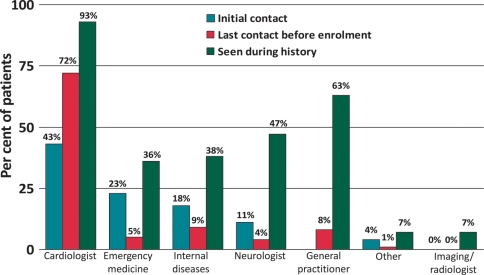
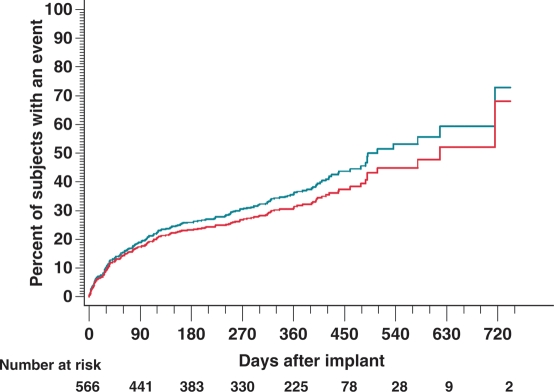
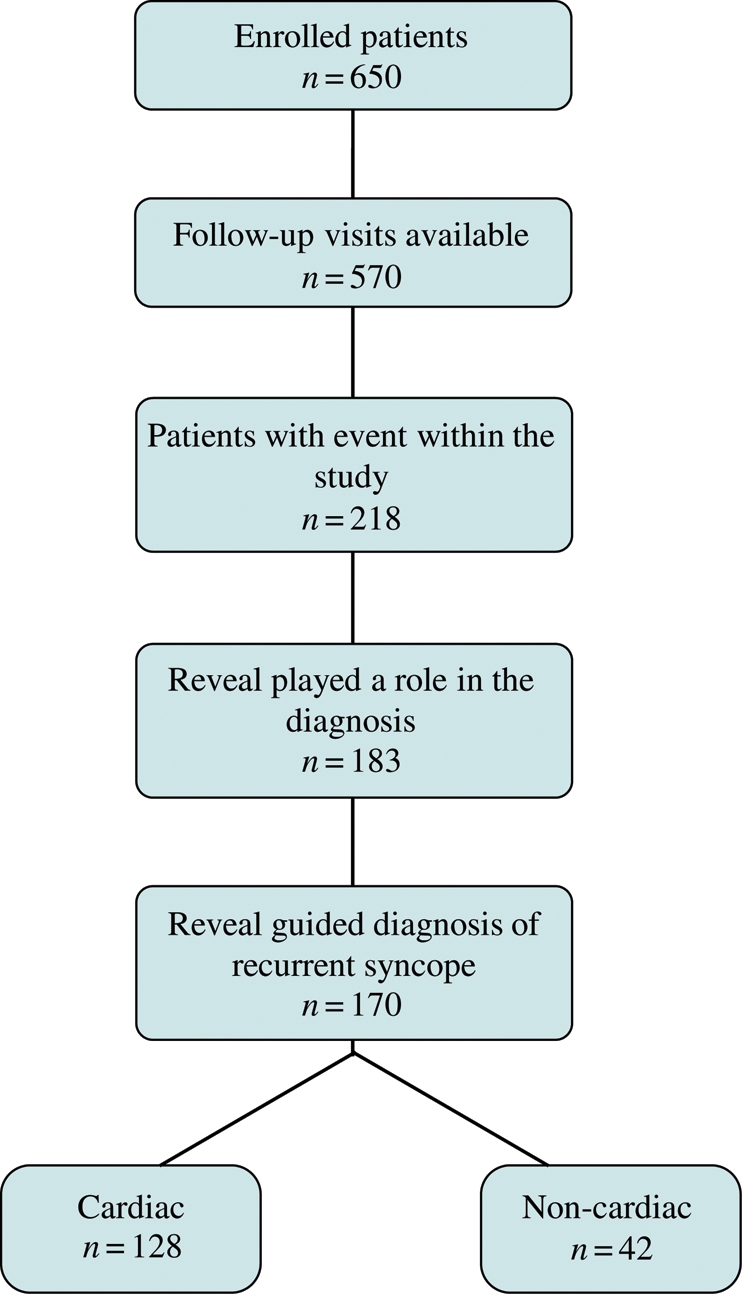
AIMS: To collect information on the use of the Reveal implantable loop recorder (ILR) in the patient care pathway and to investigate its effectiveness in the diagnosis of unexplained recurrent syncope in everyday clinical practice. METHODS AND RESULTS: Prospective, multicentre, observational study conducted in 2006-2009 in 10 European countries and Israel. Eligible patients had recurrent unexplained syncope or pre-syncope. Subjects received a Reveal Plus, DX or XT. Follow up was until the first recurrence of a syncopal event leading to a diagnosis or for ≥1 year. In the course of the study, patients were evaluated by an average of three different specialists for management of their syncope and underwent a median of 13 tests (range 9-20). Significant physical trauma had been experienced in association with a syncopal episode by 36% of patients. Average follow-up time after ILR implant was 10±6 months. Follow-up visit data were available for 570 subjects. The percentages of patients with recurrence of syncope were 19, 26, and 36% after 3, 6, and 12 months, respectively. Of 218 events within the study, ILR-guided diagnosis was obtained in 170 cases (78%), of which 128 (75%) were cardiac. CONCLUSION: A large number of diagnostic tests were undertaken in patients with unexplained syncope without providing conclusive data. In contrast, the ILR revealed or contributed to establishing the mechanism of syncope in the vast majority of patients. The findings support the recommendation in current guidelines that an ILR should be implanted early rather than late in the evaluation of unexplained syncope.
Overview
CoChat Summary
TL;DR
PICTURE was a prospective, multicentre observational registry of 570 analyzed patients with recurrent unexplained syncope or pre-syncope who received an implantable loop recorder (ILR) and were followed for about 10 months on average. The ILR revealed or contributed to the diagnosis in 78% of recorded events, supporting earlier ILR use in the syncope work-up.
Key findings
- Of 650 enrolled subjects, 570 had follow-up data and were included in the analyzed population; average follow-up after ILR implant was 10 ± 6 months.
- Patients saw an average of 3 different specialists and underwent a median of 13 tests per patient before ILR implantation; the median number of tests was 13 (IQ range 9–20).
- During follow-up, 218 patients (38%) had recurrent syncope; recurrence occurred in 19%, 26%, and 36% by 3, 6, and 12 months, respectively.
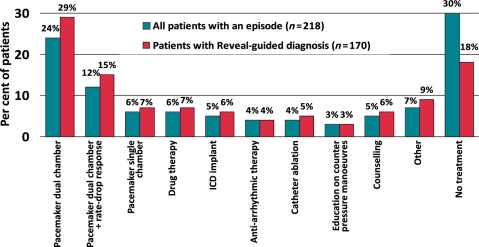
- Of 218 events, an ILR-guided diagnosis was obtained in 170 cases (78%); of these, 128 (75%) were cardiac. Reveal-guided diagnosis led to pacemaker implantation in 86 patients, 51% of diagnosed cases.
Methods
- Prospective, multicentre, observational post-marketing registry conducted from November 2006 to October 2009 in 11 countries; 71 sites enrolled patients.
- Eligible patients had recurrent unexplained syncope or pre-syncope; all enrolled subjects received a Reveal Plus, DX, or XT ILR and were followed until first diagnostic recurrence or at least 1 year.
- Analysis was descriptive, with Kaplan–Meier time-to-event curves; diagnostic yield was defined as a Reveal-guided diagnosis in which the ILR played a major role in determining the cause of syncope.
Limitations
- The paper states that PICTURE was an observational registry, so results should be interpreted accordingly.
- The paper states that 12% of implanted patients did not have follow-up visit data.
- The text makes evident that follow-up was variable and some analyses excluded patients with missing implant or follow-up dates; this may affect completeness of time-to-event estimates.
Model-written summary. Check it against the paper before relying on it.
Integrity signals
Registry
Cites
Statistics
Figures
Verification
Claims the paper makes
5 Valid · 2 Not valid · 6 Not checked · 76 Own results and interpretations
The sources with a verdict support this claim; the rest weren’t checked yet, have no full text we could read, or their verdicts aren’t rated yet.
In the paper
“The population in PICTURE was slightly younger and healthier than those in other syncope studies such as EaSyAS,12 EGSYS 2,13 and ISSUE 2.14”
§ Use of an implantable loop recorder to increase the diagnostic yield in unexplained syncope: results from the PICTURE registry > Discussion
What the sources say
- Supportedcites [12] Farwell DJ Freemantle N Sulke AN Use of implantable loop recorders in the diagnosis and management of syncope Eur Heart J 2004 25 1257 63 15246645 source
Citation 13 identifies EGSYS 2 as one of the studies used for comparison, rather than supplying the entire comparison with PICTURE. The Appendix (p. 7) identifies this paper as the EGSYS-2 study, and its patient-characteristics table (p. 3) describes the population. (LLM, conf=0.92)
- Not checked yetcites [13] Brignole M Menozzi C Bartoletti A Giada F Lagi A Ungar A A new management of syncope: prospective systematic guideline-based evaluation of patients referred urgently to general hospitals Eur Heart J 2006 27 76 82 16272210 source
Checked before — its earlier verdict is held back until a new check runs.
- Not checked — no full text of the sourcecites [14] Brignole M Sutton R Menozzi C Garcia-Civera R Moya A Wieling W International Study on Syncope of Uncertain Etiology 2 (ISSUE 2) Group Early application of an implantable loop recorder allows effective specific therapy in patients with recurrent suspected neurally mediated syncope Eur Heart J 2006 27 1085 92 16569653 source
plain- Asserted: passes — The authors put it forward as true.
- Checkable: passes — It can be checked against evidence.
- Load-bearing: unclear — It is unclear whether the paper’s conclusions depend on it.
- Based: passes — The paper gives a reason why it holds.
- Supported
The cited sources that could be checked couldn’t confirm or dispute this claim.
In the paper
“In comparison with these and other reports,15 the incidence of severe trauma was high in PICTURE, particularly considering that the first syncope occurred only a few years before the implant.”
§ Use of an implantable loop recorder to increase the diagnostic yield in unexplained syncope: results from the PICTURE registry > Discussion
What the sources say
- Could not verifycites [15] Bartoletti A Fabiani P Bagnoli L Cappelletti C Cappellini M Nappini G Physical injuries caused by a transient loss of consciousness: main clinical characteristics of patients and diagnostic contribution of carotid sinus massage Eur Heart J 2008 29 618 24 18086659 sourceExperimental — accuracy not yet measured
The citing sentence uses this source (reference 15) as one of the 'other reports' supplying a comparator incidence of severe trauma in syncope patients. Our full-text copy of Farwell & Sulke (Heart 2004;90:52) reports diagnostic yields, investigation rates, costs, one-year mortality (18-33% for cardiac syncope) and quality of life, but contains no incidence of severe trauma or injury in its 421/660 patient cohorts; the word 'trauma' appears only in the Methods 'Phase 2' definition of neurological syncope ('focal neurological signs such as epilepsy, cerebrovascular accident, trauma, and neoplasia'). Searches for 'severe trauma', 'injury', 'fracture', 'complication rate' and 'trauma' returned no outcome data, so the comparative trauma figure the claim attributes to this paper cannot be checked against our copy (neither supported nor contradicted). (LLM, conf=0.70)
plain- Asserted: passes — The authors put it forward as true.
- Checkable: passes — It can be checked against evidence.
- Load-bearing: unclear — It is unclear whether the paper’s conclusions depend on it.
- Based: passes — The paper gives a reason why it holds.
- Could not verify
A result the paper reports from its own data — it cites no other source for it, so there is none to check. The quote shows it is in the paper.
In the paper
“Reveal-guided diagnosis led to pacemaker implants in 86 patients, 51% of diagnosed cases.”
§ Use of an implantable loop recorder to increase the diagnostic yield in unexplained syncope: results from the PICTURE registry > Results > Specific treatment based on diagnosis made by ILR
plainstates a causen = 86- Asserted: passes — The authors put it forward as true.
- Checkable: passes — It can be checked against evidence.
- Load-bearing: unclear — It is unclear whether the paper’s conclusions depend on it.
- Based: passes — The paper gives a reason why it holds.
A result the paper reports from its own data — it cites no other source for it, so there is none to check. The quote shows it is in the paper.
In the paper
“Of 218 events within the study, ILR-guided diagnosis was obtained in 170 cases (78%), of which 128 (75%) were cardiac.”
- Also stated in: § Specific treatment based on diagnosis made by ILR · plain
“Of the 170 Reveal-guided diagnoses, 75%, or 128 cases, were cardiac.”
§ Use of an implantable loop recorder to increase the diagnostic yield in unexplained syncope: results from the PICTURE registry > Abstract > Methods and results
plainn = 170- Asserted: passes — The authors put it forward as true.
- Checkable: passes — It can be checked against evidence.
- Load-bearing: passes — The paper’s conclusions depend on it.
- Based: passes — The paper gives a reason why it holds.
- Also stated in: § Specific treatment based on diagnosis made by ILR · plain
A result the paper reports from its own data — it cites no other source for it, so there is none to check. The quote shows it is in the paper.
In the paper
“There were no ICD implants or catheter ablations in these patients.”
§ Use of an implantable loop recorder to increase the diagnostic yield in unexplained syncope: results from the PICTURE registry > Results > Specific treatment based on diagnosis made by ILR
plainn = 48- Asserted: passes — The authors put it forward as true.
- Checkable: passes — It can be checked against evidence.
- Load-bearing: unclear — It is unclear whether the paper’s conclusions depend on it.
- Based: passes — The paper gives a reason why it holds.
19 more claims
Create a free account to see all 89 claims and to verify the 5 references still open.
- Probably not a substantial claim. 52
- It may state two separate claims as one. 30
Claims other papers make about this one
Each is checked against this paper’s own text: does it say what the citing paper says it does?
The source backs part of the claim, not all of it — or backs it for a different population, condition or comparison.
In the citing paper
“Hence, the ILR provided a high diagnostic yield in terms of cardiac arrhythmias in patients with syncope, not restricted to arrhythmias directly related to syncope [12,13,14,15,17,19,35,36] but including other diagnoses with therapeutic implications such as atrial fibrillation.”
From Diagnostic Yield and Clinical Implications of Implantable Loop Recorders in Patients with Syncope in Germany: A National Database Analysis (2024) · cites this paper as [13]
Experimental — accuracy not yet measuredThe source backs part of the claim, not all of it — or backs it for a different population, condition or comparison.
In the citing paper
“with a shorter time to diagnosis, more frequent treatment initiation, and a positive impact on survival compared to a conventional diagnostic workup [13,17,19].”
From Diagnostic Yield and Clinical Implications of Implantable Loop Recorders in Patients with Syncope in Germany: A National Database Analysis (2024) · cites this paper as [13]
Experimental — accuracy not yet measuredThe source backs part of the claim, not all of it — or backs it for a different population, condition or comparison.
In the citing paper
“Similar findings were subsequently observed with ILR use expanded in an early phase of evaluation in patients with recurrent syncope of uncertain origin, in the absence of highrisk criteria and structural heart disease, 176,180-183 and in suspected reflex syncope. 184-186 In particular, an asystolic pause was present during syncope in about 50% of these patients.”
From 2018 ESC Guidelines for the diagnosis and management of syncope (2018) · cites this paper as [182]
Experimental — accuracy not yet measuredThe cited source says what the claim attributes to it.
In the citing paper
“Next to noninvasive monitoring strategies, implantable loop recorders (ILR) are used to confirm the etiology of syncope [2,12,13,14,15,16,17,18]”
From Diagnostic Yield and Clinical Implications of Implantable Loop Recorders in Patients with Syncope in Germany: A National Database Analysis (2024) · cites this paper as [13]
The cited source says what the claim attributes to it.
In the citing paper
“its clinical usefulness to confirm the diagnosis in patients with syncope of unknown cause has been well established [2], [3], [4], [5], [6].”
From Ambulatory electrocardiogram monitoring devices for evaluating transient loss of consciousness or other related symptoms (2017) · cites this paper as [2]
Citations
Cites
Ethical principles for medical research involving human subjects
(2003) · Manual for Research Ethics Committees · doi:10.1017/cbo9780511550089.027 · Cited by 2,585
Gandevia, B., & Tovell, A. (1964) · PubMed · Cited by 2,069
Developed in collaboration with, European Heart Rhythm Association (EHRA), Heart Failure Association (HFA), and Heart Rhythm Society (HRS), societies, E. B. T. F., European Society of Emergency Medicine (EuSEM), European Federation of Internal Medicine (EFIM), European Union Geriatric Medicine Society (EUGMS), American Geriatrics Society (AGS), European Neurological Society (ENS), et al. (2009) · European Heart Journal · doi:10.1093/eurheartj/ehp298 · Cited by 2,040
Incidence and Prognosis of Syncope
Soteriades, E. S., Evans, J. C., Larson, M. G., Chen, M. H., Chen, L., Benjamin, E. J., & Levy, D. (2002) · New England Journal of Medicine · doi:10.1056/nejmoa012407 · Cited by 1,364 · cited 1×
“Syncope is common in the general population(1,2) and is perceived as an important clinical problem with adverse outcomes from associated physical trauma, negative impact on quality of life, and an increased cardiovascular risk in many patients.(2) –5 The first European Society of Cardiology (ESC) guidelines for diagno…”
BackgroundGuidelines on management (diagnosis and treatment) of syncope
Brignole, M. (2001) · European Heart Journal · doi:10.1053/euhj.2001.2739 · Cited by 951
Guidelines on Management (diagnosis and treatment) of syncope ? update 2004
(2004) · Europace · doi:10.1016/j.eupc.2004.08.008 · Cited by 652
Guidelines on management (diagnosis and treatment) of syncope-update 2004. Executive Summary.
Brignole, M., Alboni, P., Benditt, D. G., Bergfeldt, L., Blanc, J., Thomsen, P. E. B., van Dijk, J. G., Fitzpatrick, A. P., Hohnloser, S. H., Janoušek, J., et al. (2004) · European Heart Journal · doi:10.1016/j.ehj.2004.09.004 · Cited by 615
Misdiagnosis of epilepsy: many seizure-like attacks have a cardiovascular cause
Zaidi, A., Clough, P., Cooper, P., Scheepers, B., & Fitzpatrick, A. P. (2000) · Journal of the American College of Cardiology · doi:10.1016/s0735-1097(00)00700-2 · Cited by 422
Brignole, M., Sutton, R., Menozzi, C., Garcia-Civera, R., Moya, A., Wieling, W., Andresen, D., Benditt, D. G., & Vardas, P. (2006) · European Heart Journal · doi:10.1093/eurheartj/ehi842 · Cited by 376
Indications for the use of diagnostic implantable and external ECG loop recorders
Task Force members, Brignole, M., Vardas, P., Hoffman, E., Huikuri, H., Moya, A., Ricci, R., Sulke, N., Wieling, W., EHRA Scientific Documents Committee, et al. (2009) · Europace · doi:10.1093/europace/eup097 · Cited by 362
Research works printed but not linked: 1
- Task Force on Syncope, European Society of Cardiol, 2001, European Heart Journal, 22, 1256, 10.1053/euhj.2001.2739 · DOI · Paper page
Cited by
Items 201–247 of 247
Long‐Term Insertable Loop Monitors: How Much Should We Watch to Get an Answer (Diagnosis)?
KIM, M. H. (2011) · Journal of Cardiovascular Electrophysiology · doi:10.1111/j.1540-8167.2011.02158.x
Duque, M., de la Ossa, M., Díaz, J. C., Marín, J. E., Duque, L., Velásquez, J. E., Aristizábal, J. M., Vassão, L. F., & Uribe, W. (2015) · Revista Colombiana de Cardiología · doi:10.1016/j.rccar.2015.07.012
An update on the use of implantable loop recorders
Gilmore, M., & Anderson, M. (2016) · British Journal of Cardiac Nursing · doi:10.12968/bjca.2016.11.1.21
Management del paziente con cefalea, vertigine e sincope: dalle evidenze alla pratica clinica
Gnerre, P., Attardo, T. M., & Giovani, A. N. D. G. F. (2016) · Italian Journal of Medicine · doi:10.4081/itjm.q.2016.2
Value of Ambulatory Electrocardiogra phic Monitoring in Syncope
Giada, F., & Bartoletti, A. (2013)
Implantierbare Loop-Rekorder in der Synkopendiagnostik
Kaess, B. M., & Ehrlich, J. R. (2016) · Herzschrittmachertherapie + Elektrophysiologie · doi:10.1007/s00399-016-0476-9
Korantzopoulos, P. G., Ntalas, I. V., Papafaklis, M. I., & Goudevenos, J. A. (2016) · Continuing Cardiology Education · doi:10.1002/cce2.40
“More importantly, patients who have an ILR after a prolonged and extensive diagnostic workup have a greater risk for hospitalization or injury compared to patients who receive an ILR early after a basic initial workup [2].”
BackgroundNouvelles techniques de stimulation dans le domaine des cardiopathies congénitales
Bloa, M. L., & Thambo, J. (2017) · La Presse Médicale · doi:10.1016/j.lpm.2017.05.015
Der „insertierbare“ Herzmonitor – Schritt für Schritt
Lewalter, T., Koutsouraki, I., & Brodherr, T. (2018) · Kardiologie up2date · doi:10.1055/a-0519-0231
“Europace 2014; 16: 1226–1230 [4] Edvardsson N, Frykman V, van Mechelen R et al.”
BackgroundInfluentialSyncope in the Very Elderly: Diagnosis and Treatment
Kanagaratnam, L. B., & Nagaratnam, N. (2018) · Springer eBooks · doi:10.1007/978-3-319-96998-5_29
张, 雁. (2019) · Advances in Clinical Medicine · doi:10.12677/acm.2019.911196
Krahn, A. D., Yee, R. K., Skanes, A. C., & Klein, G. J. (2013) · Elsevier eBooks · doi:10.1016/b978-1-4557-2856-5.00064-9
Dong, Y., Yang, M., Zhang, R., Li, G., Li, D., Yin, X., Gao, L., & Xia, Y. (2019) · International Journal of Heart Rhythm · doi:10.4103/ijhr.ijhr_5_20
Value of a Novel 7-Day Patch Electrocardiography on Monitoring Cardiac Arrhythmias
Zhang, X., Zhao, Y., Yan, J., Chen, X., Xiong, Y., Zheng, P. P., Xing, J., Chen, D., Weng, J., Zhang, W., et al. (2020)
The Economic Impact of Syncope: Direct and Indirect Costs
Narichania, A. D., & Hamdan, M. H. (2020) · Springer eBooks · doi:10.1007/978-3-030-44507-2_4 · Cited by 1
Syncope Unit Plays Important Role in Reducing Syncope Reoccurrence
Nakayama, Y., Furukawa, T., Kasagawa, A., Takagi, Y., Yamada, M., Takano, M., Nakajima, I., Miyazaki, H., Harada, T., & Akashi, Y. J. (2019) · doi:10.34363/jocp.49.1_23
Falsing, M. M., Brainin, P., Andersen, D. M., Larroudé, C. E., Lindhardt, T. B., Ravnkilde, K., Modin, D., Karsum, E. H., Gislason, G., & Biering‐Sørensen, T. (2021) · Echocardiography · doi:10.1111/echo.15085
Registador de eventos implantável - o seu papel na nossa prática clínica
Penteado, R. T. C. (2014) · Portuguese National Funding Agency for Science, Research and Technology (RCAAP Project by FCT) · doi:10.34626/wqbe-8j72
Hanna, E. B. (2022) · Wiley eBooks · doi:10.1002/9781119832737.ch26
Fröhlig, G. (2014) · Springer eBooks · doi:10.1007/978-3-642-54676-1_486-1
Swale, M., Paul, V., Delacroix, S., Young, G. D., McSpadden, L. C., Ryu, K., Fiore, D. D., Santos, C., Tan, I., Conradie, A., et al. (2022) · Research Square · doi:10.21203/rs.3.rs-1231397/v1
Parallel lines in the left breast - implantable device
Baratelli, G. (2019) · Radiopaedia.org · doi:10.53347/rid-72397
Evaluación económica del Holter implantable para el diagnóstico de síncope en España
Baena, I. G., García, F. J., Abad, R. N., Sánchez, B. M., & Barrios, J. M. R. (2012) · PharmacoEconomics Spanish Research Articles · doi:10.1007/bf03320876
Hanna, E. B. (2017) · Wiley eBooks · doi:10.1002/9781119233503.ch26
Sport und Herzrhythmusstörungen
Müssigbrodt, A. (2023) · Springer eBooks · doi:10.1007/978-3-662-65165-0_25
A loop recorder helye a syncope diagnosztikájában – centrumunk tapasztalatai
Harmati, G., Kovács, D., Kelemen, B., Faluközy, J., & Veress, G. (2023) · Cardiologia Hungarica · doi:10.26430/chungarica.2023.53.3.234
“Az ILR-implantációra történt késői referálást számos megelőző tanulmány és a jelen vizsgálatunk is alátámasztotta (8).”
InfluentialAdrian-Lancelle, M., & Trinh-Duc, A. (2023) · EMC - Urgenze · doi:10.1016/s1286-9341(23)47925-2
Chaouki, A. S., & Guerrier, K. (2023) · Springer eBooks · doi:10.1007/978-3-030-42937-9_37-1
Kawatani, Y., & Hori, T. (2023) · Annals of Noninvasive Electrocardiology · doi:10.1111/anec.13102
Usefulness of last generation insertable cardiac monitors in the diagnosis of unexplained syncope
Arabia, G., Colangelo, M., Borrello, F., Curnis, A., Ciconte, V. A., & Arabia, F. (2024) · International Journal of Cardiology · doi:10.1016/j.ijcard.2024.132301 · Cited by 1
Chaouki, A. S., & Guerrier, K. (2024) · Springer eBooks · doi:10.1007/978-3-031-07563-6_37
Katano, K., Sato, Y., Mizumura, T., Arai, S., & Sugimura, Y. (2025) · Cureus · doi:10.7759/cureus.80444
“%) patients [7].”
Application of insertable cardiac monitors in the real world: an observational cohort study in China
Di, B., Liang, L., Yang, W., Zhang, N., Liu, X., Peng, H., & Sun, Z. (2025) · BMC Cardiovascular Disorders · doi:10.1186/s12872-025-04707-7
“%) by ICM monitoring for US is higher than those obtained in the PICTURE study (28%)[15] and the Spanish Reveal Registry study (30.9%)[16].”
InfluentialThe diagnostic value of the syncope-to-ILR interval on syncope etiology
Katano, K., Asano, Y., Osada, K., Miyabe, A., Shakya, S., Ishihara, R., Tosaka, A., Ito, Y., Sato, Y., Maeda, M., et al. (2025) · Heart and Vessels · doi:10.1007/s00380-025-02607-6
反射性失神の診断:—ヘッドアップチルト試験 (HUT) と植込み型ループレコーダー (ILR) の役割
小林, 洋. (2013) · 心臓 · doi:10.11281/shinzo.45.1355
Richards, M., Garner, J. B., Rogers, J., Mahajan, D., Ravikumar, V., Herrmann, K. L., Schwartz, T., Okeson, B. K., Kupfer, M. E., Stolen, C., et al. (2026) · Heart Rhythm O2 · doi:10.1016/j.hroo.2026.01.026 · Cited by 1
Castro, M., Calvo, L., Pinheiro, L., Tinoco, M. G., Garcia, B. L., Paredes, A. C., Alves, A., Rodrigues, B., Português, J., Ribeiro, S., et al. (2026) · European Heart Journal Open · doi:10.1093/ehjopen/oeag028
Plappert, C., Lacour, P., Parwani, A. S., Boldt, L., Baehr, F., Schöppenthau, D., Feuerstein, A., Wieland, L., Heil, E., Hohendanner, F., et al. (2026) · Journal of Clinical Medicine · doi:10.3390/jcm15051977
Electrocardiographic Monitoring and Wearables
Azab, M., & Cheung, C. C. (2026) · Elsevier eBooks · doi:10.1016/b978-0-443-15734-9.00058-3
Yılmaz, M. M., Karaarslan, O., & Kalçık, M. (2026) · Annals of Noninvasive Electrocardiology · doi:10.1111/anec.70199
“Previous registry data demonstrate that ICM use increases diagnostic yield in unexplained syncope, but these benefits are particularly evident in carefully selected patient populations rather than universally across all older adults with nondiagnostic initial evaluation (Edvardsson et al. 2011).”
Healthcare Utilization and Use of Implantable Cardiac Monitors in Syncope of Unknown Origin
Blasutti, S., Zhang, M., Ng, S., & Wilsmore, B. R. (2026) · Pacing and Clinical Electrophysiology · doi:10.1111/pace.70276
Haq, H., Gula, L., Moustafa, A. T., et al. (2026) · Canadian Journal of Cardiology · doi:10.1016/j.cjca.2026.06.030
Diagnostic Yield of Hospitalization for Emergency Department Patients With Syncope and Presyncope
Baugh, C. W., Winskill, C., Suh, E. H., Sacco, D. L., DeAngelis, J., Nishijima, D. K., Schimmel, J., Storrow, A. B., Wood, N. E., Weiss, R. E., et al. (2026) · Academic Emergency Medicine · doi:10.1111/acem.70393
“For patients with concern for recurrent transient arrhythmias, prolonged outpatient monitoring with patch-based or implantable loop recorders may provide a diagnostic yield comparable to hospitalization while avoiding the iatrogenic risks and costs of admission [32].”
Immediate Ambulatory Electrocardiographic Monitoring in Syncope
Reed, M. J., Goodacre, S. W., Weir, C. J., Dinsmore, L., Nugent, A., Kennel, T., Lang, C., Grubb, N. R., Thokala, P., Kilcoyne, K., et al. (2026) · New England Journal of Medicine · doi:10.1056/nejmoa2605812 · Cited by 1
Greenberg, S. J., Lakkireddy, D., Shanker, A., et al. (2026) · Heart Rhythm · doi:10.1016/j.hrthm.2026.08.046
Stellenwert diagnostischer Methoden in der Synkopenabklärung
Strotmann, C., Rüb, N., & Wolpert, C. (2011) · Herzschrittmachertherapie + Elektrophysiologie · doi:10.1007/s00399-011-0129-y
Metadata
- Authors
- Edvardsson, N., Frykman, V., van Mechelen, R., Mitro, P., Mohii-Oskarsson, A., Pasquie, J.-L., Ramanna, H., Schwertfeger, F., Ventura, R., Voulgaraki, D., Garutti, C., Stolt, P., Linker, N. J., on behalf of the PICTURE Study Investigators, Ait Said, M., Amman, P., Aronsson, T., Bauer, A., Benzer, W., Bernat, V., Bocker, D., Brandes, A., Breuls, P., Buffler, S., Ebert, H., Ebrahimi, A., Eschen, O., Fahraeus, T., Falck, G., Fehske, W., Frank, R., Frykman, V., Gadler, F., Gehling, G., Geist, M., Gunther, J., Gutmann, M., Hartog, H., Hartog, H., Jensen, S., Kainz, W., Kautzner, J., Kiowski, W., Kjellman, B., Klomps, H., Krappinger, H., Lercher, P., Lindstrom, J., Lukat, M., Machacova, Z., Magnusson, C., Maru, F., Melichercik, J., Militianu, A., Minarik Nemocnice, T., Mitro, P., Mohii-Oskarsson, A., Molgaard, H., Nimeth, C., Nordt, T., Novak, M., Nyman, K., Pasquie, J. L., Plomp, J., Podczeck-Schweighofer, A., Ramanna, H., Rigollaud, J. M., Rorsman, C., Rotzer, A., Salo, T., Samnieh, N., Schwertfeger, F., Strupp, G., Sunthorn, H., Trinks, S., van Gelder, I. C., van Mechelen, R., Ventura, R., Vester, E., Viskin, S., Visman, P., Vlasinova, J., Westbom, I., Winkler, W. B., & Woltmann, J.
- Affiliations
- Sahlgrenska University Hospital (SE)
- Medtronic (Netherlands) (NL)
- James Cook University Hospital (GB)
- Medisch Centrum Haaglanden (NL)
- Karolinska Institutet (SE)
- Hôpital Arnaud de Villeneuve (FR)
- Sint Franciscus Gasthuis (NL)
- Klinikum Links der Weser (DE)
- Corresponding author
- Edvardsson, N.
- ORCID
- Venue
- Europace
- Publisher
- Oxford University Press (OUP)
- Published
- 2010-11-19
- Volume
- 13
- Issue
- 2
- Pages
- 262-269
- ISSN
- 1099-5129 (ISSN-L)
- 1532-2092
- PMC
- PMC3024039
- OpenAlex
- W2113101314
- Cited by
- 250
- References
- 26
- Citations by year
- 2026: 11 · 2025: 9 · 2024: 15 · 2023: 14 · 2022: 10 · 2021: 19 · 2020: 15 · 2019: 12 · 2018: 16 · 2017: 26 · 2016: 16 · 2015: 15 · 2014: 16 · 2013: 28 · 2012: 15
- FWCI
- 18.89
- Type
- journal article
- Language
- en
- Open access
- bronze
- doi.org
- Locations
- EP Europace (publishedVersion)
- PubMed Central (publishedVersion, cc-by-nc)
- PubMed (publishedVersion)
- University of Southern Denmark Research Portal (University of Southern Denmark) (submittedVersion)
- Topics
- Health Sciences › Medicine › Cardiology and Cardiovascular Medicine › Cardiovascular Syncope and Autonomic Disorders
- Health Sciences › Medicine › Cardiology and Cardiovascular Medicine › Cardiac electrophysiology and arrhythmias
- Health Sciences › Medicine › Cardiology and Cardiovascular Medicine › Heart Rate Variability and Autonomic Control
- Keywords
- implantable loop recorder, unexplained syncope, recurrent syncope, presyncope, diagnostic yield, cardiac syncope, syncope recurrence, early implantation, diagnostic workup
- MeSH terms
- Adult, Aged, Arrhythmias, Cardiac, Diagnostic Tests, Routine, Electrodes, Implanted, Europe, Female, Follow-Up Studies, Humans, Israel, Male, Middle Aged, Monitoring, Physiologic, Prospective Studies, Recurrence, Registries, Retrospective Studies, Syncope, Electrocardiography, Ambulatory, Practice Guidelines as Topic
About these checks
Registry, retraction, Cites and statistics results are computed, not judged, with one exception: a printed reference that no index lists is read once by a model before it counts as a citation error. Claims are extracted by a model and kept only when their quote appears verbatim in the text; each cited source is then checked, with a model’s help, for whether it says what the claim relies on. Those verdicts can be wrong — read the claim’s quote and the cited source before relying on one.
The claim verdicts this report counts are experimental: their accuracy is not yet measured.
A language model drew the claims from the paper on 2026-10-10, under version 3 of the claim definition (model deepseek-v4.1-flash, prompt extract-v3).
A second model labelled each claim on 2026-10-10 (model jev-1.13-20260917, definition revision gold-guideline-v0.2).
Cited sources are checked with a language model’s help (gpt-6-sol and qwen3.8-omni-flash).
Statistics and arithmetic are recomputed, not judged.
Confidence bands are shown only for fields calibrated on our annotated test set. None is calibrated yet, so no band is shown.
What counts as a claim ›How we measure confidence ›How we check this ›
Are you an author, or do you see a problem with this page? Request a review
Data sources
Bibliographic data: Semantic Scholar, OpenAlex, Crossref.
Contains information from the Semantic Scholar Academic Graph Datasets, made available under the ODC Attribution License (ODC-BY 1.0).
Semantic Scholar’s data is described in: Kinney, R., et al. (2023). The Semantic Scholar Open Data Platform. arXiv:2301.10140.
