

Use of an implantable loop recorder to increase the diagnostic yield in unexplained syncope: results from the PICTURE registry
Open accessThe DOI matches its Crossref record; 26 of the 26 references it cites were found in a registry or an index; 7 of the 21 sources its claims cite were checked for support.
Abstract
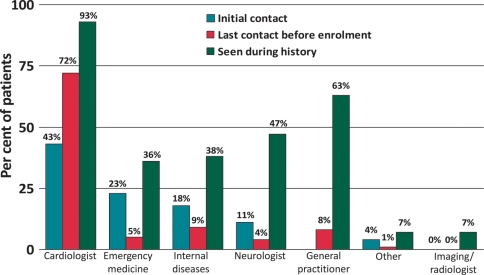
AIMS: To collect information on the use of the Reveal implantable loop recorder (ILR) in the patient care pathway and to investigate its effectiveness in the diagnosis of unexplained recurrent syncope in everyday clinical practice. METHODS AND RESULTS: Prospective, multicentre, observational study conducted in 2006-2009 in 10 European countries and Israel. Eligible patients had recurrent unexplained syncope or pre-syncope. Subjects received a Reveal Plus, DX or XT. Follow up was until the first recurrence of a syncopal event leading to a diagnosis or for ≥1 year. In the course of the study, patients were evaluated by an average of three different specialists for management of their syncope and underwent a median of 13 tests (range 9-20). Significant physical trauma had been experienced in association with a syncopal episode by 36% of patients. Average follow-up time after ILR implant was 10±6 months. Follow-up visit data were available for 570 subjects. The percentages of patients with recurrence of syncope were 19, 26, and 36% after 3, 6, and 12 months, respectively. Of 218 events within the study, ILR-guided diagnosis was obtained in 170 cases (78%), of which 128 (75%) were cardiac. CONCLUSION: A large number of diagnostic tests were undertaken in patients with unexplained syncope without providing conclusive data. In contrast, the ILR revealed or contributed to establishing the mechanism of syncope in the vast majority of patients. The findings support the recommendation in current guidelines that an ILR should be implanted early rather than late in the evaluation of unexplained syncope.
Overview
CoChat Summary
TL;DR
PICTURE was a prospective, multicentre observational registry of 570 analyzed patients with recurrent unexplained syncope or pre-syncope who received an implantable loop recorder (ILR) and were followed for about 10 months on average. The ILR revealed or contributed to the diagnosis in 78% of recorded events, supporting earlier ILR use in the syncope work-up.
Key findings
- Of 650 enrolled subjects, 570 had follow-up data and were included in the analyzed population; average follow-up after ILR implant was 10 ± 6 months.
- Patients saw an average of 3 different specialists and underwent a median of 13 tests per patient before ILR implantation; the median number of tests was 13 (IQ range 9–20).
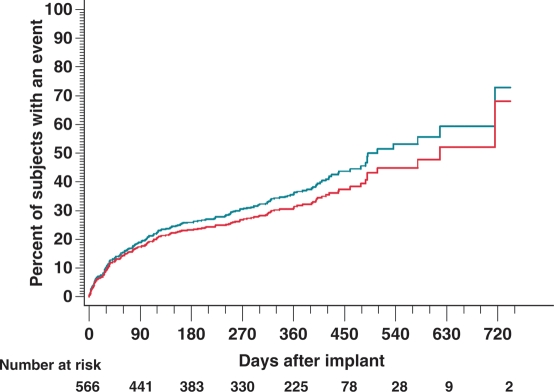
- During follow-up, 218 patients (38%) had recurrent syncope; recurrence occurred in 19%, 26%, and 36% by 3, 6, and 12 months, respectively.
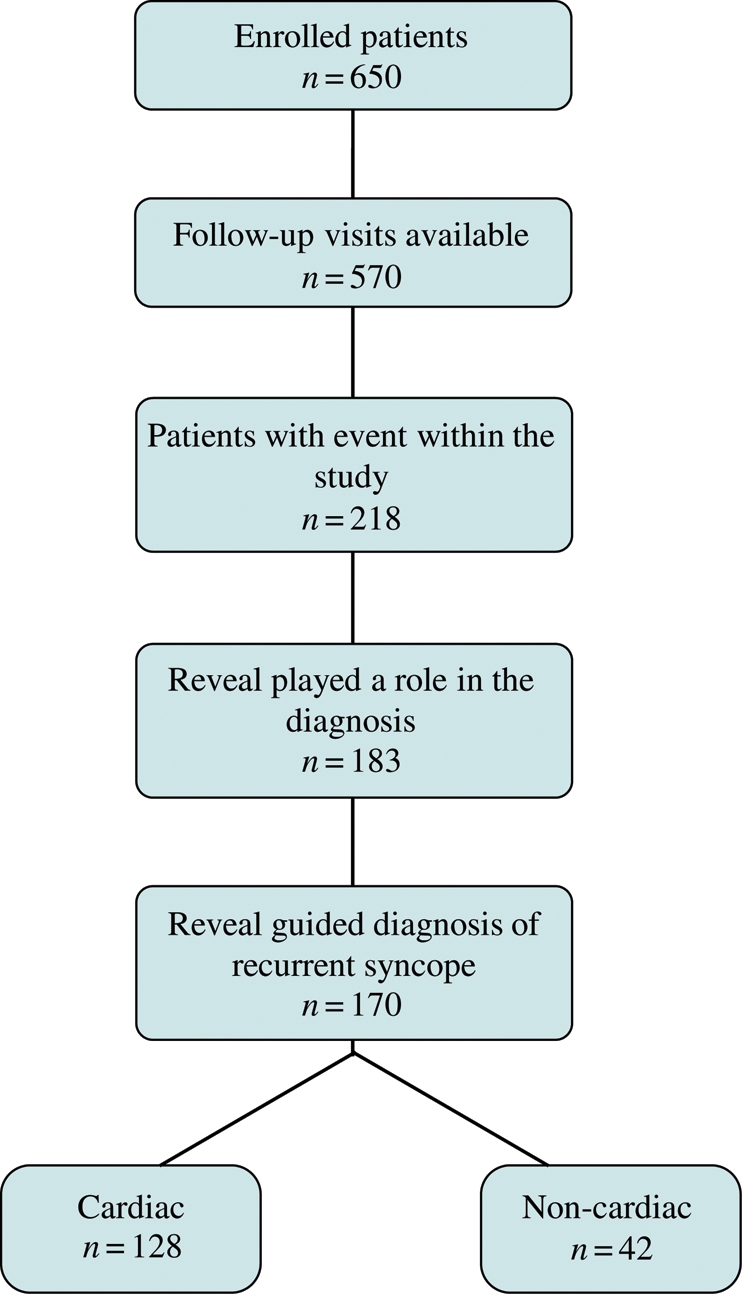
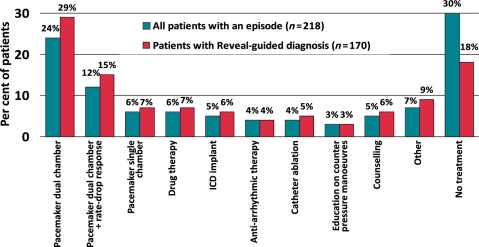
- Of 218 events, an ILR-guided diagnosis was obtained in 170 cases (78%); of these, 128 (75%) were cardiac. Reveal-guided diagnosis led to pacemaker implantation in 86 patients, 51% of diagnosed cases.
Methods
- Prospective, multicentre, observational post-marketing registry conducted from November 2006 to October 2009 in 11 countries; 71 sites enrolled patients.
- Eligible patients had recurrent unexplained syncope or pre-syncope; all enrolled subjects received a Reveal Plus, DX, or XT ILR and were followed until first diagnostic recurrence or at least 1 year.
- Analysis was descriptive, with Kaplan–Meier time-to-event curves; diagnostic yield was defined as a Reveal-guided diagnosis in which the ILR played a major role in determining the cause of syncope.
Limitations
- The paper states that PICTURE was an observational registry, so results should be interpreted accordingly.
- The paper states that 12% of implanted patients did not have follow-up visit data.
- The text makes evident that follow-up was variable and some analyses excluded patients with missing implant or follow-up dates; this may affect completeness of time-to-event estimates.
Model-written summary. Check it against the paper before relying on it.
Integrity signals
Registry
Cites
Statistics
Figures
Verification
Claims the paper makes
5 Valid · 2 Not valid · 6 Not checked · 76 Own results and interpretations
The sources with a verdict support this claim; the rest weren’t checked yet, have no full text we could read, or their verdicts aren’t rated yet.
In the paper
“The population in PICTURE was slightly younger and healthier than those in other syncope studies such as EaSyAS,12 EGSYS 2,13 and ISSUE 2.14”
§ Use of an implantable loop recorder to increase the diagnostic yield in unexplained syncope: results from the PICTURE registry > Discussion
What the sources say
- Supportedcites [12] Farwell DJ Freemantle N Sulke AN Use of implantable loop recorders in the diagnosis and management of syncope Eur Heart J 2004 25 1257 63 15246645 source
Citation 13 identifies EGSYS 2 as one of the studies used for comparison, rather than supplying the entire comparison with PICTURE. The Appendix (p. 7) identifies this paper as the EGSYS-2 study, and its patient-characteristics table (p. 3) describes the population. (LLM, conf=0.92)
- Not checked yetcites [13] Brignole M Menozzi C Bartoletti A Giada F Lagi A Ungar A A new management of syncope: prospective systematic guideline-based evaluation of patients referred urgently to general hospitals Eur Heart J 2006 27 76 82 16272210 source
Checked before — its earlier verdict is held back until a new check runs.
- Not checked — no full text of the sourcecites [14] Brignole M Sutton R Menozzi C Garcia-Civera R Moya A Wieling W International Study on Syncope of Uncertain Etiology 2 (ISSUE 2) Group Early application of an implantable loop recorder allows effective specific therapy in patients with recurrent suspected neurally mediated syncope Eur Heart J 2006 27 1085 92 16569653 source
plain- Asserted: passes — The authors put it forward as true.
- Checkable: passes — It can be checked against evidence.
- Load-bearing: unclear — It is unclear whether the paper’s conclusions depend on it.
- Based: passes — The paper gives a reason why it holds.
- Supported
The cited sources that could be checked couldn’t confirm or dispute this claim.
In the paper
“In comparison with these and other reports,15 the incidence of severe trauma was high in PICTURE, particularly considering that the first syncope occurred only a few years before the implant.”
§ Use of an implantable loop recorder to increase the diagnostic yield in unexplained syncope: results from the PICTURE registry > Discussion
What the sources say
- Could not verifycites [15] Bartoletti A Fabiani P Bagnoli L Cappelletti C Cappellini M Nappini G Physical injuries caused by a transient loss of consciousness: main clinical characteristics of patients and diagnostic contribution of carotid sinus massage Eur Heart J 2008 29 618 24 18086659 sourceExperimental — accuracy not yet measured
The citing sentence uses this source (reference 15) as one of the 'other reports' supplying a comparator incidence of severe trauma in syncope patients. Our full-text copy of Farwell & Sulke (Heart 2004;90:52) reports diagnostic yields, investigation rates, costs, one-year mortality (18-33% for cardiac syncope) and quality of life, but contains no incidence of severe trauma or injury in its 421/660 patient cohorts; the word 'trauma' appears only in the Methods 'Phase 2' definition of neurological syncope ('focal neurological signs such as epilepsy, cerebrovascular accident, trauma, and neoplasia'). Searches for 'severe trauma', 'injury', 'fracture', 'complication rate' and 'trauma' returned no outcome data, so the comparative trauma figure the claim attributes to this paper cannot be checked against our copy (neither supported nor contradicted). (LLM, conf=0.70)
plain- Asserted: passes — The authors put it forward as true.
- Checkable: passes — It can be checked against evidence.
- Load-bearing: unclear — It is unclear whether the paper’s conclusions depend on it.
- Based: passes — The paper gives a reason why it holds.
- Could not verify
A result the paper reports from its own data — it cites no other source for it, so there is none to check. The quote shows it is in the paper.
In the paper
“Reveal-guided diagnosis led to pacemaker implants in 86 patients, 51% of diagnosed cases.”
§ Use of an implantable loop recorder to increase the diagnostic yield in unexplained syncope: results from the PICTURE registry > Results > Specific treatment based on diagnosis made by ILR
plainstates a causen = 86- Asserted: passes — The authors put it forward as true.
- Checkable: passes — It can be checked against evidence.
- Load-bearing: unclear — It is unclear whether the paper’s conclusions depend on it.
- Based: passes — The paper gives a reason why it holds.
A result the paper reports from its own data — it cites no other source for it, so there is none to check. The quote shows it is in the paper.
In the paper
“Of 218 events within the study, ILR-guided diagnosis was obtained in 170 cases (78%), of which 128 (75%) were cardiac.”
- Also stated in: § Specific treatment based on diagnosis made by ILR · plain
“Of the 170 Reveal-guided diagnoses, 75%, or 128 cases, were cardiac.”
§ Use of an implantable loop recorder to increase the diagnostic yield in unexplained syncope: results from the PICTURE registry > Abstract > Methods and results
plainn = 170- Asserted: passes — The authors put it forward as true.
- Checkable: passes — It can be checked against evidence.
- Load-bearing: passes — The paper’s conclusions depend on it.
- Based: passes — The paper gives a reason why it holds.
- Also stated in: § Specific treatment based on diagnosis made by ILR · plain
A result the paper reports from its own data — it cites no other source for it, so there is none to check. The quote shows it is in the paper.
In the paper
“There were no ICD implants or catheter ablations in these patients.”
§ Use of an implantable loop recorder to increase the diagnostic yield in unexplained syncope: results from the PICTURE registry > Results > Specific treatment based on diagnosis made by ILR
plainn = 48- Asserted: passes — The authors put it forward as true.
- Checkable: passes — It can be checked against evidence.
- Load-bearing: unclear — It is unclear whether the paper’s conclusions depend on it.
- Based: passes — The paper gives a reason why it holds.
19 more claims
Create a free account to see all 89 claims and to verify the 5 references still open.
- Probably not a substantial claim. 52
- It may state two separate claims as one. 30
Claims other papers make about this one
Each is checked against this paper’s own text: does it say what the citing paper says it does?
The source backs part of the claim, not all of it — or backs it for a different population, condition or comparison.
In the citing paper
“Hence, the ILR provided a high diagnostic yield in terms of cardiac arrhythmias in patients with syncope, not restricted to arrhythmias directly related to syncope [12,13,14,15,17,19,35,36] but including other diagnoses with therapeutic implications such as atrial fibrillation.”
From Diagnostic Yield and Clinical Implications of Implantable Loop Recorders in Patients with Syncope in Germany: A National Database Analysis (2024) · cites this paper as [13]
Experimental — accuracy not yet measuredThe source backs part of the claim, not all of it — or backs it for a different population, condition or comparison.
In the citing paper
“with a shorter time to diagnosis, more frequent treatment initiation, and a positive impact on survival compared to a conventional diagnostic workup [13,17,19].”
From Diagnostic Yield and Clinical Implications of Implantable Loop Recorders in Patients with Syncope in Germany: A National Database Analysis (2024) · cites this paper as [13]
Experimental — accuracy not yet measuredThe source backs part of the claim, not all of it — or backs it for a different population, condition or comparison.
In the citing paper
“Similar findings were subsequently observed with ILR use expanded in an early phase of evaluation in patients with recurrent syncope of uncertain origin, in the absence of highrisk criteria and structural heart disease, 176,180-183 and in suspected reflex syncope. 184-186 In particular, an asystolic pause was present during syncope in about 50% of these patients.”
From 2018 ESC Guidelines for the diagnosis and management of syncope (2018) · cites this paper as [182]
Experimental — accuracy not yet measuredThe cited source says what the claim attributes to it.
In the citing paper
“Next to noninvasive monitoring strategies, implantable loop recorders (ILR) are used to confirm the etiology of syncope [2,12,13,14,15,16,17,18]”
From Diagnostic Yield and Clinical Implications of Implantable Loop Recorders in Patients with Syncope in Germany: A National Database Analysis (2024) · cites this paper as [13]
The cited source says what the claim attributes to it.
In the citing paper
“its clinical usefulness to confirm the diagnosis in patients with syncope of unknown cause has been well established [2], [3], [4], [5], [6].”
From Ambulatory electrocardiogram monitoring devices for evaluating transient loss of consciousness or other related symptoms (2017) · cites this paper as [2]
Citations
Cites
Ethical principles for medical research involving human subjects
(2003) · Manual for Research Ethics Committees · doi:10.1017/cbo9780511550089.027 · Cited by 2,585
Gandevia, B., & Tovell, A. (1964) · PubMed · Cited by 2,069
Developed in collaboration with, European Heart Rhythm Association (EHRA), Heart Failure Association (HFA), and Heart Rhythm Society (HRS), societies, E. B. T. F., European Society of Emergency Medicine (EuSEM), European Federation of Internal Medicine (EFIM), European Union Geriatric Medicine Society (EUGMS), American Geriatrics Society (AGS), European Neurological Society (ENS), et al. (2009) · European Heart Journal · doi:10.1093/eurheartj/ehp298 · Cited by 2,040
Incidence and Prognosis of Syncope
Soteriades, E. S., Evans, J. C., Larson, M. G., Chen, M. H., Chen, L., Benjamin, E. J., & Levy, D. (2002) · New England Journal of Medicine · doi:10.1056/nejmoa012407 · Cited by 1,364 · cited 1×
“Syncope is common in the general population(1,2) and is perceived as an important clinical problem with adverse outcomes from associated physical trauma, negative impact on quality of life, and an increased cardiovascular risk in many patients.(2) –5 The first European Society of Cardiology (ESC) guidelines for diagno…”
BackgroundGuidelines on management (diagnosis and treatment) of syncope
Brignole, M. (2001) · European Heart Journal · doi:10.1053/euhj.2001.2739 · Cited by 951
Guidelines on Management (diagnosis and treatment) of syncope ? update 2004
(2004) · Europace · doi:10.1016/j.eupc.2004.08.008 · Cited by 652
Guidelines on management (diagnosis and treatment) of syncope-update 2004. Executive Summary.
Brignole, M., Alboni, P., Benditt, D. G., Bergfeldt, L., Blanc, J., Thomsen, P. E. B., van Dijk, J. G., Fitzpatrick, A. P., Hohnloser, S. H., Janoušek, J., et al. (2004) · European Heart Journal · doi:10.1016/j.ehj.2004.09.004 · Cited by 615
Misdiagnosis of epilepsy: many seizure-like attacks have a cardiovascular cause
Zaidi, A., Clough, P., Cooper, P., Scheepers, B., & Fitzpatrick, A. P. (2000) · Journal of the American College of Cardiology · doi:10.1016/s0735-1097(00)00700-2 · Cited by 422
Brignole, M., Sutton, R., Menozzi, C., Garcia-Civera, R., Moya, A., Wieling, W., Andresen, D., Benditt, D. G., & Vardas, P. (2006) · European Heart Journal · doi:10.1093/eurheartj/ehi842 · Cited by 376
Indications for the use of diagnostic implantable and external ECG loop recorders
Task Force members, Brignole, M., Vardas, P., Hoffman, E., Huikuri, H., Moya, A., Ricci, R., Sulke, N., Wieling, W., EHRA Scientific Documents Committee, et al. (2009) · Europace · doi:10.1093/europace/eup097 · Cited by 362
Research works printed but not linked: 1
- Task Force on Syncope, European Society of Cardiol, 2001, European Heart Journal, 22, 1256, 10.1053/euhj.2001.2739 · DOI · Paper page
Cited by
2018 ESC Guidelines for the diagnosis and management of syncope
Brignole, M., Moya, A., de Lange, F. J., Deharo, J.-C., Elliott, P. M., Fanciulli, A., Fedorowski, A., Furlan, R., Kenny, R. A., Martín, A., et al. (2018) · European Heart Journal · doi:10.1093/eurheartj/ehy037 · Cited by 1,951
Self-citation2017 ACC/AHA/HRS Guideline for the Evaluation and Management of Patients With Syncope
Shen, W.-K., Sheldon, R. S., Benditt, D. G., Cohen, M. I., Forman, D. E., Goldberger, Z. D., Grubb, B. P., Hamdan, M. H., Krahn, A. D., Link, M. S., et al. (2017) · Heart Rhythm · doi:10.1016/j.hrthm.2017.03.004 · Cited by 478
“2011 21097478 (88) Study type: Multicenter prospective observational”
BackgroundShen, W.-K., Sheldon, R. S., Benditt, D. G., Cohen, M. I., Forman, D. E., Goldberger, Z. D., Grubb, B. P., Hamdan, M. H., Krahn, A. D., Link, M. S., et al. (2017) · Circulation · doi:10.1161/cir.0000000000000499 · Cited by 438
“2011 21097478 (88) Study type: Multicenter prospective observational”
BackgroundShen, W.-K., Sheldon, R. S., Benditt, D. G., Cohen, M. I., Forman, D. E., Goldberger, Z. D., Grubb, B. P., Hamdan, M. H., Krahn, A. D., Link, M. S., et al. (2017) · Circulation · doi:10.1161/cir.0000000000000498 · Cited by 407
2017 ACC/AHA/HRS Guideline for the Evaluation and Management of Patients With Syncope
Shen, W.-K., Sheldon, R. S., Benditt, D. G., Cohen, M. I., Forman, D. E., Goldberger, Z. D., Grubb, B. P., Hamdan, M. H., Krahn, A. D., Link, M. S., et al. (2017) · Journal of the American College of Cardiology · doi:10.1016/j.jacc.2017.03.003 · Cited by 327
JCS/JHRS 2019 Guideline on Non-Pharmacotherapy of Cardiac Arrhythmias
Nogami, A., Kurita, T., Abe, H., Ando, K., Ishikawa, T., Imai, K., Usui, A., Okishige, K., Kusano, K., Kumagai, K., et al. (2021) · Circulation Journal · doi:10.1253/circj.cj-20-0637 · Cited by 200
2013 ESC Guidelines on Cardiac Pacing and Cardiac Resynchronization Therapy
(2014) · Revista Española de Cardiología (English Edition) · doi:10.1016/j.rec.2013.11.003 · Cited by 196
Dubner, S., Auricchio, A., Steinberg, J. S., Vardas, P., Stone, P., Brugada, J., Piotrowicz, R., Hayes, D. L., Kirchhof, P., Breithardt, G., et al. (2012) · Europace · doi:10.1093/europace/eur303 · Cited by 179
JCS/JHRS 2019 guideline on non‐pharmacotherapy of cardiac arrhythmias
Nogami, A., Kurita, T., Abe, H., Ando, K., Ishikawa, T., Imai, K., Usui, A., Okishige, K., Kusano, K., Kumagai, K., et al. (2021) · Journal of Arrhythmia · doi:10.1002/joa3.12491 · Cited by 164
Shen, W.-K., Sheldon, R. S., Benditt, D. G., Cohen, M. I., Forman, D. E., Goldberger, Z. D., Grubb, B. P., Hamdan, M. H., Krahn, A. D., Link, M. S., et al. (2017) · Journal of the American College of Cardiology · doi:10.1016/j.jacc.2017.03.002 · Cited by 155
“IIa B-R To evaluate selected ambulatory patients with syncope of suspected arrhythmic etiology, an ICM can be useful (149,150,153,161-175).”
BackgroundSick sinus syndrome: a review.
Semelka, M., Gera, J., & Usman, S. (2013) · PubMed · Cited by 134
Kenny, R. A., Brignole, M., Dan, G.-A., Deharo, J. C., van Dijk, J. G., Doherty, C., Hamdan, M., Moya, A., Parry, S. W., Sutton, R., et al. (2015) · Europace · doi:10.1093/europace/euv115 · Cited by 125
Self-citationHolter Monitoring and Loop Recorders: From Research to Clinical Practice
Galli, A., Ambrosini, F., & Lombardi, F. (2016) · Arrhythmia & Electrophysiology Review · doi:10.15420/aer.2016.17.2 · Cited by 143
Implantable loop recorder in clinical practice
Bisignani, A., Bonis, S. D., Mancuso, L., Ceravolo, G., & Bisignani, G. (2018) · Journal of Arrhythmia · doi:10.1002/joa3.12142 · Cited by 128
Nielsen, J. C., Lin, Y., Figueiredo, M. J. D. O., Shamloo, A. S., Alfie, A., Bovéda, S., Dagres, N., Toro, D. D., Eckhardt, L. L., Ellenbogen, K. A., et al. (2020) · Journal of Arrhythmia · doi:10.1002/joa3.12338 · Cited by 109
Nielsen, J. C., Lin, Y.-J., de Oliveira Figueiredo, M. J., Sepehri Shamloo, A., Alfie, A., Boveda, S., Dagres, N., Di Toro, D., Eckhardt, L. L., Ellenbogen, K., et al. (2020) · EP Europace · doi:10.1093/europace/euaa065 · Cited by 98
Self-citationPodoleanu, C., DaCosta, A., Defaye, P., Taieb, J., Galley, D., Bru, P., Maury, P., Mabo, P., Boveda, S., Cellarier, G., et al. (2014) · Archives of Cardiovascular Diseases · doi:10.1016/j.acvd.2014.05.009 · Cited by 93
Locati, E. T., Moya, A., Oliveira, M., Tanner, H., Willems, R., Lunati, M., & Brignole, M. (2016) · Europace · doi:10.1093/europace/euv311 · Cited by 95
Saklani, P., Krahn, A., & Klein, G. (2013) · Circulation · doi:10.1161/circulationaha.112.138396 · Cited by 89
Current and Future Use of Insertable Cardiac Monitors
Giancaterino, S., Lupercio, F. A., Nishimura, M., & Hsu, J. C. (2018) · JACC. Clinical electrophysiology · doi:10.1016/j.jacep.2018.06.001 · Cited by 91
FURUKAWA, T., MAGGI, R., BERTOLONE, C., FONTANA, D., & BRIGNOLE, M. (2012) · Journal of Cardiovascular Electrophysiology · doi:10.1111/j.1540-8167.2011.02133.x · Cited by 77
New Concepts in the Assessment of Syncope
Brignole, M., & Hamdan, M. H. (2012) · Journal of the American College of Cardiology · doi:10.1016/j.jacc.2011.11.056 · Cited by 87
“Pooled data from 14 studies (8–21) including a total of 1,598 patients showed an average diagnostic yield of 32% over an observation period of 18 months and 43% (20), 49% (8), and approximately 50% (21) when the monitoring period was up to 2 years.”
BackgroundThe Reveal LINQ insertable cardiac monitor
Tomson, T. T., & Passman, R. (2015) · Expert Review of Medical Devices · doi:10.1586/17434440.2014.953059 · Cited by 72
“Studies suggest that the majority of patients with unexplained syncope may have a cardiac etiology [19].”
BackgroundMaines, M., Zorzi, A., Tomasi, G., Angheben, C., Catanzariti, D., Piffer, L., & Greco, M. D. (2017) · EP Europace · doi:10.1093/europace/eux187 · Cited by 71
JCS/JHRS 2022 Guideline on Diagnosis and Risk Assessment of Arrhythmia
Takase, B., Ikeda, T., Shimizu, W., Abe, H., Aiba, T., Chinushi, M., Koba, S., KUSANO, K. F., Niwano, S., Takahashi, N., et al. (2023) · Circulation Journal · doi:10.1253/circj.cj-22-0827 · Cited by 76
Ungar, A., Sgobino, P., Russo, V., Vitale, E., Sutton, R., Melissano, D., Beiras, X., Bottoni, N., Ebert, H. H., Gulizia, M., et al. (2013) · Heart · doi:10.1136/heartjnl-2013-304399 · Cited by 58
Self-citationLocati, E. T., Vecchi, A. M., Vargiu, S., Cattafi, G., & Lunati, M. (2014) · Europace · doi:10.1093/europace/eut337 · Cited by 53
“The recurrence rate for syncope was similar to that recently reported in the PICTUREregistry includingpatientswithunexplained syncope studied by ILR (19% at 3 months).(9) Thus, extended ELR and ILR (both with auto-trigger capability) had similar diagnostic yields, when considering the same time interval.”
ResultKubala, M., Aïssou, L., Traullé, S., Gugenheim, A.-L., & Js, H. (2011) · EP Europace · doi:10.1093/europace/eur319 · Cited by 57
“2006 392 33 Edvardsson et al.(7) 2010 570 19 26 36 Figure 1 Atrioventricular block during vasovagal syncope documented by internal loop recorder.”
BackgroundTwenty-five years of research on syncope
Fedorowski, A., Kułakowski, P., Brignole, M., de Lange, F. J., Kenny, R. A., Moya‐Mitjans, À., Rivasi, G., Sheldon, R. S., van Dijk, J. G., Sutton, R., et al. (2023) · EP Europace · doi:10.1093/europace/euad163 · Cited by 54
Dubner, S., Auricchio, A., Steinberg, J. S., Vardas, P., Stone, P., Brugada, J., Piotrowicz, R., Hayes, D. L., Kirchhof, P., Breithardt, G., et al. (2012) · Annals of Noninvasive Electrocardiology · doi:10.1111/j.1542-474x.2011.00484.x · Cited by 47
Brignole, M., Deharo, J. C., Menozzi, C., Moya, A., Sutton, R., Tomaino, M., & Ungar, A. (2018) · EP Europace · doi:10.1093/europace/eux321 · Cited by 39
“Age (years), mean (SD) 64 (10) 65 (13) 0.”
InfluentialCardiac Implantable Electronic Miniaturized and Micro Devices
Rav-Acha, M., Soifer, E., & Hasin, T. (2020) · Micromachines · doi:10.3390/mi11100902 · Cited by 55
“As of today, there are thousands of syncope and stroke patients who owe their accurate and, at times, life-saving diagnosis to these ILRs, after multiple previous 24 h Holters failed to diagnose their arrhythmias [73,74,78,85].”
BackgroundInfluentialPrognostic significance of ambulatory ECG monitoring for ventricular arrhythmias
Katritsis, D. G., Siontis, G. C. M., & Camm, A. J. (2013) · Progress in Cardiovascular Diseases · doi:10.1016/j.pcad.2013.07.005 · Cited by 44
Nielsen, J. C., Lin, Y., Figueiredo, M. J. D. O., Shamloo, A. S., Alfie, A., Bovéda, S., Dagres, N., Toro, D. D., Eckhardt, L. L., Ellenbogen, K. A., et al. (2020) · Heart Rhythm · doi:10.1016/j.hrthm.2020.05.004 · Cited by 44
Self-citationCarrington, M., Providencia, R. A., Chahal, C. A. A., Ricci, F., Epstein, A. E., Gallina, S., Fedorowski, A., Sutton, R., & Khanji, M. Y. (2022) · European Heart Journal Open · doi:10.1093/ehjopen/oeac072 · Cited by 56
Palmisano, P., Accogli, M., Zaccaria, M., Luzzi, G., Nacci, F., Anaclerio, M., & Favale, S. (2013) · International Journal of Cardiology · doi:10.1016/j.ijcard.2013.04.179 · Cited by 44
“The patient population of this study was very extensively investigated before receiving an ILR (specifically almost 90% of patients underwent invasive EPS, and a high rate of patients underwent expensive and time-consuming neurological investigations), and its results confirm the relative uselessness of these tests in…”
ResultLi, J., Liu, Y., Kim, E., March, J. C., Bentley, W. E., & Payne, G. F. (2016) · Free Radical Biology and Medicine · doi:10.1016/j.freeradbiomed.2016.12.029 · Cited by 40
“Applications for implantable electrode probes include electromyography [206], electroencephalography [207], electrocardiography [208] and sensors for measuring glucose [209], oxygen [210] and pH [211].”
Insertable cardiac monitors: current indications and devices
Sakhi, R., Theuns, D. A. M. J., Szili-Torok, T., & Yap, S.-C. (2019) · Expert Review of Medical Devices · doi:10.1080/17434440.2018.1557046 · Cited by 39
Karaoğuz, M. R., Yurtseven, E., Aslan, G., Deliormanlı, B. G., Adıgüzel, Ö., Gönen, M., Li, K.-M., & Yılmaz, E. N. (2019) · Journal of Electrocardiology · doi:10.1016/j.jelectrocard.2019.02.012 · Cited by 40
de Ruiter, S. C., Wold, J., Germans, T., RUITER, J. H., & Jansen, R. W. M. M. (2017) · EP Europace · doi:10.1093/europace/eux099 · Cited by 38
Reflex syncope: Diagnosis and treatment
Sutton, R. (2017) · Journal of Arrhythmia · doi:10.1016/j.joa.2017.03.007 · Cited by 38
“The clinical presentation is typically with a great number of syncope episodes, some of which may present as rather active syncope, for example, an almost active fall [30].”
BackgroundKohno, R., Abe, H., & Benditt, D. G. (2017) · Journal of Arrhythmia · doi:10.1016/j.joa.2017.04.012 · Cited by 35
Implantable loop recorders in the real world: a study of two Canadian centers
Ibrahim, O., Drew, D., Hayes, C. J., McIntyre, W. F., Seifer, C. M., Hopman, W. M., Glover, B. M., & Baranchuk, A. M. (2017) · Journal of Interventional Cardiac Electrophysiology · doi:10.1007/s10840-017-0294-y · Cited by 44
“Finally, these two studies were prospective, whereas ours was retrospective [6, 20].”
BackgroundMethodResultInfluentialShen, W.-K., Sheldon, R. S., Benditt, D. G., Cohen, M. I., Forman, D. E., Goldberger, Z. D., Grubb, B. P., Hamdan, M. H., Krahn, A. D., Link, M. S., et al. (2017) · Heart Rhythm · doi:10.1016/j.hrthm.2017.03.005 · Cited by 36
Lacunza-Ruiz, F. J., Moya-Mitjans, A., Martínez-Alday, J., Barón-Esquivias, G., Ruiz-Granell, R., Rivas-Gándara, N., González-Enríquez, S., Leal-del-Ojo, J., F. Arcocha-Torres, M., Pérez-Villacastín, J., et al. (2013) · Circulation Journal · doi:10.1253/circj.cj-13-0201 · Cited by 34
Key challenges in the current management of syncope
Sutton, R., Brignole, M., & Benditt, D. G. (2012) · Nature Reviews Cardiology · doi:10.1038/nrcardio.2012.102 · Cited by 33
Diagnostic and therapeutic value of implantable loop recorder: A tertiary care center experience
Padmanabhan, D., Kancharla, K., El‐Harasis, M. A., Isath, A. M., Makkar, N., Noseworthy, P. A., Friedman, P. A., Cha, Y., & Kapa, S. (2018) · Pacing and Clinical Electrophysiology · doi:10.1111/pace.13533 · Cited by 35
Sandhu, R. K., Tran, D. T., Sheldon, R. S., & Kaul, P. (2017) · JACC. Clinical electrophysiology · doi:10.1016/j.jacep.2017.09.003 · Cited by 37
“A prospective, multicenter, observational study found a median number of 13 tests were performed per patient with unexplained syncope and almost half had advanced imaging (33).”
BackgroundResultAtrial fibrillation in Brugada syndrome: Current perspectives
Vlachos, K. G., Mascia, G., Martin, C., Bazoukis, G., Frontera, A., Cheniti, G., Letsas, Κ. P., Efremidis, M., Georgopoulos, S., Gkalapis, C., et al. (2020) · Journal of Cardiovascular Electrophysiology · doi:10.1111/jce.14361 · Cited by 35
Current and Emerging Indications for Implantable Cardiac Monitors
Giada, F., Bertaglia, E., Reimers, B., Noventa, D., & Raviele, A. (2012) · Pacing and Clinical Electrophysiology · doi:10.1111/j.1540-8159.2012.03411.x · Cited by 39
SANDERS, N. A., JETTER, T. L., BRIGNOLE, M., & HAMDAN, M. H. (2013) · Pacing and Clinical Electrophysiology · doi:10.1111/pace.12033 · Cited by 29
Edvardsson, N., Wolff, C., Tsintzos, S., Rieger, G., & Linker, N. J. (2015) · Europace · doi:10.1093/europace/euu412 · Cited by 29
“In studies using an ILR in unexplained syncope, 80% of the diagnostic yield was based on arrhythmias, including both brady- and tachycardias, that needed very different subsequent treatments.(10,20) In contrast, the diagnostic yield using conventional diagnostic tests was only 12.”
BackgroundMethodResultSelf-citationComplexity of syncope in elderly people: a comprehensive geriatric approach
Wong, C. (2018) · Hong Kong Medical Journal · doi:10.12809/hkmj176945 · Cited by 52
Diederichsen, S. Z., Xing, L. Y., Frodi, D. M., Kongebro, E. K., Haugan, K., Graff, C., Højberg, S., Krieger, D. W., Brandes, A., Køber, L., et al. (2023) · JAMA Cardiology · doi:10.1001/jamacardio.2022.5526 · Cited by 28
Self-citationEdvardsson, N., Garutti, C., Rieger, G., Linker, N. J., & for the PICTURE Study Investigators (2014) · Clinical Cardiology · doi:10.1002/clc.22300 · Cited by 28
Self-citationAmbulatory ECG monitoring in the age of smartphones
Sanders, D. J., Ungar, L. D. J., Eskander, M., & Seto, A. H. (2019) · Cleveland Clinic Journal of Medicine · doi:10.3949/ccjm.86a.18123 · Cited by 29
Syncope in adults: Systematic review and proposal of a diagnostic and therapeutic algorithm
Rosanio, S., Schwarz, E. R., Ware, D. L., & Vitarelli, A. (2011) · International Journal of Cardiology · doi:10.1016/j.ijcard.2011.11.021 · Cited by 28
“Recently, the PICTURE registry (Place of reveal In the Care pathway and Treatment of patients with Unexplained REcurrent syncope), the largest observational study to date to evaluate the value of ILRs in everyday diagnostic work-up for syncope of unknown origin, provided two important findings 1) large number of tests…”
BackgroundValue of implantable loop recorders in patients with structural or electrical heart disease
Sakhi, R., Theuns, D. A. M. J., Bhagwandien, R. E., Michels, M., Schinkel, A. F. L., Szili‐Törok, T., Zijlstra, F., Roos‐Hesselink, J. W., & Yap, S. (2018) · Journal of Interventional Cardiac Electrophysiology · doi:10.1007/s10840-018-0354-y · Cited by 23
Martens, L., Goode, G., Wold, J., Beck, L., Martin, G., Perings, C. A., Stolt, P., & Baggerman, L. (2014) · PLoS ONE · doi:10.1371/journal.pone.0100208 · Cited by 31
“Methods: Five hospitals in four European countries took part.”
MethodInfluentialSelf-citationDagres, N., Bongiorni, M. G., Dobreanu, D., Madrid, A., Svendsen, J. H., Blomstrom-Lundqvist, C., & conducted by the Scientific Initiatives Committee, E. H. R. A. (2013) · Europace · doi:10.1093/europace/eut354 · Cited by 24
Ruwald, M. H., & Zaręba, W. (2013) · Progress in Cardiovascular Diseases · doi:10.1016/j.pcad.2013.08.007 · Cited by 23
Huemer, M., Becker, A., Wutzler, A., Attanasio, P., Parwani, A. S., Lacour, P., Boldt, L., Pieske, B. M., Haverkamp, W., & Blaschke, F. (2018) · Cardiology Journal · doi:10.5603/cj.a2018.0008 · Cited by 24
Linker, N. J., Voulgaraki, D., Garutti, C., Rieger, G., & Edvardsson, N. (2013) · International Journal of Cardiology · doi:10.1016/j.ijcard.2013.10.025 · Cited by 21
“The design, methods and main results of the observational, international, multicentre PICTURE (Place of Reveal In theCare pathway and Treatment of patientswithUnexplained Recurrent Syncope) registry [7] have been previously described.”
MethodSelf-citationRicci, F., Sutton, R., Palermi, S., Tana, C., Renda, G., Gallina, S., Melander, O., Caterina, R. D., & Fedorowski, A. (2018) · Journal of Cardiovascular Electrophysiology · doi:10.1111/jce.13715 · Cited by 21
“arrhythmia.(13) Although the ICD‐10 diagnostic code for syncope demonstrates a very high positive accuracy for an actual syncopal event,(14) the role of a vasovagal reflex in the assessed event is not always obvious.”
BackgroundChorin, E., Peterson, C., Kogan, E. V., Barbhaiya, C. R., Aizer, A., Holmes, D., Bernstein, S., Schole, M., Duraiswami, H., Spinelli, M. A., et al. (2020) · The American Journal of Cardiology · doi:10.1016/j.amjcard.2020.05.027 · Cited by 23
Tomson, T. T., & PASSMAN, R. S. (2016) · Cardiology in Review · doi:10.1097/crd.0000000000000129 · Cited by 20
Reinsch, N., Ruprecht, U., Buchholz, J., Diehl, R. R., Kälsch, H., & Neven, K. G. E. J. (2018) · Journal of Electrocardiology · doi:10.1016/j.jelectrocard.2018.05.017 · Cited by 21
Cardiac Monitoring in Patients with Syncope: Making that Elusive Diagnosis
Subbiah, R., Chia, P.-L., Gula, L., Klein, G., Skanes, A., Yee, R., & Krahn, A. (2014) · Current Cardiology Reviews · doi:10.2174/1573403x10666140214120056 · Cited by 19
“PICTURE (Place of Reveal In the Care pathway and Treatment of patients with Unexplained Recurrent Syncope) is the largest prospective, multicenter, observational study to date to evaluate the usage and diagnostic effectiveness of ICMs in the everyday clinical diagnostic workup of patients with unexplained syncope [36].”
BackgroundGoyal, P., & Maurer, M. S. (2016) · 老年心脏病学杂志:英文版 · doi:10.11909/j.issn.1671-5411.2016.05.002 · Cited by 49
Dodeja, A. K., Thomas, C., Daniels, C. J., Kertesz, N. J., & Kamp, A. N. (2019) · Congenital Heart Disease · doi:10.1111/chd.12815 · Cited by 20
Mittal, S., Rogers, J., Sarkar, S., Koehler, J. L., & PASSMAN, R. S. (2019) · The American Journal of Cardiology · doi:10.1016/j.amjcard.2019.03.014 · Cited by 19
Syncope in patients with structural heart disease
Arnar, D. O. (2013) · Journal of Internal Medicine · doi:10.1111/joim.12027 · Cited by 17
JCS / JHRS 2022 Guideline on Diagnosis and Risk Assessment of Arrhythmia
Takase, B., Ikeda, T., Shimizu, W., Abe, H., Aiba, T., Chinushi, M., Koba, S., KUSANO, K. F., Niwano, S., Takahashi, N., et al. (2024) · Journal of Arrhythmia · doi:10.1002/joa3.13052 · Cited by 24
A multidisciplinary care pathway for the evaluation of falls and syncope in geriatric patients
Wold, J., RUITER, J. H., Cornel, J. H., Vogels, R. L. C., & Jansen, R. W. M. M. (2015) · European Geriatric Medicine · doi:10.1016/j.eurger.2015.05.007 · Cited by 20
“Interestingly, the number of diagnostics cardiology tests in our relatively small group of patients from the department of cardiology was quite similar in comparison with the Picture registry [19].”
ResultImplantable Diagnostic Monitors in the Early Assessment of Syncope and Collapse
Hong, P. S. G., & Sulke, N. (2013) · Progress in Cardiovascular Diseases · doi:10.1016/j.pcad.2012.11.009 · Cited by 17
Investigation of optimal position for implantable loop recorders by potential mapping with Reveal DX
Kawashima, A., Tanimoto, F., Nagao, T., Toyoshima, T., & Okuyama, Y. (2014) · Journal of Arrhythmia · doi:10.1016/j.joa.2014.09.005 · Cited by 18
“The PICTURE [9] trial revealed the usefulness of early implantation of ILRs, and the number of cases has increased remarkably ever since the introductory phase.”
Stolen, C., Rosman, J. Z., Manyam, H., Kwan, B., Kelly, J., Perschbacher, D., Garner, J. B., & Richards, M. (2022) · Clinical Cardiology · doi:10.1002/clc.23930 · Cited by 18
Use of implantable and external loop recorders in syncope with unknown causes
Tanno, K. (2017) · Journal of Arrhythmia · doi:10.1016/j.joa.2017.03.006 · Cited by 17
“An ILR-guided diagnosis was demonstrated in 78% of 570 patients with pre-syncope or syncope during an average follow-up of 10 months in the multinational Place of Reveal in the Care Pathway and Treatment of Patients with Unexplained Recurrent Syncope Registry (PICTURE registry) [6].”
MethodRecurrent syncope: differential diagnosis and management
Bennett, M. T., Leader, N., & Krahn, A. D. (2015) · Heart · doi:10.1136/heartjnl-2014-306627 · Cited by 18
Benditt, D. G., Adkisson, W. O., Sutton, R., Mears, R. K., & Sakaguchi, S. (2018) · Pacing and Clinical Electrophysiology · doi:10.1111/pace.13265 · Cited by 22
Smith, A., Perdue, M., Vojnika, J., Frisch, D. R., & Pavri, B. B. (2020) · Journal of Interventional Cardiac Electrophysiology · doi:10.1007/s10840-020-00815-w · Cited by 14
“Numerous trials, most notably the PICTURE Registry [16], led to the European Society of Cardiology, as well as the AHA and ACC, recommending early initiation of ILR in cases of recurrent syncope/ presyncope, or in “difficult” cases to exclude arrhythmic mechanism [17–19].”
Diagnostic value of implantable loop recorders in patients with unexplained syncope or palpitations
Radovanović, N. N., Pavlović, S. U., Kirćanski, B., Branković, N., Vujadinović, N., Sajic, V., Milasinovic, A., Bisenić, V., Živković, M., & Milašinović, G. (2021) · Annals of Noninvasive Electrocardiology · doi:10.1111/anec.12864 · Cited by 17
“In PICTURE study, the largest prospective, multicenter study, during the average follow- up period of 10 ± 6 months, 38% of included patients had syncope, in 78% of them ILR- guided diagnosis was obtained, and 75% had cardiac syncope (Edvardsson et al., 2011).”
BackgroundMethodQuartieri, F., Manyam, H., Calò, L., Ebrahim, I. O., Fusco, A. M., Mester, S. W., Cauti, F. M., Park, S., Francia, P., Giovagnoni, M., et al. (2023) · EP Europace · doi:10.1093/europace/euad068 · Cited by 20
“The role of ICM for improving the diagnostic yield in patients with unexplained syncope has been clearly demonstrated.(3,4) Recent ESC Guidelines for the diagnosis and management of syncope(5) have upgraded the use of ICMs to Class I/level of evidence recommendation in an early phase of evaluation in patients with rec…”
MethodResultEfficacy And Safety Of Implantable Loop Recorder: Experience Of A Center.
Silveira, I., Sousa, M. J., Antunes, N., Silva, V. M. D. S., Roque, C., Pinheiro‐Vieira, A., Lagarto, V., Hipólito-Reis, A., Luz, A., & Torres, S. (2016) · Europe PMC (PubMed Central) · doi:10.4022/jafib.1425 · Cited by 18
Head-up tilt test diagnostic yield in syncope diagnosis
Barón‐Esquivias, G., Martín, A. J., Castillo, A. M. D., Quintanilla, M., Barón-Solís, C., & Morillo, C. A. (2020) · Journal of Electrocardiology · doi:10.1016/j.jelectrocard.2020.09.016 · Cited by 13
Shanmugam, N., & Liew, R. (2012) · Annals of the Academy of Medicine Singapore · doi:10.47102/annals-acadmedsg.v41n3p115 · Cited by 14
Pistelli, L., Cori, A. D., Parollo, M., Torre, M., Fiorentini, F., Barletta, V., Santoro, M. G., Grifoni, G., Canu, A. M., Segreti, L., et al. (2025) · Journal of Clinical Medicine · doi:10.3390/jcm14041052 · Cited by 12
“Although guidelines recommend the use of ILR in clinical practice, real-world data regarding the diagnostic capability of ILRs in different clinical settings are limited [11–13].”
Novedades en electrofisiología cardiaca y arritmias
Hernández‐Madrid, A., Francés, R. M., & Moro, C. (2011) · Revista Española de Cardiología · doi:10.1016/s0300-8932(11)70011-2 · Cited by 11
Saha, S., Perschbacher, D., Jones, P. W., Frost, K. G., Sharma, A. N., Mittal, S., & Richards, M. (2021) · Journal of Cardiovascular Electrophysiology · doi:10.1111/jce.15178 · Cited by 11
Trauma and syncope: looking beyond the injury
Kavi, K. S., & Gall, N. P. (2023) · Trauma Surgery & Acute Care Open · doi:10.1136/tsaco-2022-001036 · Cited by 12
Tilt Table Testing and Implantable Loop Recorders for Syncope
Sheldon, R. S. (2012) · Cardiology Clinics · doi:10.1016/j.ccl.2012.10.009 · Cited by 12
Syncope: Etiology and diagnostic approach
Hanna, E. B. (2014) · Cleveland Clinic Journal of Medicine · doi:10.3949/ccjm.81a.13152 · Cited by 14
Syncope associated with supraventricular tachycardia: Diagnostic role of implantable loop recorders
Σουλαϊδόπουλος, Σ., Αρσένος, Π., Doundoulakis, I., Tsiachris, D., Antoniou, C. K., Dilaveris, P., Fragakis, N., Sotiriadou, M., Sideris, S. K., Kordalis, A., et al. (2021) · Annals of Noninvasive Electrocardiology · doi:10.1111/anec.12850 · Cited by 10
Syncope in the elderly: An update
Pirozzi, G., Ferro, G., Langellotto, A., Della‐Morte, D., Galizia, G., Gargiulo, G., Cacciatore, F., Ungar, A., & Abete, P. (2013) · Journal of Clinical Gerontology and Geriatrics · doi:10.1016/j.jcgg.2013.07.001 · Cited by 10
The Value of Tilt Testing and Autonomic Nervous System Assessment
Sutton, R. (2015) · Cardiology Clinics · doi:10.1016/j.ccl.2015.04.003 · Cited by 11
Pascual, J. F., Olivella, A., Rivas‐Gándara, N., Pérez‐Rodon, J., Benito, B., Santos‐Ortega, A., Moya‐Mitjans, À., Rodríguez‐García, J., Butron, S. I. L., Romero, J. C., et al. (2020) · International Journal of Cardiology · doi:10.1016/j.ijcard.2020.05.078 · Cited by 11
Diagnostic yield of implantable loop recorders: Results from the Hellenic registry.
Letsas, K. P., Saplaouras, A., Mililis, P., Kariki, O., Bazoukis, G., Archontakis, S., Anagnostopoulos, I., Triantafyllou, S., Palaiodimou, L., Chatziantoniou, A., et al. (2025) · Hellenic Journal of Cardiology · doi:10.1016/j.hjc.2024.05.004 · Cited by 9
Outcome of implantable loop recorder evaluation
Magnusson, P., Olszowka, M., Wallhagen, M., & Koyi, H. (2018) · Cardiology Journal · doi:10.5603/cj.a2017.0101 · Cited by 11
Diagnosis and prevention of the vasodepressor type of neurally mediated syncope in Japanese patients
Hasegawa, M., Komiyama, T., Ayabe, K., Sakama, S., Sakai, T., Lee, K. H., Morise, M., Yagishita, A., Amino, M., Sasaki, A., et al. (2021) · PLoS ONE · doi:10.1371/journal.pone.0251450 · Cited by 11
Providencia, R. A., Candeias, R., Morais, C., Reis, H., Elvas, L., Sanfins, V., Farinha, S., Eggington, S., & Tsintzos, S. I. (2014) · BMC Cardiovascular Disorders · doi:10.1186/1471-2261-14-63 · Cited by 11
Metadata
- Authors
- Edvardsson, N., Frykman, V., van Mechelen, R., Mitro, P., Mohii-Oskarsson, A., Pasquie, J.-L., Ramanna, H., Schwertfeger, F., Ventura, R., Voulgaraki, D., Garutti, C., Stolt, P., Linker, N. J., on behalf of the PICTURE Study Investigators, Ait Said, M., Amman, P., Aronsson, T., Bauer, A., Benzer, W., Bernat, V., Bocker, D., Brandes, A., Breuls, P., Buffler, S., Ebert, H., Ebrahimi, A., Eschen, O., Fahraeus, T., Falck, G., Fehske, W., Frank, R., Frykman, V., Gadler, F., Gehling, G., Geist, M., Gunther, J., Gutmann, M., Hartog, H., Hartog, H., Jensen, S., Kainz, W., Kautzner, J., Kiowski, W., Kjellman, B., Klomps, H., Krappinger, H., Lercher, P., Lindstrom, J., Lukat, M., Machacova, Z., Magnusson, C., Maru, F., Melichercik, J., Militianu, A., Minarik Nemocnice, T., Mitro, P., Mohii-Oskarsson, A., Molgaard, H., Nimeth, C., Nordt, T., Novak, M., Nyman, K., Pasquie, J. L., Plomp, J., Podczeck-Schweighofer, A., Ramanna, H., Rigollaud, J. M., Rorsman, C., Rotzer, A., Salo, T., Samnieh, N., Schwertfeger, F., Strupp, G., Sunthorn, H., Trinks, S., van Gelder, I. C., van Mechelen, R., Ventura, R., Vester, E., Viskin, S., Visman, P., Vlasinova, J., Westbom, I., Winkler, W. B., & Woltmann, J.
- Affiliations
- Sahlgrenska University Hospital (SE)
- Medtronic (Netherlands) (NL)
- James Cook University Hospital (GB)
- Medisch Centrum Haaglanden (NL)
- Karolinska Institutet (SE)
- Hôpital Arnaud de Villeneuve (FR)
- Sint Franciscus Gasthuis (NL)
- Klinikum Links der Weser (DE)
- Corresponding author
- Edvardsson, N.
- ORCID
- Venue
- Europace
- Publisher
- Oxford University Press (OUP)
- Published
- 2010-11-19
- Volume
- 13
- Issue
- 2
- Pages
- 262-269
- ISSN
- 1099-5129 (ISSN-L)
- 1532-2092
- PMC
- PMC3024039
- OpenAlex
- W2113101314
- Cited by
- 250
- References
- 26
- Citations by year
- 2026: 11 · 2025: 9 · 2024: 15 · 2023: 14 · 2022: 10 · 2021: 19 · 2020: 15 · 2019: 12 · 2018: 16 · 2017: 26 · 2016: 16 · 2015: 15 · 2014: 16 · 2013: 28 · 2012: 15
- FWCI
- 18.89
- Type
- journal article
- Language
- en
- Open access
- bronze
- doi.org
- Locations
- EP Europace (publishedVersion)
- PubMed Central (publishedVersion, cc-by-nc)
- PubMed (publishedVersion)
- University of Southern Denmark Research Portal (University of Southern Denmark) (submittedVersion)
- Topics
- Health Sciences › Medicine › Cardiology and Cardiovascular Medicine › Cardiovascular Syncope and Autonomic Disorders
- Health Sciences › Medicine › Cardiology and Cardiovascular Medicine › Cardiac electrophysiology and arrhythmias
- Health Sciences › Medicine › Cardiology and Cardiovascular Medicine › Heart Rate Variability and Autonomic Control
- Keywords
- implantable loop recorder, unexplained syncope, recurrent syncope, presyncope, diagnostic yield, cardiac syncope, syncope recurrence, early implantation, diagnostic workup
- MeSH terms
- Adult, Aged, Arrhythmias, Cardiac, Diagnostic Tests, Routine, Electrodes, Implanted, Europe, Female, Follow-Up Studies, Humans, Israel, Male, Middle Aged, Monitoring, Physiologic, Prospective Studies, Recurrence, Registries, Retrospective Studies, Syncope, Electrocardiography, Ambulatory, Practice Guidelines as Topic
About these checks
Registry, retraction, Cites and statistics results are computed, not judged, with one exception: a printed reference that no index lists is read once by a model before it counts as a citation error. Claims are extracted by a model and kept only when their quote appears verbatim in the text; each cited source is then checked, with a model’s help, for whether it says what the claim relies on. Those verdicts can be wrong — read the claim’s quote and the cited source before relying on one.
The claim verdicts this report counts are experimental: their accuracy is not yet measured.
A language model drew the claims from the paper on 2026-10-10, under version 3 of the claim definition (model deepseek-v4.1-flash, prompt extract-v3).
A second model labelled each claim on 2026-10-10 (model jev-1.13-20260917, definition revision gold-guideline-v0.2).
Cited sources are checked with a language model’s help (gpt-6-sol and qwen3.8-omni-flash).
Statistics and arithmetic are recomputed, not judged.
Confidence bands are shown only for fields calibrated on our annotated test set. None is calibrated yet, so no band is shown.
What counts as a claim ›How we measure confidence ›How we check this ›
Are you an author, or do you see a problem with this page? Request a review
Data sources
Bibliographic data: Semantic Scholar, OpenAlex, Crossref.
Contains information from the Semantic Scholar Academic Graph Datasets, made available under the ODC Attribution License (ODC-BY 1.0).
Semantic Scholar’s data is described in: Kinney, R., et al. (2023). The Semantic Scholar Open Data Platform. arXiv:2301.10140.
