

On the Definition of Sarcopenia in the Presence of Aging and Obesity—Initial Results from UK Biobank
Open accessThe DOI matches its Crossref record; 26 of the 26 references it cites were found in a registry or an index.
Abstract
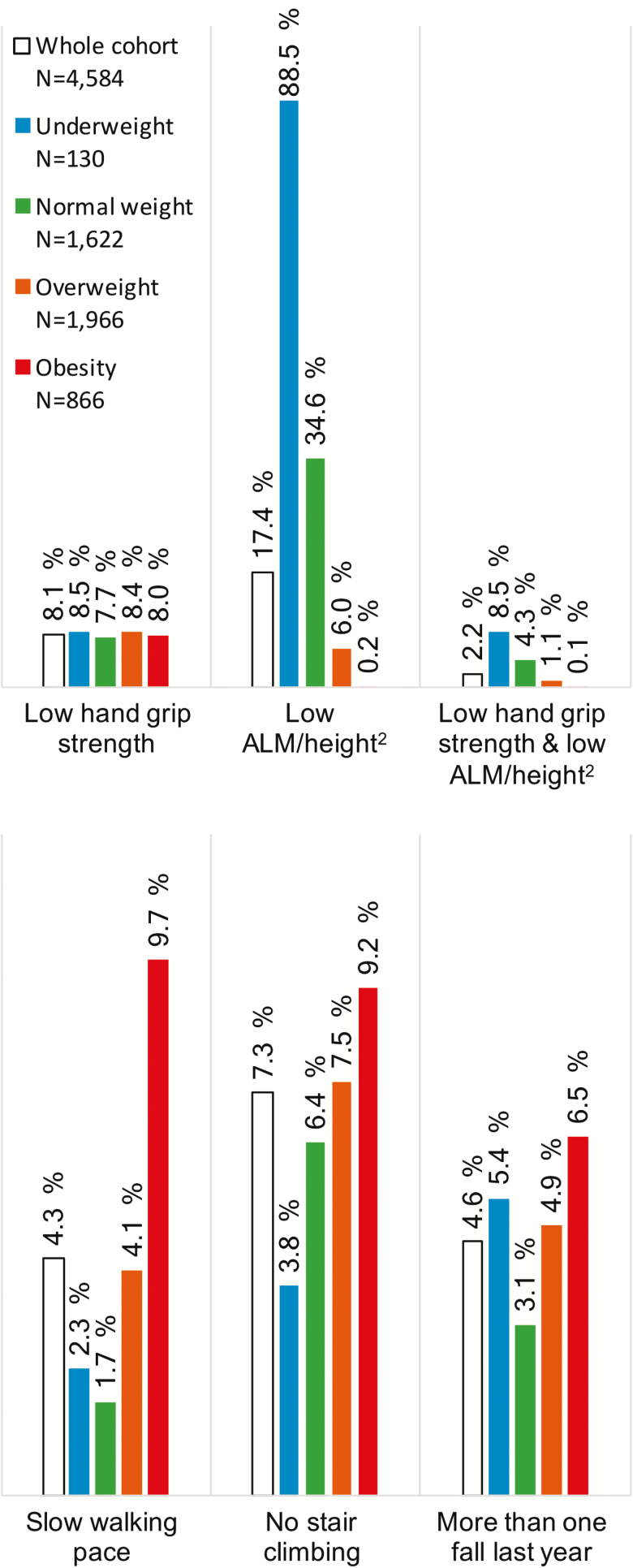
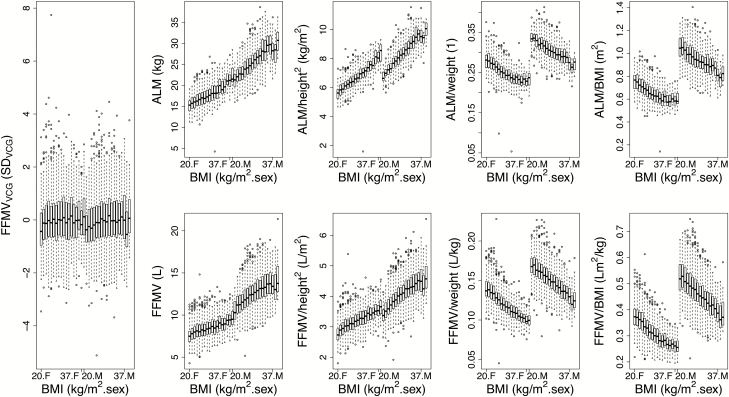
Background: Current consensus is to combine a functional measure with muscle quantity to assess/confirm sarcopenia. However, the proper body size adjustment for muscle quantity is debated and sarcopenia in obesity is not well described. Further, functional measures are not muscle-specific or sensitive to etiology, and can be confounded by, for example, fitness/pain. For effective detection/treatment/follow-up, muscle-specific biomarkers linked to function are needed. Methods: Nine thousand six hundred and fifteen participants were included and current sarcopenia thresholds (EWGSOP2: DXA, hand grip strength) applied to investigate prevalence. Fat-tissue free muscle volume (FFMV) and muscle fat infiltration (MFI) were quantified through magnetic resonance imaging (MRI) and sex-and-body mass index (BMI)-matched virtual control groups (VCGs) were used to extract each participant’s FFMV/height2 z-score (FFMVVCG). The value of combining FFMVVCG and MFI was investigated through hospital nights, hand grip strength, stair climbing, walking pace, and falls. Results: Current thresholds showed decreased sarcopenia prevalence with increased BMI (underweight 8.5%/normal weight 4.3%/overweight 1.1%/obesity 0.1%). Contrary, the prevalence of low function increased with increasing BMI. Previously proposed body size adjustments (division by height2/weight/BMI) introduced body size correlations of larger/similar magnitude than before. VCG adjustment achieved normalization and strengthened associations with hospitalization/function. Hospital nights, low hand grip strength, slow walking pace, and no stair climbing were positively associated with MFI (p < .05) and negatively associated with FFMVVCG (p < .01). Only MFI was associated with falls (p < .01). FFMVVCG and MFI combined resulted in highest diagnostic performance detecting low function. Conclusions: VCG-adjusted FFMV enables proper sarcopenia assessment across BMI classes and strengthened the link to function. MFI and FFMV combined provides a more complete, muscle-specific description linked to function enabling objective sarcopenia detection.
Overview
The claims and statistics of this paper haven’t been checked yet.
Free: it reads the open-access text and checks the first 5 claims that cite a source we can check. Create a free account to check every claim.
Integrity signals
Registry
Cites
Statistics
Figures
Verification
Claims the paper makes
The claims and statistics of this paper haven’t been checked yet.
Free: it reads the open-access text and checks the first 5 claims that cite a source we can check. Create a free account to check every claim.
Claims other papers make about this one
Each is checked against this paper’s own text: does it say what the citing paper says it does?
The source backs part of the claim, not all of it — or backs it for a different population, condition or comparison.
In the citing paper
“In turn, muscle mass and myosteatosis independently predict muscle strength, physical performance, morbidity, and mortality.4–7”
From Tirzepatide and muscle composition changes in people with type 2 diabetes (SURPASS-3 MRI): a post-hoc analysis of a randomised, open-label, parallel-group, phase 3 trial (2025) · cites this paper as [5]
Experimental — accuracy not yet measuredThe source backs part of the claim, not all of it — or backs it for a different population, condition or comparison.
In the citing paper
“Accumulating evidence suggests that using the muscle volume z-score improves the association with muscle function and mobility, and is associated with morbidity and mortality.[58][59][60][61]”
From Changes in lean body mass with glucagon‐like peptide ‐1‐based therapies and mitigation strategies (2024) · cites this paper as [58]
Experimental — accuracy not yet measuredThe source backs part of the claim, not all of it — or backs it for a different population, condition or comparison.
In the citing paper
“Yet, using different adjustments, for example, division by height 2 versus BMI, can result in opposite conclusions of an individual having less muscle quantity and moving towards sarcopenia versus the same individual having more muscle quantity and moving away from sarcopenia”
From Changes in lean body mass with glucagon‐like peptide ‐1‐based therapies and mitigation strategies (2024) · cites this paper as [58]
Experimental — accuracy not yet measuredThe source backs part of the claim, not all of it — or backs it for a different population, condition or comparison.
In the citing paper
“In addition, both studies reported a reduction in muscle fat infiltration (Table 2) opposite from the effect of a natural increase in muscle fat seen with ageing in the UK Biobank”
From Changes in lean body mass with glucagon‐like peptide ‐1‐based therapies and mitigation strategies (2024) · cites this paper as [58]
Experimental — accuracy not yet measuredThe cited source says what the claim attributes to it.
In the citing paper
“Commonly used adjustments (division by height 2 , weight, or BMI) are not effective and lead to either underestimation (division by height 2 ) or overestimation (division by weight or BMI) of sarcopenia within obesity (Figure 2).58”
From Changes in lean body mass with glucagon‐like peptide ‐1‐based therapies and mitigation strategies (2024) · cites this paper as [58]
2 more claims about this paper
Create a free account to see every claim other papers make about this one.
Self-check
Percentages, sums and reported differences re-computed from the paper’s own numbers.
The self-check needs the paper’s full text.
Citations
Cites
Sarcopenia: revised European consensus on definition and diagnosis
Cruz-Jentoft, A. J., Bahat, G., Bauer, J., Boirie, Y., Bruyère, O., Cederholm, T., Cooper, C., Landi, F., Rolland, Y., Sayer, A. A., et al. (2019) · Age and Ageing · doi:10.1093/ageing/afy169 · Cited by 13,818
Sudlow, C., Gallacher, J., Allen, N., Beral, V., Burton, P., Danesh, J., Downey, P., Elliott, P., Green, J., Landray, M., et al. (2015) · PLOS Medicine · doi:10.1371/journal.pmed.1001779 · Cited by 12,728 · cited 1×
“The imaging study aims to conduct detailed imaging of over 100,000 by inviting all participants out of those originally participating in the study living within reasonable travelling distance to one of the three imaging assessment centers in Reading, Stockport, and Newcastle (12).”
MethodSarcopenia: revised European consensus on definition and diagnosis
Cruz-Jentoft, A. J., Bahat, G., Bauer, J., Boirie, Y., Bruyère, O., Cederholm, T., Cooper, C., Landi, F., Rolland, Y., Sayer, A. A., et al. (2019) · Age and Ageing · doi:10.1093/ageing/afz046 · Cited by 3,803
Studenski, S. A., Peters, K. W., Alley, D. E., Cawthon, P. M., McLean, R. R., Harris, T. B., Ferrucci, L., Guralnik, J. M., Fragala, M. S., Kenny, A. M., et al. (2014) · The Journals of Gerontology: Series A · doi:10.1093/gerona/glu010 · Cited by 2,545 · cited 3×
“The correlation between muscle quantity and body size has led to suggestions of body size adjustments for ALM, namely through division by height2, weight, or body mass index (BMI) (4,7).”
BackgroundAttenuation of skeletal muscle and strength in the elderly: the Health ABC Study
Goodpaster, B. H., Carlson, C. L., Visser, M., Kelley, D. E., Scherzinger, A., Harris, T. B., Stamm, E., & Newman, A. B. (2001) · Journal of Applied Physiology · doi:10.1152/jappl.2001.90.6.2157 · Cited by 1,226
Sarcopenia: alternative definitions and associations with lower extremity function
Newman, A. B., Kupelian, V., Visser, M., Simonsick, E., Goodpaster, B., Nevitt, M., Kritchevsky, S. B., Tylavsky, F. A., Rubin, S. M., Harris, T. B., et al. (2003) · Journal of the American Geriatrics Society · doi:10.1046/j.1532-5415.2003.51534.x · Cited by 981
Pitfalls in the measurement of muscle mass: A need for a reference standard
Buckinx, F., Landi, F., Cesari, M., Fielding, R. A., Visser, M., Engelke, K., Maggi, S., Dennison, E., Al‐Daghri, N. M., Allepaerts, S., et al. (2018) · Journal of Cachexia, Sarcopenia and Muscle · doi:10.1002/jcsm.12268 · Cited by 765 · cited 1×
“Challenges with DXA are, for example, that different DXA brands do not give consistent results, hindering accurate comparison between different patient groups and populations; and that muscle mass measures can be affected by body thickness and hydration status, thus lowering both accuracy and reproducibility and compl…”
BackgroundLean Tissue Imaging: A New Era for Nutritional Assessment and Intervention
Prado, C. M. M., & Heymsfield, S. B. (2014) · Journal of Parenteral and Enteral Nutrition · doi:10.1177/0148607114550189 · Cited by 550
Self-citationHeymsfield, S. B., Gonzalez, M. C., Lu, J., Jia, G., & Zheng, J. (2015) · Proceedings of the Nutrition Society · doi:10.1017/s0029665115000129 · Cited by 483
Self-citationKim, K. M., Jang, H. C., & Lim, S. (2016) · The Korean Journal of Internal Medicine · doi:10.3904/kjim.2016.015 · Cited by 403
Cited by
Changes in lean body mass with glucagon‐like peptide ‐1‐based therapies and mitigation strategies
Neeland, I. J., Linge, J., & Birkenfeld, A. L. (2024) · Diabetes, Obesity and Metabolism · doi:10.1111/dom.15728 · Cited by 391
Self-citationLinge, J., Birkenfeld, A. L., & Neeland, I. J. (2024) · Circulation · doi:10.1161/circulationaha.124.067676 · Cited by 180
Self-citationPhysical Exercise and Myokines: Relationships with Sarcopenia and Cardiovascular Complications
Barbalho, S. M., Flato, U. A. P., Tofano, R. J., Goulart, R. D. A., Guiguer, E. L., Detregiachi, C. R. P., Buchaim, D. V., Araújo, A. C., Buchaim, R. L., Reina, F. T. R., et al. (2020) · International Journal of Molecular Sciences · doi:10.3390/ijms21103607 · Cited by 156
“The term that refers to this process is sarcopenia, which derives from sarx (which means “flesh”) and -penia (which implies “loss”) [7,8].”
BackgroundCawthon, P. M., Visser, M., Arai, H., Ávila-Funes, J. A., Barazzoni, R., Bhasin, S., Binder, E., Bruyère, O., Cederholm, T., Chen, L.-K., et al. (2022) · European Geriatric Medicine · doi:10.1007/s41999-022-00706-5 · Cited by 126
Sattar, N., Neeland, I. J., Dahlqvist Leinhard, O., Fernández Landó, L., Bray, R., Linge, J., & Rodriguez, A. (2025) · The Lancet Diabetes & Endocrinology · doi:10.1016/s2213-8587(25)00027-0 · Cited by 131
Self-citationAdverse muscle composition predicts all‐cause mortality in the UK Biobank imaging study
Linge, J., Petersson, M., Forsgren, M. F., Sanyal, A. J., & Dahlqvist Leinhard, O. (2021) · Journal of Cachexia, Sarcopenia and Muscle · doi:10.1002/jcsm.12834 · Cited by 108
Self-citationHarnessing Muscle–Liver Crosstalk to Treat Nonalcoholic Steatohepatitis
Chakravarthy, M. V., Siddiqui, M. S., Forsgren, M. F., & Sanyal, A. J. (2020) · Frontiers in Endocrinology · doi:10.3389/fendo.2020.592373 · Cited by 88
MRI in the assessment of adipose tissues and muscle composition: how to use it
Huber, F. A., Del Grande, F., Rizzo, S., Guglielmi, G., & Guggenberger, R. (2020) · Quantitative Imaging in Medicine and Surgery · doi:10.21037/qims.2020.02.06 · Cited by 102
MRI in Neuromuscular Diseases: An Emerging Diagnostic Tool and Biomarker for Prognosis and Efficacy
Dahlqvist, J. R., Widholm, P., Leinhard, O. D., & Vissing, J. (2020) · Annals of Neurology · doi:10.1002/ana.25804 · Cited by 90
Linge, J., Ekstedt, M., & Dahlqvist Leinhard, O. (2021) · JHEP Reports · doi:10.1016/j.jhepr.2020.100197 · Cited by 98
“A recent study utilising MRI data from over 10,000 UK Biobank participants showed that muscle volume alone inadequately detected individuals with poor function and increased hospitalisation.(14) However, a personalised muscle volume zscore (sex and body size-specific) was significantly associated with these outcomes,…”
BackgroundMethodInfluentialSelf-citationReproducibility and repeatability of MRI‐based body composition analysis
Borga, M., Ahlgren, A., Romu, T., Widholm, P., Dahlqvist Leinhard, O., & West, J. (2020) · Magnetic Resonance in Medicine · doi:10.1002/mrm.28360 · Cited by 94
“13,14 It is well recognized that bodymass index (BMI) and other anthropometric surrogate measures are poor predictors for individual metabolic risk 15-17 and that imaging tools may be more accurate in describing metabolic risk related to body composition.”
BackgroundPandey, A., Patel, K. V., Segar, M. W., Ayers, C., Linge, J., Leinhard, O. D., Anker, S. D., Butler, J., Verma, S., Joshi, P. H., et al. (2024) · Journal of Cachexia, Sarcopenia and Muscle · doi:10.1002/jcsm.13445 · Cited by 80
Self-citationScott, D., Blyth, F., Naganathan, V., Le Couteur, D. G., Handelsman, D. J., Waite, L. M., & Hirani, V. (2023) · Clinical Nutrition · doi:10.1016/j.clnu.2023.07.014 · Cited by 69
Interconnection between Cardiac Cachexia and Heart Failure—Protective Role of Cardiac Obesity
Soto, M. E., Pérez-Torres, I., Rubio-Ruiz, M. E., Manzano-Pech, L., & Guarner‐Lans, V. (2022) · Cells · doi:10.3390/cells11061039 · Cited by 68
Ko, Y.-C., Chie, W., Wu, T., Ho, C.-Y., & Yu, W.-R. (2021) · Scientific Reports · doi:10.1038/s41598-021-90869-1 · Cited by 68
Ketogenic diets as treatment of obesity and type 2 diabetes mellitus
Casanueva, F. F., Castellana, M., Bellido, D., Trimboli, P., Castro, A. I., Sajoux, I., Rodríguez-Carnero, G., Gómez-Arbeláez, D., Crujeiras, A. B., & Olmos, M. Á. M. (2020) · Reviews in Endocrine and Metabolic Disorders · doi:10.1007/s11154-020-09580-7 · Cited by 61
Orwoll, E. S., Peters, K. E., Hellerstein, M., Cummings, S. R., Evans, W. J., & Cawthon, P. M. (2020) · The Journals of Gerontology: Series A · doi:10.1093/gerona/glaa064 · Cited by 40
The effects of GLP-1 agonists on musculoskeletal health and orthopedic care
Gatto, A., Liu, K., Milan, N., & Wong, S. (2025) · Current Reviews in Musculoskeletal Medicine · doi:10.1007/s12178-025-09978-3 · Cited by 55
Beck, D., de Lange, A. G., Alnæs, D., Maximov, I. I., Pedersen, M. L., Leinhard, O. D., Linge, J., Simon, R. A., Richard, G., Ulrichsen, K. M., et al. (2022) · NeuroImage Clinical · doi:10.1016/j.nicl.2022.102949 · Cited by 53
Self-citationPreliminary screening for sarcopenia and related risk factors among the elderly
Wu, L., Kao, H.-H., Chen, H.-J., & Huang, P. (2021) · Medicine · doi:10.1097/md.0000000000025946 · Cited by 50
Obesity-Related Insulin Resistance: The Central Role of Adipose Tissue Dysfunction
Mocciaro, G., & Gastaldelli, A. (2022) · Handbook of experimental pharmacology · doi:10.1007/164_2021_573 · Cited by 48
Adverse muscle composition is a significant risk factor for all-cause mortality in NAFLD
Linge, J., Nasr, P., Sanyal, A. J., Dahlqvist Leinhard, O., & Ekstedt, M. (2023) · JHEP Reports · doi:10.1016/j.jhepr.2022.100663 · Cited by 42
Self-citationLinking sarcopenia, brain structure and cognitive performance: a large-scale UK Biobank study
Gurholt, T. P., Borda, M. G., Parker, N., Fominykh, V., Kjelkenes, R., Linge, J., van der Meer, D., Sønderby, I. E., Duque, G., Westlye, L. T., et al. (2024) · Brain Communications · doi:10.1093/braincomms/fcae083 · Cited by 41
Self-citationMellion, M. L., Widholm, P., Karlsson, M., Ahlgren, A., Tawil, R., Wagner, K. R., Statland, J., Wang, L. H., Shieh, P. B., van Engelen, B. G. M., et al. (2022) · Neurology · doi:10.1212/wnl.0000000000200757 · Cited by 36
Seo, J. Y., Cho, E. J., Kim, M. J., Kwak, M., Yang, J. I., Chung, S. J., Yim, J. Y., Yoon, J. W., & Chung, G. E. (2022) · Journal of Cachexia Sarcopenia and Muscle · doi:10.1002/jcsm.13099 · Cited by 33
Automated assessment of regional muscle volume and hypertrophy using MRI
Mandić, M., Rullman, E., Widholm, P., Lilja, M. R., Leinhard, O. D., Gustafsson, T. P., & Lundberg, T. R. (2020) · Scientific Reports · doi:10.1038/s41598-020-59267-x · Cited by 34
van der Meer, D., Gurholt, T. P., Sønderby, I. E., Shadrin, A. A., Hindley, G., Rahman, Z., de Lange, A. G., Frei, O., Leinhard, O. D., Linge, J., et al. (2022) · Communications Biology · doi:10.1038/s42003-022-04237-4 · Cited by 31
Self-citationSkeletal muscle loss and sarcopenia in obesity pharmacotherapy
Hope, D. C. D., & Tan, T. (2024) · Nature Reviews Endocrinology · doi:10.1038/s41574-024-01041-4 · Cited by 29
Lundberg, T. R., Tryfonos, A., Eriksson, L. M. J., Rundqvist, H., Rullman, E., Holmberg, M., Maqdasy, S., Linge, J., Leinhard, O. D., Arver, S., et al. (2024) · Journal of Internal Medicine · doi:10.1111/joim.20039 · Cited by 28
Self-citationBalkhed, W., Bergram, M., Iredahl, F., Holmberg, M., Edin, C., Carlhäll, C., Ebbers, T., Henriksson, P., Simonsson, C., Rådholm, K., et al. (2025) · Journal of Internal Medicine · doi:10.1111/joim.20103 · Cited by 26
Zhou, J., Luo, L., Xie, L., Hu, S., Tan, L., Lei, X., Luo, X., & Yang, M. J. (2023) · Clinical Nutrition · doi:10.1016/j.clnu.2023.04.010 · Cited by 26
Precision MRI phenotyping of muscle volume and quality at a population scale
Thanaj, M., Basty, N., Whitcher, B. J., Sorokin, E. P., Liu, Y., Srinivasan, R., Cule, M., Thomas, E. L., & Bell, J. D. (2024) · Frontiers in Physiology · doi:10.3389/fphys.2024.1288657 · Cited by 26
Martin, D. J., Maeder, Y., Kobayashi, K., Schneider, M. H., Koerfer, J., Melloul, E., Halkic, N., Hübner, M., Demartines, N., Becce, F., et al. (2022) · Cancers · doi:10.3390/cancers14010261 · Cited by 26
Persson, H. L., Sioutas, A., Kentson, M., Jacobson, P., Lundberg, P., Dahlqvist Leinhard, O., & Forsgren, M. F. (2022) · Journal of Inflammation Research · doi:10.2147/jir.s366204 · Cited by 25
“To remove the known sex association with MFI, the MFI was adjusted by removing the sex-specific median MFI and expressed in % (denoted MFIa).(12,13) In the present study, thigh muscle myosteatosis was assessed as the MFI.”
BackgroundMethodDowling, L., Cuthbertson, D. J., & Walsh, J. (2022) · Obesity · doi:10.1002/oby.23609 · Cited by 22
Niklasson, E., Borga, M., Leinhard, O. D., Widholm, P., Andersson, D. P., Wiik, A., Holmberg, M., Brismar, T. B., Gustafsson, T. P., & Lundberg, T. R. (2022) · British Journal of Radiology · doi:10.1259/bjr.20211094 · Cited by 21
Li, R., Chen, X., Tang, H., Luo, S., Lian, R., Zhang, W., Zhang, X., Hu, X., & Yang, M. J. (2024) · Archives of Gerontology and Geriatrics · doi:10.1016/j.archger.2024.105557 · Cited by 20
Nguyen, H. T., Nguyen, C. C., & Hoang, T. L. (2022) · Clinical Interventions in Aging · doi:10.2147/cia.s382649 · Cited by 20
Gerdle, B. U. C., Leinhard, O. D., Lund, E., Lundberg, P., Forsgren, M. F., & Ghafouri, B. (2024) · Frontiers in Pain Research · doi:10.3389/fpain.2024.1288024 · Cited by 18
Comparing DXA and MRI body composition measurements in cross-sectional and longitudinal cohorts
Basty, N., Thanaj, M., Whitcher, B. J., Bell, J. D., & Thomas, E. L. (2026) · Communications Medicine · doi:10.1038/s43856-026-01440-w · Cited by 17
Fibromyalgia: Associations Between Fat Infiltration, Physical Capacity, and Clinical Variables
Gerdle, B. U. C., Leinhard, O. D., Lund, E., Bengtsson, A., Lundberg, P., Ghafouri, B., & Forsgren, M. F. (2022) · Journal of Pain Research · doi:10.2147/jpr.s376590 · Cited by 17
Ferguson, L. D., Linge, J., Leinhard, O. D., Woodward, R. A., Barrientos, P. H., Roditi, G., Radjenovic, A., McInnes, I. B., Siebert, S., & Sattar, N. A. (2020) · Rheumatology · doi:10.1093/rheumatology/keaa604 · Cited by 16
Self-citationLi, X., Xie, Y., Lü, R., Zhang, Y., Tao, H., & Chen, S. (2022) · Journal of Bone and Mineral Metabolism · doi:10.1007/s00774-022-01311-z · Cited by 15
Kirk, B., Lieu, N., Vogrin, S., Sales, M., Pasco, J. A., & Duque, G. (2022) · The Journals of Gerontology Series A · doi:10.1093/gerona/glac008 · Cited by 14
Schindler, L. S., Subramaniapillai, S., Ambikairajah, A., Barth, C., Crestol, A., Voldsbekk, I., Beck, D., Gurholt, T. P., Topiwala, A., Suri, S., et al. (2023) · Frontiers in Global Women s Health · doi:10.3389/fgwh.2023.1320640 · Cited by 13
Jiang, C., Chen, Q., Yu, D., Zhou, Q., Tang, C., & Qiao, C. (2025) · Journal of Cachexia Sarcopenia and Muscle · doi:10.1002/jcsm.13699 · Cited by 13
Liang, Y., Ye, X., Pan, M., Chen, Y., Yuan, Y., & Luo, L. (2025) · BMC Gastroenterology · doi:10.1186/s12876-025-03661-0 · Cited by 13
Wang, L., Lu, S., Feng, J., Ma, K., Duan, F., Wang, R., Cheng, X., Liu, Y., Imai, Y., Chen, H., et al. (2025) · Calcified Tissue International · doi:10.1007/s00223-025-01447-w · Cited by 13
Siddiqui, M. S., Patel, S. S., Forsgren, M. F., Bui, A. T., Shen, S., Syed, T., Boyett, S. L., Chen, S., Sanyal, A. J., Wolver, S. E., et al. (2022) · Liver International · doi:10.1111/liv.15178 · Cited by 13
Kirk, B., Kuo, C., Liu, P., Xiang, M., Zanker, J., Prokopidis, K., Sim, M., Fortinsky, R. H., Kuchel, G. A., & Duque, G. (2024) · The Journals of Gerontology Series A · doi:10.1093/gerona/glae274 · Cited by 12
Mei, C. T. Y., Ying, S. S. S., Yanshan, D. L., Koh, S. V., Karthikeyan, G., Xia, O. J., Low, X. L., Quek, H. Y., Shuyi, A. O., Low, L. L., et al. (2024) · PLoS ONE · doi:10.1371/journal.pone.0291702 · Cited by 11
von Haehling, S., Sato, R., Langer, H., Khan, M. S., Coats, A. J. S., Evans, W., Heymsfield, S., & Anker, S. D. (2025) · Journal of Cachexia, Sarcopenia and Muscle · doi:10.1002/jcsm.70147 · Cited by 10
Self-citationTejani, S., Linge, J., Neeland, I. J., Gill, J. M. R., Leinhard, O. D., Sattar, N. A., & Rohatgi, A. K. (2025) · American Journal of Preventive Cardiology · doi:10.1016/j.ajpc.2025.101284 · Cited by 9
Self-citationZhao, J., Lu, Q., Cong, X., & Zhang, X. (2025) · Diabetes Research and Clinical Practice · doi:10.1016/j.diabres.2025.112254 · Cited by 9
Fredwall, S. O., Linge, J., de Vries, O., Leinhard, O. D., Eggesbø, H. B., Weedon‐Fekjær, H., Petersson, M., Widholm, P., Månum, G., & Savarirayan, R. (2023) · Orphanet Journal of Rare Diseases · doi:10.1186/s13023-023-02641-5 · Cited by 9
Self-citationSexual dimorphism in human skeletal muscle ageingPreprint
Fieldsend, T. W., O’Neill, C. R., Shrivastava, A., Ogden, H. E., Dand, N., & Hughes, S. M. (2025) · medRxiv · doi:10.1101/2025.01.06.25319958 · Cited by 9
Visser, M., Yamada, M., & Arai, H. (2025) · European Geriatric Medicine · doi:10.1007/s41999-025-01263-3 · Cited by 8
Kirk, B., Kuo, C., Liu, P., Xiang, M., Earp, J. E., Kositsawat, J., Kuchel, G. A., & Duque, G. (2024) · Journal of Cachexia Sarcopenia and Muscle · doi:10.1002/jcsm.13461 · Cited by 8
Thuluvath, A. J., Forsgren, M. F., Ladner, D. P., Tevar, A. D., & Duarte‐Rojo, A. (2024) · Annals of Hepatology · doi:10.1016/j.aohep.2024.101508 · Cited by 8
Wang, D., Morton, J. I., Magliano, D. J., & Shaw, J. E. (2025) · Diabetes Obesity and Metabolism · doi:10.1111/dom.70021 · Cited by 7
Nasr, P., Forsgren, M. F., Balkhed, W., Jönsson, C., Dahlström, N., Simonsson, C., Cai, S., Cederborg, A., Henriksson, M., Stjernman, H., et al. (2023) · BMC Gastroenterology · doi:10.1186/s12876-023-03093-8 · Cited by 7
Mihai, F., Trifan, A. V., Stanciu, C., Huiban, L., Muzica, C. M., Lupaşcu-Ursulescu, C. V., Negru, D., Savin, M. L., Gîrleanu, I., Cuciureanu, T., et al. (2021) · Medicina · doi:10.3390/medicina57111226 · Cited by 7
Shinonaga, A., Matsumoto, H., Tochio, K., Tanaka, S., Deguchi, N., & Tanaka, R. (2025) · Cureus · doi:10.7759/cureus.82345 · Cited by 5
Yun, Z., Zhang, K., Zhang, Y., He, P., & Wang, Z. (2025) · Frontiers in Endocrinology · doi:10.3389/fendo.2025.1635234 · Cited by 5
Effects of Body Mass Index on Brain Structures in the Elderly: Longitudinal Analyses
Takeuchi, H., & Kawashima, R. (2022) · Frontiers in Endocrinology · doi:10.3389/fendo.2022.824661 · Cited by 6
Hjelmesaeth, J. S., Bhat, S., Garvey, W. T., Kolnes, K. J., Linge, J., Lingvay, I., Rasmussen, N. K., Rosenstock, J., & Wharton, S. (2026) · Diabetes Obesity and Metabolism · doi:10.1111/dom.71323 · Cited by 5
Self-citationHong, N., Cho, S. W., Cohen, A. A., Hepple, R. T., Coen, P. M., Ahn, B., Newman, A. B., Kritchesky, S. B., Laurenti, P. J., Browner, W. S., et al. (2026) · Aging Cell · doi:10.1111/acel.70421 · Cited by 4
Poor muscle health and cardiometabolic risks associated with antidepressant treatment
Andersson, P., Linge, J., Gurholt, T. P., Sønderby, I. E., Hindley, G., Andreassen, O. A., & Leinhard, O. D. (2024) · Obesity · doi:10.1002/oby.24085 · Cited by 4
Self-citationForsgren, M. F., Pine, S., Harrington, C., Gregory, D. L., Petersson, M., Rinella, M. E., Leinhard, O. D., & VanWagner, L. B. (2024) · BMC Gastroenterology · doi:10.1186/s12876-024-03425-2 · Cited by 4
Tan, D. Y. Z., Wong, B. W. X., Shen, L., Li, L., & Yong, E. (2025) · Menopause The Journal of The North American Menopause Society · doi:10.1097/gme.0000000000002524 · Cited by 4
INFLUÊNCIA DA OBESIDADE SARCOPÊNICA NO RISCO DE QUEDAS EM IDOSOS: UMA REVISÃO SISTEMÁTICA
Júnior, J. R. A. D. Q., dos Santos, A. K. B., da Costa, B. A., Calado, G. H. D. S., Melo, I. O., Barbosa, J. I. L., Coutinho, L. R., Leão, L. H. D. A., de Melo, M. C. P. T. V., de Souza, M. A. C., et al. (2023) · Estudos Interdisciplinares sobre o Envelhecimento · doi:10.22456/2316-2171.128536 · Cited by 4
Paris, M. T., Bell, K. E., Avrutin, E., & Mourtzakis, M. (2021) · Experimental Gerontology · doi:10.1016/j.exger.2021.111547 · Cited by 4
The assessment of sarcopenia using magnetic resonance imaging
Bisyri, K., & Lambrou, G. Ι. (2022) · Journal of Research and Practice on the Musculoskeletal System · doi:10.22540/jrpms-06-098 · Cited by 4
Linge, J., Ekstedt, M., & Dahlqvist Leinhard, O. (2021) · JHEP Reports · doi:10.1016/j.jhepr.2021.100257 · Cited by 3
Self-citationTan, D. Y. Z., Cheong, W. F., Ji, S., Cazenave‐Gassiot, A., Cauley, J. A., Shen, L., & Yong, E. (2025) · Journal of Cachexia Sarcopenia and Muscle · doi:10.1002/jcsm.13872 · Cited by 3
Indurain, A., Karlsson, M., Fernström, A., Uhlin, F., Linge, J., Petersson, M., Leinhard, O. D., & Segelmark, M. (2025) · Kidney Medicine · doi:10.1016/j.xkme.2025.101164 · Cited by 3
Self-citationMorgan, P. T., Smeuninx, B., Marshall, R. N., Korzepa, M., Quinlan, J. I., McPhee, J. S., & Breen, L. (2023) · GeroScience · doi:10.1007/s11357-023-00833-2 · Cited by 3
Heerfordt, J., Karlsson, M., Kusama, M., Ogata, S., Mukasa, R., Kiyosawa, N., Sato, N., Widholm, P., Leinhard, O. D., Ahlgren, A., et al. (2024) · Muscle & Nerve · doi:10.1002/mus.28252 · Cited by 3
Skrabal, F., Heymsfield, S. B., Skrabal, K., Weber, T., Fruhwald, F. M., Windhaber, J., & Mady, S. (2024) · Journal of Cachexia Sarcopenia and Muscle · doi:10.1002/jcsm.13423 · Cited by 2
Self-citationBhati, C. S., Kirkman, D. L., Forsgren, M. F., Kamal, H., Khan, H., Boyett, S. L., Leinhard, O. D., Linge, J., Patel, V. A., Patel, S. S., et al. (2024) · JGH Open · doi:10.1002/jgh3.70024 · Cited by 2
Self-citationСалухов, В. В., Борисович, Ш. С., & Petrankov, K. V. (2025) · Meditsinskiy sovet = Medical Council · doi:10.21518/ms2025-467 · Cited by 2
Adverse Muscle Composition Is Associated with All-Cause Mortality in CKD: A UK Biobank Imaging Study
Indurain, A., Karlsson, M., Fernström, A., Uhlin, F., Segelmark, M., & Leinhard, O. D. (2026) · Clinical Journal of the American Society of Nephrology · doi:10.2215/cjn.0000001049 · Cited by 2
Whitcher, B. J., Raza, H., Basty, N., Thanaj, M., Bell-Bradford, C., Niglas, M., Bell, J. D., Thomas, E. L., & Amiras, D. (2026) · Scientific Reports · doi:10.1038/s41598-026-60437-6 · Cited by 2
Bosy‐Westphal, A., Enderle, J., Norman, K., & Müller, M. J. (2026) · Journal of Cachexia Sarcopenia and Muscle · doi:10.1002/jcsm.70334 · Cited by 2
Miller, J. F. (2021) · Journal of Contemporary Chiropractic · doi:10.67681/001c.77999 · Cited by 2
Li, S., Huang, Q., Liu, Y., Wang, S. F., Luo, Y., Han, X., Ji, L., & Zou, X. (2026) · Nutrition Metabolism and Cardiovascular Diseases · doi:10.1016/j.numecd.2026.104541 · Cited by 1
Herráiz-Adillo, Á., Rådholm, K., Iredahl, F., Carlhäll, C., Roemkens, N., Forsgren, M. F., Leinhard, O. D., Lundberg, P., Kechagias, S., Dahlström, N., et al. (2026) · PLoS ONE · doi:10.1371/journal.pone.0339364 · Cited by 1
Grunseich, C., Katsuno, M., Fratta, P., Yamada, S., Hatsis, P., Gentry, C., Rinaldi, C., Jayaseelan, D. L., Zampedri, L., Alqahtani, A., et al. (2026) · Neurology · doi:10.1212/wnl.0000000000218309 · Cited by 1
Body Composition in Heart Failure
Butler, J., Fioretti, F., Anker, S. D., Khan, M. S., Marti, C. N., Pandey, A., Petersson, M., & Linge, J. (2026) · JACC Heart Failure · doi:10.1016/j.jchf.2026.103242 · Cited by 1
Self-citationSukurica, E., Sengul, G. F., & Uysal, F. (2026) · Diabetes Obesity and Metabolism · doi:10.1111/dom.71422 · Cited by 2
(2020) · Obesity Reviews · doi:10.1111/obr.13119 · Cited by 2
Paris, M. T. (2021) · UWSpace (University of Waterloo)
Indurain, A., Linge, J., Petersson, M., Romu, T., Uhlin, F., Fernström, A., Segelmark, M., & Leinhard, O. D. (2021) · Research Square · doi:10.21203/rs.3.rs-1111144/v1
Self-citationKo, Y.-C., Chie, W., Wu, T., Ho, C.-Y., & Yu, W.-R. (2021) · Research Square · doi:10.21203/rs.3.rs-137188/v1
(2021) · JCSM Rapid Communications · doi:10.1002/rco2.35
(2020) · Journal of Cachexia Sarcopenia and Muscle · doi:10.1002/jcsm.12551
Kentson, M. U. (2022) · Linköping University medical dissertations · doi:10.3384/9789179294526
li, Y., Zhai, J., Zhu, C., Zhang, Q., Lv, L., Li, P., & Yu, H. Q. (2023) · Research Square · doi:10.21203/rs.3.rs-2767908/v1
Diagnostik und Untersuchungsmethoden
Müller, M. J., & Bosy-Westphal, A. (2024) · Springer eBooks · doi:10.1007/978-3-662-58895-6_2
Wei, J., Wei, W., Hu, Y., Lu, M., Zhang, X., Chen, Y., Zhao, C., Huang, J., Zhong, B., Yang, C., et al. (2025) · Journal of Biosciences and Medicines · doi:10.4236/jbm.2025.135028
Metadata
- Authors
- Linge, J., Heymsfield, S. B., & Dahlqvist Leinhard, O.
- Affiliations
- Linköping University (SE)
- Pennington Biomedical Research Center (US)
- AMRA Medical AB, Linköping, Sweden
- Corresponding author
- Linge, Jennifer
- Venue
- The Journals of Gerontology: Series A
- Publisher
- Oxford University Press (OUP)
- Published
- 2019-10-23
- Volume
- 75
- Issue
- 7
- Pages
- 1309-1316
- ISSN
- 1079-5006 (ISSN-L)
- 1758-535X
- PMC
- PMC7302181
- OpenAlex
- W2982005278
- Cited by
- 103
- References
- 26
- Citations by year
- 2026: 12 · 2025: 21 · 2024: 22 · 2023: 8 · 2022: 20 · 2021: 9 · 2020: 11
- FWCI
- 6.86
- Type
- journal article
- Language
- en
- Open access
- hybrid
- doi.org
- Licence
- Locations
- The Journals of Gerontology Series A (publishedVersion, cc-by-nc-nd)
- PubMed Central (publishedVersion, cc-by-nc-nd)
- PubMed (publishedVersion)
- DiVA (Linkoping University) (submittedVersion, other-oa)
- Funders
- Medical Research Council (MC_PC_17228)
- Topics
- Health Sciences › Medicine › Physiology (medical) › Nutrition and Health in Aging
- Health Sciences › Medicine › Physiology (medical) › Body Composition Measurement Techniques
- Life Sciences › Biochemistry, Genetics and Molecular Biology › Molecular Biology › Muscle Physiology and Disorders
- Keywords
- sarcopenia, sarcopenia definitions, obesity, aging, muscle fat infiltration, body size adjustment, grip strength, functional capacity, falls, sarcopenia prevalence
- MeSH terms
- Accidental Falls, Walking Speed, Adult, Aged, Aging, Female, United Kingdom, Hospitalization, Humans, Male, Middle Aged, Obesity, Geriatric Assessment, Body Mass Index, Prevalence, Case-Control Studies, Databases, Factual, Hand Strength, Sarcopenia
About these checks
Registry, retraction, Cites and statistics results are computed, not judged, with one exception: a printed reference that no index lists is read once by a model before it counts as a citation error. Claims are extracted by a model and kept only when their quote appears verbatim in the text; each cited source is then checked, with a model’s help, for whether it says what the claim relies on. Those verdicts can be wrong — read the claim’s quote and the cited source before relying on one.
Statistics and arithmetic are recomputed, not judged.
Confidence bands are shown only for fields calibrated on our annotated test set. None is calibrated yet, so no band is shown.
What counts as a claim ›How we measure confidence ›How we check this ›
Are you an author, or do you see a problem with this page? Request a review
Data sources
Bibliographic data: Semantic Scholar, OpenAlex, Crossref.
Contains information from the Semantic Scholar Academic Graph Datasets, made available under the ODC Attribution License (ODC-BY 1.0).
Semantic Scholar’s data is described in: Kinney, R., et al. (2023). The Semantic Scholar Open Data Platform. arXiv:2301.10140.
