

Challenges in AI-driven Biomedical Multimodal Data Fusion and Analysis
Open accessThe DOI matches its Crossref record; 197 of the 198 references it cites were found in a registry or an index; 138 of the 210 sources its claims cite were checked for support.
Abstract
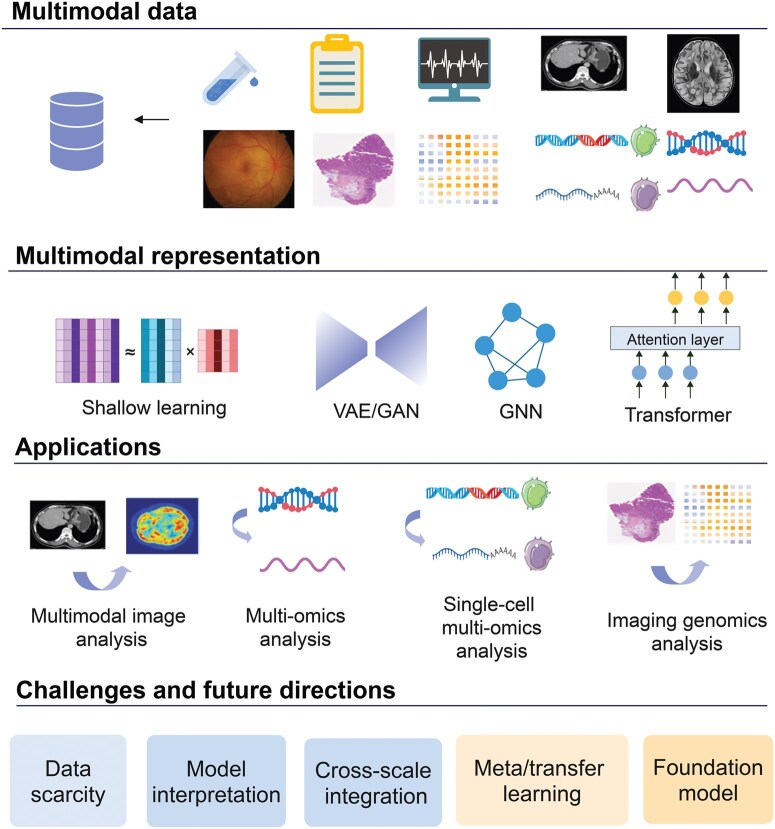
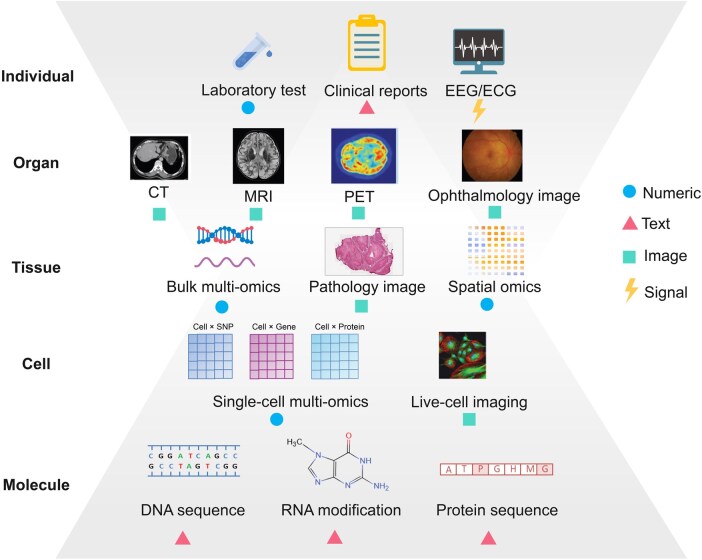
The rapid development of biological and medical examination methods has vastly expanded personal biomedical information, including molecular, cellular, image, and electronic health record datasets. Integrating this wealth of information enables precise disease diagnosis, biomarker identification, and treatment design in clinical settings. Artificial intelligence (AI) techniques, particularly deep learning models, have been extensively employed in biomedical applications, demonstrating increased precision, efficiency, and generalization. The success of the large language and vision models further significantly extends their biomedical applications. However, challenges remain in learning these multimodal biomedical datasets, such as data privacy, fusion, and model interpretation. In this review, we provide a comprehensive overview of various biomedical data modalities, multimodal representation learning methods, and the applications of AI in biomedical data integrative analysis. Additionally, we discuss the challenges in applying these deep learning methods and how to better integrate them into biomedical scenarios. We then propose future directions for adapting deep learning methods with model pretraining and knowledge integration to advance biomedical research and benefit their clinical applications.
Overview
CoChat Summary
TL;DR
This review surveys AI-driven multimodal biomedical data fusion, covering data modalities, representation learning methods, applications, challenges, and future directions. It argues that privacy, incomplete data, interpretation, and cross-scale integration remain key barriers, and highlights meta/transfer learning and foundation models as promising directions.
Key findings
- The review categorizes biomedical multimodal data into numeric, image, text, and signal data, spanning sequencing, clinical, and experimental sources, and lists representative resources such as TCGA, ICGC, ADNI, UK Biobank, and MedMNIST.
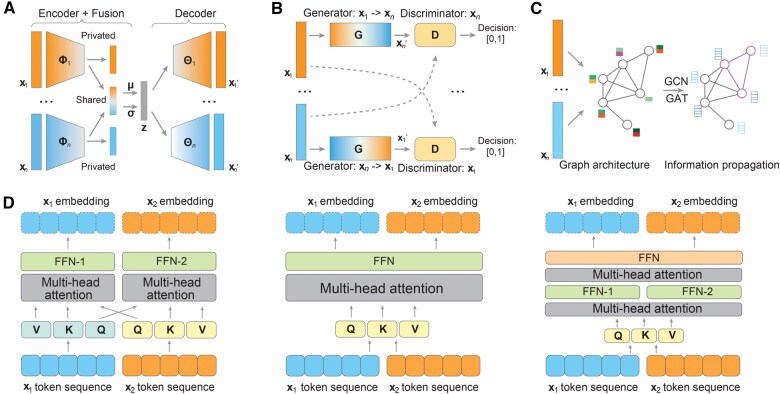
- It summarizes shallow methods (jNMF, PLS, CCA, MKL) and deep representation learning methods (VAE, GAN, GNN, Transformer) for aligning and integrating heterogeneous modalities.
- Applications reviewed include clinical multimodal integration (e.g., WSI + genomics, CT/MRI + genomics), multi-omics analysis, single-cell/spatial analysis, and genotype–phenotype association; the text notes high-throughput single-cell techniques have generated millions of individual cell data points and a NeurIPS competition identified three key tasks.
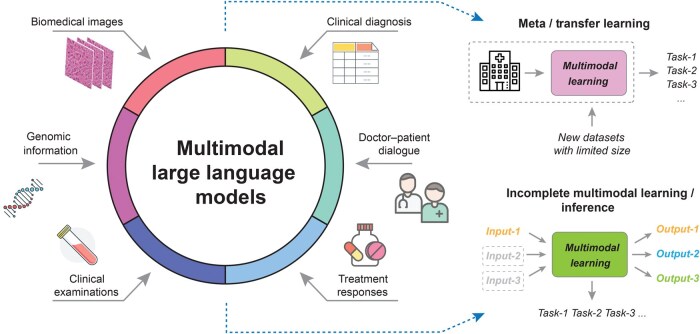
- Challenges include data privacy/sharing limits, incomplete modalities, model interpretation, and cross-scale integration; future directions include meta/transfer learning, foundation models, and LLM-based knowledge integration.
Methods
- Design: narrative review.
- Data/sample: existing literature and public multimodal biomedical databases/resources; no primary data collection.
- Analysis: thematic synthesis of data modalities, representation learning methods, applications, challenges, and future directions; no systematic search protocol or quantitative meta-analysis stated.
Limitations
- The paper does not explicitly state limitations of this review. It states field-level limitations: data privacy restrictions, incomplete multimodal datasets, limited cohort sizes, difficulty interpreting models, and reliance on predefined pathway annotations.
- Evident from the text: as a narrative review, it lacks a described systematic search strategy, inclusion/exclusion criteria, and quantitative synthesis; examples are illustrative rather than exhaustive.
Model-written summary. Check it against the paper before relying on it.
Integrity signals
Registry
Cites
Statistics
Figures
Verification
Claims the paper makes
110 Valid · 2 Not valid · 52 Not checked · 35 Own results and interpretations
The sources with a verdict support this claim; the rest weren’t checked yet, have no full text we could read, or their verdicts aren’t rated yet.
In the paper
“Self-supervised learning is an important approach for addressing the challenge by fully leveraging the unlabeled data.”
§ Challenges in AI-driven Biomedical Multimodal Data Fusion and Analysis > Challenges in AI-based biomedical multimodal data analysis > Data challenges
What the sources say
- Not checked — no full text of the sourcecites [146] Krishnan R, Rajpurkar P, Topol EJ. Self-supervised learning in medicine and healthcare. Nat Biomed Eng 2022; 6: 1346– 52. 35953649 source
- Supportedcites [147] Ciga O, Xu T, Martel AL. Self supervised contrastive learning for digital histopathology. Mach Learn Appl 2022; 7: 100198. source
The Introduction says labeled data are scarce and expensive, and that self-supervised methods use unlabeled data to mitigate the annotation bottleneck. Section 5.4 also reports better downstream performance when more unlabeled images are used for pretraining. (LLM, conf=0.92)
plainstates a cause- Asserted: passes — The authors put it forward as true.
- Checkable: passes — It can be checked against evidence.
- Load-bearing: unclear — It is unclear whether the paper’s conclusions depend on it.
- Based: passes — The paper gives a reason why it holds.
Every source the paper cites for this claim was checked and supports it.
In the paper
“In digital pathology applications, whole slide images have been used for predicting genomic features [19]”
§ Challenges in AI-driven Biomedical Multimodal Data Fusion and Analysis > Introduction
What the sources say
- Supportedcites [19] Qiao Y, Zhao L, Luo C, Luo Y, Wu Y, Li S, et al Multi-modality artificial intelligence in digital pathology. Brief Bioinform 2022; 23: bbac367. 36124675 PMC9677480 source
The Introduction describes digitized pathology slides as whole slide images (WSIs). The section ‘H&E images integration nucleic acid detection’ reports prediction of gene expression and specific gene mutations from pathology images; its references also include a study of genetic mutation prediction from whole slide images. Page numbers are unavailable in our copy. (LLM, conf=0.91)
plainstates an association- Asserted: passes — The authors put it forward as true.
- Checkable: passes — It can be checked against evidence.
- Load-bearing: unclear — It is unclear whether the paper’s conclusions depend on it.
- Based: passes — The paper gives a reason why it holds.
- Supported
Every source the paper cites for this claim was checked and supports it.
In the paper
“Despite the advancement of multimodal learning in the biomedical field, various challenges can hinder model training and its further applications [1].”
§ Challenges in AI-driven Biomedical Multimodal Data Fusion and Analysis > Introduction
What the sources say
- Supportedcites [1] Acosta JN, Falcone GJ, Rajpurkar P, Topol EJ. Multimodal biomedical AI. Nat Med 2022; 28: 1773– 84. 36109635 source
The Technical challenges section identifies computational demands and infrastructure as obstacles to building multimodal models. It also says dataset blind spots can hurt real-life prediction and that further innovation is needed for effective multimodal AI, supporting challenges to both model training and application. (LLM, conf=0.93)
plainstates a possible cause- Asserted: passes — The authors put it forward as true.
- Checkable: passes — It can be checked against evidence.
- Load-bearing: passes — The paper’s conclusions depend on it.
- Based: passes — The paper gives a reason why it holds.
- Supported
Every source the paper cites for this claim was checked and supports it.
In the paper
“Additionally, the development of incomplete modal learning enables more flexible and efficient representation learning in multimodal datasets [54,55].”
§ Challenges in AI-driven Biomedical Multimodal Data Fusion and Analysis > Multimodal representation learning methods > Variational autoencoder and generative adversarial network
What the sources say
- Supportedcites [54] Ma M, Ren J, Zhao L, Tulyakov S, Wu C, Peng X. Smil: multimodal learning with severely missing modality. Proceedings of the 35th AAAI Conference on Artificial Intelligence 2021: 2302– 10. source
The Proposed Method (p. 2) explicitly sets flexibility and efficiency as goals for learning from incomplete multimodal data. The Introduction (p. 1) describes learning latent embeddings under missing modalities, and the Conclusion (p. 7) reports that SMIL handles varied missing patterns effectively. The paper supports the claim through its specific method. (LLM, conf=0.86)
- Supportedcites [55] Wang FA, Zhuang Z, Gao F, He R, Zhang S, Wang L, et al TMO-Net: an explainable pretrained multi-omics model for multi-task learning in oncology. Genome Biol 2024; 25: 149. 38845006 PMC11157742 source
The Results (Model framework; page unavailable) say TMO-Net accommodates incomplete omics data and efficiently aligns latent spaces across modalities. The Discussion (page unavailable) says it efficiently learns joint embeddings from multi-omics inputs despite missing modalities and describes the framework as versatile and adaptable. This supports the claim for multimodal cancer datasets. (LLM, conf=0.88)
plainstates a cause- Asserted: passes — The authors put it forward as true.
- Checkable: passes — It can be checked against evidence.
- Load-bearing: unclear — It is unclear whether the paper’s conclusions depend on it.
- Based: passes — The paper gives a reason why it holds.
- Supported
The cited sources support only part of this claim — read each source’s verdict below.
In the paper
“For functional adaption of VAE into multimodal usage, the mixture of experts (MoE) [51], the product of experts (PoE) [52], and the fusion of MoE and PoE (MoPoE) [53] models were integrated to better infer the joint variational posteriors of the VAE model.”
§ Challenges in AI-driven Biomedical Multimodal Data Fusion and Analysis > Multimodal representation learning methods > Variational autoencoder and generative adversarial network
What the sources say
- Supportedcites [51] Shi Y, Siddharth N, Paige B, Torr P. Variational mixture-of-experts autoencoders for multi-modal deep generative models. Proceedings of the 33rd Conference on Neural Information Processing Systems 2019. source
For the part this citation is offered for — the mixture-of-experts (MoE) factorisation of a multi-modal VAE's joint variational posterior — our copy states exactly that: §3 Methods (p. 4) 'We propose to factorise the joint variational posterior as a combination of unimodal posteriors, using a mixture of experts (MOE)', with the MMVAE objective shown to be a tighter lower bound than the standard M-modality ELBO, and §4.2 (p. 6) plus Appendix E (p. 15) reporting that the MoE posterior infers/generates better than the PoE baseline (which the paper credits to Wu and Goodman, 2018). PoE and MoPoE are attached to the other two citations in the sentence and are not this paper's contribution, so nothing in the attributed part is unsupported. (LLM, conf=0.85)
- Partly supportedcites [52] Wu M, Goodman N. Multimodal generative models for scalable weakly-supervised learning. Proceedings of the 32nd Conference on Neural Information Processing Systems 2018. sourceExperimental — accuracy not yet measured
Our copy supports only the product-of-experts part of the sentence: the Introduction (p.1) states that, assuming conditional independence among modalities, 'the correct inference network will be a product-of-experts', and Sec. 2.1 'Approximating The Joint Posterior' derives the joint variational posterior as a product (and, for MVAE-Q, a product and quotient) of the uni-modal experts, with the PoE/QoE Gaussian derivations in Appendices B and C. Nothing in our copy mentions a mixture of experts (MoE) or a fusion of MoE and PoE (MoPoE): searches for 'mixture of experts', 'MoPoE' and gating-network phrasings returned only PoE/QoE passages, and Sec. 3 Related Work discusses only JMVAE, the triplet ELBO, BiVCCA and RBM-style products. So attributing the MoE and MoPoE elements to this source is not supported by it. (LLM, conf=0.75)
- Supportedcites [53] Sutter TM, Daunhawer I, Vogt JE. Generalized multimodal ELBO. arXiv 2021;2105.02470. source
The Introduction (p. 1) says the proposed MoPoE-VAE models the joint posterior approximation as a mixture of products of experts, encompassing the PoE-based MVAE and MoE-based MMVAE. Section 3.5 (p. 5) explains that it combines PoE and MoE to retain their strengths, supporting the part of the sentence attributed to this paper. (LLM, conf=0.92)
plainstates a cause- Asserted: passes — The authors put it forward as true.
- Checkable: passes — It can be checked against evidence.
- Load-bearing: unclear — It is unclear whether the paper’s conclusions depend on it.
- Based: passes — The paper gives a reason why it holds.
- Supported
43 more claims · 19 with their cited sources checked
Create a free account to see all 199 claims and to verify the 34 references still open.
- It may state two separate claims as one. 71
- Probably not a substantial claim. 114
Self-check
Percentages, sums and reported differences re-computed from the paper’s own numbers.
Each contradiction between two passages listed here was confirmed by an independent check.
Rated minor: it would not touch a result — a value no result rests on, a p-value that stays on the same side of the significance level, or a conflict that is clerical, resolved elsewhere in the paper, or outside its own findings.
In the paper
§ Challenges in AI-driven Biomedical Multimodal Data Fusion and Analysis > Challenges in AI-based biomedical multimodal data analysis > Data challenges
“Caroline et al. developed a cross-modal analysis method that enables the imputation of hard-to-acquire cardiac MRIs from easy-to-acquire ECG [154].”
§ Challenges in AI-driven Biomedical Multimodal Data Fusion and Analysis > References
“154. Radhakrishnan A, Friedman SF, Khurshid S, Ng K, Batra P, Lubitz SA, et al. Cross-modal autoencoder framework learns holistic representations of cardiovascular state.”
Rated minor: it would not touch a result — a value no result rests on, a p-value that stays on the same side of the significance level, or a conflict that is clerical, resolved elsewhere in the paper, or outside its own findings.
In the paper
§ Challenges in AI-driven Biomedical Multimodal Data Fusion and Analysis > Applications of AI in multimodal biomedical data analysis > Multi-omics data analysis
“Additionally, Froguel et al. introduced a multi-omics variational autoencoders (MOVE) framework for identifying the associations between drug usage and multi-omics data features, helping characterize the drug effects on type 2 diabetes [18].”
§ Challenges in AI-driven Biomedical Multimodal Data Fusion and Analysis > References
“18. Allesøe RL, Lundgaard AT, Hernández Medina R, Aguayo-Orozco A, Johansen J, Nissen JN, et al Discovery of drug-omics associations in type 2 diabetes with generative deep-learning models.”
Citations
Cites
BERT: Pre-training of Deep Bidirectional Transformers for Language Understanding
Devlin, J., Chang, M.-W., Lee, K., & Toutanova, K. (2019) · Proceedings of the 2019 Conference of the North American Chapter of the Association for Computational Linguistics: Human Language Technologies, Volume 1 (Long and Short Papers) · doi:10.18653/v1/n19-1423 · Cited by 54,325
Unpaired image-to-image translation using cycle-consistent adversarial networks
Zhu, J.-Y., Park, T., Isola, P., & Efros, A. A. (2017) · 2017 IEEE International Conference on Computer Vision (ICCV) · doi:10.1109/iccv.2017.244 · Cited by 23,602
Integrative Analysis of Complex Cancer Genomics and Clinical Profiles Using the cBioPortal
Gao, J., Aksoy, B. A., Dogrusoz, U., Dresdner, G., Gross, B., Sumer, S. O., Sun, Y., Jacobsen, A., Sinha, R., Larsson, E., et al. (2013) · Science Signaling · doi:10.1126/scisignal.2004088 · Cited by 15,160
Sudlow, C., Gallacher, J., Allen, N., Beral, V., Burton, P., Danesh, J., Downey, P., Elliott, P., Green, J., Landray, M., et al. (2015) · PLOS Medicine · doi:10.1371/journal.pmed.1001779 · Cited by 12,728 · cited 1×
“…consortium for type 2 diabetes, the Alzheimer’s Disease Neuroimaging Initiative (ADNI) [144] dataset for AD, and other portals like UK Biobank [145] for general digital health records, but the data size of specific cancer types or diseases remains limited, which may impede neural network…”
The graph neural network model
Scarselli, F., Gori, M., Tsoi, A. C., Hagenbuchner, M., & Monfardini, G. (2009) · IEEE Transactions on Neural Networks · doi:10.1109/tnn.2008.2005605 · Cited by 9,582 · cited 1×
“Graph neural networks (GNNs) are a type of deep learning model that are specifically designed and well-suited for analyzing complex relationships between objects represented in a graph structure [63] (Figure 2C).”
The genomic and transcriptomic architecture of 2,000 breast tumours reveals novel subgroups
METABRIC Group, Curtis, C., Shah, S. P., Chin, S.-F., Turashvili, G., Rueda, O. M., Dunning, M. J., Speed, D., Lynch, A. G., Samarajiwa, S., et al. (2012) · Nature · doi:10.1038/nature10983 · Cited by 6,097 · cited 1×
“…Atlas (TCGA) [139], International Cancer Genome Consortium (ICGC) [140], Molecular Taxonomy of Breast Cancer International Consortium (METABRIC) [141], and The cBioPortal for Cancer Genomics (cBioPortal) [142] for cancer research, the Diabetes Remission Clinical Trial (DiRECT) [143] consortium…”
Deep learning in medical image analysis
Shen, D., Wu, G., & Suk, H.-I. (2017) · Annual Review of Biomedical Engineering · doi:10.1146/annurev-bioeng-071516-044442 · Cited by 4,968
Generative Adversarial Networks: An Overview
Creswell, A., White, T., Dumoulin, V., Arulkumaran, K., Sengupta, B., & Bharath, A. A. (2018) · IEEE Signal Processing Magazine · doi:10.1109/msp.2017.2765202 · Cited by 4,540 · cited 1×
“…the data fusion module was used to learn the cross-modality information, while modality-specific decoders were applied The generative adversarial network (GAN) is another deep generative model for learning the latent representation and producing artificial datasets of the original datasets [58].”
Large language models encode clinical knowledge
Singhal, K., Azizi, S., Tu, T., Mahdavi, S. S., Wei, J., Chung, H. W., Scales, N., Tanwani, A., Cole-Lewis, H., Pfohl, S., et al. (2023) · Nature · doi:10.1038/s41586-023-06291-2 · Cited by 4,083 · cited 1×
“To address these problems, one approach is to combine prompt tuning to enhance LLMs for learning medical knowledge and adaptation for biomedical applications [200]; another approach is to infuse knowledge graphs into the LLMs [201].”
Liu, J., Lichtenberg, T., Hoadley, K. A., Poisson, L. M., Lazar, A. J., Cherniack, A. D., Kovatich, A. J., Benz, C. C., Levine, D. A., Lee, A. V., et al. (2018) · Cell · doi:10.1016/j.cell.2018.02.052 · Cited by 3,725
Self-citation
Research works printed but not linked: 15
- Alawad M, Gao S, Shekar MC, Hasan S, Christian JB, Wu XC, et al Integration of domain knowledge using medical knowledge graph deep learning for cancer phenotyping. arXiv 2011;2101.01337.
- Kingma DP, Welling M. Auto-encoding variational Bayes. arXiv 2013;1312.6114.
- Shi Y, Siddharth N, Paige B, Torr P. Variational mixture-of-experts autoencoders for multi-modal deep generative models. Proceedings of the 33rd Conference on Neural Information Processing Systems 2019.
- Wu M, Goodman N. Multimodal generative models for scalable weakly-supervised learning. Proceedings of the 32nd Conference on Neural Information Processing Systems 2018.
- Veličković P, Cucurull G, Casanova A, Romero A, Lio P, Bengio Y. Graph attention networks. arXiv 2017;1710.10903.
- Vaswani A, Shazeer N, Parmar N, Uszkoreit J, Jones L, Gomez AN, et al Attention is all you need. Proceedings of the 31st Conference on Neural Information Processing Systems 2017.
- Brown T, Mann B, Ryder N, Subbiah M, Kaplan JD, Dhariwal P, et al Language models are few-shot learners. Proceedings of the 34th Conference on Neural Information Processing Systems 2020.
- Touvron H, Martin L, Stone K, Albert P, Almahairi A, Babaei Y, et al Llama 2: open foundation and fine-tuned chat models. arXiv 2023;2307.09288.
- Team G, Anil R, Borgeaud S, Wu Y, Alayrac JB, Yu J, et al Gemini: a family of highly capable multimodal models. arXiv 2023;2312.11805.
- Zhao WX, Zhou K, Li J, Tang T, Wang X, Hou Y, et al A survey of large language models. arXiv 2023;2303.18223.
- Kim W, Son B, Kim I. Vilt: vision-and-language transformer without convolution or region supervision. Proceedings of the 38th International Conference on Machine Learning 2021: 5583– 94.
- Dosovitskiy A, Beyer L, Kolesnikov A, Weissenborn D, Zhai X, Unterthiner T, et al An image is worth 16x16 words: Transformers for image recognition at scale. arXiv 2020;2010.11929.
- Luecken MD, Burkhardt DB, Cannoodt R, Lance C, Agrawal A, Aliee H, et al A sandbox for prediction and integration of DNA, RNA, and proteins in single cells. Proceedings of the 35th Conference on Neural Information Processing Systems 2021.
- Shi D, Zhang W, Yang J, Huang S, Chen X, Yusufu M, et al. EyeCLIP: a visual-language foundation model for multi-modal ophthalmic image analysis. arXiv 2024;2409.06644.
- DeepSeek-AI, Guo D, Yang D, Zhang H, Song JM, Zhang R, et al. DeepSeek-R1: incentivizing reasoning capability in LLMs via reinforcement learning. arXiv 2025;2501.12948.
Cited by
Zubair, M., Hussain, M., Albashrawi, M. A., Bendechache, M., & Owais, M. (2025) · Computer Methods and Programs in Biomedicine · doi:10.1016/j.cmpb.2025.109014 · Cited by 171
Artificial Intelligence in Organoid-Based Disease Modeling: A New Frontier in Precision Medicine
Balkhair, O., & Albalushi, H. (2025) · Biomimetics · doi:10.3390/biomimetics10120845 · Cited by 36
“This is achieved by integrating multimodal datasets including transcriptomic, epigenetic, and spatial data [19].”
Chen, X., Xu, H., Yu, S., Hu, W., Zhang, Z., Wang, X., Yuan, Y., Wang, M., Chen, L., Lin, X., et al. (2025) · Biology · doi:10.3390/biology14060651 · Cited by 24
“In biomedical research, multimodal fusion necessitates balancing cross-modal complementarity with biological specificity [135].”
Cell-free DNA in sepsis: from molecular insights to clinical management
Li, L., Huang, H., He, Y., Pang, J., Xiao, S.-C., Xia, Z., & Zheng, Y. (2025) · Military Medical Research · doi:10.1186/s40779-025-00668-2 · Cited by 24
“However, obstacles including data privacy concerns, limited dataset size, and insufficient model interpretability continue to hinder clinical application [301].”
Li, H., Mo, H., Song, Y., Chen, G. C., Wu, C., & Zhu, F. (2025) · Trends in Food Science & Technology · doi:10.1016/j.tifs.2025.105029 · Cited by 18
Arunachalam, G., Karuppannan, A., Kumar, U. A., et al. (2026) · Modern Physics Letters B · doi:10.1142/s0217984926501393 · Cited by 7
Rizi, F. R., Jamadi, M. S., Rahimi, S., Bighamian, M., Paidar, P., Taki, M. J., & Bahmaie, N. (2026) · Frontiers in Oncology · doi:10.3389/fonc.2026.1763359 · Cited by 10
The comfort of automation: why cognitive sovereignty matters in AI-driven life sciences
Branda, F., & Ciccozzi, M. (2026) · Artificial Intelligence in the Life Sciences · doi:10.1016/j.ailsci.2026.100158 · Cited by 14
Microneedles biosensors for disease diagnosis: From fabrication to AI enhancement
Wu, M., & Liu, L. (2026) · TrAC Trends in Analytical Chemistry · doi:10.1016/j.trac.2026.118731 · Cited by 7
Jin, K., Sun, Q., Kang, D., Luo, Z., Yu, T., Han, W., Zhang, Y., Wang, M., Shi, D., & Grzybowski, A. E. (2026) · npj Digital Medicine · doi:10.1038/s41746-025-02300-y · Cited by 13
Lai, J., Gaira, S., Wang, R., Zhang, Q., Li, M., Wu, L., Li, D., Li, Y., Zhang, C., Guo, J., et al. (2026) · Advanced Intelligent Systems · doi:10.1002/aisy.202501074 · Cited by 8
“In droplet-based microfluidics, transformers open opportunities for complex tasks such as multimodal assay analysis [24, 25], automated image captioning in microscopy [26], and cross-modal integration of imaging with real-time sensor data.”
Self-citationYu, D., & Tai, J. (2026) · Frontiers in Physiology · doi:10.3389/fphys.2025.1758385 · Cited by 8
Physics-informed machine learning for tumor microenvironment-responsive nanomedicine: Recent updates
Hasannia, M., Abounoori, A., Abounoori, M., Shirzad, M., Rahdar, A., Fathi-Karkan, S., & Ferreira, L. F. (2026) · Seminars in Oncology · doi:10.1016/j.seminoncol.2026.152498 · Cited by 3
SERS Meets Artificial Intelligence: A New Frontier in Cancer Diagnosis and Prognosis
Huda, N. U., Bari, R. Z. A., Javed, M., Kiani, M. N., & Jin, Y. (2026) · Analytical Chemistry · doi:10.1021/acs.analchem.6c00874 · Cited by 7
Next-generation lung-cancer-on-a-chip: Toward personalized therapy, AI, and CRISPR-driven models
Hossain, N. S., Tasnim, N., Ferdoush, J., Roy, A., Saha, S. C., & Saha, A. (2026) · Drug Discovery Today · doi:10.1016/j.drudis.2026.104604 · Cited by 4
MedAlmighty: enhancing disease diagnosis with large vision model distillation
Ren, Y., Gu, Z., & Liu, W. (2025) · Frontiers in Artificial Intelligence · doi:10.3389/frai.2025.1527980 · Cited by 4
Dynamic Weighted Multimodal Financial Forecasting Models: Fusion Strategies and Market Validation
Yue, D. (2025) · doi:10.1109/icaid65275.2025.11034630 · Cited by 3
“This limitation has become a critical bottleneck constraining model generalization [1][2] .”
Generative Artificial Intelligence and Large Language Models in Clinical Oncology
Yu, Y., Zhao, Z., Wang, Z., Lin, R., Tan, Y., Chen, Y., Li, T., Baptista‐Hon, D. T., Zhang, X., Wu, C., et al. (2026) · MedComm · doi:10.1002/mco2.70833 · Cited by 4
Tiwari, G., Acharyya, S., Pradhan, R., Sahu, S. K., Panda, J., Kumar, H. K. S., Tewari, V., & Sharma, P. (2025) · Current Radiopharmaceuticals · doi:10.1016/j.craph.2025.100013 · Cited by 12
Artificial Intelligence in Cardiology: The Current Applications and Future Directions
Mikeladze, B., Nikolaishvili, G., & Kobaladze, N. (2025) · Cureus · doi:10.7759/cureus.99270 · Cited by 4
Decrypting cancer's spatial code: from single cells to tissue niches
Celik, C., Shi, P., Withnell, E., Lam, H. W., & Secrier, M. (2025) · Molecular Oncology · doi:10.1002/1878-0261.70100 · Cited by 5
“Histopathology foundation models, including Phikon-v2 [139], UNI [136] and CONCH [121], originally developed as powerful feature extractors from whole slide images, are increasingly being adapted to predict treatment outcomes and gene expression patterns directly from H&E-stained sections [133,140].”
Hu, C., Zhang, C., Lu, X., Zhang, X., Pan, S., Xu, H., Lok, L. S. C., Zhang, M., & Wong, I. N. (2026) · Chinese Medical Journal BioMed · doi:10.65457/cmjbm-2026-0006 · Cited by 1
From virtual experiments to biomedical insight with synthetic data
Victoriano, M., Pavlović, M., Sandve, G. K., Oliveira, H. P., Rocha, A., & Greiff, V. (2026) · Nature Machine Intelligence · doi:10.1038/s42256-026-01244-6 · Cited by 7
“Different data types (for example, images, electronic health records, sensors) must exhibit realistic structure within each modality and maintain correct cross-modal alignment, requiring validation to assess both modality fidelity and cross-modal coherence 122–124 .”
Pujari, J. J., Bikku, T., Singamaneni, K. K., Ranjani, A. C. P., Ide, N. A. D., & Thota, S. (2026) · Discover Artificial Intelligence · doi:10.1007/s44163-026-01405-x · Cited by 6
“However, recent research in multimodal fusion [19, 20] and transformer-based vision/ OCR systems has taken a step forward.”
He, N., Zheng, Z., Zhang, Y., Wang, T., Dong, Y., Li, X., Qin, Y., Zheng, D., & Zhu, Y. (2026) · Food Chemistry · doi:10.1016/j.foodchem.2026.149643 · Cited by 1
Machine learning enhanced optical spectroscopy for breast cancer diagnosis: A review
Nakul, M., Rao, S. D., Karnati, M., Aziz, F., Bhaskar, D. P., Dehury, B., & Mazumder, N. (2026) · Lasers in Medical Science · doi:10.1007/s10103-026-04882-9 · Cited by 4
“In addition, due to the differences in temporal dynamics, data collection methods, and spatial resolution among different modalities, multimodal data registration and alignment remain challenging [ 95 ].”
Kumar, S., Karwasra, R., Zhou, W., Seetharaman, J., & Singla, B. (2026) · Experimental Biology and Medicine · doi:10.3389/ebm.2026.10988 · Cited by 3
“The challenges with data representation can be overcome by AI-driven drug discovery, where students will learn to work with heterogeneous biomedical data such as molecular fingerprints, 3D structures, protein and sequence embeddings, omics datasets, clinical trial registries, and EHRs [24, 25].”
Zhou, X., Chen, C., Chen, X., Yang, L., Lv, X., & Chen, C. (2026) · Measurement · doi:10.1016/j.measurement.2026.120941 · Cited by 3
Binaljadm, T. M., Algabri, R., Saker, S., Abo-Alrejal, H. O., Saeed, M. H., & Alqutaibi, A. Y. (2026) · European Journal of Dentistry · doi:10.1055/s-0046-1816081 · Cited by 3
“94,96 Early studies suggest imaging features primarily drive structural diagnosis, while psychosocial variables support chronicity and outcome prediction; however, quantitative comparisons remain scarce, reinforcing the need for large, standardized multimodal datasets.”
Zhou, X., Fan, W., Chen, C., Chen, X., Yang, Y., Wu, L., Gu, J., Yan, L., Tao, J., Wu, X., et al. (2026) · Analytical Chemistry · doi:10.1021/acs.analchem.5c06086 · Cited by 1
Dong, C., Liu, Y., Yin, J., Yan, W., Sun, J., Zhang, X., Huo, S., Yu, F., & Zhou, Y. (2026) · Digital Health · doi:10.1177/20552076261474637 · Cited by 3
“67 More recently, foundation models pretrained on large-scale pathology datasets have emerged as a promising direction for medical AI.”
Self-citationWang, H., Tang, B., Cai, F., Li, M., Zhang, Z., & Fan, D. (2026) · IEEE Transactions on Geoscience and Remote Sensing · doi:10.1109/tgrs.2026.3663601 · Cited by 6
“…critical challenges: suppressing background interference under complex sea conditions [35], capturing discriminative features for ultrasmall targets [36], overcoming the e ffi ciency bottleneck in multimodal data fusion [37], and mitigating the accuracy degradation in densely arranged targets [38].”
Sona, K., Hariharan, A. K., Surya, D., Shreya, M., Kishor, X., & Sudharshan, R. (2025) · International Conference on Intelligent Systems for Cybersecurity (ISCS) · doi:10.1109/iscs69371.2025.11386000 · Cited by 2
“Each modality is distinct in terms of dimensionality, temporal resolution, noise patterns, and semantic meaning [4].”
Explainable AI for Chest X-Rays: Combining Grad-CAM and LLMS for Improved Diagnosis
Kolawole, A., Ogbo, N. B., Nawaz, M., Ghareeb, S., & Mustafina, J. (2025) · International Conference on Developments in eSystems Engineering (DeSE) · doi:10.1109/dese68208.2025.11368210 · Cited by 2
“When integrated with CNN-derived visual features, LLMs can generate human-readable reports, bridging the gap between statistical prediction and clinical reasoning [13], [15].”
InfluentialCamastra, C., Pelagi, A., Quattrone, A., & Sarica, A. (2026) · Brain Sciences · doi:10.3390/brainsci16040405 · Cited by 1
“In contrast to prior work emphasizing architectural novelty or peak predictive accuracy [49,50], the present results demonstrate that early fusion strategies can outperform more expressive models when appropriately aligned with the statistical properties of the data.”
Artificial intelligence in laboratory medicine: From machine learning to large language models
Zhang, S., Zhan, Y., Xu, K., & Zhou, H. (2026) · Chinese Medical Journal · doi:10.1097/cm9.0000000000004291
Nguyen, B.-D., Hoang, V.-D., & Nguyen, H. D. (2026) · Network Modeling Analysis in Health Informatics and Bioinformatics · doi:10.1007/s13721-026-00871-8
Ma, W., Sun, B., Xiaoxia, L., & Chu, X. (2026) · Information Sciences · doi:10.1016/j.ins.2026.124143
Yang, D., Zheng, Z., Wang, H., Zhao, H., Li, Z., Liu, Y., Xiong, Y., & Luo, Z. (2026) · Bioactive Materials · doi:10.1016/j.bioactmat.2026.08.060
“Importantly, AI-driven integration reveals coordinated regulation between redox signaling and vascular responses, highlighting the systems-level effects of nanozyme therapy rather than isolated molecular events [125,126].”
Trends in large-scale human population cohorts
Jing, X., Yan, Z., Zhang, S., & Zhao, Y. (2026) · Trends in Genetics · doi:10.1016/j.tig.2026.08.002
Algebra vitae: a manifesto for the new mathematics of biology
Kozyrev, S. V. (2026) · Translational Medicine · doi:10.18705/2311-4495-2026-13-3-312-315
Qiao, D., Huang, W., Chen, X., Fang, M., Xie, L., Luo, Y., & Zhou, X. (2026) · Critical Reviews in Oncology/Hematology · doi:10.1016/j.critrevonc.2026.105538
Deep3MVPF: Multiview Deep Framework for the Prediction of Stability and m6A in mRNA 3′UTR
Liu, J., Zhang, Q., Song, J., & Yu, D. (2026) · Journal of Chemical Information and Modeling · doi:10.1021/acs.jcim.6c01345
Self-citationBeyond model reporting: data-layer opacity in multi-modal biomedical AI (Preprint)Preprint
Ponnusamy, K., Lenin, R. R., & Amrith Ramakrishnan, D. (2026) · doi:10.2196/preprints.108091
Multimodal clinical data integration for prognosis of pulmonary embolism: A comparative study
Paolo, D., Soda, P., Tortora, M., Bria, A., & Sicilia, R. (2026) · Computerized Medical Imaging and Graphics · doi:10.1016/j.compmedimag.2026.102794
Liu, Q., Lv, Z., & Wang, J. (2026) · doi:10.1109/cisat71030.2026.11682270
“Named Entity Recognition (NER) technology is applied to extract key geological entities, followed by text cleaning and deduplication [2][3] .”
Zhang, Y., Wu, G., Sun, F., Wang, B., Guo, Y., & Wu, J. (2026) · Frontiers in Oncology · doi:10.3389/fonc.2026.1838755
“In oncologic imaging, deep learning has demonstrated strong performance in lesion detection, segmentation, classi fi cation, and outcome prediction (48 – 50).”
Lin, Q., & Cheung, A. (2026) · Journal of Computer Science and Frontier Technologies · doi:10.63313/jcsft.9083 · Cited by 7
Jaiswal, U. K., Bhatnagar, A., Jain, J., Saini, H., Vikas, Sahu, S., & Mishra, K. (2026) · Advances in computational intelligence and robotics book series · doi:10.4018/979-8-2600-2173-6.ch003
Zhao, J., Liu, Y., Wang, G., Zhou, M., & Yuan, L. (2026) · IEEE Transactions on Fuzzy Systems · doi:10.1109/tfuzz.2026.3696139
“First, modality availability is often highly uneven across institutions and cohorts, especially for radiology and molecular profiling [18], [19].”
InfluentialSu, Y., Wang, D.-X., Zhao, Y.-Q., & Xing, X. (2026) · World Journal of Gastroenterology · doi:10.3748/wjg.118337
Artificial intelligence reshaping the gout diagnosis and treatment paradigm
Zhang, Y., Niu, B., Xu, W., Hua, Y., & Xia, D. (2026) · Journal of Pharmaceutical Analysis · doi:10.1016/j.jpha.2026.101702
GraphDynamics: A Graph Learning-Based Dynamic Fusion Method for Multimodal Data Classification
Shao, Y. (2026) · International Conference on Artificial Intelligence, Big Data and Algorithms (CAIBDA) · doi:10.1109/caibda70336.2026.11621672
“Beyond the challenge of heterogeneous representation, another major pain point in multimodal fusion lies in the dynamic nature of information [19][20] .”
Yang, Z., Yao, J., Xinxian, Z., Yan, X., Chen, Y., Chen, T., Jian, Y., & Li, M. (2026) · Interdisciplinary medicine · doi:10.1002/inmd.70143 · Cited by 1
Artificial intelligence in the management of acute kidney injury after cardiac surgery
Yang, S., Shen, H., Yang, J., Wang, Y., Jing, Z., Xing, L., Zhou, P., Chen, P., Ni, H., Yu, Y., et al. (2026) · Artificial Intelligence Surgery · doi:10.20517/ais.2025.100
Xu, A., Xue, R., & Huang, X. (2026) · doi:10.1109/icict68280.2026.11510869
Artificial intelligence revolutionizing CNS drug discovery and development
Talukder, M. E. K., Islam, M. R., Ali, S., Zhou, J., & Bolinger, A. A. (2026) · Drug Discovery Today · doi:10.1016/j.drudis.2026.104667 · Cited by 4
Alibrahim, M. N., Gloghini, A., & Carbone, A. (2026) · Blood Reviews · doi:10.1016/j.blre.2026.101390 · Cited by 3
A Vision-Retrieval-Augmented Generation Framework for Interpretable Cervical Cytology Screening
Edafetanure-Ibeh, F. T., Edafetanure-Ibeh, O. M., & Ihesiulo, O. C. (2026) · IEEE SoutheastCon · doi:10.1109/southeastcon63549.2026.11476079
“Vision-language models (VLMs) can generate natural-language explanations from images, but their use in medical settings requires careful validation, as biomedical multimodal models may exploit dataset artifacts and produce unreliable explanations [28].”
Unal, S., & Unal, M. (2026) · Methods · doi:10.1016/j.ymeth.2026.02.008 · Cited by 1
Cesare, M. G. D., Perpetuini, D., Cardone, D., et al. (2026) · World Congress on Medical Physics and Biomedical Engineering, September 7 - 12, 2009, Munich, Germany · doi:10.1007/978-3-032-24724-7_2
Metabolic regulation in inherited cardiovascular diseases
Wu, Y., Mao, Q., & Liang, D. (2026) · Elsevier eBooks · doi:10.1016/b978-0-443-34186-1.00013-x
Sekhri, R., Boufenara, M. N., & Boufaïda, Z. (2025) · International Conference on Research in Computing at Feminine (RIF) · doi:10.1109/rif68108.2025.11406767
“Unlike conventional fusion strategies, GNNs natively capture cross-modal interactions within a unified architecture, enabling joint learning across heterogeneous sources [22].”
Kocbek, P., Frkatović-Hodžić, A., Lalić, D., Hui, V. C. C., Lauc, G., & Štiglic, G. (2025) · IEEE International Conference on Big Data (BigData) · doi:10.1109/bigdata66926.2025.11401037 · Cited by 1
“The biomedical domain is inherently multi-modal, as clinicians and researchers routinely integrate information from medical imaging, laboratory results, electronic health records (EHRs), and genomics [15], [16].”
Class-Constrained Independent Vector Analysis for Discriminative Multimodal Representation Learning
Maia, M. S., Damasceno, L. P., Corizzo, R., Cavalcante, C. C., & Boukouvalas, Z. (2025) · IEEE ... International Conference on Data Mining workshops · doi:10.1109/icdmw69685.2025.00187
“Multi-modal data are increasingly prevalent in real-world machine learning applications, including biomedical signal processing [1], remote sensing [2], and audio-visual analysis [3].”
Deng, J., Lan, J., Du, R., Xu, T., Huang, K., Liu, L., Chen, L., & Zhang, Y. (2025) · Briefings in Bioinformatics · doi:10.1093/bib/bbaf577
“Recent studies have confirmed the dependability of JNMF models cross sev eral application scenarios, including cancer diagnosis [16], regulatory networks [17], biomarker mining [18], and endogenous competitive network construction [19].”
A Systematic Review of AI-Based Image Processing Techniques for Colon Cancer Diagnosis
Li, J., Goh, W., & Jhanjhi, N. Z. (2025) · International Conference on Emerging Trends in Networks and Computer Communications (ETNCC) · doi:10.1109/etncc66224.2025.11299760 · Cited by 1
“Data fusion in digital pathology is rapidly becoming a cornerstone for advancing precision diagnostics and personalized medicine [61].”
Wang, H., Zhang, Y., Zhang, D., & Luo, M. (2025) · Scientific Reports · doi:10.1038/s41598-025-07813-w · Cited by 1
Zhang, J., Yue, K., Wu, Y., Jing, C., & Wang, X. (2025) · PLoS ONE · doi:10.1371/journal.pone.0325486 · Cited by 4
“In addition, a composite risk stratification and prognostic evaluation system is more accurate than a single system [61–63].”
Metadata
- Authors
- Liu, J., Cen, X., Yi, C., Wang, F.-A., Ding, J., Cheng, J., Wu, Q., Gai, B., Zhou, Y., He, R., Gao, F., & Li, Y.
- Affiliations
- Guangzhou Laboratory (CN)
- Chinese Academy of Sciences (CN)
- Sun Yat-sen University (CN)
- University of Chinese Academy of Sciences (CN)
- Chinese University of Hong Kong (HK)
- Shanghai Jiao Tong University (CN)
- Corresponding author
- Gao, Feng
- Li, Yixue
- ORCID
- Venue
- Genomics, Proteomics & Bioinformatics
- Publisher
- Oxford University Press (OUP)
- Published
- 2025-02
- Volume
- 23
- Issue
- 1
- ISSN
- 1672-0229 (ISSN-L)
- 2210-3244
- PMC
- PMC12231560
- OpenAlex
- W4408141508
- Semantic Scholar
- c340d3f8f76277c2c7d5275efa3201b12034acaf
- Cited by
- 75
- References
- 165
- Citations by year
- 2026: 56 · 2025: 19
- FWCI
- 7.80
- Type
- journal article
- Language
- en
- Open access
- gold
- doi.org
- Licence
- Locations
- Genomics Proteomics & Bioinformatics (publishedVersion, cc-by)
- PubMed Central (publishedVersion, cc-by)
- PubMed (publishedVersion)
- Topics
- Physical Sciences › Computer Science › Computer Vision and Pattern Recognition › Multimodal Machine Learning Applications
- Health Sciences › Medicine › Health Informatics › Artificial Intelligence in Healthcare and Education
- Physical Sciences › Computer Science › Artificial Intelligence › Machine Learning in Healthcare
- Keywords
- multimodal fusion, multimodal representation learning, large language models, vision models, data privacy, model interpretability, biomedical data integration, knowledge integration, biomarker discovery, disease diagnosis
- MeSH terms
- Deep Learning, Artificial Intelligence, Humans, Biomedical Research
About these checks
Registry, retraction, Cites and statistics results are computed, not judged, with one exception: a printed reference that no index lists is read once by a model before it counts as a citation error. Claims are extracted by a model and kept only when their quote appears verbatim in the text; each cited source is then checked, with a model’s help, for whether it says what the claim relies on. Those verdicts can be wrong — read the claim’s quote and the cited source before relying on one.
The claim verdicts this report counts are experimental: their accuracy is not yet measured.
A language model drew the claims from the paper on 2026-10-10, under version 3 of the claim definition (model deepseek-v4.1-flash, prompt extract-v3).
A second model labelled each claim on 2026-10-10 (model jev-1.13-20260917, definition revision gold-guideline-v0.2).
Cited sources are checked with a language model’s help (gpt-6-sol and qwen3.8-omni-flash).
Statistics and arithmetic are recomputed, not judged.
Confidence bands are shown only for fields calibrated on our annotated test set. None is calibrated yet, so no band is shown.
What counts as a claim ›How we measure confidence ›How we check this ›
Are you an author, or do you see a problem with this page? Request a review
Data sources
Bibliographic data: Semantic Scholar, OpenAlex, Crossref.
Contains information from the Semantic Scholar Academic Graph Datasets, made available under the ODC Attribution License (ODC-BY 1.0).
Semantic Scholar’s data is described in: Kinney, R., et al. (2023). The Semantic Scholar Open Data Platform. arXiv:2301.10140.
