

Challenges in AI-driven Biomedical Multimodal Data Fusion and Analysis
Open accessThe DOI matches its Crossref record; 197 of the 198 references it cites were found in a registry or an index; 136 of the 210 sources its claims cite were checked for support.
Abstract
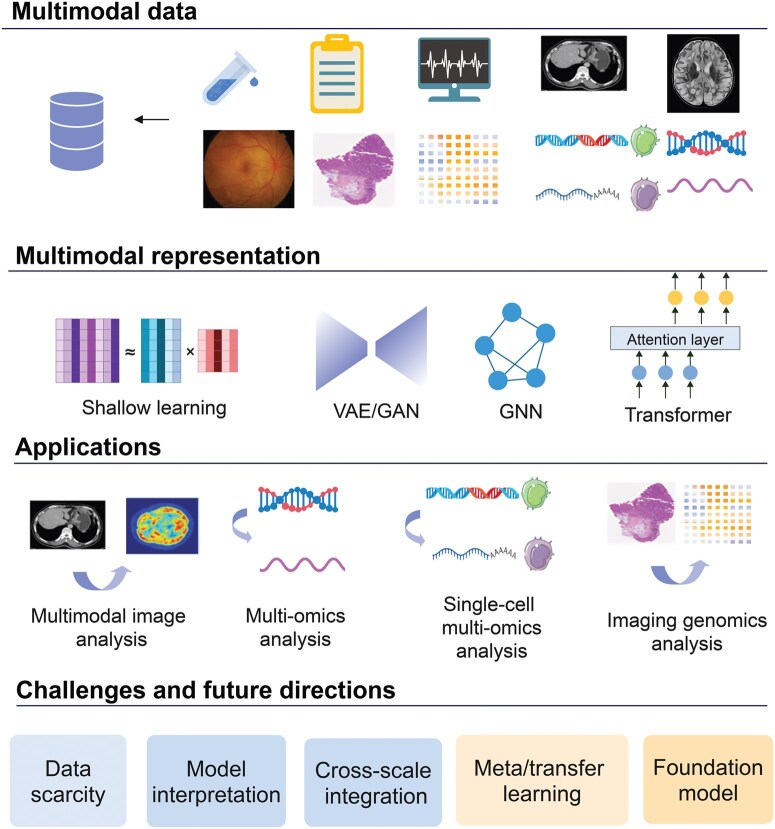
The rapid development of biological and medical examination methods has vastly expanded personal biomedical information, including molecular, cellular, image, and electronic health record datasets. Integrating this wealth of information enables precise disease diagnosis, biomarker identification, and treatment design in clinical settings. Artificial intelligence (AI) techniques, particularly deep learning models, have been extensively employed in biomedical applications, demonstrating increased precision, efficiency, and generalization. The success of the large language and vision models further significantly extends their biomedical applications. However, challenges remain in learning these multimodal biomedical datasets, such as data privacy, fusion, and model interpretation. In this review, we provide a comprehensive overview of various biomedical data modalities, multimodal representation learning methods, and the applications of AI in biomedical data integrative analysis. Additionally, we discuss the challenges in applying these deep learning methods and how to better integrate them into biomedical scenarios. We then propose future directions for adapting deep learning methods with model pretraining and knowledge integration to advance biomedical research and benefit their clinical applications.
Overview
CoChat Summary
TL;DR
This review surveys AI-driven multimodal biomedical data fusion, covering data modalities, representation learning methods, applications, challenges, and future directions. It argues that privacy, incomplete data, interpretation, and cross-scale integration remain key barriers, and highlights meta/transfer learning and foundation models as promising directions.
Key findings
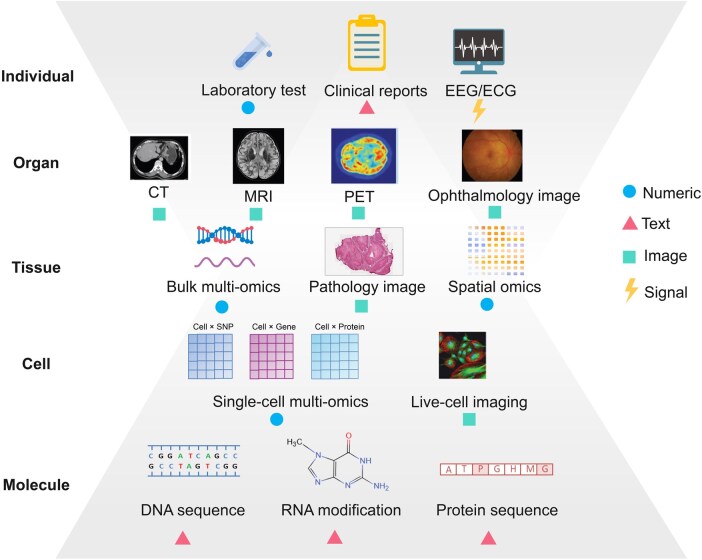
- The review categorizes biomedical multimodal data into numeric, image, text, and signal data, spanning sequencing, clinical, and experimental sources, and lists representative resources such as TCGA, ICGC, ADNI, UK Biobank, and MedMNIST.
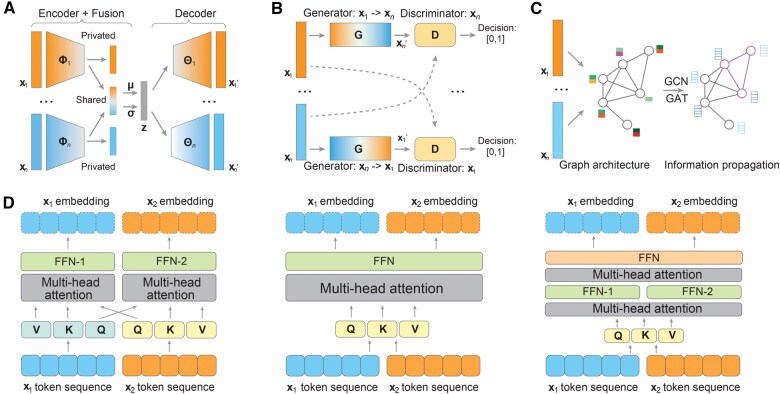
- It summarizes shallow methods (jNMF, PLS, CCA, MKL) and deep representation learning methods (VAE, GAN, GNN, Transformer) for aligning and integrating heterogeneous modalities.
- Applications reviewed include clinical multimodal integration (e.g., WSI + genomics, CT/MRI + genomics), multi-omics analysis, single-cell/spatial analysis, and genotype–phenotype association; the text notes high-throughput single-cell techniques have generated millions of individual cell data points and a NeurIPS competition identified three key tasks.
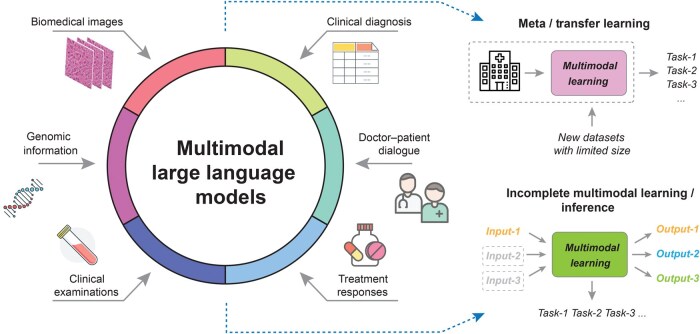
- Challenges include data privacy/sharing limits, incomplete modalities, model interpretation, and cross-scale integration; future directions include meta/transfer learning, foundation models, and LLM-based knowledge integration.
Methods
- Design: narrative review.
- Data/sample: existing literature and public multimodal biomedical databases/resources; no primary data collection.
- Analysis: thematic synthesis of data modalities, representation learning methods, applications, challenges, and future directions; no systematic search protocol or quantitative meta-analysis stated.
Limitations
- The paper does not explicitly state limitations of this review. It states field-level limitations: data privacy restrictions, incomplete multimodal datasets, limited cohort sizes, difficulty interpreting models, and reliance on predefined pathway annotations.
- Evident from the text: as a narrative review, it lacks a described systematic search strategy, inclusion/exclusion criteria, and quantitative synthesis; examples are illustrative rather than exhaustive.
Model-written summary. Check it against the paper before relying on it.
Integrity signals
Registry
Cites
Statistics
Figures
Verification
Claims the paper makes
110 Valid · 2 Not valid · 52 Not checked · 35 Own results and interpretations
The sources with a verdict support this claim; the rest weren’t checked yet, have no full text we could read, or their verdicts aren’t rated yet.
In the paper
“Self-supervised learning is an important approach for addressing the challenge by fully leveraging the unlabeled data.”
§ Challenges in AI-driven Biomedical Multimodal Data Fusion and Analysis > Challenges in AI-based biomedical multimodal data analysis > Data challenges
What the sources say
- Not checked — no full text of the sourcecites [146] Krishnan R, Rajpurkar P, Topol EJ. Self-supervised learning in medicine and healthcare. Nat Biomed Eng 2022; 6: 1346– 52. 35953649 source
- Supportedcites [147] Ciga O, Xu T, Martel AL. Self supervised contrastive learning for digital histopathology. Mach Learn Appl 2022; 7: 100198. source
The Introduction says labeled data are scarce and expensive, and that self-supervised methods use unlabeled data to mitigate the annotation bottleneck. Section 5.4 also reports better downstream performance when more unlabeled images are used for pretraining. (LLM, conf=0.92)
plainstates a cause- Asserted: passes — The authors put it forward as true.
- Checkable: passes — It can be checked against evidence.
- Load-bearing: unclear — It is unclear whether the paper’s conclusions depend on it.
- Based: passes — The paper gives a reason why it holds.
Every source the paper cites for this claim was checked and supports it.
In the paper
“In digital pathology applications, whole slide images have been used for predicting genomic features [19]”
§ Challenges in AI-driven Biomedical Multimodal Data Fusion and Analysis > Introduction
What the sources say
- Supportedcites [19] Qiao Y, Zhao L, Luo C, Luo Y, Wu Y, Li S, et al Multi-modality artificial intelligence in digital pathology. Brief Bioinform 2022; 23: bbac367. 36124675 PMC9677480 source
The Introduction describes digitized pathology slides as whole slide images (WSIs). The section ‘H&E images integration nucleic acid detection’ reports prediction of gene expression and specific gene mutations from pathology images; its references also include a study of genetic mutation prediction from whole slide images. Page numbers are unavailable in our copy. (LLM, conf=0.91)
plainstates an association- Asserted: passes — The authors put it forward as true.
- Checkable: passes — It can be checked against evidence.
- Load-bearing: unclear — It is unclear whether the paper’s conclusions depend on it.
- Based: passes — The paper gives a reason why it holds.
- Supported
Every source the paper cites for this claim was checked and supports it.
In the paper
“Despite the advancement of multimodal learning in the biomedical field, various challenges can hinder model training and its further applications [1].”
§ Challenges in AI-driven Biomedical Multimodal Data Fusion and Analysis > Introduction
What the sources say
- Supportedcites [1] Acosta JN, Falcone GJ, Rajpurkar P, Topol EJ. Multimodal biomedical AI. Nat Med 2022; 28: 1773– 84. 36109635 source
The Technical challenges section identifies computational demands and infrastructure as obstacles to building multimodal models. It also says dataset blind spots can hurt real-life prediction and that further innovation is needed for effective multimodal AI, supporting challenges to both model training and application. (LLM, conf=0.93)
plainstates a possible cause- Asserted: passes — The authors put it forward as true.
- Checkable: passes — It can be checked against evidence.
- Load-bearing: passes — The paper’s conclusions depend on it.
- Based: passes — The paper gives a reason why it holds.
- Supported
Every source the paper cites for this claim was checked and supports it.
In the paper
“Additionally, the development of incomplete modal learning enables more flexible and efficient representation learning in multimodal datasets [54,55].”
§ Challenges in AI-driven Biomedical Multimodal Data Fusion and Analysis > Multimodal representation learning methods > Variational autoencoder and generative adversarial network
What the sources say
- Supportedcites [54] Ma M, Ren J, Zhao L, Tulyakov S, Wu C, Peng X. Smil: multimodal learning with severely missing modality. Proceedings of the 35th AAAI Conference on Artificial Intelligence 2021: 2302– 10. source
The Proposed Method (p. 2) explicitly sets flexibility and efficiency as goals for learning from incomplete multimodal data. The Introduction (p. 1) describes learning latent embeddings under missing modalities, and the Conclusion (p. 7) reports that SMIL handles varied missing patterns effectively. The paper supports the claim through its specific method. (LLM, conf=0.86)
- Supportedcites [55] Wang FA, Zhuang Z, Gao F, He R, Zhang S, Wang L, et al TMO-Net: an explainable pretrained multi-omics model for multi-task learning in oncology. Genome Biol 2024; 25: 149. 38845006 PMC11157742 source
The Results (Model framework; page unavailable) say TMO-Net accommodates incomplete omics data and efficiently aligns latent spaces across modalities. The Discussion (page unavailable) says it efficiently learns joint embeddings from multi-omics inputs despite missing modalities and describes the framework as versatile and adaptable. This supports the claim for multimodal cancer datasets. (LLM, conf=0.88)
plainstates a cause- Asserted: passes — The authors put it forward as true.
- Checkable: passes — It can be checked against evidence.
- Load-bearing: unclear — It is unclear whether the paper’s conclusions depend on it.
- Based: passes — The paper gives a reason why it holds.
- Supported
The sources with a verdict support this claim; the rest weren’t checked yet, have no full text we could read, or their verdicts aren’t rated yet.
In the paper
“For functional adaption of VAE into multimodal usage, the mixture of experts (MoE) [51], the product of experts (PoE) [52], and the fusion of MoE and PoE (MoPoE) [53] models were integrated to better infer the joint variational posteriors of the VAE model.”
§ Challenges in AI-driven Biomedical Multimodal Data Fusion and Analysis > Multimodal representation learning methods > Variational autoencoder and generative adversarial network
What the sources say
- Not checked yetcites [51] Shi Y, Siddharth N, Paige B, Torr P. Variational mixture-of-experts autoencoders for multi-modal deep generative models. Proceedings of the 33rd Conference on Neural Information Processing Systems 2019. source
- Not checked yetcites [52] Wu M, Goodman N. Multimodal generative models for scalable weakly-supervised learning. Proceedings of the 32nd Conference on Neural Information Processing Systems 2018. source
- Supportedcites [53] Sutter TM, Daunhawer I, Vogt JE. Generalized multimodal ELBO. arXiv 2021;2105.02470. source
The Introduction (p. 1) says the proposed MoPoE-VAE models the joint posterior approximation as a mixture of products of experts, encompassing the PoE-based MVAE and MoE-based MMVAE. Section 3.5 (p. 5) explains that it combines PoE and MoE to retain their strengths, supporting the part of the sentence attributed to this paper. (LLM, conf=0.92)
plainstates a cause- Asserted: passes — The authors put it forward as true.
- Checkable: passes — It can be checked against evidence.
- Load-bearing: unclear — It is unclear whether the paper’s conclusions depend on it.
- Based: passes — The paper gives a reason why it holds.
43 more claims · 19 with their cited sources checked
Create a free account to see all 199 claims and to verify the 36 references still open.
- It may state two separate claims as one. 71
- Probably not a substantial claim. 114
Self-check
Percentages, sums and reported differences re-computed from the paper’s own numbers.
Each contradiction between two passages listed here was confirmed by an independent check.
Rated minor: it would not touch a result — a value no result rests on, a p-value that stays on the same side of the significance level, or a conflict that is clerical, resolved elsewhere in the paper, or outside its own findings.
In the paper
§ Challenges in AI-driven Biomedical Multimodal Data Fusion and Analysis > Challenges in AI-based biomedical multimodal data analysis > Data challenges
“Caroline et al. developed a cross-modal analysis method that enables the imputation of hard-to-acquire cardiac MRIs from easy-to-acquire ECG [154].”
§ Challenges in AI-driven Biomedical Multimodal Data Fusion and Analysis > References
“154. Radhakrishnan A, Friedman SF, Khurshid S, Ng K, Batra P, Lubitz SA, et al. Cross-modal autoencoder framework learns holistic representations of cardiovascular state.”
Rated minor: it would not touch a result — a value no result rests on, a p-value that stays on the same side of the significance level, or a conflict that is clerical, resolved elsewhere in the paper, or outside its own findings.
In the paper
§ Challenges in AI-driven Biomedical Multimodal Data Fusion and Analysis > Applications of AI in multimodal biomedical data analysis > Multi-omics data analysis
“Additionally, Froguel et al. introduced a multi-omics variational autoencoders (MOVE) framework for identifying the associations between drug usage and multi-omics data features, helping characterize the drug effects on type 2 diabetes [18].”
§ Challenges in AI-driven Biomedical Multimodal Data Fusion and Analysis > References
“18. Allesøe RL, Lundgaard AT, Hernández Medina R, Aguayo-Orozco A, Johansen J, Nissen JN, et al Discovery of drug-omics associations in type 2 diabetes with generative deep-learning models.”
Citations
Cites
BERT: Pre-training of Deep Bidirectional Transformers for Language Understanding
Devlin, J., Chang, M.-W., Lee, K., & Toutanova, K. (2019) · Proceedings of the 2019 Conference of the North American Chapter of the Association for Computational Linguistics: Human Language Technologies, Volume 1 (Long and Short Papers) · doi:10.18653/v1/n19-1423 · Cited by 54,325
Unpaired image-to-image translation using cycle-consistent adversarial networks
Zhu, J.-Y., Park, T., Isola, P., & Efros, A. A. (2017) · 2017 IEEE International Conference on Computer Vision (ICCV) · doi:10.1109/iccv.2017.244 · Cited by 23,602
Integrative Analysis of Complex Cancer Genomics and Clinical Profiles Using the cBioPortal
Gao, J., Aksoy, B. A., Dogrusoz, U., Dresdner, G., Gross, B., Sumer, S. O., Sun, Y., Jacobsen, A., Sinha, R., Larsson, E., et al. (2013) · Science Signaling · doi:10.1126/scisignal.2004088 · Cited by 15,160
Sudlow, C., Gallacher, J., Allen, N., Beral, V., Burton, P., Danesh, J., Downey, P., Elliott, P., Green, J., Landray, M., et al. (2015) · PLOS Medicine · doi:10.1371/journal.pmed.1001779 · Cited by 12,728 · cited 1×
“…consortium for type 2 diabetes, the Alzheimer’s Disease Neuroimaging Initiative (ADNI) [144] dataset for AD, and other portals like UK Biobank [145] for general digital health records, but the data size of specific cancer types or diseases remains limited, which may impede neural network…”
The graph neural network model
Scarselli, F., Gori, M., Tsoi, A. C., Hagenbuchner, M., & Monfardini, G. (2009) · IEEE Transactions on Neural Networks · doi:10.1109/tnn.2008.2005605 · Cited by 9,582 · cited 1×
“Graph neural networks (GNNs) are a type of deep learning model that are specifically designed and well-suited for analyzing complex relationships between objects represented in a graph structure [63] (Figure 2C).”
The genomic and transcriptomic architecture of 2,000 breast tumours reveals novel subgroups
METABRIC Group, Curtis, C., Shah, S. P., Chin, S.-F., Turashvili, G., Rueda, O. M., Dunning, M. J., Speed, D., Lynch, A. G., Samarajiwa, S., et al. (2012) · Nature · doi:10.1038/nature10983 · Cited by 6,097 · cited 1×
“…Atlas (TCGA) [139], International Cancer Genome Consortium (ICGC) [140], Molecular Taxonomy of Breast Cancer International Consortium (METABRIC) [141], and The cBioPortal for Cancer Genomics (cBioPortal) [142] for cancer research, the Diabetes Remission Clinical Trial (DiRECT) [143] consortium…”
Deep learning in medical image analysis
Shen, D., Wu, G., & Suk, H.-I. (2017) · Annual Review of Biomedical Engineering · doi:10.1146/annurev-bioeng-071516-044442 · Cited by 4,968
Generative Adversarial Networks: An Overview
Creswell, A., White, T., Dumoulin, V., Arulkumaran, K., Sengupta, B., & Bharath, A. A. (2018) · IEEE Signal Processing Magazine · doi:10.1109/msp.2017.2765202 · Cited by 4,540 · cited 1×
“…the data fusion module was used to learn the cross-modality information, while modality-specific decoders were applied The generative adversarial network (GAN) is another deep generative model for learning the latent representation and producing artificial datasets of the original datasets [58].”
Large language models encode clinical knowledge
Singhal, K., Azizi, S., Tu, T., Mahdavi, S. S., Wei, J., Chung, H. W., Scales, N., Tanwani, A., Cole-Lewis, H., Pfohl, S., et al. (2023) · Nature · doi:10.1038/s41586-023-06291-2 · Cited by 4,083 · cited 1×
“To address these problems, one approach is to combine prompt tuning to enhance LLMs for learning medical knowledge and adaptation for biomedical applications [200]; another approach is to infuse knowledge graphs into the LLMs [201].”
Liu, J., Lichtenberg, T., Hoadley, K. A., Poisson, L. M., Lazar, A. J., Cherniack, A. D., Kovatich, A. J., Benz, C. C., Levine, D. A., Lee, A. V., et al. (2018) · Cell · doi:10.1016/j.cell.2018.02.052 · Cited by 3,725
Self-citationRajpurkar, P., Chen, E., Banerjee, O., & Topol, E. J. (2022) · Nature Medicine · doi:10.1038/s41591-021-01614-0 · Cited by 3,212 · cited 1×
“These datasets have enabled the utilization of AI techniques in various downstream tasks, such as sample classification, prognosis prediction, image lesion detection, image segmentation, and others [ 206], which have demonstrated higher precision and efficacy in clinical settings [94].”
Pan-cancer analysis of whole genomes
The ICGC/TCGA Pan-Cancer Analysis of Whole Genomes Consortium, Aaltonen, L. A., Abascal, F., Abeshouse, A., Aburatani, H., Adams, D. J., Agrawal, N., Ahn, K. S., Ahn, S.-M., Aikata, H., et al. (2020) · Nature · doi:10.1038/s41586-020-1969-6 · Cited by 3,064
Self-citationAlzheimer's Disease Neuroimaging Initiative (ADNI): Clinical characterization
Petersen, R. C., Aisen, P. S., Beckett, L. A., Donohue, M. C., Gamst, A. C., Harvey, D. J., Jack, C. R., Jagust, W. J., Shaw, L. M., Toga, A. W., et al. (2010) · Neurology · doi:10.1212/wnl.0b013e3181cb3e25 · Cited by 3,060
Multi-omics approaches to disease
Hasin, Y., Seldin, M., & Lusis, A. (2017) · Genome Biology · doi:10.1186/s13059-017-1215-1 · Cited by 2,953
Learning Important Features Through Propagating Activation Differences
Shrikumar, A., Greenside, P., & Kundaje, A. (2017) · arXiv · doi:10.48550/arxiv.1704.02685 · Cited by 2,761
Deep generative modeling for single-cell transcriptomics
Lopez, R., Regier, J., Cole, M. B., Jordan, M. I., & Yosef, N. (2018) · Nature Methods · doi:10.1038/s41592-018-0229-2 · Cited by 2,530
Multimodal Transformer for Unaligned Multimodal Language Sequences
Tsai, Y.-H. H., Bai, S., Liang, P. P., Kolter, J. Z., Morency, L.-P., & Salakhutdinov, R. (2019) · Proceedings of the 57th Annual Meeting of the Association for Computational Linguistics · doi:10.18653/v1/p19-1656 · Cited by 2,259
Multiple Kernel Learning Algorithms
Gönen, M., & Alpaydın, E. (2011) · Journal of Machine Learning Research · doi:10.5555/1953048.2021071 · Cited by 2,204
ViLBERT: Pretraining Task-Agnostic Visiolinguistic Representations for Vision-and-Language Tasks
Lu, J., Batra, D., Parikh, D., & Lee, S. (2019) · arXiv · doi:10.48550/arxiv.1908.02265 · Cited by 2,109 · cited 1×
“In ViLBERT, a “co-attention” transformer layer was used to learn the joint representation of the image and natural language and enabled the pretraining and transfer of cross-modality interactions [84].”
Foundation models for generalist medical artificial intelligence
Moor, M., Banerjee, O., Abad, Z. S. H., Krumholz, H. M., Leskovec, J., Topol, E. J., & Rajpurkar, P. (2023) · Nature · doi:10.1038/s41586-023-05881-4 · Cited by 2,028
Graph convolutional networks: a comprehensive review
Zhang, S., Tong, H., Xu, J., & Maciejewski, R. (2019) · Computational Social Networks · doi:10.1186/s40649-019-0069-y · Cited by 1,888
Effective gene expression prediction from sequence by integrating long-range interactions
Avsec, Ž., Agarwal, V., Visentin, D., Ledsam, J. R., Grabska-Barwinska, A., Taylor, K. R., Assael, Y., Jumper, J., Kohli, P., & Kelley, D. R. (2021) · Nature Methods · doi:10.1038/s41592-021-01252-x · Cited by 1,827
Artificial intelligence in digital pathology — new tools for diagnosis and precision oncology
Bera, K., Schalper, K. A., Rimm, D. L., Velcheti, V., & Madabhushi, A. (2019) · Nature Reviews Clinical Oncology · doi:10.1038/s41571-019-0252-y · Cited by 1,698
scGPT: Towards Building a Foundation Model for Single-Cell Multi-omics Using Generative AI
Cui, H., Wang, C., Maan, H., Pang, K., Luo, F., & Wang, B. (2023) · doi:10.1101/2023.04.30.538439 · Cited by 1,694
Secure, privacy-preserving and federated machine learning in medical imaging
Kaissis, G. A., Makowski, M. R., Rückert, D., & Braren, R. F. (2020) · Nature Machine Intelligence · doi:10.1038/s42256-020-0186-1 · Cited by 1,676
Towards a general-purpose foundation model for computational pathology
Chen, R. J., Ding, T., Lu, M. Y., Williamson, D. F. K., Jaume, G., Song, A. H., Chen, B., Zhang, A., Shao, D., Shaban, M., et al. (2024) · Nature Medicine · doi:10.1038/s41591-024-02857-3 · Cited by 1,560 · cited 1×
“UNI [191], Prov-GigaPath [192], and Virchow [193] were pretrained solely on pathology image data to perform cancer classification, diagnosis, and prognosis.”
Acosta, J. N., Falcone, G. J., Rajpurkar, P., & Topol, E. J. (2022) · Nature Medicine · doi:10.1038/s41591-022-01981-2 · Cited by 1,365
Ji, Y., Zhou, Z., Liu, H., & Davuluri, R. V. (2021) · Bioinformatics · doi:10.1093/bioinformatics/btab083 · Cited by 1,303
Methods and applications for single-cell and spatial multi-omics
Vandereyken, K., Sifrim, A., Thienpont, B., & Voet, T. (2023) · Nature Reviews Genetics · doi:10.1038/s41576-023-00580-2 · Cited by 1,244
Digital pathology and artificial intelligence
Niazi, M. K. K., Parwani, A. V., & Gurcan, M. N. (2019) · The Lancet Oncology · doi:10.1016/s1470-2045(19)30154-8 · Cited by 1,232 · cited 1×
“These datasets have enabled the utilization of AI techniques in various downstream tasks, such as sample classification, prognosis prediction, image lesion detection, image segmentation, and others [ 206], which have demonstrated higher precision and efficacy in clinical settings [94].”
Artificial Intelligence and Machine Learning in Clinical Medicine, 2023
Haug, C. J., & Drazen, J. M. (2023) · New England Journal of Medicine · doi:10.1056/nejmra2302038 · Cited by 1,215
Transfer learning enables predictions in network biology
Theodoris, C. V., Xiao, L., Chopra, A., Chaffin, M. D., Al Sayed, Z. R., Hill, M. C., Mantineo, H., Brydon, E. M., Zeng, Z., Liu, X. S., et al. (2023) · Nature · doi:10.1038/s41586-023-06139-9 · Cited by 1,193 · cited 1×
“GeneFormer [189] focuses on the inference of gene function and regulatory networks, which has certain advantages in exploring the role of specific gene sets and gene clusters in cells and paves the foundation for omics-guided personalized therapy, but its generalization capability needs to be…”
Toolformer: Language Models Can Teach Themselves to Use Tools
Schick, T., Dwivedi-Yu, J., Dessì, R., Raileanu, R., Lomeli, M., Zettlemoyer, L., Cancedda, N., & Scialom, T. (2023) · arXiv · doi:10.48550/arxiv.2302.04761 · Cited by 1,150
Image analysis and machine learning in digital pathology: challenges and opportunities
Madabhushi, A., & Lee, G. (2016) · Medical Image Analysis · doi:10.1016/j.media.2016.06.037 · Cited by 1,093
Deep learning-based multi-omics integration robustly predicts survival in liver cancer
Chaudhary, K., Poirion, O. B., Lu, L., & Garmire, L. X. (2018) · Clinical Cancer Research · doi:10.1158/1078-0432.ccr-17-0853 · Cited by 1,091 · cited 1×
“In liver cancer research, Chaudhary et al. employed multi-omics data integration to predict the prognosis of hepatocellular carcinoma (HCC) and identify subgroups with significant survival differences [112].”
Large language models generate functional protein sequences across diverse families
Madani, A., Krause, B., Greene, E. R., Subramanian, S., Mohr, B. P., Holton, J. M., Olmos, J. L., Xiong, C., Sun, Z. Z., Socher, R., et al. (2023) · Nature Biotechnology · doi:10.1038/s41587-022-01618-2 · Cited by 1,078 · cited 1×
“The success of LLMs has revolutionized AI learning in nat-ural language and image processing [75] and has been extended into the learning of biological sequence datasets [80].”
Multimodal learning with transformers: A survey
Xu, P., Zhu, X., & Clifton, D. A. (2023) · IEEE Transactions on Pattern Analysis and Machine Intelligence · doi:10.1109/tpami.2023.3275156 · Cited by 1,072
Best practices for single-cell analysis across modalities
Heumos, L., Schaar, A. C., Lance, C., Litinetskaya, A., Drost, F., Zappia, L., Lücken, M. D., Strobl, D. C., Henao, J., Curion, F., et al. (2023) · Nature Reviews Genetics · doi:10.1038/s41576-023-00586-w · Cited by 1,051
Autonomous chemical research with large language models
Boiko, D. A., MacKnight, R., Kline, B., & Gomes, G. (2023) · Nature · doi:10.1038/s41586-023-06792-0 · Cited by 1,050
Roberts, M., Driggs, D., Thorpe, M., Gilbey, J., Yeung, M., Ursprung, S., Aviles-Rivero, A. I., Etmann, C., McCague, C., Beer, L., et al. (2021) · Nature Machine Intelligence · doi:10.1038/s42256-021-00307-0 · Cited by 1,044
Lean, M. E. J., Leslie, W. S., Barnes, A. C., Brosnahan, N., Thom, G., McCombie, L., Peters, C., Zhyzhneuskaya, S., Al-Mrabeh, A., Hollingsworth, K. G., et al. (2019) · The Lancet Diabetes & Endocrinology · doi:10.1016/s2213-8587(19)30068-3 · Cited by 1,017 · cited 1×
“…(METABRIC) [141], and The cBioPortal for Cancer Genomics (cBioPortal) [142] for cancer research, the Diabetes Remission Clinical Trial (DiRECT) [143] consortium for type 2 diabetes, the Alzheimer’s Disease Neuroimaging Initiative (ADNI) [144] dataset for AD, and other portals like UK Biobank…”
ProteinBERT: a universal deep-learning model of protein sequence and function
Brandes, N., Ofer, D., Peleg, Y., Rappoport, N., & Linial, M. (2022) · Bioinformatics · doi:10.1093/bioinformatics/btac020 · Cited by 1,009
Large-scale foundation model on single-cell transcriptomics
Hao, M., Gong, J., Zeng, X., Liu, C., Guo, Y., Cheng, X., Wang, T., Ma, J., Zhang, X., & Song, L. (2024) · Nature Methods · doi:10.1038/s41592-024-02305-7 · Cited by 988
A visual-language foundation model for computational pathology
Lu, M. Y., Chen, B., Williamson, D. F. K., Chen, R. J., Liang, I., Ding, T., Jaume, G., Odintsov, I., Le, L. P., Gerber, G., et al. (2024) · Nature Medicine · doi:10.1038/s41591-024-02856-4 · Cited by 966 · cited 1×
“PLIP [194] and CONCH [195] were pretrained on paired pathology images and text descriptions using contrastive learning meth-ods.”
Deep learning and alignment of spatially resolved single-cell transcriptomes with Tangram
Biancalani, T., Scalia, G., Buffoni, L., Avasthi, R., Lu, Z., Sanger, A., Tokcan, N., Vanderburg, C. R., Segerstolpe, Å., Zhang, M., et al. (2021) · Nature Methods · doi:10.1038/s41592-021-01264-7 · Cited by 931 · cited 1×
“Tangram [129] also integrated multimodal data for mapping, and it can also use supervised learning methods to infer the distribution of cell types in spatial locations from known cell types or gene expression signatures.”
A whole-slide foundation model for digital pathology from real-world data
Xu, H., Usuyama, N., Bagga, J., Zhang, S., Rao, R., Naumann, T., Wong, C., Gero, Z., González, J., Gu, Y., et al. (2024) · Nature · doi:10.1038/s41586-024-07441-w · Cited by 921
A large language model for electronic health records
Yang, X., Chen, A., PourNejatian, N., Shin, H. C., Smith, K. E., Parisien, C., Compas, C., Martin, C., Costa, A. B., Flores, M. G., et al. (2022) · npj Digital Medicine · doi:10.1038/s41746-022-00742-2 · Cited by 847 · cited 1×
“The success of LLMs in the field of neural language processing, as well as their remarkable ability to solve complex tasks, has inspired researchers’ enthusiasm for adapting these models in the biomedical field [185].”
Disease variant prediction with deep generative models of evolutionary data
Frazer, J., Notin, P., Dias, M., Gomez, A., Min, J. K., Brock, K., Gal, Y., & Marks, D. S. (2021) · Nature · doi:10.1038/s41586-021-04043-8 · Cited by 791
A Python library for probabilistic analysis of single-cell omics data
Gayoso, A., Lopez, R., Xing, G., Boyeau, P., Valiollah Pour Amiri, V., Hong, J., Wu, K., Jayasuriya, M., Mehlman, E., Langevin, M., et al. (2022) · Nature Biotechnology · doi:10.1038/s41587-021-01206-w · Cited by 789
Artificial intelligence for multimodal data integration in oncology
Lipkova, J., Chen, R. J., Chen, B., Lu, M. Y., Barbieri, M., Shao, D., Vaidya, A. J., Chen, C., Zhuang, L., Williamson, D. F. K., et al. (2022) · Cancer Cell · doi:10.1016/j.ccell.2022.09.012 · Cited by 777
Nucleotide Transformer: building and evaluating robust foundation models for human genomics
Dalla-Torre, H., Gonzalez, L., Mendoza-Revilla, J., Lopez Carranza, N., Grzywaczewski, A. H., Oteri, F., Dallago, C., Trop, E., de Almeida, B. P., Sirelkhatim, H., et al. (2025) · Nature Methods · doi:10.1038/s41592-024-02523-z · Cited by 772
Multimodal deep learning for biomedical data fusion: a review
Stahlschmidt, S. R., Ulfenborg, B., & Synnergren, J. (2022) · Briefings in Bioinformatics · doi:10.1093/bib/bbab569 · Cited by 766
Dong, K., & Zhang, S. (2022) · Nature Communications · doi:10.1038/s41467-022-29439-6 · Cited by 761
Synthetic data in machine learning for medicine and healthcare
Chen, R. J., Lu, M. Y., Chen, T. Y., Williamson, D. F. K., & Mahmood, F. (2021) · Nature Biomedical Engineering · doi:10.1038/s41551-021-00751-8 · Cited by 728
Yang, G., Ye, Q., & Xia, J. (2022) · Information Fusion · doi:10.1016/j.inffus.2021.07.016 · Cited by 717
Long, Y., Ang, K. S., Li, M., Chong, K. L. K., Sethi, R., Zhong, C., Xu, H., Ong, Z., Sachaphibulkij, K., Chen, A., et al. (2023) · Nature Communications · doi:10.1038/s41467-023-36796-3 · Cited by 700 · cited 1×
“Long et al. introduced the GraphST framework, which combined GNN and contrastive learning to integrate information within spatial transcriptomic datasets, across tissue sections and scRNA-seq datasets [127].”
A visual–language foundation model for pathology image analysis using medical twitter
Huang, Z., Bianchi, F., Yuksekgonul, M., Montine, T. J., & Zou, J. (2023) · Nature Medicine · doi:10.1038/s41591-023-02504-3 · Cited by 693 · cited 1×
“PLIP [194] and CONCH [195] were pretrained on paired pathology images and text descriptions using contrastive learning meth-ods.”
The Nucleotide Transformer: Building and Evaluating Robust Foundation Models for Human Genomics
Dalla-Torre, H., Gonzalez, L., Mendoza Revilla, J., Lopez Carranza, N., Henryk Grywaczewski, A., Oteri, F., Dallago, C., Trop, E., De Almeida, B. P., Sirelkhatim, H., et al. (2023) · doi:10.1101/2023.01.11.523679 · Cited by 680 · cited 1×
“This includes constructing large foundation models for genomics [186], clinical images [187], and clinical text learning [188].”
Wang, T., Shao, W., Huang, Z., Tang, H., Zhang, J., Ding, Z., & Huang, K. (2021) · Nature Communications · doi:10.1038/s41467-021-23774-w · Cited by 671
Harnessing multimodal data integration to advance precision oncology
Boehm, K. M., Khosravi, P., Vanguri, R., Gao, J., & Shah, S. P. (2022) · Nature Reviews Cancer · doi:10.1038/s41568-021-00408-3 · Cited by 662 · cited 1×
“The significantly high costs and extensive data collection requirements for LLM training present major challenges in establishing foundation models for biomedical learning, particularly in collecting paired multimodal datasets from individual patients [199].”
Pan-cancer integrative histology-genomic analysis via multimodal deep learning
Chen, R. J., Lu, M. Y., Williamson, D. F. K., Chen, T. Y., Lipkova, J., Noor, Z., Shaban, M., Shady, M., Williams, M., Joo, B., et al. (2022) · Cancer Cell · doi:10.1016/j.ccell.2022.07.004 · Cited by 660
Advancing drug discovery via artificial intelligence
Chan, H. C. S., Shan, H., Dahoun, T., Vogel, H., & Yuan, S. (2019) · Trends in Pharmacological Sciences · doi:10.1016/j.tips.2019.06.004 · Cited by 654
Large Scale Foundation Model on Single-cell Transcriptomics
Hao, M., Gong, J., Zeng, X., Liu, C., Guo, Y., Cheng, X., Wang, T., Ma, J., Song, L., & Zhang, X. (2023) · doi:10.1101/2023.05.29.542705 · Cited by 639
Yang, F., Wang, W., Wang, F., Fang, Y., Tang, D., Huang, J., Lu, H., & Yao, J. (2021) · doi:10.1101/2021.12.05.471261 · Cited by 617
Self-citationMulti-omics single-cell data integration and regulatory inference with graph-linked embedding
Cao, Z.-J., & Gao, G. (2022) · Nature Biotechnology · doi:10.1038/s41587-022-01284-4 · Cited by 616
Self-supervised learning in medicine and healthcare
Krishnan, R., Rajpurkar, P., & Topol, E. J. (2022) · Nature Biomedical Engineering · doi:10.1038/s41551-022-00914-1 · Cited by 605 · cited 1×
“Based on contrastive learning and data augmentation, the self-supervised learning approach can learn robust data embeddings from unlabeled data and the trained model can be fitted to many downstream tasks [146,147].”
Mapping single-cell data to reference atlases by transfer learning
Lotfollahi, M., Naghipourfar, M., Luecken, M. D., Khajavi, M., Büttner, M., Wagenstetter, M., Avsec, Ž., Gayoso, A., Yosef, N., Interlandi, M., et al. (2022) · Nature Biotechnology · doi:10.1038/s41587-021-01001-7 · Cited by 602
Secure Multiparty Computation and Secret Sharing
Cramer, R., Damgård, I. B., & Nielsen, J. B. (2015) · doi:10.1017/cbo9781107337756 · Cited by 595
A pathology foundation model for cancer diagnosis and prognosis prediction
Wang, X., Zhao, J., Marostica, E., Yuan, W., Jin, J., Zhang, J., Li, R., Tang, H., Wang, K., Li, Y., et al. (2024) · Nature · doi:10.1038/s41586-024-07894-z · Cited by 580 · cited 1×
“CHIEF considered the tissue origin as a label by applying a weakly supervised method during pretraining [196].”
Self-citationA foundation model for clinical-grade computational pathology and rare cancers detection
Vorontsov, E., Bozkurt, A., Casson, A., Shaikovski, G., Zelechowski, M., Severson, K., Zimmermann, E., Hall, J., Tenenholtz, N., Fusi, N., et al. (2024) · Nature Medicine · doi:10.1038/s41591-024-03141-0 · Cited by 572 · cited 1×
“UNI [191], Prov-GigaPath [192], and Virchow [193] were pretrained solely on pathology image data to perform cancer classification, diagnosis, and prognosis.”
Image as a Foreign Language: BEIT Pretraining for Vision and Vision-Language Tasks
Wang, W., Bao, H., Dong, L., Bjorck, J., Peng, Z., Liu, Q., Aggarwal, K., Mohammed, O. K., Singhal, S., Som, S., et al. (2023) · 2023 IEEE/CVF Conference on Computer Vision and Pattern Recognition (CVPR) · doi:10.1109/cvpr52729.2023.01838 · Cited by 561
Federated Optimization:Distributed Optimization Beyond the Datacenter
Konečný, J., McMahan, B., & Ramage, D. (2015) · arXiv (Cornell University) · doi:10.48550/arxiv.1511.03575 · Cited by 544
Advances in medical image analysis with vision Transformers: A comprehensive review
Azad, R., Kazerouni, A., Heidari, M., Aghdam, E. K., Molaei, A., Jia, Y., Jose, A., Roy, R., & Merhof, D. (2024) · Medical Image Analysis · doi:10.1016/j.media.2023.103000 · Cited by 485
Opening the black box: interpretable machine learning for geneticists
Azodi, C. B., Tang, J., & Shiu, S.-H. (2020) · Trends in Genetics · doi:10.1016/j.tig.2020.03.005 · Cited by 473
Biologically informed deep neural network for prostate cancer discovery
Elmarakeby, H. A., Hwang, J., Arafeh, R., Crowdis, J., Gang, S., Liu, D., AlDubayan, S. H., Salari, K., Kregel, S., Richter, C., et al. (2021) · Nature · doi:10.1038/s41586-021-03922-4 · Cited by 456 · cited 3×
“While multiple deep learning methods have been developed to integrate biological pathway information with neural network architectures [116,166], these methods are still limited by the predefined pathway annotations.”
Single-sequence protein structure prediction using a language model and deep learning
Chowdhury, R., Bouatta, N., Biswas, S., Floristean, C., Kharkar, A., Roy, K., Rochereau, C., Ahdritz, G., Zhang, J., Church, G. M., et al. (2022) · Nature Biotechnology · doi:10.1038/s41587-022-01432-w · Cited by 455 · cited 1×
“In biology applications, deep learning has been employed to learn the structure of DNA and protein sequences [6,7], predict protein structure [8], simulate and predict the genomic mutation risks [9], and facilitate drug discovery [10].”
Single-sequence protein structure prediction using language models from deep learning
Chowdhury, R., Bouatta, N., Biswas, S., Rochereau, C., Church, G. M., Sorger, P. K., & AlQuraishi, M. (2021) · doi:10.1101/2021.08.02.454840 · Cited by 455
Azam, M. A., Khan, K. B., Salahuddin, S., Rehman, E., Khan, S. A., Khan, M. A., Kadry, S., & Gandomi, A. H. (2022) · Computers in Biology and Medicine · doi:10.1016/j.compbiomed.2022.105253 · Cited by 449
Artificial intelligence in cancer target identification and drug discovery
You, Y., Lai, X., Pan, Y., Zheng, H., Vera, J., Liu, S., Deng, S., & Zhang, L. (2022) · Signal Transduction and Targeted Therapy · doi:10.1038/s41392-022-00994-0 · Cited by 435
High-plex protein and whole transcriptome co-mapping at cellular resolution with spatial CITE-seq
Liu, Y., DiStasio, M., Su, G., Asashima, H., Enninful, A., Qin, X., Deng, Y., Nam, J., Gao, F., Bordignon, P., et al. (2023) · Nature Biotechnology · doi:10.1038/s41587-023-01676-0 · Cited by 418
Self-citationHossain, E., Rana, R., Higgins, N., Soar, J., Barua, P. D., Pisani, A. R., & Turner, K. (2023) · Computers in Biology and Medicine · doi:10.1016/j.compbiomed.2023.106649 · Cited by 407
Multimodal data fusion for cancer biomarker discovery with deep learning
Steyaert, S., Pizurica, M., Nagaraj, D., Khandelwal, P., Hernandez-Boussard, T., Gentles, A. J., & Gevaert, O. (2023) · Nature Machine Intelligence · doi:10.1038/s42256-023-00633-5 · Cited by 402
Multimodal Co-Attention Transformer for Survival Prediction in Gigapixel Whole Slide Images
Chen, R. J., Lu, M. Y., Weng, W.-H., Chen, T. Y., Williamson, D. F., Manz, T., Shady, M., & Mahmood, F. (2021) · 2021 IEEE/CVF International Conference on Computer Vision (ICCV) · doi:10.1109/iccv48922.2021.00398 · Cited by 398
Applications of deep learning in fundus images: A review
Li, T., Bo, W., Hu, C., Kang, H., Liu, H., Wang, K., & Fu, H. (2021) · Medical Image Analysis · doi:10.1016/j.media.2021.101971 · Cited by 396
Vanguri, R. S., Luo, J., Aukerman, A. T., Egger, J. V., Fong, C. J., Horvat, N., Pagano, A., Araujo-Filho, J. D. A. B., Geneslaw, L., Rizvi, H., et al. (2022) · Nature Cancer · doi:10.1038/s43018-022-00416-8 · Cited by 395
A roadmap for multi-omics data integration using deep learning
Kang, M., Ko, E., & Mersha, T. B. (2022) · Briefings in Bioinformatics · doi:10.1093/bib/bbab454 · Cited by 389 · cited 1×
“Deep learning has been utilized for integrating multi-omics datasets and performing different downstream tasks [111].”
Discovery of multi-dimensional modules by integrative analysis of cancer genomic data
Zhang, S., Liu, C.-C., Li, W., Shen, H., Laird, P. W., & Zhou, X. J. (2012) · Nucleic Acids Research · doi:10.1093/nar/gks725 · Cited by 374 · cited 1×
“These methods (jNMF, PLS, and CCA) are frequently employed in multi-omics integration tasks, aiding in the analysis of gene modules and exploring underlying biological mechanisms in the multi-omics latent space [42,46].”
Boehm, K. M., Aherne, E. A., Ellenson, L., Nikolovski, I., Alghamdi, M., Vázquez-García, I., Zamarin, D., Long Roche, K., Liu, Y., Patel, D., et al. (2022) · Nature Cancer · doi:10.1038/s43018-022-00388-9 · Cited by 357 · cited 1×
“Boehm et al. comprehensively characterized the multimodal datasets of high-grade serous ovarian cancer and proposed that a combination of histopathological, radiologic, and genomic features can better predict the prognosis of patients and aid in risk stratification [103].”
Zhou, H.-Y., Yu, Y., Wang, C., Zhang, S., Gao, Y., Pan, J., Shao, J., Lu, G., Zhang, K., & Li, W. (2023) · Nature Biomedical Engineering · doi:10.1038/s41551-023-01045-x · Cited by 343
A generalist vision-language foundation model for diverse biomedical tasks
Zhang, K., Zhou, R., Adhikarla, E., Yan, Z., Liu, Y., Yu, J., Liu, Z., Chen, X., Davison, B. D., Ren, H., et al. (2024) · Nature Medicine · doi:10.1038/s41591-024-03185-2 · Cited by 333 · cited 1×
“BiomedGPT integrated different modalities of clinical images and corresponding clinical reports using unified tokenization methods [197].”
Self-citationSMIL: Multimodal Learning with Severely Missing Modality
Ma, M., Ren, J., Zhao, L., Tulyakov, S., Wu, C., & Peng, X. (2021) · Proceedings of the AAAI Conference on Artificial Intelligence · doi:10.1609/aaai.v35i3.16330 · Cited by 332
Empowering biomedical discovery with AI agents
Gao, S., Fang, A., Huang, Y., Giunchiglia, V., Noori, A., Schwarz, J. R., Ektefaie, Y., Kondic, J., & Zitnik, M. (2024) · Cell · doi:10.1016/j.cell.2024.09.022 · Cited by 315
Yang, Z., & Michailidis, G. (2016) · Bioinformatics · doi:10.1093/bioinformatics/btv544 · Cited by 295 · cited 2×
“Notable approaches include joint non-negative matrix factorization (jNMF) methods [42], partial least square (PLS) [43], canonical correlation analysis (CCA) [44], and multiple kernel learning (MKL) [45].”
Graph representation learning in biomedicine and healthcare
Li, M. M., Huang, K., & Zitnik, M. (2022) · Nature Biomedical Engineering · doi:10.1038/s41551-022-00942-x · Cited by 294 · cited 1×
“In the context of biomedical applications, these graph structures can represent various associations, including gene functions, drug responses, medical image patches, and cellular similarity [64].”
Self supervised contrastive learning for digital histopathology
Ciga, O., Xu, T., & Martel, A. L. (2022) · Machine Learning with Applications · doi:10.1016/j.mlwa.2021.100198 · Cited by 294
Deep learning based multimodal biomedical data fusion: an overview and comparative review
Duan, J., Xiong, J., Li, Y., & Ding, W. (2024) · Information Fusion · doi:10.1016/j.inffus.2024.102536 · Cited by 284
Self-citationLi, X., Li, C., Rahaman, M. M., Sun, H., Li, X., Wu, J., Yao, Y., & Grzegorzek, M. (2022) · Artificial Intelligence Review · doi:10.1007/s10462-021-10121-0 · Cited by 278
DestVI identifies continuums of cell types in spatial transcriptomics data
Lopez, R., Li, B., Keren-Shaul, H., Boyeau, P., Kedmi, M., Pilzer, D., Jelinski, A., Yofe, I., David, E., Wagner, A., et al. (2022) · Nature Biotechnology · doi:10.1038/s41587-022-01272-8 · Cited by 276 · cited 1×
“DestVI proposed a framework that jointly learned the latent representations of scRNA-seq datasets and spatial spot expression datasets to deconvolute cell-type proportions and related transcriptional states in single spots [126].”
Precision medicine and radiogenomics in breast cancer: new approaches toward diagnosis and treatment
Pinker, K., Chin, J., Melsaether, A. N., Morris, E. A., & Moy, L. (2018) · Radiology · doi:10.1148/radiol.2018172171 · Cited by 275
Ben-Cohen, A., Klang, E., Raskin, S. P., Soffer, S., Ben-Haim, S., Konen, E., Amitai, M., & Greenspan, H. (2018) · Engineering applications of artificial intelligence · doi:10.48550/arxiv.1802.07846 · Cited by 239
Ben-Cohen, A., Klang, E., Raskin, S. P., Soffer, S., Ben-Haim, S., Konen, E., Amitai, M. M., & Greenspan, H. (2019) · Engineering Applications of Artificial Intelligence · doi:10.1016/j.engappai.2018.11.013 · Cited by 231
Deciphering spatial domains from spatial multi-omics with SpatialGlue
Long, Y., Ang, K. S., Sethi, R., Liao, S., Heng, Y., van Olst, L., Ye, S., Zhong, C., Xu, H., Zhang, D., et al. (2024) · Nature Methods · doi:10.1038/s41592-024-02316-4 · Cited by 223 · cited 1×
“Additionally, SpatialGLUE applied a GNN to integrate spatial multi-omics data [130], which captured more anatomical details including undiscovered cell types, and provided more accurate information on spatial domains.”
Inferring super-resolution tissue architecture by integrating spatial transcriptomics with histology
Zhang, D., Schroeder, A., Yan, H., Yang, H., Hu, J., Lee, M. Y. Y., Cho, K. S., Susztak, K., Xu, G. X., Feldman, M. D., et al. (2024) · Nature Biotechnology · doi:10.1038/s41587-023-02019-9 · Cited by 219
Radiological images and machine learning: Trends, perspectives, and prospects
Zhang, Z., & Sejdić, E. (2019) · Computers in Biology and Medicine · doi:10.1016/j.compbiomed.2019.02.017 · Cited by 216
Multi-Modal Graph Learning for Disease Prediction
Zheng, S., Zhu, Z., Liu, Z., Guo, Z., Liu, Y., Yang, Y., & Zhao, Y. (2022) · IEEE Transactions on Medical Imaging · doi:10.1109/tmi.2022.3159264 · Cited by 196 · cited 1×
“Zheng et al. introduced the MMGL framework that applied modal-aware representation learning to extract the intra-and inter-modality representations and then used adaptive graph learning (AGL) to identify associations between patients in disease prediction [68].”
Interpretable factor models of single-cell RNA-seq via variational autoencoders
Svensson, V., Gayoso, A., Yosef, N., & Pachter, L. (2020) · Bioinformatics · doi:10.1093/bioinformatics/btaa169 · Cited by 190
Statistical and machine learning methods for spatially resolved transcriptomics data analysis
Zeng, Z., Li, Y., Li, Y., & Luo, Y. (2022) · Genome Biology · doi:10.1186/s13059-022-02653-7 · Cited by 186 · cited 1×
“Deep learning meth-ods have been applied to extract the interactions between cellular location and molecular phenotypes [125].”
Self-citationTransformer-based deep learning for predicting protein properties in the life sciences
Chandra, A., Tünnermann, L., Löfstedt, T., & Gratz, R. (2023) · eLife · doi:10.7554/elife.82819 · Cited by 184
Single-cell biological network inference using a heterogeneous graph transformer
Ma, A., Wang, X., Li, J., Wang, C., Xiao, T., Liu, Y., Cheng, H., Wang, J., Li, Y., Chang, Y., et al. (2023) · Nature Communications · doi:10.1038/s41467-023-36559-0 · Cited by 184
Self-citationMa, J., Fong, S. H., Luo, Y., Bakkenist, C. J., Shen, J. P., Mourragui, S., Wessels, L. F. A., Hafner, M., Sharan, R., Peng, J., et al. (2021) · Nature Cancer · doi:10.1038/s43018-020-00169-2 · Cited by 180 · cited 1×
“Furthermore, meta-learning has been applied to learn the interactions between cell-line phenotypes with the drug responses, and further transferred them into clinical context, enabling prediction on a limited number of human tumor samples [184].”
TransPath: Transformer-Based Self-supervised Learning for Histopathological Image Classification
Wang, X., Yang, S., Zhang, J., Wang, M., Zhang, J., Huang, J., Yang, W., & Han, X. (2021) · Lecture Notes in Computer Science · doi:10.1007/978-3-030-87237-3_18 · Cited by 178 · cited 1×
“Typical examples include Transpath [148] and CS-CO [149] for histopathological image analysis, which reduced the costs for histopathological image annotations.”
Applications of transformer-based language models in bioinformatics: a survey
Zhang, S., Fan, R., Liu, Y., Chen, S., Liu, Q., & Zeng, W. (2023) · Bioinformatics Advances · doi:10.1093/bioadv/vbad001 · Cited by 176
Revisiting the central dogma one molecule at a time
Bustamante, C., Cheng, W., & Mejia, Y. X. (2011) · Cell · doi:10.1016/j.cell.2011.01.033 · Cited by 173 · cited 1×
“The central dogma of molecular biology outlines the process of genetic information being transferred from DNA to mRNA to protein, representing a fundamental mechanism for biological information processing [109].”
scJoint integrates atlas-scale single-cell RNA-seq and ATAC-seq data with transfer learning
Lin, Y., Wu, T.-Y., Wan, S., Yang, J. Y. H., Wong, W. H., & Wang, Y. X. R. (2022) · Nature Biotechnology · doi:10.1038/s41587-021-01161-6 · Cited by 166
Multimodal learning with graphs
Ektefaie, Y., Dasoulas, G., Noori, A., Farhat, M., & Zitnik, M. (2023) · Nature Machine Intelligence · doi:10.1038/s42256-023-00624-6 · Cited by 166 · cited 2×
“The “all-in-one” multimodal graph learning (MGL) architecture [67] introduced a unified framework that included entity identification, topology construction, information propagation, and representation mixing for joint learning of modalities such as images, language sequences, or biological systems.”
Zhou, X., Dong, K., & Zhang, S. (2023) · Nature Computational Science · doi:10.1038/s43588-023-00528-w · Cited by 160
Computational approaches and challenges in spatial transcriptomics
Fang, S., Chen, B., Zhang, Y., Sun, H., Liu, L., Liu, S., Li, Y., & Xu, X. (2023) · Genomics, Proteomics & Bioinformatics · doi:10.1016/j.gpb.2022.10.001 · Cited by 159
Self-citationWu, Z., Trevino, A. E., Wu, E., Swanson, K., Kim, H. J., D’Angio, H. B., Preska, R., Charville, G. W., Dalerba, P. D., Egloff, A. M., et al. (2022) · Nature Biomedical Engineering · doi:10.1038/s41551-022-00951-w · Cited by 154 · cited 1×
“For spatial omics analysis, a graph-based deep learning algorithm has been developed to predict patient outcomes from spatial proteomics profiling [138], facilitating the identification of disease– phenotype-specific tumor microenvironment patterns.”
Yang, X., Liu, G., Feng, G., Bu, D., Wang, P., Jiang, J., Chen, S., Yang, Q., Miao, H., Zhang, Y., et al. (2024) · Cell Research · doi:10.1038/s41422-024-01034-y · Cited by 148
Self-citationYang, X., Liu, G., Feng, G., Bu, D., Wang, P., Jiang, J., Chen, S., Yang, Q., Zhang, Y., Man, Z., et al. (2023) · doi:10.1101/2023.09.26.559542 · Cited by 148
Self-citationDeng, R., Cui, C., Liu, Q., Yao, T., Remedios, L. W., Bao, S., Landman, B. A., Wheless, L. E., Coburn, L. A., Wilson, K. T., et al. (2025) · Electronic Imaging · doi:10.2352/ei.2025.37.14.coimg-132 · Cited by 144
Histopathology images predict multi-omics aberrations and prognoses in colorectal cancer patients
Tsai, P.-C., Lee, T.-H., Kuo, K.-C., Su, F.-Y., Lee, T.-L. M., Marostica, E., Ugai, T., Zhao, M., Lau, M. C., Väyrynen, J. P., et al. (2023) · Nature Communications · doi:10.1038/s41467-023-37179-4 · Cited by 136 · cited 1×
“While some deep learning approaches have focused on detecting molecular alterations in image data [132], most existing studies have centered on inferring spatial transcriptome or bulk transcriptome information from histopathology images [133–136].”
Clustering of single-cell multi-omics data with a multimodal deep learning method
Lin, X., Tian, T., Wei, Z., & Hakonarson, H. (2022) · Nature Communications · doi:10.1038/s41467-022-35031-9 · Cited by 135
A survey of k-mer methods and applications in bioinformatics
Moeckel, C., Mareboina, M., Konnaris, M. A., Chan, C. S. Y., Mouratidis, I., Montgomery, A., Chantzi, N., Pavlopoulos, G. A., & Georgakopoulos-Soares, I. (2024) · Computational and Structural Biotechnology Journal · doi:10.1016/j.csbj.2024.05.025 · Cited by 131
Integrating multi-omics data with EHR for precision medicine using advanced artificial intelligence
Tong, L., Shi, W., Isgut, M., Zhong, Y., Lais, P., Gloster, L., Sun, J., Swain, A., Giuste, F., & Wang, M. D. (2024) · IEEE Reviews in Biomedical Engineering · doi:10.1109/rbme.2023.3324264 · Cited by 130
THItoGene: a deep learning method for predicting spatial transcriptomics from histological images
Jia, Y., Liu, J., Chen, L., Zhao, T., & Wang, Y. (2023) · Briefings in Bioinformatics · doi:10.1093/bib/bbad464 · Cited by 130 · cited 1×
“While some deep learning approaches have focused on detecting molecular alterations in image data [132], most existing studies have centered on inferring spatial transcriptome or bulk transcriptome information from histopathology images [133–136].”
Self-citationDeep learning shapes single-cell data analysis
Ma, Q., & Xu, D. (2022) · Nature Reviews Molecular Cell Biology · doi:10.1038/s41580-022-00466-x · Cited by 123 · cited 1×
“…development of single-cell multi-omics methods and the growth of single-cell datasets created a well-suited scenario for applying deep learning methods in single-cell analysis, which could further lead to advancements in the field of drug discovery, therapeutic targets, and digital health [2,131].”
Li, P., Hu, Y., & Liu, Z.-P. (2021) · Biomedical Signal Processing and Control · doi:10.1016/j.bspc.2021.102474 · Cited by 116 · cited 1×
“Integrating ECG with other bioelectrical data, including phonocardio-gram (PCG) data, has enabled improved performance of cardiovascular disease diagnosis and would be promising for other biomedical applications [107,108].”
Discovery of drug-omics associations in type 2 diabetes with generative deep-learning models
Allesøe, R. L., Lundgaard, A. T., Hernández Medina, R., Aguayo-Orozco, A., Johansen, J., Nissen, J. N., Brorsson, C., Mazzoni, G., Niu, L., Biel, J. H., et al. (2023) · Nature Biotechnology · doi:10.1038/s41587-022-01520-x · Cited by 111
A survey of multimodal deep generative models
Suzuki, M., & Matsuo, Y. (2022) · Advanced Robotics · doi:10.1080/01691864.2022.2035253 · Cited by 109
Seninge, L., Anastopoulos, I., Ding, H., & Stuart, J. (2021) · Nature Communications · doi:10.1038/s41467-021-26017-0 · Cited by 107
Where do we stand in AI for endoscopic image analysis? Deciphering gaps and future directions
Ali, S. (2022) · npj Digital Medicine · doi:10.1038/s41746-022-00733-3 · Cited by 107
Withnell, E., Zhang, X., Sun, K., & Guo, Y. (2021) · Briefings in Bioinformatics · doi:10.1093/bib/bbab315 · Cited by 106 · cited 2×
“XOmiVAE introduced an interpretable deep learning model to integrate high-dimensional omics data and explain the contributions of genes in a supervised and unsupervised manner [115].”
Lakkis, J., Schroeder, A., Su, K., Lee, M. Y. Y., Bashore, A. C., Reilly, M. P., & Li, M. (2022) · Nature Machine Intelligence · doi:10.1038/s42256-022-00545-w · Cited by 105
Incomplete multi-modal representation learning for Alzheimer’s disease diagnosis
Liu, Y., Fan, L., Zhang, C., Zhou, T., Xiao, Z., Geng, L., & Shen, D. (2021) · Medical Image Analysis · doi:10.1016/j.media.2020.101953 · Cited by 102
OmicVerse: a framework for bridging and deepening insights across bulk and single-cell sequencing
Zeng, Z., Ma, Y., Hu, L., Tan, B., Liu, P., Wang, Y., Xing, C., Xiong, Y., & Du, H. (2024) · Nature Communications · doi:10.1038/s41467-024-50194-3 · Cited by 102 · cited 1×
“To integrate bulk and single-cell transcriptome data, researchers have employed the β -VAE method to deconvolute bulk data into cell-type-specific expression profiles, addressing the ‘omission’ issue in single-cell sequencing [173].”
M3Care: Learning with Missing Modalities in Multimodal Healthcare Data
Zhang, C., Chu, X., Ma, L., Zhu, Y., Wang, Y., Wang, J., & Zhao, J. (2022) · Proceedings of the 28th ACM SIGKDD Conference on Knowledge Discovery and Data Mining · doi:10.1145/3534678.3539388 · Cited by 102 · cited 1×
“The M 3 Care method learned the unimodal representations, constructed the similarity graph of patients, and then imputed the latent space of missing modality in different patients [151].”
Biologically informed deep learning to query gene programs in single-cell atlases
Lotfollahi, M., Rybakov, S., Hrovatin, K., Hediyeh-zadeh, S., Talavera-López, C., Misharin, A. V., & Theis, F. J. (2023) · Nature Cell Biology · doi:10.1038/s41556-022-01072-x · Cited by 100 · cited 2×
“For instance, Lotfollahi et al. introduced expiMap, which used biological domain databases to learn cellular gene programs and was designed for inferring de novo gene programs, which enables more efficient cellular annotation and querying of new single-cell datasets [166].”
Amino acid encoding methods for protein sequences: a comprehensive review and assessment
Jing, X., Dong, Q., Hong, D., & Lu, R. (2020) · IEEE/ACM Transactions on Computational Biology and Bioinformatics · doi:10.1109/tcbb.2019.2911677 · Cited by 97
A meta-learning approach for genomic survival analysis
Qiu, Y. L., Zheng, H., Devos, A., Selby, H., & Gevaert, O. (2020) · Nature Communications · doi:10.1038/s41467-020-20167-3 · Cited by 96 · cited 1×
“For instance, Qiu et al. introduced a meta-learning framework to identify the sample representation by integrating the trained models across multiple tasks and performing prognosis prediction with limited training data [182].”
Cross-scale multi-instance learning for pathological image diagnosis
Deng, R., Cui, C., Remedios, L. W., Bao, S., Womick, R. M., Chiron, S., Li, J., Roland, J. T., Lau, K. S., Liu, Q., et al. (2024) · Medical Image Analysis · doi:10.1016/j.media.2024.103124 · Cited by 95
Jha, A., K. Aicher, J., R. Gazzara, M., Singh, D., & Barash, Y. (2020) · Genome Biology · doi:10.1186/s13059-020-02055-7 · Cited by 93 · cited 1×
“Jha et al. proposed the enhanced integrated gradients (EIG) method [169], which identified significant splicing code features in the liver and was adapted for identifying common transcriptional signatures of cancers [170].”
Multi-modal mri image synthesis via gan with multi-scale gate mergence
Zhan, B., Li, D., Wu, X., Zhou, J., & Wang, Y. (2022) · IEEE Journal of Biomedical and Health Informatics · doi:10.1109/jbhi.2021.3088866 · Cited by 90
Predicting and characterizing a cancer dependency map of tumors with deep learning
Chiu, Y.-C., Zheng, S., Wang, L.-J., Iskra, B. S., Rao, M. K., Houghton, P. J., Huang, Y., & Chen, Y. (2021) · Science Advances · doi:10.1126/sciadv.abh1275 · Cited by 84 · cited 1×
“The pretrain-and-finetune framework has shown its effectiveness in computer vision learning, neural language processing, and biomedical learning for prognosis prediction [179] and cancer dependency prediction [180].”
Mosaic integration and knowledge transfer of single-cell multimodal data with MIDAS
He, Z., Hu, S., Chen, Y., An, S., Zhou, J., Liu, R., Shi, J., Wang, J., Dong, G., Shi, J., et al. (2024) · Nature Biotechnology · doi:10.1038/s41587-023-02040-y · Cited by 84 · cited 1×
“He et al. introduced MIDAS, a deep-learning method that enabled mosaic data integration of single-cell multimodal data and knowledge transfer into new datasets [121].”
Low-count whole-body PET with deep learning in a multicenter and externally validated study
Chaudhari, A. S., Mittra, E., Davidzon, G. A., Gulaka, P., Gandhi, H., Brown, A., Zhang, T., Srinivas, S., Gong, E., Zaharchuk, G., et al. (2021) · npj Digital Medicine · doi:10.1038/s41746-021-00497-2 · Cited by 83
Cross-modal autoencoder framework learns holistic representations of cardiovascular state
Radhakrishnan, A., Friedman, S. F., Khurshid, S., Ng, K., Batra, P., Lubitz, S. A., Philippakis, A. A., & Uhler, C. (2023) · Nature Communications · doi:10.1038/s41467-023-38125-0 · Cited by 82 · cited 1×
“Caroline et al. developed a cross-modal analysis method that enables the imputation of hard-to-acquire cardiac MRIs from easy-to-acquire ECG [154].”
Into the multiverse: advances in single-cell multiomic profiling
Ogbeide, S., Giannese, F., Mincarelli, L., & Macaulay, I. C. (2022) · Trends in Genetics · doi:10.1016/j.tig.2022.03.015 · Cited by 82
Vision transformer-based weakly supervised histopathological image analysis of primary brain tumors
Li, Z., Cong, Y., Chen, X., Qi, J., Sun, J., Yan, T., Yang, H., Liu, J., Lu, E., Wang, L., et al. (2023) · iScience · doi:10.1016/j.isci.2022.105872 · Cited by 82
Self-citationImproved survival analysis by learning shared genomic information from pan-cancer data
Kim, S., Kim, K., Choe, J., Lee, I., & Kang, J. (2020) · Bioinformatics · doi:10.1093/bioinformatics/btaa462 · Cited by 77 · cited 1×
“The pretrain-and-finetune framework has shown its effectiveness in computer vision learning, neural language processing, and biomedical learning for prognosis prediction [179] and cancer dependency prediction [180].”
Li, J., & Wang, Q. (2022) · Information Fusion · doi:10.1016/j.inffus.2021.10.018 · Cited by 77 · cited 1×
“Integrating ECG with other bioelectrical data, including phonocardio-gram (PCG) data, has enabled improved performance of cardiovascular disease diagnosis and would be promising for other biomedical applications [107,108].”
Realizing private and practical pharmacological collaboration
Hie, B., Cho, H., & Berger, B. (2018) · Science · doi:10.1126/science.aat4807 · Cited by 76
Machine learning methods for histopathological image analysis: updates in 2024
Komura, D., Ochi, M., & Ishikawa, S. (2025) · Computational and Structural Biotechnology Journal · doi:10.1016/j.csbj.2024.12.033 · Cited by 76
Live-cell imaging powered by computation
Shroff, H., Testa, I., Jug, F., & Manley, S. (2024) · Nature Reviews Molecular Cell Biology · doi:10.1038/s41580-024-00702-6 · Cited by 75
Computational methods for single-cell multi-omics integration and alignment
Stanojevic, S., Li, Y., Ristivojevic, A., & Garmire, L. X. (2022) · Genomics, Proteomics & Bioinformatics · doi:10.1016/j.gpb.2022.11.013 · Cited by 74 · cited 1×
“Integrating these datasets and establishing interactions be-tween them at different levels are crucial for the successful application of these sophisticated methods [117].”
Self-citationHou, W., Lin, C., Yu, L., Qin, J., Yu, R., & Wang, L. (2023) · IEEE Transactions on Medical Imaging · doi:10.1109/tmi.2023.3253760 · Cited by 74 · cited 1×
“Hou et al. applied a novel hybrid graph convolutional network (HNCG) model and online masked autoencoder to learn the intra-and inter-modal interactions across multi-modal biomedical datasets and addressed missing modality learning [153].”
MKL for robust multi-modality AD classification
Hinrichs, C., Singh, V., Xu, G., & Johnson, S. (2009) · Lecture Notes in Computer Science · doi:10.1007/978-3-642-04271-3_95 · Cited by 74
Multimodal Conditional Image Synthesis with Product-of-Experts GANs
Huang, X., Mallya, A., Wang, T.-C., & Liu, M.-Y. (2022) · Lecture Notes in Computer Science · doi:10.1007/978-3-031-19787-1_6 · Cited by 73
SKILL: Structured Knowledge Infusion for Large Language Models
Moiseev, F., Dong, Z., Alfonseca, E., & Jaggi, M. (2022) · Proceedings of the 2022 Conference of the North American Chapter of the Association for Computational Linguistics: Human Language Technologies · doi:10.18653/v1/2022.naacl-main.113 · Cited by 71
Rodosthenous, T., Shahrezaei, V., & Evangelou, M. (2020) · Bioinformatics · doi:10.1093/bioinformatics/btaa530 · Cited by 67 · cited 1×
“Notable approaches include joint non-negative matrix factorization (jNMF) methods [42], partial least square (PLS) [43], canonical correlation analysis (CCA) [44], and multiple kernel learning (MKL) [45].”
A survey of transformer-based multimodal pre-trained modals
Han, X., Wang, Y.-T., Feng, J.-L., Deng, C., Chen, Z.-H., Huang, Y.-A., Su, H., Hu, L., & Hu, P.-W. (2023) · Neurocomputing · doi:10.1016/j.neucom.2022.09.136 · Cited by 59 · cited 1×
“With their adaptable architectures and pretraining frameworks, Transformers show promise for advancing multimodal bio-medical data analysis, including cross-domain, few-or zero-shot learning with limited clinical datasets in biomedical research [87].”
Private-Shared Disentangled Multimodal VAE for Learning of Latent Representations
Lee, M., & Pavlovic, V. (2021) · 2021 IEEE/CVF Conference on Computer Vision and Pattern Recognition Workshops (CVPRW) · doi:10.1109/cvprw53098.2021.00185 · Cited by 59
Wang, C., Piao, S., Huang, Z., Gao, Q., Zhang, J., Li, Y., & Shan, H. (2024) · Medical Image Analysis · doi:10.1016/j.media.2023.103032 · Cited by 54
Self-citationTMO-Net: an explainable pretrained multi-omics model for multi-task learning in oncology
Wang, F.-A., Zhuang, Z., Gao, F., He, R., Zhang, S., Wang, L., Liu, J., & Li, Y. (2024) · Genome Biology · doi:10.1186/s13059-024-03293-9 · Cited by 51
Self-citationYang, P., Yin, X., Lu, H., Hu, Z., Zhang, X., Jiang, R., & Lv, H. (2022) · Medical Image Analysis · doi:10.1016/j.media.2022.102539 · Cited by 50 · cited 1×
“Typical examples include Transpath [148] and CS-CO [149] for histopathological image analysis, which reduced the costs for histopathological image annotations.”
Metric Learning on Healthcare Data with Incomplete Modalities
Suo, Q., Zhong, W., Ma, F., Yuan, Y., Gao, J., & Zhang, A. (2019) · Proceedings of the Twenty-Eighth International Joint Conference on Artificial Intelligence · doi:10.24963/ijcai.2019/490 · Cited by 46
Multimodal EEG-fMRI: advancing insight into large-scale human brain dynamics
Chang, C., & Chen, J. E. (2021) · Current Opinion in Biomedical Engineering · doi:10.1016/j.cobme.2021.100279 · Cited by 45 · cited 1×
“Additionally, aligning and integrating EEG with functional magnetic resonance imaging (fMRI) data has shown potential for providing deeper insights into human brain dynamics [106].”
Gao, R., Yuan, X., Ma, Y., Wei, T., Johnston, L., Shao, Y., Lv, W., Zhu, T., Zhang, Y., Zheng, J., et al. (2024) · Cell Reports Medicine · doi:10.1016/j.xcrm.2024.101536 · Cited by 45
Multi-modality artificial intelligence in digital pathology
Qiao, Y., Zhao, L., Luo, C., Luo, Y., Wu, Y., Li, S., Bu, D., & Zhao, Y. (2022) · Briefings in Bioinformatics · doi:10.1093/bib/bbac367 · Cited by 44
Interpretable meta-learning of multi-omics data for survival analysis and pathway enrichment
Cho, H. J., Shu, M., Bekiranov, S., Zang, C., & Zhang, A. (2023) · Bioinformatics · doi:10.1093/bioinformatics/btad113 · Cited by 42
Radiology and multi-scale data integration for precision oncology
Paverd, H., Zormpas-Petridis, K., Clayton, H., Burge, S., & Crispin-Ortuzar, M. (2024) · npj Precision Oncology · doi:10.1038/s41698-024-00656-0 · Cited by 41
Sutter, T. M., Daunhawer, I., & Vogt, J. E. (2021) · arXiv · doi:10.48550/arxiv.2105.02470 · Cited by 41
Alsaafin, A., Safarpoor, A., Sikaroudi, M., Hipp, J. D., & Tizhoosh, H. R. (2023) · Communications Biology · doi:10.1038/s42003-023-04583-x · Cited by 40
Identifying common transcriptome signatures of cancer by interpreting deep learning models
Jha, A., Quesnel-Vallières, M., Wang, D., Thomas-Tikhonenko, A., Lynch, K. W., & Barash, Y. (2022) · Genome Biology · doi:10.1186/s13059-022-02681-3 · Cited by 39
Yu, H., & Welch, J. D. (2021) · Genome Biology · doi:10.1186/s13059-021-02373-4 · Cited by 38 · cited 1×
“Yu et al. proposed MichiGAN, which combined VAEs and GANs to learn the disentangled representations of single-cell datasets and generate single-cell datasets with biological insights [167].”
Privacy and utility of private synthetic data for medical data analyses
Appenzeller, A., Leitner, M., Philipp, P., Krempel, E., & Beyerer, J. (2022) · Applied Sciences · doi:10.3390/app122312320 · Cited by 37 · cited 1×
“Additionally, the synthetic data generators were applied for building similar replicas of the original private datasets, while maintaining consistent statistical properties [161,162].”
Carrillo-Perez, F., Pizurica, M., Zheng, Y., Nandi, T. N., Madduri, R., Shen, J., & Gevaert, O. (2024) · Nature Biomedical Engineering · doi:10.1038/s41551-024-01193-8 · Cited by 37 · cited 1×
“Carrillo-Perez et al. developed a cascaded-diffusion model to synthesize WSIs from RNA-seq data, which accurately preserved the distribution of cell types in WSIs [157].”
FDA backs clinician-free AI imaging diagnostic tools
Ratner, M. (2018) · Nature Biotechnology · doi:10.1038/nbt0818-673a · Cited by 36
Qiu, L., Zhao, L., Hou, R., Zhao, W., Zhang, S., Lin, Z., Teng, H., & Zhao, J. (2023) · Computerized Medical Imaging and Graphics · doi:10.1016/j.compmedimag.2022.102176 · Cited by 35
Phenotype prediction from single-cell RNA-seq data using attention-based neural networks
Mao, Y., Lin, Y.-Y., Wong, N. K. Y., Volik, S., Sar, F., Collins, C., & Ester, M. (2024) · Bioinformatics · doi:10.1093/bioinformatics/btae067 · Cited by 31 · cited 1×
“To address this, an attention-based neural network, ScRAT, was developed to bridge scRNA-seq data with clinical phenotypes [137], facilitating phenotype-specific cell-type identification and high-resolution disease classification.”
Extendable and explainable deep learning for pan-cancer radiogenomics research
Liu, Q., & Hu, P. (2022) · Current Opinion in Chemical Biology · doi:10.1016/j.cbpa.2021.102111 · Cited by 27 · cited 1×
“The integration of radiomics and genomics has extended the clinical applications of these images, allowing for the prediction of molecular mutation status from images [101] and the combination of radiomics and genomics features for complementary learning of clinical samples.”
Multiset sparse partial least squares path modeling for high dimensional omics data analysis
Csala, A., Zwinderman, A. H., & Hof, M. H. (2020) · BMC Bioinformatics · doi:10.1186/s12859-019-3286-3 · Cited by 26 · cited 1×
“Notable approaches include joint non-negative matrix factorization (jNMF) methods [42], partial least square (PLS) [43], canonical correlation analysis (CCA) [44], and multiple kernel learning (MKL) [45].”
PmVAE: learning interpretable single-cell representations with pathway modules
Gut, G., Stark, S. G., Rätsch, G., & Davidson, N. R. (2021) · doi:10.1101/2021.01.28.428664 · Cited by 24 · cited 1×
“The common approach for biological model design is to construct a neural network architecture that is restrained by biological pathways, specifically connecting target gene nodes with pathway nodes, including models of P-NET [116], pmVAE [163], VEGA [164], and LDVAE [165].”
Cross-modal multiscale multi-instance learning for long-term ECG classification
Chen, L., Lian, C., Zeng, Z., Xu, B., & Su, Y. (2023) · Information Sciences · doi:10.1016/j.ins.2023.119230 · Cited by 23 · cited 1×
“The MIL approach also shows potential in integrating other types of cross-scale data [175].”
Li, Q., Cheng, X., Song, C., & Liu, T. (2023) · Symmetry · doi:10.3390/sym15030731 · Cited by 20
GAN-MVAE: a discriminative latent feature generation framework for generalized zero-shot learning
Ma, P., Lu, H., Yang, B., & Ran, W. (2022) · Pattern Recognition Letters · doi:10.1016/j.patrec.2022.02.002 · Cited by 18 · cited 1×
“For instance, CycleGAN applied paired GANs to learn cross-image domains and facilitate translations between different modalities [ 62].”
Best practices for interpretable machine learning in computational biology
Chen, V., Yang, M., Cui, W., Kim, J. S., Talwalkar, A., & Ma, J. (2022) · doi:10.1101/2022.10.28.513978 · Cited by 14
Meta-learning reduces the amount of data needed to build AI models in oncology
Gevaert, O. (2021) · British Journal of Cancer · doi:10.1038/s41416-021-01358-1 · Cited by 13 · cited 2×
“Techniques such as meta-learning and transfer learning can be employed to learn general data representations from other large datasets [178,181].”
Shao, W., Vesal, S., Soerensen, S. J. C., Bhattacharya, I., Golestani, N., Yamashita, R., Kunder, C. A., Fan, R. E., Ghanouni, P., Brooks, J. D., et al. (2024) · Computers in Biology and Medicine · doi:10.1016/j.compbiomed.2024.108318 · Cited by 13 · cited 1×
“RAPHIA, an end-to-end algorithm based on a geometry-consistent generative adversarial network (GcGAN), offers a promising solution for the registration of MRI and histopathology images, enabling cross-scale analysis of medical and histopathology images [177].”
Cao, H., Jia, C., Li, Z., Yang, H., Fang, R., Zhang, Y., & Cui, Y. (2024) · British Journal of Cancer · doi:10.1038/s41416-024-02587-w · Cited by 12
SMIL: Multimodal Learning with Severely Missing ModalityPreprint
Ma, M., Ren, J. C., Zhao, L., et al. (2021) · arXiv (Cornell University) · doi:10.48550/arxiv.2103.05677 · Cited by 12
GNN-based Biomedical Knowledge Graph Mining in Drug Development
Su, C., Hou, Y., & Wang, F. (2022) · Graph Neural Networks: Foundations, Frontiers, and Applications · doi:10.1007/978-981-16-6054-2_24 · Cited by 10
Self-citationFragemann, J., Ardizzone, L., Egger, J., Kleesiek, J., & Workshop, M. (2022) · doi:10.36227/techrxiv.19364897.v1 · Cited by 6
Cross-Linked Unified Embedding for Cross-Modality Representation Learning
Tu, X., Cao, Z.-J., Chenrui, X., Mostafavi, S., & Gao, G. (2022) · Advances in Neural Information Processing Systems 35 · doi:10.52202/068431-1160 · Cited by 5
Studies on biomedical signal processing: a review
Jalagam, M. K., & Mittal, V. K. (2024) · AIP Conference Proceedings · doi:10.1063/5.0159010 · Cited by 4
MultiViz: Towards User-Centric Visualizations and Interpretations of Multimodal Models
Liang, P. P., Lyu, Y., Chhablani, G., Jain, N., Deng, Z., Wang, X., Morency, L.-P., & Salakhutdinov, R. (2023) · Extended Abstracts of the 2023 CHI Conference on Human Factors in Computing Systems · doi:10.1145/3544549.3585604 · Cited by 4 · cited 1×
“Liang et al. introduced the MULTIVIZ framework for understanding the interactions between image and word embedding in multi-modal learning [172], but associated applications in multi-modal biomedical data learning are still limited.”
Leveraging Foundation Models for Clinical Text Analysis
Raza, S., & Bashir, S. R. (2023) · 2023 IEEE 11th International Conference on Healthcare Informatics (ICHI) · doi:10.1109/ichi57859.2023.00103 · Cited by 2
Li, P. (2020) · Zenodo (CERN European Organization for Nuclear Research) · doi:10.5281/zenodo.4263527 · Cited by 1
Research works printed but not linked: 15
- Alawad M, Gao S, Shekar MC, Hasan S, Christian JB, Wu XC, et al Integration of domain knowledge using medical knowledge graph deep learning for cancer phenotyping. arXiv 2011;2101.01337.
- Kingma DP, Welling M. Auto-encoding variational Bayes. arXiv 2013;1312.6114.
- Shi Y, Siddharth N, Paige B, Torr P. Variational mixture-of-experts autoencoders for multi-modal deep generative models. Proceedings of the 33rd Conference on Neural Information Processing Systems 2019.
- Wu M, Goodman N. Multimodal generative models for scalable weakly-supervised learning. Proceedings of the 32nd Conference on Neural Information Processing Systems 2018.
- Veličković P, Cucurull G, Casanova A, Romero A, Lio P, Bengio Y. Graph attention networks. arXiv 2017;1710.10903.
- Vaswani A, Shazeer N, Parmar N, Uszkoreit J, Jones L, Gomez AN, et al Attention is all you need. Proceedings of the 31st Conference on Neural Information Processing Systems 2017.
- Brown T, Mann B, Ryder N, Subbiah M, Kaplan JD, Dhariwal P, et al Language models are few-shot learners. Proceedings of the 34th Conference on Neural Information Processing Systems 2020.
- Touvron H, Martin L, Stone K, Albert P, Almahairi A, Babaei Y, et al Llama 2: open foundation and fine-tuned chat models. arXiv 2023;2307.09288.
- Team G, Anil R, Borgeaud S, Wu Y, Alayrac JB, Yu J, et al Gemini: a family of highly capable multimodal models. arXiv 2023;2312.11805.
- Zhao WX, Zhou K, Li J, Tang T, Wang X, Hou Y, et al A survey of large language models. arXiv 2023;2303.18223.
- Kim W, Son B, Kim I. Vilt: vision-and-language transformer without convolution or region supervision. Proceedings of the 38th International Conference on Machine Learning 2021: 5583– 94.
- Dosovitskiy A, Beyer L, Kolesnikov A, Weissenborn D, Zhai X, Unterthiner T, et al An image is worth 16x16 words: Transformers for image recognition at scale. arXiv 2020;2010.11929.
- Luecken MD, Burkhardt DB, Cannoodt R, Lance C, Agrawal A, Aliee H, et al A sandbox for prediction and integration of DNA, RNA, and proteins in single cells. Proceedings of the 35th Conference on Neural Information Processing Systems 2021.
- Shi D, Zhang W, Yang J, Huang S, Chen X, Yusufu M, et al. EyeCLIP: a visual-language foundation model for multi-modal ophthalmic image analysis. arXiv 2024;2409.06644.
- DeepSeek-AI, Guo D, Yang D, Zhang H, Song JM, Zhang R, et al. DeepSeek-R1: incentivizing reasoning capability in LLMs via reinforcement learning. arXiv 2025;2501.12948.
Cited by
Zubair, M., Hussain, M., Albashrawi, M. A., Bendechache, M., & Owais, M. (2025) · Computer Methods and Programs in Biomedicine · doi:10.1016/j.cmpb.2025.109014 · Cited by 171
Artificial Intelligence in Organoid-Based Disease Modeling: A New Frontier in Precision Medicine
Balkhair, O., & Albalushi, H. (2025) · Biomimetics · doi:10.3390/biomimetics10120845 · Cited by 36
“This is achieved by integrating multimodal datasets including transcriptomic, epigenetic, and spatial data [19].”
Chen, X., Xu, H., Yu, S., Hu, W., Zhang, Z., Wang, X., Yuan, Y., Wang, M., Chen, L., Lin, X., et al. (2025) · Biology · doi:10.3390/biology14060651 · Cited by 24
“In biomedical research, multimodal fusion necessitates balancing cross-modal complementarity with biological specificity [135].”
Cell-free DNA in sepsis: from molecular insights to clinical management
Li, L., Huang, H., He, Y., Pang, J., Xiao, S.-C., Xia, Z., & Zheng, Y. (2025) · Military Medical Research · doi:10.1186/s40779-025-00668-2 · Cited by 24
“However, obstacles including data privacy concerns, limited dataset size, and insufficient model interpretability continue to hinder clinical application [301].”
Li, H., Mo, H., Song, Y., Chen, G. C., Wu, C., & Zhu, F. (2025) · Trends in Food Science & Technology · doi:10.1016/j.tifs.2025.105029 · Cited by 18
Metadata
- Authors
- Liu, J., Cen, X., Yi, C., Wang, F.-A., Ding, J., Cheng, J., Wu, Q., Gai, B., Zhou, Y., He, R., Gao, F., & Li, Y.
- Affiliations
- Guangzhou Laboratory (CN)
- Chinese Academy of Sciences (CN)
- Sun Yat-sen University (CN)
- University of Chinese Academy of Sciences (CN)
- Chinese University of Hong Kong (HK)
- Shanghai Jiao Tong University (CN)
- Corresponding author
- Gao, Feng
- Li, Yixue
- ORCID
- Venue
- Genomics, Proteomics & Bioinformatics
- Publisher
- Oxford University Press (OUP)
- Published
- 2025-02
- Volume
- 23
- Issue
- 1
- ISSN
- 1672-0229 (ISSN-L)
- 2210-3244
- PMC
- PMC12231560
- OpenAlex
- W4408141508
- Semantic Scholar
- c340d3f8f76277c2c7d5275efa3201b12034acaf
- Cited by
- 75
- References
- 165
- Citations by year
- 2026: 56 · 2025: 19
- FWCI
- 7.80
- Type
- journal article
- Language
- en
- Open access
- gold
- doi.org
- Licence
- Locations
- Genomics Proteomics & Bioinformatics (publishedVersion, cc-by)
- PubMed Central (publishedVersion, cc-by)
- PubMed (publishedVersion)
- Topics
- Physical Sciences › Computer Science › Computer Vision and Pattern Recognition › Multimodal Machine Learning Applications
- Health Sciences › Medicine › Health Informatics › Artificial Intelligence in Healthcare and Education
- Physical Sciences › Computer Science › Artificial Intelligence › Machine Learning in Healthcare
- Keywords
- multimodal fusion, multimodal representation learning, large language models, vision models, data privacy, model interpretability, biomedical data integration, knowledge integration, biomarker discovery, disease diagnosis
- MeSH terms
- Deep Learning, Artificial Intelligence, Humans, Biomedical Research
About these checks
Registry, retraction, Cites and statistics results are computed, not judged, with one exception: a printed reference that no index lists is read once by a model before it counts as a citation error. Claims are extracted by a model and kept only when their quote appears verbatim in the text; each cited source is then checked, with a model’s help, for whether it says what the claim relies on. Those verdicts can be wrong — read the claim’s quote and the cited source before relying on one.
The claim verdicts this report counts are experimental: their accuracy is not yet measured.
A language model drew the claims from the paper on 2026-10-10, under version 3 of the claim definition (model deepseek-v4.1-flash, prompt extract-v3).
A second model labelled each claim on 2026-10-10 (model jev-1.13-20260917, definition revision gold-guideline-v0.2).
Cited sources are checked with a language model’s help (gpt-6-sol).
Statistics and arithmetic are recomputed, not judged.
Confidence bands are shown only for fields calibrated on our annotated test set. None is calibrated yet, so no band is shown.
What counts as a claim ›How we measure confidence ›How we check this ›
Are you an author, or do you see a problem with this page? Request a review
Data sources
Bibliographic data: Semantic Scholar, OpenAlex, Crossref.
Contains information from the Semantic Scholar Academic Graph Datasets, made available under the ODC Attribution License (ODC-BY 1.0).
Semantic Scholar’s data is described in: Kinney, R., et al. (2023). The Semantic Scholar Open Data Platform. arXiv:2301.10140.
