

Who serves the urban poor? A geospatial and descriptive analysis of health services in slum settlements in Dhaka, Bangladesh
Open accessThe DOI matches its Crossref record; 22 of the 22 references it cites were found in a registry or an index.
Abstract
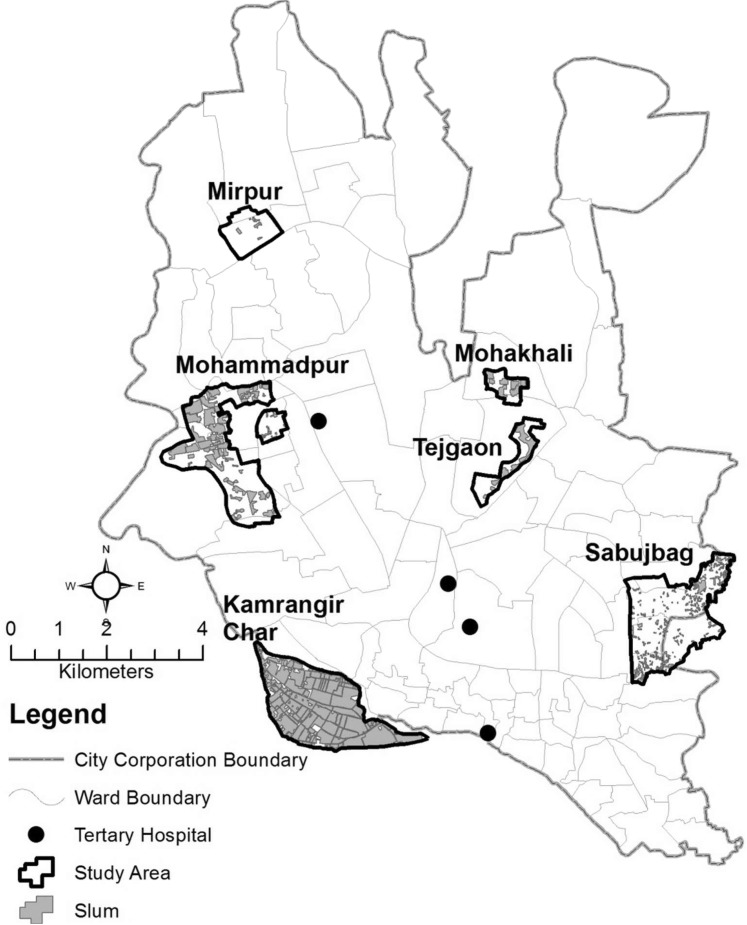
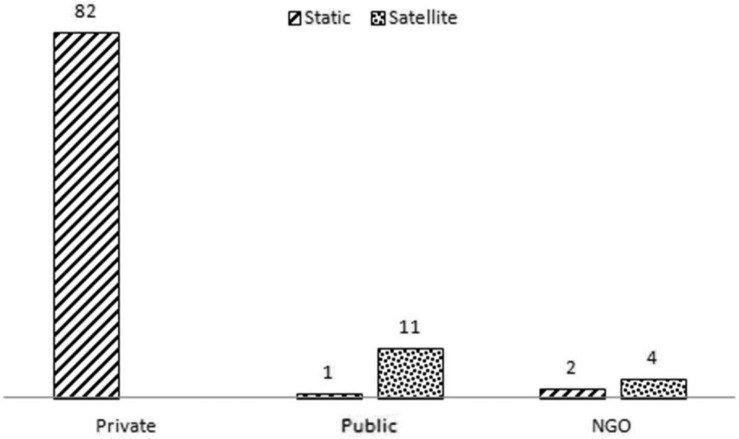
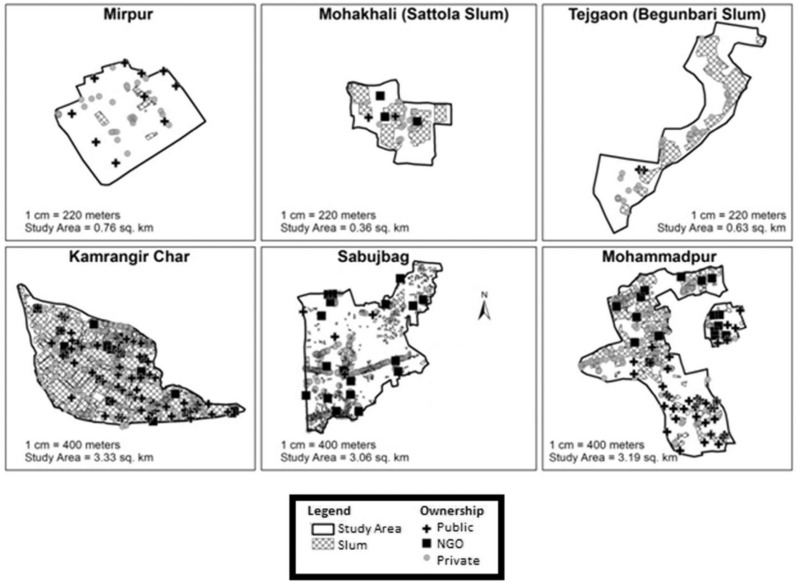
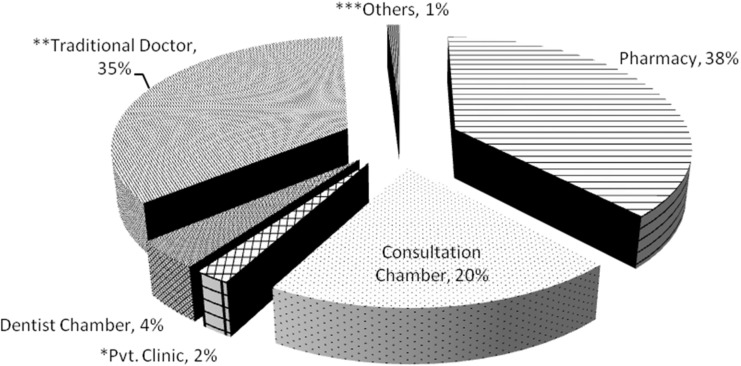
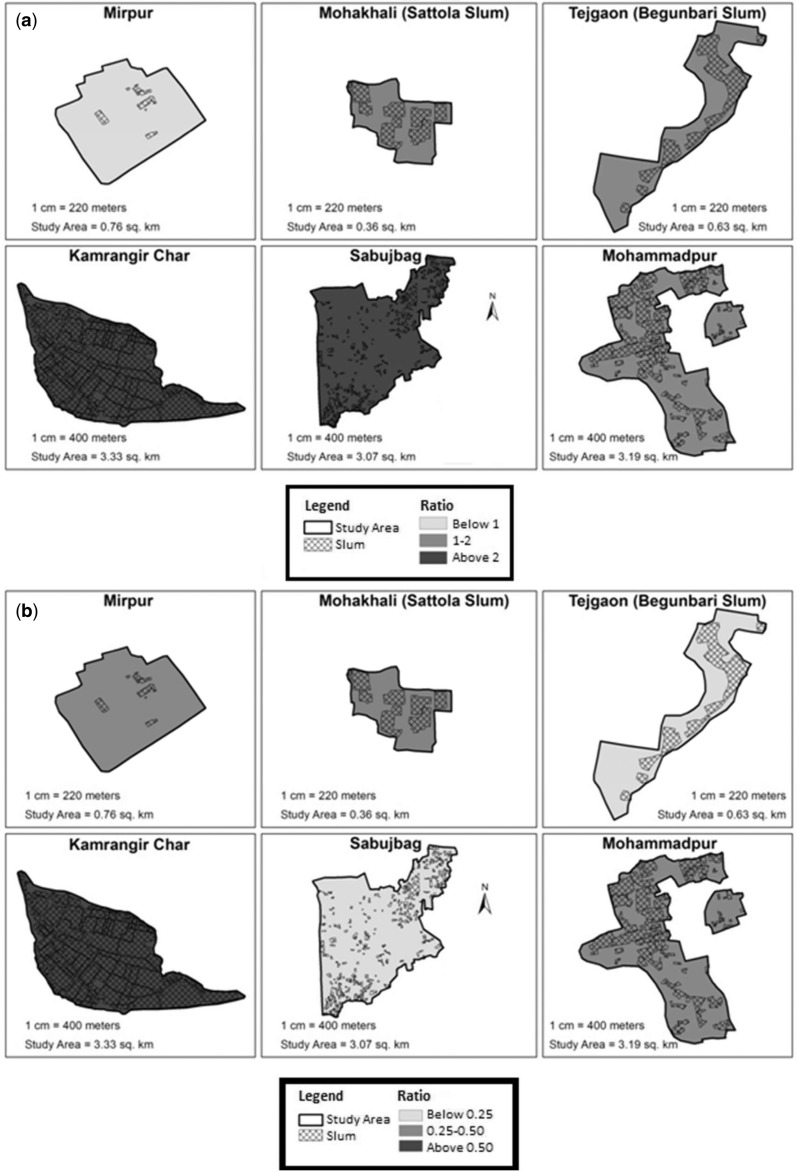
In Bangladesh, the health risks of unplanned urbanization are disproportionately shouldered by the urban poor. At the same time, affordable formal primary care services are scarce, and what exists is almost exclusively provided by non-government organizations (NGOs) working on a project basis. So where do the poor go for health care? A health facility mapping of six urban slum settlements in Dhaka was undertaken to explore the configuration of healthcare services proximate to where the poor reside. Three methods were employed: (1) Social mapping and listing of all Health Service Delivery Points (HSDPs); (2) Creation of a geospatial map including Global Positioning System (GPS) co-ordinates of all HSPDs in the six study areas and (3) Implementation of a facility survey of all HSDPs within six study areas. Descriptive statistics are used to examine the number, type and concentration of service provider types, as well as indicators of their accessibility in terms of location and hours of service. A total of 1041 HSDPs were mapped, of which 80% are privately operated and the rest by NGOs and the public sector. Phamacies and non-formal or traditional doctors make up 75% of the private sector while consultation chambers account for 20%. Most NGO and Urban Primary Health Care Project (UPHCP) static clinics are open 5-6 days/week, but close by 4-5 pm in the afternoon. Evening services are almost exclusively offered by private HSDPs; however, only 37% of private sector health staff possess some kind of formal medical qualification. This spatial analysis of health service supply in poor urban settlements emphasizes the importance of taking the informal private sector into account in efforts to increase effective coverage of quality services. Features of informal private sector service provision that have facilitated market penetration may be relevant in designing formal services that better meet the needs of the urban poor.
Overview
The claims and statistics of this paper haven’t been checked yet.
Free: it reads the open-access text and checks the first 5 claims that cite a source we can check. Create a free account to check every claim.
Integrity signals
Registry
Cites
Statistics
Figures
Verification
Claims the paper makes
The claims and statistics of this paper haven’t been checked yet.
Free: it reads the open-access text and checks the first 5 claims that cite a source we can check. Create a free account to check every claim.
Claims other papers make about this one
Each is checked against this paper’s own text: does it say what the citing paper says it does?
The source backs part of the claim, not all of it — or backs it for a different population, condition or comparison.
In the citing paper
“Many urban informal settlement residents rely on informal health providers as their first entry into the health care system, either due to cost, trust, or access issues [50].”
From Slum Health: Arresting COVID-19 and Improving Well-Being in Urban Informal Settlements (2020) · cites this paper as [50]
Experimental — accuracy not yet measured
Self-check
Percentages, sums and reported differences re-computed from the paper’s own numbers.
The self-check needs the paper’s full text.
Citations
Cites
State of the World's Cities 2012/2013
Habitat, U. (2013) · Routledge eBooks · doi:10.4324/9780203756171 · Cited by 502 · cited 1×
“To conduct population-based analysis, we applied projected population growth rates (UN-Habitat 2013) on previously reported population density figures for slum and non slum areas in Dhaka given the absence of current census data delineated by slum.”
MethodWhat Is the Role of Informal Healthcare Providers in Developing Countries? A Systematic Review
Sudhinaraset, M., Ingram, M., Lofthouse, H. K., & Montagu, D. (2013) · PLoS ONE · doi:10.1371/journal.pone.0054978 · Cited by 351 · cited 2×
“A systematic review on informal providers (Sudhinaraset et al. 2013) provided three criteria in this regard; however, they were found to be unsuitable to healthcare providers in urban settings.”
BackgroundHidden cities: unmasking and overcoming health inequities in urban settings
Ompad, D. C. (2010) · Cited by 336
One Illness Away: Why People Become Poor and How They Escape Poverty
Krishna, A. (2010) · Oxford University Press eBooks · doi:10.1093/acprof:osobl/9780199584512.001.0001 · Cited by 303
What can be done about the private health sector in low-income countries?
MILLS, A. J., Brugha, R., Hanson, K., & McPake, B. (2002) · PubMed · doi:10.1590/s0042-96862002000400012 · Cited by 288 · cited 6×
“Unlike the large majority of private sector studies undertaken globally (Mills et al. 2002), this study mapped a full spectrum of formal and non-formal Table 7 Service availability in HSDPs by management entity (n1⁄4 1007; multiple response)”
BackgroundInfluentialCommunity-based approaches and partnerships: innovations in health-service delivery in Bangladesh
El Arifeen, S., Christou, A., Reichenbach, L., Osman, F. A., Azad, K., Islam, K. S., Ahmed, F., Perry, H. B., & Peters, D. H. (2013) · The Lancet · doi:10.1016/s0140-6736(13)62149-2 · Cited by 244 · cited 1×
“While outreach services are intended to increase utilization in slum populations following the successful application of this approach in rural Bangladesh (Arifeen et al. 2013), its effectiveness in the urban context has not been systematically assessed.”
BackgroundState of the World's Cities 2012/2013: Prosperity of Cities
Habitat, U. (2013) · Cited by 241
Population Challenges for Bangladesh in the Coming Decades
Streatfield, P. K., & Karar, Z. A. (2009) · Journal of Health, Population and Nutrition · doi:10.3329/jhpn.v26i3.1894 · Cited by 179 · cited 2×
“A geospatial and descriptive analysis of health services in slum settlements in Dhaka, Bangladesh”
BackgroundMethodInformal sector providers in Bangladesh: how equipped are they to provide rational health care?
Ahmed, S. M., Hossain, M. A., & Chowdhury, M. R. (2009) · Health Policy and Planning · doi:10.1093/heapol/czp037 · Cited by 174 · cited 3×
“…66 per 1000 live births in urban non-poor and rural populations, respectively (National Institute of Population Research and Training (NIPORT) 2008; Ahmed et al. 2009; Bangladesh Bureau of Statistics Planning Division and Ministry of Planning Government of the People’s Republic of Bangladesh 2010).”
BackgroundA Theory of Urban Squatting and Land-Tenure Formalization in Developing Countries
Brueckner, J. K., & Selod, H. (2008) · American Economic Journal Economic Policy · doi:10.1257/pol.1.1.28 · Cited by 168 · cited 1×
“Given that the large majority of slums in Bangladesh are located on private land that is frequently contested (Brueckner and Selod 2009), negotiating for space and security of tenure are complex and difficult to assure.”
Background
Research works printed but not linked: 2
- Badiane A (Ed.) The State of Africa s Cities 2008 A framework for addressing urban challenges in Africa 2008 Nairobi UN-HABITAT
- Ministry of Health and Family Welfare (MoHFW), Bangladesh Health Bulletin 2012 2012 Ministry of Health and Family Welfare, Government of People's Republic of Bangladesh
Cited by
Slum Health: Arresting COVID-19 and Improving Well-Being in Urban Informal Settlements
Corburn, J., Vlahov, D., Mberu, B., Riley, L., Caiaffa, W. T., Rashid, S. F., Ko, A., Patel, S., Jukur, S., Martínez-Herrera, E., et al. (2020) · Journal of Urban Health · doi:10.1007/s11524-020-00438-6 · Cited by 587
Rahaman, M. A., Kalam, A., & Al‐Mamun, M. (2023) · Frontiers in Public Health · doi:10.3389/fpubh.2023.1269362 · Cited by 249
Next generation maternal health: external shocks and health-system innovations
Kruk, M. E., Kujawski, S., Moyer, C. A., Adanu, R. M., Afsana, K., Cohen, J., Glassman, A., Labrique, A., Reddy, K. S., & Yamey, G. (2016) · The Lancet · doi:10.1016/s0140-6736(16)31395-2 · Cited by 127
Elsey, H., Agyepong, I., Huque, R., Quayyem, Z., Baral, S., Ebenso, B., Kharel, C., Shawon, R. A., Onwujekwe, O., Uzochukwu, B., et al. (2019) · BMJ Global Health · doi:10.1136/bmjgh-2019-001501 · Cited by 128
“Instead they must rely on tertiary care or unregulated private providers; for example, in Bangladesh, 80% of health providers near slums were found to be private; the majority of whom were pharmacists or traditional doctors, only 37% with formal medical qualification.(29)”
BackgroundNahar, P., UNICOMB, L. E., Lucas, P. J., Uddin, M. R., Islam, M. A., Nizame, F. A., Khisa, N., Akter, S., & Rousham, E. K. (2020) · BMC Health Services Research · doi:10.1186/s12913-020-05512-y · Cited by 122
Ahmed, S., Adams, A. M., Islam, R., Hasan, S. M., & Panciera, R. (2019) · PLoS ONE · doi:10.1371/journal.pone.0222488 · Cited by 91
Self-citationFilha, N. T. D. S., Li, J., Phillips‐Howard, P. A., Quayyum, Z., Kibuchi, E., Mithu, M. I. H., Vidyasagaran, A. L., Sai, V., Manzoor, F., Karuga, R., et al. (2022) · International Journal for Equity in Health · doi:10.1186/s12939-022-01804-3 · Cited by 82
Trends in equity in use of maternal health services in urban and rural Bangladesh
Kamal, N., Curtis, S., Hasan, M. S., & Jamil, K. (2016) · International Journal for Equity in Health · doi:10.1186/s12939-016-0311-2 · Cited by 78
“The overall coverage of NGOs is still low - in Dhaka slum settlements, only 20 % of the health service delivery points were found to be owned by NGO or public providers [13].”
BackgroundPolicy content and stakeholder network analysis for infant and young child feeding in India
Puri, S., Fernandez, S., Puranik, A., Anand, D., Gaidhane, A. M., Zahiruddin, Q. S., Patel, A., Uddin, S., & Thow, A. M. (2017) · BMC Public Health · doi:10.1186/s12889-017-4339-z · Cited by 74
Ahmed, S. M., Rawal, L. B., Chowdhury, S. A., Murray, J., Arscott-Mills, S., Jack, S., Hinton, R., Alam, P. M., & Kuruvilla, S. (2016) · Bulletin of the World Health Organization · doi:10.2471/blt.15.168450 · Cited by 71
Water and sanitation in Dhaka slums: access, quality, and informality in service provision
Haque, S. S., Yanez-Pagans, M., Arias-Granada, Y., & Joseph, G. (2020) · Water International · doi:10.1080/02508060.2020.1786878 · Cited by 71
“4 2016; Adams et al. 2015; Panday 2017).”
Ángeles, G., Ahsan, K. Z., Streatfield, P. K., Arifeen, S. E., & Jamil, K. (2018) · Journal of Urban Health · doi:10.1007/s11524-018-0307-x · Cited by 59
Detecting and mapping slums using open data: a case study in Kenya
Mahabir, R., Agouris, P., Stefanidis, A., Croitoru, A., & Crooks, A. T. (2018) · International Journal of Digital Earth · doi:10.1080/17538947.2018.1554010 · Cited by 59
“In Nairobi, the use of the services indicator is consistent with the high density of places of worship, and private primary and health care facilities in many of the large slums (Adams, Islam, and Ahmed 2015; Bodewes 2013; Mombo 2012; Ta ff a and Chepngeno 2005; Tooley, Dixon, and Sta-n fi eld 2008).”
BackgroundAdams, A. M., Islam, R., Yusuf, S. S., Panasci, A., & Crowell, N. A. (2020) · PLoS ONE · doi:10.1371/journal.pone.0233635 · Cited by 56
Self-citationCauses of Urban Migration in Bangladesh: Evidence from the Urban Health Survey
Biswas, R. K., Kabir, E., & Khan, H. T. A. (2019) · Population Research and Policy Review · doi:10.1007/s11113-019-09532-3 · Cited by 55
Lucas, P. J., Uddin, M. R., Khisa, N., Akter, S., UNICOMB, L. E., Nahar, P., Islam, M. A., Nizame, F. A., & Rousham, E. K. (2019) · PLoS ONE · doi:10.1371/journal.pone.0225270 · Cited by 55
“Framework analysis was used [17, 27] which asks researchers to code data into a framework, a process known as charting.”
BackgroundMethodAn extensive review of patient satisfaction with healthcare services in Bangladesh
Mohiuddin, A. K. (2020) · Patient Experience Journal · doi:10.35680/2372-0247.1415 · Cited by 49
“At the same time, affordable formal primary care services are scarce, and what exists is almost exclusively provided by NGOs working on a project basis [159].”
Chowdhury, F., Sturm-Ramirez, K., Mamun, A. A., Iuliano, A. D., Chisti, M. J., Ahmed, M., Bhuiyan, M. U., Hossain, K., Haider, M. S., Aziz, S. A., et al. (2018) · BMC Health Services Research · doi:10.1186/s12913-018-3486-y · Cited by 39
Rural Non-Farm Employment and Household Welfare: Evidence from Malawi
Adjognon, G. S., Saweda Liverpool-Tasie, L. S. O., de la Fuente, A., & Benfica, R. (2017) · World Bank, Washington, DC eBooks · doi:10.1596/1813-9450-8096 · Cited by 46
Evaluation of Maternal Health Service Indicators in Urban Slum of Bangladesh
Jolly, S. P., Rahman, M., Afsana, K., Yunus, F. M., & Chowdhury, A. M. R. (2016) · PLoS ONE · doi:10.1371/journal.pone.0162825 · Cited by 47
Honein-AbouHaidar, G. N., Noubani, A., Arnaout, N. E., Ismail, S., Nimer, H., Menassa, M., Coutts, A. P., Rayes, D., Jomaa, L., Saleh, S. S., et al. (2019) · Conflict and Health · doi:10.1186/s13031-019-0224-y · Cited by 45
“Much of the existing literature on informality in healthcare provision originates from low or lower-middle income country contexts, where “informal” health workers are understood as having received training outside a formal institutional setting or curriculum, receive undocumented payment, operate without oversight an…”
BackgroundShafique, S., Bhattacharyya, D. S., Anwar, I., & Adams, A. M. (2018) · BMC Medical Ethics · doi:10.1186/s12910-018-0285-2 · Cited by 45
“diseases or for providing specialized care for men, adolescents, and the elderly [27].”
BackgroundInfluentialSelf-citationMorgan, A. K. (2020) · Local Environment · doi:10.1080/13549839.2020.1789854 · Cited by 44
Shawar, Y. R., & Crane, L. G. (2017) · Health Policy and Planning · doi:10.1093/heapol/czx065 · Cited by 40
“At national levels, the issue’s insufficient prioritization is evident in the limited presence of public sector health facilities and services in many urban poor and slum settings (Matthews et al. 2010; Fotso and Mukiira 2012; Adams et al. 2015), as well as in the ‘invisibility and neglect’ of slum dwellers who bore a…”
BackgroundInfluentialImpact evaluation of contracting primary health care services in urban Bangladesh
Albis, M. L. F., Bhadra, S., & Chin, B. (2019) · BMC Health Services Research · doi:10.1186/s12913-019-4406-5 · Cited by 38
Water and Sanitation in Dhaka Slums: Access, Quality, and Informality in Service Provision
Arias-Granada, Y., Haque, S. S., Joseph, G., & Yanez-Pagans, M. (2018) · World Bank, Washington, DC eBooks · doi:10.1596/1813-9450-8552 · Cited by 36
Improving urban health through primary health care in south Asia
Rao, K. D., Bairwa, M. L., Mehta, A., Hyat, S., Ahmed, R., Rajapaksa, L. C., & Adams, A. M. (2024) · The Lancet Global Health · doi:10.1016/s2214-109x(24)00121-9 · Cited by 35
Self-citationHealth and Nutrition in Urban Bangladesh: Social Determinants and Health Sector Governance
Frere, J.-J., Govindaraj, R., Raju, D., Secci, F., & Chowdhury, S. (2017) · World Bank, Washington, DC eBooks · doi:10.1596/978-1-4648-1199-9 · Cited by 34
Razzaque, A. M., Clair, K. S., Chin, B., Islam, M. Z., Mia, M. N., Chowdhury, R., Mustafa, A. G., & Kuhn, R. (2019) · Journal of Urban Health · doi:10.1007/s11524-019-00395-9 · Cited by 33
An extensive review of patient health-care service satisfaction in Bangladesh
Secretary and Treasurer Dr. M. Nasirullah Memorial Trust, T., & Mohiuddin, A. K. (2020) · The American Journal of Medical Sciences and Pharmaceutical Research · doi:10.25259/aujmsr_6_2020 · Cited by 33
Ganle, J. K., Baatiema, L., Ayamah, P., Ofori, C. A. E., Ameyaw, E. K., Seidu, A., & Ankomah, A. (2021) · International Journal for Equity in Health · doi:10.1186/s12939-021-01518-y · Cited by 32
Role of spatial tools in public health policymaking of Bangladesh: opportunities and challenges
Kim, D., Sarker, M., & Vyas, P. (2016) · Journal of Health Population and Nutrition · doi:10.1186/s41043-016-0045-1 · Cited by 30
Healthcare choices in Mumbai slums: A cross-sectional study
Naydenova, E., Raghu, A., Ernst, J., Sahariah, S. A., Gandhi, M., & Murphy, G. A. V. (2017) · Wellcome Open Research · doi:10.12688/wellcomeopenres.13127.2 · Cited by 30
Dutta, A., Pattanaik, S., Choudhury, R., Nanda, P., Sahu, S., Panigrahi, R., Padhi, B. K., Sahoo, K. C., Mishra, P. R., Panigrahi, P., et al. (2018) · PLoS ONE · doi:10.1371/journal.pone.0196067 · Cited by 30
Adams, A. M., Ahmed, R., Shuvo, T. A., Yusuf, S. S., Akhter, S., & Anwar, I. (2019) · BMJ Open · doi:10.1136/bmjopen-2018-026586 · Cited by 30
Self-citationPolicy content and stakeholder network analysis for infant and young child feeding in Bangladesh
Rasheed, S., Sk, R., Das, S., Chowdhury, S. N., Iqbal, M., Akter, M. S., Jahan, K., Uddin, S., & Thow, A. M. (2017) · BMC Public Health · doi:10.1186/s12889-017-4338-0 · Cited by 31
“areas [5] whose primary health care needs are under the jurisdiction of the Ministry of Local Government Rural Development and Cooperatives [42].”
BackgroundAl-Shoaibi, A. A. A., Matsuyama, A., Khalequzzaman, M., Haseen, F., Choudhury, S. R., Hoque, B. A., Chiang, C., Hirakawa, Y., Yatsuya, H., & Aoyama, A. (2018) · Institutional Repositories DataBase (IRDB) · doi:10.18999/nagjms.80.4.559 · Cited by 30
Bonna, A. S., Pavel, S. R., Ferdous, J., Khan, S. A., & Ali, M. (2022) · International Journal of Surgery Open · doi:10.1016/j.ijso.2022.100581 · Cited by 29
Advancing universal health coverage in South Asian cities: a framework
Adams, A. M., Nambiar, D., Siddiqi, S., Alam, B. B., & Reddy, S. (2018) · BMJ · doi:10.1136/bmj.k4905 · Cited by 29
Self-citationSizear, M. I., Nababan, H. Y., Siddique, M. K. B., Islam, S. M. S., Paul, S., Paul, A. K., & Ahmed, S. M. (2019) · BMC Health Services Research · doi:10.1186/s12913-019-4254-3 · Cited by 26
UNICOMB, L. E., Nizame, F. A., Uddin, M. R., Nahar, P., Lucas, P. J., Khisa, N., Akter, S. M. S., Islam, M. A., Rahman, M. M., & Rousham, E. K. (2021) · BMC Public Health · doi:10.1186/s12889-021-10973-9 · Cited by 27
Billah, S. M., Hoque, D. M. E., Rahman, M., Christou, A., Mugo, N. S., Begum, K., Tahsina, T., Rahman, Q. S.-U., Chowdhury, E., Haque, T. M., et al. (2018) · Journal of Global Health · doi:10.7189/jogh.08.020413 · Cited by 26
Bhattacharyya, D. S., Sarker, T., Akter, N., Shafique, S., Nabi, M. H., Hawlader, M. D. H., & Mitra, D. K. (2023) · Food Science & Nutrition · doi:10.1002/fsn3.3390 · Cited by 25
Bashar, F., Islam, R., Khan, S. M., Hossain, S., Adel, A. S. S., Yusuf, S. S., & Adams, A. M. (2022) · PLoS ONE · doi:10.1371/journal.pone.0262358 · Cited by 25
Self-citationSaif-Ur-Rahman, K. M., Mamun, R., & Anwar, I. (2019) · BMJ Open · doi:10.1136/bmjopen-2018-024316 · Cited by 21
Kabir, A., Karim, M. N., & Billah, B. (2022) · BMC Health Services Research · doi:10.1186/s12913-022-08886-3 · Cited by 21
“Their widespread presence, proximity to the community, and low-cost treatment (they usually do not charge consultation fees) helped them gain great acceptance as they appeared to be pro-poor service providers in the Bangladesh context [25, 47].”
BackgroundÍndice de vulnerabilidad en la infraestructura de la vivienda ante el COVID-19 en México
Díaz, A. O., Menchaca, C. A., López, H. A. G., & Viera, J. R. G. (2021) · Notas de población · doi:10.18356/16810333-47-111-8 · Cited by 19
Lilford, R. J., Daniels, B., McPake, B., Bhutta, Z. A., Mash, R. J., Griffiths, F. E., Omigbodun, A. O., Pinto, E. P., Jain, R., Asiki, G., et al. (2025) · The Lancet Global Health · doi:10.1016/s2214-109x(24)00535-7 · Cited by 19
Mansoor, M., de Glanville, W. A., Alam, R., Aslam, K., Ahmed, M., Isaakidis, P., & Pasha, A. (2023) · PLOS Global Public Health · doi:10.1371/journal.pgph.0002076 · Cited by 18
Adams, A. M., Ahmed, R., Ahmed, S., Yusuf, S. S., Islam, R., Salam, R. M. Z., & Panciera, R. (2020) · BMC Public Health · doi:10.1186/s12889-020-09594-5 · Cited by 16
Self-citationYusuf, S. S., Acharya, K., Ahmed, R., & Ahmed, A. (2021) · Journal of Public Health · doi:10.1007/s10389-021-01522-0 · Cited by 14
“…overall healthcare system in Bangladesh with the presence of robust non-government organizations (NGO) or not-for-profit healthcare systems that have been vital in addressing some of the health inequities around accessibility, particularly for the urban poor (Adams et al. 2015; Adams et al. 2020).”
BackgroundMahmud, I., Siddiqua, S., Akhter, I., Sarker, M., Theobald, S., & Rashid, S. F. (2023) · PLoS ONE · doi:10.1371/journal.pone.0279110 · Cited by 13
“This vacuum in health services is mainly filled by informal and poorly regulated private health service providers with dubious quality [2].”
BackgroundAnne, F. I., Akter, M. S., Sheikh, S. P., Ireen, S., Escobar-DeMarco, J. L., Kappos, K., Ash, D. M., & Rasheed, S. (2022) · PLoS ONE · doi:10.1371/journal.pone.0278621 · Cited by 12
Win, H., Wallenborn, J. T., Probst-Hensch, N. M., & Fink, G. (2021) · BMC Public Health · doi:10.1186/s12889-021-12181-x · Cited by 12
Barua, P., Kibuchi, E., Aktar, B., Chowdhury, S. F., Mithu, M. I. H., Quayyum, Z., Filha, N. T. D. S., Leyland, A. H., Rashid, S. F., & Gray, L. (2023) · PLOS Global Public Health · doi:10.1371/journal.pgph.0001588 · Cited by 11
“Unlike other divisions, non-government organisations and informal private-for-profit providers have been dominating in Dhaka slums [53].”
BackgroundHanson, O. R., Khan, I. I., Khan, Z. H., Amin, M. A., Biswas, D., Islam, M. T., Nelson, E. J., Ahmed, S. M., Brintz, B. J., Hegde, S. T., et al. (2024) · Journal of Global Health · doi:10.7189/jogh.14.04185 · Cited by 12
Khan, F. A., Khalequzzaman, M., Hasan, Choudhury, S. R., Chiang, C., Aoyama, A., & Islam, S. S. (2021) · PubMed Central · doi:10.18999/nagjms.83.3.589 · Cited by 11
Jolly, S. P., Chowdhury, T. R., Rahman, M., Alam, A., & Afsana, K. (2020) · PLoS ONE · doi:10.1371/journal.pone.0235340 · Cited by 10
Hasan, S. M., Borces, K., Bhattacharyya, D. S., Ahmed, S., Ali, A., & Adams, A. M. (2020) · Health Services Insights · doi:10.1177/1178632920951586 · Cited by 9
Self-citationGupta, R. D., & Shahabuddin, A. (2018) · Cureus · doi:10.7759/cureus.2041 · Cited by 9
“In Bangladesh, an inequity exists among the health indicators of different socio-economic groups and geographical locations [8-11].”
BackgroundSarker, A. R., Khan, A. I., Islam, M. T., Chowdhury, F., Khanam, F., Kang, S. S. Y., Ahmmed, F., Im, J., Kim, D. R., Tadesse, B. T., et al. (2022) · Vaccine X · doi:10.1016/j.jvacx.2022.100247 · Cited by 8
Self-citationCities, slums, and child nutrition in Bangladesh
Raju, D., Kim, K. Y., Nguyen, Q. T., & Govindaraj, R. (2018) · Review of Development Economics · doi:10.1111/rode.12564 · Cited by 8
Cities, Slums, and Early Child Growth: Empirical Evidence from Bangladesh
Raju, D., Kim, K. Y., Nguyen, Q. T., & Govindaraj, R. (2017) · World Bank, Washington, DC eBooks · doi:10.1596/1813-9450-8094 · Cited by 8
Shafique, S., Bhattacharyya, D. S., Hossain, M. T., Hasan, S. M., Ahmed, S., Islam, R., & Adams, A. M. (2024) · PLoS ONE · doi:10.1371/journal.pone.0266581 · Cited by 5
“In the context of Bangladesh, an engaged, multi-stakeholder approach was particularly crucial given the complexity of urban health service delivery involving multiple state and non-state authorities and actors at implementation and policy-making levels [36].”
BackgroundSelf-citationChowdhury, M. E., Tisha, K. I., RABBANI, G., King, N. V., Webb, E. J., Quayyum, Z., & ENSOR, T. (2026) · BMC Family Practice · doi:10.1186/s12875-026-03261-1 · Cited by 5
“The situation is worse in countries where the urban PHC system is poorly structured, resulting in fewer public providers in urban compared to rural areas [10, 11].”
Tune, S. N. B. K., Kibria, G. M. A., Islam, M. Z., Billah, M. A., Vandenent, M., Talukder, M. R. T., Sultana, U. F., Majlish, M. K., Shimul, S. N., Jahangir, M. A., et al. (2025) · Scientific Reports · doi:10.1038/s41598-024-80979-x · Cited by 5
“This discrepancy may be attributed to the challenges faced by working mothers in accessing qualified care providers, given their scarcity and distance from residence 21 .”
Fatema, K., & Sheikh, S. P. (2023) · OALib · doi:10.4236/oalib.1110285 · Cited by 5
Urbanisation in Bangladesh: Geographically Limited and Socially Divided
Hossain, S. (2023) · World regional geography book series · doi:10.1007/978-3-031-45093-8_5 · Cited by 5
Vidyasagaran, A. L., de Siqueira-Filha, N. T., Kakchapati, S., Hall, T. F., Naznin, B., Tajree, J., Quayyum, Z., Joshi, D., Sibeudu, F. T., Ogbozor, P. A., et al. (2025) · BMJ Open · doi:10.1136/bmjopen-2024-093246 · Cited by 4
Jannat, K., Kader, M. A., Parvez, S. M., Thomson, R. J., Rahman, M. M., Kabir, M., Agho, K., Haque, R., & Merom, D. (2023) · Frontiers in Microbiomes · doi:10.3389/frmbi.2023.1029839 · Cited by 4
Salam, S., Azad, A. K., Salam, M. A., & Islam, M. M. (2020) · International Journal of Asian Social Science · doi:10.18488/journal.1.2020.1010.612.622 · Cited by 4
Honein-AbouHaidar, G. N., Noubani, A., Arnaout, N. E., Ismail, S., Nimer, H., Menassa, M., Coutts, A. P., Rayes, D., Jomaa, L., Saleh, S. S., et al. (2019) · Conflict and Health · doi:10.1186/s13031-019-0229-6 · Cited by 4
Bawole, P., & Sutanto, H. B. (2025) · Journal of Lifestyle and SDGs Review · doi:10.47172/2965-730x.sdgsreview.v5.n01.pe04315 · Cited by 3
“Given the economic conditions of these communities, it is clear that poor people work diligently to provide for their families, with both men and women contributing to their household income through informal sector jobs (Adams et al ., 2015).”
Salauddin, M., Anee, U. S., Barua, D., Hicks, J. P., Islam, K., Elsey, H., & Huque, R. (2026) · BMC Family Practice · doi:10.1186/s12875-025-03144-x · Cited by 3
“In the Urban areas, especially in areas where the poor live, the vast majority of the provision is done by private providers (80%), and the rest by NGOs and the public sector [9].”
InfluentialOsuh, M. E., Oyaniran, O. H., Tundealao, S. T., Lawal, F. B., Oke, G. A., Osuh, J. I., Harris, B., Chen, Y., & Lilford, R. J. (2023) · Clinical Case Reports · doi:10.1002/ccr3.6563 · Cited by 3
Islam, M. R., Islam, M. M., & Ahmed, F. (2026) · Journal of Urban Health · doi:10.2139/ssrn.5353171 · Cited by 3
Establishing a nurse‐managed health center for the urban poor in Dhaka, Bangladesh
Lee, T. W., Lee, S. J., Kim, M. S., & Choi, Y. (2020) · Public Health Nursing · doi:10.1111/phn.12731 · Cited by 3
Adams, A. M., & Rashid, S. F. (2021) · Development in Practice · doi:10.1080/09614524.2020.1862763 · Cited by 3
“Given that demand outstrips supply, the large majority of the urban poor rely on the unregulated informal private sector for primary care services, including unlicensed pharmacies, drug peddlers and unqualified doctors (Adams, Islam, and Ahmed 2015).”
BackgroundSelf-citationKoly, K. N., Sultana, S., Saba, J., Majlish, M. K., Billah, M. A., Watson, J., & Neves, B. B. (2025) · Cambridge Prisms Global Mental Health · doi:10.1017/gmh.2025.10092 · Cited by 2
“Furthermore, for people living in slums, accessing healthcare is more challenging in urban areas than in rural areas due to the lack of primary healthcare infrastructure (Adams et al., 2015).”
Ignatowicz, A., Equi-Injury Group first, Peaston, G., Sithole, D., Ignatowicz, A., Ghalichi, L., D’Ambruoso, L., Tshabalala, N., Berhe, D. F., Ali, Z. W., et al. (2026) · Global Public Health · doi:10.1080/17441692.2026.2650929 · Cited by 2
Aktar, B., Ozano, K., Rashid, S. F., Waldman, L., & Theobald, S. (2025) · Health Policy and Planning · doi:10.1093/heapol/czaf081 · Cited by 2
Amedzro, N., Anaseba, D., Darkwa, A. G., Twumasi, A. A. A., Ayim, A., Ofei, A. M. A., Dovlo, D. Y. T., Awoonor‐Williams, J. K., Agongo, E. E. A., Agyepong, I. A., et al. (2024) · Frontiers in Public Health · doi:10.3389/fpubh.2024.1457682 · Cited by 2
Shaarbafchizadeh, N., Fouladi, Z., Aqdak, P., & Raeisi, A. R. (2021) · Journal of Education and Health Promotion · doi:10.4103/jehp.jehp_703_20 · Cited by 2
Haseen, F., Hedayet, H., Sony, S. A., Basak, D. K., Islam, M. M., Akther, S., & Islam, S. S. (2022) · Journal of Health and Medical Sciences · doi:10.31014/aior.1994.05.04.240 · Cited by 2
“(Adams et al., 2015).”
InfluentialPrabhune, A. G., Manjunath, U., & Satheesh, S. S. (2023) · Cureus · doi:10.7759/cureus.36654 · Cited by 2
“A geospatial study from the slums of Bangladesh showed 82% of healthcare providers within urban slums of Dhaka were private healthcare providers, 12% were public healthcare providers and 6% included not-for-profits and non-governmental organizations [11].”
BackgroundSpatial Accessibility to Hospitals for Informal Settlement Dwellers in Three sub-Saharan Cities
Friesen, J., & Delger, O. (2023) · Joint Urban Remote Sensing Event (JURSE) · doi:10.1109/jurse57346.2023.10144164 · Cited by 2
“investigate the accessibility of slum dwellers in Dhaka, Bangladesh [6], Snyder compares the accessibility to medical infrastructure of formal and informal settlement areas in Rio de Janeiro, Brazil [7].”
BackgroundParental perspectives on children’s right to participation in an urban slum settlement of Dhaka
Fatema, K., Moniruzzaman, S., Khan, M. M. H., Anjum, A., Mousum, S., Towhid, M. I. I., Salwa, M., & Haque, M. A. (2026) · Children and Youth Services Review · doi:10.1016/j.childyouth.2026.109125 · Cited by 2
Patient Satisfaction in Bangladesh: Most Important but Mostly Overlooked
Mohiuddin, A. K. (2019) · Zenodo (CERN European Organization for Nuclear Research) · doi:10.5281/zenodo.3579137 · Cited by 2
Findings on Urban Health Sector Governance in Bangladesh
Govindaraj, R., Raju, D., Secci, F., Chowdhury, S., & Frere, J.-J. (2018) · World Bank, Washington, DC eBooks · doi:10.1596/978-1-4648-1199-9_ch4 · Cited by 2
Patient Satisfaction: Bangladesh Perspective
M. Nasirullah Memorial Trust, T., & Mohiuddin, A. K. (2019) · International Research Journal of Public Health · doi:10.28933/irjph-2019-10-2805 · Cited by 2
Misha, F. A., Imtiaz, S. H., McConnell, M. A., Cash, R. A., & Rashid, S. F. (2023) · Elsevier eBooks · doi:10.1016/b978-0-443-18701-8.00009-6 · Cited by 1
Khan, A. K. M. Z. R., & Zakaria, M. (2021) · Asia Social Issues · doi:10.48048/asi.2022.251865 · Cited by 1
“, 2016), there are marked differences between urban slums and nonslum areas (Adams et al., 2015; NIPORT et al., 2015; Nahar et al., 2011).”
BackgroundGovindaraj, R., Raju, D., Secci, F., Chowdhury, S., & Frere, J.-J. (2018) · World Bank, Washington, DC eBooks · doi:10.1596/978-1-4648-1199-9_ch1 · Cited by 1
Hasan, M. Z., Webb, E., Quayyum, Z., & Ensor, T. (2024) · Systematic Reviews · doi:10.1186/s13643-024-02714-x · Cited by 1
“The situation is worse in countries where the urban PHC system is not well structured and there are fewer public PHC providers in urban areas compared to rural counterparts [6].”
Supporting the urban poor to quit tobacco: adding years to lives
Siddiqi, K., & Elsey, H. (2016) · Thorax · doi:10.1136/thoraxjnl-2016-209435 · Cited by 1
Majmawalas and sexual health promotion in Bangladesh: An ethnography of street healers in Dhaka City
Anam, M. (2017) · Queensland University of Technology · doi:10.5204/thesis.eprints.112191 · Cited by 1
Environmental Change, Migration, and Population Health
McMichael, C. (2017) · Oxford University Press eBooks · doi:10.1093/acrefore/9780199389414.013.326 · Cited by 1
Zanuzdana, A. (2019) · PUB – Publications at Bielefeld University (Bielefeld University) · doi:10.4119/unibi/2938650 · Cited by 1
Khan, N. (2023) · ANU Open Research (Australian National University) · Cited by 1
Barua, D., Elsey, H., Anee, U. S., Hasan, N., Ahsan, M., Salauddin, M., Kashfi, F., Islam, K., Chowdhury, R. I., ENSOR, T., et al. (2026) · Research Square · doi:10.21203/rs.3.rs-8439762/v1 · Cited by 1
Metadata
- Authors
- Adams, A. M., Islam, R., & Ahmed, T.
- Corresponding author
- Adams, A. M.
- Venue
- Health Policy and Planning
- Publisher
- Oxford University Press (OUP)
- Published
- 2015-03-01
- Volume
- 30
- Issue
- suppl 1
- Pages
- i32-i45
- ISSN
- 0268-1080 (ISSN-L)
- 1460-2237
- PMC
- PMC4353891
- OpenAlex
- W2147996212
- Cited by
- 107
- References
- 21
- Citations by year
- 2026: 10 · 2025: 8 · 2024: 8 · 2023: 12 · 2022: 7 · 2021: 10 · 2020: 14 · 2019: 12 · 2018: 14 · 2017: 6 · 2016: 6
- FWCI
- 35.78
- Type
- journal article
- Language
- en
- Open access
- hybrid
- doi.org
- Licence
- cc-by-nc
- Locations
- Health Policy and Planning (publishedVersion, cc-by-nc)
- Europe PMC (PubMed Central) (publishedVersion, cc-by-nc)
- PubMed Central (publishedVersion, cc-by-nc)
- PubMed (publishedVersion)
- Funders
- Department for International Development, UK Government
- Department for International Development
- International Centre for Diarrhoeal Disease Research, Bangladesh
- Topics
- Social Sciences › Urban Studies › Urban and Rural Development Challenges
- Health Sciences › Medicine › Public Health, Environmental and Occupational Health › Healthcare Systems and Reforms
- Social Sciences › Health › Public Health and Social Inequalities
- Keywords
- urban slums, urban poor, health care access, health facility mapping, non-governmental organizations, primary care, unplanned urbanization, health workforce qualification, hours of service, Dhaka
- MeSH terms
- Bangladesh, Health Personnel, Health Services Accessibility, Humans, Poverty Areas, Urban Population, Private Sector, Public Sector, Geography, Medical
About these checks
Registry, retraction, Cites and statistics results are computed, not judged, with one exception: a printed reference that no index lists is read once by a model before it counts as a citation error. Claims are extracted by a model and kept only when their quote appears verbatim in the text; each cited source is then checked, with a model’s help, for whether it says what the claim relies on. Those verdicts can be wrong — read the claim’s quote and the cited source before relying on one.
Statistics and arithmetic are recomputed, not judged.
Confidence bands are shown only for fields calibrated on our annotated test set. None is calibrated yet, so no band is shown.
What counts as a claim ›How we measure confidence ›How we check this ›
Are you an author, or do you see a problem with this page? Request a review
Data sources
Bibliographic data: Semantic Scholar, OpenAlex, Crossref.
Contains information from the Semantic Scholar Academic Graph Datasets, made available under the ODC Attribution License (ODC-BY 1.0).
Semantic Scholar’s data is described in: Kinney, R., et al. (2023). The Semantic Scholar Open Data Platform. arXiv:2301.10140.
