

The DOI matches its Crossref record; 36 of the 36 references it cites were found in a registry or an index.
Case-control studies: basic concepts
Open accessAbstract
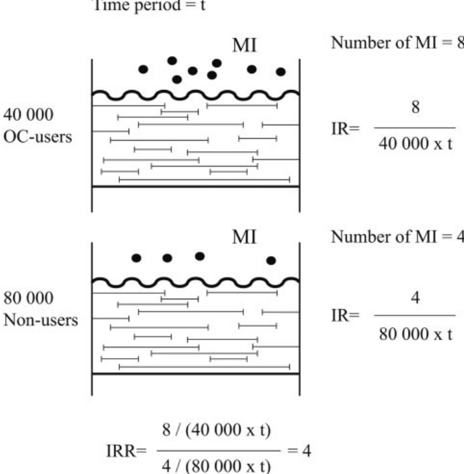
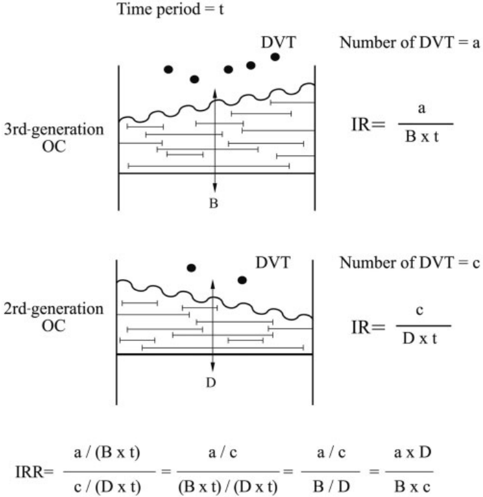
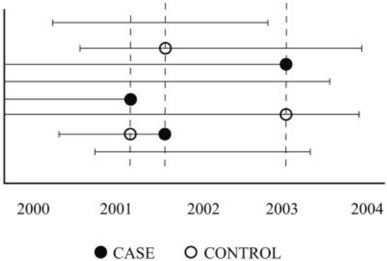
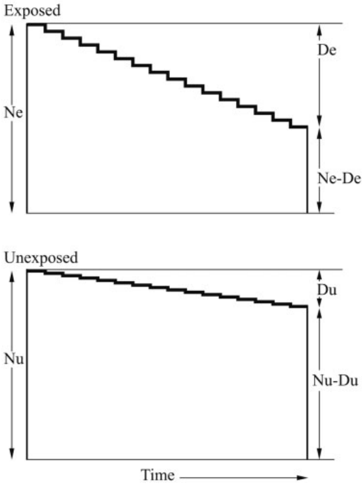
The purpose of this article is to present in elementary mathematical and statistical terms a simple way to quickly and effectively teach and understand case-control studies, as they are commonly done in dynamic populations-without using the rare disease assumption. Our focus is on case-control studies of disease incidence ('incident case-control studies'); we will not consider the situation of case-control studies of prevalent disease, which are published much less frequently.
Overview
The claims and statistics of this paper haven’t been checked yet.
Free: it reads the open-access text and checks the first 5 claims that cite a source we can check. Create a free account to check every claim.
Integrity signals
Registry
Cites
Statistics
Figures
Verification
Claims the paper makes
The claims and statistics of this paper haven’t been checked yet.
Free: it reads the open-access text and checks the first 5 claims that cite a source we can check. Create a free account to check every claim.
Claims other papers make about this one
Each is checked against this paper’s own text: does it say what the citing paper says it does?
The source backs part of the claim, not all of it — or backs it for a different population, condition or comparison.
In the citing paper
“Each case patient was matched to 5 controls by age (within 1 year), sex, general practice, and calendar time using incidence density sampling.13”
From Anticholinergic Drug Exposure and the Risk of Dementia: A Nested Case-Control Study (2019) · cites this paper as [13]
Experimental — accuracy not yet measuredIn the citing paper
“When studies report different ratio metrics, for example, hazard ratios, risk ratios, or odds ratios, they may be combined ignoring the differences in metrics. This may be appropriate depending on which study designs were included (cohort studies or case-control studies) and how participants were sampled in case-control studies [84,85].”
From COSMOS-E: Guidance on conducting systematic reviews and meta-analyses of observational studies of etiology (2019) · cites this paper as [84]
Self-check
Percentages, sums and reported differences re-computed from the paper’s own numbers.
The self-check needs the paper’s full text.
Citations
Cites
Statistical Methods in Cancer Research
Breslow, N. E. (1980) · Cited by 7,332
Modern Epidemiology 3rd edition
Rothman, K. J., Lash, T. L., & Greenland, S. (1986) · Cited by 3,097
ON ESTIMATING THE RELATION BETWEEN BLOOD GROUP AND DISEASE
WOOLF, B. (1955) · Annals of Human Genetics · doi:10.1111/j.1469-1809.1955.tb01348.x · Cited by 2,723
The analysis of case-control studies
Breslow, N. E., & Day, N. E. (1980) · International Agency for Research on Cancer eBooks · Cited by 2,415
Case-Control Studies: Design, Conduct, Analysis.
Youkeles, L., & Schlesselman, J. J. (1983) · Journal of the American Statistical Association · doi:10.2307/2288156 · Cited by 2,346
The Case-Crossover Design: A Method for Studying Transient Effects on the Risk of Acute Events
Maclure, M. (1991) · American Journal of Epidemiology · doi:10.1093/oxfordjournals.aje.a115853 · Cited by 2,327 · cited 1×
“25 What if the exposure distribution of the population is not in steady state?”
Smoking and Carcinoma of the Lung
Doll, R., & Hill, A. B. (1950) · BMJ · doi:10.1136/bmj.2.4682.739 · Cited by 1,999
Statistical methods in cancer research. Vol. 1. The analysis of case-control studies
(1983) · Food and Chemical Toxicology · doi:10.1016/0278-6915(83)90281-8 · Cited by 1,716
RE: “ESTIMABILITY AND ESTIMATION IN CASE-REFERENT STUDIES”
Halperin, M. (1977) · American Journal of Epidemiology · doi:10.1093/oxfordjournals.aje.a112409 · Cited by 1,542
Epidemiology: Principles and Methods
MacMahon, B., & Pugh, T. F. (1970) · Cited by 1,472
Research works printed but not linked: 2
- THOMAS, 1972, Obstetrics & Gynecology, 40, 508
- 1975, 70, 524
Cited by
Anticholinergic Drug Exposure and the Risk of Dementia: A Nested Case-Control Study
Coupland, C. A. C., Hill, T., Dening, T., Morriss, R., Moore, M., & Hippisley-Cox, J. (2019) · JAMA Internal Medicine · doi:10.1001/jamainternmed.2019.0677 · Cited by 637
“6) 952 263 (100) 6 (2-34) 214 (42-1531) 115 096 (51.”
Nordic Health Registry-Based Research: A Review of Health Care Systems and Key Registries
Laugesen, K., Ludvigsson, J. F., Schmidt, M., Gissler, M., Valdimarsdottir, U. A., Lunde, A., & Sørensen, H. T. (2021) · Clinical Epidemiology · doi:10.2147/clep.s314959 · Cited by 543
Dekkers, O. M., Vandenbroucke, J. P., Cevallos, M., Renehan, A. G., Altman, D. G., & Egger, M. (2019) · PLOS Medicine · doi:10.1371/journal.pmed.1002742 · Cited by 525
Self-citationAnticholinergic drugs and risk of dementia: case-control study
Richardson, K., Fox, C., Maidment, I., Steel, N., Loke, Y. K., Arthur, A., Myint, P. K., Grossi, C. M., Mattishent, K., Bennett, K., et al. (2018) · BMJ · doi:10.1136/bmj.k1315 · Cited by 520
Six Persistent Research Misconceptions
Rothman, K. J. (2014) · Journal of General Internal Medicine · doi:10.1007/s11606-013-2755-z · Cited by 438
“Thus, the control group should resemble the entire study population, rather than the cases.(12,13) When properly designed, case–control studies can achieve the same excellent validity as properly designed cohort studies, whereas a poorly designed trial can be unreliable.”
Metadata
- Authors
- Vandenbroucke, J. P., & Pearce, N.
- Affiliations
- Leiden University (NL)
- Corresponding author
- Vandenbroucke, J. P.
- Venue
- International Journal of Epidemiology
- Publisher
- Oxford University Press (OUP)
- Published
- 2012-10-01
- Volume
- 41
- Issue
- 5
- Pages
- 1480-1489
- ISSN
- 0300-5771 (ISSN-L)
- 1464-3685
- OpenAlex
- W2149089735
- Cited by
- 254
- References
- 36
- Citations by year
- 2026: 21 · 2025: 23 · 2024: 18 · 2023: 14 · 2022: 23 · 2021: 30 · 2020: 25 · 2019: 26 · 2018: 19 · 2017: 11 · 2016: 14 · 2015: 12 · 2014: 10 · 2013: 6 · 2012: 1
- FWCI
- 8.87
- Type
- journal article
- Language
- en
- Open access
- hybrid
- doi.org
- Licence
- cc-by-nc
- Locations
- International Journal of Epidemiology (publishedVersion, cc-by-nc)
- PubMed (publishedVersion)
- LSHTM Research Online (London School of Hygiene and Tropical Medicine) (acceptedVersion)
- Data Archiving and Networked Services (DANS) (submittedVersion)
- Leiden Repository (Leiden University) (submittedVersion)
- HighWire Press Open Archive (submittedVersion)
- Funders
- Koninklijke Nederlandse Akademie van Wetenschappen
- Health Research Council of New Zealand
- Topics
- Physical Sciences › Mathematics › Statistics and Probability › Statistical Methods in Epidemiology
- Physical Sciences › Mathematics › Statistics and Probability › Advanced Causal Inference Techniques
- Physical Sciences › Mathematics › Statistics and Probability › Statistical Methods in Clinical Trials
- Keywords
- case-control study, disease incidence, odds ratio, odds ratio estimation, research design
- MeSH terms
- Data Interpretation, Statistical, Epidemiologic Methods, Humans, Population Dynamics, Research Design, Incidence, Case-Control Studies
About these checks
Registry, retraction, Cites and statistics results are computed, not judged, with one exception: a printed reference that no index lists is read once by a model before it counts as a citation error. Claims are extracted by a model and kept only when their quote appears verbatim in the text; each cited source is then checked, with a model’s help, for whether it says what the claim relies on. Those verdicts can be wrong — read the claim’s quote and the cited source before relying on one.
Statistics and arithmetic are recomputed, not judged.
Confidence bands are shown only for fields calibrated on our annotated test set. None is calibrated yet, so no band is shown.
What counts as a claim ›How we measure confidence ›How we check this ›
Are you an author, or do you see a problem with this page? Request a review
How to cite
Cite CoChat for the checks on this page, and the paper for its own findings.
- This page
- CoChat. (2026). Citation check: Case-control studies: basic concepts. https://app.cochat.ai/papers/10.1093/ije/dys147
- The paper
- Vandenbroucke, J. P., & Pearce, N. (2012). Case-control studies: basic concepts. International Journal of Epidemiology. https://doi.org/10.1093/ije/dys147
Data sources
Bibliographic data: Semantic Scholar, OpenAlex, Crossref.
Contains information from the Semantic Scholar Academic Graph Datasets, made available under the ODC Attribution License (ODC-BY 1.0).
Semantic Scholar’s data is described in: Kinney, R., et al. (2023). The Semantic Scholar Open Data Platform. arXiv:2301.10140.
