

The DOI matches its Crossref record; 6 of the 6 references it cites were found in a registry or an index.
Towards an International Classification for Patient Safety: the conceptual framework
Open accessAbstract
Global advances in patient safety have been hampered by the lack of a uniform classification of patient safety concepts. This is a significant barrier to developing strategies to reduce risk, performing evidence-based research and evaluating existing healthcare policies relevant to patient safety. Since 2005, the World Health Organization's World Alliance for Patient Safety has undertaken the Project to Develop an International Classification for Patient Safety (ICPS) to devise a classification which transforms patient safety information collected from disparate systems into a common format to facilitate aggregation, analysis and learning across disciplines, borders and time. A drafting group, comprised of experts from the fields of patient safety, classification theory, health informatics, consumer/patient advocacy, law and medicine, identified and defined key patient safety concepts and developed an internationally agreed conceptual framework for the ICPS based upon existing patient safety classifications. The conceptual framework was iteratively improved through technical expert meetings and a two-stage web-based modified Delphi survey of over 250 international experts. This work culminated in a conceptual framework consisting of ten high level classes: incident type, patient outcomes, patient characteristics, incident characteristics, contributing factors/hazards, organizational outcomes, detection, mitigating factors, ameliorating actions and actions taken to reduce risk. While the framework for the ICPS is in place, several challenges remain. Concepts need to be defined, guidance for using the classification needs to be provided, and further real-world testing needs to occur to progressively refine the ICPS to ensure it is fit for purpose.
Overview
The claims and statistics of this paper haven’t been checked yet.
Run the check — free, no account needed. It reads the open-access text and checks the sources it cites.
Integrity signals
Registry
Cites
Statistics
Figures
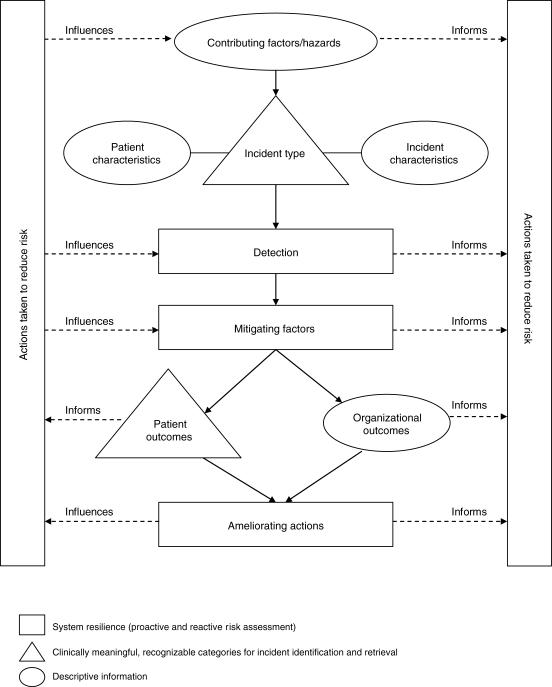
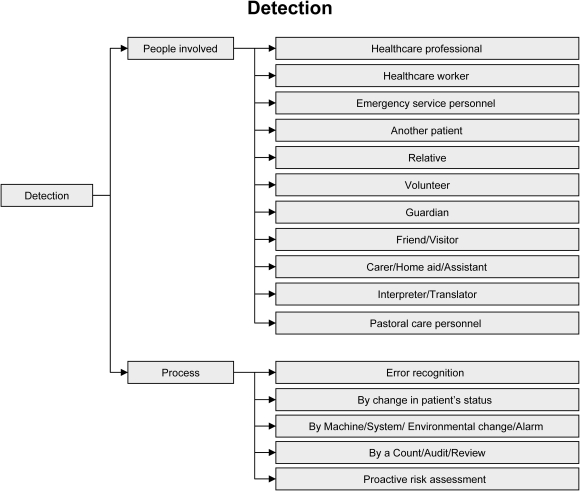
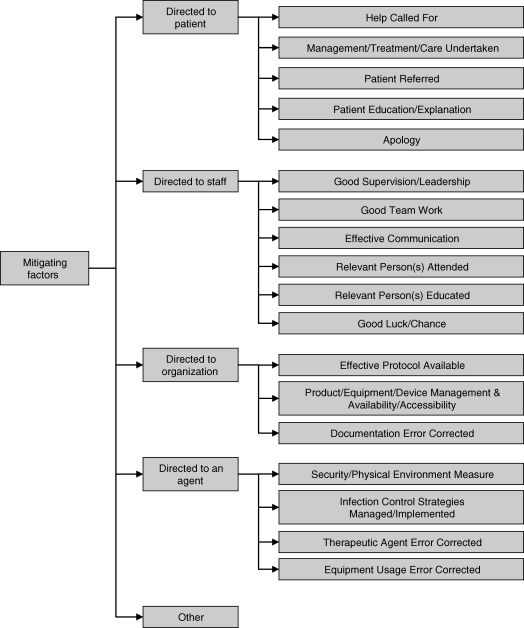
Verification
Claims the paper makes
The claims and statistics of this paper haven’t been checked yet.
Run the check — free, no account needed. It reads the open-access text and checks the sources it cites.
Claims other papers make about this one
Each is checked against this paper’s own text: does it say what the citing paper says it does?
In the citing paper
“The framework is based upon existing classifications such as AIMS, with additional input from international experts in safety, systems engineering, health policy, medicine, and the law.5 28 29”
From An analysis of computer-related patient safety incidents to inform the development of a classification (2010) · cites this paper as [28]
Self-check
Percentages, sums and reported differences re-computed from the paper’s own numbers.
The self-check needs the paper’s full text.
Citations
Cites
(1986) · North-Holland eBooks · Cited by 1,883
Towards an International Classification for Patient Safety: key concepts and terms
Runciman, W., Hibbert, P., Thomson, R., Van Der Schaaf, T., Sherman, H., & Lewalle, P. (2009) · International Journal for Quality in Health Care · doi:10.1093/intqhc/mzn057 · Cited by 647
Self-citationChang, A. (2005) · International Journal for Quality in Health Care · doi:10.1093/intqhc/mzi021 · Cited by 392
Runciman, W. B., Williamson, J. A. H., Deakin, A., Benveniste, K. A., Bannon, K., & Hibbert, P. D. (2006) · Quality in Health Care · doi:10.1136/qshc.2005.017467 · Cited by 156
Self-citationTowards an International Classification for Patient Safety: a Delphi survey
Thomson, R., Lewalle, P., Sherman, H., Hibbert, P., Runciman, W., & Castro, G. (2009) · International Journal for Quality in Health Care · doi:10.1093/intqhc/mzn055 · Cited by 87
Self-citationPerneger, T. (2006) · International Journal for Quality in Health Care · doi:10.1093/intqhc/mzl008 · Cited by 5
Self-citation
Research works printed but not linked: 1
- 2006, International Journal for Quality in Health Care, 28, 264
Cited by
Sorted by citations
Items 201–279 of 279
Analysis of Development in Patient Safety Over the Last 15 Years
Ehrnsperger, B. (2016) · 美中公共管理 · doi:10.17265/1548-6591/2016.08.003 · Cited by 2
“Thus, practices or interventions that improve patient safety are those that reduce the occurrence of preventable adverse events” (AHRQ Patient Safety Network, 2016; Sherman et al., 2009).”
BackgroundRandmaa, M., Engström, M., Mårtensson, G., Swenne, C. L., & Högberg, H. (2019) · BMC Health Services Research · doi:10.1186/s12913-019-4805-7 · Cited by 2
Hokororo, J. C., Habtu, M., Bahegwa, R. P., Ngowi, R. R., Msigwa, Y. S., Degeh, M. M., Kinyenje, E. S., Nassoro, O. A., Marandu, L. E., German, C. J., et al. (2022) · Advances in Infectious Diseases · doi:10.4236/aid.2022.123036 · Cited by 4
Development of minimum data set and dashboard for monitoring adverse events in radiology departments
Karami, M., Hafizi, N., Nickfarjam, A. M., & Refahi, S. (2024) · Heliyon · doi:10.1016/j.heliyon.2024.e30054 · Cited by 2
Papildomosios ir alternatyviosios medicinos reglamentavimas Lietuvoje: problemos ir perspektyvos
Kreivinienė, B., Vaičiulienė, J., Norkienė, S., & Skirutienė, G. (2017) · Sveikatos mokslai · doi:10.5200/sm-hs.2016.124 · Cited by 2
Gaitán‐Duarte, H., & Estrada-Orozco, K. (2021) · Revista Colombiana de Obstetricia y Ginecología · doi:10.18597/rcog.3750 · Cited by 2
Martínez‐Sabater, A., Saus‐Ortega, C., Masiá-Navalon, M., Chover‐Sierra, E., & Ballestar‐Tarín, M. L. (2022) · Nursing Reports · doi:10.3390/nursrep12010012 · Cited by 1
Дуйсебаев, Е. И., Мирзакулова, У. Р., Оспанова, Д. А., Кожекенова, Ж. А., Аимбетова, Г. Е., Рамазанова, М. А., & Турсынбекова, А. Е. (2023) · Farmaciâ Kazahstana · doi:10.53511/pharmkaz.2023.24.12.026 · Cited by 1
Comparative analysis of patient complaints for medical care over the last 10 years
Бідучак, А., Hopko, N. V., Chornenka, Z. A., Alsalama, M. W. O., & Tymkul, D. (2023) · Medical Science · doi:10.54905/disssi/v27i135/e205ms2984 · Cited by 1
Sirevåg, I., Hansen, B. S., Tjoflåt, I., & Gillespie, B. M. (2024) · International Journal of Nursing Studies Advances · doi:10.1016/j.ijnsa.2024.100218 · Cited by 1
Risk management in Moroccan public hospitals: a literature review
Oumghar, A., & Izza, I. (2024) · International Journal of Health Care Quality Assurance · doi:10.1108/ijhcqa-08-2023-0057 · Cited by 1
Compensation claims for chiropractic in Denmark 2013–2022
Nøddeskou-Fink, A. H., Jørgensen, M. S., Hartvigsen, J., Christensen, H. W., & Stochkendahl, M. J. (2026) · Chiropractic & Manual Therapies · doi:10.1186/s12998-026-00627-1 · Cited by 1
“HCAT is an internationally recognized data extraction and analytic tool that enables comparison across international healthcare systems [34, 36, 37].”
Saengpattrachai, M., Juntararat, N., Wittayapipat, U., Pimthong, S., Voralertkosol, T., Musikaew, P., Sadangrit, K., & Chaiwong, W. (2026) · International Journal for Quality in Health Care · doi:10.1093/intqhc/mzag038 · Cited by 2
Kabitz, H. (2013) · Pneumologie · doi:10.1055/s-0033-1344343 · Cited by 1
Aase, K., & Braithwaite, J. (2016) · CRC Press eBooks · doi:10.1201/9781315605609-5 · Cited by 1
Graf, J., Frutiger, A., Fischer, D. P., Meybohm, P., & Zacharowski, K. D. (2014) · Springer eBooks · doi:10.1007/978-3-642-54953-3_9 · Cited by 1
Zupančić, V., & Larsen, T. B. (2022) · Quality Management in Health Care · doi:10.1097/qmh.0000000000000356 · Cited by 1
A Systematic Literature Review of the Performance Measurement System in the Hospitals Sector
Aburumman, A. M., Zin, R. M., & Ilias, N. (2022) · Studies in systems, decision and control · doi:10.1007/978-3-031-10212-7_81 · Cited by 1
Raju, N., Deivigarajan, S., Santhakumar, S., & Balamurugan, S. S. (2023) · THE SCIENTIFIC TEMPER · doi:10.58414/scientifictemper.2023.14.3.57 · Cited by 1
“They spent a lot of money developing the product, and now they have a lot of inventory on hand (Group et al., 2009).”
BackgroundRaju, N., Deivigarajan, S., Santhakumar, S., & Balakrishnan, S. (2023) · THE SCIENTIFIC TEMPER · doi:10.58414/scientifictemper.2023.14.2.37 · Cited by 1
A cultura de segurança do paciente na Odontologia: Revisão integrativa da literatura
Ponzoni, D., & Teófilo, J. K. S. (2023) · Research Society and Development · doi:10.33448/rsd-v12i10.43635 · Cited by 1
Quality Assessment and Improvement and Patient Safety in the Pain Clinic
Fernandez, V. E., Rozanski, M. J., Rathmell, J. P., & Merrill, D. G. (2013) · Elsevier eBooks · doi:10.1016/b978-0-323-08340-9.00006-2 · Cited by 2
A Multidisciplinary and Multifactor Approach to Falls Prevention: The RFPNetwork
Tervo‐Heikkinen, T., Äijö, M. A., & Holopainen, A. (2016) · CRC Press eBooks · doi:10.1201/9781315605609-12 · Cited by 1
Principles of Patient Safety in Pediatric Hem/Onc/HSCT
Guffey, P. J., & Hyman, D. (2017) · Springer eBooks · doi:10.1007/978-3-319-53790-0_8 · Cited by 1
wang, F., Gang, W.-J., Wu, X., Dong, G.-F., Wang, X., Yang, G.-N., Han, Y.-J., Wang, Y., & Zhao, H. (2017) · 世界针灸杂志:英文版 · doi:10.1016/s1003-5257(18)30008-4 · Cited by 1
Dawood, S. B. (2021) · Scholars Journal of Applied Medical Sciences · doi:10.36347/sjams.2021.v09i06.015 · Cited by 1
Bladder distension : aspects of a healthcare-related injury
Joelsson‐Alm, E. (2012) · Figshare · Cited by 1
Ludders, D. J. W., & Matthew McMillan BVM&S, D. (2016) · doi:10.1002/9781119259749.ch1 · Cited by 1
Efectos adversos hospitalarios en dispositivos venosos periféricos: Estudio de validez diagnostica
Crespo, N., & Javier, F. J. F. (2014)
Avoiding epic fails: software and standards directions to increase clinical safety
Williams, P. A. H., & McCauley, V. (2014) · Australasian Journal of Paramedicine · doi:10.4225/75/57982c3331b49
“Patient safety impacts refers to an event that could have resulted, or did result, in unnecessary harm to a patient (Runciman et al., 2009; Sherman et al., 2009).”
BackgroundFactors That Predict Incident Reporting Behavior in Certified Registered Nurse Anesthetists
Damico, N. K. (2014) · VCU Scholars Compass (Virginia Commonwealth University) · doi:10.25772/c255-2q12 · Cited by 1
“One of the fundamental ways that HROs achieve safety is through utilization of operational processes that enhance system resilience (Weick & Sutcliffe, 2001), defined as the ability to detect, mitigate, or ameliorate hazards, then quickly recover the ability to perform core functions (Sherman et al., 2009).”
BackgroundInfluentialPatientensicherheit in der Intensivmedizin
Graf, J., Frutiger, A., Fischer, D. P., Meybohm, P., & Zacharowski, K. D. (2015) · Springer eBooks · doi:10.1007/978-3-642-54675-4_112-1
Incidents critiques en anesthésie pédiatrique : bilan après 18 mois d’analyse
Kupersztych-Hagege, E., Ortego, R. S., Duracher, C., & ORLIAGUET, G. A. (2013) · Annales Françaises d Anesthésie et de Réanimation · doi:10.1016/j.annfar.2013.07.407
Integrated care: an Information Model for Patient Safety and Vigilance Reporting Systems
Rodrigues, J. M., Schulz, S., & Souvignet, J. (2015) · Studies in health technology and informatics · doi:10.3233/978-1-61499-512-8-434
Horsky, J. (2016) · Springer eBooks · doi:10.1007/978-3-319-31123-4_3
Speaking the Same Language When Reporting Outcomes
Berry, A. J. (2016) · ASA Monitor · doi:10.1097/01.asm.0001074644.77799.52
The Impact of the Electronic Medical Records (EMRs) on Hospital Pathology Services
Georgiou, A. (2014) · Advances in healthcare information systems and administration book series · doi:10.4018/978-1-4666-6320-6.ch003
A Two-Pronged Approach to Understanding Quality and Safety Events at the Dental Office
Obadan-Udoh, E. M. (2016) · Digital Access to Scholarship at Harvard (DASH) (Harvard University)
Understanding Patient Safety Reports via Multi-label Text Classification and Semantic Representation
Liang, C. (2017) · Digital Commons-TMC (Texas Medical Center)
Improving patient safety in Libya: the way forward
Elmontsri, M. (2019) · doi:10.25560/76500
Worth, K., Lisk, L. E., & Scruth, E. A. (2021) · Clinical Nurse Specialist · doi:10.1097/nur.0000000000000629
Development of a Quality Improvement Dental Chart Review Training Program
Kalenderian, E., Hebballi, N. B., Franklin, A., Yansane, A., Noriega, A. M. I., White, J., & Walji, M. F. (2022) · Journal of Patient Safety · doi:10.1097/pts.0000000000000965 · Cited by 1
Azevedo, K. (2022) · Advances in medical education, research, and ethics (AMERE) book series · doi:10.4018/978-1-7998-9578-7.ch010
Error and Harm in Health Sciences
(2010) · Productivity Press eBooks · doi:10.1201/9781439836958-c3
The Impact of the Electronic Medical Records (EMRs) on Hospital Pathology Services
Georgiou, A. (2015) · IGI Global eBooks · doi:10.4018/978-1-4666-8756-1.ch004
Prevalence, severity and preventability of prehospital patient safety incidents
Pennington, E., Price, J., Bell, S., & Hill, J. E. (2022) · Journal of Paramedic Practice · doi:10.12968/jpar.2022.14.7.298
RADIOTHERAPY INCIDENT TRACKING AND PREVENTION SYSTEM
Haida, A. V., Hancharova, K. V., Rybina, A. V., & Zorin, V. P. (2021) · Sakharov Readings: Environmental Problems of the XXI Century · doi:10.46646/sakh-2021-2-256-259
Risikomanagement und Fehlerkultur
Graf, J., Frutiger, A., & Schneider, K. (2022) · Springer Reference Medizin · doi:10.1007/978-3-642-54675-4_112-2
Ivert, A., Holowko, N., Liu, X., Edqvist, M., Roos, N., Gustafson, P., & Stephansson, O. (2023) · Scientific Reports · doi:10.1038/s41598-023-49234-7
Чорноус, Д. В., Борисова, Я. В., Линчевский, Г. Л., & Головко, О. К. (2023) · Military and tactical medicine Emergency medicine · doi:10.55359/2782-3296.2023.35.39.014
Koyoshi, R., Miura, S.-I., Imaizumi, S., Nagao, M., Imamura, T., Oshikawa, A., Shiraishi, T., Wada, H., & Iwasaki, A. (2024) · Clinical Infection and Immunity · doi:10.14740/cii172
Risikomanagement und Fehlerkultur
Graf, J., Frutiger, A., & Schneider, K. (2024) · Springer Reference Medizin · doi:10.1007/978-3-662-68699-7_112
Chikwiri, C., & Chauke, L. (2024) · Pan African Medical Journal · doi:10.11604/pamj.2024.48.189.38552
Kubo, T., Ikeda, H., Izawa, S., & Nishimura, Y. (2024) · BMJ Public Health · doi:10.1136/bmjph-2024-001438
Brazete, C. S., Marques, A. M., Elsa Isaura, S., de Freitas, C., & Azevedo, A. (2024) · Journal of Patient Safety · doi:10.1097/pts.0000000000001309
“13 20 Another example is the Prevention and Recovery Information System for Monitoring and Analysis (PRISMA) framework, which was developed at the Eindhoven University of Technology in the Netherlands.”
Risks in Uterus Transplantation: Scoping Review Protocol v1Preprint
Paim, S. M. S., Ejzenberg, D., Braga, B. S., de Medeiros, G. M., Geraldo, A. C. N., Roza, B. D. A., Baracat, E. C., & Schirmer, J. (2025) · doi:10.17504/protocols.io.n92ldnxnxv5b/v1
Generators of Inequality and Inequity Affecting Dental Patient Safety: A Grounded Theory Approach
Alzate, D. A. G., Zapata, I. C. P., & Agudelo‐Suárez, A. A. (2025) · International Journal of Environmental Research and Public Health · doi:10.3390/ijerph22081248
“…of the risk of unnecessary harm associated with healthcare to an acceptable minimum, which refers to the collective notions of current knowledge, available resources, and the context in which care was provided, weighed against the risk of not providing treatment or providing another ” [8].”
Li, T., Pu, J., Zeng, Z., Wen, D., & Wan, L. (2025) · Frontiers in Public Health · doi:10.3389/fpubh.2025.1671279
Jiang, S., Guo, M., Munce, S., Leochico, C. F. D., Bayley, M. T., Kua, A., McIntyre, M., & Andreoli, A. (2025) · Disability and Rehabilitation · doi:10.1080/09638288.2025.2573169
Enhancing clinical and non-clinical risk management: A case study using ELECTRE Tri-nC
Alves, J. L., & Pereira, M. A. (2025) · Health Care Management Science · doi:10.1007/s10729-025-09734-6
“Several key concepts are essential for understanding risk in healthcare [39].”
Zhu, S., Zhou, L., Feng, Y., Zhu, J., Shu, Q., & Li, H. (2022) · Figshare · doi:10.6084/m9.figshare.21256794
Purchase, T., Cooper, A., Price, D., Dorgeat, E., Williams, H., Bowie, P., Fournier, J., Hibbert, P., Edwards, A., Phillips, R., et al. (2024) · Figshare · doi:10.6084/m9.figshare.26627110
Self-citationQu, Y., Shao, J., & Li, X. (2026) · Frontiers in Health Services · doi:10.3389/frhs.2026.1738071
A retrospective descriptive study on the early identification of near-miss events in nursing
Ma, Y., Pu, J., Wang, M., Li, X., & Huang, H. (2026) · BMC Health Services Research · doi:10.1186/s12913-026-14120-1
“Near-miss events in nursing, a subset of nursing safety incidents, are defined as errors or hazards that have not yet resulted in actual harm but carry the potential to cause adverse outcomes [2, 3].”
Vidal-Abarca, I., López-Picazo, J. J., Marín-Martínez, J. M., & Ibáñez, M. L. (2026) · Journal of Healthcare Quality Research · doi:10.1016/j.jhqr.2026.101195
Baby, R. S., Pillai, J. S. K., Sahoo, B., Mondal, R., Padhy, B. M., Karun, K. M., Choudhary, D., Thampy, M., Singh, G., & Yadav, V. K. (2026) · Medical Journal Armed Forces India · doi:10.1016/j.mjafi.2026.02.020
Strengthening incident learning in radiotherapy practice: insights from the MARLIN study
Prieto, C., Kelly, C., Brusadin, G., Kearney, M., Pourel, N., Rogers, A., Geão, A., Akata, D., Andersson, J., Paulo, G., et al. (2026) · Clinical and Translational Radiation Oncology · doi:10.1016/j.ctro.2026.101201
Osei-Donkor, B., Hassoun, A., & Jabin, M. S. R. (2026) · Frontiers in Health Services · doi:10.3389/frhs.2026.1872556
Barbosa, R., Fraga, S. M. G., Baltazar, F., & Fernández-Llimós, F. (2026) · Journal of Patient Safety · doi:10.1097/pts.0000000000001580
Sirago, G., Sabato, S., Sebastiani, N., Zotti, F., Dell'Erba, A., & Ferorelli, D. (2026) · The Joint Commission Journal on Quality and Patient Safety · doi:10.1016/j.jcjq.2026.09.002
Improving Knowledge Management in Patient Safety Reporting: A Semantic Web Ontology Approach
Liang, C., & Gong, Y. (2015) · Lecture notes in computer science · doi:10.1007/978-3-319-20618-9_12
“In particular, ICPS lays particular emphasis on defining uniformed concepts and preferred terms, which holds promise to increase the data quality for patient reporting systems [13].”
Background
Metadata
- Authors
- The World Alliance For Patient Safety Drafting Group, Sherman, H., Castro, G., Fletcher, M., on behalf of The World Alliance for Patient Safety, Hatlie, M., Hibbert, P., Jakob, R., Koss, R., Lewalle, P., Loeb, J., Perneger, T., Runciman, W., Thomson, R., Van Der Schaaf, T., & Virtanen, M.
- Affiliations
- Joint Commission (US)
- National Patient Safety Agency (GB)
- World Health Organization (CH)
- Royal Adelaide Hospital (AU)
- University Hospital of Geneva (CH)
- Newcastle University (GB)
- Corresponding author
- Sherman, H.
- Venue
- International Journal for Quality in Health Care
- Publisher
- Oxford University Press (OUP)
- Published
- 2009-02-01
- Volume
- 21
- Issue
- 1
- Pages
- 2-8
- ISSN
- 1353-4505 (ISSN-L)
- 1464-3677
- PMC
- PMC2638753
- OpenAlex
- W2138968928
- Cited by
- 281
- References
- 6
- Citations by year
- 2026: 17 · 2025: 14 · 2024: 22 · 2023: 14 · 2022: 26 · 2021: 19 · 2020: 13 · 2019: 12 · 2018: 14 · 2017: 13 · 2016: 23 · 2015: 17 · 2014: 22 · 2013: 17 · 2012: 7
- FWCI
- 17.13
- Type
- journal article
- Language
- en
- Open access
- bronze
- doi.org
- Locations
- International Journal for Quality in Health Care (publishedVersion)
- PubMed Central (publishedVersion)
- PubMed (publishedVersion)
- TU/e Research Portal (publishedVersion, other-oa)
- reroDoc Digital Library (submittedVersion)
- UniSA Research Outputs Repository (University of South Australia) (submittedVersion, cc-by-nc)
- TU/e Research Portal (submittedVersion)
- Adelaide Research & Scholarship (AR&S) (University of Adelaide) (submittedVersion, cc-by-nc)
- Document Server@UHasselt (UHasselt) (submittedVersion)
- Archive ouverte UNIGE (University of Geneva) (submittedVersion)
- Archive ouverte UNIGE (University of Geneva) (submittedVersion, cc-by)
- TU/e Research Portal (submittedVersion, other-oa)
- Newcastle University ePrints (Newcastle Univesity)
- Funders
- World Health Organization
- Topics
- Health Sciences › Medicine › Public Health, Environmental and Occupational Health › Patient Safety and Medication Errors
- Health Sciences › Health Professions › Health Information Management › Medical Coding and Health Information
- Health Sciences › Medicine › Public Health, Environmental and Occupational Health › Healthcare Quality and Management
- Keywords
- patient safety, conceptual framework, incident classification, patient outcomes, contributing factors, risk mitigation, World Alliance for Patient Safety, Delphi method, health informatics
- MeSH terms
- Concept Formation, International Cooperation, Safety Management, Medical Errors
About these checks
Registry, retraction, Cites and statistics results are computed, not judged, with one exception: a printed reference that no index lists is read once by a model before it counts as a citation error. Claims are extracted by a model and kept only when their quote appears verbatim in the text; each cited source is then checked, with a model’s help, for whether it says what the claim relies on. Those verdicts can be wrong — read the claim’s quote and the cited source before relying on one.
Statistics and arithmetic are recomputed, not judged.
Confidence bands are shown only for fields calibrated on our annotated test set. None is calibrated yet, so no band is shown.
What counts as a claim ›How we measure confidence ›How we check this ›
Are you an author, or do you see a problem with this page? Request a review
