

The PRIDE database resources in 2022: a hub for mass spectrometry-based proteomics evidences
Open accessThe DOI matches its Crossref record; 60 of the 61 references it cites were found in a registry or an index.
Abstract
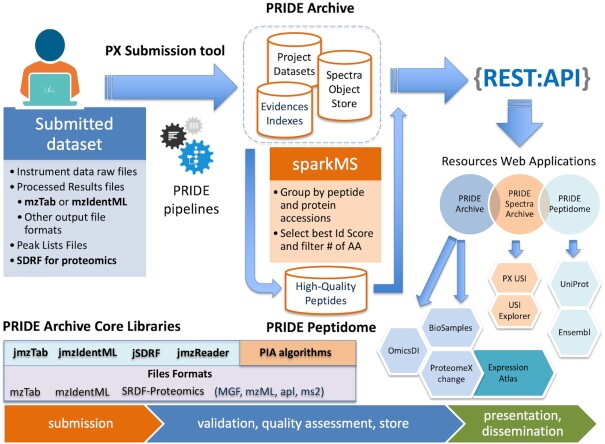
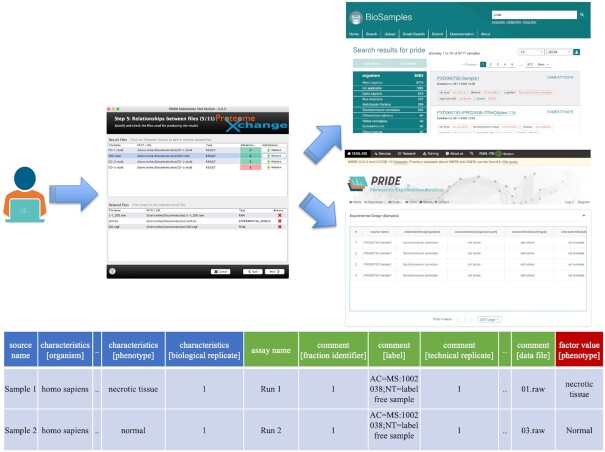
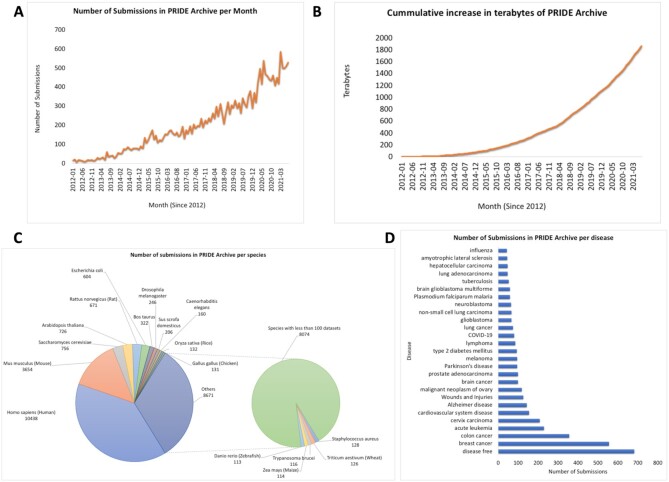
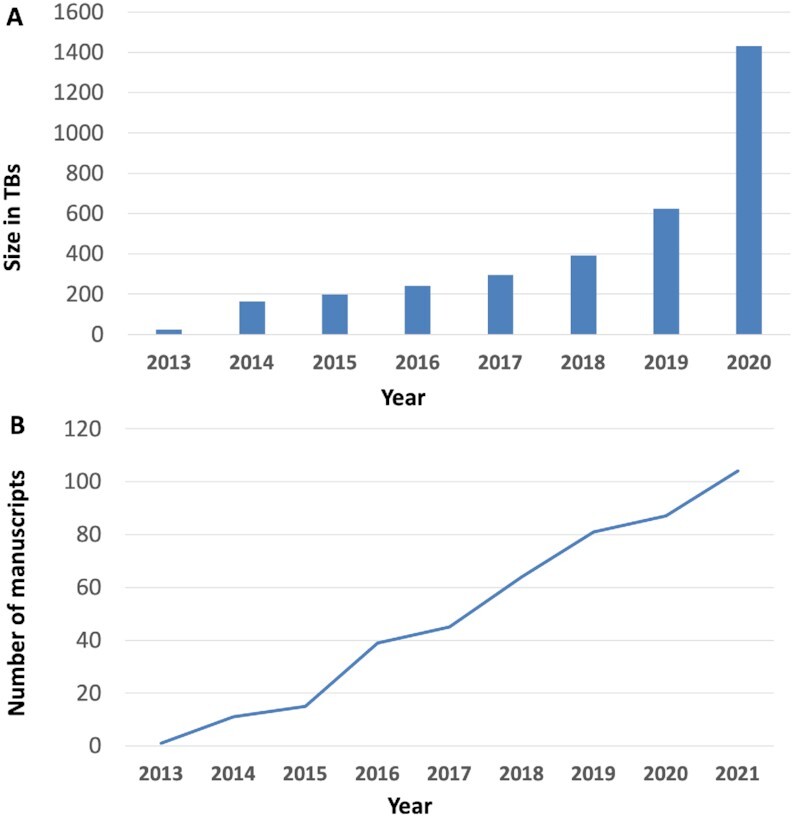
The PRoteomics IDEntifications (PRIDE) database (https://www.ebi.ac.uk/pride/) is the world's largest data repository of mass spectrometry-based proteomics data. PRIDE is one of the founding members of the global ProteomeXchange (PX) consortium and an ELIXIR core data resource. In this manuscript, we summarize the developments in PRIDE resources and related tools since the previous update manuscript was published in Nucleic Acids Research in 2019. The number of submitted datasets to PRIDE Archive (the archival component of PRIDE) has reached on average around 500 datasets per month during 2021. In addition to continuous improvements in PRIDE Archive data pipelines and infrastructure, the PRIDE Spectra Archive has been developed to provide direct access to the submitted mass spectra using Universal Spectrum Identifiers. As a key point, the file format MAGE-TAB for proteomics has been developed to enable the improvement of sample metadata annotation. Additionally, the resource PRIDE Peptidome provides access to aggregated peptide/protein evidences across PRIDE Archive. Furthermore, we will describe how PRIDE has increased its efforts to reuse and disseminate high-quality proteomics data into other added-value resources such as UniProt, Ensembl and Expression Atlas.
Overview
The claims and statistics of this paper haven’t been checked yet.
Free: it reads the open-access text and checks the first 5 claims that cite a source we can check. Create a free account to check every claim.
Integrity signals
Registry
Cites
Statistics
Figures
Verification
Claims the paper makes
The claims and statistics of this paper haven’t been checked yet.
Free: it reads the open-access text and checks the first 5 claims that cite a source we can check. Create a free account to check every claim.
Claims other papers make about this one
Each is checked against this paper’s own text: does it say what the citing paper says it does?
In the citing paper
“General proteomics repositories (e.g., PRIDE/ProteomeXchange) host raw and processed MS-based proteomics but do not harmonize thermal shift/solubility readouts into queryable, per-protein effect sizes across compounds and cell lines (16).”
From DORSSAA: Drug-Target interactOmics Resource Based on Stability/Solubility Alteration Assay (2026) · cites this paper as [16]
Self-check
Percentages, sums and reported differences re-computed from the paper’s own numbers.
The self-check needs the paper’s full text.
Citations
Cites
Cox, J., & Mann, M. (2008) · Nature Biotechnology · doi:10.1038/nbt.1511 · Cited by 14,855 · cited 4×
“Since 2020, overall, 240 and 30 dataset submissions have been performed using mzTab generated from Mascot and MaxQuant, respectively.”
BackgroundInfluentialPerkins, D. N., Pappin, D. J. C., Creasy, D. M., & Cottrell, J. S. (1999) · Electrophoresis · doi:10.1002/(sici)1522-2683(19991201)20:18<3551::aid-elps3551>3.0.co;2-2 · Cited by 8,203
Perez-Riverol, Y., Csordas, A., Bai, J., Bernal-Llinares, M., Hewapathirana, S., Kundu, D. J., Inuganti, A., Griss, J., Mayer, G., Eisenacher, M., et al. (2019) · Nucleic Acids Research · doi:10.1093/nar/gky1106 · Cited by 6,693 · cited 8×
“Since 2019, PRIDE has started to provide peptide evidences to Ensembl using the ‘TrackHub’ registry (2).”
BackgroundMethodInfluentialSelf-citationUniProt: the universal protein knowledgebase in 2021
The UniProt Consortium, Bateman, A., Martin, M.-J., Orchard, S., Magrane, M., Agivetova, R., Ahmad, S., Alpi, E., Bowler-Barnett, E. H., Britto, R., et al. (2021) · Nucleic Acids Research · doi:10.1093/nar/gkaa1100 · Cited by 6,372
ProteomeXchange provides globally coordinated proteomics data submission and dissemination
Vizcaíno, J. A., Deutsch, E. W., Wang, R., Csordas, A., Reisinger, F., Ríos, D., Dianes, J. A., Sun, Z., Farrah, T., Bandeira, N., et al. (2014) · Nature Biotechnology · doi:10.1038/nbt.2839 · Cited by 2,729 · cited 3×
“For every submitted dataset to PRIDE Archive, general metadata about the study must be provided including the title, submitters’ details, dataset description, sample and data protocols, instrument, and the associated publication once it is published (2,4,8).”
MethodSelf-citationiProX: an integrated proteome resource
Ma, J., Chen, T., Wu, S., Yang, C., Bai, M., Shu, K., Li, K., Zhang, G., Jin, Z., He, F., et al. (2019) · Nucleic Acids Research · doi:10.1093/nar/gky869 · Cited by 1,978 · cited 1×
“As of 2021, the resources PeptideAtlas (13), including its related resource PASSEL (PeptideAtlas SRM Experiment Library) (14), MassIVE (15), jPOST (16), iProX (17) and Panorama Public (18) are the active members of the consortium.”
BackgroundYates, A. D., Achuthan, P., Akanni, W., Allen, J., Allen, J., Alvarez-Jarreta, J., Amode, M. R., Armean, I. M., Azov, A. G., Bennett, R., et al. (2019) · Nucleic Acids Research · doi:10.1093/nar/gkz966 · Cited by 1,152
mzML—a Community Standard for Mass Spectrometry Data
Martens, L., Chambers, M., Sturm, M., Kessner, D., Levander, F., Shofstahl, J., Tang, W. H., Römpp, A., Neumann, S., Pizarro, A. D., et al. (2011) · Molecular & Cellular Proteomics · doi:10.1074/mcp.r110.000133 · Cited by 745 · cited 1×
“as mzTab (5), mzIdentML (6) and mzML (7) to store, process and visualize the proteomics data deposited.”
BackgroundThe ProteomeXchange consortium in 2020: enabling ‘big data’ approaches in proteomics
Deutsch, E. W., Bandeira, N., Sharma, V., Perez-Riverol, Y., Carver, J. J., Kundu, D. J., García-Seisdedos, D., Jarnuczak, A. F., Hewapathirana, S., Pullman, B. S., et al. (2019) · Nucleic Acids Research · doi:10.1093/nar/gkz984 · Cited by 697 · cited 3×
“The PRIDE database was one of the founders of the PX consortium in 2011 (3,8).”
BackgroundMethodSelf-citationMGnify: the microbiome analysis resource in 2020
Mitchell, A. L., Almeida, A., Beracochea, M., Boland, M., Burgin, J., Cochrane, G., Crusoe, M. R., Kale, V., Potter, S. C., Richardson, L. J., et al. (2019) · Nucleic Acids Research · doi:10.1093/nar/gkz1035 · Cited by 562 · cited 2×
“In addition, we aim to increasingly perform in-house data reuse (including data re-analysis) and disseminate high-quality proteomics data from PRIDE into the already mentioned added-value resources (Ensembl, UniProt, Expression Atlas, and MGnify in the near future).”
Background
Cited by
Items 201–300 of 1,146
Targeting Ras-, Rho-, and Rab-family GTPases via a conserved cryptic pocket
Morstein, J., Bowcut, V., Fernando, M. C., Yang, Y., Zhu, L., Jenkins, M. L., Evans, J. T., Guiley, K. Z., Peacock, D. M., Krahnke, S., et al. (2024) · Cell · doi:10.1016/j.cell.2024.08.017 · Cited by 70
“56 The mass spectrometry proteomics data have been deposited to the ProteomeXchange Consortium via the PRIDE partner repository 57 with the dataset identifier PXD041440.”
InstaNovo enables diffusion-powered de novo peptide sequencing in large-scale proteomics experiments
Eloff, K., Kalogeropoulos, K., Mabona, A., Morell, O., Catzel, R., Rivera‐de‐Torre, E., Jespersen, J. B., Williams, W., van Beljouw, S. P. B., Skwark, M. J., et al. (2025) · Nature Machine Intelligence · doi:10.1038/s42256-025-01019-5 · Cited by 70
CNS myelination requires VAMP2/3-mediated membrane expansion in oligodendrocytes
Lam, M., Takeo, K., Almeida, R. G., Cooper, M. H., Wu, K., Iyer, M., Kantarci, H., & Zuchero, J. B. (2022) · Nature Communications · doi:10.1038/s41467-022-33200-4 · Cited by 56
Short tRNA anticodon stem and mutant eRF1 allow stop codon reassignment
Kachale, A., Pavlíková, Z., Nenarokova, A., Roithová, A., Durante, I. M., Miletínová, P., Záhonová, K., Nenarokov, S., Votýpka, J., Horáková, E., et al. (2023) · Nature · doi:10.1038/s41586-022-05584-2 · Cited by 69
Xie, Z., Zhao, S., Li, Y., Deng, Y., Shi, Y., Chen, X., Li, Y., Li, H., Chen, C., Wang, X., et al. (2023) · Nature Plants · doi:10.1038/s41477-023-01499-6 · Cited by 69
Carnosine regulation of intracellular pH homeostasis promotes lysosome-dependent tumor immunoevasion
Yan, R., Zhang, P., Shen, S., Zeng, Y., Wang, T., Chen, Z., Ma, W., Feng, J., Suo, C., Zhang, T., et al. (2024) · Nature Immunology · doi:10.1038/s41590-023-01719-3 · Cited by 70
Truong, T., Webber, K. G. I., Johnston, S. M., Boekweg, H., Lindgren, C. M., Liang, Y., Nydegger, A., Xie, X., Tsang, T., Jayatunge, D., et al. (2023) · Angewandte Chemie International Edition · doi:10.1002/anie.202303415 · Cited by 68
Targeting HDAC6 to treat heart failure with preserved ejection fraction in mice
Ranjbarvaziri, S., Zeng, A., Wu, I., Greer-Short, A., Farshidfar, F., Budan, A., Xu, E., Shenwai, R., Kozubov, M., Li, C., et al. (2024) · Nature Communications · doi:10.1038/s41467-024-45440-7 · Cited by 68
Gomes, L. C., Hänzelmann, S., Hausmann, F., Khatri, R., Moreno, S. O., Parvaz, M., Tzeplaeff, L., Pasetto, L., Gébelin, M., Ebbing, M., et al. (2024) · Nature Communications · doi:10.1038/s41467-024-49196-y · Cited by 68
Qu, N., Chen, D., Ma, B., Zhang, L., Wang, Q., Wang, Y., Wang, H., Ni, Z., Wang, W., Liao, T., et al. (2024) · Nature Communications · doi:10.1038/s41467-024-47581-1 · Cited by 67
“The mass spectrometry proteomics and phospho-proteomics data have been deposited to the ProteomeXchange Consortium via the PRIDE 68 with the dataset identi fi er PXD044900 and PXD045017.”
From 13 C-lignin to 13 C-mycelium: Agaricus bisporus uses polymeric lignin as a carbon source
Duran, K., Kohlstedt, M., van Erven, G., Klostermann, C. E., America, A. H. P., Bakx, E. J., Baars, J. J. P., Gorissen, A., de Visser, R., de Vries, R. P., et al. (2024) · Science Advances · doi:10.1126/sciadv.adl3419 · Cited by 67
FDA-approved disulfiram inhibits the NLRP3 inflammasome by regulating NLRP3 palmitoylation
Xu, J., Pickard, J. M., & Núñez, G. (2024) · Cell Reports · doi:10.1016/j.celrep.2024.114609 · Cited by 68
Shuken, S. R., Rutledge, J., Iram, T., Losada, P. M., Wilson, E. N., Andreasson, K. I., Leib, R. D., & Wyss‐Coray, T. (2022) · Nature Aging · doi:10.1038/s43587-022-00196-x · Cited by 66
An anti-influenza A virus microbial metabolite acts by degrading viral endonuclease PA
Zhao, J., Wang, J., Pang, X., Liu, Z., Li, Q., Yi, D., Zhang, Y., Fang, X., Zhang, T., Zhou, R., et al. (2022) · Nature Communications · doi:10.1038/s41467-022-29690-x · Cited by 62
Designed High-Redox Potential Laccases Exhibit High Functional Diversity
Barber-Zucker, S., Mateljak, I., Goldsmith, M., Kupervaser, M., Alcalde, M., & Fleishman, S. J. (2022) · ACS Catalysis · doi:10.1021/acscatal.2c03006 · Cited by 67
Cell-specific bioorthogonal tagging of glycoproteins
Cioce, A., de la Calle, B., Rizou, T., Lowery, S., Bridgeman, V. L., Mahoney, K. E., Marchesi, A., Bineva‐Todd, G., Flynn, H. R., Li, Z., et al. (2022) · Nature Communications · doi:10.1038/s41467-022-33854-0 · Cited by 66
Skowronek, P., Krohs, F., Lubeck, M., Wallmann, G., Itang, E. C. M., Koval, P., Wahle, M., Thielert, M., Meier, F., Willems, S., et al. (2022) · Molecular & Cellular Proteomics · doi:10.1016/j.mcpro.2022.100489 · Cited by 66
“All method parameter files required for the acquisition and mass spectrometry raw files have been deposited with the ProteomeXchange Consortium via the PRIDE partner (36) repository with the dataset identifier PXD037766 and with MassIVE with the identifier MSV000090925.”
MethodproteoDA: a package for quantitative proteomics
Thurman, T. J., Washam, C. L., Alkam, D., Bird, J. T., Gies, A. J., Dhusia, K., Robeson, M. S., & Byrum, S. D. (2023) · The Journal of Open Source Software · doi:10.21105/joss.05184 · Cited by 67
“Quantitative proteomics analysis is growing in popularity with the advancement of mass spectrometer instrumentation and software that allows for the identification of more and more proteins from complex sample mixtures (Arora & Somasundaram, 2019; Deutsch et al., 2022; Perez-Riverol et al., 2021).”
BackgroundLiu, P., Yang, S., Shao, X., Li, C., Wang, Z., Dai, H., & Wang, C. (2024) · Stem Cells Translational Medicine · doi:10.1093/stcltm/szad094 · Cited by 68
Ding, Z., Greenberg, Z., Serafim, M. F., Ali, S., Jamieson, J. C., Traktuev, D. O., March, K. L., & He, M. (2024) · Extracellular Vesicle · doi:10.1016/j.vesic.2024.100034 · Cited by 66
The human zinc-binding cysteine proteome
Burger, N., Mittenbühler, M. J., Xiao, H., Shin, S.-H., Wei, S. M., Henze, E. K., Schindler, S., Mehravar, S., Wood, D. M., Petrocelli, J. J., et al. (2024) · Cell · doi:10.1016/j.cell.2024.11.025 · Cited by 66
Sun, W., Zhang, Q., Zhang, X., Tran, N. H., Rahman, M. Z., Chen, Z., Peng, C., Ma, J., Li, M., Xin, L., et al. (2023) · Nature Communications · doi:10.1038/s41467-023-39699-5 · Cited by 66
ST6GAL1 ‐mediated aberrant sialylation promotes prostate cancer progression
Scott, E., Goode, E. A., Garnham, R., Hodgson, K., Orozco‐Moreno, M., Turner, H., Livermore, K. E., Nangkana, K. P., Frame, F. M., Bermudez, A., et al. (2023) · The Journal of Pathology · doi:10.1002/path.6152 · Cited by 65
“The MS proteomics data have been deposited at the ProteomeXchange Consortium via the PRIDE [35] partner repository under the dataset identifier PXD041316.”
MethodSheng, N., Zhang, Z., Zheng, H., Ma, C., Li, M., Wang, Z., Wang, L., Jiang, J., & Zhang, J. (2023) · Advanced Science · doi:10.1002/advs.202303584 · Cited by 65
Velychko, T., Mohammad, E., Vicens, I. F., Parfentev, I., Werner, M., Studniarek, C., Schwalb, B., Urlaub, H., Murphy, S., Cramer, P., et al. (2024) · Molecular Cell · doi:10.1016/j.molcel.2024.05.007 · Cited by 65
IFNγ causes mitochondrial dysfunction and oxidative stress in myositis
Abad, C., Pinal‐Fernandez, I., Guillou, C., Bourdenet, G., Drouot, L., Cosette, P., Giannini, M., Debrut, L., Jean, L., Bernard, S., et al. (2024) · Nature Communications · doi:10.1038/s41467-024-49460-1 · Cited by 66
Selumetinib in adults with NF1 and inoperable plexiform neurofibroma: a phase 2 trial
Gross, A. M., Coyne, G. O., Dombi, E., Tibery, C., Herrick, W. G., Martin, S. C., Angus, S. P., Shern, J. F., Rhodes, S. D., Foster, J. C., et al. (2025) · Nature Medicine · doi:10.1038/s41591-024-03361-4 · Cited by 65
Dave, J. K., Raad, N., Mittal, N., Zhang, L., Fargnoli, A. S., Oh, J. G., Savoia, M. E., Hansen, J., Fava, M., Yin, X., et al. (2022) · Cardiovascular Research · doi:10.1093/cvr/cvac021 · Cited by 65
Tseng, Y.-H., Scholz, S. S., Fliegmann, J., Krüger, T., Gandhi, A., Furch, A. C. U., Kniemeyer, O., Brakhage, A. A., & Oelmüller, R. (2022) · Cells · doi:10.3390/cells11192960 · Cited by 64
“The mass spectrometry proteomics data have been deposited to the ProteomeXchange Consortium via the PRIDE partner repository [47] with dataset identifier PXD033224.”
MethodAltuzar, J., Notbohm, J., Stein, F., Haberkant, P., Hempelmann, P., Heybrock, S., Worsch, J., Säftig, P., & Höglinger, D. (2023) · Proceedings of the National Academy of Sciences · doi:10.1073/pnas.2213886120 · Cited by 64
“Proteomics Data have been deposited in PRIDE to the ProteomeXchange Consortium via the PRIDE (66) partner repository with the dataset identifier PXD039780.”
MethodInfluentialWang, T., Zhou, Y., Zhou, Z., Zhang, P., Yan, R., Sun, L., Ma, W., Zhang, T., Shen, S., Liu, H., et al. (2023) · Nature Communications · doi:10.1038/s41467-023-37227-z · Cited by 64
A TRIM21-based bioPROTAC highlights the therapeutic benefit of HuR degradation
Fletcher, A., Clift, D., de Vries, E., Cuesta, S. M., Malcolm, T., Meghini, F., Chaerkady, R., Wang, J., Chiang, A. J., Weng, S. H. S., et al. (2023) · Nature Communications · doi:10.1038/s41467-023-42546-2 · Cited by 64
VC-resist glioblastoma cell state: vessel co-option as a key driver of chemoradiation resistance
Pichol-Thievend, C., Anezo, O., Pettiwala, A. M., Bourmeau, G., Montagne, R., Lyne, A.-M., Guichet, P., Deshors, P., Ballestín, A., Blanchard, B., et al. (2024) · Nature Communications · doi:10.1038/s41467-024-47985-z · Cited by 65
“The mass spectrometry proteomics data have been deposited to the ProteomeXchange Consortium (http://proteomecentral. proteomexchange.org) via the PRIDE partner repository 105 with the dataset identi fi er PXD042606.”
Desai, P. A., Takahashi, N., Kumar, R., Nichols, S., Malin, J., Hunt, A. L., Schultz, C. W., Cao, Y., Tillo, D., Nousome, D., et al. (2024) · Cell Reports Medicine · doi:10.1016/j.xcrm.2024.101610 · Cited by 64
Modulating mTOR-dependent astrocyte substate transitions to alleviate neurodegeneration
Zhang, L., Xu, Z., Jia, Z., Cai, S., Wu, Q., Liu, X., Hu, X., Bai, T., Chen, Y., Li, T., et al. (2025) · Nature Aging · doi:10.1038/s43587-024-00792-z · Cited by 64
Hurst, C., Pugh, D. A., Abreha, M. H., Duong, D. M., Dammer, E. B., Bennett, D. A., Herskowitz, J. H., & Seyfried, N. T. (2023) · Molecular & Cellular Proteomics · doi:10.1016/j.mcpro.2023.100542 · Cited by 55
Stable endocytic structures navigate the complex pellicle of apicomplexan parasites
Kořený, L., Mercado-Saavedra, B. N., Klinger, C. M., Barylyuk, K., Butterworth, S., Hirst, J., Rivera-Cuevas, Y., Zaccai, N. R., Holzer, V. J. C., Klingl, A., et al. (2023) · Nature Communications · doi:10.1038/s41467-023-37431-x · Cited by 63
Sjöberg, E., Melssen, M. M., Richards, M., Ding, Y., Chanoca, C., Chen, D., Nwadozi, E., Pal, S., Love, D. T., Ninchoji, T., et al. (2023) · Journal of Clinical Investigation · doi:10.1172/jci161366 · Cited by 63
Expression Atlas update: insights from sequencing data at both bulk and single cell level
George, N., Fexova, S. K., Fuentes, A. M.-P., Madrigal, P., Bi, Y., Iqbal, H., Kumbham, U., Nolte, N., Zhao, L., Thanki, A. S., et al. (2023) · Nucleic Acids Research · doi:10.1093/nar/gkad1021 · Cited by 63
Self-citationAl‐Sharabi, N., Mohamed‐Ahmed, S., Shanbhag, S., Kampleitner, C., Elnour, R., Yamada, S., Rana, N., Birkeland, E., Tangl, S., Gruber, R., et al. (2024) · Stem Cell Research & Therapy · doi:10.1186/s13287-024-03639-x · Cited by 63
Zhang, P., Catterson, J. H., Grönke, S., & Partridge, L. (2024) · Nature Aging · doi:10.1038/s43587-024-00578-3 · Cited by 64
Advance computational tools for multiomics data learning
Mansoor, S., Hamid, S., Tuan, T. T., Park, J.-E., & Chung, Y. S. (2024) · Biotechnology Advances · doi:10.1016/j.biotechadv.2024.108447 · Cited by 63
Rational engineering of minimally immunogenic nucleases for gene therapy
Raghavan, R. S., Friedrich, M., King, C., Vo, C.-D.-T., Strebinger, D., Lash, B., Kilian, M., Platten, M., Macrae, R. K., Song, Y., et al. (2025) · Nature Communications · doi:10.1038/s41467-024-55522-1 · Cited by 63
Discovery of antibiotics that selectively kill metabolically dormant bacteria
Zheng, E. J., Valeri, J. A., Andrews, I. W., Krishnan, A., Bandyopadhyay, P., Anahtar, M. N., Herneisen, A. L., Schulte, F., Linnehan, B., Wong, F. J., et al. (2023) · Cell chemical biology · doi:10.1016/j.chembiol.2023.10.026 · Cited by 62
Baker, C. P., Bruderer, R., Abbott, J., Arthur, J. S. C., & Brenes, A. J. (2024) · Journal of Proteome Research · doi:10.1021/acs.jproteome.3c00671 · Cited by 62
Structure and mechanism of the Zorya anti-phage defence system
Hu, H., Popp, P. F., Hughes, T. C. D., Roa-Eguiara, A., Rutbeek, N. R., Martin, F. J. O., Hendriks, I. A., Payne, L. J., Yan, Y., Humolli, D., et al. (2024) · Nature · doi:10.1038/s41586-024-08493-8 · Cited by 62
Diet-derived urolithin A is produced by a dehydroxylase encoded by human gut Enterocloster species
Pidgeon, R., Mitchell, S., Shamash, M., Suleiman, L., Dridi, L., Maurice, C. F., & Castagner, B. (2025) · Nature Communications · doi:10.1038/s41467-025-56266-2 · Cited by 63
ConSIG: consistent discovery of molecular signature from OMIC data
Li, F., Yin, J., Lu, M., Yang, Q., Zeng, Z., Zhang, B., Li, Z., Qiu, Y., Dai, H., Chen, Y., et al. (2022) · Briefings in Bioinformatics · doi:10.1093/bib/bbac253 · Cited by 61
The Hsp90 molecular chaperone governs client proteins by targeting intrinsically disordered regions
Kolhe, J. A., Babu, N. L., & Freeman, B. (2023) · Molecular Cell · doi:10.1016/j.molcel.2023.05.021 · Cited by 62
Liu, X., Onda, M., Watson, N. W., Hassan, R., Ho, M., Bera, T. K., Wei, J., Chakraborty, A., Beers, R., Zhou, Q., et al. (2022) · Proceedings of the National Academy of Sciences · doi:10.1073/pnas.2202439119 · Cited by 60
Gong, T., Zhang, X., Peng, Z., Ye, Y., Liu, R., Yang, Y., Chen, Z., Zhang, Z., Hu, H., Yin, S., et al. (2022) · Communications Biology · doi:10.1038/s42003-022-03481-y · Cited by 60
Engelberg, K., Bechtel, T. D., Michaud, C., Weerapana, E., & Gubbels, M. (2022) · Nature Communications · doi:10.1038/s41467-022-32151-0 · Cited by 60
Kim, M., Serwa, R. A., Samluk, Ł., Suppanz, I., Kodroń, A., Stępkowski, T. M., Elancheliyan, P., Tsegaye, B., Oeljeklaus, S., Wasilewski, M., et al. (2023) · Nature Communications · doi:10.1038/s41467-023-39642-8 · Cited by 61
Carreras‐Sureda, A., Zhang, X., Laubry, L., Brunetti, J., Koenig, S., Wang, X., Castelbou, C., Hetz, C. A., Liu, Y., Frieden, M., et al. (2023) · Cell Reports · doi:10.1016/j.celrep.2023.113540 · Cited by 60
Next-generation mapping of the salicylic acid signaling hub and transcriptional cascade
Powers, J. J., Zhang, X., Reyes, A. V., Zavaliev, R., Ochakovski, R., Xu, S., & Dong, X. (2024) · Molecular Plant · doi:10.1016/j.molp.2024.08.008 · Cited by 61
Sanchez-Garrido, M. A., Serrano-López, V., Ruíz-Pino, F., Vazquez, M. J., Rodríguez-Martín, A., Torres, E., Velasco, I., Rodríguez, A., Chicano‐Gálvez, E., Mora-Ortiz, M., et al. (2024) · Nature Communications · doi:10.1038/s41467-024-52898-y · Cited by 60
Unifying the analysis of bottom-up proteomics data with CHIMERYS
Frejno, M., Berger, M. T., Tüshaus, J., Hogrebe, A., Seefried, F., Graber, M., Samaras, P., Fredj, S. B., Sukumar, V., Eljagh, L., et al. (2025) · Nature Methods · doi:10.1038/s41592-025-02663-w · Cited by 60
Martínez‐Val, A., Fort, K. L., Koenig, C., van der Hoeven, L., Franciosa, G., Moehring, T., Ishihama, Y., Chen, Y., Makarov, A., Xuan, Y., et al. (2023) · Nature Communications · doi:10.1038/s41467-023-39347-y · Cited by 60
Prasad, A., Sreedharan, S., Bakthavachalu, B., & Laxman, S. (2023) · PLoS Biology · doi:10.1371/journal.pbio.3002342 · Cited by 59
Tunnelling nanotube formation is driven by Eps8/IRSp53‐dependent linear actin polymerization
Henderson, J. M., Ljubojević, N., Belian, S., Chaze, T., Castaneda, D., Battistella, A., Gianetto, Q. G., Matondo, M., Descroix, S., Bassereau, P. M., et al. (2023) · The EMBO Journal · doi:10.15252/embj.2023113761 · Cited by 59
Yang, J., Lu, X., Hao, J., Li, L., Ruan, Y.-T., An, X.-N., Huang, Q., Dong, X., & Gao, P. H. (2025) · Nature Communications · doi:10.1038/s41467-025-56494-6 · Cited by 59
Personalized molecular signatures of insulin resistance and type 2 diabetes
Kjærgaard, J., Stocks, B., Henderson, J., Freemantle, J. B., Rizo‐Roca, D., Puglia, M., Montoya, M. M., Andersson, D. P., Bäckdahl, J., Hogling, D. E., et al. (2025) · Cell · doi:10.1016/j.cell.2025.05.005 · Cited by 59
Polyvalent folate receptor-targeting chimeras for degradation of membrane proteins
Xiao, D., Dong, J., Xie, F., Feng, X., Wang, J., Xu, X., Tang, B., Sun, C., Wang, Y., Zhong, W., et al. (2025) · Nature Chemical Biology · doi:10.1038/s41589-025-01924-1 · Cited by 59
“The effect of FR-Ctx on cancer cell proliferation was evaluated using a cell index assay 43”
Kupffer cell programming by maternal obesity triggers fatty liver disease
Huang, H., Balzer, N. R., Seep, L., Šplíchalová, I., Blank-Stein, N., Viola, M. F., Taveras, E. F., Acil, K., Fink, D., Petrovic, F., et al. (2025) · Nature · doi:10.1038/s41586-025-09190-w · Cited by 61
“The mass spectrometry proteomics data have been deposited to the ProteomeXchange Consortium via the PRIDE partner repository 80 with the dataset identifier PXD058285.”
Shi, P., Ren, X., Meng, J., Kang, C., Wu, Y., Rong, Y., Zhao, S., Jiang, Z., Liang, L., He, W., et al. (2022) · Nature Communications · doi:10.1038/s41467-022-30431-3 · Cited by 58
Wu, S.-C., Lo, Y.-M., Lee, J., Chen, C., Chen, T.-W., Liu, H., Lian, W.-N., Hua, K., Liao, C., Lin, W.-J., et al. (2022) · Nature Communications · doi:10.1038/s41467-022-31825-z · Cited by 58
Cell-cell metabolite exchange creates a pro-survival metabolic environment that extends lifespan
Correia‐Melo, C., Kamrad, S., Tengölics, R., Messner, C. B., Trébulle, P., Townsend, S., Varma, S. J., Freiwald, A., Heineike, B. M., Campbell, K., et al. (2023) · Cell · doi:10.1016/j.cell.2022.12.007 · Cited by 58
Ganji, R., Paulo, J. A., Xi, Y., Kline, I., Zhu, J., Clemen, C. S., Weihl, C. C., Purdy, J. G., Gygi, S. P., & Raman, M. (2023) · Nature Communications · doi:10.1038/s41467-023-36298-2 · Cited by 58
Easy and Accessible Workflow for Label-Free Single-Cell Proteomics
Sanchez-Avila, X., Truong, T., Xie, X., Webber, K. G. I., Johnston, S. M., Lin, H. L., Axtell, N. B., Puig-Sanvicens, V., & Kelly, R. (2023) · Journal of the American Society for Mass Spectrometry · doi:10.1021/jasms.3c00240 · Cited by 58
Kumar, P., Goettemoeller, A. M., Espinosa‐García, C., Tobin, B. R., Tfaily, A., Nelson, R. S., Natu, A., Dammer, E. B., Santiago, J. V., Malepati, S., et al. (2024) · Nature Communications · doi:10.1038/s41467-024-47028-7 · Cited by 58
“All raw MS data as well assearched MaxQuant data before and after processing to handle missing values, and uploaded to the ProteomeXchange Consortium via the PRIDE repository with the dataset identi fi er PXD043963 153 .”
Pruś, G., Satpathy, S., Weinert, B. T., Narita, T., & Choudhary, C. (2024) · Cell · doi:10.1016/j.cell.2024.03.024 · Cited by 59
Top-down mass spectrometry of native proteoforms and their complexes: a community study
Habeck, T., Brown, K. A., Soye, B. J. D., Lantz, C., Zhou, M., Alam, N., Hossain, M. A., Jung, W., Keener, J. E., Volný, M., et al. (2024) · Nature Methods · doi:10.1038/s41592-024-02279-6 · Cited by 58
Clinical functional proteomics of intercellular signalling in pancreatic cancer
Huang, P., Gao, W., Fu, C., Wang, M., Li, Y., Chu, B., He, A., Li, Y., Deng, X., Zhang, Y., et al. (2024) · Nature · doi:10.1038/s41586-024-08225-y · Cited by 59
Dietary protein source alters gut microbiota composition and function
Blakeley‐Ruiz, J. A., Bartlett, A., McMillan, A. S., Awan, A., Vanhoy, M. E., Meyerhoffer, A. K., Vintila, S., Maier, J. L., Richie, T. G., Theriot, C. M., et al. (2025) · The ISME Journal · doi:10.1093/ismejo/wraf048 · Cited by 58
Wang, P., Liao, B., Gong, S., Guo, H., Zhao, L., Liu, J., & Wu, N. (2025) · Cell Death and Disease · doi:10.1038/s41419-025-07617-w · Cited by 58
“The mass spectrometry proteomics data have been deposited to the ProteomeXchange Consortium via the PRIDE [19] partner repository with the dataset identi fi er PXD058156.”
Transcription-coupled repair of DNA–protein cross-links depends on CSA and CSB
Carnie, C. J., Acampora, A. C., Bader, A. S., Erdenebat, C., Zhao, S., Bitensky, E., van den Heuvel, D., Parnas, A., Gupta, V., D’Alessandro, G., et al. (2024) · Nature Cell Biology · doi:10.1038/s41556-024-01391-1 · Cited by 57
Netrin G1 Is a Novel Target Antigen in Primary Membranous Nephropathy
Reinhard, L., Machalitza, M., Wiech, T., Gröne, H., Lassé, M., Rinschen, M. M., Ferru, N., Bräsen, J. H., Drömann, F., Rob, P. M., et al. (2022) · Journal of the American Society of Nephrology · doi:10.1681/asn.2022050608 · Cited by 57
A transcriptional switch controls sex determination in Plasmodium falciparum
Gomes, A., Marín-Menéndez, A., Adjalley, S. H., Bardy, C., Cassan, C., Lee, M., & Talman, A. M. (2022) · Nature · doi:10.1038/s41586-022-05509-z · Cited by 57
“The MS proteomics data have been deposited to the ProteomeXchange Consortium via the PRIDE partner repository 37 with the dataset identifier PXD035553 and 10.6019/PXD035553.”
InfluentialmTORC2–NDRG1–CDC42 axis couples fasting to mitochondrial fission
Martínez-López, N., Mattar, P., Toledo, M., Bains, H., Kalyani, M., Aoun, M. L., Sharma, M., McIntire, L. B., Gunther-Cummins, L., Macaluso, F., et al. (2023) · Nature Cell Biology · doi:10.1038/s41556-023-01163-3 · Cited by 57
lesSDRF is more: maximizing the value of proteomics data through streamlined metadata annotation
Claeys, T., Bossche, T. V. D., Pérez‐Riverol, Y., Gevaert, K., Vizcaíno, J. A., & Martens, L. (2023) · Nature Communications · doi:10.1038/s41467-023-42543-5 · Cited by 57
Self-citationAntigen presentation by B cells enables epitope spreading across an MHC barrier
Hagert, C., Wittenborn, T. R., Terczyńska‐Dyla, E., Kastberg, K. S., Yang, E., Rallistan, A. N., Markett, Q. R., Winther, G., Fonager, S. V., Voss, L. F., et al. (2023) · Nature Communications · doi:10.1038/s41467-023-42541-7 · Cited by 57
Turnover atlas of proteome and phosphoproteome across mouse tissues and brain regions
Li, W., Dasgupta, A., Yang, K., Wang, S., Kumar, N. H., Chepyala, S. R., Yarbro, J. M., Hu, Z., Šalovská, B., Fornasiero, E. F., et al. (2025) · Cell · doi:10.1016/j.cell.2025.02.021 · Cited by 58
Self-citationMiró-Pina, C., Charmant, O., Kawaguchi, T., Holoch, D., Michaud, A., Cohen, I., Humbert, A., Jaszczyszyn, Y., Chevreux, G., Del Maestro, L., et al. (2022) · Developmental Cell · doi:10.1016/j.devcel.2022.03.014 · Cited by 55
The AMA1-RON complex drives Plasmodium sporozoite invasion in the mosquito and mammalian hosts
Fernandes, P., Loubens, M., Borgne, R. L., Marinach, C., Ardin, B., Briquet, S., Vincensini, L., Hamada, S., Hoareau‐Coudert, B., Verbavatz, J., et al. (2022) · PLoS Pathogens · doi:10.1371/journal.ppat.1010643 · Cited by 57
“The mass spectrometry proteomics data have been deposited to the ProteomeXchange Consortium via the PRIDE [48] partner repository with the dataset identifier PXD031463.”
Methodvan Rosenburgh, I. K. V. A., Lu, D. M., Grant, M. J., Stayrook, S. E., Phadke, M. A., Walther, Z., Goldberg, S. B., Politi, K. A., Lemmon, M. A., Ashtekar, K. D., et al. (2022) · Nature Communications · doi:10.1038/s41467-022-34398-z · Cited by 56
Takase, S., Hiroyama, T., Shirai, F., Maemoto, Y., Nakata, A., Arata, M., Matsuoka, S., Sonoda, T., Niwa, H., Sato, S., et al. (2023) · Nature Communications · doi:10.1038/s41467-022-35404-0 · Cited by 56
Park, D., Wu, Y., Wang, X., Gowrishankar, S., Baublis, A., & De Camilli, P. (2023) · Nature Communications · doi:10.1038/s41467-023-36081-3 · Cited by 53
Schmidt, M., Lee, N., Zhan, C., Roberts, J. B., Nava, A. A., Keiser, L. S., Vilchez, A. A., Chen, Y., Petzold, C. J., Haushalter, R. W., et al. (2023) · ACS Synthetic Biology · doi:10.1021/acssynbio.3c00367 · Cited by 57
“The generated mass spectrometry proteomics data have been deposited to the ProteomeXchange Consortium via the PRIDE partner repository with the dataset identifier PXD042749 (52).”
MethodVringer, E., Heilig, R., Riley, J. S., Black, A. R. S., Cloix, C., Skalka, G., Montes-Gómez, A. E., Aguado, A., Lilla, S., Walczak, H., et al. (2024) · The EMBO Journal · doi:10.1038/s44318-024-00044-1 · Cited by 56
Zhang, Q., Ma, C., Chin, L., Pan, S., & Li, L. (2024) · Science Advances · doi:10.1126/sciadv.adk6911 · Cited by 57
Physiological basis for atmospheric methane oxidation and methanotrophic growth on air
Schmider, T., Hestnes, A. G., Brzykcy, J., Schmidt, H., Schintlmeister, A., Roller, B. R. K., Terán, E. J., Söllinger, A., Schmidt, O., Polz, M. F., et al. (2024) · Nature Communications · doi:10.1038/s41467-024-48197-1 · Cited by 56
Machine learning for the advancement of genome-scale metabolic modeling
Kundu, P., Beura, S., Mondal, S., Das, A. K., & Ghosh, A. (2024) · Biotechnology Advances · doi:10.1016/j.biotechadv.2024.108400 · Cited by 57
Evolution, Expression Patterns, and Distribution of Novel Ribbon Worm Predatory and Defensive Toxins
Verdes, A., Taboada, S., Hamilton, B. R., Undheim, E. A. B., Sonoda, G. G., Andrade, S. C. S., Morato, E., Marina, A., Cárdenas, C. A., & Riesgo, A. (2022) · Molecular Biology and Evolution · doi:10.1093/molbev/msac096 · Cited by 55
Mo, W., Zhang, J., Zhang, L., Yang, Z., Yang, L., Yao, N., Xiao, Y., Li, T., Li, Y., Zhang, G., et al. (2022) · Nature Communications · doi:10.1038/s41467-022-30231-9 · Cited by 55
The Immunological Proteome Resource
Brenes, A. J., Hukelmann, J. L., Spinelli, L., Howden, A. J. M., Marchingo, J. M., Sinclair, L. V., Rollings, C. M., James, O. J., Phair, I. R., Matthews, S. P., et al. (2023) · Nature Immunology · doi:10.1038/s41590-023-01483-4 · Cited by 56
The RNA-binding protein landscapes differ between mammalian organs and cultured cells
Perez-Perri, J. I., Ferring–Appel, D., Huppertz, I., Schwarzl, T., Sahadevan, S., Stein, F., Rettel, M., Galy, B., & Hentze, M. W. (2023) · Nature Communications · doi:10.1038/s41467-023-37494-w · Cited by 55
IFI16 phase separation via multi-phosphorylation drives innate immune signaling
Liu, D., Lum, K. K., Treen, N., Núñez, C. T., Yang, J., Howard, T. R., Levine, M., & Cristea, I. M. (2023) · Nucleic Acids Research · doi:10.1093/nar/gkad449 · Cited by 55
Abendstein, L., Dijkstra, D. J., Tjokrodirijo, R. T. N., van Veelen, P. A., Trouw, L. A., Hensbergen, P. J., & Sharp, T. H. (2023) · Nature Communications · doi:10.1038/s41467-023-39788-5 · Cited by 55
Confounding Factors in Targeted Degradation of Short-Lived Proteins
Vetma, V., Perez, L. C., Eliaš, J., Stingu, A., Kombara, A., Gmaschitz, T., Braun, N., Ciftci, T., Dahmann, G., Diers, E., et al. (2024) · ACS Chemical Biology · doi:10.1021/acschembio.4c00152 · Cited by 55
A CRISPR activation screen identifies FBXO22 supporting targeted protein degradation
Basu, A. A., Zhang, C., Riha, I. A., Magassa, A., Campos, M. A. L., Caldwell, A. G., Ko, F., & Zhang, X. (2024) · Nature Chemical Biology · doi:10.1038/s41589-024-01655-9 · Cited by 56
Metadata
- Authors
- Perez-Riverol, Y., Bai, J., Bandla, C., García-Seisdedos, D., Hewapathirana, S., Kamatchinathan, S., Kundu, D. J., Prakash, A., Frericks-Zipper, A., Eisenacher, M., Walzer, M., Wang, S., Brazma, A., & Vizcaíno, J. A.
- Affiliations
- European Molecular Biology Laboratory, European Bioinformatics Institute (EMBL-EBI), Wellcome Trust Genome Campus, Hinxton, Cambridge CB10 1SD, UK
- European Bioinformatics Institute (GB)
- Ruhr University Bochum (DE)
- Corresponding author
- Vizcaíno, Juan Antonio
- ORCID
- Venue
- Nucleic Acids Research
- Publisher
- Oxford University Press (OUP)
- Published
- 2021-11-01
- Volume
- 50
- Issue
- D1
- Pages
- D543-D552
- ISSN
- 0305-1048 (ISSN-L)
- 1362-4962
- PMC
- PMC8728295
- OpenAlex
- W3208691473
- Cited by
- 6,125
- References
- 61
- Citations by year
- 2026: 494 · 2025: 1312 · 2024: 2003 · 2023: 1569 · 2022: 735 · 2021: 5
- FWCI
- 406.89
- Type
- journal article
- Language
- en
- Open access
- gold
- doi.org
- Licence
- Locations
- Nucleic Acids Research (publishedVersion, cc-by)
- PubMed Central (publishedVersion, cc-by)
- PubMed (publishedVersion)
- Funders
- Wellcome (208391/Z/17/Z)
- BBSRC (BB/P024599/1, BB/S01781X/1, BB/T019670/1)
- UK-Japan Partnership award (BB/N022440/1)
- NIH (R24 GM127667-01)
- EU H2020 (823839)
- Open Targets (OTAR-043)
- Luxembourg National Research Fund (C19/BM/13684739)
- EMBL
- German Federal Ministry of Education and Research (FKZ 031 A 534A)
- Ministry of Innovation, Science and Research of North-Rhine Westphalia, Germany
- Topics
- Physical Sciences › Chemistry › Spectroscopy › Advanced Proteomics Techniques and Applications
- Physical Sciences › Computer Science › Information Systems › Research Data Management Practices
- Life Sciences › Biochemistry, Genetics and Molecular Biology › Molecular Biology › Bioinformatics and Genomic Networks
- Keywords
- mass spectrometry-based proteomics, ProteomeXchange, data dissemination, UniProt, Ensembl, Expression Atlas
- MeSH terms
- Metadata, Amino Acid Sequence, Humans, Peptides, Proteins, Software, Mass Spectrometry, Bibliometrics, Information Storage and Retrieval, Sequence Alignment, Internet, Databases, Protein, Proteomics, Molecular Sequence Annotation, Datasets as Topic
About these checks
Registry, retraction, Cites and statistics results are computed, not judged, with one exception: a printed reference that no index lists is read once by a model before it counts as a citation error. Claims are extracted by a model and kept only when their quote appears verbatim in the text; each cited source is then checked, with a model’s help, for whether it says what the claim relies on. Those verdicts can be wrong — read the claim’s quote and the cited source before relying on one.
Statistics and arithmetic are recomputed, not judged.
Confidence bands are shown only for fields calibrated on our annotated test set. None is calibrated yet, so no band is shown.
What counts as a claim ›How we measure confidence ›How we check this ›
Are you an author, or do you see a problem with this page? Request a review
Data sources
Bibliographic data: Semantic Scholar, OpenAlex, Crossref.
Contains information from the Semantic Scholar Academic Graph Datasets, made available under the ODC Attribution License (ODC-BY 1.0).
Semantic Scholar’s data is described in: Kinney, R., et al. (2023). The Semantic Scholar Open Data Platform. arXiv:2301.10140.
