

The PRIDE database resources in 2022: a hub for mass spectrometry-based proteomics evidences
Open accessThe DOI matches its Crossref record; 60 of the 61 references it cites were found in a registry or an index.
Abstract
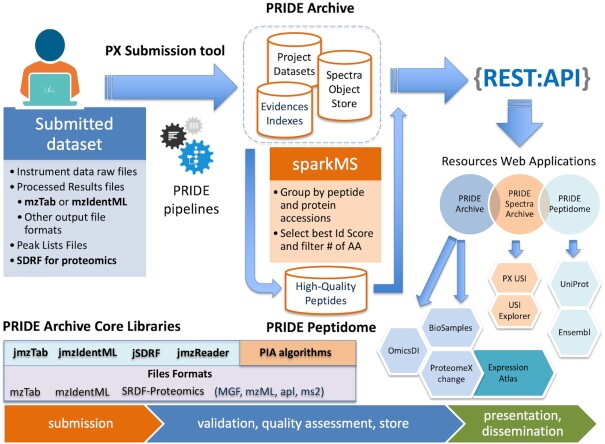
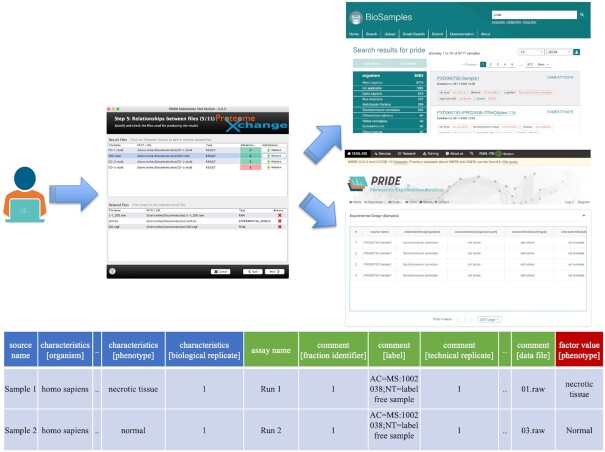
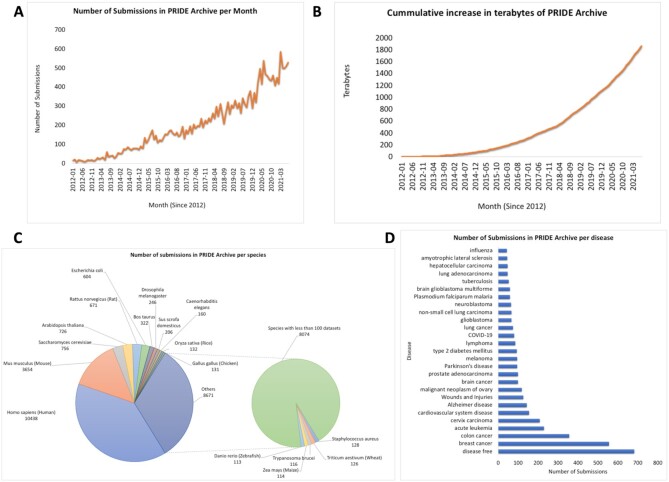
The PRoteomics IDEntifications (PRIDE) database (https://www.ebi.ac.uk/pride/) is the world's largest data repository of mass spectrometry-based proteomics data. PRIDE is one of the founding members of the global ProteomeXchange (PX) consortium and an ELIXIR core data resource. In this manuscript, we summarize the developments in PRIDE resources and related tools since the previous update manuscript was published in Nucleic Acids Research in 2019. The number of submitted datasets to PRIDE Archive (the archival component of PRIDE) has reached on average around 500 datasets per month during 2021. In addition to continuous improvements in PRIDE Archive data pipelines and infrastructure, the PRIDE Spectra Archive has been developed to provide direct access to the submitted mass spectra using Universal Spectrum Identifiers. As a key point, the file format MAGE-TAB for proteomics has been developed to enable the improvement of sample metadata annotation. Additionally, the resource PRIDE Peptidome provides access to aggregated peptide/protein evidences across PRIDE Archive. Furthermore, we will describe how PRIDE has increased its efforts to reuse and disseminate high-quality proteomics data into other added-value resources such as UniProt, Ensembl and Expression Atlas.
Overview
The claims and statistics of this paper haven’t been checked yet.
Free: it reads the open-access text and checks the first 5 claims that cite a source we can check. Create a free account to check every claim.
Integrity signals
Registry
Cites
Statistics
Figures
Verification
Claims the paper makes
The claims and statistics of this paper haven’t been checked yet.
Free: it reads the open-access text and checks the first 5 claims that cite a source we can check. Create a free account to check every claim.
Claims other papers make about this one
Each is checked against this paper’s own text: does it say what the citing paper says it does?
In the citing paper
“General proteomics repositories (e.g., PRIDE/ProteomeXchange) host raw and processed MS-based proteomics but do not harmonize thermal shift/solubility readouts into queryable, per-protein effect sizes across compounds and cell lines (16).”
From DORSSAA: Drug-Target interactOmics Resource Based on Stability/Solubility Alteration Assay (2026) · cites this paper as [16]
Self-check
Percentages, sums and reported differences re-computed from the paper’s own numbers.
The self-check needs the paper’s full text.
Citations
Cites
Cox, J., & Mann, M. (2008) · Nature Biotechnology · doi:10.1038/nbt.1511 · Cited by 14,855 · cited 4×
“Since 2020, overall, 240 and 30 dataset submissions have been performed using mzTab generated from Mascot and MaxQuant, respectively.”
BackgroundInfluentialPerkins, D. N., Pappin, D. J. C., Creasy, D. M., & Cottrell, J. S. (1999) · Electrophoresis · doi:10.1002/(sici)1522-2683(19991201)20:18<3551::aid-elps3551>3.0.co;2-2 · Cited by 8,203
Perez-Riverol, Y., Csordas, A., Bai, J., Bernal-Llinares, M., Hewapathirana, S., Kundu, D. J., Inuganti, A., Griss, J., Mayer, G., Eisenacher, M., et al. (2019) · Nucleic Acids Research · doi:10.1093/nar/gky1106 · Cited by 6,693 · cited 8×
“Since 2019, PRIDE has started to provide peptide evidences to Ensembl using the ‘TrackHub’ registry (2).”
BackgroundMethodInfluentialSelf-citationUniProt: the universal protein knowledgebase in 2021
The UniProt Consortium, Bateman, A., Martin, M.-J., Orchard, S., Magrane, M., Agivetova, R., Ahmad, S., Alpi, E., Bowler-Barnett, E. H., Britto, R., et al. (2021) · Nucleic Acids Research · doi:10.1093/nar/gkaa1100 · Cited by 6,372
ProteomeXchange provides globally coordinated proteomics data submission and dissemination
Vizcaíno, J. A., Deutsch, E. W., Wang, R., Csordas, A., Reisinger, F., Ríos, D., Dianes, J. A., Sun, Z., Farrah, T., Bandeira, N., et al. (2014) · Nature Biotechnology · doi:10.1038/nbt.2839 · Cited by 2,729 · cited 3×
“For every submitted dataset to PRIDE Archive, general metadata about the study must be provided including the title, submitters’ details, dataset description, sample and data protocols, instrument, and the associated publication once it is published (2,4,8).”
MethodSelf-citationiProX: an integrated proteome resource
Ma, J., Chen, T., Wu, S., Yang, C., Bai, M., Shu, K., Li, K., Zhang, G., Jin, Z., He, F., et al. (2019) · Nucleic Acids Research · doi:10.1093/nar/gky869 · Cited by 1,978 · cited 1×
“As of 2021, the resources PeptideAtlas (13), including its related resource PASSEL (PeptideAtlas SRM Experiment Library) (14), MassIVE (15), jPOST (16), iProX (17) and Panorama Public (18) are the active members of the consortium.”
BackgroundYates, A. D., Achuthan, P., Akanni, W., Allen, J., Allen, J., Alvarez-Jarreta, J., Amode, M. R., Armean, I. M., Azov, A. G., Bennett, R., et al. (2019) · Nucleic Acids Research · doi:10.1093/nar/gkz966 · Cited by 1,152
mzML—a Community Standard for Mass Spectrometry Data
Martens, L., Chambers, M., Sturm, M., Kessner, D., Levander, F., Shofstahl, J., Tang, W. H., Römpp, A., Neumann, S., Pizarro, A. D., et al. (2011) · Molecular & Cellular Proteomics · doi:10.1074/mcp.r110.000133 · Cited by 745 · cited 1×
“as mzTab (5), mzIdentML (6) and mzML (7) to store, process and visualize the proteomics data deposited.”
BackgroundThe ProteomeXchange consortium in 2020: enabling ‘big data’ approaches in proteomics
Deutsch, E. W., Bandeira, N., Sharma, V., Perez-Riverol, Y., Carver, J. J., Kundu, D. J., García-Seisdedos, D., Jarnuczak, A. F., Hewapathirana, S., Pullman, B. S., et al. (2019) · Nucleic Acids Research · doi:10.1093/nar/gkz984 · Cited by 697 · cited 3×
“The PRIDE database was one of the founders of the PX consortium in 2011 (3,8).”
BackgroundMethodSelf-citationMGnify: the microbiome analysis resource in 2020
Mitchell, A. L., Almeida, A., Beracochea, M., Boland, M., Burgin, J., Cochrane, G., Crusoe, M. R., Kale, V., Potter, S. C., Richardson, L. J., et al. (2019) · Nucleic Acids Research · doi:10.1093/nar/gkz1035 · Cited by 562 · cited 2×
“In addition, we aim to increasingly perform in-house data reuse (including data re-analysis) and disseminate high-quality proteomics data from PRIDE into the already mentioned added-value resources (Ensembl, UniProt, Expression Atlas, and MGnify in the near future).”
Background
Cited by
Items 701–800 of 1,146
Fancy, N., Nitin, N., Kniffen, D., Melvin, M., Kazemian, N., Sadeghi, J., Letef, C. A., D'Aloisio, L. D., Copp, A. G., Inaba, R., et al. (2024) · Journal of Biological Chemistry · doi:10.1016/j.jbc.2024.105675 · Cited by 32
Madden, B. J., Singh, R. D., Haas, M., Palma, L. M. P., Sharma, A., Vargas, M. J., Gross, L., Negron, V. C., Nate, T., Charlesworth, M. C., et al. (2024) · Kidney International · doi:10.1016/j.kint.2024.02.013 · Cited by 33
Koster, A. K., Yarishkin, O. V., Dubin, A. E., Kefauver, J. M., Pak, R. A., Cravatt, B. F., & Patapoutian, A. (2024) · Proceedings of the National Academy of Sciences · doi:10.1073/pnas.2415934121 · Cited by 32
A bacterial immunity protein directly senses two disparate phage proteins
Zhang, T., Čepauskas, A., Nadieina, A., Thureau, A., Wallant, K. C. ’., Martens, C., Lim, D., García-Pino, A., & Laub, M. T. (2024) · Nature · doi:10.1038/s41586-024-08039-y · Cited by 32
Chemical Proteomics Reveals Human Off‐Targets of Fluoroquinolone Induced Mitochondrial Toxicity
Reinhardt, T., Harraoui, Y. E., Rothemann, R. A., Jauch, A. T., Müller-Deubert, S. M., Köllen, M. F., Risch, T., Jacobs, L. H. C., Müller, R., Traube, F. R., et al. (2025) · Angewandte Chemie International Edition · doi:10.1002/anie.202421424 · Cited by 32
Rajczewski, A. T., Blakeley‐Ruiz, J. A., Meyer, A., Vintila, S., McIlvin, M. R., Bossche, T. V. D., Searle, B. C., Griffin, T. J., Saito, M. A., Kleiner, M., et al. (2025) · PROTEOMICS · doi:10.1002/pmic.202400187 · Cited by 32
Matsumoto, K., Kumar, V., Varshney, S., Nairn, A. V., Ito, A., Pennarubia, F., Moremen, K. W., Stanley, P., & Haltiwanger, R. S. (2022) · Journal of Biological Chemistry · doi:10.1016/j.jbc.2022.102064 · Cited by 32
“The mass spectrometry proteomics data have been deposited to the ProteomeXchange Consortium via the PRIDE (59) partner repository with the dataset identifier PXD031297.”
MethodSengupta, S., Mondal, M., Prasasvi, K. R., Mukherjee, A., Magod, P., Urbach, S., Friedmann‐Morvinski, D., Marin, P., & Somasundaram, K. (2022) · eLife · doi:10.7554/elife.78972 · Cited by 32
Sasson, G., Moraïs, S., Kokou, F., Plate, K., Trautwein‐Schult, A., Jami, E., Bayer, E. A., Becher, D., & Mizrahi, I. (2022) · The ISME Journal · doi:10.1038/s41396-022-01295-8 · Cited by 32
Pekeč, T., Lewandowski, J., Komur, A. A., Sobańska, D., Guo, Y., Świtońska-Kurkowska, K., Małecki, J., Dubey, A. A., Pokrzywa, W., Frankowski, M., et al. (2022) · Nature Communications · doi:10.1038/s41467-022-32500-z · Cited by 32
Deciphering O -glycoprotease substrate preferences with O-Pair Search
Riley, N. M., & Bertozzi, C. R. (2022) · Molecular Omics · doi:10.1039/d2mo00244b · Cited by 32
Li, H., Wan, X., Wu, Z., Zhou, Y., Chen, R., Xu, W., Zhang, J., Yang, Z., Bai, L., Zhang, J., et al. (2022) · Cell Reports · doi:10.1016/j.celrep.2022.111724 · Cited by 32
Guan, B., Zhang, Z., Liu, X., Zhao, S., Bai, X., Luo, X., Feng, D., Liu, Y., Cao, X., & Yue, X. (2023) · Carbohydrate Polymers · doi:10.1016/j.carbpol.2023.120588 · Cited by 32
The SHDRA syndrome-associated gene TMEM260 encodes a protein-specific O-mannosyltransferase
Larsen, I. S. B., Povolo, L., Zhou, L., Tian, W., Mygind, K. J., Hintze, J., Chen, J., Hartill, V. L., Prescott, K., Johnson, C. A., et al. (2023) · Proceedings of the National Academy of Sciences · doi:10.1073/pnas.2302584120 · Cited by 32
A microfluidics-enabled automated workflow of sample preparation for MS-based immunopeptidomics
Li, X., Pak, H. S., Huber, F., Michaux, J., Taillandier-Coindard, M., Altimiras, E. R., & Bassani‐Sternberg, M. (2023) · Cell Reports Methods · doi:10.1016/j.crmeth.2023.100479 · Cited by 32
Huang, J., Chen, Z., Ye, Y., Shao, Y., Zhu, P., Li, X., Ma, Y., Xu, F., Zhou, J. Y., Wu, M., et al. (2023) · Journal of Virology · doi:10.1128/jvi.00687-23 · Cited by 32
“The mass spectrometry proteomics data have been deposited in the ProteomeXchange Consortium via the PRIDE (34) partner repository under the data set identifier PXD042041.”
MethodCheng, A., Tian, X., You, W., Wang, T., Zhang, D., Guo, H., Zhang, H., Pan, X., Wang, Y., Liu, L., et al. (2023) · Nature Metabolism · doi:10.1038/s42255-023-00832-9 · Cited by 33
The MOM1 complex recruits the RdDM machinery via MORC6 to establish de novo DNA methylation
Li, Z., Wang, M., Zhong, Z., Gallego‐Bartolomé, J., Feng, S., Jami‐Alahmadi, Y., Wang, X., Wohlschlegel, J. A., Bischof, S., Long, J. A., et al. (2023) · Nature Communications · doi:10.1038/s41467-023-39751-4 · Cited by 32
Schmid, A. M., Razim, A., Wysmołek, M. E., Kerekes, D., Haunstetter, M., Kohl, P., Brazhnikov, G., Geissler, N., Thaler, M., Krčmářová, E., et al. (2023) · Cell Communication and Signaling · doi:10.1186/s12964-023-01329-4 · Cited by 32
Malvicini, R., Lazzari, G. D., Tolomeo, A. M., Santa‐Cruz, D., Ullah, M., Cirillo, C., Grumati, P., Pacienza, N., Muraca, M., & Yannarelli, G. (2023) · Cytotherapy · doi:10.1016/j.jcyt.2023.11.001 · Cited by 32
Lingard, E., Dong, S., Hoyle, A., Appleton, E., Hales, A., Skaria, E., Lawless, C., Taylor-Hearn, I., Saadati, S., Chu, Q., et al. (2024) · Biomaterials Advances · doi:10.1016/j.bioadv.2024.213847 · Cited by 32
Palmitoyl transferase ZDHHC20 promotes pancreatic cancer metastasis
Tomić, G., Sheridan, C., Refermat, A. Y., Baggelaar, M. P., Sipthorp, J., Sudarshan, B., Ocasio, C. A., Suárez‐Bonnet, A., Priestnall, S. L., Herbert, E., et al. (2024) · Cell Reports · doi:10.1016/j.celrep.2024.114224 · Cited by 32
Protein translation rate determines neocortical neuron fate
Borisova, E. V., Newman, A. G., Couce-Iglesias, M., Dannenberg, R., Schaub, T., Qin, B., Rusanova, A., Brockmann, M. M., Koch, J., Daniels, M., et al. (2024) · Nature Communications · doi:10.1038/s41467-024-49198-w · Cited by 32
Stockhammer, A., Spalt, C., Klemt, A., Benz, L. S., Harel, S., Natalia, V., Wiench, L., Freund, C., Kuropka, B., & Bottanelli, F. (2024) · Journal of Cell Science · doi:10.1242/jcs.261952 · Cited by 32
Ogasawara, D., Konrad, D. B., Tan, Z. Y., Carey, K. L., Luo, J., Won, S. J., Li, H., Carter, T. R., DeMeester, K. E., Njomen, E., et al. (2024) · Cell Chemical Biology · doi:10.1016/j.chembiol.2024.10.005 · Cited by 31
Integrated plasma proteomics identifies tuberculosis-specific diagnostic biomarkers
Schiff, H. F., Walker, N. F., Ugarte‐Gil, C., Tebruegge, M., Manousopoulou, A., Garbis, S. D., Mansour, S., Wong, P. H., Rockett, G., Piazza, P., et al. (2024) · JCI Insight · doi:10.1172/jci.insight.173273 · Cited by 31
A rapid aureochrome opto-switch enables diatom acclimation to dynamic light
Zhang, H., Xiong, X., Guo, K., Zheng, M., Cao, T., Yang, Y., Song, J., Cen, J., Zhang, J., Jiang, Y., et al. (2024) · Nature Communications · doi:10.1038/s41467-024-49991-7 · Cited by 31
Gordaliza‐Alaguero, I., Sànchez‐Fernàndez‐de‐Landa, P., Radivojevikj, D., Villarreal, L., Arauz‐Garofalo, G., Gay, M., Martínez‐Vicente, M., Seco, J., Martín-Malpartida, P., Vilaseca, M., et al. (2024) · Autophagy · doi:10.1080/15548627.2024.2440843 · Cited by 31
“The mass spectrometry proteomics data have been deposited to the ProteomeXchange Consortium via the PRIDE [67] partner repository with the dataset identifier PXD043168.”
Defining proteoform-specific interactions for drug targeting in a native cell signalling environment
Lutomski, C. A., Bennett, J. L., El‐Baba, T. J., Wu, D., Hinkle, J. D., Burnap, S. A., Liko, I., Mullen, C., Syka, J. E. P., Struwe, W. B., et al. (2025) · Nature Chemistry · doi:10.1038/s41557-024-01711-w · Cited by 31
Peripheral positioning of lysosomes supports melanoma aggressiveness
Jeřábková, K., Peralta, M., Huang, K.-J., Mousson, A., Maudru, C. B., Bochler, L., Busnelli, I., Karali, R., Justiniano, H., Lisii, L.-M., et al. (2025) · Nature Communications · doi:10.1038/s41467-025-58528-5 · Cited by 31
Medley, B. J., Leclaire, L., Thompson, N. K., Mahoney, K. E., Pluvinage, B., Parson, M. A., Burke, J. E., Malaker, S. A., Wakarchuk, W. W., & Boraston, A. B. (2022) · Journal of Biological Chemistry · doi:10.1016/j.jbc.2022.102439 · Cited by 33
“The MS proteomics data have been deposited to the ProteomeXchange Consortium via the PRIDE partner repository (44) with the dataset identifier PXD034904.”
MethodThe TRESLIN-MTBP complex couples completion of DNA replication with S/G2 transition
Zonderland, G., Vanzo, R., Gadi, S. A., Martín‐Doncel, E., Coscia, F., Mund, A., Lerdrup, M., Benada, J., Boos, D., & Toledo, L. I. (2022) · Molecular Cell · doi:10.1016/j.molcel.2022.08.006 · Cited by 31
Biotransformation of the Fluoroquinolone, Levofloxacin, by the White-Rot Fungus Coriolopsis gallica
Ayed, A. B., Akrout, I., Albert, Q., Greff, S., Simmler, C., Armengaud, J., Kielbasa, M., Turbé-Doan, A., Chaduli, D., Navarro, D., et al. (2022) · Journal of Fungi · doi:10.3390/jof8090965 · Cited by 31
“The mass spectrometry and proteomics data have been deposited with the ProteomeXchange Consortium via the PRIDE [74] partner repository under dataset identifiers PXD035019 and 10.6019/PXD035019.”
MethodInfluentialNickerson, J. L., & Doucette, A. A. (2022) · Biology · doi:10.3390/biology11101444 · Cited by 31
“org (accessed on 27 July 2022)) via the PRIDE partner repository [57] with the dataset identifier PXD035682.”
MethodDoulabi, E. M., Fredolini, C., Gallini, R., Löf, L., Shen, Q., Ikebuchi, R., Dubois, L., Azimi, A., Loudig, O. D., Gabrielsson, S., et al. (2022) · Communications Biology · doi:10.1038/s42003-022-04349-x · Cited by 31
Lobb, R. J., Visan, K. S., Wu, L., Norris, E. L., Hastie, M. L., Everitt, S., Yang, I. A., Bowman, R., Siva, S., Larsen, J. E., et al. (2023) · Communications Biology · doi:10.1038/s42003-022-04350-4 · Cited by 31
ALK fusion NSCLC oncogenes promote survival and inhibit NK cell responses via SERPINB4 expression
Chuang, T., Lai, W., Gabre, J. L., Lind, D. E., Umapathy, G., Bokhari, A. A., Bergman, B., Kristenson, L., Thorén, F. B., Le, A. T., et al. (2023) · Proceedings of the National Academy of Sciences · doi:10.1073/pnas.2216479120 · Cited by 31
“The mass spectrometry proteomics data have been deposited to the ProteomeXchange Consortium (http://proteomecentral.proteomexchange.org) via the PRIDE partner repository (53) with the dataset identifier PXD035100.”
TurboID-based proteomic profiling of meiotic chromosome axes in Arabidopsis thaliana
Feng, C., Roitinger, E., Hudecz, O., Cuacos, M., Lorenz, J., Schubert, V., Wang, B., Wang, R. Y., Mechtler, K., & Heckmann, S. (2023) · Nature Plants · doi:10.1038/s41477-023-01371-7 · Cited by 32
Buchacher, T., Laimer-Digruber, A., Kranzler, M., Favero, G. D., & Ehling‐Schulz, M. (2023) · Cell Communication and Signaling · doi:10.1186/s12964-023-01132-1 · Cited by 31
Structure and antigenicity of divergent Henipavirus fusion glycoproteins
Isaacs, A., Low, Y. S., Macauslane, K. L., Seitanidou, J., Pegg, C. L., Cheung, S. T. M., Liang, B., Scott, C. A. P., Landsberg, M. J., Schulz, B. L., et al. (2023) · Nature Communications · doi:10.1038/s41467-023-39278-8 · Cited by 31
Actuated tissue engineered muscle grafts restore functional mobility after volumetric muscle loss
Rousseau, E. B., Raman, R., Tamir, T. Y., Bu, A., Srinivasan, S. S., Lynch, N., Langer, R., White, F. M., & Cima, M. J. (2023) · Biomaterials · doi:10.1016/j.biomaterials.2023.122317 · Cited by 31
Metabolite interactions in the bacterial Calvin cycle and implications for flux regulation
Sporre, E., Karlsen, J., Schriever, K., Asplund‐Samuelsson, J., Janasch, M., Strandberg, L., Karlsson, A., Kotol, D., Zeckey, L., Piazza, I., et al. (2023) · Communications Biology · doi:10.1038/s42003-023-05318-8 · Cited by 31
Loi, V. V., Busche, T., Kuropka, B., Müller, S., Methling, K., Lalk, M., Kalinowski, J., & Antelmann, H. (2023) · Free Radical Biology and Medicine · doi:10.1016/j.freeradbiomed.2023.09.031 · Cited by 31
“The shotgun MS data have been deposited at the ProteomeExchange Consortium via the PRIDE [52] partner repository with the dataset identifier PXD042939 and 10.6019/PXD042939.”
InfluentialRestrictor synergizes with Symplekin and PNUTS to terminate extragenic transcription
Russo, M., Piccolo, V., Polizzese, D., Prosperini, E., Borriero, C., Polletti, S., Bedin, F., Marenda, M., Michieletto, D., Mandana, G. M., et al. (2023) · Genes & Development · doi:10.1101/gad.351057.123 · Cited by 31
Androgen drives melanoma invasiveness and metastatic spread by inducing tumorigenic fucosylation
Liu, Q., Adhikari, E., Lester, D. K., Fang, B., Johnson, J., Tian, Y., Mockabee‐Macias, A., Izumi, V., Guzman, K. M., White, M. G., et al. (2024) · Nature Communications · doi:10.1038/s41467-024-45324-w · Cited by 31
Tapioca: a platform for predicting de novo protein–protein interactions in dynamic contexts
Reed, T. J., Tyl, M. D., Tadych, A., Troyanskaya, O. G., & Cristea, I. M. (2024) · Nature Methods · doi:10.1038/s41592-024-02179-9 · Cited by 31
(2024) · doi:10.1101/2024.02.27.582206 · Cited by 31
A CPF-like phosphatase module links transcription termination to chromatin silencing
Mateo-Bonmatí, E., Montez, M., Maple, R., Fiedler, M., Fang, X., Saalbach, G., Passmore, L. A., & Dean, C. (2024) · Molecular Cell · doi:10.1016/j.molcel.2024.05.016 · Cited by 30
Entorhinal cortex vulnerability to human APP expression promotes hyperexcitability and tau pathology
Goettemoeller, A. M., Banks, E., Kumar, P., Olah, V. J., McCann, K. E., South, K., Ramelow, C. C., Eaton, A., Duong, D. M., Seyfried, N. T., et al. (2024) · Nature Communications · doi:10.1038/s41467-024-52297-3 · Cited by 30
“Raw MS data as well as searched Proteome Discoverer data before and after processing to handle missing values, will be uploaded to the ProteomeXchange Consortium via the PRIDE repository 84 .”
MethodHofmann, C. P., Serafin, A., Schwerdt, O. M., Fischer, J., Sicklinger, F., Younesi, F. S., Byrne, N. J., Meyer, I. S., Malovrh, E., Sandmann, C., et al. (2022) · Circulation · doi:10.1161/circulationaha.123.067479 · Cited by 30
Kim, M., McDonald, E. F., Sabusap, C. M. P., Timalsina, B., Joshi, D., Hong, J. S., Rab, A., Sorscher, E. J., & Plate, L. (2023) · Journal of Biological Chemistry · doi:10.1016/j.jbc.2023.105242 · Cited by 30
Biomolecular Corona of Gold Nanoparticles: The Urgent Need for Strong Roots to Grow Strong Branches
Boselli, L., Castagnola, V., Armirotti, A., Benfenati, F., & Pompa, P. P. (2023) · Small · doi:10.1002/smll.202306474 · Cited by 30
Recycled melanoma-secreted melanosomes regulate tumor-associated macrophage diversification
Parikh, R., Parikh, S., Berzin, D., Vaknine, H., Ovadia, S., Likonen, D., Greenberger, S., Scope, A., Elgavish, S., Nevo, Y., et al. (2024) · The EMBO Journal · doi:10.1038/s44318-024-00103-7 · Cited by 30
RAD52 resolves transcription-replication conflicts to mitigate R-loop induced genome instability
Jalan, M., Sharma, A., Pei, X., Weinhold, N., Buechelmaier, E. S., Zhu, Y., Ahmed‐Seghir, S., Ratnakumar, A., Bona, M. D., McDermott, N., et al. (2024) · Nature Communications · doi:10.1038/s41467-024-51784-x · Cited by 30
Shay, T. F., Jang, S., Brittain, T. J., Chen, X., Walker, B., Tebbutt, C., Fan, Y., Wolfe, D. A., Arokiaraj, C. M., Sullivan, E. E., et al. (2024) · Nature Communications · doi:10.1038/s41467-024-52149-0 · Cited by 30
Razim, A., Zabłocka, A., Schmid, A. M., Thaler, M., Černý, V., Weinmayer, T., Whitehead, B., Martens, A., Skalska, M., Morandi, M. I., et al. (2024) · Journal of Extracellular Vesicles · doi:10.1002/jev2.70004 · Cited by 30
Chutake, Y. K., Mayo, M., Dumont, N., Filiatrault, J., Breitkopf, S. B., Cho, P., Chen, D., Dixit, V. S., Proctor, W. R., Kuhn, E. W., et al. (2024) · Molecular Cancer Therapeutics · doi:10.1158/1535-7163.mct-24-0306 · Cited by 30
English, D. M., Lee, S. N., Sabat, K. A., Baker, I. M., Pham, T. K., Collins, M. O., & Cowley, S. M. (2024) · Nucleic Acids Research · doi:10.1093/nar/gkae1223 · Cited by 31
Perepletchikova, D. A., Kuchur, P. D., Basovich, L., Khvorova, I., Lobov, A. A., Azarkina, K., Aksenov, N., Божкова, С. А., Karelkin, V. V., & Malashicheva, A. (2025) · Cell Communication and Signaling · doi:10.1186/s12964-025-02096-0 · Cited by 30
“The mass spectrometry proteomics data have been deposited to the ProteomeXchange Consortium via the PRIDE [32] partner repository with the data-set identifier PXD037385.”
Growth factor-triggered de-sialylation controls glycolipid-lectin-driven endocytosis
MacDonald, E., Forrester, A. R., Valades‐Cruz, C. A., Madsen, T. D., Hetmanski, J. H. R., Dransart, E., Ng, Y., Godbole, R. K., Ananthan, A. S., Leconte, L., et al. (2025) · Nature Cell Biology · doi:10.1038/s41556-025-01616-x · Cited by 30
Mechanistic insights into dengue virus inhibition by a clinical trial compound NITD-688
Wang, Y., Sun, L., Fernandes, L. D. S., Wang, Y.-H., Zou, J., Franklin, S. J., Hu, Y., Palmer, L. K., Yeung, J., Barriga, D., et al. (2025) · Proceedings of the National Academy of Sciences · doi:10.1073/pnas.2426922122 · Cited by 30
Altered extracellular matrix structure and elevated stiffness in a brain organoid model for disease
Zur, M. K., Bhattacharya, B., Solomonov, I., Dror, S. B., Savidor, A., Levin, Y., Prior, A., Sapir, T., Harris, T., Olender, T., et al. (2025) · Nature Communications · doi:10.1038/s41467-025-59252-w · Cited by 30
Li, Z., Joshi, B. S., Yin, H., Wijdeven, R. H. M., Koç, R. A., Zijlmans, D. W., Pataskar, A., Santos‐Barriopedro, I., Mei, H., Wu, W., et al. (2025) · Molecular Cell · doi:10.1016/j.molcel.2025.11.020 · Cited by 30
Tu, H., Wang, Z., Yuan, Y., Miao, X., Li, D., Guo, H., Yang, Y., & Cai, H. (2022) · Nature Communications · doi:10.1038/s41467-022-29503-1 · Cited by 30
He, R., Ma, R., Jin, Z., Zhu, Y., Yang, F., Hu, F., & Dai, J. (2022) · Frontiers in Pharmacology · doi:10.3389/fphar.2022.933096 · Cited by 30
Aedes aegypti CLIPB9 activates prophenoloxidase-3 in the presence of CLIPA14 after fungal infection
Ji, Y., Lu, T., Zou, Z., & Wang, Y. (2022) · Frontiers in Immunology · doi:10.3389/fimmu.2022.927322 · Cited by 30
“The mass spectrometry proteomics data presented in the study have been deposited to the ProteomeXchange Consortium via the PRIDE (56) partner repository with the dataset identifier PXD033507 and the data are also deposited into Science Data Bank (Data doi: 10.”
MethodInfluentialIntegrative analysis in Pinus revealed long‐term heat stress splicing memory
Roces, V., Lamelas, L., Valledor, L., Carbó, M. T. D., Cañal, M. J., & Meijón, M. (2022) · The Plant Journal · doi:10.1111/tpj.15990 · Cited by 30
“The mass spectrometry proteomics data including RAW, msf, and pepXML files have been deposited in the ProteomeXchange Consortium database via the PRIDE (Perez-Riverol et al., 2022) partner repository with the dataset identifier PXD032754.”
MethodZhao, T., Sun, D., Xiong, W., Man, J., Zhang, Q., Zhao, M., & Zhang, Z. (2022) · Journal of Hazardous Materials · doi:10.1016/j.jhazmat.2022.130468 · Cited by 30
Skodra, C., Michailidis, M., Moysiadis, T., Stamatakis, G. M., Ganopoulou, M., Adamakis, I. S., Angelis, L., Ganopoulos, I. V., Τάνου, Γ., Samiotaki, M. K., et al. (2022) · PLANT PHYSIOLOGY · doi:10.1093/plphys/kiac572 · Cited by 30
Walther, M., Vestweber, P. K., Kühn, S., Rieger, U. M., Schäfer, J. A., Münch, C., Vogel‐Kindgen, S., Planz, V., & Windbergs, M. (2022) · Molecular Pharmaceutics · doi:10.1021/acs.molpharmaceut.2c00610 · Cited by 31
A toolbox for systematic discovery of stable and transient protein interactors in baker's yeast
Fenech, E. J., Cohen, N., Kupervaser, M., Gazi, Z., & Schuldiner, M. (2023) · Molecular Systems Biology · doi:10.15252/msb.202211084 · Cited by 34
“To do this, Emc6 replicate samples were compared with their Sbh1 control counterparts to find high-confidence protein identifications (Dataset EV1 and via PRIDE, PXD033348).”
MethodGene-by-gene screen of the unknown proteins encoded on Plasmodium falciparum chromosome 3
Kimmel, J., Schmitt, M., Sinner, A., Jansen, P. W., Mainye, S., Ramón-Zamorano, G., Toenhake, C. G., Wichers-Misterek, J. S., Cronshagen, J., Sabitzki, R., et al. (2023) · Cell Systems · doi:10.1016/j.cels.2022.12.001 · Cited by 31
Rapid Profiling of Protein Complex Reorganization in Perturbed Systems
Bludau, I., Nicod, C., Martelli, C., Xue, P., Heusel, M., Fossati, A., Uliana, F., Frommelt, F., Aebersold, R. H., & Collins, B. C. (2023) · Journal of Proteome Research · doi:10.1021/acs.jproteome.3c00125 · Cited by 30
The cellular response to ocean warming in Emiliania huxleyi
Dedman, C. J., Barton, S., Fournier, M. L., & Rickaby, R. E. M. (2023) · Frontiers in Microbiology · doi:10.3389/fmicb.2023.1177349 · Cited by 30
“The mass spectrometry proteomics data have been deposited to the ProteomeXchange Consortium via the PRIDE partner repository with the dataset identifier PXD038243 (Perez-Riverol et al., 2022).”
MethodFontana, P., Buch-Larsen, S. C., Suyari, O., Smith, R., Suskiewicz, M. J., Schützenhofer, K., Ariza, A., Rack, J. G. M., Nielsen, M. L., & Ahel, I. (2023) · Nature Communications · doi:10.1038/s41467-023-38793-y · Cited by 30
Structures of wild-type and selected CMT1X mutant connexin 32 gap junction channels and hemichannels
Qi, C., Lavriha, P., Bayraktar, E., Vaithia, A., Schuster, D., Pannella, M., Sala, V., Picotti, P., Bortolozzi, M., & Korkhov, V. M. (2023) · Science Advances · doi:10.1126/sciadv.adh4890 · Cited by 30
“Raw files, file annotations, FASTA files, and search results have been deposited on PRIDE (79): PXD039379 (surface biotinylation, HeLa DH), PXD033848 (purified protein analysis), and PXD033671 (surface biotinylation, HEK293F).”
MethodHau, J., Kaltwasser, S., Muras, V., Casutt, M. S., Vohl, G., Claußen, B., Steffen, W., Leitner, A., Bill, E., Cutsail, G. E., et al. (2023) · Nature Structural & Molecular Biology · doi:10.1038/s41594-023-01099-0 · Cited by 30
Arang, N., Lubrano, S., Ceribelli, M., Rigiracciolo, D. C., Saddawi‐Konefka, R., Faraji, F., Ramirez, S. I., Kim, D., Tosto, F. A., Stevenson, E. J., et al. (2023) · Cell Reports Medicine · doi:10.1016/j.xcrm.2023.101244 · Cited by 30
Bartos, L. M., Kirchleitner, S. V., Kolabas, Z. I., Quach, S., Beck, A., Lorenz, J., Blobner, J., Müller, S. A., Ulukaya, S., Hoeher, L., et al. (2023) · Science Advances · doi:10.1126/sciadv.adi8986 · Cited by 30
Lipid exchange at ER–trans-Golgi contact sites governs polarized cargo sorting
Kovács, D., Gay, A.-S., Debayle, D., Abélanet, S., Patel, A. J., Mesmin, B., Luton, F., & Antonny, B. (2023) · The Journal of Cell Biology · doi:10.1083/jcb.202307051 · Cited by 31
Development of Corynebacterium glutamicum as a monoterpene production platform
Luckie, B. A., Kashyap, M., Pearson, A. N., Chen, Y., Liu, Y., Valencia, L. E., Romero, A. C., Hudson, G. A., Tao, X. B., Wu, B., et al. (2023) · Metabolic Engineering · doi:10.1016/j.ymben.2023.11.009 · Cited by 30
Hofford, R. S., Meckel, K. R., Wiser, E. J., Wang, W., Sens, J. P., Kim, M., Godino, A., Lam, T. T., & Kiraly, D. D. (2023) · eNeuro · doi:10.1523/eneuro.0388-23.2023 · Cited by 30
Higher-order protein assembly controls kinetochore formation
Sissoko, G. B., Tarasovetc, E. V., Marescal, O., Grishchuk, E. L., & Cheeseman, I. M. (2024) · Nature Cell Biology · doi:10.1038/s41556-023-01313-7 · Cited by 30
High-throughput drug target discovery using a fully automated proteomics sample preparation platform
Wu, Q. D., Zheng, J., Sui, X., Fu, C., Cui, X., Liao, B. Y., Ji, H., Luo, Y., He, A., Lu, X. M., et al. (2024) · Chemical Science · doi:10.1039/d3sc05937e · Cited by 30
Chong, M. C., Shah, A. D., Schittenhelm, R. B., Silva, A., James, P. F., Wu, S. S. X., & Howitt, J. A. (2024) · Acta Physiologica · doi:10.1111/apha.14095 · Cited by 30
Arabidopsis SNARE SYP132 impacts on PIP2 ;1 trafficking and function in salinity stress
Baena, G., Xia, L., Waghmare, S. P., Yu, Z., Guo, Y., Blatt, M. R., Zhang, B., & Karnik, R. (2024) · The Plant Journal · doi:10.1111/tpj.16649 · Cited by 30
Expression of ALS-PFN1 impairs vesicular degradation in iPSC-derived microglia
Funes, S., Jung, J., Gadd, D. H., Mosqueda, M., Zhong, J., Shankaracharya, Unger, M., Stallworth, K. M., Cameron, D., Rotunno, M. S., et al. (2024) · Nature Communications · doi:10.1038/s41467-024-46695-w · Cited by 30
High expression of oleoyl-ACP hydrolase underpins life-threatening respiratory viral diseases
Jia, X., Crawford, J. C., Gebregzabher, D., Monson, E. A., Mettelman, R. C., Wan, Y., Ren, Y., Chou, J. S., Novak, T., McQuilten, H. A., et al. (2024) · Cell · doi:10.1016/j.cell.2024.07.026 · Cited by 30
Programmable antisense oligomers for phage functional genomics
Gerovac, M., Buhlmann, L., Zhu, Y., Ðurica-Mitić, S., Rech, V., Carien, S., Gräfenhan, T., Popella, L., & Vogel, J. (2025) · Nature · doi:10.1038/s41586-025-09499-6 · Cited by 29
Systematic evaluation of blood contamination in nanoparticle-based plasma proteomics
Gao, H., Zhan, Y., Liu, Y., Zhu, Z., Zheng, Y., Qian, L., Xue, Z., Cheng, H., Nie, Z., Ge, W., et al. (2025) · EMBO Molecular Medicine · doi:10.1038/s44321-025-00346-9 · Cited by 29
Pluripotent stem-cell-based screening uncovers sildenafil as a mitochondrial disease therapy
Zink, A., Dai, D., Wittich, A., Henke, M., Pedrotti, G., Heiduschka, S., Santamaria, G., Pentimalli, T. M., Brueser, C., Notopoulou, S., et al. (2026) · Cell · doi:10.1016/j.cell.2026.02.008 · Cited by 29
Measuring the tolerance of the genetic code to altered codon size
DeBenedictis, E. A., Söll, D., & Esvelt, K. M. (2022) · eLife · doi:10.7554/elife.76941 · Cited by 29
Carretero-González, A., Hergueta‐Redondo, M., Sánchez‐Redondo, S., Ximénez‐Embún, P., Manso, L., Ciruelos, E., Castellano, D., de Velasco, G., & Peinado, H. (2022) · OncoImmunology · doi:10.1080/2162402x.2022.2067944 · Cited by 29
Sex-specific phenotypes in the aging mouse heart and consequences for chronic fibrosis
Angelini, A., Ortiz-Urbina, J., Trial, J., Reddy, A. K., Malovannaya, A., Jain, A., Entman, M. L., Taffet, G. E., & Cieslik, K. A. (2022) · American Journal of Physiology-Heart and Circulatory Physiology · doi:10.1152/ajpheart.00078.2022 · Cited by 29
Optimized Glycopeptide Enrichment Method–It Is All About the Sauce
Morgenstern, D., Wolf-Levy, H., Tickotsky, N., Cooper, I., Buchman, A. S., Bennett, D. A., Beeri, M. S., & Levin, Y. (2022) · Analytical Chemistry · doi:10.1021/acs.analchem.2c00524 · Cited by 29
Mass Spectrometry Imaging Spatial Tissue Analysis toward Personalized Medicine
Gonçalves, J. P. L., Bollwein, C., & Schwamborn, K. (2022) · Life · doi:10.3390/life12071037 · Cited by 29
Functional Diversity and Evolution of the Drosophila Sperm Proteome
Garlovsky, M. D., Sandler, J., & Karr, T. L. (2022) · Molecular & Cellular Proteomics · doi:10.1016/j.mcpro.2022.100281 · Cited by 29
“DATA AVAILABILITY Proteomic data have been deposited to the Proteo-meXchange Consortium via the PRIDE partner repository (69) with the identi fi er PXD032033.”
Regulation of membrane fluidity by RNF145‐triggered degradation of the lipid hydrolase ADIPOR2
Volkmar, N., Gawden‐Bone, C. M., Williamson, J. C., Nixon‐Abell, J., West, J. A., George‐Hyslop, P. S., Kaser, A., & Lehner, P. J. (2022) · The EMBO Journal · doi:10.15252/embj.2022110777 · Cited by 29
A shift towards succinate‐producing Prevotella in the ruminal microbiome challenged with monensin
Trautmann, A., Schleicher, L., Koch, A., Günther, J. C., Steuber, J., & Seifert, J. (2022) · PROTEOMICS · doi:10.1002/pmic.202200121 · Cited by 29
Palmosi, T., Tolomeo, A. M., Cirillo, C., Sandrin, D., Sciro, M., Negrisolo, S., Todesco, M., Caicci, F., Santoro, M. C., Lago, E. D., et al. (2022) · Frontiers in Bioengineering and Biotechnology · doi:10.3389/fbioe.2022.1042434 · Cited by 29
“, 2020) via the PRIDE (Perez-Riverol et al., 2022) partner repository with the dataset identifier PXD038206.”
Method
Metadata
- Authors
- Perez-Riverol, Y., Bai, J., Bandla, C., García-Seisdedos, D., Hewapathirana, S., Kamatchinathan, S., Kundu, D. J., Prakash, A., Frericks-Zipper, A., Eisenacher, M., Walzer, M., Wang, S., Brazma, A., & Vizcaíno, J. A.
- Affiliations
- European Molecular Biology Laboratory, European Bioinformatics Institute (EMBL-EBI), Wellcome Trust Genome Campus, Hinxton, Cambridge CB10 1SD, UK
- European Bioinformatics Institute (GB)
- Ruhr University Bochum (DE)
- Corresponding author
- Vizcaíno, Juan Antonio
- ORCID
- Venue
- Nucleic Acids Research
- Publisher
- Oxford University Press (OUP)
- Published
- 2021-11-01
- Volume
- 50
- Issue
- D1
- Pages
- D543-D552
- ISSN
- 0305-1048 (ISSN-L)
- 1362-4962
- PMC
- PMC8728295
- OpenAlex
- W3208691473
- Cited by
- 6,125
- References
- 61
- Citations by year
- 2026: 494 · 2025: 1312 · 2024: 2003 · 2023: 1569 · 2022: 735 · 2021: 5
- FWCI
- 406.89
- Type
- journal article
- Language
- en
- Open access
- gold
- doi.org
- Licence
- Locations
- Nucleic Acids Research (publishedVersion, cc-by)
- PubMed Central (publishedVersion, cc-by)
- PubMed (publishedVersion)
- Funders
- Wellcome (208391/Z/17/Z)
- BBSRC (BB/P024599/1, BB/S01781X/1, BB/T019670/1)
- UK-Japan Partnership award (BB/N022440/1)
- NIH (R24 GM127667-01)
- EU H2020 (823839)
- Open Targets (OTAR-043)
- Luxembourg National Research Fund (C19/BM/13684739)
- EMBL
- German Federal Ministry of Education and Research (FKZ 031 A 534A)
- Ministry of Innovation, Science and Research of North-Rhine Westphalia, Germany
- Topics
- Physical Sciences › Chemistry › Spectroscopy › Advanced Proteomics Techniques and Applications
- Physical Sciences › Computer Science › Information Systems › Research Data Management Practices
- Life Sciences › Biochemistry, Genetics and Molecular Biology › Molecular Biology › Bioinformatics and Genomic Networks
- Keywords
- mass spectrometry-based proteomics, ProteomeXchange, data dissemination, UniProt, Ensembl, Expression Atlas
- MeSH terms
- Metadata, Amino Acid Sequence, Humans, Peptides, Proteins, Software, Mass Spectrometry, Bibliometrics, Information Storage and Retrieval, Sequence Alignment, Internet, Databases, Protein, Proteomics, Molecular Sequence Annotation, Datasets as Topic
About these checks
Registry, retraction, Cites and statistics results are computed, not judged, with one exception: a printed reference that no index lists is read once by a model before it counts as a citation error. Claims are extracted by a model and kept only when their quote appears verbatim in the text; each cited source is then checked, with a model’s help, for whether it says what the claim relies on. Those verdicts can be wrong — read the claim’s quote and the cited source before relying on one.
Statistics and arithmetic are recomputed, not judged.
Confidence bands are shown only for fields calibrated on our annotated test set. None is calibrated yet, so no band is shown.
What counts as a claim ›How we measure confidence ›How we check this ›
Are you an author, or do you see a problem with this page? Request a review
Data sources
Bibliographic data: Semantic Scholar, OpenAlex, Crossref.
Contains information from the Semantic Scholar Academic Graph Datasets, made available under the ODC Attribution License (ODC-BY 1.0).
Semantic Scholar’s data is described in: Kinney, R., et al. (2023). The Semantic Scholar Open Data Platform. arXiv:2301.10140.
