

The PRIDE database resources in 2022: a hub for mass spectrometry-based proteomics evidences
Open accessThe DOI matches its Crossref record; 60 of the 61 references it cites were found in a registry or an index.
Abstract
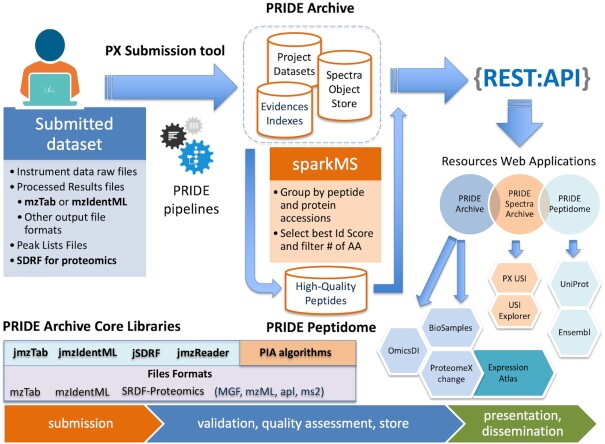
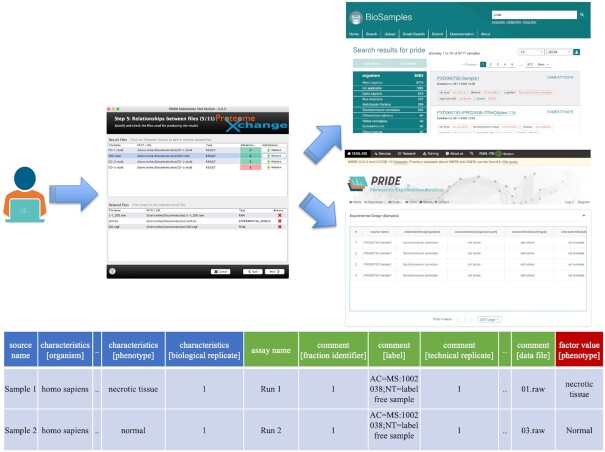
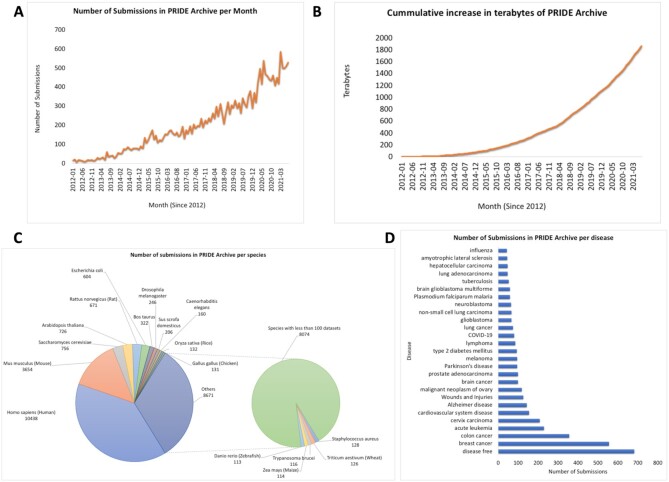
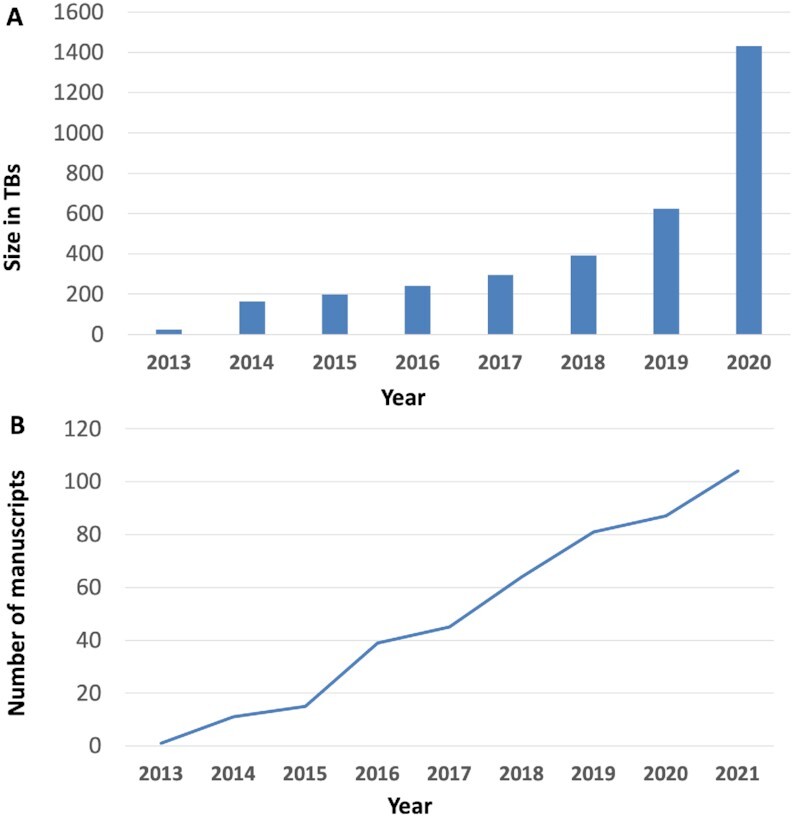
The PRoteomics IDEntifications (PRIDE) database (https://www.ebi.ac.uk/pride/) is the world's largest data repository of mass spectrometry-based proteomics data. PRIDE is one of the founding members of the global ProteomeXchange (PX) consortium and an ELIXIR core data resource. In this manuscript, we summarize the developments in PRIDE resources and related tools since the previous update manuscript was published in Nucleic Acids Research in 2019. The number of submitted datasets to PRIDE Archive (the archival component of PRIDE) has reached on average around 500 datasets per month during 2021. In addition to continuous improvements in PRIDE Archive data pipelines and infrastructure, the PRIDE Spectra Archive has been developed to provide direct access to the submitted mass spectra using Universal Spectrum Identifiers. As a key point, the file format MAGE-TAB for proteomics has been developed to enable the improvement of sample metadata annotation. Additionally, the resource PRIDE Peptidome provides access to aggregated peptide/protein evidences across PRIDE Archive. Furthermore, we will describe how PRIDE has increased its efforts to reuse and disseminate high-quality proteomics data into other added-value resources such as UniProt, Ensembl and Expression Atlas.
Overview
The claims and statistics of this paper haven’t been checked yet.
Free: it reads the open-access text and checks the first 5 claims that cite a source we can check. Create a free account to check every claim.
Integrity signals
Registry
Cites
Statistics
Figures
Verification
Claims the paper makes
The claims and statistics of this paper haven’t been checked yet.
Free: it reads the open-access text and checks the first 5 claims that cite a source we can check. Create a free account to check every claim.
Claims other papers make about this one
Each is checked against this paper’s own text: does it say what the citing paper says it does?
In the citing paper
“General proteomics repositories (e.g., PRIDE/ProteomeXchange) host raw and processed MS-based proteomics but do not harmonize thermal shift/solubility readouts into queryable, per-protein effect sizes across compounds and cell lines (16).”
From DORSSAA: Drug-Target interactOmics Resource Based on Stability/Solubility Alteration Assay (2026) · cites this paper as [16]
Self-check
Percentages, sums and reported differences re-computed from the paper’s own numbers.
The self-check needs the paper’s full text.
Citations
Cites
Cox, J., & Mann, M. (2008) · Nature Biotechnology · doi:10.1038/nbt.1511 · Cited by 14,855 · cited 4×
“Since 2020, overall, 240 and 30 dataset submissions have been performed using mzTab generated from Mascot and MaxQuant, respectively.”
BackgroundInfluentialPerkins, D. N., Pappin, D. J. C., Creasy, D. M., & Cottrell, J. S. (1999) · Electrophoresis · doi:10.1002/(sici)1522-2683(19991201)20:18<3551::aid-elps3551>3.0.co;2-2 · Cited by 8,203
Perez-Riverol, Y., Csordas, A., Bai, J., Bernal-Llinares, M., Hewapathirana, S., Kundu, D. J., Inuganti, A., Griss, J., Mayer, G., Eisenacher, M., et al. (2019) · Nucleic Acids Research · doi:10.1093/nar/gky1106 · Cited by 6,693 · cited 8×
“Since 2019, PRIDE has started to provide peptide evidences to Ensembl using the ‘TrackHub’ registry (2).”
BackgroundMethodInfluentialSelf-citationUniProt: the universal protein knowledgebase in 2021
The UniProt Consortium, Bateman, A., Martin, M.-J., Orchard, S., Magrane, M., Agivetova, R., Ahmad, S., Alpi, E., Bowler-Barnett, E. H., Britto, R., et al. (2021) · Nucleic Acids Research · doi:10.1093/nar/gkaa1100 · Cited by 6,372
ProteomeXchange provides globally coordinated proteomics data submission and dissemination
Vizcaíno, J. A., Deutsch, E. W., Wang, R., Csordas, A., Reisinger, F., Ríos, D., Dianes, J. A., Sun, Z., Farrah, T., Bandeira, N., et al. (2014) · Nature Biotechnology · doi:10.1038/nbt.2839 · Cited by 2,729 · cited 3×
“For every submitted dataset to PRIDE Archive, general metadata about the study must be provided including the title, submitters’ details, dataset description, sample and data protocols, instrument, and the associated publication once it is published (2,4,8).”
MethodSelf-citationiProX: an integrated proteome resource
Ma, J., Chen, T., Wu, S., Yang, C., Bai, M., Shu, K., Li, K., Zhang, G., Jin, Z., He, F., et al. (2019) · Nucleic Acids Research · doi:10.1093/nar/gky869 · Cited by 1,978 · cited 1×
“As of 2021, the resources PeptideAtlas (13), including its related resource PASSEL (PeptideAtlas SRM Experiment Library) (14), MassIVE (15), jPOST (16), iProX (17) and Panorama Public (18) are the active members of the consortium.”
BackgroundYates, A. D., Achuthan, P., Akanni, W., Allen, J., Allen, J., Alvarez-Jarreta, J., Amode, M. R., Armean, I. M., Azov, A. G., Bennett, R., et al. (2019) · Nucleic Acids Research · doi:10.1093/nar/gkz966 · Cited by 1,152
mzML—a Community Standard for Mass Spectrometry Data
Martens, L., Chambers, M., Sturm, M., Kessner, D., Levander, F., Shofstahl, J., Tang, W. H., Römpp, A., Neumann, S., Pizarro, A. D., et al. (2011) · Molecular & Cellular Proteomics · doi:10.1074/mcp.r110.000133 · Cited by 745 · cited 1×
“as mzTab (5), mzIdentML (6) and mzML (7) to store, process and visualize the proteomics data deposited.”
BackgroundThe ProteomeXchange consortium in 2020: enabling ‘big data’ approaches in proteomics
Deutsch, E. W., Bandeira, N., Sharma, V., Perez-Riverol, Y., Carver, J. J., Kundu, D. J., García-Seisdedos, D., Jarnuczak, A. F., Hewapathirana, S., Pullman, B. S., et al. (2019) · Nucleic Acids Research · doi:10.1093/nar/gkz984 · Cited by 697 · cited 3×
“The PRIDE database was one of the founders of the PX consortium in 2011 (3,8).”
BackgroundMethodSelf-citationMGnify: the microbiome analysis resource in 2020
Mitchell, A. L., Almeida, A., Beracochea, M., Boland, M., Burgin, J., Cochrane, G., Crusoe, M. R., Kale, V., Potter, S. C., Richardson, L. J., et al. (2019) · Nucleic Acids Research · doi:10.1093/nar/gkz1035 · Cited by 562 · cited 2×
“In addition, we aim to increasingly perform in-house data reuse (including data re-analysis) and disseminate high-quality proteomics data from PRIDE into the already mentioned added-value resources (Ensembl, UniProt, Expression Atlas, and MGnify in the near future).”
Background
Cited by
Items 101–200 of 1,146
Termination of STING responses is mediated via ESCRT‐dependent degradation
Balka, K. R., Venkatraman, R., Saunders, T. L., Shoppee, A., Pang, E. S., Magill, Z., Homman‐Ludiye, J., Huang, C., Lane, R. M., York, H. M., et al. (2023) · The EMBO Journal · doi:10.15252/embj.2022112712 · Cited by 99
Rifaximin prophylaxis causes resistance to the last-resort antibiotic daptomycin
Turner, A. M., Li, L. Q., Monk, I. R., Lee, J. Y. H., Ingle, D. J., Portelli, S., Sherry, N. L., Isles, N. S., Seemann, T., Sharkey, L. K. R., et al. (2024) · Nature · doi:10.1038/s41586-024-08095-4 · Cited by 98
Schröder, M., Renatus, M., Liang, X., Meili, F., Zoller, T., Ferrand, S., Gauter, F., Li, X., Sigoillot, F., Gleim, S., et al. (2024) · Nature Communications · doi:10.1038/s41467-023-44237-4 · Cited by 97
Lipid nanoparticles allow efficient and harmless ex vivo gene editing of human hematopoietic cells
Vavassori, V., Ferrari, S., Beretta, S., Asperti, C., Albano, L., Annoni, A., Gaddoni, C., Varesi, A., Soldi, M., Cuomo, A., et al. (2023) · Blood · doi:10.1182/blood.2022019333 · Cited by 100
Epigenetic mechanisms to propagate histone acetylation by p300/CBP
Kikuchi, M., Morita, S., Wakamori, M., Sato, S., Uchikubo‐Kamo, T., Suzuki, T., Dohmae, N., Shirouzu, M., & Umehara, T. (2023) · Nature Communications · doi:10.1038/s41467-023-39735-4 · Cited by 97
Mannion, J., Gifford, V., Bellenie, B. R., Fernando, W., Garcia, L. R., Wilson, R., John, S. W., Udainiya, S., Patin, E. C., Tiu, C., et al. (2024) · Immunity · doi:10.1016/j.immuni.2024.04.025 · Cited by 96
Design of a mucin-selective protease for targeted degradation of cancer-associated mucins
Pedram, K., Shon, D. J., Tender, G. S., Mantuano, N. R., Northey, J. J., Metcalf, K. J., Wisnovsky, S., Riley, N. M., Forcina, G. C., Malaker, S. A., et al. (2023) · Nature Biotechnology · doi:10.1038/s41587-023-01840-6 · Cited by 96
PEX5 translocation into and out of peroxisomes drives matrix protein import
Skowyra, M. L., & Rapoport, T. A. (2022) · Molecular Cell · doi:10.1016/j.molcel.2022.07.004 · Cited by 80
Fu, B., Shen, J., Zou, X., Sun, N., Zhang, Z., Liu, Z., Zeng, C., Liu, H., & Huang, W. (2024) · Bone Research · doi:10.1038/s41413-024-00333-9 · Cited by 95
Scott-Hewitt, N., Mahoney, M., Huang, Y., Korte, N., Yvanka de Soysa, T., Wilton, D. K., Knorr, E., Mastro, K., Chang, A., Zhang, A., et al. (2024) · Cell · doi:10.1016/j.cell.2024.05.058 · Cited by 85
Dai, C., Pfeuffer, J., Wang, H., Zheng, P., Käll, L., Sachsenberg, T. T., Demichev, V., Bai, M., Kohlbacher, O., & Pérez‐Riverol, Y. (2024) · Nature Methods · doi:10.1038/s41592-024-02343-1 · Cited by 94
Mechanistic insights into consumption of the food additive xanthan gum by the human gut microbiota
Ostrowski, M. P., Rosa, S. L. L., Kunath, B. J., Robertson, A., Pereira, G. V., Hagen, L. H., Varghese, N. J., Qiu, L., Yao, T., Flint, G., et al. (2022) · Nature Microbiology · doi:10.1038/s41564-022-01093-0 · Cited by 96
From single- to multi-omics: future research trends in medicinal plants
Yang, L., Yang, Y. J., Huang, L., Cui, X., & Liu, Y. (2022) · Briefings in Bioinformatics · doi:10.1093/bib/bbac485 · Cited by 93
“To date, there is no protein database specific for MPs; however, comprehensive protein databases, such as the continuously updated PRIDE and PPDB, are available for functional studies of proteins in MPs (Table 1; [39,40]).”
BackgroundHammer, L., Moretti, D., Abbühl, L., Kandiah, P., Hilaj, N., Portmann, R., & Egger, L. (2023) · Frontiers in Nutrition · doi:10.3389/fnut.2023.1150581 · Cited by 93
Borgert, S. R., Henke, S., Witzgall, F., Schmelz, S., zur Lage, S., Hotop, S.-K., Stephen, S., Lübken, D., Krüger, J., Gomez, N. O., et al. (2022) · Nature Communications · doi:10.1038/s41467-022-35030-w · Cited by 93
Irisin acts through its integrin receptor in a two-step process involving extracellular Hsp90α
Mu, A., Wales, T. E., Zhou, H., Draga-Coletă, S.-V., Gorgulla, C., Blackmore, K. A., Mittenbühler, M. J., Kim, C. R., Laznik-Bogoslavski, D., Zhang, Q., et al. (2023) · Molecular Cell · doi:10.1016/j.molcel.2023.05.008 · Cited by 93
Impact of SARS-CoV-2 ORF6 and its variant polymorphisms on host responses and viral pathogenesis
Kehrer, T., Čupić, A., Ye, C., Yildiz, S., Bouhaddou, M., Crossland, N. A., Barrall, E. A., Cohen, P., Tseng, A. E., Çağatay, T., et al. (2023) · Cell Host & Microbe · doi:10.1016/j.chom.2023.08.003 · Cited by 92
Gao, B., Hong, J., Chen, J., Zhang, H., Ren, H., & Zhang, C. (2023) · Biotechnology for Biofuels and Bioproducts · doi:10.1186/s13068-022-02249-0 · Cited by 91
PARP14 is a PARP with both ADP-ribosyl transferase and hydrolase activities
Đukić, N., Strømland, Ø., Elsborg, J. D., Munnur, D., Zhu, K., Schuller, M., Chatrin, C., Kar, P., Duma, L., Suyari, O., et al. (2023) · Science Advances · doi:10.1126/sciadv.adi2687 · Cited by 90
Valdés-Mas, R., Leshem, A., Zheng, D., Cohen, Y., Kern, L., Zmora, N., He, Y., Katina, C., Eliyahu-Miller, S., Yosef-Hevroni, T., et al. (2025) · Cell · doi:10.1016/j.cell.2024.12.016 · Cited by 89
Bartolec, T. K., Vázquez-Campos, X., Norman, A., Luong, C., Johnson, M., Payne, R. J., Wilkins, M. R., Mackay, J. P., & Low, J. K. K. (2023) · Proceedings of the National Academy of Sciences · doi:10.1073/pnas.2219418120 · Cited by 79
Biofilm formation on human immune cells is a multicellular predation strategy of Vibrio cholerae
Vidakovic, L., Mikhaleva, S., Jeckel, H., Nisnevich, V., Strenger, K., Neuhaus, K., Raveendran, K., Moshe, N. B. B., Aznaourova, M., Nosho, K., et al. (2023) · Cell · doi:10.1016/j.cell.2023.05.008 · Cited by 89
Ricotti, L., Cafarelli, A., Manferdini, C., Trucco, D., Vannozzi, L., Gabusi, E., Fontana, F., Dolzani, P., Saleh, Y., Lenzi, E., et al. (2024) · ACS Nano · doi:10.1021/acsnano.3c08738 · Cited by 90
Eldeeb, M. A., Bayne, A. N., Fallahi, A., Goiran, T., MacDougall, E. J., Soumbasis, A., Zorca, C. E., Jones-Tabah, J., Thomas, R. A., Karpilovsky, N. C., et al. (2024) · Proceedings of the National Academy of Sciences · doi:10.1073/pnas.2313540121 · Cited by 90
Liang, G., Cao, W., Tang, D., Zhang, H., Yu, Y., Ding, J., Karges, J., & Xiao, H. (2024) · ACS Nano · doi:10.1021/acsnano.3c11154 · Cited by 89
Piper, M., Hoen, M., Darragh, L. B., Knitz, M. W., Nguyen, D., Gadwa, J., Durini, G., Hutter-Karakoc, I., Grier, A., Neupert, B., et al. (2023) · Cancer Cell · doi:10.1016/j.ccell.2023.04.001 · Cited by 89
Yu, F., Zhu, A. C., Liu, S., Gao, B., Wang, Y., Khudaverdyan, N., Yu, C., Wu, Q., Jiang, Y., Song, J., et al. (2023) · Molecular Cell · doi:10.1016/j.molcel.2023.05.010 · Cited by 88
Binding of Akkermansia muciniphila to mucin is O-glycan specific
Elzinga, J., Narimatsu, Y., de Haan, N., Clausen, H., de Vos, W. M., & Tytgat, H. L. P. (2024) · Nature Communications · doi:10.1038/s41467-024-48770-8 · Cited by 89
Middle and Late Pleistocene Denisovan subsistence at Baishiya Karst Cave
Xia, H., Zhang, D., Wang, J., Fagernäs, Z., Li, T., Li, Y., Yao, J., Lin, D., Troché, G., Smith, G. M., et al. (2024) · Nature · doi:10.1038/s41586-024-07612-9 · Cited by 87
Lee, J., Dimitry, J. M., Song, J. H., Son, M., Sheehan, P. W., King, M. W., Travis Tabor, G., Goo, Y. A., Lazar, M. A., Petrucelli, L., et al. (2023) · Nature Communications · doi:10.1038/s41467-023-40927-1 · Cited by 86
Irmady, K., Hale, C. R., Qadri, R., Fak, J. J., Simelane, S., Carroll, T., Przedborski, S., & Darnell, R. B. (2023) · Nature Communications · doi:10.1038/s41467-023-39652-6 · Cited by 87
Won, S., Lee, C., Bae, S., Lee, J., Choi, D., Kim, M., Song, S., Lee, J., Kim, E., Shin, H., et al. (2023) · Journal of Extracellular Vesicles · doi:10.1002/jev2.12357 · Cited by 86
“In addition, the mass spectrometry proteomics data have been deposited to ProteomeXchange Consortium via PRIDE (Perez-Riverol et al., 2022) partner repository with identifier PXD043119.”
MethodLi, C., Duckney, P. J., Zhang, T., Fu, Y., Li, X., Kroon, J., Jaeger, G. D., Cheng, Y., Hussey, P. J., & Wang, P. (2022) · Nature Communications · doi:10.1038/s41467-022-33402-w · Cited by 85
Optogenetic rejuvenation of mitochondrial membrane potential extends C. elegans lifespan
Berry, B. J., Vodičková, A., Müller-Eigner, A., Meng, C., Ludwig, C., Kaeberlein, M., Peleg, S., & Wojtovich, A. P. (2022) · Nature Aging · doi:10.1038/s43587-022-00340-7 · Cited by 78
Relocalizing transcriptional kinases to activate apoptosis
Sarott, R. C., Gourisankar, S. P., Karim, B. A., Nettles, S. A., Yang, H., Dwyer, B. G., Simanauskaite, J., Tse, J., Abuzaid, H. Z., Krokhotin, A., et al. (2024) · Science · doi:10.1126/science.adl5361 · Cited by 86
Tuddenham, J. F., Taga, M. F., Haage, V. C., Marshe, V. S., Roostaei, T., White, C. C., Lee, A., Fujita, M., Khairallah, A., Zhang, Y., et al. (2024) · Nature Neuroscience · doi:10.1038/s41593-024-01764-7 · Cited by 85
Wang, F., Bartosik, D., Sidhu, C., Siebers, R., Lu, D., Trautwein‐Schult, A., Becher, D., Hüettel, B., Rick, J. J., Kirstein, I. V., et al. (2024) · Microbiome · doi:10.1186/s40168-024-01757-5 · Cited by 84
Shin, D., Kim, S., Lee, H., Lee, H.-C., Lee, J., Park, H. E., Fukai, M., Choi, E., Choi, S., Koo, B.-J., et al. (2024) · Nature Communications · doi:10.1038/s41467-024-46336-2 · Cited by 83
Reversed-Phase Liquid Chromatography of Peptides for Bottom-Up Proteomics: A Tutorial
Lenčo, J., Jadeja, S., Naplekov, D. K., Krokhin, O. V., Khalikova, M. A., Chocholouš, P., Urban, J., Broeckhoven, K., Nováková, L., & Švec, F. (2022) · Journal of Proteome Research · doi:10.1021/acs.jproteome.2c00407 · Cited by 83
Toward an Integrated Machine Learning Model of a Proteomics Experiment
Neely, B. A., Dorfer, V., Martens, L., Bludau, I., Bouwmeester, R., Degroeve, S., Deutsch, E. W., Gessulat, S., Käll, L., Palczynski, P., et al. (2023) · Journal of Proteome Research · doi:10.1021/acs.jproteome.2c00711 · Cited by 84
Self-citationNeutrophil trapping and nexocytosis, mast cell-mediated processes for inflammatory signal relay
Mihlan, M., Wissmann, S., Gavrilov, A., Kaltenbach, L., Britz, M., Franke, K., Hummel, B., Imle, A., Suzuki, R., Stecher, M., et al. (2024) · Cell · doi:10.1016/j.cell.2024.07.014 · Cited by 83
Human proteome distribution atlas for tissue-specific plasma proteome dynamics
Malmström, E., Malmström, L., Hauri, S., Mohanty, T., Scott, A. M., Karlsson, C. A. Q., Gueto-Tettay, C. A., Åhrman, E., Nozohoor, S., Tingstedt, B., et al. (2025) · Cell · doi:10.1016/j.cell.2025.03.013 · Cited by 83
ERFVII action and modulation through oxygen-sensing in Arabidopsis thaliana
Zubrycka, A., Dambire, C., Carbonare, L. D., Sharma, G., Boeckx, T., Swarup, K., Sturrock, C. J., Atkinson, B. S., Swarup, R., Corbineau, F., et al. (2023) · Nature Communications · doi:10.1038/s41467-023-40366-y · Cited by 82
Complete integration of carbene-transfer chemistry into biosynthesis
Huang, J., Quest, A., Cruz‐Morales, P., Deng, K., Pereira, J. H., Cura, D. V., Kakumanu, R. D., Baidoo, E. E. K., Dan, Q., Chen, Y., et al. (2023) · Nature · doi:10.1038/s41586-023-06027-2 · Cited by 81
Lung extracellular matrix modulates KRT5+ basal cell activity in pulmonary fibrosis
Hewitt, R. J., Puttur, F. K., Gaboriau, D. C. A., Fercoq, F., Fresquet, M., Traves, W. J., Yates, L. L., Walker, S. A., Molyneaux, P. L., Kemp, S. V., et al. (2023) · Nature Communications · doi:10.1038/s41467-023-41621-y · Cited by 81
Oncogenic signals prime cancer cells for toxic cell overgrowth during a G1 cell cycle arrest
Foy, R., Crozier, L., Pareri, A. U., Valverde, J. M., Park, B. H., Ly, T., & Saurin, A. T. (2023) · Molecular Cell · doi:10.1016/j.molcel.2023.10.020 · Cited by 82
Small Extracellular Vesicles From Infarcted and Failing Heart Accelerate Tumor Growth
Caller, T., Rotem, I., Shaihov–Teper, O., Lendengolts, D., Schary, Y., Mehrian‐Shai, R., Glick‐Saar, E., Dominissini, D., Motiei, M., Katzir, I., et al. (2024) · Circulation · doi:10.1161/circulationaha.123.066911 · Cited by 81
Chan, A., Haley, R. M., Najar, M. A., Gonzalez-Martinez, D., Bugaj, L. J., Burslem, G. M., Mitchell, M. J., & Tsourkas, A. (2024) · Nature Communications · doi:10.1038/s41467-024-50235-x · Cited by 82
Membrane prewetting by condensates promotes tight-junction belt formation
García, K. P., Adame-Arana, O., Martin-Lemaitre, C., Jülicher, F., & Honigmann, A. (2024) · Nature · doi:10.1038/s41586-024-07726-0 · Cited by 81
Human gut bacteria bioaccumulate per- and polyfluoroalkyl substances
Lindell, A. E., Grießhammer, A., Michaelis, L., Papagiannidis, D., Ochner, H., Kamrad, S., Guan, R., Blasche, S., Ventimiglia, L. N., Ramachandran, B., et al. (2025) · Nature Microbiology · doi:10.1038/s41564-025-02032-5 · Cited by 81
Wu, H., Qiu, W., Zhu, X., Li, X., Xie, Z., Carreras, I., Dedeoglu, A., Dyke, T. E. V., Han, Y. W., Karimbux, N. Y., et al. (2022) · Frontiers in Aging Neuroscience · doi:10.3389/fnagi.2022.912709 · Cited by 81
Thoudam, T., Chanda, D., Lee, J. Y., Jung, M., Sinam, I. S., Kim, B., Park, B.-Y., Kwon, W. H., Kim, H., Kim, M., et al. (2023) · Nature Communications · doi:10.1038/s41467-023-37214-4 · Cited by 81
Omics approaches for the assessment of biological responses to nanoparticles
Abdelkader, Y., Pérez-Dávalos, L. A., LeDuc, R. D., Zahedi, R. P., & Labouta, H. I. (2023) · Advanced Drug Delivery Reviews · doi:10.1016/j.addr.2023.114992 · Cited by 82
Radke, J., Meinhardt, J., Aschman, T., Chua, R. L., Farztdinov, V. M., Lukassen, S., Ten, F. W., Friebel, E., Ishaque, N., Franz, J., et al. (2024) · Nature Neuroscience · doi:10.1038/s41593-024-01573-y · Cited by 82
Paone, P., Latousakis, D., Terrasi, R., Vertommen, D., Jian, C., Borlandelli, V., Suriano, F., Johansson, M., Puel, A., Bouzin, C., et al. (2024) · Gut · doi:10.1136/gutjnl-2023-330301 · Cited by 80
Deep Visual Proteomics maps proteotoxicity in a genetic liver disease
Rosenberger, F. A., Mädler, S. C., Thorhauge, K. H., Steigerwald, S., Fromme, M., Lebedev, M., Weiss, C. A. M., Oeller, M., Wahle, M., Zwiebel, M., et al. (2025) · Nature · doi:10.1038/s41586-025-08885-4 · Cited by 82
Shaashua, L., Ben-Shmuel, A., Pevsner-Fischer, M., Friedman, G., Levi-Galibov, O., Nandakumar, S., Barki, D., Nevo, R., Brown, L. E., Zhang, W., et al. (2022) · Nature Communications · doi:10.1038/s41467-022-34081-3 · Cited by 79
A selective small-molecule STAT5 PROTAC degrader capable of achieving tumor regression in vivo
Kaneshige, A., Bai, L., Wang, M., McEachern, D., Meagher, J. L., Xu, R., Wang, Y., Jiang, W., Metwally, H., Kirchhoff, P. D., et al. (2023) · Nature Chemical Biology · doi:10.1038/s41589-022-01248-4 · Cited by 79
Self-citationChoroid plexus-targeted NKCC1 overexpression to treat post-hemorrhagic hydrocephalus
Sadegh, C., Xu, H., Sutin, J. D. B., Fatou, B., Gupta, S., Pragana, A., Taylor, M., Kalugin, P. N., Zawadzki, M. E., Alturkistani, O., et al. (2023) · Neuron · doi:10.1016/j.neuron.2023.02.020 · Cited by 79
The OsSGS3-tasiRNA-OsARF3 module orchestrates abiotic-biotic stress response trade-off in rice
Gu, X., Si, F., Feng, Z., Li, S., Liang, D., Yang, P., Yang, C., Yan, B., Tang, J., Yang, Y., et al. (2023) · Nature Communications · doi:10.1038/s41467-023-40176-2 · Cited by 80
Glutathione synthesis in the mouse liver supports lipid abundance through NRF2 repression
Asantewaa, G., Tuttle, E. T., Ward, N. P., Kang, Y. P., Kim, Y., Kavanagh, M. E., Girnius, N., Chen, Y., Rodriguez, K., Hecht, F., et al. (2024) · Nature Communications · doi:10.1038/s41467-024-50454-2 · Cited by 79
Oligodendrocyte precursors guide interneuron migration by unidirectional contact repulsion
Lepiemme, F., Stoufflet, J., Javier‐Torrent, M., Mazzucchelli, G., Silva, C. G., & Nguyen, L. (2022) · Science · doi:10.1126/science.abn6204 · Cited by 78
Challenges and opportunities in sharing microbiome data and analyses
Huttenhower, C., Finn, R. D., & McHardy, A. C. (2023) · Nature Microbiology · doi:10.1038/s41564-023-01484-x · Cited by 80
“Repositories include PRIDE 100 , MassIVE 101 , Peptide Atlas 102 and others via ProteomeXchange 103 .”
MethodThe maintenance of oocytes in the mammalian ovary involves extreme protein longevity
Harasimov, K., Gorry, R. L., Welp, L. M., Penir, S. M. U., Horokhovskyi, Y., Cheng, S., Takaoka, K., Stützer, A., Frombach, A.-S., Tavares, A. L. T., et al. (2024) · Nature Cell Biology · doi:10.1038/s41556-024-01442-7 · Cited by 78
A male Denisovan mandible from Pleistocene Taiwan
Tsutaya, T., Sawafuji, R., Taurozzi, A. J., Fagernäs, Z., Patramanis, I., Troché, G., Mackie, M., Gakuhari, T., Oota, H., Tsai, C., et al. (2025) · Science · doi:10.1126/science.ads3888 · Cited by 78
Current Bioinformatics Tools in Precision Oncology
Wolde, T., Bhardwaj, V., & Pandey, V. (2025) · MedComm · doi:10.1002/mco2.70243 · Cited by 78
“The PRoteomics IDEntifications database serves as a vital resource for MS-based proteomics, offering essential data on protein expression, identification, and modifications that are crucial for discovering oncology biomarkers [279].”
High-throughput proteomics of nanogram-scale samples with Zeno SWATH MS
Wang, Z., Mülleder, M., Batruch, I., Chelur, A., Textoris‐Taube, K., Schwecke, T., Hartl, J., Causon, J., Castro‐Perez, J. M., Demichev, V., et al. (2022) · eLife · doi:10.7554/elife.83947 · Cited by 77
Shi, L., Chen, H., Chen, K., Zhong, C., Song, C., Huang, Y., Wang, T., Chen, L., Li, C., Huang, A., et al. (2023) · Clinical Cancer Research · doi:10.1158/1078-0432.ccr-22-3971 · Cited by 77
Webel, H. E., Niu, L., Nielsen, A. B., Locard‐Paulet, M., Mann, M., Jensen, L. J., & Rasmussen, S. (2024) · Nature Communications · doi:10.1038/s41467-024-48711-5 · Cited by 77
De novo design of modular peptide-binding proteins by superhelical matching
Wu, K., Bai, H., Chang, Y.-T., Redler, R., McNally, K. E., Sheffler, W., Brunette, T. J., Hicks, D. R., Morgan, T. E., Stevens, T. J., et al. (2023) · Nature · doi:10.1038/s41586-023-05909-9 · Cited by 76
Yang, Y., Liang, S., Geng, H., Xiong, M., Li, M., Su, Q., Jia, F., Zhao, Y., Wang, K., Jiang, J., et al. (2022) · Free Radical Biology and Medicine · doi:10.1016/j.freeradbiomed.2022.11.023 · Cited by 76
Ravikumar, V., Mijakovic̀, I., & Pandit, S. (2022) · International Journal of Nanomedicine · doi:10.2147/ijn.s387590 · Cited by 78
Ricca’s factors as mobile proteinaceous effectors of electrical signaling
Gao, Y., Jiménez‐Sandoval, P., Tiwari, S., Stolz, S., Wang, J., Glauser, G., Santiago, J., & Farmer, E. E. (2023) · Cell · doi:10.1016/j.cell.2023.02.006 · Cited by 77
An Epstein-Barr virus protein interaction map reveals NLRP3 inflammasome evasion via MAVS UFMylation
Yiu, S. P. T., Zerbe, C. M., Vanderwall, D., Huttlin, E. L., Weekes, M. P., & Gewurz, B. E. (2023) · Molecular Cell · doi:10.1016/j.molcel.2023.05.018 · Cited by 76
IGF2BP3 promotes mRNA degradation through internal m7G modification
Liu, C., Dou, X., Zhao, Y., Zhang, L., Zhang, L., Dai, Q., Liu, J., Wu, T., Xiao, Y., & He, C. (2024) · Nature Communications · doi:10.1038/s41467-024-51634-w · Cited by 76
Structure of human PINK1 at a mitochondrial TOM-VDAC array
Callegari, S., Kirk, N. S., Gan, Z. Y., Dite, T., Cobbold, S. A., Leis, A., Dagley, L. F., Glukhova, A., & Komander, D. (2025) · Science · doi:10.1126/science.adu6445 · Cited by 75
Gao, S., Wang, S., Zhao, Z., Zhang, C., Liu, Z., Ye, P., Xu, Z., Yi, B., Jiao, K., Naik, G., et al. (2022) · Nature Communications · doi:10.1038/s41467-022-30409-1 · Cited by 75
Self-citationCéspedes, P. F., Jainarayanan, A., Fernández‐Messina, L., Valvo, S., Saliba, D. G., Kurz, E., Kvalvaag, A. S., Chen, L., Ganskow, C. S. G., Colin‐York, H., et al. (2022) · Nature Communications · doi:10.1038/s41467-022-31160-3 · Cited by 75
Bonadonna, M., Altamura, S., Tybl, E., Palais, G., Qatato, M., Polycarpou‐Schwarz, M., Schneider, M., Kalk, C., Rüdiger, W., Ertl, A., et al. (2022) · Science Advances · doi:10.1126/sciadv.abq4469 · Cited by 76
Park, W., Lee, J., Gao, G., Kim, B. S., & Cho, D. (2023) · Nature Communications · doi:10.1038/s41467-023-43586-4 · Cited by 76
Putative Biomarkers in Tears for Diabetic Retinopathy Diagnosis
Amorim, M., Martins, B. D., Caramelo, F. J., Gonçalves, C., Trindade, G., Simão, J., Barreto, P., Marques, I. P., Leal, E. C., Carvalho, E., et al. (2022) · Frontiers in Medicine · doi:10.3389/fmed.2022.873483 · Cited by 74
Lu, L., Zhai, X., Li, X., Wang, S., Zhang, L., Wang, L., Jin, X., Liang, L., Deng, Z., Li, Z., et al. (2022) · Nature Communications · doi:10.1038/s41467-022-32364-3 · Cited by 74
Self-citationIn situ structure and dynamics of an alphacoronavirus spike protein by cryo-ET and cryo-EM
Huang, C.-Y., Drączkowski, P., Wang, Y., Chang, C., Chien, Y.-C., Cheng, Y., Wu, Y. A., Wang, C.-H., Chang, Y., Chang, Y., et al. (2022) · Nature Communications · doi:10.1038/s41467-022-32588-3 · Cited by 75
Russell, A. J. C., Sanderson, T., Bushell, E., Talman, A. M., Anar, B., Girling, G., Hunziker, M., Kent, R. S., Martin, J. S., Metcalf, T., et al. (2023) · Cell Host & Microbe · doi:10.1016/j.chom.2022.12.011 · Cited by 74
Vaginal epithelial dysfunction is mediated by the microbiome, metabolome, and mTOR signaling
Berard, A. R., Brubaker, D. K., Birse, K., Lamont, A., Mackelprang, R. D., Noël‐Romas, L., Perner, M., Hou, X., Irungu, E., Mugo, N., et al. (2023) · Cell Reports · doi:10.1016/j.celrep.2023.112474 · Cited by 75
IRGQ-mediated autophagy in MHC class I quality control promotes tumor immune evasion
Herhaus, L., Mato, U. G., Eapen, V. V., Mačinković, I., Bailey, H., Prieto‐Garcia, C., Misra, M., Jacomin, A., Ammanath, A. V., Bagarić, I., et al. (2024) · Cell · doi:10.1016/j.cell.2024.09.048 · Cited by 76
“The mass spectrometry proteomics data have been deposited totheProteomeXchangeConsortiumviathePRIDE 66 2 .”
Dong, Z., Jiang, W., Wu, C., Chen, T., Chen, J., Ding, X., Zheng, S. S., Piatkevich, K. D., Zhu, Y., & Guo, T. (2024) · Nature Communications · doi:10.1038/s41467-024-53683-7 · Cited by 74
The link between amyloid β and ferroptosis pathway in Alzheimer’s disease progression
Majerníková, N., Marmolejo-Garza, A., Salinas, C. S., Luu, M. D. A., Zhang, Y., Trombetta-Lima, M., Tomin, T., Birner-Gruenberger, R., Lehtonen, Š., Koistinaho, J., et al. (2024) · Cell Death & Disease · doi:10.1038/s41419-024-07152-0 · Cited by 73
“The mass spectrometry proteomics data have been deposited to the ProteomeXchange Consortium via the PRIDE [32] partner repository with the dataset identi fi er PXD047941 with project name: The link between Amyloid β and ferroptosis pathway in Alzheimer ’ s disease.”
MethodAtanasova, V. S., Cardona, C. D. J., Hejret, V., Tiefenbacher, A., Mair, T., Tran, L., Pfneissl, J., Draganić, K., Binder, C., Kabiljo, J., et al. (2023) · Cellular and Molecular Gastroenterology and Hepatology · doi:10.1016/j.jcmgh.2023.02.014 · Cited by 74
Accurate Label-Free Quantification by directLFQ to Compare Unlimited Numbers of Proteomes
Ammar, C., Schessner, J. P., Willems, S., Michaelis, A. C., & Mann, M. (2023) · Molecular & Cellular Proteomics · doi:10.1016/j.mcpro.2023.100581 · Cited by 76
“To assess the performance of directLFQ on larger datasets, the MaxQuant output files of the “200 HeLa” dataset by Bian et al. 26 acquired on a Q Exactive HF-X mass spectrometer was downloaded from the corresponding PRIDE repository PXD015087. directLFQ was called on the MaxQuant files as described above.”
MethodInfluentialLu, J., Han, S., Lv, X., Li, X., Zhang, Z., Kuang, H., Chen, Z., Lv, C.-A., Peng, W., Yang, Z., et al. (2023) · Nature Communications · doi:10.1038/s41467-023-39710-z · Cited by 74
Qu, J., Qiu, B., Zhang, Y., Hu, Y., Wang, Z., Guan, Z., Qin, Y., Sui, T., Wu, F., Li, B., et al. (2023) · Signal Transduction and Targeted Therapy · doi:10.1038/s41392-023-01666-3 · Cited by 73
Holvec, S., Barchet, C., Lechner, A., Fréchin, L., Silva, S. N. T. D., Hazemann, I., Wolff, P., von Loeffelholz, O., & Klaholz, B. P. (2024) · Nature Structural & Molecular Biology · doi:10.1038/s41594-024-01274-x · Cited by 73
The 2022Nucleic Acids Researchdatabase issue and the online molecular biology database collection
Rigden, D. J., & Fernández, X. M. (2021) · Nucleic Acids Research · doi:10.1093/nar/gkab1195 · Cited by 72
“Among databases reporting updates is PRIDE (38) where around 500 proteomics datasets are processed each month.”
BackgroundSynthesis of portimines reveals the basis of their anti-cancer activity
Tang, J., Li, W., Chiu, T.-Y., Martínez‐Peña, F., Luo, Z., Chong, C. T., Wei, Q., Gazaniga, N. R., West, T. J., See, Y. Y., et al. (2023) · Nature · doi:10.1038/s41586-023-06535-1 · Cited by 73
Multi-tiered chemical proteomic maps of tryptoline acrylamide–protein interactions in cancer cells
Njomen, E., Hayward, R. E., DeMeester, K. E., Ogasawara, D., Dix, M. M., Nguyen, T., Ashby, P., Simon, G. M., Schreiber, S. L., Melillo, B., et al. (2024) · Nature Chemistry · doi:10.1038/s41557-024-01601-1 · Cited by 53
Ouyang, B., Shan, C., Shen, S., Dai, X., Chen, Q., Su, X., Cao, Y., Qin, X., He, Y., Wang, S., et al. (2024) · Nature Communications · doi:10.1038/s41467-024-51980-9 · Cited by 72
Self-citationMa, L., Liu, X., Guo, L., Luo, Y., Zhang, B., Cui, X., Yang, K., Cai, J., Liu, F., Ma, N., et al. (2024) · Nature Communications · doi:10.1038/s41467-024-44854-7 · Cited by 71
Lei, Y., Liu, Q., Chen, B., Wu, F., Li, Y., Dong, X., Ma, N., Wu, Z., Zhu, Y., Wang, L., et al. (2024) · Nature Communications · doi:10.1038/s41467-024-53601-x · Cited by 71
Mittenbühler, M. J., Jedrychowski, M. P., Vranken, J. G. V., Sprenger, H., Wilensky, S. E., Dumesic, P. A., Sun, Y., Tartaglia, A., Laznik-Bogoslavski, D., Mu, A., et al. (2023) · Cell Metabolism · doi:10.1016/j.cmet.2022.12.014 · Cited by 71
Metadata
- Authors
- Perez-Riverol, Y., Bai, J., Bandla, C., García-Seisdedos, D., Hewapathirana, S., Kamatchinathan, S., Kundu, D. J., Prakash, A., Frericks-Zipper, A., Eisenacher, M., Walzer, M., Wang, S., Brazma, A., & Vizcaíno, J. A.
- Affiliations
- European Molecular Biology Laboratory, European Bioinformatics Institute (EMBL-EBI), Wellcome Trust Genome Campus, Hinxton, Cambridge CB10 1SD, UK
- European Bioinformatics Institute (GB)
- Ruhr University Bochum (DE)
- Corresponding author
- Vizcaíno, Juan Antonio
- ORCID
- Venue
- Nucleic Acids Research
- Publisher
- Oxford University Press (OUP)
- Published
- 2021-11-01
- Volume
- 50
- Issue
- D1
- Pages
- D543-D552
- ISSN
- 0305-1048 (ISSN-L)
- 1362-4962
- PMC
- PMC8728295
- OpenAlex
- W3208691473
- Cited by
- 6,125
- References
- 61
- Citations by year
- 2026: 494 · 2025: 1312 · 2024: 2003 · 2023: 1569 · 2022: 735 · 2021: 5
- FWCI
- 406.89
- Type
- journal article
- Language
- en
- Open access
- gold
- doi.org
- Licence
- Locations
- Nucleic Acids Research (publishedVersion, cc-by)
- PubMed Central (publishedVersion, cc-by)
- PubMed (publishedVersion)
- Funders
- Wellcome (208391/Z/17/Z)
- BBSRC (BB/P024599/1, BB/S01781X/1, BB/T019670/1)
- UK-Japan Partnership award (BB/N022440/1)
- NIH (R24 GM127667-01)
- EU H2020 (823839)
- Open Targets (OTAR-043)
- Luxembourg National Research Fund (C19/BM/13684739)
- EMBL
- German Federal Ministry of Education and Research (FKZ 031 A 534A)
- Ministry of Innovation, Science and Research of North-Rhine Westphalia, Germany
- Topics
- Physical Sciences › Chemistry › Spectroscopy › Advanced Proteomics Techniques and Applications
- Physical Sciences › Computer Science › Information Systems › Research Data Management Practices
- Life Sciences › Biochemistry, Genetics and Molecular Biology › Molecular Biology › Bioinformatics and Genomic Networks
- Keywords
- mass spectrometry-based proteomics, ProteomeXchange, data dissemination, UniProt, Ensembl, Expression Atlas
- MeSH terms
- Metadata, Amino Acid Sequence, Humans, Peptides, Proteins, Software, Mass Spectrometry, Bibliometrics, Information Storage and Retrieval, Sequence Alignment, Internet, Databases, Protein, Proteomics, Molecular Sequence Annotation, Datasets as Topic
About these checks
Registry, retraction, Cites and statistics results are computed, not judged, with one exception: a printed reference that no index lists is read once by a model before it counts as a citation error. Claims are extracted by a model and kept only when their quote appears verbatim in the text; each cited source is then checked, with a model’s help, for whether it says what the claim relies on. Those verdicts can be wrong — read the claim’s quote and the cited source before relying on one.
Statistics and arithmetic are recomputed, not judged.
Confidence bands are shown only for fields calibrated on our annotated test set. None is calibrated yet, so no band is shown.
What counts as a claim ›How we measure confidence ›How we check this ›
Are you an author, or do you see a problem with this page? Request a review
Data sources
Bibliographic data: Semantic Scholar, OpenAlex, Crossref.
Contains information from the Semantic Scholar Academic Graph Datasets, made available under the ODC Attribution License (ODC-BY 1.0).
Semantic Scholar’s data is described in: Kinney, R., et al. (2023). The Semantic Scholar Open Data Platform. arXiv:2301.10140.
