

The DOI matches its Crossref record; 7 of the 7 references it cites were found in a registry or an index.
PneumoBrowse 2: an integrated visual platform for curated genome annotation and multiomics data analysis of Streptococcus pneumoniae
Open accessPublished version of a preprint
Abstract
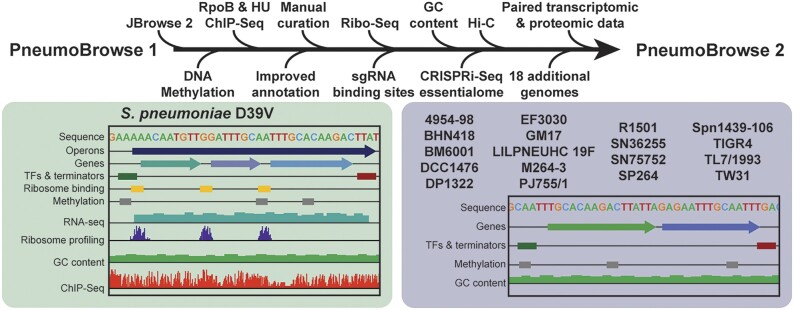
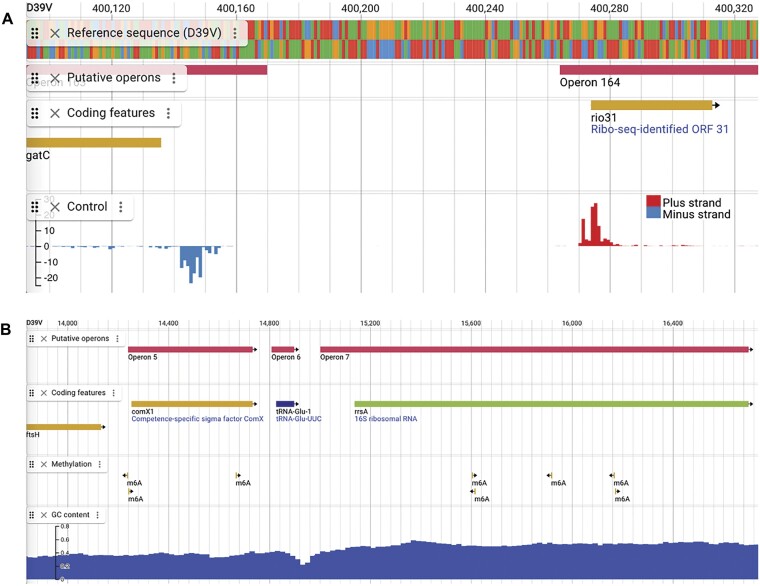
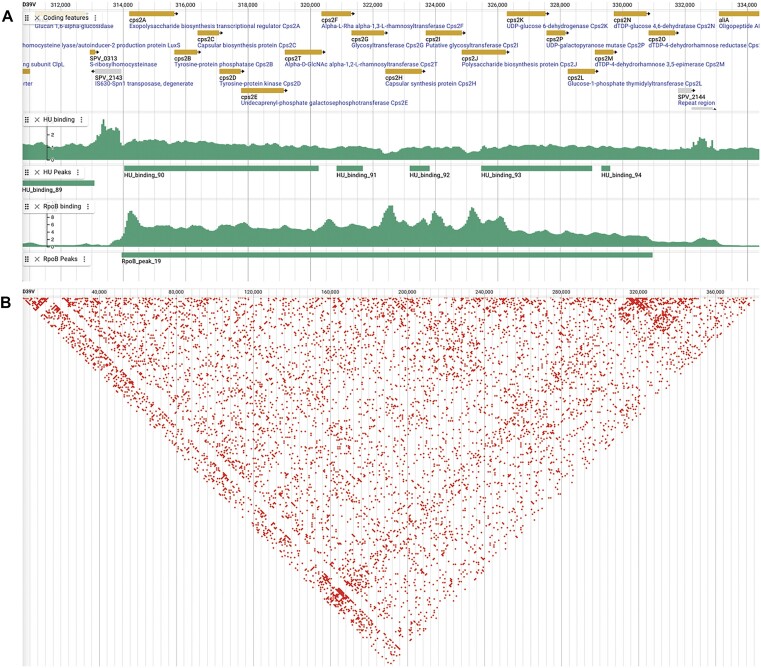
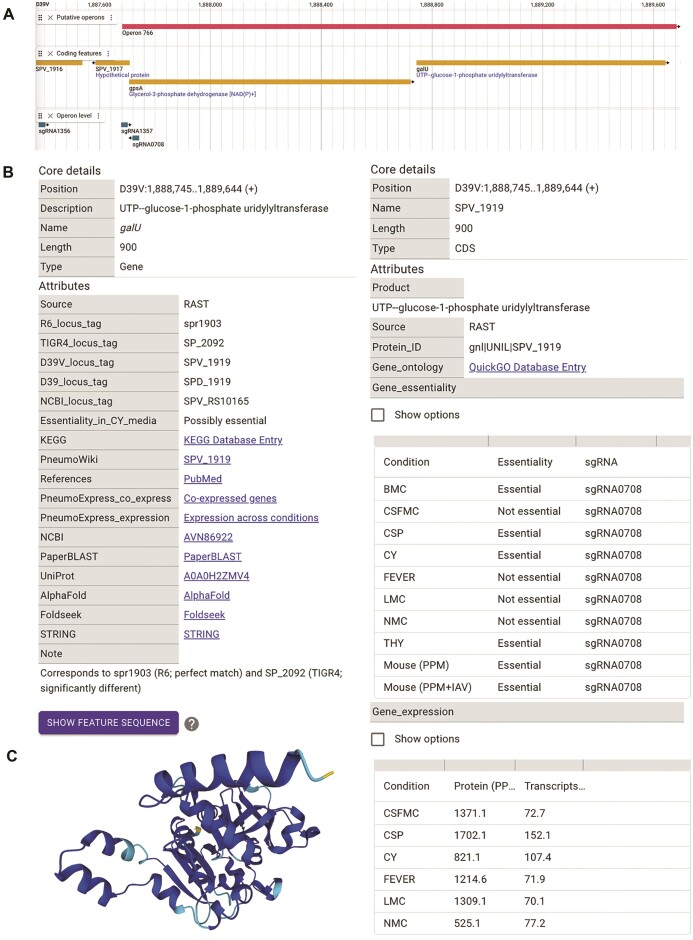
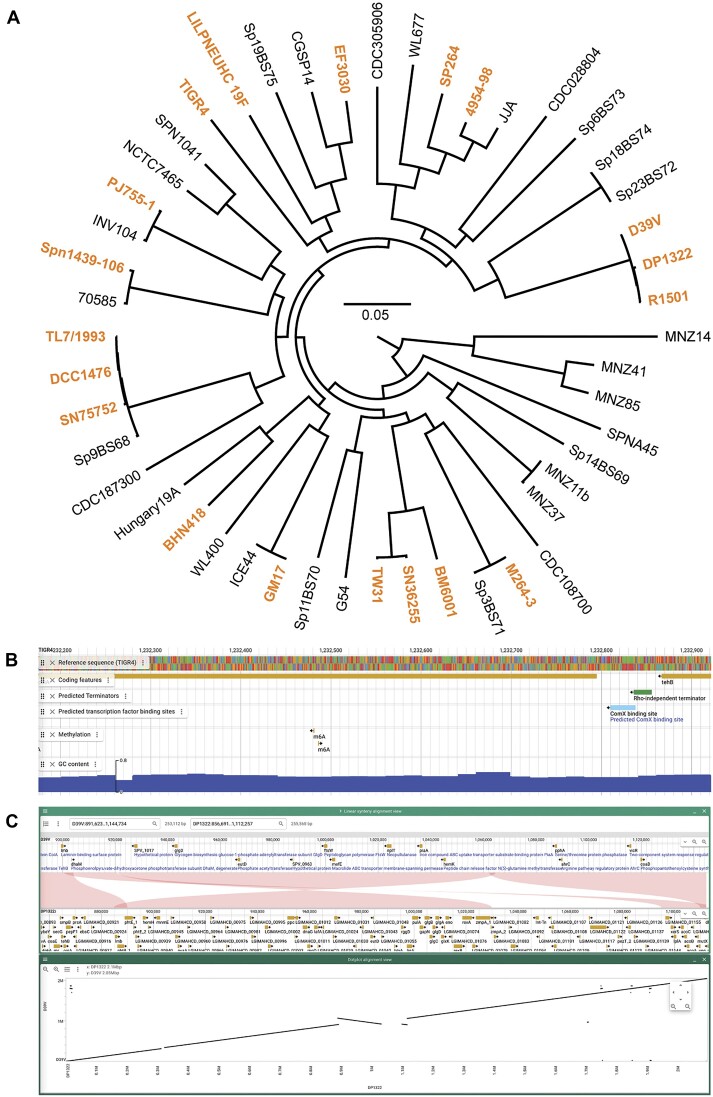
Streptococcus pneumoniae is an opportunistic human pathogen responsible for high morbidity and mortality rates. Extensive genome sequencing revealed its large pangenome, serotype diversity, and provided insight into genome dynamics. However, functional genome analysis has lagged behind, as that requires detailed and time-consuming manual curation of genome annotations and integration of genomic and phenotypic data. To remedy this, PneumoBrowse was presented in 2018, a user-friendly interactive online platform, which provided the detailed annotation of the S. pneumoniae D39V genome, alongside transcriptomic data. Since 2018, many new studies on S. pneumoniae genome biology and protein functioning have been performed. Here, we present PneumoBrowse 2 (https://veeninglab.com/pneumobrowse), fully rebuilt in JBrowse 2. We updated annotations for transcribed and transcriptional regulatory features in the D39V genome. We added genome-wide data tracks for high-resolution chromosome conformation capture (Hi-C) data, chromatin immunoprecipitation coupled to high-throughput sequencing (ChIP-Seq), ribosome profiling, CRISPRi-seq gene essentiality data and more. Additionally, we included 18 phylogenetically diverse S. pneumoniae genomes and their annotations. By providing easy access to diverse high-quality genome annotations and links to other databases (including UniProt and AlphaFold), PneumoBrowse 2 will further accelerate research and development into preventive and treatment strategies, through increased understanding of the pneumococcal genome.
Overview
The claims and statistics of this paper haven’t been checked yet.
Run the check — free, no account needed. It reads the open-access text and checks the sources it cites.
Integrity signals
Registry
Cites
Statistics
Figures
Verification
Claims the paper makes
The claims and statistics of this paper haven’t been checked yet.
Run the check — free, no account needed. It reads the open-access text and checks the sources it cites.
Self-check
Percentages, sums and reported differences re-computed from the paper’s own numbers.
The self-check needs the paper’s full text.
Citations
Cites
Highly accurate protein structure prediction with AlphaFold
Jumper, J., Evans, R., Pritzel, A., Green, T., Figurnov, M., Ronneberger, O., Tunyasuvunakool, K., Bates, R., Žídek, A., Potapenko, A., et al. (2021) · Nature · doi:10.1038/s41586-021-03819-2 · Cited by 43,764
KEGG for taxonomy-based analysis of pathways and genomes
Kanehisa, M., Furumichi, M., Sato, Y., Kawashima, M., & Ishiguro-Watanabe, M. (2023) · Nucleic Acids Research · doi:10.1093/nar/gkac963 · Cited by 5,833
Fast and accurate protein structure search with Foldseek
van Kempen, M., Kim, S. S., Tumescheit, C., Mirdita, M., Lee, J., Gilchrist, C. L. M., Söding, J., & Steinegger, M. (2022) · doi:10.1101/2022.02.07.479398 · Cited by 2,598
Fast and accurate protein structure search with Foldseek
van Kempen, M., Kim, S. S., Tumescheit, C., Mirdita, M., Lee, J., Gilchrist, C. L. M., Söding, J., & Steinegger, M. (2024) · Nature Biotechnology · doi:10.1038/s41587-023-01773-0 · Cited by 2,596
RegPrecise 3.0–a resource for genome-scale exploration of transcriptional regulation in bacteria
Novichkov, P. S., Kazakov, A. E., Ravcheev, D. A., Leyn, S. A., Kovaleva, G. Y., Sutormin, R. A., Kazanov, M. D., Riehl, W., Arkin, A. P., Dubchak, I., et al. (2013) · BMC Genomics · doi:10.1186/1471-2164-14-745 · Cited by 451
Tørresen, O. K., Star, B., Mier, P., Andrade-Navarro, M. A., Bateman, A., Jarnot, P., Gruca, A., Grynberg, M., Kajava, A. V., Promponas, V. J., et al. (2019) · Nucleic Acids Research · doi:10.1093/nar/gkz841 · Cited by 347
Gray, T., Storz, G., & Papenfort, K. (2022) · Journal of Bacteriology · doi:10.1128/jb.00341-21 · Cited by 71
Research works printed but not linked: 78
- Troeger, 2018, Estimates of the global, regional, and national morbidity, mortality, and aetiologies of lower respiratory infections in 195 countries, 1990–2016: a systematic analysis for the Global Burden of Disease Study 2016, Lancet Infect. Dis., 18, 1191, 10.1016/S1473-3099(18)30310-4 · DOI
- Weiser, 2018, Streptococcus pneumoniae: transmission, colonization and invasion, Nat. Rev. Micro., 16, 355, 10.1038/s41579-018-0001-8 · DOI
- GBD 2021 Lower Respiratory Infections and Antimicrobial Resistance Collaborators, 2024, Global, regional, and national incidence and mortality burden of non-COVID-19 lower respiratory infections and aetiologies, 1990 –2021: a systematic analysis from the Global Burden of Disease Study 2021, Lancet Infect. Dis., 3099, 974
- Avery, 1944, Studies on the chemical nature of the substance inducing transformation of pneumococcal types: induction of transformation by a desoxyribonucleic acid fraction isolated from pneumococcus type III, J. Exp. Med., 79, 2, 10.1084/jem.79.2.137 · DOI · Paper page
- Slager, 2018, Deep genome annotation of the opportunistic human pathogen Streptococcus pneumoniae D39, Nucleic Acids Res., 46, 9971
- Aprianto, 2018, High-resolution analysis of the pneumococcal transcriptome under a wide range of infection-relevant conditions, Nucleic Acids Res., 46, 9990
- Slager, 2019, Refining the pneumococcal competence regulon by RNA sequencing, J. Bacteriol., 201, e0078-18, 10.1128/JB.00780-18 · DOI
- Aprianto, 2016, Time-resolved dual RNA-seq reveals extensive rewiring of lung epithelial and pneumococcal transcriptomes during early infection, Genome Biol., 17, 198, 10.1186/s13059-016-1054-5 · DOI
- Sinha, 2019, Redefining the small regulatory RNA transcriptome in Streptococcus pneumoniae serotype 2 strain D39, J. Bacteriol., 201, e00764-18, 10.1128/JB.00764-18 · DOI
- Tsui, 2010, Identification and characterization of noncoding small RNAs in Streptococcus pneumoniae serotype 2 strain D39, J. Bacteriol., 192, 264, 10.1128/JB.01204-09 · DOI
- Ng, 2003, Transcriptional regulation and signature patterns revealed by microarray analyses of Streptococcus pneumoniae R6 challenged with sublethal concentrations of translation inhibitors, J. Bacteriol., 185, 359, 10.1128/JB.185.1.359-370.2003 · DOI
- Liu, 2021, Exploration of bacterial bottlenecks and Streptococcus pneumoniae pathogenesis by CRISPRi-Seq, Cell Host Microbe, 29, 107, 10.1016/j.chom.2020.10.001 · DOI
- Liu, 2017, High-throughput CRISPRi phenotyping identifies new essential genes in Streptococcus pneumoniae, Mol. Syst. Biol., 13, 931, 10.15252/msb.20167449 · DOI
- Laczkovich, 2022, Discovery of unannotated small open reading frames in Streptococcus pneumoniae D39 involved in quorum sensing and virulence using ribosome profiling, mBio, 13, e0124722, 10.1128/mbio.01247-22 · DOI
- Diesh, 2023, JBrowse 2: a modular genome browser with views of synteny and structural variation, Genome Biol., 24, 74, 10.1186/s13059-023-02914-z · DOI
- Tettelin, 2001, Complete genome sequence of a virulent isolate of Streptococcus pneumoniae, Science (1979), 293, 498
- Vijayakumar, 1986, Cloning and physical characterization of chromosomal conjugative elements in streptococci, J. Bacteriol., 166, 972, 10.1128/jb.166.3.972-977.1986 · DOI
- Dang-Van, 1978, Chloramphenicol resistance in Streptococcus pneumoniae: enzymatic acetylation and possible plasmid linkage, Antimicrob. Agents Chemother., 13, 577, 10.1128/AAC.13.4.577 · DOI
- Collins, 2015, First human challenge testing of a pneumococcal vaccine: double-blind randomized controlled trial, Am. J. Respir. Crit. Care Med., 192, 853, 10.1164/rccm.201503-0542OC · DOI
- Dula, 2023, Effect of 13-valent pneumococcal conjugate vaccine on experimental carriage of Streptococcus pneumoniae serotype 6B in Blantyre, Malawi: a randomised controlled trial and controlled human infection study, Lancet Microbe., 4, e683, 10.1016/S2666-5247(23)00178-7 · DOI
- Ali, 2021, Extracellular pneumococcal serine proteases affect nasopharyngeal colonization, Front. Cell. Infect. Microbiol., 10, 613467, 10.3389/fcimb.2020.613467 · DOI
- Gallay, 2021, CcrZ is a pneumococcal spatiotemporal cell cycle regulator that interacts with FtsZ and controls DNA replication by modulating the activity of DnaA, Nat. Microbiol., 6, 1175, 10.1038/s41564-021-00949-1 · DOI
- Domenech, 2018, Antibiotic-induced cell chaining triggers pneumococcal competence by reshaping quorum sensing to autocrine-like signaling, Cell Rep., 25, 2390, 10.1016/j.celrep.2018.11.007 · DOI
- Clark, 2012, Characterization of DNA methyltransferase specificities using single-molecule, real-time DNA sequencing, Nucleic Acids Res., 40, e29, 10.1093/nar/gkr1146 · DOI
- Wick, 2017, Unicycler: resolving bacterial genome assemblies from short and long sequencing reads, PLoS Comput. Biol., 13, e1005595, 10.1371/journal.pcbi.1005595 · DOI
- Seemann, 2014, Prokka: rapid prokaryotic genome annotation, Bioinformatics, 30, 2068, 10.1093/bioinformatics/btu153 · DOI
- Hyatt, 2010, Prodigal: prokaryotic gene recognition and translation initiation site identification, BMC Bioinf., 11, 119, 10.1186/1471-2105-11-119 · DOI
- Laslett, 2004, ARAGORN, a program to detect tRNA genes and tmRNA genes in nucleotide sequences, Nucleic Acids Res., 32, 11, 10.1093/nar/gkh152 · DOI
- Kolbe, 2011, Fast filtering for RNA homology search, Bioinformatics, 27, 3102, 10.1093/bioinformatics/btr545 · DOI
- Bland, 2007, CRISPR Recognition Tool (CRT): a tool for automatic detection of clustered regularly interspaced palindromic repeats, BMC Bioinf., 8, 209, 10.1186/1471-2105-8-209 · DOI
- Finn, 2011, HMMER web server: interactive sequence similarity searching, Nucleic Acids Res., 39, W29, 10.1093/nar/gkr367 · DOI · Paper page
- Kingsford, 2007, Rapid, accurate, computational discovery of Rho-independent transcription terminators illuminates their relationship to DNA uptake, Genome Biol., 8, R22, 10.1186/gb-2007-8-2-r22 · DOI
- Grant, 2011, FIMO: scanning for occurrences of a given motif, Bioinformatics, 27, 1017, 10.1093/bioinformatics/btr064 · DOI · Paper page
- Bailey, 2015, The MEME suite, Nucleic Acids Res., 43, W39, 10.1093/nar/gkv416 · DOI
- Huerta-Cepas, 2019, EggNOG 5.0: a hierarchical, functionally and phylogenetically annotated orthology resource based on 5090 organisms and 2502 viruses, Nucleic Acids Res., 47, D309, 10.1093/nar/gky1085 · DOI
- Cantalapiedra, 2021, eggNOG-mapper v2: functional annotation, orthology assignments, and domain prediction at the metagenomic scale, Mol. Biol. Evol., 38, 5825, 10.1093/molbev/msab293 · DOI
- Ashburner, 2000, Gene ontology: tool for the unification of biology, Nat. Genet., 25, 25, 10.1038/75556 · DOI · Paper page
- The Gene Ontology Consortium, 2023, The Gene Ontology knowledgebase in 2023, Genetics, 224, iyad031, 10.1093/genetics/iyad031 · DOI
- Darling, 2010, progrssiveMauve: multiple genome alignment with gene gain, loss and rearrangement, PLoS One, 5, e11147, 10.1371/journal.pone.0011147 · DOI · Paper page
- Antic, 2017, Gene acquisition by a distinct Pphyletic group within Streptococcus pneumoniae promotes adhesion to the ocular epithelium, mSphere, 2, e00213-17, 10.1128/mSphere.00213-17 · DOI
- Croucher, 2015, Rapid phylogenetic analysis of large samples of recombinant bacterial whole genome sequences using Gubbins, Nucleic Acids Res., 43, e15, 10.1093/nar/gku1196 · DOI
- Price, 2009, FastTree: computing large minimum evolution trees with profiles instead of a distance matrix, Mol. Biol. Evol., 26, 1641, 10.1093/molbev/msp077 · DOI · Paper page
- Kille, 2023, Minmers are a generalization of minimizers that enable unbiased local Jaccard estimation, Bioinformatics, 39, btad512, 10.1093/bioinformatics/btad512 · DOI
- Buels, 2016, JBrowse: a dynamic web platform for genome visualization and analysis, Genome Biol., 17, 66, 10.1186/s13059-016-0924-1 · DOI
- Mercy, 2019, RocS drives chromosome segregation and nucleoid protection in Streptococcus pneumoniae, Nat. Microbiol., 4, 1661, 10.1038/s41564-019-0472-z · DOI
- Hu, 2023, A novel aquaporin subfamily imports oxygen and contributes to pneumococcal virulence by controlling the production and release of virulence factors, mBio, 12, e01309
- Wang, 2020, Molecular determinants of substrate selectivity of a pneumococcal Rgg-regulated peptidase-containing ABC transporter, mBio, 11, e02502-19, 10.1128/mBio.02502-19 · DOI
- Hu, 2023, Identification and characterization of negative regulators of Rgg1518 quorum sensing in Streptococcus pneumoniae, J. Bacteriol., 205, e0008723, 10.1128/jb.00087-23 · DOI
- The UniProt Consortium, 2021, UniProt: the universal protein knowledgebase in 2021, Nucleic Acids Res., 49, D480, 10.1093/nar/gkaa1100 · DOI · Paper page
- Zhi, 2018, Rgg-Shp regulators are important for pneumococcal colonization and invasion through their effect on mannose utilization and capsule synthesis, Sci. Rep., 8, 6369, 10.1038/s41598-018-24910-1 · DOI
- Cuevas, 2017, A novel streptococcal cell–cell communication peptide promotes pneumococcal virulence and biofilm formation, Mol. Microbiol., 105, 554, 10.1111/mmi.13721 · DOI
- Halfmann, 2007, Identification of the genes directly controlled by the response regulator CiaR in Streptococcus pneumoniae: five out of 15 promoters drive expression of small non-coding RNAs, Mol. Microbiol., 66, 110, 10.1111/j.1365-2958.2007.05900.x · DOI
- Manso, 2014, A random six-phase switch regulates pneumococcal virulence via global epigenetic changes, Nat. Commun., 5, 5055, 10.1038/ncomms6055 · DOI
- Dame, 2020, Chromosome organization in bacteria: mechanistic insights into genome structure and function, Nat. Rev. Genet., 21, 227, 10.1038/s41576-019-0185-4 · DOI
- Guo, 2012, Prediction of genomic islands in three bacterial pathogens of pneumonia, Int. J. Mol. Sci., 13, 3134, 10.3390/ijms13033134 · DOI
- Varadi, 2022, AlphaFold Protein Structure Database: massively expanding the structural coverage of protein-sequence space with high-accuracy models, Nucleic Acids Res., 50, D439, 10.1093/nar/gkab1061 · DOI · Paper page
- Szklarczyk, 2023, The STRING database in 2023: protein-protein association networks and functional enrichment analyses for any sequenced genome of interest, Nucleic Acids Res., 51, D638, 10.1093/nar/gkac1000 · DOI · Paper page
- Price, 2017, PaperBLAST: text mining papers for Information about homologs, Msystems, 2, e00039, 10.1128/mSystems.00039-17 · DOI
- Lanie, 2007, Genome sequence of Avery's virulent serotype 2 strain D39 of Streptococcus pneumoniae and comparison with that of unencapsulated laboratory strain R6, J. Bacteriol., 189, 38, 10.1128/JB.01148-06 · DOI
- Sanchez, 2010, The pneumococcal serine-rich repeat protein is an intraspecies bacterial adhesin that promotes bacterial aggregation in vivo and in biofilms, PLoS Pathog., 6, 33, 10.1371/journal.ppat.1001044 · DOI
- Håvarstein, 1995, An unmodified heptadecapeptide pheromone induces competence for genetic transformation in Streptococcus pneumoniae, Proc. Natl. Acad. Sci. USA, 92, 11140, 10.1073/pnas.92.24.11140 · DOI
- Achaz, 2003, Associations between inverted repeats and the structural evolution of bacterial genomes, Genetics, 164, 1279, 10.1093/genetics/164.4.1279 · DOI
- Baptista, 2018, Assembly of highly repetitive genomes using short reads: the genome of discrete typing unit III Trypanosoma cruzi strain 231, Microb. Genom., 4, e000156
- Jensch, 2010, PavB is a surface-exposed adhesin of Streptococcus pneumoniae contributing to nasopharyngeal colonization and airways infections, Mol. Microbiol., 77, 22, 10.1111/j.1365-2958.2010.07189.x · DOI
- Schoch, 2020, NCBI Taxonomy: a comprehensive update on curation, resources and tools, Database, 2020, baaa062, 10.1093/database/baaa062 · DOI · Paper page
- Herson, 2024, The Genome Explorer genome browser, Msystems, 9, e00267-24, 10.1128/msystems.00267-24 · DOI
- Sayers, 2022, Database resources of the national center for biotechnology information, Nucleic Acids Res., 50, D20, 10.1093/nar/gkab1112 · DOI · Paper page
- Katz, 2022, The Sequence Read Archive: a decade more of explosive growth, Nucleic Acids Res., 50, D387, 10.1093/nar/gkab1053 · DOI · Paper page
- Gibson, 2022, The acquisition of clinically relevant amoxicillin resistance in Streptococcus pneumoniae requires ordered horizontal gene transfer of four loci, PLoS Pathog., 18, e101727, 10.1371/journal.ppat.1010727 · DOI
- Gherardi, 2000, Major related sets of antibiotic-resistant pneumococci in the United States as determined by pulsed-field gel electrophoresis and pbp1a-pbp2b-pbp2x-dhf restriction profiles, J. Infect. Dis., 181, 216, 10.1086/315194 · DOI
- Browall, 2014, Intraclonal variations among streptococcus pneumoniae isolates influence the likelihood of invasive disease in children, J. Infect. Dis., 209, 377, 10.1093/infdis/jit481 · DOI
- Sá-Leão, 2022, Carriage of internationally spread clones of Streptococcus pneumoniae with unusual drug resistance patterns in children attending day care centers in Lisbon, Portugal, J. Infect. Dis., 182, 1153, 10.1086/315813 · DOI
- Andersson, 1983, Identification of an active disaccharide unit of a glycoconjugate receptor for pneumococci attaching to human pharyngeal epithelial cells, J. Exp. Med., 158, 559, 10.1084/jem.158.2.559 · DOI
- McGee, 2001, Nomenclature of major antimicrobial-resistant clones of Streptococcus pneumoniae defined by the pneumococcal molecular epidemiology network, J. Clin. Microbiol., 39, 2565, 10.1128/JCM.39.7.2565-2571.2001 · DOI
- Enright, 1998, A multilocus sequence typing scheme for Streptococcus pneumoniae?: identification of clones associated with serious invasive disease, Microbiology, 144, 3049, 10.1099/00221287-144-11-3049 · DOI
- Henriques Normark, 2001, Dynamics of penicillin-susceptible clones in invasive pneumococcal disease, J. Infect. Dis., 184, 861, 10.1086/323339 · DOI
- Dagkessamanskaia, 2004, Interconnection of competence, stress and CiaR regulons in Streptococcus pneumoniae?: competence triggers stationary phase autolysis of ciaR mutant cells, Mol. Microbiol., 51, 1071, 10.1111/j.1365-2958.2003.03892.x · DOI
- Tamayo, 1999, Dissemination of a chloramphenicol-and tetracycline-resistant but penicillin-susceptible invasive clone of serotype 5 Streptococcus pneumoniae in Colombia, J. Clin. Microbiol., 37, 2337, 10.1128/JCM.37.7.2337-2342.1999 · DOI
Metadata
- Authors
- Janssen, A. B., Gibson, P. S., Bravo, A. M., de Bakker, V., Slager, J., & Veening, J.-W.
- Affiliations
- University of Lausanne (CH)
- University Medical Center Groningen (NL)
- Corresponding author
- Veening, Jan-Willem
- ORCID
- Venue
- Nucleic Acids Research
- Publisher
- Oxford University Press (OUP)
- Published
- 2024-10-22
- Volume
- 53
- Issue
- D1
- Pages
- D839-D851
- ISSN
- 0305-1048 (ISSN-L)
- 1362-4962
- PMC
- PMC11701578
- OpenAlex
- W4403646540
- Cited by
- 18
- References
- 7
- Citations by year
- 2026: 8 · 2025: 10
- FWCI
- 2.44
- Type
- journal article
- Language
- en
- Open access
- gold
- doi.org
- Licence
- Locations
- Nucleic Acids Research (publishedVersion, cc-by)
- bioRxiv (Cold Spring Harbor Laboratory) (acceptedVersion, cc-by)
- PubMed Central (publishedVersion, cc-by)
- PubMed (publishedVersion)
- SERVAL (Université de Lausanne) (submittedVersion, cc-by)
- IRIS (submittedVersion, cc-by)
- University of Groningen research database (University of Groningen / Centre for Information Technology) (submittedVersion, cc-by)
- Funders
- Swiss National Science Foundation (TMPFP3_210 202, 310 030_192 517, 310 030_200, 51NF40_180 541 792)
- Faculty of Biology and Medicine of the University of Lausanne
- Topics
- Life Sciences › Biochemistry, Genetics and Molecular Biology › Molecular Biology › Genomics and Phylogenetic Studies
- Health Sciences › Medicine › Epidemiology › Pneumonia and Respiratory Infections
- Life Sciences › Biochemistry, Genetics and Molecular Biology › Genetics › Bacterial Genetics and Biotechnology
- Keywords
- Streptococcus pneumoniae, genome annotation, multi-omics integration, JBrowse, Hi-C, ChIP-seq, ribosome profiling, gene essentiality, transcriptional regulation, pan-genome, serotype diversity
- MeSH terms
- Multiomics, Humans, Software, Streptococcus pneumoniae, Genome, Bacterial, Genomics, Databases, Genetic, Molecular Sequence Annotation
About these checks
Registry, retraction, Cites and statistics results are computed, not judged, with one exception: a printed reference that no index lists is read once by a model before it counts as a citation error. Claims are extracted by a model and kept only when their quote appears verbatim in the text; each cited source is then checked, with a model’s help, for whether it says what the claim relies on. Those verdicts can be wrong — read the claim’s quote and the cited source before relying on one.
Statistics and arithmetic are recomputed, not judged.
Confidence bands are shown only for fields calibrated on our annotated test set. None is calibrated yet, so no band is shown.
What counts as a claim ›How we measure confidence ›How we check this ›
Are you an author, or do you see a problem with this page? Request a review
