

VirusMINT: a viral protein interaction database
Open accessThe DOI matches its Crossref record; 13 of the 13 references it cites were found in a registry or an index.
Abstract
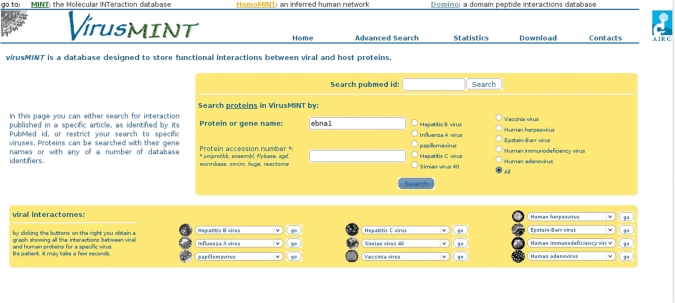
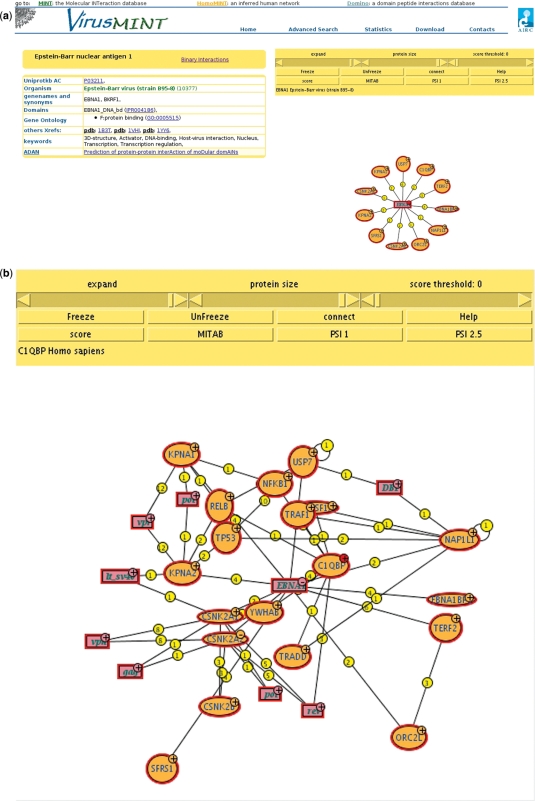
Understanding the consequences on host physiology induced by viral infection requires complete understanding of the perturbations caused by virus proteins on the cellular protein interaction network. The VirusMINT database (http://mint.bio.uniroma2.it/virusmint/) aims at collecting all protein interactions between viral and human proteins reported in the literature. VirusMINT currently stores over 5000 interactions involving more than 490 unique viral proteins from more than 110 different viral strains. The whole data set can be easily queried through the search pages and the results can be displayed with a graphical viewer. The curation effort has focused on manuscripts reporting interactions between human proteins and proteins encoded by some of the most medically relevant viruses: papilloma viruses, human immunodeficiency virus 1, Epstein-Barr virus, hepatitis B virus, hepatitis C virus, herpes viruses and Simian virus 40.
Overview
The claims and statistics of this paper haven’t been checked yet.
Free: it reads the open-access text and checks the first 5 claims that cite a source we can check. Create a free account to check every claim.
Integrity signals
Registry
Cites
Statistics
Figures
Verification
Claims the paper makes
The claims and statistics of this paper haven’t been checked yet.
Free: it reads the open-access text and checks the first 5 claims that cite a source we can check. Create a free account to check every claim.
Claims other papers make about this one
Each is checked against this paper’s own text: does it say what the citing paper says it does?
The cited source says what the claim attributes to it.
In the citing paper
“Virus-centric repositories have also been established, including ViralZone(97) and VirusMINT (98), as well as GPS-Prot, which focuses on HIV-host interactions (99).”
From The Impact of Mass Spectrometry–Based Proteomics on Fundamental Discoveries in Virology (2014) · cites this paper as [98]
Self-check
Percentages, sums and reported differences re-computed from the paper’s own numbers.
The self-check needs the paper’s full text.
Citations
Cites
The Universal Protein Resource (UniProt)
Bairoch, A. (2004) · Nucleic Acids Research · doi:10.1093/nar/gki070 · Cited by 3,774
(2011) · SpringerReference · doi:10.1007/springerreference_33432 · Cited by 2,510
MINT: the Molecular INTeraction database
Chatr-aryamontri, A., Ceol, A., Palazzi, L. M., Nardelli, G., Schneider, M. V., Castagnoli, L., & Cesareni, G. (2007) · Nucleic Acids Research · doi:10.1093/nar/gkl950 · Cited by 1,026 · cited 1×
“Protein–protein interactions were manually curated from the literature or imported from other databases: MINT (3), IntAct (4) and HIV-1 Human Protein Interactions Database.”
MethodSelf-citationThe Universal Protein Resource (UniProt)
The UniProt Consortium (2007) · Nucleic Acids Research · doi:10.1093/nar/gkm895 · Cited by 823
IntAct--open source resource for molecular interaction data
Kerrien, S., Alam-Faruque, Y., Aranda, B., Bancarz, I., Bridge, A., Derow, C., Dimmer, E., Feuermann, M., Friedrichsen, A., Huntley, R., et al. (2007) · Nucleic Acids Research · doi:10.1093/nar/gkl958 · Cited by 800 · cited 1×
“Protein–protein interactions were manually curated from the literature or imported from other databases: MINT (3), IntAct (4) and HIV-1 Human Protein Interactions Database.”
Mendelian Inheritance in Man: A Catalog of Human Genes and Genetic Disorders
McKusick, V. A. (1998) · DigitalGeorgetown (Georgetown University Library) · Cited by 681
The Landscape of Human Proteins Interacting with Viruses and Other Pathogens
Dyer, M. D., Murali, T. M., & Sobral, B. W. (2008) · PLoS Pathogens · doi:10.1371/journal.ppat.0040032 · Cited by 331 · cited 1×
“Although cellular protein interaction maps already exist for a few model organisms, and recent efforts have been made in order to compile from public databases viral interactions maps (1), there is currently no resource archiving and publicly providing exhaustive and detailed interaction maps between viral and host pr…”
BackgroundThe minimum information required for reporting a molecular interaction experiment (MIMIx)
Orchard, S., Salwinski, L., Kerrien, S., Montecchi-Palazzi, L., Oesterheld, M., Stümpflen, V., Ceol, A., Chatr-aryamontri, A., Armstrong, J., Woollard, P., et al. (2007) · Nature Biotechnology · doi:10.1038/nbt1324 · Cited by 279 · cited 1×
“Interaction data derived from articles curated according to the IMEx manual were first uploaded in MINT and then reimported in VirusMINT while, in order to rapidly populate VirusMINT with new viral interactions, we also applied a quick curation strategy, conforming to MIMIx standards (6) but without reporting the full…”
MethodSelf-citationBroadening the horizon – level 2.5 of the HUPO-PSI format for molecular interactions
Kerrien, S., Orchard, S., Montecchi-Palazzi, L., Aranda, B., Quinn, A. F., Vinod, N., Bader, G. D., Xenarios, I., Wojcik, J., Sherman, D., et al. (2007) · BMC Biology · doi:10.1186/1741-7007-5-44 · Cited by 266
Self-citationExtraction of protein interaction information from unstructured text using a context-free grammar
Temkin, J. M., & Gilder, M. R. (2003) · Bioinformatics · doi:10.1093/bioinformatics/btg279 · Cited by 186
Cited by
Enrichr: interactive and collaborative HTML5 gene list enrichment analysis tool
Chen, E. Y., Tan, C. M., Kou, Y., Duan, Q., Wang, Z., Meirelles, G. V., Clark, N. R., & Ma’ayan, A. (2013) · BMC Bioinformatics · doi:10.1186/1471-2105-14-128 · Cited by 7,814
“The disease/drugs category has gene set libraries created from the Connectivity Map database [39], GeneSigDB [40], MSigDB [5], OMIM [41], and VirusMINT [42].”
BackgroundMethodThe MIntAct project—IntAct as a common curation platform for 11 molecular interaction databases
Orchard, S., Ammari, M., Aranda, B., Breuza, L., Briganti, L., Broackes-Carter, F., Campbell, N. H., Chavali, G., Chen, C., del-Toro, N., et al. (2014) · Nucleic Acids Research · doi:10.1093/nar/gkt1115 · Cited by 1,831
“A new tagged data subset, Virus, was created to tag the manually curated papers from VirusMINT (25), and supplemented by additional papers containing virus–virus or virus–host interactions already present in the IntAct database.”
MethodSelf-citationRouillard, A. D., Gundersen, G. W., Fernandez, N. F., Wang, Z., Monteiro, C. D., McDermott, M. G., & Ma’ayan, A. (2016) · Database · doi:10.1093/database/baw100 · Cited by 1,515
Global landscape of HIV–human protein complexes
Jäger, S., Cimermancic, P., Gulbahce, N., Johnson, J. R., McGovern, K. E., Clarke, S. C., Shales, M., Mercenne, G., Pache, L., Li, K., et al. (2012) · Nature · doi:10.1038/nature10719 · Cited by 731
Protein-to-protein interactions: Technologies, databases, and algorithms
Cannataro, M., Guzzi, P. H., & Veltri, P. (2010) · ACM Computing Surveys · doi:10.1145/1824795.1824796 · Cited by 620
MINT, the molecular interaction database: 2009 update
Ceol, A., Chatr Aryamontri, A., Licata, L., Peluso, D., Briganti, L., Perfetto, L., Castagnoli, L., & Cesareni, G. (2010) · Nucleic Acids Research · doi:10.1093/nar/gkp983 · Cited by 507
“Finally, all virus–virus and virus–host interactions in MINT are automatically transferred to VirusMINT (http://mint.bio.uniroma2.it/virusmint) (20).”
BackgroundSelf-citationSystems Pharmacology: Network Analysis to Identify Multiscale Mechanisms of Drug Action
Zhao, S., & Iyengar, R. (2012) · Annual Review of Pharmacology and Toxicology · doi:10.1146/annurev-pharmtox-010611-134520 · Cited by 358
“However, the interaction networks require the least amount of knowledge regarding nodes and edges, allowing them to be easily constructed and applied to a variety of problems (6, 17–19).”
BackgroundVirHostNet 2.0: surfing on the web of virus/host molecular interactions data
Guirimand, T., Delmotte, S., & Navratil, V. (2015) · Nucleic Acids Research · doi:10.1093/nar/gku1121 · Cited by 236
“Despite the growing numbers of virus/virus (VV) and VH ppi dataset published in the last 5 years (14), only few other large-scale annotation efforts were reported so far, excepted those performed by Intact (15), VirusMint (16,17) and a new resource, HPIDB (18).”
BackgroundVirusMentha: a new resource for virus-host protein interactions
Calderone, A., Licata, L., & Cesareni, G. (2015) · Nucleic Acids Research · doi:10.1093/nar/gku830 · Cited by 172
“VirusMINT only offered data curated by the MINT curation team.”
BackgroundInfluentialSelf-citation24 hours in the life of HIV-1 in a T cell line
Mohammadi, P., Desfarges, S., Bartha, I., Joos, B., Zangger, N., Muñoz, M., Günthard, H. F., Beerenwinkel, N., Telenti, A., & Ciuffi, A. (2013) · PLoS Pathogens · doi:10.1371/journal.ppat.1003161 · Cited by 155
“Additional databases of HIV-1 host factors [9,10,11,12,13], as well as genes present in HIV-related pathways extracted from Reactome were inspected in a similar fashion [6].”
MethodMairiang, D., Zhang, H., Sodja, A., Murali, T., Suriyaphol, P., Malasit, P., Limjindaporn, T., & Finley, R. L. (2013) · PLoS ONE · doi:10.1371/journal.pone.0053535 · Cited by 149
“Similar to our finding with the mosquito proteins, a significant proportion of the dengue-interacting human proteins (19 out of 47) have been shown to interact with proteins from other viruses (Table S7) [85– 91].”
A comprehensive map of the influenza A virus replication cycle
Matsuoka, Y., Matsumae, H., Katoh, M., Eisfeld, A. J., Neumann, G., Hase, T., Ghosh, S., Shoemaker, J. E., Lopes, T. J. S., Watanabe, T., et al. (2013) · BMC Systems Biology · doi:10.1186/1752-0509-7-97 · Cited by 169
“Several projects have generated open-source, open- access databases of viral genome sequences, structural and interaction data for viral proteins, and host response data (e.g., the Influenza Research Database [15], the Influenza Virus Resource [16], and VirusMINT [17]); or pathway maps of IAV infections (e.g., Reactom…”
BackgroundEnabling a systems biology approach to immunology: focus on innate immunity
Gardy, J. L., Lynn, D. J., Brinkman, F. S. L., & Hancock, R. E. W. (2009) · Trends in Immunology · doi:10.1016/j.it.2009.03.009 · Cited by 136
Dominating Biological Networks
Milenković, T., Memišević, V., Bonato, A., & Pržulj, N. (2011) · PLoS ONE · doi:10.1371/journal.pone.0023016 · Cited by 122
“[15–17] and viral [18–20] pathogens.”
Viral Perturbations of Host Networks Reflect Disease Etiology
Gulbahce, N., Yan, H., Dricot, A., Padi, M., Byrdsong, D., Franchi, R., Lee, D.-S., Rozenblatt-Rosen, O., Mar, J. C., Calderwood, M. A., et al. (2012) · PLoS Computational Biology · doi:10.1371/journal.pcbi.1002531 · Cited by 109
“To explore the role of macromolecular networks in virus-disease associations we collected four categories of biological connections: 1) lists of previously published experimental virus-human proteinprotein [12,13,14] and protein-DNA interactions [2,15,16]; 2) a newly generated dataset of EBV-human and HPV16-human prot…”
MethodSelf-citationParida, P. K., Paul, D., & Chakravorty, D. (2020) · Phytotherapy Research · doi:10.1002/ptr.6868 · Cited by 104
“VirusMint is database of interactions between viral and human proteins (Chatr-aryamontri et al., 2009).”
BackgroundA review on computational systems biology of pathogen–host interactions
DurmuÅŸ, S., Çakır, T., Özgür, A., & Guthke, R. (2015) · Frontiers in Microbiology · doi:10.3389/fmicb.2015.00235 · Cited by 117
“VirusMentha is an extension of a previous tool VirusMINT (Chatr-Aryamontri et al., 2009).”
MethodIntegrating multi-omics to unravel host-microbiome interactions in inflammatory bowel disease
Zhang, Y., Thomas, J. P., Korcsmáros, T., & Gul, L. (2024) · Cell Reports Medicine · doi:10.1016/j.xcrm.2024.101738 · Cited by 104
A Practical Guide To Filtering and Prioritizing Genetic Variants
Dashti, M. J. S., & Gamieldien, J. (2017) · BioTechniques · doi:10.2144/000114492 · Cited by 101
HCVpro: Hepatitis C virus protein interaction database
Kwofie, S. K., Schaefer, U., Sundararajan, V. S., Bajić, V. B., & Christoffels, A. G. (2011) · Infection Genetics and Evolution · doi:10.1016/j.meegid.2011.09.001 · Cited by 95
Unraveling the Web of Viroinformatics: Computational Tools and Databases in Virus Research
Sharma, D., Priyadarshini, P., & Vrati, S. (2014) · Journal of Virology · doi:10.1128/jvi.02027-14 · Cited by 100
A review on host–pathogen interactions: classification and prediction
Sen, R., Nayak, L., & De, R. K. (2016) · European Journal of Clinical Microbiology & Infectious Diseases · doi:10.1007/s10096-016-2716-7 · Cited by 104
“GPS-Prot enables users to quickly generate networks that amalgamate584 both genetic and protein-protein interactions between HIV and its human host, into a single representation.585 586 VirusMint [18] contains protein interactions between viral (papilloma viruses, HIV-1, Epstein-Barr, hepati-587 tis B, hepatitis C, he…”
BackgroundGPS-Prot: A web-based visualization platform for integrating host-pathogen interaction data
Fahey, M. E., Bennett, M. J., Mahon, C., Jäger, S., Pache, L., Kumar, D., Shapiro, A., Rao, K., Chanda, S. K., Craik, C. S., et al. (2011) · BMC Bioinformatics · doi:10.1186/1471-2105-12-298 · Cited by 87
“Another database, VirusMINT [3], contains a collection of litera-ture-curated physical interactions for several viruses, the vast majority corresponding to HIV-1.”
BackgroundMethodInfluentialViRBase: a resource for virus–host ncRNA-associated interactions
Li, Y., Wang, C., Miao, Z., Bi, X., Wu, D., Jin, N., Wang, L., Wu, H., Qian, K., Li, C., et al. (2014) · Nucleic Acids Research · doi:10.1093/nar/gku903 · Cited by 88
“Several viral databases centered on proteins, such as VirusMINT (21), VirHostNet (22), HIV-1 (23) and the PHISTO (24) database, have been recently constructed and have led to a more comprehensive understanding of viral and host protein function in viral infection.”
BackgroundPrediction of Interactions between Viral and Host Proteins Using Supervised Machine Learning Methods
Barman, R. K., Saha, S., & Das, S. (2014) · PLoS ONE · doi:10.1371/journal.pone.0112034 · Cited by 86
“The dataset used were obtained from ‘‘VirusMINT: a viral protein interaction database’’ (ftp:// mint.bio.uniroma2.it/pub/virusmint/MITAB/current/2012-10-26-mint-viruses-binary.mitab26.txt) [17].”
MethodLinking the signaling cascades and dynamic regulatory networks controlling stress responses
Gitter, A., Carmi, M., Barkai, N., & Bar‐Joseph, Z. (2012) · Genome Research · doi:10.1101/gr.138628.112 · Cited by 86
“Recent studies provide information about inputs to the signaling networks for a number of human infections (Chatr-aryamontri et al. 2009; Fu et al. 2009), and corresponding temporal expression data are also available.”
BackgroundSystems biology of kidney diseases
He, C., Chuang, P. Y., Ma’ayan, A., & Iyengar, R. (2011) · Kidney International · doi:10.1038/ki.2011.314 · Cited by 94
“…interactions based on ChIP analyses, 28 protein–protein interactions, 65,66,70,71 metabolic pathway interactions, virus/ host protein interactions, 75 and drug–target interactions 76 to each other to form heterogeneous networks made of different types of nodes and different types of links (Figure…”
BackgroundImmunogenomics and systems biology of vaccines
Buonaguro, L., & Pulendran, B. (2010) · Immunological Reviews · doi:10.1111/j.1600-065x.2010.00971.x · Cited by 79
Neveu, G., Cassonnet, P., Vidalain, P., Rolloy, C., Mendoza, J., Jones, L. M., Tangy, F., Muller, M., Demeret, C., Tafforeau, L., et al. (2012) · Methods · doi:10.1016/j.ymeth.2012.07.029 · Cited by 79
Self-citationProtein‐protein interactions: Making sense of networks via graph‐theoretic modeling
Pržulj, N. (2010) · BioEssays · doi:10.1002/bies.201000044 · Cited by 91
“…as yeast two-hybrid (Y2H) assays [1–7], affinity purification coupled to mass spectrometry (AP/MS) [8–11] and synthetic-lethal and suppressor networks [12], have yielded partial networks for humans [5, 6], microbial [13–15] and viral [16] pathogens, as well as many model organisms [1–4 , 10– 12 ].”
BackgroundBIPS: BIANA Interolog Prediction Server. A tool for protein–protein interaction inference
García-García, J., Schleker, S., Klein‐Seetharaman, J., & Oliva, B. (2012) · Nucleic Acids Research · doi:10.1093/nar/gks553 · Cited by 82
“Template interactions were extracted using the BIANA framework (17) integrating the following 10 databases: DIP (22), HPRD (23), IntAct (24), MINT (25), MPact (26), PHI_base (27), PIG (28), BioGRID (29), BIND (30) and VirusMINT (31).”
MethodHost-pathogen interactome mapping for HTLV-1 and -2 retroviruses
Simonis, N., Rual, J.-F. M., Lemmens, I. H., Boxus, M., Hirozane-Kishikawa, T., Gatot, J., Dricot, A., Hao, T., Vertommen, D., Legros, S., et al. (2012) · Retrovirology · doi:10.1186/1742-4690-9-26 · Cited by 80
“Investigations focused on one or a few genes have identified numerous human factors interacting with HTLV viral proteins, with the results collected in several databases: VirusMINT [7] and VirHostNet [8].”
Self-citationGraphlet-based edge clustering reveals pathogen-interacting proteins
Solava, R. W., Michaels, R. P., & Milenković, T. (2012) · Bioinformatics · doi:10.1093/bioinformatics/bts376 · Cited by 88
“We compare our method to three popular node clustering methods: clique percolation (Palla et al., 2005), greedy modularity optimization (Newman, 2004) and Infomap (Rosvall and Bergstrom, 2008).”
MethodIdentification of FAM111A as an SV40 Host Range Restriction and Adenovirus Helper Factor
Fine, D. A., Rozenblatt–Rosen, O., Padi, M., Korkhin, A., James, R. L., Adelmant, G., Yoon, R., Guo, L., Berrios, C. J., Zhang, Y., et al. (2012) · PLoS Pathogens · doi:10.1371/journal.ppat.1002949 · Cited by 74
“We detected several previously reported interactors of LT including FBXW7 and p53 [19].”
Self-citationMi, T., Merlin, J. C., Deverasetty, S., Gryk, M. R., Bill, T., Brooks, A., Lee, L. Y., Rathnayake, V. R., Ross, C. A., Sargeant, D. P., et al. (2011) · Nucleic Acids Research · doi:10.1093/nar/gkr1189 · Cited by 82
“…through homology databases/searches, a relationship to molecular and cellular function through the source/ target annotation and the use of the Gene Ontology definitions, and a relationship to other proteins in the same biological pathway through protein–protein interaction databases (21,33–37).”
BackgroundThe Impact of Mass Spectrometry–Based Proteomics on Fundamental Discoveries in Virology
Greco, T. M., Diner, B. A., & Cristea, I. M. (2014) · Annual Review of Virology · doi:10.1146/annurev-virology-031413-085527 · Cited by 67
“VirusMINT: a viral protein interaction database.”
MethodNew horizons for antiviral drug discovery from virus–host protein interaction networks
de Chassey, B., Meyniel‐Schicklin, L., Aublin‐Gex, A., André, P., & Lotteau, V. (2012) · Current Opinion in Virology · doi:10.1016/j.coviro.2012.09.001 · Cited by 65
Virus–host interactomes and global models of virus-infected cells
Friedel, C. C., & Haas, J. (2011) · Trends in Microbiology · doi:10.1016/j.tim.2011.07.003 · Cited by 69
A generalized approach to predicting protein-protein interactions between virus and host
Zhou, X., Park, B., Choi, D., & Han, K. (2018) · BMC Genomics · doi:10.1186/s12864-018-4924-2 · Cited by 63
Purification and characterization of HIV–human protein complexes
Jäger, S., Gulbahce, N., Cimermancic, P., Kane, J., He, N., Chou, S., D’Orso, I., Fernandes, J., Jang, G., Frankel, A. D., et al. (2011) · Methods · doi:10.1016/j.ymeth.2010.08.007 · Cited by 58
Protein-protein interactions of human viruses
Goodacre, N., Devkota, P., Bae, E. H., Wuchty, S., & Uetz, P. (2018) · Seminars in Cell and Developmental Biology · doi:10.1016/j.semcdb.2018.07.018 · Cited by 64
“Such a set was then compared to literature-curated PPIs in VirusMint [38] , that were mostly derived from small-scale targeted studies.”
ResultGaramszegi, S., Franzosa, E. A., & Xia, Y. (2013) · PLoS Pathogens · doi:10.1371/journal.ppat.1003778 · Cited by 63
“We collected reports of endogenous (human-human) proteinprotein interactions (PPIs) from the IntAct database, and reports of exogenous (human-virus) PPIs from the IntAct and VirusMINT databases [41,42].”
BackgroundDetermining minimum set of driver nodes in protein-protein interaction networks
Zhang, X.-F., Ou-Yang, L., Zhu, Y., Wu, M., & Dai, D. (2015) · BMC Bioinformatics · doi:10.1186/s12859-015-0591-3 · Cited by 60
“We use the 704 proteins that interact with at least one human viruse from the Molecular INTeraction (MINT) database [43].”
MethodBraun, P. (2012) · PROTEOMICS · doi:10.1002/pmic.201100598 · Cited by 56
“The growing knowledge is extracted from the literature (Orchard, this issue) and made available to the sci-entific community by specialized databases [51–59].”
MethodArnold, R. R., Boonen, K., Sun, M., & Kim, P. M. (2012) · Methods · doi:10.1016/j.ymeth.2012.06.011 · Cited by 60
Molecular principles of human virus protein–protein interactions
Halehalli, R. R., & Nagarajaram, H. A. (2015) · Bioinformatics · doi:10.1093/bioinformatics/btu763 · Cited by 57
Protein-Protein Interaction Databases
Szklarczyk, D., & Jensen, L. J. (2015) · Methods in molecular biology · doi:10.1007/978-1-4939-2425-7_3 · Cited by 71
Huo, T., Liu, W., Guo, Y., Yang, C., Lin, J., & Rao, Z. (2015) · BMC Bioinformatics · doi:10.1186/s12859-015-0535-y · Cited by 58
“We also attempted to use more databases such as virusmint [52], virhostnet [53], and STRING [54], while the number of PPIs would not be increased due to the overlaps and redundancy among the databases.”
MethodA functional map of HIV-host interactions in primary human T cells
Hiatt, J. B., Hultquist, J. F., McGregor, M., Bouhaddou, M., Leenay, R. T., Simons, L. M., Young, J. M., Haas, P., Roth, T. L., Tobin, V. R., et al. (2022) · Nature Communications · doi:10.1038/s41467-022-29346-w · Cited by 57
Upadhyay, R., Phlypo, R., Saini, R., & Liwicki, M. (2024) · IEEE Access · doi:10.1109/access.2024.3478805 · Cited by 55
“…same objects in different domains (source task) [104] APID [105], IntAct [106], VirusMentha [107], UniProt [108], DeNovo SLIM [109] , Virus-MINT [110], HPIDB [111] [112] bioaccumulation parameters prediction KOW, FBM, FBA, FBC [112] predicting multiple parameters (MTL) META-LEARNING + TRANSFER…”
BackgroundCao, L., Zhang, P., Lu, X., Wang, G., Wang, Z., Zhang, Q.-J., Zhang, X., Wei, X., Mei, F.-J., Li, W., et al. (2020) · International Journal of Molecular Sciences · doi:10.3390/ijms21010351 · Cited by 53
“String predicts the interaction between proteins using experimental data, information from other databases, and bioinformatic methods [35].”
MethodViruses and Interactomes in Translation
Meyniel‐Schicklin, L., de Chassey, B., André, P., & Lotteau, V. (2012) · Molecular & Cellular Proteomics · doi:10.1074/mcp.m111.014738 · Cited by 54
“Several databases have been developed with the aim of integrating high-quality virus-virus and virus-host protein-protein interaction data such as VirHostNet (18) and VirusMint (19).”
MethodConcept and application of a computational vaccinology workflow
Söllner, J., Heinzel, A., Summer, G., Fechete, R., Stipkovits, L., Szathmáry, S., & Mayer, B. (2010) · Immunome Research · doi:10.1186/1745-7580-6-s2-s7 · Cited by 52
“These given records were further enriched by interaction data specified in the virusMINT database [33].”
MethodSARS-CoV-2-human protein-protein interaction network
Khorsand, B., Savadi, A., & Naghibzadeh, M. (2020) · Informatics in Medicine Unlocked · doi:10.1016/j.imu.2020.100413 · Cited by 52
“For constructing AIV-human PPI network, 11040 AIV-human PPIs were extracted from STRING [42], Intact [40], DIP [43], VirusMINT [41], and BioGRID [44].”
Biological function through network topology: a survey of the human diseasome
Janjić, V., & Pržulj, N. (2012) · Briefings in Functional Genomics · doi:10.1093/bfgp/els037 · Cited by 59
“Network data on physical PPIs for many model organisms [14–20], humans [21,22], bacteria [23–25] and viruses [26–28] are obtained using high-throughput screens, such as yeast two-hybrid (Y2H) assays [14–17, 21, 22, 29 ] and affinity affinity Data for physical molecular interaction are publicly…”
MethodVirus–host interactomes — antiviral drug discovery
Ma‐Lauer, Y., Lei, J., Hilgenfeld, R., & von Brunn, A. (2012) · Current Opinion in Virology · doi:10.1016/j.coviro.2012.09.003 · Cited by 53
“Current Opinion in Virology 2012, 2:614–621 Conclusions Integrated viral ORFeome databases designed to generate versatile collections of viral ORFs [60], viral [61], and virus–host protein [62] interaction databases are extremely valuable tools for the comparison and analysis of an increasing several virus interactome…”
Prediction and Comparison ofSalmonellaHuman andSalmonellaArabidopsisInteractomes
Schleker, S., García-García, J., Klein‐Seetharaman, J., & Oliva, B. (2012) · Chemistry & Biodiversity · doi:10.1002/cbdv.201100392 · Cited by 47
PROGRESS IN COMPUTATIONAL STUDIES OF HOST–PATHOGEN INTERACTIONS
Zhou, H., Jin, J., & Wong, L. (2012) · Journal of Bioinformatics and Computational Biology · doi:10.1142/s0219720012300018 · Cited by 48
Corley, M. J., Dye, C. K., D’Antoni, M. L., Byron, M. M., Yo, K. L.-A., Lum‐Jones, A., Nakamoto, B. K., Valcour, V., SahBandar, I. N., Shikuma, C. M., et al. (2016) · Scientific Reports · doi:10.1038/srep33310 · Cited by 51
Structure homology and interaction redundancy for discovering virus–host protein interactions
de Chassey, B., Meyniel‐Schicklin, L., Aublin‐Gex, A., Navratil, V., Chantier, T., André, P., & Lotteau, V. (2013) · EMBO Reports · doi:10.1038/embor.2013.130 · Cited by 46
“Several databases are integrating these data spread in the literature [1–2].”
Tekir, S. D., & Ülgen, K. Ö. (2012) · Biotechnology Journal · doi:10.1002/biot.201200110 · Cited by 48
Janjić, V., & Pržulj, N. (2012) · Molecular BioSystems · doi:10.1039/c2mb25230a · Cited by 46
Das, J. K., Tradigo, G., Veltri, P., Guzzi, P. H., & Roy, S. (2021) · Briefings in Bioinformatics · doi:10.1093/bib/bbaa420 · Cited by 47
“Such interactions are usually modelled by using graphs and stored in a growing number of databases, such as Virus Mint [29], String Viruses [30], HpiDB [31], Virus Mentha [32] and VirHostNet [33].”
BackgroundHistone Deacetylases in Herpesvirus Replication and Virus-Stimulated Host Defense
Guise, A., Budayeva, H., Diner, B., & Cristea, I. (2013) · Viruses · doi:10.3390/v5071607 · Cited by 43
“Curated protein databases, including the HIV-1 Human Protein Interactions Database and VirusMINT, further integrate knowledge of viral protein interactions [131] [132] [133] [134] .”
MethodCarter, C. (2011) · Journal of Pathogens · doi:10.4061/2011/128318 · Cited by 45
“YWHAE 14-3-3 protein epsilon Hepatitis C [97] : L : Epstein-Barr [119]”
InfluentialIdentifying Protein Phosphorylation Sites with Kinase Substrate Specificity on Human Viruses
Bretaña, N. A., Lu, C.-T., Chiang, C.-Y., Su, M.-G., Huang, K., Lee, T.-Y., & Weng, S. (2012) · PLoS ONE · doi:10.1371/journal.pone.0040694 · Cited by 41
“By perturbing the cellular regulatory networks, these viruses interfere with the normal cellular processes, such as cell growth and gene expression [4].”
BackgroundInteractome of the hepatitis C virus: Literature mining with ANDSystem
Saik, O., Ivanisenko, T., Сергеевич, Д. П., & Иванисенко, В. А. (2015) · Virus Research · doi:10.1016/j.virusres.2015.12.003 · Cited by 39
“The VirusMINT database (http://mint.bio. niroma2.it/virusmint/Welcome.do) possesses information on 394 nteractions between proteins of HCV and host proteins extracted rom the literature.”
BackgroundInfluentialAlguwaizani, S., Park, B., Zhou, X., Huang, D.-S., & Han, K. (2018) · Journal of Healthcare Engineering · doi:10.1155/2018/1391265 · Cited by 45
“In a 5-fold cross validation with virus-host PPIs from VirusMINT [23], their Random Forest (RF) and SVM showed a better performance than Naive Bayes.”
MethodDong, T. N., Brogden, G., Gerold, G., & Khosla, M. (2021) · BMC Bioinformatics · doi:10.1186/s12859-021-04484-y · Cited by 39
“These interaction data are deposited in publicly available databases including InAct [15], VirusMetha [16], VirusMINT [17], and HPIDB [18], and others.”
MethodImmunoinformatics and Systems Biology Methods for Personalized Medicine
Yan, Q. (2010) · Methods in molecular biology · doi:10.1007/978-1-60761-800-3_10 · Cited by 39
Characterization and identification of protein O-GlcNAcylation sites with substrate specificity
Wu, H.-Y., Lu, C.-T., Kao, H.-J., Chen, Y., Chen, Y., & Lee, T.-Y. (2014) · BMC Bioinformatics · doi:10.1186/1471-2105-15-s16-s1 · Cited by 37
“Here, we adopted four measures to evaluate the predictive performance of the trained models: Sensitivity (Sn) = TP/(TP+FN), Specificity (Sp) = TN/(TN+FP), Accuracy = (TP + TN)/(TP+FP+TN+FN) [53], and Matthews Correlation”
MethodDenHunt - A Comprehensive Database of the Intricate Network of Dengue-Human Interactions
Karyala, P., Metri, R., Bathula, C., Yelamanchi, S. K., Sahoo, L., Arjunan, S., Sastri, N. P., & Chandra, N. R. (2016) · PLoS neglected tropical diseases · doi:10.1371/journal.pntd.0004965 · Cited by 37
“0 [5] and VirusMint [6] replaced by VirusMentha [7], b).”
BackgroundInfluentialGlobal Approaches To Study Protein–Protein Interactions Among Viruses and Hosts
Mendez-Rios, J. D., & Uetz, P. (2010) · Future Microbiology · doi:10.2217/fmb.10.7 · Cited by 37
Mei, S., & Zhu, H. (2015) · Scientific Reports · doi:10.1038/srep08034 · Cited by 35
“Thereareonly three interactions related toHTLV-1Tax (Nup62, MAD1L1,Cdc23) that overlap with the 145 interactions from VirusMINT 35 and VirHostNet 36 , accounting for 2.1% recognition rate.”
BackgroundMethodInfluentialBioinformatics and database resources in hepatology
Teufel, A. (2014) · Journal of Hepatology · doi:10.1016/j.jhep.2014.10.036 · Cited by 35
“it/virusmint [27] Virus hepatitis B HepSEQ http://www.”
BackgroundBatman, G., Oliver, A. W., Zehbe, I., Richard, C., Hampson, L., & HAMPSON, I. N. (2010) · Antiviral Therapy · doi:10.3851/imp1786 · Cited by 35
“Since p53 is a target of high-risk HPV E6, we searched the Virus Molecular INTeraction (VirusMINT) database [26] for any other known E6 and E7 targeted proteins which are affected by lopinavir treatment (Table 1).”
The human papillomavirus E6 protein targets apoptosis-inducing factor (AIF) for degradation
Shimada, M., Yamashita, A., Saito, M., Ichino, M., Kinjo, T., Mizuki, N., Klinman, D. M., & Okuda, K. (2020) · Scientific Reports · doi:10.1038/s41598-020-71134-3 · Cited by 40
Lian, X., Yang, X., Yang, S., & Zhang, Z. (2021) · Briefings in Bioinformatics · doi:10.1093/bib/bbab029 · Cited by 35
Comprehensive host-pathogen protein-protein interaction network analysis
Khorsand, B., Savadi, A., & Naghibzadeh, M. (2020) · BMC Bioinformatics · doi:10.1186/s12859-020-03706-z · Cited by 43
Singh, N. L., Bhatia, V., Singh, S., & Bhatnagar, S. (2019) · Scientific Reports · doi:10.1038/s41598-019-40704-5 · Cited by 33
The Domain Landscape of Virus-Host Interactomes
Zheng, L., Li, C., Ping, J., Zhou, Y., Li, Y., & Hao, P. (2014) · BioMed Research International · doi:10.1155/2014/867235 · Cited by 36
“With the help of high-throughput experiments [10–12] such as yeast-two hybrid screens or literature mining, researchers have collected many virus-host PPIs, generating invaluable virus-host PPI databases [13, 14] and tried to provide a global view of human cellular processes controlled Hindawi Publishing Corporation B…”
MethodVirus-host protein interactions in RNA viruses
Vidalain, P., & Tangy, F. (2010) · Microbes and Infection · doi:10.1016/j.micinf.2010.09.001 · Cited by 33
“a first effort to collect this information, some groups have established databases like VirHostNet, VirusMINT or more recently PIG, where virus-host protein interactions retrieved from literature using semi-automated procedures are stored in a standardized format [1,26,27].”
MethodAn improved method for predicting interactions between virus and human proteins
Kim, B., Alguwaizani, S., Zhou, X., Huang, D.-S., Park, B., & Han, K. (2016) · Journal of Bioinformatics and Computational Biology · doi:10.1142/s0219720016500244 · Cited by 33
Virus-host protein-protein interactions as molecular drug targets for arboviral infections
Bhutkar, M., Singh, V., Dhaka, P., & Tomar, S. (2022) · Frontiers in Virology · doi:10.3389/fviro.2022.959586 · Cited by 32
Li, S., Zhou, W., Li, D., Pan, T., Guo, J., Zou, H., Tian, Z., Li, K., Xu, J., Li, X., et al. (2022) · Computational and Structural Biotechnology Journal · doi:10.1016/j.csbj.2022.03.002 · Cited by 31
“VirHostNet[17],VirusMentha[18]andVirusMINT[19]are useful platforms for host–virus PPIs of multiple types of viruses.”
BackgroundHuang, K., Lu, C.-T., Bretaña, N. A., Lee, T.-Y., & Chang, T. (2013) · BMC Bioinformatics · doi:10.1186/1471-2105-14-s16-s10 · Cited by 30
“In humans, viruses interfere with the normal cellular processes of its host by perturbing the cellular regulatory networks [2].”
BackgroundMethodRecent strategies and progress in identifying host factors involved in virus replication
König, R., & Stertz, S. (2015) · Current Opinion in Microbiology · doi:10.1016/j.mib.2015.06.001 · Cited by 33
“Resource for protein interactions between viral and human proteins reported in the literature [96]”
BackgroundExploring Viral–Host Protein Interactions as Antiviral Therapies: A Computational Perspective
Idrees, S., Chen, H., Panth, N., Paudel, K. R., & Hansbro, P. M. (2024) · Microorganisms · doi:10.3390/microorganisms12030630 · Cited by 30
Alpha influenza virus infiltration prediction using virus-human protein-protein interaction network
Khorsand, B., Savadi, A., Zahiri, J., & Naghibzadeh, M. (2020) · Mathematical Biosciences & Engineering · doi:10.3934/mbe.2020176 · Cited by 28
Das, J. K., Roy, S., & Guzzi, P. H. (2021) · Infection Genetics and Evolution · doi:10.1016/j.meegid.2021.104921 · Cited by 28
“We mined VirusMINT (Chatr-Aryamontri et al., 2009), a virushost association database, to find the other related viral diseases.”
Bioinformatics approaches for unveiling virus-host interactions
Iuchi, H., Kawasaki, J., Kubo, K., Fukunaga, T., Hokao, K., Yokoyama, G., Ichinose, A., Suga, K., & Hamada, M. (2023) · Computational and Structural Biotechnology Journal · doi:10.1016/j.csbj.2023.02.044 · Cited by 33
“In addition, for various viral species, the interaction data identified in these experiments were collected in public databases, such as IntAct [18], VirusMetha [19], VirusMINT [20], and HPIDB [21].”
Toward a three-dimensional view of protein networks between species
Franzosa, E. A., Garamszegi, S., & Xia, Y. (2012) · Frontiers in Microbiology · doi:10.3389/fmicb.2012.00428 · Cited by 27
“The many thousands of experimentally detected host–pathogen PPIs are collected in databases such as VirusMINT (Chatr-aryamontri et al., 2009), VirHostNet (Navratil et al., 2009), IntAct (Aranda et al., 2010), www.frontiersin.org December 2012 | Volume 3 | Article 428 | 1 “fmicb-03-00428” —…”
BackgroundIdentifying Host Factors That Regulate Viral Infection
Hsu, T.-H., & Spindler, K. R. (2012) · PLoS Pathogens · doi:10.1371/journal.ppat.1002772 · Cited by 25
“including VirHostNet [21], VirusMINT [22], and BiologicalNet-”
Hepatitis C Virus Protein Interaction Network Analysis Based on Hepatocellular Carcinoma
Han, Y., Niu, J., Wang, D., & Li, Y. (2016) · PLoS ONE · doi:10.1371/journal.pone.0153882 · Cited by 24
“Information about PPIs between HCV proteins and human proteins was collected from the VirusMint database [12], and HCVpro databases [13].”
MethodNatesh, J., Mondal, P., Kaur, B., Salam, A. A. A., Kasilingam, S., & Meeran, S. M. (2021) · Computers in Biology and Medicine · doi:10.1016/j.compbiomed.2021.104383 · Cited by 24
“cloud/Harmonizome/resou rce/Virus+MINT) is a database that contains all the protein interactions between the virus and human proteins [32].”
Networks of ProteinProtein Interactions: From Uncertainty to Molecular Details
García-García, J., Bonet, J., Güney, E., Fornés, O., Planas-Iglesias, J., & Oliva, B. (2012) · Molecular Informatics · doi:10.1002/minf.201200005 · Cited by 31
Navigating the Landscape: A Comprehensive Review of Current Virus Databases
Ritsch, M., Cassman, N. A., Saghaei, S., & Marz, M. (2023) · Viruses · doi:10.3390/v15091834 · Cited by 25
An Intelligent System for Identifying Acetylated Lysine on Histones and Nonhistone Proteins
Lu, C.-T., Lee, T.-Y., Chen, Y., & Chen, Y. (2014) · BioMed Research International · doi:10.1155/2014/528650 · Cited by 26
“They are defined as follows: sensitivity (Sn) = TP/(TP + FN), specificity (Sp) = TN/(TN + FP), accuracy [37] = (TP + TN)/(TP + FP + TN + FN), Matthew’s correlation coefficient (MCC) = (((TP × TN) − (FN × FP)) /√(TP + FN)×(TN + FP)×(TP + FP)×(TN + FN)), where TP, TN, FP, and FN are the numbers of true positives, true n…”
Virus interactions with human signal transduction pathways
Zhao, Z., Xia, J., Taştan, Ö., Singh, I., Kshirsagar, M., Carbonell, J. R., & Klein‐Seetharaman, J. (2011) · International Journal of Computational Biology and Drug Design · doi:10.1504/ijcbdd.2011.038658 · Cited by 25
“Additional functional information about the targeted proteins was obtained from the Protein knowledgebase (UniProtKB) (Apweiler et al., 2004).”
BackgroundParida, P. K., Paul, D., & Chakravorty, D. (2020) · Phytomedicine Plus · doi:10.1016/j.phyplu.2020.100002 · Cited by 22
Metadata
- Authors
- Chatr-aryamontri, A., Ceol, A., Peluso, D., Nardozza, A., Panni, S., Sacco, F., Tinti, M., Smolyar, A., Castagnoli, L., Vidal, M., Cusick, M. E., & Cesareni, G.
- Affiliations
- University of Rome Tor Vergata (IT)
- Corresponding author
- Cesareni, G.
- Venue
- Nucleic Acids Research
- Publisher
- Oxford University Press (OUP)
- Published
- 2009-01-01
- Volume
- 37
- Issue
- Database
- Pages
- D669-D673
- ISSN
- 0305-1048 (ISSN-L)
- 1362-4962
- PMC
- PMC2686573
- OpenAlex
- W2133177319
- Cited by
- 213
- References
- 13
- Citations by year
- 2026: 7 · 2025: 7 · 2024: 8 · 2023: 10 · 2022: 11 · 2021: 15 · 2020: 15 · 2019: 1 · 2018: 10 · 2017: 7 · 2016: 9 · 2015: 11 · 2014: 19 · 2013: 15 · 2012: 27
- FWCI
- 5.63
- Type
- journal article
- Language
- en
- Open access
- gold
- doi.org
- Licence
- Locations
- Nucleic Acids Research (publishedVersion, cc-by-nc)
- PubMed Central (publishedVersion, cc-by-nc)
- PubMed (publishedVersion)
- Digital Access to Scholarship at Harvard (DASH) (Harvard University) (submittedVersion, cc-by)
- Cineca Institutional Research Information System (Tor Vergata University) (submittedVersion, cc-by-nc-nd)
- Funders
- Associazione Italiana per la Ricerca sul Cancro
- National Human Genome Research Institute (P50HG004233)
- National Institute of Environmental Health Sciences (R01ES015728)
- Topics
- Life Sciences › Biochemistry, Genetics and Molecular Biology › Molecular Biology › Bioinformatics and Genomic Networks
- Health Sciences › Medicine › Health Informatics › Biomedical Text Mining and Ontologies
- Physical Sciences › Chemistry › Spectroscopy › Advanced Proteomics Techniques and Applications
- Keywords
- viral protein-protein interaction, host-virus interaction, protein-protein interaction databases, viral proteins, human protein, papillomavirus, HIV-1, Epstein-Barr virus, hepatitis B virus, hepatitis C virus, herpesvirus, simian virus 40, literature curation
- MeSH terms
- Computer Graphics, Viral Proteins, Protein Interaction Mapping, Databases, Protein
About these checks
Registry, retraction, Cites and statistics results are computed, not judged, with one exception: a printed reference that no index lists is read once by a model before it counts as a citation error. Claims are extracted by a model and kept only when their quote appears verbatim in the text; each cited source is then checked, with a model’s help, for whether it says what the claim relies on. Those verdicts can be wrong — read the claim’s quote and the cited source before relying on one.
Statistics and arithmetic are recomputed, not judged.
Confidence bands are shown only for fields calibrated on our annotated test set. None is calibrated yet, so no band is shown.
What counts as a claim ›How we measure confidence ›How we check this ›
Are you an author, or do you see a problem with this page? Request a review
Data sources
Bibliographic data: Semantic Scholar, OpenAlex, Crossref.
Contains information from the Semantic Scholar Academic Graph Datasets, made available under the ODC Attribution License (ODC-BY 1.0).
Semantic Scholar’s data is described in: Kinney, R., et al. (2023). The Semantic Scholar Open Data Platform. arXiv:2301.10140.
