

Interaction of nucleolin with ribosomal RNA genes and its role in RNA polymerase I transcription
Open accessThe DOI matches its Crossref record; 57 of the 57 references it cites were found in a registry or an index.
Abstract
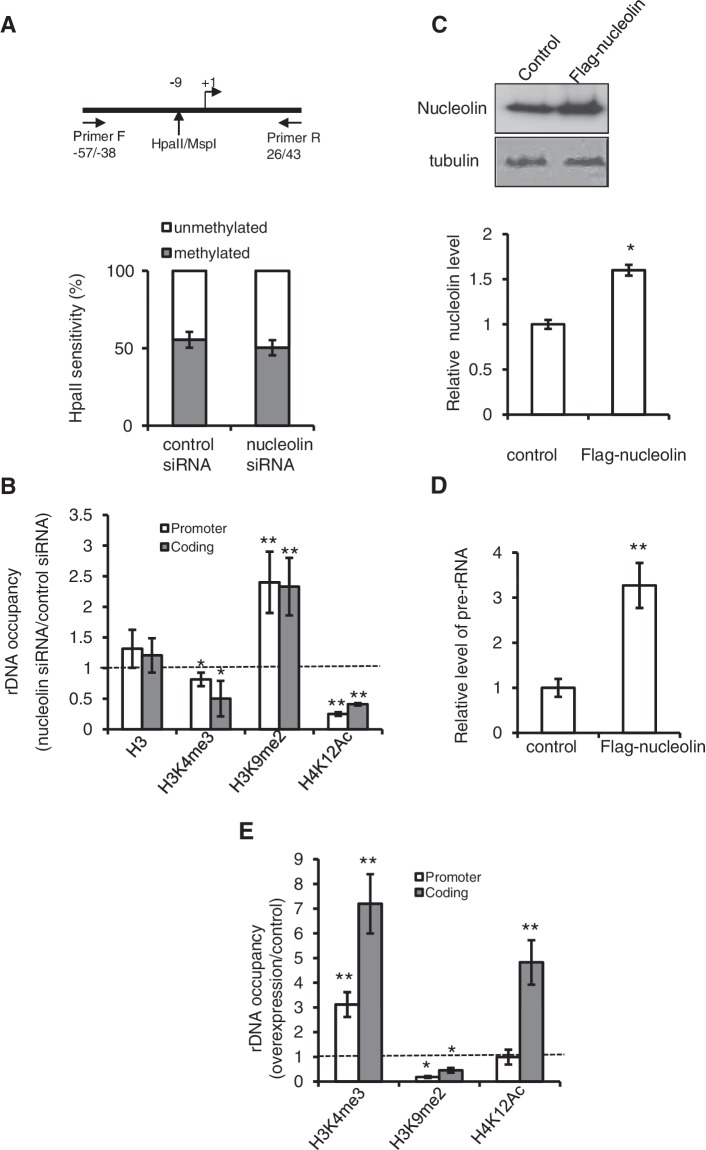
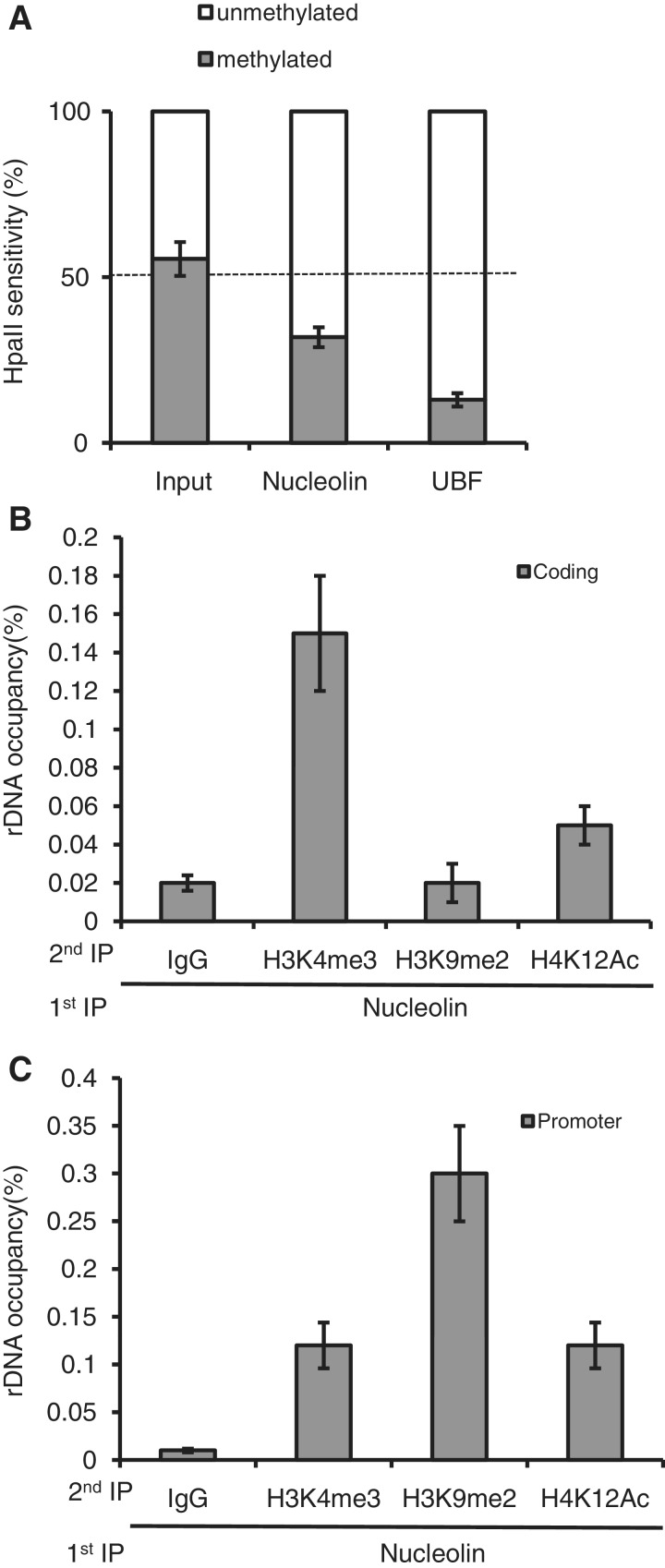
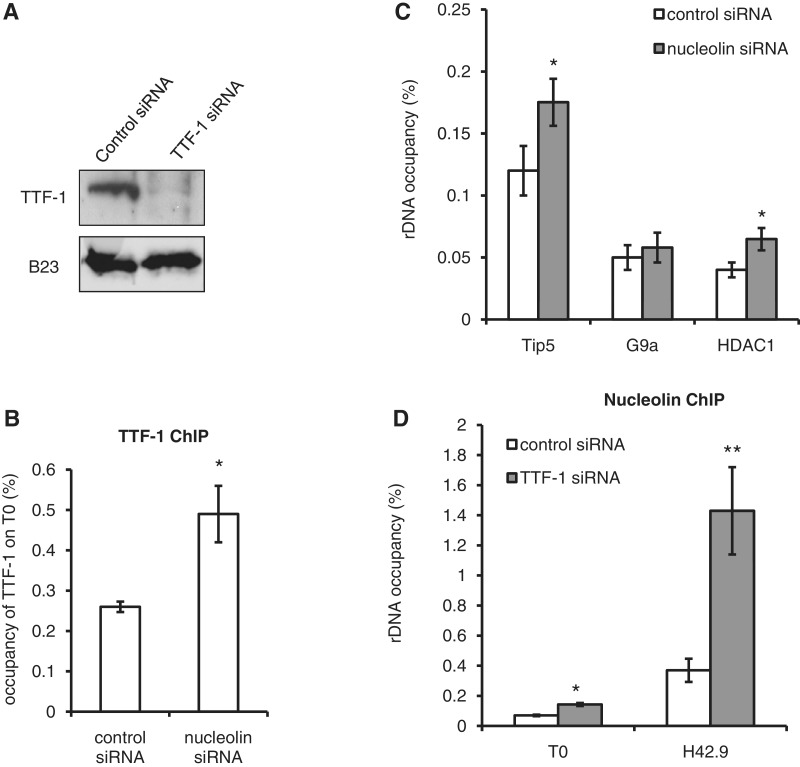
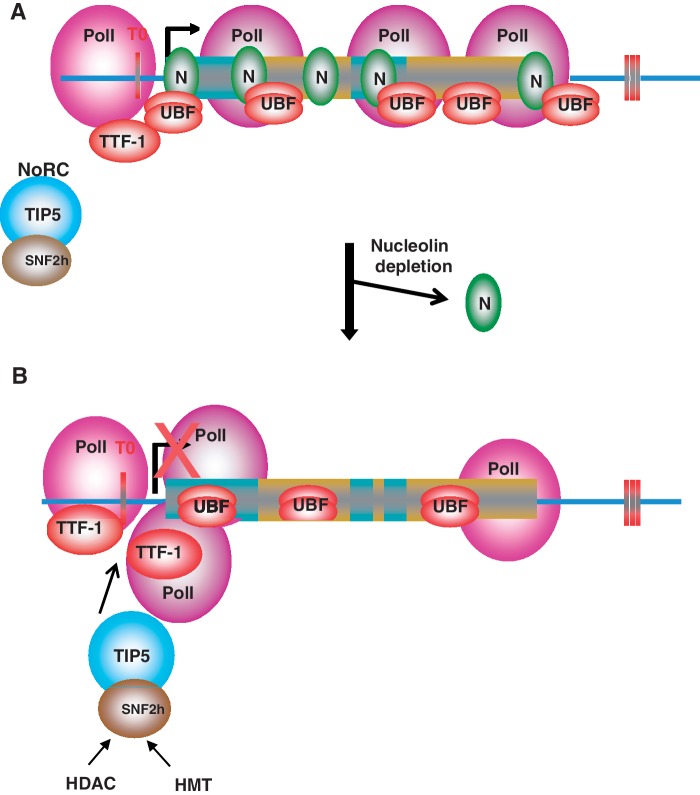
Nucleolin is a multi-functional nucleolar protein that is required for ribosomal RNA gene (rRNA) transcription in vivo, but the mechanism by which nucleolin modulates RNA polymerase I (RNAPI) transcription is not well understood. Nucleolin depletion results in an increase in the heterochromatin mark H3K9me2 and a decrease in H4K12Ac and H3K4me3 euchromatin histone marks in rRNA genes. ChIP-seq experiments identified an enrichment of nucleolin in the ribosomal DNA (rDNA) coding and promoter region. Nucleolin is preferentially associated with unmethylated rRNA genes and its depletion leads to the accumulation of RNAPI at the beginning of the transcription unit and a decrease in UBF along the coding and promoter regions. Nucleolin is able to affect the binding of transcription termination factor-1 on the promoter-proximal terminator T0, thus inhibiting the recruitment of TIP5 and HDAC1 and the establishment of a repressive heterochromatin state. These results reveal the importance of nucleolin for the maintenance of the euchromatin state and transcription elongation of rDNA.
Overview
The claims and statistics of this paper haven’t been checked yet.
Free: it reads the open-access text and checks the first 5 claims that cite a source we can check. Create a free account to check every claim.
Integrity signals
Registry
Cites
Statistics
Figures
Verification
Claims the paper makes
The claims and statistics of this paper haven’t been checked yet.
Free: it reads the open-access text and checks the first 5 claims that cite a source we can check. Create a free account to check every claim.
Claims other papers make about this one
Each is checked against this paper’s own text: does it say what the citing paper says it does?
The source backs part of the claim, not all of it — or backs it for a different population, condition or comparison.
In the citing paper
“NCL and NPMs regulate rRNA transcription through the modulation of H3K9m2 and H4K12ac in rRNA genes 18, 98.”
From Altered Machinery of Protein Synthesis in Alzheimer's: From the Nucleolus to the Ribosome (2016) · cites this paper as [18]
Experimental — accuracy not yet measured
Self-check
Percentages, sums and reported differences re-computed from the paper’s own numbers.
The self-check needs the paper’s full text.
Citations
Cites
The Sequence Alignment/Map format and SAMtools
Li, H., Handsaker, B., Wysoker, A., Fennell, T., Ruan, J., Homer, N., Marth, G., Abecasis, G., Durbin, R., & 1000 Genome Project Data Processing Subgroup (2009) · Bioinformatics · doi:10.1093/bioinformatics/btp352 · Cited by 62,041 · cited 1×
“Unique reads from the nucleolin ChIP dataset (15 467 484 reads) were mapped onto human rDNA reference sequence (NCBI accession number: HSU13369) using BWA (30,31).”
MethodFast and accurate short read alignment with Burrows-Wheeler transform
Li, H., & Durbin, R. (2009) · Bioinformatics · doi:10.1093/bioinformatics/btp324 · Cited by 58,607
Vakoc, C. R., Mandat, S. A., Olenchock, B. A., & Blobel, G. A. (2005) · Molecular Cell · doi:10.1016/j.molcel.2005.06.011 · Cited by 696 · cited 1×
“This is true for PolII genes (50) and also for Pol I genes (51) indicating that the association of nucleolin with H3K9me2 at the 50-end of the gene may be another sign of the link between active genes and nucleolin.”
Backgroundc-Myc binds to human ribosomal DNA and stimulates transcription of rRNA genes by RNA polymerase I
Grandori, C., Gomez-Roman, N., Felton-Edkins, Z. A., Ngouenet, C., Galloway, D. A., Eisenman, R. N., & White, R. J. (2005) · Nature Cell Biology · doi:10.1038/ncb1224 · Cited by 665 · cited 3×
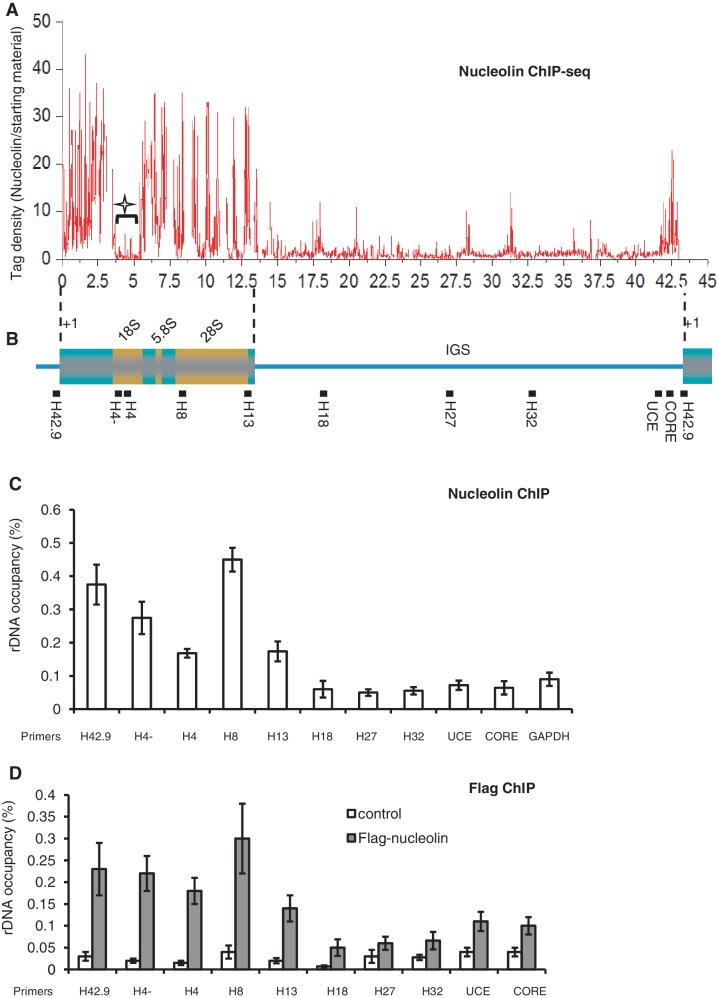
“To validate these ChIP-seq data, we performed several QPCR analyses using primers that span the human rDNA repeat (29) (Figure 3B and C).”
BackgroundMethodInfluentialThe Epigenetics of rRNA Genes: From Molecular to Chromosome Biology
McStay, B., & Grummt, I. (2008) · Annual Review of Cell and Developmental Biology · doi:10.1146/annurev.cellbio.24.110707.175259 · Cited by 526 · cited 14×
“Once NoRC is recruited to the rDNA promoter by TTF-1, it mediates heterochromatin formation and silencing of rRNA transcription by recruiting histone-modifying enzymes histone deacetylases (HDAC), histone methyltransferases (HMT), DNA methyltransferase and by shifting the promoter-bound nucleosome into a silent positi…”
BackgroundInfluentialSantoro, R., Li, J., & Grummt, I. (2002) · Nature Genetics · doi:10.1038/ng1010 · Cited by 406
Two different chromatin structures coexist in ribosomal RNA genes throughout the cell cycle
Conconi, A., Widmer, R. M., Koller, T., & Sogo, J. (1989) · Cell · doi:10.1016/0092-8674(89)90790-3 · Cited by 390
Nucleolin: a multiFACeTed protein
Mongelard, F., & Bouvet, P. (2007) · Trends in Cell Biology · doi:10.1016/j.tcb.2006.11.010 · Cited by 347 · cited 1×
“Therefore, nucleolin could also be implicated in the regulation of chromatin accessibility at a relatively large scale in addition to its effect on single nucleosome co-remodelling and destabilizing activity (26,57).”
BackgroundSelf-citationNucleolin functions in the first step of ribosomal RNA processing
Ginisty, H. (1998) · The EMBO Journal · doi:10.1093/emboj/17.5.1476 · Cited by 334 · cited 1×
“Since nucleolin interacts specifically with pre-rRNA (41–47) and has been involved in the first processing step of pre-RNA in vitro (16), it was tempting to explain the low accumulation of pre-rRNA in nucleolin depleted cells by an indirect effect of nucleolin on pre-rRNA processing.”
BackgroundSelf-citationIntergenic Transcripts Regulate the Epigenetic State of rRNA Genes
Mayer, C., Schmitz, K.-M., Li, J., Grummt, I., & Santoro, R. (2006) · Molecular Cell · doi:10.1016/j.molcel.2006.03.028 · Cited by 327
Cited by
RNA helicase DDX21 coordinates transcription and ribosomal RNA processing
Calo, E., Flynn, R. A., Martin, L., Spitale, R. C., Chang, H. Y., & Wysocka, J. (2015) · Nature · doi:10.1038/nature13923 · Cited by 324
The roles of nucleolin subcellular localization in cancer
Berger, C. M., Gaume, X., & Bouvet, P. (2015) · Biochimie · doi:10.1016/j.biochi.2015.03.023 · Cited by 267
Self-citationNew perspectives of physiological and pathological functions of nucleolin (NCL)
Jia, W., Yao, Z., Zhao, J., Guan, Q., & Gao, L. (2017) · Life Sciences · doi:10.1016/j.lfs.2017.07.025 · Cited by 249
Altered Machinery of Protein Synthesis in Alzheimer's: From the Nucleolus to the Ribosome
Hernández‐Ortega, K., Garcia‐Esparcia, P., Gil, L., Lucas, J. J., & Ferrer, I. (2016) · Brain Pathology · doi:10.1111/bpa.12335 · Cited by 245
“NCL and NPMs regulate rRNA transcription through the modulation of histone modifications dimethylated histone H3K9 (H3K9me2) and acetylated histone H3K12 (H3K12ac) in rRNA genes (18, 98).”
BackgroundImpaired ribosome biogenesis: mechanisms and relevance to cancer and aging
Turi, Z., Lacey, M., Mistrik, M., & Moudry, P. (2019) · Aging · doi:10.18632/aging.101922 · Cited by 215
“NCL is recruited to the rRNA genes and interacts with both the promoter and the coding regions to facilitate transcription elongation by Pol I [50].”
BackgroundTargeting the RNA Polymerase I Transcription for Cancer Therapy Comes of Age
Ferreira, R., Schneekloth, J. S., Panov, K. I., Hannan, K. M., & Hannan, R. D. (2020) · Cells · doi:10.3390/cells9020266 · Cited by 183
“Nucleolin plays a role at several stages of RiBi: facilitates Pol I transcription by promoting the euchromatic state of the rDNA loci [75,76]; catalyses the cleavage of the 5′ ETS; and is involved in the assembly and transport of the ribosomal subunits [77].”
BackgroundRecessive mutations in POLR1C cause a leukodystrophy by impairing biogenesis of RNA polymerase III
Thiffault, I., Wolf, N. I., Forget, D., Guerrero, K., Tran, L. T., Choquet, K., Lavallée-Adam, M., Poitras, C., Brais, B., Yoon, G., et al. (2015) · Nature Communications · doi:10.1038/ncomms8623 · Cited by 173
Alu element‐containing RNA s maintain nucleolar structure and function
Caudron‐Herger, M., Pankert, T., Seiler, J., Németh, A., Voit, R., Grummt, I., & Rippe, K. (2015) · The EMBO Journal · doi:10.15252/embj.201591458 · Cited by 140
“…including: (i) DNA – protein interactions such as binding of UBF to rDNA and possibly direct interactions of NCL with rDNA (Olson et al , 1983; Cong et al , 2012); (ii) protein – protein interactions as, for example, interaction of NCL with UBF and NPM, or NPM with UBF (Hisaoka et al ,…”
PTENβ is an alternatively translated isoform of PTEN that regulates rDNA transcription
Liang, H., Chen, X., Yin, Q., Ruan, D., Zhao, X., Zhang, C., McNutt, M. A., & Yin, Y. (2017) · Nature Communications · doi:10.1038/ncomms14771 · Cited by 132
Das, S., Reddy, M. A., Senapati, P., Stapleton, K., Lanting, L. L., Wang, M., Samara, V. A., Ganguly, R., Zhang, L., Devaraj, S., et al. (2018) · Arteriosclerosis Thrombosis and Vascular Biology · doi:10.1161/atvbaha.117.310663 · Cited by 122
Self-citationActivity dependent LoNA regulates translation by coordinating rRNA transcription and methylation
Li, D., Zhang, J., Wang, M., Li, X., Gong, H., Tang, H., Chen, L., Wan, L., & Liu, Q. (2018) · Nature Communications · doi:10.1038/s41467-018-04072-4 · Cited by 127
“Reduced expression of NCL in HeLa cells results in increased H3K9m2 and decreased H3K4m3, ultimately leading to rDNA silencing[41].”
BackgroundNucleolar activity in neurodegenerative diseases: a missing piece of the puzzle?
Parlato, R., & Kreiner, G. (2012) · Journal of Molecular Medicine · doi:10.1007/s00109-012-0981-1 · Cited by 121
“In fact, previous studies identified nucleolin as a protein-regulating rRNA synthesis and ribosome biogenesis [24, 25] and interacting with alpha-synuclein and DJ-1, two major proteins involved in familial PD pathogenesis.”
BackgroundDas, S., Senapati, P., Chen, Z., Reddy, M. A., Ganguly, R., Lanting, L. L., Mandi, V., Bansal, A., Leung, A., Zhang, S., et al. (2017) · Nature Communications · doi:10.1038/s41467-017-01629-7 · Cited by 112
Self-citationNucleolin and nucleophosmin: nucleolar proteins with multiple functions in DNA repair
Scott, D. D., & Oeffinger, M. (2016) · Biochemistry and Cell Biology · doi:10.1139/bcb-2016-0068 · Cited by 118
“In this context, NCL contributes extensively to the remodeling of rDNA chromatin in vivo, likely through its roles as a H2A-H2B and/or macro-H2A1 histone chaperone (Durut and SaezVasquez 2015; Cong et al. 2012).”
BackgroundInfluentialCrosstalk between the nucleolus and the DNA damage response
Ogawa, L. M., & Baserga, S. J. (2017) · Molecular BioSystems · doi:10.1039/c6mb00740f · Cited by 103
The Role of Nuclear Bodies in Gene Expression and Disease
Morimoto, M., & Boerkoel, C. F. (2013) · Biology · doi:10.3390/biology2030976 · Cited by 111
Nucleolin: Dual roles in rDNA chromatin transcription
Durut, N., & Sáez‐Vasquez, J. (2014) · Gene · doi:10.1016/j.gene.2014.09.023 · Cited by 87
Multifaceted Nucleolin Protein and Its Molecular Partners in Oncogenesis
Ugrinova, I., Petrova, M., Chalabi‐Dchar, M., & Bouvet, P. (2017) · Advances in protein chemistry and structural biology · doi:10.1016/bs.apcsb.2017.08.001 · Cited by 92
Self-citationCorsini, N. S., Peer, A. M., Möseneder, P., Roiuk, M., Burkard, T. R., Theussl, H., Moll, I., & Knoblich, J. A. (2018) · Cell stem cell · doi:10.1016/j.stem.2018.03.002 · Cited by 85
Durut, N., Abou-Ellail, M., Pontvianne, F., Das, S., Kojima, H., Ukai, S., de Bures, A., Comella, P., Nidelet, S., Rialle, S., et al. (2014) · The Plant Cell · doi:10.1105/tpc.114.123893 · Cited by 79
“As reported previously, NUC1, as well as human nucleolin, can bind transcriptionally competent rDNA chromatin and might facilitate rDNA transcription (Pontvianne et al., 2010; Cong et al., 2012).”
BackgroundSelf-citationHolmberg Olausson, K., Nistér, M., & Lindström, M. S. (2014) · Journal of Biological Chemistry · doi:10.1074/jbc.m114.569244 · Cited by 63
“The reduced nucleolar size seen in nucleolindepleted cells would be consistent with a role of nucleolin in RNA pol I transcription (56, 57).”
BackgroundFerrer, I., Andrés-Benito, P., Zelaya, M. V., Aguirre, M. E. E., Carmona, M., Ausín, K., Lachén-Montes, M., Fernández-Irigoyen, J., Santamaría, E., & del Rio, J. A. (2020) · Acta Neuropathologica · doi:10.1007/s00401-019-02122-9 · Cited by 60
Cohesin facilitates zygotic genome activation in zebrafish
Meier, M., Grant, J., Dowdle, A., Thomas, A., Gerton, J. L., Collas, P., O'Sullivan, J. M., & Horsfield, J. A. (2018) · Development · doi:10.1242/dev.156521 · Cited by 63
“Ribosomal DNA (rDNA) is contained within the nucleolus and active rDNA interacts with nucleolin (Cong et al., 2012).”
BackgroundNucleolin: a cell portal for viruses, bacteria, and toxins
Tonello, F., Massimino, M. L., & Peggion, C. (2022) · Cellular and Molecular Life Sciences · doi:10.1007/s00018-022-04300-7 · Cited by 67
“It is involved in the transcription and maturation of ribosomal RNA, and in ribosome assembly and transport [3].”
BackgroundLamin B2 Modulates Nucleolar Morphology, Dynamics, and Function
Gupta, A. S., & Sengupta, K. (2017) · Molecular and Cellular Biology · doi:10.1128/mcb.00274-17 · Cited by 50
“1, which are enriched on the rDNA promoter regions as revealed by chromatin immunoprecipitation (ChIP) (83).”
BackgroundRNA-Binding Proteins in Acute Leukemias
Schuschel, K., Helwig, M., Hüttelmaier, S., Heckl, D., Klusmann, J., & Hoell, J. I. (2020) · International Journal of Molecular Sciences · doi:10.3390/ijms21103409 · Cited by 62
Molecular Mechanism of Nuclear Tau Accumulation and its Role in Protein Synthesis
Portillo, M., Eremenko, E., Kaluski, S., García-Venzor, A., Onn, L., Stein, D., Slobodnik, Z., Zaretsky, A., Ueberham, U., Einav, M., et al. (2020) · Cell Reports · doi:10.1016/j.celrep.2021.109035 · Cited by 62
Nucleolin‑based targeting strategies in cancer treatment: Focus on cancer immunotherapy (Review)
Thongchot, S., Aksonnam, K., Thuwajit, P., Yenchitsomanus, P., & Thuwajit, C. (2023) · International Journal of Molecular Medicine · doi:10.3892/ijmm.2023.5284 · Cited by 61
Molecular basis for the autonomous promotion of cell proliferation by angiogenin
Hoang, T. T., & Raines, R. T. (2016) · Nucleic Acids Research · doi:10.1093/nar/gkw1192 · Cited by 62
“NoRC also promotes H3K9 methylation, which marks repressive transcription (49).”
BackgroundRepression of rRNA transcription by PARIS contributes to Parkinson's disease
Kang, H., & Shin, J. (2014) · Neurobiology of Disease · doi:10.1016/j.nbd.2014.10.003 · Cited by 55
macroH2A1 histone variant represses rDNA transcription
Cong, R., Das, S., Douet, J., Wong, J., Buschbeck, M., Mongélard, F., & Bouvet, P. (2013) · Nucleic Acids Research · doi:10.1093/nar/gkt863 · Cited by 59
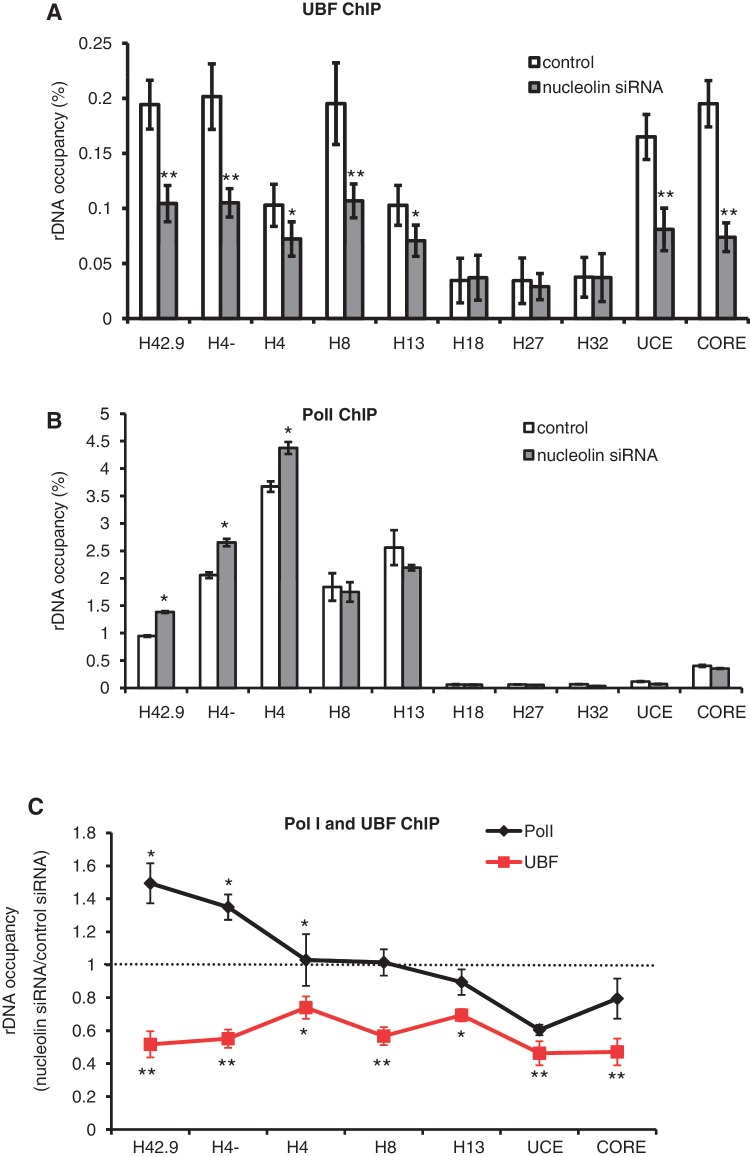
“In the coding region, UBF association also increases, to different extent in different part of the gene.”
BackgroundResultInfluentialSelf-citationGrabbing the genome by the NADs
Matheson, T. D., & Kaufman, P. D. (2015) · Chromosoma · doi:10.1007/s00412-015-0527-8 · Cited by 51
“For example, CTCF (van de Nobelen et al. 2010; Huang et al. 2013), NCL (Roger et al. 2002; Rickards et al. 2007; Cong et al. 2012), NPM1 (Murano et al. 2008), and Ki-67 (Rahmanzadeh et al. 2007; Booth et al. 2014) all regulate rDNA transcription.”
BackgroundBEND3 represses rDNA transcription by stabilizing a NoRC component via USP21 deubiquitinase
Khan, A. A., Giri, S., Wang, Y., Chakraborty, A., Ghosh, A. K., Anantharaman, A., Aggarwal, V., Sathyan, K. M., Ha, T., Prasanth, K. V., et al. (2015) · Proceedings of the National Academy of Sciences · doi:10.1073/pnas.1424705112 · Cited by 52
Salifou, K., Ray, S., Verrier, L., Aguirrebengoa, M., Trouche, D., Panov, K. I., & Vandromme, M. (2016) · Nature Communications · doi:10.1038/ncomms10174 · Cited by 50
Stapleton, K., Das, S., Reddy, M. A., Leung, A., Samara, V. A., Lanting, L. L., Chen, Z., Zhang, L., Palanivel, R., Deiuliis, J. A., et al. (2020) · Arteriosclerosis Thrombosis and Vascular Biology · doi:10.1161/atvbaha.119.313359 · Cited by 53
Self-citationCockayne syndrome group A and B proteins function in rRNA transcription through nucleolin regulation
Okur, M. N., Lee, J., Osmani, W. A., Kimura, R., Demarest, T. G., Croteau, D. L., & Bohr, V. A. (2020) · Nucleic Acids Research · doi:10.1093/nar/gkz1242 · Cited by 43
“Interestingly, unlike CSA or CSB, Ncl depletion enhances Pol I loading at the promoter of rDNA, indicating that it has distinct functions on modulating the rDNA promoter, different from those of CSA or CSB (9,28,37).”
BackgroundResultInfluentialMeeting the needs of breast cancer: A nucleolin’s perspective
Gregório, A. C., Lacerda, M., Figueiredo, P., Simões, S., Dias, S., & Moreira, J. N. (2018) · Critical Reviews in Oncology/Hematology · doi:10.1016/j.critrevonc.2018.03.008 · Cited by 50
Das, S., Cong, R., Shandilya, J., Senapati, P., Moindrot, B., Monier, K., Delage, H., Mongélard, F., Kumar, S., Kundu, T. K., et al. (2013) · FEBS Letters · doi:10.1016/j.febslet.2013.01.035 · Cited by 43
“ChIP-Seq with a polyclonal antibody show that nucleolin is associated with the coding region of rDNA, similar to the distribution of UBF and RNAPI subunit RPA116 [10,22].”
MethodSelf-citationJayaraman, S., Chittiboyina, S., Bai, Y., Abad, P. C., Vidi, P., Stauffacher, C. V., & Lelièvre, S. A. (2017) · Nucleic Acids Research · doi:10.1093/nar/gkx782 · Cited by 43
Ribosome-Directed Therapies in Cancer
Temaj, G., Chichiarelli, S., Eufemi, M., Fabio Altieri, F., Hadžiselimović, R., Farooqi, A. A., Yaylım, İ., & Saso, L. (2022) · Biomedicines · doi:10.3390/biomedicines10092088 · Cited by 47
“Nucleolin has a role in several stages of ribosome biogenesis: It facilitates Pol I transcription by promoting the euchromatic state of rDNA loci [109,110]; it catalyzes the cleavage of 5′ ETS; and it is involved in the assembly and transport of the ribosomal subunits [111].”
BackgroundMarcel, V., Catez, F., Berger, C., Cros‐Perrial, E., Pleșa, A., Thomas, X., Mattei, E., Hayette, S., Saintigny, P., Bouvet, P., et al. (2017) · PLoS ONE · doi:10.1371/journal.pone.0170160 · Cited by 45
Self-citationSelective regulation in ribosome biogenesis and protein production for efficient viral translation
Dong, H.-J., Zhang, R., Kuang, Y., & Wang, X. (2020) · Archives of Microbiology · doi:10.1007/s00203-020-02094-5 · Cited by 51
Azman, M. S., Alard, E. L., Dodel, M., Capraro, F., Faraway, R., Dermit, M., Fan, W., Chakraborty, A., Ule, J., & Mardakheh, F. K. (2023) · The EMBO Journal · doi:10.15252/embj.2022110902 · Cited by 45
“Ncl is known to play a key role in several steps of ribosome biogenesis, from promotion of pre-rRNA synthesis (Roger et al, 2003; Cong et al, 2012), to mediating the first steps of prerRNA processing (Ginisty et al, 1998), as well as loading of ribosomal proteins onto pre-rRNA (Bouvet et al, 1998).”
BackgroundDEAD-Box Helicase 18 Counteracts PRC2 to Safeguard Ribosomal DNA in Pluripotency Regulation
Zhang, H., Wu, Z., Lu, J. Y., Huang, B., Zhou, H., Xie, W., Wang, J., & Shen, X. (2020) · Cell Reports · doi:10.1016/j.celrep.2019.12.021 · Cited by 42
“Euchromatic histone marks are associated with actively transcribed rDNA genes, whereas heterochromatin marks, such as trimethylation on histone H3 at lysine 27 (H3K27me3) and H3K9 dimethylation (H3K9me2), are found in silenced rDNA loci (Cong et al., 2012).”
BackgroundThe nucleolus: Coordinating stress response and genomic stability
González‐Arzola, K. (2024) · Biochimica et Biophysica Acta (BBA) - Gene Regulatory Mechanisms · doi:10.1016/j.bbagrm.2024.195029 · Cited by 42
Lee, J.-H., Demarest, T. G., Babbar, M., Kim, E. W., Okur, M. N., De, S., Croteau, D. L., & Bohr, V. A. (2019) · Nucleic Acids Research · doi:10.1093/nar/gkz568 · Cited by 37
Yan, Y., Du, Y., Wang, G., & Li, K. (2017) · Scientific Reports · doi:10.1038/s41598-017-18087-2 · Cited by 41
ABH2 Couples Regulation of Ribosomal DNA Transcription with DNA Alkylation Repair
Li, P., Gao, S., Wang, L., Yu, F., Li, J., Wang, C., Li, J., & Wong, J. (2013) · Cell Reports · doi:10.1016/j.celrep.2013.07.027 · Cited by 41
“The chromatin immunoprecipitation assay was performed essentially as described (Cong et al., 2012).”
MethodInfluentialSelf-citationNucleolar DNA: the host and the guests
Smirnov, E., Cmarko, D., Mazel, T., Hornáček, M., & Raška, I. (2016) · Histochemistry and Cell Biology · doi:10.1007/s00418-016-1407-x · Cited by 41
Analysis of histone modifications at human ribosomal DNA in liver cancer cell
Yu, F., Shen, X., Li, F., & Yu, Z. (2015) · Scientific Reports · doi:10.1038/srep18100 · Cited by 32
de Lara, S. B., Tran, D. D. H., Allister, A. B., Polenkowski, M., Nashan, B., Koch, M., & Tamura, T. (2021) · Oncogenesis · doi:10.1038/s41389-021-00320-3 · Cited by 36
“d GST, GST-C20orf204-189AA, C20orf204-189AA-(73-189) or C20orf204-(1-74) were isolated (Coomassie blue”
MethodFrau‐Méndez, M. A., Fernández‐Vega, I., Ansoleaga, B., Tech, R. B., Carmona, M., del Río, J. A., Zerr, I., Llorens, F., Zarranz, J. J., & Ferrer, I. (2016) · Brain Pathology · doi:10.1111/bpa.12408 · Cited by 34
“expression of NPM1, 28S rRNA, RPS17, and RPS20 is in contrast to the decreased protein expression levels of the histone-binding chaperones nucleolin (NCL) and nucleoplasmin 3 (NPM3), which regulate rRNA transcription (2, 4, 10, 11, 16, 18, 27), and of histone H3 di-methylated K9 (H3K9me2), which modulates NCL and NPMs…”
BackgroundLiu, Y., Mattila, J., Ventelä, S., Yadav, L., Zhang, W., Lamichane, N., Sundström, J. T. T., Kauko, O., Grenman, R. A., Varjosalo, M. T., et al. (2017) · Developmental Cell · doi:10.1016/j.devcel.2017.09.022 · Cited by 35
“Interestingly, the BioID strategy led to identification of Nucleolin, a nucleolar protein with an established role in rRNA transcription and processing (Cong et al., 2012; Ginisty et al., 1998; Table S1C).”
MethodThe roles of RRP15 in nucleolar formation, ribosome biogenesis and checkpoint control in human cells
Dong, Z., Zhu, C., Zhan, Q., & Jiang, W. B. (2017) · Oncotarget · doi:10.18632/oncotarget.14658 · Cited by 30
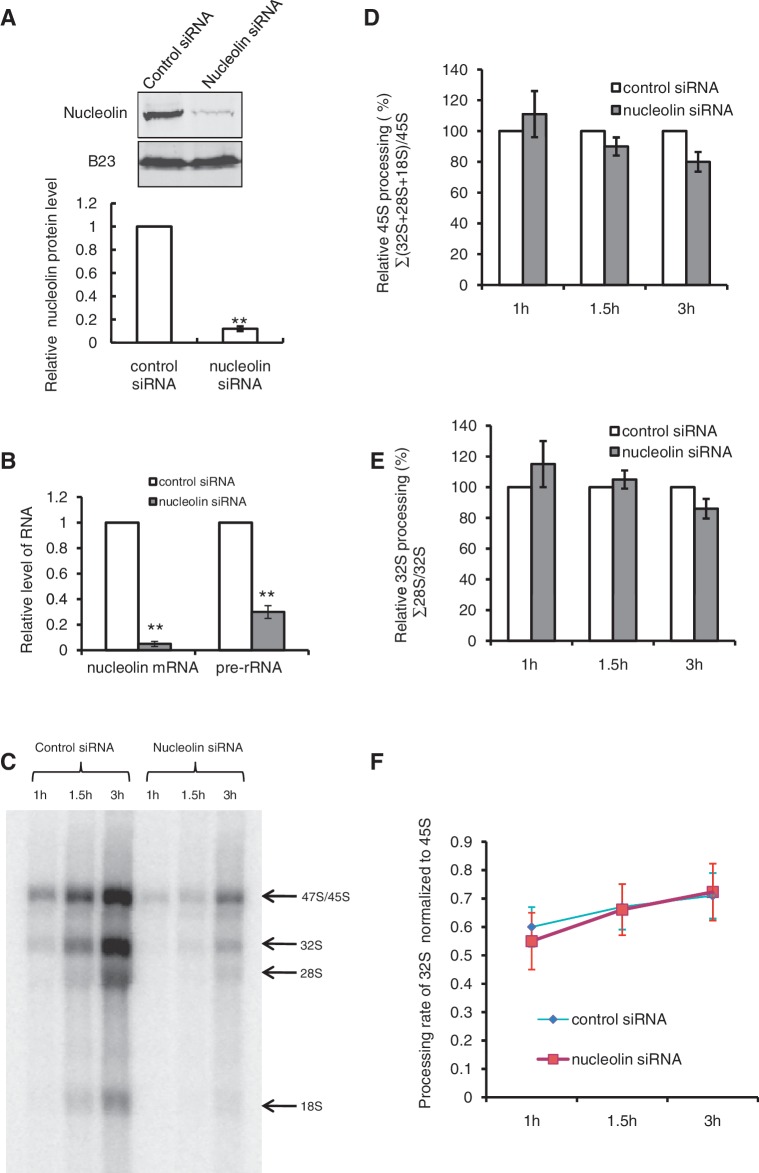
“To this end, we made a pair of specific primers that amplified 5’-ETS of 47S prerRNA to monitor 47S pre-rRNA transcription using realtime reverse transcription-polymerase chain reaction (RTPCR) (Figure 4A).”
MethodInfluentialKodiha, M., Salimi, A., Wang, Y. M., & Stochaj, U. (2014) · PLoS ONE · doi:10.1371/journal.pone.0088087 · Cited by 29
“Interestingly, nucleolin can inhibit as well as stimulate rDNA transcription, and this may occur in a cell type-specific fashion [54,55,56,57].”
BackgroundShu Dong, X. I. A. O., Caglar, E., Maldonado, P., Das, D. K., Nadeem, Z., Chi, A., Trinité, B., Li, X., & Saxena, A. D. (2014) · PLoS ONE · doi:10.1371/journal.pone.0109858 · Cited by 33
“[3] and telomerase activity [4].”
Herrmann, D., & Parlato, R. (2018) · Cell and Tissue Research · doi:10.1007/s00441-018-2806-1 · Cited by 30
“Nucleolin indeed regulates rDNA transcription and a corresponding reduction of 45S precursor rRNA levels was found in human astrocytes exposed to poly-PR (Cong et al. 2012; Kwon et al. 2014) (Fig.”
BackgroundNucleolar stress controls mutant Huntington toxicity and monitors Huntington’s disease progression
Soenmez, A., Mustafa, R., Ryll, S. T., Tuorto, F., Wacheul, L., Ponti, D., Litke, C., Hering, T., Kojer, K., Koch, J., et al. (2021) · Cell Death and Disease · doi:10.1038/s41419-021-04432-x · Cited by 27
“Moreover, mHTT mRNAs down-regulate rRNA transcription by interacting with the nucleolar protein nucleolin (NCL), that plays multiple roles in rRNA synthesis, ribosome biogenesis and nucleolar structure maintenance [25, 28, 29].”
BackgroundRoles of the nucleolus in the CAG RNA-mediated toxicity
Tsoi, H., & Chan, H. Y. E. (2013) · Biochimica et Biophysica Acta (BBA) - Molecular Basis of Disease · doi:10.1016/j.bbadis.2013.11.015 · Cited by 30
Che-1/AATF binds to RNA polymerase I machinery and sustains ribosomal RNA gene transcription
Sorino, C., Catena, V., Bruno, T., Nicola, F. D., Scalera, S., Bossi, G., Fabretti, F., Mano, M., Smaele, E. D., Fanciulli, M., et al. (2020) · Nucleic Acids Research · doi:10.1093/nar/gkaa344 · Cited by 27
“This particular pattern of enrichment is similar to the one observed after the depletion of nucleolin, a nucleolar phosphoprotein involved in rDNA transcription elongation (46) and suggests that Che1 could be also required for this step of the transcriptional process.”
BackgroundCellular localization of nucleolin determines the prognosis in cancers: a meta-analysis
Yangngam, S., Prasopsiri, J., Hatthakarnkul, P., Thongchot, S., Thuwajit, P., Yenchitsomanus, P., Edwards, J., & Thuwajit, C. (2022) · Journal of Molecular Medicine · doi:10.1007/s00109-022-02228-w · Cited by 27
“NCL has been shown to interact with rDNA chromatin [29], particularly the promoter and coding region of unmethylated rRNA genes [51].”
BackgroundInfluentialThe nucleolus is the site for inflammatory RNA decay during infection
Lee, T. A., Han, H., Polash, A. H., Cho, S. K., Lee, J. W., Ra, E. A., Lee, E., Park, A., Kang, S., Choi, J. L., et al. (2022) · Nature Communications · doi:10.1038/s41467-022-32856-2 · Cited by 32
Feng, S., & Manley, J. L. (2021) · Genes & Development · doi:10.1101/gad.348858.121 · Cited by 30
“It is also notable that RPA binds to nucleolin, which functions in ribosome biogenesis and RNAP I transcription (Cong et al. 2012).”
Nucleolin-aptamer therapy in retinoblastoma: molecular changes and mass spectrometry–based imaging
Subramanian, N., Srimany, A., Kanwar, J. R., Kanwar, R. K., Balachandran, A. A., Rishi, P., Khetan, V., Vasudevan, M., Pradeep, T., & Krishnakumar, S. (2016) · Molecular Therapy — Nucleic Acids · doi:10.1038/mtna.2016.70 · Cited by 25
H3K9 Demethylation-Induced R-Loop Accumulation Is Linked to Disorganized Nucleoli
Zhou, H. W., Li, L., Wang, Q., Hu, Y., Zhao, W., Gautam, M., & Li, L. (2020) · Frontiers in Genetics · doi:10.3389/fgene.2020.00043 · Cited by 27
Shi, G. W., Wu, M., Fang, L., Yu, F., Cheng, S., Li, J., Du, J. X., & Wong, J. (2014) · Journal of Biological Chemistry · doi:10.1074/jbc.m114.571653 · Cited by 30
“This finding provides evidence that the observed PHF2 rDNA promoter enrichment is probably dependent on its H3K4me3 binding activity, a result that is also consistent with the observed H3K4me3 peak in the rDNA promoter (37).”
MethodResultSelf-citationNatural products and their derivatives as G-quadruplex binding ligands
Shan, C., Tan, J., Ou, T., & Huang, Z. (2013) · Science China Chemistry · doi:10.1007/s11426-013-4920-y · Cited by 25
G-Quadruplexes in Nuclear Biomolecular Condensates
Pavlova, I., Iudin, M. S., Surdina, A. V., Severov, V. V., & Varizhuk, A. M. (2023) · Genes · doi:10.3390/genes14051076 · Cited by 23
“The other G4-recognizing LLPS drivers from the RNA binding category include the plasminogen activator inhibitor 1 mRNA binding protein (SERBP1) [48], nucleophosmin [49], nucleolin (NCL) [50], heterogenous ribonucleoprotein A1 (hnRNP A1) [51,52], and fused in sarcoma (FUS) [53,54].”
BackgroundInfluentialCentrosomal nucleolin is required for microtubule network organization
Gaume, X., Tassin, A., Ugrinova, I., Mongélard, F., Monier, K., & Bouvet, P. (2015) · Cell Cycle · doi:10.1080/15384101.2014.1000197 · Cited by 23
Self-citationDehkordi, S. K., Chalabi‐Dchar, M., Mertani, H. C., Guellec, D. L., Verrier, B., Diaz, J., Mehrgardi, M. A., & Bouvet, P. (2019) · Nanomedicine Nanotechnology Biology and Medicine · doi:10.1016/j.nano.2019.102060 · Cited by 26
Self-citationHistone Chaperone Nucleophosmin Regulates Transcription of Key Genes Involved in Oral Tumorigenesis
Senapati, P., Bhattacharya, A., Das, S., Dey, S., Sudarshan, D., Shyla, G., Vishwakarma, J., Sudevan, S., Ramachandran, R., Maliekal, T. T., et al. (2021) · Molecular and Cellular Biology · doi:10.1128/mcb.00669-20 · Cited by 24
“ChIP-seq studies showed nucleolin enrichment at the rDNA regions (50) whereas acetylated nucleolin (AcNCL) was not enriched on rDNA.”
BackgroundSelf-citationZhou, Y., Sun, M., Sun, P., Gao, H., He, Y., Jing, Y., Hussain, M. A., Saxena, R. K., Foka, I. C. K., Wang, Q., et al. (2022) · Journal of Plant Physiology · doi:10.1016/j.jplph.2022.153660 · Cited by 22
Ban, Y., Ando, Y., Terai, Y., Matsumura, R., Nakane, K., Iwai, S., Sato, S., & Yamamoto, J. (2024) · Nucleic Acids Research · doi:10.1093/nar/gkae1001 · Cited by 22
Nucleolin modulates compartmentalization and dynamics of histone 2B-ECFP in the nucleolus
Gupta, A. S., Joshi, G., Pawar, S., & Sengupta, K. (2018) · Nucleus · doi:10.1080/19491034.2018.1471936 · Cited by 19
“Nucleolin is involved in rRNA transcription and processing [18,62].”
BackgroundNucleolin reorganization and nucleolar stress in Purkinje cells of mutant PCD mice
Baltanás, F. C., Berciano, M. T., Tapia, O., Narcís, J. O., Lafarga, V., Díaz, D., Weruaga, E., Santos, E., & Lafarga, M. (2019) · Neurobiology of Disease · doi:10.1016/j.nbd.2019.03.017 · Cited by 18
“NCL interacts directly with rDNA and pre-rRNA and plays an important role in promoting both pre-rRNA transcription and processing as well as the assembly of preribosomal particles (Cong et al., 2012; Ginisty et al., 1998).”
BackgroundSuseela, Y. V., Sengupta, P., Roychowdhury, T., Panda, S., Talukdar, S., Chattopadhyay, S., Chatterjee, S., & Govindaraju, T. (2021) · ACS Bio & Med Chem Au · doi:10.1021/acsbiomedchemau.1c00039 · Cited by 20
Passos‐Castilho, A. M., Marchand, C., & Archambault, D. (2017) · Virology · doi:10.1016/j.virol.2017.12.021 · Cited by 19
Okuwaki, M., Saotome-Nakamura, A., Yoshimura, M., Saito, S., Hirawake‐Mogi, H., Sekiya, T., & Nagata, K. (2020) · The Journal of Biochemistry · doi:10.1093/jb/mvaa095 · Cited by 17
Role of nucleolar dysfunction in neurodegenerative disorders: a game of genes?
Parlato, R., & Bierhoff, H. (2015) · AIMS molecular science · doi:10.3934/molsci.2015.3.211 · Cited by 18
“The answer to these questions is further complicated, as the G-quadruplex structure formed by the hexanucleotide repeats, allows per se the binding to nucleolin [7], a nucleolar protein that regulates rDNA transcription [15].”
BackgroundPrakash, K., Satishkartik, S., Ramalingam, S., Gangadaran, P., Gnanavel, S., & ArulJothi, K. N. (2025) · Gene · doi:10.1016/j.gene.2025.149479 · Cited by 17
A Non‐G‐Quadruplex DNA Aptamer Targeting NCL for Diagnosis and Therapy in Bladder Cancer
Liu, Y., Hu, B., Pei, X., Li, J., Qi, D., Xu, Y., Ou, H., Wu, Y., Xue, L., Huang, J. H., et al. (2023) · Advanced Healthcare Materials · doi:10.1002/adhm.202300791 · Cited by 16
Mechanism of herpesvirus UL24 protein regulating viral immune escape and virulence
Ruan, P., Wang, M., Cheng, A., Zhao, X., Yang, Q., Wu, Y., Zhang, S., Tian, B., Huang, J., Ou, X., et al. (2023) · Frontiers in Microbiology · doi:10.3389/fmicb.2023.1268429 · Cited by 16
Peng, Y., Wang, Z., Wang, Z., Yu, F., Li, J., & Wong, J. (2019) · Journal of Biological Chemistry · doi:10.1074/jbc.ra119.010624 · Cited by 16
“However, no significant SUMOylation of endogenous UBF, NCL, RRN3, TAF1B, and c-Myc was observed under the regular culture condition, despite the previous reports on SUMOylation of nucleolin (38) and c-Myc proteins (33), both required for efficient rDNA transcription (13, 14, 39).”
BackgroundSelf-citationInhibitor of Growth 4 (ING4) is a positive regulator of rRNA synthesis
Trinh, D., Shirakawa, R., Kimura, T., Sakata, N., Goto, K., & Horiuchi, H. (2019) · Scientific Reports · doi:10.1038/s41598-019-53767-1 · Cited by 16
Transcription-facilitating histone chaperons interact with genomic and synthetic G4 structures
Pavlova, I., Цветков, В. Б., Isaakova, E. A., Severov, V. V., Khomyakova, E. A., Lacis, I. A., Лазарев, В. Н., Lagarkova, M. A., Pozmogova, G. E., & Varizhuk, A. M. (2020) · International Journal of Biological Macromolecules · doi:10.1016/j.ijbiomac.2020.05.173 · Cited by 18
LINC00885 promotes cervical cancer progression through sponging miR-3150b-3p and upregulating BAZ2A
Liu, Y., Chen, J., Zhou, L., & Yin, C. (2022) · Biology Direct · doi:10.1186/s13062-021-00314-6 · Cited by 14
“BAZ2A has been reported to be responsible for epigenetic regulation on recombinant RNA genes [27, 28].”
BackgroundDash, S., & Trainor, P. A. (2022) · Development · doi:10.1242/dev.200349 · Cited by 16
Nucleolin promotes in vitro translation of feline calicivirus genomic RNA
Alvarado-Hernández, B., Sandoval-Jaime, C., Sosnovtsev, S. V., Green, K. Y., & Gutiérrez‐Escolano, A. L. (2015) · Virology · doi:10.1016/j.virol.2015.12.001 · Cited by 13
“NCL controls a wide range of fundamental cellular processes such as ribosome biogenesis, proliferation and cellular cycle regulation (Cong et al., 2012; Ginisty et al., 1998; Ugrinova et al., 2007).”
Post-transcriptional diversity in riboproteins and RNAs in aging and cancer
da Cruz, J. B., & Lemos, B. (2021) · Seminars in Cancer Biology · doi:10.1016/j.semcancer.2021.08.012 · Cited by 10
Ribosomal RNA Methylation and Cancer
Thérizols, G., Laforêts, F., Marcel, V., Catez, F., Bouvet, P., & Diaz, J. (2015) · Elsevier eBooks · doi:10.1016/b978-0-12-800206-3.00006-9 · Cited by 14
Self-citationChushi, L., Wu, W. D., Ding, H., Li, Q., & Xie, K. (2018) · Molecular Medicine Reports · doi:10.3892/mmr.2018.8806 · Cited by 11
“Previous studies have revealed that TIP5 mediates the epigenetic regulation of recombinant RNA genes (9,10).”
Current research on viral proteins that interact with fibrillarin
Decle-Carrasco, S., Rodríguez-Piña, A. L., Rodríguez‐Zapata, L. C., & Castaño, E. (2023) · Molecular Biology Reports · doi:10.1007/s11033-023-08343-2 · Cited by 14
“Nucleolin, a multifactorial protein involved in several cellular processes, is also implicated in the transcription and maturation of rRNA, and ribosome assembly and transport [101].”
BackgroundKumar, H., Gupta, N., Jain, R., Madhunapantula, S. V., Babu, S., Dey, S., Soni, A. G., & Jain, V. K. (2023) · International Journal of Pharmaceutics · doi:10.1016/j.ijpharm.2023.123226 · Cited by 10
Fuentes, E. N., Zuloaga, R., Nardocci, G., de la Reguera, C. F., Simonet, N. G., Fumeron, R., Valdés, J. A., Molina, A., & Álvarez, M. (2014) · Comparative Biochemistry and Physiology Part B Biochemistry and Molecular Biology · doi:10.1016/j.cbpb.2014.04.005 · Cited by 10
“Nucleolin has been associatedwith several steps in the process of ribosomal biogenesis (Mongelard and Bouvet, 2007), and it has a dual role in rRNA synthesis, both repressing (Roger et al., 2002) and activating this process (Cong et al., 2012).”
BackgroundWu, M., Wei, W., Chen, J., Cong, R., Shi, T., Li, J., Wong, J., & Du, J. X. (2017) · Science China Life Sciences · doi:10.1007/s11427-016-0413-3 · Cited by 9
Self-citationNohira, N., Shinji, S., Nakamura, S., Nihashi, Y., Shimosato, T., & Takaya, T. (2022) · Biomedicines · doi:10.3390/biomedicines10112691 · Cited by 10
“Nucleolar nucleolin has been reported to interact with ribosomal 275 DNA (rDNA) and increase the RNA polymerase I transcription [29].”
BackgroundTu, T.-C., Lin, C.-J., Liu, M.-C., Hsu, Z.-T., & Chen, C. (2025) · Animals · doi:10.3390/ani15030376 · Cited by 9
“The RBM19 gene plays a crucial role in the processing and synthesis of ribosomal RNA [55].”
Redfield, S., Mao, J., Zhu, H., He, Z., Zhang, X., Bigler, S. A., & Zhou, X. (2013) · Europe PMC (PubMed Central) · Cited by 9
Nucleolar Organization in Response to Transcriptional Stress
Imamura, R., & Yasuhara, T. (2025) · Cancer Science · doi:10.1111/cas.70164 · Cited by 13
Ribosomopathies and cancer: pharmacological implications
Temaj, G., Saha, S., Dragusha, S., Ejupi, V., Buttari, B., Profumo, E., Beqa, L., & Saso, L. (2022) · Expert Review of Clinical Pharmacology · doi:10.1080/17512433.2022.2098110 · Cited by 11
“facilitate transcription elongation by Pol I [44,45].”
Background
Metadata
- Authors
- Cong, R., Das, S., Ugrinova, I., Kumar, S., Mongelard, F., Wong, J., & Bouvet, P.
- Affiliations
- École Normale Supérieure de Lyon (FR)
- Corresponding author
- Bouvet, Philippe
- Venue
- Nucleic Acids Research
- Publisher
- Oxford University Press (OUP)
- Published
- 2012-08-02
- Volume
- 40
- Issue
- 19
- Pages
- 9441-9454
- ISSN
- 0305-1048 (ISSN-L)
- 1362-4962
- PMC
- PMC3479187
- OpenAlex
- W2124552631
- Cited by
- 155
- References
- 57
- Citations by year
- 2026: 6 · 2025: 9 · 2024: 14 · 2023: 12 · 2022: 13 · 2021: 11 · 2020: 13 · 2019: 13 · 2018: 7 · 2017: 17 · 2016: 9 · 2015: 12 · 2014: 10 · 2013: 8 · 2012: 1
- FWCI
- 3.98
- Type
- journal article
- Language
- en
- Open access
- gold
- doi.org
- Licence
- Locations
- Nucleic Acids Research (publishedVersion, cc-by-nc)
- Europe PMC (PubMed Central) (publishedVersion, cc-by-nc)
- PubMed Central (publishedVersion, cc-by-nc)
- PubMed (publishedVersion)
- HighWire Press Open Archive (submittedVersion)
- Funders
- Association pour la Recherche sur le Cancer (ANR-07-BLAN-0062-01, ECL2010-R01122)
- Agence Nationale de la Recherche (ANR-07-BLAN-0062, ECL2010R01122)
- Indo-French Centre for the Promotion of Advanced Research
- Centre National de la Recherche Scientifique (ANR-07-BLAN-0062-01, ECL2010R01122)
- Topics
- Life Sciences › Biochemistry, Genetics and Molecular Biology › Molecular Biology › Genomics and Chromatin Dynamics
- Life Sciences › Biochemistry, Genetics and Molecular Biology › Molecular Biology › Nuclear Structure and Function
- Life Sciences › Biochemistry, Genetics and Molecular Biology › Genetics › Chromosomal and Genetic Variations
- Keywords
- nucleolin, ribosomal DNA, RNA polymerase I transcription, UBF, HDAC1, H3K9me2, heterochromatin, euchromatin, histone modifications, transcription elongation, nucleolus
- MeSH terms
- Nucleolin, Chromatin, DNA-Binding Proteins, DNA, Ribosomal, HeLa Cells, Humans, Phosphoproteins, Repetitive Sequences, Nucleic Acid, RNA Polymerase I, Terminator Regions, Genetic, Transcription Factors, Transcription, Genetic, RNA-Binding Proteins, Genes, rRNA, Epigenesis, Genetic
About these checks
Registry, retraction, Cites and statistics results are computed, not judged, with one exception: a printed reference that no index lists is read once by a model before it counts as a citation error. Claims are extracted by a model and kept only when their quote appears verbatim in the text; each cited source is then checked, with a model’s help, for whether it says what the claim relies on. Those verdicts can be wrong — read the claim’s quote and the cited source before relying on one.
Statistics and arithmetic are recomputed, not judged.
Confidence bands are shown only for fields calibrated on our annotated test set. None is calibrated yet, so no band is shown.
What counts as a claim ›How we measure confidence ›How we check this ›
Are you an author, or do you see a problem with this page? Request a review
Data sources
Bibliographic data: Semantic Scholar, OpenAlex, Crossref.
Contains information from the Semantic Scholar Academic Graph Datasets, made available under the ODC Attribution License (ODC-BY 1.0).
Semantic Scholar’s data is described in: Kinney, R., et al. (2023). The Semantic Scholar Open Data Platform. arXiv:2301.10140.
