

Interaction of nucleolin with ribosomal RNA genes and its role in RNA polymerase I transcription
Open accessThe DOI matches its Crossref record; 57 of the 57 references it cites were found in a registry or an index.
Abstract
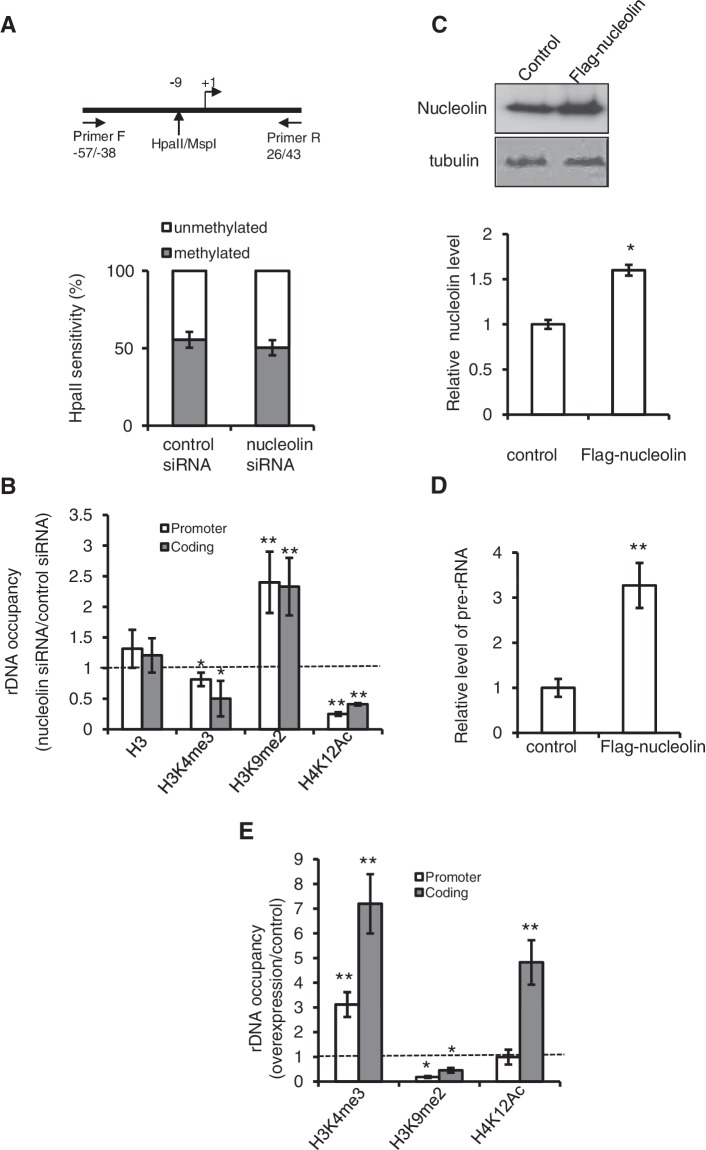
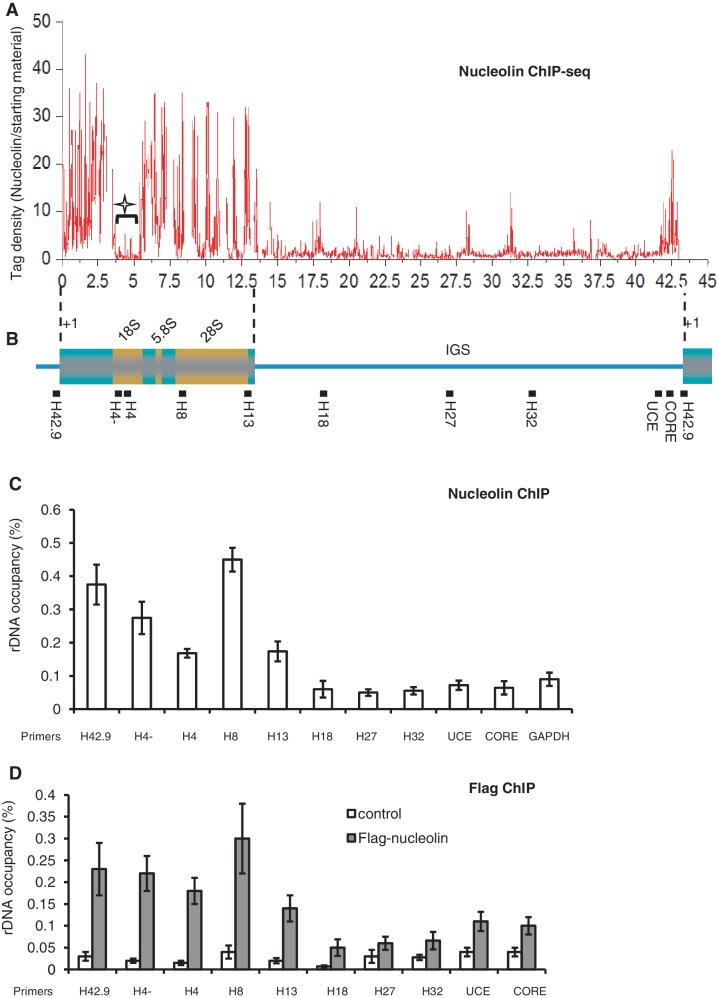
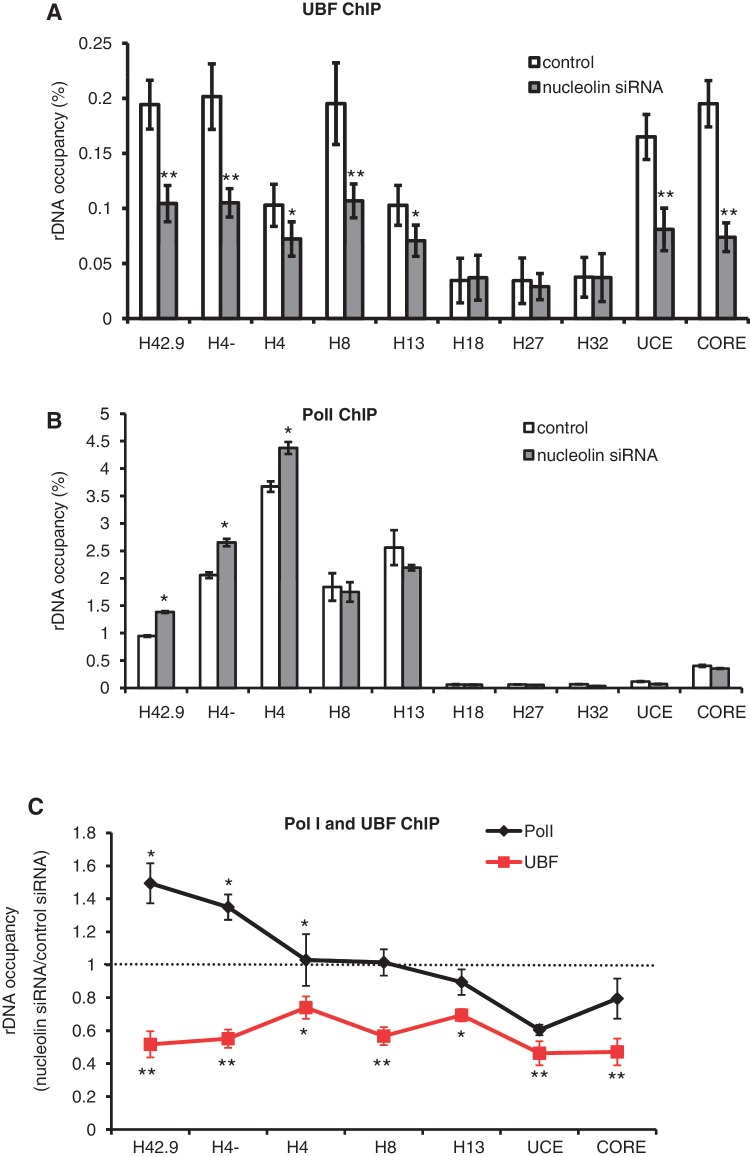
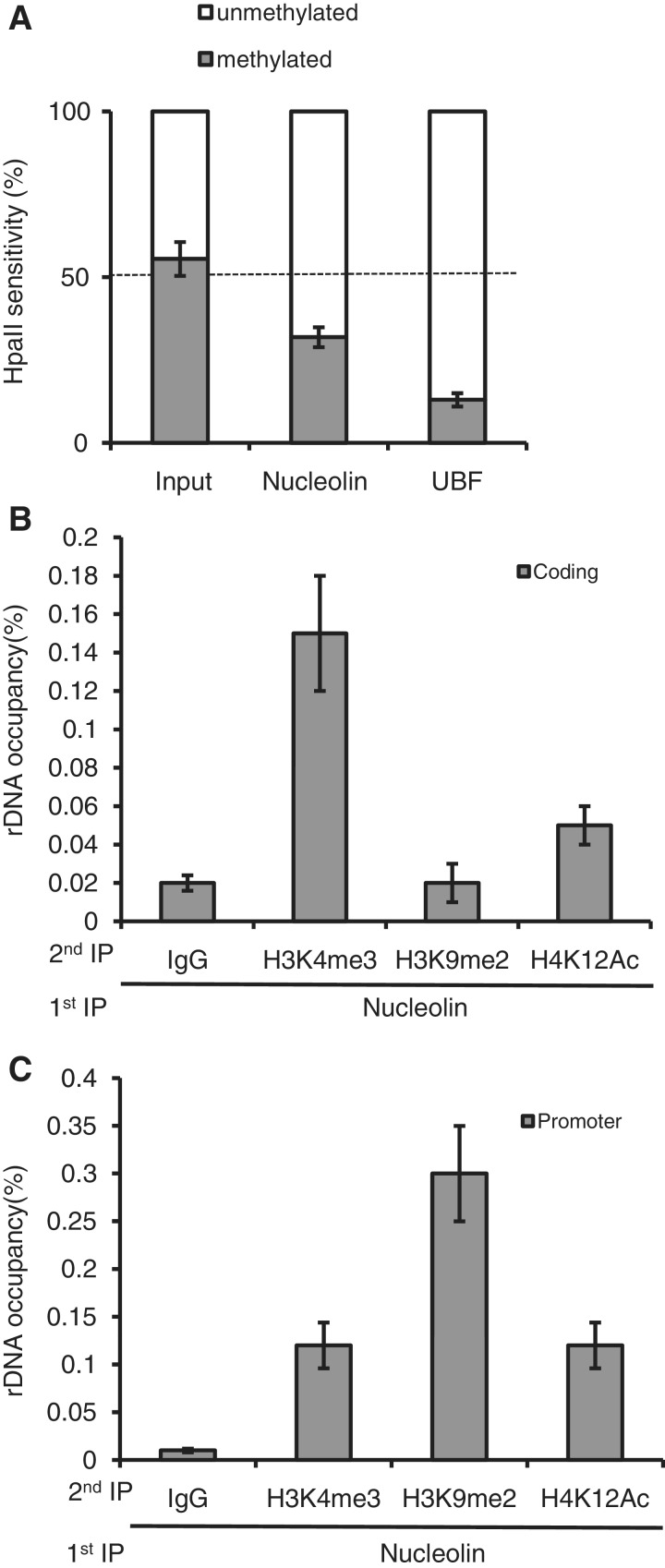
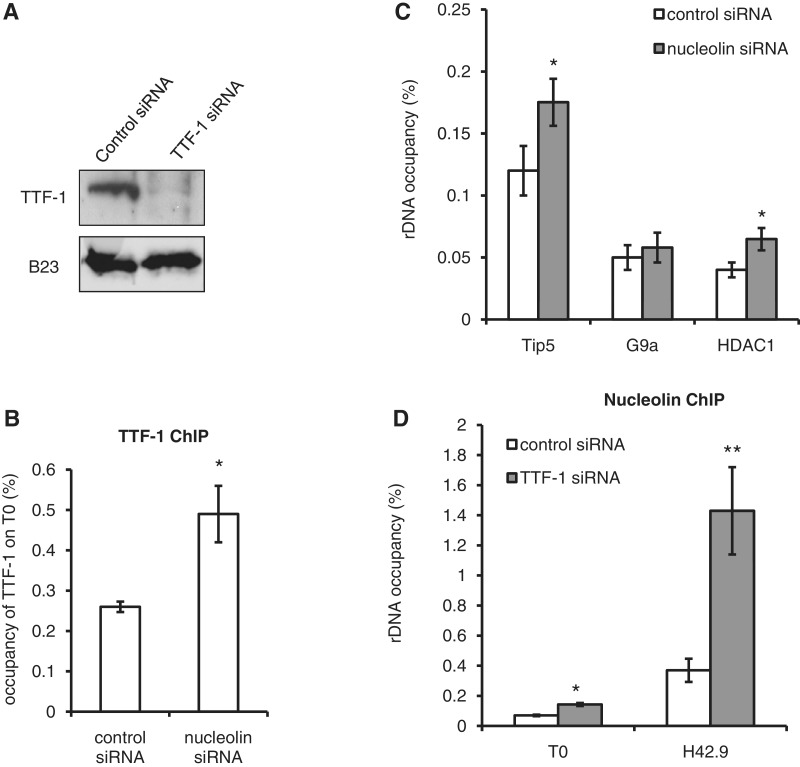
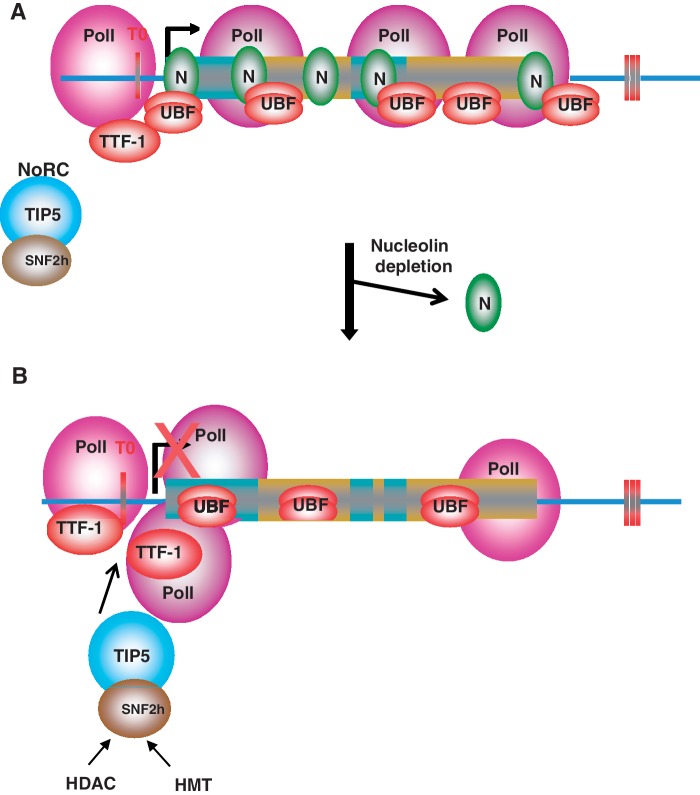
Nucleolin is a multi-functional nucleolar protein that is required for ribosomal RNA gene (rRNA) transcription in vivo, but the mechanism by which nucleolin modulates RNA polymerase I (RNAPI) transcription is not well understood. Nucleolin depletion results in an increase in the heterochromatin mark H3K9me2 and a decrease in H4K12Ac and H3K4me3 euchromatin histone marks in rRNA genes. ChIP-seq experiments identified an enrichment of nucleolin in the ribosomal DNA (rDNA) coding and promoter region. Nucleolin is preferentially associated with unmethylated rRNA genes and its depletion leads to the accumulation of RNAPI at the beginning of the transcription unit and a decrease in UBF along the coding and promoter regions. Nucleolin is able to affect the binding of transcription termination factor-1 on the promoter-proximal terminator T0, thus inhibiting the recruitment of TIP5 and HDAC1 and the establishment of a repressive heterochromatin state. These results reveal the importance of nucleolin for the maintenance of the euchromatin state and transcription elongation of rDNA.
Overview
The claims and statistics of this paper haven’t been checked yet.
Free: it reads the open-access text and checks the first 5 claims that cite a source we can check. Create a free account to check every claim.
Integrity signals
Registry
Cites
Statistics
Figures
Verification
Claims the paper makes
The claims and statistics of this paper haven’t been checked yet.
Free: it reads the open-access text and checks the first 5 claims that cite a source we can check. Create a free account to check every claim.
Claims other papers make about this one
Each is checked against this paper’s own text: does it say what the citing paper says it does?
The source backs part of the claim, not all of it — or backs it for a different population, condition or comparison.
In the citing paper
“NCL and NPMs regulate rRNA transcription through the modulation of H3K9m2 and H4K12ac in rRNA genes 18, 98.”
From Altered Machinery of Protein Synthesis in Alzheimer's: From the Nucleolus to the Ribosome (2016) · cites this paper as [18]
Experimental — accuracy not yet measured
Self-check
Percentages, sums and reported differences re-computed from the paper’s own numbers.
The self-check needs the paper’s full text.
Citations
Cites
The Sequence Alignment/Map format and SAMtools
Li, H., Handsaker, B., Wysoker, A., Fennell, T., Ruan, J., Homer, N., Marth, G., Abecasis, G., Durbin, R., & 1000 Genome Project Data Processing Subgroup (2009) · Bioinformatics · doi:10.1093/bioinformatics/btp352 · Cited by 62,041 · cited 1×
“Unique reads from the nucleolin ChIP dataset (15 467 484 reads) were mapped onto human rDNA reference sequence (NCBI accession number: HSU13369) using BWA (30,31).”
MethodFast and accurate short read alignment with Burrows-Wheeler transform
Li, H., & Durbin, R. (2009) · Bioinformatics · doi:10.1093/bioinformatics/btp324 · Cited by 58,607
Vakoc, C. R., Mandat, S. A., Olenchock, B. A., & Blobel, G. A. (2005) · Molecular Cell · doi:10.1016/j.molcel.2005.06.011 · Cited by 696 · cited 1×
“This is true for PolII genes (50) and also for Pol I genes (51) indicating that the association of nucleolin with H3K9me2 at the 50-end of the gene may be another sign of the link between active genes and nucleolin.”
Backgroundc-Myc binds to human ribosomal DNA and stimulates transcription of rRNA genes by RNA polymerase I
Grandori, C., Gomez-Roman, N., Felton-Edkins, Z. A., Ngouenet, C., Galloway, D. A., Eisenman, R. N., & White, R. J. (2005) · Nature Cell Biology · doi:10.1038/ncb1224 · Cited by 665 · cited 3×
“To validate these ChIP-seq data, we performed several QPCR analyses using primers that span the human rDNA repeat (29) (Figure 3B and C).”
BackgroundMethodInfluentialThe Epigenetics of rRNA Genes: From Molecular to Chromosome Biology
McStay, B., & Grummt, I. (2008) · Annual Review of Cell and Developmental Biology · doi:10.1146/annurev.cellbio.24.110707.175259 · Cited by 526 · cited 14×
“Once NoRC is recruited to the rDNA promoter by TTF-1, it mediates heterochromatin formation and silencing of rRNA transcription by recruiting histone-modifying enzymes histone deacetylases (HDAC), histone methyltransferases (HMT), DNA methyltransferase and by shifting the promoter-bound nucleosome into a silent positi…”
BackgroundInfluentialSantoro, R., Li, J., & Grummt, I. (2002) · Nature Genetics · doi:10.1038/ng1010 · Cited by 406
Two different chromatin structures coexist in ribosomal RNA genes throughout the cell cycle
Conconi, A., Widmer, R. M., Koller, T., & Sogo, J. (1989) · Cell · doi:10.1016/0092-8674(89)90790-3 · Cited by 390
Nucleolin: a multiFACeTed protein
Mongelard, F., & Bouvet, P. (2007) · Trends in Cell Biology · doi:10.1016/j.tcb.2006.11.010 · Cited by 347 · cited 1×
“Therefore, nucleolin could also be implicated in the regulation of chromatin accessibility at a relatively large scale in addition to its effect on single nucleosome co-remodelling and destabilizing activity (26,57).”
BackgroundSelf-citationNucleolin functions in the first step of ribosomal RNA processing
Ginisty, H. (1998) · The EMBO Journal · doi:10.1093/emboj/17.5.1476 · Cited by 334 · cited 1×
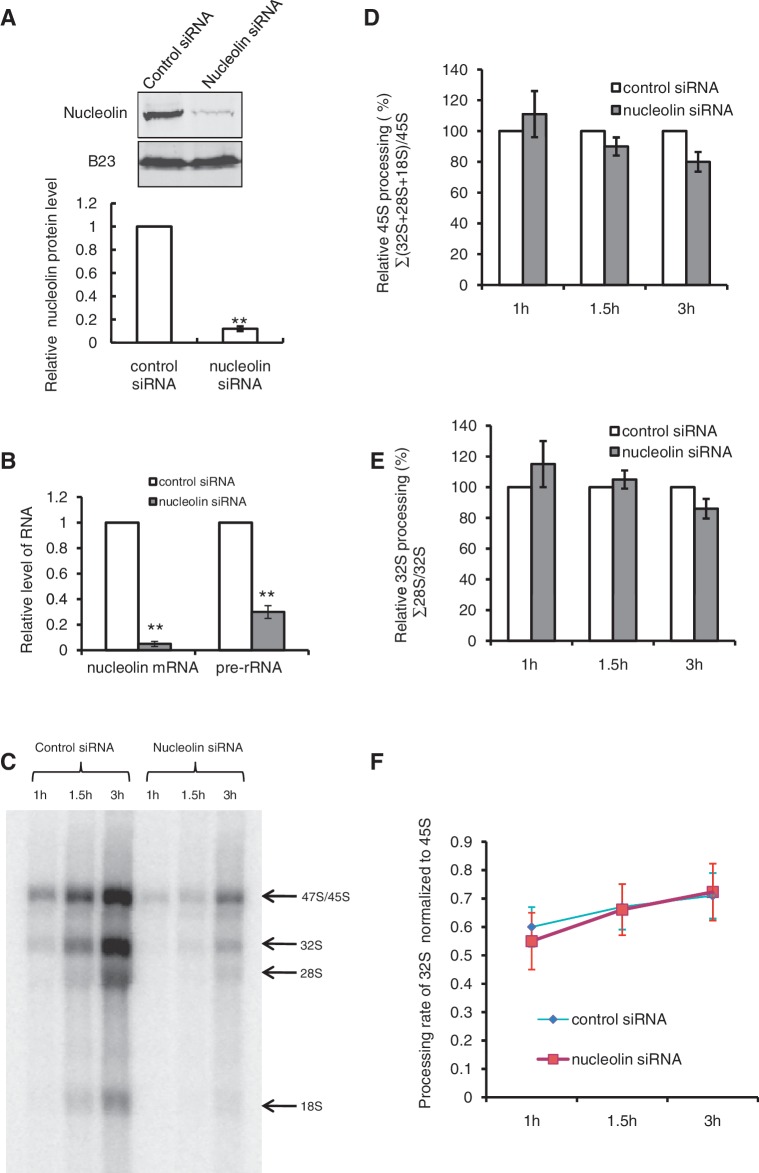
“Since nucleolin interacts specifically with pre-rRNA (41–47) and has been involved in the first processing step of pre-RNA in vitro (16), it was tempting to explain the low accumulation of pre-rRNA in nucleolin depleted cells by an indirect effect of nucleolin on pre-rRNA processing.”
BackgroundSelf-citationIntergenic Transcripts Regulate the Epigenetic State of rRNA Genes
Mayer, C., Schmitz, K.-M., Li, J., Grummt, I., & Santoro, R. (2006) · Molecular Cell · doi:10.1016/j.molcel.2006.03.028 · Cited by 327
Nucleolin is a histone chaperone with FACT‐like activity and assists remodeling of nucleosomes
Angelov, D., Bondarenko, V. A., Almagro, S., Menoni, H., Mongélard, F., Hans, F., Mietton, F., Studitsky, V. M., Hamiche, A., Dimitrov, S., et al. (2006) · The EMBO Journal · doi:10.1038/sj.emboj.7601046 · Cited by 258 · cited 4×
“Recent reports indicate that nucleolin is a histone chaperone with a FACT-like (FAcilitates Chromatin Transcription) activity that facilitates chromatin remodelling and histone dynamics (26,27), suggesting that nucleolin could regulate rRNA transcription at the level of chromatin accessibility and transcription elonga…”
BackgroundInfluentialSelf-citationMolecular Mechanisms Mediating Methylation-Dependent Silencing of Ribosomal Gene Transcription
Santoro, R., & Grummt, I. (2001) · Molecular Cell · doi:10.1016/s1097-2765(01)00317-3 · Cited by 253
Witcher, M., & Emerson, B. M. (2009) · Molecular Cell · doi:10.1016/j.molcel.2009.04.001 · Cited by 235
Zhou, Y., Santoro, R., & Grummt, I. (2002) · The EMBO Journal · doi:10.1093/emboj/cdf460 · Cited by 234 · cited 1×
“A major mechanism for silencing active rRNA genes seems to be the recruitment of the nucleolar remodelling complex (NoRC) to the promoter by the transcription termination factor-1 (TTF-1), which binds to the promoter-proximal terminator T0 (1,9,10).”
BackgroundA major nucleolar protein, nucleolin, induces chromatin decondensation by binding to histone Hl
ERARD, M. S., BELENGUER, P., CAIZERGUES‐FERRER, M., PANTALONI, A., & AMALRIC, F. (1988) · European Journal of Biochemistry · doi:10.1111/j.1432-1033.1988.tb14224.x · Cited by 226 · cited 1×
“Nucleolin binds tightly to chromatin (22,23) and is able to modulate chromatin structure by interaction with histone H1 (24,25) or to stimulate the remodelling activities of the ATP-dependent remodelling complexes SWI/SNF and ACF on canonical or macroH2A1 containing nucleosomes (26).”
BackgroundStefanovsky, V., Langlois, F., Gagnon-Kugler, T., Rothblum, L. I., & Moss, T. (2006) · Molecular Cell · doi:10.1016/j.molcel.2006.01.023 · Cited by 219 · cited 2×
“This pattern of RNAPI loading after nucleolin depletion is reminiscent of what happens after inhibition of transcription elongation by actinomycin D (34), suggesting that nucleolin could be required for efficient RNAPI elongation.”
BackgroundMolecular basis of sequence-specific recognition of pre-ribosomal RNA by nucleolin
Allain, F. H.-T. (2000) · The EMBO Journal · doi:10.1093/emboj/19.24.6870 · Cited by 214
Self-citationUgrinova, I., Monier, K., Ivaldi, C., Thiry, M., Storck, S., Mongelard, F., & Bouvet, P. (2007) · BMC Molecular Biology · doi:10.1186/1471-2199-8-66 · Cited by 213 · cited 6×
“but also in human primary fibroblast (14) and in chicken DT40 cells (20), showing that what we describe in this article is not a particularity of HeLa cells.”
InfluentialSelf-citationUBF levels determine the number of active ribosomal RNA genes in mammals
Sanij, E., Poortinga, G., Sharkey, K., Hung, S., Holloway, T. P., Quin, J., Robb, E., Wong, L. H., Thomas, W. G., Stefanovsky, V., et al. (2008) · The Journal of Cell Biology · doi:10.1083/jcb.200805146 · Cited by 210 · cited 5×
“In addition, UBF depletion leads to a decrease in the active ribosomal genes in psoralen cross-linking experiments (36); however, rRNA synthesis does not decrease as the transcription from the active genes is increased.”
BackgroundMethodInfluentialGhoshal, K., Majumder, S., Datta, J., Motiwala, T., Bai, S., Sharma, S. M., Frankel, W., & Jacob, S. T. (2004) · Journal of Biological Chemistry · doi:10.1074/jbc.m309393200 · Cited by 205 · cited 1×
“In human cells, methylation at a single site in the promoter of the rRNA gene correlates with the repression of the promoter activity (35).”
BackgroundNucleolin Interacts with Several Ribosomal Proteins through Its RGG Domain
Bouvet, P., Diaz, J.-J., Kindbeiter, K., Madjar, J.-J., & Amalric, F. (1998) · Journal of Biological Chemistry · doi:10.1074/jbc.273.30.19025 · Cited by 203
Self-citationWillems, M., Penman, M., & Penman, S. (1969) · The Journal of Cell Biology · doi:10.1083/jcb.41.1.177 · Cited by 194 · cited 1×
“Previous works have shown that in HeLa cells the accumulation of 45S could be affected by the rate of pre-rRNA processing (39,40).”
BackgroundGuetg, C., Lienemann, P., Sirri, V., Grummt, I., Hernandez‐Verdun, D., Hottiger, M. O., Fussenegger, M., & Santoro, R. (2010) · The EMBO Journal · doi:10.1038/emboj.2010.17 · Cited by 184
Dickinson, L. A., & Kohwi-Shigematsu, T. (1995) · Molecular and Cellular Biology · doi:10.1128/mcb.15.1.456 · Cited by 177 · cited 1×
“In addition, nucleolin-depleted cells show a striking reorganization of nucleoli structure (14,20,53), and several reports show that nucleolin is implicated in chromatin condensation (54), chromatin loop organization (55,56) and histone dynamics in vivo (27).”
BackgroundSantoro, R., & Grummt, I. (2005) · Molecular and Cellular Biology · doi:10.1128/mcb.25.7.2539-2546.2005 · Cited by 169 · cited 11×
“Once NoRC is recruited to the rDNA promoter by TTF-1, it mediates heterochromatin formation and silencing of rRNA transcription by recruiting histone-modifying enzymes histone deacetylases (HDAC), histone methyltransferases (HMT), DNA methyltransferase and by shifting the promoter-bound nucleosome into a silent positi…”
BackgroundInfluentialYuan, X., Feng, W., Imhof, A., Grummt, I., & Zhou, Y. (2007) · Molecular Cell · doi:10.1016/j.molcel.2007.06.021 · Cited by 168
Integrative genomic analysis of human ribosomal DNA
Zentner, G. E., Saiakhova, A., Manaenkov, P., Adams, M. D., & Scacheri, P. C. (2011) · Nucleic Acids Research · doi:10.1093/nar/gkq1326 · Cited by 165 · cited 8×
“(RPA116) that have recently been published (32) (Supplementary Figure S3).”
BackgroundMethodInfluentialMayer, C., Neubert, M., & Grummt, I. (2008) · EMBO reports · doi:10.1038/embor.2008.109 · Cited by 142
Nucleolin functions in nucleolus formation and chromosome congression
Ma, N., Matsunaga, S., Takata, H., Ono-Maniwa, R., Uchiyama, S., & Fukui, K. (2007) · Journal of Cell Science · doi:10.1242/jcs.008771 · Cited by 140 · cited 1×
“In addition, nucleolin-depleted cells show a striking reorganization of nucleoli structure (14,20,53), and several reports show that nucleolin is implicated in chromatin condensation (54), chromatin loop organization (55,56) and histone dynamics in vivo (27).”
BackgroundPontvianne, F., Matı́a, I., Douet, J., Tourmente, S., Medina, F. J., Echeverrı́a, M., & Sáez‐Vasquez, J. (2006) · Molecular Biology of the Cell · doi:10.1091/mbc.e06-08-0751 · Cited by 139 · cited 1×
“In Arabidopsis thaliana, disruption of the AtNUC-L1 gene induces the loss of DNA methylation without affecting histone epigenetic marks at rRNA genes (48).”
BackgroundBouche, G., Caizergues‐Ferrer, M., Bugler, B., & Amalric, F. (1984) · Nucleic Acids Research · doi:10.1093/nar/12.7.3025 · Cited by 132 · cited 1×
“Earlier experiments suggested a link between the proteolysis of nucleolin and RNAPI transcription elongation (21) and that only RNAPI (not Pol II or Pol III) transcription could be regulated by nucleolin, independent of the sequence of the transcribed RNA (15).”
BackgroundNucleolin Is Required for RNA Polymerase I Transcription In Vivo
Rickards, B., Flint, S. J., Cole, M. D., & LeRoy, G. (2007) · Molecular and Cellular Biology · doi:10.1128/mcb.01584-06 · Cited by 131 · cited 2×
“Previous experiments have shown that nucleolin is required for the efficient production of pre-rRNA by RNAPI, but the mechanisms implicated in this regulation have not been investigated (14,19,20).”
BackgroundGagnon-Kugler, T., Langlois, F., Stefanovsky, V. Y., Lessard, F., & Moss, T. (2009) · Molecular Cell · doi:10.1016/j.molcel.2009.07.008 · Cited by 124 · cited 1×
“For instance, when DNA methylation is lost, 50% of rRNA genes still show an inactive state by psoralen (49).”
BackgroundGrummt, I. (2010) · FEBS Journal · doi:10.1111/j.1742-4658.2010.07892.x · Cited by 113
Interaction of nucleolar phosphoprotein C23 with cloned segments of rat ribosomal DNA
Olson, M. O. J., Rivers, Z. M., Thompson, B. A., Kao, W.-Y., & Case, S. T. (1983) · Biochemistry · doi:10.1021/bi00283a007 · Cited by 112 · cited 1×
“Nucleolin binds tightly to chromatin (22,23) and is able to modulate chromatin structure by interaction with histone H1 (24,25) or to stimulate the remodelling activities of the ATP-dependent remodelling complexes SWI/SNF and ACF on canonical or macroH2A1 containing nucleosomes (26).”
BackgroundNoRC‐dependent nucleosome positioning silences rRNA genes
Li, J., Längst, G., & Grummt, I. (2006) · The EMBO Journal · doi:10.1038/sj.emboj.7601454 · Cited by 111 · cited 1×
“A major mechanism for silencing active rRNA genes seems to be the recruitment of the nucleolar remodelling complex (NoRC) to the promoter by the transcription termination factor-1 (TTF-1), which binds to the promoter-proximal terminator T0 (1,9,10).”
BackgroundTwo RNA-binding Domains Determine the RNA-binding Specificity of Nucleolin
Serin, G., Joseph, G., Ghisolfi, L., Bauzan, M., Érard, M., Amalric, F., & Bouvet, P. (1997) · Journal of Biological Chemistry · doi:10.1074/jbc.272.20.13109 · Cited by 107
Self-citationTTF‐I determines the chromatin architecture of the active rDNA promoter
Längst, G., Becker, P. B., & Grummt, I. (1998) · The EMBO Journal · doi:10.1093/emboj/17.11.3135 · Cited by 106 · cited 1×
“TTF-1, which binds the promoter-proximal terminator T0, plays a key role in the recruitment of the nucleolar remodelling complex NoRC and the silencing of rDNA (5), although earlier reports indicated that TTF-1 was required for the transcription by RNAPI of chromatinized DNA templates (37).”
BackgroundEpigenetic regulation of TTF-I-mediated promoter-terminator interactions of rRNA genes
Németh, A., Guibert, S., Tiwari, V. K., Ohlsson, R., & Längst, G. (2008) · The EMBO Journal · doi:10.1038/emboj.2008.57 · Cited by 94 · cited 1×
“Z and macroH2A (7,8) may also contribute to the epigenetic control of rRNA transcription.”
BackgroundNucleolin provides a link between RNA polymerase I transcription and pre-ribosome assembly
Roger, B., Moisand, A., Amalric, F., & Bouvet, P. (2003) · Chromosoma · doi:10.1007/s00412-002-0221-5 · Cited by 83
Self-citationStrohner, R., Németh, A., Nightingale, K. P., Grummt, I., Becker, P. B., & Längst, G. (2004) · Molecular and Cellular Biology · doi:10.1128/mcb.24.4.1791-1798.2004 · Cited by 83 · cited 1×
“A major mechanism for silencing active rRNA genes seems to be the recruitment of the nucleolar remodelling complex (NoRC) to the promoter by the transcription termination factor-1 (TTF-1), which binds to the promoter-proximal terminator T0 (1,9,10).”
BackgroundABERRANT INTRANUCLEOLAR MATURATION OF RIBOSOMAL PRECURSORS IN THE ABSENCE OF PROTEIN SYNTHESIS
Craig, N. C., & Perry, R. P. (1970) · The Journal of Cell Biology · doi:10.1083/jcb.45.3.554 · Cited by 79 · cited 1×
“Previous works have shown that in HeLa cells the accumulation of 45S could be affected by the rate of pre-rRNA processing (39,40).”
BackgroundLocalization of nucleolin binding sites on human and mouse pre-ribosomal RNA
Serin, G., Joseph, G., Faucher, C., Ghisolfi, L., Bouche, G., Amalric, F., & Bouvet, P. (1996) · Biochimie · doi:10.1016/0300-9084(96)84759-6 · Cited by 79
Self-citationGinisty, H., Serin, G., Nieto, L., Roger, B., Libante, V., Amalric, F., & Bouvet, P. (2000) · Journal of Biological Chemistry · doi:10.1074/jbc.m002350200 · Cited by 76
Self-citationRecognition of Pre-formed and Flexible Elements of an RNA Stem-Loop by Nucleolin
Bouvet, P., Allain, F. H. ‐., Finger, L. D., Dieckmann, T., & Feigon, J. F. (2001) · Journal of Molecular Biology · doi:10.1006/jmbi.2001.4691 · Cited by 71
Self-citationRepeat peptide motifs which contain β‐turns and modulate DNA condensation in chromatin
Érard, M., Lakhdar‐Ghazal, F., & Amalric, F. (1990) · European Journal of Biochemistry · doi:10.1111/j.1432-1033.1990.tb19088.x · Cited by 67 · cited 1×
“Nucleolin binds tightly to chromatin (22,23) and is able to modulate chromatin structure by interaction with histone H1 (24,25) or to stimulate the remodelling activities of the ATP-dependent remodelling complexes SWI/SNF and ACF on canonical or macroH2A1 containing nucleosomes (26).”
BackgroundNemeth, A. (2004) · Nucleic Acids Research · doi:10.1093/nar/gkh732 · Cited by 65
Roger, B., Moisand, A., Amalric, F., & Bouvet, P. (2002) · Journal of Biological Chemistry · doi:10.1074/jbc.m106412200 · Cited by 64 · cited 1×
“Earlier experiments suggested a link between the proteolysis of nucleolin and RNAPI transcription elongation (21) and that only RNAPI (not Pol II or Pol III) transcription could be regulated by nucleolin, independent of the sequence of the transcribed RNA (15).”
BackgroundSelf-citationTwo Different Combinations of RNA-binding Domains Determine the RNA Binding Specificity of Nucleolin
Ginisty, H., Amalric, F., & Bouvet, P. (2001) · Journal of Biological Chemistry · doi:10.1074/jbc.m011120200 · Cited by 56
Self-citationKharrat, A., Derancourt, J., Dorée, M., Amalric, F., & Érard, M. (1991) · Biochemistry · doi:10.1021/bi00106a034 · Cited by 52
Olson, M. O. J., Ezrailson, E. G., Guetzow, K. A., & Busch, H. (1975) · Journal of Molecular Biology · doi:10.1016/s0022-2836(75)80062-3 · Cited by 51 · cited 1×
“Nucleolin binds tightly to chromatin (22,23) and is able to modulate chromatin structure by interaction with histone H1 (24,25) or to stimulate the remodelling activities of the ATP-dependent remodelling complexes SWI/SNF and ACF on canonical or macroH2A1 containing nucleosomes (26).”
BackgroundBouvet, P., Jain, C., Belasco, J. G., Amalric, F., & Érard, M. (1997) · The EMBO Journal · doi:10.1093/emboj/16.17.5235 · Cited by 51
Self-citationStorck, S., Thiry, M., & Bouvet, P. (2008) · Biology of the Cell · doi:10.1042/bc20080054 · Cited by 50 · cited 7×
“but also in human primary fibroblast (14) and in chicken DT40 cells (20), showing that what we describe in this article is not a particularity of HeLa cells.”
BackgroundResultInfluentialSelf-citationEgyházi, E., Pigon, A., Chang, J.-H., Ghaffari, S. H., Dreesen, T. D., Wellman, S. E., Case, S. T., & Olson, M. O. J. (1988) · Experimental Cell Research · doi:10.1016/0014-4827(88)90397-7 · Cited by 49
In vivoStudy of the Histone Chaperone Activity of Nucleolin by FRAP
Gaume, X., Monier, K., Argoul, F., Mongélard, F., & Bouvet, P. (2011) · Biochemistry Research International · doi:10.1155/2011/187624 · Cited by 37 · cited 3×
“In addition, nucleolin-depleted cells show a striking reorganization of nucleoli structure (14,20,53), and several reports show that nucleolin is implicated in chromatin condensation (54), chromatin loop organization (55,56) and histone dynamics in vivo (27).”
BackgroundSelf-citationAraya, I., Nardocci, G., Morales, J., Vera, M. I., Molina, A., & Álvarez, M. (2010) · Epigenetics & Chromatin · doi:10.1186/1756-8935-3-14 · Cited by 31 · cited 3×
“Z and macroH2A (7,8) may also contribute to the epigenetic control of rRNA transcription.”
BackgroundA new pathway of tumor promotion by the okadaic acid class compounds.
Fujiki, H., Suganuma, M., Nishiwaki, S., YOSHIZAWA, S., Winyar, B., Sugimura, T., & Schmitz, F. J. (1990) · PubMed · Cited by 13
Cited by
RNA helicase DDX21 coordinates transcription and ribosomal RNA processing
Calo, E., Flynn, R. A., Martin, L., Spitale, R. C., Chang, H. Y., & Wysocka, J. (2015) · Nature · doi:10.1038/nature13923 · Cited by 324
The roles of nucleolin subcellular localization in cancer
Berger, C. M., Gaume, X., & Bouvet, P. (2015) · Biochimie · doi:10.1016/j.biochi.2015.03.023 · Cited by 267
Self-citationNew perspectives of physiological and pathological functions of nucleolin (NCL)
Jia, W., Yao, Z., Zhao, J., Guan, Q., & Gao, L. (2017) · Life Sciences · doi:10.1016/j.lfs.2017.07.025 · Cited by 249
Altered Machinery of Protein Synthesis in Alzheimer's: From the Nucleolus to the Ribosome
Hernández‐Ortega, K., Garcia‐Esparcia, P., Gil, L., Lucas, J. J., & Ferrer, I. (2016) · Brain Pathology · doi:10.1111/bpa.12335 · Cited by 245
“NCL and NPMs regulate rRNA transcription through the modulation of histone modifications dimethylated histone H3K9 (H3K9me2) and acetylated histone H3K12 (H3K12ac) in rRNA genes (18, 98).”
BackgroundImpaired ribosome biogenesis: mechanisms and relevance to cancer and aging
Turi, Z., Lacey, M., Mistrik, M., & Moudry, P. (2019) · Aging · doi:10.18632/aging.101922 · Cited by 215
“NCL is recruited to the rRNA genes and interacts with both the promoter and the coding regions to facilitate transcription elongation by Pol I [50].”
Background
Metadata
- Authors
- Cong, R., Das, S., Ugrinova, I., Kumar, S., Mongelard, F., Wong, J., & Bouvet, P.
- Affiliations
- École Normale Supérieure de Lyon (FR)
- Corresponding author
- Bouvet, Philippe
- Venue
- Nucleic Acids Research
- Publisher
- Oxford University Press (OUP)
- Published
- 2012-08-02
- Volume
- 40
- Issue
- 19
- Pages
- 9441-9454
- ISSN
- 0305-1048 (ISSN-L)
- 1362-4962
- PMC
- PMC3479187
- OpenAlex
- W2124552631
- Cited by
- 155
- References
- 57
- Citations by year
- 2026: 6 · 2025: 9 · 2024: 14 · 2023: 12 · 2022: 13 · 2021: 11 · 2020: 13 · 2019: 13 · 2018: 7 · 2017: 17 · 2016: 9 · 2015: 12 · 2014: 10 · 2013: 8 · 2012: 1
- FWCI
- 3.98
- Type
- journal article
- Language
- en
- Open access
- gold
- doi.org
- Licence
- Locations
- Nucleic Acids Research (publishedVersion, cc-by-nc)
- Europe PMC (PubMed Central) (publishedVersion, cc-by-nc)
- PubMed Central (publishedVersion, cc-by-nc)
- PubMed (publishedVersion)
- HighWire Press Open Archive (submittedVersion)
- Funders
- Association pour la Recherche sur le Cancer (ANR-07-BLAN-0062-01, ECL2010-R01122)
- Agence Nationale de la Recherche (ANR-07-BLAN-0062, ECL2010R01122)
- Indo-French Centre for the Promotion of Advanced Research
- Centre National de la Recherche Scientifique (ANR-07-BLAN-0062-01, ECL2010R01122)
- Topics
- Life Sciences › Biochemistry, Genetics and Molecular Biology › Molecular Biology › Genomics and Chromatin Dynamics
- Life Sciences › Biochemistry, Genetics and Molecular Biology › Molecular Biology › Nuclear Structure and Function
- Life Sciences › Biochemistry, Genetics and Molecular Biology › Genetics › Chromosomal and Genetic Variations
- Keywords
- nucleolin, ribosomal DNA, RNA polymerase I transcription, UBF, HDAC1, H3K9me2, heterochromatin, euchromatin, histone modifications, transcription elongation, nucleolus
- MeSH terms
- Nucleolin, Chromatin, DNA-Binding Proteins, DNA, Ribosomal, HeLa Cells, Humans, Phosphoproteins, Repetitive Sequences, Nucleic Acid, RNA Polymerase I, Terminator Regions, Genetic, Transcription Factors, Transcription, Genetic, RNA-Binding Proteins, Genes, rRNA, Epigenesis, Genetic
About these checks
Registry, retraction, Cites and statistics results are computed, not judged, with one exception: a printed reference that no index lists is read once by a model before it counts as a citation error. Claims are extracted by a model and kept only when their quote appears verbatim in the text; each cited source is then checked, with a model’s help, for whether it says what the claim relies on. Those verdicts can be wrong — read the claim’s quote and the cited source before relying on one.
Statistics and arithmetic are recomputed, not judged.
Confidence bands are shown only for fields calibrated on our annotated test set. None is calibrated yet, so no band is shown.
What counts as a claim ›How we measure confidence ›How we check this ›
Are you an author, or do you see a problem with this page? Request a review
Data sources
Bibliographic data: Semantic Scholar, OpenAlex, Crossref.
Contains information from the Semantic Scholar Academic Graph Datasets, made available under the ODC Attribution License (ODC-BY 1.0).
Semantic Scholar’s data is described in: Kinney, R., et al. (2023). The Semantic Scholar Open Data Platform. arXiv:2301.10140.
