

The DOI matches its Crossref record; 39 of the 39 references it cites were found in a registry or an index.
The E3 ubiquitin ligase UBE3A is an integral component of the molecular circadian clock through regulating the BMAL1 transcription factor
Open accessAbstract
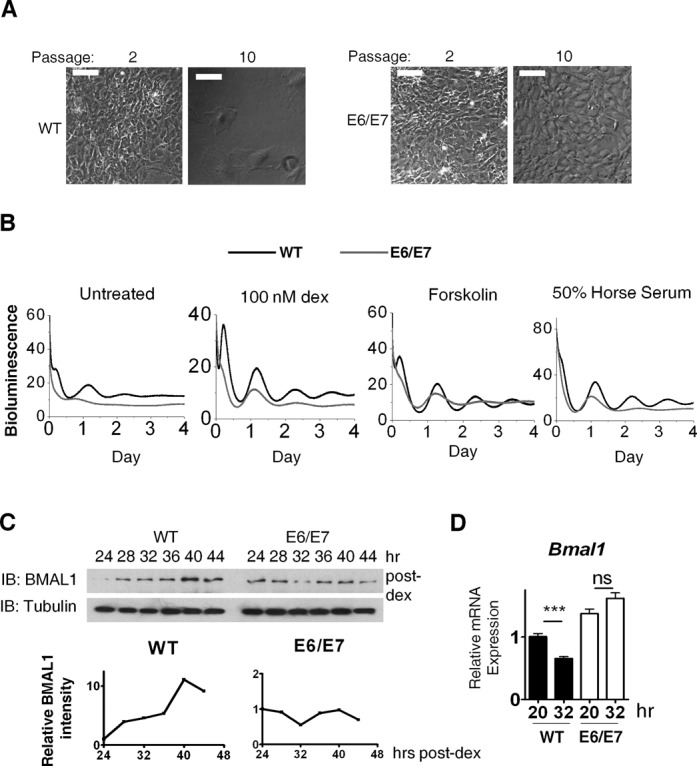
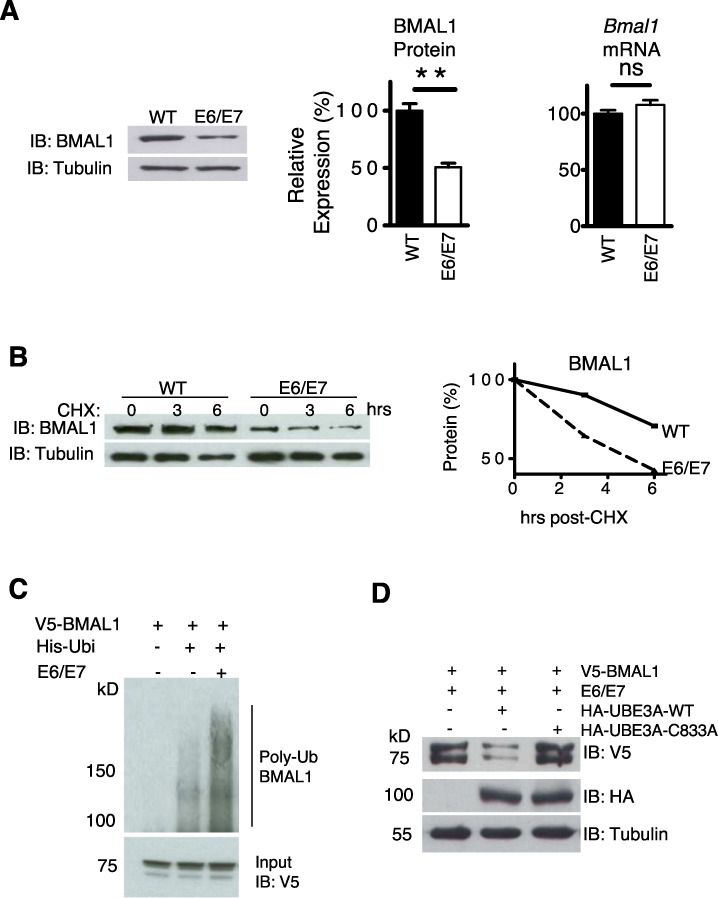
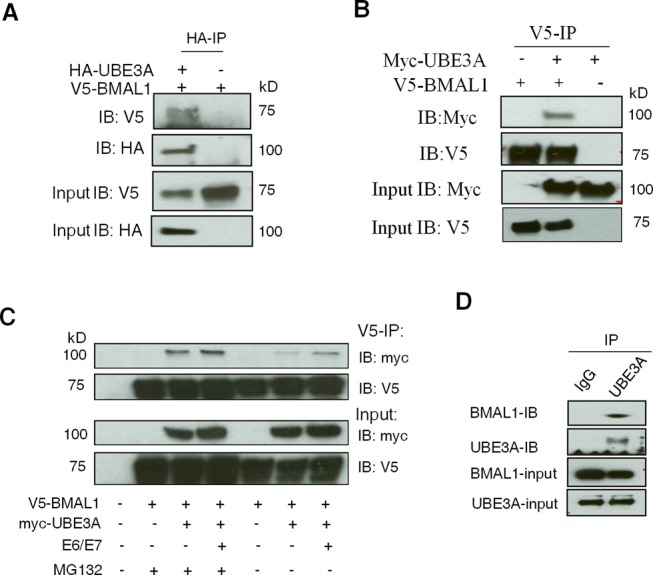
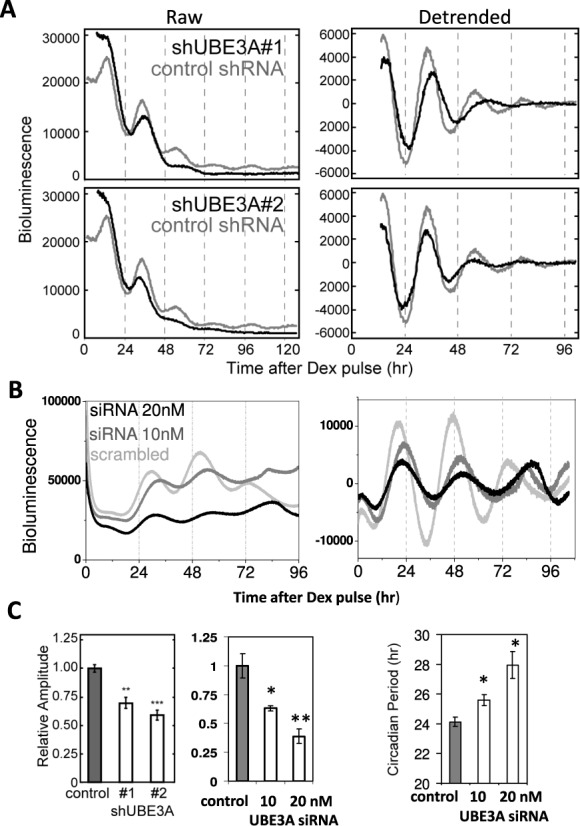
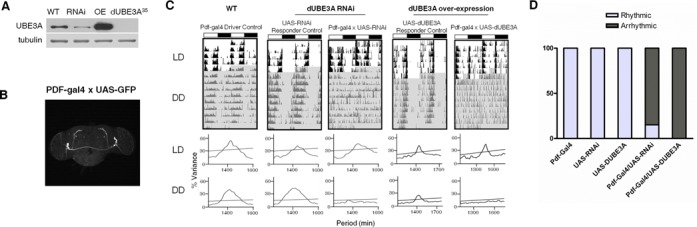
Post-translational modifications (such as ubiquitination) of clock proteins are critical in maintaining the precision and robustness of the evolutionarily conserved circadian clock. Ubiquitination of the core clock transcription factor BMAL1 (brain and muscle Arnt-like 1) has recently been reported. However, it remains unknown whether BMAL1 ubiquitination affects circadian pacemaking and what ubiquitin ligase(s) is involved. Here, we show that activating UBE3A (by expressing viral oncogenes E6/E7) disrupts circadian oscillations in mouse embryonic fibroblasts, measured using PER2::Luc dynamics, and rhythms in endogenous messenger ribonucleic acid and protein levels of BMAL1. Over-expression of E6/E7 reduced the level of BMAL1, increasing its ubiquitination and proteasomal degradation. UBE3A could bind to and degrade BMAL1 in a ubiquitin ligase-dependent manner. This occurred both in the presence and absence of E6/E7. We provide in vitro (knockdown/over-expression in mammalian cells) and in vivo (genetic manipulation in Drosophila) evidence for an endogenous role of UBE3A in regulating circadian dynamics and rhythmic locomotor behaviour. Together, our data reveal an essential and conserved role of UBE3A in the regulation of the circadian system in mammals and flies and identify a novel mechanistic link between oncogene E6/E7-mediated cell transformation and circadian (BMAL1) disruption.
Overview
The claims and statistics of this paper haven’t been checked yet.
Run the check — free, no account needed. It reads the open-access text and checks the sources it cites.
Integrity signals
Registry
Cites
Statistics
Figures
Verification
Claims the paper makes
The claims and statistics of this paper haven’t been checked yet.
Run the check — free, no account needed. It reads the open-access text and checks the sources it cites.
Claims other papers make about this one
Each is checked against this paper’s own text: does it say what the citing paper says it does?
In the citing paper
“UBE3A targets the circadian transcription factor BMAL1 for proteasomal degradation and thus is crucial for maintaining the pace of molecular clock timing117.”
From Rhythms of life: circadian disruption and brain disorders across the lifespan (2019) · cites this paper as [117]
Self-check
Percentages, sums and reported differences re-computed from the paper’s own numbers.
The self-check needs the paper’s full text.
Citations
Cites
Coordination of circadian timing in mammals
Reppert, S. M., & Weaver, D. R. (2002) · Nature · doi:10.1038/nature00965 · Cited by 4,379
The HPV-16 E6 and E6-AP complex functions as a ubiquitin-protein ligase in the ubiquitination of p53
Scheffner, M., Huibregtse, J. M., Vierstra, R. D., & Howley, P. M. (1993) · Cell · doi:10.1016/0092-8674(93)90384-3 · Cited by 2,416
Yoo, S.-H., Yamazaki, S., Lowrey, P. L., Shimomura, K., Ko, C. H., Buhr, E. D., Siepka, S. M., Hong, H.-K., Oh, W. J., Yoo, O. J., et al. (2004) · Proceedings of the National Academy of Sciences · doi:10.1073/pnas.0308709101 · Cited by 2,329
Resetting central and peripheral circadian oscillators in transgenic rats
Yamazaki, S., Numano, R., Abe, M., Hida, A., Takahashi, R.-I., Ueda, M., Block, G. D., Sakaki, Y., Menaker, M., & Tei, H. (2000) · Science · doi:10.1126/science.288.5466.682 · Cited by 1,907
Mop3 is an essential component of the master circadian pacemaker in mammals.
Bunger, M. K., Wilsbacher, L. D., Moran, S. M., Clendenin, C., Radcliffe, L. A., Hogenesch, J. B., Simon, M. C., Takahashi, J. S., & Bradfield, C. A. (2000) · Cell · doi:10.1016/s0092-8674(00)00205-1 · Cited by 1,621
The genetics of mammalian circadian order and disorder: implications for physiology and disease
Takahashi, J. S., Hong, H.-K., Ko, C. H., & McDearmon, E. L. (2008) · Nature Reviews Genetics · doi:10.1038/nrg2430 · Cited by 1,611
Münger, K., Phelps, W. C., Bubb, V. J., Howley, P. M., & Schlegel, R. (1989) · Journal of Virology · doi:10.1128/jvi.63.10.4417-4421.1989 · Cited by 1,335
UBE3A/E6-AP mutations cause Angelman syndrome
Kishino, T., Lalande, M., & Wagstaff, J. E. (1997) · Nature Genetics · doi:10.1038/ng0197-70 · Cited by 1,304
Fu, L., Pelicano, H., Liu, J., Huang, P., & Lee, C. C. (2002) · Cell · doi:10.1016/s0092-8674(02)00961-3 · Cited by 1,268
Control Mechanism of the Circadian Clock for Timing of Cell Division in Vivo
Matsuo, T., Yamaguchi, S., Mitsui, S., Emi, A., Shimoda, F., & Okamura, H. (2003) · Science · doi:10.1126/science.1086271 · Cited by 1,132
Cited by
Sorted by citations
Molecular mechanisms and physiological importance of circadian rhythms
Patke, A., Young, M. W., & Axelrod, S. (2020) · Nature Reviews Molecular Cell Biology · doi:10.1038/s41580-019-0179-2 · Cited by 1,388
Rhythms of life: circadian disruption and brain disorders across the lifespan
Logan, R. W., & McClung, C. A. (2019) · Nature Reviews Neuroscience · doi:10.1038/s41583-018-0088-y · Cited by 713
Cellular degradation systems in ferroptosis
Chen, X., Yu, C., Kang, R., Kroemer, G., & Tang, D. (2021) · Cell Death and Differentiation · doi:10.1038/s41418-020-00728-1 · Cited by 671
Cancer and the Circadian Clock
Shafi, A. A., & Knudsen, K. E. (2019) · Cancer Research · doi:10.1158/0008-5472.can-19-0566 · Cited by 264
A splice variant of human Bmal1 acts as a negative regulator of the molecular circadian clock
Lee, J., Park, E., Kim, G. H., Kwon, I., & Kim, K. (2018) · Experimental & Molecular Medicine · doi:10.1038/s12276-018-0187-x · Cited by 200
The intricate dance of post-translational modifications in the rhythm of life
Hirano, A., Fu, Y., & Ptáček, L. J. (2016) · Nature Structural & Molecular Biology · doi:10.1038/nsmb.3326 · Cited by 197
Autism gene Ube3a and seizures impair sociability by repressing VTA Cbln1
Krishnan, V., Stoppel, D. C., Nong, Y., Johnson, M. A., Nadler, M. J. S., Özkaynak, E., Teng, B. L., Nagakura, I., Mohammad, F., Silva, M. A., et al. (2017) · Nature · doi:10.1038/nature21678 · Cited by 142
Epigenetic Regulation of UBE3A and Roles in Human Neurodevelopmental Disorders
LaSalle, J. M., Reiter, L. T., & Chamberlain, S. J. (2015) · Epigenomics · doi:10.2217/epi.15.70 · Cited by 139
CNV biology in neurodevelopmental disorders
Takumi, T., & Tamada, K. (2018) · Current Opinion in Neurobiology · doi:10.1016/j.conb.2017.12.004 · Cited by 121
Circadian Clock Regulation on Lipid Metabolism and Metabolic Diseases
Pan, X., Mota, S., & Zhang, B. (2020) · Advances in experimental medicine and biology · doi:10.1007/978-981-15-6082-8_5 · Cited by 115
Guo, B., Yang, N., Borysiewicz, E., Dudek, M., Williams, J. L., Li, J., Maywood, E. S., Adamson, A. D., Hastings, M. H., Bateman, J. F., et al. (2015) · Osteoarthritis and Cartilage · doi:10.1016/j.joca.2015.02.020 · Cited by 110
Self-citationA central role for ubiquitination within a circadian clock protein modification code
Stojkovic, K., Wing, S. S., & Cermakian, N. (2014) · Frontiers in Molecular Neuroscience · doi:10.3389/fnmol.2014.00069 · Cited by 99
Molecular modulators of the circadian clock: lessons from flies and mice
Mendoza-Viveros, L., Bouchard-Cannon, P., Hegazi, S., Cheng, A. H., Pastore, S. F., & Cheng, H. M. (2016) · Cellular and Molecular Life Sciences · doi:10.1007/s00018-016-2378-8 · Cited by 105
Maternal Ube3a Loss Disrupts Sleep Homeostasis But Leaves Circadian Rhythmicity Largely Intact
Ehlen, J. C., Jones, K. A., Pinckney, L., Gray, C. L., Burette, S., Weinberg, R. J., Evans, J. A., Brager, A. J., Zylka, M. J., Paul, K. N., et al. (2015) · Journal of Neuroscience · doi:10.1523/jneurosci.2194-15.2015 · Cited by 91
Circadian Synchrony: Sleep, Nutrition, and Physical Activity
Healy, K. L., Morris, A. R., & Liu, A. C. (2021) · Frontiers in Network Physiology · doi:10.3389/fnetp.2021.732243 · Cited by 98
Aberrant Proteostasis of BMAL1 Underlies Circadian Abnormalities in a Paradigmatic mTOR-opathy
Lipton, J. O., Boyle, L. M., Yuan, E. D., Hochstrasser, K. J., Chifamba, F. F., Nathan, A., Tsai, P. T., Davis, F. C., & Şahin, M. (2017) · Cell Reports · doi:10.1016/j.celrep.2017.07.008 · Cited by 87
Ube3a Imprinting Impairs Circadian Robustness in Angelman Syndrome Models
Shi, S.-Q., Bichell, T. J., Ihrie, R. A., & Johnson, C. H. (2015) · Current Biology · doi:10.1016/j.cub.2014.12.047 · Cited by 84
UBE3A: An E3 Ubiquitin Ligase With Genome-Wide Impact in Neurodevelopmental Disease
Lopez, S. J., Segal, D. J., & LaSalle, J. M. (2019) · Frontiers in Molecular Neuroscience · doi:10.3389/fnmol.2018.00476 · Cited by 76
Ullah, K., Chen, S., Lü, J., Wang, X., Liu, Q. L., Zhang, Y., Long, Y., Hu, Z., & Xu, G. (2020) · Journal of Biological Chemistry · doi:10.1074/jbc.ra119.011280 · Cited by 61
Self-citationPhosphorylation and Circadian Molecular Timing
Brenna, A., & Albrecht, U. (2020) · Frontiers in Physiology · doi:10.3389/fphys.2020.612510 · Cited by 59
Li, W., Yao, A., Zhi, H., Kaur, K. H., Zhu, Y.-C., Jia, M., Zhao, H., Wang, Q., Jin, S., Zhao, G., et al. (2016) · PLoS Genetics · doi:10.1371/journal.pgen.1006062 · Cited by 58
Self-citationChen, S., Yang, J., Zhang, Y., Duan, C., Liu, Q. L., Huang, Z., Xu, Y., Zhou, L., & Xu, G. (2018) · Journal of Biological Chemistry · doi:10.1074/jbc.ra117.001432 · Cited by 54
Self-citationGenomic Imprinting: A New Epigenetic Perspective of Sleep Regulation
Tucci, V. (2016) · PLoS Genetics · doi:10.1371/journal.pgen.1006004 · Cited by 48
Liu, C., & Chung, M. (2015) · Neuroscience Bulletin · doi:10.1007/s12264-014-1495-3 · Cited by 50
Periodicity, repression, and the molecular architecture of the mammalian circadian clock
Rosensweig, C., & Green, C. B. (2018) · European Journal of Neuroscience · doi:10.1111/ejn.14254 · Cited by 50
The HECT E3 Ligase E6AP/UBE3A as a Therapeutic Target in Cancer and Neurological Disorders
Owais, A., Mishra, R. K., & Kiyokawa, H. (2020) · Cancers · doi:10.3390/cancers12082108 · Cited by 48
Necdin regulates BMAL1 stability and circadian clock through SGT1-HSP90 chaperone machinery
Lu, R., Dong, Y., & Li, J. (2020) · Nucleic Acids Research · doi:10.1093/nar/gkaa601 · Cited by 39
Ferroptosis, autophagy, tumor and immunity
Xie, Y., Zhou, Y., Wang, J., Lijuan, D., Ren, Y., & Liu, F. (2023) · Heliyon · doi:10.1016/j.heliyon.2023.e19799 · Cited by 40
Matsuura, T., Moore, S. R., & Hong, C. I. (2017) · Journal of Biological Rhythms · doi:10.1177/0748730417745913 · Cited by 40
Exploring the “Other” subfamily of HECT E3-ligases for therapeutic intervention
Singh, S., Ng, J. D., & Sivaraman, J. (2021) · Pharmacology & Therapeutics · doi:10.1016/j.pharmthera.2021.107809 · Cited by 37
Epigenetic mechanisms in diurnal cycles of metabolism and neurodevelopment
Powell, W. T., & LaSalle, J. M. (2015) · Human Molecular Genetics · doi:10.1093/hmg/ddv234 · Cited by 36
Ramírez, J., Lectez, B. L. P., Osinalde, N., Sivá, M., Elu, N., Aloria, K., Procházková, M., Pérez, C., Hernández, J. M., Barrio, R., et al. (2018) · Human Molecular Genetics · doi:10.1093/hmg/ddy103 · Cited by 36
To Ub or not to Ub: Regulation of circadian clocks by ubiquitination and deubiquitination
Srikanta, S. B., & Cermakian, N. (2020) · Journal of Neurochemistry · doi:10.1111/jnc.15132 · Cited by 39
Persistent neuronal Ube3a expression in the suprachiasmatic nucleus of Angelman syndrome model mice
Jones, K. A., Han, J. E., DeBruyne, J. P., & Philpot, B. D. (2016) · Scientific Reports · doi:10.1038/srep28238 · Cited by 34
Kohli, S., Bhardwaj, A., Kumari, R., & Das, S. (2017) · Cancer Research · doi:10.1158/0008-5472.can-17-1692 · Cited by 35
Dosage-sensitive genes in autism spectrum disorders: From neurobiology to therapy
Javed, S., Selliah, T., Lee, Y., & Huang, W. (2020) · Neuroscience & Biobehavioral Reviews · doi:10.1016/j.neubiorev.2020.08.009 · Cited by 32
Therapeutic potential of allosteric HECT E3 ligase inhibition
Rothman, A. M. K., Florentin, A., Zink, F., Quigley, C., Bonneau, O., Hemmig, R., Hachey, A. J., Rejtar, T., Thaker, M., Jain, R. K., et al. (2025) · Cell · doi:10.1016/j.cell.2025.03.001 · Cited by 33
The circadian clock and hypoxia in tumor cell de-differentiation and metastasis
Jensen, L. D. (2014) · Biochimica et Biophysica Acta (BBA) - General Subjects · doi:10.1016/j.bbagen.2014.10.025 · Cited by 29
Associations among Metabolism, Circadian Rhythm and Age-Associated Diseases
Cao, Y., & Wang, R.-H. (2017) · Aging and Disease · doi:10.14336/ad.2016.1101 · Cited by 28
Chen, S., Yang, J., Yang, L., Zhang, Y., Zhou, L., Liu, Q. L., Duan, C., Mieres, C. A., Zhou, G., & Xu, G. (2018) · FEBS Journal · doi:10.1111/febs.14595 · Cited by 28
Self-citationUrraca, N., Hope, K. A., Victor, A. K., Belgard, T. G., Memon, R., Goorha, S., Valdez, C., Tran, Q. T., Sánchez, S., Ramírez, J., et al. (2018) · Molecular Autism · doi:10.1186/s13229-018-0191-y · Cited by 28
Tamaru, T., & Takamatsu, K. (2018) · Neurochemistry International · doi:10.1016/j.neuint.2017.12.013 · Cited by 27
Xie, X., Zhang, M., & Luo, H. (2024) · Life Sciences · doi:10.1016/j.lfs.2024.122814 · Cited by 29
Circadian programming of the ellipsoid body sleep homeostat in Drosophila
Andreani, T., Rosensweig, C., Sisobhan, S., Ogunlana, E., Kath, W. L., & Allada, R. (2022) · eLife · doi:10.7554/elife.74327 · Cited by 22
Zhang, Y., Duan, C., Yang, J., Chen, S., Liu, Q. L., Zhou, L., Huang, Z., Xu, Y., & Xu, G. (2018) · Biochemical Journal · doi:10.1042/bcj20180005 · Cited by 23
Self-citationRonchi, V. P., Kim, E. D., Summa, C. M., Klein, J. M., & Haas, A. L. (2017) · Journal of Biological Chemistry · doi:10.1074/jbc.m117.813477 · Cited by 21
Mechanisms of sleep and circadian ontogeny through the lens of neurodevelopmental disorders
Barone, I., Hawks-Mayer, H., & Lipton, J. O. (2019) · Neurobiology of Learning and Memory · doi:10.1016/j.nlm.2019.01.011 · Cited by 22
Angelman syndrome and melatonin: What can they teach us about sleep regulation
Buonfiglio, D. D. C., Hummer, D. L., Armstrong, A., Ehlen, J. C., & DeBruyne, J. P. (2020) · Journal of Pineal Research · doi:10.1111/jpi.12697 · Cited by 21
Molecular Crosstalk Between Circadian Rhythmicity and the Development of Neurodegenerative Disorders
Sharma, A., Lee, S., Kim, H., Yoon, H., Ha, S., & Kang, S. U. (2020) · Frontiers in Neuroscience · doi:10.3389/fnins.2020.00844 · Cited by 19
Influence of sex on genetic regulation of “drinking in the dark” alcohol consumption
Vanderlinden, L. A., Saba, L. M., Bennett, B., Hoffman, P. L., & Tabakoff, B. (2015) · Mammalian Genome · doi:10.1007/s00335-014-9553-8 · Cited by 18
Death of a Protein: The Role of E3 Ubiquitin Ligases in Circadian Rhythms of Mice and Flies
Abdalla, O. H. M. H., Mascarenhas, B., & Cheng, H. M. (2022) · International Journal of Molecular Sciences · doi:10.3390/ijms231810569 · Cited by 18
JMJD5 links CRY1 function and proteasomal degradation
Saran, A., Kalinowska, D., Oh, S., Janknecht, R., & DiTacchio, L. (2018) · PLoS Biology · doi:10.1371/journal.pbio.2006145 · Cited by 18
Epigenetics of Circadian Rhythms in Imprinted Neurodevelopmental Disorders
Coulson, R. L., & LaSalle, J. M. (2018) · Progress in molecular biology and translational science · doi:10.1016/bs.pmbts.2017.11.023 · Cited by 15
Towards an understanding of Angelman syndrome in mice studies
Yang, X. (2019) · Journal of Neuroscience Research · doi:10.1002/jnr.24576 · Cited by 18
Roy, B., Amemasor, E., Hussain, S., & Castro, K. (2023) · Diseases · doi:10.3390/diseases12010007 · Cited by 15
Identification of Wolbachia-Responsive miRNAs in the Small Brown Planthopper, Laodelphax striatellus
Liu, L., Zhang, K.-J., Rong, X., Li, Y.-Y., & Liu, H. (2019) · Frontiers in Physiology · doi:10.3389/fphys.2019.00928 · Cited by 14
Li, Z., Wang, D., Liao, H., Zhang, S., Guo, W., Chen, L., Lü, L., Huang, T., & Cai, Y. (2022) · Frontiers in Genetics · doi:10.3389/fgene.2022.857851 · Cited by 14
Melatonin as a biological “time keeper” and its potential application in fish reproduction: a review
Hasan, K. N., Das, J., & Acharyya, A. (2023) · Biologia · doi:10.1007/s11756-023-01460-0 · Cited by 12
A genome‐wide CRISPR screen identifies USP1 as a novel regulator of the mammalian circadian clock
Hu, Y., Li, X., Zhang, J., Liu, D., Lu, R., & Li, J. (2023) · FEBS Journal · doi:10.1111/febs.16990 · Cited by 14
He, R., Zhang, S., Yu, J., Yu, X., Wang, J., Qiu, Y., Zhou, W., Wang, F., Ren, F., & Liu, Z. (2022) · International Journal of Molecular Sciences · doi:10.3390/ijms232112962 · Cited by 14
Salminen, I., Crespi, B. J., & Mökkönen, M. (2019) · SAGE Open Medicine · doi:10.1177/2050312118823585 · Cited by 14
Song, Z., Yan, M., Zhang, S., Hu, B., Qing, X., Shao, Z., Chen, S., Lv, X., & Liu, H. (2024) · Ageing Research Reviews · doi:10.1016/j.arr.2024.102633 · Cited by 12
Unraveling the Roles of UBE3A in Neurodevelopment and Neurodegeneration
Yang, X., & Huang, Y. A. (2025) · International Journal of Molecular Sciences · doi:10.3390/ijms26052304 · Cited by 12
Tan, H., Zhu, Y., Zheng, X., Lu, Y., Tao, D., Liu, Y., & Ma, Y. (2019) · Journal of Cellular and Molecular Medicine · doi:10.1111/jcmm.14377 · Cited by 10
Circadian Rhythms and Sleep Are Dependent Upon Expression Levels of Key Ubiquitin Ligase Ube3a
Shi, S.-Q., Mahoney, C. E., Houdek, P., Zhao, W., Anderson, M. P., Zhuo, X., Beaudet, A. L., Sumová, A., Scammell, T. E., & Johnson, C. H. (2022) · Frontiers in Behavioral Neuroscience · doi:10.3389/fnbeh.2022.837523 · Cited by 14
Methamphetamine-induced changes in myocardial gene transcription are sex-dependent
Chavva, H., Brazeau, D. A., Denvir, J., Primerano, D. A., Fan, J., Seeley, S. L., & Rorabaugh, B. R. (2021) · BMC Genomics · doi:10.1186/s12864-021-07561-x · Cited by 12
Duan, C.-Y., Li, Y., Zhi, H.-Y., Tian, Y., Huang, Z., Chen, S., Zhang, Y., Liu, Q. L., Zhou, L., Jiang, X., et al. (2024) · Acta Pharmacologica Sinica · doi:10.1038/s41401-024-01290-z · Cited by 11
Self-citationIntroduction to the Clock System
Cox, K. H., & Takahashi, J. S. (2021) · Advances in experimental medicine and biology · doi:10.1007/978-3-030-81147-1_1 · Cited by 11
Myers, L. S., Christian, S., Simpson, S. G., Sper, R. B., Taylor, C., Montes, L., Jepp, T., Ramos, D., Schuller, L., Konganti, K., et al. (2025) · Proceedings of the National Academy of Sciences · doi:10.1073/pnas.2505152122 · Cited by 7
E3 ubiquitin ligase HRD1 modulates the circadian clock through regulation of BMAL1 stability
Guo, D., Zhu, Y., Wang, H., Wang, G., Wang, C., & Ren, H. (2020) · Experimental and Therapeutic Medicine · doi:10.3892/etm.2020.8988 · Cited by 10
Study on Hydrometallurgical Treatment of Oxide Ores Bearing Zinc
Yang, J., Huo, X., Li, Z., & Ma, S. (2022) · Minerals · doi:10.3390/min12101264 · Cited by 9
Wang, W., Zhang, T., Du, L., Li, K., Zhang, L., Li, H., Gao, X., Xu, L., Li, J., & Gao, H. (2023) · Meat Science · doi:10.1016/j.meatsci.2023.109350 · Cited by 9
The Ubiquitin Ligase UBE3A Dampens ERK Pathway Signalling in HPV E6 Transformed HeLa Cells
Aguilar-Martínez, E., Morrisroe, C., & Sharrocks, A. D. (2015) · PLoS ONE · doi:10.1371/journal.pone.0119366 · Cited by 9
Circadian clock, cell cycle, and breast cancer: an updated review
Sultan, A., Parganiha, A., Sultan, T., Choudhary, V., & Pati, A. K. (2016) · Biological Rhythm Research · doi:10.1080/09291016.2016.1263011 · Cited by 9
Deubiquitinases: key regulators of the circadian clock
Harris-Gauthier, N., Srikanta, S. B., & Cermakian, N. (2022) · American Journal of Physiology-Cell Physiology · doi:10.1152/ajpcell.00289.2022 · Cited by 8
Shi, S.-Q., & Johnson, C. H. (2018) · Current Opinion in Behavioral Sciences · doi:10.1016/j.cobeha.2018.06.006 · Cited by 8
Tian, Y., Zhu, Z., Qiao, J., Liu, B., & Xiao, Y. (2024) · Diabetes & Metabolism Journal · doi:10.4093/dmj.2024.0099 · Cited by 6
Circadian regulation of extracellular vesicle biogenesis, composition, and release
Church, J. D., Kadukhina, E., Aiello, I., & Finkielstein, C. V. (2025) · npj Biological Timing and Sleep · doi:10.1038/s44323-025-00053-1 · Cited by 6
The fine-tuned crosstalk between lysine acetylation and the circadian rhythm
Jiang, H., Wang, X., Ma, J., & Xu, G. (2023) · Biochimica et Biophysica Acta (BBA) - Gene Regulatory Mechanisms · doi:10.1016/j.bbagrm.2023.194958 · Cited by 7
Circadian systems biology in Metazoa
Lin, L., Huang, H., Juan, H., & for the 2014 Taida Cancer Systems Biology Study Group (2015) · Briefings in Bioinformatics · doi:10.1093/bib/bbv006 · Cited by 6
Chowdhury, D., Wang, C., Lü, A., & Zhu, H. (2020) · iScience · doi:10.1016/j.isci.2020.101490 · Cited by 6
The ubiquitin-proteasome system in circadian regulation
Costanzo, K. M., Prifti, M. V., Todi, S. V., & Mohan, R. D. (2025) · Frontiers in Neuroscience · doi:10.3389/fnins.2025.1632905 · Cited by 5
The RNA-binding protein hnRNP Q represses translation of the clock gene Bmal1 in murine cells
Jung, Y., Ryu, H. G., Kim, S. W., Lee, K., Gu, S., Yi, H., Ku, H., Jang, S. K., & Kim, K. (2019) · Journal of Biological Chemistry · doi:10.1074/jbc.ra118.006947 · Cited by 4
Kießling, S., & Cermakian, N. (2017) · Springer eBooks · doi:10.1007/978-81-322-3688-7_23 · Cited by 3
Sleep disorder in Angelman syndrome: causes, mechanisms and methods of correction. Literature review
Psyanchin, A. A., Bobylova, M. Y., & Yakupov, T. Z. (2022) · Russian Journal of Child Neurology · doi:10.17650/2073-8803-2022-17-3-55-62 · Cited by 3
Relevance of Circadian Rhythm in Cancer
DiTacchio, L., DiTacchio, K. A., & Panda, S. (2015) · Energy balance and cancer · doi:10.1007/978-3-319-16733-6_1 · Cited by 3
Circadian Rhythm Sleep Disorders
Richdale, A. L., & Baker, E. K. (2018) · Springer eBooks · doi:10.1007/978-3-319-98414-8_9 · Cited by 3
Jin, L., Cui, C., Lv, S., & Li, H. (2025) · International Immunopharmacology · doi:10.1016/j.intimp.2025.115799 · Cited by 1
Astaf’ev, A. A. (2017) · OhioLink ETD Center (Ohio Library and Information Network) · Cited by 1
CRY arrests Cop1 to regulate circadian rhythms in mammals
Lee, C. (2019) · Cell Division · doi:10.1186/s13008-019-0055-7 · Cited by 1
Circadian Biology: Rhythms Leave Their Imprint
Ray, D. W. (2015) · Current Biology · doi:10.1016/j.cub.2014.12.045
Protein Modifications Pace the Circadian Oscillation of Biological Clocks
Yoshitane, H., & Fukada, Y. (2015) · Springer eBooks · doi:10.1007/978-4-431-55561-2_16
Self-citation[Contraindications for and limitations of hearing aids in adults].
Martin, C. (1979) · PubMed
Ling, H. H. (2014) · TSpace (University of Toronto)
[Bite marks as evidence in violent incidents, rapes and murders. Report of 2 cases].
Stavrianos, C., & Hourdakis, K. (1989) · PubMed
CNOT1 mediates phosphorylation via Protein kinase A on the circadian clockPreprint
Zhang, Y. F., Qin, H., Feng, Y., Gao, P., Zhong, Y., Tan, Y., Wang, H., Xu, Y., Takahashi, J. S., & Huang, G. (2019) · bioRxiv (Cold Spring Harbor Laboratory) · doi:10.1101/630897
Self-citationAltered circadian rhythms and sleep in a new Angelman Syndrome mouse modelPreprint
Shi, S.-Q., Mahoney, C. E., Houdek, P., Zhao, W., Anderson, M. P., Zhuo, X., Beaudet, A. L., Sumová, A., Scammell, T. E., & Johnson, C. H. (2021) · bioRxiv (Cold Spring Harbor Laboratory) · doi:10.1101/2021.10.26.465956
Tang, L., Huang, S., Niu, X., Li, S., Wang, J., Ran, X., & Tang, L. (2023) · Research Square · doi:10.21203/rs.3.rs-2593341/v1
Metadata
- Authors
- Gossan, N. C., Zhang, F., Guo, B., Jin, D., Yoshitane, H., Yao, A., Glossop, N., Zhang, Y. Q., Fukada, Y., & Meng, Q.-J.
- Affiliations
- University of Manchester (GB)
- The University of Tokyo (JP)
- Chinese Academy of Sciences (CN)
- Corresponding author
- Meng, Qing-Jun
- Venue
- Nucleic Acids Research
- Publisher
- Oxford University Press (OUP)
- Published
- 2014-04-11
- Volume
- 42
- Issue
- 9
- Pages
- 5765-5775
- ISSN
- 0305-1048 (ISSN-L)
- 1362-4962
- PMC
- PMC4027211
- OpenAlex
- W2156456978
- Cited by
- 106
- References
- 39
- Citations by year
- 2026: 3 · 2025: 6 · 2024: 4 · 2023: 7 · 2022: 8 · 2021: 8 · 2020: 11 · 2019: 12 · 2018: 15 · 2017: 9 · 2016: 6 · 2015: 12 · 2014: 3
- FWCI
- 4.87
- Type
- journal article
- Language
- en
- Open access
- gold
- doi.org
- Locations
- Nucleic Acids Research (publishedVersion, cc-by)
- Europe PMC (PubMed Central) (publishedVersion, cc-by)
- PubMed Central (publishedVersion, cc-by)
- PubMed (publishedVersion)
- Research Explorer (The University of Manchester) (publishedVersion, other-oa)
- Funders
- Wellcome Trust
- University of Manchester
- National Natural Science Foundation of China
- Medical Research Council (G0900414)
- Biotechnology and Biological Sciences Research Council (BB/H531600/1)
- Japan Society for the Promotion of Science (24227001)
- Topics
- Life Sciences › Neuroscience › Endocrine and Autonomic Systems › Circadian rhythm and melatonin
- Life Sciences › Biochemistry, Genetics and Molecular Biology › Molecular Biology › Ubiquitin and proteasome pathways
- Life Sciences › Agricultural and Biological Sciences › Plant Science › Light effects on plants
- Keywords
- UBE3A, Bmal1, circadian clock, ubiquitination, E6 and E7 oncogenes, proteasomal degradation, clock proteins, locomotor rhythm, cell transformation, mouse embryonic fibroblasts
- MeSH terms
- Animals, Drosophila melanogaster, Gene Expression Regulation, Gene Expression, Drosophila Proteins, NIH 3T3 Cells, Ubiquitin-Protein Ligases, Proteasome Endopeptidase Complex, Mice, Ubiquitination, ARNTL Transcription Factors, Circadian Clocks, Proteolysis
About these checks
Registry, retraction, Cites and statistics results are computed, not judged, with one exception: a printed reference that no index lists is read once by a model before it counts as a citation error. Claims are extracted by a model and kept only when their quote appears verbatim in the text; each cited source is then checked, with a model’s help, for whether it says what the claim relies on. Those verdicts can be wrong — read the claim’s quote and the cited source before relying on one.
Statistics and arithmetic are recomputed, not judged.
Confidence bands are shown only for fields calibrated on our annotated test set. None is calibrated yet, so no band is shown.
What counts as a claim ›How we measure confidence ›How we check this ›
Are you an author, or do you see a problem with this page? Request a review
