

The DOI matches its Crossref record; 19 of the 19 references it cites were found in a registry or an index.
Thera-SAbDab: the Therapeutic Structural Antibody Database
Open accessPublished version of a preprint
Abstract
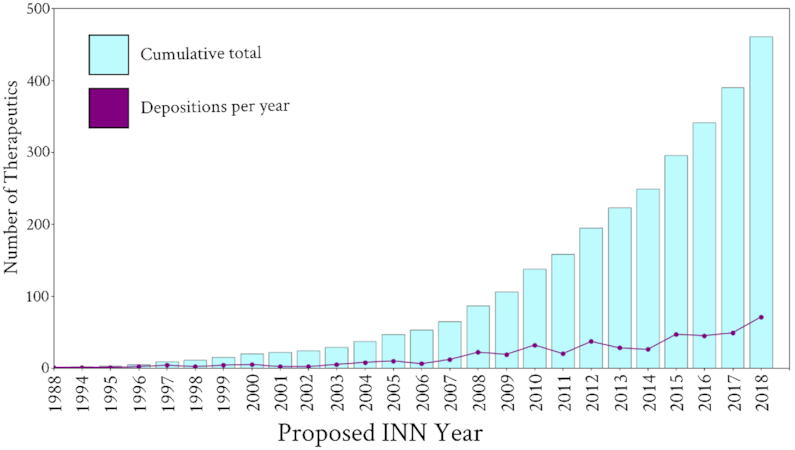
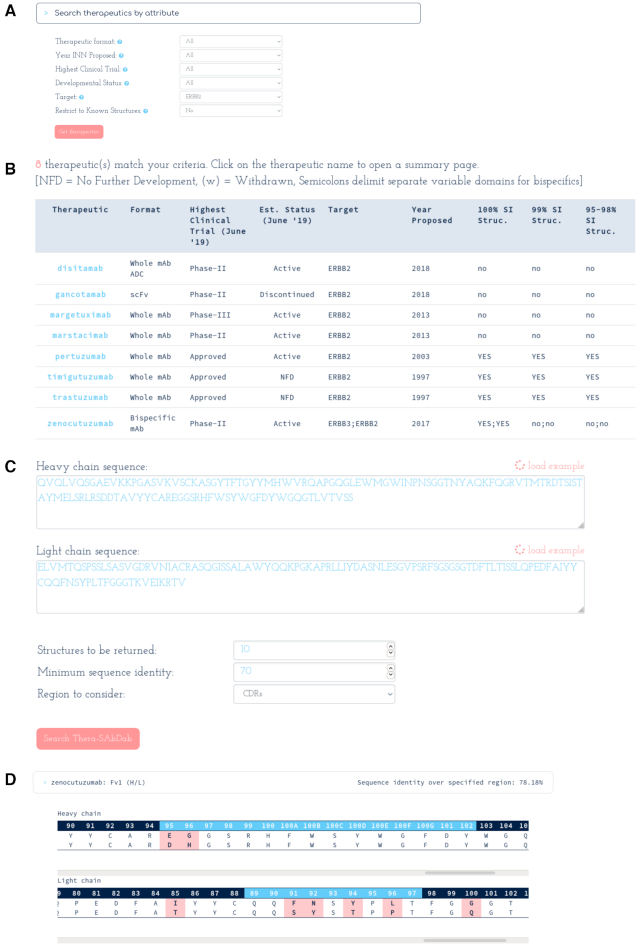
The Therapeutic Structural Antibody Database (Thera-SAbDab; http://opig.stats.ox.ac.uk/webapps/therasabdab) tracks all antibody- and nanobody-related therapeutics recognized by the World Health Organisation (WHO), and identifies any corresponding structures in the Structural Antibody Database (SAbDab) with near-exact or exact variable domain sequence matches. Thera-SAbDab is synchronized with SAbDab to update weekly, reflecting new Protein Data Bank entries and the availability of new sequence data published by the WHO. Each therapeutic summary page lists structural coverage (with links to the appropriate SAbDab entries), alignments showing where any near-matches deviate in sequence, and accompanying metadata, such as intended target and investigated conditions. Thera-SAbDab can be queried by therapeutic name, by a combination of metadata, or by variable domain sequence - returning all therapeutics that are within a specified sequence identity over a specified region of the query. The sequences of all therapeutics listed in Thera-SAbDab (461 unique molecules, as of 5 August 2019) are downloadable as a single file with accompanying metadata.
Overview
The claims and statistics of this paper haven’t been checked yet.
Run the check — free, no account needed. It reads the open-access text and checks the sources it cites.
Integrity signals
Registry
Cites
Statistics
Figures
Verification
Claims the paper makes
The claims and statistics of this paper haven’t been checked yet.
Run the check — free, no account needed. It reads the open-access text and checks the sources it cites.
Claims other papers make about this one
Each is checked against this paper’s own text: does it say what the citing paper says it does?
In the citing paper
“As of July 2022, this database is tracking 748 unique therapeutics, including monoclonal antibody and bispecific therapeutics.”
From Computational and artificial intelligence-based methods for antibody development (2023) · cites this paper as [15]
In the citing paper
“Additionally, the Therapeutic Structural Antibody Database (Thera-SAbDab) is a therapeutic structural antibody database including antibody-and nanobodyrelated biotherapeutics [15].”
From Computational and artificial intelligence-based methods for antibody development (2023) · cites this paper as [15]
Self-check
Percentages, sums and reported differences re-computed from the paper’s own numbers.
The self-check needs the paper’s full text.
Citations
Cites
Berman, H. M. (2000) · Nucleic Acids Research · doi:10.1093/nar/28.1.235 · Cited by 40,196
Strategies and challenges for the next generation of antibody–drug conjugates
Beck, A., Goetsch, L., Dumontet, C., & Corvaïa, N. (2017) · Nature Reviews Drug Discovery · doi:10.1038/nrd.2016.268 · Cited by 2,271 · cited 1×
“These fragments can be expressed in dimeric form to improve avidity, or conjugated with polyethylene glycol (‘pegylated’) for slower clearance (4), with radioisotopes for diagnostic purposes (5), or with radioisotopes or noxious small molecules/peptides for cytotoxicity (6).”
BackgroundBispecific antibodies: a mechanistic review of the pipeline
Labrijn, A. F., Janmaat, M. L., Reichert, J. M., & Parren, P. W. H. I. (2019) · Nature Reviews Drug Discovery · doi:10.1038/s41573-019-0028-1 · Cited by 1,303 · cited 1×
“As of June 2019, bispecific mAbs, linked Fabs, linked scFvs and linked single-domain variable fragments have all been assessed in clinical trials (7).”
BackgroundStandard conformations for the canonical structures of immunoglobulins 1 1Edited by I. A. Wilson
Al‐Lazikani, B., Lesk, A. M., & Chothia, C. (1997) · Journal of Molecular Biology · doi:10.1006/jmbi.1997.1354 · Cited by 707
SAbDab: the structural antibody database
Dunbar, J., Krawczyk, K., Leem, J., Baker, T., Fuchs, A., Georges, G., Shi, J., & Deane, C. M. (2014) · Nucleic Acids Research · doi:10.1093/nar/gkt1043 · Cited by 674 · cited 2×
“A significant fraction of these structures contain antibody variable domains, and these are recorded by the Structural Antibody Database (SAbDab (16); 7184 variable domain structures over 3663 PDB entries as of 5 August 2019).”
BackgroundNanobodies as therapeutics: big opportunities for small antibodies
Steeland, S., Vandenbroucke, R. E., & Libert, C. (2016) · Drug Discovery Today · doi:10.1016/j.drudis.2016.04.003 · Cited by 476
The Increasingly Human and Profitable Monoclonal Antibody Market
Grilo, A. L., & Mantalaris, A. (2018) · Trends in biotechnology · doi:10.1016/j.tibtech.2018.05.014 · Cited by 468
Kaplon, H., & Reichert, J. M. (2018) · mAbs · doi:10.1080/19420862.2018.1556465 · Cited by 435 · cited 1×
“Whole monoclonal antibody (mAb) therapies dominate the industry - drugs that mimic natural antibodies by containing two identical variable domain structures with a particular specificity (3).”
BackgroundANARCI: antigen receptor numbering and receptor classification
Dunbar, J., & Deane, C. M. (2015) · Bioinformatics · doi:10.1093/bioinformatics/btv552 · Cited by 421 · cited 3×
“We harvest sequences as they are released by the WHO, number them with ANARCI (17), and perform a weekly sequence alignment of all therapeutic variable domain sequences to the sequences of known structures stored in SAbDab.”
BackgroundMethodInfluentialHomology modeling in drug discovery: Overview, current applications, and future perspectives
Muhammed, M. T., & Aki, E. (2018) · Chemical Biology & Drug Design · doi:10.1111/cbdd.13388 · Cited by 381 · cited 1×
“It can also assist subsequent development and optimization, as homology models of mutants derived from a known structure are in general more accurate than those for which no close structural partner is available (14).”
Background
Research works printed but not linked: 3
- WHO, 2018, Proposed International Nonproprietary Names (INN) List 120, WHO Drug Information, 32, 559
- WHO, 2019, Recommended International Nonproprietary Names (INN) List 81, WHO Drug Information, 33, 59
- Poiron, 2010, IMGT/mAb-DB: the IMGT database for therapeutic monoclonal antibodies, JOBIM 2010, 13, 470b
Cited by
Sorted by citations
Burley, S. K., Bhikadiya, C., Bi, C., Bittrich, S., Chao, H., Chen, L., Craig, P., Crichlow, G. V., Dalenberg, K., Duarte, J. M., et al. (2022) · Nucleic Acids Research · doi:10.1093/nar/gkac1077 · Cited by 926
“Thera-SAbDab (94) Therapeutic Structural Antibody Database”
Efficient evolution of human antibodies from general protein language models
Hie, B., Shanker, V. R., Xu, D., Bruun, T. U. J., Weidenbacher, P. A. B., Tang, S., Wu, W. C. H., Pak, J. E., & Kim, P. S. (2023) · Nature Biotechnology · doi:10.1038/s41587-023-01763-2 · Cited by 472
“We downloaded 742 therapeutically relevant antibodies from the Thera-SAbDab database as of 26 February 2022 (http://opig.stats. ox.ac.uk/webapps/newsabdab/therasabdab/) 47 .”
Prihoda, D., Maamary, J., Waight, A., Juan, V., Fayadat-Dilman, L., Svozil, D., & Bitton, D. A. (2022) · mAbs · doi:10.1080/19420862.2021.2020203 · Cited by 190
“Recovering 152 putative parental sequences Records with “-zumab” suffix were collected from TheraSAbDab, totaling 164 humanized therapeutics.”
MethodComputational and artificial intelligence-based methods for antibody development
Kim, J., McFee, M., Fang, Q., Abdin, O., & Kim, P. M. (2023) · Trends in Pharmacological Sciences · doi:10.1016/j.tips.2022.12.005 · Cited by 178
IgLM: Infilling language modeling for antibody sequence design
Shuai, R. W., Ruffolo, J. A., & Gray, J. J. (2023) · Cell Systems · doi:10.1016/j.cels.2023.10.001 · Cited by 191
SAbDab in the age of biotherapeutics: updates including SAbDab-nano, the nanobody structure tracker
Schneider, C., Raybould, M. I. J., & Deane, C. M. (2021) · Nucleic Acids Research · doi:10.1093/nar/gkab1050 · Cited by 162
“A large body of research has now been published on their properties and their potential as therapeutics (8,9), including for SARS-CoV-2 (10).”
BackgroundInfluentialBurley, S. K., Berman, H. M., Duarte, J. M., Feng, Z., Flatt, J. W., Hudson, B. P., Lowe, R., Peisach, E., Piehl, D. W., Rose, Y., et al. (2022) · Biomolecules · doi:10.3390/biom12101425 · Cited by 152
Humanization of antibodies using a machine learning approach on large-scale repertoire data
Marks, C., Hummer, A. M., Chin, M., & Deane, C. M. (2021) · Bioinformatics · doi:10.1093/bioinformatics/btab434 · Cited by 124
“Whilst multiple techniques have been developed to obtain fully human mAbs, humanized antibodies remain the predominant class of mAb making up 50% of therapeutics in development (3).”
BackgroundMethodInfluentialRCSB Protein Data bank: Tools for visualizing and understanding biological macromolecules in 3D
Burley, S. K., Bhikadiya, C., Bi, C., Bittrich, S., Chao, H., Chen, L., Craig, P., Crichlow, G. V., Dalenberg, K., Duarte, J. M., et al. (2022) · Protein Science · doi:10.1002/pro.4482 · Cited by 123
Akbar, R., Bashour, H., Rawat, P., Robert, P. A., Smorodina, E., Cotet, T., Karlsen, K. F., Frank, R., Mehta, B. B., Vu, M. H., et al. (2022) · mAbs · doi:10.1080/19420862.2021.2008790 · Cited by 121
Advances in computational structure-based antibody design
Hummer, A. M., Abanades, B., & Deane, C. M. (2022) · Current Opinion in Structural Biology · doi:10.1016/j.sbi.2022.102379 · Cited by 109
NanoNet: Rapid and accurate end-to-end nanobody modeling by deep learning
Cohen, T., Halfon, M., & Schneidman‐Duhovny, D. (2022) · Frontiers in Immunology · doi:10.3389/fimmu.2022.958584 · Cited by 92
“The antibody structures were obtained from abYbank/AbDb (53) and SAbDab (54, 55); a total of 2,085 non-redundant structures of Nbs (319) and mAb heavy chains (1,766) were used.”
MethodGreiff, V., Yaari, G., & Cowell, L. G. (2020) · Current Opinion in Systems Biology · doi:10.1016/j.coisb.2020.10.010 · Cited by 88
Khuat, T. T., Bassett, R., Otte, E. A., Grevis-James, A., & Gabryś, B. (2024) · Computers & Chemical Engineering · doi:10.1016/j.compchemeng.2024.108585 · Cited by 102
Khetan, R., Curtis, R., Deane, C. M., Hadsund, J. T., Kar, U., Krawczyk, K., Kuroda, D., Robinson, S. A., Sormanni, P., Tsumoto, K., et al. (2022) · mAbs · doi:10.1080/19420862.2021.2020082 · Cited by 93
“14 The Jain dataset provides biophysical characterization across 12 different platforms for 137 clinical-stage and approved antibodies.”
The 27th annual Nucleic Acids Research database issue and molecular biology database collection
Rigden, D. J., & Fernández, X. M. (2019) · Nucleic Acids Research · doi:10.1093/nar/gkz1161 · Cited by 74
“Another valuable new database relating to antibodies Thera-SAbDab (21) links therapeutic antibody or nanobody sequences recognized by the World Health Organisation to entries in the authors’ structural antibody database SAbDab (22) for similar or identical proteins.”
BackgroundADCdb: the database of antibody–drug conjugates
Shen, L., Sun, X., Chen, Z., Guo, Y., Shen, Z., Song, Y., Xin, W., Ding, H., Ma, X., Xu, W., et al. (2023) · Nucleic Acids Research · doi:10.1093/nar/gkad831 · Cited by 81
“…aim at describing the particular components of each ADC, which include (a) those offering mAb moiety, such as: IMGT / mAb-DB ( 10 ), Thera-SAbDab ( 11 ) and PDB ( 12 ), and (b) those showing the physicochemical properties of either linkers or payloads, such as: PubChem ( 13 ) and DrugCentral ( 14…”
BackgroundAssessing antibody and nanobody nativeness for hit selection and humanization with AbNatiV
Ramon, A., Ali, M., Atkinson, M., Saturnino, A., Didi, K., Visentin, C., Ricagno, S., Xu, X., Greenig, M., & Sormanni, P. (2024) · Nature Machine Intelligence · doi:10.1038/s42256-023-00778-3 · Cited by 83
“44, and three therapeutic nanobody sequences (envafolimab, caplacizumab and rimteravimab) available from the therapeutic database Thera-SAbDab 79 .”
Therapeutic Antibodies in Medicine
Sharma, P., Joshi, R. V., Pritchard, R., Xu, K., & Eicher, M. A. (2023) · Molecules · doi:10.3390/molecules28186438 · Cited by 81
“The following sections describe the system-wise utilization or application of antibody therapeutics in treating diseases in different branches of medicine, ranging from hematology, oncology, and autoimmune disease to different organ system-related disorders like vascular, renal, neurological, etc.”
BackgroundJain, T. S., Boland, T., & Vásquez, M. (2023) · mAbs · doi:10.1080/19420862.2023.2200540 · Cited by 73
Addressing the antibody germline bias and its effect on language models for improved antibody design
Olsen, T. H., Moal, I. H., & Deane, C. M. (2024) · Bioinformatics · doi:10.1093/bioinformatics/btae618 · Cited by 80
SYNBIP: synthetic binding proteins for research, diagnosis and therapy
Wang, X., Li, F., Qiu, W., Xu, B., Li, Y., Lian, X., Yu, H., Zhang, Z., Wang, J., Li, Z., et al. (2021) · Nucleic Acids Research · doi:10.1093/nar/gkab926 · Cited by 70
How repertoire data are changing antibody science
Marks, C., & Deane, C. M. (2020) · Journal of Biological Chemistry · doi:10.1074/jbc.rev120.010181 · Cited by 69
Automated optimisation of solubility and conformational stability of antibodies and proteins
Rosace, A., Bennett, A., Oeller, M., Mortensen, M. M., Sakhnini, L. I., Lorenzen, N., Poulsen, C., & Sormanni, P. (2023) · Nature Communications · doi:10.1038/s41467-023-37668-6 · Cited by 69
“…antibody or nanobody, the user can choose between a set of pre-compiled alignments of species-specific antibodies (human or mouse), or therapeutic antibodies (post phase-I clinical trial) (57, 58), or single-domain antibodies obtained from multiple camelid species (59) (see Supplementary Methods).”
BackgroundPuranik, A., Dandekar, P. P., & Jain, R. D. (2022) · Biotechnology Progress · doi:10.1002/btpr.3291 · Cited by 63
Dewaker, V., Morya, V. K., Kim, Y. H., Park, S. T., Kim, H. S., & Koh, Y. H. (2025) · Biomarker Research · doi:10.1186/s40364-025-00764-4 · Cited by 62
Boughter, C. T., Borowska, M. T., Guthmiller, J. J., Bendelac, A. S., Wilson, P. C., Roux, B., & Adams, E. J. (2020) · eLife · doi:10.7554/elife.61393 · Cited by 56
Grinshpun, B., Thorsteinson, N., Pereira, J. N., Rippmann, F., Nannemann, D., Sood, V. D., & Fomekong Nanfack, Y. (2021) · mAbs · doi:10.1080/19420862.2021.1932230 · Cited by 52
“At the time this work was conducted, there were 75 approved mAbs and over 200 in Phases 2 and 3 undergoing clinical trials.(20,21)”
BackgroundAntibody design using deep learning: from sequence and structure design to affinity maturation
Joubbi, S., Micheli, A., Milazzo, P., Maccari, G., Ciano, G., Cardamone, D., & Medini, D. (2024) · Briefings in Bioinformatics · doi:10.1093/bib/bbae307 · Cited by 56
“Additional resources, such as the Antibody Structure Database (AbDb) [37], abYsis [36] and the Therapeutic Structural Antibody Database (Thera-SAbDab) [50], are listed in Table 1.”
BackgroundComparison of hydrophobicity scales for predicting biophysical properties of antibodies
Waibl, F., Fernández‐Quintero, M. L., Wedl, F. S., Kettenberger, H., Georges, G. J., & Liedl, K. R. (2022) · Frontiers in Molecular Biosciences · doi:10.3389/fmolb.2022.960194 · Cited by 46
“, 2022) with more than 120 approved therapeutic antibodies up to now (Raybould et al., 2020).”
BackgroundAbanades, B., Olsen, T. H., Raybould, M. I. J., Aguilar-Sanjuan, B., Wong, W. K., Georges, G. J., Bujotzek, A., & Deane, C. M. (2023) · Nucleic Acids Research · doi:10.1093/nar/gkad1056 · Cited by 43
Prospects for the computational humanization of antibodies and nanobodies
Gordon, G. L., Raybould, M. I. J., Wong, A., & Deane, C. M. (2024) · Frontiers in Immunology · doi:10.3389/fimmu.2024.1399438 · Cited by 48
“However, these efforts are hampered by the fact that nanobody data are currently relatively limited and dispersed (Table 2, 4, 54, 55, 94).”
BackgroundRaybould, M. I. J., Turnbull, O. M., Suter, A., Guloglu, B., & Deane, C. M. (2024) · Communications Biology · doi:10.1038/s42003-023-05744-8 · Cited by 46
“To assess the properties of CSTs over time, we split the set by the year they were given a proposed WHO International Non-proprietary Name, yielding 356 named between 1987 – 2017 and 308 named between 2018 and the present day.”
InfluentialA perspective toward mass spectrometry-based de novo sequencing of endogenous antibodies
de Graaf, S. C., Hoek, M., Tamara, S., & Heck, A. J. R. (2022) · mAbs · doi:10.1080/19420862.2022.2079449 · Cited by 45
“first therapeutic antibody was registered in 1986, and this advent launched large-scale development of mAbs, with a hundred mAbs in advanced stage of development by 2008.(4) At that point, next-generation sequencing led to high-throughput sequencing workflows and further facilitated the development of therapeutic anti…”
BackgroundZero-shot antibody design in a 24-well platePreprint
Chai Discovery Team, Boitreaud, J., Dent, J., Geisz, D., McPartlon, M., Meier, J., Qiao, Z., Rogozhnikov, A., Rollins, N., Wollenhaupt, P., et al. (2025) · bioRxiv (Cold Spring Harbor Laboratory) · doi:10.1101/2025.07.05.663018 · Cited by 56
Thorsteinson, N., Gunn, J. R., Kelly, K., Long, W., & Labute, P. (2021) · mAbs · doi:10.1080/19420862.2021.1981805 · Cited by 42
Nanobodies: From Discovery to AI-Driven Design
Zhu, H., & Ding, Y. (2025) · Biology · doi:10.3390/biology14050547 · Cited by 44
“Despite the apparent breakthroughs described above, it should be noted that the scarcity of publicly available nanobody humanization models and the relatively limited and dispersed nature of nanobody data [197–200] still hinder the development of new computational methods.”
Wilkinson, I. C., & Hale, G. (2022) · mAbs · doi:10.1080/19420862.2022.2123299 · Cited by 41
Immunotherapeutic targeting of surfaceome heterogeneity in AML
Bordeleau, M.-È., Audemard, E. O., Métois, A., Thérêt, L., Lisi, V., Farah, A., Spinella, J.-F., Chagraoui, J., Moujaber, O., Aubert, L., et al. (2024) · Cell Reports · doi:10.1016/j.celrep.2024.114260 · Cited by 37
Richardson, E., Galson, J. D., Kellam, P., Kelly, D. F., Smith, S. E., Palser, A. L., Watson, S. J., & Deane, C. M. (2021) · mAbs · doi:10.1080/19420862.2020.1869406 · Cited by 41
“An antibody is flagged as "red" if the value of a particular metric is outside of the observed range in CSTs. [38] 5 Funding The”
MethodInfluentialComputational optimization of antibody humanness and stability by systematic energy-based ranking
Tennenhouse, A., Khmelnitsky, L., Khalaila, R., Yeshaya, N., Noronha, A., Lindzen, M., Makowski, E. K., Zaretsky, I., Sirkis, Y. F., Galon-Wolfenson, Y., et al. (2023) · Nature Biomedical Engineering · doi:10.1038/s41551-023-01079-1 · Cited by 37
“Antibodies are the largest segment of protein-based therapeutics, with over 100 antibodies in clinical use or under regulatory review 1 .”
Deciphering deamidation and isomerization in therapeutic proteins: Effect of neighboring residue
Irudayanathan, F. J., Zarzar, J., Lin, J., & Izadi, S. (2022) · mAbs · doi:10.1080/19420862.2022.2143006 · Cited by 34
“uk/webapps/newsabdab/ sabdab/).(58,59) We arrived at 3493 structures, which were then cleaned, energy minimized and isolated from any other ligands.”
BackgroundPark, E., & Izadi, S. (2024) · mAbs · doi:10.1080/19420862.2024.2362788 · Cited by 32
“28,85 For descriptors in which extremely large values are less desirable (e.g. CDR_HPATCH_BM, CDR_HPATCH_WW, CDR_APBS_pos, CDR_len), the 90th and 95th percentiles of the distributions serve as the thresholds to define medium risk (amber) and high risk (red) flags, respectively.”
BackgroundLearning the language of antibody hypervariability
Singh, R., Im, C., Qiu, Y., Mackness, B. C., Gupta, A., Joren, T., Sledzieski, S., Erlach, L., Wendt, M., Fomekong‐Nanfack, Y., et al. (2024) · Proceedings of the National Academy of Sciences · doi:10.1073/pnas.2418918121 · Cited by 46
“Towards that, we mapped 547 antibodies from Thera-SABDab, a dataset of immunotherapeutic antibodies that have entered clinical trials ( 40 ).”
Bashour, H., Smorodina, E., Pariset, M., Zhong, J., Akbar, R., Chernigovskaya, M., Lê Quý, K., Snapkow, I., Rawat, P., Krawczyk, K., et al. (2024) · Communications Biology · doi:10.1038/s42003-024-06561-3 · Cited by 32
“A total of 782 therapeutic antibody sequences belonging to the “ whole mAb ” format were obtained from TheraSAbDAb as per July 2021 139 .”
nanoBERT: a deep learning model for gene agnostic navigation of the nanobody mutational space
Hadsund, J. T., Satława, T., Janusz, B., Shan, L., Zhou, L. Y., Röttger, R., & Krawczyk, K. (2024) · Bioinformatics Advances · doi:10.1093/bioadv/vbae033 · Cited by 31
“As the therapeutic test set we compiled a list of 18 therapeutic nanobodies from public sources (Raybould et al. 2020, Deszy � nski et al. 2022).”
BackgroundRaybould, M. I. J., Marks, C., Kovaltsuk, A., Lewis, A. P., Shi, J., & Deane, C. M. (2021) · PLoS Computational Biology · doi:10.1371/journal.pcbi.1008781 · Cited by 29
“The set of 89 therapeutics with 100% sequence identical structures (as of November 2019) were retrieved from Thera-SAbDab [36].”
MethodInfluentialMorales, I. C., Dingfelder, F., Waibel, I., Turnbull, O. M., Patel, B., Cao, Z., Bjelke, J. R., Grell, S. N., Bennet, A., Hummer, A. M., et al. (2024) · mAbs · doi:10.1080/19420862.2024.2403156 · Cited by 27
The therapeutic antibody profiler for computational developability assessment
Raybould, M. I. J., & Deane, C. M. (2022) · Methods in molecular biology · doi:10.1007/978-1-0716-1450-1_5 · Cited by 25
Data mining patented antibody sequences
Krawczyk, K., Buchanan, A. G., & Marcatili, P. (2021) · mAbs · doi:10.1080/19420862.2021.1892366 · Cited by 25
Negron, C., Fang, J., McPherson, M. J., Stine, W. B., & McCluskey, A. J. (2022) · mAbs · doi:10.1080/19420862.2022.2080628 · Cited by 24
“24 These sequences represent antibodies that are either approved, underwent clinical evaluation, or are currently being evaluated in the clinic.”
BackgroundAlphaFold3, a secret sauce for predicting mutational effects on protein-protein interactionsPreprint
Lu, W., Zhang, J., Rao, J., Zhang, Z., & Zheng, S. (2024) · bioRxiv (Cold Spring Harbor Laboratory) · doi:10.1101/2024.05.25.595871 · Cited by 27
“Most antibody drugs in clinical use have picomolar affinity for the target protein [12], while antibodies found through immunization commonly exhibit affinities in the nanomolar or even micromolar range [13].”
BackgroundEvers, A., Guarnera, E., Pekar, L., & Zielonka, S. (2025) · mAbs · doi:10.1080/19420862.2025.2583210 · Cited by 23
PPB-Affinity: Protein-Protein Binding Affinity dataset for AI-based protein drug discovery
Liu, H., Chen, P., Zhai, X., Huo, K.-G., Zhou, S., Han, L., & Fan, G. (2024) · Scientific Data · doi:10.1038/s41597-024-03997-4 · Cited by 30
Yu, M., Shi, Z., Zhang, W., Zhu, L. D., Tang, S., Chen, H., Wang, X., Du, Q., Li, S. C., Zhang, Y., et al. (2023) · Neurology Neuroimmunology & Neuroinflammation · doi:10.1212/nxi.0000000000200134 · Cited by 18
“Then, we aligned the CDR3 amino acid sequences of clonotype1 to the SAbDab antibody data-base, 42 revealing similarities to CMV-related antibodies (eFigure 9C, links.lww.com/NXI/A872).”
MethodIsAb: a computational protocol for antibody design
Liang, T., Chen, H., Yuan, J., Jiang, C., Hao, Y., Wang, Y., Feng, Z., & Xie, X. (2021) · Briefings in Bioinformatics · doi:10.1093/bib/bbab143 · Cited by 17
“Another powerful database is SAbDab [65, 66], which contains antibodies data and modeling function.”
BackgroundRichardson, E., Binter, Š., Kosmač, M., Ghraichy, M., von Niederhäusern, V., Kovaltsuk, A., Galson, J. D., Trück, J., Kelly, D. F., Deane, C. M., et al. (2023) · eLife · doi:10.7554/elife.81629 · Cited by 16
“The amino acid sequences of these heavy chains can also be functionally examined through annotation with structural tools ( Kovaltsuk et al., 2017 ; Marks and Deane, 2020 ).”
BackgroundAB-Amy: machine learning aided amyloidogenic risk prediction of therapeutic antibody light chains
Zhou, Y., Huang, Z., Gou, Y., Liu, S., Yang, W., Zhang, H., Dzisoo, A. M., & Huang, J. H. (2023) · Antibody Therapeutics · doi:10.1093/abt/tbad007 · Cited by 16
“These LC sequences were extracted from “The Therapeutic Structural Antibody Database” (Thera-SAbDab) [29] and cleaned as above.”
Fast and accurate modeling and design of antibody-antigen complex using tFoldPreprint
Wu, F., Zhao, Y. S., Wu, J., Jiang, B., He, B., Huang, L.-K., Qin, C., Yang, F., Huang, N., Xiao, Y., et al. (2024) · bioRxiv (Cold Spring Harbor Laboratory) · doi:10.1101/2024.02.05.578892 · Cited by 16
Accurate prediction of CDR-H3 loop structures of antibodies with deep learning
(2024) · doi:10.7554/elife.91512.4 · Cited by 16
“To evaluate the performance of AF2 against currently available methods, we conducted two datasets (DB1 and DB2) with high-resolution ( 2.5 Å) X-ray crystal structures from SAbDab ( Raybould et al., 2020 ).”
MethodInfluentialDe novo design of epitope-specific antibodies via a structure-driven computational workflow
Wu, F., Zhao, Y. S., Wu, J., Jiang, B., He, B., Huang, L.-K., Qin, C., Xiao, Y., Yang, F., Wang, R., et al. (2025) · Nature Communications · doi:10.1038/s41467-025-67361-9 · Cited by 18
“It comprises: (cid:129) 27 anti-PD-1 therapeutic antibodies curated from Thera-SAbDab 37 (WHO-listed therapeutics with publicly available sequences).”
Advances in antibody discovery from human BCR repertoires
Xu, Z., Ismanto, H. S., Zhou, H., Saputri, D. S., Sugihara, F., & Standley, D. M. (2022) · Frontiers in Bioinformatics · doi:10.3389/fbinf.2022.1044975 · Cited by 18
“As of 19 July 2022, there were only 9,811 recorded antibodyantigen structures available in the Protein Data Bank (Berman et al., 2008; Raybould et al., 2020).”
BackgroundLarge-scale computational modelling of H5 influenza variants against HA1-neutralising antibodies
Ford, C. T., Yasa, S., Obeid, K., Jaimes, R., Tomezsko, P. J., Guirales-Medrano, S., White, R. A., III, & Janies, D. A. (2025) · EBioMedicine · doi:10.1016/j.ebiom.2025.105632 · Cited by 15
Therapeutic Antibodies: An Overview
Houen, G. (2021) · Methods in molecular biology · doi:10.1007/978-1-0716-1450-1_1 · Cited by 15
Learning the Language of Antibody HypervariabilityPreprint
Singh, R., Im, C., Qiu, Y., Mackness, B. C., Gupta, A., Sorenson, T., Sledzieski, S., Erlach, L., Wendt, M., Fomekong‐Nanfack, Y., et al. (2023) · bioRxiv (Cold Spring Harbor Laboratory) · doi:10.1101/2023.04.26.538476 · Cited by 16
PLAbDab-nano: a database of camelid and shark nanobodies from patents and literature
Gordon, G. L., Greenshields‐Watson, A., Agarwal, P., Wong, A., Boyles, F., Hummer, A. M., Hernandez, A. G. L., & Deane, C. M. (2024) · Nucleic Acids Research · doi:10.1093/nar/gkae881 · Cited by 13
Exploring antibody repurposing for COVID-19: beyond presumed roles of therapeutic antibodies
Rawat, P., Sharma, D., Srivastava, A., Vani, J., & Gromiha, M. M. (2021) · Scientific Reports · doi:10.1038/s41598-021-89621-6 · Cited by 13
KA-Search, a method for rapid and exhaustive sequence identity search of known antibodies
Olsen, T. H., Abanades, B., Moal, I. H., & Deane, C. M. (2023) · Scientific Reports · doi:10.1038/s41598-023-38108-7 · Cited by 12
“As our canonical alignment, we use all of the 196 unique positions seen in at least 40,000 different sequences in OAS, as of May 2022, and four additional unique positions seen in therapeutics from Thera-SAbDab 43 .”
BackgroundMethodDOTAD: A Database of Therapeutic Antibody Developability
Li, W., Lin, H., Huang, Z., Xie, S., Zhou, Y., Gong, R., Jiang, Q., Xiang, C., & Huang, J. H. (2024) · Interdisciplinary Sciences Computational Life Sciences · doi:10.1007/s12539-024-00613-2 · Cited by 12
Humatch - fast, gene-specific joint humanisation of antibody heavy and light chains
Chinery, L., Jeliazkov, J. R., & Deane, C. M. (2024) · mAbs · doi:10.1080/19420862.2024.2434121 · Cited by 13
“3 found that approximately 60% of therapeutics listed in Thera-SAbDab 4 are not genetically human in origin and that this percentage has remained constant over the past two decades.”
Martí, D., Alsina, M., Alemán, C., Bertrán, O., Turón, P., & Torras, J. (2021) · Biochimie · doi:10.1016/j.biochi.2021.10.013 · Cited by 11
“The positions of the residues belonging to the CDRs are labeled according to the Kabat numbering scheme and obtained from SabDab structural antibody database [71,72].”
Li, Y., Li, F., Duan, Z., Liu, R., Jiao, W., Wu, H., Zhu, F., & Xue, W. (2024) · Nucleic Acids Research · doi:10.1093/nar/gkae893 · Cited by 11
Seidler, C. A., Spanke, V. A., Gamper, J., Bujotzek, A., Georges, G. J., & Liedl, K. R. (2025) · mAbs · doi:10.1080/19420862.2025.2507950 · Cited by 11
“In this figure, the distribution of therapeutic antibodies that are listed in Thera-SAbDab 32 (20.12.2024) and are either currently in clinical trials (Phase 1, 2, or 3) or approved are shown over the OAS distribution.”
InfluentialImmunoMatch learns and predicts cognate pairing of heavy and light immunoglobulin chains
Guo, D., Dunn‐Walters, D. K., Fraternali, F., & Ng, J. C.-F. (2025) · Nature Methods · doi:10.1038/s41592-025-02913-x · Cited by 11
Ojha, R., Gurjar, K., Ratnakar, T. S., Mishra, A., & Prajapati, V. K. (2022) · Human Immunology · doi:10.1016/j.humimm.2022.01.004 · Cited by 11
A generative foundation model for antibody sequence understandingPreprint
Barton, J., Gaspariunas, A., Yadin, D., Dias, J., Nice, F. L., Minns, D., Snudden, O., Povall, C., Valle, S., Dobson, H., et al. (2024) · bioRxiv (Cold Spring Harbor Laboratory) · doi:10.1101/2024.05.22.594943 · Cited by 11
“TAP profiles were measured using the online version of TAP.”
BackgroundMethodInfluentialA comprehensive antigen-antibody complex database unlocking insights into interaction interface
Zhou, Y., Liu, W., Huang, Z., Gou, Y., Liu, S., Jiang, L., Yang, Y., & Huang, J. H. (2025) · eLife · doi:10.7554/elife.104934 · Cited by 12
Antibody numbering schemes: advances, comparisons and tools for antibody engineering
Zhu, Z., Ashrafian, H., Mohammadian-Tabrizi, N., Matas, E. R., Girard, L., Ma, H., & Nice, E. C. (2025) · Protein Engineering Design and Selection · doi:10.1093/protein/gzaf005 · Cited by 15
Rodrigues, C. H. M., & Ascher, D. B. (2023) · Proteins Structure Function and Bioinformatics · doi:10.1002/prot.26615 · Cited by 9
Exploring Bioinformatics Solutions for Improved Leishmaniasis Diagnostic Tools: A Review
Costa, N. T. C., Pereira, A. M. D. S., da Silva, C. M., Souza, E., Ferreira, L. F., de Oliveira, B., Hernandes, M. Z., & Pereira, V. R. A. (2024) · Molecules · doi:10.3390/molecules29225259 · Cited by 10
“The Structural Antibody Database (SAbDab) is a web tool (available: https://opig. stats.ox.ac.uk/webapps/sabdab) database of antibody structures that has over 6000 antibody structures [99].”
MethodPredicting purification process fit of monoclonal antibodies using machine learning
Maier, A. J., Cha, M., Burgess, S., Wang, A., Cuellar, C., Kim, S. Y., Rajan, N. S., Neyyan, J., SENGUPTA, R., O’Connor, K., et al. (2025) · mAbs · doi:10.1080/19420862.2024.2439988 · Cited by 11
“While the full sequences of clinical stage mAbs are not publicly available, Fv sequences are collated in the Therapeutic Structural Antibody Database 68 (Thera-SAbDab).”
BackgroundIMGT® at scale: FAIR, dynamic, and automated tools for immune locus analysis
Sanou, G., Zeitoun, G., Manso, T., Eidi, M., Batool, S., Kushwaha, A., Grand, F., Croze, M., Vaillant, A., Debbagh, C., et al. (2025) · Nucleic Acids Research · doi:10.1093/nar/gkaf1024 · Cited by 9
Singh, S., Rao, A., Mishra, A., Mishra, A., & Prajapati, V. K. (2023) · Molecular Systems Design & Engineering · doi:10.1039/d3me00059a · Cited by 9
YAbS: The Antibody Society’s antibody therapeutics database
Rawat, P., Crescioli, S., Prabakaran, R., Sharma, D., Greiff, V., & Reichert, J. M. (2025) · mAbs · doi:10.1080/19420862.2025.2468845 · Cited by 8
Single–amino acid variants in target epitopes can confer resistance to antibody-based therapies
Marone, R., Asllanaj, E., Capoferri, G., Schwede, T. F., Jeker, L. T., & Lepore, R. (2025) · Science Translational Medicine · doi:10.1126/scitranslmed.ady4877 · Cited by 11
Rawat, P., Sharma, D., Prabakaran, R., Ridha, F., Mohkhedkar, M., Vani, J., & Gromiha, M. M. (2022) · Bioinformatics · doi:10.1093/bioinformatics/btac439 · Cited by 9
NanoNet: Rapid end-to-end nanobody modeling by deep learning at sub angstrom resolutionPreprint
Cohen, T., Halfon, M., & Schneidman‐Duhovny, D. (2021) · bioRxiv (Cold Spring Harbor Laboratory) · doi:10.1101/2021.08.03.454917 · Cited by 8
Ramon, A., Ali, M., Atkinson, M., Saturnino, A., Didi, K., Visentin, C., Ricagno, S., Xu, X., Greenig, M., & Sormanni, P. (2023) · bioRxiv (Cold Spring Harbor Laboratory) · doi:10.1101/2023.04.28.538712 · Cited by 8
PD-1 Targeted Antibody Discovery Using AI Protein Diffusion
Ford, C. T. (2024) · Technology in Cancer Research & Treatment · doi:10.1177/15330338241275947 · Cited by 7
“Heavy and light chain sequences of 33 PD-1 targeting antibodies (Fv region only) were retrieved from the Therapeutic Structural Antibody Database (Thera-SAbDab) 18 on November 11, 2023.”
MethodRAPID: A Rep-Seq Dataset Analysis Platform With an Integrated Antibody Database
Zhang, Y., Chen, T., Zeng, H., Yang, X., Xu, Q., Zhang, Y., Chen, Y., Wang, M., Zhu, Y., Lan, C., et al. (2021) · Frontiers in Immunology · doi:10.3389/fimmu.2021.717496 · Cited by 7
“The included therapeutic antibodies include 521 antibodies that were recognized by the World Health Organization (WHO) and downloaded from the Therapeutic Structure Antibody Database (Thera-SAbDab) (25).”
BackgroundMethodAdapting ProteinMPNN for antibody design without retrainingPreprint
del Alamo, D., Frick, R., Truan, D., & Karpiak, J. D. (2025) · bioRxiv (Cold Spring Harbor Laboratory) · doi:10.1101/2025.05.09.653228 · Cited by 7
“As a result, the overall designs shared a median of 75% sequence identity with the most similar germline V-genes, far short of the 90% median observed for therapeutic antibodies 15 (Figure 1A).”
The SpyBLI cell-free pipeline for the rapid quantification of binding kinetics from crude samples
Predeina, O., Atkinson, M., Wissett, O., Ali, M., Visentin, C., Ricagno, S., Keeble, A. H., Howarth, M. R., & Sormanni, P. (2025) · RSC Chemical Biology · doi:10.1039/d5cb00079c · Cited by 6
“…region, followed by the T7 promoter, then a 47-nucleotide spacer, which we took from the pDEST E. coli expression vector used to express the SpyCatcher003 protein, and that contains the ribosome binding site, followed by the coding sequence and a short 3 0 -end region of just 10 nucleotides (Fig.”
AntiBMPNN: Structure‐Guided Graph Neural Networks for Precision Antibody Engineering
Sun, Z., Yuan, J., Jaiswal, D., Ge, J., Liang, T., Wei, J., Cao, J., Li, Y., Chu, X., Chen, Y., et al. (2025) · Advanced Science · doi:10.1002/advs.202504278 · Cited by 7
SCAN-ACT: adoptive T cell therapy target discovery through single-cell transcriptomics
Testa, S., Pal, A., Subramanian, A., Varma, S., Tang, J. P., Graham, D., Arfan, S., Pan, M., Bui, N. Q., Ganjoo, K. N., et al. (2025) · Genome Medicine · doi:10.1186/s13073-025-01514-9 · Cited by 6
“Specifically, we downloaded a list of clinically developed mAbs, ADCs, scFvs, Fabs, nanobodies, and fusion proteins from Thera-SAbDab [160] (accessed on 07/16/2024), retaining only agents developed for human use, and removing all those agents with clinical development phase reported as “TBC,”…”
Wei, W., & Sulea, T. I. (2024) · mAbs · doi:10.1080/19420862.2024.2404064 · Cited by 6
“15 The full list of Protein Data Bank (PDB) accession codes can be found in the Supplementary Material.”
BackgroundZhou, Y., Liu, W., Luo, C., Huang, Z., Savini, G. S. M., Zhao, L., Wang, R., & Huang, J. (2024) · Methods · doi:10.1016/j.ymeth.2024.11.005 · Cited by 6
IL1RAP is an immunotherapeutic target for normal karyotype triple-mutated acute myeloid leukemia
Métois, A., Bordeleau, M.-È., Thérêt, L., Hajmirza, A., Moujaber, O., Spinella, J.-F., Chagraoui, J., Mayotte, N., Boivin, I., Audemard, E. O., et al. (2025) · Biomarker Research · doi:10.1186/s40364-025-00769-z · Cited by 6
“[61] Therapeutic antibody information was extracted from the Thera-SAbDab database (opig.stats.ox.ac.uk/webapps/newsabdab/ther-asabdab) on 23rd of March 2023 [62].”
SITA: Predicting site-specific immunogenicity for therapeutic antibodies
Cun, Y., Ding, H., Mao, T., Wang, Y., Wang, C., Li, J., Li, Z., Hu, M., Cao, Z., & Qiu, T. (2025) · Journal of Pharmaceutical Analysis · doi:10.1016/j.jpha.2025.101316 · Cited by 6
“Five protein datasets were derived from the Protein Data Bank (PDB) [27] and Thera-SAbDab [28]: (1) the IAb-Ab Dataset which contains 41 Antibody-Antibody complex structures (Fig.”
VDDB: A comprehensive resource and machine learning tool for antiviral drug discovery
Tao, S., Chen, Y., Wu, J., Zhao, D., Cai, H., & Wang, L. (2023) · MedComm – Future Medicine · doi:10.1002/mef2.32 · Cited by 6
Gordon, G. L., Gervásio, J. H. D. B., Souders, C., & Deane, C. M. (2025) · bioRxiv (Cold Spring Harbor Laboratory) · doi:10.1101/2025.08.11.669635 · Cited by 6
Metadata
- Authors
- Raybould, M. I. J., Marks, C., Lewis, A. P., Shi, J., Bujotzek, A., Taddese, B., & Deane, C. M.
- Affiliations
- University of Oxford (GB)
- GlaxoSmithKline (United Kingdom) (GB)
- UCB Pharma (United Kingdom) (GB)
- Roche Pharma AG (Germany) (DE)
- AstraZeneca (United Kingdom) (GB)
- Corresponding author
- Deane, Charlotte M
- Venue
- Nucleic Acids Research
- Publisher
- Oxford University Press (OUP)
- Published
- 2019-09-26
- Volume
- 48
- Issue
- D1
- Pages
- D383-D388
- ISSN
- 0305-1048 (ISSN-L)
- 1362-4962
- PMC
- PMC6943036
- OpenAlex
- W2974982237
- Cited by
- 199
- References
- 19
- Citations by year
- 2026: 29 · 2025: 55 · 2024: 41 · 2023: 27 · 2022: 23 · 2021: 19 · 2020: 4 · 2019: 1
- FWCI
- 7.77
- Type
- journal article
- Language
- en
- Open access
- gold
- doi.org
- Licence
- Locations
- Nucleic Acids Research (publishedVersion, cc-by)
- bioRxiv (Cold Spring Harbor Laboratory) (acceptedVersion, cc-by)
- Europe PMC (PubMed Central) (publishedVersion, cc-by)
- PubMed Central (publishedVersion, cc-by)
- PubMed (publishedVersion)
- Funders
- Engineering and Physical Sciences Research Council
- Medical Research Council (EP/L016044/1)
- GlaxoSmithKline plc.
- AstraZeneca plc
- F. Hoffmann-La Roche
- UCB Celltech
- Topics
- Life Sciences › Immunology and Microbiology › Immunology › Monoclonal and Polyclonal Antibodies Research
- Life Sciences › Biochemistry, Genetics and Molecular Biology › Structural Biology › Enzyme Structure and Function
- Life Sciences › Biochemistry, Genetics and Molecular Biology › Molecular Biology › vaccines and immunoinformatics approaches
- Keywords
- therapeutic antibodies, nanobodies, antibody variable domains
- MeSH terms
- Metadata, Antibodies, Clinical Trials as Topic, Humans, User-Computer Interface, Sequence Alignment, Internet, Databases, Protein
About these checks
Registry, retraction, Cites and statistics results are computed, not judged, with one exception: a printed reference that no index lists is read once by a model before it counts as a citation error. Claims are extracted by a model and kept only when their quote appears verbatim in the text; each cited source is then checked, with a model’s help, for whether it says what the claim relies on. Those verdicts can be wrong — read the claim’s quote and the cited source before relying on one.
Statistics and arithmetic are recomputed, not judged.
Confidence bands are shown only for fields calibrated on our annotated test set. None is calibrated yet, so no band is shown.
What counts as a claim ›How we measure confidence ›How we check this ›
Are you an author, or do you see a problem with this page? Request a review
