

The origin and evolution of methanogenesis and Archaea are intertwined
Open accessThe DOI matches its Crossref record; 76 of the 76 references it cites were found in a registry or an index.
Abstract
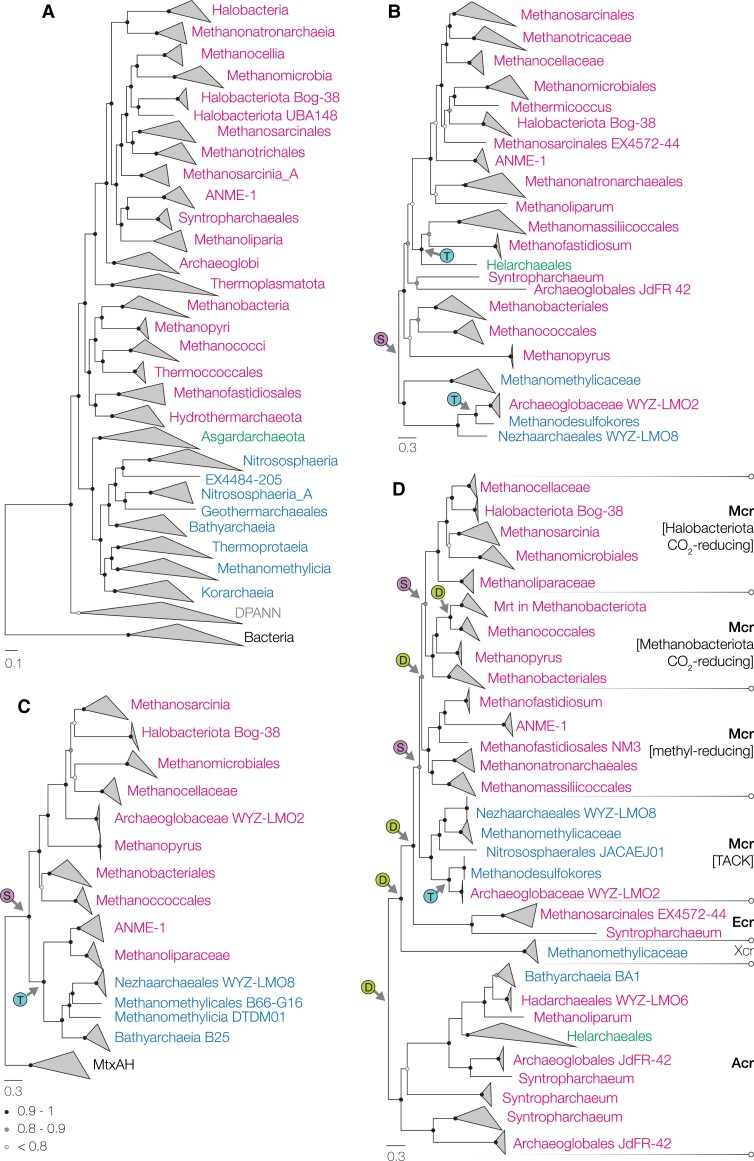
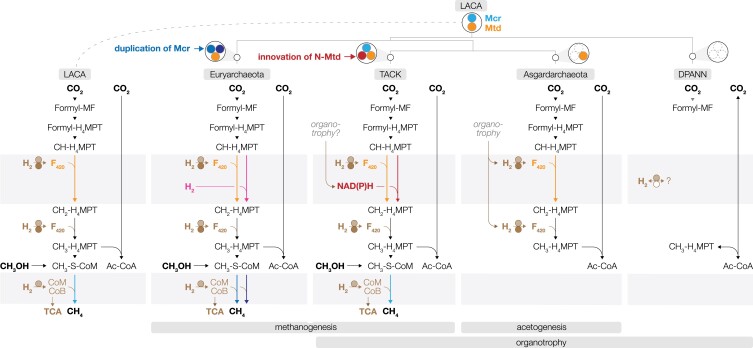
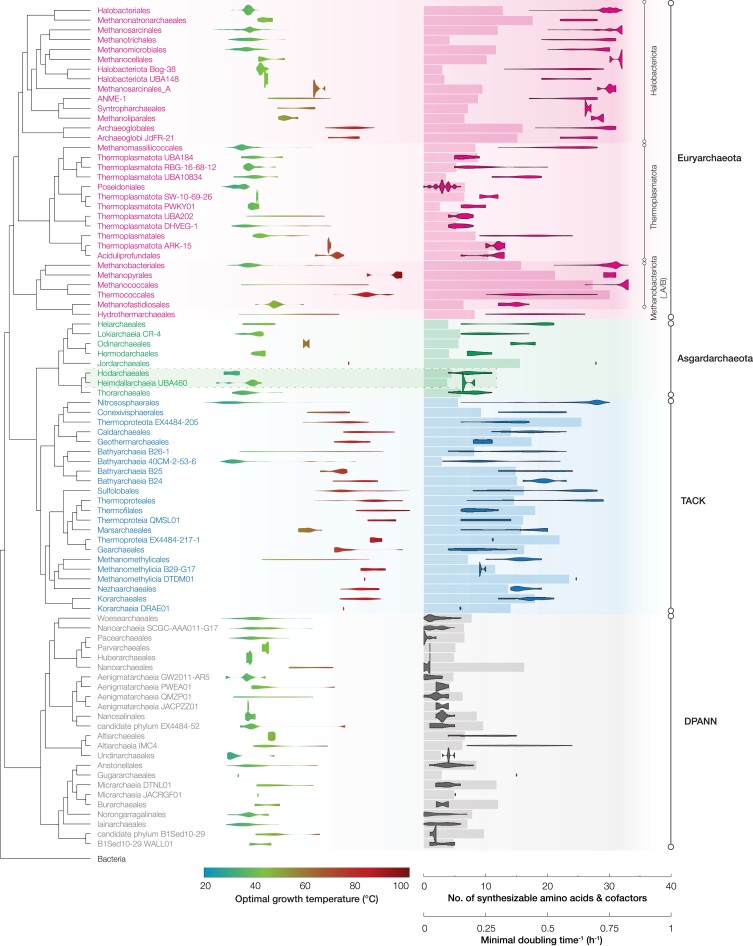
Methanogenesis has been widely accepted as an ancient metabolism, but the precise evolutionary trajectory remains hotly debated. Disparate theories exist regarding its emergence time, ancestral form, and relationship with homologous metabolisms. Here, we report the phylogenies of anabolism-involved proteins responsible for cofactor biosynthesis, providing new evidence for the antiquity of methanogenesis. Revisiting the phylogenies of key catabolism-involved proteins further suggests that the last Archaea common ancestor (LACA) was capable of versatile H2-, CO2-, and methanol-utilizing methanogenesis. Based on phylogenetic analyses of the methyl/alkyl-S-CoM reductase family, we propose that, in contrast to current paradigms, substrate-specific functions emerged through parallel evolution traced back to a nonspecific ancestor, which likely originated from protein-free reactions as predicted from autocatalytic experiments using cofactor F430. After LACA, inheritance/loss/innovation centered around methanogenic lithoautotrophy coincided with ancient lifestyle divergence, which is clearly reflected by genomically predicted physiologies of extant archaea. Thus, methanogenesis is not only a hallmark metabolism of Archaea, but the key to resolve the enigmatic lifestyle that ancestral archaea took and the transition that led to physiologies prominent today.
Overview
The claims and statistics of this paper haven’t been checked yet.
Free: it reads the open-access text and checks the first 5 claims that cite a source we can check. Create a free account to check every claim.
Integrity signals
Registry
Cites
Statistics
Figures
Verification
Claims the paper makes
The claims and statistics of this paper haven’t been checked yet.
Free: it reads the open-access text and checks the first 5 claims that cite a source we can check. Create a free account to check every claim.
Claims other papers make about this one
Each is checked against this paper’s own text: does it say what the citing paper says it does?
The cited source says what the claim attributes to it.
In the citing paper
“Mei et al. (2023) and Williams et al. (2017) found that the ancestral physiology of archaea was likely hydrogen-dependent methanogenesis.”
From Serpentinization as the source of energy, electrons, organics, catalysts, nutrients and pH gradients for the origin of LUCA and life (2023) · cites this paper as Mei et al., 2023
Self-check
Percentages, sums and reported differences re-computed from the paper’s own numbers.
The self-check needs the paper’s full text.
Citations
Cites
1 retracted
Wang, Y., Wegener, G., Williams, T. A., Xie, R., Hou, J., Wang, F., & Xiao, X. (2021) · Science Advances · doi:10.1126/sciadv.abd7180 · Cited by 50
RetractedMAFFT Multiple Sequence Alignment Software Version 7: Improvements in Performance and Usability
Katoh, K., & Standley, D. M. (2013) · Molecular Biology and Evolution · doi:10.1093/molbev/mst010 · Cited by 46,209
Prokka: rapid prokaryotic genome annotation
Seemann, T. (2014) · Bioinformatics · doi:10.1093/bioinformatics/btu153 · Cited by 18,818
IQ-TREE 2: New Models and Efficient Methods for Phylogenetic Inference in the Genomic Era
Minh, B. Q., Schmidt, H. A., Chernomor, O., Schrempf, D., Woodhams, M. D., von Haeseler, A., & Lanfear, R. (2020) · Molecular Biology and Evolution · doi:10.1093/molbev/msaa015 · Cited by 16,873
trimAl: a tool for automated alignment trimming in large-scale phylogenetic analyses
Capella-Gutiérrez, S., Silla-Martínez, J. M., & Gabaldón, T. (2009) · Bioinformatics · doi:10.1093/bioinformatics/btp348 · Cited by 12,751
Parks, D. H., Imelfort, M., Skennerton, C. T., Hugenholtz, P., & Tyson, G. W. (2015) · Genome Research · doi:10.1101/gr.186072.114 · Cited by 12,496
Cd-hit: Accelerated for clustering the next-generation sequencing data
Fu, L., Niu, B., Zhu, Z., Wu, S., & Li, W. (2012) · Bioinformatics · doi:10.1093/bioinformatics/bts565 · Cited by 11,175
(2021) · doi:10.1093/molbev/msab293 · Cited by 5,335
Huerta-Cepas, J., Szklarczyk, D., Heller, D., Hernández-Plaza, A., Forslund, S. K., Cook, H., Mende, D. R., Letunic, I., Rattei, T., Jensen, L. J., et al. (2019) · Nucleic Acids Research · doi:10.1093/nar/gky1085 · Cited by 4,902
Methanogenic archaea: ecologically relevant differences in energy conservation
Thauer, R. K., Kaster, A.-K., Seedorf, H., Buckel, W., & Hedderich, R. (2008) · Nature Reviews Microbiology · doi:10.1038/nrmicro1931 · Cited by 2,184
The MetaCyc database of metabolic pathways and enzymes - a 2019 update
Caspi, R., Billington, R., Keseler, I. M., Kothari, A., Krummenacker, M., Midford, P. E., Ong, W. K., Paley, S., Subhraveti, P., & Karp, P. D. (2020) · Nucleic Acids Research · doi:10.1093/nar/gkz862 · Cited by 1,395
The Black Queen Hypothesis: Evolution of Dependencies through Adaptive Gene Loss
Morris, J. J., Lenski, R. E., & Zinser, E. R. (2012) · mBio · doi:10.1128/mbio.00036-12 · Cited by 1,208
Lartillot, N., Rodrigue, N., Stubbs, D., & Richer, J. (2013) · Systematic Biology · doi:10.1093/sysbio/syt022 · Cited by 871
Martin, W., & Russell, M. J. (2003) · Philosophical Transactions of the Royal Society of London. Series B: Biological Sciences · doi:10.1098/rstb.2002.1183 · Cited by 856
Methane metabolism in the archaeal phylum Bathyarchaeota revealed by genome-centric metagenomics
Evans, P. N., Parks, D. H., Chadwick, G. L., Robbins, S. J., Orphan, V. J., Golding, S. D., & Tyson, G. W. (2015) · Science · doi:10.1126/science.aac7745 · Cited by 799
Renewing Felsenstein’s phylogenetic bootstrap in the era of big data
Lemoine, F., Domelevo Entfellner, J.-B., Wilkinson, E., Correia, D., Dávila Felipe, M., De Oliveira, T., & Gascuel, O. (2018) · Nature · doi:10.1038/s41586-018-0043-0 · Cited by 700
Isolation of an archaeon at the prokaryote–eukaryote interface
Imachi, H., Nobu, M. K., Nakahara, N., Morono, Y., Ogawara, M., Takaki, Y., Takano, Y., Uematsu, K., Ikuta, T., Ito, M., et al. (2020) · Nature · doi:10.1038/s41586-019-1916-6 · Cited by 624
Self-citationMilo, R. (2013) · BioEssays · doi:10.1002/bies.201300066 · Cited by 614
An evolving view of methane metabolism in the Archaea
Evans, P. N., Boyd, J. A., Leu, A. O., Woodcroft, B. J., Parks, D. H., Hugenholtz, P., & Tyson, G. W. (2019) · Nature Reviews Microbiology · doi:10.1038/s41579-018-0136-7 · Cited by 606
Woese, C. R., Magrum, L. J., & Fox, G. E. (1978) · Journal of Molecular Evolution · doi:10.1007/bf01734485 · Cited by 549
Methylotrophic methanogenesis discovered in the archaeal phylum Verstraetearchaeota
Vanwonterghem, I., Evans, P. N., Parks, D. H., Jensen, P. D., Woodcroft, B. J., Hugenholtz, P., & Tyson, G. W. (2016) · Nature Microbiology · doi:10.1038/nmicrobiol.2016.170 · Cited by 545
Diversity, ecology and evolution of Archaea
Baker, B. J., De Anda, V., Seitz, K. W., Dombrowski, N., Santoro, A. E., & Lloyd, K. G. (2020) · Nature Microbiology · doi:10.1038/s41564-020-0715-z · Cited by 519
Protein promiscuity and its implications for biotechnology
Nobeli, I., Favia, A. D., & Thornton, J. M. (2009) · Nature Biotechnology · doi:10.1038/nbt1519 · Cited by 497
A standardized archaeal taxonomy for the Genome Taxonomy Database
Rinke, C., Chuvochina, M., Mussig, A. J., Chaumeil, P.-A., Davín, A. A., Waite, D. W., Whitman, W. B., Parks, D. H., & Hugenholtz, P. (2021) · Nature Microbiology · doi:10.1038/s41564-021-00918-8 · Cited by 485
The growing tree of Archaea: new perspectives on their diversity, evolution and ecology
Adam, P. S., Borrel, G., Brochier-Armanet, C., & Gribaldo, S. (2017) · The ISME Journal · doi:10.1038/ismej.2017.122 · Cited by 400
Thermophilic archaea activate butane via alkyl-coenzyme M formation
Laso-Pérez, R., Wegener, G., Knittel, K., Widdel, F., Harding, K. J., Krukenberg, V., Meier, D. V., Richter, M., Tegetmeyer, H. E., Riedel, D., et al. (2016) · Nature · doi:10.1038/nature20152 · Cited by 293
Weissman, J. L., Hou, S., & Fuhrman, J. A. (2021) · Proceedings of the National Academy of Sciences · doi:10.1073/pnas.2016810118 · Cited by 286
The origin and evolution of Archaea: a state of the art
Gribaldo, S., & Brochier-Armanet, C. (2006) · Philosophical Transactions of the Royal Society B: Biological Sciences · doi:10.1098/rstb.2006.1841 · Cited by 285
Phylogenetic rooting using minimal ancestor deviation
Tria, F. D. K., Landan, G., & Dagan, T. (2017) · Nature Ecology & Evolution · doi:10.1038/s41559-017-0193 · Cited by 239
Methanogenesis and the Wood–Ljungdahl Pathway: An Ancient, Versatile, and Fragile Association
Borrel, G., Adam, P. S., & Gribaldo, S. (2016) · Genome Biology and Evolution · doi:10.1093/gbe/evw114 · Cited by 235
Integrative modeling of gene and genome evolution roots the archaeal tree of life
Williams, T. A., Szöllősi, G. J., Spang, A., Foster, P. G., Heaps, S. E., Boussau, B., Ettema, T. J. G., & Embley, T. M. (2017) · Proceedings of the National Academy of Sciences · doi:10.1073/pnas.1618463114 · Cited by 233
Wide diversity of methane and short-chain alkane metabolisms in uncultured archaea
Borrel, G., Adam, P. S., McKay, L. J., Chen, L.-X., Sierra-García, I. N., Sieber, C. M. K., Letourneur, Q., Ghozlane, A., Andersen, G. L., Li, W.-J., et al. (2019) · Nature Microbiology · doi:10.1038/s41564-019-0363-3 · Cited by 229
Adam, P. S., Borrel, G., & Gribaldo, S. (2018) · Proceedings of the National Academy of Sciences · doi:10.1073/pnas.1716667115 · Cited by 226
Asgard archaea capable of anaerobic hydrocarbon cycling
Seitz, K. W., Dombrowski, N., Eme, L., Spang, A., Lombard, J., Sieber, J. R., Teske, A. P., Ettema, T. J. G., & Baker, B. J. (2019) · Nature Communications · doi:10.1038/s41467-019-09364-x · Cited by 223
Non-syntrophic methanogenic hydrocarbon degradation by an archaeal species
Zhou, Z., Zhang, C.-J., Liu, P.-F., Fu, L., Laso-Pérez, R., Yang, L., Bai, L.-P., Li, J., Yang, M., Lin, J.-Z., et al. (2022) · Nature · doi:10.1038/s41586-021-04235-2 · Cited by 223
Berghuis, B. A., Yu, F. B., Schulz, F., Blainey, P. C., Woyke, T., & Quake, S. R. (2019) · Proceedings of the National Academy of Sciences · doi:10.1073/pnas.1815631116 · Cited by 218
A primordial and reversible TCA cycle in a facultatively chemolithoautotrophic thermophile
Nunoura, T., Chikaraishi, Y., Izaki, R., Suwa, T., Sato, T., Harada, T., Mori, K., Kato, Y., Miyazaki, M., Shimamura, S., et al. (2018) · Science · doi:10.1126/science.aao3407 · Cited by 205
Energy Production in Anaerobic Organisms
Decker, K., Jungermann, K., & Thauer, R. K. (1970) · Angewandte Chemie International Edition in English · doi:10.1002/anie.197001381 · Cited by 203
Lee, M. J., & Zinder, S. H. (1988) · Applied and Environmental Microbiology · doi:10.1128/aem.54.1.124-129.1988 · Cited by 202
The Syntrophy hypothesis for the origin of eukaryotes revisited
López-García, P., & Moreira, D. (2020) · Nature Microbiology · doi:10.1038/s41564-020-0710-4 · Cited by 201
Expanding anaerobic alkane metabolism in the domain of Archaea
Wang, Y., Wegener, G., Hou, J., Wang, F., & Xiao, X. (2019) · Nature Microbiology · doi:10.1038/s41564-019-0364-2 · Cited by 196
Machine Learning Applied to Predicting Microorganism Growth Temperatures and Enzyme Catalytic Optima
Li, G., Rabe, K. S., Nielsen, J., & Engqvist, M. K. M. (2019) · ACS Synthetic Biology · doi:10.1021/acssynbio.9b00099 · Cited by 180
Anaerobic oxidation of ethane by archaea from a marine hydrocarbon seep
Chen, S.-C., Musat, N., Lechtenfeld, O. J., Paschke, H., Schmidt, M., Said, N., Popp, D., Calabrese, F., Stryhanyuk, H., Jaekel, U., et al. (2019) · Nature · doi:10.1038/s41586-019-1063-0 · Cited by 167
Hua, Z., Wang, Y., Evans, P. N., Qu, Y.-N., Goh, K. M., Rao, Y.-Z., Qi, Y.-L., Li, Y.-X., Huang, M., Jiao, J., et al. (2019) · Nature Communications · doi:10.1038/s41467-019-12574-y · Cited by 163
Schönheit, P., Buckel, W., & Martin, W. F. (2016) · Trends in Microbiology · doi:10.1016/j.tim.2015.10.003 · Cited by 156
Becker, E. A., Seitzer, P. M., Tritt, A., Larsen, D., Krusor, M., Yao, A. I., Wu, D., Madern, D., Eisen, J. A., Darling, A. E., et al. (2014) · PLoS Genetics · doi:10.1371/journal.pgen.1004784 · Cited by 153
The biosynthetic pathway of coenzyme F430 in methanogenic and methanotrophic archaea
Zheng, K., Ngo, P. D., Owens, V. L., Yang, X.-P., & Mansoorabadi, S. O. (2016) · Science · doi:10.1126/science.aag2947 · Cited by 153
McKay, L. J., Dlakić, M., Fields, M. W., Delmont, T. O., Eren, A. M., Jay, Z. J., Klingelsmith, K. B., Rusch, D. B., & Inskeep, W. P. (2019) · Nature Microbiology · doi:10.1038/s41564-019-0362-4 · Cited by 141
Linking thermodynamics and kinetics to assess pathway reversibility in anaerobic bioprocesses
González-Cabaleiro, R., Lema, J. M., Rodríguez, J., & Kleerebezem, R. (2013) · Energy & Environmental Science · doi:10.1039/c3ee42754d · Cited by 137
Non-homogeneous models of sequence evolution in the Bio++ suite of libraries and programs
Dutheil, J., & Boussau, B. (2008) · BMC Evolutionary Biology · doi:10.1186/1471-2148-8-255 · Cited by 133
Elucidation of the biosynthesis of the methane catalyst coenzyme F430
Moore, S. J., Sowa, S. T., Schuchardt, C., Deery, E., Lawrence, A. D., Ramos, J. V., Billig, S., Birkemeyer, C., Chivers, P. T., Howard, M. J., et al. (2017) · Nature · doi:10.1038/nature21427 · Cited by 129
Brochier, C., Forterre, P., & Gribaldo, S. (2004) · Genome Biology · doi:10.1186/gb-2004-5-3-r17 · Cited by 115
Bacterial gene import and mesophilic adaptation in archaea
López-García, P., Zivanovic, Y., Deschamps, P., & Moreira, D. (2015) · Nature Reviews Microbiology · doi:10.1038/nrmicro3485 · Cited by 112
RANGER-DTL 2.0: rigorous reconstruction of gene-family evolution by duplication, transfer and loss
Bansal, M. S., Kellis, M., Kordi, M., & Kundu, S. (2018) · Bioinformatics · doi:10.1093/bioinformatics/bty314 · Cited by 96
Wang, Y., Wegener, G., Williams, T. A., Xie, R., Hou, J., Tian, C., Zhang, Y., Wang, F., & Xiao, X. (2021) · Science Advances · doi:10.1126/sciadv.abj1453 · Cited by 95
Holliger, C., Schraa, G., Stupperich, E., Stams, A. J., & Zehnder, A. J. (1992) · Journal of Bacteriology · doi:10.1128/jb.174.13.4427-4434.1992 · Cited by 90
BONACKER, L. G., BAUDNER, S., MÖRSCHEL, E., BÖCHER, R., & THAUER, R. K. (1993) · European Journal of Biochemistry · doi:10.1111/j.1432-1033.1993.tb18281.x · Cited by 83
Divergent methyl-coenzyme M reductase genes in a deep-subseafloor Archaeoglobi
Boyd, J. A., Jungbluth, S. P., Leu, A. O., Evans, P. N., Woodcroft, B. J., Chadwick, G. L., Orphan, V. J., Amend, J. P., Rappé, M. S., & Tyson, G. W. (2019) · The ISME Journal · doi:10.1038/s41396-018-0343-2 · Cited by 78
An archaeal origin of the Wood–Ljungdahl H4MPT branch and the emergence of bacterial methylotrophy
Adam, P. S., Borrel, G., & Gribaldo, S. (2019) · Nature Microbiology · doi:10.1038/s41564-019-0534-2 · Cited by 76
Elucidating the Process of Activation of Methyl-Coenzyme M Reductase
Prakash, D., Wu, Y., Suh, S.-J., & Duin, E. C. (2014) · Journal of Bacteriology · doi:10.1128/jb.01658-14 · Cited by 75
It does not always take two to tango: “Syntrophy” via hydrogen cycling in one bacterial cell
Wiechmann, A., Ciurus, S., Oswald, F., Seiler, V., & Müller, V. (2020) · The ISME Journal · doi:10.1038/s41396-020-0627-1 · Cited by 69
Hikarchaeia demonstrate an intermediate stage in the methanogen-to-halophile transition
Martijn, J., Schön, M. E., Lind, A. E., Vosseberg, J., Williams, T. A., Spang, A., & Ettema, T. J. G. (2020) · Nature Communications · doi:10.1038/s41467-020-19200-2 · Cited by 66
Khachane, A. N., Timmis, K. N., & dos Santos, V. M. (2005) · Nucleic Acids Research · doi:10.1093/nar/gki714 · Cited by 63
Scalable Empirical Mixture Models That Account for Across-Site Compositional Heterogeneity
Schrempf, D., Lartillot, N., & Szöllősi, G. (2020) · Molecular Biology and Evolution · doi:10.1093/molbev/msaa145 · Cited by 61
Scalable empirical mixture models that account for across-site compositional heterogeneity
Schrempf, D., Lartillot, N., & Szöllősi, G. (2019) · doi:10.1101/794263 · Cited by 61
Evidence of a common pathway of carbon dioxide reduction to methane in methanogens
Jones, W. J., Donnelly, M. I., & WOLFE, R. S. (1985) · Journal of Bacteriology · doi:10.1128/jb.163.1.126-131.1985 · Cited by 54
Eukaryogenesis, a syntrophy affair
López‐García, P., & Moreira, D. (2019) · Nature Microbiology · doi:10.1038/s41564-019-0495-5 · Cited by 51
Treerecs: an integrated phylogenetic tool, from sequences to reconciliations
Comte, N., Morel, B., Hasić, D., Guéguen, L., Boussau, B., Daubin, V., Penel, S., Scornavacca, C., Gouy, M., Stamatakis, A., et al. (2020) · Bioinformatics · doi:10.1093/bioinformatics/btaa615 · Cited by 48
Assembly of Methyl Coenzyme M Reductase in the Methanogenic Archaeon Methanococcus maripaludis
Lyu, Z., Chou, C.-W., Shi, H. S., Wang, L., Ghebreab, R., Phillips, D. R., Yan, Y., Duin, E. C., & Whitman, W. B. (2018) · Journal of Bacteriology · doi:10.1128/jb.00746-17 · Cited by 40
Inferring the Deep Past from Molecular Data
Williams, T. A., Schrempf, D., Szöllősi, G. J., Cox, C. J., Foster, P. G., & Embley, T. M. (2021) · Genome Biology and Evolution · doi:10.1093/gbe/evab067 · Cited by 31
Harms, U., & Thauer, R. K. (1997) · European Journal of Biochemistry · doi:10.1111/j.1432-1033.1997.00783.x · Cited by 30
Experimental abiotic synthesis of methanol in seafloor hydrothermal systems during diking events
Voglesonger, K. M., Holloway, J., Dunn, E. E., Dalla-Betta, P., & O’Day, P. A. (2001) · Chemical Geology · doi:10.1016/s0009-2541(01)00310-2 · Cited by 29
de Poorter, L. M. I., Geerts, W. G., Theuvenet, A. P. R., & Keltjens, J. T. (2003) · European Journal of Biochemistry · doi:10.1046/j.1432-1033.2003.03362.x · Cited by 27
There Must be an Acetogen Somewhere
Oren, A. (2012) · Frontiers in Microbiology · doi:10.3389/fmicb.2012.00022 · Cited by 20
Dybas, M. J., & Konisky, J. (1989) · Journal of Bacteriology · doi:10.1128/jb.171.11.5866-5871.1989 · Cited by 18
Long-Lasting Gene Conversion Shapes the Convergent Evolution of the Critical Methanogenesis Genes
Wang, S., Chen, Y., Cao, Q., & Lou, H. (2015) · G3 Genes Genomes Genetics · doi:10.1534/g3.115.020180 · Cited by 18
Cited by
Schwander, L., Brabender, M., Mrnjavac, N., Wimmer, J. L. E., Preiner, M., & Martin, W. F. (2023) · Frontiers in Microbiology · doi:10.3389/fmicb.2023.1257597 · Cited by 65
Eukaryotes’ closest relatives are internally simple syntrophic peptidotrophic archaea
Imachi, H., Nobu, M. K., Ishii, S., Hashiguchi, H., Hirakata, Y., Hosogi, N., Ikuta, T., Isaji, Y., Miyata, M., Miyazaki, M., et al. (2026) · Nature · doi:10.1101/2025.02.26.640444 · Cited by 48
Self-citationCovariation of hot spring geochemistry with microbial genomic diversity, function, and evolution
Colman, D. R., Keller, L. M., Pozo, E. A., Andrade‐Barahona, E., Clair, B. S., Shoemaker, A., Cox, A. D., & Boyd, E. S. (2024) · Nature Communications · doi:10.1038/s41467-024-51841-5 · Cited by 45
“28) 112 .”
Brabender, M., Henriques Pereira, D. P., Mrnjavac, N., Schlikker, M. L., Kimura, Z.-I., Sucharitakul, J., Kleinermanns, K., Tüysüz, H., Buckel, W., Preiner, M., et al. (2024) · Proceedings of the National Academy of Sciences · doi:10.1073/pnas.2318969121 · Cited by 42
“Despite their divergent mechanisms of pumping for ATP synthesis (43, 44), the acetyl-CoA pathway links methanogens and acetogens (84), primordial members of the archaeal and bacterial lineages (72–74), with serpentinizing environments (15, 16, 85), which they still inhabit today (26–30, 53, 74).”
Wang, J., Qu, Y.-N., Evans, P. N., Guo, Q., Zhou, F., Nie, M., Jin, Q., Zhang, Y., Zhai, X., Zhou, M., et al. (2023) · Science Advances · doi:10.1126/sciadv.adg6004 · Cited by 37
Metadata
- Authors
- Mei, R., Kaneko, M., Imachi, H., & Nobu, M. K.
- Affiliations
- National Institute of Advanced Industrial Science and Technology (JP)
- Geological Survey of Japan (JP)
- Japan Agency for Marine-Earth Science and Technology (JP)
- Corresponding author
- Nobu, Masaru K
- Venue
- PNAS Nexus
- Publisher
- Oxford University Press (OUP)
- Published
- 2023-01-31
- Volume
- 2
- Issue
- 2
- Pages
- pgad023-pgad023
- ISSN
- 2752-6542 (ISSN-L)
- PMC
- PMC9982363
- OpenAlex
- W4318612975
- Cited by
- 37
- References
- 75
- Citations by year
- 2026: 9 · 2025: 10 · 2024: 12 · 2023: 6
- FWCI
- 4.44
- Type
- journal article
- Language
- en
- Open access
- gold
- doi.org
- Licence
- Locations
- PNAS Nexus (publishedVersion, cc-by)
- PubMed Central (publishedVersion, cc-by)
- PubMed (publishedVersion)
- Funders
- Gordon and Betty Moore Foundation (GBMF9743)
- Japan Society for the Promotion of Science (18H03367, 22H04985, 19H04261)
- Topics
- Physical Sciences › Energy › Renewable Energy, Sustainability and the Environment › Anaerobic Digestion and Biogas Production
- Physical Sciences › Physics and Astronomy › Astronomy and Astrophysics › Origins and Evolution of Life
- Life Sciences › Biochemistry, Genetics and Molecular Biology › Molecular Biology › Microbial metabolism and enzyme function
- Keywords
- methanogenesis, archaea, cofactor biosynthesis, F430, parallel evolution, substrate specificity, autocatalysis
About these checks
Registry, retraction, Cites and statistics results are computed, not judged, with one exception: a printed reference that no index lists is read once by a model before it counts as a citation error. Claims are extracted by a model and kept only when their quote appears verbatim in the text; each cited source is then checked, with a model’s help, for whether it says what the claim relies on. Those verdicts can be wrong — read the claim’s quote and the cited source before relying on one.
Statistics and arithmetic are recomputed, not judged.
Confidence bands are shown only for fields calibrated on our annotated test set. None is calibrated yet, so no band is shown.
What counts as a claim ›How we measure confidence ›How we check this ›
Are you an author, or do you see a problem with this page? Request a review
Data sources
Bibliographic data: Semantic Scholar, OpenAlex, Crossref.
Contains information from the Semantic Scholar Academic Graph Datasets, made available under the ODC Attribution License (ODC-BY 1.0).
Semantic Scholar’s data is described in: Kinney, R., et al. (2023). The Semantic Scholar Open Data Platform. arXiv:2301.10140.
