

Neural and Behavioral Correlates of Aberrant Salience in Individuals at Risk for Psychosis
Open accessThe DOI matches its Crossref record; 44 of the 45 references it cites were found in a registry or an index.
Abstract
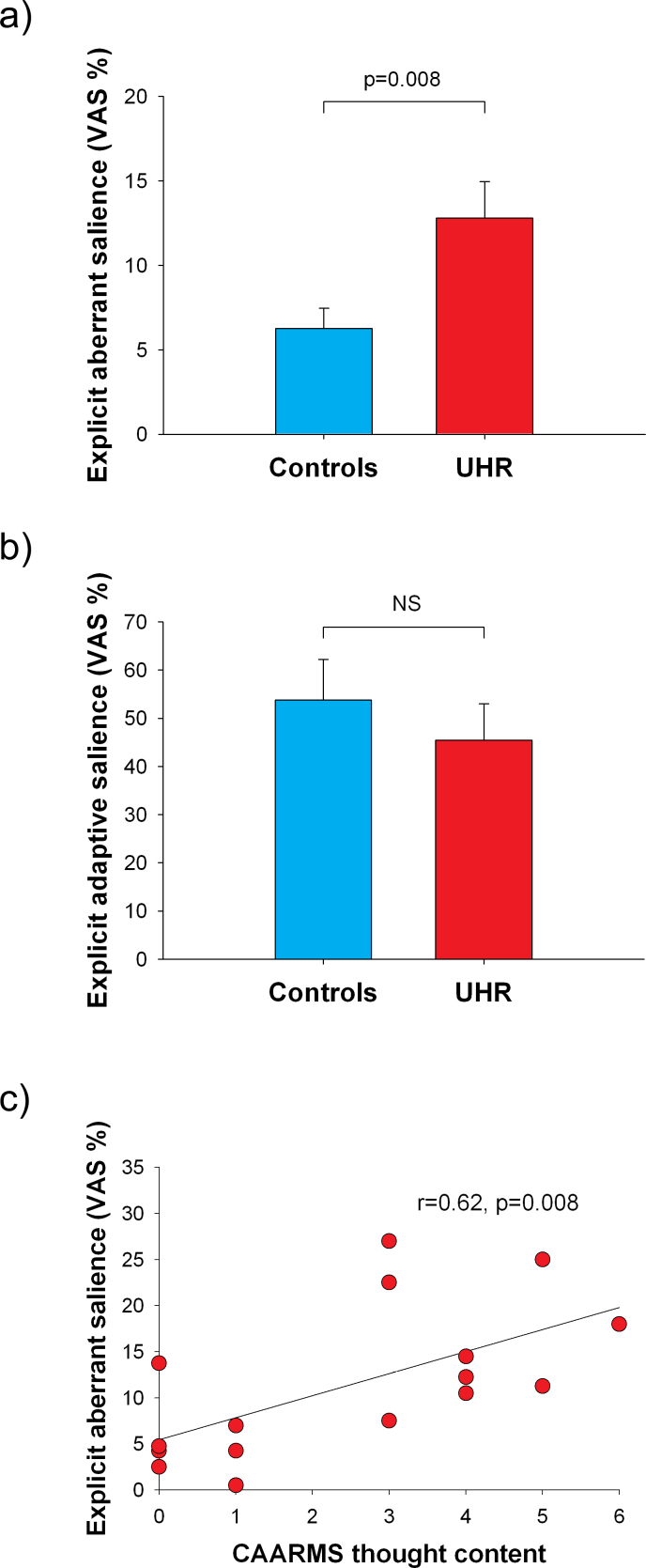
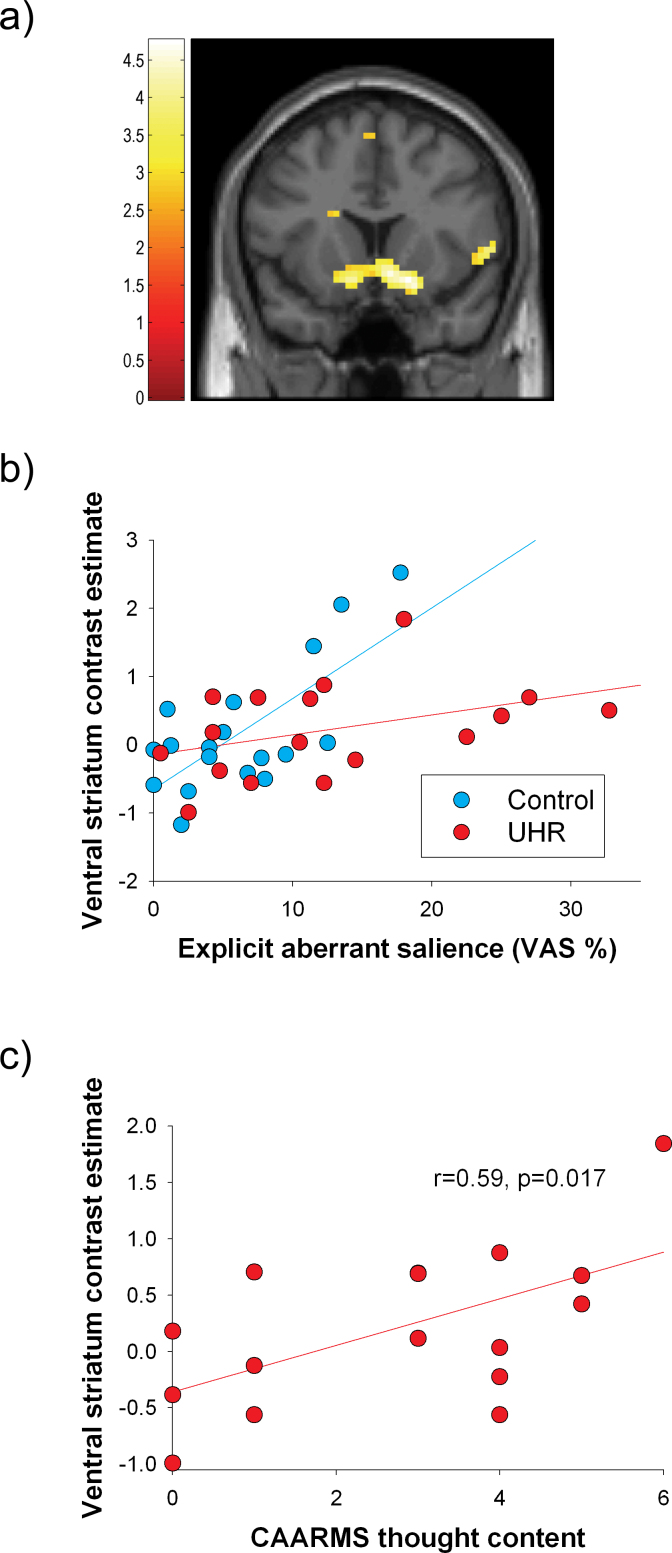
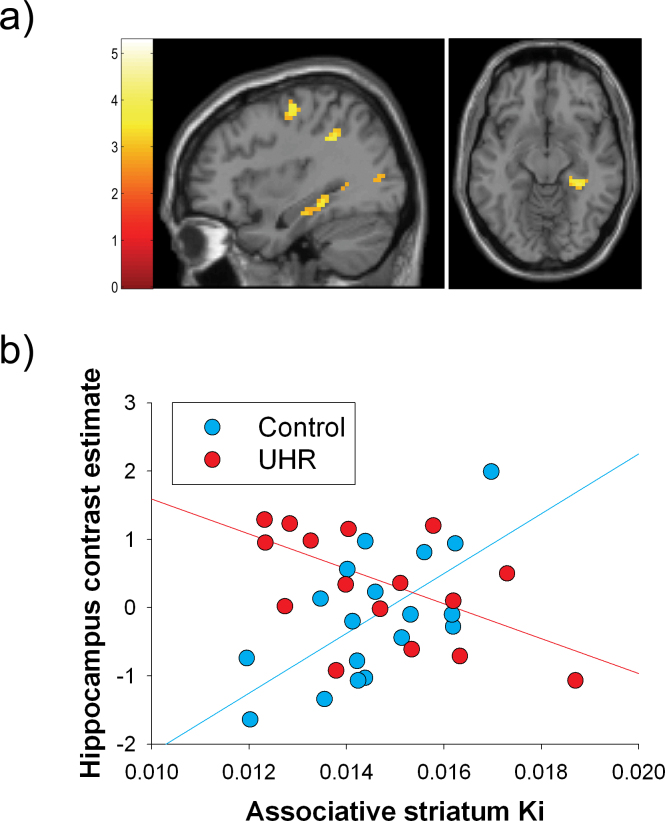
The "aberrant salience" model proposes that psychotic symptoms first emerge when chaotic brain dopamine transmission leads to the attribution of significance to stimuli that would normally be considered irrelevant. This is thought to occur during the prodromal phase of psychotic disorders, but this prediction has not been tested previously. In the present study, we tested this model in 18 healthy volunteers and 18 unmedicated individuals at ultra-high risk of psychosis. Subjects performed the Salience Attribution Test, which provides behavioral measures of adaptive and aberrant motivational salience, during functional magnetic resonance imaging to assess neural responses to relevant and irrelevant stimulus features. On a separate occasion, the same subjects were also studied with [(18)F]fluorodopa positron emission tomography to measure dopamine synthesis capacity. Individuals at ultra-high risk of psychosis were more likely to attribute motivational salience to irrelevant stimulus features (t(26.7) = 2.8, P = .008), and this bias was related to the severity of their delusion-like symptoms (r = .62, P = .008). Ventral striatal responses to irrelevant stimulus features were also correlated with delusion-like symptoms in the ultra-high risk group (r = .59, P = .017). Striatal dopamine synthesis capacity correlated negatively with hippocampal responses to irrelevant stimulus features in ultra-high risk individuals, but this relationship was positive in controls. These data are consistent with the hypothesis that aberrant salience processing underlies psychotic symptoms and involves functional alterations in the striatum, hippocampus, and the subcortical dopamine system.
Overview
The claims and statistics of this paper haven’t been checked yet.
Free: it reads the open-access text and checks the first 5 claims that cite a source we can check. Create a free account to check every claim.
Integrity signals
Registry
Cites
Statistics
Figures
Verification
Claims the paper makes
The claims and statistics of this paper haven’t been checked yet.
Free: it reads the open-access text and checks the first 5 claims that cite a source we can check. Create a free account to check every claim.
Claims other papers make about this one
Each is checked against this paper’s own text: does it say what the citing paper says it does?
The source backs part of the claim, not all of it — or backs it for a different population, condition or comparison.
In the citing paper
“The consequence may be enhanced salience attribution to environmental stimuli, which may underlie delusional and paranoid symptoms, as suggested by others [128,137] .”
From The traumagenic neurodevelopmental model of psychosis revisited (2014) · cites this paper as [137]
Experimental — accuracy not yet measuredThe cited source says what the claim attributes to it.
In the citing paper
“Overall, the tendency is for CHR to show increased explicit (but not implicit, such as that measured with reaction time) aberrant salience compared to controls (80, 82).”
From Aberrant Salience, Information Processing, and Dopaminergic Signaling in People at Clinical High Risk for Psychosis (2020) · cites this paper as [82]
The cited source says what the claim attributes to it.
In the citing paper
“CHR subjects rate irrelevant cues as more relevant than HC do (80, 82),”
From Aberrant Salience, Information Processing, and Dopaminergic Signaling in People at Clinical High Risk for Psychosis (2020) · cites this paper as [82]
The cited source says what the claim attributes to it.
In the citing paper
“Taken together, this evidence indicates altered salience processing (80-83), reward anticipation (7577) and PE-signalling (78, 79) in CHR relative to HC.”
From Aberrant Salience, Information Processing, and Dopaminergic Signaling in People at Clinical High Risk for Psychosis (2020) · cites this paper as [82]
The cited source says what the claim attributes to it.
In the citing paper
“Moreover, VS activation during aberrant salience processing correlates with delusion-like symptoms (82),”
From Aberrant Salience, Information Processing, and Dopaminergic Signaling in People at Clinical High Risk for Psychosis (2020) · cites this paper as [82]
1 more claim about this paper
Create a free account to see every claim other papers make about this one.
Self-check
Percentages, sums and reported differences re-computed from the paper’s own numbers.
The self-check needs the paper’s full text.
Citations
Cites
The Positive and Negative Syndrome Scale (PANSS) for schizophrenia.
Kay, S. R., Fiszbein, A., & Opler, L. A. (1987) · Schizophrenia Bulletin · doi:10.1093/schbul/13.2.261 · Cited by 21,378
(1998) · The Journal of Clinical Psychiatry · Cited by 19,139
(1998) · PubMed · Cited by 10,216
No adjustments are needed for multiple comparisons.
Rothman, K. J. (1990) · Epidemiology · doi:10.1097/00001648-199001000-00010 · Cited by 5,965
The mini international neuropsychiatric interview
Lecrubier, Y., Sheehan, D., Hergueta, T., & Weiller, E. (1998) · European Psychiatry · doi:10.1016/s0924-9338(99)80239-9 · Cited by 5,872
Wechsler Abbreviated Scale of Intelligence
Dumont, R., Willis, J. O., Veizel, K., & Zibulsky, J. (2014) · Encyclopedia of Special Education · doi:10.1002/9781118660584.ese2519 · Cited by 5,521
Maldjian, J. A., Laurienti, P. J., Kraft, R. A., & Burdette, J. H. (2003) · NeuroImage · doi:10.1016/s1053-8119(03)00169-1 · Cited by 5,085
Wechsler Abbreviated Scale of Intelligence
Wechsler, D. (2012) · PsycTESTS Dataset · doi:10.1037/t15170-000 · Cited by 4,596
What is the role of dopamine in reward: hedonic impact, reward learning, or incentive salience?
Berridge, K. C., & Robinson, T. E. (1998) · Brain Research Reviews · doi:10.1016/s0165-0173(98)00019-8 · Cited by 4,127
Kapur, S. (2003) · American Journal of Psychiatry · doi:10.1176/appi.ajp.160.1.13 · Cited by 2,813 · cited 3×
“Two contrast images were generated per participant, representing (1) adaptive reward prediction and (2) aberrant reward prediction.”
Background
Research works printed but not linked: 1
- Nelson HE National Adult Reading Test (NART): Test Manual. Windsor, United Kingdom: NFER-Nelson; 1982
Cited by
Items 101–200 of 228
The prodromal phase of psychosis
Modinos, G., & McGuire, P. K. (2014) · Current Opinion in Neurobiology · doi:10.1016/j.conb.2014.11.003 · Cited by 24
Self-citationThe development of delusion revisited: A transdiagnostic framework
Poletti, M., & Sambataro, F. (2013) · Psychiatry Research · doi:10.1016/j.psychres.2013.07.032 · Cited by 23
Pugliese, V., de Filippis, R., Aloi, M., Rotella, P., Carbone, E. A., Gaetano, R., & Fazio, P. D. (2022) · Annals of General Psychiatry · doi:10.1186/s12991-022-00402-5 · Cited by 24
Redman, S. L., Corcoran, C. M., Kimhy, D., & Malaspina, D. (2017) · PubMed · Cited by 23
Neural correlates of reward processing in adults with 22q11 deletion syndrome
van Duin, E. D. A., Goossens, L., Hernaus, D., Alves, F. D. S., Schmitz, N., Schruers, K. R. J., & van Amelsvoort, T. (2016) · Journal of Neurodevelopmental Disorders · doi:10.1186/s11689-016-9158-5 · Cited by 23
González-Vivas, C., Soldevila-Matías, P., Sparano, O., García‐Martí, G., Martí‐Bonmatí, L., Crespo‐Facorro, B., Aleman, A., & Sanjuán, J. (2019) · European Psychiatry · doi:10.1016/j.eurpsy.2019.04.009 · Cited by 23
Acute stress impairs reward learning in men
Carvalheiro, J., Conceição, V. A., Mesquita, A. R., & Seara‐Cardoso, A. (2020) · Brain and Cognition · doi:10.1016/j.bandc.2020.105657 · Cited by 22
Larsen, K. M., Dzafic, I., Siebner, H. R., & Garrido, M. I. (2018) · NeuroImage · doi:10.1016/j.neuroimage.2018.09.001 · Cited by 22
Human Striatal Response to Reward Anticipation Linked to Hippocampal Glutamate Levels
Bossong, M. G., Wilson, R. P., Appiah‐Kusi, E., McGuire, P. K., & Bhattacharyya, S. (2018) · The International Journal of Neuropsychopharmacology · doi:10.1093/ijnp/pyy011 · Cited by 22
Self-citationThe prevalence and features of schizophrenia among individuals with gambling disorder
Granero, R., Fernández‐Aranda, F., del Pino‐Gutiérrez, A., Etxandi, M., Baenas, I., Gómez‐Peña, M., Moragas, L., Valenciano‐Mendoza, E., Mora‐Maltas, B., Valero-Solís, S., et al. (2021) · Journal of Psychiatric Research · doi:10.1016/j.jpsychires.2021.02.025 · Cited by 21
The Paradox of Delusions: Are Deluded Individuals Resistant to Evidence?
Furl, N., Coltheart, M., & McKay, R. (2024) · Oxford University Press eBooks · doi:10.1093/oso/9780198872221.003.0012 · Cited by 21
Deep dreaming, aberrant salience and psychosis: Connecting the dots by artificial neural networks
Keshavan, M. S., & Sudarshan, M. (2017) · Schizophrenia Research · doi:10.1016/j.schres.2017.01.020 · Cited by 21
Tseng, H., Roiser, J. P., Modinos, G., Falkenberg, I., Samson, C., McGuire, P. K., & Allen, P. (2016) · NeuroImage Clinical · doi:10.1016/j.nicl.2016.09.006 · Cited by 21
Self-citationAberrant salience in first‐episode psychosis: Longitudinal stability and treatment‐response
Scazza, I., Pelizza, L., Azzali, S., Garlassi, S., Paterlini, F., Chiri, L. R., Poletti, M., Pupo, S., & Raballo, A. (2021) · Early Intervention in Psychiatry · doi:10.1111/eip.13243 · Cited by 19
Blessing, W. W., Blessing, E., Mohammed, M., & Ootsuka, Y. (2017) · Psychopharmacology · doi:10.1007/s00213-017-4710-x · Cited by 19
Delavari, F., Sandini, C., Kojovic, N., Saccaro, L. F., Eliez, S., Ville, D. V. D., & Bolton, T. A. W. (2024) · Human Brain Mapping · doi:10.1002/hbm.26649 · Cited by 18
Lisi, G., Raballo, A., Ribolsi, M., Niolu, C., Siracusano, A., & Preti, A. (2020) · Early Intervention in Psychiatry · doi:10.1111/eip.13022 · Cited by 18
Early Detection and Prevention of Schizophrenic Psychosis—A Review
Westhoff, M. S., Ladwig, J., Heck, J., Schülke, R., Groh, A., Deest, M., Bleich, S., Frieling, H., & Jahn, K. (2021) · Brain Sciences · doi:10.3390/brainsci12010011 · Cited by 18
van der Schaaf, M. E., Schmits, I. C., Roerink, M. E., Geurts, D. E. M., Toni, I., Roelofs, K., de Lange, F. P., Nater, U. M., van der Meer, J. W. M., & Knoop, H. (2015) · BMC Psychiatry · doi:10.1186/s12888-015-0515-9 · Cited by 17
Dopamine activity on the perceptual salience for recognition memory
Osorio‐Gómez, D., Guzmán-Ramos, K. R., & Bermúdez‐Rattoni, F. (2022) · Frontiers in Behavioral Neuroscience · doi:10.3389/fnbeh.2022.963739 · Cited by 17
The relationships among aberrant salience, reward motivation, and reward sensitivity
Neumann, S. R., & Linscott, R. J. (2018) · International Journal of Methods in Psychiatric Research · doi:10.1002/mpr.1615 · Cited by 17
A working model of neural activity and phenomenal experience in psychosis
Martino, M., & Magioncalda, P. (2024) · Molecular Psychiatry · doi:10.1038/s41380-024-02607-4 · Cited by 16
Raij, T. T., Mäntylä, T. J. S., Kieseppä, T., & Suvisaari, J. (2015) · Psychiatry Research Neuroimaging · doi:10.1016/j.pscychresns.2015.06.008 · Cited by 16
Prevalence and implications of Truman symptoms in subjects at ultra high risk for psychosis
Madeira, L., Bonoldi, I., Rocchetti, M., Brandizzi, M., Samson, C., Azis, M., Queen, B., Bossong, M. G., Allen, P., Pérez, J. M., et al. (2016) · Psychiatry Research · doi:10.1016/j.psychres.2016.02.001 · Cited by 16
Self-citationStrauss, G. P., Datta, R., Armstrong, W. P., Raugh, I. M., Kraguljac, N. V., & Lahti, A. C. (2021) · European Neuropsychopharmacology · doi:10.1016/j.euroneuro.2021.03.014 · Cited by 15
Tobacco smoking in schizophrenia: investigating the role of incentive salience
Freeman, T. P., Stone, J. M., Orgaz, B., Noronha, L. A., Minchin, S., & Curran, H. V. (2013) · Psychological Medicine · doi:10.1017/s0033291713002705 · Cited by 15
High schizotypy traits are associated with reduced hippocampal resting state functional connectivity
Kozhuharova, P., Saviola, F., Diaconescu, A. O., & Allen, P. (2020) · Psychiatry Research Neuroimaging · doi:10.1016/j.pscychresns.2020.111215 · Cited by 14
Aberrant salience predicts psychotic-like experiences in daily life: An experience sampling study
Chun, C. A., Gross, G. M., Mielock, A. S., & Kwapil, T. R. (2020) · Schizophrenia Research · doi:10.1016/j.schres.2020.03.016 · Cited by 14
Knolle, F., Garofalo, S., Viviani, R., Justicia, A., Ermakova, A. O., Blank, H., Williams, G. B., Arrondo, G., Ramachandra, P., Tudor-Sfetea, C., et al. (2020) · NeuroImage Clinical · doi:10.1016/j.nicl.2020.102277 · Cited by 13
Increased Gamma Oscillations Evoked by Physically Salient Distracters are Associated with Schizotypy
Kornmayer, L., Leicht, G., & Mulert, C. (2014) · Brain Topography · doi:10.1007/s10548-014-0418-y · Cited by 13
Poletti, M., Pelizza, L., Azzali, S., Scazza, I., Paterlini, F., Garlassi, S., Chiri, L. R., Pupo, S., & Raballo, A. (2022) · Scandinavian Journal of Psychology · doi:10.1111/sjop.12806 · Cited by 12
Wisner, K., Johnson, M. K., Porter, J. N., Krueger, R. F., & MacDonald, A. W. (2021) · Human Brain Mapping · doi:10.1002/hbm.25613 · Cited by 12
Scarfo, S., Marsella, A. M. A., Grigoriadou, L., Moshfeghi, Y., & McGeown, W. J. (2024) · Neuropsychologia · doi:10.1016/j.neuropsychologia.2024.109006 · Cited by 11
Williams, S. A., Gwilt, M., Hock, R. M., Taylor, C., Loayza, J., Stevenson, C. W., Cassaday, H. J., & Bast, T. (2022) · eNeuro · doi:10.1523/eneuro.0270-21.2021 · Cited by 11
Squarcina, L., Kambeitz‐Ilankovic, L., Bonivento, C., Prunas, C., Oldani, L., Wenzel, J., Ruef, A., Dwyer, D., Ferro, A., Borgwardt, S., et al. (2022) · The World Journal of Biological Psychiatry · doi:10.1080/15622975.2021.2014955 · Cited by 11
Vingerhoets, C., Bloemen, O., Boot, E., Bakker, G., de Koning, M. B., Alves, F. D. S., Booij, J., & van Amelsvoort, T. (2017) · Psychiatry Research Neuroimaging · doi:10.1016/j.pscychresns.2017.11.014 · Cited by 11
Implicit and explicit processing of bodily emotions in schizophrenia
Hajdúk, M., Klein, H., Bass, E., Springfield, C. R., & Pinkham, A. E. (2019) · Cognitive Neuropsychiatry · doi:10.1080/13546805.2019.1706465 · Cited by 11
Roeske, M. J., McHugo, M., Rogers, B. P., Armstrong, K., Avery, S. N., Donahue, M. J., & Heckers, S. (2023) · Neuropsychopharmacology · doi:10.1038/s41386-023-01730-0 · Cited by 11
Salienza: clinica, psicopatologia e neurobiologia
Godini, L., Lelli, L., Campone, B., Ciampi, E., Corsi, E., Ramella‐Cravaro, V., & Ballerini, A. (2015) · Rivista di psichiatria · doi:10.1708/2098.22680 · Cited by 12
Acute and Lifetime Stress and Psychotic Illness: The Roles of Reward and Salience Networks
Nudelman, J. L., & Waltz, J. A. (2022) · Journal of Psychiatry and Brain Science · doi:10.20900/jpbs.20220012 · Cited by 10
An integrated cluster‐wise significance measure for fMRI analysis
Ge, Y., Chen, G., Waltz, J. A., Hong, L. E., Kochunov, P., & Chen, S. (2022) · Human Brain Mapping · doi:10.1002/hbm.25795 · Cited by 10
Kornmayer, L., Leicht, G., & Mulert, C. (2016) · The World Journal of Biological Psychiatry · doi:10.1080/15622975.2016.1258491 · Cited by 10
Hong, S. B., Lee, T. Y., Kwak, Y. B., Kim, S. N., & Kwon, J. S. (2015) · Schizophrenia Research · doi:10.1016/j.schres.2015.10.029 · Cited by 10
Latent inhibition, aberrant salience, and schizotypy traits in cannabis users
Dawes, C., Quinn, D. M., Bickerdike, A., O’Neill, C., Granger, K. T., Pereira, S. C., Mah, S. L., Haselgrove, M., Waddington, J. L., O’Tuathaigh, C. M. P., et al. (2022) · Schizophrenia Research Cognition · doi:10.1016/j.scog.2021.100235 · Cited by 10
Anglin, D. M., Espinosa, A., Barada, B., Tarazi, R., Feng, A., Tayler, R., Allicock, N., & Pandit, S. (2019) · Journal of Clinical Medicine · doi:10.3390/jcm8081223 · Cited by 9
Straub, K. T., Hua, J. P. Y., Karcher, N. R., & Kerns, J. G. (2020) · Psychiatry Research Neuroimaging · doi:10.1016/j.pscychresns.2020.111089 · Cited by 9
Allen, P., Hird, E., Orlov, N. D., Modinos, G., Bossong, M. G., Antoniades, M., Sampson, C., Azis, M., Howes, O. D., Stone, J. M., et al. (2021) · Translational Psychiatry · doi:10.1038/s41398-021-01705-z · Cited by 9
Self-citationPresynaptic Dopaminergic Function: Implications for Understanding Treatment Response in Psychosis
Bonoldi, I., & Howes, O. D. (2014) · CNS Drugs · doi:10.1007/s40263-014-0177-z · Cited by 9
Self-citationMillman, Z. B., Schiffman, J. E., Gold, J. M., Akouri-Shan, L., Demro, C., Fitzgerald, J., Rouhakhtar, P. R., Klaunig, M. J., Rowland, L. M., & Waltz, J. A. (2022) · Schizophrenia Bulletin Open · doi:10.1093/schizbullopen/sgac039 · Cited by 9
Supekar, K., Angeles, C. D. L., Ryali, S., Kushan, L., Schleifer, C. H., Repetto, G. M., Crossley, N. A., Simon, T., Bearden, C. E., & Menon, V. (2024) · Molecular Psychiatry · doi:10.1038/s41380-024-02495-8 · Cited by 8
Nielsen, M. Ø., Rostrup, E., Hilker, R. W., Legind, C. S., Anhøj, S. J., Robbins, T. W., Sahakian, B. J., Fagerlund, B., & Glenthoj, B. Y. (2022) · Biological Psychiatry Global Open Science · doi:10.1016/j.bpsgos.2022.01.002 · Cited by 8
Zeng, J., Yan, J., You, L., Liao, T., Luo, Y., Cheng, B., & Yang, X. (2023) · The International Journal of Neuropsychopharmacology · doi:10.1093/ijnp/pyad009 · Cited by 8
Papanastasiou, E., Mouchlianitis, E. D., Joyce, D. W., McGuire, P. K., Boussebaa, C., Banaschewski, T., Bokde, A. L. W., Büchel, C., Quinlan, E. B., Desrivières, S., et al. (2020) · Scientific Reports · doi:10.1038/s41598-020-62026-7 · Cited by 8
Self-citationSaviola, F., Bellani, M., Perlini, C., Squarcina, L., Maggioni, E., Zacà, D., Lasalvia, A., Dusi, N., Bonetto, C., Cristofalo, D., et al. (2021) · Journal of Psychiatric Research · doi:10.1016/j.jpsychires.2021.01.044 · Cited by 8
Speech Illusions in People at Clinical High Risk for Psychosis Linked to Clinical Outcome
Hird, E., Ohmuro, N., Allen, P., Moseley, P., Kempton, M. J., Modinos, G., Sachs, G., van der Gaag, M., de Haan, L., Gadelha, A., et al. (2022) · Schizophrenia Bulletin · doi:10.1093/schbul/sbac163 · Cited by 8
Self-citationNeuroimaging and Psychopathological Domains
Mucci, A., Galderisi, S., Amodio, A., & Dierks, T. (2019) · Springer eBooks · doi:10.1007/978-3-319-97307-4_2 · Cited by 7
Relations Among Anhedonia, Reinforcement Learning, and Global Functioning in Help-seeking Youth
Akouri-Shan, L., Schiffman, J. E., Millman, Z. B., Demro, C., Fitzgerald, J., Rouhakhtar, P. R., Redman, S. L., Reeves, G. M., Chen, S., Gold, J. M., et al. (2021) · Schizophrenia Bulletin · doi:10.1093/schbul/sbab075 · Cited by 7
Self-citationDerome, M., Machon, S., Barker, H., Kozhuharova, P., Orlov, N. D., Morgenroth, E., Hugdahl, K., & Allen, P. (2023) · European Archives of Psychiatry and Clinical Neuroscience · doi:10.1007/s00406-023-01564-3 · Cited by 7
Activation of the motivation-related ventral striatum during delusional experience
Raij, T. T., Riekki, T. J. J., Rikandi, E., Mäntylä, T. J. S., Kieseppä, T., & Suvisaari, J. (2018) · Translational Psychiatry · doi:10.1038/s41398-018-0347-8 · Cited by 6
Organismo y acción situada: mapeando el concepto de affordance
López‐Silva, P. (2020) · Avances en Psicología Latinoamericana · doi:10.12804/revistas.urosario.edu.co/apl/a.7475 · Cited by 5
Drukker, M., Todor, T., Bongaarts, J., Broggi, E., Kelkar, M., Wigglesworth, T., Verhiel, K., van Leeuwen, K., Koster, M., Derom, C. A., et al. (2024) · BMC Psychiatry · doi:10.1186/s12888-024-06176-2 · Cited by 5
The dark side of dopaminergic therapies in Parkinson’s disease: shedding light on aberrant salience
Poletti, M. (2017) · CNS Spectrums · doi:10.1017/s1092852917000219 · Cited by 5
Validation of the aberrant salience inventory in a general and clinical Spanish population
Testal, J. F. R., Fuentes-Márquez, S., Senín‐Calderón, C., Fernández-León, S., Ceballos-Munuera, C., Garcelán, S. P., & Fonseca‐Pedrero, E. (2022) · Comprehensive Psychiatry · doi:10.1016/j.comppsych.2022.152343 · Cited by 5
MacDonald, A. W. (2017) · Schizophrenia Bulletin · doi:10.1093/schbul/sbw190 · Cited by 5
Delusions following deep brain stimulation of the nucleus accumbens
Graat, I., Bergfeld, I. O., de Koning, P. P., Vulink, N. C. C., Schuurman, P. R., Denys, D. A. J. P., & Figee, M. (2018) · Brain stimulation · doi:10.1016/j.brs.2018.12.973 · Cited by 5
Liang, X., Avram, M.-M., Gibbs-Dean, T., Chesney, E., Oliver, D., Wang, S., Obreshkova, S., Spencer, T., Englund, A., & Diederen, K. M. J. (2024) · Frontiers in Psychiatry · doi:10.3389/fpsyt.2024.1309868 · Cited by 4
Kapanaiah, S. K. T., Grimm, C., & Kätzel, D. (2024) · Schizophrenia · doi:10.1038/s41537-024-00513-w · Cited by 4
Falkenberg, I., Kircher, T. T. J., & Krug, A. (2014) · Springer eBooks · doi:10.1007/978-3-642-54542-9_13 · Cited by 4
Glutamatergic mechanisms in early salience processing
Lockhofen, D. E. L., Hübner, N., Debnath, R., Rumpf, K. P., Sander, M., Wolff, M., Luxi, D., Roller, L., & Mulert, C. (2025) · Frontiers in Pharmacology · doi:10.3389/fphar.2025.1601797 · Cited by 3
Zhang, L., Wang, W., Ruan, Y., Li, Z., Yanjun, Yanjun, Tian, Y., & Wang, K. (2024) · Psychiatry Research Neuroimaging · doi:10.1016/j.pscychresns.2024.111881 · Cited by 3
Esse est percipi: A Neurophilosophical Model of Psychosis
Perogamvros, L. (2014) · Psychopathology · doi:10.1159/000362565 · Cited by 3
Vaidya, B. P., Shenoy, S., & Praharaj, S. K. (2024) · Indian Journal of Psychiatry · doi:10.4103/indianjpsychiatry.indianjpsychiatry_521_24 · Cited by 3
Midbrain dopamine D2R regulates the salience of threat-related eventsPreprint
Castell, L., Rogliardo, A., Borgne, T. L., Naon, C., Cathala, A., Puighermanal, E., Makrini, L., Mashhour, N., Petit, C. P., Bernat, C., et al. (2024) · bioRxiv (Cold Spring Harbor Laboratory) · doi:10.1101/2024.11.12.623233 · Cited by 3
Winton‐Brown, T., Schmidt, A., Roiser, J. P., Howes, O. D., Egerton, A., Fusar‐Poli, P., Bunzeck, N., Grace, A. A., Düzel, E., Kapur, S., et al. (2018) · Translational Psychiatry · doi:10.1038/s41398-018-0189-4 · Cited by 3
Self-citation"ABERRANT" NEURONAL STIMULATION AND "CANNABIS PSYCHOSIS" - HYPOTHESIS TO A BIOLOGICAL PLAUSIBILITY!
Das, N. (2021) · Psychiatria Danubina · doi:10.24869/psyd.2021.280 · Cited by 3
Neuroimaging and the At-Risk Mental State
Lin, Y.-S., Fusar‐Poli, P., & Borgwardt, S. (2019) · Springer eBooks · doi:10.1007/978-3-319-97307-4_6 · Cited by 2
Refining mechanistic models of hallucinations for enhanced translatability
Buck, J., Iigaya, K., & Horga, G. (2025) · Translational Psychiatry · doi:10.1038/s41398-025-03773-x · Cited by 2
Phasic dopamine enhances the distinct decoding and perceived salience of stimuliPreprint
Oettl, L., Scheller, M. F., Wieland, S., Haag, F., Wolf, D., Loeb, C., Ravi, N., Durstewitz, D., Shusterman, R., Russo, E., et al. (2019) · bioRxiv (Cold Spring Harbor Laboratory) · doi:10.1101/771162 · Cited by 2
Green, H. (2017) · CUNY Academic Works (City University of New York) · Cited by 2
Xie, Y., Zhang, T., Ouyang, A., Guan, M., Lin, X., Wang, L., Diao, X., Li, Y., He, W., Dong, Q., et al. (2026) · Neuroscience & Biobehavioral Reviews · doi:10.1016/j.neubiorev.2026.106579 · Cited by 3
Naasan, G. (2016) · Elsevier eBooks · doi:10.1016/b978-0-12-800105-9.00023-8 · Cited by 2
Structural and Functional MRI in the Prediction of Psychosis
Dwyer, D., & McGuire, P. K. (2016) · Key issues in mental health (Online)/Key issues in mental health (Print) · doi:10.1159/000440916 · Cited by 2
Self-citationAttentional biases and trauma status: Do psychotic-like experiences matter?
Gibson, L. E., Cooper, S., Reeves, L. E., Olino, T. M., & Ellman, L. M. (2019) · Psychological Trauma Theory Research Practice and Policy · doi:10.1037/tra0000380 · Cited by 2
Knolle, F., Ermakova, A. O., Justicia, A., Fletcher, P. C., Bunzeck, N., Düzel, E., & Murray, G. K. (2018) · bioRxiv (Cold Spring Harbor Laboratory) · doi:10.1101/263020 · Cited by 2
Psychosis (Schizophrenia Spectrum and Other Psychotic Disorders)
Leigh, H. (2014) · Springer eBooks · doi:10.1007/978-3-319-11005-9_19 · Cited by 2
Posterior parietal cortex modulates perceptual decisions depending on psychotic phenotype
Scaramozzino, F., McKay, R., & Furl, N. (2025) · Neuropsychologia · doi:10.1016/j.neuropsychologia.2025.109348 · Cited by 1
Bielawski, T., & Misiak, B. (2025) · Frontiers in Psychiatry · doi:10.3389/fpsyt.2025.1647155 · Cited by 1
Dong, X., Gupta, T., Haas, G. L., Eckstrand, K., Silk, J. S., Ryan, N. D., & Forbes, E. E. (2025) · European Archives of Psychiatry and Clinical Neuroscience · doi:10.1007/s00406-025-02095-9 · Cited by 1
Gupta, T., Damme, K. S. F., Osborne, K. J., Vargas, T., Ristanovic, I., Frosch, I. R., Zarubin, V. C., Hitczenko, K., Williams, T. F., Cowan, H. R., et al. (2021) · Elsevier eBooks · doi:10.1016/b978-0-12-818697-8.00089-3 · Cited by 1
Brain Computations in Schizophrenia
Adams, R. A., & Friston, K. J. (2016) · Elsevier eBooks · doi:10.1016/b978-0-12-801829-3.00024-0 · Cited by 1
van Duin (2018) · Research Publications (Maastricht University) · doi:10.26481/dis.20181115ed · Cited by 1
Richter, A. (2017) · eDiss (Georg-August-Universität Göttingen) · doi:10.53846/goediss-6346 · Cited by 1
Valton, V. (2015) · ERA · Cited by 1
Suker, S., Mihov, Y., Wolf, A., Mueller, S., & Hasler, G. (2023) · Schizophrenia Bulletin Open · doi:10.1093/schizbullopen/sgad023 · Cited by 1
Boerner, T. (2016) · Oxford University Research Archive (ORA) (University of Oxford) · doi:10.5287/ora-8r89momdy · Cited by 1
Dopamine dysfunction in psychosis
McCutcheon, R. A., & Zauchenberger, C.-Z. (2025) · Handbook of behavioral neuroscience · doi:10.1016/b978-0-443-29867-7.00035-9
O’Brien, K. J., Elliott, B. L., Ered, A., Murty, V. P., & Ellman, L. M. (2026) · Neuroscience & Biobehavioral Reviews · doi:10.1016/j.neubiorev.2026.106694
López‐Silva, P., & Abarca, M. (2023) · Revista Latinoamericana de Psicopatologia Fundamental · doi:10.1590/1415-4714.e220421 · Cited by 2
Huber, A., Vukmirović, J., Haydarlou, R., & Treur, J. (2025) · Cognitive Systems Research · doi:10.1016/j.cogsys.2025.101423
Delfin, C. (2014) · Högskolan Kristianstad Publikationer
Metadata
- Authors
- Roiser, J. P., Howes, O. D., Chaddock, C. A., Joyce, E. M., & McGuire, P.
- Affiliations
- University College London (GB)
- King's College London (GB)
- UCL Queen Square Institute of Neurology (GB)
- Corresponding author
- Roiser, Jonathan P.
- Venue
- Schizophrenia Bulletin
- Publisher
- Oxford University Press (OUP)
- Published
- 2012-12-12
- Volume
- 39
- Issue
- 6
- Pages
- 1328-1336
- ISSN
- 0586-7614 (ISSN-L)
- 1745-1701
- PMC
- PMC3796080
- OpenAlex
- W2120310131
- Cited by
- 205
- References
- 45
- Citations by year
- 2026: 5 · 2025: 8 · 2024: 12 · 2023: 8 · 2022: 17 · 2021: 18 · 2020: 23 · 2019: 16 · 2018: 21 · 2017: 14 · 2016: 25 · 2015: 18 · 2014: 15 · 2013: 5
- FWCI
- 8.63
- Type
- journal article
- Language
- en
- Open access
- hybrid
- doi.org
- Licence
- cc-by-nc
- Locations
- Schizophrenia Bulletin (publishedVersion, cc-by-nc)
- Europe PMC (PubMed Central) (publishedVersion, cc-by-nc)
- PubMed Central (publishedVersion, cc-by-nc)
- PubMed (publishedVersion)
- UCL Discovery (University College London) (submittedVersion)
- Research Portal (King's College London) (submittedVersion, other-oa)
- Funders
- University College London
- University of California, San Francisco
- Medical Research Council
- Menzies Centre for Australian Studies, King's College London, University of London
- Topics
- Health Sciences › Medicine › Psychiatry and Mental health › Schizophrenia research and treatment
- Life Sciences › Neuroscience › Cellular and Molecular Neuroscience › Neurotransmitter Receptor Influence on Behavior
- Life Sciences › Neuroscience › Cognitive Neuroscience › Neural and Behavioral Psychology Studies
- Keywords
- aberrant salience
- MeSH terms
- Adult, Basal Ganglia, Delusions, Dihydroxyphenylalanine, Dopamine, Female, Hippocampus, Humans, Magnetic Resonance Imaging, Male, Psychotic Disorders, Risk, Severity of Illness Index, Positron-Emission Tomography, Cerebrum, Young Adult, Functional Neuroimaging, Prodromal Symptoms
About these checks
Registry, retraction, Cites and statistics results are computed, not judged, with one exception: a printed reference that no index lists is read once by a model before it counts as a citation error. Claims are extracted by a model and kept only when their quote appears verbatim in the text; each cited source is then checked, with a model’s help, for whether it says what the claim relies on. Those verdicts can be wrong — read the claim’s quote and the cited source before relying on one.
Statistics and arithmetic are recomputed, not judged.
Confidence bands are shown only for fields calibrated on our annotated test set. None is calibrated yet, so no band is shown.
What counts as a claim ›How we measure confidence ›How we check this ›
Are you an author, or do you see a problem with this page? Request a review
Data sources
Bibliographic data: Semantic Scholar, OpenAlex, Crossref.
Contains information from the Semantic Scholar Academic Graph Datasets, made available under the ODC Attribution License (ODC-BY 1.0).
Semantic Scholar’s data is described in: Kinney, R., et al. (2023). The Semantic Scholar Open Data Platform. arXiv:2301.10140.
