

Life Events and Psychosis: A Review and Meta-analysis
Open accessThe DOI matches its Crossref record; 25 of the 26 references it cites were found in a registry or an index.
Abstract
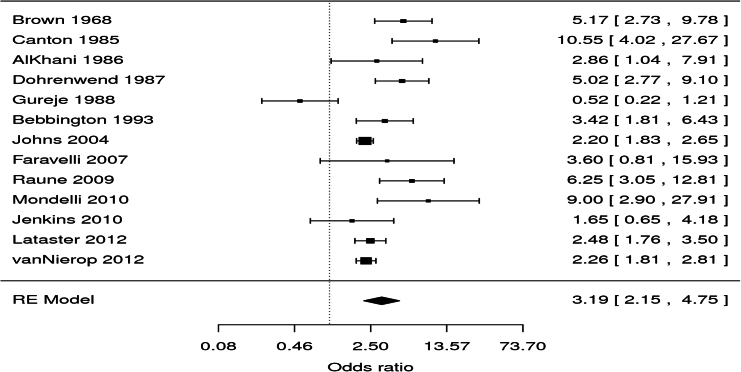
INTRODUCTION: Recent models of psychosis implicate stressful events in its etiology. However, while evidence has accumulated for childhood trauma, the role of adult life events has received less attention. Therefore, a review of the existing literature on the relationship between life events and onset of psychotic disorder/experiences is timely. METHODS: A search was conducted using PsychInfo, Medline, Embase, and Web of Science to identify studies of life events and the onset of psychosis or psychotic experiences within the general population. Given previous methodological concerns, this review included a novel quality assessment tool and focused on findings from the most robust studies. A meta-analysis was performed on a subgroup of 13 studies. RESULTS: Sixteen studies published between 1968 and 2012 were included. Of these, 14 reported positive associations between exposure to adult life events and subsequent onset of psychotic disorder/experiences. The meta-analysis yielded an overall weighted OR of 3.19 (95% CI 2.15-4.75). However, many studies were limited by small sample sizes and the use of checklist measures of life events, with no consideration of contextual influences on the meaning and interpretation of events. CONCLUSIONS: Few studies have assessed the role of adult life events in the onset of psychosis. There was some evidence that reported exposure to adult life events was associated with increased risk of psychotic disorder and subclinical psychotic experiences. However, the methodological quality of the majority of studies was low, which urges caution in interpreting the results and points toward a need for more methodologically robust studies.
Overview
The claims and statistics of this paper haven’t been checked yet.
Free: it reads the open-access text and checks the first 5 claims that cite a source we can check. Create a free account to check every claim.
Integrity signals
Registry
Cites
Statistics
Figures
Verification
Claims the paper makes
The claims and statistics of this paper haven’t been checked yet.
Free: it reads the open-access text and checks the first 5 claims that cite a source we can check. Create a free account to check every claim.
Claims other papers make about this one
Each is checked against this paper’s own text: does it say what the citing paper says it does?
The source backs part of the claim, not all of it — or backs it for a different population, condition or comparison.
In the citing paper
“Early adversity also leads to psychiatric disorders such as psychosis, PTSD, borderline personality, anxiety, depression, and suicide [reviews in Ref. (38, 42–44)].”
From The Stress Acceleration Hypothesis of Nightmares (2017) · cites this paper as [42]
Experimental — accuracy not yet measuredIn the citing paper
“These adverse factors include developmental psychological trauma (Bendall et al., 2008) and adult life events (situations or occurrences that bring about a negative change in personal circumstances and involve threat) (Beards et al., 2013; Brown and Birley, 1968).”
From The effects of psychosocial stress on dopaminergic function and the acute stress response (2019) · cites this paper as Beards et al., 2013
Self-check
Percentages, sums and reported differences re-computed from the paper’s own numbers.
The self-check needs the paper’s full text.
Citations
Cites
Varese, F., Smeets, F., Drukker, M., Lieverse, R., Lataster, T., Viechtbauer, W., Read, J., van Os, J., & Bentall, R. P. (2012) · Schizophrenia Bulletin · doi:10.1093/schbul/sbs050 · Cited by 2,436
A cognitive model of the positive symptoms of psychosis
GARETY, P. A., KUIPERS, E., FOWLER, D., FREEMAN, D., & BEBBINGTON, P. E. (2001) · Psychological Medicine · doi:10.1017/s0033291701003312 · Cited by 1,546 · cited 1×
“Key words: psychosis/life events/review/stress/etiology introduction Recent models of psychosis implicate social adversity, broadly defined, in its etiology.(1,2) However, while evidence has accumulated for childhood trauma,3,4 the role of adult life events has received less attention.”
BackgroundSchizophrenia: A neural diathesis-stress model.
Walker, E. F., & Diforio, D. (1997) · Psychological Review · doi:10.1037//0033-295x.104.4.667 · Cited by 930
Crises and Life Changes and the Onset of Schizophrenia
Brown, G. W., & Birley, J. L. T. (1968) · Journal of Health and Social Behavior · doi:10.2307/2948405 · Cited by 680
Morgan, C., & Fisher, H. (2006) · Schizophrenia Bulletin · doi:10.1093/schbul/sbl053 · Cited by 568
Self-citationPrevalence and correlates of self-reported psychotic symptoms in the British population
Johns, L. C., Cannon, M., Singleton, N., Murray, R. M., Farrell, M., Brugha, T., Bebbington, P., Jenkins, R., & Meltzer, H. (2004) · British Journal of Psychiatry · doi:10.1192/bjp.185.4.298 · Cited by 561
Social defeat: Risk factor for schizophrenia?
Selten, J.-P., & Cantor-Graae, E. (2005) · British Journal of Psychiatry · doi:10.1192/bjp.187.2.101 · Cited by 551 · cited 1×
“Key words: psychosis/life events/review/stress/etiology introduction Recent models of psychosis implicate social adversity, broadly defined, in its etiology.(1,2) However, while evidence has accumulated for childhood trauma,3,4 the role of adult life events has received less attention.”
BackgroundDesirable versus undesirable life events: Their relationship to stress and mental distress.
Vinokur, A. D., & Selzer, M. L. (1975) · Journal of Personality and Social Psychology · doi:10.1037//0022-3514.32.2.329 · Cited by 486
Mondelli, V., Dazzan, P., Hepgul, N., Di Forti, M., Aas, M., D'Albenzio, A., Di Nicola, M., Fisher, H., Handley, R., Marques, T. R., et al. (2010) · Schizophrenia Research · doi:10.1016/j.schres.2009.08.013 · Cited by 278
Self-citationLife Events and Psychosis: Initial Results from the Camberwell Collaborative Psychosis Study
Bebbington, P., Wilkins, S., Jones, P., Foerster, A., Murray, R., Toone, B., & Lewis, S. (1993) · British Journal of Psychiatry · doi:10.1192/bjp.162.1.72 · Cited by 273
Research works printed but not linked: 1
- Chakraborty R Chatterjee A Choudhary S Singh AR Chakraborty PK Life events in acute and transient psychosis—a comparison with mania.. Ger J Psychiatry. 2007; 10: 36– 40
Cited by
Items 101–200 of 398
Scheffers, F., Moonen, X., & van Vugt, E. (2020) · Journal of Intellectual Disabilities · doi:10.1177/1744629520961942 · Cited by 32
Stressful life events and psychosis: Gender differences
Mansueto, G., & Faravelli, C. (2021) · Stress and Health · doi:10.1002/smi.3067 · Cited by 32
Campodonico, C., Berry, K., Haddock, G., & Varese, F. (2021) · Frontiers in Psychiatry · doi:10.3389/fpsyt.2021.735870 · Cited by 32
“Participants were considered eligible if they were: (1) aged 16 or above; (2) able to provide informed consent; (3) experiencing psychosis (e.”
BackgroundMethodFamilial risk and childhood adversity interplay in the onset of psychosis
Trotta, A., Forti, M. D., lyegbe, C., Green, P., Dazzan, P., Mondelli, V., Morgan, C., Murray, R. M., & Fisher, H. L. (2015) · BJPsych Open · doi:10.1192/bjpo.bp.115.000158 · Cited by 32
“43 Additionally, as only trauma occurring during childhood was investigated in this study, it is possible that other environmental risk factors such as cannabis use 46 or trauma occurring in adulthood 47 might demonstrate stronger associations with psychotic disorder and confound this relationship.”
Self-citationPos, K., Boyette, L., Meijer, C. J., Koeter, M. W. J., Krabbendam, L., de Haan, L., & for GROUP (2016) · Cognitive Neuropsychiatry · doi:10.1080/13546805.2016.1236014 · Cited by 33
“Exposure to recent life events is associated with an increased risk of experiencing a first psychotic episode (Beards et al., 2013; Day et al., 1987).”
BackgroundBergström, T., Seikkula, J., Holma, J. M., Mäki, P. H., Köngäs‐Saviaro, P., & Alakare, B. (2019) · Psychosis · doi:10.1080/17522439.2019.1603320 · Cited by 32
Karpiński, P., Żebrowska-Różańska, P., Kujawa, D., Łaczmański, Ł., Samochowiec, J., Jabłoński, M., Plichta, P., Piotrowski, P., Bielawski, T., & Misiak, B. (2023) · Psychoneuroendocrinology · doi:10.1016/j.psyneuen.2023.106335 · Cited by 32
“For instance, there is compelling evidence that traumatic life events across the lifespan increase a risk of psychosis (Beards et al., 2013; Varese et al., 2012).”
BackgroundMisiak, B., Kotowicz, K., Loska, O., Stramecki, F., Beszłej, J. A., Samochowiec, J., Jabłoński, M., Podwalski, P., Waszczuk, K., Wroński, M., et al. (2018) · Psychoneuroendocrinology · doi:10.1016/j.psyneuen.2018.06.021 · Cited by 31
‘No man is an island’. Testing the specific role of social isolation in formal thought disorder
de Sousa, P., Spray, A., Sellwood, W., & Bentall, R. P. (2015) · Psychiatry Research · doi:10.1016/j.psychres.2015.09.010 · Cited by 31
“and adulthood adverse events (Beards et al., 2013) are associated”
Moving from risk to resilience in psychosis research
Thakkar, K. N., McCleery, A., Minor, K. S., Lee, J., Humpston, C. S., Chopik, W. J., Burt, S. A., Pearson, A. L., Ungar, M. T., & Park, S. (2023) · Nature Reviews Psychology · doi:10.1038/s44159-023-00205-9 · Cited by 31
Cullen, A. E., Rai, S., Vaghani, M. S., Mondelli, V., & McGuire, P. K. (2020) · Frontiers in Psychiatry · doi:10.3389/fpsyt.2020.00513 · Cited by 30
“Meta-analyses indicate that major life events and childhood trauma (typically encompassing experiences of neglect and abuse) are associated with increased risk of developing psychotic disorders (1, 2).”
BackgroundAthanassiou, M., Dumais, A., Gnanhoue, G., Abdel-Baki, A., Jutras-Aswad, D., & Potvin, S. (2021) · Expert Review of Neurotherapeutics · doi:10.1080/14737175.2021.1942845 · Cited by 29
“An assessment was then performed on the retained articles using a 7 rated-item assessment tool [50] (Supplementary”
BackgroundMethodVarese, F., Sellwood, W., Aseem, S., Awenat, Y. F., Bird, L., Bhutani, G., Carter, L., Davies, L. M., Davis, C., Horne, G., et al. (2020) · Early Intervention in Psychiatry · doi:10.1111/eip.13071 · Cited by 30
“Meta-analyses indicate that trauma is associated with an increased risk of developing psychosis, and heightened severity of psychotic symptoms in those who already have psychosis (e.g., Beards et al., 2013; Varese et al., 2012).”
BackgroundCullen, A. E., Labad, J., Oliver, D., Al‐Diwani, A., Minichino, A., & Fusar‐Poli, P. (2023) · Current Neuropharmacology · doi:10.2174/1570159x21666230322145049 · Cited by 31
“Early evidence from small studies suggested that stressful life events tended to increase in the three weeks prior to the onset of psychotic symptoms [91] but this has not been replicated [92].”
BackgroundExperimentally induced psychosocial stress in schizophrenia spectrum disorders: A systematic review
Lange, C., Deutschenbaur, L., Borgwardt, S., Lang, U. E., Walter, M., & Huber, C. G. (2016) · Schizophrenia Research · doi:10.1016/j.schres.2016.10.008 · Cited by 28
Ortega, L., Montalvo, I., Monseny, R., Vilella, E., & Labad, J. (2019) · Early Intervention in Psychiatry · doi:10.1111/eip.12791 · Cited by 28
“Stressful life events, low resilience, stigma stress, poor social support or social deprivation play an important role in the transition factors and onset of psychosis (Beards et al., 2013; Marulanda & Addington, 2016; Rüsch et al., 2015).”
BackgroundCullen, A. E., Fisher, H. L., Gullet, N., Fraser, E. R., Roberts, R. E., Zahid, U., To, M., Yap, N. H., Zunszain, P. A., Pariante, C. M., et al. (2022) · Biological Psychiatry · doi:10.1016/j.biopsych.2021.08.009 · Cited by 27
“daily stressors, and childhood trauma) in the development and exacerbation of psychotic disorders (1-7).”
Self-citationBrito, M. A., Amad, A., Rolland, B., Geoffroy, P. A., Peyre, H., Roelandt, J.-L., Benradia, I., Thomas, P., Vaïva, G., Schürhoff, F., et al. (2021) · European Archives of Psychiatry and Clinical Neuroscience · doi:10.1007/s00406-021-01233-3 · Cited by 27
“On the one hand, the belief in God or any other spiritual belief should provide relief (and thus prevent psychiatric disorders) in addressing life adversities [29, 30].”
BackgroundStress, Environment and Early Psychosis
Xenaki, L., Dimitrakopoulos, S., Selaković, M., & Stefanis, N. C. (2023) · Current Neuropharmacology · doi:10.2174/1570159x21666230817153631 · Cited by 27
“…acknowledging that a sequence of unfavorable events occurring during early (perinatal, childhood) and late (adolescent) development operate on the background of genetic risk for psychosis, be it a result of an underlying variation in DNA sequence or an epigenetic variation in gene expression [225].”
BackgroundInfluentialAnglin, D. M., Polanco-Roman, L. A., & Lui, F. (2015) · Journal of Trauma & Dissociation · doi:10.1080/15299732.2014.953283 · Cited by 27
“A recent meta-analysis of TLE occurring during adulthood found that TLE increased the risk for psychotic experiences (2–7 times) in non-treatment-seeking general population samples (Beards et al., 2013).”
Butjosa, A., Gómez‐Benito, J., Huerta‐Ramos, E., Cacho, N. D., Barajas, A., Baños, I., Usall, J., Dolz, M., Sánchez, B., Carlson, J., et al. (2016) · Psychiatry Research · doi:10.1016/j.psychres.2016.08.030 · Cited by 27
“Research suggests an association between SLEs and psychosis (Phillips et al., 2007) but one that is too weak to allow consistent conclusions to be drawn (Beards et al., 2013).”
BackgroundInfluentialSleep quality mediates the association between chronotype and mental health in young Indian adults
Chauhan, S., Pandey, R., Vakani, K., Norbury, R., Ettinger, U., & Kumari, V. (2024) · npj Mental Health Research · doi:10.1038/s44184-024-00076-9 · Cited by 26
“Individuals with a history of emotional abuse arealsoreportedtoexperienceemotionaldysfunctionanddistress,whichin turnmaycontributetopoorsleepqualityandalteredcircadianrhythms 46,47 and elevate risk for affective and stress-related disorders 29,32,48 .”
BackgroundGeddes, G., Ehlers, A., & Freeman, D. H. (2016) · Psychiatry Research · doi:10.1016/j.psychres.2016.10.081 · Cited by 26
“Contents lists available at ScienceDirect Psychiatry Research journal homepage: www.elsevier.com/locate/psychres Hallucinations in the months after a trauma: An investigation of the role of cognitive processing of a physical assault in the occurrence of hallucinatory experiences Georgina Geddesa,⁎, Anke Ehlersb, Danie…”
InfluentialRauschenberg, C., Schulte‐Strathaus, J. C. C., van Os, J., Goedhart, M., Schieveld, J. N. M., & Reininghaus, U. (2022) · Social Psychiatry and Psychiatric Epidemiology · doi:10.1007/s00127-022-02276-0 · Cited by 26
“Life events (LEs) are situations with clear beginnings and endings that generate positive or negative changes within personal circumstances, and/or contain an element of immediate threat [6].”
BackgroundBorderline intellectual functioning and psychosis: Adult Psychiatric Morbidity Survey evidence
Hassiotis, A., Noor, M. M., Bebbington, P., Ali, A., Wieland, J., & Qassem, T. (2017) · The British Journal of Psychiatry · doi:10.1192/bjp.bp.116.190652 · Cited by 25
Ayesa‐Arriola, R., Setién‐Suero, E., Marqués-Feixa, L., Neergaard, K. D., Butjosa, A., Vázquez-Bourgón, J., Fañanás, L., & Crespo‐Facorro, B. (2019) · Acta Psychiatrica Scandinavica · doi:10.1111/acps.13114 · Cited by 25
“While evidence has been accumulated for the association between CT and psychosis, the role of recent stressful events (RSE), defined as occurrences that were likely to bring about readjustmentrequiring changes in people’s usual activities (5), remains inconclusive (6).”
Backgroundvan der Linden, K., Simons, C. J. P., van Amelsvoort, T., & Marcelis, M. C. (2020) · Frontiers in Psychiatry · doi:10.3389/fpsyt.2020.00766 · Cited by 25
Exploring the dimensionality of the TRIM-18 in the Spanish context
Fernández-Capo, M., Recoder, S., Gómez‐Benito, J., Gámiz, M., Gual, P. L., Díez, P. D., & Worthington, E. L. (2017) · Anales de Psicología · doi:10.6018/analesps.33.2.264461 · Cited by 26
Vasile, C. I., Vasile, M.-C., Zlati, M. L., Herbei, E. E., Lepădatu, L., Munteanu, C., Nechifor, A., & Tatu, A. L. (2022) · Infection and Drug Resistance · doi:10.2147/idr.s373578 · Cited by 24
Yin, X., Wineinger, N. E., Wang, K., Yue, W., Norgren, N., Wang, L., Yao, W., Jiang, X., Wu, B. M., Cui, Y., et al. (2016) · Journal of Psychiatry and Neuroscience · doi:10.1503/jpn.150210 · Cited by 24
Emotion perception and overconfidence in errors under stress in psychosis
Köther, U., Lincoln, T. M., & Moritz, S. (2018) · Psychiatry Research · doi:10.1016/j.psychres.2018.03.044 · Cited by 25
Ratheesh, A., Hammond, D., Gao, C. X., Marwaha, S., Thompson, A. D., Hartmann, J., Davey, C. G., Zammit, S., Berk, M., McGorry, P. D., et al. (2023) · Translational Psychiatry · doi:10.1038/s41398-023-02396-4 · Cited by 24
“Risk factors such as adverse life events have also been associated with psychosis [68], anxiety [69] and depression [70] in previous studies.”
ResultEpigenetic age deacceleration in youth at familial risk for schizophrenia and bipolar disorder
Segura, À. G., de la Serna, E., Sugranyes, G., Baeza, I., Valli, I., Díaz‐Caneja, C. M., Martín-Martínez, N., Moreno, D. M., Gassó, P., Rodríguez, N., et al. (2023) · Translational Psychiatry · doi:10.1038/s41398-023-02463-w · Cited by 24
“Moreover, recent traumatic events may also be a substantial risk factor for disorder onset [25, 26].”
Paquola, C., Bennett, M. R., Hatton, S. N., Hermens, D. F., & Lagopoulos, J. (2017) · Human Brain Mapping · doi:10.1002/hbm.23554 · Cited by 23
“One possible explanation stems from individuals with psychotic disorders experiencing high levels of trauma [Beards et al., 2013].”
BackgroundUsing Crisis Theory in Dealing With Severe Mental Illness–A Step Toward Normalization?
Baumgardt, J., & Weinmann, S. (2022) · Frontiers in Sociology · doi:10.3389/fsoc.2022.805604 · Cited by 23
“Even if a severe psychological crises or severe mental disorder is thought to be triggered by life events (Beards et al., 2013), these events are seldom perceived as causal.”
BackgroundLa schizofrenia oggi: epidemiologia, diagnosi, decorso e modelli di cura
Altamura, C. A., Fagiolini, A. M., Galderisi, S., Rocca, P., & Rossi, A. (2014) · Archivio Istituzionale della Ricerca - Università degli Studi della Campania "Luigi Vanvitelli" · Cited by 22
Daimer, S., Mihatsch, L. L., Neufeld, S. A., Murray, G. K., & Knolle, F. (2022) · eLife · doi:10.7554/elife.75893 · Cited by 21
“These medium and long- term effects of COVID- 19 as an adverse life event could disproportionately affect people at risk of psychosis over the next few years (Beards et al., 2013; Brown et al., 2020).”
BackgroundHsieh, C. J., Godwin, D., & Mamah, D. T. (2016) · Frontiers in Psychiatry · doi:10.3389/fpsyt.2016.00149 · Cited by 21
“Stressors later in life have also been found to increase the risk of psychotic (64) and manic (65–67) episodes.”
BackgroundReid, S. W., & Bhattacharyya, S. (2019) · Psychiatry Research · doi:10.1016/j.psychres.2019.112523 · Cited by 21
Development of the Korea-Polyenvironmental Risk Score for Psychosis
Jeon, E., Kang, S. H., Piao, Y. H., Kim, S., Kim, J., Lee, B. J., Yu, J., Lee, K. Y., Won, S., Lee, S., et al. (2022) · Psychiatry Investigation · doi:10.30773/pi.2021.0328 · Cited by 20
“However, we decided to include them given the associations of psychosis with social class 17 and life events, 18 as well as their potential clinical utility.”
InfluentialBifulco, A. T., Spence, R., Nunn, S., Kagan, L., Bailey‐Rodriguez, D., Hosang, G. M., Taylor, M. J., & Fisher, H. L. (2019) · JMIR Mental Health · doi:10.2196/10675 · Cited by 20
“Severe life events and chronic long-term problems are significant factors in the onset and maintenance of depression and various clinical disorders [1-6] and an important focus of etiological research.”
Self-citationImmunological Biomarkers as Predictors of Treatment Response in Psychotic Disorders
Orbe, E. B., & Benros, M. E. (2023) · Journal of Personalized Medicine · doi:10.3390/jpm13091382 · Cited by 19
“It is known that there is a substantial genetic component [8] and that environmental factors contribute to the development of psychotic disorders [9].”
BackgroundSpence, R., Bunn, A., Nunn, S., Hosang, G. M., Kagan, L., Fisher, H. L., Taylor, M. J., & Bifulco, A. T. (2015) · JMIR Research Protocols · doi:10.2196/resprot.4085 · Cited by 20
“Links between life events and clinical disorders have a long history, given the fact that stressful life events are an important predictor of the onset and course of various disorders across the life span, including depression, eating disorders, and psychosis [1-5].”
BackgroundSelf-citationSolli, H. P. (2014) · NVA (Nasjonalt vitenarkiv) · Cited by 19
Development and validation of the Questionnaire of Stressful Life Events (QSLE)
Butjosa, A., Gómez-Benito, J., Myin-Germeys, I., Barajas, A., Baños, I., Usall, J., Grau, N., Granell, L., Sola, A., Carlson, J., et al. (2017) · Journal of Psychiatric Research · doi:10.1016/j.jpsychires.2017.08.016 · Cited by 18
Bazargan‐Hejazi, S., Shirazi, A., Hampton, D., Pan, D., Askharinam, D., Shaheen, M. A., Ebrahim, G., & Shervington, D. O. (2023) · BMC Psychiatry · doi:10.1186/s12888-023-05095-y · Cited by 18
“For example, it has been highlighted that the lack of social capital as an environmental risk factor increases the risk of psychotic disorders in the minoritized ethnoracial groups [14–17].”
BackgroundThe journey to psychosis: an exploration of specific psychological pathways
Beards, S., & Fisher, H. L. (2014) · Social Psychiatry and Psychiatric Epidemiology · doi:10.1007/s00127-014-0953-6 · Cited by 18
Self-citationTrotta, A., Iyegbe, C. O., Yiend, J., Dazzan, P., David, A. S., Pariante, C. M., Mondelli, V., Colizzi, M., Murray, R. M., Forti, M. D., et al. (2018) · Schizophrenia Research · doi:10.1016/j.schres.2018.04.010 · Cited by 18
“, 2012) or stressful life events occurring in adulthood (Beards et al., 2013), to lead to the development of psychosis.”
Self-citationMuñoz‐Samons, D., Tor, J., Rodríguez‐Pascual, M., Alvarez‐Subiela, X., Sugranyes, G., de la Serna, E., Puig, O., Dolz, M., & Baeza, I. (2021) · Psychiatry Research · doi:10.1016/j.psychres.2021.114017 · Cited by 18
Pittman, J., Richardson, T. H., & Palmer-Cooper, E. C. (2024) · Journal of Contextual Behavioral Science · doi:10.1016/j.jcbs.2024.100800 · Cited by 17
McIntyre, J. C., Elahi, A., Barlow, F. K., White, R. G., & Bentall, R. P. (2019) · Psychology and Psychotherapy Theory Research and Practice · doi:10.1111/papt.12261 · Cited by 17
“, 2012) and adulthood (Beards et al., 2013) and psychotic symptoms.”
BackgroundXenaki, L., Kollias, C. T., Stefanatou, P., Ralli, I., Soldatos, R. F., Dimitrakopoulos, S., Hatzimanolis, A., Triantafyllou, T. F., Kosteletos, I., Vlachos, I. I., et al. (2019) · Early Intervention in Psychiatry · doi:10.1111/eip.12865 · Cited by 17
“…& Manos, 1991), Perceived Stress Scale [PSS] (Cohen, Kamarck, & Mermelstein, 1983)), recent life events (Brief Life Events Questionnaire [BLEQ] (Beards et al., 2013; Brugha & Cragg, 1990; Mondelli et al., 2010)), victimization (Multidimensional Peer Victimization Scale [MPVS] (Mynard & Joseph,…”
BackgroundMethodMisiak, B., Piotrowski, P., Beszłej, J. A., Kalinowska, S., Chęć, M., & Samochowiec, J. (2020) · Journal of Clinical Medicine · doi:10.3390/jcm9123822 · Cited by 17
Parental Awareness of Substance Use Among Adolescents in a Junior High School Sample
Berge, J., Sundell, K., Öjehagen, A., Höglund, P., & Håkansson, A. (2015) · Journal of Drug Issues · doi:10.1177/0022042615580989 · Cited by 17
“Parental awareness of tobacco use was lower in this study than in previous studies (Beards et al., 2013; Williams et al., 2003), and parental awareness of illicit drug use was about the same as in the only other study that reported data on this (Williams et al., 2003).”
ResultBiopsychosocial Approach to Mental Health
Mahapatra, A., & Sharma, P. (2024) · Springer eBooks · doi:10.1007/978-981-97-1203-8_5 · Cited by 17
Can COVID-19-related anxiety trigger a relapse of schizophrenia?
Lynch, A., Bastiampillai, T. J., & Dhillon, R. (2020) · Australian & New Zealand Journal of Psychiatry · doi:10.1177/0004867420954564 · Cited by 16
Therapeutic Implications of the Microbial Hypothesis of Mental Illness
Savitz, J. B., & Yolken, R. H. (2022) · Current topics in behavioral neurosciences · doi:10.1007/7854_2022_368 · Cited by 16
Airey, N. D., Taylor, C. D. J., Vikram, A., & Berry, K. (2023) · Psychiatry Research · doi:10.1016/j.psychres.2023.115163 · Cited by 16
“While much of the literature has focused on childhood adversity, there is evidence that traumatic adult life events are associated with psychotic illness and subclinical psychotic symptoms (Beards et al., 2013).”
BackgroundA contextual approach to trauma experience: lessons from life events research
Spence, R., Kagan, L., & Bifulco, A. T. (2019) · Psychological Medicine · doi:10.1017/s0033291719000850 · Cited by 17
“, 2000) and other psychopathology such as schizophrenia, eating disorders and bipolar disorder (Hultman et al., 1997; Schmidt et al., 1997; Hosang et al., 2012; Beards et al., 2013).”
BackgroundLesur, M. R., Bolt, E., Saetta, G., & Lenggenhager, B. (2021) · Consciousness and Cognition · doi:10.1016/j.concog.2021.103223 · Cited by 17
Anderson, K. K., Le, B., & Edwards, J. (2022) · Schizophrenia Bulletin · doi:10.1093/schbul/sbac021 · Cited by 15
Girma, E., Ametaj, A., Alemayehu, M., Milkias, B., Yared, M., Misra, S., Stevenson, A., Koenen, K. C., Gelaye, B., & Teferra, S. (2022) · European Journal of Trauma & Dissociation · doi:10.1016/j.ejtd.2022.100298 · Cited by 15
A psychiatrist's perspective from a COVID-19 epicentre: a personal account
Pacchiarotti, I., Anmella, G., Fico, G., Verdolini, N., & Vieta, E. (2020) · BJPsych Open · doi:10.1192/bjo.2020.83 · Cited by 15
Motrico, E., Rodero‐Cosano, M. L., Álvarez‐Gálvez, J., Salinas-Pérez, J. A., & Moreno-Peral, P. (2017) · Anales de Psicología · doi:10.6018/analesps.33.3.236631 · Cited by 19
de Oliveira, R. P., de Andrade, J. S., Spina, M., Chamon, J. V., Silva, P. H. D., Werder, A. K., Ortolani, D., Thomaz, L. D. S. C., Romariz, S. A. A., Ribeiro, D. A., et al. (2022) · PLoS ONE · doi:10.1371/journal.pone.0262728 · Cited by 14
“Although being a reaction aimed to guarantee survival, exposition to stressful events is associated to an increased risk to develop stress-related psychopathology [4, 5].”
BackgroundVisual phenomenology in schizophrenia and post-traumatic stress disorder: an exploratory study
Wearne, D., Ayalde, J., Curtis, G. J., Gopisetty, A., Banerjee, A., Melvill-Smith, P., Orr, K., Rajanthiran, L., & Waters, F. (2022) · BJPsych Open · doi:10.1192/bjo.2022.544 · Cited by 14
Reilly, T. J., Roberts, E., de la Bastida, V. C. S., McGuire, P. K., Dazzan, P., & Cullen, A. E. (2023) · Frontiers in Psychiatry · doi:10.3389/fpsyt.2023.1154557 · Cited by 14
“It also differs from psychotic disorders that onset outside the postpartum period, which have been associated with increased exposure to adverse life events (16).”
BackgroundWarselius, P., Cnattingius, S., Li, J., Wei, D., Valdimarsdóttir, U. A., Kosidou, K., Reutfors, J., Olsen, J., Vestergaard, M., Obel, C., et al. (2019) · Clinical Epidemiology · doi:10.2147/clep.s195741 · Cited by 14
“Stressful life events have been associated with an increased risk of a first psychotic episode and possibly with recurrent events in patients with a history of psychotic illness.(9) Possible underlying mechanisms involve changes in affective and cognitive Correspondence: Krisztina D László Department of Public Health…”
BackgroundBergström, T. (2020) · Jyväskylä University Digital Archive (University of Jyväskylä) · Cited by 14
Schalbroeck, R., van Hooijdonk, C. F. M., Bos, D. P. A., Booij, J., & Selten, J. (2024) · Molecular Psychiatry · doi:10.1038/s41380-024-02581-x · Cited by 13
“Socio-environmental stressors such as childhood trauma, disadvantaged ethnic minority status, and stressful life events increase psychosis risk [12 – 14], possibly by affecting striatal dopamine functioning [1, 15].”
Synergistic pathways to psychosis: understanding developmental risk and resilience factors
O’Brien, K. J., Huque, Z. M., Pike, M. R., Smith, E. C., Davies, N. L., & Ellman, L. M. (2025) · Neuropsychopharmacology · doi:10.1038/s41386-025-02261-6 · Cited by 14
Qi, D., Wang, W., Chu, L., Wu, Y., Wang, W., Zhu, M., Yuan, L., Gao, W., & Deng, H. (2024) · Psychoneuroendocrinology · doi:10.1016/j.psyneuen.2024.107049 · Cited by 13
Cuesta, M. J., Ballesteros, A., Sánchez-Torres, A. M., Amoretti, S., López-Ilundain, J. M., Merchán‐Naranjo, J., González–Ortega, I., Salgado, P., Rodríguez–Jiménez, R., Roldán, A., et al. (2022) · Schizophrenia Research · doi:10.1016/j.schres.2022.09.014 · Cited by 13
Impact of childhood trauma on risk of relapse requiring psychiatric hospital admission for psychosis
Petros, N., Foglia, E., Klamerus, E., Beards, S., Murray, R. M., & Bhattacharyya, S. (2016) · The British Journal of Psychiatry · doi:10.1192/bjp.bp.115.176636 · Cited by 13
Self-citationBassiony, M. M., Sehlo, M. G., Ibrahim, E. F., Zayed, A. E., & Atwa, S. A. (2022) · International Journal of Psychiatry in Clinical Practice · doi:10.1080/13651501.2022.2124175 · Cited by 12
“This is an example of how environmental factors can change the course of schizophrenia in the diathesisstress model (Beards et al., 2013).”
BackgroundAirey, N. D., Berry, K., & Taylor, C. D. J. (2023) · British Journal of Clinical Psychology · doi:10.1111/bjc.12433 · Cited by 12
Hilberdink, C. E., van Zuiden, M., Olff, M., Roseboom, T. J., & de Rooij, S. R. (2023) · Journal of Developmental Origins of Health and Disease · doi:10.1017/s2040174423000181 · Cited by 12
Extraordinary Science and Psychiatry: Responses to the Crisis in Mental Health Research
Poland, J. S., & Tekin, Ş. (2017) · Project Muse (Johns Hopkins University) · Cited by 12
Bellido‐Zanin, G., Garcelán, S. P., Senín‐Calderón, C., López‐Jiménez, A. M., Ruíz-Veguilla, M., & Testal, J. F. R. (2018) · Scandinavian Journal of Psychology · doi:10.1111/sjop.12455 · Cited by 12
Stramecki, F., Frydecka, D., Gawęda, Ł., Prochwicz, K., Kłosowska, J., Samochowiec, J., Szczygieł, K., Pawlak, E., Szmida, E., Skiba, P., et al. (2021) · Brain Sciences · doi:10.3390/brainsci11050561 · Cited by 12
Impact of coping styles on substance use in persons with psychosis, siblings, and controls
van der Heijden, H. S., Schirmbeck, F. N., Berry, L., Simons, C. J. P., Bartels‐Velthuis, A. A., Bruggeman, R., de Haan, L., & Vermeulen, J. M. (2022) · Schizophrenia Research · doi:10.1016/j.schres.2022.01.030 · Cited by 12
Gajšak, L. R., Gelemanović, A., Kuzman, M. R., & Puljak, L. (2017) · Psychiatria Danubina · doi:10.24869/psyd.2017.14 · Cited by 12
“…diseases), psychological stressors (mother-infant relationship, family dynamics, life events, childhood trauma) and social factors (society, migration) shape the vulnerability to schizophrenia (Bale et al. 2010, Beards et al. 2013, Holtzman et al. 2013, Van Winkel et al. 2010, Zannas & West 2014).”
Backgroundde Vries, Y. A., Bos, E. H., Roest, A. M., & de Jonge, P. (2023) · Springer eBooks · doi:10.1007/978-3-030-42825-9_89-1 · Cited by 12
Davies, K., Lappin, J., Briggs, N., Isobel, S., & Steel, Z. (2024) · Schizophrenia Research · doi:10.1016/j.schres.2024.12.008 · Cited by 11
“Similarly, meta-analytic evidence suggests there is a three-fold increased odds of life events occurring in the lead up to psychosis onset, when compared with a comparison group (Beards et al., 2013).”
InfluentialDonaldson, K. R., Jonas, K. G., Tian, Y., Larsen, E. M., Klein, D. N., Mohanty, A., Bromet, E. J., & Kotov, R. (2020) · Psychological Medicine · doi:10.1017/s0033291720003992 · Cited by 11
“This model has been supported by research showing that LEs often occur shortly before the onset of psychosis (Beards et al., 2013; Bebbington et al., 1993; Day et al., 1987; Ira et al., 2014; March-Llanes, Marqués-Feixa, Mezquita, Fañanás, & Moya-Higueras, 2017; Trotman et al., 2014), even when limited to fateful even…”
MethodDaimer, S., Mihatsch, L., Ronan, L., Murray, G. K., & Knolle, F. (2021) · Frontiers in Psychology · doi:10.3389/fpsyg.2021.667848 · Cited by 11
Association between incarceration and psychotic experiences in a general population sample
Narita, Z. C., Koyanagi, A., Oh, H. Y., & DeVylder, J. (2022) · Schizophrenia Research · doi:10.1016/j.schres.2022.02.038 · Cited by 11
Panariello, F., Longobardi, S., Cellini, L., Ronchi, D. D., & Atti, A. R. (2021) · World Journal of Psychiatry · doi:10.5498/wjp.v11.i11.1095 · Cited by 11
Tosato, S., Bonetto, C., Santi, K. D., Lasalvia, A., Gennarelli, M., Cristofalo, D., Bertani, M., Ruggeri, M., & on behalf of the PICOS-Veneto Group (2023) · Genes · doi:10.3390/genes14020350 · Cited by 11
Stress levels in psychosis: Do body and mind diverge?
Söder, E., Clamor, A., Kempkensteffen, J., Moritz, S., & Lincoln, T. M. (2018) · Biological Psychology · doi:10.1016/j.biopsycho.2018.08.016 · Cited by 12
Kotowicz, K., Frydecka, D., Gawęda, Ł., Prochwicz, K., Kłosowska, J., Rymaszewska, J., Samochowiec, A., Samochowiec, J., Szczygieł, K., Pawlak, E., et al. (2019) · Early Intervention in Psychiatry · doi:10.1111/eip.12925 · Cited by 11
“Indeed, it is now widely accepted that traumatic life events (TLEs), especially those appearing in the childhood, increase a risk of psychosis (Beards et al., 2013; Bonoldi et al., 2013; Kraan, Velthorst, Smit, de Haan, & van der Gaag, 2015; Misiak et al., 2017; Varese et al., 2012).”
BackgroundReopening Selves: Phenomenological Considerations on Psychiatric Spaces and the Therapeutic Stance
Thoma, S., Schwänzl, I., & Galbusera, L. (2021) · Psychopathology · doi:10.1159/000517888 · Cited by 11
Fisher, H. L., Roberts, A., Day, F., Reynolds, N., Iacoponi, E., Garety, P. A., Craig, T., McGuire, P. K., Valmaggia, L., & Power, P. (2015) · Early Intervention in Psychiatry · doi:10.1111/eip.12219 · Cited by 11
Self-citationShine a light on suicide: Mixed-methods research in Africa
Ongeri, L. (2023) · doi:10.5463/thesis.117 · Cited by 10
POLATÇI, S., ANTALYALI, Ö. L., Alparslan, A. M., & Yastıoğlu, S. (2023) · BMC Psychology · doi:10.1186/s40359-023-01343-8 · Cited by 12
“People are faced with negative life events both from themselves and from family, such as exposure to serious illness, death of a family member/relative, financial difficulties, legal problems [56], conflicts with parents [57], academic stress [58], parental divorce [59], family problems, etc. [60].”
BackgroundAn Overview of Genetic and Environmental Risk of Autism Spectrum Disorder
Ou, J., Liu, R., Shen, Y., Xia, K., & Zhao, J. (2019) · Global Clinical and Translational Research · doi:10.36316/gcatr.01.0005 · Cited by 10
DSM-5: ¿SÍNDROME DE PSICOSIS ATENUADA?
Fonseca‐Pedrero, E., Paíno, M., & Fraguas, D. (2013) · Repositorio de la Universidad de Oviedo (RUO) · Cited by 10
Investigation of a traumatic psychosis subgroup: a cluster analysis of an antipsychotic free cohort.
Stevens, L. H., Turkington, D., Drage, L., Morrison, T., Muncer, S., Spencer, H. M., & Dudley, R. E. J. (2019) · Psychosis · doi:10.1080/17522439.2019.1628290 · Cited by 10
“Findings must be interpreted with caution owing to inconsistencies in the literature including methods for enquiring about CA and symptoms of psychosis, and how they are measured (Beards et al., 2013).”
BackgroundCultural Adaptation of Cognitive Behavioural Therapy
Rathod, S., Kingdon, D., Pinninti, N. R., Turkington, D., & Phiri, P. (2015) · Wiley eBooks · doi:10.1002/9781118976159.ch2 · Cited by 9
Trauma, posttraumatic stress disorder and psychosis: etiopathogenic and nosological implications
Frías, Á., Palma, C., Giné-Servén, E., & Aluco, E. (2014) · The European Journal of Psychiatry · doi:10.4321/s0213-61632014000100003 · Cited by 10
Metadata
- Authors
- Beards, S., Gayer-Anderson, C., Borges, S., Dewey, M. E., Fisher, H. L., & Morgan, C.
- Affiliations
- King's College London (GB)
- Corresponding author
- Beards, Stephanie
- Fisher, Helen L.
- Morgan, Craig
- Venue
- Schizophrenia Bulletin
- Publisher
- Oxford University Press (OUP)
- Published
- 2013-05-13
- Volume
- 39
- Issue
- 4
- Pages
- 740-747
- ISSN
- 0586-7614 (ISSN-L)
- 1745-1701
- PMC
- PMC3686461
- OpenAlex
- W2128405990
- Cited by
- 325
- References
- 26
- Citations by year
- 2026: 13 · 2025: 17 · 2024: 24 · 2023: 41 · 2022: 27 · 2021: 31 · 2020: 29 · 2019: 33 · 2018: 20 · 2017: 30 · 2016: 17 · 2015: 24 · 2014: 15 · 2013: 4
- FWCI
- 14.17
- Type
- journal article
- Language
- en
- Open access
- green
- www.ncbi.nlm.nih.gov
- Licence
- cc-by-nc
- Locations
- Schizophrenia Bulletin (publishedVersion)
- Europe PMC (PubMed Central) (publishedVersion, cc-by-nc)
- PubMed Central (publishedVersion, cc-by-nc)
- PubMed (publishedVersion)
- Research Portal (King's College London) (publishedVersion, other-oa)
- Funders
- Wellcome Trust (WT087417)
- National Institute for Health and Care Research
- Economic and Social Research Council (1107852)
- Topics
- Health Sciences › Medicine › Psychiatry and Mental health › Schizophrenia research and treatment
- Social Sciences › Arts and Humanities › Philosophy › Mental Health and Psychiatry
- Social Sciences › Psychology › Clinical Psychology › Psychoanalysis and Psychopathology Research
- Keywords
- life events, psychosis
- MeSH terms
- Adaptation, Psychological, Adult, Humans, Life Change Events, Psychotic Disorders, Risk Factors, Schizophrenia, Time Factors
About these checks
Registry, retraction, Cites and statistics results are computed, not judged, with one exception: a printed reference that no index lists is read once by a model before it counts as a citation error. Claims are extracted by a model and kept only when their quote appears verbatim in the text; each cited source is then checked, with a model’s help, for whether it says what the claim relies on. Those verdicts can be wrong — read the claim’s quote and the cited source before relying on one.
Statistics and arithmetic are recomputed, not judged.
Confidence bands are shown only for fields calibrated on our annotated test set. None is calibrated yet, so no band is shown.
What counts as a claim ›How we measure confidence ›How we check this ›
Are you an author, or do you see a problem with this page? Request a review
Data sources
Bibliographic data: Semantic Scholar, OpenAlex, Crossref.
Contains information from the Semantic Scholar Academic Graph Datasets, made available under the ODC Attribution License (ODC-BY 1.0).
Semantic Scholar’s data is described in: Kinney, R., et al. (2023). The Semantic Scholar Open Data Platform. arXiv:2301.10140.
