

Life Events and Psychosis: A Review and Meta-analysis
Open accessThe DOI matches its Crossref record; 25 of the 26 references it cites were found in a registry or an index.
Abstract
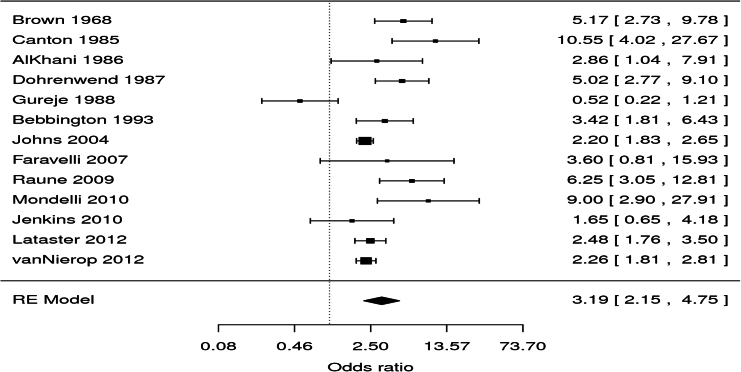
INTRODUCTION: Recent models of psychosis implicate stressful events in its etiology. However, while evidence has accumulated for childhood trauma, the role of adult life events has received less attention. Therefore, a review of the existing literature on the relationship between life events and onset of psychotic disorder/experiences is timely. METHODS: A search was conducted using PsychInfo, Medline, Embase, and Web of Science to identify studies of life events and the onset of psychosis or psychotic experiences within the general population. Given previous methodological concerns, this review included a novel quality assessment tool and focused on findings from the most robust studies. A meta-analysis was performed on a subgroup of 13 studies. RESULTS: Sixteen studies published between 1968 and 2012 were included. Of these, 14 reported positive associations between exposure to adult life events and subsequent onset of psychotic disorder/experiences. The meta-analysis yielded an overall weighted OR of 3.19 (95% CI 2.15-4.75). However, many studies were limited by small sample sizes and the use of checklist measures of life events, with no consideration of contextual influences on the meaning and interpretation of events. CONCLUSIONS: Few studies have assessed the role of adult life events in the onset of psychosis. There was some evidence that reported exposure to adult life events was associated with increased risk of psychotic disorder and subclinical psychotic experiences. However, the methodological quality of the majority of studies was low, which urges caution in interpreting the results and points toward a need for more methodologically robust studies.
Overview
The claims and statistics of this paper haven’t been checked yet.
Free: it reads the open-access text and checks the first 5 claims that cite a source we can check. Create a free account to check every claim.
Integrity signals
Registry
Cites
Statistics
Figures
Verification
Claims the paper makes
The claims and statistics of this paper haven’t been checked yet.
Free: it reads the open-access text and checks the first 5 claims that cite a source we can check. Create a free account to check every claim.
Claims other papers make about this one
Each is checked against this paper’s own text: does it say what the citing paper says it does?
The source backs part of the claim, not all of it — or backs it for a different population, condition or comparison.
In the citing paper
“Early adversity also leads to psychiatric disorders such as psychosis, PTSD, borderline personality, anxiety, depression, and suicide [reviews in Ref. (38, 42–44)].”
From The Stress Acceleration Hypothesis of Nightmares (2017) · cites this paper as [42]
Experimental — accuracy not yet measuredIn the citing paper
“These adverse factors include developmental psychological trauma (Bendall et al., 2008) and adult life events (situations or occurrences that bring about a negative change in personal circumstances and involve threat) (Beards et al., 2013; Brown and Birley, 1968).”
From The effects of psychosocial stress on dopaminergic function and the acute stress response (2019) · cites this paper as Beards et al., 2013
Self-check
Percentages, sums and reported differences re-computed from the paper’s own numbers.
The self-check needs the paper’s full text.
Citations
Cites
Varese, F., Smeets, F., Drukker, M., Lieverse, R., Lataster, T., Viechtbauer, W., Read, J., van Os, J., & Bentall, R. P. (2012) · Schizophrenia Bulletin · doi:10.1093/schbul/sbs050 · Cited by 2,436
A cognitive model of the positive symptoms of psychosis
GARETY, P. A., KUIPERS, E., FOWLER, D., FREEMAN, D., & BEBBINGTON, P. E. (2001) · Psychological Medicine · doi:10.1017/s0033291701003312 · Cited by 1,546 · cited 1×
“Key words: psychosis/life events/review/stress/etiology introduction Recent models of psychosis implicate social adversity, broadly defined, in its etiology.(1,2) However, while evidence has accumulated for childhood trauma,3,4 the role of adult life events has received less attention.”
BackgroundSchizophrenia: A neural diathesis-stress model.
Walker, E. F., & Diforio, D. (1997) · Psychological Review · doi:10.1037//0033-295x.104.4.667 · Cited by 930
Crises and Life Changes and the Onset of Schizophrenia
Brown, G. W., & Birley, J. L. T. (1968) · Journal of Health and Social Behavior · doi:10.2307/2948405 · Cited by 680
Morgan, C., & Fisher, H. (2006) · Schizophrenia Bulletin · doi:10.1093/schbul/sbl053 · Cited by 568
Self-citationPrevalence and correlates of self-reported psychotic symptoms in the British population
Johns, L. C., Cannon, M., Singleton, N., Murray, R. M., Farrell, M., Brugha, T., Bebbington, P., Jenkins, R., & Meltzer, H. (2004) · British Journal of Psychiatry · doi:10.1192/bjp.185.4.298 · Cited by 561
Social defeat: Risk factor for schizophrenia?
Selten, J.-P., & Cantor-Graae, E. (2005) · British Journal of Psychiatry · doi:10.1192/bjp.187.2.101 · Cited by 551 · cited 1×
“Key words: psychosis/life events/review/stress/etiology introduction Recent models of psychosis implicate social adversity, broadly defined, in its etiology.(1,2) However, while evidence has accumulated for childhood trauma,3,4 the role of adult life events has received less attention.”
BackgroundDesirable versus undesirable life events: Their relationship to stress and mental distress.
Vinokur, A. D., & Selzer, M. L. (1975) · Journal of Personality and Social Psychology · doi:10.1037//0022-3514.32.2.329 · Cited by 486
Mondelli, V., Dazzan, P., Hepgul, N., Di Forti, M., Aas, M., D'Albenzio, A., Di Nicola, M., Fisher, H., Handley, R., Marques, T. R., et al. (2010) · Schizophrenia Research · doi:10.1016/j.schres.2009.08.013 · Cited by 278
Self-citationLife Events and Psychosis: Initial Results from the Camberwell Collaborative Psychosis Study
Bebbington, P., Wilkins, S., Jones, P., Foerster, A., Murray, R., Toone, B., & Lewis, S. (1993) · British Journal of Psychiatry · doi:10.1192/bjp.162.1.72 · Cited by 273
Research works printed but not linked: 1
- Chakraborty R Chatterjee A Choudhary S Singh AR Chakraborty PK Life events in acute and transient psychosis—a comparison with mania.. Ger J Psychiatry. 2007; 10: 36– 40
Cited by
Items 201–300 of 398
Anglin, D. M., Espinosa, A., Barada, B., Tarazi, R., Feng, A., Tayler, R., Allicock, N., & Pandit, S. (2019) · Journal of Clinical Medicine · doi:10.3390/jcm8081223 · Cited by 9
Resilience, recovery style, and stress in early psychosis
Georgiades, A., Farquharson, L., & Ellett, L. (2014) · Psychosis · doi:10.1080/17522439.2014.936028 · Cited by 9
“Consistent with the stress–vulnerability model, a body of evidence supports the role of stress in the development and persistence of psychosis (Beards et al., 2013).”
Begemann, M., Stotijn, E., Schutte, M. J. L., Heringa, S. M., & Sommer, I. E. (2017) · Psychological Medicine · doi:10.1017/s0033291717000538 · Cited by 9
“Until recently, studies rarely considered the subjective interpretation of life events (Beards et al. 2013).”
InfluentialThe moderation effect of secure attachment on the relationship between positive events and wellbeing
Spence, R., Kagan, L., Nunn, S., Bailey‐Rodriguez, D., Fisher, H. L., Hosang, G. M., & Bifulco, A. T. (2022) · PsyCh Journal · doi:10.1002/pchj.546 · Cited by 8
“This has led to an extensive literature showing how stressful life changes encompassed by severe events are associated with poorer mental health (e.g., Beards et al., 2013; Hosang et al., 2012).”
BackgroundSelf-citationWang, H., Liu, X., Zeng, Z., Liu, S., Yang, Q., Qi, Q., Wu, T., & Hu, Y. (2024) · Frontiers in Psychology · doi:10.3389/fpsyg.2024.1325436 · Cited by 9
Destrée, L., Albertella, L., Jobson, L., McGorry, P. D., Chanen, A. M., Ratheesh, A., Davey, C. G., Polari, A. R., Amminger, G. P., Yuen, H. P., et al. (2023) · Journal of Affective Disorders · doi:10.1016/j.jad.2023.02.059 · Cited by 8
Weiner, S. (2017) · Schizophrenia Bulletin · doi:10.1093/schbul/sbx046 · Cited by 8
Aymerich, C., Prisco, M. D., Melillo, A., Pedruzo, B., Catalan, A., Oliver, D., Diederen, K. M. J., MacCabe, J. H., Twumasi, R., UHER, R., et al. (2026) · World Psychiatry · doi:10.1002/wps.70093 · Cited by 7
Social stress in schizophrenia: Unique contributions to social cognition and social functioning
Kemp, K. C., Tso, I. F., Taylor, S. F., & Moe, A. M. (2025) · Schizophrenia Research · doi:10.1016/j.schres.2025.01.015 · Cited by 8
Mechanisms of New-Onset Psychosis during the Covid-19 Pandemic: What Ignited the Fire?
Mourani, S. C., Khoury, R., & Ghossoub, E. (2022) · Annals of Clinical Psychiatry · doi:10.12788/acp.0065 · Cited by 7
Marutani, T., Chhim, S., Taing, S., & Nishio, A. (2022) · Transcultural Psychiatry · doi:10.1177/13634615221107207 · Cited by 7
“Although not as well-studied as childhood trauma, life events in adults also appear to be involved in the development of schizophrenia (Beards et al., 2013).”
Grundy, A. L., Ng, E., Rank, C., Quinlan, J., Giovinazzo, G., Viau, R., Ponka, D., & Garner, R. (2023) · Canadian Journal of Public Health · doi:10.17269/s41997-023-00740-1 · Cited by 7
“Increased rates of psychotic disorders among refugees could be a result of adverse and stressful experiences in childhood and adulthood (Beards et al., 2013; Matheson et al., 2013), and also due to difficulties in diagnosing mental health conditions in this population.”
BackgroundStressful life events and severity of alcohol consumption in male psychiatric inpatients
Chaudhury, S., Saha, A., Saldanha, D., & Srivastava, K. (2017) · Industrial Psychiatry Journal · doi:10.4103/ipj.ipj_6_16 · Cited by 7
“This is in agreement with extensive evidence in the literature that demonstrates that life events stress may result in mental disorders.[6,26] Earlier studies had concluded that persons experiencing more events are more likely to suffer from alcohol-related problems and that life events do play an important role in ch…”
ResultAllardyce, J., Hollander, A., Rahman, S. G., Dalman, C., & Zammit, S. (2021) · Psychological Medicine · doi:10.1017/s0033291721003287 · Cited by 7
“Most of the accumulating evidence has focused on childhood trauma with the role of exposure to TE later in the life-course receiving less consideration (Beards et al., 2013; McGrath et al., 2017b).”
BackgroundSchepers, E., van Os, J., & Lousberg, R. L. (2019) · PLoS ONE · doi:10.1371/journal.pone.0211914 · Cited by 8
The Biopsychosocial Model of Health: An Update
Craig, T. (2023) · Oxford University Press eBooks · doi:10.1093/med/9780197521359.003.0003 · Cited by 7
The Effect of Community Treatment Orders on Identity
Jäger, F. (2021) · uO Research (University of Ottawa) · doi:10.20381/ruor-27155 · Cited by 7
Stevenson, A., Misra, S., Girma, E., Isvoranu, A., Akena, D. H., Alemayehu, M., Atwoli, L., Gelaye, B., Gichuru, S., Kariuki, S. M., et al. (2024) · Comprehensive Psychiatry · doi:10.1016/j.comppsych.2024.152504 · Cited by 6
“Association between Traumatic Life Events and Psychosis: A case-control study in western Kenya"
Hillow, M. A., Atwoli, L., & Kwobah, E. (2023) · Heliyon · doi:10.1016/j.heliyon.2023.e18144 · Cited by 6
“Although not entirely conclusive, childhood exposure to traumatic events [8,9] and adult life events are generally considered risk factors for developing psychosis later in life [10].”
BackgroundZhang, Y., & Coid, J. W. (2023) · Schizophrenia Bulletin · doi:10.1093/schbul/sbad165 · Cited by 6
“37 Our model showed these were indirect, impacting on the syndemic, but also bidirectional with syndemic effects increasing the likelihood of experiencing adult traumatic events.”
BackgroundSchizophrenia: Reaction to Positive Life Events
Seeman, M. V. (2016) · Psychiatric Quarterly · doi:10.1007/s11126-016-9478-3 · Cited by 6
Traumatic events and psychotic experiences: a nationally representative study in Thailand
Kilian, C., Supanya, S., Probst, C., Morgan, C., Bärnighausen, T., Kittirattanapaiboon, P., Kwansanit, P., Reininghaus, U., & for the Thai Mental Health Survey Working Group (2021) · Epidemiology and Psychiatric Sciences · doi:10.1017/s2045796021000172 · Cited by 6
“The risk of psychotic experiences increased with the number of traumatic events, pointing to a dose–response relationship which is in line with evidence from previous research (Scott et al., 2007; Shevlin et al., 2007; Beards et al., 2013; Morgan and Gayer-Anderson, 2016; Croft et al., 2019).”
BackgroundResultInfluentialSelf-citationSleurs, D., Dubertret, C., Pignon, B., Tebeka, S., & Strat, Y. L. (2022) · Journal of Psychosomatic Research · doi:10.1016/j.jpsychores.2022.111128 · Cited by 7
Chen, E. Y. H., Wong, S. M. Y., Tang, E. Y. H., Lei, K. S., Suen, Y. N., & Hui, C. L. M. (2023) · Brain Sciences · doi:10.3390/brainsci13071069 · Cited by 6
Friborg, O. (2018) · Psychology and Health · doi:10.1080/08870446.2018.1516768 · Cited by 6
“…& Prescott, 1999; Kessing, Agerbo, & Mortensen, 2003), panic disorders (Klauke, Deckert, Reif, Pauli, & Domschke, 2010), schizophrenic episodes (Beards et al., 2013; Castine, Meador-Woodruff, & Dalack, 1998) and/or suicidal behaviours (Daniel, Goldston, Erkanli, Heilbron, & Franklin, 2017).”
ResultCingulum and abnormal psychological stress response in schizophrenia
Wisner, K., Chiappelli, J., Savransky, A., Fisseha, F., Rowland, L. M., Kochunov, P., & Hong, L. E. (2019) · Brain Imaging and Behavior · doi:10.1007/s11682-019-00120-9 · Cited by 6
“…have increased sensitivity to stress overall (DeVylder et al. 2016; Myin-Germeys and van Os 2007), and major and minor stressors are linked to periods of symptom onset, relapse, and exacerbation (AlvarezJimenez et al. 2012; Beards et al. 2013; Norman and Malla 1993, 1994; Pallanti et al. 1997).”
Schirmbeck, F. N., Konijn, M., Hoetjes, V., Vermeulen, J. M., Zink, M., Dekker, J., & de Haan, L. (2020) · Schizophrenia Research · doi:10.1016/j.schres.2019.12.032 · Cited by 6
Dissecting the psychosis continuum: risk factors along the pathway from experiences to disorder
van der Steen (2018) · Research Publications (Maastricht University) · doi:10.26481/dis.20180615ys · Cited by 6
Pignon, B., Decio, V., Pirard, P., Bouaziz, O., Corruble, E., Geoffroy, P. A., Kovess–Masféty, V., Leboyer, M., Lemogne, C., Messika, J., et al. (2023) · Molecular Psychiatry · doi:10.1038/s41380-023-02207-8 · Cited by 5
“This care intensity criterion was also adopted to de fi ne the reference stay for patients with more than one hospitalization for pathologies other than COVID-19 during the study period.”
MethodEdwards, K., Croker, H. A., Farrow, C. V., Haycraft, E., Herle, M., Llewellyn, C. H., Pickard, A., & Blissett, J. M. (2024) · JMIR Research Protocols · doi:10.2196/55193 · Cited by 5
Rainey, P., Colbert, S., & McSherry, P. (2024) · Journal of Constructivist Psychology · doi:10.1080/10720537.2024.2346843 · Cited by 5
“Whilst the link between later life adversities and psychosis has been less of a focus of research (Beards et al., 2013), associations between social and economic inequality and psychosis have been observed (Read et al., 2013).”
Grief as a Risk Factor for Psychosis: A Systematic Review
Pozo‐Herce, P. D., Miguel, A., Gonzalez-Rosas, L., Alejandro-Rubio, O., Lapuerta, C. P., & Porras‐Segovia, A. (2024) · Current Psychiatry Reports · doi:10.1007/s11920-024-01512-5 · Cited by 5
“In addition, the relationship between various stressful life events and the onset of psychosis [14] or between certain traumatic events in adult life and relapses in psychotic patients has been assessed [15 • ].”
Grattan, R. E., Tryon, V. L., Carter, C. S., & Niendam, T. A. (2020) · Psychiatry Research · doi:10.1016/j.psychres.2020.113517 · Cited by 5
“The onset of psychosis is a time of increased stress (Beards et al., 2013) and emotional distress appears to be highest at illness onset (Khoury, Lecomte, Comtois, & Nicole, 2015).”
BackgroundCOVID-19 crisis and the incidence of hospital admissions for psychosis in France
Danan, L.-N., Poullé, J., Bannay, A., Baillot, S., Laprévote, V., & Dobre, D. (2023) · L Encéphale · doi:10.1016/j.encep.2023.08.003 · Cited by 5
Nieto, L., Domínguez‐Martínez, T., Navarrete, L., Rosel-Vales, M., Saracco-Álvarez, R. A., Celada-Borja, C., Rascón-Gasca, M. L., & Moncayo-Samperio, L. G. (2023) · Frontiers in Psychiatry · doi:10.3389/fpsyt.2023.1254993 · Cited by 5
“They are divided into three subgroups: (1) APS subgroup: the presence of subthreshold positive symptoms (whether in frequency or intensity) in the past year; (2) BLIPS subgroup: the presence of episodes of overt psychotic symptoms in the past year that resolved spontaneously within 1 week; or (3) vulnerability subgrou…”
BackgroundResultInfluentialImpact of lifetime stressor exposure on neuroenergetics in schizophrenia spectrum disorders
Chiappelli, J., Savransky, A., Ma, Y., Gao, S., Kvarta, M. D., Kochunov, P., Slavich, G. M., & Hong, L. E. (2024) · Schizophrenia Research · doi:10.1016/j.schres.2024.04.027 · Cited by 5
“Likewise, stressors in adolescence and adulthood can precipitate the onset or relapse of psychosis (Beards et al., 2013; Docherty et al., 2009).”
BackgroundColizzi, M., Bortoletto, R., Antolini, G., Bhattacharyya, S., Balestrieri, M., & Solmi, M. (2023) · Current Neuropharmacology · doi:10.2174/1570159x21666230801150032 · Cited by 5
Fernández-León, S., Testal, J. F. R., Gutiérrez-López, M. L., & Senín‐Calderón, C. (2020) · International Journal of Environmental Research and Public Health · doi:10.3390/ijerph17124587 · Cited by 5
“The proposal for onset of psychosis, understood as a process, not necessarily the first episode, was approached by emphasizing the perception of the world as hostile and threatening, affecting not only children and adolescents, but also adults [6].”
BackgroundZielasek, J., & Gäebel, W. (2014) · Wiley eBooks · doi:10.1002/9781118799574.ch3 · Cited by 5
Blood and neuronal extracellular vesicle mitochondrial disruptions in schizophrenia
Ankeeta, A., Tripathi, A., Pillai, B. A., Ma, Y., Chiappelli, J., Jernberg, J., Kunitoki, K., Du, X. M., Gao, S., Adhikari, B. M., et al. (2025) · Neuropsychopharmacology · doi:10.1038/s41386-025-02204-1 · Cited by 4
“Stress from maternal exposure to adverse life events in pregnancy [38, 39] to early childhood adversities [40] is known to increase the risk for SSD [41, 42].”
Fekih‐Romdhane, F., Helmy, M. S., Alhuwailah, A., Shuwiekh, H. A. M., Maalej, E., Naser, A. Y., Obeïd, S., Loch, A. A., Cheour, M., & Hallit, S. R. (2025) · Discover Public Health · doi:10.1186/s12982-025-00599-2 · Cited by 4
“There is indeed strong evidence from cross-sectional [7], longitudinal [8, 9], and large multinational [10] studies that exposure to traumatic events during adolescence and young adulthood is related to increased risk for the development of later PEs.”
Hühne, V., dos Santos‐Ribeiro, S., Moreira‐de‐Oliveira, M. E., de Menezes, G. B., & Fontenelle, L. F. (2025) · CNS Spectrums · doi:10.1017/s1092852925100497 · Cited by 4
“Although most studies have investigated the association between SLEs and unipolar depression, 16 – 18 there has also been interest in the role of SLEs in bipolar disorder, 19 psychosis, 20 and borderline personality disorder (BPD).”
Haussler, S. M., Zahid, U., Day, F., Ciufolini, S., Petros, N., Gifford, G., Alameda, L., Quattrone, D., Dazzan, P., Pariante, C. M., et al. (2025) · Psychoneuroendocrinology · doi:10.1016/j.psyneuen.2025.107283 · Cited by 4
“…past five decades indicates that psychosocial stressors operating throughout the lifespan promote the onset and exacerbation of psychotic disorders (Beards et al., 2013; Brandt et al., 2019; Martland et al., 2020; Reininghaus et al., 2016; Selten et al., 2020; Vaessen et al., 2019; Varese et al.,…”
Self-citationRainey, P., Colbert, S., & McSherry, P. (2025) · Journal of Constructivist Psychology · doi:10.1080/10720537.2025.2463922 · Cited by 4
“…during childhood has been linked to an increased vulnerability to psychosis (Read et al., 2014, Varese et al., 2012), while later life adversities (Beards et al., 2013), social disadvantage (Kirkbride et al., 2014; Morgan et al., 2019) and discrimination (Pearce et al., 2019) have also been…”
Suetani, S., & Vancampfort, D. (2018) · Elsevier eBooks · doi:10.1016/b978-0-12-812605-9.00004-6 · Cited by 4
An Overview on Genetic and Environmental Risk of Autism Spectrum Disorder
(2019) · Global Clinical and Translational Research · doi:10.20900/gctr20190003 · Cited by 4
Predictors of subjective well-being among individuals with severe psychiatric conditions
Caballero, R., Valiente, C., & Espinosa, R. (2021) · Comprehensive Psychiatry · doi:10.1016/j.comppsych.2021.152266 · Cited by 4
Factors Associated with Relapse of Schizophrenia in Bangladesh
Hassan, M. K., Islam, M. I., Kamal, A. H. M. K. M., & Alam, M. J. (2020) · American Journal of Psychiatry and Neuroscience · doi:10.11648/j.ajpn.20200803.14 · Cited by 4
Kirchhoff, C., David, R., Rothmund, M., Hüfner, K., Scantamburlo, G., Felix, S., Brandenberg, M., Anna, S., Dannecker, N., Surbeck, W., et al. (2024) · medRxiv · doi:10.1101/2024.07.08.24310072 · Cited by 4
See, C. R. Z., Si, S., Hedges, E. P., Tognin, S., Modinos, G., van der Gaag, M., de Haan, L., Velthorst, E., McGorry, P. D., Nelson, B., et al. (2024) · Psychological Medicine · doi:10.1017/s0033291724003039 · Cited by 3
“Meta-analytic evidence suggests that individuals with psychosis are three times more likely to have experienced SLEs prior to onset as compared to healthy controls (HC) (Beards et al., 2013), and that SLEs are associated with psychotic relapse (Martland, Martland, Cullen, & Bhattacharyya, 2020).”
Domínguez‐Martínez, T., Nieto, L., Fresán, A., Sheinbaum, T., & Robles, R. (2025) · Child and Adolescent Psychiatry and Mental Health · doi:10.1186/s13034-025-00900-w · Cited by 3
“The risk of developing psychosis has been found to increase with exposure to several environmental factors, including traumatic events and/or stressful experiences during the lifespan [12].”
Hrivikova, K., Marko, M., Karailievova, L., Romanova, Z., Oravcová, H., Riečanský, I., & Ježová, D. (2023) · Psychoneuroendocrinology · doi:10.1016/j.psyneuen.2023.106287 · Cited by 3
The cumulative and individual effects of stressful life events on first-episode psychosis
Colomer-Salvans, A., Vila‐Badia, R., Serra‐Arumí, C., Corbella-Sotil, A., Abella, M., Tor, J., Carmona, A., Fernández-Sanz, A., Cacho, N. D., Butjosa, A., et al. (2025) · Asian Journal of Psychiatry · doi:10.1016/j.ajp.2025.104500 · Cited by 3
Beyond Kraepelin: An Aetiological Approach to the Typology and Treatment of Psychosis
Murray, R. M., Alameda, L., Dima, A., & Oliver, D. (2026) · Springer eBooks · doi:10.1007/978-3-032-09475-9_25 · Cited by 3
A brief compassion focused therapy group for outpatients with psychosis
Heriot-Maitland, C., Lawlor, C., Keen, N., Kane, F., Jafari, H., & PETERS, E. R. (2024) · Psychosis · doi:10.1080/17522439.2024.2402826 · Cited by 3
“Indeed, the evidence for links between trauma and psychosis is considerable (Beards et al., 2013, Bloomfield et al., 2021; Grubaugh et al., 2011; Varese et al., 2012).”
Clinical risk factors for psychosis
Ratheesh, A., Hartmann, J., & Nelson, B. (2020) · Elsevier eBooks · doi:10.1016/b978-0-12-813201-2.00013-2 · Cited by 3
Potential Pitfalls of Applying a Therapeutic Logic in Mental Health Law Proceedings
Pedersen, S. H., Nilsson, T., & Eriksson, L. (2020) · International Journal of Forensic Mental Health · doi:10.1080/14999013.2020.1780650 · Cited by 3
“Given the purported negative impact of experienced stress and stressful events on serious mental illness (Beards et al., 2013; Horesh & Iancu, 2010; Kendler, Karkowski, & Prescott, 1999; Monroe & Simons, 1991; Myin-Germeys, Delespaul, & van Os, 2005; Pruessner, Cullen, Aas, & Walker, 2017;…”
Psychosocial Stress, Social Support, and the Escalation of Schizotypal Symptoms
Juan, M. A., & Rosenfarb, I. F. (2021) · The Journal of Nervous and Mental Disease · doi:10.1097/nmd.0000000000001416 · Cited by 3
“Beards et al. (2013), for example, in a meta-analytic review, found over a threefold increase in major life events before psychosis onset, and several studies have found that daily stressors were predictive of an increase in psychotic symptoms (DeVylder et al., 2013; Norman and Malla, 1994; Tessner…”
BackgroundResultASSOCIATION OF CHILDHOOD TRAUMA AND PERSONALITY DIMENSIONS WITH THE DURATION OF UNTREATED PSYCHOSIS
Lovretić, V., Kurtović, A., Ivezić, E., Šago, D., Jandrić, S., Filipčić, I., & Restek-Petrović, B. (2022) · Psychiatria Danubina · doi:10.24869/psyd.2022.41 · Cited by 3
“However, exposure and responses to traumatic events are potentially modifiable and a better understanding of how they impact on risk of psychosis may inform strategies for prevention and early intervention (Beards et al. 2013).”
BackgroundGrąźlewski, T., Kucharska–Mazur, J., Misiak, B., & Samochowiec, J. (2023) · Archives of Psychiatry and Psychotherapy · doi:10.12740/app/159085 · Cited by 3
“Numerous studies on various forms of stress, such as stressful adult life events [7], childhood trauma [8], or stress induced experimentally [9], have shown this association.”
Reactive Psychosis: Discrepancy Between Nosological Concepts and Descriptive Categories
Castagnini, A. C., & Berríos, G. E. (2023) · The Journal of Nervous and Mental Disease · doi:10.1097/nmd.0000000000001677 · Cited by 3
Monette, M. A., Russell, M. T., Abel, D. B., Lewis, J. T., Mickens, J. L., Myers, E. J., Hricovec, M. M., Cicero, D. C., Wolny, J., Hetrick, W. P., et al. (2024) · Behavioral Sciences · doi:10.3390/bs14050363 · Cited by 3
“Traumatic experiences are also a risk factor for psychosis [27–29].”
BackgroundResultInfluentialDie Anwendung der Theorie dynamischer Systeme im klinischen Bereich: Ein kritischer Überblick
Kornberger, M. W. (2017) · Kontext · doi:10.13109/kont.2017.48.4.338 · Cited by 3
“Als • Kontrollparameter des Attraktors fungieren die Auslöser von paranoiden Wahnvorstellungen (z. B. besondere Belastungssituationen, Life-Events, sensorische Deprivation, Schlafentzug oder Drogenkonsum), welche leicht zum Erleben von Überforderung und Stress führen können (Beards et al., 2013).”
BackgroundCircadian Clocks, Stress, and Psychiatric Disorders
Kling, C., & Landgraf, D. (2020) · Elsevier eBooks · doi:10.1016/b978-0-12-813156-5.00008-x · Cited by 3
de Vries, Y. A., Bos, E. H., Roest, A. M., & de Jonge, P. (2024) · Springer eBooks · doi:10.1007/978-3-030-51366-5_89 · Cited by 3
Possible Selves in First Episode Psychosis. A Mixed Methods Study
Clarke, R. I. (2016) · UEA Digital Repository (University of East Anglia) · Cited by 3
Zhang, Y., & Coid, J. W. (2025) · Psychological Medicine · doi:10.1017/s0033291725000455 · Cited by 2
“Previous research has not found strong evidence of adult trauma leading to psychosis (Beards et al., 2013).”
Sideli, L., Aas, M., Alameda, L., Trotta, G., Barbera, D. L., Cascia, C. L., Ferraro, L., Velthorst, E., Tripoli, G., Schimmenti, A., et al. (2025) · Early Intervention in Psychiatry · doi:10.1111/eip.70079 · Cited by 2
“PTSD and PTSS in psychosis may arise from childhood mal-treatment (Bendall et al. 2008; Schäfer and Fisher 2011), adult life events (Beards et al. 2013; D'Andrea et al. 2023; van Zelst 2008) and the experience of psychosis itself (Buswell et al. 2021).”
Self-citationLife events and psychosis: case–control study from India, Nigeria, and Trinidad and Tobago
Oloniniyi, I. O., Weiss, H. A., John, S., Esan, O., Hibben, M., Patel, V., Murray, R. M., Cohen, A., Hutchinson, G. A., Gureje, O., et al. (2022) · BJPsych Open · doi:10.1192/bjo.2022.562 · Cited by 2
Self-citationSetién‐Suero, E., Ayesa‐Arriola, R., Peña, J., Crespo‐Facorro, B., & Ojeda, N. (2022) · Journal of Psychiatric Research · doi:10.1016/j.jpsychires.2022.09.029 · Cited by 2
Lachowicz, A. M., Vaessen, T., van Aubel, E., Butjosa, A., Reininghaus, U., Myin‐Germeys, I., van Amelsvoort, T., Bartels‐Velthuis, A. A., Bruggeman, R., Cahn, W., et al. (2022) · Schizophrenia Research · doi:10.1016/j.schres.2022.10.020 · Cited by 2
Causes and Outcome of Psychosis
Casetta, C., Kępińska, A. P., Stilo, S. A., & Murray, R. M. (2024) · Cambridge University Press eBooks · doi:10.1017/9781911623861.011 · Cited by 2
Monette, M. A., Minor, K. S., Ward, M. J., & Miller, M. L. (2025) · Psychological Trauma Theory Research Practice and Policy · doi:10.1037/tra0001926 · Cited by 2
Cultural revolution and onset of schizophrenia in China
Liu, T., & Zheng, X. (2015) · Schizophrenia Research · doi:10.1016/j.schres.2015.11.017 · Cited by 2
“…Research j ourna l homepage: www.e lsev ie r .com/ locate /schres Letter to the Editor Cultural revolution and onset of schizophrenia in China Available evidence suggests that certain life events may increase the risk of developing schizophrenia (Beards et al., 2013; Raune et al., 2009).”
BackgroundA case of Capgras syndrome and folie à duex in monozygotic twins
Gbyl, K., & Jørgensen, M. B. (2018) · Neurocase · doi:10.1080/13554794.2018.1512633 · Cited by 2
“Beards et al. (2013) found that there was a threefold increase odds of life events in the period before psychosis onset.”
BackgroundWesth, J., Gelkopf, M., Bloomfield, M., & Greene, T. (2024) · International Journal of Stress Management · doi:10.1037/str0000308 · Cited by 3
Elusündmuste küsimustiku kohandamine eesti keelde ja traumakogemuste hindamine psühhoosihaigetel
Taliväting, M. (2018) · DSpace repository (University of Tartu) · Cited by 2
Ortega, L. (2020) · Rovira & Virgili repository · Cited by 2
Corral, L. (2019) · Rovira & Virgili repository · Cited by 2
Psychosis across persons 2: Poverty, trauma, and sociodevelopment
Gayer-Anderson, C. E., Beards, S., & Reininghaus, U. (2023) · Oxford University Press eBooks · doi:10.1093/med/9780198735588.003.0003 · Cited by 1
Self-citation(2024) · Frontiers research topics · doi:10.3389/978-2-8325-3786-2 · Cited by 1
Environmental Risk Factors of Psychosis: A Review
Jagieła, B., Bolek, M., Fidyk, M., Kędzia, A., Musialska, D., & Minkiewicz, M. (2025) · Quality in Sport · doi:10.12775/qs.2025.41.60262 · Cited by 1
Setiani, A., Li, L., Le, T. H., Rami, F. Z., & Chung, Y. (2025) · Schizophrenia Bulletin · doi:10.1093/schbul/sbaf090 · Cited by 1
Vollmond, C. V., Tetens, M. M., Gerstoft, J., Kronborg, G., Johansen, I. S., Larsen, C. S., Porskrog, A., Dalager‐Pedersen, M., Leth, S., Lebech, A., et al. (2025) · AIDS · doi:10.1097/qad.0000000000004373 · Cited by 1
Hutnyan, M., Wilkey, J., & Rosenstein, L. D. (2025) · The Clinical Neuropsychologist · doi:10.1080/13854046.2025.2596799 · Cited by 1
Kullmann, C., Michel, C., Walger, P., Franscini, M., Traber‐Walker, N., SCHIMMELMANN, B. G., Flückiger, R., Reißner, V., & Schultze‐Lutter, F. (2026) · European Child & Adolescent Psychiatry · doi:10.1007/s00787-025-02949-6 · Cited by 1
“Contrary to childhood adversities, life events (LEs) are considered as part of ‘normal’ life and include both nega - tive and positive changes or situations relating to education and occupation, social relationships, leisure activities, liv - ing conditions and health [ 16, 17 ].”
The risk of mental illness among sudden cardiac arrest survivors: A Danish cohort study
Darring, E. B., Mikkelsen, S. S., Henriksen, F. L., Stenager, E. N., & Pankiewicz-Dulacz, M. (2026) · Journal of Psychosomatic Research · doi:10.1016/j.jpsychores.2026.112678 · Cited by 1
An etiological approach to psychosis: potential benefits for treatment, research and prevention
Murray, R. M., Oliver, D., Dima, A., & Alameda, L. (2026) · World Psychiatry · doi:10.1002/wps.70079 · Cited by 1
Walker, E. F. (2013) · Evidence-Based Mental Health · doi:10.1136/eb-2013-101499 · Cited by 1
Ethnic differences in caregiving processes in first-episode psychosis
Smith, L. (2014) · UPT. Syiah Kuala University Library (Syiah Kuala University) · Cited by 1
An Integrative Review of Life Events in Early Schizophrenia
Joung, J., & Kim, S. (2017) · Korean Journal of Stress Research · doi:10.17547/kjsr.2017.25.3.170 · Cited by 1
“그러나 4주가 비교적 짧은 기간일지라도 그 것 또한 편향된 기억일 수 있다는 우려가 있고(Horan et al., 2005), 조현병의 경우 종단 연구의 실행 가능성을 예측 하기 어렵다는 단점이 제기되었다(Beards et al., 2013).”
InfluentialOngeri, L., Kariuki, S. M., Nyawira, M., Schubart, C. D., Tijdink, J. K., Newton, C. R. J. C., & Penninx, B. W. J. H. (2023) · Frontiers in Psychiatry · doi:10.3389/fpsyt.2022.1085201 · Cited by 1
“Negative life events are antecedents for psychosocial distress and mental illnesses such as psychosis; thus, it is not surprising that these increased suicide risk in our study (43).”
BackgroundPsykososiaalisia selitysmalleja psykoosi-ilmiön ymmärtämisen ja integratiivisen hoidon tueksi
Bergström, T. (2019) · Jyväskylä University Digital Archive (University of Jyväskylä) · Cited by 1
Delineating factors associated with vulnerability to psychosis in young people
Roper, L. (2015) · ERA: Education and Research Archive (University of Alberta) · doi:10.7939/r3gb1xt99 · Cited by 1
“…whereby life adversities may affect risk for future psychosis may lie in an altered stress response following early adverse life events or trauma, and in conjunction with later stressors, proximal to onset (Beards et al., 2013; Lataster et al., 2012; Raune et al., 2009; Roper et al., 2015).”
BackgroundInfluentialTortelli, A. (2018) · theses.fr (ABES) · doi:10.70675/5a1b55d8z5621z49c2za907z217915700e2d · Cited by 1
The role of migration and social environments in the risk of psychotic disorders
Dykxhoorn, J. L. (2019) · UCL Discovery (University College London) · Cited by 1
Chobthamkit, P. (2021) · Kent Academic Repository (University of Kent) · doi:10.22024/unikent/01.02.87285 · Cited by 1
van der Linden, K. F. J. T. (2021) · Research Publications (Maastricht University) · doi:10.26481/dis.20211011kl · Cited by 1
Multiomic modelling of schizophrenia using patient-derived brain organoids
Malwade, S. (2024) · doi:10.69622/27269790 · Cited by 1
Metadata
- Authors
- Beards, S., Gayer-Anderson, C., Borges, S., Dewey, M. E., Fisher, H. L., & Morgan, C.
- Affiliations
- King's College London (GB)
- Corresponding author
- Beards, Stephanie
- Fisher, Helen L.
- Morgan, Craig
- Venue
- Schizophrenia Bulletin
- Publisher
- Oxford University Press (OUP)
- Published
- 2013-05-13
- Volume
- 39
- Issue
- 4
- Pages
- 740-747
- ISSN
- 0586-7614 (ISSN-L)
- 1745-1701
- PMC
- PMC3686461
- OpenAlex
- W2128405990
- Cited by
- 325
- References
- 26
- Citations by year
- 2026: 13 · 2025: 17 · 2024: 24 · 2023: 41 · 2022: 27 · 2021: 31 · 2020: 29 · 2019: 33 · 2018: 20 · 2017: 30 · 2016: 17 · 2015: 24 · 2014: 15 · 2013: 4
- FWCI
- 14.17
- Type
- journal article
- Language
- en
- Open access
- green
- www.ncbi.nlm.nih.gov
- Licence
- cc-by-nc
- Locations
- Schizophrenia Bulletin (publishedVersion)
- Europe PMC (PubMed Central) (publishedVersion, cc-by-nc)
- PubMed Central (publishedVersion, cc-by-nc)
- PubMed (publishedVersion)
- Research Portal (King's College London) (publishedVersion, other-oa)
- Funders
- Wellcome Trust (WT087417)
- National Institute for Health and Care Research
- Economic and Social Research Council (1107852)
- Topics
- Health Sciences › Medicine › Psychiatry and Mental health › Schizophrenia research and treatment
- Social Sciences › Arts and Humanities › Philosophy › Mental Health and Psychiatry
- Social Sciences › Psychology › Clinical Psychology › Psychoanalysis and Psychopathology Research
- Keywords
- life events, psychosis
- MeSH terms
- Adaptation, Psychological, Adult, Humans, Life Change Events, Psychotic Disorders, Risk Factors, Schizophrenia, Time Factors
About these checks
Registry, retraction, Cites and statistics results are computed, not judged, with one exception: a printed reference that no index lists is read once by a model before it counts as a citation error. Claims are extracted by a model and kept only when their quote appears verbatim in the text; each cited source is then checked, with a model’s help, for whether it says what the claim relies on. Those verdicts can be wrong — read the claim’s quote and the cited source before relying on one.
Statistics and arithmetic are recomputed, not judged.
Confidence bands are shown only for fields calibrated on our annotated test set. None is calibrated yet, so no band is shown.
What counts as a claim ›How we measure confidence ›How we check this ›
Are you an author, or do you see a problem with this page? Request a review
Data sources
Bibliographic data: Semantic Scholar, OpenAlex, Crossref.
Contains information from the Semantic Scholar Academic Graph Datasets, made available under the ODC Attribution License (ODC-BY 1.0).
Semantic Scholar’s data is described in: Kinney, R., et al. (2023). The Semantic Scholar Open Data Platform. arXiv:2301.10140.
