

Life Events and Psychosis: A Review and Meta-analysis
Open accessThe DOI matches its Crossref record; 25 of the 26 references it cites were found in a registry or an index.
Abstract
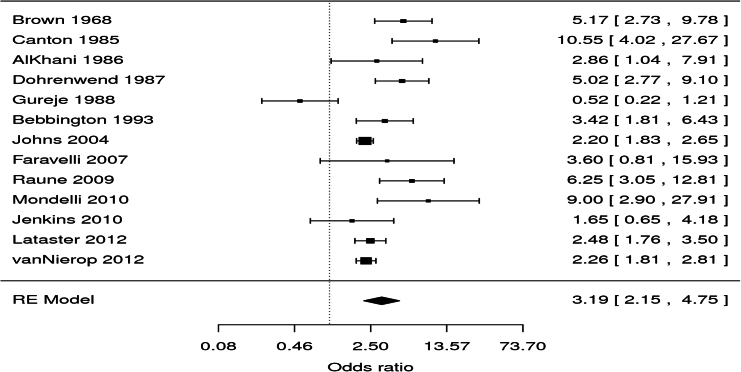
INTRODUCTION: Recent models of psychosis implicate stressful events in its etiology. However, while evidence has accumulated for childhood trauma, the role of adult life events has received less attention. Therefore, a review of the existing literature on the relationship between life events and onset of psychotic disorder/experiences is timely. METHODS: A search was conducted using PsychInfo, Medline, Embase, and Web of Science to identify studies of life events and the onset of psychosis or psychotic experiences within the general population. Given previous methodological concerns, this review included a novel quality assessment tool and focused on findings from the most robust studies. A meta-analysis was performed on a subgroup of 13 studies. RESULTS: Sixteen studies published between 1968 and 2012 were included. Of these, 14 reported positive associations between exposure to adult life events and subsequent onset of psychotic disorder/experiences. The meta-analysis yielded an overall weighted OR of 3.19 (95% CI 2.15-4.75). However, many studies were limited by small sample sizes and the use of checklist measures of life events, with no consideration of contextual influences on the meaning and interpretation of events. CONCLUSIONS: Few studies have assessed the role of adult life events in the onset of psychosis. There was some evidence that reported exposure to adult life events was associated with increased risk of psychotic disorder and subclinical psychotic experiences. However, the methodological quality of the majority of studies was low, which urges caution in interpreting the results and points toward a need for more methodologically robust studies.
Overview
The claims and statistics of this paper haven’t been checked yet.
Free: it reads the open-access text and checks the first 5 claims that cite a source we can check. Create a free account to check every claim.
Integrity signals
Registry
Cites
Statistics
Figures
Verification
Claims the paper makes
The claims and statistics of this paper haven’t been checked yet.
Free: it reads the open-access text and checks the first 5 claims that cite a source we can check. Create a free account to check every claim.
Claims other papers make about this one
Each is checked against this paper’s own text: does it say what the citing paper says it does?
The source backs part of the claim, not all of it — or backs it for a different population, condition or comparison.
In the citing paper
“Early adversity also leads to psychiatric disorders such as psychosis, PTSD, borderline personality, anxiety, depression, and suicide [reviews in Ref. (38, 42–44)].”
From The Stress Acceleration Hypothesis of Nightmares (2017) · cites this paper as [42]
Experimental — accuracy not yet measuredIn the citing paper
“These adverse factors include developmental psychological trauma (Bendall et al., 2008) and adult life events (situations or occurrences that bring about a negative change in personal circumstances and involve threat) (Beards et al., 2013; Brown and Birley, 1968).”
From The effects of psychosocial stress on dopaminergic function and the acute stress response (2019) · cites this paper as Beards et al., 2013
Self-check
Percentages, sums and reported differences re-computed from the paper’s own numbers.
The self-check needs the paper’s full text.
Citations
Cites
Varese, F., Smeets, F., Drukker, M., Lieverse, R., Lataster, T., Viechtbauer, W., Read, J., van Os, J., & Bentall, R. P. (2012) · Schizophrenia Bulletin · doi:10.1093/schbul/sbs050 · Cited by 2,436
A cognitive model of the positive symptoms of psychosis
GARETY, P. A., KUIPERS, E., FOWLER, D., FREEMAN, D., & BEBBINGTON, P. E. (2001) · Psychological Medicine · doi:10.1017/s0033291701003312 · Cited by 1,546 · cited 1×
“Key words: psychosis/life events/review/stress/etiology introduction Recent models of psychosis implicate social adversity, broadly defined, in its etiology.(1,2) However, while evidence has accumulated for childhood trauma,3,4 the role of adult life events has received less attention.”
BackgroundSchizophrenia: A neural diathesis-stress model.
Walker, E. F., & Diforio, D. (1997) · Psychological Review · doi:10.1037//0033-295x.104.4.667 · Cited by 930
Crises and Life Changes and the Onset of Schizophrenia
Brown, G. W., & Birley, J. L. T. (1968) · Journal of Health and Social Behavior · doi:10.2307/2948405 · Cited by 680
Morgan, C., & Fisher, H. (2006) · Schizophrenia Bulletin · doi:10.1093/schbul/sbl053 · Cited by 568
Self-citationPrevalence and correlates of self-reported psychotic symptoms in the British population
Johns, L. C., Cannon, M., Singleton, N., Murray, R. M., Farrell, M., Brugha, T., Bebbington, P., Jenkins, R., & Meltzer, H. (2004) · British Journal of Psychiatry · doi:10.1192/bjp.185.4.298 · Cited by 561
Social defeat: Risk factor for schizophrenia?
Selten, J.-P., & Cantor-Graae, E. (2005) · British Journal of Psychiatry · doi:10.1192/bjp.187.2.101 · Cited by 551 · cited 1×
“Key words: psychosis/life events/review/stress/etiology introduction Recent models of psychosis implicate social adversity, broadly defined, in its etiology.(1,2) However, while evidence has accumulated for childhood trauma,3,4 the role of adult life events has received less attention.”
BackgroundDesirable versus undesirable life events: Their relationship to stress and mental distress.
Vinokur, A. D., & Selzer, M. L. (1975) · Journal of Personality and Social Psychology · doi:10.1037//0022-3514.32.2.329 · Cited by 486
Mondelli, V., Dazzan, P., Hepgul, N., Di Forti, M., Aas, M., D'Albenzio, A., Di Nicola, M., Fisher, H., Handley, R., Marques, T. R., et al. (2010) · Schizophrenia Research · doi:10.1016/j.schres.2009.08.013 · Cited by 278
Self-citationLife Events and Psychosis: Initial Results from the Camberwell Collaborative Psychosis Study
Bebbington, P., Wilkins, S., Jones, P., Foerster, A., Murray, R., Toone, B., & Lewis, S. (1993) · British Journal of Psychiatry · doi:10.1192/bjp.162.1.72 · Cited by 273
Research works printed but not linked: 1
- Chakraborty R Chatterjee A Choudhary S Singh AR Chakraborty PK Life events in acute and transient psychosis—a comparison with mania.. Ger J Psychiatry. 2007; 10: 36– 40
Cited by
McCutcheon, R. A., Reis Marques, T., & Howes, O. D. (2020) · JAMA Psychiatry · doi:10.1001/jamapsychiatry.2019.3360 · Cited by 1,481
Kahn, R. S., Sommer, I. E., Murray, R. M., Meyer-Lindenberg, A., Weinberger, D. R., Cannon, T. D., O'Donovan, M., Correll, C. U., Kane, J. M., van Os, J., et al. (2015) · Nature Reviews Disease Primers · doi:10.1038/nrdp.2015.67 · Cited by 1,124
Improving outcomes of first‐episode psychosis: an overview
Fusar‐Poli, P., McGorry, P. D., & Kane, J. M. (2017) · World Psychiatry · doi:10.1002/wps.20446 · Cited by 575
What causes psychosis? An umbrella review of risk and protective factors
Radua, J., Ramella‐Cravaro, V., Ioannidis, J. P. A., Reichenberg, A., Phiphopthatsanee, N., Amir, T., Yenn Thoo, H., Oliver, D., Davies, C., Morgan, C., et al. (2018) · World Psychiatry · doi:10.1002/wps.20490 · Cited by 553
Self-citationPsychosis as a transdiagnostic and extended phenotype in the general population
van Os, J., & Reininghaus, U. (2016) · World Psychiatry · doi:10.1002/wps.20310 · Cited by 531
Epidemiology and risk factors for bipolar disorder
Rowland, T. A., & Marwaha, S. (2018) · Therapeutic Advances in Psychopharmacology · doi:10.1177/2045125318769235 · Cited by 503
From adversity to psychosis: pathways and mechanisms from specific adversities to specific symptoms
Bentall, R. P., de Sousa, P., Varese, F., Wickham, S., Sitko, K., Haarmans, M., & Read, J. (2014) · Social Psychiatry and Psychiatric Epidemiology · doi:10.1007/s00127-014-0914-0 · Cited by 320
“exposure to urban environments [4]; and exposure to adverse events in adulthood [5].”
BackgroundRisk and protective factors for mental disorders beyond genetics: an evidence‐based atlas
Arango, C., Dragioti, E., Solmi, M., Cortese, S., Domschke, K., Murray, R. M., Jones, P. B., Uher, R., Carvalho, A. F., Reichenberg, A., et al. (2021) · World Psychiatry · doi:10.1002/wps.20894 · Cited by 319
“Fullana et al(36) Neurotic, stress-related and somatoform disorders 19 1 (1-1) 100 (54-224) 427 2000-2017”
Murray, R. M., Bhavsar, V., Tripoli, G., & Howes, O. (2017) · Schizophrenia Bulletin · doi:10.1093/schbul/sbx121 · Cited by 312
“41 Now real-time sampling techniques have shown that patients with schizophrenia have greater sensitivity to everyday hassles than do controls and have linked even mild stress to increases in psychotic symptoms.”
Non-Genetic Factors in Schizophrenia
Stilo, S. A., & Murray, R. M. (2019) · Current Psychiatry Reports · doi:10.1007/s11920-019-1091-3 · Cited by 311
Violence and Mental Disorder: Clinical Considerations
Kennedy, H. (2024) · Seminars in Forensic Psychiatry · doi:10.1017/9781911623809.003 · Cited by 286
Maj, M., van Os, J., De Hert, M., Gaebel, W., Galderisi, S., Green, M. F., Guloksuz, S., Harvey, P. D., Jones, P. B., Malaspina, D., et al. (2021) · World Psychiatry · doi:10.1002/wps.20809 · Cited by 285
Childhood adversities and psychosis: evidence, challenges, implications
Morgan, C., & Gayer‐Anderson, C. (2016) · World Psychiatry · doi:10.1002/wps.20330 · Cited by 260
Self-citationTrotta, A., Murray, R. M., & Fisher, H. L. (2015) · Psychological Medicine · doi:10.1017/s0033291715000574 · Cited by 257
“Each study was assessed using a quality assessment tool (see Supplementary material) adapted from Beards et al. (2013).”
BackgroundMethodSelf-citationGene–Environment Interactions in Severe Mental Illness
Uher, R. (2014) · Frontiers in Psychiatry · doi:10.3389/fpsyt.2014.00048 · Cited by 251
“Adulthood Stressful life events + (43) ++ (44) +++ (45)”
BackgroundMayo, D., Corey, S., Kelly, L. H., Yohannes, S., Youngquist, A. L., Stuart, B. K., Niendam, T. A., & Loewy, R. L. (2017) · Frontiers in Psychiatry · doi:10.3389/fpsyt.2017.00055 · Cited by 200
“Current findings on the SLE–psychosis risk relationship are inconclusive; some cited a positive relationship (39, 51, 86, 87) while others did not (43, 47, 48, 57).”
ResultKraan, T., Velthorst, E., Smit, F., de Haan, L., & van der Gaag, M. (2015) · Schizophrenia Research · doi:10.1016/j.schres.2014.11.026 · Cited by 195
“Following evidence from studies in clinical samples [4, 9], we hypothesized that childhood trauma and recent life events would be significantly more prevalent in UHR patients than in healthy controls.”
BackgroundResultInfluentialIncidence of psychotic disorders among first-generation immigrants and refugees in Ontario
Anderson, K. K., Cheng, J., Susser, E., McKenzie, K. J., & Kurdyak, P. (2015) · Canadian Medical Association Journal · doi:10.1503/cmaj.141420 · Cited by 157
Inflammation in schizophrenia: A question of balance
Leza, J. C., García-Bueno, B., Bioque, M., Arango, C., Parellada, M., Do, K., O’Donnell, P., & Bernardo, M. (2015) · Neuroscience & Biobehavioral Reviews · doi:10.1016/j.neubiorev.2015.05.014 · Cited by 182
The schizophrenia syndrome, circa 2024: What we know and how that informs its nature
Tandon, R., Nasrallah, H., Akbarian, S., Carpenter, W. T., DeLisi, L. E., Gaebel, W., Green, M. F., Gur, R. E., Heckers, S., Kane, J. M., et al. (2024) · Schizophrenia Research · doi:10.1016/j.schres.2023.11.015 · Cited by 179
Psychotic symptoms in COVID-19 patients. A retrospective descriptive study
Parra, A., Juanes, A., Losada, C. P., Álvarez-Sesmero, S., Santana, V. D., Martí, I., Urricelqui, J., & Rentero, D. (2020) · Psychiatry Research · doi:10.1016/j.psychres.2020.113254 · Cited by 179
Bergström, T., Seikkula, J., Alakare, B., Mäki, P., Köngäs-Saviaro, P., Taskila, J. J., Tolvanen, A., & Aaltonen, J. (2018) · Psychiatry Research · doi:10.1016/j.psychres.2018.09.039 · Cited by 168
Reactive psychoses in the context of the COVID-19 pandemic: Clinical perspectives from a case series
Valdés-Florido, M. J., López‐Díaz, Á., Palermo-Zeballos, F. J., Molina, I. M., Martín-Gil, V. E., Crespo‐Facorro, B., & Ruíz-Veguilla, M. (2020) · Revista de Psiquiatría y Salud Mental · doi:10.1016/j.rpsm.2020.04.009 · Cited by 165
Belbasis, L., Köhler, C. A., Stefanis, N., Stubbs, B., van Os, J., Vieta, E., Seeman, M. V., Arango, C., Carvalho, A. F., & Evangelou, E. (2018) · Acta Psychiatrica Scandinavica · doi:10.1111/acps.12847 · Cited by 148
A systematic review of metabolite biomarkers of schizophrenia
Davison, J., O'Gorman, A., Brennan, L., & Cotter, D. R. (2018) · Schizophrenia Research · doi:10.1016/j.schres.2017.09.021 · Cited by 160
“3.1.2 Steroids and steroid derivatives As stress has been linked to schizophrenia (Beards et al., 2013; Cotter and Pariante, 2002), studies have investigated abnormalities in cortisol concentrations in patients with schizophrenia compared with controls.”
ResultInfluentialNon-suicidal self-injury and life stress: A systematic meta-analysis and theoretical elaboration
Liu, R. T., Cheek, S. M., & Nestor, B. A. (2016) · Clinical Psychology Review · doi:10.1016/j.cpr.2016.05.005 · Cited by 151
Stepniak, B., Papiol, S., Hammer, C., Ramin, A., EVERTS, S., Hennig, L., Begemann, M., & Ehrenreich, H. (2014) · The Lancet Psychiatry · doi:10.1016/s2215-0366(14)70379-7 · Cited by 138
Labad, J., Stojanovic‐Pérez, A., Montalvo, I., Solé, M., Cabezas, Á., Ortega, L., Moreno, I., Vilella, E., Martorell, L., Reynolds, R. M., et al. (2014) · Journal of Psychiatric Research · doi:10.1016/j.jpsychires.2014.10.011 · Cited by 135
“Stress is thought to play a role in the risk of developing a psychotic disorder, as both first episode of psychosis and subjects with prodromal symptoms of psychosis report more stressful life events (Beards et al., 2013; Manzanares et al., 2014) and perceived stress (Pruessner et al.”
BackgroundResultTrauma and psychotic experiences: transnational data from the World Mental Health Survey
McGrath, J. J., Saha, S., Lim, C. C. W., Aguilar-Gaxiola, S., Alonso, J., Andrade, L. H., Bromet, E. J., Bruffaerts, R., Caldas de Almeida, J. M., Cardoso, G., et al. (2017) · British Journal of Psychiatry · doi:10.1192/bjp.bp.117.205955 · Cited by 100
Perceived discrimination and psychosis: a systematic review of the literature
Pearce, J. L., Rafiq, S., Simpson, J., & Varese, F. (2019) · Social Psychiatry and Psychiatric Epidemiology · doi:10.1007/s00127-019-01729-3 · Cited by 122
van der Steen, Y., Drees, J., Lataster, T., Viechtbauer, W., Simons, C. J. P., Lardinois, M., Michel, T. M., Janssen, B., Bechdolf, A., Wagner, M., et al. (2017) · Acta Psychiatrica Scandinavica · doi:10.1111/acps.12714 · Cited by 114
“Stressful life events (6), childhood adversity (7), as well as small everyday hassles (8, 9) have been associated with the development and course of psychotic disorder.”
BackgroundAdversity, cannabis use and psychotic experiences: evidence of cumulative and synergistic effects
Morgan, C., Reininghaus, U., Reichenberg, A., Frissa, S., SELCoH study team, Hotopf, M., & Hatch, S. L. (2014) · British Journal of Psychiatry · doi:10.1192/bjp.bp.113.134452 · Cited by 113
Self-citationLiu, R. T. (2015) · Journal of Abnormal Psychology · doi:10.1037/abn0000043 · Cited by 113
“Consistent with these models, life stressors have been implicated in the etiology of several forms of mental illness (Beards et al., 2013; Klauke, Deckert, Reif, Pauli, & Domschke, 2010; Liu & Miller, 2014), particularly depression (Hammen, 2005; Kessler, 1997).”
MethodThe effects of psychosocial stress on dopaminergic function and the acute stress response
Bloomfield, M. A., McCutcheon, R. A., Kempton, M., Freeman, T. P., & Howes, O. (2019) · eLife · doi:10.7554/elife.46797 · Cited by 112
“, 2008) and adult life events (situations or occurrences that bring about a negative change in personal circumstances and involve threat) (Beards et al., 2013; Brown and Birley, 1968).”
BackgroundTrotta, A., Di Forti, M., Mondelli, V., Dazzan, P., Pariante, C., David, A., Mulè, A., Ferraro, L., Formica, I., Murray, R. M., et al. (2013) · Schizophrenia Research · doi:10.1016/j.schres.2013.07.001 · Cited by 85
“As only bullying by peers was investigated in this study, it is possible that other traumas in childhood or adulthood might demonstrate stronger associations with psychotic disorder (Beards et al., 2013; Bebbington et al., 2004; Fisher et al., 2010) or confound this relationship.”
BackgroundSelf-citationAtypical Lateralization in Neurodevelopmental and Psychiatric Disorders: What Is the Role of Stress?
Berretz, G., Wolf, O. T., Güntürkün, O., & Ocklenburg, S. (2020) · Cortex · doi:10.1016/j.cortex.2019.12.019 · Cited by 100
Appiah-Kusi, E., Petros, N., Wilson, R., Colizzi, M., Bossong, M. G., Valmaggia, L., Mondelli, V., McGuire, P., & Bhattacharyya, S. (2020) · Psychopharmacology · doi:10.1007/s00213-019-05442-6 · Cited by 93
“Exposure to stress in early (Beards et al. 2013) and adult (vanWinkel et al. 2008) life has been linked to an increased risk for psychosis.”
BackgroundImpact of Interpersonal Trauma on the Social Functioning of Adults With First-Episode Psychosis
Stain, H. J., Bronnick, K., Hegelstad, W. T. V., Joa, I., Johannessen, J. O., Langeveld, J., Mawn, L., & Larsen, T. K. (2014) · Schizophrenia Bulletin · doi:10.1093/schbul/sbt166 · Cited by 86
Environmental adversities and psychotic symptoms: The impact of timing of trauma, abuse, and neglect
Schalinski, I., Breinlinger, S., Hirt, V., Teicher, M. H., Odenwald, M., & Rockstroh, B. (2019) · Schizophrenia Research · doi:10.1016/j.schres.2017.10.034 · Cited by 95
The Maudsley environmental risk score for psychosis
Vassos, E., Sham, P. C., Kempton, M. J., Trotta, A., Stilo, S. A., Gayer-Anderson, C. E., Forti, M. D., Lewis, C. M., Murray, R. M., & Morgan, C. (2019) · Psychological Medicine · doi:10.1017/s0033291719002319 · Cited by 94
“A meta-analysis of 13 studies (Beards et al., 2013) estimated an overall weighted OR of life events in the period prior to psychosis onset of 3.”
Self-citationde Pablo, G. S., Guinart, D., Armendariz, A., Aymerich, C., Catalán, A., Alameda, L., Rogdaki, M., Baringo, E. M., Soler‐Vidal, J., Oliver, D., et al. (2024) · Schizophrenia Bulletin · doi:10.1093/schbul/sbae017 · Cited by 95
“79,80 Among the evaluated outcomes, the benefits of EIS on suicide rates 35,49,52 and on service users’ satisfaction, 53 pivotal to favor engagement and decrease dropout rates, are notable.”
BackgroundGenetics of schizophrenia: A consensus paper of the WFSBP Task Force on Genetics
Giegling, I., Hosak, L., Mössner, R., Serretti, A., Bellivier, F., Claes, S., Collier, D. A., Corrales, A., DeLisi, L. E., Gallo, C., et al. (2017) · The World Journal of Biological Psychiatry · doi:10.1080/15622975.2016.1268715 · Cited by 68
“A review and meta-analysis of the role of life events in psychosis was carried out by Beards et al. (2013).”
Cannabis use and adherence to antipsychotic medication: a systematic review and meta-analysis
Foglia, E., Schoeler, T., Klamerus, E., Morgan, K. D., & Bhattacharyya, S. (2017) · Psychological Medicine · doi:10.1017/s0033291717000046 · Cited by 83
“…systematic reviews (McGrath et al.2004) andmeta-analyses (Penttila et al.2014)ofpsychosis epidemiology, we evaluated the reporting strength and characteristics of the included studies with an assessment tool (SupplementaryMethods 3) employed in a previous related review by Beards et al. (2013).”
MethodPries, L.-K., van Os, J., ten Have, M., de Graaf, R., van Dorsselaer, S., Bak, M., Lin, B. D., van Eijk, K. R., Kenis, G., Richards, A., et al. (2020) · JAMA Psychiatry · doi:10.1001/jamapsychiatry.2020.2304 · Cited by 77
Trotta, A., Iyegbe, C., Di Forti, M., Sham, P. C., Campbell, D. D., Cherny, S. S., Mondelli, V., Aitchison, K. J., Murray, R. M., Vassos, E., et al. (2016) · PLOS ONE · doi:10.1371/journal.pone.0163319 · Cited by 69
“Other environmental risk factors, such as cannabis use [48] or trauma occurring in adulthood [49], which have previously shown strong associations with psychotic disorder, might act as confounders or moderators of the childhood adversity-psychosis association.”
BackgroundSelf-citationDemeke, S. M., Mossie, T. B., Mekonen, T., & Menberu, M. (2021) · International Journal of Mental Health Systems · doi:10.1186/s13033-021-00464-0 · Cited by 76
“42) odds of experiencing relapse than their counterparts, and it was supported by a metaanalysis [56], and a study in Iraq [57].”
ResultVarchmin, L., Montag, C., Treusch, Y., Kaminski, J. A., & Heinz, A. (2021) · Frontiers in Psychiatry · doi:10.3389/fpsyt.2021.665957 · Cited by 70
“(24) examined the association of psychosis to aversive adult life events.”
BackgroundInfluentialThe Fragile Brain: Stress Vulnerability, Negative Affect and GABAergic Neurocircuits in Psychosis
Taylor, S. F., Grove, T. B., Ellingrod, V. L., & Tso, I. F. (2019) · Schizophrenia Bulletin · doi:10.1093/schbul/sbz046 · Cited by 67
Betz, L. T., Penzel, N., Kambeitz‐Ilankovic, L., Rosen, M., Chisholm, K., Stainton, A., Haidl, T. K., Wenzel, J., Bertolino, A., Borgwardt, S., et al. (2020) · Schizophrenia · doi:10.1038/s41537-020-00129-w · Cited by 67
Are adult stressful life events associated with psychotic relapse? A systematic review of 23 studies
Martland, N., Martland, R., Cullen, A. E., & Bhattacharyya, S. (2020) · Psychological Medicine · doi:10.1017/s0033291720003554 · Cited by 66
The Stress Acceleration Hypothesis of Nightmares
Nielsen, T. (2017) · Frontiers in Neurology · doi:10.3389/fneur.2017.00201 · Cited by 63
Trotta, A., Murray, R. M., David, A. S., Kolliakou, A., O’Connor, J. A., Forti, M. D., Dazzan, P., Mondelli, V., Morgan, C., & Fisher, H. L. (2015) · Schizophrenia Bulletin · doi:10.1093/schbul/sbv131 · Cited by 63
Self-citationLyons, M. T., Evans, K., & Helle, S. (2019) · SAGE Open · doi:10.1177/2158244018822383 · Cited by 63
“Distrust is characteristic of psychosis as well, which could stem from a host of adverse events, both recent and past (Beards et al., 2013).”
BackgroundResilience in the face of adversity in adults with an intellectual disability: A literature review
Scheffers, F., van Vugt, E., & Moonen, X. (2020) · Journal of Applied Research in Intellectual Disabilities · doi:10.1111/jar.12720 · Cited by 63
“…mental and physical health problems such as depression, anxiety and risky behaviours and can consequently result in an increased use of health care (Beards et al., 2013; Bethell, Newacheck, Hawes, & Halfon, 2014; Kalmakis & Chandler, 2015; Michl, McLaughlin, Shepherd, & NolenHoeksema, 2013; Tolin,…”
BackgroundKraan, T. C., Velthorst, E., Themmen, M., Valmaggia, L., Kempton, M. J., McGuire, P., van Os, J., Rutten, B. P. F., Smit, F., de Haan, L., et al. (2018) · Schizophrenia Bulletin · doi:10.1093/schbul/sbw162 · Cited by 51
“Seventh, previous research showed that recent life-events have been found to increase the risk for transition to psychosis [36] but these were not taken into account in the present study.”
BackgroundLincoln, T. M., Köther, U., Hartmann, M. M., Kempkensteffen, J., & Moritz, S. (2014) · Journal of Behavior Therapy and Experimental Psychiatry · doi:10.1016/j.jbtep.2014.11.011 · Cited by 59
“Also, it has been emphasized that more attempts need to be made to systematically compare the stress-responses of groups that differ in vulnerability, such as first-degree relatives and high- risk groups (Beards et al., 2013; Philipps et al., 2007).”
BackgroundGeorgiades, A., Almuqrin, A., Rubinic, P., Mouhitzadeh, K., Tognin, S., & Mechelli, A. (2023) · Schizophrenia · doi:10.1038/s41537-023-00362-z · Cited by 58
Misiak, B., Pruessner, M., Samochowiec, J., Wiśniewski, M., Reginia, A., & Stańczykiewicz, B. (2021) · Frontiers in Neuroendocrinology · doi:10.1016/j.yfrne.2021.100930 · Cited by 58
Stress is a bad advisor. Stress primes poor decision making in deluded psychotic patients
Moritz, S., Köther, U., Hartmann, M. M., & Lincoln, T. M. (2015) · European Archives of Psychiatry and Clinical Neuroscience · doi:10.1007/s00406-015-0585-1 · Cited by 52
Murphy, S., Murphy, J., & Shevlin, M. (2015) · British Journal of Clinical Psychology · doi:10.1111/bjc.12077 · Cited by 42
“A more recent meta-analysis (Beards et al., 2013) also explored the relationship between negative life events and psychosis and found that 14 of 16 studies revealed positive and significant associations and reported an overall weighted odds ratio of 3.”
BackgroundEconomic inequality is related to cross-national prevalence of psychotic symptoms
Johnson, S. L., Wibbels, E. M., & Wilkinson, R. G. (2015) · Social Psychiatry and Psychiatric Epidemiology · doi:10.1007/s00127-015-1112-4 · Cited by 53
Allostatic load index and its clinical correlates at various stages of psychosis
Piotrowski, P., Kotowicz, K., Rymaszewska, J., Beszłej, J. A., Plichta, P., Samochowiec, J., Kalinowska, S., Trześniowska-Drukała, B., & Misiak, B. (2019) · Schizophrenia Research · doi:10.1016/j.schres.2019.06.009 · Cited by 45
WELLFOCUS PPT: Modifying positive psychotherapy for psychosis.
Riches, S., Schrank, B., Rashid, T., & Slade, M. (2016) · Psychotherapy · doi:10.1037/pst0000013 · Cited by 50
“…and accommodate psychosis-specific challenges, e.g. Orientation to PPT, Positive Communication, and Hope, Optimism & Posttraumatic Growth were relabelled, in the 11 latter case to avoid invoking the relationship between psychosis and trauma (Beards et al., 2013; Kilcommons & Morrison, 2005).”
BackgroundKlinger, K., Gomes, F. V., Rincón‐Cortés, M., & Grace, A. A. (2019) · European Neuropsychopharmacology · doi:10.1016/j.euroneuro.2019.07.134 · Cited by 50
“Moreover, chronic stress in general is a risk factor in the establishment of neuropsychiatric diseases (Chrousos, 2009) such as depression and schizophrenia (Beards et al., 2013; Kendler et al., 1999) and part of the pathology of schizophrenia and of depression is the alteration of the mesolimbic dopamine (DA) system,…”
BackgroundAmygdala volume is reduced in early course schizophrenia
Rich, A. M., Cho, Y., Tang, Y., Savić, A., Krystal, J. H., Wang, F., Xu, K., & Anticevic, A. (2016) · Psychiatry Research Neuroimaging · doi:10.1016/j.pscychresns.2016.02.006 · Cited by 48
Frequent experience of discrimination among people who inject drugs: Links with health and wellbeing
Cruz, C. C. E., Salom, C., Dietze, P., Lenton, S. R., Burns, L., & Alati, R. (2018) · Drug and Alcohol Dependence · doi:10.1016/j.drugalcdep.2018.06.009 · Cited by 48
“Our findings are also in line with a meta-analytic review showing that recent life events are linked with psychotic disorders/experiences (Beards et al., 2013).”
ResultMall, S., Platt, J. M., Temmingh, H. S., Musenge, E., Campbell, M., Susser, E., & Stein, D. J. (2019) · Psychological Medicine · doi:10.1017/s0033291719001703 · Cited by 48
“It is plausible that traumatic experiences may have been a consequence of victimization after sub-clinical symptoms of schizophrenia (Beards et al., 2013; Tsigebrhan et al., 2014; Kraan et al., 2015), which might introduce bias due to reverse causation.”
Hazelgrove, K. M., Biaggi, A., Waites, F., Fusté, M., Osborne, S., Conroy, S., Howard, L. M., Mehta, M. A., Miele, M., Nikkheslat, N., et al. (2021) · Psychoneuroendocrinology · doi:10.1016/j.psyneuen.2021.105218 · Cited by 48
Fleischmann, E., Dalkner, N., Fellendorf, F. T., & Reininghaus, E. Z. (2021) · World Journal of Psychiatry · doi:10.5498/wjp.v11.i12.1387 · Cited by 48
Unravelling psychosis: psychosocial epidemiology, mechanism, and meaning.
Bebbington, P. (2015) · 上海精神医学 · doi:10.11919/j.issn.1002-0829.215027 · Cited by 47
Does childhood trauma play a role in the aetiology of psychosis? A review of recent evidence
Coughlan, H., & Cannon, M. D. (2017) · BJPsych Advances · doi:10.1192/apt.bp.116.015891 · Cited by 47
Saarinen, A. I. L., Keltikangas‐Järvinen, L., Jääskeläinen, E., Huhtaniska, S., Pudas, J., Tovar-Perdomo, S., Penttilä, M., Miettunen, J., & Lieslehto, J. (2021) · Biological Psychiatry Cognitive Neuroscience and Neuroimaging · doi:10.1016/j.bpsc.2021.01.002 · Cited by 47
Changes in Default-Mode Network Associated With Childhood Trauma in Schizophrenia
Dauvermann, M. R., Mothersill, D., Rokita, K., King, S., Holleran, L., Kane, R., McKernan, D. P., Kelly, J. P., Morris, D. W., Corvin, A. P., et al. (2021) · Schizophrenia Bulletin · doi:10.1093/schbul/sbab025 · Cited by 46
Abnormalities in neuroendocrine stress response in psychosis: the role of endocannabinoids
Appiah‐Kusi, E., Leyden, E., Parmar, S. R., Mondelli, V., McGuire, P. K., & Bhattacharyya, S. (2015) · Psychological Medicine · doi:10.1017/s0033291715001786 · Cited by 46
“With particular regard to schizophrenia, a chronic disorder that typically affects young adults, early-life (Bramon & Murray, 2001; Beards et al. 2013) and adult (van Winkel et al.”
BackgroundStressful life events predict one-year change of leukocyte composition in peripheral blood
Penz, M. S., Kirschbaum, C., Buske-Kirschbaum, A., Wekenborg, M., & Miller, R. E. (2018) · Psychoneuroendocrinology · doi:10.1016/j.psyneuen.2018.05.006 · Cited by 46
Flinn, A., Hefferman-Clarke, R., Parker, S., Allsopp, K., Zhou, L., Begemann, M., Bentall, R. P., & Varese, F. (2025) · Psychological Medicine · doi:10.1017/s0033291725001138 · Cited by 45
“Meta-analytic evidence suggests that exposure to traumatic events in childhood increases the risk of experiencing psychosis later in life (Beards et al., 2013; Pastore, de Girolamo, Tafuri, Tomasicchio, & Margari, 2020; Varese, Smeets et al., 2012; Zhou et al., 2025).”
The effect of acute stress on salivary markers of inflammation: a systematic review protocol
Slavish, D. C., & Szabo, Y. Z. (2019) · Systematic Reviews · doi:10.1186/s13643-019-1026-4 · Cited by 44
Armando, M., Sandini, C., Chambaz, M., Schaer, M., Schneider, M., & Eliez, S. (2018) · Schizophrenia Bulletin · doi:10.1093/schbul/sby025 · Cited by 44
The predictive value of early maladaptive schemas in paranoid responses to social stress
Sundag, J., Ascone, L., & Lincoln, T. M. (2018) · Clinical Psychology & Psychotherapy · doi:10.1002/cpp.2128 · Cited by 35
Pot-Kolder, R., Veling, W., Counotte, J., & van der Gaag, M. (2017) · Schizophrenia Bulletin · doi:10.1093/schbul/sbx119 · Cited by 42
Recent life events and psychosis: The role of childhood adversities
Mansueto, G., & Faravelli, C. (2017) · Psychiatry Research · doi:10.1016/j.psychres.2017.06.042 · Cited by 41
“The relationship between stressful life events and psychosis is well established (Jung, 1907; Bleuer, 1911; Steinber and Durell, 1968; Beck and Worthen, 1972; Brown et al., 1973; Varese et al., 2012; Beards et al., 2013; Gallagher et al., 2013; Trotta et al., 2015; Butjosa et al., 2016).”
BackgroundUrbanicity and psychotic disorders: Facts and hypotheses
Pignon, B., Szöke, A., Ku, B. S., Melchior, M., & Schürhoff, F. (2023) · Dialogues in Clinical Neuroscience · doi:10.1080/19585969.2023.2272824 · Cited by 40
“…trauma, discrimination experiences or stressful life events and psychotic disorders is well known, with several psychosocial stressors being consistently associated with an increased risk for psychotic disorders in longitudinal studies (Varese et al. 2012; Beards et al. 2013; Pearce et al. 2019).”
Liu, R. T., Hamilton, J. L., Boyd, S. I., Dreier, M. J., Walsh, R. F. L., Sheehan, A. E., Turnamian, M. R., Workman, A. R. C., & Jorgensen, S. L. (2024) · Psychological Bulletin · doi:10.1037/bul0000431 · Cited by 42
Stability and change of perceived characteristics of major life events.
Haehner, P., Kritzler, S., Faßbender, I., & Luhmann, M. (2022) · Journal of Personality and Social Psychology · doi:10.1037/pspp0000394 · Cited by 43
Disrupted glucocorticoid—Immune interactions during stress response in schizophrenia
Chiappelli, J., Shi, Q., Kodi, P., Savransky, A., Kochunov, P., Rowland, L. M., Nugent, K. L., & Hong, L. E. (2015) · Psychoneuroendocrinology · doi:10.1016/j.psyneuen.2015.09.010 · Cited by 38
“…childhood (Varese et al, 2012) increase the risk of developing schizophrenia in adult life; stressful life events in adolescence and adulthood may precipitate the first episode of psychosis and subsequent exacerbations of the illness (Beards et al, 2013; Docherty et al, 2009; Tessner et al, 2011).”
BackgroundMoya-Higueras, J., Cuevas, A., Marqués-Feixa, L., Mezquita, L., Mayoral, M., Fañanás, L., Ortet, G., & Ibáñez, M. I. (2018) · Assessment · doi:10.1177/1073191118817648 · Cited by 39
“One of the possible explanations of these and other inconsistencies is the psychometric deficiencies that SLE checklists often present (Beards et al., 2013; Compas, Davis, Forsythe, & Wagner, 1987; Grant et al., 2004; Monroe & Reid, 2008).”
BackgroundPatton, S. C., Szabo, Y. Z., & Newton, T. L. (2021) · Trauma Violence & Abuse · doi:10.1177/1524838020985554 · Cited by 39
“…to assess risk of bias in observational studies (Viswanathan & Berkman, 2012), and two items from a systematic review of observational studies (Beards et al., 2013), were used to assess risk of bias across four domains: selection of participants, detection of IPA exposure and health outcomes,…”
MethodPignon, B., Lajnef, M., Kirkbride, J. B., Peyre, H., Ferchiou, A., Richard, J., Baudin, G., Tosato, S., Jongsma, H. E., de Haan, L., et al. (2021) · Schizophrenia Bulletin · doi:10.1093/schbul/sbab060 · Cited by 37
Self-citationSocial identity and psychosis: Explaining elevated rates of psychosis in migrant populations
McIntyre, J. C., Elahi, A., & Bentall, R. P. (2016) · Social and Personality Psychology Compass · doi:10.1111/spc3.12273 · Cited by 36
Reactive psychoses in the context of the COVID-19 pandemic: Clinical perspectives from a case series
Valdés-Florido, M. J., López‐Díaz, Á., Palermo-Zeballos, F. J., Molina, I. M., Martín-Gil, V. E., Crespo‐Facorro, B., & Ruíz-Veguilla, M. (2020) · Revista de Psiquiatría y Salud Mental (English Edition) · doi:10.1016/j.rpsmen.2020.07.004 · Cited by 36
Bhattacharyya, S., Schoeler, T., Forti, M. D., Murray, R. M., Cullen, A. E., & Colizzi, M. (2023) · The Lancet Psychiatry · doi:10.1016/s2215-0366(23)00110-4 · Cited by 36
Multiple measures of HPA axis function in ultra high risk and first-episode schizophrenia patients
Nordholm, D., Rostrup, E., Mondelli, V., Randers, L., Nielsen, M. Ø., Wulff, S., Nørbak-Emig, H., Broberg, B. V., Krakauer, K., Dazzan, P., et al. (2018) · Psychoneuroendocrinology · doi:10.1016/j.psyneuen.2018.03.015 · Cited by 37
Huang, Z., Hou, C., Huang, Y., He, X., Wang, Q., Chen, X., Wang, Z., Wang, S., & Jia, F. (2019) · Psychiatry Research · doi:10.1016/j.psychres.2019.01.060 · Cited by 35
Threatening Life Events and Difficulties and Psychotic Disorder
Beards, S., Fisher, H. L., Gayer-Anderson, C. E., Hubbard, K., Reininghaus, U., Craig, T., Forti, M. D., Mondelli, V., Pariante, C. M., Dazzan, P., et al. (2020) · Schizophrenia Bulletin · doi:10.1093/schbul/sbaa005 · Cited by 35
Self-citationArranz, S., Monferrer, N., Algora, M. J., Cabezas, Á., Solé, M., Vilella, E., Labad, J., & Sánchez‐Gistau, V. (2018) · Schizophrenia Research · doi:10.1016/j.schres.2018.04.040 · Cited by 34
Zavos, H. M. S., Eley, T. C., McGuire, P. K., Plomin, R. J., Cardno, A. G., Freeman, D. H., & Ronald, A. (2016) · Schizophrenia Bulletin · doi:10.1093/schbul/sbw021 · Cited by 34
Rosen, C., Jones, N., Longden, E., Chase, K. A., Shattell, M. M., Melbourne, J. K., Keedy, S., & Sharma, R. P. (2017) · Frontiers in Psychiatry · doi:10.3389/fpsyt.2017.00057 · Cited by 35
Jacob, L., Smith, L., McDermott, D. T., Haro, J. M., Stickley, A., & Koyanagi, A. (2019) · Psychological Medicine · doi:10.1017/s003329171900309x · Cited by 33
“The association between stressful life events and PEs likely involves several mechanisms such as negative distortions of perception of the external world and dysregulations of the HPA axis (Beards et al., 2013).”
BackgroundMethodRosen, C., Jones, N., Chase, K. A., Melbourne, J. K., Grossman, L. S., & Sharma, R. P. (2017) · Consciousness and Cognition · doi:10.1016/j.concog.2017.01.015 · Cited by 33
“Likewise, environmental influences including trauma, drug abuse, and urban background have all been identified as contributing factors in the development of psychosis (van Os et al., 2002; Beards et al., 2013; Varese et al., 2012; Isvoranu, Borsboom, van Os, & Guloksuz, 2016).”
BackgroundRathke, H., Poulsen, S., Carlsson, J. M., & Palić, S. (2020) · Psychiatry Research · doi:10.1016/j.psychres.2020.112898 · Cited by 33
Metadata
- Authors
- Beards, S., Gayer-Anderson, C., Borges, S., Dewey, M. E., Fisher, H. L., & Morgan, C.
- Affiliations
- King's College London (GB)
- Corresponding author
- Beards, Stephanie
- Fisher, Helen L.
- Morgan, Craig
- Venue
- Schizophrenia Bulletin
- Publisher
- Oxford University Press (OUP)
- Published
- 2013-05-13
- Volume
- 39
- Issue
- 4
- Pages
- 740-747
- ISSN
- 0586-7614 (ISSN-L)
- 1745-1701
- PMC
- PMC3686461
- OpenAlex
- W2128405990
- Cited by
- 325
- References
- 26
- Citations by year
- 2026: 13 · 2025: 17 · 2024: 24 · 2023: 41 · 2022: 27 · 2021: 31 · 2020: 29 · 2019: 33 · 2018: 20 · 2017: 30 · 2016: 17 · 2015: 24 · 2014: 15 · 2013: 4
- FWCI
- 14.17
- Type
- journal article
- Language
- en
- Open access
- green
- www.ncbi.nlm.nih.gov
- Licence
- cc-by-nc
- Locations
- Schizophrenia Bulletin (publishedVersion)
- Europe PMC (PubMed Central) (publishedVersion, cc-by-nc)
- PubMed Central (publishedVersion, cc-by-nc)
- PubMed (publishedVersion)
- Research Portal (King's College London) (publishedVersion, other-oa)
- Funders
- Wellcome Trust (WT087417)
- National Institute for Health and Care Research
- Economic and Social Research Council (1107852)
- Topics
- Health Sciences › Medicine › Psychiatry and Mental health › Schizophrenia research and treatment
- Social Sciences › Arts and Humanities › Philosophy › Mental Health and Psychiatry
- Social Sciences › Psychology › Clinical Psychology › Psychoanalysis and Psychopathology Research
- Keywords
- life events, psychosis
- MeSH terms
- Adaptation, Psychological, Adult, Humans, Life Change Events, Psychotic Disorders, Risk Factors, Schizophrenia, Time Factors
About these checks
Registry, retraction, Cites and statistics results are computed, not judged, with one exception: a printed reference that no index lists is read once by a model before it counts as a citation error. Claims are extracted by a model and kept only when their quote appears verbatim in the text; each cited source is then checked, with a model’s help, for whether it says what the claim relies on. Those verdicts can be wrong — read the claim’s quote and the cited source before relying on one.
Statistics and arithmetic are recomputed, not judged.
Confidence bands are shown only for fields calibrated on our annotated test set. None is calibrated yet, so no band is shown.
What counts as a claim ›How we measure confidence ›How we check this ›
Are you an author, or do you see a problem with this page? Request a review
Data sources
Bibliographic data: Semantic Scholar, OpenAlex, Crossref.
Contains information from the Semantic Scholar Academic Graph Datasets, made available under the ODC Attribution License (ODC-BY 1.0).
Semantic Scholar’s data is described in: Kinney, R., et al. (2023). The Semantic Scholar Open Data Platform. arXiv:2301.10140.
