

Can We Reduce the Duration of Untreated Psychosis? A Systematic Review and Meta-Analysis of Controlled Interventional Studies
Open accessThe DOI matches its Crossref record; 67 of the 67 references it cites were found in a registry or an index.
Abstract
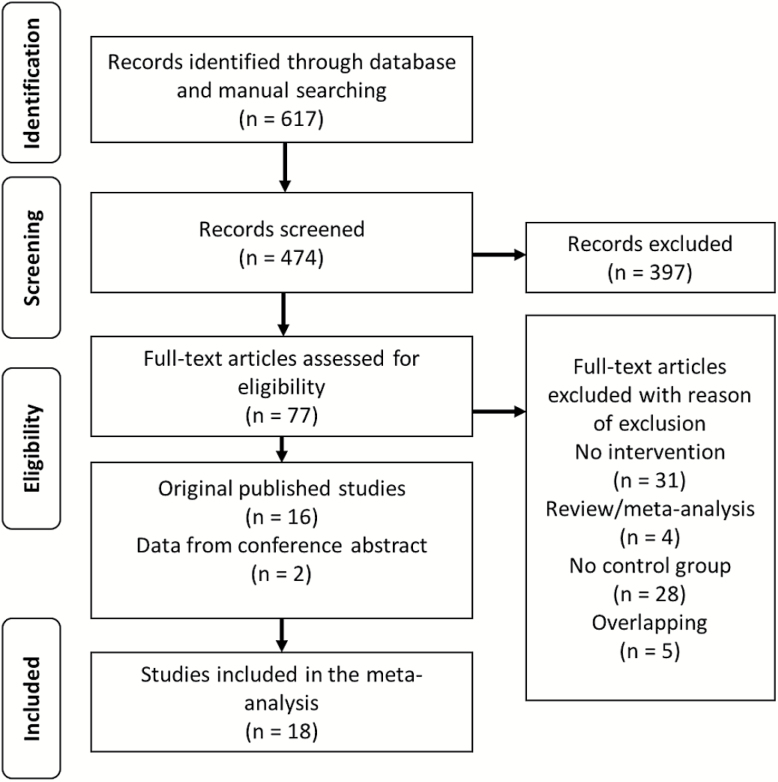
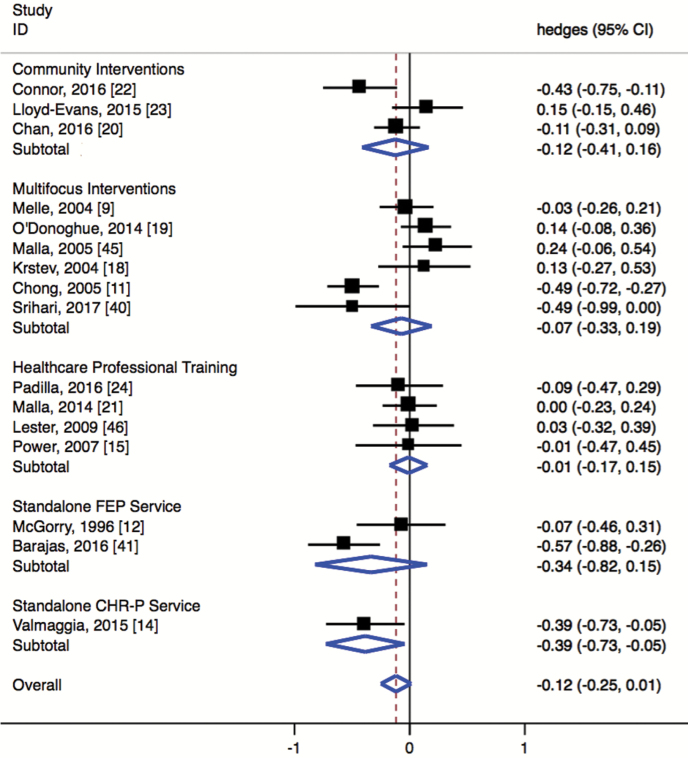
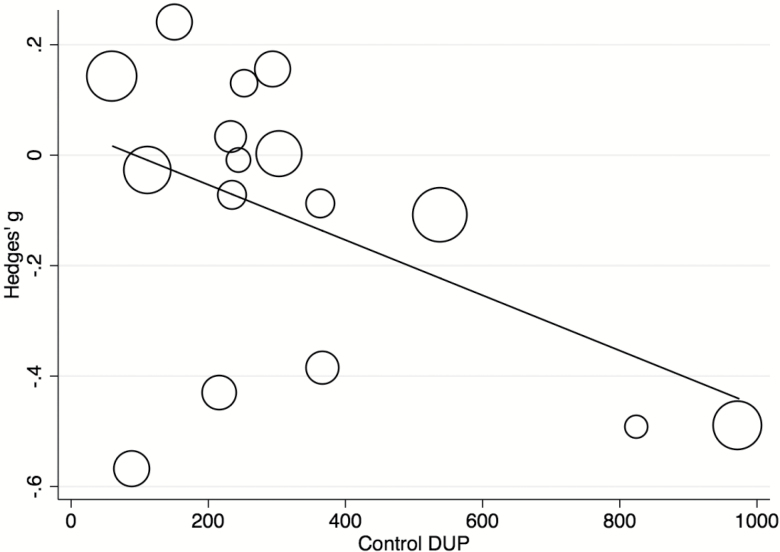
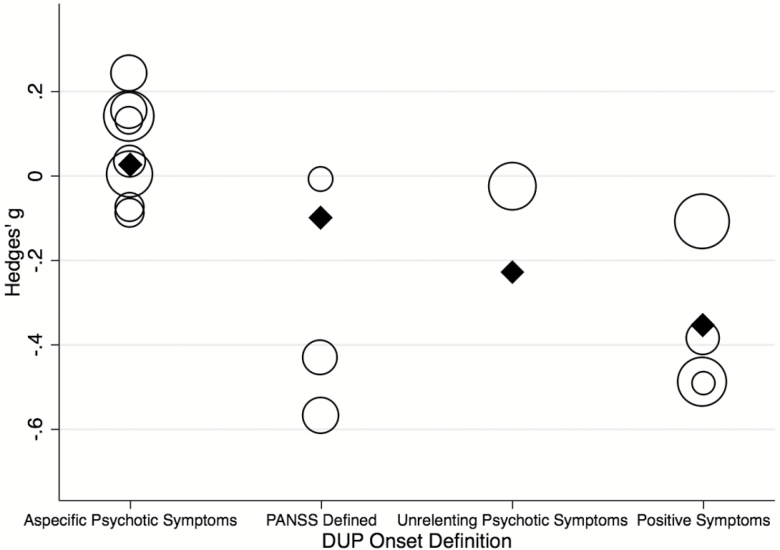
Reduction of duration of untreated psychosis (DUP) is the key strategy of early interventions for improving the outcomes of first-episode psychosis. Although several controlled interventional studies have been conducted with the aim of reducing DUP, the results are highly inconsistent and conflicting. The current study systematically searches Web of Science and Ovid for English original articles investigating interventions adopted to reduce DUP, compared to a control intervention, up to April 6, 2017. Sixteen controlled interventional studies were retrieved, including 1964 patients in the intervention arm and 1358 in the control arm. The controlled intervention studies were characterized by standalone first episode psychosis services, standalone clinical high risk services, community interventions, healthcare professional training, and multifocus interventions. Random effects meta-analyses were conducted. There was no summary evidence that available interventions are successful in reducing DUP during the first episode of psychosis (Hedges' g = -0.12, 95% CI = -0.25 to 0.01). Subgroup analyses showed no differences within each subgroup, with the exception of clinical high risk services (Hedges' g = -0.386, 95% CI = -0.726 to -0.045). These negative findings may reflect a parceled research base in the area, lack of prospective randomized controlled trials (only 2 randomized cluster designed studies were present) and small sample sizes. There was substantial heterogeneity (I2 = 66.4%), most of which was accounted by different definitions of DUP onset (R2 = .88). Psychometric standardization of DUP definition, improvement of study design, and implementation of preventative strategies seem the most promising avenues for reducing DUP and improving outcomes of first-episode psychosis.
Overview
The claims and statistics of this paper haven’t been checked yet.
Free: it reads the open-access text and checks the first 5 claims that cite a source we can check. Create a free account to check every claim.
Integrity signals
Registry
Cites
Statistics
Figures
Verification
Claims the paper makes
The claims and statistics of this paper haven’t been checked yet.
Free: it reads the open-access text and checks the first 5 claims that cite a source we can check. Create a free account to check every claim.
Claims other papers make about this one
Each is checked against this paper’s own text: does it say what the citing paper says it does?
The source backs part of the claim, not all of it — or backs it for a different population, condition or comparison.
In the citing paper
“reducing the duration of untreated illness has been robustly shown to impact positively on the outcome of first-episode psychosis and schizophrenia in many ways [95]”
From Prevention and early intervention in youth mental health: is it time for a multidisciplinary and trans-diagnostic model for care? (2020) · cites this paper as [95]
Experimental — accuracy not yet measuredIn the citing paper
“Indicated prevention implemented in CHR-P services (the NICE-recommended intervention is cognitive behavioural therapy 68 ) has the potential to ameliorate presenting symptoms, delay or prevent the onset of psychosis, reduce health care access and duration of untreated psychosis (secondary prevention) 55,90 .”
From Preventive psychiatry: a blueprint for improving the mental health of young people (2021) · cites this paper as [90]
In the citing paper
“which can reduce the duration of untreated disorder 90”
From Preventive psychiatry: a blueprint for improving the mental health of young people (2021) · cites this paper as [90]
Self-check
Percentages, sums and reported differences re-computed from the paper’s own numbers.
The self-check needs the paper’s full text.
Citations
Cites
Preferred Reporting Items for Systematic Reviews and Meta-Analyses: the PRISMA statement
Moher, D., Liberati, A., Tetzlaff, J., Altman, D. G., & for the PRISMA Group (2009) · BMJ · doi:10.1136/bmj.b2535 · Cited by 83,823
Preferred Reporting Items for Systematic Reviews and Meta-Analyses: The PRISMA Statement
Moher, D., Liberati, A., Tetzlaff, J., Altman, D. G., & The PRISMA Group (2009) · PLoS Medicine · doi:10.1371/journal.pmed.1000097 · Cited by 64,042
Bias in meta-analysis detected by a simple, graphical test
Egger, M., Smith, G. D., Schneider, M., & Minder, C. (1997) · BMJ · doi:10.1136/bmj.315.7109.629 · Cited by 56,722
Preferred reporting items for systematic reviews and meta-analyses: the PRISMA Statement.
(2009) · PubMed Central · Cited by 44,859
Meta-analysis in clinical trials
DerSimonian, R., & Laird, N. (1986) · Controlled Clinical Trials · doi:10.1016/0197-2456(86)90046-2 · Cited by 39,552
Dermyshi, E., Wang, Y., Yan, C., Hong, W., Qiu, G., Gong, X., & Zhang, T. (2017) · Neonatology · doi:10.1159/000454668 · Cited by 24,451
Meta-analysis of Observational Studies in Epidemiology<SUBTITLE>A Proposal for Reporting</SUBTITLE>
Stroup, D. F. (2000) · JAMA · doi:10.1001/jama.283.15.2008 · Cited by 20,623
Wang, G., Ma, R., Qiao, G., Wada, K., Aizawa, Y., & Satoh, T. (2015) · Integrative Medicine International · doi:10.1159/000368408 · Cited by 18,657
Borenstein, M., Hedges, L. V., Higgins, J. P. T., & Rothstein, H. R. (2009) · doi:10.1002/9780470743386 · Cited by 14,225
Duval, S., & Tweedie, R. (2000) · Biometrics · doi:10.1111/j.0006-341x.2000.00455.x · Cited by 14,099
Research works printed but not linked: 1
- StataCorp. Stata Statistical Software. College Station, TX: StataCorp LP; 2013.
Cited by
Items 101–127 of 127
Medications for Psychosis: Dopamine Blockers and Dopamine Partial Agonists (Antipsychotics)
Uchida, H., Kim, E., Jarskog, L. F., Fleischhacker, W. W., Remington, G. J., & Lieberman, J. A. (2023) · Springer eBooks · doi:10.1007/978-3-030-42825-9_134-1 · Cited by 2
The duration of active psychosis and relationship with early psychosis outcomes
Crowley, P., Boland, F., Thompson, A., McGorry, P. D., O'Donoghue, B. N., & Lyne, J. (2026) · Schizophrenia Research · doi:10.1016/j.schres.2026.03.014 · Cited by 1
Oliver, D., Arribas, M., Logeswaran, Y., Fusar‐Poli, L., Kempton, M. J., Hedges, E. P., Albiñana, C., Vassos, E., Sariaslan, A., Pettersson‐Yeo, W., et al. (2026) · Schizophrenia Bulletin · doi:10.1093/schbul/sbag088 · Cited by 2
Self-citationAndreou, C., Bailey, B., Armando, M., Micali, N., Huber, C., Herbrecht, E., Curtis, L., Genoud, D., Borgwardt, S., Plessen, K. J., et al. (2021) · JMIG · doi:10.53738/revmed.2021.17.751.1597 · Cited by 3
Psychosis Caused by a Somatic Condition: How to Make the Diagnosis? A Systematic Literature Review
Dissaux, N., Neyme, P., Kim-Dufor, D.-H., Lavenne-Collot, N., Marsh, J. J., Berrouiguet, S., Walter, M., & Lemey, C. (2023) · Children · doi:10.3390/children10091439 · Cited by 2
“Moreover, over the past decade, studies have shown evidence that early detection of the first signs of psychosis and early intervention with a reduced duration of untreated psychosis (DUP) limit the negative impacts of the disorder [7,8].”
BackgroundOver 30 years of STEP : The Pittsburgh experience with first‐episode psychosis
Wood, H. J., Jones, N., Eack, S. M., Chengappa, K. N. R., Prasad, K. M. R., Kelly, C., Montrose, D. M., Schooler, N. R., Ganguli, R., Carter, C. S., et al. (2024) · Early Intervention in Psychiatry · doi:10.1111/eip.13536 · Cited by 1
“…internationally, leading, for example, to the Lambeth Early Onset team in London, United Kingdom, and the Personal Assessment and Crisis Evaluation team in Melbourne, Australia, being established around the same time (Craig et al., 2004; Phillips et al., 2002). et al., 2013; Oliver et al., 2018).”
Early Intervention for Eating Disorders in Young People
Flynn, M., & Schmidt, U. H. (2018) · Elsevier eBooks · doi:10.1016/b978-0-323-54852-6.00021-5 · Cited by 1
3 steps to bend the curve of schizophrenia
Nasrallah, H. A. (2022) · Current Psychiatry · doi:10.12788/cp.0266 · Cited by 1
DUP redux: Observations vs. experiments in early intervention (invited commentary on Nkire et al.)
Srihari, V. H., & Li, F. (2022) · Schizophrenia Research · doi:10.1016/j.schres.2022.12.006 · Cited by 1
Studying the context of psychoses to improve outcomes in Ethiopia (SCOPE): protocol paperPreprint
Hanlon, C., Roberts, T., Misganaw, E., MALLA, A. K., Cohen, A., Shibre, T., Fekadu, W., Teferra, S., Kebede, D., Mulushoa, A., et al. (2023) · medRxiv · doi:10.1101/2023.10.10.23296817 · Cited by 1
An approach to sample size calculation for research on duration of untreated psychosis
Gariépy, G., McIlwaine, S. V., Schmitz, N., & Shah, J. L. (2018) · Schizophrenia Research · doi:10.1016/j.schres.2018.11.012
Fusar‐Poli, P. (2019) · International Journal of Technology Assessment in Health Care · doi:10.1017/s0266462319000692
Self-citationCan we prevent psychosis? The ineffective paradigm of indicated psychosis prevention
Looi, J. C., Bastiampillai, T. J., & Allison, S. C. (2020) · Australian & New Zealand Journal of Psychiatry · doi:10.1177/0004867420951254
Ferrara, M. (2021) · Research Publications (Maastricht University) · doi:10.26481/dis.20210312mf
Electronic Health Records to Detect Psychosis Risk
Oliver, D., & Fusar‐Poli, P. (2023) · Springer eBooks · doi:10.1007/978-3-031-10698-9_12
Self-citationBailey, B. K., Solida, A., Andreou, C., Plessen, K. J., Conus, P., Ducommun, M. M., Kasparidi, A., Conchon, C., Sprüngli‐Toffel, E., Genoud, D., et al. (2024) · Early Intervention in Psychiatry · doi:10.1111/eip.13540
“…that timely treatment in the early stages of psychotic disorders can improve clinical and functional outcomes, prevent negative social consequences of psychosis such as social isolation, unemployment, and homelessness, and reduce the risk for self-harm and violence (Oliver et al., 2018).”
Importance of Early Detection in Early Psychosis
Joo, S. W. (2024) · Korean Journal of Schizophrenia Research · doi:10.16946/kjsr.2024.27.1.14
Medications for Psychosis: Dopamine Blockers and Dopamine Partial Agonists (Antipsychotics)
Uchida, H., Kim, E., Jarskog, L. F., Fleischhacker, W. W., Remington, G. J., & Lieberman, J. A. (2024) · Springer eBooks · doi:10.1007/978-3-030-51366-5_134 · Cited by 1
Buck, B., Whiting, E. L., Filip, T. F., Russell, M. T., Akhras, S., Busanet, H., Thakkar, K. N., McCleery, A., & Minor, K. S. (2025) · Early Intervention in Psychiatry · doi:10.1111/eip.70034
“…decline (Carrión et al. 2013), public health efforts are increasingly focused on developing strategies to hasten identification (i.e., through broader conceptualisations of psychosis risk [Oh, Karcher, et al. 2023], help-seeking and referral for early psychosis programmes [Oliver et al. 2018]).”
Mental health help-seeking by US college students with a diagnosis of psychosis
Godoy-Henderson, C., Denner, S., Flesaker, M., Weinberg, J., Dalhoe, M., & Lipson, S. K. (2026) · Social Psychiatry and Psychiatric Epidemiology · doi:10.1007/s00127-026-03102-7
“…highlights poor outcomes and high relapse rates associated with low treatment adherence in individuals diagnosed with psychosis, there is a research gap in understanding the factors, such as informal supports, that influence help-seeking behaviors and mental health ser - vice utilization [13, 14].”
Xun, K., Wang, Y., Zhang, R., Xiao, Z., Lu, Y., Wu, L., Jing, Y., & Xie, S. (2026) · International Journal of Clinical Practice · doi:10.1155/ijcp/8834868
Chai, K. E. K., Rapoo, E., Lee, C., McEvoy, P. M., Graham-Schmidt, K., Rock, D. J., Betts, K. S., Robinson, S., & Coleman, M. (2026) · Early Intervention in Psychiatry · doi:10.1111/eip.70211
“Psychotic disorders are debilitating psychiatric conditions that have poor treatment outcomes compared with other mental health disorders (Oliver et al. 2018).”
InfluentialPsychosis Mental Health Campaigns: A Scoping Review of Strategies and Outcomes
Straub, K. T., Pemberton, K., Tennison, M. E., McKinstry, S., & Kopelovich, S. L. (2026) · Early Intervention in Psychiatry · doi:10.1111/eip.70206
“However, many such cam-paigns have not demonstrated consistent or measurable effects (Lloyd-Evans et al. 2011; Murden et al. 2024; Oliver et al. 2018).”
Noto, C. D. S., da Rosa, F. H., Vargas, H. O., Porcu, M., Machado, R. C. B. R., & Nunes, S. O. V. (2026) · Early Intervention in Psychiatry · doi:10.1111/eip.70238
“Early detection and intervention are crucial, as reducing the duration of untreated psychosis (DUP) significantly improves a patient's prognosis and functional outcomes (Johannessen et al. 2001; Oliver et al. 2018).”
Sanauddin, N., Dikomitis, L., Khan, A. J., Azeemi, M. M. U. H., Khan, M. F., Sheikh, S., Fonseka, N., Milner, A., Shah, S. M. U., Azeemi, I. T., et al. (2026) · Early Intervention in Psychiatry · doi:10.1111/eip.70233
“Despite a large number of research studies, there is a limited understanding of how individuals and families navigate care after the onset of psychosis (Oliver et al. 2018).”
Jesuorobo, E. Y., Parry, S. L., & Kara, B. (2026) · Psychosis · doi:10.1080/17522439.2026.2711702
Kononikhin, A. S., Bugrova, A. E., Foliforova, A. S., Indeykina, M. I., Strelnikova, P. A., Zakharova, N. V., Morozova, A. Y., Kostyuk, G. P., & Nikolaev, E. N. (2026) · Frontiers in Molecular Biosciences · doi:10.3389/fmolb.2026.1882675
Metadata
- Authors
- Oliver, D., Davies, C., Crossland, G., Lim, S., Gifford, G., McGuire, P., & Fusar-Poli, P.
- Affiliations
- King's College London (GB)
- Early Psychosis: Interventions & Clinical-Detection (EPIC) Lab, Department of Psychosis Studies, Institute of Psychiatry, Psychology and Neuroscience, King’s College London, UK
- Corresponding author
- Oliver, Dominic
- Venue
- Schizophrenia Bulletin
- Publisher
- Oxford University Press (OUP)
- Published
- 2018-01-24
- Volume
- 44
- Issue
- 6
- Pages
- 1362-1372
- ISSN
- 0586-7614 (ISSN-L)
- 1745-1701
- PMC
- PMC6192469
- OpenAlex
- W2790147455
- Cited by
- 126
- References
- 67
- Citations by year
- 2026: 11 · 2025: 8 · 2024: 12 · 2023: 13 · 2022: 15 · 2021: 18 · 2020: 20 · 2019: 23 · 2018: 6
- FWCI
- 2.03
- Type
- journal article
- Language
- en
- Open access
- hybrid
- doi.org
- Licence
- Locations
- Schizophrenia Bulletin (publishedVersion, cc-by)
- Europe PMC (PubMed Central) (publishedVersion, cc-by)
- PubMed Central (publishedVersion, cc-by)
- PubMed (publishedVersion)
- Research Portal (King's College London) (submittedVersion, cc-by)
- Funders
- King's College London (MR/N013700/1)
- Medical Research Council (MR/N013700/1)
- Topics
- Health Sciences › Medicine › Psychiatry and Mental health › Schizophrenia research and treatment
- Health Sciences › Medicine › Psychiatry and Mental health › Mental Health Treatment and Access
- Social Sciences › Psychology › Clinical Psychology › Psychiatric care and mental health services
- Keywords
- duration of untreated psychosis, first-episode psychosis
- MeSH terms
- Clinical Studies as Topic, Humans, Psychotic Disorders, Schizophrenia, Outcome Assessment, Health Care, Early Medical Intervention
About these checks
Registry, retraction, Cites and statistics results are computed, not judged, with one exception: a printed reference that no index lists is read once by a model before it counts as a citation error. Claims are extracted by a model and kept only when their quote appears verbatim in the text; each cited source is then checked, with a model’s help, for whether it says what the claim relies on. Those verdicts can be wrong — read the claim’s quote and the cited source before relying on one.
Statistics and arithmetic are recomputed, not judged.
Confidence bands are shown only for fields calibrated on our annotated test set. None is calibrated yet, so no band is shown.
What counts as a claim ›How we measure confidence ›How we check this ›
Are you an author, or do you see a problem with this page? Request a review
Data sources
Bibliographic data: Semantic Scholar, OpenAlex, Crossref.
Contains information from the Semantic Scholar Academic Graph Datasets, made available under the ODC Attribution License (ODC-BY 1.0).
Semantic Scholar’s data is described in: Kinney, R., et al. (2023). The Semantic Scholar Open Data Platform. arXiv:2301.10140.
