

Sustained benefits of delaying school start time on adolescent sleep and well-being
Open accessThe DOI matches its Crossref record; 38 of the 39 references it cites were found in a registry or an index.
Abstract
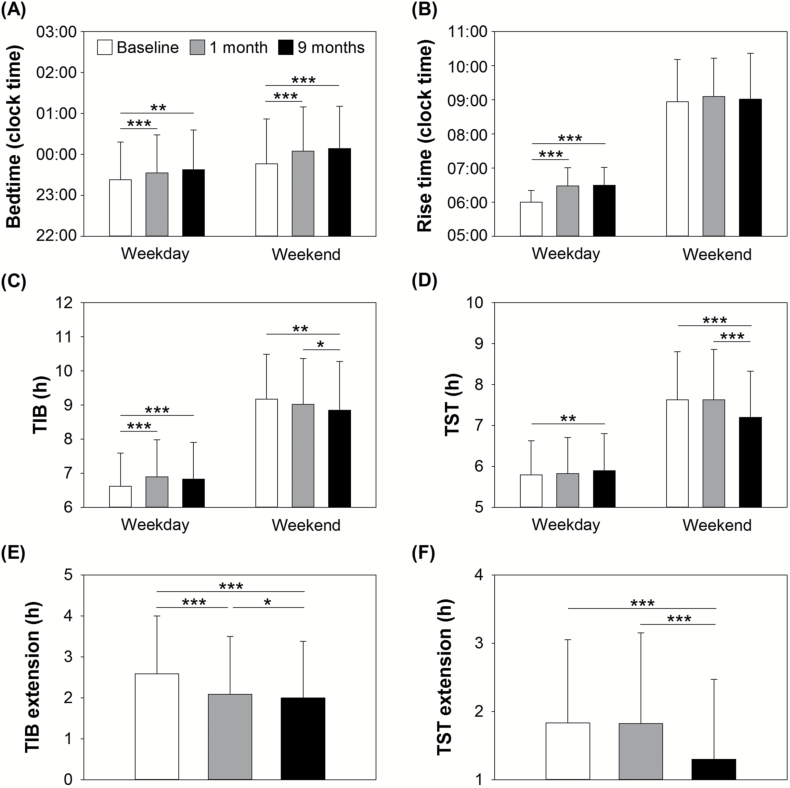
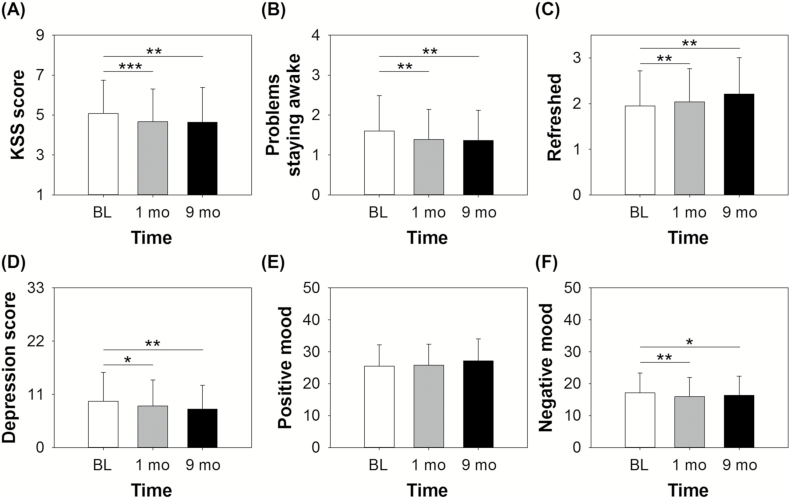
Study Objectives: To investigate the short- and longer-term impact of a 45-min delay in school start time on sleep and well-being of adolescents. Methods: The sample consisted of 375 students in grades 7-10 (mean age ± SD: 14.6 ± 1.15 years) from an all-girls' secondary school in Singapore that delayed its start time from 07:30 to 08:15. Self-reports of sleep timing, sleepiness, and well-being (depressive symptoms and mood) were obtained at baseline prior to the delay, and at approximately 1 and 9 months after the delay. Total sleep time (TST) was evaluated via actigraphy. Results: After 1 month, bedtimes on school nights were delayed by 9.0 min, while rise times were delayed by 31.6 min, resulting in an increase in time in bed (TIB) of 23.2 min. After 9 months, the increase in TIB was sustained, and TST increased by 10.0 min relative to baseline. Participants also reported lower levels of subjective sleepiness and improvement in well-being at both follow-ups. Notably, greater increase in sleep duration on school nights was associated with greater improvement in alertness and well-being. Conclusions: Delaying school start time can result in sustained benefits on sleep duration, daytime alertness, and mental well-being even within a culture where trading sleep for academic success is widespread.
Overview
The claims and statistics of this paper haven’t been checked yet.
Free: it reads the open-access text and checks the first 5 claims that cite a source we can check. Create a free account to check every claim.
Integrity signals
Registry
Cites
Statistics
Figures
Verification
Claims the paper makes
The claims and statistics of this paper haven’t been checked yet.
Free: it reads the open-access text and checks the first 5 claims that cite a source we can check. Create a free account to check every claim.
Claims other papers make about this one
Each is checked against this paper’s own text: does it say what the citing paper says it does?
The source backs part of the claim, not all of it — or backs it for a different population, condition or comparison.
In the citing paper
“Although there was an improvement in TST following this 45-minute delay, the sample was still sleep-deprived, averaging 5 hours and 48 minutes sleep on school nights, and all students reported fewer than 7 hours of sleep across every time point.28”
From Middle school start times and young adolescent sleep, behavioral health, and academic performance outcomes: a narrative review (2022) · cites this paper as [28]
Experimental — accuracy not yet measuredThe source backs part of the claim, not all of it — or backs it for a different population, condition or comparison.
In the citing paper
“A recent study showed that a delay of 45 min in start times in one all-girls high school in Singapore resulted in a modest, almost 10 min, lengthening of daily sleep (19).”
From Sleepmore in Seattle: Later school start times are associated with more sleep and better performance in high school students (2018) · cites this paper as [19]
Experimental — accuracy not yet measured
Self-check
Percentages, sums and reported differences re-computed from the paper’s own numbers.
The self-check needs the paper’s full text.
Citations
Cites
Statistical Power Analysis for the Behavioral Sciences
Muller, K. (1989) · Technometrics · doi:10.1080/00401706.1989.10488618 · Cited by 99,167
Statistical power analysis for the behavioral sciences
(1990) · Computers, Environment and Urban Systems · doi:10.1016/0198-9715(90)90050-4 · Cited by 65,269
Development and validation of brief measures of positive and negative affect: The PANAS scales.
Watson, D., Clark, L. A., & Tellegen, A. (1988) · Journal of Personality and Social Psychology · doi:10.1037/0022-3514.54.6.1063 · Cited by 32,433 · cited 2×
“Mood was assessed during the after-school session with the Positive And Negative Affect Schedule (PANAS) [34], which consists of 10 items for positive mood and 10 items for negative mood.”
MethodSubjective and objective sleepiness in the active individual
Åkerstedt, T., & Gillberg, M. (1990) · International Journal of Neuroscience · doi:10.3109/00207459008994241 · Cited by 3,088 · cited 1×
“Sleepiness Levels of subjective sleepiness were assessed during an afterschool session with the Karolinska Sleepiness Scale (KSS; 1 = extremely alert; 9 = very sleepy, great effort to keep awake, fighting sleep) [33].”
MethodNational Sleep Foundation’s updated sleep duration recommendations: final report
Hirshkowitz, M., Whiton, K., Albert, S. M., Alessi, C., Bruni, O., DonCarlos, L., Hazen, N., Herman, J., Adams Hillard, P. J., Katz, E. S., et al. (2015) · Sleep Health · doi:10.1016/j.sleh.2015.10.004 · Cited by 2,348 · cited 3×
“Also, the percentage of participants whose TIB on weekdays was at least 8 hours (the minimum sleep duration recommended for this age group [3, 4]) increased from 6.”
BackgroundSleep Schedules and Daytime Functioning in Adolescents
Wolfson, A. R., & Carskadon, M. A. (1998) · Child Development · doi:10.1111/j.1467-8624.1998.tb06149.x · Cited by 1,676
Paruthi, S., Brooks, L. J., D’Ambrosio, C., Hall, W. A., Kotagal, S., Lloyd, R. M., Malow, B. A., Maski, K., Nichols, C., Quan, S. F., et al. (2016) · Journal of Clinical Sleep Medicine · doi:10.5664/jcsm.5866 · Cited by 1,562 · cited 3×
“Also, the percentage of participants whose TIB on weekdays was at least 8 hours (the minimum sleep duration recommended for this age group [3, 4]) increased from 6.”
BackgroundGradisar, M., Gardner, G., & Dohnt, H. (2011) · Sleep Medicine · doi:10.1016/j.sleep.2010.11.008 · Cited by 1,196
Adolescent Sleep Patterns, Circadian Timing, and Sleepiness at a Transition to Early School Days
Carskadon, M. A., Wolfson, A. R., Acebo, C., Tzischinsky, O., & Seifer, R. (1998) · Sleep · doi:10.1093/sleep/21.8.871 · Cited by 769
Sleep restriction worsens mood and emotion regulation in adolescents
Baum, K. T., Desai, A., Field, J., Miller, L. E., Rausch, J., & Beebe, D. W. (2014) · Journal of Child Psychology and Psychiatry · doi:10.1111/jcpp.12125 · Cited by 629
Research works printed but not linked: 3
- Organisation for Economic Co-operation and Development. PISA 2015 Results (volume i). Paris: OECD Publishing, 2016.
- The American Medical Association. AMA supports delayed school start times to improve adolescent wellness 2016 https://www.ama-assn.org/ama-supports-delayed-school-start-times-improve-adolescent-wellness. Accessed 28 January 2018.
- Organisation for Economic Co-operation and Development. PISA 2015 Results (volume iii). Paris: OECD Publishing; 2016.
Cited by
An update on adolescent sleep: New evidence informing the perfect storm model ☆
Crowley, S. J., Wolfson, A. R., Tarokh, L., & Carskadon, M. A. (2018) · Journal of Adolescence · doi:10.1016/j.adolescence.2018.06.001 · Cited by 684
Alfonsi, V., Scarpelli, S., D’Atri, A., Stella, G., & De Gennaro, L. (2020) · International Journal of Environmental Research and Public Health · doi:10.3390/ijerph17072574 · Cited by 123
Dunster, G. P., de la Iglesia, L., Ben-Hamo, M., Nave, C., Fleischer, J. G., Panda, S., & de la Iglesia, H. O. (2018) · Science Advances · doi:10.1126/sciadv.aau6200 · Cited by 168
Gentry, N. W., Ashbrook, L. H., Fu, Y., & Ptáček, L. J. (2021) · Journal of Clinical Investigation · doi:10.1172/jci148282 · Cited by 158
“Adolescents typically have a later chronotype than adults (49, 125), and studies have indicated that cognitive performance — and, correspondingly, overall education — improves in adolescents allowed a later school start time (126).”
BackgroundOkely, A. D., Ghersi, D., Loughran, S. P., Cliff, D. P., Shilton, T., Jones, R. A., Stanley, R. M., Sherring, J., Toms, N., Eckermann, S., et al. (2022) · International Journal of Behavioral Nutrition and Physical Activity · doi:10.1186/s12966-021-01236-2 · Cited by 152
Shen, L., van Schie, J., Ditchburn, G. J., Brook, L., & Bei, B. (2018) · Journal of Youth and Adolescence · doi:10.1007/s10964-018-0899-1 · Cited by 155
Resetting the late timing of ‘night owls’ has a positive impact on mental health and performance
Facer-Childs, E. R., Middleton, B., Skene, D. J., & Bagshaw, A. P. (2019) · Sleep Medicine · doi:10.1016/j.sleep.2019.05.001 · Cited by 127
Yeo, S. C., Jos, A. M., Erwin, C., Lee, S. M., Lee, X. K., Lo, J. C., Chee, M. W. L., & Gooley, J. J. (2019) · Sleep Medicine · doi:10.1016/j.sleep.2018.10.041 · Cited by 135
Self-citationSchool closure during the coronavirus disease 2019 (COVID-19) pandemic – Impact on children's sleep
Lim, M. T. C., Ramamurthy, M. B., Aishworiya, R., Rajgor, D. D., Tran, A. P., Hiriyur, P., Kunaseelan, S., Jabri, M., & Goh, D. Y. T. (2021) · Sleep Medicine · doi:10.1016/j.sleep.2020.12.025 · Cited by 114
“Singapore is typical of East Asian countries where adolescents chronically lack sleep in the pursuit of academic excellence, and have high levels of anxiety [20].”
BackgroundGenta, F. D., Rodrigues Neto, G. B., Sunfeld, J. P. V., Porto, J. F., Xavier, A. D., Moreno, C. R. C., Lorenzi-Filho, G., & Genta, P. R. (2021) · Journal of Clinical Sleep Medicine · doi:10.5664/jcsm.9196 · Cited by 112
Perrault, A. A., Bayer, L., Peuvrier, M., Afyouni, A., Ghisletta, P., Brockmann, C., Spiridon, M., Hulo Vesely, S., Haller, D. M., Pichon, S., et al. (2019) · Sleep · doi:10.1093/sleep/zsz125 · Cited by 119
Understanding the Need for Sleep to Improve Cognition
Leong, R. L. F., & Chee, M. W. L. (2022) · Annual Review of Psychology · doi:10.1146/annurev-psych-032620-034127 · Cited by 110
Self-citationCoupled network of the circadian clocks: a driving force of rhythmic physiology
Finger, A., Dibner, C., & Kramer, A. (2020) · FEBS Letters · doi:10.1002/1873-3468.13898 · Cited by 98
Changing school start times: impact on sleep in primary and secondary school students
Meltzer, L. J., Wahlstrom, K. L., Plog, A. E., & Strand, M. J. (2021) · SLEEP · doi:10.1093/sleep/zsab048 · Cited by 76
Later high school start times associated with longer actigraphic sleep duration in adolescents
Nahmod, N. G., Lee, S., Master, L., Chang, A.-M., Hale, L., & Buxton, O. M. (2019) · Sleep · doi:10.1093/sleep/zsy212 · Cited by 81
Self-citationYeo, S. C., Tan, J., Lo, J. C., Chee, M. W. L., & Gooley, J. J. (2020) · Sleep Health · doi:10.1016/j.sleh.2020.04.011 · Cited by 75
Self-citationZiporyn, T. D., Owens, J. A., Wahlstrom, K. L., Wolfson, A. R., Troxel, W., Saletin, J., Rubens, S. L., Pelayo, R., Payne, P. A., Hale, L. E., et al. (2022) · Sleep Health · doi:10.1016/j.sleh.2021.10.008 · Cited by 74
Sleep, Anxiety, and Academic Performance: A Study of Adolescents From Public High Schools in China
Zhang, X., Dimitriou, D., & Halstead, E. J. (2021) · Frontiers in Psychology · doi:10.3389/fpsyg.2021.678839 · Cited by 62
“In addition, adolescents from schools with a later school start time were less likely to feel tired during classroom lessons and had increased daytime alertness than adolescents from schools with an earlier start time (Gariépy et al., 2017; Lo et al., 2018).”
BackgroundAlfonsi, V., Palmizio, R., Rubino, A., Scarpelli, S., Gorgoni, M., D'Atri, A., Pazzaglia, M., Ferrara, M., Giuliano, S., & De Gennaro, L. (2020) · Nature and Science of Sleep · doi:10.2147/nss.s273875 · Cited by 61
Becker, S. P., Duraccio, K. M., Sidol, C. A., Fershtman, C. E. M., Byars, K. C., & Harvey, A. G. (2022) · Journal of Attention Disorders · doi:10.1177/10870547211056965 · Cited by 58
“, 2020) and reduced daytime sleepiness (Lo et al., 2018; Owens et al., 2017).”
BackgroundCarvalho-Mendes, R. P., Dunster, G. P., de la Iglesia, H. O., & Menna-Barreto, L. S. (2020) · Journal of Biological Rhythms · doi:10.1177/0748730420927603 · Cited by 57
“…delayed showed the effectiveness of this measure in achieving longer daily sleep duration in students (Dunster et al., 2018; Gariépy et al., 2017; Lo et al., 2018; Nahmod et al., 2017; Nahmod et al., 2019, and see reviews in Minges and Redeker, 2016; Morgenthaler et al., 2016; Wheaton et al.,…”
BackgroundThe relationship between sleep, obesity, and metabolic health in adolescents: A review
Okoli, A., Hanlon, E. C., & Brady, M. (2020) · Current Opinion in Endocrine and Metabolic Research · doi:10.1016/j.coemr.2020.10.007 · Cited by 50
Sleep duration and daytime sleepiness in a large sample of Brazilian high school adolescents
Alves, F. R., de Souza, E. A., Ferreira, L. G. D. F., Neto, J. D. O. V., de Bruin, V. M. S., & de Bruin, P. F. C. (2019) · Sleep Medicine · doi:10.1016/j.sleep.2019.08.019 · Cited by 48
Sleep and Circadian Rhythms in Adolescence
Tarokh, L., Short, M., Crowley, S. J., Fontanellaz-Castiglione, C. E. G., & Carskadon, M. A. (2019) · Current Sleep Medicine Reports · doi:10.1007/s40675-019-00155-w · Cited by 47
Stone, J. E., Phillips, A. J. K., Chachos, E., Hand, A. J., Lu, S., Carskadon, M. A., Klerman, E. B., Lockley, S. W., Wiley, J. F., Bei, B., et al. (2021) · Journal of Pineal Research · doi:10.1111/jpi.12757 · Cited by 48
Adolescent sleep and school performance — the problem of sleepy teenagers
Sharman, R. L., & Illingworth, G. (2019) · Current Opinion in Physiology · doi:10.1016/j.cophys.2019.11.006 · Cited by 47
Rigney, G., Watson, A., Gazmararian, J. A., & Blunden, S. L. (2021) · Sleep Medicine · doi:10.1016/j.sleep.2021.01.061 · Cited by 46
Ferrante, G. R., Goldin, A. P., Sigman, M., & Leone, M. J. (2023) · npj Science of Learning · doi:10.1038/s41539-023-00171-0 · Cited by 44
Komarov, O., Ko, L., & Jung, T. (2020) · IEEE Transactions on Neural Systems and Rehabilitation Engineering · doi:10.1109/tnsre.2020.2972812 · Cited by 43
“This phenomenon of noticeably different sleep durations between weekdays and weekends has also recently been demonstrated in a group of all-girls secondary school students in Singapore [48].”
BackgroundFaulkner, G., Weatherson, K., Patte, K., Qian, W., & Leatherdale, S. T. (2020) · Preventive Medicine · doi:10.1016/j.ypmed.2020.106179 · Cited by 36
Capodilupo, E. R., & Miller, D. J. (2021) · PLoS ONE · doi:10.1371/journal.pone.0256063 · Cited by 41
“[30] showed that 10 minutes of extended sleep duration in secondary school students correlated with improved alertness and mental health.”
BackgroundPeltz, J. S., Rogge, R. D., & Connolly, H. (2019) · SLEEP · doi:10.1093/sleep/zsz287 · Cited by 36
Tang, Y. C., Wan, Y., Xu, S., Zhang, S., Hao, J., & Tao, F. (2021) · BMC Psychiatry · doi:10.1186/s12888-021-03539-x · Cited by 35
Tao, S., Wu, X., Li, S., Ma, L., Yu, Y., Sun, G., Zhang, Y., Li, T., & Tao, F. (2021) · Sleep Medicine · doi:10.1016/j.sleep.2021.05.028 · Cited by 33
“The reasons are difficult to figure out, but it might be explained because some previous studies indicated that students delayed their weekday wake-up time (15 min) showed improved mental health [28], and delaying school start time benefits adolescent sleep and mental well-being [29].”
ResultIllingworth, G., Sharman, R., Jowett, A., Harvey, C.-J., Foster, R. G., & Espie, C. A. (2019) · Sleep Medicine · doi:10.1016/j.sleep.2018.10.021 · Cited by 26
“Evaluations of school start time change have predominantly used cross-sectional designs comparing students at different schools with earlier and later start times, or the same schools before and after a delay but not necessarily the same students [23,35e37] rather than pre-post, prospective designs [20,38,39] or both…”
MethodFerrante, G. R., Lee, F., & Leone, M. J. (2024) · Sleep Medicine Reviews · doi:10.1016/j.smrv.2024.101988 · Cited by 32
van Rijn, E., Koh, S. Y. J., Ng, A., Vinogradova, K., Chee, N. I. Y. N., Lee, S. M., Lo, J. C.-Y., Gooley, J. J., & Chee, M. W. L. (2019) · Sleep Health · doi:10.1016/j.sleh.2019.10.006 · Cited by 32
Self-citationEarlier Bedtime and Its Effect on Adolescent Sleep Duration
Campbell, I. G., Cruz-Basilio, A., Figueroa, J. G., & Bottom, V. B. (2023) · PEDIATRICS · doi:10.1542/peds.2022-060607 · Cited by 32
Later school start times in a flexible system improve teenage sleep
Winnebeck, E. C., Vuori-Brodowski, M. T., Biller, A. M., Molenda, C., Fischer, D., Zerbini, G., & Roenneberg, T. (2020) · Sleep · doi:10.1093/sleep/zsz307 · Cited by 30
Memory performance following napping in habitual and non-habitual nappers
Leong, R. L. F., Yu, N., Ong, J. L., Ng, A., Jamaluddin, S. A., Cousins, J. N., Chee, N. I. Y. N., & Chee, M. W. L. (2020) · SLEEP · doi:10.1093/sleep/zsaa277 · Cited by 30
“While delaying school start times has seen some success [70, 71], many societies remain deterred by the macrostructural adjustments required by disparate segments of the workforce.”
BackgroundSelf-citationFerrante, G. R., Goldin, A. P., Sigman, M., & Leone, M. J. (2022) · Scientific Reports · doi:10.1038/s41598-022-11928-9 · Cited by 30
Are We Ready to Implement Circadian Hygiene Interventions and Programs?
Moreno, C. R. D. C., Raad, R., Gusmão, W. D. P., Luz, C. S. D. S., Silva, V. M., Prestes, R. M., Saraiva, S. P., Lemos, L. C., Vasconcelos, S. P., Nehme, P., et al. (2022) · International Journal of Environmental Research and Public Health · doi:10.3390/ijerph192416772 · Cited by 32
Fitzpatrick, J. M., Silva, G. E., & Vana, K. D. (2021) · Journal of School Health · doi:10.1111/josh.12983 · Cited by 28
de Souza, E. A., Pinto, J. C. B. D. L., & Alves, F. R. (2020) · Jornal Brasileiro de Psiquiatria · doi:10.1590/0047-2085000000265 · Cited by 28
Multiple positive outcomes of a later school starting time for adolescents
de Araújo, L. B. G., Bianchin, S., Pedrazzoli, M., Louzada, F. M., & Beijamini, F. (2022) · Sleep Health · doi:10.1016/j.sleh.2022.04.002 · Cited by 24
Li, L., Zhang, Y., Fan, M., & Cao, B. (2024) · BMC Psychology · doi:10.1186/s40359-024-01719-4 · Cited by 21
“The trend of inadequate sleep and affected health problems represents a major public health concern [6, 7].”
BackgroundFerrante, G. R., & Leone, M. J. (2023) · Journal of Sleep Research · doi:10.1111/jsr.13974 · Cited by 20
“…Sleep timings were chosen based on literature studying adolescents' sleep timing (Alfonsi et al., 2020; Estevan et al., 2020; Goldin et al., 2020; Lo et al., 2018; Owens et al., 2010; Short et al., 2019), and SDw and SJL levels were calculated considering changes on local time from ST to DST.…”
BackgroundMethodInfluentialSleep patterns and sleep deprivation recorded by actigraphy in 4th-grade and 5th-grade students
Li, A., Chen, S., Quan, S. F., Silva, G. E., Ackerman, C., Powers, L. S., Roveda, J. M., & Perfect, M. M. (2019) · Sleep Medicine · doi:10.1016/j.sleep.2019.12.001 · Cited by 20
School-Based Sleep Education Program for Children: A Cluster Randomized Controlled Trial
Chen, S., Li, S. X., Zhang, J., Lam, S. P., Yu, M. W. M., Tsang, C. C., Kong, A. P. S., Chan, K. C. C., Li, A. M., Wing, Y. K., et al. (2023) · Healthcare · doi:10.3390/healthcare11131853 · Cited by 21
Sleep improvements on days with later school starts persist after 1 year in a flexible start system
Biller, A. M., Molenda, C., Zerbini, G., Roenneberg, T., & Winnebeck, E. C. (2022) · Scientific Reports · doi:10.1038/s41598-022-06209-4 · Cited by 17
Arrona‐Palacios, A., Díaz‐Morales, J. F., & Adán, A. (2021) · Sleep Medicine · doi:10.1016/j.sleep.2021.02.016 · Cited by 17
Shimura, A., Yokoi, K., Sugiura, K., Higashi, S., & Inoue, T. (2022) · Sleep Medicine · doi:10.1016/j.sleep.2022.03.007 · Cited by 17
Risk and protective factors associated with adolescent depression in Singapore: a systematic review
Goh, W. S., Tan, J. H. N., Luo, Y., Ng, S. H., Sulaiman, M. S. B. M., Wong, J. C. M., & Loh, V. W. K. (2023) · Singapore Medical Journal · doi:10.4103/singaporemedj.smj-2021-192 · Cited by 18
The adolescent circadian clock entrains to social time rather than sun time
Charoenthammanon, R. S., & Gooley, J. J. (2025) · Current Biology · doi:10.1016/j.cub.2025.03.059 · Cited by 16
Self-citationWhitaker, R. C., Dearth‐Wesley, T., Herman, A. N., Oakes, J. M., & Owens, J. A. (2019) · Sleep Health · doi:10.1016/j.sleh.2019.06.011 · Cited by 16
Yang, Y., Kaplan, K. A., & Zeitzer, J. M. (2020) · SLEEP Advances · doi:10.1093/sleepadvances/zpaa004 · Cited by 17
Sleep and Injury in the Young Athlete
Dwivedi, S., Boduch, A. N., Gao, B., Milewski, M. D., & Cruz, A. I. (2019) · JBJS Reviews · doi:10.2106/jbjs.rvw.18.00197 · Cited by 17
Lambert, L., Joshanloo, M., Marquez, J., Cody, B. L., Arora, T., Warren, M. A., Aguilar, L., Samways, M., & Teasel, S. (2022) · International Journal of Applied Positive Psychology · doi:10.1007/s41042-022-00066-2 · Cited by 16
Dong, R., Dou, K., & Luo, J. (2023) · BMC Public Health · doi:10.1186/s12889-023-17197-z · Cited by 16
“Sleep affects mood regulation [31, 32], and adolescents who get sufficient sleep tend to have better MH than those who do not [33].”
BackgroundAdolescents’ sleep/wake patterns and school schedules: towards flexibility
Mazzilli Louzada, F., & Isabel Ribeiro Pereira, S. (2019) · Biological Rhythm Research · doi:10.1080/09291016.2018.1491263 · Cited by 14
“After 9 months, the short-term increase in time in bed was sustained, and total sleep time increased by 10 min relative to baseline (Lo et al. 2018).”
Sleep and Neuroaffective Development from Early to Late Adolescence
Baker, A. E., & McMakin, D. L. (2024) · Annual Review of Developmental Psychology · doi:10.1146/annurev-devpsych-010923-093914 · Cited by 14
Koa, T. B., Gooley, J. J., Chee, M. W. L., & Lo, J. C.-Y. (2024) · SLEEP · doi:10.1093/sleep/zsae010 · Cited by 14
Self-citationLo, K. K.-H., Keung, V. M. W., Cheung, C. K. M., Tam, W., & Lee, A. (2019) · Childhood Obesity · doi:10.1089/chi.2018.0319 · Cited by 14
Daytime sleepiness in elementary school students: the role of sleep quality and chronotype
Anacleto, T. S., Borgio, J. G. F., & Louzada, F. M. (2022) · Revista de Saúde Pública · doi:10.11606/s1518-8787.2021055004124 · Cited by 13
Ong, J. L., Massar, S. A. A., Lau, T., Ng, B. K. L., Chan, L. F., Koek, D., Cheong, K., & Chee, M. W. L. (2022) · SLEEP · doi:10.1093/sleep/zsac315 · Cited by 13
“An example of such for a younger demographic was the successful demonstration in Singapore, that starting school later can lead to sustained (at least 9 months) gains in sleep duration [44].”
Self-citationShort Sleep Duration in School-Age Children: Differential Factors on Weekdays and Weekends
Koa, T. B., Seah, J. X., Ong, J. Q. W., & Lo, J. C.-Y. (2023) · Behavioral Sleep Medicine · doi:10.1080/15402002.2022.2164001 · Cited by 13
Self-citationAttachment to Mother and Father, Sleep, and Well-Being in Late Middle Childhood
Perpétuo, C., El‐Sheikh, M., Diniz, E., & Veríssimo, M. (2023) · International Journal of Environmental Research and Public Health · doi:10.3390/ijerph20043399 · Cited by 13
Barlaan, D. R., Pangelinan, B. A., Johns, A., Schweikhard, A., & Cromer, L. D. (2022) · Journal of Clinical Sleep Medicine · doi:10.5664/jcsm.10224 · Cited by 12
What’s keeping teens up at night? Reflecting on sleep and technology habits with teens
Ploderer, B., Rodgers, S., & Liang, Z. (2022) · Personal and Ubiquitous Computing · doi:10.1007/s00779-021-01661-x · Cited by 12
Chan, C. S., Tang, M. C., Leung, J. C. Y., Poon, C. Y. S., & Lau, E. Y. Y. (2024) · SLEEP · doi:10.1093/sleep/zsae171 · Cited by 12
Owens, J. A., & Ordway, M. R. (2019) · Oxford University Press eBooks · doi:10.1093/oso/9780190930448.003.0004 · Cited by 11
Quah, P. L., Loo, B. K. G., Razali, N. S., Razali, N. S., Teo, C. C., & Tan, K. H. (2021) · Annals of the Academy of Medicine Singapore · doi:10.47102/annals-acadmedsg.2021134 · Cited by 10
Swinnerton, L., Moldovan, A. A., Mann, C. M., Durrant, S. J., & Mireku, M. O. (2021) · Sleep Health · doi:10.1016/j.sleh.2021.04.001 · Cited by 9
Ricci, C., Ordnung, M., Rothenbacher, D., & Genuneit, J. (2024) · Nature and Science of Sleep · doi:10.2147/nss.s448736 · Cited by 8
“5 Children’s sleep health is influenced by many factors, including bedtime being determined by parents, early school starting times, 9,10 feeding practices, 11 and family socioeconomic status.”
BackgroundWell-Slept Children and Teens are Happier and More Hopeful with Fewer Emotional Problems
Lau, E. Y. Y., Lam, Y. C., & Lee, J. C. (2021) · Child Indicators Research · doi:10.1007/s12187-021-09823-2 · Cited by 8
Do later school start times improve adolescents' sleep and substance use? A quasi-experimental study
Jung, J., & Fenelon, A. T. (2024) · Preventive Medicine · doi:10.1016/j.ypmed.2024.108028 · Cited by 8
Secular trends of sleep-wake patterns in Hong Kong preschoolers
Lan, Q.-Y., Chan, K. C. C., Au, C. T., Chan, P. H. Y., Chan, N. Y., Wing, Y. K., Li, A. M., & Lam, H. S. (2023) · Sleep Medicine · doi:10.1016/j.sleep.2023.02.018 · Cited by 7
Chronobiology and the case for sleep health interventions in the community
Ong, H., Lim, C., Png, A., Kong, J., & Peh, A. L. H. (2021) · Singapore Medical Journal · doi:10.11622/smedj.2021058 · Cited by 7
Mendes, R. A. P. D. C. (2019) · Digital Library of Theses and Dissertations (Universidade de São Paulo) · doi:10.11606/t.47.2019.tde-18112019-191921 · Cited by 7
Charoenthammanon, R. S., & Gooley, J. J. (2025) · SLEEP Advances · doi:10.1093/sleepadvances/zpaf018 · Cited by 7
“In earlier work conducted in a high school in Singapore, we found that adolescents woke up about 30 min later after their school implemented a 45-min delay in school start time [33].”
InfluentialSelf-citationPerceptions of school start times and adolescent sleep by WHO region
Coussens, S. W., Kahn, M., Spruyt, K., Bin‐Hasan, S., Page, J., & Owens, J. A. (2026) · Sleep Medicine · doi:10.1016/j.sleep.2026.108890 · Cited by 6
Is Insufficient Sleep in Adolescents Principally Caused by Society Rather than Physiology?
Chakrabarty, M. (2022) · Indian Journal of Sleep Medicine · doi:10.5005/jp-journals-10069-0100 · Cited by 6
“There is significant evidence from studies by Bowers et al. 11 and Lo et al. 12 that delaying SST delays rise times improving sleep, improves school attendance, grades, mood, etc. and decreases school health visits and automobile accidents.”
Por que a Cronobiologia deve fazer parte da formação de educadores?
Carvalho-Mendes, R. P., & Menna-Barreto, L. S. (2022) · Pro-Posições · doi:10.1590/1980-6248-2021-0030 · Cited by 6
Sleep Hygiene Intervention Improves Sleep Time and Duration in High School Students
Corrêa, C. D. C., Silva, G. N. T. N., Viana, G. R., Lira, A. L. E., Macedo, G. D., & Weber, S. A. T. (2024) · Sleep Science · doi:10.1055/s-0044-1782169 · Cited by 6
Chan, N. Y., Chen, S., Ngan, C. L., Li, S. X., Zhang, J., Lam, S. P., Chan, J. W. Y., Yu, M. W. M., Chan, K. C. C., Li, A. M., et al. (2025) · Journal of Child Psychology and Psychiatry · doi:10.1111/jcpp.14115 · Cited by 5
Kim, H., Oh, J. H., Kim, S. M., Um, Y. H., Seo, H. J., Jeong, J.-H., Hong, S.-C., & Kim, T. W. (2019) · Sleep Medicine Research · doi:10.17241/smr.2019.00353 · Cited by 4
Wang, J., Teo, W., Gooley, J. J., Chian, L. K., Burns, S. F., Mukherjee, S., Chung, H. J., & Sumarta, T. T. (2025) · Acta Psychologica · doi:10.1016/j.actpsy.2025.105711 · Cited by 4
Self-citationSchool Attendance, Chronotype, and Day-of-the-Week Effect in Adolescent Male Basketball Players
Bruno, S., Benedetti, D., Bazzani, A., Ferri, F., Granieri, I., Sanabria, F. C., Fiori, S., D’Ascanio, P., Frumento, P., & Faraguna, U. (2023) · Journal of Biological Rhythms · doi:10.1177/07487304221144340 · Cited by 4
Olivera, A., Estevan, I., Tassino, B., Rossel, C., & da Silva, A. C. R. (2023) · Sleep Medicine X · doi:10.1016/j.sleepx.2023.100099 · Cited by 4
“In line with what other studies have shown and several public and mental health groups advocate [62 – 64] regarding the relationship between the delay in school start time and sleep health among adolescents, our research confirms the relevance of considering delaying school start time also for…”
ResultGiusti, G., Mangini, C., Erminelli, D., Domenie, E. D., & Montagnese, S. (2024) · Chronobiology International · doi:10.1080/07420528.2024.2428200 · Cited by 4
“…Perkinson ‐ Gloor et al. 2013; Vedaa et al. 2012; Winnebeck et al. 2020), 6 from Asia (Borisenkov et al. 2022; Chan et al. 2017, 2018; Kim 2022; Lo et al. 2018; Rhie et al. 2018), three from South America (Alves et al. 2020; De Araújo et al. 2022; Estevan et al. 2022), and one from Oceania…”
InfluentialTeachers’ preference for later school start times
Albrecht, J. N., Werner, H., Yaw, M. L., Jenni, O. G., & Huber, R. (2022) · Journal of Sleep Research · doi:10.1111/jsr.13534 · Cited by 3
Malone, S. K., Patterson, F., Hu, J., Goyal, C., Goel, N., Dickson, V. V., Melkus, G. D., & Aouizerat, B. E. (2025) · Chronobiology International · doi:10.1080/07420528.2025.2546006 · Cited by 3
“Delaying school start times to 8:30 am or later improves adolescent sleep health and academic outcomes (Adolescent Sleep Working Group, Committee on Adolescence and Council on School Health 2014; Keller et al. 2015; Lo et al. 2018; McKeever and Clark 2017; Meltzer et al. 2021).”
Reynaud, È., Malevergne, L., Grellet, A., Pawlik, A., Gurgand, M., Rey, A. E., & Mazza, S. (2026) · Scientific Reports · doi:10.1038/s41598-026-50892-6 · Cited by 3
“Previous studies have also reported improvement in mood 48 , well-being 49 and depressive symptoms following a delayed school start time 35,36,50 .”
Reynolds, K. C., & Alfano, C. A. (2024) · European Journal of Developmental Psychology · doi:10.1080/17405629.2024.2325684 · Cited by 3
“In studies examining the impact of delaying school start times, decreased depressive symptoms have been observed in conjunction with increased sleep duration (Boergers et al., 2014; Chan et al., 2017; Lo et al., 2018; Owens et al., 2010).”
BackgroundWolfson, A. R. (2018) · SLEEP · doi:10.1093/sleep/zsy107 · Cited by 3
Preventing Child and Adolescent Mental Illness - We Got This
McDonald, M. K., & Shatkin, J. P. (2020) · Adolescent Psychiatry · doi:10.2174/2210676610666200316100146 · Cited by 3
Oyegbile, T. O. (2020) · Current clinical neurology · doi:10.1007/978-3-030-40842-8_8 · Cited by 3
Impact of COVID-19 Mobility Restrictions on Sleep and Well-Being
Massar, S. A. A., Ong, J. L., & Chee, M. W. L. (2023) · Progress in Sleep Research · doi:10.1007/978-981-99-0240-8_8 · Cited by 3
Self-citationComplexité des déterminants du sommeil chez l’adolescent, l’expérience du Réseau Morphée
Royant‐Parola, S., Mazza, S., Schroder, C. M., & Hartley, S. (2024) · Bulletin de l Académie Nationale de Médecine · doi:10.1016/j.banm.2024.02.019 · Cited by 3
Factors of sleep pattern in school-aged children: a cross-cultural investigation
Deng, Y., Koa, T. B., Miao, Z., Hu, Y., Su, Y., & Lo, J. C.-Y. (2025) · Sleep Medicine · doi:10.1016/j.sleep.2025.106769 · Cited by 2
Self-citation
Metadata
- Authors
- Lo, J. C., Lee, S. M., Lee, X. K., Sasmita, K., Chee, N. I. Y. N., Tandi, J., Cher, W. S., Gooley, J. J., & Chee, M. W. L.
- Affiliations
- Duke-NUS Medical School (SG)
- Corresponding author
- Chee, Michael W L
- Venue
- Sleep
- Publisher
- Oxford University Press (OUP)
- Published
- 2018-04-10
- Volume
- 41
- Issue
- 6
- ISSN
- 0161-8105 (ISSN-L)
- 1550-9109
- PMC
- PMC5995199
- OpenAlex
- W2798056374
- Cited by
- 114
- References
- 39
- Citations by year
- 2026: 8 · 2025: 7 · 2024: 12 · 2023: 13 · 2022: 17 · 2021: 17 · 2020: 15 · 2019: 17 · 2018: 8
- FWCI
- 18.65
- Type
- journal article
- Language
- en
- Open access
- hybrid
- doi.org
- Licence
- Locations
- SLEEP (publishedVersion, cc-by-nc-nd)
- Europe PMC (PubMed Central) (publishedVersion, cc-by-nc-nd)
- PubMed Central (publishedVersion, cc-by-nc-nd)
- PubMed (publishedVersion)
- Funders
- National Medical Research Council (NMRC/StaR/015/2013)
- Topics
- Social Sciences › Psychology › Experimental and Cognitive Psychology › Sleep and related disorders
- Life Sciences › Neuroscience › Endocrine and Autonomic Systems › Circadian rhythm and melatonin
- Social Sciences › Psychology › Experimental and Cognitive Psychology › Sleep and Work-Related Fatigue
- Keywords
- school start time, adolescent sleep, sleep duration, sleep timing, bedtime, daytime alertness, sleepiness, depressive symptoms, youth welfare, high school students, actigraphy, Singapore
- MeSH terms
- Adolescent, Adolescent Behavior, Affect, Attention, Depression, Female, Humans, Schools, Singapore, Sleep, Students, Time Factors, Wakefulness, Self Report
About these checks
Registry, retraction, Cites and statistics results are computed, not judged, with one exception: a printed reference that no index lists is read once by a model before it counts as a citation error. Claims are extracted by a model and kept only when their quote appears verbatim in the text; each cited source is then checked, with a model’s help, for whether it says what the claim relies on. Those verdicts can be wrong — read the claim’s quote and the cited source before relying on one.
Statistics and arithmetic are recomputed, not judged.
Confidence bands are shown only for fields calibrated on our annotated test set. None is calibrated yet, so no band is shown.
What counts as a claim ›How we measure confidence ›How we check this ›
Are you an author, or do you see a problem with this page? Request a review
Data sources
Bibliographic data: Semantic Scholar, OpenAlex, Crossref.
Contains information from the Semantic Scholar Academic Graph Datasets, made available under the ODC Attribution License (ODC-BY 1.0).
Semantic Scholar’s data is described in: Kinney, R., et al. (2023). The Semantic Scholar Open Data Platform. arXiv:2301.10140.
