

The Multimodal Assessment Model of Pain: A Novel Framework for Further Integrating the Subjective Pain Experience Within Research and Practice
Open accessThe DOI matches its Crossref record; 104 of the 108 references it cites were found in a registry or an index.
Abstract
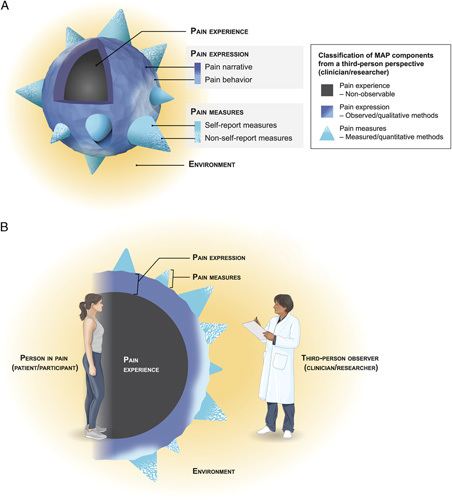
OBJECTIVES: Pain assessment is enigmatic. Although clinicians and researchers must rely upon observations to evaluate pain, the personal experience of pain is fundamentally unobservable. This raises the question of how the inherent subjectivity of pain can and should be integrated within assessment. Current models fail to tackle key facets of this problem, such as what essential aspects of pain are overlooked when we only rely on numeric forms of assessment, and what types of assessment need to be prioritized to ensure alignment with our conceptualization of pain as a subjective experience. We present the multimodal assessment model of pain (MAP) as offering practical frameworks for navigating these challenges. METHODS: This is a narrative review. RESULTS: MAP delineates qualitative (words, behaviors) and quantitative (self-reported measures, non-self-reported measures) assessment and regards the qualitative pain narrative as the best available root proxy for inferring pain in others. MAP offers frameworks to better address pain subjectivity by: (1) delineating separate criteria for identifying versus assessing pain. Pain is identified through narrative reports, while comprehensive assessment is used to infer why pain is reported; (2) integrating compassion-based and mechanism-based management by both validating pain reports and assessing underlying processes; (3) conceptualizing comprehensive pain assessment as both multidimensional and multimodal (listening/observing and measuring); and (4) describing how qualitative data help validate and contextualize quantitative pain measures. DISCUSSION: MAP is expected to help clinicians validate pain reports as important and legitimate, regardless of other findings, and help our field develop more comprehensive, valid, and compassionate approaches to assessing pain.
Overview
The claims and statistics of this paper haven’t been checked yet.
Free: it reads the open-access text and checks the first 5 claims that cite a source we can check. Create a free account to check every claim.
Integrity signals
Registry
Cites
Statistics
Figures
Verification
Claims the paper makes
The claims and statistics of this paper haven’t been checked yet.
Free: it reads the open-access text and checks the first 5 claims that cite a source we can check. Create a free account to check every claim.
Claims other papers make about this one
Each is checked against this paper’s own text: does it say what the citing paper says it does?
The check wasn’t confident either way, so it gives no verdict — never disputed.
In the citing paper
“the single best predictor of longevity is how patients describe their status of health [10,69].”
From Exploring emotional well-being, spiritual, religious and personal beliefs and telomere length in chronic pain patients—A pilot study with cross-sectional design (2024) · cites this paper as [10]
Experimental — accuracy not yet measured
Self-check
Percentages, sums and reported differences re-computed from the paper’s own numbers.
The self-check needs the paper’s full text.
Citations
Cites
The McGill Pain Questionnaire: Major properties and scoring methods
Melzack, R. (1975) · Pain · doi:10.1016/0304-3959(75)90044-5 · Cited by 6,845
Qualitative research in health care: Assessing quality in qualitative research
Mays, N. (2000) · BMJ · doi:10.1136/bmj.320.7226.50 · Cited by 3,742
Core outcome measures for chronic pain clinical trials: IMMPACT recommendations
Dworkin, R. H., Turk, D. C., Farrar, J. T., Haythornthwaite, J. A., Jensen, M. P., Katz, N. P., Kerns, R. D., Stucki, G., Allen, R. R., Bellamy, N., et al. (2005) · Pain · doi:10.1016/j.pain.2004.09.012 · Cited by 3,732
Core outcome domains for chronic pain clinical trials: IMMPACT recommendations
Turk, D. C., Dworkin, R. H., Allen, R. R., Bellamy, N., Brandenburg, N., Carr, D. B., Cleeland, C., Dionne, R., Farrar, J. T., Galer, B. S., et al. (2003) · Pain · doi:10.1016/j.pain.2003.08.001 · Cited by 3,510
Dworkin, R. H., Turk, D. C., Wyrwich, K. W., Beaton, D., Cleeland, C. S., Farrar, J. T., Haythornthwaite, J. A., Jensen, M. P., Kerns, R. D., Ader, D. N., et al. (2008) · The Journal of Pain · doi:10.1016/j.jpain.2007.09.005 · Cited by 3,471
Qualitative Research: Rigour and qualitative research
Mays, N., & Pope, C. (1995) · BMJ · doi:10.1136/bmj.311.6997.109 · Cited by 2,715
Pope, C., & Mays, N. (1995) · BMJ · doi:10.1136/bmj.311.6996.42 · Cited by 2,336
Narrative Medicine: A Model for Empathy, Reflection, Profession, and Trust
Charon, R. (2001) · JAMA · doi:10.1001/jama.286.15.1897 · Cited by 2,190
The Nature of Suffering and the Goals of Medicine
Cassel, E. J. (1982) · New England Journal of Medicine · doi:10.1056/nejm198203183061104 · Cited by 2,137
Language and meaning: Data collection in qualitative research.
Polkinghorne, D. E. (2005) · Journal of Counseling Psychology · doi:10.1037/0022-0167.52.2.137 · Cited by 1,867
Research works printed but not linked: 5
- International Association for Study of Pain (IASP). International Association for Study of Pain Task Force on Taxonomy Classification of Chronic Pain. Seattle: IASP Press; 1994.
- Carpenter C Suto M Qualitative Research for Occupational and Physical Therapists: A Practical Guide. Oxford, UK: Blackwell Publishing Ltd; 2008.
- Upshur RE Morse JM Swanson JM Kuzel AJ The status of qualitative research as evidence. The Nature of Qualitative Evidence. Thousand Oaks, CA: Sage; 2001: 5– 26.
- Fordyce WE Behavioral Methods for Chronic Pain and Illness. Saint Louis: The C. V. Mosby Company; 1976.
- Carr DB Loeser JD Morris DB Narrative, Pain, and Suffering. Seattle, WA: IASP Press; 2005.
Cited by
Items 101–187 of 187
Pain Management in People With Dementia Living in Nursing Homes: A Focused Ethnographic Study
Overen, C. K., Eriksen, S., Larsson, M., & Hillestad, A. H. (2025) · Dementia · doi:10.1177/14713012251358003 · Cited by 2
“The subjective experience is essential in pain management (Wideman et al., 2019), but people with dementia often have dif fi culty expressing their subjective experience of pain (Sirsch et al., 2020; Woodward, 2013).”
Representation of Pain and Injury in Children's Picture Books—A Content Analysis
Mehar, D., Nichols, S., Jordan, A. L., Moseley, G. L., Noel, M. E., & Wallwork, S. B. (2025) · European Journal of Pain · doi:10.1002/ejp.70102 · Cited by 2
“This may be because injuries can often be seen and therefore attended to (e.g., putting a band-aid/plaster on a grazed knee), whereas pain is a personal experience that may otherwise go unnoticed (Wideman et al. 2019).”
Chen, A. I., Golshan, S., Schwartz, M. S., & Friedman, R. A. (2025) · Otology & Neurotology Open · doi:10.1097/ono.0000000000000077 · Cited by 2
“Postoperative pain is a multidimensional and subjective experience, and current frameworks for guiding a comprehensive pain assessment in the clinical setting are limited in capturing this complexity (34).”
Hsu, C.-C., Lin, C.-F., Wu, J.-J., Lai, S.-Y., Hsu, W., Hsu, P.-S., Lin, S.-Y., Chiu, Y.-C., & Chu, W. (2025) · Palliative Medicine · doi:10.1177/02692163251363482 · Cited by 2
Altered cortical alpha modulations and connectivity in complex regional pain syndrome
Malan, N., Baillet, S., Tankha, P., Roy, M., & Gopalakrishnan, R. (2025) · Journal of Pain · doi:10.1016/j.jpain.2025.105595 · Cited by 4
Vader, K., Bostick, G. P., Carlesso, L. C., Hunter, J. P., Mesaroli, G., Perreault, K., Tousignant‐Laflamme, Y., Tupper, S., Walton, D. M., Wideman, T. H., et al. (2021) · Physiotherapy Canada · doi:10.3138/ptc-2020-0124-gef · Cited by 33
Self-citationRavn, S. L., Andersen, T. E., & Schiøttz‐Christensen, B. (2023) · BMC Musculoskeletal Disorders · doi:10.1186/s12891-023-06392-z · Cited by 3
“Such an approach entails a shift in content to, among others, the patient’s qualitative pain narrative, but also a shift in methods to elements such as talking and listening [8], thereby also underlining the importance of interpersonal communication skills.”
BackgroundInfluentialNelson, S., Mitcheson, M., Nestor, B. A., Enlow, M. B., & Borsook, D. (2024) · Pain · doi:10.1097/j.pain.0000000000003241 · Cited by 3
“82 These self-report measures tend to capture the “mind” state (ie, a subjective experience) rather than objective outcomes for how the body changes in relation to the experience of pain, stress, anxiety, and depression.”
BackgroundWi, D., Choi, H., Tintle, N., Ieronimakis, N. M., Flynn, D. M., Ransom, J. C., Orr, K. P., McQuinn, H. M., Snow, T. J., & Doorenbos, A. Z. (2025) · Nursing Research · doi:10.1097/nnr.0000000000000827 · Cited by 2
Ueareekul, S., Changratanakorn, C., Tianwibool, P., Meelarp, N., & Wongtanasarasin, W. (2023) · Archives of Academic Emergency Medicine · doi:10.22037/aaem.v11i1.2131 · Cited by 2
“In contrast, objective pain scales, which rely on physiological and behavioral measures, may be less influenced by patient-related factors but might be less sensitive to individual differences in pain perception (36, 37).”
BackgroundThe intersectional implications of a quantitative epistemology in pain care and research
Charette, M., & Schaffzin, G. (2024) · Canadian Journal of Pain · doi:10.1080/24740527.2025.2454672 · Cited by 5
Psychosocial perspectives on chronic pain
Craig, K. D., & Versloot, J. (2022) · Wiley eBooks · doi:10.1002/9781119701170.ch4 · Cited by 3
Broberg, M. A., & Boyd, B. S. (2022) · Physiotherapy Theory and Practice · doi:10.1080/09593985.2022.2091497 · Cited by 1
“Validating patients’ symptoms is a valuable aspect of treatment both pain (Wideman et al., 2019) and dizziness (Edelman, Mahoney, and Cremer, 2012; Mahoney, Edelman, and Cremer, 2013).”
BackgroundAvallin, T., Jangland, E., Kitson, A. A., & Athlin, Å. M. (2023) · Journal of Advanced Nursing · doi:10.1111/jan.15697 · Cited by 1
“Their unique perspective cannot be replaced, and hence should be part of future refinement of the questionnaire (Wideman et al., 2019).”
BackgroundPain Research and Treatment: Policy Implications
Tajerian, M., & Alvarado, S. G. (2024) · Policy Insights from the Behavioral and Brain Sciences · doi:10.1177/23727322231197368 · Cited by 1
“For example, a multimodal assessment of pain prioritizes a qualitative pain narrative as the fi rst step toward diagnosis and subsequent assessment of pain (Wideman et al., 2019).”
BackgroundVurgeç, B. A., Navarro-Prado, S., Gökyıldız-Sürücü, S., Dursun, M., & Ojeda, M. A. S. (2024) · Healthcare · doi:10.3390/healthcare12171745 · Cited by 1
“For this reason, like in all pain types, one of the challenging characteristics of childbirth pain is its subjective nature; namely, it cannot directly be observed by those who have not experienced it [4,5].”
BackgroundGibbons, M. (2025) · Animal Behaviour and Welfare Cases · doi:10.1079/abwcases.2025.0003 · Cited by 2
Consciousness Research Through Pain
Shin, D. A., & Chang, M. C. (2025) · Healthcare · doi:10.3390/healthcare13030332 · Cited by 3
“Similarly, pain research encounters challenges due to the subjective nature of pain perception, making measurement and interpretation difficult [59].”
Houston, E., Stilwell, P., Cooper, L., Singer, L. N., Bostick, G. P., Bussières, A., Amari, F., & Wideman, T. H. (2025) · Disability and Rehabilitation · doi:10.1080/09638288.2025.2481980 · Cited by 3
“Pain is idiosyncratic, meaning that that experience is different for each person [52].”
Self-citationHan, J. H., Hauck, J., Dalton, K., Cho, S., Powell, T., & Yang, E. (2025) · Journal of Cardiothoracic and Vascular Anesthesia · doi:10.1053/j.jvca.2025.06.047 · Cited by 1
Quantifying Pain: A Methodological Review of Pain Assessment in Exercise Science
Antonio, B. B., Gibbs, V., Stout, J. R., & Anderson, A. W. (2025) · Strength and conditioning journal · doi:10.1519/ssc.0000000000000928 · Cited by 1
Hidden challenges: nonmotor symptoms of Parkinson's disease
Nand, S., Singh, P., & Goel, F. (2025) · Elsevier eBooks · doi:10.1016/b978-0-443-34201-1.00004-1 · Cited by 1
Guerra-Armas, J., Flores-Cortés, M., García-Altube, Á., Paris‐Alemany, A., Meulders, A., & Touche, R. L. (2026) · Disability and Rehabilitation · doi:10.1080/09638288.2025.2604533 · Cited by 1
“…in cSP should consist of appropriate medical history questions through interviews, physical examinations, red flag triage, and differential diagnosis [29,81,82]. we recommend including individual phenotyping in this process, using multidimensional and multimodal assessment (Figure 4) [83].”
Az, Z. A. A., Az, A., Feyizoglu, B. B., & Ak, G. (2026) · BMC Oral Health · doi:10.1186/s12903-026-07735-7 · Cited by 4
“” Patients are instructed to select the descriptor that best describes their pain [3, 12].”
Gervais-Hupé, J., Filleul, A., Perreault, K., Gaboury, I., Wideman, T. H., Charbonneau, C., Loukili, F., & Hudon, A. (2026) · Canadian Journal of Pain · doi:10.1080/24740527.2026.2615474 · Cited by 1
“…of care that prioritizes patients’ narratives and lived pain experiences, such as narrative-based medicine 87 or the multimodal assessment of pain model, 86 may foster a more comprehensive and compassionate approach to health care for individuals living with chronic, and therefore invisible, pain.”
Self-citationMahama, F., Brown, D. R., Harkin, D., & COATES, V. E. (2026) · Nursing Open · doi:10.1002/nop2.70529 · Cited by 1
Yörükoğlu, H. U., Cesur, S., Alparslan, V., BULUT, M., Aksu, C., & Kuş, A. (2026) · Journal of Cardiothoracic and Vascular Anesthesia · doi:10.1053/j.jvca.2026.05.028 · Cited by 1
The Lived Experience of Pediatric Pain Management: Insights From Families and Providers
Balakrishnan, S., Dey, A., Bavare, A. C., Checchia, P. A., Shwetz, K., & Afonso, N. S. (2026) · Journal of Patient Experience · doi:10.1177/23743735261455630 · Cited by 1
Challenges of Pain in Parkinson's Disease: Results from the OCEAN Study
Chaudhuri, К. R., Ferreira, J. J., Antonini, A., Rascol, O., Kurtis, M. M., Storch, A., Rocha, J., Costa, R. A., Magalhães, D., Castilla‐Fernández, G., et al. (2026) · Movement Disorders · doi:10.1002/mds.70390 · Cited by 1
Pre-Burn Health-Related Quality of Life: Patient and Partner Perspectives
Dam, E. B.-V., Hofland, H. W. C., de Jong, A. E. E., & Loey, N. E. E. V. (2022) · European Burn Journal · doi:10.3390/ebj3010011 · Cited by 2
“Agreement was the lowest on the pain/discomfort domain, which is not surprising, given that pain is a subjective experience that cannot directly be observed by others [51].”
BackgroundSwan, B. A., Kaligotla, L. M., Abiri, A., Allen, L., Becklenberg, A., Bhatia, C. K., Biller, S., Brasher, S. N., Chandler, R. D., Charles, D., et al. (2023) · Springer eBooks · doi:10.1007/978-3-031-21347-2_5 · Cited by 1
Ismail, A. (2024) · Cureus · doi:10.7759/cureus.55189 · Cited by 1
“Self-report of pain is considered the most legitimate method to capture the subjective experience of pain from patients with adequate capability [2,6-8].”
MethodCatalá, P., Gutiérrez, L., Écija, C., & Peñacoba, C. (2024) · Journal of Clinical Medicine · doi:10.3390/jcm13154419 · Cited by 4
“A longitudinal study revealed that a 12-month exercise program resulted in significant improvements in Stroop test scores, a common measure of executive function [12].”
BackgroundBoro, N. J., & Krishnan, S. M. (2024) · Arabian Journal for Science and Engineering · doi:10.1007/s13369-024-09732-w · Cited by 2
“Self-reported pain hasbeenthestandardmethodformeasuringpeople’sdiscom-fortandassistinginpainmanagementforalongtime[17,18].”
Iranian mothers’ perceptions of contextual factors helping them manage pain in labor
Ghamgosar, F. D., Sadra, M., Yari, H., & Honarbakhsh, M. (2024) · BMC Pregnancy and Childbirth · doi:10.1186/s12884-024-07012-x · Cited by 4
“According to modern pain science, pain is a subjective and multidimensional [15] phenomenon that, in principle, cannot be observed or objectively assessed [28] and is perceived within a personal context [29, 30].”
Pain-Related Responses in Preterm Babies Using Automated and Laser Heel-Lancing Devices
Lee, H. J., Kim, M. S., & Chung, M. L. (2025) · Creative Nursing · doi:10.1177/10784535241305844 · Cited by 1
“This approach allows for a better understanding and identi fi cation of subjective pain experiences, integrating care by validating pain reports assessing underlying processes, and conceptualizing comprehensive pain assessment as multi-dimensional (Wideman et al., 2019).”
Miller, L., Brar, G., Gamundi, G. C., Guy, L., Harrison, S. J., Medford, N., & Shotbolt, P. (2025) · medRxiv · doi:10.1101/2025.10.23.25338345 · Cited by 1
Experimental Testing of a Method for Objective Registration of the Pain Syndrome
Kozhevnikova, A. V., Белянин, О. Л., & Власова, О. Л. (2021) · BIOPHYSICS · doi:10.1134/s0006350921060075 · Cited by 1
Weden, A. (2022) · Journal of Dentistry and Oral Epidemiology · doi:10.54289/jdoe2200101
Physical therapy and rehabilitation
Walton, D. M., & Wideman, T. H. (2022) · Wiley eBooks · doi:10.1002/9781119701170.ch15
Self-citationComplications in the Pharmacologic Approach of Pain
Vissers, K. C. P., Roychoudhury, P., & Koyyalagunta, L. (2022) · Wiley eBooks · doi:10.1002/9781119757306.ch7
Elevations in End‐Tidal CO2 With CO2 Use During Pediatric Endoscopy With Airway Protection
Dike, C. R., Huang-Pacheco, A., Lyden, E. R., Freestone, D., Choudhry, O., Bishop, W. P., & Shukry, M. (2023) · Journal of Pediatric Gastroenterology and Nutrition · doi:10.1097/mpg.0000000000003748
“Many of these studies found only subjectively reported benefits of CO 2 , such as decreased patientreported bloating or discomfort, without objective findings by observers (22).”
BackgroundZarska, A., Slat, S., Kehne, A., Macleod, C., Rye, H., Dehmlow, C. L. R., Hilliard, P. E., Jaffe, K., & Lagisetty, P. (2023) · Journal of Pain Research · doi:10.2147/jpr.s402354
“In addition, pain can be difficult for patients to communicate using objective measures, and therefore, clinicians must rely on subjective, self-reported accounts to measure the impact of pain.(13,14) This may result in a lack of understanding between patients and providers, leading to diverging perspectives on goals…”
BackgroundDelmondes, A. J. C., Alves, F. F., Mundoco, K. G. S. R., Silva, L. R. D. S. M. E., & Turíbio, T. D. O. (2023) · Brazilian Journal of Health Review · doi:10.34119/bjhrv6n3-342
Advancing osteopathic education in Canada: New offerings, new direction
Noy, M. (2023) · International journal of osteopathic medicine · doi:10.1016/j.ijosm.2023.100697 · Cited by 1
Modulation of activity-dependent excitability changes in subclasses of primary afferent nociceptors
Jonas, R. (2024) · University of Groningen research database (University of Groningen / Centre for Information Technology) · doi:10.33612/diss.870583559
Musicoterapia analgésica: una revisión de los estudios recientes
Heyerdahl-Viau, I., & López-Naranjo, F. (2024) · Fides et Ratio - Revista de Difusión cultural y científica de la Universidad La Salle en Bolivia · doi:10.55739/19e5zk56 · Cited by 1
A holistic approach to acute pain in trauma: From assessment to intervention
Shetti, A. N. (2024) · IP Indian Journal of Neurosciences · doi:10.18231/j.ijn.2024.016
Watters, J. V., & Krebs, B. L. (2025) · Wiley eBooks · doi:10.1002/9781118884836.ch11
Furstein, J. (2025) · Nursing Clinics of North America · doi:10.1016/j.cnur.2025.01.009
Impact of chronic pain on the families of U.S. adults
Rosa, J. S. D. L., Herder, K. E., Romero, R. D., Wolf, D. S., Largent‐Milnes, T. M., Ibrahim, M. M., Pigott, S. S., Chism, G. T., Meyerson, B. E., Pilitsis, J. G., et al. (2026) · PAIN Reports · doi:10.1097/pr9.0000000000001463
“This study used 2023 National Health Interview Survey data to advance understanding of the impact of chronic pain on the families of U.S. adults.”
N95 mask usage in children with type 1 diabetes mellitus: Does it affect clinical outcomes?
Trabzon, G., Güllü, Ş. D., Güngör, Ş., Çalışkan, O. F., Oğuzman, H., Özcan, O., & Güllü, U. U. (2025) · Journal of Pediatric Nursing · doi:10.1016/j.pedn.2025.03.004
Choudhary, P. J., Nair, P., Shukla, D., Bhambal, A. M., Khare, A., & Patel, R. (2025) · Journal of Indian Academy of Oral Medicine and Radiology · doi:10.4103/jiaomr.jiaomr_270_24
Intervenciones de enfermería en el manejo del dolor en pacientes hospitalizados
Quinche, M. J. S., Ortiz, K. F. C., & Peláez, C. A. O. (2025) · LATAM Revista Latinoamericana de Ciencias Sociales y Humanidades · doi:10.56712/latam.v6i1.3740
Wirksamkeit und Sicherheit nicht‐ablativer und ablativer Laser bei Aknenarben: Eine Metaanalyse
Ke, R., Cai, B., Ni, X., Lin, Q., Chen, L., Xie, Y., Wan, X., Shan, X., & Wang, B. (2025) · JDDG Journal der Deutschen Dermatologischen Gesellschaft · doi:10.1111/ddg.15651_g
Intervenciones de enfermería en el manejo del dolor en pacientes hospitalizados
Quinche, M. J. S., Ortiz, K. F. C., & Peláez, C. A. O. (2025) · LATAM Revista Latinoamericana de Ciencias Sociales y Humanidades · doi:10.56712/latam.v6i2.3740
Bosman, R., Langeveld, M., Hundepool, C. A., Duraku, L. S., McGhee, C., George, S. C., Chaudhry, T., Zuidam, J. M., & Power, D. (2025) · Journal of Plastic Reconstructive & Aesthetic Surgery · doi:10.1016/j.bjps.2025.06.008
da Silva, T. M. H. R. (2025) · IGI Global eBooks · doi:10.4018/979-8-3693-9501-1.ch009 · Cited by 1
Rantala, I.-M., Nikander, E., Kankkunen, P., & Hämäläinen, J. (2025) · International Emergency Nursing · doi:10.1016/j.ienj.2025.101649 · Cited by 3
Hölzl, R., Chung, B., & Benrath, J. (2025) · Clinical Journal of Pain · doi:10.1097/ajp.0000000000001312
da Silva, T. M. H. R. (2025) · IGI Global eBooks · doi:10.4018/979-8-3693-6432-1.ch008
Jesvi, J. I., Sheeba, J. A., & Suchithra, N. (2025) · SBV Journal of Basic Clinical and Applied Health Science · doi:10.4103/sbvj.sbvj_35_25
Lymphaticovenous Anastomosis Reduces Pain in Selected Patients with Lower Limb Lymphedema
Hara, H., & Mihara, M. (2025) · Journal of Plastic and Reconstructive Surgery · doi:10.53045/jprs.2025-0056
“The subjective nature of pain descriptors should be taken into account when interpreting patient-reported outcomes 14) .”
Nasiri, B., Saki, F., Ziya, M., & Gheidi, N. (2025) · Pain Management Nursing · doi:10.1016/j.pmn.2025.09.011
Aportaciones de las II Jornadas de Psicología y Dolor (SEMDOR). De la teoría a la práctica.
DIONISIO, M. A., Suso‐Ribera, C., Cano‐García, F. J., Montoya, M. G., CARRASCO, B. L., PEREZ, A. M., Marques, F., GONZÁLEZ, A. M., Alonso, L. A. M., Nieto, R., et al. (2025) · Multidisciplinary Pain Journal · doi:10.20986/mpj.2025.1109/2025
Yang, Q., Yi, R., Huang, G., Chen, J., Liu, Z., & Zhang, P. (2025) · Journal of Advanced Nursing · doi:10.1111/jan.70424
Engebretsen, K. B., Taso, M., Bjorland, S., Jenssen, H. K., Skaara, H. E., & Brox, J. I. (2024) · Figshare · doi:10.6084/m9.figshare.26758649
EMG-Driven Machine Learning Framework for Multi-Class Pain Classification
Boro, N. J., Shankar, K., & Das, D. (2025) · IEEE Silchar Subsection Conference (SILCON) · doi:10.1109/silcon67893.2025.11326981
“Traditionally, the assessment of pain has been based on self-reporting methods, which are inherently subjective and depend on the individual’s experience [3], [4].”
Wolf, L., & Noblewolf, H. S. (2026) · Journal of Emergency Nursing · doi:10.1016/j.jen.2025.12.013
Lived experiences of chronic pain patients in Singapore: A qualitative perspective
Li, L. W., Khaing, N. E. E., Ho, E., & Lim, J. M. (2026) · Annals of the Academy of Medicine Singapore · doi:10.47102/annals-acadmedsg.2025134
Gomes, D. S., Ferreira, L. F., Avelino, P. R., Coelho, P. P., Vieira, V. P. C., & de Menezes, K. K. P. (2026) · Journal of Manual & Manipulative Therapy · doi:10.1080/10669817.2026.2632710
“Since the NDI applications (face-to-face and telephone) were carried out between five and seven days apart, this variability in pain perception may have been reflected in the results found for this item [19].”
Lvovschi, V.-E. (2020) · theses.fr (ABES) · doi:10.70675/13e68c30z5a52z4cc1za3a8zcb1506d5f99b · Cited by 1
Management of Gynaecological Chronic Pelvic Pain in the Emergency Setting— A Scoping Review
Peacock, L., Nyamutora, T., Palmer, K., Andrews, T., Lord, B., & Bowles, K. (2026) · Australian and New Zealand Journal of Obstetrics and Gynaecology · doi:10.1111/ajo.70132
“Evaluating pain through a biopsychosocial lens with tools which consider all dimensions of health may assist clinicians in selecting appropriate interventions, guide future care and referral and reduce stigma perpetuated by healthcare providers [70, 72].”
Schneider, J. E. (2026) · Global perspectives on wealth and distribution · doi:10.1007/978-3-032-20355-7_3
Assessment metrics for pain control in rats: A methodological commentary
Zhang, X., & Qian, X. (2026) · Journal of Neuroscience Methods · doi:10.1016/j.jneumeth.2026.110842
Hammad, A. R., Elashiry, M. M., Mansour, A. H., Elbokl, A. M., Nagy, M. M., Sinibaldi, J., Bergeron, B. E., Haddadeen, H., & Hashem, A. A. R. (2026) · Odontology · doi:10.1007/s10266-026-01491-4
Hughes, T. D., Ilaty, A., Farahani, S. A., Nelson, A. M., & Rahmani, A. M. (2026) · doi:10.2196/preprints.103289
Machine Learning Prediction of Pain Levels From Multimodal Autonomic Signals
Sicbaldi, M., Cannistra, M., Saccà, V., & Moscato, S. (2026) · World Congress on Medical Physics and Biomedical Engineering, September 7 - 12, 2009, Munich, Germany · doi:10.1007/978-3-032-24045-3_26
Klages, K. L., Nelson, C. I., Herriott, J. K., Norris, R. E., McGrady, M. E., Kashikar‐Zuck, S., & Pai, A. L. H. (2026) · Psycho-Oncology · doi:10.1002/pon.70550
Can large language models help in the assessment of people with pain?
Amidei, J., Kaltenbrunner, A., Sá, J. G. F. D., & Nieto, R. (2026) · Pain Management · doi:10.1080/17581869.2026.2710351
Esfahani, S. S., Mahdinia, E., Dehkhodaei, S., Oumali, N. A., Taherkhani, S., & Rafaiee, R. (2026) · Pain Management · doi:10.1080/17581869.2026.2713532
Digital Monitoring and Chronic Pain Trajectories in Patients Receiving Tertiary Pain Care
Kerckhove, N., Soubeiga, A., Phalip, J., Bertin, C., Doreau, B., Moisset, X., Delage, N., Authier, N., Antoine, V., & Pereira, B. (2026) · JAMA Network Open · doi:10.1001/jamanetworkopen.2026.27217
Overen, C. K., Hillestad, A. H., Larsson, M., Olsson, C., & Eriksen, S. (2026) · Frontiers in Pain Research · doi:10.3389/fpain.2026.1868719
“Quantitative pain measures are important, but often miss key aspects of the subjective experience, such as personal context and meaning, which significantly influence how pain is experienced (24).”
Demo: SNAQ: Quantifying Patient Narratives to Strengthen Longitudinal Assessment in Chronic Pain
Sinha, I., & Sherafati, A. (2026) · IEEE/ACM Conference on Connected Health: Applications, Systems and Engineering Technologies · doi:10.1109/chase69719.2026.00104
“NLP and large language models show that linguistic features can be transformed into quantitative indicators [4], [5], but most existing tools analyze narrative or numeric scales in isolation rather than fusing them into a single PROM-compatible measurement [2], [6].”
Lung Cancer Pain Quality Descriptors: More Similarities Than Differences by Patient Characteristics
Erden, S., Bumbach, M. D., Karadağ, S., Ajiboye, R. O., Schlaeger, J. M., Dyal, B. W., Yao, Y., & Wilkie, D. J. (2026) · Pain Management Nursing · doi:10.1016/j.pmn.2026.08.003
Stauffer, J., Bailey, J. L., Bishop, M. D., Stauffer, J. W., & Borsa, P. A. (2026) · Research Square · doi:10.21203/rs.3.rs-10702167/v1
Metadata
- Authors
- Wideman, T. H., Edwards, R. R., Walton, D. M., Martel, M. O., Hudon, A., & Seminowicz, D. A.
- Affiliations
- School of Physical and Occupational Therapy
- Harvard University (US)
- Western University (CA)
- McGill University (CA)
- University of Waterloo (CA)
- University of Maryland, Baltimore (US)
- Corresponding author
- Wideman, Timothy H.
- ORCID
- Venue
- The Clinical Journal of Pain
- Published
- 2019-03
- Volume
- 35
- Issue
- 3
- Pages
- 212-221
- ISSN
- 0749-8047 (ISSN-L)
- PMC
- PMC6382036
- OpenAlex
- W2901160456
- Semantic Scholar
- db19791d7631c1cc77ea73ae52e6160be47f56a5
- Cited by
- 187
- References
- 108
- Citations by year
- 2026: 25 · 2025: 50 · 2024: 30 · 2023: 22 · 2022: 23 · 2021: 20 · 2020: 10 · 2019: 7
- FWCI
- 2.27
- Type
- journal article
- Language
- en
- Open access
- hybrid
- doi.org
- Licence
- Locations
- Clinical Journal of Pain (publishedVersion, cc-by-nc-nd)
- Europe PMC (PubMed Central) (publishedVersion, other-oa)
- PubMed Central (publishedVersion, cc-by-nc-nd)
- PubMed (publishedVersion)
- Funders
- Canadian Institutes of Health Research
- Topics
- Health Sciences › Medicine › Anesthesiology and Pain Medicine › Pain Management and Opioid Use
- Health Sciences › Medicine › Pediatrics, Perinatology and Child Health › Pediatric Pain Management Techniques
- Health Sciences › Health Professions › Physical Therapy, Sports Therapy and Rehabilitation › Musculoskeletal pain and rehabilitation
- Keywords
- pain assessment, pain identification, multidimensional pain assessment
- MeSH terms
- Humans, Models, Theoretical, Pain, Pain Measurement
About these checks
Registry, retraction, Cites and statistics results are computed, not judged, with one exception: a printed reference that no index lists is read once by a model before it counts as a citation error. Claims are extracted by a model and kept only when their quote appears verbatim in the text; each cited source is then checked, with a model’s help, for whether it says what the claim relies on. Those verdicts can be wrong — read the claim’s quote and the cited source before relying on one.
Statistics and arithmetic are recomputed, not judged.
Confidence bands are shown only for fields calibrated on our annotated test set. None is calibrated yet, so no band is shown.
What counts as a claim ›How we measure confidence ›How we check this ›
Are you an author, or do you see a problem with this page? Request a review
Data sources
Bibliographic data: Semantic Scholar, OpenAlex, Crossref.
Contains information from the Semantic Scholar Academic Graph Datasets, made available under the ODC Attribution License (ODC-BY 1.0).
Semantic Scholar’s data is described in: Kinney, R., et al. (2023). The Semantic Scholar Open Data Platform. arXiv:2301.10140.
