

Prediction of Complications and Prognostication in Perioperative Medicine: A Systematic Review and PROBAST Assessment of Machine Learning Tools
Open accessThe DOI matches its Crossref record; 147 of the 148 references it cites were found in a registry or an index.
Abstract
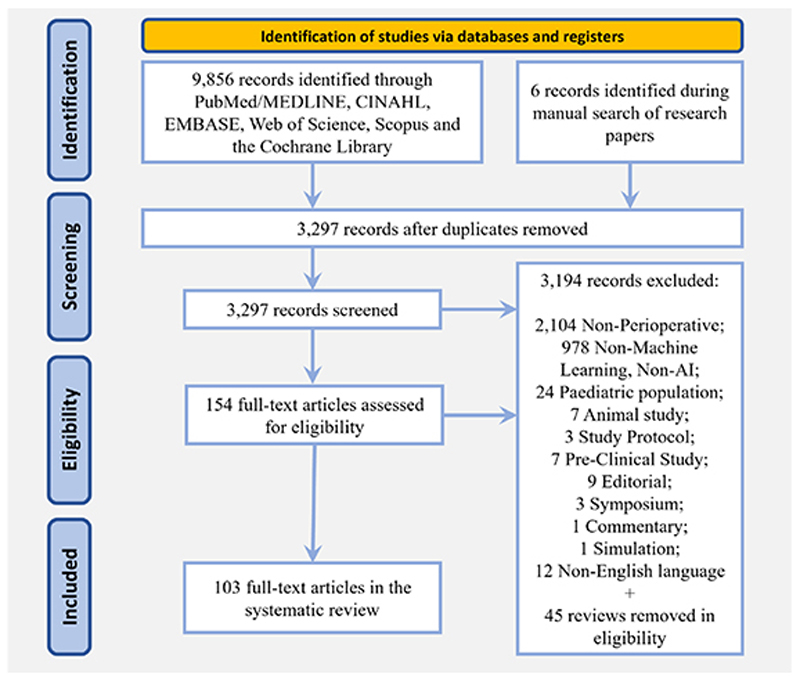
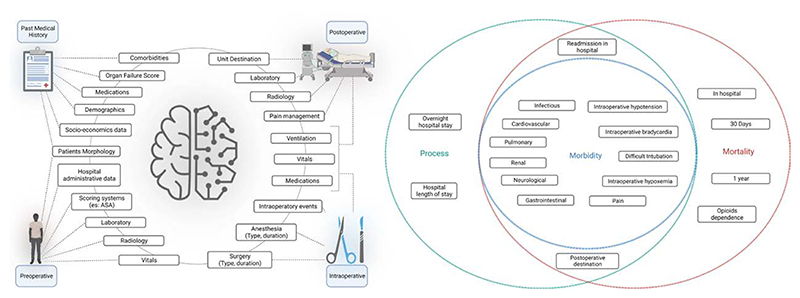
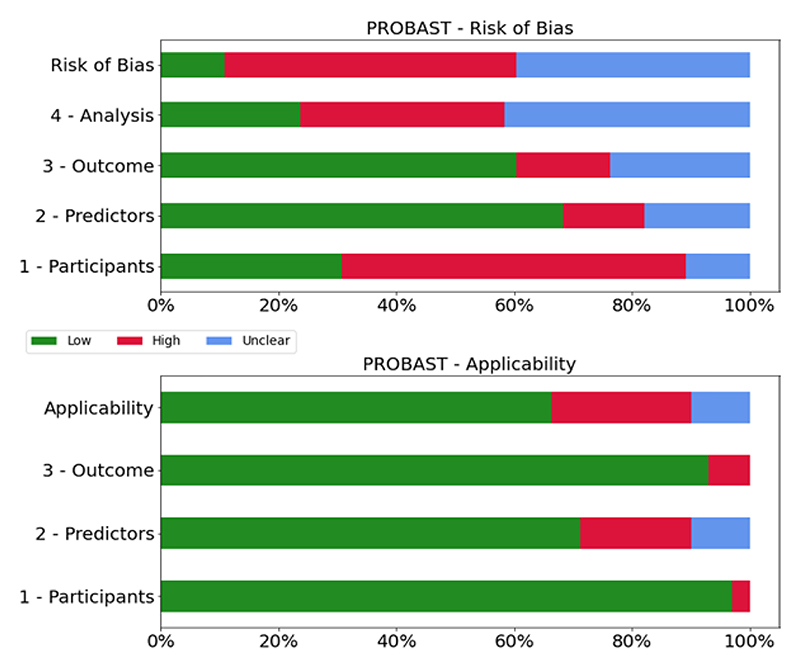
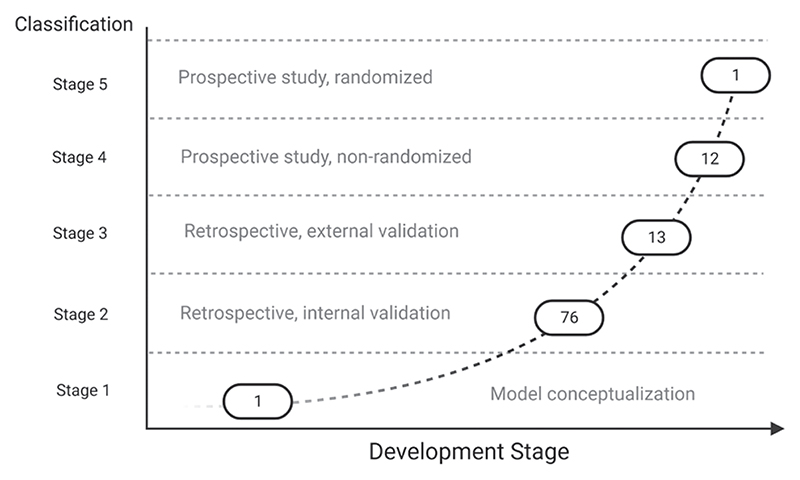
Background: The utilization of artificial intelligence and machine learning as diagnostic and predictive tools in perioperative medicine holds great promise. Indeed, many studies have been performed in recent years to explore the potential. The purpose of this systematic review is to assess the current state of machine learning in perioperative medicine, its utility in prediction of complications and prognostication, and limitations related to bias and validation. Methods: A multidisciplinary team of clinicians and engineers conducted a systematic review using the Preferred Reporting Items for Systematic Review and Meta-Analysis (PRISMA) protocol. Multiple databases were searched, including Scopus, Cumulative Index to Nursing and Allied Health Literature (CINAHL), the Cochrane Library, PubMed, Medline, Embase, and Web of Science. The systematic review focused on study design, type of machine learning model used, validation techniques applied, and reported model performance on prediction of complications and prognostication. This review further classified outcomes and machine learning applications using an ad hoc classification system. The Prediction model Risk Of Bias Assessment Tool (PROBAST) was used to assess risk of bias and applicability of the studies. Results: A total of 103 studies were identified. The models reported in the literature were primarily based on single-center validations (75%), with only 13% being externally validated across multiple centers. Most of the mortality models demonstrated a limited ability to discriminate and classify effectively. The PROBAST assessment indicated a high risk of systematic errors in predicted outcomes and artificial intelligence or machine learning applications. Conclusions: The findings indicate that the development of this field is still in its early stages. This systematic review indicates that application of machine learning in perioperative medicine is still at an early stage. While many studies suggest potential utility, several key challenges must be first overcome before their introduction into clinical practice. Editor’s Perspective: What We Already Know about This Topic: What This Article Tells Us That Is New:
Overview
The claims and statistics of this paper haven’t been checked yet.
Free: it reads the open-access text and checks the first 5 claims that cite a source we can check. Create a free account to check every claim.
Integrity signals
Registry
Cites
Statistics
Figures
Verification
Claims the paper makes
The claims and statistics of this paper haven’t been checked yet.
Free: it reads the open-access text and checks the first 5 claims that cite a source we can check. Create a free account to check every claim.
Claims other papers make about this one
Each is checked against this paper’s own text: does it say what the citing paper says it does?
The cited source doesn’t support the claim as written.
In the citing paper
“This observation is consistent with the findings of the meta-analysis by Arina et al. and underscores the importance of establishing a benchmark against clinical expertise [32].”
From Prediction of Postoperative ICU Requirements: Closing the Translational Gap with a Real-World Clinical Benchmark for Artificial Intelligence Approaches (2025) · cites this paper as [32]
Checked by a reasoning model — may be wrong.
Experimental — accuracy not yet measuredThe source backs part of the claim, not all of it — or backs it for a different population, condition or comparison.
In the citing paper
“In their systematic review and meta-analysis, Arina et al. summarized relevant AI models, highlighting three major limitations: the overall modest performance of existing approaches, the challenges of imbalanced datasets, and the lack of a pragmatic clinical benchmark [32].”
From Prediction of Postoperative ICU Requirements: Closing the Translational Gap with a Real-World Clinical Benchmark for Artificial Intelligence Approaches (2025) · cites this paper as [32]
Experimental — accuracy not yet measuredThe source backs part of the claim, not all of it — or backs it for a different population, condition or comparison.
In the citing paper
“The absence of widespread adoption of promising data-driven and ML-based approaches can also be attributed to the lack of direct performance comparisons with subjective clinical decision-making [4,[31][32][33][34][35].”
From Prediction of Postoperative ICU Requirements: Closing the Translational Gap with a Real-World Clinical Benchmark for Artificial Intelligence Approaches (2025) · cites this paper as [32]
Experimental — accuracy not yet measuredThe source backs part of the claim, not all of it — or backs it for a different population, condition or comparison.
In the citing paper
“In their systematic review and meta-analysis, Arina et al. summarized relevant AI models, highlighting three major limitations: the overall modest performance of existing approaches, the challenges of imbalanced datasets, and the lack of a pragmatic clinical benchmark [32].”
From Prediction of Postoperative ICU Requirements: Closing the Translational Gap with a Real-World Clinical Benchmark for Artificial Intelligence Approaches (2025) · cites this paper as [32]
Experimental — accuracy not yet measured
1 more claim about this paper
Create a free account to see every claim other papers make about this one.
Self-check
Percentages, sums and reported differences re-computed from the paper’s own numbers.
The self-check needs the paper’s full text.
Citations
Cites
1 retracted
Ren, W., Li, D., Wang, J., Zhang, J., Fu, Z., & Yao, Y. (2022) · Computational and Mathematical Methods in Medicine · doi:10.1155/2022/8661324 · Cited by 16 · cited 1×
“• Development of postoperative complications: Most studies focused on the prediction of postoperative acute complications 26–28, 44– 49 Three studies developed models to predict the risk of perioperative transfusion in general surgery 80,81 and cardiac surgery.”
RetractedThe PRISMA 2020 statement: An updated guideline for reporting systematic reviews
Page, M. J., McKenzie, J. E., Bossuyt, P. M., Boutron, I., Hoffmann, T. C., Mulrow, C. D., Shamseer, L., Tetzlaff, J. M., Akl, E. A., Brennan, S. E., et al. (2021) · BMJ · doi:10.1136/bmj.n71 · Cited by 108,283
The Measurement of Observer Agreement for Categorical Data
Landis, J. R., & Koch, G. G. (1977) · Biometrics · doi:10.2307/2529310 · Cited by 81,148 · cited 3×
“The United States and China, the leading countries in artificial intelligence development, contributed the highest number of publications, followed by South Korea.”
Gulshan, V., Peng, L., Coram, M., Stumpe, M. C., Wu, D., Narayanaswamy, A., Venugopalan, S., Widner, K., Madams, T., Cuadros, J., et al. (2016) · JAMA · doi:10.1001/jama.2016.17216 · Cited by 7,697 · cited 1×
“138,139 Whereas the use of machine learning in these specialties are primarily used as diagnostic aids, its use in perioperative medicine encompasses a broad range of applications including prognostication, analyzing vital signs for clinical decision support, and predicting complications.”
International evaluation of an AI system for breast cancer screening
McKinney, S. M., Sieniek, M., Godbole, V., Godwin, J., Antropova, N., Ashrafian, H., Back, T., Chesus, M., Corrado, G. S., Darzi, A., et al. (2020) · Nature · doi:10.1038/s41586-019-1799-6 · Cited by 3,287 · cited 1×
“138,139 Whereas the use of machine learning in these specialties are primarily used as diagnostic aids, its use in perioperative medicine encompasses a broad range of applications including prognostication, analyzing vital signs for clinical decision support, and predicting complications.”
PROBAST: A Tool to Assess the Risk of Bias and Applicability of Prediction Model Studies
Wolff, R. F., Moons, K. G. M., Riley, R. D., Whiting, P. F., Westwood, M., Collins, G. S., Reitsma, J. B., Kleijnen, J., Mallett, S., & for the PROBAST Group† (2019) · Annals of Internal Medicine · doi:10.7326/m18-1376 · Cited by 2,984 · cited 2×
“Bias was evaluated using the Prediction model Risk Of Bias Assessment Tool (PROBAST), 18 and an ad hoc classification was developed to determine the readiness level of the machine learning algorithms reported.”
Explainable machine-learning predictions for the prevention of hypoxaemia during surgery
Lundberg, S. M., Nair, B., Vavilala, M. S., Horibe, M., Eisses, M. J., Adams, T., Liston, D. E., Low, D. K.-W., Newman, S.-F., Kim, J., et al. (2018) · Nature Biomedical Engineering · doi:10.1038/s41551-018-0304-0 · Cited by 1,967 · cited 1×
“100 in the surgical intensive care unit 35 or in the hospital.”
Collins, G. S., Reitsma, J. B., Altman, D. G., & Moons, K. (2015) · BMC Medicine · doi:10.1186/s12916-014-0241-z · Cited by 1,927
Moons, K. G. M., Wolff, R. F., Riley, R. D., Whiting, P. F., Westwood, M., Collins, G. S., Reitsma, J. B., Kleijnen, J., & Mallett, S. (2019) · Annals of Internal Medicine · doi:10.7326/m18-1377 · Cited by 1,669
Statistics versus machine learning
Bzdok, D., Altman, N., & Krzywinski, M. (2018) · Nature Methods · doi:10.1038/nmeth.4642 · Cited by 1,508 · cited 1×
“17 We herein report a systematic review that focuses on prognostic artificial intelligence and machine learning models in perioperative medicine, aiming to carefully appraise the literature and identify knowledge gaps.”
Research works printed but not linked: 1
- 4. Tjeertes EKM, Ultee KHJ, Stolker RJ, Verhagen HJM, Bastos Gonçalves FM, Hoofwijk AGM, Hoeks SE: Perioperative complications are associated with adverse long-term prognosis and affect the cause of death after general surgery. World J Surg 2016; 40:2581-90 · DOI
Cited by
Mehta, D., Gonzalez, X. T., Huang, G. T.-W., & Abraham, J. (2024) · British Journal of Anaesthesia · doi:10.1016/j.bja.2024.08.007 · Cited by 48
“A recent systematic review by Arina and colleagues 15 spe-cifically examined the state of ML tools in predicting complications and prognostication within perioperative medicine.”
InfluentialComprehensive overview of artificial intelligence in surgery: a systematic review and perspectives
Chevalier, O., Dubey, G., Benkabbou, A., Majbar, M. A., & Souadka, A. (2025) · Pflügers Archiv - European Journal of Physiology · doi:10.1007/s00424-025-03076-6 · Cited by 42
Ferrari, D., Arina, P., Edgeworth, J. D., Ćurčin, V., Guidetti, V., Mandreoli, F., & Wang, Y. (2024) · PLOS Digital Health · doi:10.1371/journal.pdig.0000641 · Cited by 25
Self-citationCritelli, B., Hassan, A., Lahooti, I., Noh, L., Park, J. S., Tong, K., Lahooti, A., Matzko, N. E., Adams, J. N., Liß, L., et al. (2025) · PLoS Medicine · doi:10.1371/journal.pmed.1004432 · Cited by 29
“Unfortunately, these shortcomings are like those identified in other fields such as oncology [28] and anesthesiology [73].”
Machine learning and preoperative risk prediction: the machines are coming
Shelley, B., & Shaw, M. (2024) · British Journal of Anaesthesia · doi:10.1016/j.bja.2024.07.015 · Cited by 25
Zhou, X., Cai, F., Li, S., Li, G., Zhang, C., Xie, J., & Yang, Y. H. (2024) · International Immunopharmacology · doi:10.1016/j.intimp.2024.112238 · Cited by 17
Anesthesia transformed: AI pioneering a new era in perioperative medicine
Xu, H., Fu, C., Zhao, W., Yan, Z., Song, S., Ji, F., & Liu, H. (2025) · Anesthesiology and Perioperative Science · doi:10.1007/s44254-025-00091-9 · Cited by 16
Arina, P., Ferrari, D., Tetlow, N., Dewar, A., Stephens, R. C. M., Martín, D., Moonesinghe, R., Ćurčin, V., Singer, M., Whittle, J., et al. (2025) · Anaesthesia · doi:10.1111/anae.16538 · Cited by 13
“Currently, few studies predict 1-to 5-year mortality risk in non-cardiac surgery [17].”
InfluentialSelf-citationZheng, L., Wu, X., Gu, W., Wang, R., Wang, J., He, H., Wang, Z., Yi, B., & Zhang, Y. (2025) · Scientific Reports · doi:10.1038/s41598-025-02540-8 · Cited by 14
The value of machine and deep learning in management of critically ill patients: An umbrella review
Tungushpayev, M., Suleimenova, D., Sarria-Santamerra, A., Aimyshev, T., Gaipov, A., & Viderman, D. (2025) · International Journal of Medical Informatics · doi:10.1016/j.ijmedinf.2025.106081 · Cited by 11
The concept of perioperative risk: a narrative review
Zabolotskikh, I. B. (2024) · Annals of critical care · doi:10.21320/1818-474x-2024-4-40-57 · Cited by 9
The double-edged sword: artificial intelligence’s promise and perils in anesthesia patient safety
Maloney, J. A., Johnson, B. W., & Harbell, M. W. (2025) · Current Opinion in Anaesthesiology · doi:10.1097/aco.0000000000001580 · Cited by 8
Dundas, N. E., Law, T. J., Brender, T. D., Mills, H., Espejo, E., Heintz, T. A., Wallace, A. W., & Cobert, J. M. (2025) · Anesthesiology · doi:10.1097/aln.0000000000005795 · Cited by 8
Wingert, T., Williams, T., Syed, B., Hill, B., Grogan, T., Young, A., Antongiorgi, Z. D., Salari, V., Joosten, A., Hofer, I. S., et al. (2026) · British Journal of Anaesthesia · doi:10.1016/j.bja.2025.11.042 · Cited by 8
Künstliche Intelligenz in der Intensivmedizin
Baumgart, A., Beck, G. C., & Ghezel-Ahmadi, D. (2024) · Medizinische Klinik - Intensivmedizin und Notfallmedizin · doi:10.1007/s00063-024-01117-z · Cited by 7
Risk Factors and Strategies for Failure to Rescue Following Hepatectomy: A Review
Kimura, J., Takagi, K., Fuji, T., Yasui, K., Nishiyama, T., & Fujiwara, T. (2025) · Journal of Hepato-Biliary-Pancreatic Sciences · doi:10.1002/jhbp.70014 · Cited by 7
“The integration of machine learning and AI into perioperative care holds great promise [57].”
Bronnert, R., Besch, G., Hild, O., Lihoreau, T., Chaussy, Y., & Ferreira, D. (2025) · BMJ Open · doi:10.1136/bmjopen-2025-106204 · Cited by 7
Sharma, A. C., Azeem, A., Omari, I. H., & Premkumar, A. (2025) · Cureus · doi:10.7759/cureus.100254 · Cited by 16
“Nonetheless, the added performance of AI comes with limitations, including risks of overfitting in single-institution datasets, limited generalizability across diverse patient populations, and reduced interpretability compared to regression-based models [9,76].”
Kotzé, A., Lawton, T., Howell, S. J., O'Driscoll, R., Odling-Smee, M. K., Shangguan, L., Johnson, O. A., & Wong, D. (2025) · Anaesthesia · doi:10.1111/anae.16777 · Cited by 7
“Despite rapid model proliferation, few models in peri-operative medicine are externally validated and even fewer subjected to prospective study [11].”
InfluentialForecasting intraoperative hypotension during hepatobiliary surgery
Cata, J. P., Soni, B., Bhavsar, S., Pillai, P. S., Rypinski, T. A., Deva, A., Siewerdsen, J. H., & Soliz, J. (2024) · Journal of Clinical Monitoring and Computing · doi:10.1007/s10877-024-01223-5 · Cited by 8
“However, a fair comparison between available models and our strategy is difficult because of differences in the clinical data used as predictors, the type of surgical patient population, and ML strategies [19, 36].”
Artificial intelligence in extended perioperative medicine
Bignami, E., Darhour, L. J., & Bellini, V. (2024) · Trends in Anaesthesia and Critical Care · doi:10.1016/j.tacc.2024.101376 · Cited by 4
Amanatidis, A., Egan, K., Nio, K., & Toma, M. (2025) · Surgeries · doi:10.3390/surgeries6040087 · Cited by 5
“This lack of transparency not only undermines trust in the reported results but also impedes scientific progress and the safe, effective translation of ML models into clinical care [19].”
Ren, Y., Liu, C., Wang, X., Zhang, M., & Li, H. (2026) · Frontiers in Medicine · doi:10.3389/fmed.2025.1739832 · Cited by 4
Liu, C., Yang, W., Cheng, F., Chien, C., Chuang, Y., & Jin, Y. (2024) · Thrombosis Journal · doi:10.1186/s12959-024-00645-0 · Cited by 4
“The acceptance of AI by medical professionals is also critical for the successful application of predictive models in clinical practice [57].”
Arina, P., Ferrari, D., Kaczorek, M. R., Tetlow, N., Dewar, A., Stephens, R. C. M., Martín, D., Moonesinghe, R., Singer, M., Whittle, J., et al. (2025) · PLOS Digital Health · doi:10.1371/journal.pdig.0000851 · Cited by 4
“Machine Learning (ML) models utilizing demographic and clinical data have been applied extensively in perioperative medicine [17,18].”
Self-citationRomito, B. T., & Alexander, J. C. (2025) · Anesthesiology Clinics · doi:10.1016/j.anclin.2025.05.001 · Cited by 3
Ma, J., Tang, H., Zhang, Y., Yi, X., Zhong, T., Li, X., & Wang, G. (2025) · JMIR Medical Informatics · doi:10.2196/79886 · Cited by 3
“In addition, there are justified concerns about bias, explainability, and applicability [17].”
Zhou, P., Deng, H., Zeng, J., Ran, H., & Yu, C. (2024) · Frontiers in Medicine · doi:10.3389/fmed.2024.1447951 · Cited by 3
McIlroy, D. R. (2024) · British Journal of Anaesthesia · doi:10.1016/j.bja.2024.05.013 · Cited by 3
Kuang, Y., Shen, L., Luo, Y., Li, B., Su, X., Zhou, Z., & Zhao, Y. (2025) · Pharmacological Research · doi:10.1016/j.phrs.2025.107994 · Cited by 2
PROBAST Assessment of Machine Learning: Comment
Bignami, E. G., Panizzi, M., Allai, S., & Bellini, V. (2024) · Anesthesiology · doi:10.1097/aln.0000000000004997 · Cited by 2
Lonsdale, H., Eagle, S. S., & Freundlich, R. E. (2025) · Anesthesia & Analgesia · doi:10.1213/ane.0000000000007429 · Cited by 2
Artificial intelligence in peri‐operative prediction model research: are we there yet?
Shah, A., & Dhiman, P. (2024) · Anaesthesia · doi:10.1111/anae.16315 · Cited by 2
“Only 13% of studies conducted an external validation and 75% did not adequately report patient selection or inclusion/exclusion criteria [28].”
Surgical precision? Cutting through the hype of AI ‐augmented peri‐operative risk prediction
Murali, M., Mann, J., & Parbhoo, S. (2025) · Anaesthesia · doi:10.1111/anae.16662 · Cited by 2
Doyal, A. S., Ploeg, M. R. V., Wnek, R., An, X., Nanda, M., Serrano, R., Blacker, S. N., & Chen, F. (2025) · A&A Practice · doi:10.1213/xaa.0000000000002009 · Cited by 2
Sailer, B., Sari-Yavuz, S., Biergans, S. D., Verbuecheln, R., Achauer, L.-C., Rosenberger, P., Hardt, M., & Koeppen, M. (2026) · European Heart Journal - Digital Health · doi:10.1093/ehjdh/ztag093 · Cited by 2
Artificial Intelligence Driven Innovation in Anesthesia for Personalized Perioperative Care
Sonam Shashikala, B., V, Ampeti, S., Srivastava, M., Sali, S. R., Kirankumar, P. N., & Sheikh, R. B. (2025) · medtigo Journal of Medicine · doi:10.63096/medtigo3067125 · Cited by 2
Artificial Intelligence in Anesthesiology: Reply
Burns, M. L., Wanderer, J. P., McCormick, P. J., & Lonsdale, H. (2025) · Anesthesiology · doi:10.1097/aln.0000000000005713 · Cited by 1
Badero, O. J., Omokore, O. A., Quadri, I. O., Ogunnoiki, S. O., Kingdom, P. J., Ogbuiyi-Chima, I. C., Olayinka, T. O., Samuel-Ogunnoiki, P. M., Meribole, E. S., Adeyoola, O. O., et al. (2026) · Cureus · doi:10.7759/cureus.102209 · Cited by 1
“A systematic review using the Prediction Model Risk of Bias Assessment Tool (PROBAST) found that only 13% of 103 AI-based prediction studies underwent external validation, limiting clinical generalizability [21].”
Kishi, Y., Nakajima‐Ohyama, K. C., Yamaguchi, T., Uchiyama, S., Dodsworth, B. T., Gelsomino, N. S., & Klepper, J. (2026) · Journal of the Academy of Consultation-Liaison Psychiatry · doi:10.1016/j.jaclp.2026.04.002 · Cited by 1
Predicting disease outcomes from remote monitoring using machine learning: a systematic review
Wolber, J., Schuppert, A., Mücke, M., & Sellin, J. (2026) · BMC Medical Informatics and Decision Making · doi:10.1186/s12911-026-03495-0 · Cited by 4
“These findings align with those of a prior study [101] that found that 90% of studies using ML for perioperative medicine showed either high or unclear risk of bias.”
Chen, X., Zhou, R., Peng, X., Wang, Y., Li, K., Ou, M., Chen, G., Shi, R., Wang, E., Huang, H., et al. (2026) · BMC Geriatrics · doi:10.1186/s12877-026-07620-6 · Cited by 1
Khromov, T., Breier, S., Stefenelli, U., Schminke, B., Schanz, J., Fischer, A., Schliephake, H., & Brockmeyer, P. (2026) · Frontiers in Oncology · doi:10.3389/fonc.2025.1724846 · Cited by 1
周丽华, Zhao, Y., Song, W. Y., Li, Y., Wang, J., Gong, H., Sun, G., & Zhipeng, B. (2026) · Scientific Reports · doi:10.1038/s41598-026-40302-2 · Cited by 1
Algorithmic bias in surgical risk prediction models and its impact on patient safety: a review
Ahmed, M. M. (2026) · Patient Safety in Surgery · doi:10.1186/s13037-026-00495-x · Cited by 1
“2 Quality and bias assessment of 103 perioperative machine learning studies using PROBAST [1].”
InfluentialMachine learning for mortality prediction: do we need yet another model?
Lloyd, A., & Shaw, M. (2025) · Anaesthesia · doi:10.1111/anae.16673 · Cited by 1
Althammer, A., Berger, F., Spring, O., Simon, P., Girrbach, F., Dieing, M., Brunner, J. O., Shmygalev, S., Bartenschlager, C. C., & Heller, A. R. (2025) · Information · doi:10.3390/info16100888
PROBAST Assessment of Machine Learning: Reply
Arina, P., Mazomenos, E. B., Whittle, J., & Singer, M. (2024) · Anesthesiology · doi:10.1097/aln.0000000000004998
Self-citationAdvances and challenges in artificial intelligence for perioperative risk prediction
Li, S., Li, T., Li, L., & Wang, M. (2025) · Asian Journal of Surgery · doi:10.1016/j.asjsur.2025.06.103
Implicações éticas e legais da inteligência artificial em anestesiologia
Lourenço, M. G. (2025) · Contribuciones a las Ciencias Sociales · doi:10.55905/revconv.18n.10-169
Jeribi, F. (2025) · Applied Soft Computing · doi:10.1016/j.asoc.2025.114281
赵, 熙. (2025) · Advances in Clinical Medicine · doi:10.12677/acm.2025.15123530
Zambrano, R. X. C., Medina, P. G., Vargas, E. F. C., López, J. E. B., Acevedo, J. A. B., González, D. A. M., Hernández, I. M. J., & Espinal, J. A. V. (2025) · IECCMEXICO · doi:10.64784/027
Ma, J., Tang, H., Zhang, Y., Yi, X., Zhong, T., Li, X., & Wang, G. (2025) · doi:10.2196/preprints.79886
Çatak, T., Aksu, A., Saltalı, A. Ö., & Berilgen, B. (2026) · BMC Medical Informatics and Decision Making · doi:10.1186/s12911-026-03399-z · Cited by 1
“…reviews reporting heterogeneous performance of AI in perioperative complication prediction, indicating that the methodology remains at an early stage and that, despite recognition of its potential, concerns regarding trans-parency, data quality, and integration challenges persist [10, 15–20].”
Gupta, P., Richards, S., Farid, S. D., & Paul, G. (2026) · Pain Practice · doi:10.1111/papr.70129
“The aforementioned studies and other research highlight that external validation of prediction models remains a large issue in not just interventional spine medicine but also in other procedural and surgical fields [28–34].”
Artificial Intelligence in Oncology: Revolutionizing Cancer Care
Tantray, J., Patel, A., Nagdev, S. A., Lodhi, D. S., Golani, P., & Alok, S. (2026) · BENTHAM SCIENCE PUBLISHERS eBooks · doi:10.2174/9798898814144126010007 · Cited by 1
Tapia-Mendez, E., Cruz-Albarrán, I. A., Tovar‐Arriaga, S., González‐Islas, D., Orea‐Tejeda, A., & Morales-Hernandez, L. A. (2026) · AI · doi:10.3390/ai7050155
Liu, J., Pan, S., Xie, H., He, J., Chen, H., Wu, Y., & Chen, Z. F. (2026) · Clinical Rheumatology · doi:10.1007/s10067-026-08206-8
AI and Human Collaboration in Maxillofacial Surgery: The Next Era
Tumma, C., Aluvala, S., Thumma, C., Bhende, M. S., Ayyamgari, S., & Siva Shankar, S. (2026) · International Conference on Recent Trends in Computer Science and Technology (ICRTCST) · doi:10.1109/icrtcst68392.2026.11545385
“[13]”
Pham, T. D. (2026) · Exploration of Medicine · doi:10.37349/emed.2026.1001413
Zhang, P., Wu, L., Liao, Y., & Li, H. (2026) · Journal of International Medical Research · doi:10.1177/03000605261454051 · Cited by 3
“41 Lee et al. reported an internal AUROC of 0.868 using their gradient boosting model for postoperative AKI prediction, which decreased to 0.757 after external validation.”
InfluentialÖzden, Y., Tekiş, D., & Kiremitçi, S. (2026) · Journal of Clinical Gastroenterology · doi:10.1097/mcg.0000000000002415
Jafarkhani, A., Jafari‐Oori, M., Arabfard, M., Hushmandi, K., & Pourebrahimi, M. (2026) · International Wound Journal · doi:10.1111/iwj.70982
Lonsdale, H., Patel, K., Domenico, H. J., Moore, R. S., McCoy, A. B., French, B., Rosenbloom, S. T., Byrne, D. W., Freundlich, R. E., & Alrifai, M. W. (2026) · Journal of Perinatology · doi:10.1038/s41372-026-02827-2
Luo, L., Tu, Y., Zhu, Z., & Ye, M. (2026) · Journal of Ovarian Research · doi:10.1186/s13048-026-02205-8
“Prediction models developed in retrospective single-center cohorts may be affected by selection bias, spectrum effects, and local testing practices [30].”
Jørgensen, C. C., Frederiksen, J. B., Kehlet, H., Lindberg‐Larsen, M., Gromov, K., Varnum, C., Jakobsen, T., Bieder, M. J., Andersen, M. R., Overgaard, S., et al. (2026) · Acta Anaesthesiologica Scandinavica · doi:10.1111/aas.70318
Nuri, N., Suandika, M., Wibowo, T. H., & Susanto, A. (2026) · Jurnal Pengabdian Masyarakat · doi:10.59030/jpmbd.v5i2.167
Yang, L., Ning, B., Hu, D., Xiong, H., Ge, T., Fan, X., & Zou, R. (2026) · Current Opinion in Physiology · doi:10.1016/j.cophys.2026.100987
Ramanujam, V., Carneiro, S., Ramanujam, K., Arthur, A., Addisu, E., & Chouhan, S. N. (2026) · Cureus · doi:10.7759/cureus.115542
“A larger review by Arina et al. subsequently identified 103 perioperative prediction studies and found that most evaluations were conducted within a single center, only a small minority underwent multicenter external validation, and the overall risk of bias was high [34].”
From checklist to closed-loop: the case for AI-supported perioperative management in esophagectomy
Burri, P., Chatziisaak, D., Schneider, M. A., Steffen, T., Wolf, S., Weiss, T., Cron, L., & Gutschow, C. A. (2026) · Intelligence-Based Medicine · doi:10.1016/j.ibmed.2026.100471
Clinical AI and Precision Medicine: Philosophical Questions About Labels, Disease, and Evidence
Armoundas, A. A. (2026) · Journal of Medical Systems · doi:10.1007/s10916-026-02457-3
“This concern is illustrated by reviews in peri-operative [24] and pediatric anesthesia [ 25] as well as in cardiology [ 17 ], which have identified limitations related to risk of bias, limited external validation, [ 26 ] and uncertain generalizability as barriers to clinical integration of AI…”
Li, J., Fang, X., Yu, P., & Jiang, L. (2026) · Frontiers in Medicine · doi:10.3389/fmed.2026.1913206 · Cited by 1
“Little evidence exists to support the notion that accurate identification of a patient’s risk results in an improvement of the patient’s clinical outcome in the perioperative environment (13).”
InfluentialLee, G.-M., Won, J.-Y., Cho, E. Y., Kim, J., Kim, K. J., Lee, Y. S., Lee, H. J., & Kim, J. (2026) · Journal of Medical Internet Research · doi:10.2196/95665 · Cited by 2
“Independent external validation remains necessary before localized performance can be generalized to other hospitals or care settings [72].”
Yan, J., Song, Y., Du, Y., & Li, F. (2026) · PLoS ONE · doi:10.1371/journal.pone.0358876
“Conventional models generally incorporate demographic characteristics, clinical, and treatment-related variables [12].”
Zhang, H., Zhao, L., Yang, W., Li, B., 林, 婉., Chen, X., Mo, L., Dai, S., Chen, W., Fan, Y., et al. (2026) · Annals of Medicine · doi:10.1080/07853890.2026.2737005
“Machine-learning methods have increasingly been applied in anesthesiology and perioperative medicine because they can integrate multiple clinical variables and model complex, non-linear associations [11–13].”
Whittle, J., & Mazomenos, E. B. (2026) · British Journal of Anaesthesia · doi:10.1016/j.bja.2026.08.037
Self-citationZeng, Q., Li, J., Hu, J., & Yang, C. (2026) · Frontiers in Public Health · doi:10.3389/fpubh.2026.1952864
Marunych, R. Y., Bartusik‐Aebisher, D., Dynarowicz, K., Smolak, B., & Aebisher, D. (2026) · International Journal of Molecular Sciences · doi:10.3390/ijms27198871
Seastedt, K. P. (2026) · Thoracic surgery clinics/Thorac. surg. clin. · doi:10.1016/j.thorsurg.2026.09.001
An Interpretable Machine Learning Model for 90-Day Mortality After Major Head and Neck Surgery
Jiang, L., Huang, J., Reissmann, D. R., Kreher, D., Schmalz, G., Li, S., & Xie, L. (2026) · International Dental Journal · doi:10.1016/j.identj.2026.111235
Flores, D. T., Luis-Cabezón, N. D., Gurumeta, A. A., Couto, U. G., & Gómez‐Ríos, M. Á. (2026) · Perioperative Care and Operating Room Management · doi:10.1016/j.pcorm.2026.100758
Advancing Perioperative Medicine With AI: Current Landscape and Research Priorities
Rohatgi, N., & Mathur, P. (2026) · JMIR Perioperative Medicine · doi:10.2196/107155
“…medicine, although a systematic review of 103 predictive analytics machine learning (ML) tools reported that 75% of them were validated at a single center, only 13% were externally validated, and the PROBAST (Prediction Model Risk of Bias Assessment Tool) assessment showed a high risk of bias [24].”
Metadata
- Authors
- Arina, P., Kaczorek, M. R., Hofmaenner, D. A., Pisciotta, W., Refinetti, P., Singer, M., Mazomenos, E. B., & Whittle, J.
- Affiliations
- University College London (GB)
- Wellcome / EPSRC Centre for Interventional and Surgical Sciences (GB)
- University Hospital Zurich (CH)
- Corresponding author
- Arina, Pietro
- ORCID
- Venue
- Anesthesiology
- Published
- 2023-11-09
- Volume
- 140
- Issue
- 1
- Pages
- 85-101
- ISSN
- 0003-3022 (ISSN-L)
- 1528-1175
- PMC
- PMC11146190
- OpenAlex
- W4388517949
- Semantic Scholar
- 8a94f89d94679a309879d53bc0f7a6da57a6f6ca
- Cited by
- 81
- References
- 148
- Citations by year
- 2026: 38 · 2025: 28 · 2024: 15
- FWCI
- 4.23
- Type
- journal article
- Language
- en
- Open access
- hybrid
- doi.org
- Locations
- Anesthesiology (publishedVersion, cc-by)
- PubMed Central (publishedVersion, cc-by)
- PubMed (publishedVersion)
- UCL Discovery (University College London) (submittedVersion, cc-by)
- Zurich Open Repository and Archive (University of Zurich) (submittedVersion)
- Funders
- Wellcome Trust (203145, 223793)
- Topics
- Health Sciences › Medicine › Cardiology and Cardiovascular Medicine › Cardiac, Anesthesia and Surgical Outcomes
- Health Sciences › Medicine › Health Informatics › Artificial Intelligence in Healthcare and Education
- Health Sciences › Health Professions › Health Information Management › Artificial Intelligence in Healthcare
- Keywords
- machine learning, artificial intelligence, perioperative medicine, surgical complications, outcome prediction, mortality prediction, risk of bias, external validation, PROBAST, model discrimination, clinical implementation
- MeSH terms
- Machine Learning, Perioperative Medicine, Artificial Intelligence, Bias, Databases, Factual
About these checks
Registry, retraction, Cites and statistics results are computed, not judged, with one exception: a printed reference that no index lists is read once by a model before it counts as a citation error. Claims are extracted by a model and kept only when their quote appears verbatim in the text; each cited source is then checked, with a model’s help, for whether it says what the claim relies on. Those verdicts can be wrong — read the claim’s quote and the cited source before relying on one.
Statistics and arithmetic are recomputed, not judged.
Confidence bands are shown only for fields calibrated on our annotated test set. None is calibrated yet, so no band is shown.
What counts as a claim ›How we measure confidence ›How we check this ›
Are you an author, or do you see a problem with this page? Request a review
Data sources
Bibliographic data: Semantic Scholar, OpenAlex, Crossref.
Contains information from the Semantic Scholar Academic Graph Datasets, made available under the ODC Attribution License (ODC-BY 1.0).
Semantic Scholar’s data is described in: Kinney, R., et al. (2023). The Semantic Scholar Open Data Platform. arXiv:2301.10140.
