

Efficacy of a transdiagnostic emotion-focused exposure treatment for chronic pain patients with comorbid anxiety and depression: a randomized controlled trial
Open accessThe DOI matches its Crossref record; 49 of the 51 references it cites were found in a registry or an index.
Abstract
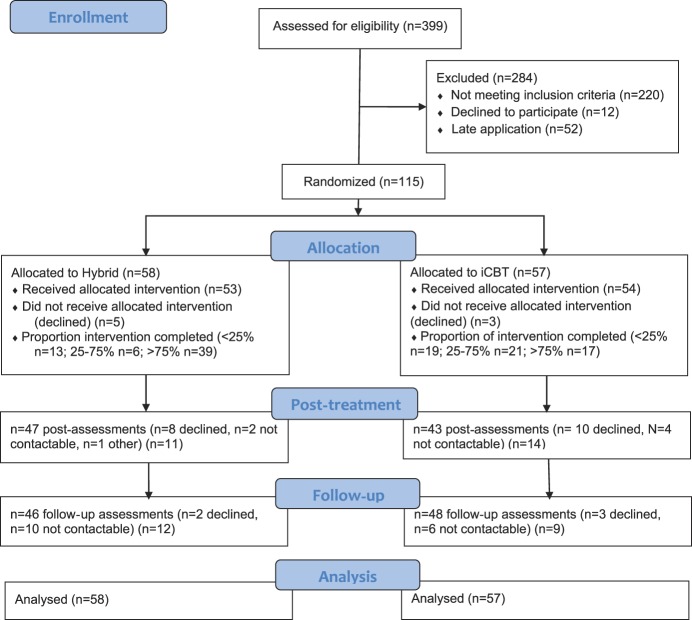
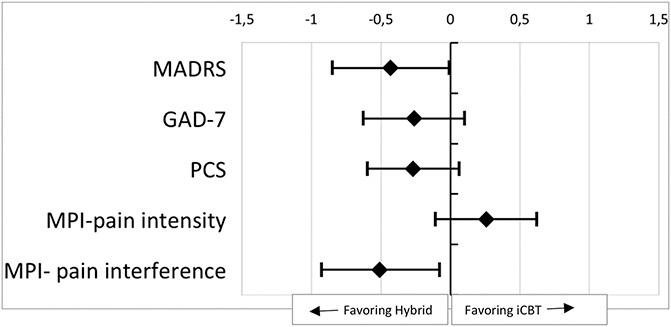
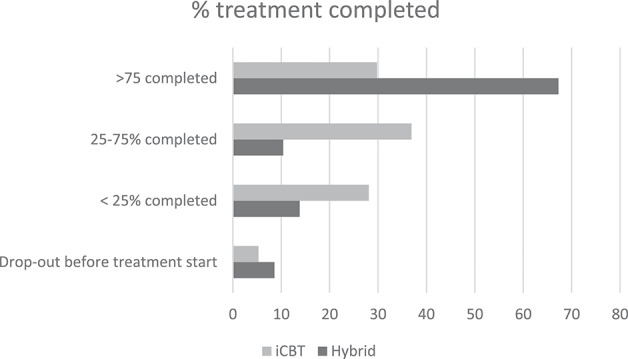
The comorbidity between chronic pain and emotional problems has proven difficult to address with current treatment options. This study addresses the efficacy of a transdiagnostic emotion–focused exposure treatment (“hybrid”) for chronic pain patients with comorbid emotional problems. Adults (n = 115) with chronic musculoskeletal pain and functional and emotional problems were included in a 2-centre, parallel randomized controlled, open-label trial comparing this treatment to an active control condition receiving a guided Internet-delivered pain management treatment based on CBT principles (iCBT). The hybrid treatment (n = 58, 10-16 sessions) integrates exposure in vivo for chronic pain based on the fear-avoidance model with an emotion-regulation approach informed by procedures in Dialectical Behavior Therapy. The iCBT (n = 57; 8 treatment modules) addresses topics such as pain education, coping strategies, relaxation, problem solving, stress, and sleep management using standard CBT techniques. Patient-reported outcomes were assessed before and after treatment as well as at a 9-month primary end point. Across conditions, 78% participants completed post-treatment and 81% follow-up assessment. Intent-to-treat analyses showed that the hybrid had a significantly better post-treatment outcome on pain catastrophizing (d = 0.39) and pain interference (d = 0.63) and significantly better follow-up outcomes on depression (d = 0.43) and pain interference (d = 0.51). There were no differences on anxiety and pain intensity. Observed proportions of clinically significant improvement favoured the hybrid on all but one comparison, but no statistically significant differences were observed. We conclude that the hybrid emotion–focused treatment may be considered an acceptable, credible, and efficacious treatment option for chronic pain patients with comorbid emotional problems.
Overview
The claims and statistics of this paper haven’t been checked yet.
Free: it reads the open-access text and checks the first 5 claims that cite a source we can check. Create a free account to check every claim.
Integrity signals
Registry
Cites
Statistics
Figures
Verification
Claims the paper makes
The claims and statistics of this paper haven’t been checked yet.
Free: it reads the open-access text and checks the first 5 claims that cite a source we can check. Create a free account to check every claim.
Claims other papers make about this one
Each is checked against this paper’s own text: does it say what the citing paper says it does?
The source backs part of the claim, not all of it — or backs it for a different population, condition or comparison.
In the citing paper
“Since no established cut off-score exist, a mean score above midpoint (≥25) was considered satisfactory, in line with for example Boersma et al. 2019 (42).”
From Internet-delivered acceptance and commitment therapy (iACT) for chronic pain—feasibility and preliminary effects in clinical and self-referred patients (2020) · cites this paper as [42]
Experimental — accuracy not yet measuredThe source backs part of the claim, not all of it — or backs it for a different population, condition or comparison.
In the citing paper
“Another study (Boersma et al., 2019) demonstrated significant changes in the reduction of pain interference in hybrid therapy (exposure in vivo and dialectical behavior therapy) compared to CBT at post-treatment with very small effect size (d = 0.02)”
From A systematic review of cognitive behavioral therapy-based interventions for comorbid chronic pain and clinically relevant psychological distress (2023) · cites this paper as Boersma et al., 2019
Experimental — accuracy not yet measuredThe source backs part of the claim, not all of it — or backs it for a different population, condition or comparison.
In the citing paper
“Another study (Boersma et al., 2019) identified significant differences in the reduction of depressive symptoms at follow-up with a small effect size (d = 0.25) in favor of hybrid therapy (exposure in vivo and DBT) compared to CBT.”
From A systematic review of cognitive behavioral therapy-based interventions for comorbid chronic pain and clinically relevant psychological distress (2023) · cites this paper as Boersma et al., 2019
Experimental — accuracy not yet measuredThe source backs part of the claim, not all of it — or backs it for a different population, condition or comparison.
In the citing paper
“and at follow-up with small effect size (d = 0.25).”
From A systematic review of cognitive behavioral therapy-based interventions for comorbid chronic pain and clinically relevant psychological distress (2023) · cites this paper as Boersma et al., 2019
Experimental — accuracy not yet measuredThe source backs part of the claim, not all of it — or backs it for a different population, condition or comparison.
In the citing paper
“another study (Boersma et al., 2019) reported significant differences in the decrease of pain catastrophizing at post-treatment with a small effect size (d = 0.26), but not at follow-up, in favor of hybrid therapy (exposure in vivo and dialectical behavior therapy) compared to CBT.”
From A systematic review of cognitive behavioral therapy-based interventions for comorbid chronic pain and clinically relevant psychological distress (2023) · cites this paper as Boersma et al., 2019
Experimental — accuracy not yet measured
4 more claims about this paper
Create a free account to see every claim other papers make about this one.
Self-check
Percentages, sums and reported differences re-computed from the paper’s own numbers.
The self-check needs the paper’s full text.
Citations
Cites
The Hospital Anxiety and Depression Scale
Zigmond, A. S., & Snaith, R. P. (1983) · Acta Psychiatrica Scandinavica · doi:10.1111/j.1600-0447.1983.tb09716.x · Cited by 47,139
A Brief Measure for Assessing Generalized Anxiety Disorder: The GAD-7
Spitzer, R. L., Kroenke, K., Williams, J. B. W., & Löwe, B. (2006) · Archives of Internal Medicine · doi:10.1001/archinte.166.10.1092 · Cited by 31,765
(1998) · The Journal of Clinical Psychiatry · Cited by 19,139
Depression and quality of life in older persons: A review
Sivertsen, H., Bjørkløf, G. H., Engedal, K., Selbæk, G., & Helvik, A.-S. (2015) · Dementia and Geriatric Cognitive Disorders · doi:10.1159/000437299 · Cited by 14,152
A new depression scale designed to be sensitive to change
Montgomery, S. A., & Åsberg, M. (1979) · British Journal of Psychiatry · doi:10.1192/bjp.134.4.382 · Cited by 13,962
Missing data: our view of the state of the art
Schafer, J. L., & Graham, J. W. (2002) · Psychological Methods · doi:10.1037/1082-989x.7.2.147 · Cited by 11,638
(1998) · PubMed · Cited by 10,216
The validity of the Hospital Anxiety and Depression Scale
Bjelland, I., Dahl, A. A., Haug, T. T., & Neckelmann, D. (2002) · Journal of Psychosomatic Research · doi:10.1016/s0022-3999(01)00296-3 · Cited by 9,779
The Pain Catastrophizing Scale: Development and validation.
Sullivan, M. J. L., Bishop, S. R., & Pivik, J. (1995) · Psychological Assessment · doi:10.1037//1040-3590.7.4.524 · Cited by 8,227
Jacobson, N. S., & Truax, P. (1991) · Journal of Consulting and Clinical Psychology · doi:10.1037/0022-006x.59.1.12 · Cited by 7,770
Research works printed but not linked: 3
- Harvey AG Watkins E Mansell W Shafran R Cognitive behavioural processes across psychological disorders. Oxford: Oxford University Press, 2004.
- Koerner K Doing dialectical behavior therapy: a practical guide. New York: The Guilford Press, 2012.
- Vlaeyen J Morley S Linton SJ Boersma K de Jong J Pain-related fear: exposure based treatment for chronic pain. Seattle, WA: IASP press, 2012.
Cited by
Aaron, R. V., Ravyts, S. G., Carnahan, N. D., Bhattiprolu, K., Harte, N., McCaulley, C. C., Vitalicia, L., Rogers, A. B., Wegener, S. T., & Dudeney, J. (2025) · JAMA Network Open · doi:10.1001/jamanetworkopen.2025.0268 · Cited by 251
Lumley, M. A., & Schubiner, H. (2019) · Current Rheumatology Reports · doi:10.1007/s11926-019-0829-6 · Cited by 155
“Finally, because emotion-focused treatments can be unsettling or frightening to some patients, the inclusion of emotional regulation skills training might help more patients successfully engage in emotional processing, as suggested by a recent clinical trial [47].”
BackgroundBehavioral Conceptualization and Treatment of Chronic Pain
Vlaeyen, J. W. S., & Crombez, G. (2020) · Annual Review of Clinical Psychology · doi:10.1146/annurev-clinpsy-050718-095744 · Cited by 144
Song, Q., Wei, A., Xu, H., Gu, Y., Jiang, Y. Q., Dong, N., Zheng, C., Wang, Q., Gao, M., Sun, S., et al. (2024) · Nature Neuroscience · doi:10.1038/s41593-023-01519-w · Cited by 149
“Consistent with clinical reports 12,36 , mice with SNI showed robust anxiodepressive-like behaviors 6 weeks after surgery, spending less time in the central zone and more time in the peripheral zone in the open-field test (OFT) with normal locomotion activity (Fig.”
Neuroimmune Mechanisms Underlying Neuropathic Pain: The Potential Role of TNF-α-Necroptosis Pathway
Duan, Y.-W., Chen, S., Li, Q., & Zang, Y. (2022) · International Journal of Molecular Sciences · doi:10.3390/ijms23137191 · Cited by 129
Anxiety and Depression in Youth With Chronic Pain: A Systematic Review and Meta-Analysis
Dudeney, J. E., Aaron, R. V., Hathway, T., Bhattiprolu, K., Bisby, M. A., McGill, L., Gandy, M., Harte, N., & Dear, B. F. (2024) · Archives of Pediatrics and Adolescent Medicine · doi:10.1001/jamapediatrics.2024.3039 · Cited by 127
Ringqvist, Å., Dragioti, E., Björk, M., Larsson, B., & Gerdle, B. U. C. (2019) · Journal of Clinical Medicine · doi:10.3390/jcm8060905 · Cited by 86
“, clinical departments of pain rehabilitation); they were also recruited via advertisements in local newspapers and social media [68], and the numbers investigated were considerably smaller.”
BackgroundSelf-citationPain prevention and management must begin in childhood: the key role of psychological interventions
Palermo, T. M. (2020) · Pain · doi:10.1097/j.pain.0000000000001862 · Cited by 91
“Boersma et al[3] conducted an RCT to test the efficacy of a transdiagnostic emotion–focused exposure treatment for adults with chronic musculoskeletal pain and comorbid emotional problems.”
From Fear to Safety: A Roadmap to Recovery From Musculoskeletal Pain
Cañeiro, J. P., Smith, A. J., Bunzli, S., Linton, S. J., Moseley, G. L., & O’Sullivan, P. (2021) · Physical Therapy · doi:10.1093/ptj/pzab271 · Cited by 73
Self-citationLi, H., Li, X., Feng, Y., Gao, F., Kong, Y., & Hu, L. (2020) · NeuroImage · doi:10.1016/j.neuroimage.2020.117186 · Cited by 67
“It is well known that there s a reciprocal relationship between pain and depression in chronic pain atients ( Apkarian et al., 2011 ; Boersma et al., 2019 ).”
BackgroundAaron, R. V., Finan, P. H., Wegener, S. T., Keefe, F. J., & Lumley, M. A. (2020) · American Psychologist · doi:10.1037/amp0000678 · Cited by 56
“Such pain exposure therapy can be emotionally-challenging, however, and the benefits of this intervention may be enhanced by helping patients use explicit strategies to down-regulate their negative emotions while they engage in exposure (Boersma et al., 2019).”
BackgroundSanabria-Mazo, J. P., Colomer-Carbonell, A., Fernández-Vázquez, Ó., Noboa-Rocamora, G., Cardona-Ros, G., McCracken, L. M., Montes-Pérez, A., Castaño-Asins, J. R., Edo, S., Borràs, X., et al. (2023) · Frontiers in Psychology · doi:10.3389/fpsyg.2023.1200685 · Cited by 56
Sanabria-Mazo, J. P., Colomer-Carbonell, A., Borràs, X., Castaño-Asins, J. R., McCracken, L. M., Montero-Marin, J., Pérez-Aranda, A., Edo, S., Sanz, A., Feliu-Soler, A., et al. (2023) · The Journal of Pain · doi:10.1016/j.jpain.2023.04.008 · Cited by 40
Terpstra, J. A., van der Vaart, R., van Beugen, S., van Eersel, R. A., Gkika, I., Erdős, D., Schmidt, J., Radstake, C., Kloppenburg, M., van Middendorp, H., et al. (2022) · Internet Interventions · doi:10.1016/j.invent.2022.100587 · Cited by 38
Ding, X., Lin, Y., Chen, C., Yan, B., Liu, Q., Zheng, H. W., Wu, Y., & Zhou, C. (2023) · Biological Psychiatry · doi:10.1016/j.biopsych.2023.03.015 · Cited by 43
Mindfulness-based Interventions for Chronic Low Back Pain: A Systematic Review and Meta-analysis
Paschali, M., Lazaridou, A., Sadora, J., Papianou, L., Garland, E. L., Zgierska, A. E., & Edwards, R. R. (2023) · Clinical Journal of Pain · doi:10.1097/ajp.0000000000001173 · Cited by 52
“Only one study 43 utilized DBT-based intervention and showed mild effectiveness in reducing pain intensity.”
BackgroundJensen, M. P., Hakimian, S., Ehde, D. M., Day, M. A., Pettet, M. W., Yoshino, A., & Ciol, M. A. (2021) · Pain · doi:10.1097/j.pain.0000000000002201 · Cited by 35
“We chose pain interference as the secondary outcome to focus on here because it is a common painrelated variable used as an outcome in psychological pain clinical trials.(6,52,59,67) As noted previously, average pain intensity was assessed by asking participants to rate their average pain intensity in the past 24 hour…”
MethodThe “future” pain clinician: Competencies needed to provide psychologically informed care
Linton, S. J., O’Sullivan, P., Zetterberg, H., & Vlaeyen, J. W. S. (2024) · Scandinavian Journal of Pain · doi:10.1515/sjpain-2024-0017 · Cited by 47
Self-citationSullivan, M. D., Sturgeon, J. A., Lumley, M. A., & Ballantyne, J. C. (2022) · Pain · doi:10.1097/j.pain.0000000000002748 · Cited by 38
Taguchi, K., Numata, N., Takanashi, R., Takemura, R., Yoshida, T., Kutsuzawa, K., Yoshimura, K., Nozaki-Taguchi, N., Ohtori, S., & Shimizu, E. (2021) · Journal of Medical Internet Research · doi:10.2196/30690 · Cited by 34
Norman‐Nott, N., Hesam‐Shariati, N., Wewege, M. A., Rizzo, R. R. N., Cashin, A. G., Wilks, C. R., Quidé, Y., McAuley, J. H., & Gustin, S. M. (2024) · European Journal of Pain · doi:10.1002/ejp.2268 · Cited by 39
“The time interval to follow-up varied from no follow-up assessment (Zautra et al., 2008) to a 9-month assessment (Boersma et al., 2019) (see Table 2).”
InfluentialMaroti, D., Ek, J., Widlund, R.-M., Schubiner, H. H., Lumley, M. A., Lilliengren, P., Bilevičiūtė-Ljungar, I., Ljótsson, B., & Johansson, R. (2021) · Frontiers in Psychiatry · doi:10.3389/fpsyt.2021.620359 · Cited by 39
IGF/IGF-1R signal pathway in pain: a promising therapeutic target
Ma, L., Zhao, W., Huang, S., Xu, F., Wang, Y., Deng, D., Zhang, T., Shu, S., & Chen, X. (2023) · International Journal of Biological Sciences · doi:10.7150/ijbs.84353 · Cited by 32
Pontén, M., Jonsjö, M. A., Vadenmark, V., Moberg, E., Grannas, D., Andersson, G., Boersma, K., Hedman‐Lagerlöf, E., Kleinstäuber, M., Weise, C., et al. (2023) · Psychological Medicine · doi:10.1017/s0033291723003033 · Cited by 42
“Six studies were able to provide such data and were thus included in our analyses (Andrews, Davies, & Titov, 2011; Axelsson et al., 2020; Boersma et al., 2019; Hedman et al., 2011; Jasper et al., 2014; Kaldo et al., 2008).”
BackgroundMethodInfluentialSelf-citationBarrett, D., Brintz, C., Zaski, A. M., & Edlund, M. J. (2020) · Pain Medicine · doi:10.1093/pm/pnaa361 · Cited by 38
“These promising findings are based, thus far, on a case study of individual DBT [73]; a 12-week DBT skills group targeting the psychological and emotional aspects of chronic pain [75]; and the application of a DBT hybrid that uses emotion regulation and exposure (fear avoidance), first in a small feasibility trial [74…”
BackgroundRickardsson, J., Zetterqvist, V., Gentili, C., Andersson, E., Holmström, L., Lekander, M., Persson, M., Persson, J., Ljótsson, B., & Wicksell, R. K. (2020) · mHealth · doi:10.21037/mhealth.2020.02.02 · Cited by 28
“Since no established cut off-score exist, a mean score above midpoint ( ≥ 25) was considered satisfactory, in line with for example Boersma et al. 2019 (42).”
MethodMindfulness-Based Pain Management (MBPM) for Chronic Pain: a Randomized Clinical Trial
Pérez, J. I., Salaberría, K., & de Ocenda, Á. R. (2022) · Mindfulness · doi:10.1007/s12671-022-02023-1 · Cited by 32
Pain psychology in the 21st century: lessons learned and moving forward
Flink, I. K., Rème, S. E., Jacobsen, H. B., Glombiewski, J. A., Vlaeyen, J. W. S., Nicholas, M. K., Main, C. J., Peters, M. L., Williams, A. C. D. C., Schrooten, M. G. S., et al. (2020) · Scandinavian Journal of Pain · doi:10.1515/sjpain-2019-0180 · Cited by 36
Self-citationAaron, R. V., Mun, C. J., McGill, L., Finan, P. H., & Campbell, C. M. (2021) · Journal of Pain · doi:10.1016/j.jpain.2021.12.008 · Cited by 30
Zhao, X., Boersma, K., Gerdle, B. U. C., Molander, P., & Hesser, H. (2023) · Journal of Psychosomatic Research · doi:10.1016/j.jpsychores.2023.111176 · Cited by 30
“Although tentative, this pattern of findings could indicate emotion dysregulation problems among the group with more pain extent, which would necessitate targeted interventions for the emotional comorbidity, as recently emphasized in the field [,69].”
BackgroundSelf-citationSynaptic plasticity in two cell types of central amygdala for regulation of emotion and pain
Ge, J., Cai, Y., & Pan, Z. Z. (2022) · Frontiers in Cellular Neuroscience · doi:10.3389/fncel.2022.997360 · Cited by 26
“…disorders such as anxiety and depression significantly contribute to the difficulties in mitigating this clinical problem (Wilson et al., 2001; McWilliams et al., 2003; Wiech and Tracey, 2009; Lumley et al., 2011; Bushnell et al., 2013; Duenas et al., 2016; Boersma et al., 2019; Zhou et al., 2020).”
BackgroundFaulkner, J. W., & Snell, D. L. (2023) · Physical Therapy · doi:10.1093/ptj/pzac156 · Cited by 21
Rogers, A. H., Garey, L., Allan, N. P., & Zvolensky, M. J. (2020) · Behaviour Research and Therapy · doi:10.1016/j.brat.2020.103786 · Cited by 22
Kim, H. J., Park, H.-J., & Juon, H. (2021) · Journal of Pain Research · doi:10.2147/jpr.s304440 · Cited by 21
Studies on Pain Associated with Anxiety or Depression in the Last 10 Years: A Bibliometric Analysis
Zhang, Q., Sun, H., Xin, Y., Li, X., & Shao, X. (2024) · Journal of Pain Research · doi:10.2147/jpr.s436500 · Cited by 21
Norman-Nott, N., Wilks, C. R., Hesam-Shariati, N., Schroeder, J., Suh, J., Czerwinski, M., Briggs, N. E., Quidé, Y., McAuley, J., & Gustin, S. M. (2022) · The Journal of Pain · doi:10.1016/j.jpain.2021.10.003 · Cited by 17
Norman‐Nott, N., Briggs, N., Hesam‐Shariati, N., Wilks, C. R., Schroeder, J., Diwan, A. D., Suh, J., Newby, J. M., Newton-John, T. R. O., Quidé, Y., et al. (2025) · JAMA Network Open · doi:10.1001/jamanetworkopen.2025.6908 · Cited by 22
Emotion regulation from a virtue perspective
Kim, J. H., Chun, J., Kim, J.-Y., Ju, H., Kim, B. J., Jeong, J., & Lee, D. H. (2024) · BMC Psychology · doi:10.1186/s40359-023-01490-y · Cited by 26
“This approach demonstrated greater effectiveness in reducing pain-related negative thoughts, depression, and the impact of pain on daily activities compared to a Cognitive Behavioral Therapy (CBT)-based guided Internet pain management program [60].”
BackgroundCui, Y., Zhou, X., Li, Q., Wang, D., Zhu, J., Zeng, X., Han, Q., Yang, R., Xu, S., Zhang, D., et al. (2023) · Frontiers in Neuroscience · doi:10.3389/fnins.2022.1056102 · Cited by 22
Sustainability of cognitive behavioural interventions for chronic back pain: A long‐term follow‐up
Riecke, J., Rief, W., Lemmer, G., & Glombiewski, J. A. (2024) · European Journal of Pain · doi:10.1002/ejp.2160 · Cited by 15
“Because chronic pain conditions are inherently complex, there are more issues other than fear avoidance, such as coping with pain (Turk, 2003), stress reduction skills and emotion regulation (Boersma et al., 2019), that may be important for sustained treat-ment effects.”
BackgroundHedman‐Lagerlöf, M., Gasslander, N., Hoffmann, A. A., Bragesjö, M., Etzell, A., Ezra, S., Frostell, E., Hedman‐Lagerlöf, E., Ivert, C., Liliequist, B. E., et al. (2023) · Pain · doi:10.1097/j.pain.0000000000003128 · Cited by 17
“There were, however, also differences, primarily in that we saw no added effect of Exp-CBT over T-CBT on pain catastrophizing (d 5 0.07 vs Boersma et al.’s d 5 0.27-0.39), and also that T-CBT (not Exp-CBT) had a superior effect on depression (d 5 2 0.28 vs Boersma et al.’s d 5 0.37-0.43).”
InfluentialBisby, M. A., Chandra, S. S., Dudeney, J., Scott, A. J., Titov, N., & Dear, B. F. (2023) · Pain Medicine · doi:10.1093/pm/pnac158 · Cited by 13
Södermark, M., Linton, S. J., Hesser, H., Flink, I. K., Gerdle, B. U. C., & Boersma, K. (2020) · Clinical Journal of Pain · doi:10.1097/ajp.0000000000000851 · Cited by 14
Self-citationCo-Occurring Trauma and Non-Suicidal Self-Injury Among People With Chronic Pain: A Systematic Review
Johnson, B. N., & McKernan, L. C. (2021) · Current Pain and Headache Reports · doi:10.1007/s11916-021-00984-x · Cited by 13
Future directions in psychological therapies for pain management
Lazaridou, A., Paschali, M., & Edwards, R. R. (2020) · Pain Medicine · doi:10.1093/pm/pnaa335 · Cited by 12
Aaron, R. V., McGill, L., Finan, P. H., Wegener, S. T., Campbell, C. M., & Mun, C. J. (2022) · Journal of Pain · doi:10.1016/j.jpain.2022.12.002 · Cited by 15
Key aspects concerning the role of emotion in the chronic pain experience
Boersma, K., & Flink, I. K. (2025) · Current Opinion in Psychology · doi:10.1016/j.copsyc.2025.102000 · Cited by 16
Self-citationGuided Internet-Delivered Treatment for Depression: Scoping Review
Børtveit, L., Dechsling, A., Sütterlin, S., Nordgreen, T., & Nordahl‐Hansen, A. (2022) · JMIR Mental Health · doi:10.2196/37342 · Cited by 14
Zhao, X., Dannenberg, K., Repsilber, D., Gerdle, B. U. C., Molander, P., & Hesser, H. (2024) · Scientific Reports · doi:10.1038/s41598-024-62542-w · Cited by 11
“Indeed, more recently, the importance of interventions targeting emotional processing and regulation have been high-lighted for specific subgroups of chronic pain patients with high emotional distress 58,59 —treatment approaches that may be particularly valuable for Classes 1 and 2.”
BackgroundSelf-citationZhong, Y., Tian, K., Zhu, Y., & Li, Y. (2024) · Journal of Pain Research · doi:10.2147/jpr.s470855 · Cited by 11
Langford, D. J., Mark, R., France, F. O., Nishtar, M., Park, M., Sharma, S., Shklyar, I. C., Schnitzer, T. J., Conaghan, P. G., Amtmann, D., et al. (2024) · Pain · doi:10.1097/j.pain.0000000000003270 · Cited by 13
Shaw, M., Palmeri, M. J., Malík, M., Dobbs, B., & Charvet, L. E. (2021) · Multiple Sclerosis Journal - Experimental Translational and Clinical · doi:10.1177/20552173211006139 · Cited by 12
PSD-95 Protein: A Promising Therapeutic Target in Chronic Pain
Ma, L., Sun, D., Wen, S., Yuan, J., Li, J., Tan, X., & Cao, S. (2024) · Molecular Neurobiology · doi:10.1007/s12035-024-04485-x · Cited by 8
“Beyond the pain itself, chronic pain is often accompanied with co-morbidities such as anxiety, depression [3–5], cognitive impairment [6–9], etc.”
Norman‐Nott, N., Hesam‐Shariati, N., Cashin, A. G., Wewege, M. A., Rizzo, R. R. N., Wilks, C. R., Quidé, Y., McAuley, J. H., & Gustin, S. M. (2022) · BMJ Open · doi:10.1136/bmjopen-2022-063102 · Cited by 11
Singstock, M., Hay, M. C., & Hyland, K. (2022) · Ethos · doi:10.1111/etho.12329 · Cited by 7
Sanabria‐Mazo, J. P., D’Amico, F., Cardeñosa, E., Ferrer, M., Edo, S., Borràs, X., McCracken, L. M., Feliu‐Soler, A., Sanz, A., & Luciano, J. V. (2024) · Journal of Pain · doi:10.1016/j.jpain.2024.01.337 · Cited by 12
Hybelius, J., Gustavsson, A., Hammarberg, S. A. W., Toth-Pal, E., Johansson, R., Ljótsson, B., & Axelsson, E. (2022) · Pilot and Feasibility Studies · doi:10.1186/s40814-022-01105-0 · Cited by 9
Effect moderators in Internet‐based exposure therapy for fibromyalgia: The role of pain intensity
Hedman‐Lagerlöf, M., Andersson, E., Ljótsson, B., Engelbrektsson, J., Lundbäck, K., Björkander, D., Hedman‐Lagerlöf, E., Flink, I. K., & Axelsson, E. (2023) · European Journal of Pain · doi:10.1002/ejp.2074 · Cited by 9
“One psychological treatment that has shown some promise for other chronic pain conditions is exposure therapy (Boersma et al., 2019; den Hollander et al., 2016; George et al., 2008; Leeuw et al., 2008; Linton et al., 2008; Woods & Asmundson, 2008).”
BackgroundSelf-citationFrom the lab to the clinic: Advancing pain exposure using principles of functional analysis
Schemer, L., Vlaeyen, J. W. S., & Glombiewski, J. A. (2024) · Current Opinion in Psychology · doi:10.1016/j.copsyc.2024.101982 · Cited by 6
Porta, L. G. L., & Calvetti, P. Ü. (2022) · Revista Brasileira de Terapias Cognitivas · doi:10.5935/1808-5687.20220009 · Cited by 7
Wijnen, J., Geijselaers, M. W. H., Pont, M. L., Hullenaar, G. V. ’., Oosterwijck, J. V., & de Jong, J. R. (2024) · Psychosomatic Medicine · doi:10.1097/psy.0000000000001316 · Cited by 6
Endometriosis diagnosis buffers reciprocal effects of emotional distress on pain experience
Gevaudan, L., Broc, G., Chauchard, É., Porro, B., & Borgne, M. L. (2022) · Scandinavian Journal of Pain · doi:10.1515/sjpain-2022-0021 · Cited by 7
Xia-li, W. E. I., Jun, T. I. A. N., Shao-hui, J. I. A., & Shu, Q. (2022) · 世界针灸杂志:英文版 · doi:10.1016/j.wjam.2022.10.001 · Cited by 7
Salaberría, K., Ruiz‐Iriondo, M., Pérez, J. I., Barandiarán, A., & Iruín, Á. (2022) · PsyCh Journal · doi:10.1002/pchj.617 · Cited by 7
Buhrman, M., Tillfors, M., Holländare, F., Lekström, E., Håkansson, A., & Boersma, K. (2023) · The Clinical Journal of Pain · doi:10.1097/ajp.0000000000001157 · Cited by 5
“74,75 Importantly, this study design does not allow us to draw any conclusions on the added value of the CFT components to the ACT treatment model, as this would have entailed comparing ACT to ACT enhanced with CFT.”
MethodSelf-citationBriggs, A. M., Siegfried, N., Waller, R., O'Connell, N. E., Romero, L., Klem, N.-R., Ampiah, P. K., Belton, J. L., Blyth, F., Morgan, S. D., et al. (2025) · BMJ Open · doi:10.1136/bmjopen-2025-105315 · Cited by 5
Gariepy, C. E., Lara, L. F., Easler, J. J., Shaikhkhalil, A. K., & Uç, A. (2022) · The American Journal of Gastroenterology · doi:10.14309/ajg.0000000000001910 · Cited by 5
Löfstrand, K., Brämberg, E. B., Flink, I. K., Wurm, M., & Bergbom, S. (2024) · Cognitive Behaviour Therapy · doi:10.1080/16506073.2024.2417426 · Cited by 6
“The hybrid treatment has shown to be effective in a feasibility study and a subsequent randomized controlled trial (Boersma et al., 2019; Linton & Fruzzetti, 2014), and its broad and transdiagnostic focus makes the treatment suitable for both primary and specialized care settings.”
Self-citationNorman‐Nott, N., Hesam‐Shariati, N., Wilks, C. R., Schroeder, J., Suh, J., Briggs, N., McAuley, J. H., Quidé, Y., & Gustin, S. M. (2023) · JMIR Research Protocols · doi:10.2196/41890 · Cited by 5
“Examples include interventions that incorporate emotion regulation training into cognitive behavioral therapy [31] and emotion awareness and expression therapy [32] and the integration of emotion regulation methods from dialectical behavioral therapy (DBT) [33].”
Wang, X., Zhuang, Y., Lin, Z., Chen, S., Chen, L., Huang, H., Lin, H., & Wu, S. (2023) · Frontiers in Pain Research · doi:10.3389/fpain.2023.1233444 · Cited by 4
Karimian, Z., Haghayegh, S. A., Emami, M. H., & Raisi, M. (2021) · Journal of Research in Behavioural Sciences · doi:10.52547/rbs.19.3.477 · Cited by 5
A Unified, Transdiagnostic Approach to Pain Management
Eilenberg, J. S., & Otis, J. D. (2023) · Oxford University Press eBooks · doi:10.1093/oso/9780197564295.003.0006 · Cited by 4
Shiner, C. T., Li, I., Millard, M., & Mahoney, A. (2024) · Disability and Rehabilitation Assistive Technology · doi:10.1080/17483107.2024.2389208 · Cited by 4
Dunbar, M. S., Rodriguez, A., Edelen, M. O., Hays, R. D., Coulter, I. D., Siconolfi, D. E., & Herman, P. M. (2021) · Military Medicine · doi:10.1093/milmed/usab339 · Cited by 7
Thomas, M. V., Ryckeghem, D. M. L. V., Schulz, A., Müller, R., Lambracht, K., Adermann, J., & Vögele, C. (2024) · European Journal of Health Psychology · doi:10.1027/2512-8442/a000142 · Cited by 5
Xu, J., Wu, B., Xie, S., Wu, G., Zhang, H., Fu, Y., & Guo, G. (2022) · Medicine · doi:10.1097/md.0000000000028533 · Cited by 5
Vizioli, N. A., & Grasso, J. E. (2024) · CES Psicología · doi:10.21615/cesp.7166 · Cited by 6
Sivandian, M., & Falahzade, H. (2025) · Journal of Education and Health Promotion · doi:10.4103/jehp.jehp_1358_23 · Cited by 5
“[23] Emotion‑focused therapy (EFT) is one of the effective treatments in the realm of mental disorders, based on the philosophy of emotion‑focused authenticity and empirically developed techniques.”
Exposure-based Interventions for Chronic Pain and Bodily Symptoms: A Special Interest Meeting Report
Schemer, L., Glogan, E., Sjouwerman, R., Ahm, R., Ashar, Y. K., Boddez, Y., Boersma, K., Cañeiro, J. P., Cima, R. F. F., den Hollander, M., et al. (2026) · Behaviour Research and Therapy · doi:10.1016/j.brat.2026.104998 · Cited by 3
“…(Linton & Fruzzetti, 2014), one RCT showed that the hybrid exposure-based treatment produced immediate reductions in pain catastrophizing and interference at post-treatment, and reductions in depression and interference at 9-month follow-up compared to internet-based CBT (Boersma et al., 2019).”
InfluentialSelf-citationKökönyei, G., & Kocsel, N. (2019) · Magyar Pszichológiai Szemle · doi:10.1556/0016.2019.74.3.7 · Cited by 5
Li, J., Li, J., Hou, Y., Zhang, W., Wang, G., & Qu, Z. (2024) · Child Abuse & Neglect · doi:10.1016/j.chiabu.2024.107023 · Cited by 4
Introduction of a Multimodal Pain Rehabilitation Intervention in Primary Care: A Pilot Study
Eklund, K., Stålnacke, B., Sundberg, A., Eklund, F., & Eklund, M. (2023) · Journal of Rehabilitation Medicine – Clinical Communications · doi:10.2340/jrmcc.v6.3712 · Cited by 3
Expositionstherapie bei chronischen Rückenschmerzen: Nicht ohne Verhaltensexperimente
Schemer, L., Riecke, J., & Glombiewski, J. A. (2020) · Verhaltenstherapie · doi:10.1159/000510169 · Cited by 4
Ragan, K. R., Curtis, C. R., Schmit, K. M., Mikosz, C. A., Schieber, L. Z., Guy, G. P., & Haegerich, T. M. (2024) · AJPM Focus · doi:10.1016/j.focus.2024.100269 · Cited by 3
Hybelius, J., Hammarberg, S. A. W., Salomonsson, S., Wachtler, C., Epstein, M., Olsson, A., Strand, E., Winter, L. S., Åkerlund, T., Björkander, D., et al. (2025) · Psychological Medicine · doi:10.1017/s0033291725101244 · Cited by 3
Yi, H., Hou, X., Guo, Y.-X., Tian, L.-X., Yuan, X., Yao, R.-R., Zhang, Q.-R., Liang, L., Jia, H., Zhao, Y.-L., et al. (2025) · Neuroscience · doi:10.1016/j.neuroscience.2025.08.032 · Cited by 2
Mema, C., Glombiewski, J. A., Milde, C., Basten, U., Karbach, J., Könen, T., Lischetzke, T., & Schemer, L. (2026) · European Journal of Pain · doi:10.1002/ejp.70204 · Cited by 2
“For instance, recent pain interventions that focus on ER skills could be combined with just- in-time interventions (Boersma et al. 2019; Lumley and Schubiner 2019; Norman-Nott et al. 2024).”
Kazemi, E., Ghazanfari, A., Mashhadizadeh, S., & Ahmadi, R. (2022) · فصلنامه علوم پزشکی دانشگاه آزاد اسلامی واحد پزشکی تهران · doi:10.52547/iau.32.3.311 · Cited by 2
Lv, X., & Lu, X. (2022) · BioMed Research International · doi:10.1155/2022/8099997 · Cited by 2
RetractedA Narrative Review on Dialectical Behavior Therapy for Patients with Depressive Difficulties
Saini, A. K., Wal, P., Wal, A., Pal, R. S., & Verma, O. P. (2022) · Current Psychiatry Research and Reviews · doi:10.2174/2666082218666211220153312 · Cited by 2
Internet-Delivered Cognitive Behavioural Therapy for the Management of Chronic Non-Cancer Pain
CADTH (2022) · Canadian Journal of Health Technologies · doi:10.51731/cjht.2022.462 · Cited by 1
Chronic Pain and Psychological Interventions: A Systematic Review
Karimian, F., Saadat, S., & Hosseininezhad, M. (2023) · Iranian Journal of Neurosurgery · doi:10.32598/irjns.9.8 · Cited by 1
Södermark, M. (2023) · Linköping University medical dissertations · doi:10.3384/9789180753692 · Cited by 3
Self-citationBergbom, S., Zetterberg, H., Flink, I. K., Linton, S. J., & Boersma, K. (2025) · Der Schmerz · doi:10.1007/s00482-025-00885-7 · Cited by 2
Self-citationStubbs, B., Chen, T., Vancampfort, D., Wu, M., Werneck, A. O., Firth, J., Solmi, M., & Wu, C. (2025) · Journal of Affective Disorders · doi:10.1016/j.jad.2025.120854 · Cited by 1
Jin, Q., Wen, Y., Wu, L., Wang, Z., & Zhang, Y. (2026) · Frontiers in Medicine · doi:10.3389/fmed.2026.1788247 · Cited by 1
Stress Management as a Clinical Approach to the Complementary Treatment of Fibromyalgia
Zabala-Baños, M. D. C., Merchán-Pinto, J. L., & Astasio-Picado, Á. (2021) · Applied Sciences · doi:10.3390/app112311186 · Cited by 1
Main, C. J., & Nicholas, M. K. (2021) · Elsevier eBooks · doi:10.1016/b978-0-12-818697-8.00119-9 · Cited by 1
Eather, C.-E., Gullo, M. J., & Elphinston, R. A. (2022) · Journal of Pain · doi:10.1016/j.jpain.2022.11.009 · Cited by 2
Aghili, M., & Safarinezhad, M. (2025) · The Neuroscience Journal of Shefaye Khatam · doi:10.61882/shefa.13.3.54 · Cited by 1
Metadata
- Authors
- Boersma, K., Södermark, M., Hesser, H., Flink, I. K., Gerdle, B., & Linton, S. J.
- Affiliations
- Örebro University (SE)
- Linköping University (SE)
- Corresponding author
- Boersma, Katja
- Venue
- Pain
- Published
- 2019-04-06
- Volume
- 160
- Issue
- 8
- Pages
- 1708-1718
- ISSN
- 0304-3959 (ISSN-L)
- 1872-6623
- PMC
- PMC6687409
- OpenAlex
- W2936028955
- Semantic Scholar
- edb20400a31026f247582bb97af76093b281611a
- Cited by
- 123
- References
- 51
- Citations by year
- 2026: 12 · 2025: 13 · 2024: 22 · 2023: 19 · 2022: 26 · 2021: 16 · 2020: 11 · 2019: 4
- FWCI
- 8.83
- Type
- journal article
- Language
- en
- Open access
- hybrid
- doi.org
- Licence
- Locations
- Pain (publishedVersion, cc-by-nc-nd)
- PubMed Central (publishedVersion, cc-by-nc-nd)
- PubMed (publishedVersion)
- Funders
- AFA Försäkring
- Topics
- Health Sciences › Health Professions › Physical Therapy, Sports Therapy and Rehabilitation › Musculoskeletal pain and rehabilitation
- Social Sciences › Psychology › Experimental and Cognitive Psychology › Anxiety, Depression, Psychometrics, Treatment, Cognitive Processes
- Health Sciences › Medicine › Anesthesiology and Pain Medicine › Pain Management and Treatment
- Keywords
- chronic pain, musculoskeletal pain, anxiety comorbidity, comorbid depression, transdiagnostic treatment, hybrid therapy, fear-avoidance model, emotion regulation, dialectical behavior therapy, internet-based cognitive behavioral therapy, pain catastrophizing, pain interference, depression
- MeSH terms
- Adaptation, Psychological, Adult, Anxiety, Depression, Emotions, Female, Humans, Implosive Therapy, Male, Middle Aged, Cognitive Behavioral Therapy, Treatment Outcome, Chronic Pain, Pain Management
About these checks
Registry, retraction, Cites and statistics results are computed, not judged, with one exception: a printed reference that no index lists is read once by a model before it counts as a citation error. Claims are extracted by a model and kept only when their quote appears verbatim in the text; each cited source is then checked, with a model’s help, for whether it says what the claim relies on. Those verdicts can be wrong — read the claim’s quote and the cited source before relying on one.
Statistics and arithmetic are recomputed, not judged.
Confidence bands are shown only for fields calibrated on our annotated test set. None is calibrated yet, so no band is shown.
What counts as a claim ›How we measure confidence ›How we check this ›
Are you an author, or do you see a problem with this page? Request a review
Data sources
Bibliographic data: Semantic Scholar, OpenAlex, Crossref.
Contains information from the Semantic Scholar Academic Graph Datasets, made available under the ODC Attribution License (ODC-BY 1.0).
Semantic Scholar’s data is described in: Kinney, R., et al. (2023). The Semantic Scholar Open Data Platform. arXiv:2301.10140.
