

The Effects of a Mindfulness-Based Intervention on Mental Health Outcomes in Pregnant Woman: A Systematic Review and Meta-Analysis
Open accessThe DOI matches its Crossref record; 40 of the 40 references it cites were found in a registry or an index.
Abstract
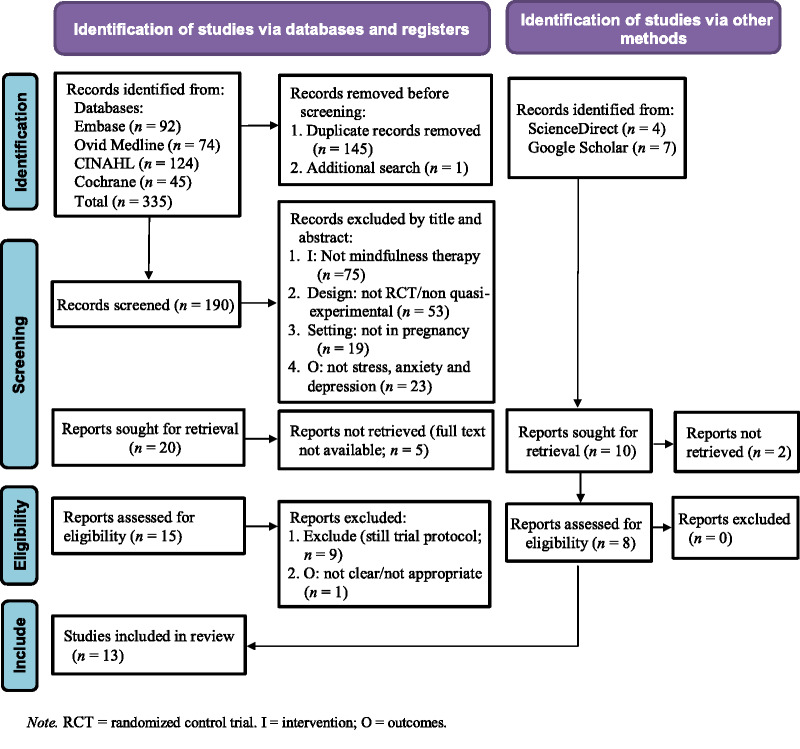
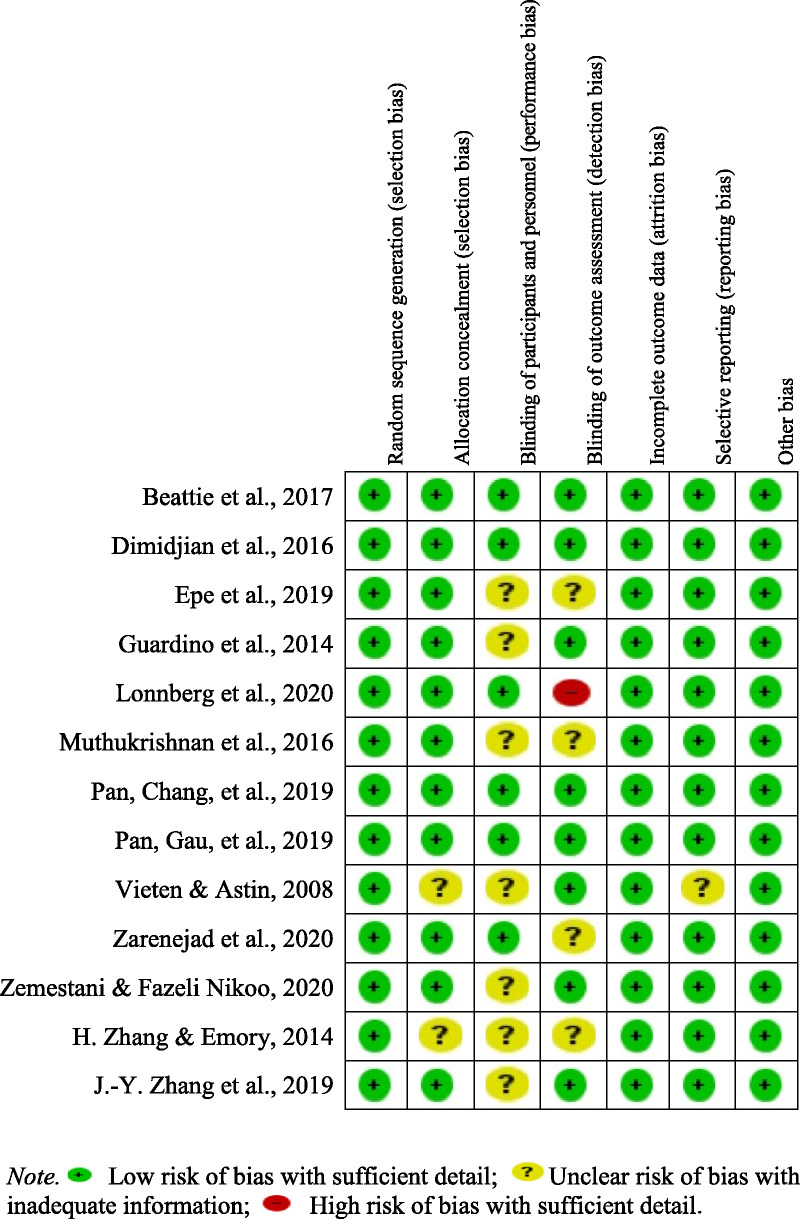
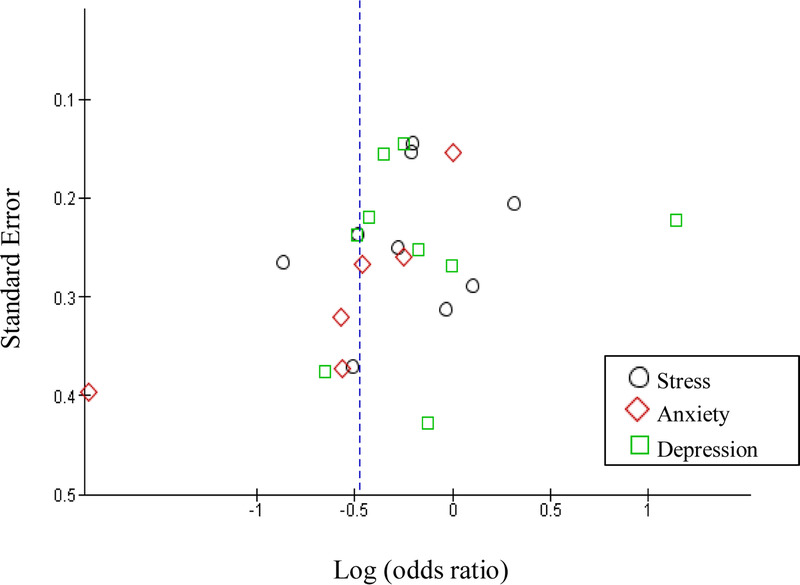
BACKGROUND: Pregnancy stress, anxiety, and depression increase the risk of short-term and long-term health problems for the mother and fetus. Mindfulness-based intervention (MBI) is one of the most popular, nonpharmacological interventions used to treat mental health problems. The results of prior research indicate MBI has a less consistent effect on mental health problems in pregnant women. PURPOSE: The purpose of this systematic review and meta-analysis was to clarify and determine the effect of MBI on mental health outcomes in pregnant women. METHODS: Six databases, including Embase, Ovid MEDLINE, CINAHL, EBSCOhost, Cochrane Library, and ScienceDirect, were searched from their dates of inception to November 2021. Google Scholar was also used for the literature inquiry. The inclusion criteria followed the PICO (Patient/Problem, Intervention, Comparison, and Outcome) model in terms of only including studies that used mindfulness therapy, reported mental health outcomes, and applied randomized controlled trial and quasi-experimental approaches. The Cochrane risk of bias tool was applied to evaluate the quality of the studies. Review Manager 5 software with random effect with a standardized mean difference (SMD) was used to analyze level of effect. RESULTS: Thirteen studies (10 randomized controlled trials and three quasi-experimental studies) were included. MBI was found to have a small effect on mental health outcomes in pregnant women (p < .0001, SMDs = -0.48, 95% CI [-0.74, -0.22], I2 = 87%). Specifically, MBI had moderate effects on stress and anxiety (SMDs = -0.59, 95% CI [-1.09, -0.09], and SMDs = -0.55, 95% CI [-1.00, -0.10], respectively) and no significant effect on depression (SMDs = -0.33, 95% CI [-0.74, 0.08]). CONCLUSIONS: MBIs have a small but notable effect on mental health in pregnant women. The high heterogeneity found in this review may reflect the different types and durations of interventions used. Notably, none of the studies in the review examined intervention effects by trimester. Future research should use larger sample sizes and assess the effects of therapy for each trimester of pregnancy.
Overview
The claims and statistics of this paper haven’t been checked yet.
Free: it reads the open-access text and checks the first 5 claims that cite a source we can check. Create a free account to check every claim.
Integrity signals
Registry
Cites
Statistics
Figures
Verification
Claims the paper makes
The claims and statistics of this paper haven’t been checked yet.
Free: it reads the open-access text and checks the first 5 claims that cite a source we can check. Create a free account to check every claim.
Claims other papers make about this one
Each is checked against this paper’s own text: does it say what the citing paper says it does?
The cited source says what the claim attributes to it.
In the citing paper
“Our findings are consistent with prior meta-analyses evaluating various interventions for supporting maternal mental health in the perinatal period, such as cognitive behavioral therapy,8 mindfulness,9 and general psychoeducation.7”
From Treatment for anxiety, depression, and stress in pregnant people experiencing antepartum hospitalization: a systematic review and meta-analysis (2025) · cites this paper as [9]
Self-check
Percentages, sums and reported differences re-computed from the paper’s own numbers.
The self-check needs the paper’s full text.
Citations
Cites
Prevalence of antenatal and postnatal anxiety: Systematic review and meta-analysis
Dennis, C.-L., Falah-Hassani, K., & Shiri, R. (2017) · British Journal of Psychiatry · doi:10.1192/bjp.bp.116.187179 · Cited by 1,491
Vieten, C., & Astin, J. (2008) · Archives of Women's Mental Health · doi:10.1007/s00737-008-0214-3 · Cited by 369
Synthesising quantitative evidence in systematic reviews of complex health interventions
Higgins, J. P. T., López-López, J. A., Becker, B. J., Davies, S. R., Dawson, S., Grimshaw, J. M., McGuinness, L. A., Moore, T. H. M., Rehfuess, E. A., Thomas, J., et al. (2019) · BMJ Global Health · doi:10.1136/bmjgh-2018-000858 · Cited by 322 · cited 2×
“When heterogeneity values exceeded 50%, a random-effects model was applied (Higgins et al., 2019).”
MethodProspects for a clinical science of mindfulness-based intervention
Dimidjian, S., & Segal, Z. V. (2015) · American Psychologist · doi:10.1037/a0039589 · Cited by 291 · cited 1×
“Third, a previous study found trainer ability to train participants to be an important factor influencing the success of mindfulness therapy (Dimidjian & Segal, 2015).”
BackgroundLever Taylor, B., Cavanagh, K., & Strauss, C. (2016) · PLOS ONE · doi:10.1371/journal.pone.0155720 · Cited by 284 · cited 6×
“However, one previous systematic review and meta-analysis study by Lever Taylor et al. (2016) reported less consistent effects of MBI on stress, anxiety, and depression, with significant yet small effects on stress and anxiety and a moderate effect on depression in perinatal mothers.”
BackgroundResultInfluentialMindfulness and acceptance approaches to sporting performance enhancement: a systematic review.
Noetel, M., Ciarrochi, J., Van Zanden, B., & Lonsdale, C. (2019) · International Review of Sport and Exercise Psychology · doi:10.1080/1750984x.2017.1387803 · Cited by 282 · cited 1×
“Generally, the target populations of this intervention have been children with special needs, obese patients, and mothers during the perinatal period (Noetel et al., 2017).”
BackgroundDimidjian, S., Goodman, S. H., Felder, J. N., Gallop, R., Brown, A. P., & Beck, A. (2016) · Journal of Consulting and Clinical Psychology · doi:10.1037/ccp0000068 · Cited by 223
Randomised controlled pilot trial of mindfulness training for stress reduction during pregnancy
Guardino, C. M., Dunkel Schetter, C., Bower, J. E., Lu, M. C., & Smalley, S. L. (2014) · Psychology & Health · doi:10.1080/08870446.2013.852670 · Cited by 218
Verreault, N., Da Costa, D., Marchand, A., Ireland, K., Dritsa, M., & Khalifé, S. (2014) · Journal of Psychosomatic Obstetrics & Gynecology · doi:10.3109/0167482x.2014.947953 · Cited by 179
Mindfulness-Based Interventions in Psychiatry
Shapero, B. G., Greenberg, J., Pedrelli, P., de Jong, M., & Desbordes, G. (2018) · Focus · doi:10.1176/appi.focus.20170039 · Cited by 172 · cited 2×
“MBI was first developed in the 1970s (Shapero et al., 2018).”
Background
Cited by
Worku, B. T., Abdulahi, M., Amenu, D., & Bonnechère, B. (2025) · BMC Pregnancy and Childbirth · doi:10.1186/s12884-025-07286-9 · Cited by 19
Mwita, M., Dewey, D., Konje, E. T., & Patten, S. B. (2025) · Journal of Affective Disorders · doi:10.1016/j.jad.2025.03.056 · Cited by 15
Soehl, J. R., Anthony, K., Lewkowitz, A. K., Fletcher, L., Ward, L. G., & Miller, E. S. (2025) · American Journal of Obstetrics & Gynecology MFM · doi:10.1016/j.ajogmf.2025.101613 · Cited by 7
Tian, Y., Ma, R., Cui, N., Wang, J., Huang, Y., Guo, K., Liu, X., Fang, H., Dong, M., Wan, C., et al. (2025) · Journal of Medical Internet Research · doi:10.2196/77260 · Cited by 4
-, B., Naz, N., Muhammad, D., & Rehman, K. (2025) · Healthcare · doi:10.3390/healthcare13060584 · Cited by 3
Suzuki, K., Bublitz, M. H., Park, J. J., Arimitsu, T., & Proulx, J. A. (2024) · Mindfulness · doi:10.1007/s12671-024-02460-0 · Cited by 3
Sun, S., Qian, J., Sun, Y., Hu, C., Zeng, X., Ma, J., Yao, Y., Wang, K., & Yu, X. (2025) · BMC Pregnancy and Childbirth · doi:10.1186/s12884-025-08138-2 · Cited by 2
Pengaruh Mindfulness Therapy Terhadap Penurunan Stres Pada Ibu Nifas
Sindi, F., & Ramlah (2025) · Borneo Nursing Journal (BNJ) · doi:10.61878/bnj.v7i2.168 · Cited by 1
Conscious Conception: A Qualitative Study of Intentional Prenatal Engagement and Parental Experience
Pasari, A., & Prasad, D. (2026) · Journal of Prenatal and Perinatal Psychology and Health · doi:10.62858/apphe40203 · Cited by 1
Sharma, S. R., Devi, S., Pallerla, S., Rane, S., & Wagh, N. R. (2026) · Psychology Health & Medicine · doi:10.1080/13548506.2026.2691409 · Cited by 1
Vasudevan, S. R., & Bhuvaneswari, M. (2024) · Journal of Human Behavior in the Social Environment · doi:10.1080/10911359.2024.2395396
Peri- und postnatale Depression und ihre Behandlungsmöglichkeiten
Yildiz, T., Zeiss, R., Kammer, T., & Malejko, K. (2024) · Nervenheilkunde · doi:10.1055/a-2375-5725
Chen, Y., & Wei, L. (2025) · Early Intervention in Psychiatry · doi:10.1111/eip.70067
Psychosomatika jako komplexní pohled na zdraví člověka
Jáklová, K. (2024) · Digitální knihovna Univerzity Pardubice (Univerzity Pardubice)
Sağıroğlu, E., & Körsü, E. (2026) · Psikiyatride Guncel Yaklasimlar - Current Approaches in Psychiatry · doi:10.18863/pgy.1662867
Arwani, L., Mar’ati, Y., Sa’diyah, H. A., & Wahyuni, E. S. (2025) · Jurnal Pengabdian Masyarakat Yudhistira · doi:10.34035//pm.v3i2.1913
Wang, S., Gao, M., Yang, Y., Sun, M., Zhang, D., Luo, Y., Wang, J., & Zheng, R. (2026) · Mindfulness · doi:10.1007/s12671-025-02746-x
Chen, L.-L., Pan, W., Tsai, C.-H., & Yu-Chan, L. I. (2026) · Journal of Nursing Research · doi:10.1097/jnr.0000000000000741
Gliske, K., Buchanan, G. J. R., Carlson, D. D., Cai, Q., Waring, M. E., & Zhang, N. (2026) · Mindfulness · doi:10.1007/s12671-026-02917-4
Tang, G., Cho, U., Zhang, J., & Chen, M. (2026) · Frontiers in Psychiatry · doi:10.3389/fpsyt.2026.1868153
Arabshahi, A., Jalali, M. A., & Gharlipour, Z. (2026) · Research Square · doi:10.21203/rs.3.rs-10845069/v1
Hawana, R. S. M. (2022) · International Journal of Health Sciences · doi:10.53730/ijhs.v6ns10.16026
Stierman, E. K., Clifford, S., Kramer, B. E., Soto, M., Minihane, M., Mary, M., Spielman, K. L., Daggula, K., & Creanga, A. A. (2026) · Journal of Affective Disorders Reports · doi:10.1016/j.jadr.2026.101194
Hubungan Mindfulness Dengan Kecemasan Pada Ibu Hamil
Pinasthika, Y. A., & S. P. (2026) · UMS Library Center of Academic Activities (Universitas Muhammadiyah Surakarta)
Hubungan Antara Mindfulness dan Resiliensi Pada Ibu Hamil
Ibtisamah, N. A., & S. P. (2026) · UMS Library Center of Academic Activities (Universitas Muhammadiyah Surakarta)
Effectiveness of Mindfulness-Based Group Counseling on Prenatal Anxiety in Primiparous Women
Abbasi, R., Goli, S., Farjamfar, M., Pourheidari, M., Garkaz, O., & Paryab, S. (2025) · Shahroud Journal of Medical Sciences · doi:10.22100/ijhs.v12i1.1325
Metadata
- Authors
- SARI, Y. P., HSU, Y.-Y., & NGUYEN, T. T. B.
- Affiliations
- Andalas University (ID)
- National Cheng Kung University (TW)
- Duy Tan University (VN)
- Corresponding author
- HSU, Yu-Yun
- Venue
- Journal of Nursing Research
- Published
- 2023-12
- Volume
- 31
- Issue
- 6
- Pages
- e306
- ISSN
- 1682-3141 (ISSN-L)
- 1948-965X
- PMC
- PMC11812663
- OpenAlex
- W4389241141
- Semantic Scholar
- 55bfb6dbc0652e78e3fcc9762b30585803754469
- Cited by
- 18
- References
- 40
- Citations by year
- 2026: 7 · 2025: 7 · 2024: 3
- FWCI
- 0.84
- Type
- journal article
- Language
- en
- Open access
- diamond
- doi.org
- Locations
- Journal of Nursing Research (publishedVersion, cc-by)
- PubMed Central (publishedVersion, cc-by)
- PubMed (publishedVersion)
- Greater South Information System
- Funders
- National Cheng Kung University
- Universitas Andalas
- Topics
- Health Sciences › Medicine › Public Health, Environmental and Occupational Health › Maternal Mental Health During Pregnancy and Postpartum
- Social Sciences › Psychology › Clinical Psychology › Mindfulness and Compassion Interventions
- Social Sciences › Psychology › Applied Psychology › Digital Mental Health Interventions
- Keywords
- mindfulness-based interventions, pregnancy, maternal mental health, pregnancy stress, anxiety, depression, non-pharmacological treatment
- MeSH terms
- Anxiety, Depression, Female, Humans, Pregnancy, Outcome Assessment, Health Care, Pregnant People, Mindfulness
About these checks
Registry, retraction, Cites and statistics results are computed, not judged, with one exception: a printed reference that no index lists is read once by a model before it counts as a citation error. Claims are extracted by a model and kept only when their quote appears verbatim in the text; each cited source is then checked, with a model’s help, for whether it says what the claim relies on. Those verdicts can be wrong — read the claim’s quote and the cited source before relying on one.
Statistics and arithmetic are recomputed, not judged.
Confidence bands are shown only for fields calibrated on our annotated test set. None is calibrated yet, so no band is shown.
What counts as a claim ›How we measure confidence ›How we check this ›
Are you an author, or do you see a problem with this page? Request a review
Data sources
Bibliographic data: Semantic Scholar, OpenAlex, Crossref.
Contains information from the Semantic Scholar Academic Graph Datasets, made available under the ODC Attribution License (ODC-BY 1.0).
Semantic Scholar’s data is described in: Kinney, R., et al. (2023). The Semantic Scholar Open Data Platform. arXiv:2301.10140.
