

The DOI matches its Crossref record; 26 of the 26 references it cites were found in a registry or an index.
Effectiveness of Mindfulness-based Therapy for Reducing Anxiety and Depression in Patients With Cancer: A Meta-analysis
Open accessAbstract
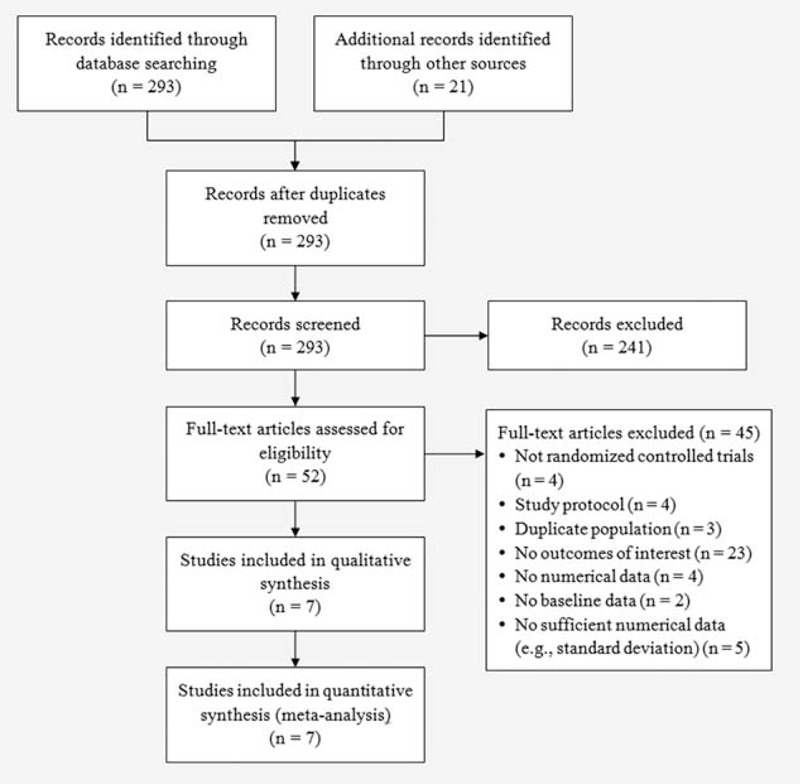
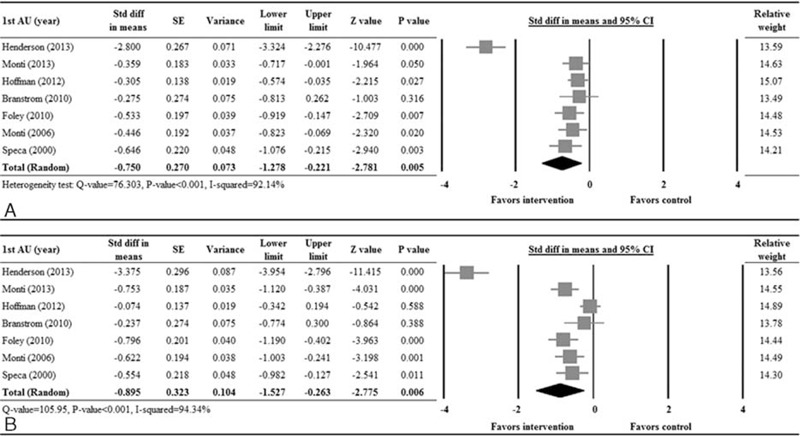
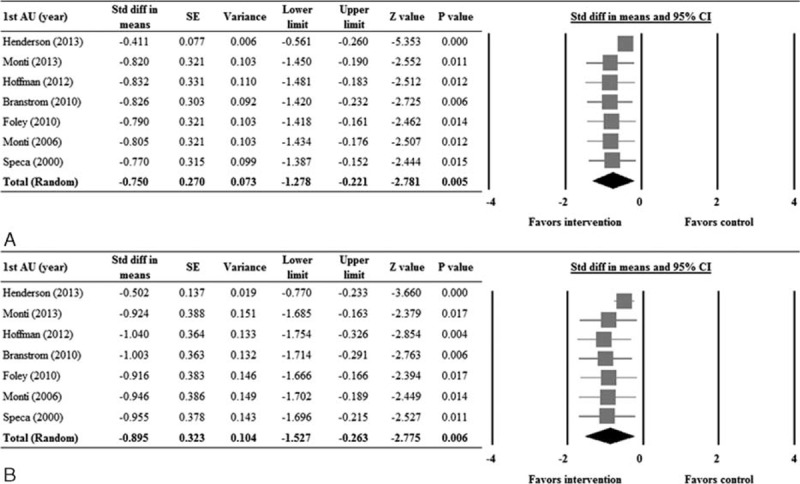
Anxiety and depression are common among patients with cancer, and are often treated with psychological interventions including mindfulness-based therapy.The aim of the study was to perform a meta-analysis of the effectiveness of mindfulness-based interventions for improving anxiety and depression in patients with cancer.Medline, the Cochrane Library, EMBASE, and Google Scholar were searched. The randomized controlled trials designed for patients diagnosed with cancer were included. Mindfulness-based interventions were provided.The outcomes assessed were the changes in anxiety and depression scores from before to after the intervention. The treatment response was determined by calculating the standardized mean difference (SMD) for individual studies and for pooled study results. Subgroup analyses by cancer type, type of therapy, and length of follow-up were performed.Seven studies, involving 469 participants who received mindfulness-based interventions and 419 participants in a control group, were included in the meta-analysis. Mindfulness-based stress reduction and art therapy were the most common interventions (5/7 studies). All studies reported anxiety and depression scores. The pooled SMD of the change in anxiety significantly favored mindfulness-based therapy over control treatment (-0.75, 95% confidence interval -1.28, -0.22, P = 0.005). Likewise, the pooled SMD of the change in depression also significantly favored mindfulness-based therapy over control (-0.90, 95% confidence interval -1.53, -0.26, P = 0.006). During the length of follow-ups less than 12 weeks, mindfulness-based therapy significantly improved anxiety for follow-up ≤12 weeks after the start of therapy, but not >12 weeks after the start of therapy.There was a lack of consistency between the studies in the type of mindfulness-based/control intervention implemented. Patients had different forms of cancer. Subgroup analyses included a relatively small number of studies and did not account for factors such as the severity of anxiety and/or depression, the time since diagnosis, and cancer stage.Mindfulness-based interventions effectively relieved anxiety and depression among patients with cancer. However, additional research is still warranted to determine how long the beneficial effects of mindfulness-based therapy persist.
Overview
The claims and statistics of this paper haven’t been checked yet.
Run the check — free, no account needed. It reads the open-access text and checks the sources it cites.
Integrity signals
Registry
Cites
Statistics
Figures
Verification
Claims the paper makes
The claims and statistics of this paper haven’t been checked yet.
Run the check — free, no account needed. It reads the open-access text and checks the sources it cites.
Claims other papers make about this one
Each is checked against this paper’s own text: does it say what the citing paper says it does?
The source backs part of the claim, not all of it — or backs it for a different population, condition or comparison.
In the citing paper
“Research shows that mindfulness, the process of paying attention with awareness and attentiveness to the immediate experience in a nonjudgmental way,12,13 improves mental health outcomes for a variety of populations, including those facing systemic stigma.14–20”
From Mindfulness, Mental Health, and Violence Exposure Among Transgender Female Sex Workers Living with HIV in the Dominican Republic. (2026) · cites this paper as [17]
Experimental — accuracy not yet measuredIn the citing paper
“Reviews examining the effects of MBCT and MBSR in cancer patients showed moderate to large effects on anxiety and depressive symptoms (ds = .28 to .90) (Haller et al., 2017; Zhang et al., 2015).”
From The relationship between acceptance of cancer and distress: A meta-analytic review (2019) · cites this paper as Zhang et al., 2015
In the citing paper
“Second, the majority of previous meta‐analyses have only included a small number of psychological outcomes,9, 11, 15”
In the citing paper
“These findings have since been supported in a number of more recent meta‐analyses focusing on depression and anxiety in cancer patients,9 primarily patients with breast cancer.10, 11, 12”
Self-check
Percentages, sums and reported differences re-computed from the paper’s own numbers.
The self-check needs the paper’s full text.
Citations
Cites
The Cochrane Collaboration's tool for assessing risk of bias in randomised trials
Higgins, J. P. T., Altman, D. G., Gotzsche, P. C., Juni, P., Moher, D., Oxman, A. D., Savovic, J., Schulz, K. F., Weeks, L., Sterne, J. A. C., et al. (2011) · BMJ · doi:10.1136/bmj.d5928 · Cited by 33,817
Dermyshi, E., Wang, Y., Yan, C., Hong, W., Qiu, G., Gong, X., & Zhang, T. (2017) · Neonatology · doi:10.1159/000454668 · Cited by 24,586
Garnefski, N., Kraaij, V., Schroevers, M. J., & Somsen, G. A. (2008) · Journal of Clinical Psychology in Medical Settings · doi:10.1007/s10880-008-9136-5 · Cited by 2,495
Mitchell, A. J., Chan, M., Bhatti, H., Halton, M., Grassi, L., Johansen, C., & Meader, N. (2011) · The Lancet Oncology · doi:10.1016/s1470-2045(11)70002-x · Cited by 2,449 · cited 1×
“As such, it is hardly surprising that anxiety and depression are very common among patients with cancer.(3,4) Although chemotherapy and radiotherapy can be effective for treating the underlying physical cause(s) of cancer, these treatments do not always affect or improve the psychological well being.”
BackgroundSpeca, M., Carlson, L. E., Goodey, E., & Angen, M. (2000) · Psychosomatic Medicine · doi:10.1097/00006842-200009000-00004 · Cited by 1,082
Faller, H., Schuler, M., Richard, M., Heckl, U., Weis, J., & Küffner, R. (2013) · Journal of Clinical Oncology · doi:10.1200/jco.2011.40.8922 · Cited by 912
Osborn, R. L., Demoncada, A. C., & Feuerstein, M. (2006) · The International Journal of Psychiatry in Medicine · doi:10.2190/eufn-rv1k-y3tr-fk0l · Cited by 621
Mindfulness‐based stress reduction and cancer: a meta‐analysis
Ledesma, D., & Kumano, H. (2009) · Psycho-Oncology · doi:10.1002/pon.1400 · Cited by 491
Piet, J., Würtzen, H., & Zachariae, R. (2012) · Journal of Consulting and Clinical Psychology · doi:10.1037/a0028329 · Cited by 436
Psychosocial concerns and interventions for cancer survivors
Stanton, A. L. (2006) · Journal of Clinical Oncology · doi:10.1200/jco.2006.06.8775 · Cited by 409 · cited 1×
“As such, it is hardly surprising that anxiety and depression are very common among patients with cancer.(3,4) Although chemotherapy and radiotherapy can be effective for treating the underlying physical cause(s) of cancer, these treatments do not always affect or improve the psychological well being.”
Background
Cited by
Sorted by citations
Items 101–172 of 172
Carey, M. L., Sanson‐Fisher, R., Clinton‐McHarg, T., Boyes, A., Olver, I., Oldmeadow, C. J., Paul, C. L., D’Este, C. A., & Henskens, F. A. (2018) · Supportive Care in Cancer · doi:10.1007/s00520-018-4188-z · Cited by 6
Angst und Emotionsregulation bei Krebspatienten
Bussmann, S., Vaganian, L., Kusch, M., Labouvie, H., Gerlach, A. L., & Cwik, J. C. (2018) · Psychotherapeut · doi:10.1007/s00278-018-0283-3 · Cited by 7
“Während Zimmermann et al. (2007) in ihrer frühen Metaanalyse noch darauf verweisen, dass für eine Beurteilung der Wirksamkeit von achtsamkeitsbasierter Therapie eine ausreichende Datenbasis fehle, stellten Zhang et al. (2015) in ihrer Metaanalyse keine signifikanten Effekte nach 12 Wochen mehr fest.”
BackgroundGamage, B. D., Gamage, M. N., Perera, N. M., Kodikara, C. S., Wijeratne, J. U. M., Alles, P. S., Kumaran, T., Jeewandara, J. M. K. C., & Mahawithanage, S. T. C. (2024) · BMJ Open · doi:10.1136/bmjopen-2023-080192 · Cited by 5
Art Making Promotes Mental Health: A Solution for Schools That Time Forgot
Martin, B. H., & Colp, S. M. (2022) · Canadian Journal of Education / Revue canadienne de l éducation · doi:10.53967/cje-rce.v45i1.5017 · Cited by 11
Occupational Therapy’s Role with Oncology in the Acute Care Setting: A Descriptive Case Study
Morikawa, S., & Amanat, Y. (2021) · Occupational Therapy In Health Care · doi:10.1080/07380577.2021.1961181 · Cited by 6
Li, H., Song, G., Xiao, B., & Gong, Q. (2024) · Psycho-Oncologie · doi:10.18282/po3599 · Cited by 4
Resilient living program for patients with advanced cancer and their caregivers
Chesak, S. S., Rhudy, L. M., Cutshall, S. M., Leventakos, K., Tofthagen, C., Mandrekar, J. N., Rummans, T. A., Clark, M. M., Ehlers, S. L., Lapid, M. I., et al. (2025) · Palliative & Supportive Care · doi:10.1017/s1478951524002128 · Cited by 4
Cramer, H., Haller, H., Paul, A. E., & Dobos, G. J. (2017) · Forum · doi:10.1007/s12312-017-0317-8 · Cited by 4
Agarwal, K., Kelly, L. L., Heintzman, J. C., & Fortune, L. D. (2022) · Pastoral Psychology · doi:10.1007/s11089-022-01014-2 · Cited by 4
Kohut, S. A., & Saltzman, A. (2021) · Pediatric Annals · doi:10.3928/19382359-20210117-01 · Cited by 5
Potter, K., & Coyle, A. (2017) · European Journal of Psychotherapy & Counselling · doi:10.1080/13642537.2017.1313879 · Cited by 4
Millrod, E. (2020) · American Journal of Dance Therapy · doi:10.1007/s10465-020-09323-w · Cited by 3
Meditative and mind-body practice among patients with genitourinary malignancy
Daly, W. C., Han, P. K. J., Hayn, M. H., Ryan, S. T., Hansen, M. H., Linscott, J. A., Trinh, Q., & Sammon, J. D. (2021) · Urologic Oncology Seminars and Original Investigations · doi:10.1016/j.urolonc.2020.09.011 · Cited by 3
Mindfulness as an intervention after multisystem trauma
Clement, E., Murphy, P., Lee, A. S. Y., Ericson, A. D., Gratton, C., Clements, T. W., Ryan, J. F., Kim, M. J., Ball, C. G., & Widder, S. L. (2020) · Trauma · doi:10.1177/1460408620961014 · Cited by 3
“Cumulative DASS-21 score, mean (sd) 11 (8) 12 (6) 12 (7) 0.”
Mindfulness-based therapies for cancer patients and families: a systematic review
Torricelli, L., Rabitti, E., Cafaro, V., Cavuto, S., Vincenzo, F. D., Cavuoto, M., Turola, E., & Leo, S. D. (2022) · BMJ Supportive & Palliative Care · doi:10.1136/bmjspcare-2021-003392 · Cited by 3
Lai, Y., Lee, K., & Huang, T.-W. (2023) · Current Psychology · doi:10.1007/s12144-023-04529-w · Cited by 3
Miftahussurur, M., Savitri, C. M. A., Rezkhita, Y. A. A., Vidyani, A., Doohan, D., Priyantini, D., Sugihartono, T., & Yamaoka, Y. (2023) · Research Journal of Pharmacy and Technology · doi:10.52711/0974-360x.2023.00252 · Cited by 3
Prospective trajectories of depression predict mortality in cancer patients
Sanghvi, D. E., Chen, S., & Bonanno, G. A. (2024) · Journal of Behavioral Medicine · doi:10.1007/s10865-024-00485-3 · Cited by 3
“…exploring different interventions and treatment modalities that may improve levels of depression in cancer patients (e.g., Xiao et al., 2017; Zhang et al., 2015; Zhou et al., 2015), almost no research exists that may explain why levels of depression may improve after a diagnosis of cancer…”
MINDFULNESS CONTRIBUTIONS ON MEDICAL CONDITIONS: A LITERATURE REVIEW
Mouzinho, L. S. N., Costa, N., Alves, T., Silva, S., & de Lima, L. (2018) · Psicologia Saúde & Doenças · doi:10.15309/18psd190202 · Cited by 8
Pasqualucci, P. L., Seifert, G., Filho, V. O., & dos Santos, A. C. (2022) · Pilot and Feasibility Studies · doi:10.1186/s40814-022-01176-z · Cited by 3
Effect of a mindfulness intervention on patients admitted after multisystem trauma.
Clement, E., Yoon, J., Sutherland, T., Tsang, B., Fawcett, V., Kim, M., & Widder, S. (2020) · Trauma · doi:10.1177/1460408619872593 · Cited by 2
“reduce symptoms of PTSD in veterans, victims of domestic violence, and healthcare workers as well as symptoms of depression and anxiety in cancer patients.(4,5) Furthermore, mindfulness practices can improve resilience, which is the ability to adjust positively in the aftermath of a potentially traumatic event.”
BackgroundDavidson, D. J. (2020) · Clinical Orthopaedics and Related Research · doi:10.1097/corr.0000000000001451 · Cited by 2
Orhan, A. F., Yılmaz, S., Orhan, E. A., & Karcıoğlu, Ö. (2022) · Global Emergency and Critical Care · doi:10.4274/globecc.galenos.2022.43531 · Cited by 2
Pain, Depression, and Anxiety in Cancer
Thompson, L. M. A., Babilonia, M. B., Rajasekhara, S., & Donovan, K. A. (2018) · Springer eBooks · doi:10.1007/978-3-319-95369-4_31 · Cited by 2
Curado, D. F., Gallo, G. G., Machado, M. P. A., de Barros, V. V., & Noto, A. R. (2022) · Psico-USF · doi:10.1590/1413-82712028270307 · Cited by 2
Tregnago, D., Avancini, A., Belluomini, L., Trestini, I., Sposito, M., Insolda, J., Bianchi, F., Sava, T., Gaiani, C., Piccolo, L. D., et al. (2024) · PLoS ONE · doi:10.1371/journal.pone.0290792 · Cited by 2
Moskowitz, J. T., Sharma, B., Javandel, S., Moran, P. J., Paul, R. H., Gruttola, V. D., Tomov, D., Azmy, H., Sandoval, R., Hillis, M., et al. (2024) · AIDS and Behavior · doi:10.1007/s10461-024-04295-1 · Cited by 2
“Mindfulness-Based Stress Reduction (MBSR) reduces psychological symptom burden for PWH, the general population, and those with non-HIV chronic illness [11, 12, 17–19].”
Brain research shows the arts promote mental health
Martin, B. H. (2020) · The Conversation · doi:10.64628/aam.c7vqttgf3 · Cited by 2
Gupta, R. K., Mayhew, M., Woollard, R. F., & Gelb, K. R. (2021) · Family Practice · doi:10.1093/fampra/cmab111 · Cited by 3
Feasibility of the Hemomindful Program: a mindfulness-based program performed during hemodialysis
Adamoli, A., Razzera, B. N., Colferai, R. N., Ranheiri, M. F., Machado, W. D. L., Feoli, A. M. P., Noto, A. R., & Oliveira, M. D. S. (2024) · Jornal Brasileiro De Nefrologia · doi:10.1590/2175-8239-jbn-2024-0068en · Cited by 2
Onyedibe, M. C., & Ugwu, S. I. (2025) · Journal of Health Psychology · doi:10.1177/13591053251394937 · Cited by 1
Zhang, Z., & Liang, C. (2026) · Journal of Radiation Research and Applied Sciences · doi:10.1016/j.jrras.2026.102175 · Cited by 1
The Lexical Association Technique: A randomized controlled trial with breast cancer patients
Niveau, N., Beaudoin, M., Cornulier, J. D., & New, B. (2022) · Applied Psychology Health and Well-Being · doi:10.1111/aphw.12412 · Cited by 1
The Effect of Mindfulness and Gender on the English Achievement
Sipahutar, D. P., Petrus, I., & Eryansyah, E. (2023) · JPI (Jurnal Pendidikan Indonesia) · doi:10.23887/jpiundiksha.v12i3.64305 · Cited by 1
Integrative Medicine in the Oncology Setting, What Does the Research Show?
Schuster, L. (2018) · The Journal for Nurse Practitioners · doi:10.1016/j.nurpra.2017.11.015 · Cited by 1
Jung, G., Kim, S.-H., Kim, T. G., & Kim, Y. Z. (2019) · Brain Tumor Research and Treatment · doi:10.14791/btrt.2019.7.e35 · Cited by 1
Maclin, B. J., Donastorg, Y., Perez, M., Gomez, H., Barrington, C., & Kerrigan, D. (2026) · Transgender Health · doi:10.1177/26884887251365815 · Cited by 1
The Relationship between Anxiety Vulnerability Factors, Psychedelic Drug Use and Trait Anxiety
Ursa, F. (2016) · Lund University Publications Student Papers (Lund University)
Geyer, C. (2017) · American Journal of Lifestyle Medicine · doi:10.1177/1559827617713170
“Increasing research shows that mindfulness-based stress reduction (MBSR) practices can have a moderate to large impact on reducing stress, anxiety, and depression.(31,32) Another study combined peer support groups with MBSR, and the results showed that the group environment facilitated the learning process, provided a…”
BackgroundChinh, K. (2017) · Purdue e-Pubs (Purdue University System) · doi:10.7912/c20942
“In a recent meta-analysis of seven mindfulness-based RCTs addressing cancer patients’ mental health outcomes (N = 469), reductions in anxiety and depression were found compared to control groups (pooled SMD = -0.75 and pooled SMD = -0.90; respectively) (Zhang et al., 2015).”
InfluentialAdvancing Integrative Cancer Care: Society for Integrative Oncology
HART, J. K. (2017) · Alternative and Complementary Therapies · doi:10.1089/act.2017.29132.pro
Evidencia empírica de las intervenciones basadas en Mindfulness en patología somática.
Ibáñez, Á., & León-Quismondo, L. (2019) · Revista de Investigación y Educación en Ciencias de la Salud (RIECS) · doi:10.37536/riecs.2019.4.s1.120
“[17] realizaron una revisión sistemática sobre la eficacia de Mindfulness en la ansiedad y depresión en pacientes con cáncer, incluyendo en su metaanálisis un total de 7 estudios con 469 participantes que recibieron intervenciones basadas en mindfulness y 419 en un grupo control.”
BackgroundBélanger, B., Charbonneau, C., Beauregard, L., Biron, C., & Poulin, S. P. (2021) · Théologiques · doi:10.7202/1074681ar
(2017) · De Boeck Supérieur eBooks · doi:10.3917/dbu.isnar.2017.01.0195
“Dolce far niente” and mindfulness
Dhillon, H., Sasidharan, S., Dhillon, G. K., & Manalikuzhiyil, B. (2022) · MRIMS Journal of Health Sciences · doi:10.4103/mjhs.mjhs_46_21
Pasqualucci, P. L., Seifert, G., Filho, V. O., & dos Santos, A. C. (2022) · Research Square · doi:10.21203/rs.3.rs-1466033/v1
Reuter, J. (2018) · Elsevier eBooks · doi:10.1016/b978-3-437-15340-2.00004-5
Ma, R., Xuan, Y., Duan, Y., & Shuai, T. (2022) · PubMed Central · doi:10.19723/j.issn.1671-167x.2022.04.023
Mindfulness-Based Practice and Eliciting the Relaxation Response
Grossman, M. (2022) · Springer eBooks · doi:10.1007/978-3-031-06101-1_13
Evidence-Based Treatments for Anxiety Disorders
Azab, M. (2022) · Springer eBooks · doi:10.1007/978-3-031-19362-0_5
Anxiety disorders: Mindfulness-based cognitive behavioral therapy
Apolinário-Hagen, J., Drüge, M., Danino, R., & Tasseit, S. (2023) · Elsevier eBooks · doi:10.1016/b978-0-323-85726-0.00014-4
A Theoretical Understanding of the Role of Mindfulness in Stress Among Cancer Patients
Maryam, R. (2023) · Indian Journal of Health Studies · doi:10.56490/ijhs.2023.5107
What is the main reason of erectile dysfunction in lymphoma patients: Chemotherapy or Depression?
YALÇIN, C., Erdoğan, A., & YILMAZ, G. (2023) · Turkish Journal of Internal Medicine · doi:10.46310/tjim.1210699
Moussa, D., Zika, O. O., Teguera, M., & Karfo, K. (2023) · Psy Cause · doi:10.3917/psca.084.0041
Malandrone, F., Urru, S., Berchialla, P., Rossini, P. G., Oliva, F., Bianchi, S., Ottaviano, M., González-Martínez, S., Carli, V., Valenza, G., et al. (2024) · doi:10.2196/preprints.57415
The Role of Mindfulness-Based Interventions in Treating Depression among Population Subgroups
Saiuk, N., Kołodziej, M., Kozicz, M. A., Mądry, W., Mazurkiewicz, A., Męczyńska, J., Seredyński, T., Wojciechowska, A., Marcicka, J., & Salasa, W. (2024) · Journal of Education Health and Sport · doi:10.12775/jehs.2024.66.007
Bourgognon, F., Béchet, D., Huin‐Schohn, C., Strelow, A., Demarche, L., Guillou, M., Adam, V. S., Fall, E., & Omorou, A. Y. (2024) · Frontiers in Psychology · doi:10.3389/fpsyg.2024.1409308 · Cited by 1
Ghaleie, P. K., Hooman, F., Naderi, F., Shoushtari, M. T., & Gatezadeh, A. (2024) · Jundishapur journal of health sciences · doi:10.5812/jjhs-150036
Schweig, T., Fink, M., Schmidt, K., Krawutschke, M., Pasche, S., Skoda, E., Teufel, M., & Müller, B. W. (2024) · Integrative Cancer Therapies · doi:10.1177/15347354241294057
Collinge, W., Kozak, L. E., Mist, S. D., & Soltysik, R. C. (2025) · Global Advances in Integrative Medicine and Health · doi:10.1177/27536130241309851
Effect of Anapanasati and Mettabhavana on Anxiety and Mindfulness Among Cancer PatientPreprint
Musale, S. N., & Chawre, N. (2025) · SSRN Electronic Journal · doi:10.2139/ssrn.5214811
(2025) · Elsevier eBooks · doi:10.1016/b978-3-437-21835-4.00116-5
ÇIRLAK, A., Şener, B. B., & Gökdemir, D. (2025) · Türk hemşireler derneği dergisi. · doi:10.70479/thdd.1646901
Introducing Integrative Health in a Crisis-Stricken Country Like Lebanon: Can It Bring Relief?
Mansour, M. (2025) · European Journal of Medical and Health Research · doi:10.59324/ejmhr.2025.3(3).15
Reangsing, C., Punsuwun, S., & Wongsuraprakit, S. (2025) · Journal of Integrative and Complementary Medicine · doi:10.1089/jicm.2024.0943
Li, W., Li, X., Liang, X., Huang, L., & Yang, X. (2025) · Psycho-Oncologie · doi:10.18282/po4504
der Gucht, K. V., Melis, M., Ahmadoun, S., Gebruers, A., Smeets, A., Vandenbulcke, M., Wildiers, H., Neven, P., Kuppens, P., Raes, F., et al. (2020) · Figshare · doi:10.6084/m9.figshare.12023718
Zeleke, H., Assefa, B., Amlak, B. T., & Edmealem, A. (2026) · Rehabilitation Oncology · doi:10.1097/01.reo.0000000000000414
Li, M. (2026) · Discover Artificial Intelligence · doi:10.1007/s44163-026-01651-z
Deng, H., Long, D., Zhou, H., & Tang, Z. (2026) · Journal of Psychosomatic Research · doi:10.1016/j.jpsychores.2026.112958
Metadata
- Authors
- Zhang, M.-F., Wen, Y.-S., Liu, W.-Y., Peng, L.-F., Wu, X.-D., & Liu, Q.-W.
- Affiliations
- Sun Yat-sen University (CN)
- Venue
- Medicine
- Published
- 2015-11
- Volume
- 94
- Issue
- 45
- Pages
- e0897-0
- ISSN
- 0025-7974 (ISSN-L)
- PMC
- PMC4912240
- OpenAlex
- W2333874112
- Cited by
- 172
- References
- 26
- Citations by year
- 2026: 4 · 2025: 11 · 2024: 17 · 2023: 19 · 2022: 27 · 2021: 23 · 2020: 17 · 2019: 18 · 2018: 13 · 2017: 14 · 2016: 9
- FWCI
- 14.88
- Type
- journal article
- Language
- en
- Open access
- gold
- doi.org
- Licence
- cc-by-nc-nd
- Locations
- Medicine (publishedVersion, cc-by-nc-nd)
- PubMed Central (publishedVersion, cc-by-nc-nd)
- PubMed (publishedVersion)
- Funders
- Natural Science Foundation of Guangdong Province (S2011010003549)
- Topics
- Social Sciences › Psychology › Clinical Psychology › Mindfulness and Compassion Interventions
- Health Sciences › Medicine › Oncology › Cancer survivorship and care
- Social Sciences › Psychology › Clinical Psychology › Art Therapy and Mental Health
- Keywords
- mindfulness-based interventions, cancer patients, anxiety, depression, mindfulness-based stress reduction, art therapy, psychological intervention, treatment response, follow-up duration
- MeSH terms
- Anxiety Disorders, Depressive Disorder, Humans, Neoplasms, Mindfulness
About these checks
Registry, retraction, Cites and statistics results are computed, not judged, with one exception: a printed reference that no index lists is read once by a model before it counts as a citation error. Claims are extracted by a model and kept only when their quote appears verbatim in the text; each cited source is then checked, with a model’s help, for whether it says what the claim relies on. Those verdicts can be wrong — read the claim’s quote and the cited source before relying on one.
Statistics and arithmetic are recomputed, not judged.
Confidence bands are shown only for fields calibrated on our annotated test set. None is calibrated yet, so no band is shown.
What counts as a claim ›How we measure confidence ›How we check this ›
Are you an author, or do you see a problem with this page? Request a review
