

The DOI matches its Crossref record; 26 of the 26 references it cites were found in a registry or an index.
Effectiveness of Mindfulness-based Therapy for Reducing Anxiety and Depression in Patients With Cancer: A Meta-analysis
Open accessAbstract
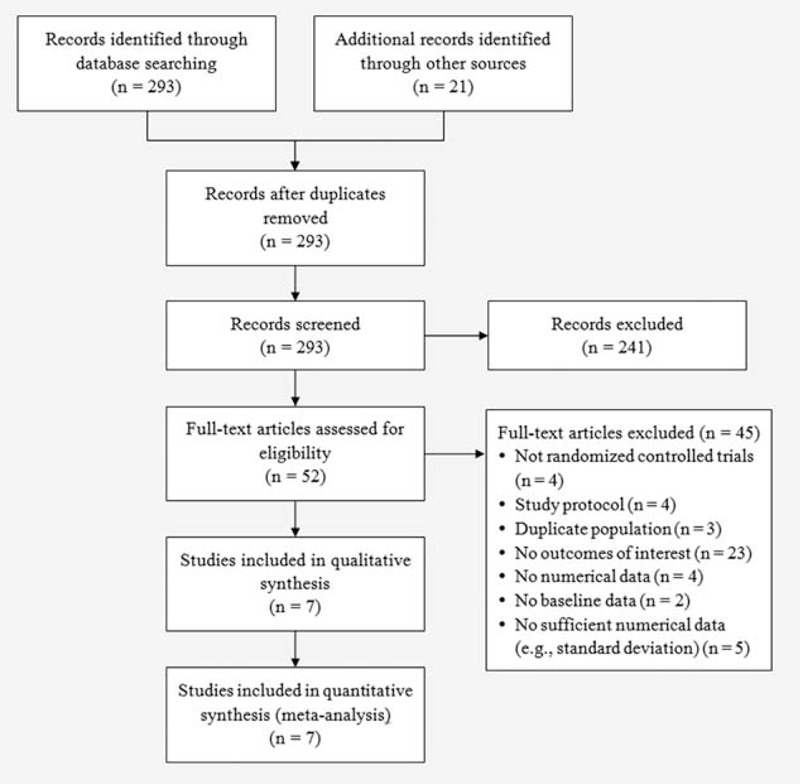
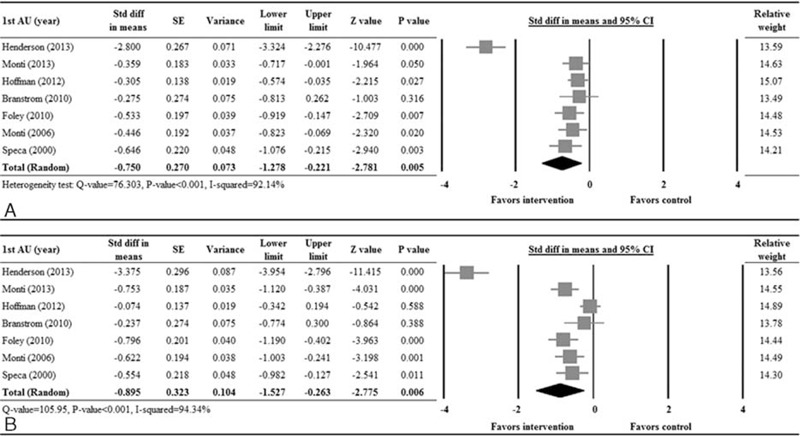
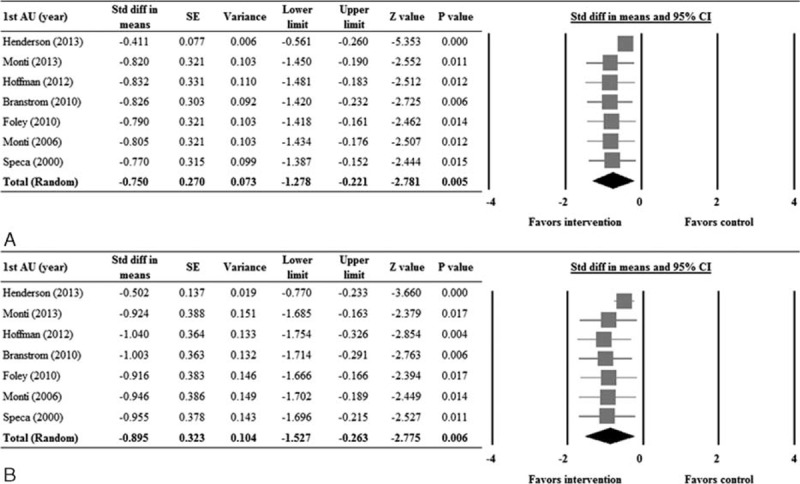
Anxiety and depression are common among patients with cancer, and are often treated with psychological interventions including mindfulness-based therapy.The aim of the study was to perform a meta-analysis of the effectiveness of mindfulness-based interventions for improving anxiety and depression in patients with cancer.Medline, the Cochrane Library, EMBASE, and Google Scholar were searched. The randomized controlled trials designed for patients diagnosed with cancer were included. Mindfulness-based interventions were provided.The outcomes assessed were the changes in anxiety and depression scores from before to after the intervention. The treatment response was determined by calculating the standardized mean difference (SMD) for individual studies and for pooled study results. Subgroup analyses by cancer type, type of therapy, and length of follow-up were performed.Seven studies, involving 469 participants who received mindfulness-based interventions and 419 participants in a control group, were included in the meta-analysis. Mindfulness-based stress reduction and art therapy were the most common interventions (5/7 studies). All studies reported anxiety and depression scores. The pooled SMD of the change in anxiety significantly favored mindfulness-based therapy over control treatment (-0.75, 95% confidence interval -1.28, -0.22, P = 0.005). Likewise, the pooled SMD of the change in depression also significantly favored mindfulness-based therapy over control (-0.90, 95% confidence interval -1.53, -0.26, P = 0.006). During the length of follow-ups less than 12 weeks, mindfulness-based therapy significantly improved anxiety for follow-up ≤12 weeks after the start of therapy, but not >12 weeks after the start of therapy.There was a lack of consistency between the studies in the type of mindfulness-based/control intervention implemented. Patients had different forms of cancer. Subgroup analyses included a relatively small number of studies and did not account for factors such as the severity of anxiety and/or depression, the time since diagnosis, and cancer stage.Mindfulness-based interventions effectively relieved anxiety and depression among patients with cancer. However, additional research is still warranted to determine how long the beneficial effects of mindfulness-based therapy persist.
Overview
The claims and statistics of this paper haven’t been checked yet.
Run the check — free, no account needed. It reads the open-access text and checks the sources it cites.
Integrity signals
Registry
Cites
Statistics
Figures
Verification
Claims the paper makes
The claims and statistics of this paper haven’t been checked yet.
Run the check — free, no account needed. It reads the open-access text and checks the sources it cites.
Claims other papers make about this one
Each is checked against this paper’s own text: does it say what the citing paper says it does?
The source backs part of the claim, not all of it — or backs it for a different population, condition or comparison.
In the citing paper
“Research shows that mindfulness, the process of paying attention with awareness and attentiveness to the immediate experience in a nonjudgmental way,12,13 improves mental health outcomes for a variety of populations, including those facing systemic stigma.14–20”
From Mindfulness, Mental Health, and Violence Exposure Among Transgender Female Sex Workers Living with HIV in the Dominican Republic. (2026) · cites this paper as [17]
Experimental — accuracy not yet measuredIn the citing paper
“Reviews examining the effects of MBCT and MBSR in cancer patients showed moderate to large effects on anxiety and depressive symptoms (ds = .28 to .90) (Haller et al., 2017; Zhang et al., 2015).”
From The relationship between acceptance of cancer and distress: A meta-analytic review (2019) · cites this paper as Zhang et al., 2015
In the citing paper
“Second, the majority of previous meta‐analyses have only included a small number of psychological outcomes,9, 11, 15”
In the citing paper
“These findings have since been supported in a number of more recent meta‐analyses focusing on depression and anxiety in cancer patients,9 primarily patients with breast cancer.10, 11, 12”
Self-check
Percentages, sums and reported differences re-computed from the paper’s own numbers.
The self-check needs the paper’s full text.
Citations
Cites
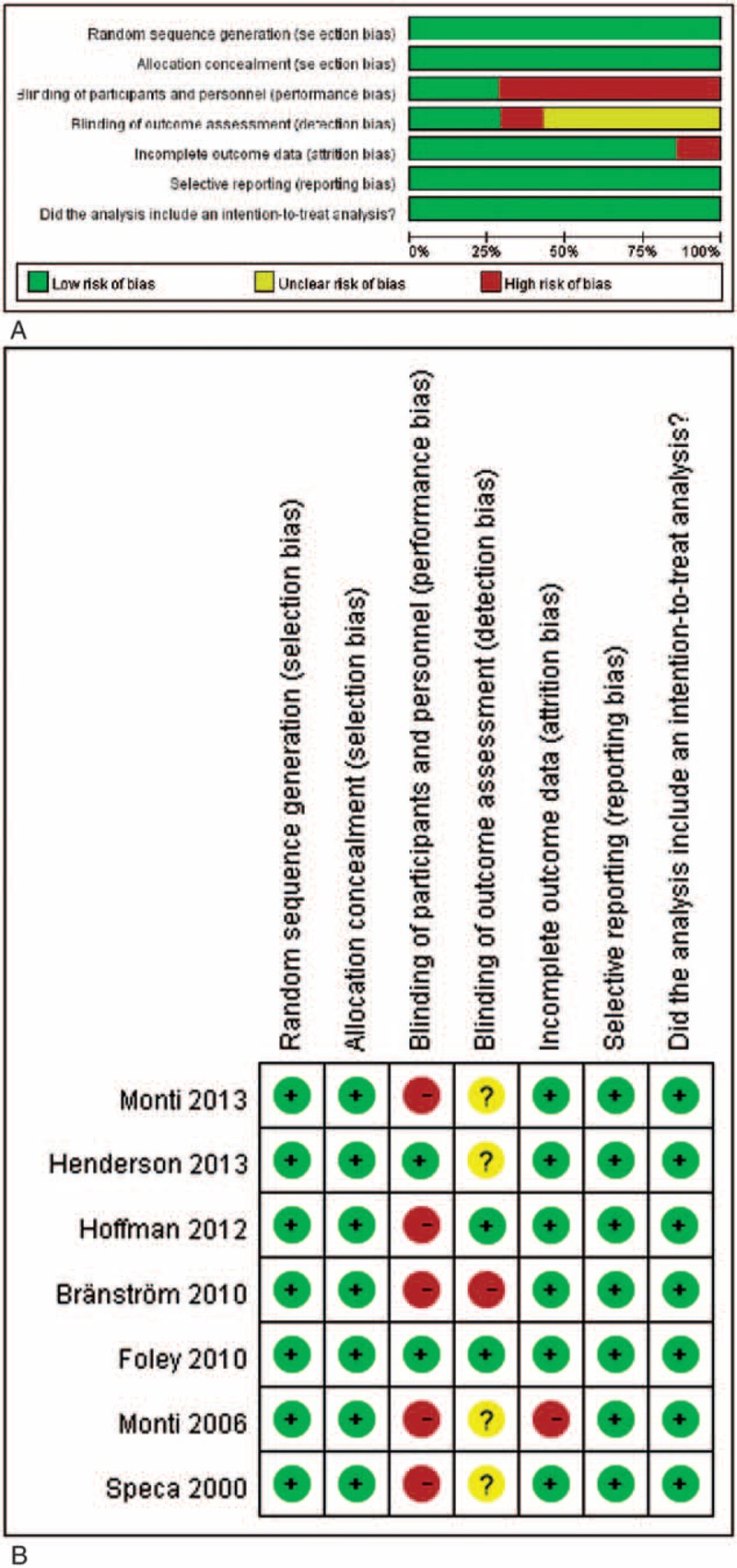
The Cochrane Collaboration's tool for assessing risk of bias in randomised trials
Higgins, J. P. T., Altman, D. G., Gotzsche, P. C., Juni, P., Moher, D., Oxman, A. D., Savovic, J., Schulz, K. F., Weeks, L., Sterne, J. A. C., et al. (2011) · BMJ · doi:10.1136/bmj.d5928 · Cited by 33,817
Dermyshi, E., Wang, Y., Yan, C., Hong, W., Qiu, G., Gong, X., & Zhang, T. (2017) · Neonatology · doi:10.1159/000454668 · Cited by 24,586
Garnefski, N., Kraaij, V., Schroevers, M. J., & Somsen, G. A. (2008) · Journal of Clinical Psychology in Medical Settings · doi:10.1007/s10880-008-9136-5 · Cited by 2,495
Mitchell, A. J., Chan, M., Bhatti, H., Halton, M., Grassi, L., Johansen, C., & Meader, N. (2011) · The Lancet Oncology · doi:10.1016/s1470-2045(11)70002-x · Cited by 2,449 · cited 1×
“As such, it is hardly surprising that anxiety and depression are very common among patients with cancer.(3,4) Although chemotherapy and radiotherapy can be effective for treating the underlying physical cause(s) of cancer, these treatments do not always affect or improve the psychological well being.”
BackgroundSpeca, M., Carlson, L. E., Goodey, E., & Angen, M. (2000) · Psychosomatic Medicine · doi:10.1097/00006842-200009000-00004 · Cited by 1,082
Faller, H., Schuler, M., Richard, M., Heckl, U., Weis, J., & Küffner, R. (2013) · Journal of Clinical Oncology · doi:10.1200/jco.2011.40.8922 · Cited by 912
Osborn, R. L., Demoncada, A. C., & Feuerstein, M. (2006) · The International Journal of Psychiatry in Medicine · doi:10.2190/eufn-rv1k-y3tr-fk0l · Cited by 621
Mindfulness‐based stress reduction and cancer: a meta‐analysis
Ledesma, D., & Kumano, H. (2009) · Psycho-Oncology · doi:10.1002/pon.1400 · Cited by 491
Piet, J., Würtzen, H., & Zachariae, R. (2012) · Journal of Consulting and Clinical Psychology · doi:10.1037/a0028329 · Cited by 436
Psychosocial concerns and interventions for cancer survivors
Stanton, A. L. (2006) · Journal of Clinical Oncology · doi:10.1200/jco.2006.06.8775 · Cited by 409 · cited 1×
“As such, it is hardly surprising that anxiety and depression are very common among patients with cancer.(3,4) Although chemotherapy and radiotherapy can be effective for treating the underlying physical cause(s) of cancer, these treatments do not always affect or improve the psychological well being.”
Background
Cited by
Sorted by citations
Depression in cancer: The many biobehavioral pathways driving tumor progression
Bortolato, B., Hyphantis, T. N., Valpione, S., Perini, G., Maes, M. H. J., Morris, G., Kubera, M., Köhler, C. A., Fernandes, B. S., Stubbs, B., et al. (2016) · Cancer Treatment Reviews · doi:10.1016/j.ctrv.2016.11.004 · Cited by 399
Cillessen, L., Johannsen, M., Speckens, A. E. M., & Zachariae, R. (2019) · Psycho-Oncology · doi:10.1002/pon.5214 · Cited by 326
Conversano, C., Di Giuseppe, M., Miccoli, M., Ciacchini, R., Gemignani, A., & Orrù, G. (2020) · Frontiers in Psychology · doi:10.3389/fpsyg.2020.01900 · Cited by 259
Xunlin, N., Lau, Y., & Klainin-Yobas, P. (2020) · Supportive Care in Cancer · doi:10.1007/s00520-019-05219-9 · Cited by 243
Economides, M., Martman, J., Bell, M. J., & Sanderson, B. (2018) · Mindfulness · doi:10.1007/s12671-018-0905-4 · Cited by 250
Sommers-Spijkerman, M., Austin, J., Bohlmeijer, E., & Pots, W. (2021) · JMIR Mental Health · doi:10.2196/28168 · Cited by 179
Christopher, M. S., Hunsinger, M., Goerling, L. R. J., Bowen, S., Rogers, B. S., Gross, C. R., Dapolonia, E., & Pruessner, J. C. (2018) · Psychiatry Research · doi:10.1016/j.psychres.2018.03.059 · Cited by 173
Chayadi, E., Baes, N., & Kiropoulos, L. A. (2022) · PLoS ONE · doi:10.1371/journal.pone.0269519 · Cited by 165
Witek Janusek, L., Tell, D., & Mathews, H. L. (2019) · Brain, Behavior, and Immunity · doi:10.1016/j.bbi.2019.04.012 · Cited by 143
The relationship between acceptance of cancer and distress: A meta-analytic review
Secinti, E., Tometich, D. B., Johns, S. A., & Mosher, C. E. (2019) · Clinical Psychology Review · doi:10.1016/j.cpr.2019.05.001 · Cited by 132
An integrative collaborative care model for people with mental illness and physical comorbidities
Ee, C., Lake, J., Firth, J., Hargraves, F., de Manincor, M., Meade, T., Marx, W., & Sarris, J. J. (2020) · International Journal of Mental Health Systems · doi:10.1186/s13033-020-00410-6 · Cited by 173
Partecke, L. I., Speerforck, S., Käding, A., Seubert, F., Kühn, S., Lorenz, E., Schwandke, S., Sendler, M., Keßler, W., Trung, D. N., et al. (2016) · Pancreatology · doi:10.1016/j.pan.2016.03.005 · Cited by 136
Li, J., Li, C., Puts, M., Wu, Y.-C., Lyu, M.-M., Yuan, B., & Zhang, J.-P. (2023) · International Journal of Nursing Studies · doi:10.1016/j.ijnurstu.2023.104447 · Cited by 127
Mind-Body Therapies in Cancer: What Is the Latest Evidence?
Carlson, L. E., Zelinski, E., Toivonen, K., Flynn, M., Qureshi, M., Piedalue, K.-A., & Grant, R. (2017) · Current Oncology Reports · doi:10.1007/s11912-017-0626-1 · Cited by 136
Repurposing Drugs in Oncology (ReDO)—Propranolol as an anti-cancer agent
Pantziarka, P., Bouche, G., Sukhatme, V. V., Meheus, L., Rooman, I., & Sukhatme, V. P. (2016) · ecancermedicalscience · doi:10.3332/ecancer.2016.680 · Cited by 119
Johns, S. A., Brown, L. F., Beck-Coon, K., Talib, T. L., Monahan, P. O., Giesler, R. B., Tong, Y., Wilhelm, L., Carpenter, J. S., Von Ah, D., et al. (2016) · Supportive Care in Cancer · doi:10.1007/s00520-016-3220-4 · Cited by 112
Deshields, T. L., Gregorio, S. W., Flowers, S. R., Irwin, K. E., Nipp, R. D., Padgett, L. S., & Zebrack, B. (2021) · CA A Cancer Journal for Clinicians · doi:10.3322/caac.21672 · Cited by 125
Apolinário-Hagen, J., Drüge, M., & Fritsche, L. (2020) · Advances in Experimental Medicine and Biology · doi:10.1007/978-981-32-9705-0_17 · Cited by 100
Effects of mindfulness interventions on depressive symptoms in adolescents: A meta-analysis
Reangsing, C., Punsuwun, S., & Schneider, J. K. (2020) · International Journal of Nursing Studies · doi:10.1016/j.ijnurstu.2020.103848 · Cited by 107
Art therapy for anxiety, depression, and fatigue in females with breast cancer: A systematic review
Tang, Y., Fu, F., Gao, H., Shen, L., Chi, I., & Bai, Z. (2018) · Journal of Psychosocial Oncology · doi:10.1080/07347332.2018.1506855 · Cited by 85
“Studies have revealed that anxiety and depression are emotional stressors that are negative factors closely related to cancer.(12,13) Some meta-analyses have explored anxiety and depression among different cancer patients,(14) but few studies have assessed the effects of art therapy on the psychological and physical c…”
BackgroundMindfulness meditation for workplace wellness: An evidence map
Hilton, L. G., Marshall, N. J., Motala, A., Taylor, S. L., Miake-Lye, I. M., Baxi, S. M., Shanman, R., Solloway, M. R., Beroesand, J. M., & Hempel, S. (2019) · Work · doi:10.3233/wor-192922 · Cited by 92
Complementary therapies for symptom management in cancer patients
Bhatnagar, S., & Satija, A. (2017) · Indian Journal of Palliative Care · doi:10.4103/ijpc.ijpc_100_17 · Cited by 78
A Pilot Mobile-Based Mindfulness Intervention for Cancer Patients and Their Informal Caregivers
Kubo, A., Altschuler, A., Kurtovich, E., Hendlish, S., Laurent, C. A., Kolevska, T., Li, Y., & Avins, A. (2018) · Mindfulness · doi:10.1007/s12671-018-0931-2 · Cited by 73
Can Mindfulness Help to Alleviate Loneliness? A Systematic Review and Meta-Analysis
Teoh, S. L., Letchumanan, V., & Lee, L. (2021) · Frontiers in Psychology · doi:10.3389/fpsyg.2021.633319 · Cited by 79
“Moreover, these reviews only focused on populations with physical or mental illness (Zhang et al., 2015; Hilton et al., 2017; Zou et al., 2018).”
BackgroundDepressive Spectrum Disorders in Cancer: Diagnostic Issues and Intervention. A Critical Review
Caruso, R., GiuliaNanni, M., Riba, M. B., Sabato, S., & Grassi, L. G. (2017) · Current Psychiatry Reports · doi:10.1007/s11920-017-0785-7 · Cited by 75
Schellekens, M. P. J., Tamagawa, R., Labelle, L. E., Speca, M., Stephen, J. E., Drysdale, E., Sample, S., Pickering, B., Dirkse, D., Lawlor‐Savage, L., et al. (2016) · Journal of Behavioral Medicine · doi:10.1007/s10865-016-9799-6 · Cited by 74
Pedro, J., Monteiro‐Reis, S., Carvalho‐Maia, C., Henrique, R., Jerónimo, C., & Silva, E. R. (2021) · Psycho-Oncology · doi:10.1002/pon.5771 · Cited by 58
der Gucht, K. V., Ahmadoun, S., Melis, M., de Cloe, E., Sleurs, C., Radwan, A., Blommaert, J., Takano, K., Vandenbulcke, M., Wildiers, H. P. M. W., et al. (2020) · Cancer · doi:10.1002/cncr.33074 · Cited by 57
Spinhoven, P., Huijbers, M. J., Ormel, J., & Speckens, A. E. M. (2017) · Journal of Affective Disorders · doi:10.1016/j.jad.2017.02.011 · Cited by 55
“…in adults (e.g., Khoury et al., 2013) and in children and adolescents (e.g., Kallapiran et al., 2015; Zoogman et al., 2015), in somatic diseases (e.g., Bawa et al., 2015; Zhang et al., 2015), in primary care (e.g., Demarzo et al., 2015) and also using an online format (Spijkerman et al., 2016).”
Methodder Gucht, K. V., Takano, K., Labarque, V., Vandenabeele, K., Nolf, N., Kuylen, S., Cosyns, V., Broeck, N. V., Kuppens, P., & Raes, F. (2016) · Journal of Adolescent and Young Adult Oncology · doi:10.1089/jayao.2016.0070 · Cited by 53
Effects of Mindfulness-Based Therapy for Cancer Patients: A Systematic Review and Meta-analysis
Lin, L., Lin, L., Tzeng, G.-L., Huang, Y.-H., Tai, J.-F., Chen, Y., Wu, C.-J., Chen, P.-H., Lin, P., & Hung, P. (2022) · Journal of Clinical Psychology in Medical Settings · doi:10.1007/s10880-022-09862-z · Cited by 52
Tian, X., Zhou, X., Sun, M., Yu, N. X., Peng, Y., Zheng, X., & Xiao, W. (2024) · Journal of Clinical Nursing · doi:10.1111/jocn.17358 · Cited by 52
Psychological Aspects of Breast Cancer
Penberthy, J. K., Stewart, A. L., Centeno, C. F., & Penberthy, D. R. (2023) · Psychiatric Clinics of North America · doi:10.1016/j.psc.2023.04.010 · Cited by 48
Uzunova, G., Pallanti, S., & Hollander, E. (2021) · International Journal of Psychiatry in Clinical Practice · doi:10.1080/13651501.2021.1887264 · Cited by 53
Brooker, J., Julian, J. N., Millar, J. L., Prince, H. M., Kenealy, M. K., Herbert, K. E., Graham, A. L., Smith, R., Kissane, D. W., Taylor, K., et al. (2019) · Palliative & Supportive Care · doi:10.1017/s1478951519000737 · Cited by 48
“Research in cancer patients has demonstrated the benefits of mindfulness-based interventions (MBIs) for reducing depression, stress, and fear of recurrence (Zhang et al., 2015; Lengacher et al., 2016).”
BackgroundJohns, S. A., Beck-Coon, K., Stutz, P. V., Talib, T. L., Chinh, K., Cottingham, A. H., Schmidt, K., Shields, C., Stout, M. E., Stump, T. E., et al. (2020) · American Journal of Hospice and Palliative Medicine® · doi:10.1177/1049909119862254 · Cited by 42
Beerse, M. E., Van Lith, T., Pickett, S. M., & Stanwood, G. D. (2020) · Experimental Biology and Medicine · doi:10.1177/1535370219883634 · Cited by 45
Quality of Life and Supportive Care Needs of Gynecologic Cancer Survivors
Reb, A. M., & Cope, D. (2019) · Western Journal of Nursing Research · doi:10.1177/0193945919846901 · Cited by 66
“Cognitive behavior therapies and meditation have been found to be effective in decreasing anxiety and depression for patients with cancer (Greenlee et al., 2017; Zhang et al., 2015).”
BackgroundLee, J., Choi, M. Y., Kim, Y. B., Sun, J., Park, E. J., Kim, J. H., Kang, M., & Koom, W. S. (2016) · Quality of Life Research · doi:10.1007/s11136-016-1473-5 · Cited by 43
“The famous painting appreciation component has been shown to encourage patients’ relaxation, distract them from the disease, and promote their interest and enjoyment, all of which can lead to greater mindfulness [26].”
BackgroundGarcia, A. C. M., Júnior, J. B. C., Sarto, K. K., Marcelo, C. A. D. S., Paiva, E. M. D. C., Nogueira, D. A., & Mills, J. (2021) · European Journal of Oncology Nursing · doi:10.1016/j.ejon.2021.101924 · Cited by 48
Corbally, L., & Wilkinson, M. (2021) · Mindfulness · doi:10.1007/s12671-021-01697-3 · Cited by 44
Liu, T., Zhang, W., Xiao, S., Xu, L., Wen, Q., Bai, L., Ma, Q., & Ji, B. (2019) · Cancer Management and Research · doi:10.2147/cmar.s183299 · Cited by 41
Vozmediano, J. R., Löhnchen, S., Jurado, L., Recio, R., Rodríguez‐Carrillo, A., López, M., Mustieles, V., Expósito, M., Arroyo‐Morales, M., & Fernández, M. F. (2020) · Integrative Cancer Therapies · doi:10.1177/1534735420924757 · Cited by 40
Irmak, Z., Tanrıverdi, Ö., Ödemiş, H., & Uysal, D. D. (2019) · Complementary Therapies in Medicine · doi:10.1016/j.ctim.2019.04.008 · Cited by 38
Thomas, E. A., Mijangos, J. L., Hansen, P. A., White, S., Walker, D., Reimers, C., Beck, A. C., & Garland, E. L. (2019) · Integrative Cancer Therapies · doi:10.1177/1534735419855138 · Cited by 36
Marks, E., Moghaddam, N. G., Boos, D. D., & Malins, S. (2022) · British Journal of Health Psychology · doi:10.1111/bjhp.12628 · Cited by 36
Sheikhzadeh, M., Zanjani, Z., & Baari, A. (2021) · Iranian Journal of Psychiatry · doi:10.18502/ijps.v16i3.6252 · Cited by 34
Telomere length correlates with subtelomeric DNA methylation in long-term mindfulness practitioners
Mendióroz, M., Puebla‐Guedea, M., Montero‐Marín, J., Urdánoz‐Casado, A., Blanco‐Luquin, I., Roldán, M., Labarga, A., & García‐Campayo, J. (2020) · Scientific Reports · doi:10.1038/s41598-020-61241-6 · Cited by 36
Zhang, B., Jin, X., Kuang, X., Shen, B., Qiu, D., Peng, J., Chen, E., Dai, X., Chen, X., & Wong, C. L. (2023) · Cancer Nursing · doi:10.1097/ncc.0000000000001206 · Cited by 35
Advances in the care of breast cancer survivors
Cathcart-Rake, E. J., Tevaarwerk, A. J., Haddad, T. C., D’Andre, S. D., & Ruddy, K. J. (2023) · BMJ · doi:10.1136/bmj-2022-071565 · Cited by 35
Bates, N. E., Bello, J. K., Osazuwa‐Peters, N., Sullivan, M. D., & Scherrer, J. F. (2022) · Current Treatment Options in Oncology · doi:10.1007/s11864-022-00954-4 · Cited by 32
Citation patterns and trends of systematic reviews about mindfulness
Chiesa, A., Fazia, T., Bernardinelli, L., & Morandi, G. (2017) · Complementary Therapies in Clinical Practice · doi:10.1016/j.ctcp.2017.04.006 · Cited by 34
Yu, J., Han, M., Miao, F., & Hua, D. (2023) · Medicine · doi:10.1097/md.0000000000034917 · Cited by 34
“[17–23] In addition, various mindfulness-based interventions were used in this study alongside MBSR, which may confound the results.[16] Therefore, the purpose of this systematic review and meta-analysis was to comprehensively evaluate the effects of MBSR on loneliness, anxiety, and depression among cancer patients.”
MethodResultInfluentialLathren, C., Bluth, K., Campo, R., Tan, W., & Futch, W. (2018) · Self and Identity · doi:10.1080/15298868.2018.1451363 · Cited by 30
“have been shown to decrease anxiety and depressive symptoms (Zhang, 2015), increase overall wellbeing and quality of life, and have small but significant positive impact on biomarkers and physical health in adult cancer populations (Rouleau, Garland, & Carlson, 2015), with a recent single-arm mindfulness-based interve…”
BackgroundMeditation: Evidence Map of Systematic Reviews
Portella, C. F. S., Ghelman, R., Abdala, V., Schveitzer, M. C., & Afonso, R. F. (2021) · Frontiers in Public Health · doi:10.3389/fpubh.2021.742715 · Cited by 34
Carletto, S., Cavalera, C., Sadowski, I., Rovaris, M., Borghi, M., Khoury, B., Ostacoli, L., & Pagnini, F. (2020) · Psychosomatic Medicine · doi:10.1097/psy.0000000000000819 · Cited by 29
Ma, J., Xu, H., Liu, S., & Wang, A. (2022) · Cancer Nursing · doi:10.1097/ncc.0000000000001058 · Cited by 29
Mindfulness-Based Interventions for Survivors of Lung Cancer and Their Partners: A Systematic Review
McDonnell, K. K., Owens, O. L., & Umari, F. (2022) · International Journal of Behavioral Medicine · doi:10.1007/s12529-022-10132-3 · Cited by 29
der Gucht, K. V., Melis, M., Ahmadoun, S., Gebruers, A., Smeets, A., Vandenbulcke, M., Wildiers, H. P. M. W., Neven, P., Kuppens, P., Raes, F., et al. (2020) · Trials · doi:10.1186/s13063-020-4204-8 · Cited by 27
Giorgio, A. D., Dante, A., Cavioni, V., Padovan, A. M., Rigonat, D., Iseppi, F., Graceffa, G., & Gulotta, F. (2017) · Frontiers in Psychology · doi:10.3389/fpsyg.2017.01682 · Cited by 27
Integrative Oncology Education: An Emerging Competency for Oncology Providers
Karim, S., Benn, R., Carlson, L. E., Fouladbakhsh, J. M., Greenlee, H., Harris, R. E., Henry, N. L., Jolly, S., Mayhew, S., Spratke, L., et al. (2021) · Current Oncology · doi:10.3390/curroncol28010084 · Cited by 24
Ma, Y., Kraemer, K. M., Lyu, J., & Yeh, G. Y. (2021) · The Journal of Alternative and Complementary Medicine · doi:10.1089/acm.2020.0548 · Cited by 22
Wells, C., Malins, S., Clarke, S. P., Skorodzien, I., Biswas, S., Sweeney, T., Moghaddam, N. G., & Levene, J. (2019) · Psycho-Oncology · doi:10.1002/pon.5256 · Cited by 27
Zhang, A., Hu, R. X., Wang, K., & Antalis, E. P. (2020) · Journal of Psychosocial Oncology · doi:10.1080/07347332.2020.1764158 · Cited by 25
Mindfulness-Based Interventions in Recurrent Ovarian Cancer: A Mixed-Methods Feasibility Study
Arden-Close, E., Mitchell, F., Davies, G., Bell, L., Fogg, C., Tarrant, R., Gibbs, R., & Yeoh, C. C. (2020) · Integrative Cancer Therapies · doi:10.1177/1534735420908341 · Cited by 20
Giorgio, A. D., Loscalzo, R. M., Ponte, M. P. T. R., Padovan, A. M., Graceffa, G., & Gulotta, F. (2017) · Journal of Complementary and Integrative Medicine · doi:10.1515/jcim-2016-0154 · Cited by 21
Shaw, J. M., Sekelja, N., Frasca, D., Dhillon, H. M., & Price, M. A. (2018) · Psycho-Oncology · doi:10.1002/pon.4651 · Cited by 20
Sansoni, M., Malighetti, C., & Riva, G. (2022) · Lecture notes in computer science · doi:10.1007/978-3-031-15553-6_30 · Cited by 18
Contemplative sciences: A future beyond mindfulness
García‐Campayo, J., del Hoyo, Y. L., & Navarro‐Gil, M. (2021) · World Journal of Psychiatry · doi:10.5498/wjp.v11.i4.87 · Cited by 20
Mindfulness in Pregnancy: A Brief Intervention for Women at Risk
Abatemarco, D. J., Gannon, M., Short, V. L., Baxter, J., Metzker, K. M., Reid, L., & Catov, J. M. (2021) · Maternal and Child Health Journal · doi:10.1007/s10995-021-03243-y · Cited by 16
Telles, R., Whitney, B. M., Froelich, S., & Lutgendorf, S. K. (2024) · Health Psychology Review · doi:10.1080/17437199.2024.2336014 · Cited by 19
Sarcopenia is an independent risk factor for depression in patients with advanced lung cancer
Xue, D., Li, N., Li, L., Huang, Y., Men, K., Meng, Q., & Zhang, S. (2022) · Supportive Care in Cancer · doi:10.1007/s00520-022-07384-w · Cited by 17
Oswald, L. B., Arredondo, B. L., Kadono, M., Martinez‐Tyson, D., Meade, C. D., Penedo, F. J., Antoni, M. H., Soliman, H. H., Costa, R. L. B., & Jim, H. (2021) · Cancer Medicine · doi:10.1002/cam4.4055 · Cited by 15
Effects of MBSR therapy on negative emotions, fatigue, and sleep quality in “post-ICU patients”
Chen, Y., Wang, R., Yu, J., Zhu, L., Lu, Y., & Deng, X. (2022) · Medicine · doi:10.1097/md.0000000000028331 · Cited by 14
Bickel, E. A., Fleer, J., Ranchor, A. V., & Schroevers, M. J. (2022) · Psycho-Oncology · doi:10.1002/pon.5896 · Cited by 14
“Meta‐analyses of randomized controlled trials consistently showed that high levels of depressive symptoms in control groups rarely decrease.(21,22) Taking into account that many cancer patients want to manage depressive symptoms themselves, the question arises: can cancer patients with high levels of depressive sympto…”
BackgroundOswald, L. B., Arredondo, B., Geiss, C., Vigoureux, T. F. D., Hoogland, A. I., Chung, C. H., Muzaffar, J., Patel, K., Gonzalez, B. D., Jim, H., et al. (2022) · Psycho-Oncology · doi:10.1002/pon.5985 · Cited by 14
Rigas, C., Park, H., Nassim, M., Su, C., Greenway, K. T., Lipman, M. L., McVeigh, C., Novák, M., Trinh, E., Alam, A., et al. (2022) · Canadian Journal of Kidney Health and Disease · doi:10.1177/20543581221074562 · Cited by 13
A Randomized Controlled Trial of Mindfulness in Recovery from Colorectal Cancer
McCombie, A., Jordan, J., Mulder, R., Dee, K., Ong, E. L., Zimmermann, F. F., Frampton, C. M., & Frizelle, F. (2023) · Chinese Journal of Integrative Medicine · doi:10.1007/s11655-023-3632-1 · Cited by 14
Qin, S.-Y., Xiao, Y., Chi, Z.-H., Zhu, D.-C., Cheng, P., Yu, T., Li, H.-Y., & Jiao, L. (2020) · Medicine · doi:10.1097/md.0000000000022262 · Cited by 7
LAM, L. C. W., Lee, A. T. C., Cheng, S., Yip, B. H. K., Chan, W. C., Fung, A. W. T., Ma, S. L., Cheng, C. P.-W., Kong, R., Chiu, H. T. S., et al. (2021) · Frontiers in Psychiatry · doi:10.3389/fpsyt.2021.721583 · Cited by 12
Zhao, J., Wang, M., Huang, R., Xu, J., Chen, G., Yu, S., Tang, L., Yao, S., Li, W., & Cheng, H. (2023) · Supportive Care in Cancer · doi:10.1007/s00520-023-07929-7 · Cited by 12
Exploring the need for interventions to manage weight and stress during interconception
Huberty, J., Leiferman, J. A., Kruper, A., Jacobson, L. T., Waring, M. E., Matthews, J. L., Wischenka, D. M., Braxter, B., & Kornfield, S. L. (2016) · Journal of Behavioral Medicine · doi:10.1007/s10865-016-9813-z · Cited by 14
“There has been considerable growth in research on mind–body practices to improve health and wellness among pregnant and postpartum women (Gong et al., 2015; Zhang et al., 2015) and we believe this could easily be translated to the interconception period.”
Banbury, S., Chandler, C., & Lusher, J. (2023) · Psych · doi:10.3390/psych5010015 · Cited by 11
Cai, M., & Gou, J. (2024) · BMC Cancer · doi:10.1186/s12885-024-13169-7 · Cited by 11
Reitano, M. R., Guidetti, M., Maiorana, N. V., Sandi, A. D., Carusi, F., Rosci, C. E., Ruggiero, F., Poletti, B., Ticozzi, N., Mameli, F., et al. (2023) · Brain Sciences · doi:10.3390/brainsci13020201 · Cited by 11
“Indeed, recent studies have shown that mindfulness improves emotional stability and mood in healthy subjects [33,82–84] and patients with, among the others, treatment-resistant depression [85], chronic pain [86], cancer [87], and spinal cord injury [88].”
BackgroundMalandrone, F., Urru, S., Berchialla, P., Rossini, P. G., Oliva, F., Bianchi, S., Ottaviano, M., Gonzalez-Martinez, S., Carli, V., Valenza, G., et al. (2024) · JMIR Mental Health · doi:10.2196/57415 · Cited by 9
Art Therapy: A Healing Tool in Health Care
Mitra, A., Mandal, I., & Mondal, L. (2022) · doi:10.31674/book.2022se.008 · Cited by 9
Bizzarri, N., Nero, C., Sillano, F., Ciccarone, F., D’Oria, M., Cesario, A., Fragomeni, S. M., Testa, A. C., Fanfani, F., Ferrandina, G., et al. (2021) · Journal of Personalized Medicine · doi:10.3390/jpm12010003 · Cited by 9
Zhang, Z., Shari, N. I., Lu, P., Zhang, Q., Li, D., & Abdullah, M. F. I. L. B. (2022) · Current Psychology · doi:10.1007/s12144-022-03665-z · Cited by 9
Proeschold‐Bell, R. J., Eagle, D. E., Tice, L. C., Yao, J., Rash, J. A., Choi, J. Y., Stringfield, B., & Labrecque, S. M. (2023) · Journal of Religion and Health · doi:10.1007/s10943-023-01848-x · Cited by 15
Juarez-Reyes, M., Mui, H. Z., Kling, S. M. R., & Brown‐Johnson, C. G. (2021) · Therapeutic Advances in Chronic Disease · doi:10.1177/2040622321990269 · Cited by 9
Modified African Ngoma Healing Ceremony for Stress Reduction: A Pilot Study
Vinesett, A. L., Whaley, R. R., Woods-Giscombe, C., Dennis, P., Johnson, M., Li, Y., Mounzeo, P., Baegne, M., & Wilson, K. H. (2017) · The Journal of Alternative and Complementary Medicine · doi:10.1089/acm.2016.0410 · Cited by 8
Sancassiani, F., Massa, E., Pibia, C., Perda, G., Boe, L., Fantozzi, E., Cossu, G., Caocci, G., Mulas, O., Morelli, E., et al. (2021) · Journal of Public Health Research · doi:10.4081/jphr.2021.2247 · Cited by 8
The value of painting as a therapeutic tool in the treatment of anxiety/depression mental disorders
Alrasheed, E. S., & Al-Rasheed, M. S. (2023) · Journal of Interprofessional Education & Practice · doi:10.1016/j.xjep.2023.100636 · Cited by 13
Juarez-Reyes, M., Martinez, E., Xiao, L., & Rosas, L. G. (2024) · Global Advances in Integrative Medicine and Health · doi:10.1177/27536130241274240 · Cited by 8
Mindfulness may be a novel factor associated with CPAP adherence in OSAHS patients
Li, Y., Huang, X., Su, J., & Wang, Y. (2019) · Sleep And Breathing · doi:10.1007/s11325-019-01858-8 · Cited by 8
Effectiveness of Mindfulness-Based Stress Reduction in a Community Sample over 2 Years
Madson, L., Klug, B., Madson, L., Stimatze, T., Eness-Potter, K., & MacDonald, J. A. (2018) · Annals of Clinical Psychiatry · doi:10.1177/154733251803000108 · Cited by 8
Cillessen, L., van de Ven, M. O. M., Burk, W. J., Bisseling, E., Compen, F. R., van der Lee, M. L., & Speckens, A. E. M. (2022) · Mindfulness · doi:10.1007/s12671-022-01912-9 · Cited by 7
Compernolle, M., & Sledge, J. (2019) · Oncology nursing forum · doi:10.1188/20.onf.70-78 · Cited by 7
The Interplay of Chronic Stress and Cancer: Pathophysiology and Implications for Integrated Care
Talukdar, J., Megha, M., Choudhary, H., Bhatnagar, S., Pandit, A., Mishra, A. K., Karmakar, S., & Sharan, P. (2025) · Cancer Reports · doi:10.1002/cnr2.70143 · Cited by 9
Metadata
- Authors
- Zhang, M.-F., Wen, Y.-S., Liu, W.-Y., Peng, L.-F., Wu, X.-D., & Liu, Q.-W.
- Affiliations
- Sun Yat-sen University (CN)
- Venue
- Medicine
- Published
- 2015-11
- Volume
- 94
- Issue
- 45
- Pages
- e0897-0
- ISSN
- 0025-7974 (ISSN-L)
- PMC
- PMC4912240
- OpenAlex
- W2333874112
- Cited by
- 172
- References
- 26
- Citations by year
- 2026: 4 · 2025: 11 · 2024: 17 · 2023: 19 · 2022: 27 · 2021: 23 · 2020: 17 · 2019: 18 · 2018: 13 · 2017: 14 · 2016: 9
- FWCI
- 14.88
- Type
- journal article
- Language
- en
- Open access
- gold
- doi.org
- Licence
- cc-by-nc-nd
- Locations
- Medicine (publishedVersion, cc-by-nc-nd)
- PubMed Central (publishedVersion, cc-by-nc-nd)
- PubMed (publishedVersion)
- Funders
- Natural Science Foundation of Guangdong Province (S2011010003549)
- Topics
- Social Sciences › Psychology › Clinical Psychology › Mindfulness and Compassion Interventions
- Health Sciences › Medicine › Oncology › Cancer survivorship and care
- Social Sciences › Psychology › Clinical Psychology › Art Therapy and Mental Health
- Keywords
- mindfulness-based interventions, cancer patients, anxiety, depression, mindfulness-based stress reduction, art therapy, psychological intervention, treatment response, follow-up duration
- MeSH terms
- Anxiety Disorders, Depressive Disorder, Humans, Neoplasms, Mindfulness
About these checks
Registry, retraction, Cites and statistics results are computed, not judged, with one exception: a printed reference that no index lists is read once by a model before it counts as a citation error. Claims are extracted by a model and kept only when their quote appears verbatim in the text; each cited source is then checked, with a model’s help, for whether it says what the claim relies on. Those verdicts can be wrong — read the claim’s quote and the cited source before relying on one.
Statistics and arithmetic are recomputed, not judged.
Confidence bands are shown only for fields calibrated on our annotated test set. None is calibrated yet, so no band is shown.
What counts as a claim ›How we measure confidence ›How we check this ›
Are you an author, or do you see a problem with this page? Request a review
