

The DOI matches its Crossref record; 26 of the 26 references it cites were found in a registry or an index.
Effectiveness of Mindfulness-based Therapy for Reducing Anxiety and Depression in Patients With Cancer: A Meta-analysis
Open accessAbstract
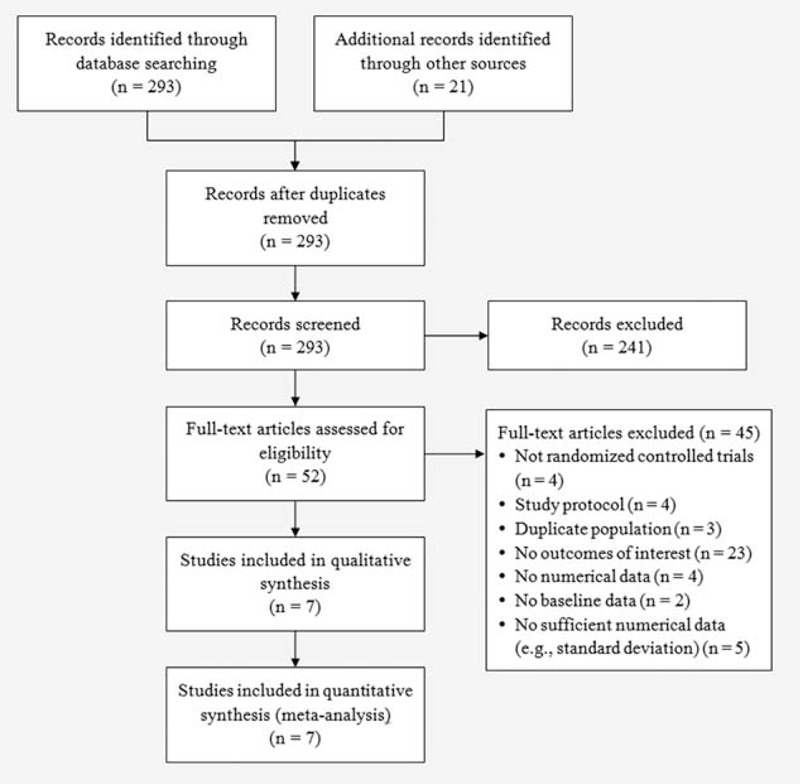
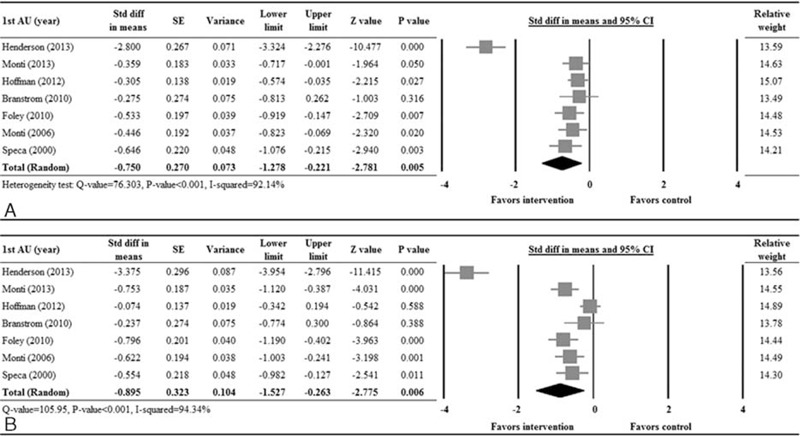
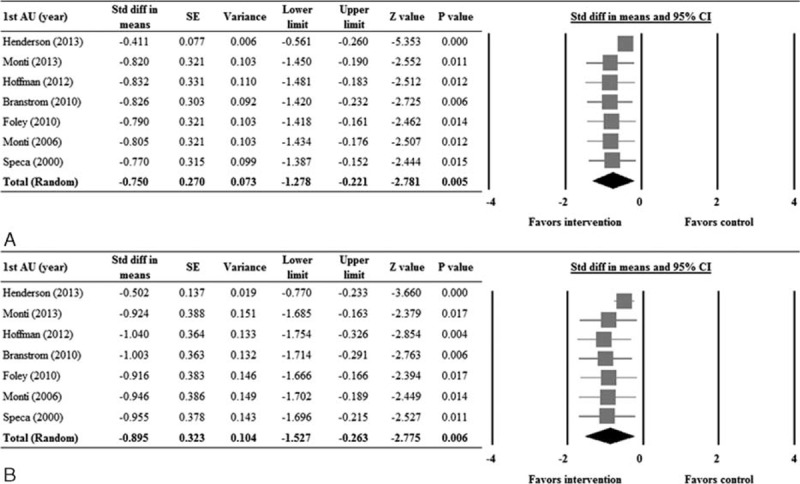
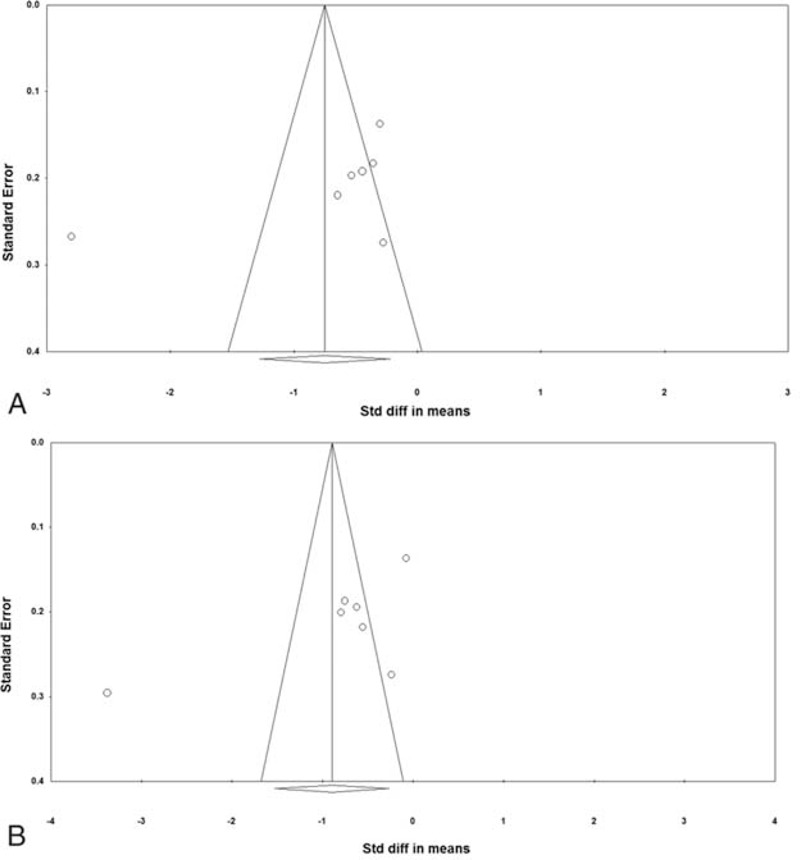
Anxiety and depression are common among patients with cancer, and are often treated with psychological interventions including mindfulness-based therapy.The aim of the study was to perform a meta-analysis of the effectiveness of mindfulness-based interventions for improving anxiety and depression in patients with cancer.Medline, the Cochrane Library, EMBASE, and Google Scholar were searched. The randomized controlled trials designed for patients diagnosed with cancer were included. Mindfulness-based interventions were provided.The outcomes assessed were the changes in anxiety and depression scores from before to after the intervention. The treatment response was determined by calculating the standardized mean difference (SMD) for individual studies and for pooled study results. Subgroup analyses by cancer type, type of therapy, and length of follow-up were performed.Seven studies, involving 469 participants who received mindfulness-based interventions and 419 participants in a control group, were included in the meta-analysis. Mindfulness-based stress reduction and art therapy were the most common interventions (5/7 studies). All studies reported anxiety and depression scores. The pooled SMD of the change in anxiety significantly favored mindfulness-based therapy over control treatment (-0.75, 95% confidence interval -1.28, -0.22, P = 0.005). Likewise, the pooled SMD of the change in depression also significantly favored mindfulness-based therapy over control (-0.90, 95% confidence interval -1.53, -0.26, P = 0.006). During the length of follow-ups less than 12 weeks, mindfulness-based therapy significantly improved anxiety for follow-up ≤12 weeks after the start of therapy, but not >12 weeks after the start of therapy.There was a lack of consistency between the studies in the type of mindfulness-based/control intervention implemented. Patients had different forms of cancer. Subgroup analyses included a relatively small number of studies and did not account for factors such as the severity of anxiety and/or depression, the time since diagnosis, and cancer stage.Mindfulness-based interventions effectively relieved anxiety and depression among patients with cancer. However, additional research is still warranted to determine how long the beneficial effects of mindfulness-based therapy persist.
Overview
The claims and statistics of this paper haven’t been checked yet.
Run the check — free, no account needed. It reads the open-access text and checks the sources it cites.
Integrity signals
Registry
Cites
Statistics
Figures
Verification
Claims the paper makes
The claims and statistics of this paper haven’t been checked yet.
Run the check — free, no account needed. It reads the open-access text and checks the sources it cites.
Claims other papers make about this one
Each is checked against this paper’s own text: does it say what the citing paper says it does?
The source backs part of the claim, not all of it — or backs it for a different population, condition or comparison.
In the citing paper
“Research shows that mindfulness, the process of paying attention with awareness and attentiveness to the immediate experience in a nonjudgmental way,12,13 improves mental health outcomes for a variety of populations, including those facing systemic stigma.14–20”
From Mindfulness, Mental Health, and Violence Exposure Among Transgender Female Sex Workers Living with HIV in the Dominican Republic. (2026) · cites this paper as [17]
Experimental — accuracy not yet measuredIn the citing paper
“Reviews examining the effects of MBCT and MBSR in cancer patients showed moderate to large effects on anxiety and depressive symptoms (ds = .28 to .90) (Haller et al., 2017; Zhang et al., 2015).”
From The relationship between acceptance of cancer and distress: A meta-analytic review (2019) · cites this paper as Zhang et al., 2015
In the citing paper
“Second, the majority of previous meta‐analyses have only included a small number of psychological outcomes,9, 11, 15”
In the citing paper
“These findings have since been supported in a number of more recent meta‐analyses focusing on depression and anxiety in cancer patients,9 primarily patients with breast cancer.10, 11, 12”
Self-check
Percentages, sums and reported differences re-computed from the paper’s own numbers.
The self-check needs the paper’s full text.
Citations
Cites
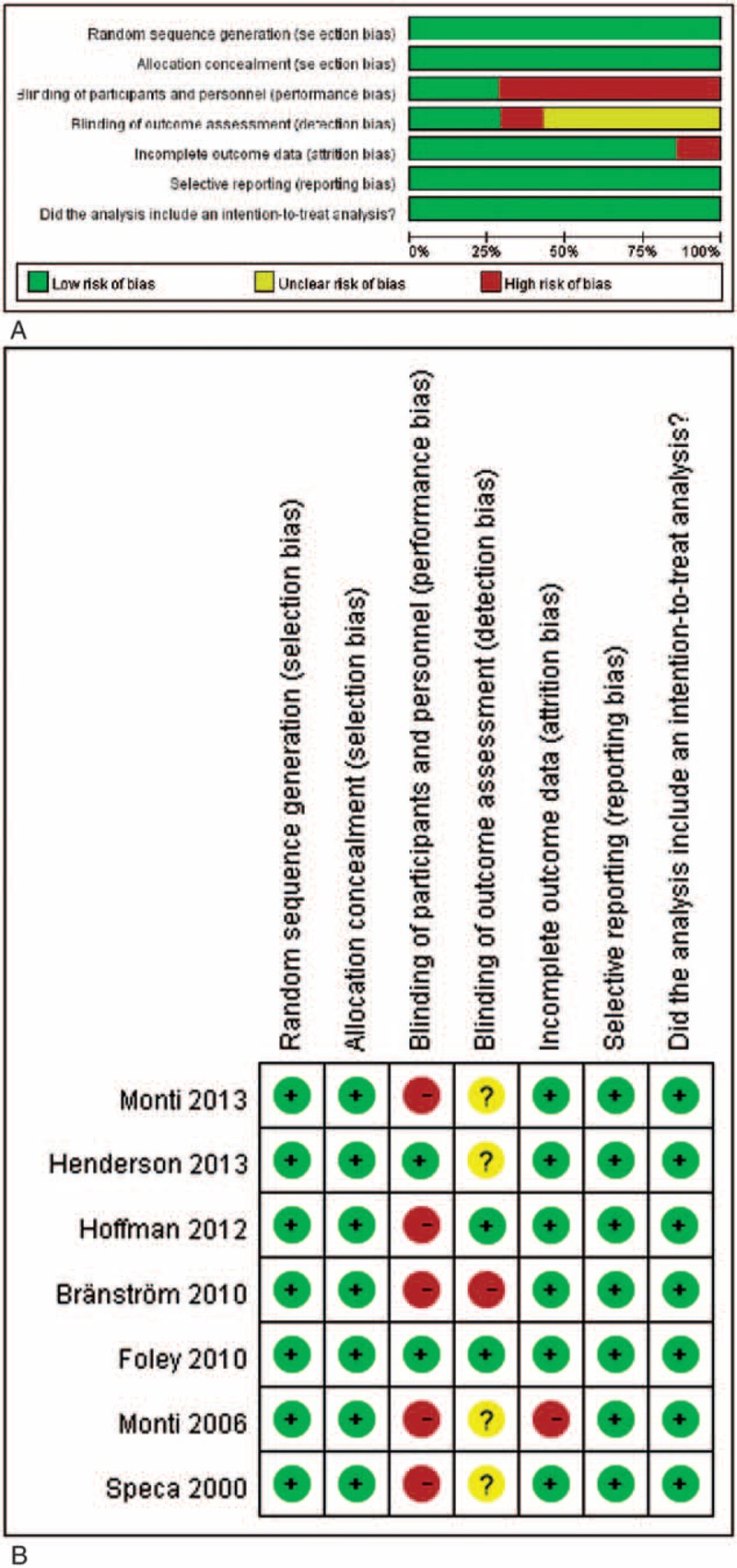
The Cochrane Collaboration's tool for assessing risk of bias in randomised trials
Higgins, J. P. T., Altman, D. G., Gotzsche, P. C., Juni, P., Moher, D., Oxman, A. D., Savovic, J., Schulz, K. F., Weeks, L., Sterne, J. A. C., et al. (2011) · BMJ · doi:10.1136/bmj.d5928 · Cited by 33,817
Dermyshi, E., Wang, Y., Yan, C., Hong, W., Qiu, G., Gong, X., & Zhang, T. (2017) · Neonatology · doi:10.1159/000454668 · Cited by 24,586
Garnefski, N., Kraaij, V., Schroevers, M. J., & Somsen, G. A. (2008) · Journal of Clinical Psychology in Medical Settings · doi:10.1007/s10880-008-9136-5 · Cited by 2,495
Mitchell, A. J., Chan, M., Bhatti, H., Halton, M., Grassi, L., Johansen, C., & Meader, N. (2011) · The Lancet Oncology · doi:10.1016/s1470-2045(11)70002-x · Cited by 2,449 · cited 1×
“As such, it is hardly surprising that anxiety and depression are very common among patients with cancer.(3,4) Although chemotherapy and radiotherapy can be effective for treating the underlying physical cause(s) of cancer, these treatments do not always affect or improve the psychological well being.”
BackgroundSpeca, M., Carlson, L. E., Goodey, E., & Angen, M. (2000) · Psychosomatic Medicine · doi:10.1097/00006842-200009000-00004 · Cited by 1,082
Faller, H., Schuler, M., Richard, M., Heckl, U., Weis, J., & Küffner, R. (2013) · Journal of Clinical Oncology · doi:10.1200/jco.2011.40.8922 · Cited by 912
Osborn, R. L., Demoncada, A. C., & Feuerstein, M. (2006) · The International Journal of Psychiatry in Medicine · doi:10.2190/eufn-rv1k-y3tr-fk0l · Cited by 621
Mindfulness‐based stress reduction and cancer: a meta‐analysis
Ledesma, D., & Kumano, H. (2009) · Psycho-Oncology · doi:10.1002/pon.1400 · Cited by 491
Piet, J., Würtzen, H., & Zachariae, R. (2012) · Journal of Consulting and Clinical Psychology · doi:10.1037/a0028329 · Cited by 436
Psychosocial concerns and interventions for cancer survivors
Stanton, A. L. (2006) · Journal of Clinical Oncology · doi:10.1200/jco.2006.06.8775 · Cited by 409 · cited 1×
“As such, it is hardly surprising that anxiety and depression are very common among patients with cancer.(3,4) Although chemotherapy and radiotherapy can be effective for treating the underlying physical cause(s) of cancer, these treatments do not always affect or improve the psychological well being.”
Background
Cited by
Sorted by citations
Depression in cancer: The many biobehavioral pathways driving tumor progression
Bortolato, B., Hyphantis, T. N., Valpione, S., Perini, G., Maes, M. H. J., Morris, G., Kubera, M., Köhler, C. A., Fernandes, B. S., Stubbs, B., et al. (2016) · Cancer Treatment Reviews · doi:10.1016/j.ctrv.2016.11.004 · Cited by 399
Cillessen, L., Johannsen, M., Speckens, A. E. M., & Zachariae, R. (2019) · Psycho-Oncology · doi:10.1002/pon.5214 · Cited by 326
Conversano, C., Di Giuseppe, M., Miccoli, M., Ciacchini, R., Gemignani, A., & Orrù, G. (2020) · Frontiers in Psychology · doi:10.3389/fpsyg.2020.01900 · Cited by 259
Xunlin, N., Lau, Y., & Klainin-Yobas, P. (2020) · Supportive Care in Cancer · doi:10.1007/s00520-019-05219-9 · Cited by 243
Economides, M., Martman, J., Bell, M. J., & Sanderson, B. (2018) · Mindfulness · doi:10.1007/s12671-018-0905-4 · Cited by 250
Metadata
- Authors
- Zhang, M.-F., Wen, Y.-S., Liu, W.-Y., Peng, L.-F., Wu, X.-D., & Liu, Q.-W.
- Affiliations
- Sun Yat-sen University (CN)
- Venue
- Medicine
- Published
- 2015-11
- Volume
- 94
- Issue
- 45
- Pages
- e0897-0
- ISSN
- 0025-7974 (ISSN-L)
- PMC
- PMC4912240
- OpenAlex
- W2333874112
- Cited by
- 172
- References
- 26
- Citations by year
- 2026: 4 · 2025: 11 · 2024: 17 · 2023: 19 · 2022: 27 · 2021: 23 · 2020: 17 · 2019: 18 · 2018: 13 · 2017: 14 · 2016: 9
- FWCI
- 14.88
- Type
- journal article
- Language
- en
- Open access
- gold
- doi.org
- Licence
- cc-by-nc-nd
- Locations
- Medicine (publishedVersion, cc-by-nc-nd)
- PubMed Central (publishedVersion, cc-by-nc-nd)
- PubMed (publishedVersion)
- Funders
- Natural Science Foundation of Guangdong Province (S2011010003549)
- Topics
- Social Sciences › Psychology › Clinical Psychology › Mindfulness and Compassion Interventions
- Health Sciences › Medicine › Oncology › Cancer survivorship and care
- Social Sciences › Psychology › Clinical Psychology › Art Therapy and Mental Health
- Keywords
- mindfulness-based interventions, cancer patients, anxiety, depression, mindfulness-based stress reduction, art therapy, psychological intervention, treatment response, follow-up duration
- MeSH terms
- Anxiety Disorders, Depressive Disorder, Humans, Neoplasms, Mindfulness
About these checks
Registry, retraction, Cites and statistics results are computed, not judged, with one exception: a printed reference that no index lists is read once by a model before it counts as a citation error. Claims are extracted by a model and kept only when their quote appears verbatim in the text; each cited source is then checked, with a model’s help, for whether it says what the claim relies on. Those verdicts can be wrong — read the claim’s quote and the cited source before relying on one.
Statistics and arithmetic are recomputed, not judged.
Confidence bands are shown only for fields calibrated on our annotated test set. None is calibrated yet, so no band is shown.
What counts as a claim ›How we measure confidence ›How we check this ›
Are you an author, or do you see a problem with this page? Request a review
