

The effect of psychotherapy on anxiety, depression, and quality of life in patients with diabetic retinopathy: A protocol for systematic review and network meta-analysis
Open accessThe DOI matches its Crossref record; 21 of the 23 references it cites were found in a registry or an index; 9 of the 24 sources its claims cite were checked for support.
Abstract
Background:Diabetic retinopathy (DR) is one of the common microvascular complications in diabetic patients, which is characterized by progressive development and often leads to irreversible visual impairment. More seriously, DR patients suffer great psychological stress due to impaired visual function and reduced self-care ability such as anxiety and depression, which seriously affect the quality of life of patients. In recent years, various psychological therapies have been applied to alleviate anxiety, depression, and quality of life in DR patients, which have achieved positive results. However, the effectiveness and safety of different psychological therapies are unclear. This study aims to assess the effects of psychotherapy on anxiety, depression, and quality of life in DR patients through a network meta-Analysis.Methods:All randomized controlled trials (RCTs) on the effects of psychotherapy on anxiety, depression, and quality of life in patients with DR published before 30 November 30, 2021, will be searched in the PubMed, EMBASE, Cochrane Register of Controlled Trials, Web of Science, Chinese Scientific Journal Database, China National Knowledge Infrastructure Database, Wanfang, and China Biomedical Literature Database. There will have no restrictions on publication status and language. Two researchers will be independently responsible for RCT screening, data extraction, and quality evaluation. All statistical analyses will be performed using Stata 14.0 and R 4.1.2.Results:The results of this meta-Analysis will be submitted to a peer-reviewed journal for publication.Conclusion:This study will provide comprehensive and reliable evidence-based references for elucidating the efficacy of psychotherapy on anxiety, depression, and quality of life in DR patients.Ethics and dissemination:Ethical approval was not required for this study. The systematic review will be published in a peer-reviewed journal, presented at conferences, and shared on social media platforms.OSF Registration number:DOI 10.17605/OSF.IO/K8T27. © 2021 Lippincott Williams and Wilkins. All rights reserved.
Overview
CoChat Summary
TL;DR
This paper is a protocol for a network meta-analysis, not a completed review, to compare psychotherapies for diabetic retinopathy (DR) patients’ anxiety, depression, and quality of life. It plans to synthesize randomized controlled trials and rank interventions using standardized mean differences, SUCRA, and network meta-analysis methods.
Key findings
- Not stated in the paper.
- The planned review will include RCTs of patients diagnosed with DR and psychotherapy interventions such as mindfulness therapy, cognitive-behavioral therapy, meditation therapy, comprehensive self-control training, acceptance and commitment therapy, and behavioral activation.
- Outcomes of interest are anxiety (SAS, HAMA), depression (HAMD, BDI, SDS), and quality of life (SF-36, WHOQOL).
- The protocol states that a search of studies published before 30 November 2021 will be conducted in 8 databases: PubMed, EMBASE, Cochrane Register of Controlled Trials, Web of Science, Chinese Scientific Journal Database, CNKI, Wanfang, and China Biomedical Literature Database.
Methods
- Study design: registered protocol for a systematic review and network meta-analysis of randomized controlled trials.
- Data/sample: RCTs on psychotherapy for patients diagnosed with DR; no restrictions on publication status or language are stated in the Methods, though the Discussion later says only English and Chinese literature will be included.
- Main analysis: network meta-analysis in Stata 14.0 and R 4.1.2 using the gemtc and rjags packages; effect sizes for continuous outcomes will be SMDs with 95% CIs, with heterogeneity, inconsistency, publication bias, subgroup, and sensitivity analyses planned.
Limitations
- The paper states that publication language limitations will mean only English and Chinese literature will be included, which may introduce bias.
- The paper states that different intervention methods, intervention duration, measurements, and literature quality may increase heterogeneity.
- Evident from the text: this is a protocol, and the paper provides no results yet, so effectiveness or safety conclusions are not available.
Model-written summary. Check it against the paper before relying on it.
Integrity signals
Registry
Cites
Statistics
Figures
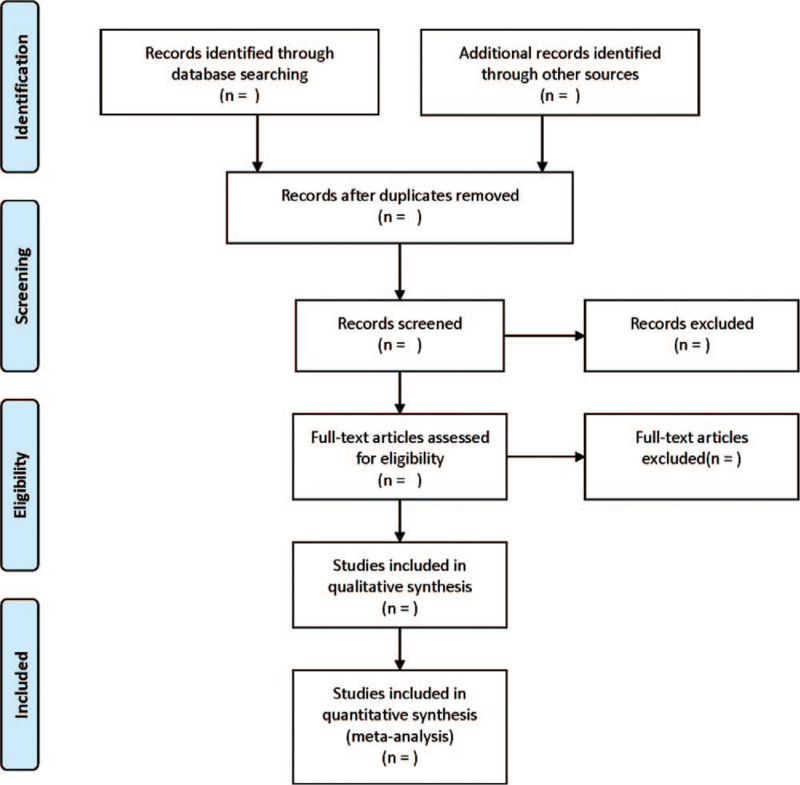
Verification
Claims the paper makes
5 Valid · 0 Not valid · 3 Not checked · 4 Own results and interpretations
The cited sources support only part of this claim — read each source’s verdict below.
In the paper
“It not only threatens the physical and mental health of DR patients, but also reduces the quality of life of patients.[9–12]”
- Also stated in: § Discussion · plain
“DR is the most common cause of newly onset blindness in adults, which causes anxiety and depression, and severely affects the quality of life.[27–29]”
§ The effect of psychotherapy on anxiety, depression, and quality of life in patients with diabetic retinopathy > Introduction
What the sources say
- Not checked — no full text of the sourcecites [9] Khoo K Man REK Rees G. The relationship between diabetic retinopathy and psychosocial functioning: a systematic review. Qual Life Res 2019; 28: 2017– 39. 30879245 source
- Not checked — no full text of the sourcecites [10] Fenwick EK Xie J Ratcliffe J. The impact of diabetic retinopathy and diabetic macular edema on health-related quality of life in type 1 and type 2 diabetes. Invest Ophthalmol Vis Sci 2012; 53: 677– 84. 22205611 source
- Not checked — no full text of the sourcecites [11] Lloyd A Nafees B Gavriel S. Health utility values associated with diabetic retinopathy. Diabet Med 2008; 25: 618– 24. 18346157 source
- Not checked — no full text of the sourcecites [12] Fenwick EK Man REK Gan ATL. Beyond vision loss: the independent impact of diabetic retinopathy on vision-related quality of life in a Chinese Singaporean population. Br J Ophthalmol 2019; 103: 1314– 9. 30361276 source
- Partly supportedcites [27] Zhang B Wang Q Zhang X. Association between self-care agency and depression and anxiety in patients with diabetic retinopathy. BMC Ophthalmol 2021; 21: 123. 33676437 PMC7937259 sourceExperimental — accuracy not yet measured
The Background says elevated depression and anxiety can increase disease burden and impede glucose control in patients with diabetic retinopathy. The Discussion links self-care to quality of life and says depression may undermine self-care, but the paper does not establish that anxiety and depression reduce these patients’ quality of life. (LLM, conf=0.82)
- Partly supportedcites [28] Xu X Zhao X Qian D. Investigating factors associated with depression of type 2 diabetic retinopathy patients in China. PLoS One 2015; 10: e0132616. 26151365 PMC4494704 sourceExperimental — accuracy not yet measured
The Discussion reports that depressive symptoms were negatively associated with quality of life in patients with diabetic retinopathy. The paper does not establish that anxiety reduces quality of life in these patients, and an association does not establish that depression causes the reduction. (LLM, conf=0.86)
- Partly supportedcites [29] Sieu N Katon W Lin EH. Depression and incident diabetic retinopathy: a prospective cohort study. Gen Hosp Psychiatry 2011; 33: 429– 35. 21762993 PMC3175259 sourceExperimental — accuracy not yet measured
The Introduction (page unavailable) says that comorbid depression and diabetes are associated with decreased quality of life. It does not make that quality-of-life claim specifically for patients with diabetic retinopathy or address anxiety; the study instead examines depression and the risk of developing retinopathy. (LLM, conf=0.88)
plainstates a cause- Asserted: passes — The authors put it forward as true.
- Checkable: passes — It can be checked against evidence.
- Load-bearing: passes — The paper’s conclusions depend on it.
- Based: passes — The paper gives a reason why it holds.
- Also stated in: § Discussion · plain
The cited sources support only part of this claim — read each source’s verdict below.
In the paper
“It is reported that DR patients are prone to adverse emotional reactions such as anxiety and depression.[6–8]”
- Also stated in: § Background: · plain
“More seriously, DR patients suffer great psychological stress due to impaired visual function and reduced self-care ability such as anxiety and depression, which seriously affect the quality of life of patients.”
§ The effect of psychotherapy on anxiety, depression, and quality of life in patients with diabetic retinopathy > Introduction
What the sources say
- Supportedcites [6] Fenwick E Rees G Pesudovs K. Social and emotional impact of diabetic retinopathy: a review. Clin Exp Ophthalmol 2012; 40: 27– 38. 21575125 source
The Discussion reports adverse emotional responses associated with diabetic retinopathy, explicitly including depressive symptoms and anxiety. The “Impact of DR on Emotional Well-Being” section also identifies depression and anxiety among the negative reactions reported in patients with DR. (LLM, conf=0.94)
- Partly supportedcites [7] Rees G Xie J Fenwick EK. Association between diabetes-related eye complications and symptoms of anxiety and depression. JAMA Ophthalmol 2016; 134: 1007– 14. 27387297 sourceExperimental — accuracy not yet measured
The Introduction reports emotional distress in people with DR and higher rates of depression and anxiety among people with diabetes complications such as DR. However, the Abstract and Discussion narrow this paper’s finding to depressive symptoms associated with severe DR; the study found no association between DR and anxiety symptoms. The claim overgeneralizes the finding to DR patients and to both outcomes. (LLM, conf=0.88)
- Not checked — no full text of the sourcecites [8] Fenwick EK Cheng GH Man REK. Inter-relationship between visual symptoms, activity limitation and psychological functioning in patients with diabetic retinopathy. Br J Ophthalmol 2018; 102: 948– 53. 28928266 source
plainstates an association- Asserted: passes — The authors put it forward as true.
- Checkable: passes — It can be checked against evidence.
- Load-bearing: passes — The paper’s conclusions depend on it.
- Based: passes — The paper gives a reason why it holds.
- Also stated in: § Background: · plain
A statement the paper makes itself — it cites no source for it, so there is none to check. The quote shows it is in the paper.
In the paper
“However, the effectiveness and safety of different psychological therapies are unclear.”
- Also stated in: § Discussion · plain
“we unclear which one is the optimal because of the numerous psychotherapies and different therapeutic focuses. Therefore, it is difficult to determine which psychotherapy presents the best efficacy and safety.”
§ The effect of psychotherapy on anxiety, depression, and quality of life in patients with diabetic retinopathy > Abstract > Background:
plain- Asserted: passes — The authors put it forward as true.
- Checkable: passes — It can be checked against evidence.
- Load-bearing: passes — The paper’s conclusions depend on it.
- Based: passes — The paper gives a reason why it holds.
- Also stated in: § Discussion · plain
- Probably not a substantial claim. 5
- It may state two separate claims as one. 6
Self-check
Percentages, sums and reported differences re-computed from the paper’s own numbers.
Each contradiction between two passages listed here was confirmed by an independent check.
Rated major: it would touch a result — a value a result rests on, reported and recomputed p-values on opposite sides of the significance level, two passages that conflict with no sign which is right, or a cited work retracted before this paper was published.
In the paper
§ The effect of psychotherapy on anxiety, depression, and quality of life in patients with diabetic retinopathy > Abstract > Methods:
“There will have no restrictions on publication status and language.”
§ The effect of psychotherapy on anxiety, depression, and quality of life in patients with diabetic retinopathy > Discussion
“due to publication language limitations, we will only include literatures published in English and Chinese, which is likely to lead to a risk of bias.”
Citations
Cites
The Cochrane Collaboration's tool for assessing risk of bias in randomised trials
Higgins, J. P. T., Altman, D. G., Gotzsche, P. C., Juni, P., Moher, D., Oxman, A. D., Savovic, J., Schulz, K. F., Weeks, L., Sterne, J. A. C., et al. (2011) · BMJ · doi:10.1136/bmj.d5928 · Cited by 33,817
Shamseer, L., Moher, D., Clarke, M., Ghersi, D., Liberati, A., Petticrew, M., Shekelle, P., Stewart, L. A., & the PRISMA-P Group (2015) · BMJ · doi:10.1136/bmj.g7647 · Cited by 13,120
Network meta-analysis: an introduction for clinicians
Rouse, B., Chaimani, A., & Li, T. (2017) · Internal and Emergency Medicine · doi:10.1007/s11739-016-1583-7 · Cited by 875
Pathophysiology of diabetic retinopathy: The old and the new
Kusuhara, S., Fukushima, Y., Ogura, S., Inoue, N., & Uemura, A. (2018) · Diabetes & Metabolism Journal · doi:10.4093/dmj.2018.0182 · Cited by 250
Social and emotional impact of diabetic retinopathy: a review
Fenwick, E., Rees, G., Pesudovs, K., Dirani, M., Kawasaki, R., Wong, T. Y., & Lamoureux, E. (2012) · Clinical & Experimental Ophthalmology · doi:10.1111/j.1442-9071.2011.02599.x · Cited by 156
Association between diabetes-related eye complications and symptoms of anxiety and depression
Rees, G., Xie, J., Fenwick, E. K., Sturrock, B. A., Finger, R., Rogers, S. L., Lim, L., & Lamoureux, E. L. (2016) · JAMA Ophthalmology · doi:10.1001/jamaophthalmol.2016.2213 · Cited by 123
Fenwick, E. K., Xie, J., Ratcliffe, J., Pesudovs, K., Finger, R. P., Wong, T. Y., & Lamoureux, E. L. (2012) · Investigative Opthalmology & Visual Science · doi:10.1167/iovs.11-8992 · Cited by 101
The relationship between diabetic retinopathy and psychosocial functioning: a systematic review
Khoo, K., Man, R. E. K., Rees, G., Gupta, P., Lamoureux, E. L., & Fenwick, E. K. (2019) · Quality of Life Research · doi:10.1007/s11136-019-02165-1 · Cited by 89
Health utility values associated with diabetic retinopathy
Lloyd, A., Nafees, B., Gavriel, S., Rousculp, M. D., Boye, K. S., & Ahmad, A. (2008) · Diabetic Medicine · doi:10.1111/j.1464-5491.2008.02430.x · Cited by 83
Depression and incident diabetic retinopathy: a prospective cohort study
Sieu, N., Katon, W., Lin, E. H. B., Russo, J., Ludman, E., & Ciechanowski, P. (2011) · General Hospital Psychiatry · doi:10.1016/j.genhosppsych.2011.05.021 · Cited by 55
Impact of diabetic retinopathy on sleep, mood, and quality of life
Morjaria, R., Alexander, I., Purbrick, R. M. J., Safa, R., Chong, N. V., Wulff, K., Foster, R. G., Downes, S. M., & for the SOMNUS Study Group (2019) · Investigative Opthalmology & Visual Science · doi:10.1167/iovs.18-26108 · Cited by 35
Zhang, B., Wang, Q., Zhang, X., Jiang, L., Li, L., & Liu, B. (2021) · BMC Ophthalmology · doi:10.1186/s12886-021-01883-w · Cited by 30
Investigating factors associated with depression of type 2 diabetic retinopathy patients in China
Xu, X., Zhao, X., Qian, D., Dong, Q., & Gu, Z. (2015) · PLoS ONE · doi:10.1371/journal.pone.0132616 · Cited by 29
Fenwick, E. K., Cheng, G. H.-L., Man, R. E. K., Khadka, J., Rees, G., Wong, T. Y., Pesudovs, K., & Lamoureux, E. L. (2018) · British Journal of Ophthalmology · doi:10.1136/bjophthalmol-2017-310915 · Cited by 23
Diabetic retinopathy screening in persons with mental illness: a literature review
Bradley, E. R., & Delaffon, V. (2020) · BMJ Open Ophthalmology · doi:10.1136/bmjophth-2020-000437 · Cited by 22
Effects of various statins on depressive symptoms: a network meta-analysis
Lee, M.-C., Peng, T.-R., Chen, B.-L., Lee, C.-H., Wang, J.-Y., Lai, C.-P., Lee, J.-A., Chen, S.-M., & Shiang, J.-C. (2021) · Journal of Affective Disorders · doi:10.1016/j.jad.2021.06.034 · Cited by 17
Fenwick, E. K., Man, R. E. K., Gan, A. T. L., Kumari, N., Wong, C., Aravindhan, A., Gupta, P., Wang, J. J., Mitchell, P., Wong, T. Y., et al. (2019) · British Journal of Ophthalmology · doi:10.1136/bjophthalmol-2018-313082 · Cited by 16
Fernández‐Vigo, J. I., Burgos‐Blasco, B., Calvo-González, C., Escobar-Moreno, M. J., Shi, H., Jiménez-Santos, M., Valverde-Megías, A., Reche-Frutos, J., López-Guajardo, L., & Donate-López, J. (2021) · Archivos de la Sociedad Española de Oftalmología (English Edition) · doi:10.1016/j.oftale.2020.11.008 · Cited by 14
Fernández-Vigo, J. I., Burgos-Blasco, B., Calvo-González, C., Escobar-Moreno, M. J., Shi, H., Jiménez-Santos, M., Valverde-Megías, A., Reche-Frutos, J., López-Guajardo, L., & Donate-López, J. (2021) · Archivos de la Sociedad Española de Oftalmología · doi:10.1016/j.oftal.2020.11.010 · Cited by 8
Research Progress of Relevant Molecular Mechanism of Diabetic Retinopathy
Liu, X. (2014) · Yunnan Journal of Traditional Chinese Medicine and Materia Medica · Cited by 1
Research works printed but not linked: 11
- Liu C Yang H Cao G. Abnormal molecular regulation mechanism of pericytes in diabetic retinopathy. Int Rev Ophthalmol 2017; 41: 300– 5.
- Wang Y Yu Z Duan J. Research progress on psychological health status and intervention of patients with diabetic retinopathy. J Chin Ophthalmol Otorhinolaryngol 2021; 11: 106– 9.
- Wang C Huang X Chen J. Relationship between psychological distress and emotion regulation strategies in patients with diabetic retinopathy. J Mod Clin Med 2020; 46: 413– 6.
- Su L Gao Q Lin C. Systematic evaluation of different nursing interventions on depression of patients with diabetic retinopathy. Occup Health 2019; 35: 1715– 21.
- Li L Zhu W Yuan X Liu M. Analysis of quality of life and its influencing factors in patients with diabetic retinopathy. Clin Res Pract 2020; 5: 18– 20.
- Gu Q Li M Xu F Liu Y. Comprehensive nursing model improves the postoperative health status of patients with diabetic retinopathy. J China Med Univ 2021; 50: 184– 6.
- Qiu D. Effect of mindfulness decompression therapy on postoperative psychological status of elderly patients with diabetic retinopathy. Smart Healthc 2019; 5: 93– 109.
- Xu D Yu S. Impacts of cognitive behavioral intervention on the quality of life and negative emotion of patients with diabetic retinopathy. China Mod Doct 2021; 59: 65– 70.
- Xiang N. Effect of nursing intervention on quality of life of diabetic retinopathy(DR) patients. Chin Commun Doct 2020; 036: 133– 4.
- Yao T. Clinical observation of psychological nursing intervention in diabetic retinopathy. Guide China Med 2021; 19: 02.
- Li T Zou D Zhao X Pan H. Observation on effect of psychological nursing on mentality, quality of life and rehabilitation effect of patients with diabetic retinopathy. China Med Pharm 2019; 9: 106– 8.
Cited by
Association between dry eye disease and depression: An umbrella review
Tsai, C., Jiesisibieke, Z. L., & Tung, T. (2022) · Frontiers in Public Health · doi:10.3389/fpubh.2022.910608 · Cited by 40
“Fifth, we only explored the association between dry eye and depression, however, we acknowledged that the association between other eye disease or their treatments [such as retinopathy (62, 63), cataract surgery (64), and glaucoma (65, 66)] and depression has already been proved in previously published metaanalysis.”
ResultZhang, M., Zhang, C., Chen, C., Liu, L., Liang, Y., Hong, Y., Chen, Y., & Shi, Y. (2023) · BMC Nursing · doi:10.1186/s12912-023-01206-y · Cited by 23
Li, H.-D., Li, M., Zhang, W., Zhang, S., & Gong, Y. (2023) · World Journal of Diabetes · doi:10.4239/wjd.v14.i9.1422 · Cited by 16
Beyond the vision: central serous chorioretinopathy, anxiety and depression–a systematic review
Meduri, A., Merlo, E. M., Sparacino, G., Mancini, M., Oliverio, G. W., Silvestro, O., Luca, L. D., Martino, G., & Aragona, P. (2026) · Frontiers in Medicine · doi:10.3389/fmed.2025.1758428 · Cited by 8
S, A. K. B., Mithesh, M., & Sheelam, P. K. (2024) · One Health Bulletin · doi:10.4103/ohbl.ohbl_35_23 · Cited by 3
Metadata
- Authors
- Li, S., Liu, H., & Zhu, X.
- Affiliations
- Zhuzhou Central Hospital (CN)
- Corresponding author
- Zhu, Xian
- ORCID
- Venue
- Medicine
- Published
- 2021-12-23
- Volume
- 100
- Issue
- 51
- Pages
- e28386
- ISSN
- 0025-7974 (ISSN-L)
- 1536-5964
- PMC
- PMC8702293
- OpenAlex
- W4200213308
- Semantic Scholar
- 568fce728e3eff180b3de763887f22cf5b3c3e13
- Cited by
- 8
- References
- 23
- Citations by year
- 2026: 2 · 2024: 1 · 2023: 4 · 2022: 1
- FWCI
- 1.12
- Type
- journal article
- Language
- en
- Open access
- gold
- doi.org
- Locations
- Medicine (publishedVersion, cc-by)
- PubMed Central (publishedVersion, cc-by)
- PubMed (publishedVersion)
- Funders
- The Natural Science Foundation of Hunan Province (2019JJ60084)
- Topics
- Health Sciences › Medicine › Endocrinology, Diabetes and Metabolism › Diabetes Management and Education
- Health Sciences › Medicine › Ophthalmology › Retinal Diseases and Treatments
- Social Sciences › Psychology › Experimental and Cognitive Psychology › Anxiety, Depression, Psychometrics, Treatment, Cognitive Processes
- Keywords
- diabetic retinopathy, psychotherapy, anxiety, depression, quality of life, psychological stress, visual impairment, psychological intervention
- MeSH terms
- Network Meta-Analysis as Topic, Systematic Reviews as Topic, Anxiety, Depression, Diabetes Mellitus, Diabetic Retinopathy, Humans, Psychotherapy, Quality of Life, Research Design
About these checks
Registry, retraction, Cites and statistics results are computed, not judged, with one exception: a printed reference that no index lists is read once by a model before it counts as a citation error. Claims are extracted by a model and kept only when their quote appears verbatim in the text; each cited source is then checked, with a model’s help, for whether it says what the claim relies on. Those verdicts can be wrong — read the claim’s quote and the cited source before relying on one.
The claim verdicts this report counts are experimental: their accuracy is not yet measured.
A language model drew the claims from the paper on 2026-10-11, under version 3 of the claim definition (model deepseek-v4.1-flash, prompt extract-v3).
A second model labelled each claim on 2026-10-11 (model jev-1.13-20260917, definition revision gold-guideline-v0.2).
Cited sources are checked with a language model’s help (gpt-6-sol).
Statistics and arithmetic are recomputed, not judged.
Confidence bands are shown only for fields calibrated on our annotated test set. None is calibrated yet, so no band is shown.
What counts as a claim ›How we measure confidence ›How we check this ›
Are you an author, or do you see a problem with this page? Request a review
Data sources
Bibliographic data: Semantic Scholar, OpenAlex, Crossref.
Contains information from the Semantic Scholar Academic Graph Datasets, made available under the ODC Attribution License (ODC-BY 1.0).
Semantic Scholar’s data is described in: Kinney, R., et al. (2023). The Semantic Scholar Open Data Platform. arXiv:2301.10140.
