

Detrimental correlation between air pollution with skin aging in Taiwan population
Open accessThe DOI matches its Crossref record; 29 of the 29 references it cites were found in a registry or an index.
Abstract
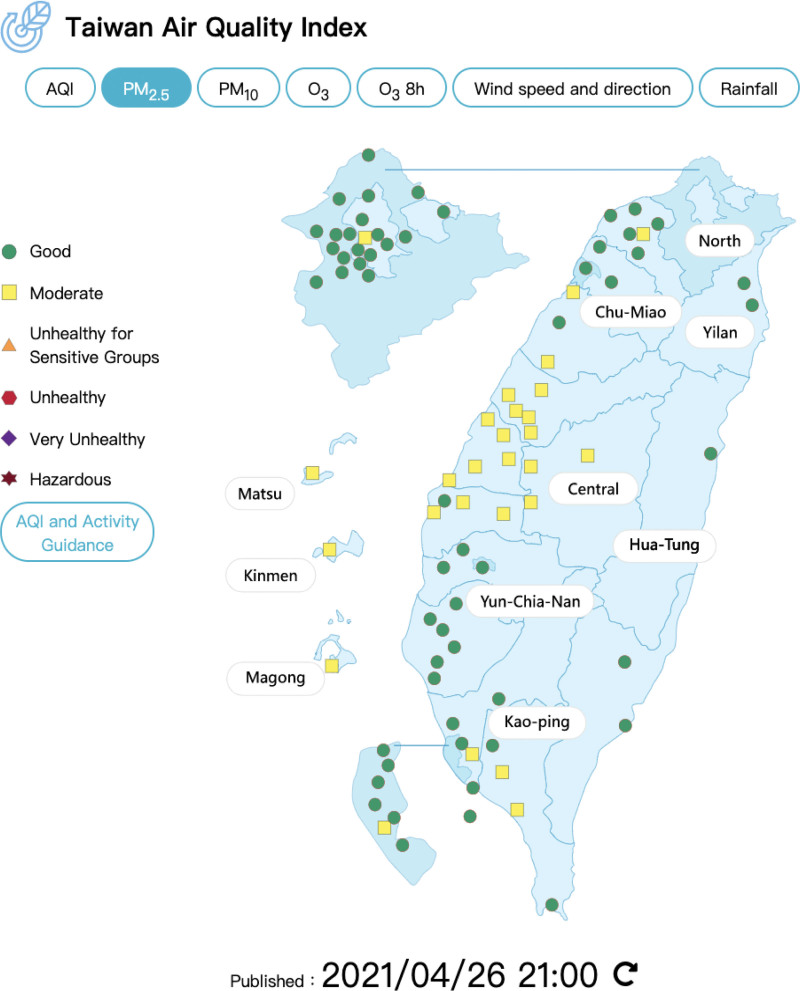
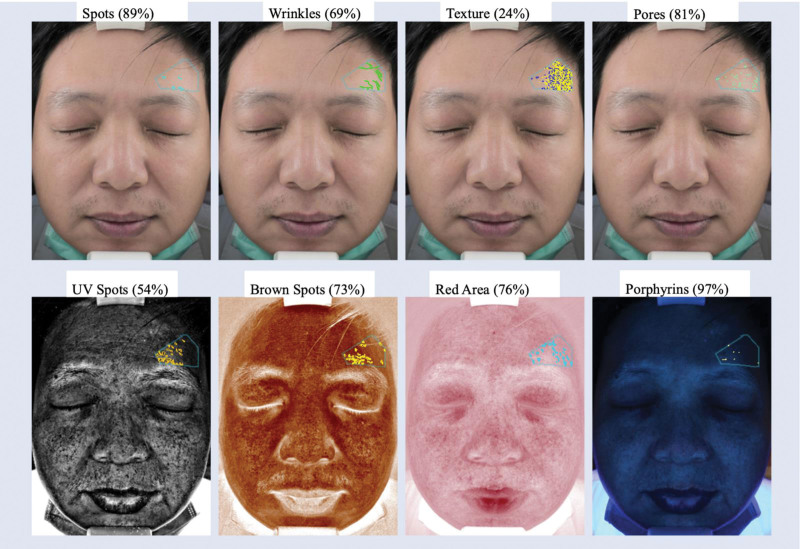
Dissecting the complex relationships between skin aging and air pollution has been an ongoing effort. The increased exposure to air pollution over time imposed a negative effect on skin. This study explores the correlation between skin aging in the Asian population and levels of air pollutants to show different relationship between the two. This study was retrospective and included 389 patients, age between 30 and 74, who planned to receive a session of laser treatment for skin disorders in Kaohsiung Medical University Hospital (KMUH) from 2006 to 2019. Preoperative skin condition quantified by VISIA Complexion Analysis System (Canfield Imaging Systems, Fierfield, NJ, US). Eight air pollutants such as carbon monoxide (CO), non-methane hydrocarbon (NMHC), nitrogen oxides (NO, NO 2, and NO x), particulate matters (PM2.5 and PM10), ozone (O 3), sulfur dioxide (SO 2) and 8 skin condition such as spots, wrinkles, textures, pores, ultraviolet spots (UV spots), brown spots, red area, and porphyrin were analyzed to explore correlation between air pollution and skin aging. Strong correlation was found between NMHC exposure and texture, pores and brown spots formation. A positive correlation between O 3 and better VISIA texture and pores scores was found. Brown spots was found to negatively associate with CO, NMHC, NO 2, NO x, PM10, PM2.5, and SO 2. The skin condition of population over age 45 affected by CO, NMHC, NO 2, NO x, PM2.5, PM10, and SO 2. Skin condition of the bottom 10% strongly correlates with exposure to PM10 and SO 2, whereas skin condition of the top 10% was affected by PM10. Air pollutants such as CO, NO 2, NO x, PM2.5, PM10, SO 2, and NMHC were found to correlate with negative skin quality strongly. In contrast, O 3 exposure is associated with less texture and pores. Future studies are warranted to further appreciate the relationships between air pollutants and skin condition.
Overview
The claims and statistics of this paper haven’t been checked yet.
Free: it reads the open-access text and checks the first 5 claims that cite a source we can check. Create a free account to check every claim.
Integrity signals
Registry
Cites
Statistics
Figures
Verification
Claims the paper makes
The claims and statistics of this paper haven’t been checked yet.
Free: it reads the open-access text and checks the first 5 claims that cite a source we can check. Create a free account to check every claim.
Claims other papers make about this one
Each is checked against this paper’s own text: does it say what the citing paper says it does?
The source backs part of the claim, not all of it — or backs it for a different population, condition or comparison.
In the citing paper
“ozone affects the skin's stratum corneum, depleting antioxidants and triggering a stress response that impacts dermal collagen metabolism”
From The Burden of Air Pollution on Skin Health: a Brief Report and Call to Action (2024) · cites this paper as [33]
Experimental — accuracy not yet measuredThe source backs part of the claim, not all of it — or backs it for a different population, condition or comparison.
In the citing paper
“Exposure to pollutants from wildfires and chronic air pollution causes cumulative damage to the skin.”
From The Burden of Air Pollution on Skin Health: a Brief Report and Call to Action (2024) · cites this paper as [33]
Experimental — accuracy not yet measuredThe source backs part of the claim, not all of it — or backs it for a different population, condition or comparison.
In the citing paper
“Of note, both short- and long-term studies have found that AP was associated with but not limited to a range of skin disorders, including AD, psoriasis, acne, and urticaria, premature skin aging (hyperpigmentation or wrinkles), and melanomas [12–16]”
From Air Pollution and Skin Diseases: A Systematic Review of Epidemiological Evidence (2026) · cites this paper as [16]
Experimental — accuracy not yet measuredThe cited source says what the claim attributes to it.
In the citing paper
“PM2.5 levels have also been found to be associated with increased wrinkles86.”
From Air Pollution and Skin Diseases (2025) · cites this paper as [86]
The cited source says what the claim attributes to it.
In the citing paper
“exposure to PM2.5 and CO is associated with premature aging of the skin”
From The Burden of Air Pollution on Skin Health: a Brief Report and Call to Action (2024) · cites this paper as [33]
Self-check
Percentages, sums and reported differences re-computed from the paper’s own numbers.
The self-check needs the paper’s full text.
Citations
Cites
The contribution of outdoor air pollution sources to premature mortality on a global scale
Lelieveld, J., Evans, J. S., Fnais, M., Giannadaki, D., & Pozzer, A. (2015) · Nature · doi:10.1038/nature15371 · Cited by 5,977 · cited 1×
“5) from 35 μm to 10 μm could reduce air pollution–related deaths in developing countries by 15%.[17] More epidemiological studies are increasingly highlighting the adverse effects of particulate matter on skin aging.”
BackgroundOutdoor Air Pollution: Nitrogen Dioxide, Sulfur Dioxide, and Carbon Monoxide Health Effects
Chen, T.-M., Kuschner, W. G., Gokhale, J., & Shofer, S. (2007) · The American Journal of the Medical Sciences · doi:10.1097/maj.0b013e31803b900f · Cited by 729
Airborne Particle Exposure and Extrinsic Skin Aging
Vierkötter, A., Schikowski, T., Ranft, U., Sugiri, D., Matsui, M., Krämer, U., & Krutmann, J. (2010) · Journal of Investigative Dermatology · doi:10.1038/jid.2010.204 · Cited by 473 · cited 3×
“[17] More epidemiological studies are increasingly highlighting the adverse effects of particulate matter on skin aging.[2,18] Particulate matter (PM2.”
BackgroundBeyond the obvious: Environmental health implications of polar polycyclic aromatic hydrocarbons
Idowu, O., Semple, K. T., Ramadass, K., O'Connor, W., Hansbro, P., & Thavamani, P. (2019) · Environment International · doi:10.1016/j.envint.2018.12.051 · Cited by 387
Environmental Stressors on Skin Aging. Mechanistic Insights
Parrado, C., Mercado-Saenz, S., Perez-Davo, A., Gilaberte, Y., Gonzalez, S., & Juarranz, A. (2019) · Frontiers in Pharmacology · doi:10.3389/fphar.2019.00759 · Cited by 372
Pollution and skin: from epidemiological and mechanistic studies to clinical implications.
Krutmann, J., Liu, W., Li, L., Pan, X., Crawford, M., Sore, G., & Seite, S. (2014) · Journal of Dermatological Science · doi:10.1016/j.jdermsci.2014.08.008 · Cited by 290
Effects of air pollution on the skin: A review
Kathuria, S., Puri, P., Nandar, S., & Ramesh, V (2017) · Indian Journal of Dermatology, Venereology and Leprology · doi:10.4103/0378-6323.199579 · Cited by 282 · cited 5×
“[13] ROS causes cell stress, which leads to the disruption of the skin barrier, thus resulting in skin aging.[1,4,5] Fuks et al in 2019 also reported a positive correlative relationship between O3 exposure level and coarse wrinkles on the forehead.”
BackgroundInfluentialThe dual action of ozone on the skin
Valacchi, G., Fortino, V., & Bocci, V. (2005) · British Journal of Dermatology · doi:10.1111/j.1365-2133.2005.06939.x · Cited by 243 · cited 2×
“[2,5,7,9,10] Although long-term O3 exposure can have adverse effect on the skin, short-term exposures can be beneficial.[9,11,12] O3 is used in skin therapy to increase oxygenation and accelerate wound healing.”
BackgroundNitric Oxide in Human Skin: Current Status and Future Prospects
Daniela, B.-G., Thomas, R., & Kolb-Bachofen, V. (1998) · Journal of Investigative Dermatology · doi:10.1046/j.1523-1747.1998.00084.x · Cited by 222
The impact of airborne pollution on skin
Araviiskaia, E., Berardesca, E., Bieber, T., Gontijo, G., Sanchez Viera, M., Marrot, L., Chuberre, B., & Dreno, B. (2019) · Journal of the European Academy of Dermatology and Venereology · doi:10.1111/jdv.15583 · Cited by 214
Mechanisms of action involved in ozone-therapy in skin diseases
Zeng, J., & Lu, J. (2018) · International Immunopharmacology · doi:10.1016/j.intimp.2018.01.040 · Cited by 184
Systematic Review and Meta-Analysis of Human Skin Diseases Due to Particulate Matter
Ngoc, L., Park, D., Lee, Y., & Lee, Y.-C. (2017) · International Journal of Environmental Research and Public Health · doi:10.3390/ijerph14121458 · Cited by 159 · cited 1×
“04 μg/m 3 could have adverse effects on human skin.[20] In this study, what similar to the previous studies was that PM10 and PM2.”
ResultAtopic eczema and other manifestations of atopy: results of a study in East and West Germany
Schäfer, T., Vieluf, D., Behrendt, H., Krämer, U., & Ring, J. (1996) · Allergy · doi:10.1111/j.1398-9995.1996.tb00109.x · Cited by 141
Traffic-Related Air Pollution, Climate, and Prevalence of Eczema in Taiwanese School Children
Lee, Y.-L., Su, H.-J., Sheu, H.-M., Yu, H.-S., & Guo, Y. L. (2008) · Journal of Investigative Dermatology · doi:10.1038/jid.2008.110 · Cited by 128 · cited 1×
“[1,24] Another study in 2018 on a German population compared atopic eczema between populations from two different areas.”
BackgroundHüls, A., Vierkötter, A., Gao, W., Krämer, U., Yang, Y., Ding, A., Stolz, S., Matsui, M., Kan, H., Wang, S., et al. (2016) · Journal of Investigative Dermatology · doi:10.1016/j.jid.2015.12.045 · Cited by 122 · cited 2×
“[22] Hüls et al in 2016 reported a relationship between NO2 and the frequency of cheek lentigines in two cohorts: Caucasian and Asian.”
BackgroundLi, M., Vierkötter, A., Schikowski, T., Hüls, A., Ding, A., Matsui, M. S., Deng, B., Ma, C., Ren, A., Zhang, J., et al. (2015) · Journal of Dermatological Science · doi:10.1016/j.jdermsci.2015.04.001 · Cited by 119 · cited 3×
“[6,15] Li et al in 2015 reported that indoor cooking smoke increased senile spots on the cheeks and back of the hands in two groups of 30- to 90-year-old women in China.”
BackgroundPark, S.-Y., Byun, E. J., Lee, J. D., Kim, S., & Kim, H. S. (2018) · International Journal of Molecular Sciences · doi:10.3390/ijms19092727 · Cited by 117
Drakaki, E., Dessinioti, C., & Antoniou, C. V. (2014) · Frontiers in Environmental Science · doi:10.3389/fenvs.2014.00011 · Cited by 107
Ambient ozone pollution as a risk factor for skin disorders: Correspondence
Xu, F., Yan, S., Wu, M., Li, F., Xu, X., Song, W., Zhao, J., Xu, J., & Kan, H. (2011) · British Journal of Dermatology · doi:10.1111/j.1365-2133.2011.10349.x · Cited by 104
Peng, F., Xue, C. ‐., Hwang, S. K., Li, W. ‐., Chen, Z., & Zhang, J. ‐. (2017) · Journal of the European Academy of Dermatology and Venereology · doi:10.1111/jdv.13834 · Cited by 71 · cited 2×
“[6] Another study by Peng et al in 2016 linked senile lentigines to air pollution in 400 Chinese women aged between 40 and 90 years old.[19] Ding et al in 2017 investigated the relationship between skin characteristics of 1877 families and 30 PM2.”
BackgroundTropospheric ozone and skin aging: Results from two German cohort studies
Fuks, K. B., Hüls, A., Sugiri, D., Altug, H., Vierkötter, A., Abramson, M. J., Goebel, J., Wagner, G. G., Demuth, I., Krutmann, J., et al. (2019) · Environment International · doi:10.1016/j.envint.2018.12.047 · Cited by 70
Indoor PM2.5 exposure affects skin aging manifestation in a Chinese population
Ding, A., Yang, Y., Zhao, Z., Hüls, A., Vierkötter, A., Yuan, Z., Cai, J., Zhang, J., Gao, W., Li, J., et al. (2017) · Scientific Reports · doi:10.1038/s41598-017-15295-8 · Cited by 67
Effects of environmentally realistic levels of ozone on stratum corneum function
He, Q. C., Tavakkol, A., Wietecha, K., Begum‐Gafur, R., Ansari, S. A., & Polefka, T. (2006) · International Journal of Cosmetic Science · doi:10.1111/j.1467-2494.2006.00347.x · Cited by 63
Emerging roles of ozone in skin diseases.
Wang, X. (2018) · PubMed · doi:10.11817/j.issn.1672-7347.2018.02.002 · Cited by 40
Biological processes in solar lentigo: insights brought by experimental models
Goorochurn, R., Viennet, C., Granger, C., Fanian, F., Varin‐Blank, N., Roy, C. L., & Humbert, P. (2016) · Experimental Dermatology · doi:10.1111/exd.12937 · Cited by 30
Mitoma, C., Mine, Y., Utani, A., Imafuku, S., Muto, M., Akimoto, T., Kanekura, T., Furue, M., & Uchi, H. (2015) · Chemosphere · doi:10.1016/j.chemosphere.2015.03.070 · Cited by 25
Park, J. H., Oh, S. J., & Lee, J. H. (2019) · Journal of the European Academy of Dermatology and Venereology · doi:10.1111/jdv.15517 · Cited by 18
The Effect in Topical Use of LycogenTM via Sonophoresis for Anti-aging on Facial Skin
Lai, H., Liu, W., Yi-Chia, W., Lai, Y., Wen, Z., David, W., & Lee, S.-S. (2015) · Current Pharmaceutical Biotechnology · doi:10.2174/1389201016666150731112010 · Cited by 13
Self-citationHsieh, M. W., Wu, Y., Huang, S., Kuo, Y., & Lee, S.-S. (2018) · Annals of Plastic Surgery · doi:10.1097/sap.0000000000001287 · Cited by 4
Self-citation
Cited by
Particulate Matter and Its Molecular Effects on Skin: Implications for Various Skin Diseases
Paik, K., Na, J.-I., Huh, C.-H., & Shin, J.-W. (2024) · International Journal of Molecular Sciences · doi:10.3390/ijms25189888 · Cited by 64
“5 and PM10 is associated with increased pigmented spots and more prominent wrinkles [14,84].”
BackgroundParticulate matter and inflammatory skin diseases: From epidemiological and mechanistic studies
Chao, L., Feng, B., Liang, H., Zhao, X., & Song, J. (2023) · The Science of The Total Environment · doi:10.1016/j.scitotenv.2023.167111 · Cited by 46
Air Pollution and Skin Diseases
Han, H. S., Seok, J., & Park, K. Y. (2025) · Annals of Dermatology · doi:10.5021/ad.24.159 · Cited by 28
“PM 2.5 levels have also been found to be associated with increased wrinkles 86 .”
InfluentialCheng, F., Feng, J., Cao, Z., Qu, D., & Li, H. (2024) · Journal of Cosmetic Dermatology · doi:10.1111/jocd.16710 · Cited by 28
The influence of air pollution on skin microbiome: a link to skin barrier dysfunction
Boonpethkaew, S., Charoensuksira, S., Meephansan, J., Sirithanabadeekul, P., Chueachavalit, C., Ingkaninanda, P., Visedthorn, S., Chanchaem, P., Sivapornnukul, P., & Payungporn, S. (2024) · Archives of Dermatological Research · doi:10.1007/s00403-024-03448-5 · Cited by 16
Metadata
- Authors
- Huang, C.-H., Chen, S.-C., Wang, Y.-C., Wang, C.-F., Hung, C.-H., & Lee, S.-S.
- Affiliations
- Kaohsiung Medical University (TW)
- Kaohsiung Municipal Hsiao-Kang Hospital (TW)
- National Yang Ming Chiao Tung University (TW)
- Corresponding author
- Lee, Su-Shin
- Venue
- Medicine
- Published
- 2022-08-05
- Volume
- 101
- Issue
- 31
- Pages
- e29380
- ISSN
- 0025-7974 (ISSN-L)
- 1536-5964
- PMC
- PMC9351911
- OpenAlex
- W4290772223
- Semantic Scholar
- d56a9b102a07040a3e563cc12c9973860dc51c13
- Cited by
- 23
- References
- 28
- Citations by year
- 2026: 4 · 2025: 13 · 2024: 4 · 2023: 2
- FWCI
- 4.64
- Type
- journal article
- Language
- en
- Open access
- gold
- doi.org
- Licence
- Locations
- Medicine (publishedVersion, cc-by-nc)
- PubMed Central (publishedVersion, cc-by-nc)
- PubMed (publishedVersion)
- Topics
- Health Sciences › Medicine › Dermatology › Skin Protection and Aging
- Physical Sciences › Environmental Science › Health, Toxicology and Mutagenesis › Air Quality and Health Impacts
- Health Sciences › Medicine › Dermatology › Dermatology and Skin Diseases
- Keywords
- air pollution, skin aging, skin diseases, particulate matter, nitrogen oxides, ozone, sulfur dioxide, carbon monoxide, non-methane hydrocarbons, brown spot, skin texture, skin pores, Asian populations, laser skin treatment
- MeSH terms
- Adult, Aged, Air Pollutants, Air Pollution, Humans, Middle Aged, Nitrogen Dioxide, Ozone, Retrospective Studies, Sulfur Dioxide, Taiwan, Skin Aging, Particulate Matter
About these checks
Registry, retraction, Cites and statistics results are computed, not judged, with one exception: a printed reference that no index lists is read once by a model before it counts as a citation error. Claims are extracted by a model and kept only when their quote appears verbatim in the text; each cited source is then checked, with a model’s help, for whether it says what the claim relies on. Those verdicts can be wrong — read the claim’s quote and the cited source before relying on one.
Statistics and arithmetic are recomputed, not judged.
Confidence bands are shown only for fields calibrated on our annotated test set. None is calibrated yet, so no band is shown.
What counts as a claim ›How we measure confidence ›How we check this ›
Are you an author, or do you see a problem with this page? Request a review
Data sources
Bibliographic data: Semantic Scholar, OpenAlex, Crossref.
Contains information from the Semantic Scholar Academic Graph Datasets, made available under the ODC Attribution License (ODC-BY 1.0).
Semantic Scholar’s data is described in: Kinney, R., et al. (2023). The Semantic Scholar Open Data Platform. arXiv:2301.10140.
