

The DOI matches its Crossref record; 32 of the 32 references it cites were found in a registry or an index.
Applied Rapid Qualitative Analysis to Develop a Contextually Appropriate Intervention and Increase the Likelihood of Uptake
Open accessAbstract
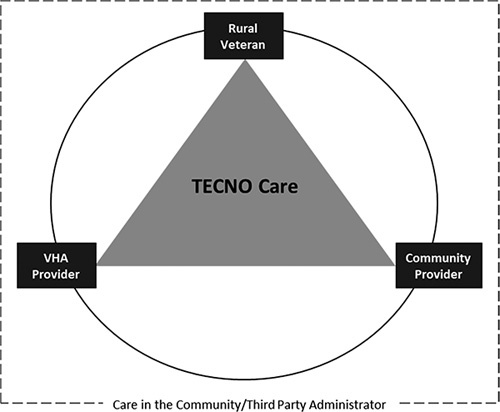
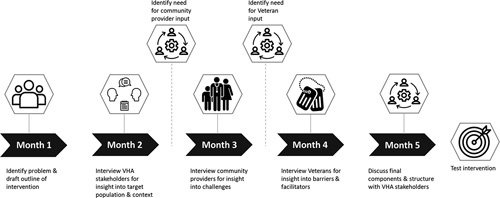
BACKGROUND: Rapid approaches to collecting and analyzing qualitative interview data can accelerate discovery timelines and intervention development while maintaining scientific rigor. We describe the application of these methods to a program designed to improve care coordination between the Veterans Health Administration (VHA) and community providers. METHODS: Care coordination between VHA and community providers can be challenging in rural areas. The Telehealth-based Coordination of Non-VHA Care (TECNO Care) intervention was designed to improve care coordination among VHA and community providers. To ensure contextually appropriate implementation of TECNO Care, we conducted preimplementation interviews with veterans, VHA administrators, and VHA and community providers involved in community care. Using both a rapid approach and qualitative analysis, an interviewer and 1-2 note-taker(s) conducted interviews. RESULTS: Over 5 months, 18 stakeholders were interviewed and we analyzed these data to identify how best to deliver TECNO Care. Responses relevant to improving care coordination include health system characteristics; target population; metrics and outcomes; challenges with the current system; and core components. Veterans who frequently visit VHA or community providers and are referred for additional services are at risk for poor outcomes and may benefit from additional care coordination. Using these data, we designed TECNO Care to include information on VHA services and processes, assist in the timely completion of referrals, and facilitate record sharing. CONCLUSION: Rapid qualitative analysis can inform near real-time intervention development and ensure relevant content creation while setting the stage for stakeholder buy-in. Rigorous and timely analyses support the delivery of contextually appropriate, efficient, high-value patient care.
Overview
The claims and statistics of this paper haven’t been checked yet.
Run the check — free, no account needed. It reads the open-access text and checks the sources it cites.
Integrity signals
Registry
Cites
Statistics
Figures
Verification
Claims the paper makes
The claims and statistics of this paper haven’t been checked yet.
Run the check — free, no account needed. It reads the open-access text and checks the sources it cites.
Claims other papers make about this one
Each is checked against this paper’s own text: does it say what the citing paper says it does?
The source backs part of the claim, not all of it — or backs it for a different population, condition or comparison.
In the citing paper
“Rapid qualitative analysis is useful to obtain targeted qualitative data and comparative results when data collection targets and processes are highly structured [65].”
From Synthetic Lies: Understanding AI-Generated Misinformation and Evaluating Algorithmic and Human Solutions (2023) · cites this paper as [65]
Experimental — accuracy not yet measured
Self-check
Percentages, sums and reported differences re-computed from the paper’s own numbers.
The self-check needs the paper’s full text.
Citations
Cites
Damschroder, L. J., Aron, D. C., Keith, R. E., Kirsh, S. R., Alexander, J. A., & Lowery, J. C. (2009) · Implementation Science · doi:10.1186/1748-5908-4-50 · Cited by 14,496
Sample Size in Qualitative Interview Studies: Guided by Information Power
Malterud, K., Siersma, V. D., & Guassora, A. D. (2016) · Qualitative Health Research · doi:10.1177/1049732315617444 · Cited by 12,703
Gale, N. K., Heath, G., Cameron, E., Rashid, S., & Redwood, S. (2013) · BMC Medical Research Methodology · doi:10.1186/1471-2288-13-117 · Cited by 10,865
Methods for the thematic synthesis of qualitative research in systematic reviews
Thomas, J., & Harden, A. (2008) · BMC Medical Research Methodology · doi:10.1186/1471-2288-8-45 · Cited by 9,312
Avoidable waste in the production and reporting of research evidence
Chalmers, I., & Glasziou, P. (2009) · The Lancet · doi:10.1016/s0140-6736(09)60329-9 · Cited by 2,208
Managing Clinical Knowledge for Health Care Improvement
Balas, E. A., & Boren, S. A. (2000) · Yearbook of Medical Informatics · doi:10.1055/s-0038-1637943 · Cited by 1,479 · cited 9×
“(2) Inner setting, contextual features of the VHA such as the administrative structure and processes that influence health care delivery and care coordination.”
BackgroundMethodInfluentialImplementation science: What is it and why should I care?
Bauer, M. S., & Kirchner, J. (2020) · Psychiatry Research · doi:10.1016/j.psychres.2019.04.025 · Cited by 1,167 · cited 3×
“(4) What are the central care coordination tasks TECNO Care should address? [Intervention characteristics]—We ensured that TECNO Care was neither duplicative nor burdensome to those who would be delivering TECNO Care.”
BackgroundMatrix Analysis as a Complementary Analytic Strategy in Qualitative Inquiry
Averill, J. B. (2002) · Qualitative Health Research · doi:10.1177/104973230201200611 · Cited by 866
Gale, R. C., Wu, J., Erhardt, T., Bounthavong, M., Reardon, C. M., Damschroder, L. J., & Midboe, A. M. (2019) · Implementation Science · doi:10.1186/s13012-019-0853-y · Cited by 846 · cited 3×
“VHA and community providers Community care experiences (1) What conditions or types of patients do you think require better care coordination between VHA and community providers? [Outer setting; patient needs and resources] (2) Who are the key players inside your organization that we should talk with about TECNO? [Pro…”
BackgroundTaylor, B., Henshall, C., Kenyon, S., Litchfield, I., & Greenfield, S. (2018) · BMJ Open · doi:10.1136/bmjopen-2017-019993 · Cited by 659 · cited 1×
“(6) What are the right metrics to assess TECNO Care’s effectiveness? [Process]—We identified which metrics should be followed to assess the program’s impact.”
Background
Cited by
Sorted by citations
Items 201–297 of 297
Conner, C. L., Redding, M. C., Seker, E., Greer, M., Williams, T. B., & Garza, M. Y. (2025) · PubMed Central
The “tyranny of distance”: community-based veteran suicide prevention in Guam
Sells, J. R., Stearns‐Yoder, K. A., Penzenik, M. E., Bahraini, N. H., Sullan, M. J., Cruz, S., Monteith, L. L., & Brenner, L. A. (2025) · Frontiers in Public Health · doi:10.3389/fpubh.2025.1469973
“Getting in and doing it personally”
Ongtengco, A., Wilt, E., Hardy, P., Youssef, C., Martin, M. A., & Pappalardo, A. A. (2025) · Annals of Allergy Asthma & Immunology · doi:10.1016/j.anai.2025.07.022
Koinis‐Mitchell, D., D’Angelo, C. M., Coutinho, M. T., Kopel, S. J., Noga, R. N., Yoho, H., Guzman, L., Subzwari, S. S., McQuaid, E. L., Chavez, L. M., et al. (2025) · Journal of Asthma · doi:10.1080/02770903.2025.2539807
“Discrepancies were resolved between team members, to enhance the rapid turnaround process required of treatment development studies, consistent with prior work (41,43,44).”
Tyson, D. M., Sanabria, G., Chavez, M., Trejos, R. F., Ruiz, E. L., Barden, S. M., & Doss, B. D. (2025) · Translational Behavioral Medicine · doi:10.1093/tbm/ibaf040
Daly, C. J., Iqbal, D. N., Finke, J. B., Coley, K. C., Doucette, W. R., Ferreri, S. P., Herbert, S. M. C., Jacobs, D. M., McDonough, R. P., McGivney, M. S., et al. (2025) · Journal of the American Pharmacists Association · doi:10.1016/j.japh.2025.102951
Raffa, B. J., Aijaz, M., Amezquita-Castro, B., Song, P. H., Lewis, V. A., & Shea, C. M. (2025) · Journal of Health Services Research & Policy · doi:10.1177/13558196251395593
Choksi, D., Mallick, A., McVeigh, T., Craven, M., Kourkoulis, C. E., Mora, S. A., Rosenfeld, L. E., Trezona, A., Kimberly, W. T., Rosand, J. M., et al. (2025) · BMC Health Services Research · doi:10.1186/s12913-025-13695-5
Kennedy, A. J., Batey, D. S., Austin, E. J., Cachay, E. R., Crane, H. M., Cropsey, K. L., Goh, B. Y., Grelotti, D. J., McCaul, M. E., Starks, H. E., et al. (2025) · AIDS and Behavior · doi:10.1007/s10461-025-04973-8
“We selected the RAP methodology to accelerate the knowledge translation process and produce contextually rich, actionable, and timely insights, in alignment with implementation science recommendations for health services research [28, 29].”
Lohiniva, A.-L., Isosomppi, S., Pasanen, S., & Sutinen, J. (2024) · Figshare · doi:10.6084/m9.figshare.26586198
Faiz, J., Blegen, M., Núñez, V., Gonzalez, D. C., Stokes, D. C., Truong, K., Ryan, G., Briggs-Malonson, M., & Kahn, K. L. (2024) · Figshare · doi:10.6084/m9.figshare.26724164
Christian, H., Crasta, D. J., Lloyd-Lester, G., True, G., Goodman, M. S., Bass, B., Coric, K., Ruetten, T., Lane, R., & Khazanov, G. (2024) · Figshare · doi:10.6084/m9.figshare.26734074
Christian, H., Crasta, D. J., Lloyd-Lester, G., True, G., Goodman, M. S., Bass, B., Coric, K., Ruetten, T., Lane, R., & Khazanov, G. (2024) · Figshare · doi:10.6084/m9.figshare.26734083
Houtsma, C., Powers, J. T., Raines, A. M., Bailey, M., Barber, C. W., & True, G. (2024) · Figshare · doi:10.6084/m9.figshare.26560769
Faiz, J., Blegen, M., Nuñez, V., Gonzalez, D. C., Stokes, D. C., Truong, K., Ryan, G., Briggs-Malonson, M., & Kahn, K. L. (2024) · Figshare · doi:10.6084/m9.figshare.26724167
Christian, H., Crasta, D. J., Lloyd-Lester, G., True, G., Goodman, M. S., Bass, B., Coric, K., Ruetten, T., Lane, R., & Khazanov, G. (2024) · Figshare · doi:10.6084/m9.figshare.26734086
Rabin, B. A., Cain, K. L., Ayers, L. O., Lomeli, A., Escoto, A. A., Burola, M. L., Aguilar, M. D., Calvillo, S. T., Reyes, B. J., Salgin, L., et al. (2024) · Figshare · doi:10.6084/m9.figshare.26660566
van Moppes, N. M., Nasori, M., Bont, J., van Es, J. M., Visser, M. R. M., & den Muijsenbergh, V. (2024) · Figshare · doi:10.6084/m9.figshare.25853084
Latimer, A., Pope, N. D., Lin, C., Kang, J., Sasdi, O., Wu, J. R., Moser, D. K., & Lennie, T. A. (2024) · Figshare · doi:10.6084/m9.figshare.26734755
Pong, C. Y., Roberts, N. J., & Lum, E. (2024) · Figshare · doi:10.6084/m9.figshare.26752711
Pong, C. Y., Roberts, N. J., & Lum, E. (2024) · Figshare · doi:10.6084/m9.figshare.26360873
Christian, H., Crasta, D. J., Lloyd-Lester, G., True, G., Goodman, M. S., Bass, B., Coric, K., Ruetten, T., Lane, R., & Khazanov, G. (2024) · Figshare · doi:10.6084/m9.figshare.26734077
Faiz, J., Blegen, M., Núñez, V., Gonzalez, D. C., Stokes, D. C., Truong, K., Ryan, G., Briggs-Malonson, M., & Kahn, K. L. (2024) · Figshare · doi:10.6084/m9.figshare.26724173
Lyleroehr, M. J., Webster, K., Perry, L. M., Patten, E. A., Cantoral, J., Smith, J. D., Cella, D. F., Penedo, F. J., & Garcia, S. F. (2024) · Figshare · doi:10.6084/m9.figshare.26741945
Lyleroehr, M. J., Webster, K., Perry, L. M., Patten, E. A., Cantoral, J., Smith, J. D., Cella, D. F., Penedo, F. J., & Garcia, S. F. (2024) · Figshare · doi:10.6084/m9.figshare.26741948
Christian, H., Crasta, D. J., Lloyd-Lester, G., True, G., Goodman, M. S., Bass, B., Coric, K., Ruetten, T., Lane, R., & Khazanov, G. (2024) · Figshare · doi:10.6084/m9.figshare.26734080
Faiz, J., Blegen, M., Nuñez, V., Gonzalez, D. C., Stokes, D. C., Truong, K., Ryan, G., Briggs-Malonson, M., & Kahn, K. L. (2024) · Figshare · doi:10.6084/m9.figshare.26724170
Pong, C. Y., Roberts, N. J., & Lum, E. (2024) · Figshare · doi:10.6084/m9.figshare.26752714
Pong, C. Y., Roberts, N. J., & Lum, E. (2024) · Figshare · doi:10.6084/m9.figshare.26361040
Hospitalist perceptions of health equity in the inpatient setting: A multisite mixed‐methods study
Le, E., Kara, A. Y., Woodruff, A., Readlynn, J. K., Kaushal, A., Burden, M. A., Eniasivam, A., Allaudeen, N., Gershanik, E., & Jenkins, A. (2025) · Journal of Hospital Medicine · doi:10.1002/jhm.70252
Wagner, J. A., Akyirem, S., Lipson, J., Chen, H. N., & Whittemore, R. (2026) · Frontiers in Clinical Diabetes and Healthcare · doi:10.3389/fcdhc.2025.1689830
“The messages were analyzed using a rapid content analysis method (28).”
Hershberger, P. E., Adlam, K., Richardson, M. B., Miller, A. L., Fortin, C. N., Driessnack, M., Grotevant, H. D., Klock, S. C., Pasch, L. A., & Gallo, A. M. (2026) · JMIR Formative Research · doi:10.2196/79024
“The rigorous and accelerated data reduction (RADaR) technique [36] that we [25] and others [37] have used in prior intervention development research informed the qualitative descriptive approach [38,39].”
Weerahandi, H. M., Williams, M. V., Rosenthal, M., Anderson, T. S., Angeli, E., Burden, M. A., Dalal, S., Farrag, S., Fisher, A., Keniston, A., et al. (2026) · Journal of Hospital Medicine · doi:10.1002/jhm.70258
Noonan, D., Fish, L. J., Silva, S. G., Costa, M. D., Simmons, L. A., Ortiz, N. G., Swinkels, C., Jung, D., Severson, H. H., & Pollak, K. I. (2026) · Frontiers in Public Health · doi:10.3389/fpubh.2025.1699800
Haltom, T. M., Zhou, T., Vaclavik, L., Grimes, K., Christie, I. C., Godwin, K. M., & HELMER, D. A. (2026) · Military Medicine · doi:10.1093/milmed/usaf651
Yoo, M. G., Marcucci, O., & Harris, K. M. (2026) · Education and Urban Society · doi:10.1177/00131245261416496
“In the first stage of analysis, preliminary Rapid Qualitative Analysis (Gale et al., 2019; Lewinski et al., 2021; McNall & Foster-Fishman, 2007) was conducted immediately following each interview.”
Amplifying community perspectives in Medicaid policymaking: findings from North Carolina
Debab, S., Repka, S., Huber, K., Austin, A., Cholera, R., Bleser, W. K., Tchuisseu, Y. P., Khayamian, A., Seaman, A., Thoumi, A. I., et al. (2026) · Health Affairs Scholar · doi:10.1093/haschl/qxag033
Perceived Feasibility of Nurse-Led Cognitive Behavioral Therapy for Cancer Pain
Ballengee, L. A., Osazuwa‐Peters, O. L., Gonzales, S., Allen, D. (., Oshotse, C. O., Somers, T. J., Winger, J. G., & Check, D. (2026) · Pain Management Nursing · doi:10.1016/j.pmn.2025.11.004
Pilot Testing an Equity and Trauma–Informed Communication Intervention for Family-Centered Rounds
Parente, V. M., Liu, B., Wein, L. E., Donaldson, R., Margolis, K., Hong, H., Navarro, I., Zimmerman, K. O., Johnson, K. S., Svetkey, L. P., et al. (2026) · Academic Pediatrics · doi:10.1016/j.acap.2026.103236
“28 Based on these interviews, we refined our intervention.”
Felsman, I. C., Emerson, M. M., McCabe, B. E., Nagy, G. A., & Gonzalez-Guarda, R. M. (2026) · Journal of Immigrant and Minority Health · doi:10.1007/s10903-026-01859-2
“Accept - ability was analyzed through rapid content analyses of data collected in REDCap during the participant interview at the follow-up session [28 ].”
Ibemere, S. O., Carroll, Y. M., Kenny, A., Corley, P., Day, S. W., Odesina, V., Okonkwo, P. C., Powell-Roach, K. L., Sylvestre, C., & Jaja, C. (2026) · Journal of sickle cell disease. · doi:10.1093/jscdis/yoag010
Zúñiga, F., Saringer-Hamiti, L., Siqeca, F., Holzer, S., Guerbaaï, R.-A., Brunkert, T., Islam, F., Bartáková, J., Orschulko, A., Staudacher, S., et al. (2026) · Implementation Science · doi:10.1186/s13012-026-01489-0
“Qualitative data (interview notes, coaching activities reports, RAP sheets) will be analyzed using framework analysis [72, 73]. combining inductive and deductive themes to identify patterns in INTERCARE nurses’ practices and coaching approaches in acute situations.”
Garza, F. P., García-Fernández, M. L., Gutiérrez-García, E., & Santoyo-Jimenez, E. (2026) · Enfermería Intensiva · doi:10.1016/j.enfi.2026.500592
Magel, J. S., Siantz, E., Incze, M. A., Beneciuk, J. M., Fritz, J. M., Kelley, A. T., Cochran, G., Blosser, P., Hartman, P., Tyszko, M., et al. (2026) · Physical Therapy · doi:10.1093/ptj/pzag021
“45 RCA produces valid results with small sample sizes 45,47 and can be used when time for analysis is limited.”
Habib, A. R., Pitafi, S., Ratner, E., Abramsohn, E., Lindau, S. T., Gross, C. P., & Schulman‐Green, D. (2026) · The Oncologist · doi:10.1093/oncolo/oyag077
“27 RADaR comprises a 5-phase method to expedite analysis of actionable, targeted qualitative data.”
Dorfman, C. S., Somers, T. J., Arrato, N. A., Winger, J. G., Herold, B., Vilardaga, J. P., Chou, N. A., Diachina, A. K., Corbett, C. M., Wagner, L. M., et al. (2026) · Journal of Adolescent and Young Adult Oncology · doi:10.1177/21565333261425871
“60,61 RQA has been recommended for use in intervention development as it provides a quick, systematic approach for analyzing qualitative data 62,63 while allowing for the identi fi cation of intervention elements and barriers/facilitators of a program 64 without sac-ri fi cing validity.”
Burden, M. A., Keniston, A., Astik, G. J., Callister, C., Frederickson, T., Hendricks, M., Kangelaris, K. N., Maw, A., Murray-Bainer, S., Peterson, R. J., et al. (2026) · Journal of Hospital Medicine · doi:10.1002/jhm.70285 · Cited by 1
Khazanov, G. K., Geffen, G., McKay, J., Simonetti, J. A., Day, R., Sczymecki, T., Silverman, S., & True, G. (2026) · Injury Epidemiology · doi:10.1186/s40621-026-00674-5
“Rapid qualitative methods have demonstrated rigor and are well-suited for intervention development and implementation in health care settings [52, 53].”
Misra‐Hebert, A. D., Griebeler, M. L., Babiuch, C., Chepp, V., MASIANO, S. P., Tereshchenko, L. G., Hurwitz, H., McMahan, J. L., Scarcipino, M., Anderson, K., et al. (2026) · BMC Family Practice · doi:10.1186/s12875-026-03245-1
“Two PhD-level qualitative methodologists will collect and analyze the qualitative data (transcripts and descriptive fieldnotes), drawing upon flexible coding [24] and rapid analysis techniques [25].”
Kelleher, S. A., Fisher, H. M., Chou, N. A., Diachina, A. K., Winger, J. G., Uronis, H. E., Keefe, F. J., & Somers, T. J. (2026) · Journal of Psychosocial Oncology · doi:10.1080/07347332.2026.2652946
“Adherence to PainPac modules was strong wherein 27 out of 30 participants (90%; vs. 80% of PCST-Video participants) completed all 4 modules.”
Nurses’ perceptions of team huddle in an Intensive Care Unit: An exploratory qualitative study
Garza, F. P., García-Fernández, M. L., Gutiérrez-García, E., & Santoyo-Jimenez, E. (2026) · Enfermería Intensiva (English ed ) · doi:10.1016/j.enfie.2026.500592
Increasing reach of cancer care: provider perspectives on the value and use of teleoncology
Zullig, L. L., Shapiro, A. S., Eldridge, M. R., Tumminello, C. M., Guzman, I., Sherman, S. E., Makarov, D., Becker, D. J., Passero, V. A., Dardashti, N., et al. (2026) · BMC Health Services Research · doi:10.1186/s12913-026-14467-5
“We used a team-based rapid qualitative analysis approach [15] to understand provider perspectives on the contextual factors impacting provider and Veteran experiences of cancer telehealth at VA.”
Self-citationSchafer, K. M., Lebovitz, J. G., Muse, O., Satterthwaite, A., Hall, M. M., Rosenbloom, S. T., Embí, P. J., & Walsh, C. (2026) · BMC Health Services Research · doi:10.1186/s12913-026-14361-0
“It saves time, reduces costs, and improves efficiencies of teams conducting analyses [18].”
Nath, B., Levy, D. R., Strycharz, H., Sherak, R. A. G., Gilkes, J., Oladele, C., Sarpong, D. F., Schoenfeld, E. M., Hawk, K. F., Panthagani, K. M., et al. (2026) · PEC Innovation · doi:10.1016/j.pecinn.2026.100478
“…rigor, the team: (1) built on existing patient-facing MOUD interventions to leverage effective components and eliminate ineffective ones; and (2) used a rapid qualitative analysis approach to generate timely, actionable insights more quickly than traditional qualitative methods [48 – 50].”
Sheng, J., Lor, M., & Cadmus‐Bertram, L. (2026) · BMC Family Practice · doi:10.1186/s12875-026-03340-3
Ballengee, L. A., Lentz, T. A., Check, D., Zullig, L. L., Hastings, S. N., North, R., King, H. A., Lynch, C., & George, S. Z. (2026) · Implementation Science Communications · doi:10.1186/s43058-026-00943-w
“They were audio-recorded but not transcribed, consistent with a rapid approach to qualitative analysis [22, 23].”
Self-citationCrocker, R. M., Duenas, K. R., Ingram, M., Figueroa, M., Torres, E., & Carvajal, S. C. (2026) · Frontiers in Public Health · doi:10.3389/fpubh.2026.1736316
“We selected this method for its practical application as a means to share actionable and informative qualitative findings on shorter timelines that benefits communities and community-based organizations seeking to develop programming and outreach that are response to research results (43, 44).”
Mengeling, M. A., Govier, D. J., Laliberte, A. Z., Healy, H., Yende, S. P., Vanneman, M. E., Rosen, A. K., Mattocks, K. M., & Hynes, D. M. (2026) · Research Square · doi:10.21203/rs.3.rs-9657762/v1
Heuer, J. N., Kalvesmaki, A., Matson, S., Waslo, C. S., Panahi, S., George, R. T., & Pugh, M. J. (2026) · Medical Care Research and Review · doi:10.1177/10775587261445776
“…the completed inter-view notes were reviewed by the first independent coder to develop interview note summaries, which ensured that all relevant data were organized in accordance with the inter-view questions asked during the interviews (see Table 3; Keniston et al., 2023; Lewinski et al., 2021).”
Kersten, S., Hohmann, E. D., Piotrowski, A., Lepper, A.-K., Dehnen, D., Pentzek, M., Weißbach, S., & Schweizer, J. (2026) · BMC Family Practice · doi:10.1186/s12875-026-03391-6 · Cited by 1
“This pragmatic approach supports timely yet rigorous findings in practice-based research [20], enables structured team-based analysis, and maintains analytic depth while reducing time to actionable results.”
Kay, M. C., Richardson, T. N., Bell, L., Shelton, S. M., & Wasser, H. (2026) · Childhood Obesity · doi:10.1177/21532176261450308
“61,62 This approach reduces data by using templates for quick comparison of data across participants.”
Riser, T. J., Jung, W. (., Curriero, S. N., McDaniel, K., Nogueira, A., Fabius, C. D., Schuchman, M., Leff, B. A., Ornstein, K. A., Szanton, S. L., et al. (2026) · Journal of Applied Gerontology · doi:10.1177/07334648261452327
Sayegh, C. S., Wu, S., Lopez, S., Dews, A. A., Fleming, J., Cortez, D., Portillo, J., Menéndez, T., Belzer, M. E., & West, A. E. (2026) · JMIR Formative Research · doi:10.2196/87124
“Rapid assessment is well suited for processing targeted feedback on feasibility, usability, and acceptability to inform swift, iterative intervention development [65-67].”
Kang, M. M., Perez, A., Brooks-Greisen, A., Burgos, D., Barrios, R., Mukdsi, A. P., Llanes, M., Sparrentak, M. V., Wynn, C., & Wu, J. P. (2026) · doi:10.2196/preprints.101800
Barriers and Facilitators to Health Care Integration With Child Welfare: A Qualitative Assessment
Gilmartin, A. B. H., Matti, A. J., Hannan, K. E., Baker, E., & Hwang, S. S. (2026) · Pediatrics Open Science · doi:10.1542/pedsos.2025-000970
Brousseau, N., Graybill, E. C., Walker, L., & Emeghara, U. (2026) · American Journal of Evaluation · doi:10.1177/10982140261454182
“Considerations for the use of rapid qualitative analytic techniques have been detailed throughout the literature with descriptions of the various bene fi ts and utility (Brown-Johnson et al., 2019; Hamilton & Finley, 2019; Lewinski et al., 2021; Taylor et al., 2018).”
Desai, A., McCormick, K. A., Rau, J., Rochani, H. D., Chang, P., Westphal, R. J., Watson, P., Claborn, K., Benzer, J. K., & Creech, S. K. (2026) · Trials · doi:10.1186/s13063-026-09856-4
“However, we will use Rapid Qualitative Analysis [35] in the form of debriefings between interviewers/facilitators and note takers and a framework matrix to summarize information from participants for immediate synthesis.”
Moran, M. J., Gutierrez‐Colina, A. M., Jimenez, V., German-Palacios, E., Parrott, L., Thompson, T., Sanchez, N., Rzonca, A. J., Owen, J. J., Vargas, E., et al. (2026) · Prevention Science · doi:10.1007/s11121-026-01942-y
“Rapid analysis is rigorous, pragmatic, and designed to generate actionable findings from qualitative data in a shorter timeframe than traditional approaches (Lewinski et al., 2021).”
Drake, C., Lanford, T. J., Eldridge, M. R., Waddell, Z. E., German, J., Shapiro, A., Esteve, L., Tejwani, P., Lewinski, A. A., Bosworth, H. B., et al. (2026) · BMC Health Services Research · doi:10.1186/s12913-026-14680-2
“The completed checklist has been included as Appendix A. Interview transcripts were analyzed using Hamilton’s Rapid Qualitative Analysis methodology, a directed content analysis approach[13, 14].”
Self-citationJaipuriyar, V., Behari, K., Rashkovsky, K. T., Girard, R., Sherman, A. L., Chasten, N. T., Epshteyn, G., Lee, J., Helminen, E. C., & Scheer, J. R. (2026) · Contemporary Clinical Trials Communications · doi:10.1016/j.conctc.2026.101666
“Transcripts will be deidentified and analyzed using rapid, framework-guided thematic methods to generate refinements [134].”
Jochimsen, K. N., Archer, K. R., Enkhtsetseg, N., Jacobs, C. A., Pollini, R. A., & Vranceanu, A. (2026) · PM&R · doi:10.1002/pmrj.70164
Roybal, K. L., James, T. T., Chun, L. L. M. W., & Squire, K. M. (2026) · BMC Health Services Research · doi:10.1186/s12913-026-15058-0
“The study team selected this method to ensure a systematic analysis grounded in both analytic rigor and efficiency [37–39], with a goal of presenting timely, actionable findings to health system and philanthropic stakeholders.”
Sasnal, M., Giannitrapani, K. F., Langston, A. H., Doruk, R. N., Morris, A. M., Harris, A. H. S., & Arya, S. (2026) · Annals of Surgery Open · doi:10.1097/as9.0000000000000690
Janevic, M. R., Quinn, M., Cheng, P., Whibley, D., Hopson, J., Nkemere, L., Lindsay, R., & Wisdom, K. (2026) · Journal of Applied Gerontology · doi:10.1177/07334648261466707
Nalavenkata, S. B., Bergengren, O., Lynch, K., Emard, N., Austria, M. D., Martin, S., Ogbennaya, G., Dualeh, K., Stevanović, K., Patel, M. I., et al. (2026) · BMJ Open · doi:10.1136/bmjopen-2024-095951
Llewelyn, M., Budgell, E. P., Pouwels, K. B., Morrell, L., Roope, L. S. J., Sivyer, K., Santillo, M., Mowbray, F., Cross, E. L. A., Laskawiec-Szkonter, M., et al. (2025) · Programme Grants for Applied Research · doi:10.3310/gjaw4014
Manges, K. A., Pascal, C., Daus, M., Sefcik, C., Patel, S. R., Madrigal, C. B., Burke, R. E., & Russell, L. E. (2026) · Journal of Hospital Medicine · doi:10.1002/jhm.70363
Higgins, A., Balian, L. N., Hopkins, L. H., Rama, A., Ziolkowski, R., & Rodriguez, N. M. (2026) · International Journal of Qualitative Methods · doi:10.1177/16094069261465280
Kang, M. M., Perez, A., Brooks-Greisen, A., Burgos, D., Barrios, R., Olivares, D. V. F., Mukdsi, A. P., Llanes, M., Sparrentak, M. V., Wynn, C., et al. (2026) · JMIR Research Protocols · doi:10.2196/101800
“Prior research has shown that selectively transcribed interviews, generated through structured protocols and validity checks, can yield contextually-rich data and reduce the delays and costs of full verbatim transcription [45, 46].”
Leng, J. C. F., González-Sariñana, L. I., Minaya, S., Narang, B., Gilliland, J. L., & Gany, F. M. (2026) · Journal of Community Health · doi:10.1007/s10900-026-01607-5
“The QMS first trained analytic team members on best practices for rapid qualitative data analysis (RA) [31, 32].”
Serhal, S., Mielke, J., Shamuratova, K., Boisier, T., Allemann, S. S., Barbati, S., Wälti, L. S., Haller, D. M., Pfarrwaller, E., Lanier, C., et al. (2026) · Research in Social and Administrative Pharmacy · doi:10.1016/j.sapharm.2026.07.007
Anderson, N., Heffner, J. L., Giustini, N., Go, T., Scout, N., Hippe, D. S., Walsh, C., & Triplette, M. (2026) · Supportive Care in Cancer · doi:10.1007/s00520-026-10968-5
“We engaged in repeated consensus discussions to resolve discrepancies [18, 19].”
Magel, J. S., Beneciuk, J. M., Blosser, P., Fritz, J. M., Hanley, A. W., Garland, E. L., Hartman, P., Matev, T., Shen, J., Gordon, A. J., et al. (2026) · Archives of Rehabilitation Research and Clinical Translation · doi:10.1016/j.arrct.2026.100680
Henderson, M. S. G., JaKa, M. M., Zibley, L. J., Crouse, B. K., Werner, A., O’Connor, P. J., Ekstrom, H. L., Soo Borson, B., Rossom, R. C., & Hanson, L. R. (2026) · Research on Aging · doi:10.1177/01640275261478946
Ballengee, L. A., Hastings, S. N., Lentz, T. A., Harker, K., & George, S. Z. (2026) · Frontiers in Public Health · doi:10.3389/fpubh.2026.1895073
“We applied a structured rapid qualitative analysis approach using summary templates and matrix-based data organization (14, 15).”
Implementation of Expanding Primary Care Teams to Improve Anemia Diagnosis
Wells, R. S., Li, X., Novikov, Z., Espinoza, M., Janecka, M., Olguin, X. K., Adebowale, B., & Thomas, E. J. (2026) · Journal of Primary Care & Community Health · doi:10.1177/21501319261480463
“40,41 We measured engagement with the new team process 29 through the percentages of primary care providers and eligible patients respectively in each cluster who participated in the intervention, and the percentage of patients getting recommended follow up blood draws within 6 months of enrolling…”
Homeless-experienced patients’ perspectives on improving patient portal Use
Castellon, M. O., Panadero, T. J., Moore, E. M., & Gabrielian, S. E. (2026) · Frontiers in Digital Health · doi:10.3389/fdgth.2026.1861993
“These methods have precedent within a breadth of health services research studies in applied health care systems (20 – 22).”
Current Challenges and Future Innovation in Rural Heart Failure Care: A Qualitative Analysis
Walkon, A., Bardach, S. H., Citters, A. D. V., Mosulishvili, T., Youkilis, S. L., Perry, A. N., Holthoff, M. M., Akinola, O. O., Cullinan, A. M., Borrows, M., et al. (2026) · The Journal of Cardiovascular Nursing · doi:10.1097/jcn.0000000000001382
Valenti, K. G., Sheridan, D., Beck, A., Elliott, G. R., Walton, W., & MacCarthy, S. (2026) · Journal of Applied Social Science · doi:10.1177/19367244261477672
Brower, E. S., Sheridan, S. M., Wheeler, L. A., & Gormley, M. J. (2026) · Journal of Educational and Psychological Consultation · doi:10.1080/10474412.2026.2731361
Incze, M. A., Amaton, U., Smith, J. D., Conroy, M. B., Binswanger, I. A., Kertesz, S. G., Vaughn, V. M., & Gordon, A. J. (2026) · PLoS ONE · doi:10.1371/journal.pone.0359281
Edwards, E. E., Choate, S. A., Decker, H. R., Roberson, P., Jacola, M., Priddy, M., & Schaefer, B. P. (2026) · Journal of Community Health · doi:10.1007/s10900-026-01636-0
“Initially known as “rapid assessment” [21–25], RA streamlines data collection and analysis using field notes, interview-based templates, and matrix summaries to identify key themes without overreliance on extensive transcription.”
Spears, C. A., Gonzalez, C., Borghi, S. E. “., Correa-Fernández, V., Fraire, L., Chilito, C., Wangen, M., Bernal, R., Ramirez, D. B., Self‐Brown, S., et al. (2026) · Preventive Medicine · doi:10.1016/j.ypmed.2026.108679
Minkah, P. A., Bongiorni, J., Goulding, M., Rosal, M. C., Lemon, S. C., & Ryan, G. W. (2026) · Contemporary Clinical Trials Communications · doi:10.1016/j.conctc.2026.101701
Rogers, E., Jiang, N., Crawford, A., Rozon, R., Gado, P., Lliguichuzhca, W., & Wysota, C. N. (2026) · doi:10.2196/preprints.114921
Pediatric Clinician Perspectives on Implementing Peanut Allergy Prevention: A Qualitative Study
Kaplan, K. C., Dadha, P., Ariza, A. J., Ibrahim, S., Sansweet, S. R., Gupta, R. S., Beidas, R. S., & Bilaver, L. (2026) · Pediatrics Open Science · doi:10.1542/pedsos.2026-001500
Narayanasamy, S., Griffith, B. C., Gonzales, S. E., Boeke, C. E., Gumulira, Y., Hamza, N., Joseph, J. T., Lewinski, A. A., Lufesi, N., Martin-Odoom, A., et al. (2026) · BMJ Public Health · doi:10.1136/bmjph-2025-004175
“Qualitative interview data were analysed with a rapid content analysis technique, 27 28 using Microsoft Excel V.2019 to support coding and analysis.”
Self-citation
Metadata
- Authors
- Lewinski, A. A., Crowley, M. J., Miller, C., Bosworth, H. B., Jackson, G. L., Steinhauser, K., White-Clark, C., McCant, F., & Zullig, L. L.
- Affiliations
- Duke University (US)
- Harvard University (US)
- Center of Innovation to Accelerate Discovery and Practice Transformation, Durham Veterans Affairs Health Care System
- Durham VA Health Care System (US)
- Corresponding author
- Lewinski, Allison A.
- Crowley, Matthew J.
- Bosworth, Hayden B.
- Jackson, George L.
- Steinhauser, Karen
- McCant, Felicia
- Zullig, Leah L.
- ORCID
- Venue
- Medical Care
- Published
- 2021-05-13
- Volume
- 59
- Issue
- Suppl 3
- Pages
- S242-S251
- ISSN
- 0025-7079 (ISSN-L)
- PMC
- PMC8132894
- OpenAlex
- W3163088900
- Cited by
- 296
- References
- 32
- Citations by year
- 2026: 83 · 2025: 70 · 2024: 79 · 2023: 43 · 2022: 20 · 2021: 1
- FWCI
- 40.17
- Type
- journal article
- Language
- en
- Open access
- hybrid
- doi.org
- Licence
- Locations
- Medical Care (publishedVersion, cc-by-nc-nd)
- PubMed Central (publishedVersion, cc-by-nc-nd)
- PubMed (publishedVersion)
- Funders
- U.S. Department of Veterans Affairs (CIN 13–410, IK6 HX003161)
- Topics
- Health Sciences › Health Professions › General Health Professions › Health Policy Implementation Science
- Social Sciences › Education › Qualitative Research Methods and Applications
- Health Sciences › Medicine › Public Health, Environmental and Occupational Health › Telemedicine and Telehealth Implementation
- Keywords
- rapid qualitative analysis, intervention development, care coordination, Veterans Health Administration, community service providers, telemedicine, rural veterans, stakeholder engagement, referral completion, health record sharing, implementation readiness
- MeSH terms
- Stakeholder Participation, Veterans Health Services, Community Health Services, Health Plan Implementation, Humans, Patient Acceptance of Health Care, Patient Care Management, United States, United States Department of Veterans Affairs, Veterans, Telemedicine, Rural Health Services, Qualitative Research
About these checks
Registry, retraction, Cites and statistics results are computed, not judged, with one exception: a printed reference that no index lists is read once by a model before it counts as a citation error. Claims are extracted by a model and kept only when their quote appears verbatim in the text; each cited source is then checked, with a model’s help, for whether it says what the claim relies on. Those verdicts can be wrong — read the claim’s quote and the cited source before relying on one.
Statistics and arithmetic are recomputed, not judged.
Confidence bands are shown only for fields calibrated on our annotated test set. None is calibrated yet, so no band is shown.
What counts as a claim ›How we measure confidence ›How we check this ›
Are you an author, or do you see a problem with this page? Request a review
