

Artificial Intelligence and Early Detection of Pancreatic Cancer: 2020 Summative Review
Open accessThe DOI matches its Crossref record; 222 of the 223 references it cites were found in a registry or an index; 88 of the 193 sources its claims cite were checked for support.
Abstract
Summative review of AI and early detection efforts in pancreatic cancer.
Overview
CoChat Summary
## TL;DR
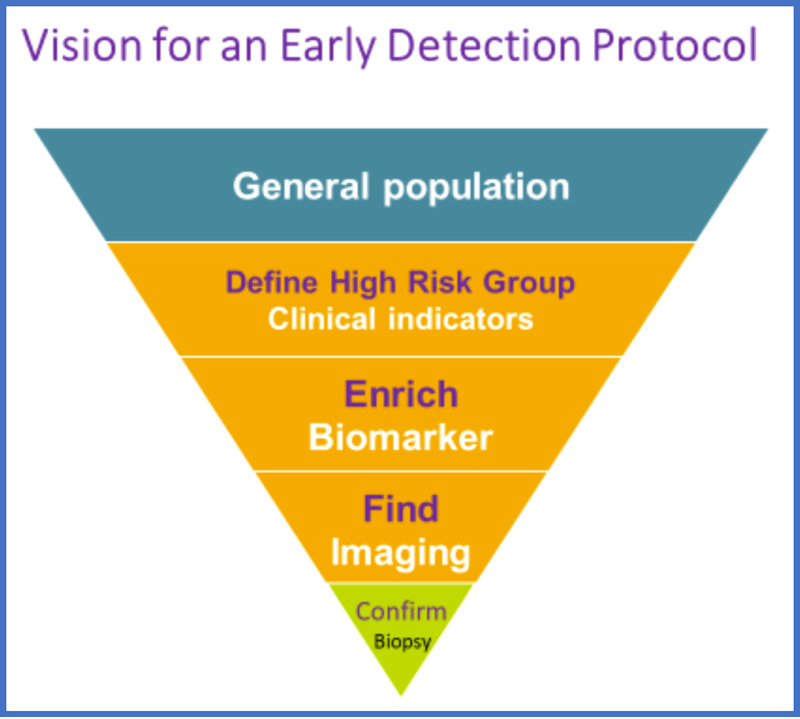
This is a presummit review and position paper arguing that early detection of pancreatic ductal adenocarcinoma (PDAC) will require risk stratification, better biomarkers/imaging, and substantial use of AI/ML to integrate diverse data sources. It does not report a new empirical study; instead, it synthesizes current efforts, highlights gaps in data and methods, and proposes collaborative structures for future work.
## Key findings
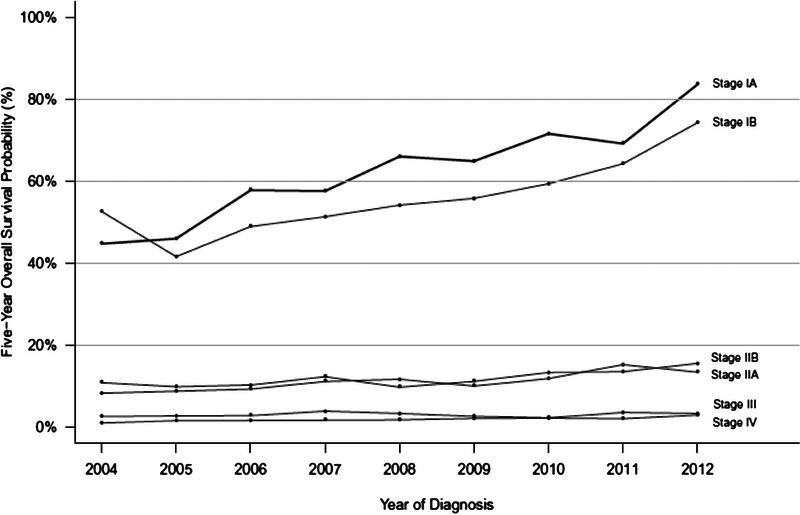
- PDAC has a poor prognosis: the paper states a 5-year survival rate of 10%, with 49.6% of newly diagnosed cases presenting with distant metastases, 29.1% with regional lymph node involvement, and only 10.8% localized to the pancreas.
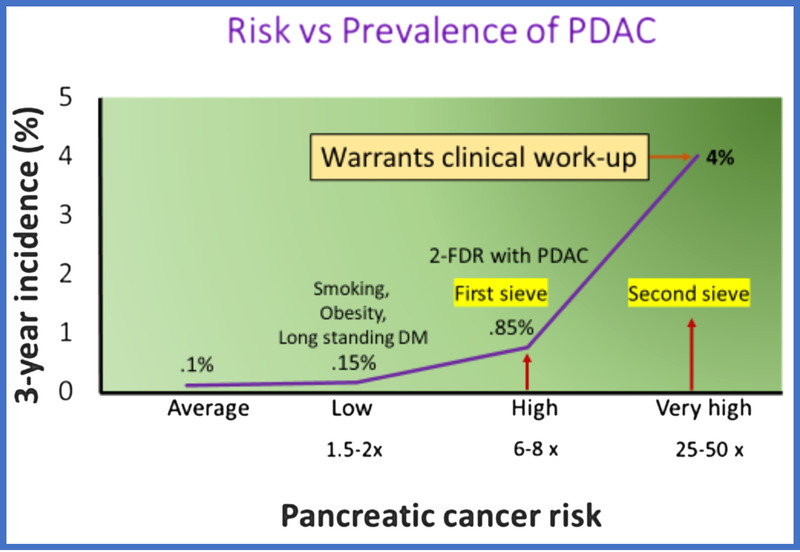
- The paper emphasizes that population-wide screening is unrealistic because baseline risk is low: for U.S. adults 50 years or older, the 3-year baseline risk is 0.11%; higher-risk strata are defined as 0.2%–0.3% (low risk), 0.35%–66% (modest risk, as written), 0.67%–1.0% (high risk), 10×–25× (intermediate high risk), and 3%–4% (very high risk).
- CA 19-9 remains the only FDA-approved biomarker, but the paper says its sensitivity is only 25% to 50% in early-stage disease and that 5% to 10% of the population lacks the Lewis antigen needed to express it.
- For a New-Onset Hyperglycemia and Diabetes Cohort, the paper says 10,000 subjects will be recruited and will yield approximately 100 pancreatic cancer cases over 3 years.
## Methods
- This is a virtual-summit presummit article / comprehensive review, organized into five sections: early detection, AI and machine learning, current efforts, organizational structures, and reflections from government/industry/advocacy.
- The paper synthesizes information supplied by interdisciplinary participants and by the authors’ identification of ongoing or planned efforts in imaging, blood-based assays, microbiome, patient characteristics, and integrative approaches.
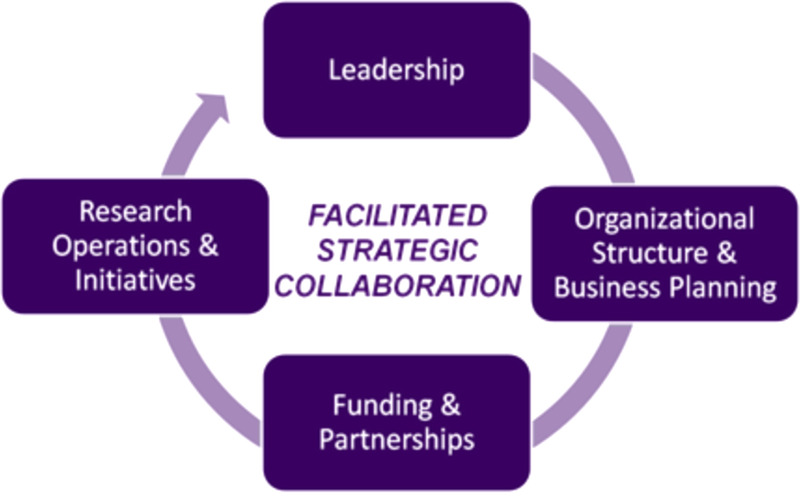
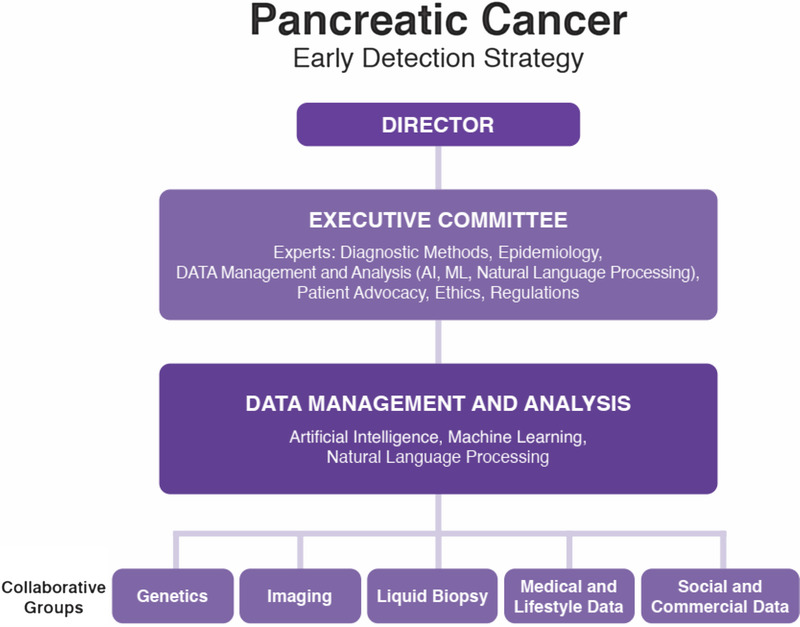
- The main analysis is narrative and conceptual rather than statistical: it reviews existing studies, funding efforts, data infrastructures, and proposes an “Early Detection Strategy” built around multidisciplinary collaboration and AI/ML-enabled risk models.
## Limitations
- The paper explicitly states it “should not be considered an exhaustive review of all possible approaches for early detection.”
- It also states that additional research is being conducted in all areas, indicating the field was evolving and the overview may be incomplete.
- Evident from the text: this is not an original empirical study, so it does not present new patient-level results, a formal systematic review protocol, or a meta-analysis.
Model-written summary. Check it against the paper before relying on it.
Integrity signals
Registry
Cites
Statistics
Figures
Verification
Claims the paper makes
47 Valid · 22 Not valid · 75 Not checked · 94 Own results and interpretations
At least one cited source doesn’t support this claim or points to a different paper, and none confirmed it — see the verdicts below.
In the paper
“Despite its widespread adoption, the benefit of using mammographic breast density in risk models is relatively small.”
§ Artificial Intelligence and Early Detection of Pancreatic Cancer > SECTION B: AI AND MACHINE LEARNING > AI and Risk Assessment
What the sources say
- Disputedcites [101] Brentnall AR Harkness EF Astley SM,. Mammographic density adds accuracy to both the Tyrer-Cuzick and Gail breast cancer risk models in a prospective UK screening cohort. Breast Cancer Res. 2015; 17: 147. 26627479 PMC4665886 sourceExperimental — accuracy not yet measured
The Results (Analysis and presentation; page unavailable) say mammographic density added “substantial significant information” to both models, rather than a relatively small benefit. They report a 0.04 AUC increase for each model and more accurate identification of high- and low-risk women. (LLM, conf=0.88)
Checked by a reasoning model — may be wrong.
plain- Asserted: passes — The authors put it forward as true.
- Checkable: passes — It can be checked against evidence.
- Load-bearing: unclear — It is unclear whether the paper’s conclusions depend on it.
- Based: passes — The paper gives a reason why it holds.
- Disputed
Every source the paper cites for this claim was checked and supports it.
In the paper
“At the same time, in 2019, the US Prevention and Screening Task Force explicitly recommended against screening for PDAC in the general population.34”
§ Artificial Intelligence and Early Detection of Pancreatic Cancer > SECTION A: PROGRESS, PROBLEMS, AND PROSPECTS OF EARLY DETECTION OF PANCREATIC CANCER > Detection of Biomarkers for Pancreatic Cancer Diagnosis
What the sources say
- Supportedcites [34] US Preventive Services Task Force, Owens DK Davidson KW,. Screening for pancreatic cancer: US Preventive Services Task Force reaffirmation recommendation statement. JAMA. 2019; 322: 438– 444. 31386141 source
The Abstract states that the US Preventive Services Task Force recommends against screening for pancreatic cancer in asymptomatic adults. The Patient Population Under Consideration section specifies adults not known to be at high risk—the general population relevant to this recommendation—and says, “Do not screen.” The paper identifies pancreatic ductal adenocarcinoma as the cancer addressed. (LLM, conf=0.94)
plain- Asserted: passes — The authors put it forward as true.
- Checkable: passes — It can be checked against evidence.
- Load-bearing: unclear — It is unclear whether the paper’s conclusions depend on it.
- Based: passes — The paper gives a reason why it holds.
- Supported
The cited sources support only part of this claim — read each source’s verdict below.
In the paper
“Surgical resection remains the only reasonable hope for “cure” from PDAC.13,14”
§ Artificial Intelligence and Early Detection of Pancreatic Cancer > SECTION A: PROGRESS, PROBLEMS, AND PROSPECTS OF EARLY DETECTION OF PANCREATIC CANCER > What Is “Early Pancreatic Cancer” and the Rationale for Early Detection
What the sources say
- Supportedcites [13] Chakraborty S Singh S. Surgical resection improves survival in pancreatic cancer patients without vascular invasion—a population based study. Ann Gastroenterol. 2013; 26: 346– 352. 24714323 PMC3959484
The Introduction states that surgery is the only potentially curative treatment for pancreatic cancer. The Discussion repeats that surgery is the only potentially curative treatment, supporting the citing sentence’s paraphrase. (LLM, conf=0.95)
- Partly supportedcites [14] Katz MH Hu CY Fleming JB,. Clinical calculator of conditional survival estimates for resected and unresected survivors of pancreatic cancer. Arch Surg. 2012; 147: 513– 519. 22351874 PMC3740148 sourceExperimental — accuracy not yet measured
The Discussion (page not available) says resection is associated with a subgroup of long-term survivors and that far fewer long-term survivors exist without it. It does not say resection is the only reasonable hope for cure; it also cautions that recurrence and cancer-specific death remain possible after resection. (LLM, conf=0.85)
plain- Asserted: passes — The authors put it forward as true.
- Checkable: passes — It can be checked against evidence.
- Load-bearing: passes — The paper’s conclusions depend on it.
- Based: passes — The paper gives a reason why it holds.
- Supported
The cited sources support only part of this claim — read each source’s verdict below.
In the paper
“If the stage distribution could be reversed, to 50% localized and 10% metastatic, survival would be more than doubled without any additional improvements in therapy.3”
§ Artificial Intelligence and Early Detection of Pancreatic Cancer > SECTION A: PROGRESS, PROBLEMS, AND PROSPECTS OF EARLY DETECTION OF PANCREATIC CANCER > What Is “Early Pancreatic Cancer” and the Rationale for Early Detection
What the sources say
- Partly supportedcites [3] Chari ST Kelly K Hollingsworth MA,. Early detection of sporadic pancreatic cancer: summative review. Pancreas. 2015; 44: 693– 712. 25931254 PMC4467589 sourceExperimental — accuracy not yet measured
In “Survival in Pancreatic Cancer” (page unavailable), the paper models stage distributions that could double average 5-year survival using 2004–2010 SEER outcomes. Our copy does not give the table’s numerical distributions, so it cannot verify the specific 50% localized and 10% metastatic scenario or that survival would be more than doubled. The model uses outcomes under interventions available in 2004–2010, rather than assuming an additional treatment improvement. (LLM, conf=0.84)
hedgedstates a cause- Asserted: passes — The authors put it forward as true.
- Checkable: passes — It can be checked against evidence.
- Load-bearing: passes — The paper’s conclusions depend on it.
- Based: passes — The paper gives a reason why it holds.
- Partly supported
Every source the paper cites for this claim was checked and supports it.
In the paper
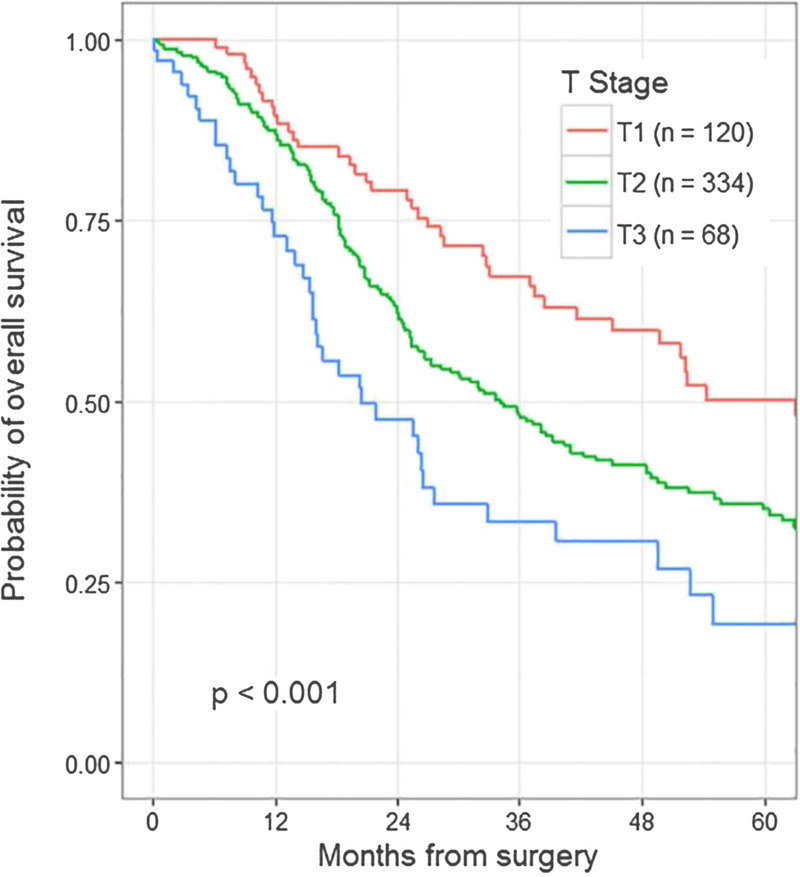
“Within the node-negative group undergoing surgical resection, the size of the tumor strongly correlates with outcome.17”
§ Artificial Intelligence and Early Detection of Pancreatic Cancer > SECTION A: PROGRESS, PROBLEMS, AND PROSPECTS OF EARLY DETECTION OF PANCREATIC CANCER > What Is “Early Pancreatic Cancer” and the Rationale for Early Detection
What the sources say
- Supportedcites [17] Allen PJ Kuk D Castillo CF,. Multi-institutional validation study of the American Joint Commission on Cancer (8th Edition) changes for T and N staging in patients with pancreatic adenocarcinoma. Ann Surg. 2017; 265: 185– 191. 27163957 PMC5611666 source
The Results (T staging; page unavailable) assess the association between tumor stage and survival specifically in node-negative patients and present survival by the proposed tumor-size-based stage. The Discussion states that tumor diameter is a strong predictor of survival in pancreatic adenocarcinoma and that the study’s size cutoffs were significantly associated with survival after resection. (LLM, conf=0.90)
boostedstates an association- Asserted: passes — The authors put it forward as true.
- Checkable: passes — It can be checked against evidence.
- Load-bearing: passes — The paper’s conclusions depend on it.
- Based: passes — The paper gives a reason why it holds.
- Supported
90 more claims · 29 with their cited sources checked
Create a free account to see all 238 claims and to verify the 60 references still open.
- Probably not a substantial claim. 97
- It may state two separate claims as one. 75
Claims other papers make about this one
Each is checked against this paper’s own text: does it say what the citing paper says it does?
The source backs part of the claim, not all of it — or backs it for a different population, condition or comparison.
In the citing paper
“However, a trade-off exists between performance and explainability at present.”
From Artificial intelligence in pancreatic cancer (2022) · cites this paper as [32]
Experimental — accuracy not yet measuredThe cited source says what the claim attributes to it.
In the citing paper
“The DL models usually perform better, but they are often the least explainable because they are purely data-driven, and the underlying structures are challenging to interpret 32,275.”
From Artificial intelligence in pancreatic cancer (2022) · cites this paper as [32]
Self-check
Percentages, sums and reported differences re-computed from the paper’s own numbers.
Rated major: it would touch a result — a value a result rests on, reported and recomputed p-values on opposite sides of the significance level, two passages that conflict with no sign which is right, or a cited work retracted before this paper was published.
In the paper
“These cohorts have 3 to 6× higher risk (0.35%–66%). Depending on how NOD is studied or defined, some studies have reported risk in this range in NOD.63”
§ Artificial Intelligence and Early Detection of Pancreatic Cancer > SECTION A: PROGRESS, PROBLEMS, AND PROSPECTS OF EARLY DETECTION OF PANCREATIC CANCER > Modest Risk Groups
Reported 66 · recomputed 0.66
Cited works that were retracted
Works this paper cites that were later retracted, from the retraction notices publishers deposit. Major when the notice came out before this paper was published.
A note, not an issue: for example, a cited work that was retracted only after this paper was published, which its authors could not have known.
In the paper
“2020, Microbiome analyses of blood and tissues suggest cancer diagnostic approach, Nature, 579, 567, 10.1038/s41586-020-2095-1”
Cited work 10.1038/s41586-020-2095-1 · retracted 2024-06-26 · notice 10.1038/s41586-024-07656-x · this paper published 2021-03
Citations
Cites
1 retracted
RETRACTED ARTICLE: Microbiome analyses of blood and tissues suggest cancer diagnostic approach
Poore, G. D., Kopylova, E., Zhu, Q., Carpenter, C., Fraraccio, S., Wandro, S., Kosciolek, T., Janssen, S., Metcalf, J., Song, S. J., et al. (2020) · Nature · doi:10.1038/s41586-020-2095-1 · Cited by 989
RetractedImageNet classification with deep convolutional neural networks
Krizhevsky, A., Sutskever, I., & Hinton, G. E. (2017) · Communications of the ACM · doi:10.1145/3065386 · Cited by 112,155
LeCun, Y., Bengio, Y., & Hinton, G. (2015) · Nature · doi:10.1038/nature14539 · Cited by 84,126
Siegel, R. L., Miller, K. D., & Jemal, A. (2020) · CA: A Cancer Journal for Clinicians · doi:10.3322/caac.21590 · Cited by 20,444
Sequence to Sequence Learning with Neural Networks
Sutskever, I., Vinyals, O., & Le, Q. V. (2014) · arXiv · doi:10.48550/arxiv.1409.3215 · Cited by 17,766
Reduced Lung-Cancer Mortality with Low-Dose Computed Tomographic Screening
The National Lung Screening Trial Research Team (2011) · New England Journal of Medicine · doi:10.1056/nejmoa1102873 · Cited by 11,064
High-performance medicine: the convergence of human and artificial intelligence
Topol, E. J. (2019) · Nature Medicine · doi:10.1038/s41591-018-0300-7 · Cited by 10,450
Hinton, G., Deng, L., Yu, D., Dahl, G., Mohamed, A.-R., Jaitly, N., Senior, A., Vanhoucke, V., Nguyen, P., Sainath, T., et al. (2012) · IEEE Signal Processing Magazine · doi:10.1109/msp.2012.2205597 · Cited by 10,260
Dissecting racial bias in an algorithm used to manage the health of populations
Obermeyer, Z., Powers, B., Vogeli, C., & Mullainathan, S. (2019) · Science · doi:10.1126/science.aax2342 · Cited by 7,137
Rahib, L., Smith, B. D., Aizenberg, R., Rosenzweig, A. B., Fleshman, J. M., & Matrisian, L. M. (2014) · Cancer Research · doi:10.1158/0008-5472.can-14-0155 · Cited by 7,094
Self-citation
Research works printed but not linked: 2
- Chari ST Kelly K Hollingsworth MA,. Early detection of sporadic pancreatic cancer: summative review. Pancreas. 2015; 44: 693– 712. 25931254 PMC4467589
- Agarwal A Beygelzimer A Dudik M,. A reductions approach to fair classification. Proceedings of the 35th International Conference on Machine Learning. PMLR. 2018; 80: 60– 69.
Cited by
Items 101–160 of 160
Pancreatic Cancer Detection Using Machine Learning and Image Processing
Sonnad, S., Sulaiman, R. B., Kareem, A., Shalini, S., Kishore, D., & Narayanan, J. (2025) · Wiley eBooks · doi:10.1002/9781394272464.ch15 · Cited by 3
Generative AI Health Assistants in Modern Healthcare: Drivers and Barriers to Adoption
Al-Lataifeh, Z., Harris, M. A., Smith, J., & Chin, A. G. (2025) · Information Systems Frontiers · doi:10.1007/s10796-025-10681-4 · Cited by 8
Seth, S., Chaudhary, K., & Ramachandran, S. (2025) · Biomedical Signal Processing and Control · doi:10.1016/j.bspc.2025.108240 · Cited by 6
Matykiewicz, J., Adamus-Białek, W., Wawszczak-Kasza, M., Molasy, B., Kołomańska, M., Obłap, R., Madej, Ł., Kozieł, D., & Głuszek, S. (2025) · Scientific Reports · doi:10.1038/s41598-025-86249-8 · Cited by 4
Yip, R., Jirapatnakul, A. C., Avila, R., Gutiérrez, J. G., Naghavi, M., Yankelevitz, D. F., & Henschke, C. I. (2025) · Journal of Thoracic Imaging · doi:10.1097/rti.0000000000000854 · Cited by 4
Gerush, K., Pashkovska, N. V., & Ukrainets, O. Z. (2024) · INTERNATIONAL JOURNAL OF ENDOCRINOLOGY (Ukraine) · doi:10.22141/2224-0721.20.4.2024.1410 · Cited by 4
Luvhengo, T. E., Molefi, T., Demetriou, D., Hull, R., & Dlamini, Z. (2023) · Springer eBooks · doi:10.1007/978-3-031-21506-3_3 · Cited by 3
Rapid and Sensitive Digital Droplet PCR Assays for Detecting HPV16 DNA in Liquid Biopsies
Loo, S. K., Feng, J. J., Reeder, C., et al. (2024) · Journal of Medical Virology · doi:10.1002/jmv.70146 · Cited by 2
A Growing Hope for Earlier Detection of Pancreatic Cancer
Rosenthal, M. H., Schawkat, K., & Wolpin, B. M. (2022) · Gastroenterology · doi:10.1053/j.gastro.2022.07.080 · Cited by 2
Self-citationDegand, L., Nader, C. A., Bône, A., Vétil, R., Placido, D., Chmura, P. J., Rohé, M.-M., Masi, F. D., & Brunak, S. (2025) · Investigative Radiology · doi:10.1097/rli.0000000000001209 · Cited by 4
Self-citationOza, V. M., Mittal, N., Antony, A., Mukherjee, S., & Goenka, A. H. (2024) · AI in Precision Oncology · doi:10.1089/aipo.2024.0032 · Cited by 2
Yaşar, Ş. (2025) · İnönü Üniversitesi Sağlık Hizmetleri Meslek Yüksek Okulu Dergisi · doi:10.33715/inonusaglik.1571883 · Cited by 2
Toward diffusion MRI in the diagnosis and treatment of pancreatic cancer
Lee, J., Lin, T., He, Y., Wu, Y., & Qin, J. (2025) · Medical Oncology · doi:10.1007/s12032-025-02759-5 · Cited by 2
Precision Medicine in View of Genomic Biomarker Discovery
Kohli, A., Verma, S., Agarwal, N., Kushwaha, A., Gupta, A., & Kumar, A. (2024) · Advances in medical technologies and clinical practice book series · doi:10.4018/979-8-3693-6597-7.ch007 · Cited by 2
Kara, A. (2022) · Research Square · doi:10.21203/rs.3.rs-2193871/v1 · Cited by 1
Sobrevida del adenocarcinoma ductal de páncreas
Targarona, J., Rivero, L., Coayla, G., Roman, G., Rivas, D., Legua-Pérez, S., & Carrasco, R. (2023) · Revista de Gastroenterología del Perú · doi:10.47892/rgp.2023.434.1532
Pancreatic Cancer Risk in Patients With Low-Risk Cystic Lesions
Mirzaian, A. H., Abbasi, N., Kambadakone, A. R., Lacson, R. C., Hernandez-Barco, Y. G., Jin, D. X., Jajoo, K., Bates, D. W., & Khorasani, R. (2026) · JAMA Network Open · doi:10.1001/jamanetworkopen.2026.13808 · Cited by 1
Luvhengo, T. E., Kgoebane-Maseko, M., Phakathi, B., Magangane, P. S., Mtshali, N. Z., Demetriou, D., Adeola, H. A., Batra, J., & Dlamini, Z. (2023) · Springer eBooks · doi:10.1007/978-3-031-36461-7_3 · Cited by 2
Evaluating the Cost-Effectiveness of Cervical Cancer Screening and Treatment in Western Romania
Petre, I., Negru, S. M., Buleu, F. N., Moleriu, R. D., Mercioni, M. A., Petre, I., Bordianu, A., Turi, V., Marc, L., Popa, D. I., et al. (2025) · Current Oncology · doi:10.3390/curroncol32060336 · Cited by 1
“They have the advantage of requiring less time, less technical and professional staff, and not being biased due to subjective variables [44–56].”
Bobes-Bascarán, J., Mosqueira-Rey, E., Fernández-Leal, Á., Alonso-Ríos, D., Figueirido-Arnoso, I., & Vidal-Ínsua, Y. (2026) · Mathematics · doi:10.3390/math14030497 · Cited by 4
Mbatha, N. A., Mushebenge, A. G.-A., & Khathi, A. (2024) · Physiologia · doi:10.3390/physiologia4020009 · Cited by 3
“Furthermore, additional investigation is required to clarify the interplay and possible synergies between these biomarkers [278].”
BackgroundAbuhassan, Q., Faisal, A., Shareef, A., Pate, P. N., Jyothi, S. R., Singh, G., Maharana, L., Arora, V., Polatova, D., Sameer, H. N., et al. (2026) · Clinica Chimica Acta · doi:10.1016/j.cca.2026.121005 · Cited by 2
Advances in the early detection of pancreatic cancer – a literature review
Brennan, E. (2024) · Primary Health Care · doi:10.7748/phc.2024.e1838 · Cited by 1
Detection of Pancreatic Cancer Cells at Early Stage and Recommend the Treatment Process
Margret Sharmila, F., Shree Harini, R., Vityarubbasiri, M., & Gopi Krishna, S. (2023) · International Conference on Recent Trends in Advance Computing (ICRTAC) · doi:10.1109/icrtac59277.2023.10480749 · Cited by 2
Gupta, D., Gupta, D. S., & Shetty, S. R. (2024) · Springer eBooks · doi:10.1007/978-981-97-3001-8_9 · Cited by 1
Zamyatina, K. A., Zharikova, A. V., Кондратьев, Е. В., Ustalov, A. A., Староверов, Н. Е., Nefediev, N., Gozheva, A. R., Shmeleva, S. A., & Karmazanovsky, G. G. (2024) · Medical Visualization · doi:10.24835/1607-0763-1483 · Cited by 1
Chandra, S. (2026) · medRxiv · doi:10.64898/2026.04.08.26350418 · Cited by 1
Editorial: Interaction between endocrine and exocrine pancreas
Li, L., & Pandol, S. J. (2022) · Frontiers in Endocrinology · doi:10.3389/fendo.2022.967066 · Cited by 4
Self-citationPredicting Fruit Fly Behaviour using TOLC device and DeepLabCut
Lee, S., Waugh, B., O'Dell, G., Zhao, X., Yoo, W.-S., & Kim, D. H. (2021) · IEEE International Conference on Bioinformatics and Bioengineering (BIBE) · doi:10.1109/bibe52308.2021.9635290 · Cited by 3
Advancing precision medicine in pancreatic cancer using novel biomarkers and clinical targets
Murthy, D., Seyhan, A. A., den Hollander, P., Lu, S., Kuburich, N. A., Gould, C., Karam, A., Sun, K., Schupp, P. G., Safran, H., et al. (2026) · Molecular Aspects of Medicine · doi:10.1016/j.mam.2026.101476 · Cited by 3
AI's Healing Touch: Transforming Healthcare from Diagnosis to Recovery
Sowjanya, C., Shaik, S. B., & Maddikari, S. Y. (2025) · Jordan Journal of Pharmaceutical Sciences · doi:10.35516/jjps.v18i3.3120
Fernandez, K., Cheung, L., Balasinkam, S., et al. (2023) · Cureus · doi:10.7759/cureus.35541
Multicenter deep learning model for pancreatic cancer detection using endoscopic ultrasound
Yu, X.-Y., Ye, J.-Q., He, Z., & He, Q. (2026) · World Journal of Gastrointestinal Oncology · doi:10.4251/wjgo.119889
Proniewska, K. K., Kolecki, R., Grochowska, A., Popiela, T. J., Rogula, T. G., Malinowski, K. P., Dołęga‐Dołegowski, D., Kenig, J., Richter, P., Dąbrowa, J., et al. (2023) · Lecture notes in computer science · doi:10.1007/978-3-031-43401-3_21
Martin Paul Rufus Kumar, K., & Sudha., I. (2026) · IEEE International Conference on Emerging Synergy Science and Technology (ICESST) · doi:10.1109/icesst69086.2026.11582909
Rashidian, P., Smerat, A., Khan, M. A., Bansal, P., Sharma, C., Mansurov, D., Moghimnejadhosseini, S., Mojtahedzadeh, A., Talebzadeh, M., & Amini‐Salehi, E. (2026) · Medicine · doi:10.1097/md.0000000000050681
“[28] The ongoing citation bursts from 2024 through 2026 for Placido et al and for publications addressing pancreatic biology, epidemiology, and clinical applications suggest that scholarly attention is broadening beyond technical model development.”
Aloliqi, A. A., & Mohamed, H. G. (2025) · Journal of Molecular Graphics and Modelling · doi:10.1016/j.jmgm.2025.109141
Strategy for early diagnosis of pancreatic cancer
Sharma, R. K., Singh, A., Sharma, G., Dawra, S., & Rana, S. S. (2026) · Frontiers in Gastroenterology · doi:10.3389/fgstr.2026.1731223
Evaluating deep learning models for pancreatic cancer diagnosis
Li, D., He, H., Hu, J. F., Ding, Y., Kong, L., & Hu, A. (2026) · Clinical and Experimental Medicine · doi:10.1007/s10238-025-02036-9 · Cited by 2
Self-citationYapıcıoğlu, E., & Ağaçayak, K. S. (2026) · Journal of Stomatology Oral and Maxillofacial Surgery · doi:10.1016/j.jormas.2026.103018
Nair, V., Uppal, G., Sinha, R., Kaur, M., Gupta, S., & Kumar, R. (2026) · IEEE Journal of Selected Topics in Quantum Electronics · doi:10.1109/jstqe.2026.3651753
VEIKSMINGAS INDIVIDUALUS IV STADIJOS KASOS KARCINOMOS GYDYMAS: KLINIKINIS ATVEJIS
Rimsaite, U., Kraulytė, A., Mačiulienė, D., et al. (2024) · Health Sciences · doi:10.35988/sm-hs.2024.208
Recent advances in understanding pancreatic cancer
Stott, M. C., Oldfield, L. S., Hale, J. J., Costello, E., & Halloran, C. M. (2022) · Faculty Reviews · doi:10.12703/r/11-10
Chen, Q., Ren, S., Lu, J., Meng, M., Zhang, T., Chen, H., Yang, L., Meng, C., Bing, Y., Li, L., et al. (2026) · IEEE Internet of Things Journal · doi:10.1109/jiot.2026.3656346
Role of artificial intelligence in early detection and screening for pancreatic adenocarcinoma
Lin, K. W., Ang, T. L., & Li, J. W. (2022) · Artificial Intelligence in Medical Imaging · doi:10.35711/aimi.v3.i2.21 · Cited by 1
Ramaekers, M., Fernandes, C. D., Li, X., Schipper, R., Turco, S., de Hingh, I. H. J. T., Nederend, J., Mischi, M., & Luyer, M. D. P. (2026) · Ultrasound in Medicine & Biology · doi:10.1016/j.ultrasmedbio.2026.02.022
Quantum-CNN Synergy: Redefining Early Prediction of Pancreatic Cancer
Kakulapati, V., Reddy, K. M., Teja, T. S., & Chandan, D. H. (2026) · Lecture notes in networks and systems · doi:10.1007/978-3-032-18346-0_9
Beyond Insulin: A Deeper Dive into Pancreatic Disease
Sharma, S., Sharma, P., & Rani, N. (2024) · Current Nutrition & Food Science · doi:10.2174/0115734013307659240820060042
Dando, I., & Pozza, E. D. (2023) · Cancers · doi:10.3390/cancers15153906
AI Enhanced Medical Image Analysis for Early Pancreatic Cancer Detection
Nujha, N. (2025) · International Journal for Research in Applied Science and Engineering Technology · doi:10.22214/ijraset.2025.72661
Ahmed, K. S., Issaka, S. M., Cher, B. A. Y., Marcinak, C. T., & Zafar, S. N. (2025) · AI in Precision Oncology · doi:10.1177/2993091x251386458
Machine Learning Techniques for Pancreatic Cancer Detection
Shukla, R. P., Jain, S., Sakshi, S., & Shrivastav, A. K. (2024) · Lecture notes in networks and systems · doi:10.1007/978-3-031-64813-7_3 · Cited by 1
Hope on the Horizon: The Future of Pancreatic Cancer Treatment
Marwaha, L. (2025) · IGI Global eBooks · doi:10.4018/979-8-3373-1469-3.ch013
Role of Artificial Intelligence in the Future of Pancreatic Cancer
Gayathri, K., Kesavardhini, K., & Tharani, E. (2025) · IGI Global eBooks · doi:10.4018/979-8-3373-1469-3.ch011
Biotechnology at the Frontline of Cancer Treatment and Therapeutic Innovation
Salvi, R. M., Sk, S., Shama, B., Kale, S., & Bansal, A. (2025) · IEEE International Conference on ICT in Business Industry & Government (ICTBIG) · doi:10.1109/ictbig68706.2025.11323745
Molecular Pathways and Drugs Involved in the Treatment of Pancreatic Cancer
Yadav, B., Maltonia, D., Singh, A., Kollur, S. P., & Singh, P. (2025) · IGI Global eBooks · doi:10.4018/979-8-3373-1469-3.ch001
Mesothelin in pancreatic cancer: clinical applications and analytical considerations
Patel, N. K., Gupta, A., Mishra, R., Menon, S. V., Ray, S., Pandey, S. N., Goyal, K., Ali, H., Maji, C., Rekha, A., et al. (2025) · Clinica Chimica Acta · doi:10.1016/j.cca.2025.120686
Fuloria, N. K., Fuloria, S., Sekar, M., Narain, K., & Kumar, S. (2025) · Elsevier eBooks · doi:10.1016/b978-0-443-30120-9.00001-5
Metadata
- Authors
- Kenner, B., Chari, S. T., Kelsen, D., Klimstra, D. S., Pandol, S. J., Rosenthal, M., Rustgi, A. K., Taylor, J. A., Yala, A., Abul-Husn, N., Andersen, D. K., Bernstein, D., Brunak, S., Canto, M. I., Eldar, Y. C., Fishman, E. K., Fleshman, J., Go, V. L. W., Holt, J. M., Field, B., Goldberg, A., Hoos, W., Iacobuzio-Donahue, C., Li, D., Lidgard, G., Maitra, A., Matrisian, L. M., Poblete, S., Rothschild, L., Sander, C., Schwartz, L. H., Shalit, U., Srivastava, S., & Wolpin, B.
- Affiliations
- Kenner Family Research Fund, New York, NY
- The University of Texas MD Anderson Cancer Center (US)
- Edward S. Gordon Chair in Medical Oncology
- Memorial Sloan Kettering Cancer Center (US)
- Cedars-Sinai Medical Center (US)
- Dana-Farber Cancer Institute (US)
- Columbia University Irving Medical Center (US)
- Google Health, Seattle, WA
- Division of Genomic Medicine, Department of Medicine, Icahn School of Medicine, Mount Sinai, New York, NY
- University of Copenhagen (DK)
- Johns Hopkins University (US)
- David M. Rubenstein Center for Pancreatic Cancer Research, Memorial Sloan Kettering Cancer Center, New York, NY
- Exact Sciences (United States) (US)
- Harvard University (US)
- NewYork–Presbyterian Hospital (US)
- Technion – Israel Institute of Technology (IL)
- Corresponding author
- Kenner, Barbara
- Taylor, James A.
- Canto, Marcia Irene
- Field, Bruce
- Goldberg, Ann
- Rothschild, Laura
- Shalit, Uri
- ORCID
- Kenner, Barbara
- Chari, Suresh T.
- Kelsen, David
- Klimstra, David S.
- Pandol, Stephen J.
- Rosenthal, Michael
- Rustgi, Anil K.
- Taylor, James A.
- Yala, Adam
- Andersen, Dana K.
- Bernstein, David
- Brunak, Søren
- Canto, Marcia Irene
- Eldar, Yonina C.
- Fishman, Elliot K.
- Hoos, William
- Li, Debiao
- Lidgard, Graham
- Maitra, Anirban
- Matrisian, Lynn M.
- Poblete, Sung
- Sander, Chris
- Shalit, Uri
- Srivastava, Sudhir
- Wolpin, Brian
- Venue
- Pancreas
- Published
- 2021-03
- Volume
- 50
- Issue
- 3
- Pages
- 251-279
- ISSN
- 0885-3177 (ISSN-L)
- 1536-4828
- PMC
- PMC8041569
- OpenAlex
- W3147514193
- Semantic Scholar
- 6d08483da4a1d81e3adecfa5290fbaeaae6e684b
- Cited by
- 158
- References
- 223
- Citations by year
- 2026: 19 · 2025: 35 · 2024: 36 · 2023: 31 · 2022: 29 · 2021: 8
- FWCI
- 1.88
- Type
- journal article
- Language
- en
- Open access
- hybrid
- doi.org
- Licence
- Locations
- Pancreas (publishedVersion, cc-by-nc-nd)
- PubMed Central (publishedVersion, cc-by-nc-nd)
- PubMed (publishedVersion)
- Research at the University of Copenhagen (University of Copenhagen) (publishedVersion, cc-by-nc-nd)
- eScholarship (California Digital Library) (submittedVersion, cc-by-nc-nd)
- Funders
- Memorial Sloan-Kettering Cancer Center
- Cedars-Sinai Medical Center
- University of Texas MD Anderson Cancer Center
- Irving Medical Center, Columbia University
- National Cancer Institute (P01CA236585, P01CA233452, U01CA210171)
- Topics
- Physical Sciences › Computer Science › Artificial Intelligence › AI in cancer detection
- Health Sciences › Medicine › Oncology › Pancreatic and Hepatic Oncology Research
- Health Sciences › Medicine › Health Informatics › Artificial Intelligence in Healthcare and Education
- Keywords
- pancreatic cancer, early detection, artificial intelligence, machine learning, risk stratification, multidisciplinary collaboration, research funding
- MeSH terms
- Artificial Intelligence, Humans, Pancreatic Neoplasms, Prognosis, Biomarkers, Tumor, Survival Analysis, Carcinoma, Pancreatic Ductal, Genomics, Interdisciplinary Communication, Early Detection of Cancer
About these checks
Registry, retraction, Cites and statistics results are computed, not judged, with one exception: a printed reference that no index lists is read once by a model before it counts as a citation error. Claims are extracted by a model and kept only when their quote appears verbatim in the text; each cited source is then checked, with a model’s help, for whether it says what the claim relies on. Those verdicts can be wrong — read the claim’s quote and the cited source before relying on one.
The claim verdicts this report counts are experimental: their accuracy is not yet measured.
A language model drew the claims from the paper on 2026-10-10, under version 3 of the claim definition (model deepseek-v4.1-flash, prompt extract-v3).
A second model labelled each claim on 2026-10-10 (model jev-1.13-20260917, definition revision gold-guideline-v0.2).
Cited sources are checked with a language model’s help (gpt-6-sol).
Statistics and arithmetic are recomputed, not judged.
Confidence bands are shown only for fields calibrated on our annotated test set. None is calibrated yet, so no band is shown.
What counts as a claim ›How we measure confidence ›How we check this ›
Are you an author, or do you see a problem with this page? Request a review
Data sources
Bibliographic data: Semantic Scholar, OpenAlex, Crossref.
Contains information from the Semantic Scholar Academic Graph Datasets, made available under the ODC Attribution License (ODC-BY 1.0).
Semantic Scholar’s data is described in: Kinney, R., et al. (2023). The Semantic Scholar Open Data Platform. arXiv:2301.10140.
