

Mindfulness-Based College: A Stage 1 Randomized Controlled Trial for University Student Well-Being
Open accessThe DOI matches its Crossref record; 44 of the 45 references it cites were found in a registry or an index, and 1 are not checked yet.
Abstract
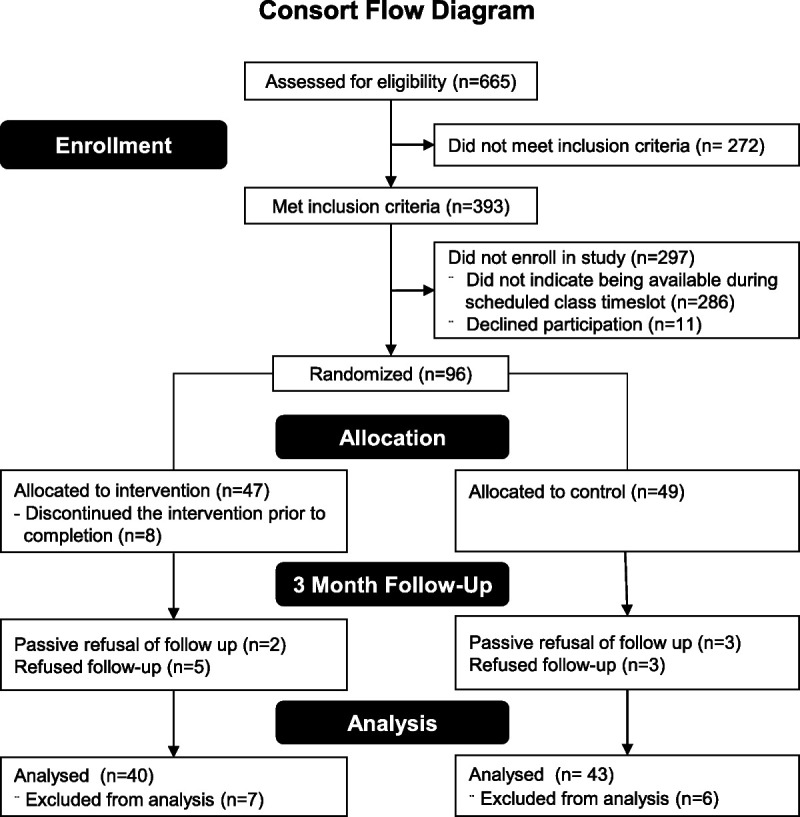
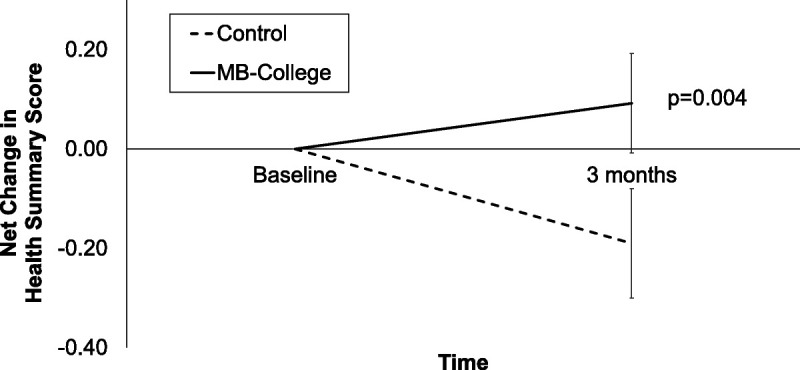
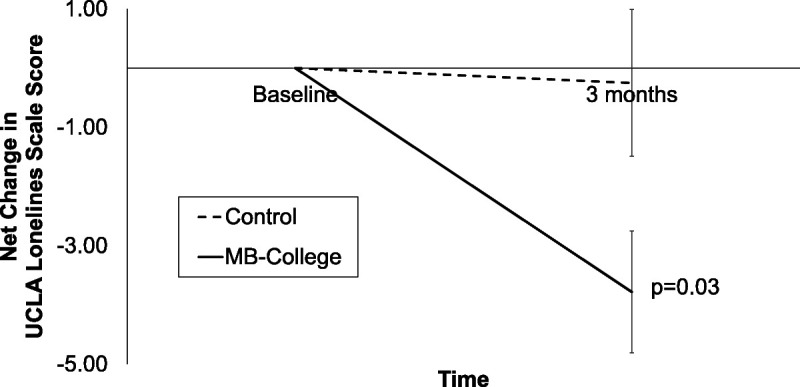
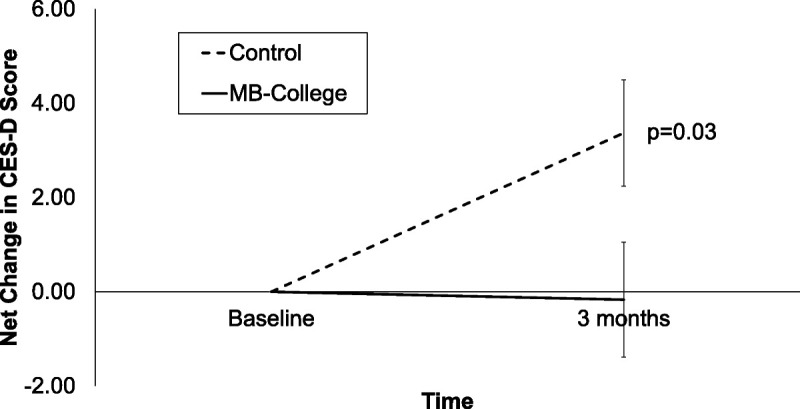
Objective: To evaluate effects of a mindfulness-based program, adapted to the young adult life course stage (age, 18–29 years), named Mindfulness-Based College (MB-College). The primary outcome was a young adult health summary score, composed of key health risk factors: body mass index, physical activity, fruit and vegetable intake, alcohol consumption, stress, loneliness, and sleep duration. Secondary outcomes were hypothesized self-regulation mechanisms, including attention control, interoceptive awareness, and emotion regulation. Methods: This was a stage 1 randomized controlled trial of the 9-week MB-College program (n = 47) versus enhanced usual care control (n = 49) including students from three universities. Assessments were at baseline, during the beginning of the college term when stress is typically lower, and at MB-College completion (3-month follow-up), when term-related stress is typically higher. Intention-to-treat, linear regression analyses estimated the marginal effects of MB-College versus control on the outcomes. Results: MB-College participants (mean age = 20 years, 68% female, 37% racial minorities) demonstrated improved health summary scores at follow-up compared with control participants whose health summary scores worsened (marginal effect for MB-College versus control = 0.23; p = .004). Effects on loneliness were pronounced (marginal effect = −3.11 for the Revised University of Los Angeles Loneliness Scale score; p = .03). Secondary analyses showed significant impacts of MB-College on hypothesized self-regulation mechanisms (e.g., Sustained Attention to Response Task correct no-go percent, p = .0008; Multidimensional Assessment of Interoceptive Awareness, p < .0001; Center for Epidemiologic Studies—Depression scale, p = .03). Conclusions: Findings of this early stage clinical trial suggest that MB-College may foster well-being in young adults. Trial Registration: NCT03124446
Overview
The claims and statistics of this paper haven’t been checked yet.
Free: it reads the open-access text and checks the first 5 claims that cite a source we can check. Create a free account to check every claim.
Integrity signals
Registry
Cites
Statistics
Figures
Verification
Claims the paper makes
The claims and statistics of this paper haven’t been checked yet.
Free: it reads the open-access text and checks the first 5 claims that cite a source we can check. Create a free account to check every claim.
Claims other papers make about this one
Each is checked against this paper’s own text: does it say what the citing paper says it does?
The source backs part of the claim, not all of it — or backs it for a different population, condition or comparison.
In the citing paper
“Adaptations of MBCT/MBSR for the general population have been developed, and there is preliminary evidence that supports their efficacy.14 16 43”
From Target mechanisms of mindfulness-based programmes and practices: a scoping review (2024) · cites this paper as [43]
Experimental — accuracy not yet measuredThe source backs part of the claim, not all of it — or backs it for a different population, condition or comparison.
In the citing paper
“Two studies showed interoceptive sensibility to decrease the difficulties in emotion regulation (measured by the Difficulties in Emotion Regulation Scale DERS) [122,128].”
From Interoceptive Ability and Emotion Regulation in Mind–Body Interventions: An Integrative Review (2024) · cites this paper as [122]
Experimental — accuracy not yet measuredThe cited source says what the claim attributes to it.
In the citing paper
“studies with university students, El Morr and Loucks [24,45], adolescents (Chi and Díaz-González) [31,40], and healthcare workers by Santamaría-Peláez [42] showed remarkably consistent improvements in emotional regulation and psychological well-being.”
From The Effects of Mindfulness Techniques on Anxiety, Depression, and Stress, with an Emphasis on Gratitude: A Systematic Review and Meta-Analysis (2026) · cites this paper as [45]
Self-check
Percentages, sums and reported differences re-computed from the paper’s own numbers.
The self-check needs the paper’s full text.
Citations
Cites
The Pittsburgh Sleep Quality Index: a new instrument for psychiatric practice and research
Buysse, D. J., Reynolds, C. F., Monk, T. H., Berman, S. R., & Kupfer, D. J. (1989) · Psychiatry Research · doi:10.1016/0165-1781(89)90047-4 · Cited by 35,234 · cited 7×
“AE = adverse events, BAI = Beck Anxiety Inventory, CESD-R = Revised Centers for Epidemiologic Studies—Depression scale, CONSORT = Consolidated Standards of Reporting Trials, MAAS = Mindful Attention Awareness Scale, MAIA = Multidimensional Assessment of Interoceptive Awareness, MB-College = MindfulnessBased College, M…”
MethodInfluentialA Global Measure of Perceived Stress
Cohen, S., Kamarck, T., & Mermelstein, R. (1983) · Journal of Health and Social Behavior · doi:10.2307/2136404 · Cited by 32,807 · cited 3×
“NCT03124446), was a young adult health summary score composed of mean standardized scores of key health risk factors that predict mortality, cardiovascular disease, and depression (21): health behaviors (physical activity using International Physical Activity Questionnaire–assessed total metabolic equivalent (MET)-min…”
MethodInternational physical activity questionnaire: 12-country reliability and validity
CRAIG, C. L., MARSHALL, A. L., SJ??STR??M, M., BAUMAN, A. E., BOOTH, M. L., AINSWORTH, B. E., PRATT, M., EKELUND, U., YNGVE, A., SALLIS, J. F., et al. (2003) · Medicine & Science in Sports & Exercise · doi:10.1249/01.mss.0000078924.61453.fb · Cited by 21,619 · cited 3×
“NCT03124446), was a young adult health summary score composed of mean standardized scores of key health risk factors that predict mortality, cardiovascular disease, and depression (21): health behaviors (physical activity using International Physical Activity Questionnaire–assessed total metabolic equivalent (MET)-min…”
MethodAn inventory for measuring clinical anxiety: Psychometric properties.
Beck, A. T., Epstein, N., Brown, G., & Steer, R. A. (1988) · Journal of Consulting and Clinical Psychology · doi:10.1037/0022-006x.56.6.893 · Cited by 14,407 · cited 2×
“Anxiety symptoms were assessed using the Beck Anxiety Inventory (BAI), with substantial validation described elsewhere (33).”
BackgroundMethodMichie, S., Richardson, M., Johnston, M., Abraham, C., Francis, J., Hardeman, W., Eccles, M. P., Cane, J., & Wood, C. E. (2013) · Annals of Behavioral Medicine · doi:10.1007/s12160-013-9486-6 · Cited by 7,629 · cited 2×
“They identified 93 different behavior change techniques commonly used, and that most behavior interventions and active control groups contain many behavior change techniques within each program (49).”
BackgroundMindfulness: A proposed operational definition.
Bishop, S. R., Lau, M., Shapiro, S., Carlson, L., Anderson, N. D., Carmody, J., Segal, Z. V., Abbey, S., Speca, M., Velting, D., et al. (2004) · Clinical Psychology: Science and Practice · doi:10.1093/clipsy.bph077 · Cited by 7,234 · cited 1×
“characterized by curiosity, openness, and acceptance” (13).”
Heart disease and stroke statistics-2018 update: a report from the american heart association
Benjamin, E. J., Virani, S. S., Callaway, C. W., Chamberlain, A. M., Chang, A. R., Cheng, S., Chiuve, S. E., Cushman, M., Delling, F. N., Deo, R., et al. (2018) · Circulation · doi:10.1161/cir.0000000000000558 · Cited by 7,146
Tarver, T. (2014) · Journal of Consumer Health On the Internet · doi:10.1080/15398285.2014.902284 · Cited by 5,605
Dynamic mapping of human cortical development during childhood through early adulthood
Gogtay, N., Giedd, J. N., Lusk, L., Hayashi, K. M., Greenstein, D., Vaituzis, A. C., Nugent, T. F., Herman, D. H., Clasen, L. S., Toga, A. W., et al. (2004) · Proceedings of the National Academy of Sciences · doi:10.1073/pnas.0402680101 · Cited by 5,604
The Revised UCLA Loneliness Scale: concurrent and discriminant validity evidence
Russell, D., Peplau, L. A., & Cutrona, C. E. (1980) · Journal of Personality and Social Psychology · doi:10.1037/0022-3514.39.3.472 · Cited by 5,173 · cited 4×
“The variables were as follows: Mental health (distress, using Perceived Stress Scale-10 (PSS-10) score) (26), social health (loneliness assessed using R-UCLA loneliness scale) (27), health behaviors (physical activity using IPAQ-assessed total METminutes per week (22); diet using fruit and vegetable intake from Harvar…”
BackgroundMethodInfluentialReproducibility and validity of a semiquantitative food frequency questionnaire
WILLETT, W. C., SAMPSON, L., STAMPFER, M. J., ROSNER, B., BAIN, C., WITSCHI, J., HENNEKENS, C. H., & SPEIZER, F. E. (1985) · American Journal of Epidemiology · doi:10.1093/oxfordjournals.aje.a114086 · Cited by 4,274 · cited 3×
“Diet was measured as mean fruit and vegetable serving consumption, assessed using the 18 fruit and vegetable consumption questions from theHarvard 80-item food frequency questionnaire (23).”
MethodConstruction and factorial validation of a short form of the Self-Compassion Scale
Raes, F., Pommier, E., Neff, K. D., & Van Gucht, D. (2011) · Clinical Psychology & Psychotherapy · doi:10.1002/cpp.702 · Cited by 2,997 · cited 1×
“Self-compassion was assessed using the Self-Compassion Scale, with validity and reliability described elsewhere (36).”
MethodThe Neuroscience of Mindfulness Meditation
Tang, Y.-Y., Hölzel, B. K., & Posner, M. I. (2015) · Nature reviews. Neuroscience · doi:10.1038/nrn3916 · Cited by 2,889 · cited 1×
“Brain regions involved in executive function, attention, and motor coordination are some of the last to mature and are also engaged by mindfulness interventions (10,11).”
BackgroundBellg, A. J., Treatment Fidelity Workgroup of the NIH Behavior Change Consortium, Borrelli, B., Resnick, B., Hecht, J., Minicucci, D. S., Ory, M., Ogedegbe, G., Orwig, D., Ernst, D., et al. (2004) · Health Psychology · doi:10.1037/0278-6133.23.5.443 · Cited by 2,620
Boutron, I., Moher, D., Altman, D. G., Schulz, K. F., Ravaud, P., & for the CONSORT Group* (2008) · Annals of Internal Medicine · doi:10.7326/0003-4819-148-4-200802190-00008 · Cited by 2,292 · cited 2×
“The study protocol was designed to adhere to the CONSORT statement extended to randomized trials of nonpharmacologic treatment (28), and to minimize risk of bias based on the Cochrane Risk of Bias Tool Version 2 (29).”
MethodRobertson, I. H., Manly, T., Andrade, J., Baddeley, B. T., & Yiend, J. (1997) · Neuropsychologia · doi:10.1016/s0028-3932(97)00015-8 · Cited by 2,059 · cited 1×
“Attention control was evaluated using the Sustained Attention to Response Task (SART), which is a computerized go/no-go task that evaluates sustained attention, response inhibition as well as self-regulation, with good validity and reliability detailed elsewhere (34).”
MethodThe New Life Stage of Emerging Adulthood at Ages 18–29 Years: Implications for Mental Health
Arnett, J. J., Žukauskienė, R., & Sugimura, K. (2014) · The Lancet Psychiatry · doi:10.1016/s2215-0366(14)00080-7 · Cited by 1,896 · cited 6×
“This is particularly true for care relevant to the risk-related behaviors and psychiatric disorders described previously (1,4).”
BackgroundInfluentialGu, J., Strauss, C., Bond, R., & Cavanagh, K. (2015) · Clinical Psychology Review · doi:10.1016/j.cpr.2015.01.006 · Cited by 1,712 · cited 3×
“It is a mechanism frequently described as being important in mindfulness-based programs, and evidence here suggests it was engaged well by MB-College (20, 47).”
BackgroundInfluentialWatson, N. F., Badr, M. S., Belenky, G., Bliwise, D. L., Buxton, O. M., Buysse, D., Dinges, D. F., Gangwisch, J., Grandner, M. A., Kushida, C., et al. (2015) · SLEEP · doi:10.5665/sleep.4716 · Cited by 1,453
The multidimensional assessment of interoceptive awareness (MAIA)
Mehling, W. E., Price, C., Daubenmier, J. J., Acree, M., Bartmess, E., & Stewart, A. (2012) · PLoS ONE · doi:10.1371/journal.pone.0048230 · Cited by 1,429 · cited 1×
“The MAIA is a measure of self-awareness with a particular focus on body awareness (35).”
BackgroundEmerging adulthood and college-aged youth: An overlooked age for weight-related behavior change
Nelson, M. C., Story, M., Larson, N. I., Neumark‐Sztainer, D., & Lytle, L. A. (2008) · Obesity · doi:10.1038/oby.2008.365 · Cited by 1,314 · cited 4×
“This is particularly true for care relevant to the risk-related behaviors and psychiatric disorders described previously (1,4).”
BackgroundInfluentialLoneliness Across the Life Span
Qualter, P., Vanhalst, J., Harris, R., Van Roekel, E., Lodder, G., Bangee, M., Maes, M., & Verhagen, M. (2015) · Perspectives on Psychological Science · doi:10.1177/1745691615568999 · Cited by 1,080 · cited 1×
“Psychosomatic Medicine, V 83 • 602-614 602 recently left home and do not yet have long-term romantic relationships or children; consequently, loneliness is high: up to 71% feel lonely “sometimes” or “often” (2,8).”
Background(2016) · Cochrane Database of Systematic Reviews · Cited by 985
Fresco, D. M., Moore, M. T., van Dulmen, M. H. M., Segal, Z. V., Ma, S. H., Teasdale, J. D., & Williams, J. M. G. (2007) · Behavior Therapy · doi:10.1016/j.beth.2006.08.003 · Cited by 810
A Meta-Analysis of College Students' Physical Activity Behaviors
Keating, X. D., Guan, J., Piñero, J. C., & Bridges, D. M. (2005) · Journal of American College Health · doi:10.3200/jach.54.2.116-126 · Cited by 763 · cited 1×
“For physical health, obesity recently doubled (4), and half of young adults exercise below national recommendations (5).”
BackgroundVan Dam, N. T., & Earleywine, M. (2011) · Psychiatry Research · doi:10.1016/j.psychres.2010.08.018 · Cited by 647 · cited 6×
“AE = adverse events, BAI = Beck Anxiety Inventory, CESD-R = Revised Centers for Epidemiologic Studies—Depression scale, CONSORT = Consolidated Standards of Reporting Trials, MAAS = Mindful Attention Awareness Scale, MAIA = Multidimensional Assessment of Interoceptive Awareness, MB-College = MindfulnessBased College, M…”
MethodInfluentialThe Prevalence of Sleep Disorders in College Students: Impact on Academic Performance
Gaultney, J. F. (2010) · Journal of American College Health · doi:10.1080/07448481.2010.483708 · Cited by 636
Creswell, J. D., Irwin, M. R., Burklund, L. J., Lieberman, M. D., Arevalo, J. M. G., Ma, J., Breen, E. C., & Cole, S. W. (2012) · Brain, Behavior, and Immunity · doi:10.1016/j.bbi.2012.07.006 · Cited by 607 · cited 1×
“With regard to the significant effects on loneliness, although few studies have investigated impacts of mindfulness on loneliness, the evidence to date is quite consistently supportive (43,44).”
BackgroundTrends in Sedentary Behavior Among the US Population, 2001-2016
Yang, L., Cao, C., Kantor, E. D., Nguyen, L. H., Zheng, X., Park, Y., Giovannucci, E. L., Matthews, C. E., Colditz, G. A., & Cao, Y. (2019) · JAMA · doi:10.1001/jama.2019.3636 · Cited by 593
Twenge, J. M., Gentile, B., DeWall, C. N., Ma, D., Lacefield, K., & Schurtz, D. R. (2010) · Clinical Psychology Review · doi:10.1016/j.cpr.2009.10.005 · Cited by 554 · cited 3×
“In conclusion, the study suggests that at this time in history when many young adults have high levels of distress, depressive symptoms, loneliness, body mass index, and sedentary activities (3-7), that MB-College may serve to foster positive health.”
BackgroundInfluentialPierannunzi, C., Hu, S. S., & Balluz, L. (2013) · BMC Medical Research Methodology · doi:10.1186/1471-2288-13-49 · Cited by 536
Galante, J., Dufour, G., Vainre, M., Wagner, A. P., Stochl, J., Benton, A., Lathia, N., Howarth, E., & Jones, P. B. (2018) · The Lancet Public Health · doi:10.1016/s2468-2667(17)30231-1 · Cited by 516
Donald, J. N., Sahdra, B. K., Van Zanden, B., Duineveld, J. J., Atkins, P. W. B., Marshall, S. L., & Ciarrochi, J. (2019) · British Journal of Psychology · doi:10.1111/bjop.12338 · Cited by 371 · cited 1×
“For group-based mindfulness programs, effects on loneliness may, in part, be due to improved abilities of participants to findmeaning in life when alone and due to fostering prosocial skills that make participants more effective and amicable in relationships (44,45).”
BackgroundFreedland, K. E., Mohr, D. C., Davidson, K. W., & Schwartz, J. E. (2011) · Psychosomatic Medicine · doi:10.1097/psy.0b013e318218e1fb · Cited by 369
Emerging Adulthood: Developmental Period Facilitative of the Addictions
Sussman, S., & Arnett, J. J. (2014) · Evaluation & the Health Professions · doi:10.1177/0163278714521812 · Cited by 364
Lindsay, E. K., Young, S., Brown, K. W., Smyth, J. M., & Creswell, J. D. (2019) · Proceedings of the National Academy of Sciences · doi:10.1073/pnas.1813588116 · Cited by 344 · cited 3×
“recently showed reductions in loneliness and increased social contact as a result of training in both monitoring and acceptance, without a group process as part of the app (44).”
BackgroundDawson, A. F., Brown, W. W., Anderson, J., Datta, B., Donald, J. N., Hong, K., Allan, S., Mole, T. B., Jones, P. B., & Galante, J. (2020) · Applied Psychology: Health and Well-Being · doi:10.1111/aphw.12188 · Cited by 312 · cited 9×
“Health behaviors, social health, and physical health outcome are studied less often for mindfulness programs in young adults (12,14,15).”
BackgroundInfluential“Where are all the lonely people?” A population-based study of high-risk groups across the life span
Lasgaard, M., Friis, K., & Shevlin, M. (2016) · Social Psychiatry and Psychiatric Epidemiology · doi:10.1007/s00127-016-1279-3 · Cited by 282 · cited 2×
“Psychosomatic Medicine, V 83 • 602-614 602 recently left home and do not yet have long-term romantic relationships or children; consequently, loneliness is high: up to 71% feel lonely “sometimes” or “often” (2,8).”
Background(2016) · doi:10.1002/14651858.cd201601 · Cited by 278
deVibe, M., Bjørndal, A., Fattah, S., Dyrdal, G. M., Halland, E., & Tanner-Smith, E. E. (2017) · Campbell Systematic Reviews: Better Evidence for a Better World · doi:10.4073/csr.2017.11 · Cited by 198 · cited 1×
“As a result, we adapted the evidence-based Mindfulness-Based Stress Reduction (MBSR) program (18,19) to the young adult life stage.”
Chi, X., Bo, A., Liu, T., Zhang, P., & Chi, I. (2018) · Frontiers in Psychology · doi:10.3389/fpsyg.2018.01034 · Cited by 176 · cited 1×
“A systematic review on mindfulness interventions in youth (ages 12-25) showed significant impacts on depression (42), confirmed by a systematic review and meta-analysis in college studies, which showed stronger findings for mindfulness interventions compared to inactive, than”
BackgroundBruce, L. D., Wu, J. S., Lustig, S. L., Russell, D. W., & Nemecek, D. A. (2019) · American Journal of Health Promotion · doi:10.1177/0890117119856551 · Cited by 166 · cited 1×
“Participants had sitting time and loneliness levels similar to the general US population (Table 2) (40,41).”
MethodLoucks, E. B., Schuman-Olivier, Z., Britton, W. B., Fresco, D. M., Desbordes, G., Brewer, J. A., & Fulwiler, C. (2015) · Current Cardiology Reports · doi:10.1007/s11886-015-0668-7 · Cited by 158 · cited 3×
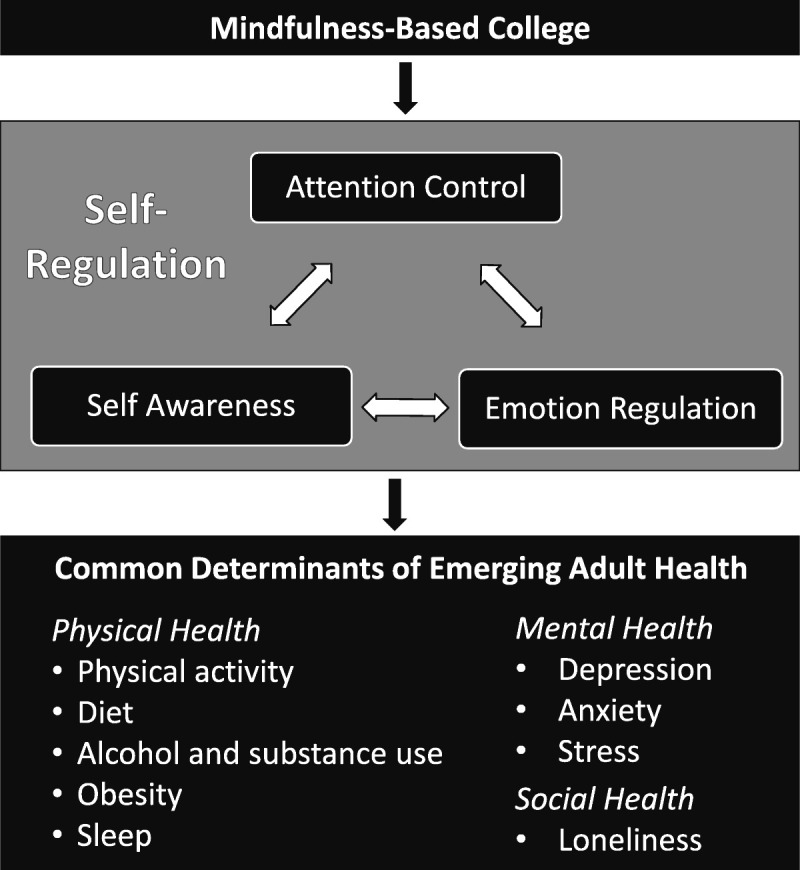
“Figure 1 shows the theoretical framework of MB-College and is based on a consensus theoretical framework described elsewhere (20).”
BackgroundMethodInfluentialSelf-citationMrazek, M. D., Mooneyham, B. W., Mrazek, K. L., & Schooler, J. W. (2016) · Frontiers in Human Neuroscience · doi:10.3389/fnhum.2016.00117 · Cited by 25
Meditation Intervention Reviews
Loucks, E. B. (2014) · JAMA Internal Medicine · doi:10.1001/jamainternmed.2014.1924 · Cited by 6
Self-citation
Research works printed but not linked: 3
- Arnett JJ. Emerging Adulthood: The Winding Road from the Late Teens Through the Twenties. New York, NY: Oxford University Press; 2015.
- Cohen S Williamson G. Perceived stress in a probability sample of the United States. In: Spacapam S Oskamp S, editors. The Social Psychology Of Health: Claremont Symposium on Applied Social Psychology. Newbury Park, CA: Sage; 1988.
- Hayes SC Strosahl KD Wilson KG. Acceptance and Commitment Therapy: An experiential approach to behavior change. New York, NY: The Guilford Press; 1999.
Cited by
Hickin, N., Käll, A., Shafran, R., Sutcliffe, S., Manzotti, G., & Langan, D. (2021) · Clinical Psychology Review · doi:10.1016/j.cpr.2021.102066 · Cited by 271
Mindfulness-Based Programs: Why, When, and How to Adapt?
Loucks, E. B., Crane, R. S., Sanghvi, M. A., Montero-Marin, J., Proulx, J., Brewer, J. A., & Kuyken, W. (2022) · Global Advances in Health and Medicine · doi:10.1177/21649561211068805 · Cited by 113
Self-citationReview: Interventions addressing loneliness amongst university students: a systematic review
Ellard, O. B., Dennison, C., & Tuomainen, H. (2022) · Child and Adolescent Mental Health · doi:10.1111/camh.12614 · Cited by 159
Interoceptive Ability and Emotion Regulation in Mind–Body Interventions: An Integrative Review
Lazzarelli, A., Scafuto, F., Crescentini, C., Matiz, A., Orrù, G., Ciacchini, R., Alfì, G., Gemignani, A., & Conversano, C. (2024) · Behavioral Sciences · doi:10.3390/bs14111107 · Cited by 49
Effectiveness of a Brief Online Mindfulness-Based Intervention for University Students
Fagioli, S., Pallini, S., Mastandrea, S., & Barcaccia, B. (2023) · Mindfulness · doi:10.1007/s12671-023-02128-1 · Cited by 57
Metadata
- Authors
- Loucks, E. B., Nardi, W. R., Gutman, R., Saadeh, F. B., Li, Y., Vago, D. R., Fiske, L. B., Spas, J. J., & Harrison, A.
- Affiliations
- Vanderbilt University (US)
- Corresponding author
- Loucks, Eric B.
- ORCID
- Venue
- Psychosomatic Medicine
- Published
- 2020-09-18
- Volume
- 83
- Issue
- 6
- Pages
- 602-614
- ISSN
- 0033-3174 (ISSN-L)
- 1534-7796
- PMC
- PMC8257475
- OpenAlex
- W3087687105
- Semantic Scholar
- 2d4024de5377bc7e32fc5205762f0b7ee301b306
- Cited by
- 51
- References
- 43
- Citations by year
- 2026: 7 · 2025: 13 · 2024: 11 · 2023: 9 · 2022: 7 · 2021: 4
- FWCI
- 2.00
- Type
- journal article
- Language
- en
- Open access
- hybrid
- doi.org
- Licence
- Locations
- Psychosomatic Medicine (publishedVersion, cc-by-nc-nd)
- PubMed Central (publishedVersion, cc-by-nc-nd)
- PubMed (publishedVersion)
- Funders
- National Center for Complementary and Integrative Health (UH2AT009145, UH3AT009145)
- Topics
- Social Sciences › Psychology › Clinical Psychology › Mindfulness and Compassion Interventions
- Social Sciences › Psychology › Social Psychology › Psychological Well-being and Life Satisfaction
- Health Sciences › Health Professions › General Health Professions › Health, psychology, and well-being
- Keywords
- mindfulness-based interventions, university students, loneliness, self-regulation, attentional control, interoceptive awareness, emotion regulation, health risk factors, stress, sleep duration, alcohol consumption, physical activity, fruit and vegetable intake, body mass index
- MeSH terms
- Adolescent, Adult, Female, Humans, Loneliness, Male, Students, Universities, Exercise, Young Adult, Mindfulness
About these checks
Registry, retraction, Cites and statistics results are computed, not judged, with one exception: a printed reference that no index lists is read once by a model before it counts as a citation error. Claims are extracted by a model and kept only when their quote appears verbatim in the text; each cited source is then checked, with a model’s help, for whether it says what the claim relies on. Those verdicts can be wrong — read the claim’s quote and the cited source before relying on one.
Statistics and arithmetic are recomputed, not judged.
Confidence bands are shown only for fields calibrated on our annotated test set. None is calibrated yet, so no band is shown.
What counts as a claim ›How we measure confidence ›How we check this ›
Are you an author, or do you see a problem with this page? Request a review
Data sources
Bibliographic data: Semantic Scholar, OpenAlex, Crossref.
Contains information from the Semantic Scholar Academic Graph Datasets, made available under the ODC Attribution License (ODC-BY 1.0).
Semantic Scholar’s data is described in: Kinney, R., et al. (2023). The Semantic Scholar Open Data Platform. arXiv:2301.10140.
