

A Randomized Porcine Study in Low Cardiac Output of Vasoactive and Inotropic Drug Effects on the Gastrointestinal Tract
Open accessThe DOI matches its Crossref record; 45 of the 45 references it cites were found in a registry or an index.
Abstract
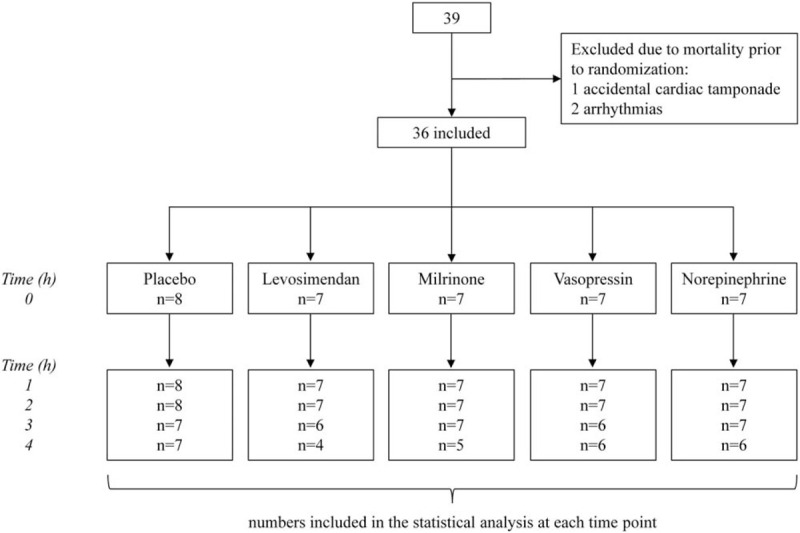
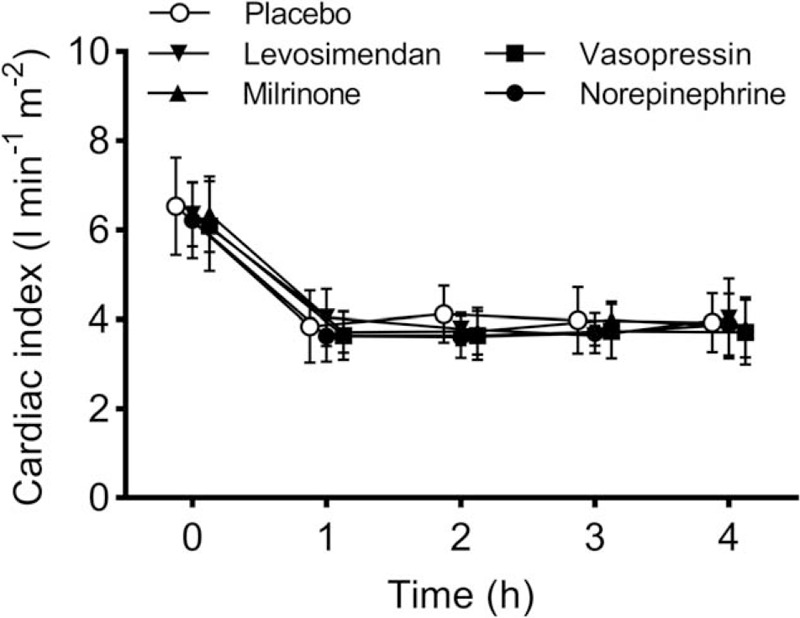
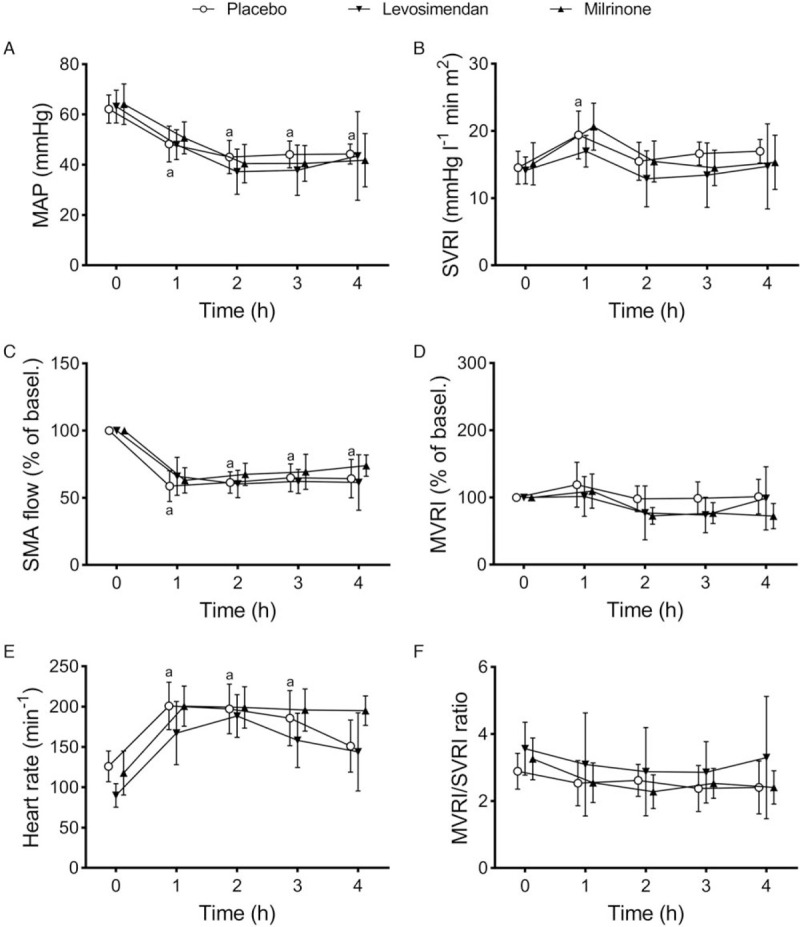
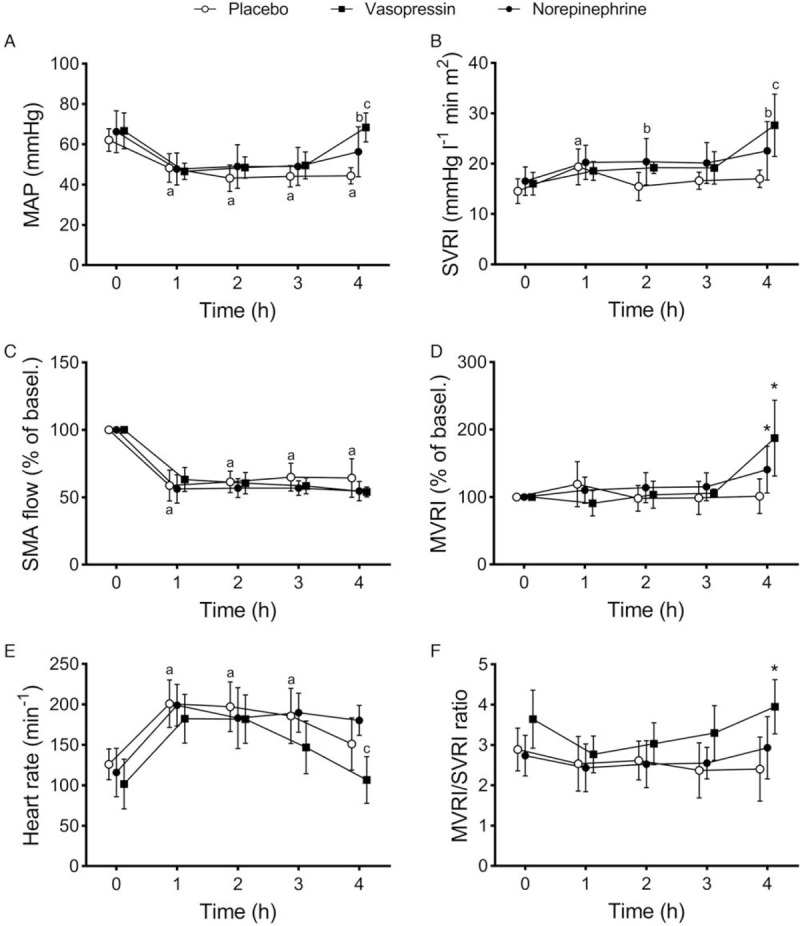
Background: Splanchnic vasodilation by inodilators is an argument for their use in critical cardiac dysfunction. To isolate peripheral vasoactivity from inotropy, such drugs were investigated, and contrasted to vasopressors, in a fixed low cardiac output (CO) model resembling acute cardiac dysfunction effects on the gastrointestinal tract. We hypothesized that inodilators would vasodilate and preserve the aerobic metabolism in the splanchnic circulation in low CO. Methods: In anesthetized pigs, CO was lowered to 60% of baseline by partial inferior caval vein balloon inflation. The animals were randomized to placebo (n = 8), levosimendan (24 μg kg−1 bolus, 0.2 μg kg−1 min−1, n = 7), milrinone (50 μg kg−1 bolus, 0.5 μg kg−1 min−1, n = 7), vasopressin (0.001, 0.002 and 0.006 U kg−1 min−1, 1 h each, n = 7) or norepinephrine (0.04, 0.12, and 0.36 μg kg−1 min−1, 1 h each, n = 7). Hemodynamic variables including mesenteric blood flow were collected. Systemic, mixed-venous, mesenteric-venous, and intraperitoneal metabolites were analyzed. Results: Cardiac output was stable at 60% in all groups, which resulted in systemic hypotension, low superior mesenteric artery blood flow, lactic acidosis, and increased intraperitoneal concentrations of lactate. Levosimendan and milrinone did not change any circulatory variables, but levosimendan increased blood lactate concentrations. Vasopressin and norepinephrine increased systemic and mesenteric vascular resistances at the highest dose. Vasopressin increased mesenteric resistance more than systemic, and the intraperitoneal lactate concentration and lactate/pyruvate ratio. Conclusion: Splanchnic vasodilation by levosimendan and milrinone may be negligible in low CO, thus rejecting the hypothesis. High-dose vasopressors may have side effects in the splanchnic circulation.
Overview
The claims and statistics of this paper haven’t been checked yet.
Free: it reads the open-access text and checks the first 5 claims that cite a source we can check. Create a free account to check every claim.
Integrity signals
Registry
Cites
Statistics
Figures
Verification
Claims the paper makes
The claims and statistics of this paper haven’t been checked yet.
Free: it reads the open-access text and checks the first 5 claims that cite a source we can check. Create a free account to check every claim.
Claims other papers make about this one
Each is checked against this paper’s own text: does it say what the citing paper says it does?
The source backs part of the claim, not all of it — or backs it for a different population, condition or comparison.
In the citing paper
“Experimental models demonstrated that septic conditions reduce intestinal microcirculatory blood flow, triggering mucosal ischemia [7], contributing to cellular energy depletion, mitochondrial dysfunction, and apoptosis of enterocytes.”
From Gastrointestinal function and nutritional interventions in septic shock (2025) · cites this paper as [7]
Experimental — accuracy not yet measured
Self-check
Percentages, sums and reported differences re-computed from the paper’s own numbers.
The self-check needs the paper’s full text.
Citations
Cites
Swine as Models in Biomedical Research and Toxicology Testing
Swindle, M. M., Makin, A., Herron, A. J., Clubb, F. J., & Frazier, K. S. (2012) · Veterinary Pathology · doi:10.1177/0300985811402846 · Cited by 1,357 · cited 1×
“0734 weight (kg), to obtain the cardiac index (CI) and the SMA blood flow index (19).”
MethodPOST-INJURY MULTIPLE ORGAN FAILURE: THE ROLE OF THE GUT
Hassoun, H. T., Kone, B. C., Mercer, D. W., Moody, F. G., Weisbrodt, N. W., & Moore, F. A. (2001) · Shock · doi:10.1097/00024382-200115010-00001 · Cited by 540 · cited 1×
“This may in turn initiate, maintain, or aggravate a systemic inflammatory reaction (2).”
BackgroundLow-Cardiac-Output Syndrome After Cardiac Surgery
Lomivorotov, V. V., Efremov, S. M., Kirov, M. Y., Fominskiy, E. V., & Karaskov, A. M. (2017) · Journal of Cardiothoracic and Vascular Anesthesia · doi:10.1053/j.jvca.2016.05.029 · Cited by 315
Effects of levosimendan on systemic and regional hemodynamics in septic myocardial depression
Morelli, A., De Castro, S., Teboul, J.-L., Singer, M., Rocco, M., Conti, G., De Luca, L., Di Angelantonio, E., Orecchioni, A., Pandian, N. G., et al. (2005) · Intensive Care Medicine · doi:10.1007/s00134-005-2619-z · Cited by 303 · cited 1×
“with left ventricular dysfunction (31).”
Regulation of intestinal blood flow
Matheson, P. J., Wilson, M. A., & Garrison, R. N. (2000) · Journal of Surgical Research · doi:10.1006/jsre.2000.5862 · Cited by 296 · cited 1×
“The blood flow to the various layers in the gastrointestinal tract is autoregulated (36), which may diminish the circulatory and metabolic responses seen in this model.”
BackgroundKrejci, V., Hiltebrand, L. B., & Sigurdsson, G. H. (2006) · Critical Care Medicine · doi:10.1097/01.ccm.0000215834.48023.57 · Cited by 202 · cited 1×
“perfusion pressure and CO while flow in the SMA and mucosal perfusion declined (44).”
BackgroundGastro-Intestinal Failure Trial Group, Reintam Blaser, A., Poeze, M., Malbrain, M. L. N. G., Björck, M., Oudemans-van Straaten, H. M., & Starkopf, J. (2013) · Intensive Care Medicine · doi:10.1007/s00134-013-2831-1 · Cited by 197 · cited 1×
“sive care (3), showing the importance of maintaining gastrointestinal function and integrity in the critically ill.”
BackgroundPharmacotherapy Update on the Use of Vasopressors and Inotropes in the Intensive Care Unit
Jentzer, J. C., Coons, J. C., Link, C. B., & Schmidhofer, M. (2015) · Journal of Cardiovascular Pharmacology and Therapeutics · doi:10.1177/1074248414559838 · Cited by 197 · cited 3×
“Norepinephrine has dose-dependent inotropic effects by beta-adrenergic, and possibly alphaadrenergic, agonism, and may be better tolerated if CO was allowed to increase (8, 47).”
BackgroundThe digestive tract as the origin of systemic inflammation
de Jong, P. R., González-Navajas, J. M., & Jansen, N. J. G. (2016) · Critical Care · doi:10.1186/s13054-016-1458-3 · Cited by 136 · cited 1×
“Circulatory compromise may affect the splanchnic circulation, leading to the loss of intestinal mucosal barrier function and bacterial translocation (1).”
BackgroundPagel, P. S., Hettrick, D. A., & Warltier, D. C. (1996) · British Journal of Pharmacology · doi:10.1111/j.1476-5381.1996.tb15716.x · Cited by 124 · cited 3×
“In unmanipulated dogs, levosimendan increased the blood flow to the small intestines and decreased the splanchnic vascular resistance (10), and was superior to milrinone in increasing”
BackgroundBerecek, K. H., & Bohr, D. F. (1978) · Circulation Research · doi:10.1161/01.res.42.6.764 · Cited by 99 · cited 1×
“Norepinephrine and vasopressin were administered in three doses (low, middle, and high-very high needed for a dose–response increment in systemic blood pressure in pigs) in a cumulative manner, due to their fast on-response and short half-lives in the circulation (17, 18).”
BackgroundMollhoff, T., Loick, H. M., Aken, H. V., Schmidt, C. G., Rolf, N., Tjan, T. D. T., Asfour, B., & Berendes, E. (1999) · Anesthesiology · doi:10.1097/00000542-199901000-00012 · Cited by 92 · cited 1×
“In a placebo-controlled randomized trial on 22 patients undergoing coronary artery bypass grafting, milrinone infusion resulted in reduced gastric mucosal acidosis 24 hours after surgery as well as lower levels of inflammatory markers and endotoxin (34).”
BackgroundSchwarte, L. A., Picker, O., Bornstein, S. R., Fournell, A., & Scheeren, T. (2005) · Critical Care Medicine · doi:10.1097/01.ccm.0000150653.89451.6f · Cited by 85 · cited 1×
“Furthermore, when exploring potential circulatory regional organ effects of inodilators, previous experimental studies have mainly investigated the combination of inotropic and vasodilatory effects (10, 11), and cannot differentiate the magnitude and clinical importance of the respective effect.”
BackgroundLannemyr, L., Ricksten, S., Rundqvist, B., Andersson, B., Bartfay, S.-E., Ljungman, C. E. A., Dahlberg, P., Bergh, N., Hjalmarsson, C., Gilljam, T., et al. (2018) · Journal of the American Heart Association · doi:10.1161/jaha.117.008455 · Cited by 75 · cited 1×
“It has been shown that the peripheral effects of inodilators can be advantageous for renal function when used in low CO (6, 7).”
BackgroundØrstavik, Ø., Ata, S. H., Riise, J., Dahl, C. P., Andersen, G. Ø., Levy, F. O., Skomedal, T., Osnes, J., & Qvigstad, E. (2014) · British Journal of Pharmacology · doi:10.1111/bph.12647 · Cited by 74 · cited 1×
“Levosimendan is believed to be a calcium sensitizer, but it has been suggested that the main mechanism is phosphodiesterase III inhibition (27, 28).”
BackgroundVasoactive drugs and the gut: is there anything new?
Woolsey, C. A., & Coopersmith, C. M. (2006) · Current Opinion in Critical Care · doi:10.1097/01.ccx.0000216584.72427.e4 · Cited by 74 · cited 2×
“308 have the potential to both promote and impair splanchnic perfusion, but since the pathophysiological mechanisms between conditions such as hemorrhagic, septic and cardiogenic shock differ, the results from one condition may not be directly transferable to another (5).”
BackgroundDucas, J., Duval, D., Dasilva, H., Boiteau, P. J. E., & Prewitt, R. M. (1987) · Circulation · doi:10.1161/01.cir.75.1.235 · Cited by 71 · cited 1×
“In comparison, a simple calculation of pulmonary vascular resistance falsely indicated, due to increased CO, that norepinephrine was a pulmonary vasodilator in pulmonary embolism; however, a detailed analysis using pressure-flow plots excluded effects of norepinephrine on pulmonary vascular tone in this condition (12).”
BackgroundHiltebrand, L. B., Krejčí, V., Jakob, S. M., Takala, J. A., & Sigurdsson, G. H. (2007) · Anesthesiology · doi:10.1097/01.anes.0000267599.02140.86 · Cited by 70 · cited 1×
“In a porcine sepsis model, infusion of vasopressin increased MAP but reduced mesenteric blood flow and small intestinal perfusion, while colonic perfusion was unchanged (39).”
BackgroundSommer, T., & Larsen, J. F. (2004) · British journal of surgery · doi:10.1002/bjs.4586 · Cited by 66 · cited 1×
“blood lactate but still be detectable intraperitoneally (37, 38).”
BackgroundNYGREN, A., THORÉN, A., & RICKSTEN, S. ‐. (2009) · Acta Anaesthesiologica Scandinavica · doi:10.1111/j.1399-6576.2008.01900.x · Cited by 65 · cited 1×
“gery when MAP was kept at 75 mm Hg (42).”
BackgroundModest effect of temperature on the porcine oxygen dissociation curve
Willford, D. C., & Hill, E. P. (1986) · Respiration Physiology · doi:10.1016/0034-5687(86)90035-6 · Cited by 53 · cited 1×
“76 kPa was used as the porcine partial PO2, where Hb is 50% saturated (P50), and the value was adjusted with the fixed acid Bohr coefficient (20).”
MethodAass, H., Skomedal, T., & Osnes, J. (1983) · Journal of Pharmacology and Experimental Therapeutics · doi:10.1016/s0022-3565(25)21663-9 · Cited by 52
Müller, S., How, O.-J., Hermansen, S. E., Stenberg, T. A., Sager, G., & Myrmel, T. (2008) · Critical Care · doi:10.1186/cc6794 · Cited by 49 · cited 1×
“Vasopressin used to preserve MAP after transient myocardial ischemia in pigs reduced CO and blood flow to the heart, brain, and kidneys (40).”
MethodDetection of Intestinal Ischemia Using a Microdialysis Technique in an Animal Model
Sommer, T., & Larsen, J. F. (2003) · World Journal of Surgery · doi:10.1007/s00268-002-6594-z · Cited by 45 · cited 1×
“blood lactate but still be detectable intraperitoneally (37, 38).”
BackgroundCheung, P., Yang, G., & Boden, G. H. (2003) · Metabolism · doi:10.1016/s0026-0495(03)00271-3 · Cited by 39 · cited 1×
“Both levosimendan and milrinone increased the intraperitoneal glycerol concentration, which may be due to cell damage (29) or enhanced lipolysis by phosphodiesterase III inhibition (30).”
BackgroundMcNicol, L. P., Andersen, L. W., Liu, G., Doolan, L., & Bæk, L. (1999) · Journal of Cardiothoracic and Vascular Anesthesia · doi:10.1016/s1053-0770(99)90266-5 · Cited by 35 · cited 1×
“Milrinone, dopamine, and placebo were compared during coronary artery bypass grafting and no differences in release of endotoxins or gastric mucosal pH were found intraoperatively (35).”
BackgroundAndersson, A., Rundgren, M., Kálmán, S., Rooyackers, O., Brattström, O., Oldner, A., Eriksson, S. V., & Frithiof, R. (2011) · British Journal of Anaesthesia · doi:10.1093/bja/aer379 · Cited by 34 · cited 1×
“In an endotoxemic shock study in sheep, when MAP was restored using norepinephrine, SMA blood flow and mucosal perfusion were unaltered (45).”
MethodØrstavik, Ø., Manfra, O., Andressen, K. W., Andersen, G. Ø., Skomedal, T., Osnes, J., Levy, F. O., & Krobert, K. A. (2015) · PLoS ONE · doi:10.1371/journal.pone.0115547 · Cited by 31 · cited 1×
“Levosimendan is believed to be a calcium sensitizer, but it has been suggested that the main mechanism is phosphodiesterase III inhibition (27, 28).”
BackgroundPargger, H., Staender, S. E. A., Studer, W., Schellscheidt, O., Mihatsch, M. J., Scheidegger, D. H., & Skarvan, K. (1997) · Intensive Care Medicine · doi:10.1007/s001340050296 · Cited by 31 · cited 1×
“Other relevant models include induction of cardiac tamponade, direct aortic or mesenteric in-flow restriction and open- and closed-chest models of acute cardiac ischemia (15, 22-26).”
Lannemyr, L., Bragadottir, G., Redfors, B., & Ricksten, S. (2020) · Journal of Critical Care · doi:10.1016/j.jcrc.2019.12.022 · Cited by 27 · cited 1×
“It has been shown that the peripheral effects of inodilators can be advantageous for renal function when used in low CO (6, 7).”
BackgroundNovella, S., Martı́nez, A. C., Pagán, R. M., Hernández, M., García‐Sacristán, A., González-Pinto, Á. T., González‐Santos, J. M., & Benedito, S. (2007) · European Journal of Cardio-Thoracic Surgery · doi:10.1016/j.ejcts.2007.03.047 · Cited by 26 · cited 1×
“Also, in the context of cardiac surgery, endogenous vasopressin has been suggested to produce vasospasm in vascular grafts during coronary artery bypass grafting (43).”
BackgroundHörer, T. M., Skoog, P., Nilsson, K. F., OIKONOMAKIS, I. N., Larzon, T., Norgren, L., & Jansson, K. (2014) · Annals of Vascular Surgery · doi:10.1016/j.avsg.2014.01.005 · Cited by 25 · cited 1×
“Both levosimendan and milrinone increased the intraperitoneal glycerol concentration, which may be due to cell damage (29) or enhanced lipolysis by phosphodiesterase III inhibition (30).”
BackgroundSelf-citationVasopressin Induces Rectosigmoidal Mucosal Ischemia During Cardiopulmonary Bypass
Bomberg, H., Bierbach, B., Flache, S., Scheuer, C., Novák, M., Schäfers, H.-J., & Menger, M. D. (2013) · Journal of Cardiac Surgery · doi:10.1111/jocs.12242 · Cited by 24 · cited 1×
“During extracorporeal circulation in pigs, rectosigmoidal mucosal perfusion was maintained but mucosal ischemia developed after vasopressin was given (41).”
BackgroundÁlvarez, J., Baluja, A., Selas, S., Otero, P., Rial, M. O., Veiras, S., Caruezo, V., Laboada, M., Rodriguez, I., Caslroagudin, J., et al. (2013) · Anaesthesia and Intensive Care · doi:10.1177/0310057x1304100606 · Cited by 24
Shi, W., McIver, B. V., Kalra, K., Sarin, E. L., Schmarkey, L. S., Duggan, M., Thourani, V. H., Guyton, R. A., & Padala, M. (2017) · Journal of Cardiovascular Translational Research · doi:10.1007/s12265-017-9751-3 · Cited by 23 · cited 1×
“Other relevant models include induction of cardiac tamponade, direct aortic or mesenteric in-flow restriction and open- and closed-chest models of acute cardiac ischemia (15, 22-26).”
Leppikangas, H., Tenhunen, J. J., Lindgren, L., Salenius, J. ‐., & Ruokonen, E. (2008) · Acta Anaesthesiologica Scandinavica · doi:10.1111/j.1399-6576.2008.01659.x · Cited by 20 · cited 1×
“In open abdominal aortic aneurysm surgery, levosimendan increased gastric mucosal perfusion but did not affect total splanchnic blood flow (32).”
BackgroundTenhunen, J. J., Jakob, S. M., Ruokonen, E., & Takala, J. A. (2002) · Intensive Care Medicine · doi:10.1007/s00134-002-1314-6 · Cited by 14 · cited 1×
“Other relevant models include induction of cardiac tamponade, direct aortic or mesenteric in-flow restriction and open- and closed-chest models of acute cardiac ischemia (15, 22-26).”
A porcine model for acute ischaemic right ventricular dysfunction
Haraldsen, P., Lindstedt, S., Metzsch, C., Algotsson, L., & Ingemansson, R. (2013) · Interactive Cardiovascular and Thoracic Surgery · doi:10.1093/icvts/ivt418 · Cited by 13 · cited 1×
“Other relevant models include induction of cardiac tamponade, direct aortic or mesenteric in-flow restriction and open- and closed-chest models of acute cardiac ischemia (15, 22-26).”
McNicol, L. P., Lipcsey, M., Bellomo, R., Parker, F., Poustie, S., Liu, G., & Kattula, A. (2013) · British Journal of Anaesthesia · doi:10.1093/bja/aes493 · Cited by 11 · cited 1×
“Norepinephrine titrated to MAP 60 mm Hg to 65 mm Hg or 80 mm Hg to 85 mm Hg during extracorporeal circulation showed no difference in splanchnic effects (46).”
BackgroundEffects of vasodilators on haemodynamic coherence
Fuchs, C., Ertmer, C., & Rehberg, S. W. (2016) · Best practice & research. Clinical anaesthesiology · doi:10.1016/j.bpa.2016.10.003 · Cited by 11 · cited 1×
“Thus, clinical rationale to use inodilators in acute cardiac dysfunction may include both improvement of cardiac function and beneficial peripheral vasodilation (8, 9).”
BackgroundHyldebrandt, J. A., Larsen, S. H., Schmidt, M. R., Hjortdal, V. E., & Ravn, H. B. (2011) · Cardiology in the Young · doi:10.1017/s1047951111000357 · Cited by 10 · cited 1×
“Levosimendan and milrinone were administered as a bolus followed by a constant infusion, with known contractile effects in pigs, due to their long half-live in the circulation (15, 16).”
BackgroundAxelsson, B., Häggmark, S., Svenmarker, S., Johansson, G., Gupta, A. K., Tydén, H., Wouters, P. F., & Haney, M. (2016) · Journal of Cardiovascular Pharmacology and Therapeutics · doi:10.1177/1074248416628675 · Cited by 9 · cited 1×
“Levosimendan and milrinone were administered as a bolus followed by a constant infusion, with known contractile effects in pigs, due to their long halflive in the circulation (15, 16).”
BackgroundSelf-citationCRUZ, R. J., Jr., Garrido, A. G., Caly, D. D. N., & Rocha-e-Silva, M. (2010) · Journal of Surgical Research · doi:10.1016/j.jss.2010.05.037 · Cited by 6 · cited 1×
“Other relevant models include induction of cardiac tamponade, direct aortic or mesenteric in-flow restriction and open- and closed-chest models of acute cardiac ischemia (15, 22-26).”
Splanchnic Circulation and Intraabdominal Metabolism in Two Porcine Models of Low Cardiac Output
Seilitz, J., Hörer, T. M., Skoog, P., Sadeghi, M., Jansson, K., Axelsson, B., & Nilsson, K. F. (2018) · Journal of Cardiovascular Translational Research · doi:10.1007/s12265-018-9845-6 · Cited by 5 · cited 3×
“Based on our previous work using a protocol with down titration of CO, the level of reduction was set to 60% of the baseline value (14).”
BackgroundMethodSelf-citationPressor responses to vasopressin in pigs and sheep with DOCA hypertension
Ling, W. D., Brooks, D. P., Crofton, J. T., Share, L., & Bohr, D. F. (1989) · American Journal of Physiology-Heart and Circulatory Physiology · doi:10.1152/ajpheart.1989.256.1.h101 · Cited by 3 · cited 1×
“Norepinephrine and vasopressin were administered in three doses (low, middle, and high-very high needed for a dose–response increment in systemic blood pressure in pigs) in a cumulative manner, due to their fast on-response and short half-lives in the circulation (17, 18).”
Background
Research works printed but not linked: 2
- Anonymous: Directive 2010/63/EU of the European Parliament and of the Council of 22 September 2010 on the protection of animals used for scientific purposes. Official J Eur Union L276: 33– 79, 2010.
- Grimm KA Lumb WV Jones EW. Veterinary Anesthesia and Analgesia: the fifth edition of Lumb and Jones. Ames, Iowa: Wiley; 2015.
Cited by
Jozwiak, M., Géri, G., Laghlam, D., Boussion, K., Dolladille, C., & Nguyen, L. S. (2022) · Frontiers in Medicine · doi:10.3389/fmed.2022.826446 · Cited by 45
“Furthermore, highdose of norepinephrine may impair the splanchnic circulation with an increase in systemic and mesenteric vascular resistances (91).”
BackgroundAlternatives to norepinephrine in septic shock: Which agents and when?
Jozwiak, M. (2022) · Journal of Intensive Medicine · doi:10.1016/j.jointm.2022.05.001 · Cited by 35
Gastrointestinal function and nutritional interventions in septic shock
Bachmann, K. F., Cotoia, A., & Reintam Blaser, A. (2025) · Current Opinion in Critical Care · doi:10.1097/mcc.0000000000001302 · Cited by 13
Szczepanska‐Sadowska, E. K., Cudnoch‐Jędrzejewska, A., & Żera, T. (2024) · International Journal of Molecular Sciences · doi:10.3390/ijms252413307 · Cited by 11
Fang, Z., Zang, Q., Chen, J., Li, Z., Yang, D., Wu, C., Yang, H., & Guo, N. (2024) · Journal of Advanced Research · doi:10.1016/j.jare.2024.09.001 · Cited by 10
“Meanwhile, excessive NE acts on the ARs, which results in vasoconstriction, increasing vascular resistance, and a decrease in overall blood flow to the intestines [50].”
Metadata
- Authors
- Seilitz, J., Grafver, I., Kiszakiewicz, L., Oikonomakis, I., Jansson, K., Axelsson, B., & Nilsson, K. F.
- Affiliations
- Örebro University (SE)
- Skaraborg Hospital (SE)
- Corresponding author
- Seilitz, Jenny
- Grafver, Isabelle
- Axelsson, Birger
- Nilsson, Kristofer F.
- Venue
- Shock
- Published
- 2021-01-13
- Volume
- 56
- Issue
- 2
- Pages
- 308-317
- ISSN
- 1073-2322 (ISSN-L)
- 1540-0514
- PMC
- PMC8529897
- OpenAlex
- W3118352087
- Semantic Scholar
- 623043aa5a4c0e0f9a269e96d9a29821d0bd2868
- Cited by
- 10
- References
- 45
- Citations by year
- 2026: 2 · 2025: 1 · 2024: 3 · 2022: 3 · 2021: 1
- FWCI
- 1.64
- Type
- journal article
- Language
- en
- Open access
- hybrid
- doi.org
- Licence
- Locations
- Shock (publishedVersion, cc-by-nc-nd)
- Europe PMC (PubMed Central) (publishedVersion, other-oa)
- PubMed Central (publishedVersion, cc-by-nc-nd)
- PubMed (publishedVersion)
- Topics
- Health Sciences › Medicine › Surgery › Hemodynamic Monitoring and Therapy
- Health Sciences › Medicine › Cardiology and Cardiovascular Medicine › Heart Failure Treatment and Management
- Health Sciences › Medicine › Critical Care and Intensive Care Medicine › Sepsis Diagnosis and Treatment
- Keywords
- low cardiac output, splanchnic vasodilation, inodilators, levosimendan, milrinone, vasopressors, norepinephrine, vasopressin, gastrointestinal metabolism, mesenteric blood flow, lactate, lactic acidosis, lactate/pyruvate ratio, cardiac dysfunction, splanchnic circulation
- MeSH terms
- Simendan, Animals, Cardiac Output, Low, Disease Models, Animal, Female, Male, Norepinephrine, Random Allocation, Splanchnic Circulation, Swine, Vasodilator Agents, Vasopressins, Milrinone, Gastrointestinal Tract
About these checks
Registry, retraction, Cites and statistics results are computed, not judged, with one exception: a printed reference that no index lists is read once by a model before it counts as a citation error. Claims are extracted by a model and kept only when their quote appears verbatim in the text; each cited source is then checked, with a model’s help, for whether it says what the claim relies on. Those verdicts can be wrong — read the claim’s quote and the cited source before relying on one.
Statistics and arithmetic are recomputed, not judged.
Confidence bands are shown only for fields calibrated on our annotated test set. None is calibrated yet, so no band is shown.
What counts as a claim ›How we measure confidence ›How we check this ›
Are you an author, or do you see a problem with this page? Request a review
Data sources
Bibliographic data: Semantic Scholar, OpenAlex, Crossref.
Contains information from the Semantic Scholar Academic Graph Datasets, made available under the ODC Attribution License (ODC-BY 1.0).
Semantic Scholar’s data is described in: Kinney, R., et al. (2023). The Semantic Scholar Open Data Platform. arXiv:2301.10140.
