

Effects of Bolus and Continuous Nasogastric Feeding on Gastric Emptying, Small Bowel Water Content, Superior Mesenteric Artery Blood Flow, and Plasma Hormone Concentrations in Healthy Adults: A Randomized Crossover Study
Open accessThe DOI matches its Crossref record; 43 of the 43 references it cites were found in a registry or an index.
Abstract
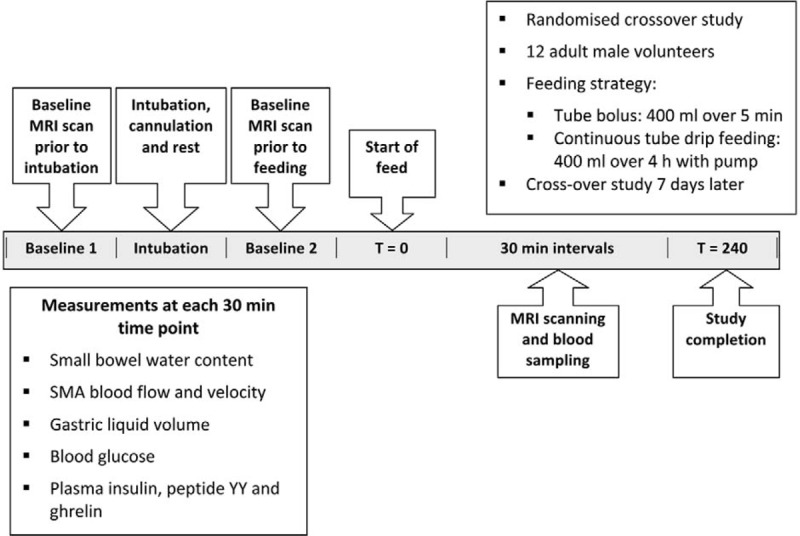
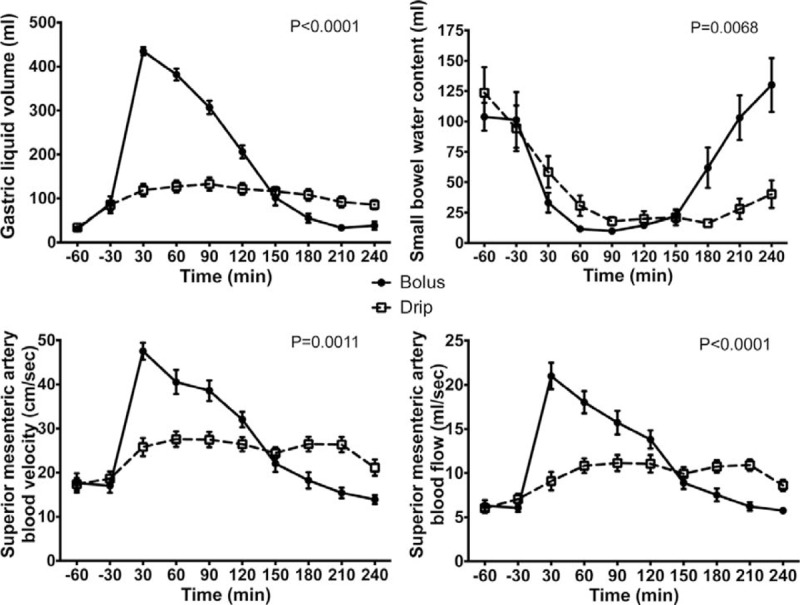
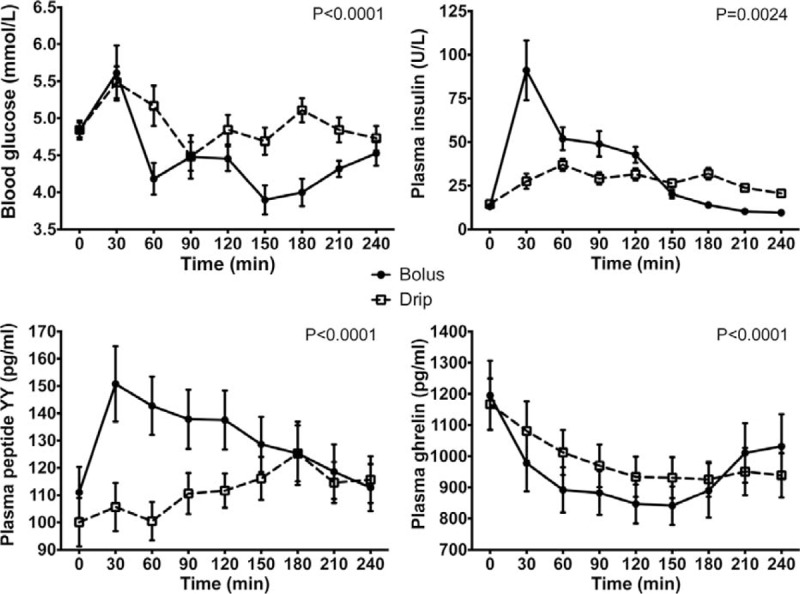
OBJECTIVE: We aimed to demonstrate the effect of continuous or bolus nasogastric feeding on gastric emptying, small bowel water content, and splanchnic blood flow measured by magnetic resonance imaging (MRI) in the context of changes in plasma gastrointestinal hormone secretion. BACKGROUND: Nasogastric/nasoenteral tube feeding is often complicated by diarrhea but the contribution of feeding strategy to the etiology is unclear. METHODS: Twelve healthy adult male participants who underwent nasogastric intubation before a baseline MRI scan, received 400 mL of Resource Energy (Nestle) as a bolus over 5 minutes or continuously over 4 hours via pump in this randomized crossover study. Changes in gastric volume, small bowel water content, and superior mesenteric artery blood flow and velocity were measured over 4 hours using MRI and blood glucose and plasma concentrations of insulin, peptide YY, and ghrelin were assayed every 30 minutes. RESULTS: Bolus nasogastric feeding led to significant elevations in gastric volume (P < 0.0001), superior mesenteric artery blood flow (P < 0.0001), and velocity (P = 0.0011) compared with continuous feeding. Both types of feeding reduced small bowel water content, although there was an increase in small bowel water content with bolus feeding after 90 minutes (P < 0.0068). Similarly, both types of feeding led to a fall in plasma ghrelin concentration although this fall was greater with bolus feeding (P < 0.0001). Bolus feeding also led to an increase in concentrations of insulin (P = 0.0024) and peptide YY (P < 0.0001), not seen with continuous feeding. CONCLUSION: Continuous nasogastric feeding does not increase small bowel water content, thus fluid flux within the small bowel is not a major contributor to the etiology of tube feeding-related diarrhea.
Overview
The claims and statistics of this paper haven’t been checked yet.
Free: it reads the open-access text and checks the first 5 claims that cite a source we can check. Create a free account to check every claim.
Integrity signals
Registry
Cites
Statistics
Figures
Verification
Claims the paper makes
The claims and statistics of this paper haven’t been checked yet.
Free: it reads the open-access text and checks the first 5 claims that cite a source we can check. Create a free account to check every claim.
Claims other papers make about this one
Each is checked against this paper’s own text: does it say what the citing paper says it does?
The cited source doesn’t support the claim as written.
In the citing paper
“Rhoney et al. (79) tested the tolerability of bolus gastric feeding in brain damaged patients and found large gastric residues.”
From ESPEN guideline on clinical nutrition in the intensive care unit. (2019) · cites this paper as [79]
Checked by a reasoning model — may be wrong.
Experimental — accuracy not yet measuredThe source backs part of the claim, not all of it — or backs it for a different population, condition or comparison.
In the citing paper
“Four prospective small studies (77,78,79,80) compared bolus (intermittent) to continuous administration of EN and did not find a difference in morbidity or mortality in small populations of ICU or trauma patients.”
From ESPEN guideline on clinical nutrition in the intensive care unit. (2019) · cites this paper as [79]
Experimental — accuracy not yet measuredThe source backs part of the claim, not all of it — or backs it for a different population, condition or comparison.
In the citing paper
“Despite the fact that bolus administration is significantly different from continuous feeding in healthy individuals, it significantly increases gastric volume and superior mesenteric artery blood volume in critically ill patients [30], although these differences are not always translated into clinical advantages.”
From ESPEN practical and partially revised guideline: Clinical nutrition in the intensive care unit (2023) · cites this paper as [30]
Experimental — accuracy not yet measured
Self-check
Percentages, sums and reported differences re-computed from the paper’s own numbers.
The self-check needs the paper’s full text.
Citations
Cites
Human distribution and release of a putative new gut hormone, peptide YY
Adrian, T. E., Ferri, G.-L., Bacarese-Hamilton, A. J., Fuessl, H. S., Polak, J. M., & Bloom, S. R. (1985) · Gastroenterology · doi:10.1016/0016-5085(85)90211-2 · Cited by 1,065 · cited 1×
“22 MJ) below which no rise is observed.(37) This is consistent with the results of this study with elevations in postprandial peptide YY concentrations seen with bolus feeding [total 606 kcal (2.”
ResultThe ileal brake--inhibition of jejunal motility after ileal fat perfusion in man.
Spiller, R. C., Trotman, I. F., Higgins, B. E., Ghatei, M. A., Grimble, G. K., Lee, Y. C., Bloom, S. R., Misiewicz, J. J., & Silk, D. B. (1984) · Gut · doi:10.1136/gut.25.4.365 · Cited by 445
Regulation of the Gastric Emptying of Glucose
Brener, W., Hendrix, T. R., & McHugh, P. R. (1983) · Gastroenterology · doi:10.1016/s0016-5085(83)80232-7 · Cited by 438 · cited 1×
“55 kJ/min).(20,21) Although the same total carbohydrate”
Gastric emptying and release of incretin hormones after glucose ingestion in humans.
Schirra, J., Katschinski, M., Weidmann, C., Schäfer, T., Wank, U., Arnold, R., & Göke, B. (1996) · Journal of Clinical Investigation · doi:10.1172/jci118411 · Cited by 426
Gastric emptying of liquids and solids: roles of proximal and distal stomach
Kelly, K. A. (1980) · American Journal of Physiology-Gastrointestinal and Liver Physiology · doi:10.1152/ajpgi.1980.239.2.g71 · Cited by 424
Guidelines for enteral feeding in adult hospital patients
Stroud, M., Duncan, H., & Nightingale, J. (2003) · Gut · doi:10.1136/gut.52.suppl_7.vii1 · Cited by 410 · cited 1×
“Provision of nutritional support usually requires tube feeding, which is typically achieved by pump-assisted continuous feeding into the stomach at low rate (50–100 mL/h) spread out over 12 to 24 hours per day using a fine-bore nasogastric tube.(2) Although tube feeding has been shown to reduce mortality in undernouri…”
MethodThe link between nutritional status and clinical outcome: can nutritional intervention modify it?
Dempsey, D., Mullen, J., & Buzby, G. (1988) · The American Journal of Clinical Nutrition · doi:10.1093/ajcn/47.2.352 · Cited by 341
Savage, A. P., Adrian, T. E., Carolan, G., Chatterjee, V. K., & Bloom, S. R. (1987) · Gut · doi:10.1136/gut.28.2.166 · Cited by 334
Spiller, R. C., Trotman, I. F., Adrian, T. E., Bloom, S. R., Misiewicz, J. J., & Silk, D. B. (1988) · Gut · doi:10.1136/gut.29.8.1042 · Cited by 254 · cited 1×
“In replicating normal patterns of feeding, bolus delivery allows the phased supply of hypertonic nutrient loads into the jejunum reducing the metabolic demand on the small intestine and possibly preventing excessive accumulation of jejunal fluid.(8,9) The mode of delivery of feeds is also known to affect water absorpt…”
BackgroundMarciani, L., Cox, E. F., Hoad, C. L., Pritchard, S., Totman, J. J., Foley, S., Mistry, A., Evans, S., Gowland, P. A., & Spiller, R. C. (2010) · Gastroenterology · doi:10.1053/j.gastro.2009.10.055 · Cited by 218 · cited 2×
“Complex molecules, on the other hand, such as fat, protein, and undigested polysaccharides, have delayed entry into the small bowel where their osmotic potential results in the efflux of water into the lumen.(16,29,31) This may account for the increase in small bowel water content after 90 minutes with bolus feeding,…”
BackgroundSelf-citation
Cited by
ESPEN guideline on clinical nutrition in the intensive care unit.
Singer, P., Blaser, A. R., Berger, M. M., Alhazzani, W., Calder, P. C., Casaer, M. P., Hiesmayr, M., Mayer, K., Montejo, J. C., Pichard, C., et al. (2019) · Clinical Nutrition · doi:10.1016/j.clnu.2018.08.037 · Cited by 2,904
“Despite the fact that bolus administration is significantly different from continuous feeding in normal volunteers, increasing significantly gastric volume and superior mesenteric artery blood volume, in critically ill patients [79] these differences are not always translated into clinical advantages.”
BackgroundESPEN practical and partially revised guideline: Clinical nutrition in the intensive care unit
Singer, P., Blaser, A. R., Berger, M. M., Calder, P. C., Casaer, M., Hiesmayr, M., Mayer, K., Montejo-Gonzalez, J. C., Pichard, C., Preiser, J.-C., et al. (2023) · Clinical Nutrition · doi:10.1016/j.clnu.2023.07.011 · Cited by 793
“Despite the fact that bolus administration is significantly different from continuous feeding in healthy individuals, it significantly increases gastric volume and superior mesenteric artery blood volume in critically ill patients [30], although these differences are not always translated into clinical advantages.”
BackgroundThe intensive care medicine research agenda in nutrition and metabolism
Arabi, Y. M., Casaer, M. P., Chapman, M., Heyland, D. K., Ichai, C., Marik, P. E., Martindale, R. G., McClave, S. A., Preiser, J.-C., Reignier, J., et al. (2017) · Intensive Care Medicine · doi:10.1007/s00134-017-4711-6 · Cited by 203
“Intermittent feeding may also have greater anabolic response, increased gastric contractility and emptying, as well as less diarrhea and better absorption owing to slowing of intestinal transit from increased peptide YY release [45, 46].”
BackgroundEffect of Intermittent or Continuous Feed on Muscle Wasting in Critical Illness
McNelly, A. S., Bear, D. E., Connolly, B. A., Arbane, G., Allum, L., Tarbhai, A., Cooper, J. A., Hopkins, P. A., Wise, M. P., Brealey, D., et al. (2020) · Chest · doi:10.1016/j.chest.2020.03.045 · Cited by 143
Marik, P. E., & Hooper, M. H. (2016) · Intensive Care Medicine · doi:10.1007/s00134-015-4131-4 · Cited by 109
Ichimaru, S. (2018) · Nutrition in Clinical Practice · doi:10.1002/ncp.10105 · Cited by 99
Pathophysiology and Treatment of Gastrointestinal Motility Disorders in the Acutely Ill
Deane, A. M., Chapman, M. J., Reintam Blaser, A., McClave, S. A., & Emmanuel, A. (2019) · Nutrition in Clinical Practice · doi:10.1002/ncp.10199 · Cited by 75
Feeding critically ill patients the right ‘whey’: thinking outside of the box. A personal view
Marik, P. E. (2015) · Annals of Intensive Care · doi:10.1186/s13613-015-0051-2 · Cited by 66
Intermittent versus continuous feeding in critically ill adults
Patel, J. J., Rosenthal, M. D., & Heyland, D. K. (2018) · Current Opinion in Clinical Nutrition & Metabolic Care · doi:10.1097/mco.0000000000000447 · Cited by 68
Ma, Y., Cheng, J., Liu, L., Chen, K., Fang, Y., Wang, G., Zhu, J., & Chen, L. (2020) · International Journal of Nursing Studies · doi:10.1016/j.ijnurstu.2020.103783 · Cited by 65
Continuous or intermittent feeding: pros and cons
Bear, D. E., Hart, N., & Puthucheary, Z. (2018) · Current Opinion in Critical Care · doi:10.1097/mcc.0000000000000513 · Cited by 59
Stoian, M., Andone, A., Bândilă, S. R., Onișor, D. M., Babă, D.-F., Niculescu, R., Stoian, A., & Azamfirei, L. (2025) · Nutrients · doi:10.3390/nu17101659 · Cited by 57
“It is considered a more physiological approach than the continuous approach because it provides patients with greater mobility, enhances protein synthesis, and aids in maintaining digestion and regular gastrointestinal secretion hormones [62].”
Grant, C. J., Harrison, L. E. A., Hoad, C. L., Marciani, L., Gowland, P. A., & McIntyre, C. W. (2017) · Journal of Gastroenterology and Hepatology · doi:10.1111/jgh.13458 · Cited by 53
Self-citationEnteral Nutrition Therapy: Historical Perspective, Utilization, and Complications
Elfadil, O. M., Velapati, S. R., Patel, J. N., Hurt, R. T., & Mundi, M. S. (2024) · Current Gastroenterology Reports · doi:10.1007/s11894-024-00934-8 · Cited by 46
Diarrhea in Critically Ill Patients: The Role of Enteral Feeding
de Brito-Ashurst, I., & Preiser, J. (2016) · Journal of Parenteral and Enteral Nutrition · doi:10.1177/0148607116651758 · Cited by 59
Nasiri, M., Farsi, Z., Ahangari, M., & Dadgari, F. (2017) · Middle East Journal of Digestive Diseases · doi:10.15171/mejdd.2017.77 · Cited by 44
Qu, J., Xu, X., Xu, C., Ding, X., Zhang, K., & Hu, L. (2023) · Frontiers in Nutrition · doi:10.3389/fnut.2023.1214774 · Cited by 36
Chater, P. I., Wilcox, M. D., Pearson, J. P., & Brownlee, I. A. (2015) · Bioactive Carbohydrates and Dietary Fibre · doi:10.1016/j.bcdf.2015.09.002 · Cited by 42
Intermittent or continuous feeding: any difference during the first week?
Dyck, L. V., & Casaer, M. P. (2019) · Current Opinion in Critical Care · doi:10.1097/mcc.0000000000000617 · Cited by 36
“Intermittent feeding increased superior mesenteric artery blood flow in healthy adults, whether this translates into beneficial or rather undesirable effects (steal phenomena) in hemodynamically unstable patients remains to be demonstrated [50].”
BackgroundThong, D., Halim, Z., Chia, J., Chua, F., & Wong, A. (2021) · Journal of Parenteral and Enteral Nutrition · doi:10.1002/jpen.2324 · Cited by 30
Flower, L., Haines, R. W., McNelly, A. S., Bear, D. E., Koelfat, K. V. K., Damink, S. W. M. O., Hart, N., Montgomery, H., Prowle, J. R., & Puthucheary, Z. (2021) · Journal of Parenteral and Enteral Nutrition · doi:10.1002/jpen.2258 · Cited by 26
Intermittent feeding and circadian rhythm in critical illness
Kouw, I. W. K., Heilbronn, L. K., & van Zanten, A. R. H. (2022) · Current Opinion in Critical Care · doi:10.1097/mcc.0000000000000960 · Cited by 31
Ren, C., Yao, B., Tuo, M., Lin, H., Wan, X.-Y., & Pang, X. (2021) · Chinese Medical Journal · doi:10.1097/cm9.0000000000001684 · Cited by 23
“cholecystokinin and peptide YY concentrations [21].”
Wang, Y., Li, Y., Li, Y., Li, H., & Zhang, D. (2023) · Nutrition · doi:10.1016/j.nut.2023.112255 · Cited by 23
Gonzalez, J. T., Dirks, M. L., Holwerda, A. M., Kouw, I. W. K., & van Loon, L. J. C. (2020) · European Journal of Applied Physiology · doi:10.1007/s00421-020-04431-4 · Cited by 22
“In the early phase of enteral feeding (first 4 h), an intermittent pattern produces a divergent insulin and gut hormone response compared to a continuous pattern (Chowdhury et al. 2016).”
BackgroundZhu, W., Jiang, Y., & Li, J. (2020) · European Journal of Clinical Nutrition · doi:10.1038/s41430-020-0579-6 · Cited by 21
Osmolality and pH in handmade enteral diets used in domiciliary enteral nutritional therapy
Henriques, G. S., Miranda, L. A. V. D. O., Generoso, S. D. V., Guedes, E. G., & Jansen, A. K. (2017) · Food Science and Technology · doi:10.1590/1678-457x.33616 · Cited by 19
Veldscholte, K., Cramer, A. B. G., Joosten, K., & Verbruggen, S. C. A. T. (2021) · Clinical Nutrition · doi:10.1016/j.clnu.2021.07.030 · Cited by 20
“Moreover, intermittent feeding could improve GImotility and nutrient (amino acid) uptake as a result of pulsatile changes in GI hormones such as ghrelin, cholecystokinin, glucagon-like peptide-1 and peptide YY [91,92,139,141].”
The metabolic effects of intermittent versus continuous feeding in critically ill patients
Wilkinson, D. J., Gallagher, I. J., McNelly, A. S., Bear, D. E., Hart, N., Montgomery, H., Guennec, A. D. L., Conte, M. R., Francis, T., Harridge, S. D. R., et al. (2023) · Scientific Reports · doi:10.1038/s41598-023-46490-5 · Cited by 18
Hubbard, G. P., Andrews, S., White, S., Simpson, G., Topen, S., Carnie, L. E., Murphy, C. A., Collins, R., Davies, J. M., Owen, A., et al. (2019) · British Journal Of Nutrition · doi:10.1017/s000711451900223x · Cited by 23
“Some of the research in fact argues in favour of bolus tube feeding over continuous tube feeding from a biological standpoint, stating that continuous tube feeding is incompatible with human physiology as it does not stimulate the gastrointestinal tract into a fed response(13,14).”
BackgroundLazzaro, F. D., Alessandri, F., Tarsitano, M. G., Bilotta, F., & Pugliese, F. R. (2022) · Journal of Parenteral and Enteral Nutrition · doi:10.1002/jpen.2316 · Cited by 18
Precision Glycemic Control in the ICU*
Marik, P. E. (2016) · Critical Care Medicine · doi:10.1097/ccm.0000000000001683 · Cited by 16
Will MRI of gastrointestinal function parallel the clinical success of cine cardiac MRI?
Hoad, C. L., Clarke, C. G. D., Marciani, L., Graves, M. J., & Corsetti, M. (2018) · British Journal of Radiology · doi:10.1259/bjr.20180433 · Cited by 15
Self-citationNutrition deficit during intensive care stay: incidence, predisposing factors and outcomes
Nurkkala, J., Kaakinen, T. I., Vakkala, M. A., Ala-Kokko, T. I., & Liisanantti, J. H. (2020) · Minerva Anestesiologica · doi:10.23736/s0375-9393.20.14068-9 · Cited by 14
Martinez, E. E., Bechard, L. J., Brown, A., Coss‐Bu, J. A., Kudchadkar, S. R., Mikhailov, T., Srinivasan, V., Staffa, S. J., Verbruggen, S. C. A. T., Zurakowski, D., et al. (2022) · Clinical Nutrition · doi:10.1016/j.clnu.2022.09.018 · Cited by 13
Tabei, I., Tsuchida, S., Akashi, T., Ookubo, K., Hosoda, S., Furukawa, Y., Tanabe, Y., & Tamura, Y. (2017) · Clinical Nutrition ESPEN · doi:10.1016/j.clnesp.2017.11.005 · Cited by 13
Feeding Intolerance—A Key Factor in the Management of Acute Pancreatitis: A Review
Górski, P., & Swidnicka-Siergiejko, A. K. (2024) · Journal of Clinical Medicine · doi:10.3390/jcm13216361 · Cited by 12
Hrdý, O., Vrbica, K., Duba, J., Slezák, M., Straževská, E., Agalarev, V., Duba, M., Štěpánová, R., Svobodník, A., & Gál, R. (2025) · Scientific Reports · doi:10.1038/s41598-025-86633-4 · Cited by 14
“The higher diarrhea incidence in intermittently fed patients might be explained by the effects of gastric distension and other effects of intermittent feeding, as well as consequent neuronal and hormonal effects on gastrointestinal motility 23,24 .”
Continuous versus intermittent feeding of the critically ill: have we made progress?
Pletschette, Z., & Preiser, J. (2020) · Current Opinion in Critical Care · doi:10.1097/mcc.0000000000000733 · Cited by 11
Goelen, N., Janssen, P., Ripken, D., van Horssen, P., Byloos, K., Ghysels, S., Putzeys, G., Hofman, Z., Vandecaveye, V., & Tack, J. F. (2021) · Clinical Nutrition · doi:10.1016/j.clnu.2021.03.021 · Cited by 10
Hubbard, G. P., Wyk, J. V., Grinyer, L., Onley, R., White, S., Fleming, C.-A., Baxter, J., Forwood, L., & Stratton, R. J. (2023) · Nutrition in Clinical Practice · doi:10.1002/ncp.11058 · Cited by 10
Challenges and advances in nutrition for the critically ill child
Albert, B. D., & Martinez, E. E. (2022) · Current Opinion in Critical Care · doi:10.1097/mcc.0000000000000953 · Cited by 10
Folwarski, M., Kłęk, S., Zoubek-Wójcik, A., Szafrański, W., Bartoszewska, L., Figula, K., Jakubczyk, M., Jurczuk, A., Kamocki, Z. K., Kowalczyk, T., et al. (2022) · Frontiers in Nutrition · doi:10.3389/fnut.2022.906186 · Cited by 13
Nurkkala, J., Kaakinen, T. I., Vakkala, M. A., Ala-Kokko, T. I., & Liisanantti, J. H. (2019) · European Journal of Clinical Nutrition · doi:10.1038/s41430-019-0451-8 · Cited by 8
Demiray, A. (2020) · Sağlık Bilimlerinde Değer · doi:10.33631/duzcesbed.599143 · Cited by 11
Zhou, Y., He, H., Wang, X., Cui, N., Zhou, X. Q., Long, Y., & Liu, D. (2021) · Frontiers in Medicine · doi:10.3389/fmed.2021.762376 · Cited by 8
Gastrointestinal failure, big data and intensive care
Singer, P., Robinson, E., & Raphaeli, O. (2023) · Current Opinion in Clinical Nutrition & Metabolic Care · doi:10.1097/mco.0000000000000961 · Cited by 9
“In contrast, the continuous strategy led to only modest elevations in mean gastric liquid volume, with a peak volume of 133 15ml recorded at 90min and returning to fasted values at 240min [19].”
BackgroundLiebau, F., Király, E., Olsson, D., Wernerman, J., & Rooyackers, O. (2020) · Clinical Nutrition · doi:10.1016/j.clnu.2020.06.018 · Cited by 10
Strilka, R., Sjulin, T., Huprikar, N., Cameron, L., Woody, P. W., & Armen, S. B. (2020) · International Journal of Critical Illness and Injury Science · doi:10.4103/ijciis.ijciis_112_19 · Cited by 7
“201 International Journal of Critical Illness and Injury Science | Volume 10 | Issue 4 | October‐December 2020 flow;[1] and a reduced ability to maintain muscle mass;[7] thereby reducing health‐care costs.”
BackgroundResultInfluentialCircadian rhythms, feeding patterns and metabolic regulation: implications for critical care
Smith, H., & Betts, J. A. (2024) · Proceedings of The Nutrition Society · doi:10.1017/s002966512400750x · Cited by 7
“…of enteral nutrition attenuates the progressive rise in plasma leptin and insulinemia seen with continuous feeding during bed res t(47) potentially enhancing splanchnic blood flow, and improve gastrointestinal tolerance of enteral nutrition while influencing skeletal muscle autophagy (72) .”
Bolgeo, T., Matteo, R. D., Gallione, C., Gatti, D., Bertolotti, M., Betti, M., Roveta, A., & Maconi, A. (2022) · Nutrition in Clinical Practice · doi:10.1002/ncp.10836 · Cited by 7
Martini, S., Meneghin, F., Aceti, A., Cerchierini, N., Beghetti, I., Lista, G., & Corvaglia, L. (2024) · European Journal of Pediatrics · doi:10.1007/s00431-024-05737-7 · Cited by 5
“Data from healthy adults showed that bolus nasogastric feeding led to faster gastric emptying compared to continuous feeding [23].”
BackgroundSimpson, E. J., Althubeati, S., Cordon, S. M., Hoad, C. L., Bush, D., Eldeghaidy, S., Gowland, P. A., Macdonald, I. A., & Lobo, D. N. (2025) · Clinical Nutrition · doi:10.1016/j.clnu.2025.07.008 · Cited by 5
Self-citationProspective randomised trial of bolus vs. continuous regime of jejunostomy feed
Sharma, V., Somashekar, U., Thakur, D. S., Kothari, R., & Sharma, D. (2021) · Tropical Doctor · doi:10.1177/00494755211058949 · Cited by 5
Beattie, C. E., Thomas, M., Borislavova, B., Smith, H., Ambler, M. T., White, P., Hayes, K., Milne, D., Ramesh, A. V., Gonzalez, J. T., et al. (2024) · BMJ Open · doi:10.1136/bmjopen-2024-086540 · Cited by 5
“28 Our deep phenotyping study investigating the metabolic and immune consequences of intermittent versus continuous NG feed delivery in healthy volunteers has highlighted a loss of the typical patterns of circulating glucose, fatty acid, triglycerides and urea, as well as a loss of the normal…”
Reinhold, S., Yeginsoy, D., Hollinger, A., Todorov, A., Tintignac, L. A. J., Sinnreich, M., Kiss, C., Gebhard, C. E., Kovacs, B. K., Gysi, B., et al. (2020) · Trials · doi:10.1186/s13063-020-04635-1 · Cited by 6
Aliyu, A. I., Nixon, A., Hoad, C. L., Marciani, L., Corsetti, M., Aithal, G. P., Cordon, S. M., Macdonald, I. A., Alhussain, M. H., Inoue, H., et al. (2023) · British Journal Of Nutrition · doi:10.1017/s0007114523000302 · Cited by 5
“Moreover, in our study, the SBWC profile for the inulin containing comparator feed was similar to that seen in the fibre-free arm of a previous study(60), although the return to baseline 240 min was less marked.”
ResultSelf-citationRomano, C., Lionetti, P., Spagnuolo, M. I., Amarri, S., Diamanti, A., Verduci, E., Lezo, A., & Gatti, S. (2023) · Expert Review of Gastroenterology & Hepatology · doi:10.1080/17474124.2023.2289530 · Cited by 3
“From a biological perspective, bolus feeding mimics normal physiological eating patterns, potentially leading to greater satiety and more physiological release of gut hormones [56].”
Reconsidering Nutritional Support in Critically Ill Patients
Korwin, A. S., & Honiden, S. (2019) · Seminars in Respiratory and Critical Care Medicine · doi:10.1055/s-0039-1697967 · Cited by 3
Mousazadeh, N., Hakimi, H., Nia, H. S., & Dorri, S. (2025) · PubMed Central · doi:10.22088/cjim.16.1.28 · Cited by 3
“They also showed that bolus feeding increased insulin and YY peptide concentrations compared to continuous feeding (20).”
Jensen, E. A., Orians, C. M., Gibbs, K., & Ryan, M. J. (2025) · Journal of Perinatology · doi:10.1038/s41372-025-02301-5 · Cited by 3
“A non-parametric test of trend based on ranks developed by Cuzick was used to assess for a statistically signi fi cance stepwise difference between the four subgroups (resulting p value = 0.03).”
InfluentialPiezo1/2 regulates gastric pepsinogen secretion of mandarin fish
Yao, X., Zhang, Q., Geletu, T. T., Huang, X., Zhang, L., Zheng, J., Zhao, Y., Tang, S., & Zhao, J. (2025) · Fish Physiology and Biochemistry · doi:10.1007/s10695-025-01512-z · Cited by 2
Beattie, C. E., Borislava, B., Smith, H., Ambler, M. T., White, P., Milne, D., Ramesh, A. V., Ferriman, A., Fisher, T., Horsley, C., et al. (2025) · Clinical Nutrition · doi:10.1016/j.clnu.2025.10.003 · Cited by 2
“In addition, intermittent feeding may better support muscle protein synthesis, enhance gut motility, and better maintain glycaemic control and/or insulin sensitivity [19–22].”
Knight, D. E., Larmour, K., Wellman, P., Mulvey, N., Hopkins, J., & Tibby, S. M. (2021) · Journal of Parenteral and Enteral Nutrition · doi:10.1002/jpen.2077 · Cited by 2
Yang, G., Deng, A., Zheng, B., Li, J., Yu, Y., Ouyang, H., Huang, X., & Chen, H. (2022) · Trials · doi:10.1186/s13063-022-06807-7 · Cited by 2
Senecal, J. B., Lakhanpal, T., Mbuagbaw, L. C. E., Giannidis, T., Khazaneh, P. T., Rochwerg, B. N., Oczkowski, S. J. W., Cook, D. J., Tsang, J. L. Y., Pinto-Sánchez, M. I., et al. (2025) · PLoS ONE · doi:10.1371/journal.pone.0322122 · Cited by 2
“Physiological studies have suggested the potential benefits of IEN over CEN [20].”
InfluentialStreefkerk, J. O., Beishuizen, A., & Groeneveld, A. B. J. (2015) · Clinical Nutrition · doi:10.1016/j.clnu.2015.05.015 · Cited by 2
Küçük, A. O., Küçük, M. P., & Ulusoy, H. (2020) · Türk yoğun bakım derneği dergisi/Türk yoğun bakım dergisi · doi:10.4274/tybd.galenos.2020.15045 · Cited by 1
Tebani, A., Demailly, Z., Bekri, S., Maizel, J., Marchalot, A., Bourel, C., du Cheyron, D., Michot, J., Schnell, G., Vanderlinden, T., et al. (2025) · BMJ Open · doi:10.1136/bmjopen-2025-099761 · Cited by 1
“…feeding attenuates diurnal variations in ghrelin, a hunger peptide, and in peptide YY, a satiety hormone, with pleiotropic metabolic effects, 25 and increases insulin resistance via inhibition of glucose transport while also impacting important cellular processes (eg, inhibiting autophagy,…”
Elmokadem, E. M., Fadl, D. K. A. E., Bassiouny, A. M., Samy, A. E. H., & Said, N. O. E. (2026) · Drug Design Development and Therapy · doi:10.2147/dddt.s582745 · Cited by 1
ESPEN practical and partially revised guideline: Clinical nutrition in the intensive care unit
González, J. C. M., Singer, P., Blaser, A. R., Berger, M. M., Calder, P. C., Casaer, M. P., Hiesmayr, M., Mayer, K., Pichard, C., Preiser, J., et al. (2026) · Nutrición Hospitalaria · doi:10.20960/nh.06943 · Cited by 2
Strilka, R. J., Trexler, S. T., Sjulin, T. J., & Armen, S. B. (2017) · Informatics in Medicine Unlocked · doi:10.1016/j.imu.2017.12.002 · Cited by 2
Beattie, C., Borislava, B., Smith, H. A., Ambler, M., White, P., Milne, D., Ramesh, A. V., Ferriman, A., Fisher, T., Horsley, C., et al. (2025) · Appetite · doi:10.1016/j.appet.2025.108067 · Cited by 1
Nutrition entérale intermittente en réanimation
Pardo, E., & Lescot, T. (2019) · Nutrition Clinique et Métabolisme · doi:10.1016/j.nupar.2019.05.006
Nutritional science: Diet, lifestyle and health
Macdonald, I. A. (2019) · Nutrition Bulletin · doi:10.1111/nbu.12391
Self-citationМетодичні рекомендації ESPEN щодо клінічного харчування у відділенні інтенсивної терапії
Singer, P., Blaser, A. R., Berger, M. M., Alhazzani, W. A., Calder, P. C., Casaer, M. P., Hiesmayr, M., Mayer, K., Montejo, J. C., Pichard, C., et al. (2019) · Pain anesthesia and intensive care · doi:10.25284/2519-2078.2(87).2019.171009
Anabolic response to amino acid supplementation in critical illness
Liebau, F. (2019) · Figshare
Pemberian Nutrisi Enteral sebagai Kontrol Glikemik pada Pasien Kritis di Unit Perawatan Intensif
Cahyo, F. D., Kosasih, C. E., & Mirwanti, R. (2021) · Jurnal Keperawatan Silampari · doi:10.31539/jks.v5i1.3033
Çalışkan, G., & Girgin, N. K. (2023) · The European Research Journal · doi:10.18621/eurj.1310881
Intestinal Failure in Critical Care
Itzhaki, M. H., & Singer, P. (2023) · Springer eBooks · doi:10.1007/978-3-031-22265-8_13
Khan, M. S., Ram, B., Kumar, A., Bousselmi, K., Kumar, P., Soren, D., Shrivastava, P., & Kumar, N. (2024) · Trends in Anaesthesia and Critical Care · doi:10.1016/j.tacc.2024.101497
Intermittent Enteral Nutrition for Critical Patients Method: Scoping Review
Hidayat, N. R., Emaliyawati, E., & Mediani, H. S. (2024) · Jurnal Aisyah Jurnal Ilmu Kesehatan · doi:10.30604/jika.v9i2.2659
“In studies on healthy humans, the bolus method stimulates increased protein synthesis compared to the continuous method (Chowdhury et al., 2016).”
Elusive guidance to dosing of protein in critical illness
McClave, S. A., Miller, K. R., & Martindale, R. G. (2025) · Current Opinion in Critical Care · doi:10.1097/mcc.0000000000001281
Yang, G., Deng, A., Zheng, B., Li, J., Yu, Y., Ouyang, H., Huang, X., & Chen, H. (2022) · Figshare · doi:10.6084/m9.figshare.21376332
Gastric Ulceration in Albino Wistar Rats Following Chronic Consumption of Lime
Adie, P. U., Atim, I., & Aribo, E. O. (2026) · The Nigerian Health Journal · doi:10.71637/tnhj.v26i2.1348
Özgan, B., Ayhan, Y. E., Özmen, Ö., Sosyal, D., Eskidemir, G., Yilmaz, H., Çakır, A., Yetimoğlu, S., Kınal, A. G. K., Bektay, M. Y., et al. (2026) · BMJ Open · doi:10.1136/bmjopen-2026-120718
Metadata
- Authors
- Chowdhury, A. H., Murray, K., Hoad, C. L., Costigan, C., Marciani, L., Macdonald, I. A., Bowling, T. E., & Lobo, D. N.
- Affiliations
- Nottingham University Hospitals NHS Trust (GB)
- Corresponding author
- Lobo, Dileep N.
- ORCID
- Venue
- Annals of Surgery
- Published
- 2016-03
- Volume
- 263
- Issue
- 3
- Pages
- 450-457
- ISSN
- 0003-4932 (ISSN-L)
- PMC
- PMC4741393
- OpenAlex
- W1975661012
- Semantic Scholar
- 5190eb1ec98efd75eab213a59a17f7d5a34c6b4d
- Cited by
- 84
- References
- 42
- Citations by year
- 2026: 3 · 2025: 11 · 2024: 6 · 2023: 10 · 2022: 8 · 2021: 9 · 2020: 11 · 2019: 8 · 2018: 5 · 2017: 6 · 2016: 3
- FWCI
- 4.04
- Type
- journal article
- Language
- en
- Open access
- hybrid
- doi.org
- Licence
- cc-by-nc-nd
- Locations
- Annals of Surgery (publishedVersion, cc-by-nc-nd)
- PubMed Central (publishedVersion, cc-by-nc-nd)
- PubMed (publishedVersion)
- Repository@Nottingham (University of Nottingham) (publishedVersion, other-oa)
- Repository@Nottingham (University of Nottingham) (submittedVersion, cc-by)
- Funders
- National Institute for Health and Care Research
- Royal College of Surgeons of England
- University of Nottingham
- LighterLife
- Topics
- Health Sciences › Nursing › Nutrition and Dietetics › Clinical Nutrition and Gastroenterology
- Health Sciences › Medicine › Gastroenterology › Gastrointestinal motility and disorders
- Health Sciences › Medicine › Surgery › Enhanced Recovery After Surgery
- Keywords
- nasogastric tube feeding, bolus feeding, continuous feeding, gastric emptying, superior mesenteric artery blood flow, splanchnic circulation, ghrelin, insulin, peptide YY, gastric volume
- MeSH terms
- Blood Flow Velocity, Body Water, Diarrhea, England, Enteral Nutrition, Gastric Emptying, Gastrointestinal Hormones, Humans, Intestine, Small, Intubation, Gastrointestinal, Magnetic Resonance Imaging, Male, Mesenteric Artery, Superior, Cross-Over Studies, Young Adult, Healthy Volunteers
About these checks
Registry, retraction, Cites and statistics results are computed, not judged, with one exception: a printed reference that no index lists is read once by a model before it counts as a citation error. Claims are extracted by a model and kept only when their quote appears verbatim in the text; each cited source is then checked, with a model’s help, for whether it says what the claim relies on. Those verdicts can be wrong — read the claim’s quote and the cited source before relying on one.
Statistics and arithmetic are recomputed, not judged.
Confidence bands are shown only for fields calibrated on our annotated test set. None is calibrated yet, so no band is shown.
What counts as a claim ›How we measure confidence ›How we check this ›
Are you an author, or do you see a problem with this page? Request a review
Data sources
Bibliographic data: Semantic Scholar, OpenAlex, Crossref.
Contains information from the Semantic Scholar Academic Graph Datasets, made available under the ODC Attribution License (ODC-BY 1.0).
Semantic Scholar’s data is described in: Kinney, R., et al. (2023). The Semantic Scholar Open Data Platform. arXiv:2301.10140.
