

Effects of Bolus and Continuous Nasogastric Feeding on Gastric Emptying, Small Bowel Water Content, Superior Mesenteric Artery Blood Flow, and Plasma Hormone Concentrations in Healthy Adults: A Randomized Crossover Study
Open accessThe DOI matches its Crossref record; 43 of the 43 references it cites were found in a registry or an index.
Abstract
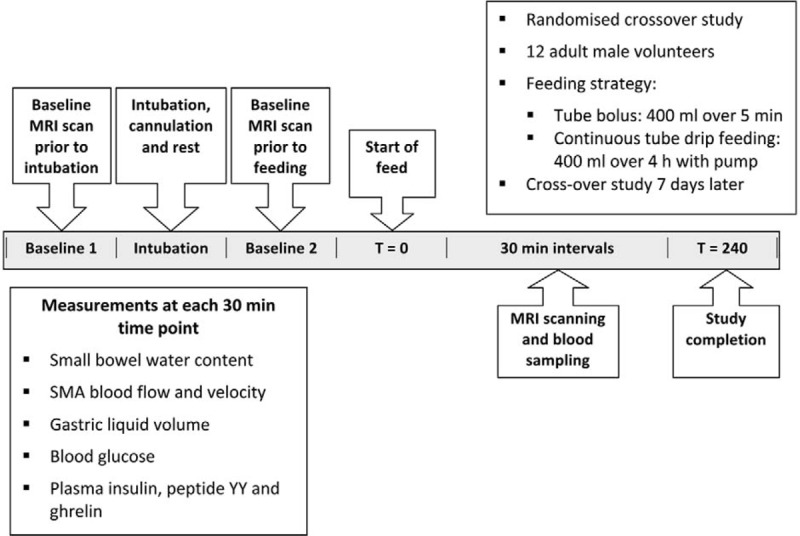
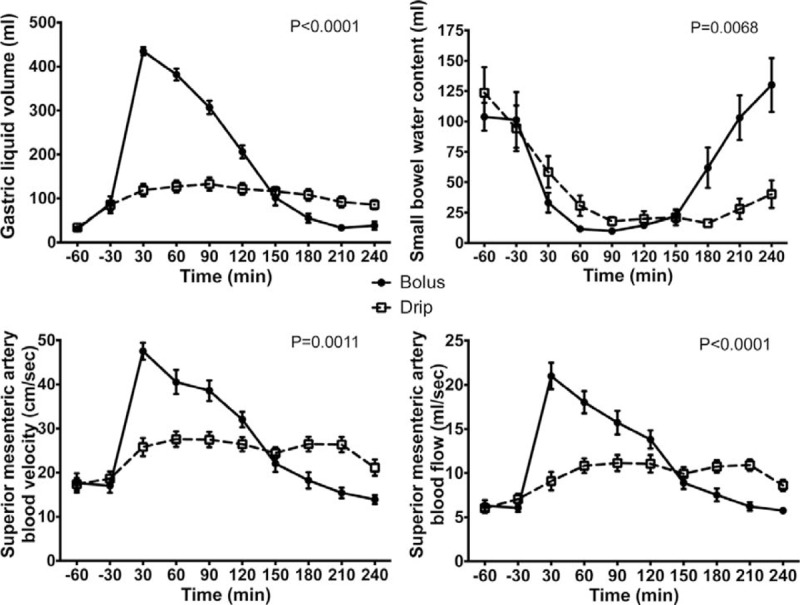
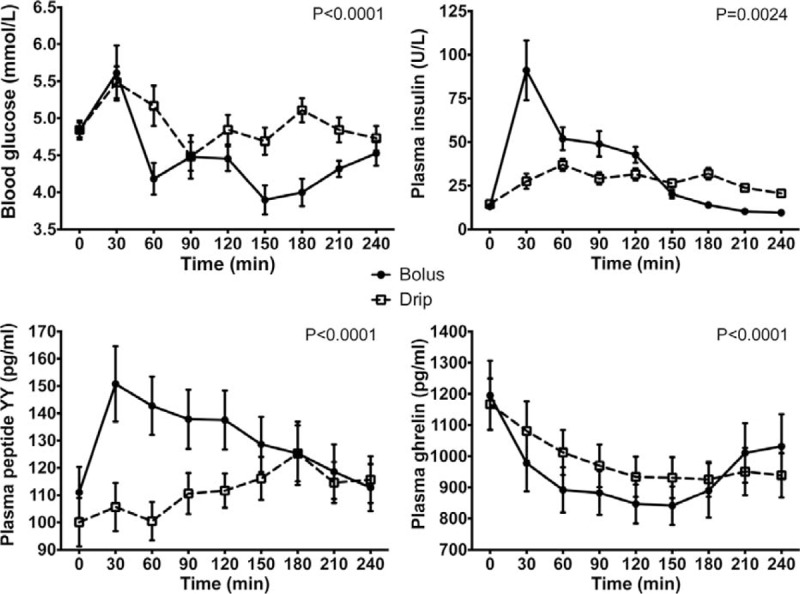
OBJECTIVE: We aimed to demonstrate the effect of continuous or bolus nasogastric feeding on gastric emptying, small bowel water content, and splanchnic blood flow measured by magnetic resonance imaging (MRI) in the context of changes in plasma gastrointestinal hormone secretion. BACKGROUND: Nasogastric/nasoenteral tube feeding is often complicated by diarrhea but the contribution of feeding strategy to the etiology is unclear. METHODS: Twelve healthy adult male participants who underwent nasogastric intubation before a baseline MRI scan, received 400 mL of Resource Energy (Nestle) as a bolus over 5 minutes or continuously over 4 hours via pump in this randomized crossover study. Changes in gastric volume, small bowel water content, and superior mesenteric artery blood flow and velocity were measured over 4 hours using MRI and blood glucose and plasma concentrations of insulin, peptide YY, and ghrelin were assayed every 30 minutes. RESULTS: Bolus nasogastric feeding led to significant elevations in gastric volume (P < 0.0001), superior mesenteric artery blood flow (P < 0.0001), and velocity (P = 0.0011) compared with continuous feeding. Both types of feeding reduced small bowel water content, although there was an increase in small bowel water content with bolus feeding after 90 minutes (P < 0.0068). Similarly, both types of feeding led to a fall in plasma ghrelin concentration although this fall was greater with bolus feeding (P < 0.0001). Bolus feeding also led to an increase in concentrations of insulin (P = 0.0024) and peptide YY (P < 0.0001), not seen with continuous feeding. CONCLUSION: Continuous nasogastric feeding does not increase small bowel water content, thus fluid flux within the small bowel is not a major contributor to the etiology of tube feeding-related diarrhea.
Overview
The claims and statistics of this paper haven’t been checked yet.
Free: it reads the open-access text and checks the first 5 claims that cite a source we can check. Create a free account to check every claim.
Integrity signals
Registry
Cites
Statistics
Figures
Verification
Claims the paper makes
The claims and statistics of this paper haven’t been checked yet.
Free: it reads the open-access text and checks the first 5 claims that cite a source we can check. Create a free account to check every claim.
Claims other papers make about this one
Each is checked against this paper’s own text: does it say what the citing paper says it does?
The cited source doesn’t support the claim as written.
In the citing paper
“Rhoney et al. (79) tested the tolerability of bolus gastric feeding in brain damaged patients and found large gastric residues.”
From ESPEN guideline on clinical nutrition in the intensive care unit. (2019) · cites this paper as [79]
Checked by a reasoning model — may be wrong.
Experimental — accuracy not yet measuredThe source backs part of the claim, not all of it — or backs it for a different population, condition or comparison.
In the citing paper
“Four prospective small studies (77,78,79,80) compared bolus (intermittent) to continuous administration of EN and did not find a difference in morbidity or mortality in small populations of ICU or trauma patients.”
From ESPEN guideline on clinical nutrition in the intensive care unit. (2019) · cites this paper as [79]
Experimental — accuracy not yet measuredThe source backs part of the claim, not all of it — or backs it for a different population, condition or comparison.
In the citing paper
“Despite the fact that bolus administration is significantly different from continuous feeding in healthy individuals, it significantly increases gastric volume and superior mesenteric artery blood volume in critically ill patients [30], although these differences are not always translated into clinical advantages.”
From ESPEN practical and partially revised guideline: Clinical nutrition in the intensive care unit (2023) · cites this paper as [30]
Experimental — accuracy not yet measured
Self-check
Percentages, sums and reported differences re-computed from the paper’s own numbers.
The self-check needs the paper’s full text.
Citations
Cites
Human distribution and release of a putative new gut hormone, peptide YY
Adrian, T. E., Ferri, G.-L., Bacarese-Hamilton, A. J., Fuessl, H. S., Polak, J. M., & Bloom, S. R. (1985) · Gastroenterology · doi:10.1016/0016-5085(85)90211-2 · Cited by 1,065 · cited 1×
“22 MJ) below which no rise is observed.(37) This is consistent with the results of this study with elevations in postprandial peptide YY concentrations seen with bolus feeding [total 606 kcal (2.”
ResultThe ileal brake--inhibition of jejunal motility after ileal fat perfusion in man.
Spiller, R. C., Trotman, I. F., Higgins, B. E., Ghatei, M. A., Grimble, G. K., Lee, Y. C., Bloom, S. R., Misiewicz, J. J., & Silk, D. B. (1984) · Gut · doi:10.1136/gut.25.4.365 · Cited by 445
Regulation of the Gastric Emptying of Glucose
Brener, W., Hendrix, T. R., & McHugh, P. R. (1983) · Gastroenterology · doi:10.1016/s0016-5085(83)80232-7 · Cited by 438 · cited 1×
“55 kJ/min).(20,21) Although the same total carbohydrate”
Gastric emptying and release of incretin hormones after glucose ingestion in humans.
Schirra, J., Katschinski, M., Weidmann, C., Schäfer, T., Wank, U., Arnold, R., & Göke, B. (1996) · Journal of Clinical Investigation · doi:10.1172/jci118411 · Cited by 426
Gastric emptying of liquids and solids: roles of proximal and distal stomach
Kelly, K. A. (1980) · American Journal of Physiology-Gastrointestinal and Liver Physiology · doi:10.1152/ajpgi.1980.239.2.g71 · Cited by 424
Guidelines for enteral feeding in adult hospital patients
Stroud, M., Duncan, H., & Nightingale, J. (2003) · Gut · doi:10.1136/gut.52.suppl_7.vii1 · Cited by 410 · cited 1×
“Provision of nutritional support usually requires tube feeding, which is typically achieved by pump-assisted continuous feeding into the stomach at low rate (50–100 mL/h) spread out over 12 to 24 hours per day using a fine-bore nasogastric tube.(2) Although tube feeding has been shown to reduce mortality in undernouri…”
MethodThe link between nutritional status and clinical outcome: can nutritional intervention modify it?
Dempsey, D., Mullen, J., & Buzby, G. (1988) · The American Journal of Clinical Nutrition · doi:10.1093/ajcn/47.2.352 · Cited by 341
Savage, A. P., Adrian, T. E., Carolan, G., Chatterjee, V. K., & Bloom, S. R. (1987) · Gut · doi:10.1136/gut.28.2.166 · Cited by 334
Spiller, R. C., Trotman, I. F., Adrian, T. E., Bloom, S. R., Misiewicz, J. J., & Silk, D. B. (1988) · Gut · doi:10.1136/gut.29.8.1042 · Cited by 254 · cited 1×
“In replicating normal patterns of feeding, bolus delivery allows the phased supply of hypertonic nutrient loads into the jejunum reducing the metabolic demand on the small intestine and possibly preventing excessive accumulation of jejunal fluid.(8,9) The mode of delivery of feeds is also known to affect water absorpt…”
BackgroundMarciani, L., Cox, E. F., Hoad, C. L., Pritchard, S., Totman, J. J., Foley, S., Mistry, A., Evans, S., Gowland, P. A., & Spiller, R. C. (2010) · Gastroenterology · doi:10.1053/j.gastro.2009.10.055 · Cited by 218 · cited 2×
“Complex molecules, on the other hand, such as fat, protein, and undigested polysaccharides, have delayed entry into the small bowel where their osmotic potential results in the efflux of water into the lumen.(16,29,31) This may account for the increase in small bowel water content after 90 minutes with bolus feeding,…”
BackgroundSelf-citationRoutine protein energy supplementation in adults: systematic review
Potter, J., Langhorne, P., & Roberts, M. (1998) · BMJ · doi:10.1136/bmj.317.7157.495 · Cited by 194
Inhibition of gastric emptying by glucose depends on length of intestine exposed to nutrient
Lin, H. C., Doty, J. E., Reedy, T. J., & Meyer, J. H. (1989) · American Journal of Physiology-Gastrointestinal and Liver Physiology · doi:10.1152/ajpgi.1989.256.2.g404 · Cited by 193 · cited 1×
“55 kJ/min).(20,21) Although the same total carbohydrate”
Relation between osmolality of diet and gastrointestinal side effects in enteral nutrition.
Keohane, P. P., Attrill, H., Love, M., Frost, P., & Silk, D. B. (1984) · BMJ · doi:10.1136/bmj.288.6418.678 · Cited by 184 · cited 1×
“The most common tube feeding-associated gastrointestinal symptom is diarrhea, occurring in up to 30% of enterally fed patients on hospital wards and over 60% of patients on intensive care units.(4,5) Although tube feeding-related diarrhea can result from a number of factors, the mode of feed delivery may be a major co…”
BackgroundDiarrhea in tube-fed patients: Feeding formula not necessarily the cause
Edes, T. E., Walk, B. E., & Austin, J. L. (1990) · The American Journal of Medicine · doi:10.1016/0002-9343(90)90454-l · Cited by 174
Kwiatek, M. A., Menne, D., Steingoetter, A., Goetze, O., Forras-Kaufman, Z., Kaufman, E., Fruehauf, H., Boesiger, P., Fried, M., Schwizer, W., et al. (2009) · American Journal of Physiology-Gastrointestinal and Liver Physiology · doi:10.1152/ajpgi.00117.2009 · Cited by 170 · cited 1×
“It has also been reported previously that increased gastric filling increases intragastric pressure as well as gastric emptying rate.(24,25) The rate of gastric emptying is known to affect subsequent plasma glucose concentrations, although hyperglycemia is tightly controlled by regulatory hormones, insulin, glucagon-l…”
BackgroundThe importance of volume in regulating gastric emptying
NOAKES, T. D., REHRER, N. J., & MAUGHAN, R. J. (1991) · Medicine and Science in Sports and Exercise · doi:10.1249/00005768-199103000-00008 · Cited by 157 · cited 1×
“It has also been reported previously that increased gastric filling increases intragastric pressure as well as gastric emptying rate.(24,25) The rate of gastric emptying is known to affect subsequent plasma glucose concentrations, although hyperglycemia is tightly controlled by regulatory hormones, insulin, glucagon-l…”
BackgroundComparison of Continuous vs Intermittent Tube Feedings in Adult Burn Patients
Hiebert, J. M., Brown, A., Anderson, R. G., Halfacre, S., Rodeheaver, G. T., & Edlich, R. F. (1981) · Journal of Parenteral and Enteral Nutrition · doi:10.1177/014860718100500173 · Cited by 110 · cited 1×
“Some studies suggest that bolus feeding causes more abdominal bloating, nausea, and diarrhea(6) than continuous feeding, but others have reported the converse.(7) Bolus feeding, in contrast to continuous feeding, is considered a more physiological mode of delivery.”
BackgroundPreventing Gastric Sieving by Blending a Solid/Water Meal Enhances Satiation in Healthy Humans
Marciani, L., Hall, N. J., Pritchard, S. E., Cox, E. F., Totman, J. J., Lad, M., Hoad, C. L., Foster, T. J., Gowland, P. A., & Spiller, R. E. (2012) · Journal of Nutrition · doi:10.3945/jn.112.159830 · Cited by 105 · cited 1×
“Complex molecules, on the other hand, such as fat, protein, and undigested polysaccharides, have delayed entry into the small bowel where their osmotic potential results in the efflux of water into the lumen.(16,29,31) This may account for the increase in small bowel water content after 90 minutes with bolus feeding,…”
BackgroundSelf-citationMarciani, L., Pritchard, S. E., Hellier-Woods, C., Costigan, C. M., Hoad, C. L., Gowland, P. A., & Spiller, R. E. (2013) · European Journal of Clinical Nutrition · doi:10.1038/ejcn.2013.78 · Cited by 99 · cited 2×
“Complex molecules, on the other hand, such as fat, protein, and undigested polysaccharides, have delayed entry into the small bowel where their osmotic potential results in the efflux of water into the lumen.(16,29,31) This may account for the increase in small bowel water content after 90 minutes with bolus feeding,…”
BackgroundSelf-citationRelation between gastric emptying of glucose and plasma concentrations of glucagon-like peptide-1
Wishart, J. M., Horowitz, M., Morris, H. A., Jones, K. L., & Nauck, M. A. (1998) · Peptides · doi:10.1016/s0196-9781(98)00052-7 · Cited by 96
Non-invasive quantification of small bowel water content by MRI: a validation study
Hoad, C. L., Marciani, L., Foley, S., Totman, J. J., Wright, J., Bush, D., Cox, E. F., Campbell, E., Spiller, R. C., & Gowland, P. A. (2007) · Physics in Medicine and Biology · doi:10.1088/0031-9155/52/23/009 · Cited by 91 · cited 3×
“This is the first study to demonstrate changes in postprandial small bowel water content, superior mesenteric artery blood velocity and flow, and plasma gut hormones in response to 2 different nasogastric feeding strategies using a validated MRI method.(15) Previous isotope studies have indicated differences in gastri…”
MethodResultSelf-citationEffect of intragastric pressure on gastric emptying and secretion.
Strunz, U. T., & Grossman, M. I. (1978) · American Journal of Physiology-Endocrinology and Metabolism · doi:10.1152/ajpendo.1978.235.5.e552 · Cited by 85
Spiller, R. E., Jones, B. J., & Silk, D. B. A. (1987) · Gut · doi:10.1136/gut.28.6.681 · Cited by 76
The effect of short-term dietary supplementation with glucose on gastric emptying in humans
Cunningham, K. M., Horowitz, M., & Read, N. W. (1991) · British Journal of Nutrition · doi:10.1079/bjn19910061 · Cited by 66
Stevenson, E., Astbury, N. M., Simpson, E. J., Taylor, M. A., & Macdonald, I. A. (2009) · Journal of Nutrition · doi:10.3945/jn.108.101956 · Cited by 61 · cited 1×
“Concentrations of peptide YY and ghrelin were measured in samples collected at 30-minute intervals during the postprandial period using assay methods that have been previously described.(14) The remaining whole-blood sample was dispensed into a plain tube and left to clot for 30 minutes.”
MethodSelf-citationUpper limit for intestinal absorption of a dilute glucose solution in men at rest
DUCHMAN, S. M., RYAN, A. J., SCHEDL, H. P., SUMMERS, R. W., BLEILER, T. L., & GISOLFI, C. V. (1997) · Medicine & Science in Sports & Exercise · doi:10.1097/00005768-199704000-00009 · Cited by 59 · cited 1×
“37 kJ/min) per 30 cm.(26) Thus delivery of carbohydrate at rates of 1.”
BackgroundIntramural distribution of regulatory peptides in the sigmoid-recto-anal region of the human gut.
Ferri, G., Adrian, T. E., Allen, J. M., Soimero, L., Cancellieri, A., Yeats, J. C., Blank, M. A., Polak, J. M., & Bloom, S. R. (1988) · Gut · doi:10.1136/gut.29.6.762 · Cited by 56 · cited 1×
“In human surgical specimens, peptide YY concentrations are found to be highest in the sigmoid colon, suggesting that this may be the site of maximal activity.(38) It is also possible that drip feeding failed to switch on the complete fed response, which, in the absence of ileal brakes, could lead to malabsorbed fat en…”
BackgroundColonic secretory effect in response to enteral feeding in humans.
Bowling, T. E., Raimundo, A. H., Grimble, G. K., & Silk, D. B. (1994) · Gut · doi:10.1136/gut.35.12.1734 · Cited by 54
Self-citationGentilcore, D., Hausken, T., Meyer, J. H., Chapman, I. M., Horowitz, M., & Jones, K. L. (2008) · American Journal of Clinical Nutrition · doi:10.1093/ajcn/87.1.156 · Cited by 50 · cited 1×
“Both splanchnic blood volume and flow is known to increase in response to feeding and may be due to the vasoactive properties of carbohydrate, fat, and protein.(40) In addition, studies in both animals and humans have suggested that gastric distension can be a stimulus for changes in superior mesenteric artery flow al…”
BackgroundDiarrhea Associated with Tube Feeding: The Importance of Using Objective Criteria
Benya, R., Layden, T. J., & Mobarhan, S. (1991) · Journal of Clinical Gastroenterology · doi:10.1097/00004836-199104000-00010 · Cited by 44 · cited 1×
“The most common tube feeding-associated gastrointestinal symptom is diarrhea, occurring in up to 30% of enterally fed patients on hospital wards and over 60% of patients on intensive care units.(4,5) Although tube feeding-related diarrhea can result from a number of factors, the mode of feed delivery may be a major co…”
BackgroundBowling, T. E., Cliff, B., Wright, J. W., Blackshaw, P. E., Perkins, A. C., & Lobo, D. N. (2008) · Clinical Nutrition · doi:10.1016/j.clnu.2008.04.003 · Cited by 42 · cited 1×
“The protocol was similar to that used in a previous study examining gastric emptying.(13) Participants reported at 9 AM after a fast from midnight and after having abstained from alcohol, nicotine, and caffeine from 6 PM the day before.”
MethodSelf-citationColonic responses to enteral tube feeding
Bowling, T. E., & Silk, D. B. A. (1998) · Gut · doi:10.1136/gut.42.2.147 · Cited by 42
Self-citationMarciani, L., Wright, J., Foley, S., Hoad, C. L., Totman, J. J., Bush, D., Hartley, C., Armstrong, A., Manby, P., Blackshaw, E., et al. (2010) · Alimentary Pharmacology & Therapeutics · doi:10.1111/j.1365-2036.2010.04395.x · Cited by 40 · cited 1×
“Previous studies have indicated that tube feeding-related diarrhea is likely to be a disorder of colonic function rather than small intestinal motility(10,12,27) although the small bowel response to different feeds and strategies remains ill-defined.(16,28,29) Both feeding strategies were characterized by a fall in sm…”
BackgroundSelf-citationVanis, L., Gentilcore, D., Hausken, T., Pilichiewicz, A. N., Lange, K. M., Rayner, C. K., Feinle‐Bisset, C., Meyer, J. H., Horowitz, M., & Jones, K. L. (2010) · American Journal of Physiology-Regulatory, Integrative and Comparative Physiology · doi:10.1152/ajpregu.00235.2010 · Cited by 30 · cited 1×
“In addition, studies in both animals and humans have suggested that gastric distension can be a stimulus for changes in superior mesenteric artery flow although the mechanisms underlying this effect are unclear.(41,42) In this study, both superior mesenteric artery velocity and flow were seen to increase significantly…”
BackgroundVanis, L., Gentilcore, D., Lange, K. M., Gilja, O. H., Rigda, R. S., Trahair, L. G., Feinle‐Bisset, C., Rayner, C. K., Horowitz, M., & Jones, K. L. (2011) · American Journal of Physiology-Regulatory, Integrative and Comparative Physiology · doi:10.1152/ajpregu.00464.2011 · Cited by 25 · cited 1×
“In addition, studies in both animals and humans have suggested that gastric distension can be a stimulus for changes in superior mesenteric artery flow although the mechanisms underlying this effect are unclear.(41,42) In this study, both superior mesenteric artery velocity and flow were seen to increase significantly…”
BackgroundGentilcore, D., Nair, N. S., Vanis, L., Rayner, C. K., Meyer, J. H., Hausken, T., Horowitz, M., & Jones, K. L. (2009) · American Journal of Physiology-Regulatory, Integrative and Comparative Physiology · doi:10.1152/ajpregu.00215.2009 · Cited by 24
Enteral-feeding-related diarrhoea: proposed causes and possible solutions
Bowling, T. E. (1995) · Proceedings of The Nutrition Society · doi:10.1079/pns19950026 · Cited by 24
Self-citationThe effect of osmolarity and caloric load on small bowel motility
Seidl, H., Schmidt, T., Gundling, F., & Pfeiffer, A. (2012) · Neurogastroenterology & Motility · doi:10.1111/nmo.12036 · Cited by 13 · cited 1×
“In replicating normal patterns of feeding, bolus delivery allows the phased supply of hypertonic nutrient loads into the jejunum reducing the metabolic demand on the small intestine and possibly preventing excessive accumulation of jejunal fluid.(8,9) The mode of delivery of feeds is also known to affect water absorpt…”
BackgroundTai, K., Hammond, A. J., Wishart, J. M., Horowitz, M., & Chapman, I. M. (2010) · Appetite · doi:10.1016/j.appet.2010.07.010 · Cited by 13
Totman, J. J., Marciani, L., Foley, S., Campbell, E., Hoad, C. L., Macdonald, I. A., Spiller, R. E., & Gowland, P. A. (2009) · Physiological Measurement · doi:10.1088/0967-3334/30/10/011 · Cited by 10 · cited 2×
“The flow measurements were carried out on the scanner using the manufacturer’s software.(18) Each cine phase contrast MRI scan was gated retrospectively using the vector cardiogram data generating a set of velocity-encoded images, uniformly spaced across the R to R wave of the cardiac cycle.”
MethodSelf-citationIntestinal responses induced by enteral feeding.
Bowling, T. E., & Silk, D. B. A. (1995) · PubMed · Cited by 7
Self-citationParker, H. L., Hoad, C. L., Hudders, N., Costigan, C. M., Marciani, L., Cox, E. F., Gowland, P. A., & Fox, M. R. (2012) · Gastroenterology · doi:10.1016/s0016-5085(12)62344-0 · Cited by 6
Self-citationColonic responses to enteral tube feeding
BOWLING, T. E., & SILK, D. B. A. (1998) · Gut · doi:10.1136/gut.42.2.147-a
Self-citation
Cited by
ESPEN guideline on clinical nutrition in the intensive care unit.
Singer, P., Blaser, A. R., Berger, M. M., Alhazzani, W., Calder, P. C., Casaer, M. P., Hiesmayr, M., Mayer, K., Montejo, J. C., Pichard, C., et al. (2019) · Clinical Nutrition · doi:10.1016/j.clnu.2018.08.037 · Cited by 2,904
“Despite the fact that bolus administration is significantly different from continuous feeding in normal volunteers, increasing significantly gastric volume and superior mesenteric artery blood volume, in critically ill patients [79] these differences are not always translated into clinical advantages.”
BackgroundESPEN practical and partially revised guideline: Clinical nutrition in the intensive care unit
Singer, P., Blaser, A. R., Berger, M. M., Calder, P. C., Casaer, M., Hiesmayr, M., Mayer, K., Montejo-Gonzalez, J. C., Pichard, C., Preiser, J.-C., et al. (2023) · Clinical Nutrition · doi:10.1016/j.clnu.2023.07.011 · Cited by 793
“Despite the fact that bolus administration is significantly different from continuous feeding in healthy individuals, it significantly increases gastric volume and superior mesenteric artery blood volume in critically ill patients [30], although these differences are not always translated into clinical advantages.”
BackgroundThe intensive care medicine research agenda in nutrition and metabolism
Arabi, Y. M., Casaer, M. P., Chapman, M., Heyland, D. K., Ichai, C., Marik, P. E., Martindale, R. G., McClave, S. A., Preiser, J.-C., Reignier, J., et al. (2017) · Intensive Care Medicine · doi:10.1007/s00134-017-4711-6 · Cited by 203
“Intermittent feeding may also have greater anabolic response, increased gastric contractility and emptying, as well as less diarrhea and better absorption owing to slowing of intestinal transit from increased peptide YY release [45, 46].”
BackgroundEffect of Intermittent or Continuous Feed on Muscle Wasting in Critical Illness
McNelly, A. S., Bear, D. E., Connolly, B. A., Arbane, G., Allum, L., Tarbhai, A., Cooper, J. A., Hopkins, P. A., Wise, M. P., Brealey, D., et al. (2020) · Chest · doi:10.1016/j.chest.2020.03.045 · Cited by 143
Marik, P. E., & Hooper, M. H. (2016) · Intensive Care Medicine · doi:10.1007/s00134-015-4131-4 · Cited by 109
Metadata
- Authors
- Chowdhury, A. H., Murray, K., Hoad, C. L., Costigan, C., Marciani, L., Macdonald, I. A., Bowling, T. E., & Lobo, D. N.
- Affiliations
- Nottingham University Hospitals NHS Trust (GB)
- Corresponding author
- Lobo, Dileep N.
- ORCID
- Venue
- Annals of Surgery
- Published
- 2016-03
- Volume
- 263
- Issue
- 3
- Pages
- 450-457
- ISSN
- 0003-4932 (ISSN-L)
- PMC
- PMC4741393
- OpenAlex
- W1975661012
- Semantic Scholar
- 5190eb1ec98efd75eab213a59a17f7d5a34c6b4d
- Cited by
- 84
- References
- 42
- Citations by year
- 2026: 3 · 2025: 11 · 2024: 6 · 2023: 10 · 2022: 8 · 2021: 9 · 2020: 11 · 2019: 8 · 2018: 5 · 2017: 6 · 2016: 3
- FWCI
- 4.04
- Type
- journal article
- Language
- en
- Open access
- hybrid
- doi.org
- Licence
- cc-by-nc-nd
- Locations
- Annals of Surgery (publishedVersion, cc-by-nc-nd)
- PubMed Central (publishedVersion, cc-by-nc-nd)
- PubMed (publishedVersion)
- Repository@Nottingham (University of Nottingham) (publishedVersion, other-oa)
- Repository@Nottingham (University of Nottingham) (submittedVersion, cc-by)
- Funders
- National Institute for Health and Care Research
- Royal College of Surgeons of England
- University of Nottingham
- LighterLife
- Topics
- Health Sciences › Nursing › Nutrition and Dietetics › Clinical Nutrition and Gastroenterology
- Health Sciences › Medicine › Gastroenterology › Gastrointestinal motility and disorders
- Health Sciences › Medicine › Surgery › Enhanced Recovery After Surgery
- Keywords
- nasogastric tube feeding, bolus feeding, continuous feeding, gastric emptying, superior mesenteric artery blood flow, splanchnic circulation, ghrelin, insulin, peptide YY, gastric volume
- MeSH terms
- Blood Flow Velocity, Body Water, Diarrhea, England, Enteral Nutrition, Gastric Emptying, Gastrointestinal Hormones, Humans, Intestine, Small, Intubation, Gastrointestinal, Magnetic Resonance Imaging, Male, Mesenteric Artery, Superior, Cross-Over Studies, Young Adult, Healthy Volunteers
About these checks
Registry, retraction, Cites and statistics results are computed, not judged, with one exception: a printed reference that no index lists is read once by a model before it counts as a citation error. Claims are extracted by a model and kept only when their quote appears verbatim in the text; each cited source is then checked, with a model’s help, for whether it says what the claim relies on. Those verdicts can be wrong — read the claim’s quote and the cited source before relying on one.
Statistics and arithmetic are recomputed, not judged.
Confidence bands are shown only for fields calibrated on our annotated test set. None is calibrated yet, so no band is shown.
What counts as a claim ›How we measure confidence ›How we check this ›
Are you an author, or do you see a problem with this page? Request a review
Data sources
Bibliographic data: Semantic Scholar, OpenAlex, Crossref.
Contains information from the Semantic Scholar Academic Graph Datasets, made available under the ODC Attribution License (ODC-BY 1.0).
Semantic Scholar’s data is described in: Kinney, R., et al. (2023). The Semantic Scholar Open Data Platform. arXiv:2301.10140.
