

The DOI matches its Crossref record; 66 of the 66 references it cites were found in a registry or an index.
Exposure to visual cues of pathogen contagion changes preferences for masculinity and symmetry in opposite-sex faces
Open accessAbstract
Evolutionary approaches to human attractiveness have documented several traits that are proposed to be attractive across individuals and cultures, although both cross-individual and cross-cultural variations are also often found. Previous studies show that parasite prevalence and mortality/health are related to cultural variation in preferences for attractive traits. Visual experience of pathogen cues may mediate such variable preferences. Here we showed individuals slideshows of images with cues to low and high pathogen prevalence and measured their visual preferences for face traits. We found that both men and women moderated their preferences for facial masculinity and symmetry according to recent experience of visual cues to environmental pathogens. Change in preferences was seen mainly for opposite-sex faces, with women preferring more masculine and more symmetric male faces and men preferring more feminine and more symmetric female faces after exposure to pathogen cues than when not exposed to such cues. Cues to environmental pathogens had no significant effects on preferences for same-sex faces. These data complement studies of cross-cultural differences in preferences by suggesting a mechanism for variation in mate preferences. Similar visual experience could lead to within-cultural agreement and differing visual experience could lead to cross-cultural variation. Overall, our data demonstrate that preferences can be strategically flexible according to recent visual experience with pathogen cues. Given that cues to pathogens may signal an increase in contagion/mortality risk, it may be adaptive to shift visual preferences in favour of proposed good-gene markers in environments where such cues are more evident.
Overview
The claims and statistics of this paper haven’t been checked yet.
Run the check — free, no account needed. It reads the open-access text and checks the sources it cites.
Integrity signals
Registry
Cites
Statistics
Figures
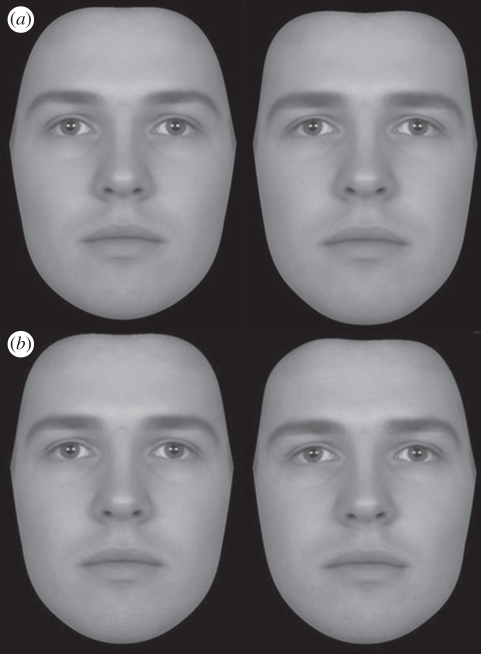
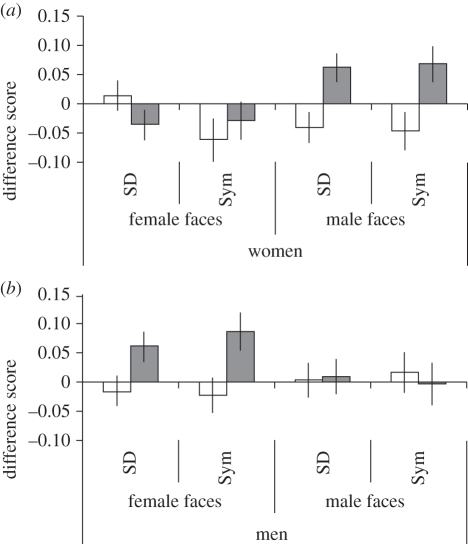
Verification
Claims the paper makes
The claims and statistics of this paper haven’t been checked yet.
Run the check — free, no account needed. It reads the open-access text and checks the sources it cites.
Claims other papers make about this one
Each is checked against this paper’s own text: does it say what the citing paper says it does?
The cited source says what the claim attributes to it.
In the citing paper
“we have also found that viewing cues to disease salience increased preferences for facial cues of long-term health in potential mates, but not same-sex individuals (Little et al. 2011).”
From Parasite-stress promotes in-group assortative sociality: The cases of strong family ties and heightened religiosity (2012) · cites this paper as Little et al. 2011
In the citing paper
“This relationship is consistent with a wide range of additional evidence indicating that individuals are sensitive to disease-connoting cues within their immediate environment, and respond to these cues with functionally adaptive shifts in cognition and behavior [58], [59].”
From Pathogens and Politics: Further Evidence That Parasite Prevalence Predicts Authoritarianism (2013) · cites this paper as [58]
Self-check
Percentages, sums and reported differences re-computed from the paper’s own numbers.
The self-check needs the paper’s full text.
Citations
Cites
Parasites, Bright Males, and the Immunocompetence Handicap
Folstad, I., & Karter, A. J. (1992) · The American Naturalist · doi:10.1086/285346 · Cited by 2,799
Belsky, J., Steinberg, L. D., & Draper, P. (1991) · Child Development · doi:10.1111/j.1467-8624.1991.tb01558.x · Cited by 2,601
Belsky, J., Steinberg, L., & Draper, P. (1991) · Child Development · doi:10.2307/1131166 · Cited by 1,780
Effects of sexual dimorphism on facial attractiveness
Perrett, D. I., Lee, K. J., Penton‐Voak, I. S., Rowland, D., Yoshikawa, S., Burt, D. M., Henzi, S. P., Castles, D. L., & Akamatsu, S. (1998) · Nature · doi:10.1038/29772 · Cited by 1,359
Grammer, K., & Thornhill, R. (1994) · Journal of Comparative Psychology · doi:10.1037/0735-7036.108.3.233 · Cited by 1,110
Thornhill, R., & Gangestad, S. W. (1999) · Trends in Cognitive Sciences · doi:10.1016/s1364-6613(99)01403-5 · Cited by 950
Evidence that disgust evolved to protect from risk of disease
Curtis, V., Aunger, R., & Rabie, T. (2004) · Proceedings of the Royal Society of London. Series B: Biological Sciences · doi:10.1098/rsbl.2003.0144 · Cited by 842
Ache Life History: The Ecology and Demography of a Foraging People.
Howell, N. E., Hill, K. R., & Hurtado, A. M. (1996) · Population and Development Review · doi:10.2307/2137817 · Cited by 841
Prototyping and Transforming Facial Textures for Perception Research
Tiddeman, B. P., Burt, M., & Perrett, D. (2001) · IEEE Computer Graphics and Applications · doi:10.1109/38.946630 · Cited by 838
Menstrual cycle alters face preference
Penton‐Voak, I. S., Perrett, D. I., Castles, D. L., Kobayashi, T., Burt, D. M., Murray, L. K., & Minamisawa, R. (1999) · Nature · doi:10.1038/21557 · Cited by 836
Cunningham, M. R. (1986) · Journal of Personality and Social Psychology · doi:10.1037/0022-3514.50.5.925 · Cited by 782
Sexual Selection for Aesthetic Traits in Species with Biparental Care
Burley, N. T. (1986) · The American Naturalist · doi:10.1086/284493 · Cited by 650
Life expectancy, economic inequality, homicide, and reproductive timing in Chicago neighbourhoods
Wilson, M., & Daly, M. (1997) · BMJ · doi:10.1136/bmj.314.7089.1271 · Cited by 623
Male facial attractiveness: evidence for hormone-mediated adaptive design
Johnston, V. S., Hagel, R., Franklin, M., Fink, B., & Grammer, K. (2001) · Evolution and Human Behavior · doi:10.1016/s1090-5138(01)00066-6 · Cited by 610
Facial attractiveness, symmetry and cues of good genes
Scheib, J. E., Gangestad, S. W., & Thornhill, R. (1999) · Proceedings of the Royal Society B Biological Sciences · doi:10.1098/rspb.1999.0866 · Cited by 572
Symmetry and Human Facial Attractiveness
Perrett, D. I., Burt, D. M., Penton‐Voak, I. S., Lee, K. J., Rowland, D., & Edwards, R. (1999) · Evolution and Human Behavior · doi:10.1016/s1090-5138(99)00014-8 · Cited by 553
Facial symmetry and the perception of beauty
Rhodes, G., Proffitt, F., Grady, J. M., & Sumich, A. L. (1998) · Psychonomic Bulletin & Review · doi:10.3758/bf03208842 · Cited by 534
Pathogen prevalence and human mate preferences
Gangestad, S. W., & Buss, D. M. (1993) · Ethology and Sociobiology · doi:10.1016/0162-3095(93)90009-7 · Cited by 521
Facial sexual dimorphism, developmental stability, and susceptibility to disease in men and women
Thornhill, R., & Gangestad, S. W. (2005) · Evolution and Human Behavior · doi:10.1016/j.evolhumbehav.2005.06.001 · Cited by 516
Cunningham, M., Barbee, A. P., & Pike, C. L. (1990) · Journal of Personality and Social Psychology · doi:10.1037//0022-3514.59.1.61 · Cited by 504
Enlow, D. H., & BOSTWICK, J. (1977) · Plastic & Reconstructive Surgery · doi:10.1097/00006534-197701000-00025 · Cited by 499
Bilateral Symmetry and Sexual Selection: A Meta‐Analysis
Møller, A. P., & Thornhill, R. (1998) · The American Naturalist · doi:10.1086/286110 · Cited by 441
Reproductive ecology and human evolution
Dufour, D. L. (2003) · American Journal of Human Biology · doi:10.1002/ajhb.10106 · Cited by 439
Large breasts and narrow waists indicate high reproductive potential in women
Grazyna Jasienska, A., Ziomkiewicz, A., Ellison, P. T., Lipson, S. F., & Thune, I. (2004) · Proceedings of the Royal Society B Biological Sciences · doi:10.1098/rspb.2004.2712 · Cited by 436
Little, A. C., Jones, B. C., Penton‐Voak, I. S., Burt, D. M., & Perrett, D. I. (2002) · Proceedings of the Royal Society B Biological Sciences · doi:10.1098/rspb.2002.1984 · Cited by 428
Self-citationLittle, A. C., Burt, D. M., Penton‐Voak, I. S., & Perrett, D. I. (2001) · Proceedings of the Royal Society B Biological Sciences · doi:10.1098/rspb.2000.1327 · Cited by 416
Self-citationDoes sexual dimorphism in human faces signal health?
Rhodes, G., Chan, J., Zebrowitz, L. A., & Simmons, L. W. (2003) · Proceedings of the Royal Society B Biological Sciences · doi:10.1098/rsbl.2003.0023 · Cited by 404
Symmetry, sexual dimorphism in facial proportions and male facial attractiveness
Penton‐Voak, I. S., Jones, B. C., Little, A. C., Baker, S., Tiddeman, B., Burt, D. M., & Perrett, D. I. (2001) · Proceedings of the Royal Society B Biological Sciences · doi:10.1098/rspb.2001.1703 · Cited by 404
Self-citationFacial appearance is a cue to oestrogen levels in women
Smith, M. J. L., Perrett, D. I., Jones, B. C., Cornwell, R. E., Moore, F. R., Feinberg, D. R., Boothroyd, L. G., Durrani, S., Stirrat, M., Whiten, S., et al. (2005) · Proceedings of the Royal Society B Biological Sciences · doi:10.1098/rspb.2005.3296 · Cited by 401
Some components and consequences of a babyface.
Berry, D. S., & Zebrowitz, L. A. (1985) · Journal of Personality and Social Psychology · doi:10.1037/0022-3514.48.2.312 · Cited by 374
Testosterone and Men's Marriages
BOOTH, A. R., & Dabbs, J. M. (1993) · Social Forces · doi:10.1093/sf/72.2.463 · Cited by 361
TARGET ARTICLE: Evolutionary Foundations of Cultural Variation: Evoked Culture and Mate Preferences
Gangestad, S. W., Haselton, M. G., & Buss, D. M. (2006) · Psychological Inquiry · doi:10.1207/s15327965pli1702_1 · Cited by 355
The evolutionary ecology of attachment organization
Chisholm, J. S. (1996) · Human Nature · doi:10.1007/bf02733488 · Cited by 336
DeBruine, L. M., Jones, B. C., Crawford, J. R., Welling, L. L. M., & Little, A. C. (2010) · Proceedings of the Royal Society B Biological Sciences · doi:10.1098/rspb.2009.2184 · Cited by 318
Self-citationThornhill, R., & Grammer, K. (1999) · Evolution and Human Behavior · doi:10.1016/s1090-5138(98)00044-0 · Cited by 308
Evolutionary ecology of human life history
Mace, R. H. (2000) · Animal Behaviour · doi:10.1006/anbe.1999.1287 · Cited by 301
Physical Attractiveness and Health in Western Societies: A Review.
Weeden, J., & Sabini, J. (2005) · Psychological Bulletin · doi:10.1037/0033-2909.131.5.635 · Cited by 301
Penton‐Voak, I. S., Little, A. C., Jones, B. C., Burt, D. M., Tiddeman, B., & Perrett, D. I. (2003) · Journal of comparative psychology · doi:10.1037/0735-7036.117.3.264 · Cited by 278
Self-citationCorrelated preferences for facial masculinity and ideal or actual partner's masculinity
DeBruine, L. M., Jones, B. C., Little, A. C., Boothroyd, L. G., Perrett, D. I., Penton‐Voak, I. S., Cooper, P. A., Penke, L., Feinberg, D. R., & Tiddeman, B. (2006) · Proceedings of the Royal Society B Biological Sciences · doi:10.1098/rspb.2005.3445 · Cited by 270
Self-citationEvolution of human mate choice
Geary, D. C., Vigil, J. M., & Byrd‐Craven, J. (2004) · The Journal of Sex Research · doi:10.1080/00224490409552211 · Cited by 267
Criteria of facial attractiveness in five populations
Jones, D., & Hill, K. R. (1993) · Human Nature · doi:10.1007/bf02692202 · Cited by 258
Symmetry and perceived facial attractiveness: A monozygotic co-twin comparison.
Mealey, L., Bridgstock, R., & Townsend, G. (1999) · Journal of Personality and Social Psychology · doi:10.1037/0022-3514.76.1.151 · Cited by 249
Marriage Systems and Pathogen Stress in Human Societies
LOW, B. S. (1990) · American Zoologist · doi:10.1093/icb/30.2.325 · Cited by 245
Menstrual cycle, pregnancy and oral contraceptive use alter attraction to apparent health in faces
Jones, B. C., Perrett, D. I., Little, A. C., Boothroyd, L. G., Cornwell, R. E., Feinberg, D. R., Tiddeman, B., Whiten, S., Pitman, R. M., Hillier, S. G., et al. (2005) · Proceedings of the Royal Society B Biological Sciences · doi:10.1098/rspb.2004.2962 · Cited by 229
Self-citationHayward, A. F. (1983) · Journal of Dentistry · doi:10.1016/0300-5712(83)90224-5 · Cited by 221
Male parental care, differential parental investment by females and sexual selection
Møller, A. P., & Thornhill, R. (1998) · Animal Behaviour · doi:10.1006/anbe.1998.0731 · Cited by 217
Effects of Menstrual Cycle Phase on Face Preferences
Jones, B. C., DeBruine, L. M., Perrett, D. I., Little, A. C., Feinberg, D. R., & Smith, M. J. L. (2008) · Archives of Sexual Behavior · doi:10.1007/s10508-007-9268-y · Cited by 212
Self-citationPopulational differences in attractiveness judgements of male and female faces
Penton‐Voak, I. S., Jacobson, A., & Trivers, R. L. (2004) · Evolution and Human Behavior · doi:10.1016/j.evolhumbehav.2004.06.002 · Cited by 207
Symmetry and perceived facial attractiveness: A monozygotic co-twin comparison.
Mealey, L., Bridgstock, R., & Townsend, G. (1999) · Journal of Personality and Social Psychology · doi:10.1037//0022-3514.76.1.151 · Cited by 195
Symmetry Is Related to Sexual Dimorphism in Faces: Data Across Culture and Species
Little, A. C., Jones, B. C., Waitt, C. D., Tiddeman, B., Feinberg, D. R., Perrett, D. I., Apicella, C. L., & Marlowe, F. W. (2008) · PLoS ONE · doi:10.1371/journal.pone.0002106 · Cited by 190
Self-citationThe role of masculinity and distinctiveness in judgments of human male facial attractiveness
Little, A. C., & Hancock, P. (2002) · British Journal of Psychology · doi:10.1348/000712602761381349 · Cited by 184
Self-citationHuman preferences for facial masculinity change with relationship type and environmental harshness
Little, A. C., Cohen, D. L., Jones, B. C., & Belsky, J. (2006) · Behavioral Ecology and Sociobiology · doi:10.1007/s00265-006-0325-7 · Cited by 173
Self-citationExtracting Prototypical Facial Images from Exemplars
Benson, P. J., & Perrett, D. I. (1993) · Perception · doi:10.1068/p220257 · Cited by 170
Little, A. C., Apicella, C. L., & Marlowe, F. W. (2007) · Proceedings of the Royal Society B Biological Sciences · doi:10.1098/rspb.2007.0895 · Cited by 164
Self-citationEvidence against perceptual bias views for symmetry preferences in human faces
Little, A. C., & Jones, B. C. (2003) · Proceedings of the Royal Society B Biological Sciences · doi:10.1098/rspb.2003.2445 · Cited by 143
Self-citationWelling, L. L. M., Jones, B. C., DeBruine, L. M., SMITH, F., Feinberg, D. R., Little, A. C., & Al‐Dujaili, E. A. S. (2008) · Hormones and Behavior · doi:10.1016/j.yhbeh.2008.07.012 · Cited by 139
Self-citationSymmetrical women have higher potential fertility
Grazyna Jasienska, A., Lipson, S. F., Ellison, P. T., Thune, I., & Ziomkiewicz, A. (2006) · Evolution and Human Behavior · doi:10.1016/j.evolhumbehav.2006.01.001 · Cited by 130
Brooks, R. C., Scott, I. M. L., Maklakov, A. A., Kasumovic, M. M., Clark, A. P., & Penton‐Voak, I. S. (2010) · Proceedings of the Royal Society B Biological Sciences · doi:10.1098/rspb.2010.0964 · Cited by 122
Preferences for symmetry in faces change across the menstrual cycle
Little, A. C., Jones, B. C., Burt, D. M., & Perrett, D. I. (2007) · Biological Psychology · doi:10.1016/j.biopsycho.2007.08.003 · Cited by 117
Self-citationDeBruine, L. M., Jones, B. C., Tybur, J. M., Lieberman, D., & Griskevicius, V. (2009) · Evolution and Human Behavior · doi:10.1016/j.evolhumbehav.2009.09.003 · Cited by 115
Reproductive Ecology and Human Evolution
Ellison, P. T. (2017) · Routledge eBooks · doi:10.4324/9781315128467 · Cited by 88
Human Reproductive Ecology: Interactions of Environment, Fertility, and Behavior
Campbell, K. L., & Wood, J. W. (1994) · Medical Entomology and Zoology · Cited by 87
Correlated Male Preferences for Femininity in Female Faces and Voices
Fraccaro, P. J., Feinberg, D. R., DeBruine, L. M., Little, A. C., Watkins, C. D., & Jones, B. C. (2010) · Evolutionary Psychology · doi:10.1177/147470491000800311 · Cited by 83
Self-citationSymmetry and sexual dimorphism in human faces: interrelated preferences suggest both signal quality
Little, A. C., Jones, B. C., DeBruine, L. M., & Feinberg, D. R. (2008) · Behavioral Ecology · doi:10.1093/beheco/arn049 · Cited by 80
Self-citationSensation seeking and men's face preferences
Jones, B., DeBruine, L., Little, A., Conway, C. A., Welling, L., & Smith, F. G. (2007) · Evolution and Human Behavior · doi:10.1016/j.evolhumbehav.2007.07.006 · Cited by 76
Self-citationAche Life History: The Ecology and Demography of a Foraging People
Reed, R. (1999) · American Ethnologist · doi:10.1525/ae.1999.26.2.531 · Cited by 13
Research works printed but not linked: 1
- 10.1037/0022-3514.59.1.61 · DOI
Cited by
Sorted by citations
Fincher, C. L., & Thornhill, R. (2012) · Behavioral and Brain Sciences · doi:10.1017/s0140525x11000021 · Cited by 530
Murray, D. R., & Schaller, M. (2016) · Advances in Experimental Social Psychology · doi:10.1016/bs.aesp.2015.09.002 · Cited by 282
Danger, Disease, and the Nature of Prejudice(s)
Schaller, M., & Neuberg, S. L. (2012) · Advances in Experimental Social Psychology · doi:10.1016/b978-0-12-394281-4.00001-5 · Cited by 280
The behavioral immune system: Current concerns and future directions
Ackerman, J. M., Hill, S. E., & Murray, D. R. (2018) · Social and Personality Psychology Compass · doi:10.1111/spc3.12371 · Cited by 268
Sexual Selection on Human Faces and Voices
Puts, D. A., Jones, B. C., & DeBruine, L. M. (2012) · The Journal of Sex Research · doi:10.1080/00224499.2012.658924 · Cited by 212
Metadata
- Authors
- Little, A. C., DeBruine, L. M., & Jones, B. C.
- Affiliations
- University of Stirling (GB)
- University of Aberdeen (GB)
- Corresponding author
- Little, Anthony C.
- Venue
- Proceedings of the Royal Society B Biological Sciences
- Publisher
- The Royal Society
- Published
- 2010-12
- Volume
- 278
- Issue
- 1714
- Pages
- 2032-2039
- ISSN
- 0080-4649 (ISSN-L)
- 0962-8452
- 1471-2954
- PMC
- PMC3107643
- OpenAlex
- W2136596950
- Cited by
- 172
- References
- 65
- Citations by year
- 2026: 2 · 2025: 7 · 2024: 5 · 2023: 5 · 2022: 9 · 2021: 12 · 2020: 15 · 2019: 11 · 2018: 7 · 2017: 16 · 2016: 11 · 2015: 18 · 2014: 17 · 2013: 15 · 2012: 13
- FWCI
- 15.41
- Type
- journal article
- Language
- en
- Open access
- hybrid
- doi.org
- Locations
- Proceedings of the Royal Society B Biological Sciences (publishedVersion, cc-by)
- Europe PMC (PubMed Central) (publishedVersion, cc-by)
- PubMed Central (publishedVersion, cc-by)
- PubMed (publishedVersion)
- Strathprints: The University of Strathclyde institutional repository (University of Strathclyde) (acceptedVersion)
- Stirling Online Research Repository (University of Stirling) (submittedVersion, cc-by)
- ENLIGHTEN (Jurnal Bimbingan dan Konseling Islam) (submittedVersion)
- Topics
- Social Sciences › Psychology › Experimental and Cognitive Psychology › Evolutionary Psychology and Human Behavior
- Life Sciences › Agricultural and Biological Sciences › Ecology, Evolution, Behavior and Systematics › Animal Behavior and Reproduction
- Life Sciences › Neuroscience › Cognitive Neuroscience › Face Recognition and Perception
- Keywords
- parasite prevalence, mate preferences, facial masculinity, facial symmetry, facial attractiveness, visual experience, cross-cultural variation, mate choice, evolutionary psychology
- MeSH terms
- Adolescent, Adult, Analysis of Variance, Communicable Diseases, Cues, Face, Female, Humans, Male, Middle Aged, Sexual Behavior, Sex Characteristics, Visual Perception, Young Adult, Femininity, Masculinity
About these checks
Registry, retraction, Cites and statistics results are computed, not judged, with one exception: a printed reference that no index lists is read once by a model before it counts as a citation error. Claims are extracted by a model and kept only when their quote appears verbatim in the text; each cited source is then checked, with a model’s help, for whether it says what the claim relies on. Those verdicts can be wrong — read the claim’s quote and the cited source before relying on one.
Statistics and arithmetic are recomputed, not judged.
Confidence bands are shown only for fields calibrated on our annotated test set. None is calibrated yet, so no band is shown.
What counts as a claim ›How we measure confidence ›How we check this ›
Are you an author, or do you see a problem with this page? Request a review
