

Anti-SARS-CoV-2 Antibodies Persist for up to 13 Months and Reduce Risk of Reinfection
Open accessPreprint — published as 10.1016/j.ebiom.2021.103561 · Paper page
The DOI matches its Crossref record; 35 of the 35 references it cites were found in a registry or an index.
Abstract
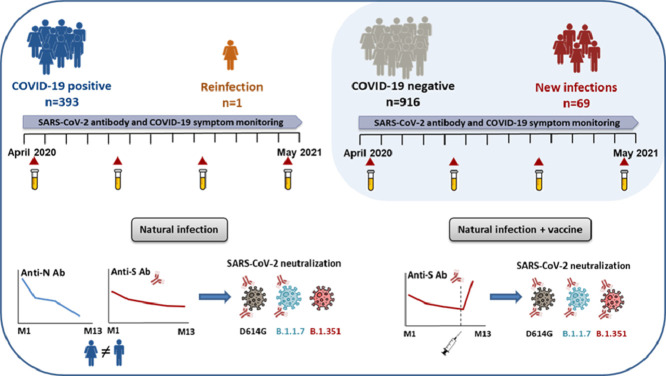
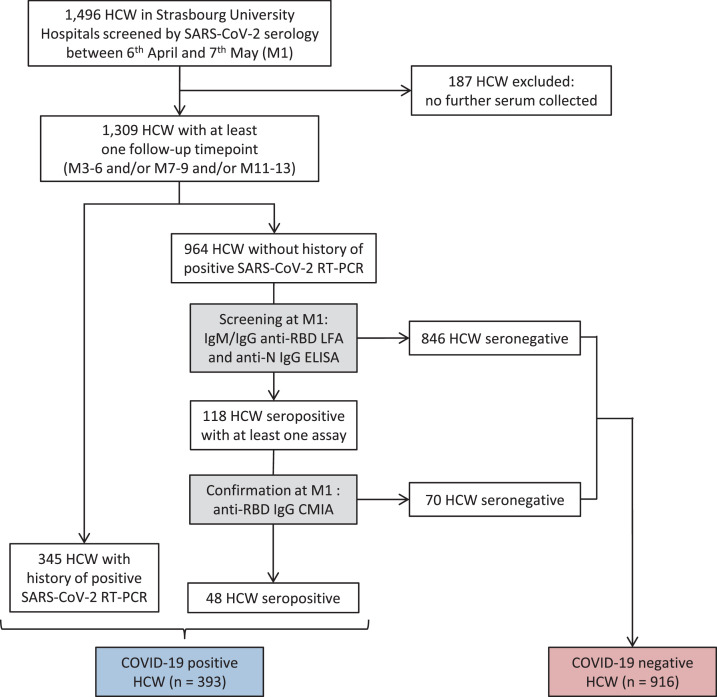
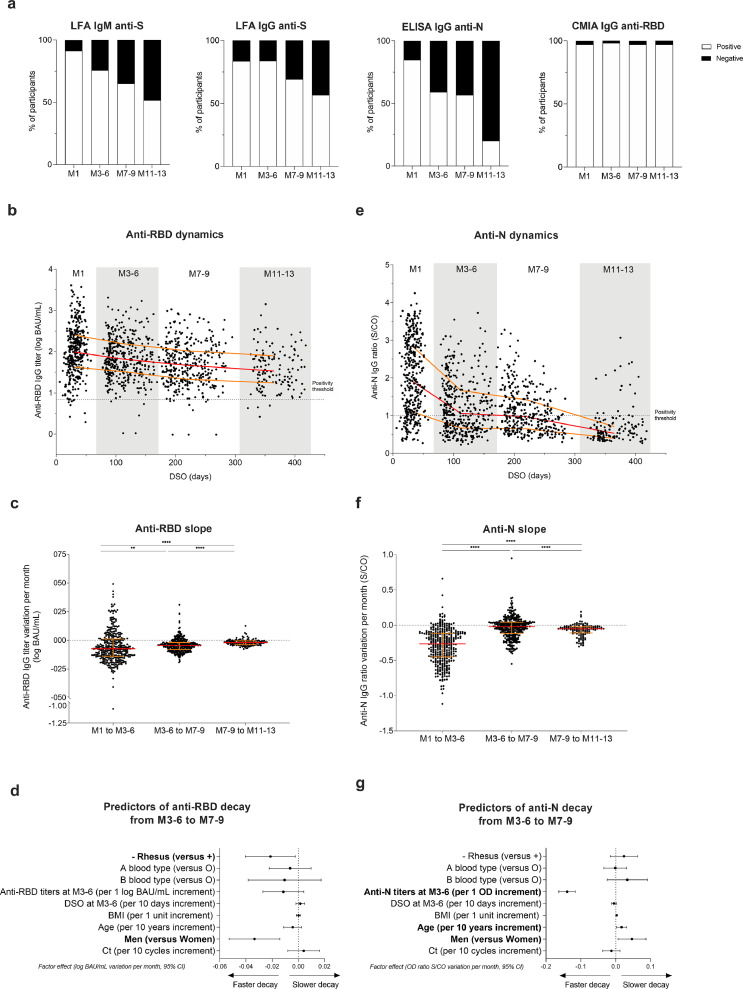
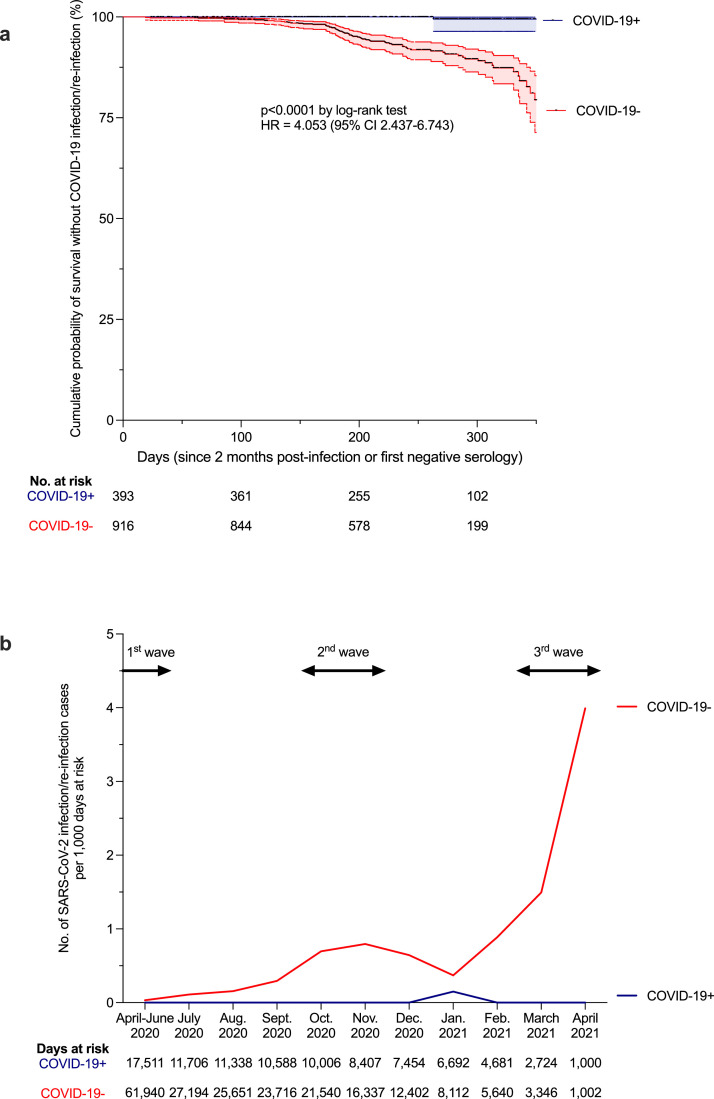
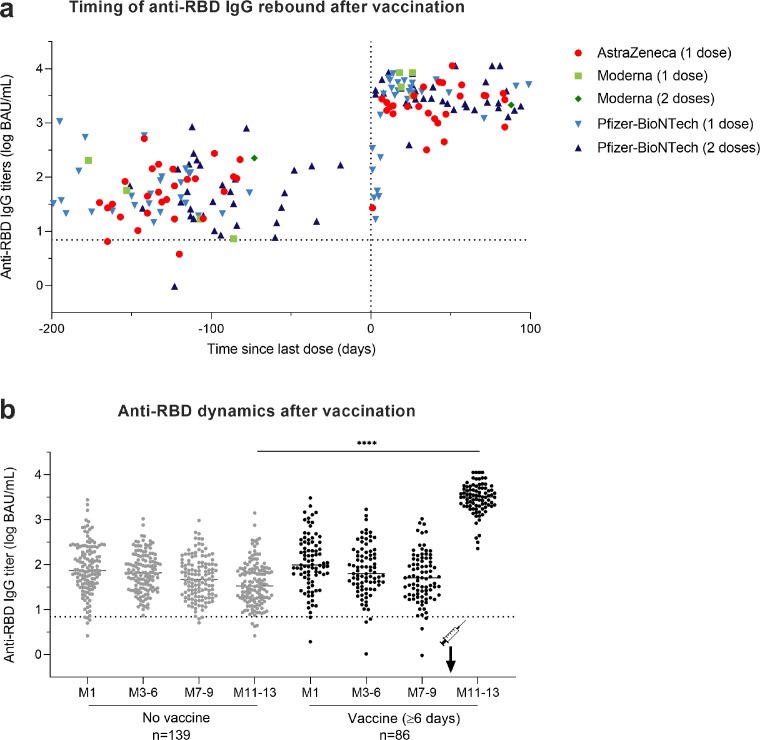
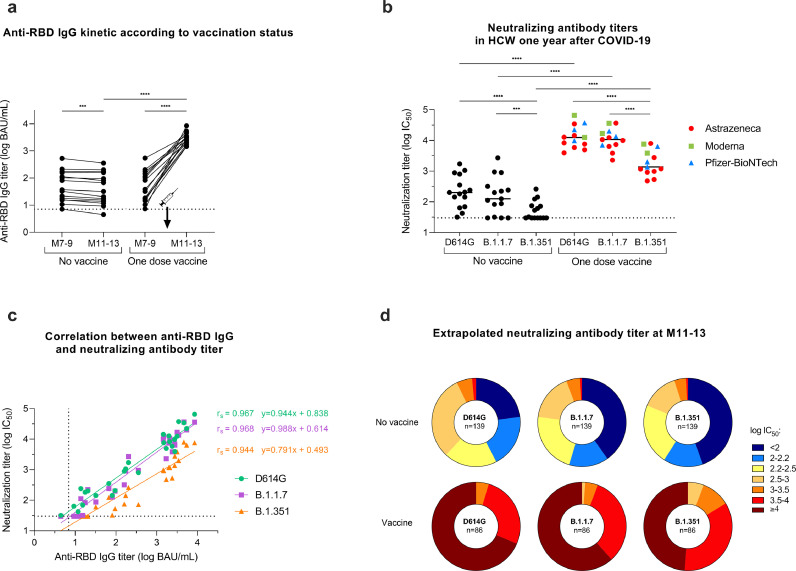
Assessment of the kinetics of SARS-CoV-2 antibodies is essential in predicting protection against reinfection and durability of vaccine protection. Here, we longitudinally measured Spike (S) and Nucleocapsid (N)-specific antibodies in 1,309 healthcare workers (HCWs), including 916 COVID-19 negative HCWs and 393 convalescent COVID-19 for up to 422 days post-symptom. From month (M)1 to M7-9 post-infection, SARS-CoV-2 antibodies decreased moderately in convalescent HCWs in a biphasic model, with men showing a slower decay of anti-N (p=0.02), and a faster decay of anti-S (p=0.0008) than women. At M11-13, anti-N dramatically decreased (half-life: 283 days) while anti-S stabilized (half-life: 725 days) at a median of 2.39 log Arbitrary Units (AU)/mL (Interquartile Range (IQR): 2.10 -2.75). Overall, 69 SARS-CoV-2 infections developed in the COVID-19 negative group (incidence of 12.22 per 100 person-years) versus one in the COVID-19 positive group (incidence of 0.40 per 100 person-years), indicating a relative reduction in the incidence of SARS-CoV-2 reinfection of 96.7% (p<0.0001). Correlation with live-virus neutralization assay revealed that variants D614G and B.1.1.7, but not B.1.351, were sensitive to anti-S antibodies at 2.3 log AU/mL, while IgG ≥ 3 log AU/mL neutralized all three variants. After SARS-CoV-2 vaccination, anti-S levels reached at least 3 logs regardless of pre-vaccination IgG levels, type of vaccine, and number of doses. Our study demonstrates a long-term persistence of anti-S IgG antibodies that may protect against reinfection. By significantly increasing cross-neutralizing antibody titers, a single-dose vaccination strengthens protection against escape mutants.
Overview
The claims and statistics of this paper haven’t been checked yet.
Free: it reads the open-access text and checks the first 5 claims that cite a source we can check. Create a free account to check every claim.
Integrity signals
Registry
Cites
Statistics
Figures
Verification
Claims the paper makes
The claims and statistics of this paper haven’t been checked yet.
Free: it reads the open-access text and checks the first 5 claims that cite a source we can check. Create a free account to check every claim.
Claims other papers make about this one
Each is checked against this paper’s own text: does it say what the citing paper says it does?
The cited source says what the claim attributes to it.
In the citing paper
“Therefore, as shown with other variants 23,24 , a single dose of vaccine boosts cross-neutralizing antibody responses to the Delta variant.”
From Reduced sensitivity of SARS-CoV-2 variant Delta to antibody neutralization (2021) · cites this paper as [23]
Self-check
Percentages, sums and reported differences re-computed from the paper’s own numbers.
The self-check needs the paper’s full text.
Citations
Cites
Immunological memory to SARS-CoV-2 assessed for up to 8 months after infection.
Dan, J. M., Mateus, J., Kato, Y., Hastie, K. M., Yu, E. D., Faliti, C. E., Grifoni, A., Ramirez, S. I., Haupt, S., Frazier, A., et al. (2021) · Science · doi:10.1126/science.abf4063 · Cited by 2,656 · cited 7×
“However, this sex difference was also observed independently of age, severity of symptoms, or duration of symptoms(7, 24).”
BackgroundResultInfluentialEstimated transmissibility and impact of SARS-CoV-2 lineage B.1.1.7 in England
Davies, N. G., Abbott, S., Barnard, R. C., Jarvis, C. I., Kucharski, A. J., Munday, J. D., Pearson, C. A. B., Russell, T. W., Tully, D. C., Washburne, A. D., et al. (2021) · Science · doi:10.1126/science.abg3055 · Cited by 2,581 · cited 2×
“1) Time from symptom onset to serum collection at: M1 (days), median (IQR; range) 31 (24-38; 6-58) 32 (24-38; 6-53) 29 (24-37; 13-58) 0.”
BackgroundDetection of a SARS-CoV-2 variant of concern in South Africa
Tegally, H., Wilkinson, E., Giovanetti, M., Iranzadeh, A., Fonseca, V., Giandhari, J., Doolabh, D., Pillay, S., San, E. J., Msomi, N., et al. (2021) · Nature · doi:10.1038/s41586-021-03402-9 · Cited by 2,510 · cited 2×
“1) Time from symptom onset to serum collection at: M1 (days), median (IQR; range) 31 (24-38; 6-58) 32 (24-38; 6-53) 29 (24-37; 13-58) 0.”
BackgroundConvergent Antibody Responses to SARS-CoV-2 in Convalescent Individuals
Robbiani, D. F., Gaebler, C., Muecksch, F., Lorenzi, J. C. C., Wang, Z., Cho, A., Agudelo, M., Barnes, C. O., Gazumyan, A., Finkin, S., et al. (2020) · Nature · doi:10.1038/s41586-020-2456-9 · Cited by 1,853 · cited 1×
“8) Time from symptom onset to serum collection at: M1 (days), median (IQR; range) 31 (24-38; 6-58) 32 (24-38; 6-53) 29 (24-37; 13-58) 0.”
Evolution of antibody immunity to SARS-CoV-2
Gaebler, C., Wang, Z., Lorenzi, J. C. C., Muecksch, F., Finkin, S., Tokuyama, M., Cho, A., Jankovic, M., Schaefer-Babajew, D., Oliveira, T. Y., et al. (2021) · Nature · doi:10.1038/s41586-021-03207-w · Cited by 1,674
Sex differences in immune responses that underlie COVID-19 disease outcomes
Takahashi, T., Ellingson, M. K., Wong, P., Israelow, B., Lucas, C., Klein, J., Silva, J., Mao, T., Oh, J. E., Tokuyama, M., et al. (2020) · Nature · doi:10.1038/s41586-020-2700-3 · Cited by 1,459 · cited 2×
“1) Time from symptom onset to serum collection at: M1 (days), median (IQR; range) 31 (24-38; 6-58) 32 (24-38; 6-53) 29 (24-37; 13-58) 0.”
BackgroundRobust neutralizing antibodies to SARS-CoV-2 infection persist for months
Wajnberg, A., Amanat, F., Firpo, A., Altman, D. R., Bailey, M. J., Mansour, M., McMahon, M., Meade, P., Mendu, D. R., Muellers, K., et al. (2020) · Science · doi:10.1126/science.abd7728 · Cited by 1,195 · cited 2×
“1) Time from symptom onset to serum collection at: M1 (days), median (IQR; range) 31 (24-38; 6-58) 32 (24-38; 6-53) 29 (24-37; 13-58) 0.”
BackgroundHuang, A. T., Garcia-Carreras, B., Hitchings, M. D. T., Yang, B., Katzelnick, L. C., Rattigan, S. M., Borgert, B. A., Moreno, C. A., Solomon, B. D., Trimmer-Smith, L., et al. (2020) · Nature Communications · doi:10.1038/s41467-020-18450-4 · Cited by 1,026 · cited 2×
“1) Time from symptom onset to serum collection at: M1 (days), median (IQR; range) 31 (24-38; 6-58) 32 (24-38; 6-53) 29 (24-37; 13-58) 0.”
BackgroundRapid Decay of Anti–SARS-CoV-2 Antibodies in Persons with Mild Covid-19
Ibarrondo, F. J., Fulcher, J. A., Goodman-Meza, D., Elliott, J., Hofmann, C., Hausner, M. A., Ferbas, K. G., Tobin, N. H., Aldrovandi, G. M., & Yang, O. O. (2020) · New England Journal of Medicine · doi:10.1056/nejmc2025179 · Cited by 1,021 · cited 1×
“SARS-CoV-2 antibodies as early as 3 months after infection(3, 5), while others reported persistence of antibody responses up to five months(4, 6).”
BackgroundAntibody Status and Incidence of SARS-CoV-2 Infection in Health Care Workers
Lumley, S. F., O’Donnell, D., Stoesser, N. E., Matthews, P. C., Howarth, A., Hatch, S. B., Marsden, B. D., Cox, S., James, T., Warren, F., et al. (2021) · New England Journal of Medicine · doi:10.1056/nejmoa2034545 · Cited by 940 · cited 3×
“1) Time from symptom onset to serum collection at: M1 (days), median (IQR; range) 31 (24-38; 6-58) 32 (24-38; 6-53) 29 (24-37; 13-58) 0.”
BackgroundMethod
Cited by
Reduced sensitivity of SARS-CoV-2 variant Delta to antibody neutralization
Planas, D., Veyer, D., Baidaliuk, A., Staropoli, I., Guivel-Benhassine, F., Rajah, M. M., Planchais, C., Porrot, F., Robillard, N., Puech, J., et al. (2021) · Nature · doi:10.1038/s41586-021-03777-9 · Cited by 1,992
Self-citationEmerging SARS-CoV-2 Variants: A Review of Its Mutations, Its Implications and Vaccine Efficacy
Ramesh, S., Govindarajulu, M., Parise, R. S., Neel, L. T., Shankar, T., Patel, S., Lowery, P., Smith, F., Dhanasekaran, M., & Moore, T. (2021) · Vaccines · doi:10.3390/vaccines9101195 · Cited by 177
Planas, D., Veyer, D., Baidaliuk, A., Staropoli, I., Guivel-Benhassine, F., Rajah, M. M., Planchais, C., Porrot, F., Robillard, N., Puech, J., et al. (2021) · bioRxiv (Cold Spring Harbor Laboratory) · doi:10.1101/2021.05.26.445838 · Cited by 266
Self-citationConsiderable escape of SARS-CoV-2 variant Omicron to antibody neutralizationPreprint
Planas, D., Saunders, N., Maes, P., et al. (2021) · bioRxiv · doi:10.1101/2021.12.14.472630 · Cited by 107
Self-citationDoes a humoral correlate of protection exist for SARS-CoV-2? A systematic review
Perry, J. A., Osman, S., Wright, J., Richard‐Greenblatt, M., Buchan, S. A., Sadarangani, M., & Bolotin, S. (2022) · PLoS ONE · doi:10.1371/journal.pone.0266852 · Cited by 97
“aggregate humoral measures (2, 21-33), and 11 studies described SARS-CoV-2 breakthrough infection 154”
Antibody response after third BNT162b2 dose in recipients of allogeneic HSCT
Redjoul, R., Bouter, A. L., Parinet, V., et al. (2021) · The Lancet Haematology · doi:10.1016/s2352-3026(21)00274-x · Cited by 76
Antibody Responses to Natural SARS-CoV-2 Infection or after COVID-19 Vaccination
Altawalah, H. (2021) · Vaccines · doi:10.3390/vaccines9080910 · Cited by 81
“Several longitudinal investigations have shown that most patients had detectable SARS-CoV-2 antibody responses up to 13 months after infection, giving hope that it could even last longer than predicted [18,19,58,59].”
BackgroundInfluentialCovid-19: virology, variants, and vaccines
Young, M., Crook, H., Scott, J. T., & Edison, P. (2022) · BMJ Medicine · doi:10.1136/bmjmed-2021-000040 · Cited by 65
Helfand, M., Fiordalisi, C. V., Wiedrick, J., Ramsey, K. L., Armstrong, C., Gean, E., Winchell, K., & Arkhipova-Jenkins, I. (2022) · Annals of Internal Medicine · doi:10.7326/m21-4245 · Cited by 50
“In most studies, reinfection was diagnosed when an individual had a positive result on a PCR test after a “waiting period” intended to give time for the initial episode to resolve clinically and virologically.”
BackgroundMethodInfluentialPradenas, E., Trinité, B., Urrea, V., et al. (2021) · medRxiv · doi:10.1101/2021.08.12.21261921 · Cited by 25
“Gender (female), n (%) 92 (72) 39 (46) 24 (56) 12 (33) 9 (47) 5 (23) 0.”
Chen, Q., Zhu, K., Liu, X., Zhuang, C., Huang, X., Huang, Y., Yao, X., Quan, J., Lin, H., Huang, S., et al. (2022) · Emerging Microbes & Infections · doi:10.1080/22221751.2022.2046446 · Cited by 25
“least 6–13 months after COVID-19 infection [4-6].”
Torque teno virus viral load predicts SARS‐CoV‐2 vaccine response in kidney transplant recipients
Solis, M., Benotmane, I., Gallais, F., Caillard, S., & Fafi‐Kremer, S. (2023) · Journal of Medical Virology · doi:10.1002/jmv.28936 · Cited by 19
“The threshold of 143BAU/mL was previously considered as an insufficient response, based on preliminary studies in preprint at that time.(15)”
BackgroundSelf-citationFerreira, C. D. S., Dantés, H. G., Bellei, N., López, E. L., Crespo, K. A. N., O’Ryan, M., & Villegas, J. (2021) · Viruses · doi:10.3390/v13122391 · Cited by 18
Leclerc, M., Redjoul, R., Bouter, A. L., Beckerich, F., Robin, C., Parinet, V., Pautas, C., Menouche, D., Bouledroua, S., Roy, L., et al. (2022) · Journal of Hematology & Oncology · doi:10.1186/s13045-022-01250-2 · Cited by 16
“We chose the IgG(S-RBD) threshold above 1000 AU/ mL at 6 months after vaccination to characterize a better long-term humoral protection, based on an independent study using the same Abbott Architect SARS-CoV-2 IgG Quant II assay as in the present study, showing that IgG(S-RBD) over 1000 AU /mL are able to neutralize v…”
MethodMubarak, A., Almutairi, S. M., Al-Dhabbah, A. D., Aldabas, S. Y., Bhat, R., Alqoufail, M. M., Abdel-Maksoud, M. A., Almanaa, T. N., Farrag, M. A., & Alturaiki, W. (2022) · Infection and Drug Resistance · doi:10.2147/idr.s369769 · Cited by 16
Breakthrough SARS-CoV-2 infections after vaccination: a critical review
Afshar, Z. M., Barary, M., Hosseinzadeh, R., Alijanpour, A., Hosseinzadeh, D., Ebrahimpour, S., Nazary, K., Sio, T. T. W., Sullman, M. J. M., Carson‐Chahhoud, K., et al. (2022) · Human Vaccines & Immunotherapeutics · doi:10.1080/21645515.2022.2051412 · Cited by 14
“Accordingly, long-term and durable vaccine-induced antibody protection against infection is now a significant challenge facing scientists.(6) Since the SARS-”
BackgroundCOVID-19 vaccination challenges: A mini-review
Afshar, Z. M., Barary, M., Hosseinzadeh, R., Karim, B., Ebrahimpour, S., Nazary, K., Sio, T. T. W., Sullman, M. J. M., Carson‐Chahhoud, K., Moudi, E., et al. (2022) · Human Vaccines & Immunotherapeutics · doi:10.1080/21645515.2022.2066425 · Cited by 15
“Studies have demonstrated that antibodies provoked by the mRNA vaccines can remain for up to six months, or even more than one year after the second dose.(75,76) However, vaccine-induced immunity diminishes over time because of the immunologic memory weakening or evolution of new variants.”
BackgroundDub, T., Solastie, A., Hagberg, L., Liedes, O., Nohynek, H., Haveri, A., Virta, C., Vara, S., Lasander, M., Ekström, N., et al. (2022) · Frontiers in Medicine · doi:10.3389/fmed.2022.876532 · Cited by 10
Tut, G., Lancaster, T., Butler, M. S., Sylla, P., Spalkova, E., Bone, D., Kaur, N., Bentley, C., Amin, U., Jadir, A., et al. (2022) · Nature Aging · doi:10.1038/s43587-022-00224-w · Cited by 10
Kharroubi, G., Cherif, I., Ghawar, W., Dhaouadi, N., Yazidi, R., Châabane, S., Snoussi, M. A., Salem, S., Hamouda, W. B., Hamouda, S. B., et al. (2023) · Archives of Virology · doi:10.1007/s00705-022-05636-y · Cited by 6
“[16] have suggested that serological assays targeting the nucleocapsid protein should not be used preferentially for seroprevalence studies, despite their ability to distinguish between natural infection and post-vaccinal immunity.”
BackgroundResultHolmer, H., Mackey, K., Fiordalisi, C. V., et al. (2022) · doi:10.23970/ahrqepccovidimmunity3 · Cited by 5
Chano, T., Morita, S., Suzuki, T., Yamashita, T., Fujimura, H., Yuri, T., Menju, M., Tanaka, M., & Kakuno, F. (2022) · PLoS ONE · doi:10.1371/journal.pone.0270334 · Cited by 9
Seroprevalence of immunoglobulin G antibodies against SARS-CoV-2 in Cyprus
Papaneophytou, C. P., Nicolaou, A., Pieri, M., Nicolaidou, V., Galatou, E., Sarigiannis, Y. M., Pantelidou, M., Panayi, P., Thoma, T., Stavraki, A., et al. (2022) · PLoS ONE · doi:10.1371/journal.pone.0269885 · Cited by 7
Predictive factors of response to 3rd dose of COVID-19 mRNA vaccine in kidney transplant recipients
Charmetant, X., Espi, M., Barba, T., et al. (2021) · medRxiv · doi:10.1101/2021.08.23.21262293 · Cited by 5
Alhasan, K. A., Raina, R., Boyer, O., Koh, L. J., Felix, M. B., Sethi, S. K., Amer, Y. S., Coccia, P. A., Temsah, M.-H. A., Exantus, J., et al. (2024) · Pediatric Nephrology · doi:10.1007/s00467-024-06565-5 · Cited by 3
“…measured 6 days following their first vaccination dose were twice as high as the antibody titers measured the month after their initial infection, and were able to neutralize wild-type, alpha, and beta variants, irrespective of vaccine type, number of doses, or pre-vaccination antibody titers [54].”
Antibodies to the Spike Protein Receptor-Binding Domain of SARS-CoV-2 at 4–13 Months after COVID-19
Kolosova, E. A., Shaprova, O. N., Васильевич, Ш. Д., Nesmeyanova, V. S., Merkuleva, I. A., Belenkaya, S. V., Исаева, А. А., Nikitin, A. O., Volosnikova, E. A., Nikulina, Y. A., et al. (2022) · Journal of Clinical Medicine · doi:10.3390/jcm11144053 · Cited by 5
Qaseem, A., Yost, J., Etxeandia‐Ikobaltzeta, I., Forciea, M. A., Abraham, G. M., Miller, M. C., Obley, A. J., Humphrey, L. L., Akl, E. A., Andrews, R., et al. (2022) · Annals of Internal Medicine · doi:10.7326/m21-3272 · Cited by 5
“Countries Risk of Bias Study Design* (18 new studies) Observational: 67 studies (8–25, 28–33, 35, 36, 39–43, 46–48, 50–55, 58, 59, 61–67, 69–75, 78–80, 82, 85–91) Immunoassay validation: 17 studies (26, 27, 34, 37, 38, 44, 45, 49, 56, 57, 60, 68, 76, 77, 81, 83, 84) Asia: 32 studies (China [28, 31, 42, 43, 52–58, 63,…”
BackgroundChotpitayasunondh, T., Fisher, D. A., Hsueh, P., Lee, P., Crespo, K. A. N., & Ruxrungtham, K. (2022) · International Journal of Translational Medicine · doi:10.3390/ijtm2030024 · Cited by 3
Helfand, M., Fiordalisi, C. V., Wiedrick, J., et al. (2022) · doi:10.23970/ahrqepccovidimmunity2 · Cited by 2
“tw:((tw:("SARS-CoV-2" OR "COVID-19" OR "COVID" OR coronavirus)) AND (tw:(reinfection)) AND (tw:(immunity))) AND db:("COVIDWHO") (36)”
BackgroundFourati, S., Bailly, B., Bouter, A. L., et al. (2021) · Clinical Infectious Diseases · doi:10.1093/cid/ciab676 · Cited by 2
Tut, G., Lancaster, T., Butler, M., et al. (2021) · medRxiv · doi:10.1101/2021.08.13.21261889 · Cited by 1
“This pattern of enhanced antibody waning against nucleocapsid has been seen in other settings (9) and was reflected in the spike: nucleocapsid antibody ratio in donors aged >85+ years which decreased from 2.”
BackgroundRazak, M. K. A., Jebur, A. A. A. R., Hamdan, B. J. A., & Ibrahim, A. K. (2023) · medRxiv · doi:10.1101/2023.01.20.23284814
Sérologie Sars-CoV-2 spike, gadget ou réelle utilité ?
Émile, C. (2022) · Option/Bio · doi:10.1016/s0992-5945(22)00213-6
“[3] Gallais F, Gantner P, Bruel T et al.”
BackgroundQuelle est la meilleure cible pour détecter le virus de la Covid-19 ?
Dalmat, Y.-M. (2022) · Option/Bio · doi:10.1016/s0992-5945(22)00013-7
Trod antigénique : S oui, mais jamais N sans S
Manus, J. (2021) · Revue Francophone des Laboratoires · doi:10.1016/s1773-035x(21)00201-x
Cruz-Machado, A., Barreira, S., Bandeira, M., et al. (2021) · medRxiv · doi:10.1101/2021.10.01.21264428
“This is close to the 13 months recently advanced by Gallais et al (39), who longitudinally measured specific antibodies in 1,309 healthcare workers.”
Result
Metadata
- Authors
- Gallais, F., Gantner, P., Bruel, T., Velay, A., Planas, D., Wendling, M.-J., Bayer, S., Solis, M., Laugel, E., Reix, N., Schneider, A., Glady, L., Panaget, B., Collongues, N., Partisani, M., Lessinger, J.-M., Fontanet, A., Rey, D., Hansmann, Y., Kling-Pillitteri, L., Schwartz, O., De Sèze, J., Meyer, N., Gonzalez, M., Schmidt-Mutter, C., & Fafi-Kremer, S.
- Affiliations
- Inserm (FR)
- Centre National de la Recherche Scientifique (FR)
- Hôpitaux Universitaires de Strasbourg (FR)
- Conservatoire National des Arts et Métiers (FR)
- ORCID
- Venue
- EBioMedicine
- Publisher
- openRxiv
- Published
- 2021-05-14
- Volume
- 71
- Pages
- 103561-103561
- ISSN
- 2352-3964 (ISSN-L)
- PMC
- PMC8390300
- OpenAlex
- W3193970389
- Cited by
- 240
- References
- 42
- Citations by year
- 2026: 10 · 2025: 10 · 2024: 29 · 2023: 60 · 2022: 102 · 2021: 28
- FWCI
- 17.34
- Type
- journal article
- Language
- en
- Open access
- gold
- doi.org
- Licence
- cc-by-nc-nd
- Locations
- EBioMedicine (publishedVersion, cc-by-nc-nd)
- medRxiv (acceptedVersion, cc-by-nc-nd)
- PubMed Central (publishedVersion, cc-by-nc-nd)
- PubMed (publishedVersion)
- HAL (submittedVersion, cc-by-nc-nd)
- DOAJ (DOAJ: Directory of Open Access Journals) (submittedVersion, cc-by-sa)
- Funders
- Agence Nationale de la Recherche (ANR-11-LABX-0070, ANR18, UMR_S 1109, ANR-10-LABX-0077, ANR-18-CE17-0028)
- Institut National de la Santé et de la Recherche Médicale (UMR_S 1109)
- Université de Strasbourg
- Topics
- Health Sciences › Medicine › Infectious Diseases › SARS-CoV-2 and COVID-19 Research
- Health Sciences › Medicine › Infectious Diseases › COVID-19 Clinical Research Studies
- Physical Sciences › Mathematics › Modeling and Simulation › COVID-19 epidemiological studies
- Keywords
- SARS-CoV-2, COVID-19 pandemic, antibody kinetics, reinfection, neutralizing antibodies, spike protein receptor-binding domain, nucleocapsid protein, antibody half-life, vaccine protection, SARS-CoV-2 variants, Alpha variant, Beta variant, D614G, cross-neutralization, healthcare workers
- MeSH terms
- Reinfection, COVID-19, SARS-CoV-2, Coronavirus Nucleocapsid Proteins, COVID-19 Vaccines, Adult, Antibodies, Viral, Female, Humans, Immunoglobulin G, Kinetics, Longitudinal Studies, Male, Middle Aged, Phosphoproteins, Prospective Studies, Time Factors, Immunity, Humoral, Antibodies, Neutralizing, Spike Glycoprotein, Coronavirus
About these checks
Registry, retraction, Cites and statistics results are computed, not judged, with one exception: a printed reference that no index lists is read once by a model before it counts as a citation error. Claims are extracted by a model and kept only when their quote appears verbatim in the text; each cited source is then checked, with a model’s help, for whether it says what the claim relies on. Those verdicts can be wrong — read the claim’s quote and the cited source before relying on one.
Statistics and arithmetic are recomputed, not judged.
Confidence bands are shown only for fields calibrated on our annotated test set. None is calibrated yet, so no band is shown.
What counts as a claim ›How we measure confidence ›How we check this ›
Are you an author, or do you see a problem with this page? Request a review
Data sources
Bibliographic data: Semantic Scholar, OpenAlex, Crossref.
Contains information from the Semantic Scholar Academic Graph Datasets, made available under the ODC Attribution License (ODC-BY 1.0).
Semantic Scholar’s data is described in: Kinney, R., et al. (2023). The Semantic Scholar Open Data Platform. arXiv:2301.10140.
